The Jeep Wrangler is a tough, off-road vehicle that many people use for adventures like camping or driving on rough terrain. It's known for being very durable and fun to drive.
The Nissan Rogue is a small SUV that many people use for everyday driving. It's spacious inside and good for families, making it a popular choice for those who need a reliable vehicle.
Antifreeze is a special liquid that helps keep the engine cool and prevents it from freezing when it's cold outside. It's an important part of the car's cooling system.
A four-cylinder engine is a type of engine that has four parts called cylinders, which help it run. These engines are usually smaller and use less fuel.
Liquid lock happens when liquid gets into the part of the engine where it shouldn't be, stopping the engine from working properly. This can lead to serious damage.
A wrecking yard is a place where old cars are taken to be broken down and sold for parts. You can find many different types of vehicles there, and sometimes you can buy parts to fix your own car.
The fuel system is what holds and sends fuel to the engine in a car. It includes parts like the fuel tank and pump, which make sure the engine gets the fuel it needs to run.
Brake lines are the tubes that carry the fluid needed to make the brakes work. When you press the brake pedal, the fluid travels through these lines to help stop the car.
Brake pads are the parts that press against the wheels to help stop the car, and rotors are the flat discs they push against. Together, they make the brakes work properly.
The thermostat is like a gatekeeper for your car's cooling system. It opens and closes to keep the engine at the right temperature, making sure it doesn't get too hot or too cold.
Normal operating temperature is the temperature that an engine should run at for best performance. For many cars, this is around 195 degrees Fahrenheit, which helps the engine work properly and last longer.
An automatic transmission is a system in a car that changes gears for you, so you don't have to do it yourself. This makes driving easier and more comfortable, especially in traffic.
Cooling fans are like the car's air conditioners for the engine. They help keep the engine cool, especially when the car is not moving fast enough to get enough airflow.
The boiling point is the temperature at which water turns into steam. In cars, knowing this helps prevent the engine from overheating by ensuring the coolant doesn't boil over.
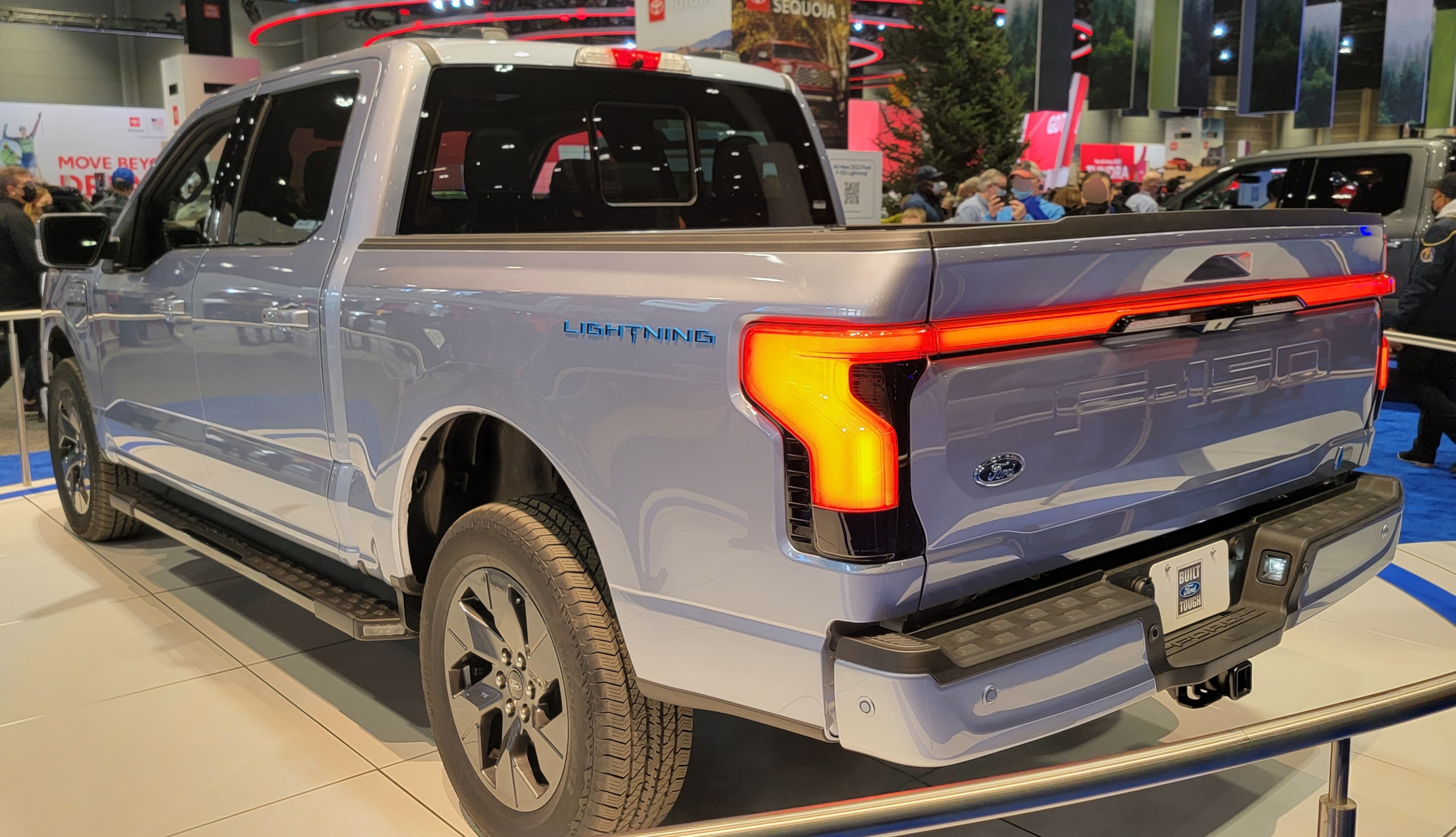
The Ford F-150 is a popular pickup truck that many people use for work and everyday driving. It's known for being tough and reliable, but some older models can have problems, like needing repairs after a certain mileage. People often talk about how to take care of it and when to replace parts to keep it running well.
Gates is a company that makes car parts like belts and hoses. They are known for making good quality parts that people trust.
LIVE
Well, good morning friends. You're tuned into Car Connection where the coffee's strong,
the stories are real, and the wrenches never stop turning. I'm your host, Niall Motormouth
Jenkins, coming to you from the Car Connection workshop where the smell of fresh oil and
a little elbow grease is all part of a balanced breakfast. That's right. Around here, we
don't just talk cars, we live them. Whether it's a 25-year-old Jeep Wrangler getting a
second chance at life, a Nissan Road getting its brakes back on order, or a mystery leak
that's got everyone scratching in their heads. This is where we roll up our sleeves and we
get her done with a little wit, a little wisdom, and a whole lot of fun. The Car Connection
workshop isn't just about nuts, bolts, and diagnostics, it's about connection. Connection
to the community that keeps Niagara rolling. Because when you fix a car, you're not just
turning a wrench, you're restoring someone's confidence, freedom, and maybe even their
sanity. My hands up on that one. We're here every week and every weekday morning helping
you keep your ride safe, reliable, and ready for the road, whatever lies ahead. So whether
you're a weekend wrencher, a daily commuter, or someone who just wants to understand what
that strange rattle really means, welcome aboard and stick around for shop talk, expert advice,
few good laughs, and maybe a story or two from the garage floor. So welcome my friends
this morning, the morning drive, and I remember having a lot of morning drives. At one time,
the last corporate job I had for a major car manufacturer, I was 90 minutes one way. I
was the first one to arrive, and the last one to leave on the location I was sent to.
And I'll tell you, I had some nasty driving. You betcha. I'll share some of that with you
another time. But right now, let's jump right into the conversation this morning. And we're
looking forward to bringing you guests. I want to introduce you to the business owners
and people I know. And the best way for me to do that is to connect you with our car
connection business network.com website. That's the long version. But I like things short
and sweet. How many, how many of you out there made it through English class because of Cole's
notes? Thank you. I'm nothing shameful about that whatsoever. I never would have passed,
not possible. Well, the short version for our website is cc, b, u, s, isn't Sam. And when
you get to the homepage, you'll see logos for all the companies that they're like family
to me. They've been with me in the last 31 years broadcasting on the air with our car
connection live call in automotive program. And they've been a part of who car connection
is so connect on our website and let them know that motor mouth sent you or car connection
sent you again on our homepage is a lot of information top right hand corner. You'll
see our click on tab for our merch store. So get yourself some car connection gear and
be part of car connection in the motor mouth crew and show it off. You'll also see a icon
for YouTube, Facebook and iHeart for our podcast. We're on all major platforms, Apple, Spotify,
Amazon music and a ton more. So we're glad to have you with us. Well, I promised in one
of my most recent podcasts, I would follow up and talk about the number one most neglected
area on any automobile period. And during that podcast, I was talking and teaching you
about super silicone solicitate. Any freeze. The cooling system is where a lot of failures
happen. And unfortunately, when the cooling system goes down, it is a major component
that protects the expensive parts, transmissions and the engine. You bet you're Bippy. Either
one of those goes down or there's catastrophic damage. In a lot of cases, depending on how
old and how much mileage is on the vehicle, here's the conversation that would be had
in my own waiting room when we had Jenkins Automotive repairs on the Hamilton Mountain
from about 1991 till 2000 late 2010 was when my body said, Hey, motor mouth, no more 18
hour days, bro. And I blew a couple of discs out in my back. I'll share that story for
another time. But that's what happened. Because people say, Well, why don't you have the shop?
I could hardly walk. In fact, I was almost in a wheelchair and thank goodness to my chiropractor
from Stony Creek area who got me back on my feet, but I had to listen. Do the maintenance.
Dr. David said to me, you're going to have to listen and do the maintenance. And that's
what I'm saying in this particular podcast. The cooling system, you need to do your maintenance.
Because when you don't, catastrophic failure happens. And when that happens, I usually
hear we don't have the money to fix that. And it's sad because, you know, I wish I could
fix everybody's car for free, but I can't. I'm not able to do that. But the purpose of
our YouTube channel at Nile Motor Mouth Jenkins is to build our viewership to the point where
we can take care of widows and orphans, single moms. And those who we find, they just need
to keep their car going a little bit longer and they've hit hard times. How many of us
have been there? So that's the purpose of our YouTube channel. You'll always learn five
things in the podcast. You'll always learn five things from our YouTube channel. And
that is what it is, where it is, how it works, how it breaks, and what could I have done
differently to avoid that expense? I'm here to help you, not hurt you, but to help save
you a few bloody knuckles and a whole lot of money. So let's sit back, get your cup
of Joe, and listen in. Thank you again for listening. It's okay to have some fun, right?
Good, because I need a hot cup of Joe myself and I got one sitting, staring right at me.
Do you mind if I have a swiggy? Maybe we can have a swiggy together. Let's do it on three,
two, one. Three, two, one. Keep your eyes on the road if you're driving though, okay?
That is so good. You know, all the years I drank cold coffee with a skin on top. My
customers were fabulous on the Hamilton Mountain, especially around this time of year. The winter
seasons upon us, and we know where we're heading. They would bring me coffees and hot chocolate
and snacks and goodies for myself and the guys in the office. It was absolutely wonderful.
Okay, let's dive in. The cooling system on any automobile, it's not complicated. It really
isn't. From checking and testing and verifying the condition of the vehicle's antifreeze,
that's step one, but that's not all of it. That is just a minuscule part of what we need
to do to make sure that your vehicle's cooling system is in top drawer condition, not the
bottom drawers. That's where the odd socks go in, underwear that just doesn't fit right.
You know what I'm saying? Yeah, someday I'll lose 400 pounds and those gotchies will fit.
Probably not. That's the bottom drawer. We want to get you in the top drawer condition
when it comes to your cooling system. In fact, I'll tell you this, go into our YouTube channel.
We've been working on this little cute 1997 Jeep TJ Wrangler Sport that was given to us
from a wrecking yard in Niagara in the lake to bring it back to life. Not restore it, just
go through it and fix all the mechanicals. When we got right down to why did this little
Jeep end up in a great big truck trailer, motor coach, highway coach, wrecking yard?
How did it get there? What happened to put it there? Well, if you go into our YouTube
channel and go all the way back to the beginning, you'll watch all the episodes showing you
everything that I fixed was all maintenance. But the number one area that was the most
neglected on that little red Jeep TJ Wrangler was the cooling system. That was the day that
death blow. And I can tell you exactly what happened. There were other problems. The brakes
were done, it needed brake lines, emergency cables weren't working, tires, suspension,
steering components, all that. That's normal wear and tear. But the cooling system is and
has to be a mindset of maintenance practices. So what happened to this little cute little
Jeep? You got to get a chance to see this thing come back together and alive. And again,
it's not a restoration. It is a rescue. We have rescued it from the crusher and the frame
and everything underneath is good. Got a hole in the floor, but that's because the windshield
was leaking. But you have to watch all the episodes on how we bring that ugly duckling.
Turn it back into a white swan, a beautiful swan. So what happened? Well, I'll tell you,
the cooling system was overheating. Definitely overheating. Why? There was an internal problem
on the engine. What was the internal problem? Head gasket. It was a serious head gasket blow.
It's just a little four cylinder engine, 2.5 power tech engine. That was created by General
Motors at the time. It was a collaboration between General Motors and AMC, American Motor
Company and Chrysler. It was all a package deal. But anyways, that's how they came up
with the 2.5 power tech. Its predecessor was the four cylinder, what they called the iron
horse. This is not the iron horse. But anyways, here's what happened. So the head gasket's
going. So Buddy, the fella that owned it, he must have been putting anti-freeze, filling
up the cooling system with something because it would have been pushing it out. The hot
exhaust gases getting into the cooling system through a blown head gasket is not a good
plan. But he pushed it. And he pushed it. And he pushed it to the point where the engine
overheated so bad. Well, first of all, the engine overheated so bad that it melted and
broke the filler, not the, yeah, the upper radiator hose gooseneck, we call it. The
plastic piece, the rubber hose goes on. When you open the hood, you see a hose going to
the top of the radiator. It was gone. Like there was just a nub left. But what happened
just before that is what is and was the little 97 Jeep TJ Wrangler Sport death blow. The
head gasket completely failed, filled two of the cylinders right up with coolant or
water, whatever they put in the cooling system. The engine did what we call liquid lock because
you technically cannot compress a liquid and it blew two pistons apart. It blew holes in
them, the top of the pistons. And you can see this video. I did a video on cooling system.
It's on our YouTube channel. You'll get to see those pistons. I saved them out of the
motor and that did it. That was the end of that TJ that 97 TJ into the boneyard it went.
And so I was in there harvesting some parts when I found it amongst all these big riggers
that are there getting in the boneyard getting picked over. I call it buzzard row. You go
in and harvest. So we were harvesting some parts for a trailer, a hauler that was being turned
into a kitchen to do outdoor events. And that's when I found it. And my friend Chris was somewhere
else in there in the wrecking yard. So it was early spring. The ground was muddy where it was
parked. And I crawled underneath to check the frame because they rot really, really bad.
And it was pretty decent like there was no the frame was solid front to back and I go on this.
Well, you know, there's a hole in the floor on the driver's side, but there's water sitting there.
That's probably what did it passenger side look good. And I'm going, yeah, we could bring this
thing back to life. So long story short, did all the mechanicals pull the fuel tank out,
got the fuel system fully functional, cleaned and serviced, brakes, brake lines,
emergency brake cables, pads and rotors and brake drums and wheel cylinders, etc, etc.
Went through the whole thing, then got the engine running and it's running on two cylinders,
really, really bad. And that's when I discovered when I pulled the cylinder head off, there's the
answer to the final blow. Engine completely destroyed. So I talked to one of my friends
who's in the machining, mean shop business in Niagara Falls. And my friend says, not only
goes, you got to find a used one, hunt around, take your time. You're looking at $67,000 and
upwards to fix that. So why did I tell you all that in the first place?
That was all that damage was caused by not maintaining the vehicle's cooling system.
It is not maintenance free. There is no maintenance free anything for your vehicle's cooling system.
Even if the sales guy sings a song, taps a great dance and tells you this antifreeze is
lifelong antifreeze that's alive from the pit of hell and smells like smoke. Not true.
If you follow the maintenance pattern of flushing your cooling system every 24 months,
you will not experience failures like head gaskets, intake manifold gaskets,
because the coolant loses its chemical balance. And when that happens, again, if you listen into
the podcast on super silicone solicitate antifreeze, I pull over and park and drill down on all the
aspects of antifreeze. I highly recommend you catch that podcast. It's titled and listen to it.
You can also follow up and actually watch a YouTube video where I'm testing antifreeze and
you actually get to see how I do that and all the different types of antifreeze I have on my
talk table and I'm testing. So that's available for you as well, which will educate you greatly
because you will hear from some service technicians and from dealerships and service
departments. Oh no, ma'am, you don't need to change your antifreeze. It's long life antifreeze.
No, it's not. Here's the problem. The antifreeze is not monitored by any kind of computer or sensor
to tell you when it's defunct, when it's no good, debris, all kinds of materials from the inside
of the engine block because it's made of iron or aluminum, things corrode inside the motor.
So what are we checking for when we're testing the antifreeze? We're checking for freeze point,
boil point, acid, corrosion level, pH balance and alkalinity. There's no one on the face of the
planet that can tell me that they can verify 100% that that coolant doesn't have any debris in it.
There's no filtration system on your cooling system. There isn't. So what happens? Well,
that's how radiators get plugged up. The little tubes inside, they get plugged up. A radiator
plugs from the bottom up. So if you open, if it has a closed system where you have a reservoir that
you check the fluid level, that's called a closed system, you can't see the tubes inside the radiator.
You can't. If you have a, what we call an open system, it has a radiator cap right on top of
the radiator. So you can take that off and actually see the coolant tubes. But here's the kicker.
You can look through there and the top tubes look really, really clean and you can go, oh,
goody, goody. It looks good. We're good to go, honey. Not true. The tubes that you need to see
are the ones at the bottom because there's rows and rows of little tubes like straws.
The coolant comes in from the left and goes out to the right. So the hot coolant comes in from the
left, returns through the bottom of the radiator back into the engine and it gets sucked up by
the water pump, right? So we got it cycling through the water pump. That's another component we need
to pay attention to. So how do you know when that radiator is plugged up? You don't really.
That's where maintenance comes in. The mileage is going to tell me that I need to make a suggestion
as a technician. I am a licensed automotive service tech for 44 years. I have my 310T and my 310S.
The T is for highway truck, diesels, motor coaches and equipment. The 310S is in SAM is for
light truck and passenger vehicles and I am current. Just so you know, I'm not a has-been tech.
I'm still very hands-on. I love what I do and I love sharing what I know with you for free.
Help you out. Because when you understand something more, then your mindset changes.
Just because the key goes in or you click the fob or whatever method your car takes to get it running,
everything is okay, right? No. There are systems that are not monitored. The cooling system is
monitored by the ECM for temperature. So it's watching the engine temperature and we'll report
back if the coolant temperature is at a range. So all engines run at 195 degrees Fahrenheit,
no matter what the wind chill is, no matter how strong the wind is against the front of your car,
the job of the thermostat, there you go, another component that is not maintenance free.
That little valve opens and closes constantly while you're driving to hold the coolant back
to get the engine and remain, get the engine to remain at 195 degrees Fahrenheit and that's the
temperature of what we call normal operating temperature. We'll talk about cooling fans in
just a few moments. So hang in there. I'm going to land this thing pretty soon. I'm trying to keep
it simple and not complicate it. So we need to know that every 24 months we test and change
the antifreeze. Don't fall into this long life, extended life. It's not true. You know, that's
what our ears want to hear. That's what our pocketbook wants to hear. But you know what,
that's why that little Jeep, the engine blew up. Because that person probably thought, oh, it's
you know, it starts and it goes, we're good. No, there's maintenance required.
If your vehicle's cooling system is not in top drawer condition and it's running too cold,
you're using more fuel. If it's running too hot, if you have an automatic transmission,
you're cooking the transmission oil. So you can have french fries on the side of the road.
Yeah. Homer Mades. That's right. Fresh cut. Right there. You're cooking your automatic
transmission all at the same time. Most automatic transmissions start at about six to 13,000 dollars
and up. Yeah. How long do you want to cook that baby? You don't. So if your vehicle's cooling
system isn't working right, A, if it's running too cool, you're burning up too much gas.
Computer says, oh, we're not at normal operating temperature.
Pour more gas in. The engine's still trying to warm up. You're spending tons of money in
lost fuel economy on that one. Number two, if it's running too hot, you're causing engine damage.
You're causing automatic transmission damage because you're overheating. You're not overheating
to where you're on the side of the road and the steam's coming out of the grill. No. But you're
getting there. You're going to get there because here's the problem. The thermostat has to keep
the cooling system at 195 degrees no matter what. The cooling fans, when you get into traffic,
they're there to save you from going into an overheat situation. If that's the problem,
is airflow. You're stuck in traffic. The engine is getting hot. The cooling fans come on.
Okay, so I told you, normal engine operating temperature, the cooling system and the engines,
195 degrees Fahrenheit. The cooling fans don't come on until 212 to 225 Fahrenheit. Keep in mind,
water boils at that temperature. Check it out next time in the kitchen with a thermometer.
Between 212 Fahrenheit and 225 Fahrenheit, water boils. So that's why boiling point is
very important when we're mixing antifreeze to go into your car. We need to make sure the boiling
point is exactly where it needs to be because if those fans don't come on between 212 Fahrenheit
and 225, guess what, ladies? You're going to be calling somebody because you're overheating
and it doesn't take long. It takes just a couple of minutes and the vehicle is in a super overheat
situation. That's when catastrophic mechanical failure happens. That's when that little red
Jeep T97 Jeep TJ Wrangler met its roadside death instantly. It went into a super heat
situation. Then the coolant went into the cylinders on the engine because the gasket
completely failed. Bam. Engine exploded. Done. Game over. So I'm going to list all the areas that
24 months need attention. Coolant, flush and fill every 24 months. Thermostat, replace it even though
it's working. They don't let you know when they're going to close and slam and overheat the engine.
They don't. The thermostat and the computer does not let you know when the thermostat is stuck
wide open. Happened to my neighbor down the road on a 2018 Jeep Wrangler JK. It was starting to
overheat. She was paying attention to the gauge. She noticed the gauge was much higher than normal,
needed a thermostat, just over 100,000 kilometers. 3.6 liter Pentastar was the engine. So avoid the
overheat situation. Do not wait until the car overheats. That's when catastrophic damage is going
to put that car in the wrecking yard. You're cooking your automatic transmission oil, which is
damaging your automatic transmission, clutches and bands and servos. There's more electronics today
in an automatic transmission than what powers up the space shuttle. And I'm not exaggerating that.
That is fact. So radiator, my recommendation, you want to keep your car long term. I've got a
vehicle in the driveway heading for 400,000 kilometers. It's on its second radiator. I change it out
every 150 to 200. In fact, this year, I will be swapping it out and putting a brand new one in.
Done. On Chrysler's, here's what a Chrysler engineer told me. You want to keep your minivan
going, your Chrysler going for a long time, every 100,000 kilometers put a brand new radiator in it.
That was from a Chrysler engineer. He said, don't even hesitate. 100,000 K, change the radiator
every single time on your Chrysler. What a great piece of information, friends. Huge. That is
absolutely huge to know that. Thermostat, get it out of there every 100 K. Done. Don't wait till
it overheats the motor or you're using additional fuel because the cooling system's running a little
bit too cool. Number three, water pump. 100,000 K, if you want to avoid being on the side of the road,
I would say push it no further than 150,000 kilometers, change out the water pump. Ford's
got some problems with one of their F-150s. I saw an email come through on Facebook.
The cost to change the water pump was like $5,200 because the water pump's inside the motor.
That's bizarre. We saw that back in the early 90s with when they were running Pontiac Grand Ams with a quad-4.
The water pump was inside the engine. It was bizarre, the most stupidest thing I've ever seen.
So when the water pump fails, fill up your oil pan with coolant. Bad idea.
So a water pump, 100 to 150 K, get it out of there. Don't wait for it to fail, get it out of there.
If your antifreeze is determined to be acid, the pH balance acid and corrosion levels off the
chart, change the water pump. Chances are the little metal impeller that creates the flow
is rotting off. I've seen that a million times. Where else we go? Belt and hoses.
They're good for four years. Get them out. Yeah, actually some articles I've read
from Gates, Canada, which is one of the companies I really enjoy getting those parts from for all
these years. They're one of my favorites. They used to put out a newsletter. It was fabulous.
Great nuggets in there. Every two years, belts and hoses, but I think you could go more.
But again, your technician needs to really check them. Really, really, really check them because
hoses rot from the inside, not the outside. If there's damage on the outside of holes because
something's touched it and rubbed on it, change it. Also, the belts. We need to check them on a
regular basis because they're serpentine drive belt. They drive everything. One belt on many
vehicles drives everything. Power steering, air conditioning and the water pump and alternator.
That belt breaks. It's about 16 feet long and it causes a ton of damage under the hood. I've seen
thousands of dollars of damage because it snaps and it's like a whip in there on their hood.
Anything plastic gets completely destroyed. These are the things we need to pay attention to
that will save us money, not cost us money in the end. I hope you enjoyed this podcast as much as
I enjoyed bringing it to you. Thank you to our program sponsors and our show sponsors that
are at carconnectionbusinessnetwork.com, Rainbow Motors, City Auto Sales and Leasing,
Tony Miele, Larry Tietro with IG Wealth Management, Certified Financial Planners, 50 years experience,
two of the best in all of Canada. We also have Niagara Block, 5000 Montrose Road, Niagara Falls,
building Niagara and building Canada since 1931. And to Crystal Ridge Dream Center, changing the
lives of children, single moms, elderly in the Niagara region, serving them with encouragement,
with love and also making sure that they feed them. There's lots of programs going on there,
so they're all available to you and more at carconnectionbusinessnetwork.com. Don't forget
to like and share and subscribe and ring the notification bell on our YouTube channel,
Niall Motormouth Jenkins, and also sign up for our iHeart podcast. Go into any platform
in the search bar, type in carconnectionworkshop. You'll also find us at Stevensville
on the web.ca, click on the businesses tab and you'll find us there. You can email me there and
find great local businesses you can connect with. Am I forgetting anything? Car Connection Merch,
get some from our website store and show it off. Send us a selfie and give us permission to use it
and we'll plug in somewhere on everything that we do. So until next time, have fun, keep it under
100, put that coffee on. We're going to come to your house.
About this episode
Niall Motormouth Jenkins dives deep into the often-overlooked importance of maintaining your vehicle's cooling system. He shares personal anecdotes and technical insights, emphasizing that neglecting this area can lead to catastrophic engine failures, as illustrated by a story about a Jeep TJ Wrangler. The episode covers essential maintenance tips, including regular antifreeze checks, thermostat replacements, and the significance of flushing the cooling system every 24 months. With a blend of humor and expertise, Niall aims to educate listeners on how to keep their rides safe and reliable through proper maintenance practices.
As the temps drop, your vehicle's fuel system starts feeling it too. In this episode, Nile brings his trademark charm and hands-on know-how to the mic, breaking down what really happens when we switch from summer fuel to winter fuel-and how to avoid a frozen fuel line or a no-start surprise on a frosty morning. You'll learn: Why the switch to winter blend fuel matters, How to spot early drivability issues before they leave you stranded, Easy maintenance tips you can do yourself-or schedule with your trusted shop, And how to stay ahead of winter's worst fuel system troubles,. All that ,wrapped up in Nile's humour, wit, and wisdom-because a little prep now keeps you from waiting for a tow truck later! CALL TO ACTION-JOIN THE MOTORMOUTH CREW: Like, subscribe, and drop your comments below-tell us your best (or worst) cold start story! Follow us on facebook @ nile motormouth jenkins for exclusive reels, behind-the- scenes clips, and fresh shop talk. Visit CarConnection Business Network.com (ccbusnet.com) for our full lineup of program partners, recommended local businesses, and Car Connection merch-just hit the store icon on the top right corner of the homepage. all our links are there for you! Tune-In Saturdays on Joyradio AM 1250 7AM forCar Connection 2PM for Dashboard. StevensvilleOnTheWeb.ca - click the Business tab , find our profile , and email us right from there for exclusive extras and bloopers you won't see anywhere else. Grab your Car Connection merchandise to show your support-hats, tees, toques, hoodies, & more! Thanks for listening friends! NMJ