
teatop car
A “teatop car” means the car has a removable or open roof—so you can drive with the top down. In this segment, they’re pointing out that this car is an open-top version.
terminator seats
“Terminator seats” sounds like a specific seat option or style that fans associate with this car. The speaker is saying the car has that particular seat setup.

dark horse
The “Dark Horse” is a performance version of the Ford Mustang. It’s meant to be sharper and more exciting than the regular Mustangs, with a more aggressive look.
65 Shelby
“65 Shelby” means a 1965 Shelby Mustang. It’s a special, performance-focused version of the Mustang that collectors really chase because it’s tied to racing history.
blackout kit
A “blackout kit” is a set of cosmetic parts that make parts of the car look black instead of chrome or bright colors. It’s usually done to give the car a meaner, stealthier appearance.
S197s
“S197” is Mustang shorthand for an older generation of the car. Fans use it to quickly say which Mustang era they’re talking about.
S550s
“S550” is Mustang shorthand for a specific generation of the car. It helps fans talk about which Mustang era they mean without listing the exact years every time.
Steve Selene
Steve Selene is a person the hosts know who seems to know this specific car. He can identify it and talk about where it might have gone after being sold.
Tim Allen
Tim Allen is mentioned as the person who drove this race car. The hosts are saying he can drive well, and that he was involved with the team connected to Steve Selene.
auction
An auction is a place where people bid against each other to buy something. The host is saying the car might have been sold that way.
car show
A car show is an event where people bring cars to display them. In this segment, it’s where the hosts are currently located with the car.
Team Selene
Team Selene is referenced as the racing team associated with Tim Allen’s driving. In this context, it functions like a named motorsport outfit tied to the car’s identity and history.
69 Mach 1
The 1969 Mustang Mach 1 is a special Mustang meant to be more performance-oriented than the base models. The hosts are impressed because this one looks extremely clean and special.
428 Cobra Jets
A “428 Cobra Jet” is a powerful Ford V8 engine that was offered in some classic Mustangs. The hosts are basically saying the engine in this car looks too clean, like it just came from the factory.
SCJ
“SCJ” typically means “Super Cobra Jet,” a performance engine designation associated with certain 1960s Ford Mustangs. The hosts are using it to signal that the 1969 Mach 1 they’re admiring is equipped with a particularly special, high-output variant rather than a more common engine.
Halderman Award
A Halderman Award is a special trophy/award name used at a car event. It’s meant to recognize a standout car—usually for how well it’s kept or how it represents the hobby.

Mach
“Mach” is short for the Ford Mustang Mach 1, which is a famous performance version of the Mustang. It’s known for its classic look and it’s a big deal to Mustang fans.
shaker
A “shaker” is a hood scoop that sticks up through the hood. It’s designed to look like it’s moving with the engine, and it’s a classic performance-style Mustang feature.
SVE wheels
SVE wheels are aftermarket wheels—meaning they weren’t necessarily the original wheels that came on the car. People mention them because the wheel style can really change the car’s look.
RTRs
“RTR” is a name you’ll see on certain Ford performance builds. It usually means the car has been upgraded or styled by a specific performance company, not left completely stock.

Bronco
The Ford Bronco is an off-road SUV made to handle rough trails. They’re mentioning several Broncos to show what kinds of Ford vehicles were at the meet.
Shelby wheels
“Shelby wheels” means wheels that are branded or styled for Shelby. It’s the kind of detail people notice on performance Fords.
Coyote
“Coyote” is a nickname for a Ford V8 engine that’s commonly found in Mustangs. The hosts are saying that, to them, the engine choice matters—especially when it’s a Coyote.
Blue Mustang Registry
The “Blue Mustang Registry” sounds like a group of Mustang owners who share a common interest—probably Mustangs in blue. They mention it as an example of what owners are actually doing.
Manual transmission V8
That phrase means the car has a V8 engine and you shift it yourself with a manual gearbox. Many car people like it because it feels more connected and fun to drive.
sunroof car
A sunroof car has a roof opening that lets in light (and sometimes air). People mention it because it’s a specific feature you can see and feel when you’re looking at the car.
brakes
They’re highlighting the car’s braking parts. On some cars, the brakes look bigger or more upgraded, and that’s something enthusiasts notice at shows.
Pace car
A pace car is a car used to lead the group during an event. It helps set the pace and adds a ceremonial or organizing role.
Ford Mach X
This is a special Mustang build that’s meant to look like the older 1969 Mach 1. The hosts say it starts with a 2012 California Special and gets turned into a Mach X version.
4.6 liter
“4.6 liter” is the size of the engine. Bigger displacement usually means the engine can move more fuel/air, and the hosts are saying today’s versions don’t feel the same as the older ones.

Ford Mustang Mach 1
The Mach 1 is a famous Mustang from the late 1960s. In this story, they’re saying the Mach X build is basically trying to recreate the 1969 Mach 1 vibe.

Ford Mustang California Special
The California Special is a Mustang special trim that’s known for its look. They’re saying the Mach X project begins with a 2012 California Special and then gets modified into a Mach 1-style car.

Ford Mustang GT350
The GT350 is a performance version of the Mustang. The point they’re making is that it’s a “real” enthusiast car no matter what color it has.

Ford Gt350
Ford is the company that makes cars, including the Mustang. When the podcast mentions Ford, it’s usually talking about the brand’s choices—like colors or vehicle options. Those details can affect what your Mustang looks like and what features it has.
Gateway Classic car
“Gateway Classic car” sounds like a dealer or listing label for a classic vehicle. It’s basically saying the Mustang is being marketed as a classic car.
recognition award winner
“Recognition award winner” means the car has won an award at some kind of show. For classic cars, awards usually reflect how nice and correct the car is.
running ponies
“Running ponies” is what people call the Mustang pony logo and badges. Here, it’s about the American-flag-themed pony look that some fans love and others call “not pure.”
purists
“Purists” are car fans who want things to stay close to how the car originally came from the factory. In this case, they’re the people who don’t like the American-flag pony look.
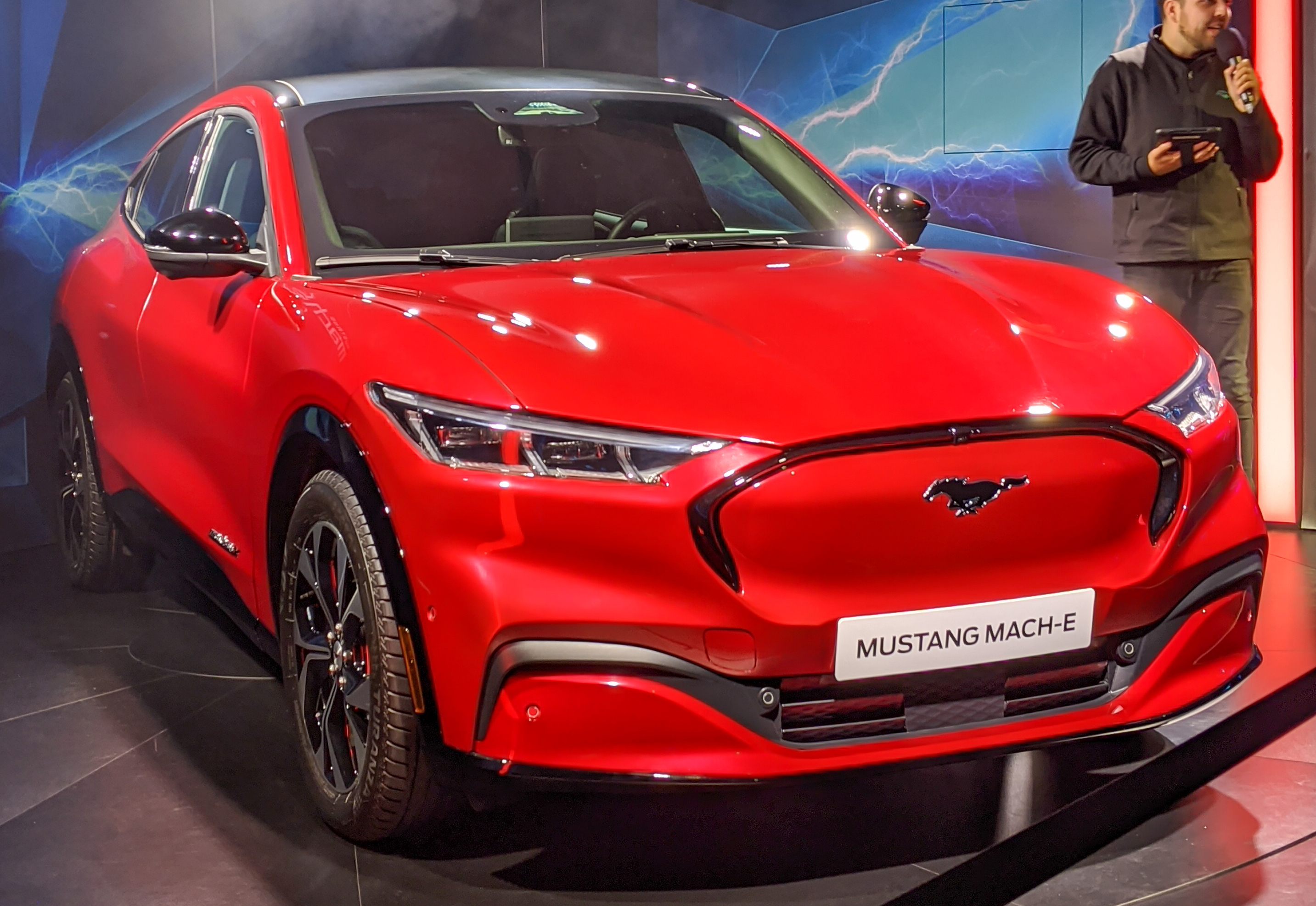
Mach E
The Mustang Mach-E is Ford’s electric vehicle. It’s not a traditional Mustang, but it shares the Mustang name and styling cues.

Ford F150
The Ford F-150 is a full-size pickup truck and one of the best-selling vehicles in the U.S. The speaker mentions it to explain a joke about adding Mustang-style branding to a non-Mustang Ford.
SVT
SVT was Ford’s performance group that made certain cars faster and more enthusiast-focused. If you see “SVT” on a Ford, it usually means it’s one of the special performance versions.
SVT Cobra
“SVT Cobra” is a special Mustang made by Ford’s SVT team. The SVT badge usually means it’s a more performance-focused version than a regular Mustang.
T-top
A “T-top” is a roof design where parts of the roof can be removed. It gives you open-air driving, but there’s still a center support so the car isn’t fully open like a convertible.
4-eyed
“4-eyed” is just a fan nickname for a car that has four headlights. People use it to describe the front-end look compared with cars that only have two headlights.
Pony interior
They’re talking about a Mustang-style interior. It usually means the seats and trim have Mustang-themed details, like the little pony logo, and it’s meant to look like the original cars from the 1960s.
Gathering at the Barn
That’s the name of the event they’re talking about. It’s a Mustang get-together with cars, cruising, and presentations.
Tip City, Ohio Mustang Museum
They’re talking about the Mustang museum in Tip City, Ohio—the location where the event is taking place. It’s basically the host’s Mustang hangout and event space.
Gale Holderman
Gale Holderman is the person who started and runs the Mustang museum in Tip City, Ohio. He’s the host behind this Mustang gathering spot.
international summit
They’re planning a big international meeting at the museum. The idea is to talk about how to run Mustang events and share what works.
best practices
They mean the best proven ways to run an event. It’s basically “what works” for Mustang gatherings, and they’ll share those ideas with everyone.