The Mercedes-Benz CLA Hybrid is a small luxury car that uses both gasoline and electricity to run. This helps it use less fuel and produce fewer harmful emissions.
An inline four turbocharged engine has four cylinders lined up in a row, and a turbocharger helps it produce more power by pushing extra air into the engine.
FAME is a way for car companies to create different engines that are similar, making it easier to build cars and change designs without starting from scratch each time.
An inline four engine is a car engine with four cylinders lined up in a row. It's a common design that helps make cars smaller and more fuel-efficient.
Compression is when the engine squeezes the air and fuel mixture in the cylinder before it ignites. More compression can mean more power, but it might need special fuel to work well.
Paddle shifters are buttons or levers on the steering wheel that let you change gears in a car without using a clutch. They make it easier to shift while keeping your hands on the wheel.
Oversteer is when the back of the car slides out during a turn, making it feel like the car is turning too much. It can be fun for experienced drivers but tricky for beginners.
The Honda Accord is a well-known car that many people trust for its good performance and fuel economy. It comes in different versions, including one that uses both gas and electricity to run.
A kilowatt hour is a way to measure how much electricity a battery can store. In cars, it tells you how much energy the battery has to power the vehicle.
Artificial intelligence is a technology that allows machines to think and learn like humans. In cars, it can help with things like self-driving features and improving how the car interacts with the driver.
Mercedes modular architecture is a way for Mercedes-Benz to build different types of cars, like gas and electric, using the same basic design. It helps them make cars more efficiently.
The transmission tunnel is the part of the car's floor that goes up a bit and holds the parts that help the car move. Electric cars might not need this as much, changing how the inside of the car looks.
The driveshaft tunnel is a part of the car that holds the driveshaft, which helps move the car. It's usually in the middle of the car and can take up some space inside.
Transverse front-wheel drive means the engine is placed sideways in the front of the car, which helps save space and can make the car more fuel-efficient.
The Autobahn is a famous highway in Germany where you can drive really fast without a speed limit in some areas. It's a unique experience for drivers who enjoy speed.
Yeah, that'll be interesting to see if anybody sends anything
in and what they say.
I want to see what people want Nicole to drive.
What are they going to recommend for me?
I wonder if it's going to be ridiculous or they're going
to go, I think she'd like this because.
And they're going to tell you to forward escape.
They're just going to like break down.
The escapade.
You're going to tell me Miata,
because it's the answer to everything,
but I'm going to get it off.
I feel like we're going to be in England most of the year.
Yeah, but no but rest is tall, so BRZ.
Yeah, because rest can hardly fit in a Miata.
Like when one ends up in the driveway, he's like, oh.
All right, anything else on your adventures with the Integra
or the E-Class wagon?
No, no more on the adventures with the Integra
or the E-Class wagon.
That's about it.
If you're a maintenance supervisor for a commercial
property, you've had to deal with everything from
leaky faucets to flickering light bulbs,
but nothing's worse than that ancient boiler
that's lived in the building since the day it was built.
50 years ago, it's enough to make anyone lose their cool.
That's where Grainger comes in.
With industrial grade products and dependable fast delivery,
Grainger can help with any challenge
from worn out components to everyday necessities.
Call, click Grainger.com or just stop by.
Grainger for the ones who get it done.
If you're an HVAC technician and a call comes in,
Grainger knows that you need a partner that helps you find
the right product, fast and hassle free.
And you know that when the first problem of the day
is a clanking blower motor, there's no need to break a sweat.
With Grainger's easy to use website and product details,
you're confident you'll soon have everything humming right along.
Call 1-800-GRAINGER, click Grainger.com or just stop by.
Grainger for the ones who get it done.
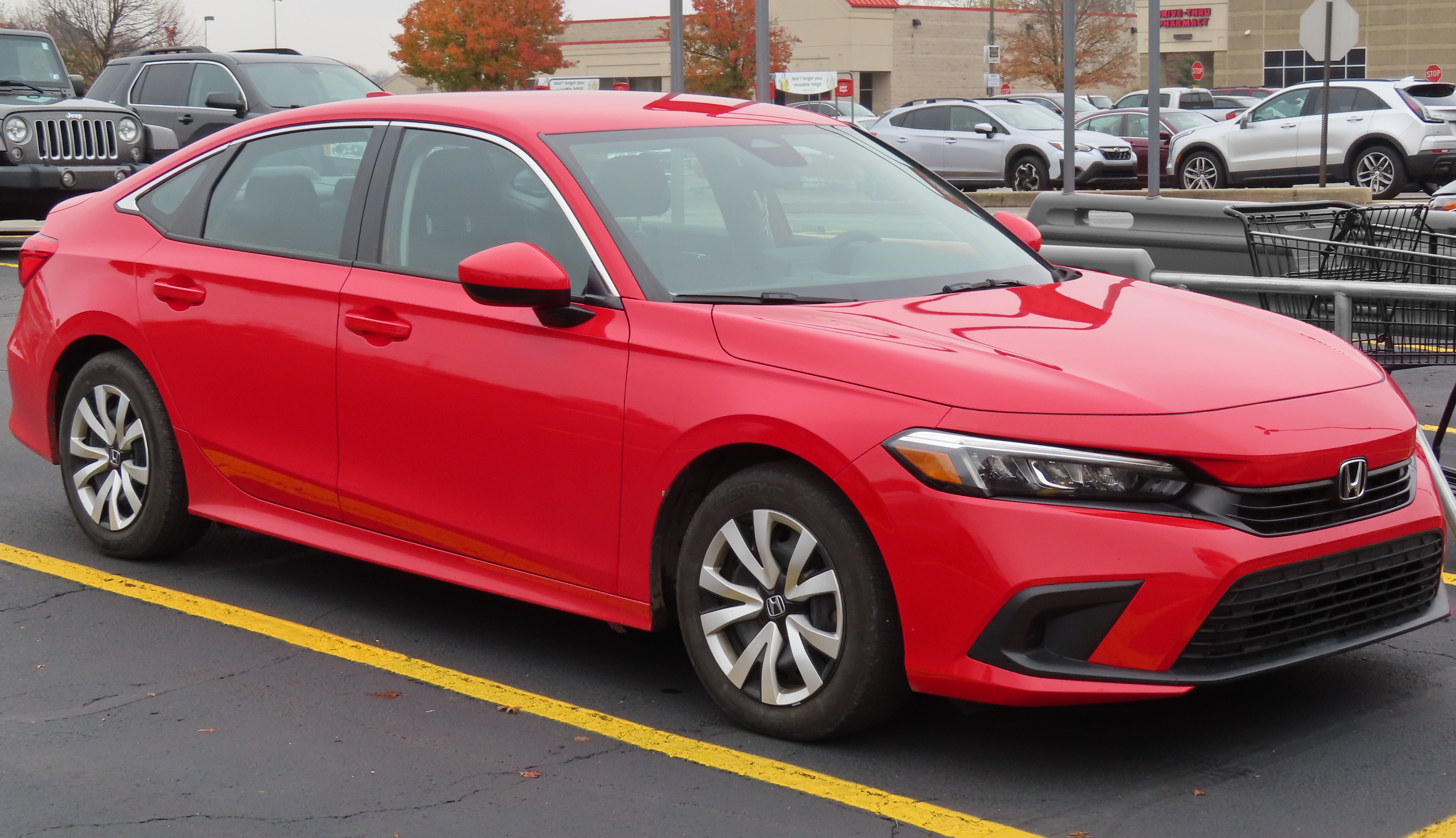
All right. Well, I have had this past week a 2025 Honda Accord Touring Hybrid.
Actually, I also had a base Honda Accord with the gas engine
because they were supposed to deliver the hybrid on Monday.
And for reasons, a gas version showed up in my driveway.
You know, I needed to write a review on the hybrid.
And so I came back, drive shop and said,
hey, I thought I was supposed to get a hybrid here.
And I said, oh shoot, we'll get you one tomorrow.
So that one did show up the next day.
But the base one had the same 1.5-liter turbo four-cylinder
that was in your Integra.
But the Accord, of course, is a little bit larger and heavier.
And it had a CVT.
And so it was not quite as lively.
The Accord Touring Hybrid, on the other hand, very, very nice car.
I really like that.
I really like the Honda Hybrid system.
You know, I talked a bunch about it
when I talked about the Prelude a month or so ago.
But the Accord, you know, in the Accord,
it works really well as well.
So this is, you know, this is a hybrid system
that is really biased towards the electric side.
Most of the time, it basically acts as a series hybrid.
So the engine under probably 90% of driving conditions,
80% of driving conditions,
the engine is not ever connected to the wheels
and is not sending any power to the wheels.
So you get 181 horsepower electric motor
that is driving the car most of the time.
And for comparison, you know, the Toyota hybrids in the Camry
is only 111 horsepower motor.
So you're getting a lot more electric power out of the Honda.
And the engine is so much, the four-cylinder engine,
it's a two-liter four-cylinder,
it's so much more refined and quiet than the Toyota.
And because it's not an ECVT system like the Toyota,
they can manage the, you know,
so they're relying less on the engine for propulsion.
So when you go to accelerate,
it doesn't just immediately rev to 4,000 RPM
and sit there and drone for a few seconds
until the car catches up to it.
You know, it's a much more quiet refined drive
and very enjoyable.
It's much more like driving an EV.
And one of the things I hadn't realized about it before,
and I noticed a couple of days ago,
you know, it's got shift paddles on it
or, you know, what looked like shift paddles.
But it's actually from managing.
Hi, Nico. Or is that Bowie?
Bowie's in the room.
Nico's in the front barking,
so he's making Bowie in the room bark.
Oh, okay.
So we're having, we're having work done on the house.
So now they're here, apparently.
Anyway, so the paddles, you know,
like I said, this thing doesn't really have a transmission
as such.
So the paddles are for controlling the regen.
And because it's mostly electric power,
you can get a lot more regen out of this
than you can out of a lot of other hybrids.
So the left paddle gives you more regen,
the right paddle gives you less regen.
And when you have it in normal drive mode
or an eco, you know, tapping the paddle,
the left paddle will give you more regen.
You get almost, you know,
almost like one pedal driving at max regen,
although it won't bring it to a full stop.
But it only, the regen only stays at that level
until you press the accelerator down again.
Or you start to accelerate.
And then it immediately reverts back to mild regen,
you know, which is more like just coast down
that you get with a regular internal combustion engine.
When you put it in sport mode,
the regen goes to essentially, you know,
there's an M there indicating manual mode.
And so whatever regen level you set it at
when you're in sport mode, it stays there.
So if you want stronger regen in sport mode,
you just tap the left paddle a couple of times,
and it'll stay at that level of regen
until you tap the right paddle to reduce it again.
So, you know, it's in a lot of ways,
it's a lot more like driving an EV than most hybrids.
Um, the Accord is very roomy.
You know, it's a big car.
Plenty of room in the back seat for adults.
Although, you know, like most modern sedans,
you know, they've gone to this kind of fastback
coupe like profile.
So the headroom is not quite as enormous
as it would have been in an Accord
from a couple of generations ago.
But still, you know, there's plenty of room back
to lots of head room, lots of leg room,
a little bit less head room than it used to be,
but still very comfortable, lots of shoulder room,
good sized trunk, and I was surprised
the trunk opening is actually surprisingly large too.
You know, one of the problems with, again,
with a lot of modern sedans
that have that fastback profiles,
you end up with a very small trunk lid.
So you might have a very spacious trunk,
but a very small opening to get stuff into,
not so on the Accord.
It's the opening is nice and wide,
comes right down to the bumper.
So you can get bigger stuff in there,
the back seats fold down.
So if you wanna shove a big TV in there,
or you know, other stuff, you know, maybe 10,
you know, eight, 10 bags of mulch,
you can do that too.
And so it's very, very practical.
And the Accord Touring Hybrid,
which comes on 19-inch wheels though,
the other trims come on the 17s or 18s.
The other trims are rated at a combined 48 miles per gallon.
And the touring on the 19-inch wheels
is rated at 44 miles per gallon.
This was a particularly cold week in Michigan.
And so when it gets cold,
it doesn't matter if you're driving a hybrid,
an EV, a diesel, gas, whatever,
you're gonna get less fuel economy,
especially if there's a lot of snow and ice on the ground
because, you know, there's more rolling resistance
for the tires, more slip and everything.
So I saw about 35 miles per gallon,
which is about what I would expect
given the conditions.
I mean, we had a couple of days where it was down,
the temperatures were down into the low teens.
So that's, you know, that's what I would expect
in those conditions.
And, you know, warmer weather,
getting in the mid-40s is not a problem at all.
You know, I've had an Accord,
last time I had an Accord hybrid a couple of years ago.
You know, it was during the summertime
and very easy to get into the mid-40s.
Just as with a Civic,
you can get up to 50 miles per gallon
with the same powertrain.
You know, the Civic's a little bit smaller, lighter.
But, you know, it's a, you know,
it's a really fantastic car.
You know, and if you, you know,
if you are not obsessed with the idea
of having a utility vehicle,
but you want something that's practical
and roomy for four or five people,
and you still want really good fuel economy,
the Accord hybrid is really an excellent choice.
The base, the lowest trim level of the hybrid
is the Sport hybrid.
That one starts at 33,655.
The Touring hybrid, you know,
and this is the powertrain's 204 horsepower
in the Accord.
And the one I had was finished in radiant red metallic,
which is an extra 455 bucks.
Had a really nice leather interior.
Let's see, the grand total came to 40,950.
Guesses on the destination charge?
1300.
1495.
Robbie gets it.
It was actually only 1195.
Wow.
Cheapy, cheap.
So it doesn't, yeah, yeah.
Doesn't cost as much to deliver a sedan
from central Ohio as it does
to deliver a full-size truck from Mexico.
So yeah, 1195 for destination.
You know, just shy of $41,000 all in
for a loaded Accord Touring hybrid.
Oh, and the Touring trim is the only one
that gets the infotainment system
with the Google built-in.
So it's Android Automotive.
All the Hondas, their infotainment system
is built on Android, but they, you know,
many of them have, you know, their base system
is just a Honda interface on there
and you can't load any apps onto it.
And that's what was on the
gas Accord that I got at first on Monday.
But then on the Touring trim,
you get a 12.3 inch infotainment screen
and the Google built-in software.
So it's got Google Maps, Assistant,
the Play Store.
And it also still has support
for wireless CarPlay and Android Auto.
So you can use your phone, project from there.
The vents are fully manual, as they should be.
Got three nice rotary knobs on the center of the dash
to, you know, so the one for the driver
to adjust their temperature.
There's another one for the passenger
to adjust their temperature
and then one in the middle to adjust the fan speed.
Just reach out, give it a little twist,
one way or the other.
Amazing!
Yeah, it's shocking, you know.
It just, it's so incredibly easy to use.
And, you know, I don't know why
more automakers don't do that.
So, that's the Accord Touring Hybrid.
But I also spent a couple of days this week
in Silicon Valley.
I went out there for a Rivian event.
And so when I arrived at SFO,
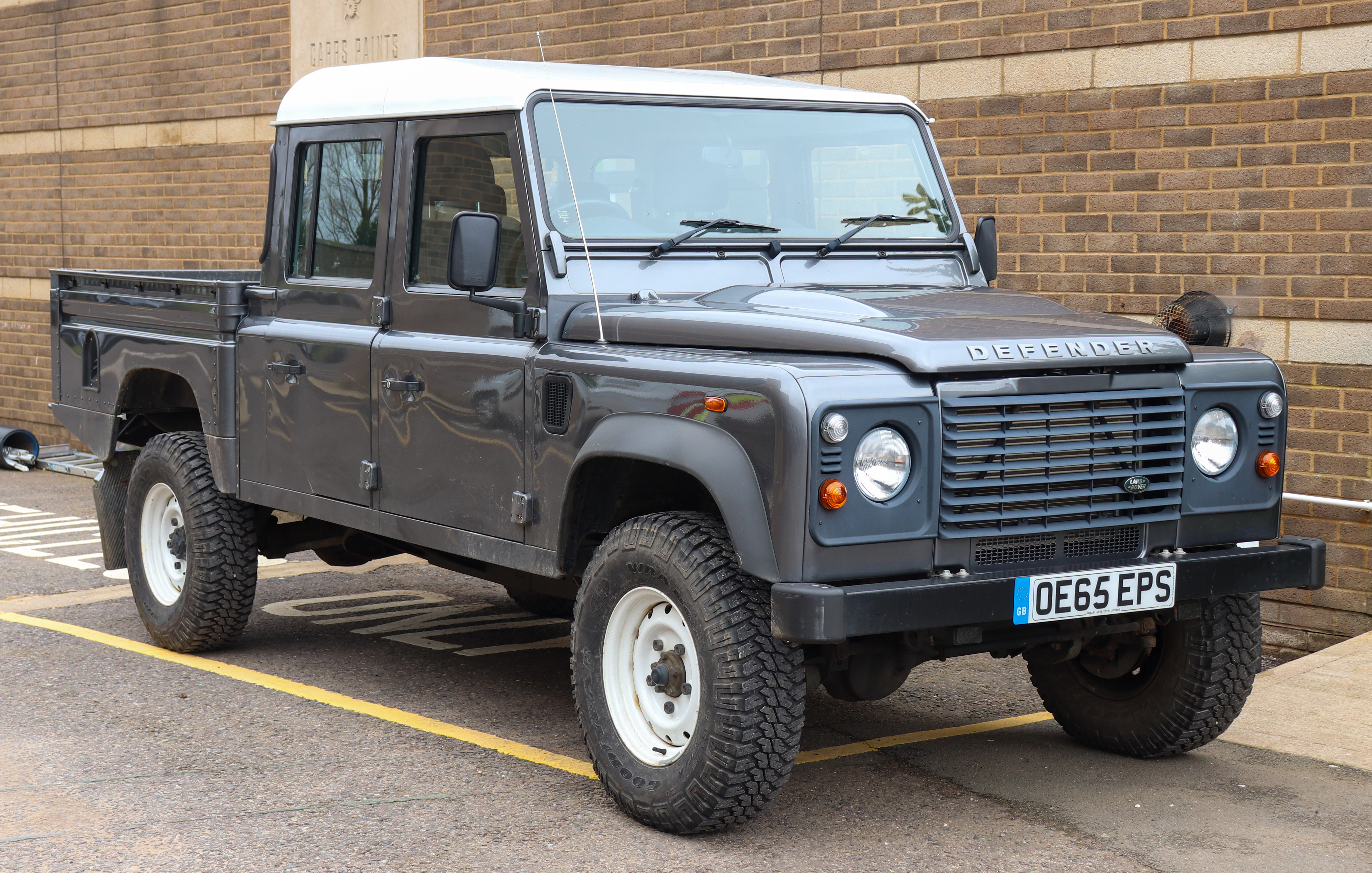
I picked up a Land Rover Defender X,
which is, so this is the four-door.
It's based on the 110,
mid-level, the mid-size Defender.
And there's a bunch of different trims.
You can get it with a four-cylinder turbo engine.
There's one with a supercharged V8.
There's the Octa.
The Defender X is kind of in the middle of the range.
And it has turbocharged three-cylinder,
three-liter inline six-cylinder engine.
395 horsepower.
It's a 48-volt mild hybrid.
So it'll stop the engine when you come to a stop.
And basically it'll stay, the engine will stay off
for most of the time while you're sitting there in the intersection.
It doesn't really seem to do much in terms of fuel economy.
Over the two days I was driving it,
averaged about 14 miles per gallon.
So the Defenders are decently large and heavy
and tall, so it's not a big deal.
And heavy and tall vehicle.
But one thing that really surprised me
when I fired this thing up was for a six-cylinder engine,
this thing had quite an exhaust tone to it.
At first I thought it was a V8.
It had a nice growl to it, a nice rumble.
And it's quite quick.
It'll do zero to 60 in about 5 seconds, 5.1 seconds I think.
And it's all-wheel drive.
You know, the Defender has a very nice interior.
It's a nice big center screen.
It's got carplay and Android Auto support, wireless.
Although interestingly, but midway through the second day,
it, the Android Auto disconnect,
you know, the wireless Android Auto disconnected.
It wouldn't, it didn't, it wasn't seeing my phone,
wasn't connecting, so I reached into my backpack
and grabbed a USB cable and plugged it in.
And it worked fine wired as well.
The Defender X, you know, has these black aluminum wheels on it.
It's got the fake diamond plating on the sides of the hood,
you know, like on the old-school Defenders,
you know, where they would have had that on the top of the Defenders.
It has that on the sides of the hood, you know,
not really somewhere where you actually want to, you know,
strap anything down to.
But, you know, it's more just for looks than anything else.
But, you know, this thing is quick.
It actually handles pretty well.
You know, I had a little bit of time on Wednesday afternoon
and took it for a drive along Skyline Boulevard,
which, you know, if you're from that area,
you know, this is a very nice twisty mountain road.
That runs for quite a few miles from South of San Francisco
down towards the South Bay area.
And, you know, even though this thing weighs probably
close to 6,000 pounds, you know, it's fairly wide.
You know, it did reasonably well.
It's not, you know, it's not a sports car.
You know, it's not like driving, you know,
any kind of sports car along this road.
But it didn't embarrass itself, you know.
On some of the bumpier roads that drove on,
it did, there was a little bit of head toss.
You know, but, you know, for what it is,
you know, which is a very capable off-roader,
it did okay.
And I said, you know, I like the way the Defender looks.
The 110 is definitely the best looking of the three, I think.
I like the 90.
You like the 90 better?
Yeah.
Yeah.
Yeah.
I mean, the 110 is a little more practical,
you know, if you need to take more than one passenger with you.
Yeah, I don't have friends.
Yeah.
Yeah, so if you don't have friends, you know,
then, you know, the 90 is a good choice.
But if you want to take extra people along,
then the 110 is a good choice.
You can get it with a third row, but, you know, don't.
If you must have a third row, get the longer 130.
Yeah.
I mean, the third row in this one, you know,
in the 110 is going to be pretty much useless,
because there's just not enough room back there.
But if you get, if you get, if you want,
if you must have a third row, get the 130,
because you got more room back there.
So there was no Manroni for this one.
But the 110, or the Defender X starts at $95,500.
The, let's see, it's got an 8,200 pound towing capacity.
The one I had was finished in what they call
Gondwana stone, which is sort of a brownish-bronze color.
Looked really good.
See what else.
There's the black roof, the wheels, 22-inch wheels.
You know, again, if you're actually going to go off-roading with this,
you probably don't want to get the 22-inch wheels.
You probably want the 19s with some tires that have more sidewall.
But let's face it, you know, 99% of the people that are buying this thing
are taking it, you know, to go to the mall or, you know, go to the gym,
you know, go to their, you know, their Pilates studio, whatever.
They're not, they're not, you know,
they're not driving this thing on, you know, on the Rubicon Trail.
Let's see what else.
The, this one also had the Windsor Leather and Cavadrat textile seats.
Are you saying that right?
Probably not.
How do you spell that?
What's Cavadrat?
K-V-A-D-R-A-T.
Cavadrat.
Textile.
The global textile company.
Oh, it's a company.
Oh, okay.
I'm going to go with Cavadrat.
Cavadrat?
Yeah.
Okay.
God.
Continue.
I'm like, what is he trying to say?
Let's see, what else?
Let me find the total bottom line.
Let's see.
So the total was $97,850.
Guesses on the destination charge.
$14.
$12.95.
Robbie again, $18.50.
I was going to go higher, but then I'm like, I went higher last time and it didn't work out.
Still pretty.
There was one other, there was one particularly odd ergonomic issue that I had with this,
which was, you know, so you got this nice big center, center touch screen,
and there's some knobs and buttons below that and the shift lever.
And then the volume button, for some reason, the volume button is placed all the way over on the
left hand side of this panel below the screen.
So it could be a little bit of a reach to get to it.
But, you know, you can also control the volume from the steering wheel.
So you don't really need to reach over.
So, you know, it could mostly be, you know, just there for the passenger.
But I just thought it was a little bit peculiar.
But, yeah, you know, I like the Defender X, you know, would I spend, you know, $100,000 on one?
Probably not for me, you know, but then again, I'm not an SUV,
I'm not somebody who's going to buy an SUV of any kind.
If I was going to buy one, if I was going to buy a Defender though,
I think I might actually go for the Defender Trophy Edition.
Oh, that's cool.
Which, you know, it's in the Deep Sand Glow Yellow.
And this, you know, this is sort of a tribute to the 1980s Camel Trophy landrovers that
ran in these amazing adventure races back in the 80s and I think into the early 90s.
So that is the Defender X, 2025 Defender X.
Very cool.
All right. Yeah. So let us, oops, I don't know.
Having challenges, John?
Let's, yeah. All right, let's talk about some of the other stuff that happened this week.
So Kia unveiled the second generation Seltos.
Do you have a chance to take a look at this thing yet?
I did. I think it looks good.
I did. It looks good.
I think it looks better than the Telluride that they showed off, I think.
Oh, you like it better than the Telluride? Yeah.
Yeah, I take the design language.
Again, the Telluride looks better in person if you've seen the photos and you're like,
it does look better in person.
That said, it's still, I think, a polarizing design.
I think the Seltos does look much nicer.
Yeah, it falls in line now, I think more, especially the lighting,
because Kia is having such distinctive lighting on their vehicles.
It matches the other ones now.
Like, I feel like it falls in line.
It still looks like a different vehicle.
It's not like a copy, but I'm like, okay, now it looks like it fits.
So I think the design looks fabulous.
Yeah, I think, you know, the overall design language of this, you know, is very much,
you know, in line with what you get.
You know, we start with the EV9.
The EV9 was the first one to get this kind of look to it.
And then the EV5, which is not sold here.
You know, and then this is, you know, this is the next one to get it.
You know, so it's a kind of a blockier look with a bunch of sharp creases.
And like you said, the lighting signature and more vertical front lighting signature.
You know, so it's a very substantially different kind of look
than the first generation Seltos.
It's only, it's about two inches longer.
So it's not, it's not, it hasn't grown very much.
But I think it's a really interesting design.
Yeah, I think they did a nice job.
I think if you like, if you don't like where Kia has been going,
you're gonna feel like this is still a messed up
because you're not gonna like it.
But if you've been pleased with their trend the last couple of years,
last couple of vehicles, this is spot on for them.
So I think people will be happy.
Yeah, and, you know, it's, they show it, they have the global press release.
You know, they did an online reveal earlier this week.
They, globally they're gonna have, they're talking about three engines,
three power trans here, two variations of the 1.6 liter turbo with 178 or 190 horsepower.
And then a two liter naturally aspirated engine with I think about 146, 147 horsepower.
I've seen somewhere, it's not in this press release, but I've seen
somewhere mentioned that it's also going to be offered with a hybrid powertrain.
So that would probably be the same 1.6 turbo hybrid system that's in a lot of other Kia vehicles,
like the Niro, you know, a lot of new tech in here, you know, all the latest driver assist
stuff like the highway driving assist to lane following assist, the safe exit warning.
And that's, that's a really good one.
That's actually one of the best features that Hyundai and Kia launched in recent years,
which is, you know, it's using the radar sensors in the rear corners that are normally for blind
spot monitoring and cross traffic alert. When you pull up to a curb and you park the car,
if the radar detects that there's either a cyclist or a car coming up in the adjacent lane
next to you, it will prevent the rear doors from opening. So you can't open the door
in front of in front of a vehicle that's coming along. So until it's clear, you can't open the
rear door, which I think is on the on the street side of the car, which I think is a really good
feature to have for safety purposes, especially if you've got kids that might want to hop out
of the car real quick. Yeah, I think that's a great teacher. You're not going to door a
bicyclist and you're not going to die from getting hit by a car or have your door ripped off.
Yeah. So, okay, so that's the, that is the new Salto's that's coming sometime in 2026. I'm not
sure exactly what the launch timing is going to be for this one. It doesn't really say,
but eventually 2026. Yeah, it'll show up. Yeah. And, you know, this, the Salto's is the
most affordable car in the Kia lineup in the US at least, at least most affordable crossover,
I should say. I think the K4 is actually probably still a little bit, a little bit cheaper than the
Salto's. But the current generation Salto's, see, okay, yeah, the current generation Salto's
starts at 23690. So, you know, it'll probably be around the 24 to somewhere between 24 and
25,000 to start with for the new one. Cool. All right. And then let's see. Oh,
so in Europe, let's talk about Ford for a second. In Europe, back in 2019, Ford announced a
partnership with Volkswagen to use the VW MEB platform. So this is the same platform that VW
uses for most of its mainstream EVs like the ID4 and the ID3. And Ford was going to use that to build
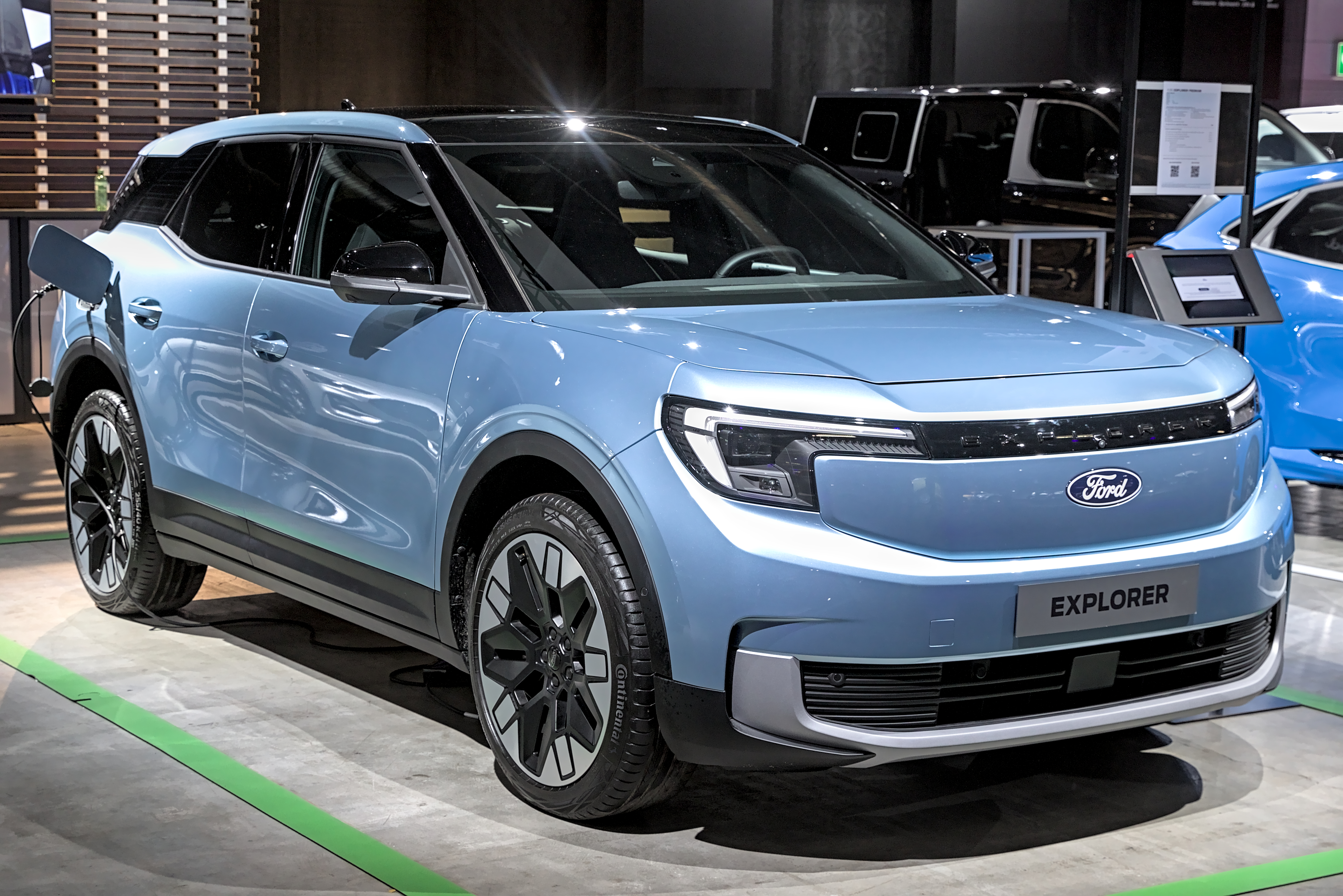
a couple of new EVs, which finally came out in like mid 2024. The first one was the Explorer,
the European Explorer, which is a very different vehicle from the Explorer that we can get here.
It's a compact four door crossover. It's electric. And then they added the Capri,
which is looks very much like a Polestar 2. And those haven't been huge sellers.
I was looking up the numbers the other day. Since the since they launched in the middle of 2024,
they sold about 60,000 units in total. And this is after they spent a billion and a half dollars
to completely retool their Cologne assembly plant to build these. And this is a very large
factory. So so Ford this week announced a new partnership with Renault to get a couple of new
electric vehicles based on the Ampere platform from Renault. So Renault a few years ago launched a
separate business unit called Ampere that's focused on building EV platforms. And so they're
going to use Ford's going to use that for a couple of new EVs. And those are coming out in 2028.
Oh my gosh, that's so far from now. Yeah, I know these partnerships and things take time. I realize
this isn't like you, you know, flip a switch and suddenly everything happens. But it feels like
it's just, I don't know, making big plans on EVs that far in advance is tricky. I feel
like right now, you know? Well, you know, there's always a long wait time for yeah. Yeah, if it's
tricky if you're for because you're a start, stop, start, stop, stop, stop, stop, stop,
start, start, start, EV, EV, a strategy hasn't been great. Right? I guess this is a start.
We're back at start again. Is it? We're back at start. We're back at start. Okay, or go,
stop, go, stop, go. So we're back at go. Okay. We'll see. We got three years to
change their minds. Yeah, so, you know, yeah, they've got about two and a half years. They said
early 2028. So they've got time. And this time, Ford is not going to retool one of its own factories.
They, Renault is actually going to build it and build these cars in one of their factories.
Cool. I mean, that could be good. I'm assuming that the between now and then the,
that it remains go and not stop and that the climate for EVs in terms of enthusiasm and politics
and everything else. And if the sun doesn't change 85 times between now and two years,
you know, because it could. You see some companies. These are for the European market.
So yeah, there's a whole other difference. Yeah. And you're battling an incursion of
Chinese EVs into Europe. So, and then you have places, you know, you have companies
like Hyundai. They're like, no, we're just going. We're just going. Yeah.
It's going to be a little weird sometimes, but we're just, we're not, no,
never, never stop not stopping. That's the, seems to be working for them. I see a lot of,
you know, Kia's and Hyundai EVs rolling around town. So,
just rolling around, just rolling around.
So, speaking of Ford's stop, start approach to EVs or should that be start, stop?
You know, back in 2021, I think or 2021, they announced a joint venture with SKON, Korean
Battery Manufacturer, to build three battery plants with a combined total of 143 gigawatt
hours of battery capacity, which would be enough for somewhere north of a million EVs a year.
They subsequently, you know, two of those two of those plants were going to be in Kentucky.
One was in Tennessee as part of the Blue Oval City project down there in your Memphis.
And then when things started to not go so well for Ford and their EV sales,
they said, well, we're going to put a pause on that second Kentucky plant.
So the first Kentucky plant is running and is producing batteries for Ford now for,
that they use in the lightning. And the second, the Tennessee plant
is not up and running yet. It's built, the equipment's installed, but they're not producing
anything there yet. And this week, Ford and SK announced that they are going to dissolve their
joint venture. And each one of them is going to keep one of the two battery plants.
Ford is getting the Kentucky plant, and SK is getting the Tennessee plant,
and they are going their separate ways. So this is part of the stop part, thanks.
Yes. So, you know, my guess is, you know, that SK is probably going to convert the
Tennessee plant, switch the Tennessee plant, instead of building batteries for EVs,
they're going to do what LG did when they expanded their Holland, Michigan plant,
and they're going to use Holland instead of building batteries for Toyota there,
and MC batteries for Toyota, they move that production to another plant in Lansing,
and they use the Holland, Michigan plant to build batteries for energy storage systems
for stationary storage. And my guess is that SK is going to do the same thing,
because there's just not enough demand for EV batteries in the US.
But everybody wants to build giant data centers everywhere, and those things need
reliable power. And so they're putting huge energy storage systems on these data centers
to make sure that they have reliable power. So my guess is that SK will build LFP batteries
for storage systems there in Tennessee. They also have the Slate partnership,
SK on, I kept trying to say SK. I interviewed the North American president of SK on,
and I said SK one at one point, and I was just like, come on, let me get it together.
But yeah, they are, you know, I think even in that, they were talking about energy
storage, and they were talking about, you know, what's going on with Slate,
but Slate hasn't built the car yet. Right.
And that's another year. Yeah, and SK still has, you know,
two other battery plants in Georgia that, you know, originally one of those was supplying Ford
before the Kentucky plant opened up. That now supplies Volkswagen for Chattanooga for the ID4.
And, you know, they, they probably have more than enough capacity there to also support Slate.
Yeah, so I would guess that's what they're, that's where the Slate batteries are going to
come from is from their Georgia factory. All right, this week, Nissan made a very
interesting announcement, a partnership with a UK company called Wave. Wave has been developing
automated driving software. And they're, they're an interesting company. You know,
they started off in the UK, they opened up an office in Sunnyvale, California last year.
I actually visited them a couple of days ago, and went for a ride in one of their development
vehicles. But, you know, when, when we went to Japan in 2023, for the Japan Mobility Show,
I went with Nissan, and we went to their R&D facility, and they showed us what they're
working on for automated driving for the future. And they were, they were focused on
doing the whole thing in-house, all by themselves doing the entire software stack for
level three hands-off, eyes-off systems, starting in about 2027-ish.
Now they've decided to partner with Wave instead and use some of Nissan's software,
the Perception software, and then use Wave's software for the driving system,
starting in, in 2027. And that's going to be, you know, that's going to be their next generation
ProPilot. So that's going to replace all their ProPilot stuff right now, from their hands-on
stuff, all the way up to hands-off, eyes-off driver assistance, starting in fiscal year 2027,
which in Japan runs from April 27th to March of 2028. So.
I will say that ProPilot has always been weirdly, uh, capable from a company that wasn't doing,
you know, hasn't been doing great. For some reason, ProPilot's always like,
wow, this is actually really nice. Good job, Nissan.
It is kind of funny because you think about that because everyone talks about Supercruise
and BlueCruise as being like, and they're, which are the big ones and they're great,
but it's like, wow, here comes Nissan, the product that actually works too. It's kind of surprising.
You might be surprised, or not surprised to learn that most of what's under the hood in
ProPilot comes from Mobileye, not from Nissan. Well, they made a good choice then.
I mean, they were smart about it. Yeah, exactly.
Just because you get stuff from another company doesn't mean it's going to be
integrated correctly. I think we've done a lot of that.
No, I think they did a good job with it. And I've been, I mean, the variations,
because it's gone through a couple of like releases over the years and it really is quite good.
It's always been quite good. First gen, second gen.
Every time there is something, this is actually really good given wherever the technology was
at the moment, you know. Yeah. The hands-off version that's in the Aria,
I thought worked pretty well, but have you tried it in the Armada or the QX80?
Because they have that hands-off and those vehicles as well.
I haven't had those vehicles. I feel like it. Did I try it? I just had a QX80.
Now you're just dealing with heft. Yeah, right. That's just like the thing,
ways. I don't think I actually tried it, to be honest. I can't remember if I did or not.
I only had a brief time. I did and it was a lot less consistent.
Yeah, it didn't perform as well as it did in the Aria.
Just burst my bubbleway, don't you? Well, that's what I'm here for.
But yeah, you know, I visited Wave and went for a ride in one of their
development vehicles and it was surprisingly impressive.
We didn't have a chance to do any highway driving because we got stuck in some traffic
and we were running out of time. But driving around Sunnyvale, it did really well,
except for one minor incident where it was supposed to do a U-turn at an intersection.
And you know, a lot of most intersections in California, you can do that.
But they, for some reason, it did not do the U-turn where it was expected to
and went halfway down the next block and then did a U-turn.
And then, you know, there was a car stop there in traffic and there was another car parked at the curb.
And we got really close to that parked car and it wasn't clear from, you know, from inside
the car if we actually had enough room to make it. But, you know, the safety driver did not
intervene. We let it go and, you know, as soon as the other car moved, it crept forward
and it actually got through. And, you know, it had a few inches of air, but it went through and did it.
So it worked.
All right. Another automated driving story, Aurora Innovation, which is a Pittsburgh-based company
started by Chris Irmson and Sterling Anderson and Drew Bagnell.
They're focused on automated trucking and they've been running driverless automated trucks
in Texas since May. And they just did a deal with a company called DeTmar Logistics.
And they are selling some of their trucks to DeTmar to haul fracking sand in Texas.
And so these are going to be driverless operating on a mix of highways and also off-highway
operations. So on dirt roads, you know, out to the fracking fields in the Permian Basin.
There's another company called Kodiak that has also been doing similar operations with a different
company. But there's only been operating off-road. I think you need to acknowledge
what Robby just did. You did Kodiak and suddenly Robby is like,
doing like bare clothes in the background. Oh, I do have a bear.
So this is kind of neat, though. I like the idea of using this kind of stuff for this application,
you know, just it's going to go in these straight routes back and forth. It goes,
probably not a fun thing for humans to have to drive. So.
And they're, you know, they're running these trucks 24 hours a day.
So, you know, we're starting to get some, you know, some real driverless
trucking operations going in Texas and elsewhere now.
Let's see. So it works out. Trucking sucks. Being a truck driver is not great.
And there's not enough of them. So probably because it's not a great job.
Actually, it's hard. It's not an easy job.
All right. Subaru. We hope this for you. No, wait, is this something else? Oh no,
never mind. That's something else. No, that's the next one, the Mazda.
The next one, sorry. Never mind. Ignore me.
So Subaru announced pricing this week for the new Uncharted, which is their
their name for the Toyota CHR. So this is based on the same platform as the
Salterra and the Toyota BZ. But it's, you know, a fastback coupe like crossover.
And it's unlike the Salterra, which is only available in all-wheel drive.
The Uncharted will also be available in a front drive version.
And it's going to start at just $34,995 plus delivery charge of some unknown amount.
Let's see. How much does it say with the delivery charge? Oh, $1,600 for delivery.
No, $1,450, everywhere except Alaska. Where's $1,600?
Oh, poor Alaska.
Yeah. Well, I mean, you know, cost a little more to ship stuff to Alaska.
So yeah, so this thing's going to have a range of more than 300 miles on a charge.
338 horsepower for the dual motor version. It's got a SAE J3400 charging port.
150 kilowatt charging. So 35 grand. Yeah, that's pretty reasonable.
That's pretty good. Yeah.
Charges at 150. Oh, wow.
You know, it's better than 50.
That's true. So there you go. It's always better. It's better than 140.
Well, yeah. And you know, it's better than the nominal 100 kilowatts.
When they first launched the Saltero VZ4X, you know, it would peak at 100, but you know,
its charge curve would drop off really fast and just dive. And so most of your,
I think on average, charging was closer to about 50 or 60 kilowatts most of the time.
So, you know, this should be a lot better.
All right. Let's talk about Mazda.
There we go. I know that, I know, I know, Nicole, that, you know, the Mazda infotainment
system of recent years has been your favorite in the industry, right?
It's totally been my favorite. I stopped us talking about this last week.
I'm like, we gotta hold this for Nicole.
And I'm looking at it now. I admit to being behind the curve.
Are you telling me they got rid of this stupid rotary thing as I'm reading this?
What are you calling stupid?
The rotary thing in the Mazda. A little tiny.
Yes. Yes. Starting with the new CX-5, the 2026 CX-5,
the rotary controller for the infotainment is gone.
You got a nice big 15 inch touchscreen.
Oh my gosh. I'll buy Mazda now. I've answered my problems.
I would actually consider a Mazda. That's like deal breaker territory for me, that old system.
Hated it guys. Hated it. I know you didn't know that.
Hated it. But I'm so excited for this new one.
Yay. Well done Mazda. You and your code of design philosophy
has finally given us decent infotainment. Woo-hoo.
Damn. Sorry.
Oh, look how happy we've made Nicole.
I'm very happy about it.
So are you glad we saved this, Sam?
I'm glad you saved this. We could have just done it with them.
This is fantabulous news. I'm really genuinely excited about this.
That was my big beef every time someone asked me about Mazda.
I'm like, well, whatever the Mazda was, well, it's great, but.
But. No more buts.
No more buts.
No more buts.
And the best part is even though it's got this big screen and, you know,
Google built in, it still has, wait for it, manual events.
Oh my God, it's like my dream company now.
My dream car is a Mazda CXI.
I'm happy about this because I do think that that was,
and I know they were, they held tight to that.
Gosh, how long have they had that?
100 years.
And it was, first it was no touchscreen at all and just the rotary controller.
Then it was touchscreen for Apple.
At least the early 2010s.
Yeah, so it has been a long time before they finally said,
you know what, nobody likes it this way.
But that took some time.
Like kudos to you for finally getting rid of the system
that wasn't great to begin with.
And also for not making your events part of the system.
Well done.
Yeah.
And the new CX5 will have a hybrid powertrain coming in 2027.
So, you know, I'm not sure.
So this year the 20, it comes out, this is a 26.
So initially just a gas engine.
Okay.
Yeah.
And they're doing a drive program in late January.
So, you know, it should be on sale probably by February or March,
which maybe is not soon enough for you, Nicole.
But they will have a hybrid system for the second model year.
I'll have to see.
I'm not going to rush to buy a car
because I want to get what I want to get.
That's probably a wise choice.
Right?
I'm just, yeah, I'm just going to wait and see what.
Don't forget, everyone.
Please send us your, please send Nicole your advice on the car,
on the vehicle to purchase and why you think Nicole should purchase.
And you can now put Mazdas in there
because they're changing their screens.
Yeah.
You can put a new CX5.
And feel free to, you know, give us, you know,
your reasoning why Nicole should buy the new Jeep Recon instead.
Oh, gosh.
Oh, my gosh.
No.
I'm not doing that.
It's so expensive.
It's expensive.
Like, who's that car for?
It's not for, I don't want that.
It's very nice.
It looks lovely, looked lovely.
When I looked at it, it looked lovely.
I mean, that's all anyone says.
Anyone driven yet?
No one's driven yet, have they?
No, nobody's driven yet.
Okay.
Nobody outside of Stalantis anyway.
Okay.
Just Stalantis.
Okay.
It looks lovely.
I don't have anything against Jeep or the Recon.
You know, knock yourself out.
It's expensive.
It's very expensive for what it is.
Well, yeah, but you can take the doors off.
And you can.
I can take the doors off any car.
And you can take the, what am I trying to say?
Not the windshield.
The windows, the quarter windows.
The quarter windows in the back.
You can take off.
And all that keeps them off.
And it's got the Sky One Touch roof.
Sky One Touch.
And you have that tremendous 230 miles of range.
Bah, bah, bah.
Well, you have to do two range runs.
You have to do one with everything on
and then one with everything off.
So it's like 230 to 260,
depending on how you actually
love your vehicle for a given day.
With everything off, it'll probably be about 120 miles.
Yeah, because you're creating so much turbulence.
Yeah.
Oh, that's true.
I was thinking weight, not turbulence, but you're right.
Yeah, you create a lot of turbulence.
Oh my God, the turbulence.
Where can you go?
Five miles.
All right.
And then finally, Rivian.
I mentioned that I was, I was at Rivian's
Palo Alto facility on Thursday.
And the reason I was there,
they had their first ever AI and autonomy day.
And they made some pretty big announcements.
They, you know, last year, middle of 2024,
when they launched the second generation
of the R1S and R1T,
they completely revamped their electronic architecture.
And they adopted NVIDIA chips for their ADAS system.
And then now the R2 is coming in next spring,
spring of 2026.
But those first R2s are going to have that same system
in there, the NVIDIA based system.
But towards the end of 2026,
they're going to change again.
And they have designed their own custom chips
for their ADAS that are significantly more powerful
and they claim much more power efficient.
So about two and a half times the performance per watt,
which, you know, on an EV is really important
because, you know, all the watts used to drive your computers
are watts that you can't use to actually drive the vehicle.
And so they are going to have more performance,
less power consumption.
And they're going to have a LiDAR sensor,
they're adding a LiDAR sensor to the R2.
And they are going to eventually have
hands off, eyes off driving capability on the R2.
Sometimes later in 2027, maybe 2028,
that, you know, they're going to put the hardware
in starting at the end of 2026.
The software is going to come at some point after that.
That's, I mean, that's everybody's promise.
We're going to put the hardware in
and then we're going to do this software.
Eventually we'll let you have it, yeah.
Drive in the future when you're not driving.
And we'll, yeah, it's again,
it's a really hard problem to solve
and good luck.
Yeah.
The crazy thing is that these things,
like to be honest,
these things are really like shareholder plays.
Like shareholders love this.
It doesn't matter.
If we had been told a million cars,
everyone would be like, man,
but as soon as they say AI and autonomy,
shareholders lose their minds.
Yeah.
It's in money, better spent elsewhere, probably.
But before they get to that,
before they have their own custom chips
and LiDAR and other stuff in the car.
Right now on the R1, they have,
I think sometime this summer,
they added hands-free driving,
hands-free hands-off eyes-on system
like Supercruise that works only on divided highways.
So about 130ish thousand miles of highways.
Sometime in the next few weeks,
they're going to push out a software update
that enables what they're calling universal hands-free.
So you will be able to go hands-off eyes-on
on pretty much every road in North America
that has painted landmarkings.
So about three and a half million miles of roads.
The universe of North America.
Where do you put your hands?
Just Ricky Bobby in the car.
What do I do with my hands?
It still won't be point to point.
So you can't yet put in just put in a destination
and have it do all the stuff to get you
to do all the turns and everything.
You have to do the turns and intersections
and stuff for yourself
and stop for traffic lights
and things like that yourself.
But in between that,
you can take your hands off the wheel.
The point-to-point navigation is coming
towards the end of 2026.
And that's what's going to be on the R2
with the new stuff from as soon as they launch that.
And then some point after that,
you'll be able to go eyes-off as well.
What do you think?
Do you want to go hands-free
but you still have to stop for stop signs
and traffic lights?
That's the thing about the hands-free but eyes-on
is that I end up just driving anyway.
Like my hands are just there.
So it's, you know, sure.
I mean, it's almost like a director
when they make their first short film.
That short film isn't going to make any money,
but it is a calling card for that director.
It's just, look what I can do.
And then later on when I'm going to make my giant movie,
this is sort of the same thing.
Like the hands-free eyes-on is like,
look what we can do.
And then later on,
look at our giant level three system.
I feel like that's where we're at with these things.
It's like, this is what we can do.
Shareholders, again, they love this stuff.
Individuals, I don't, you know,
I don't know what the take rate is on it.
Maybe it's really good.
Maybe people are like, hey, this is nice.
It's really nice when you're on a long,
if you're driving through, say, Nebraska.
This is an outstanding system
because you're just like, oh, God, Nebraska's so long.
That's what you're, this is where it's great.
Do I want someone with their hands off the wheel
while they're driving through town
and children are running around?
Maybe just leave your hands on the wheel.
Just keep them there.
Just keep them there.
Just a little backup.
Just keep those hands on that wheel.
Yeah.
You're still in charge.
The most important thing is that you're the boss.
And, you know, for all these systems
until they get to a hand or to an eyes-off system,
you will remain the boss.
You are responsible.
So if anything goes wrong, it's on you.
It's not on Riviera.
All your faults.
If someone comes along and they make a chalk drawing
in the middle of the road and it forces your car
to drive into a taqueria, yeah, you're at fault.
Into a taqueria?
Oh my goodness.
That's very dramatic.
The scenario you've created.
These are just my life.
This is all the places I go.
It's taquerias and Costco now.
It's just taquerias and Costco.
That's all I do.
Taquerias and Costco.
Getting $5 chicken, picking up tacos and burritos.
Isn't it the hot dogs that you get at Costco?
I think that's a big thing about Costco hot dogs.
You can get a dollar, it's like a $1.50 hot dog with a drink.
You know exactly what I'm talking about.
I just saw someone freaking out about the possibility
they were going away and there you go.
15 years ago, I had a Costco membership from work
and I mostly just used it to get the tires.
This one I had the WRX.
So I just mostly used it to get new tires.
So I'd always just be wandering around Costco
for an hour and a half when we lived in a small apartment
so we didn't have anywhere to put anything.
And I would get the pizza and it would make me sick every single time.
I got the pizza recently.
I don't know because it's pizza, Nicole.
It's the heroin of foods.
It's like, oh, pizza.
No.
You just keep eating it.
That is the heroin of foods.
It is.
He's right.
He's not wrong.
Yeah.
So I got the pizza recently.
It did not make me sick.
So good job, Costco.
So it's that great pizza.
You've developed a tolerance.
Yeah, some time over the last 15 years.
I've created some sort of like, my stomach's been preparing.
Like they've been building up.
All this time.
It's like we are ready now.
All this time.
Bring on the Costco pizza.
Anyway, Costco.
OK.
There's a lot of stuff you can get.
$5 chicken and $1.50 hot dogs are pretty great.
Well, the rotisserie chicken is actually really good.
Five bucks.
We had one last week.
Five dollars.
And you know when I get that chicken,
all the animals know and I don't give them scraps
from anything.
The animals, except for when I'm de-boning a chicken,
then they all just wait around.
Because that's when they know.
They know they're going to get some Costco chicken.
It's pet Christmas when the Costco chicken comes into the house.
Well, you know, whenever we have a chicken
or a turkey or something, you know, after we're done,
after I'm done cutting off as much of the meat as I can,
I always throw the carcass in the instant pot to make some broth.
And then whatever is left,
whatever little pieces of scraps are left on the bone
when I threw it in there.
When we take it out, pick out all the bones,
just get all the little scraps of meat,
and put those in a container and add those to the dog food
when feed the dogs.
Pour it on top.
It's a delight.
It's a little treat.
Oh, they love it.
Yeah.
It's a delightful little treat.
But back to Rivian.
That's what we're talking about.
Sorry.
Part of what they're doing is they are launching
a new autonomy plus package,
which, you know, once they launch the universal hands-free
in January, that's going to be complementary
for Rivian drivers for until March.
And then after that, if they want to continue using
the universal hands-free, they will have to either pay
$2,500 one-time charge for the life of the vehicle
or $49.95 a month to use the universal hands-free.
And I'll have to wait.
You know, I've already requested to get an R1 to test
as soon as they have the universal hands-free
software update available.
I want to see how well that actually works.
I'm trying to figure out if it's actually worth
$50 a month or $2,500.
That's a lot of money.
It is a lot of money.
If you can turn it on, turn it off like you do
with streaming services, if you're going a long trip,
you're like, I'm just going to pay $50
for this really long trip.
But then turn it off, I would not pay as a me.
I would not pay $2,500 for this because even I barely
you like I use like a look.
I just turn off link keep assist.
I just want to and then in my personal car,
when I'm testing it, obviously I leave it on.
But you know, I got to do my job.
And then adaptive cruise control.
I use that sparingly.
I don't really use it all that much to be honest.
Sometimes on long road trips, I'll use it.
Sometimes I'm stuck in traffic.
But most of the time, I'm just like driving.
I'm the tech guy.
I should be testing all this.
I test it all.
And then at the end of the day, I'm just driving my car.
One thing that was good, I spent a bunch of time talking
to the software guys working on this stuff
and tried to extract as much information as I could.
One of the things I asked them was around safety.
And unlike a certain other company that only makes
electric vehicles and claims to offer full self-driving.
One of the things that the Rivian engineer said is that,
as part of this software stack, most of it is AI.
They've got what they call a large driving model,
which is training.
So most of the perception and the control is handled by that.
But they also have rules-based software
that's running around that to provide guardrails,
to try to prevent it from doing anything stupid.
So hopefully, at least based on what they've said,
hopefully this system should be safer than that other system.
But we'll see.
And at least they are committed to multimodal sensing.
So they've got cameras and part of the upgrades,
in addition to the chips, they're getting even higher.
They already have fairly high resolution cameras,
but they're increasing the resolution of the cameras,
adding even better radar sensors and the LiDAR sensor.
And they said, to go eyes off, you really need to have all three types of sensors.
See, that's the right thing to say.
And for a company that whenever they have an event, it feels like joy.
I'm glad that they're concerned about safety and having the correct amount of,
the correct redundancy to make this happen.
Yeah, a little bit of inside baseball.
Usually when you go to these kinds of events,
the media, when companies make announcements, people in the media,
they don't applaud or cheer.
I mean, one exception was when Honda brought back the volume knob on the CR-V
a few years ago after having a touch volume control.
That one absolutely got a cheer from everybody in the room.
But generally, the media do not cheer or applaud for these announcements.
There was one guy sitting two seats over from me from who will remain nameless,
but he definitely, he's a YouTuber and definitely falls under the category of influencer.
And every time RJ or one of the other people made, announced something,
he just had this loud hooping and hollering and cheering.
She's shuttledown.
Shut that. Shut up.
If it wasn't for the woman sitting next to me between us,
I would have just given him a big elbow on the ribs every time he did that.
Settle down.
I once had someone shooting video at an event ask me to stop typing
because they could hear my typing in the video.
And they looked at me like, hey, can you not type?
I'm like, no, I cannot not type.
This is my job.
I'm sorry.
And the person's just like, okay.
I'm a very nice person, I think.
But when I'm doing my job, just let me just...
Just a very nice person really, but...
I think.
But when I'm doing my job, I'm doing my job.
Most of the time.
Most of the time.
I'm very nice.
Yeah.
So the other big thing that was part of this announcement was what they called
Rivian Unified Intelligence.
Yeah, there were lots of acronyms the other day.
But the Rivian Unified Intelligence, they're incorporating AI pretty much.
Yeah, they're putting Skynet, they're putting Skynet in your new Rivians.
You know, they put together a platform to orchestrate and basically can use a bunch
of different LLMs, large language models like chat GPT and Gemini and various other things.
And so it can pull in information from different places depending on what you're doing
and what you ask for.
And they've also created what they call an agentic framework that allows stuff to work together.
And this is also launching in January, coming to the R1 as an OTA update.
And the first thing that they demoed as part of the agentic framework
was integration with Google Calendar.
So the demo that they did, you know, they had one of the guys sitting in an R1 and
Westin Ben Said, who's the head of software at Rivian was up on the stage.
And they were doing a chat back and forth.
Rivian was a text chat.
Westin was texting to the guy in the car.
The car was reading the text messages out to him, you know, just like you can do today
on any car with CarPlayer Android Auto.
Where it'll read your text messages to you.
And he was replying back, you know, with voice, which is all great, you know, all stuff you can do.
Then they were trying to, they had, you know, on the calendar, they had a meeting
set up, they were supposed to meet somewhere and said, Oh, can we change the time of the meeting?
So he said, you know, told the Rivian assistant to move this
meeting on his calendar to a different time.
And it did that.
And, you know, you can kind of do that with Google Assistant today.
And Mike, you could at least try to do that with Siri, I think, but it may or may not work.
It may or may not listen to you.
The whole thing is that they're like, Google Calendar.
And I'm like, whoa, hold on, no one cares.
This is what I want like a smart assistant to do.
When I'm driving, hey, smart assistant, make me a playlist of three's, three,
like the top songs from these three artists.
That's what I want when I'm driving.
I like, I know when my stuff's coming up.
I can tell Siri or Google Assistant to like do Google, to do calendar stuff.
It's such a weird like flex, guys, Google Calendar.
The one, the one thing, the one thing out of the, out of the demo that actually was
unique that I hadn't seen done before was, you know, said, okay,
he said, you know, find me restaurants near, near my, near this meeting.
And so, you know, you can do that in Google Maps today.
You know, pulled up a list of restaurants.
And then he said, okay, text the top three restaurants to Waseem.
And that's where it got interesting, because it did actually take the top three
restaurants from that list and dropped it into a text message and sent it to Waseem.
So, it's cool.
Rivian's not going to be the only one that can do this, you know,
probably within the next six months.
But it was kind of interesting, you know.
Yeah. I mean, again, but again, that's such like work stuff.
I didn't buy a Rivian for work.
I bought a Rivian to party.
I'm sorry.
For adventure.
I don't want useful stuff.
I want fun stuff.
Dang it.
Well, it's like, hey, you know, hey, can you, on my Google Calendar,
can you update my campaign schedule?
Rivian's for camping.
I mean, sure, that's, that it was such a weird like,
all this stuff like, okay, okay.
And Google Calendar.
And I'm like, wait, what?
Okay.
That's when they really lost you, didn't they?
I will tell you that my calendar I use, you know,
I have a robust calendar app that I use.
I have tons of things that are going on all the time.
Like this should speak to me.
And then at the end of the day, I'm like,
I want the thing to do fun things.
Maybe I'm a weirdo.
That's fair.
That's fair.
After all the demos, I did have a chance to chat
for a few minutes with James Philbin,
who is the Vice President of ADAS and Autonomy at Rivian.
And I will include that at the end of the show here.
Anything else you guys want to talk about before we wrap up?
Not me, not especially.
Don't forget to email or put in a discord what Nicole should buy.
Yes.
I cannot stress.
This is the most important thing.
This is the most important holiday task.
Help me figure out.
It's the holidays.
I'll give you a different new card.
There you go.
At some point you're going to be sort of annoyed
with family or friends.
Just like, just, oh, you know what?
I'm just going to sit down and write out a long,
you know, write a couple of paragraphs
explaining what Nicole should buy, why she should buy it.
Yeah, this is homework.
I was just saying you guys have homework today.
And so if there's no,
if you don't provide a justification,
there's no reason for Nicole to buy it.
Yeah, unless it's me.
We need, we need.
Regardless of how insane the justification,
you got to give us justification.
Well, welcome back, Nicole.
We miss you.
Thank you.
Missed you too.
All right.
Talk to you all next time.
Bye.
Bye.
Bye.
Okay.
So, you know, with the things that you announced today,
with especially rolling out an L3, L4,
so ISOF, brain-off capability, what do you see is the probable
timeframe for that?
Like, do you expect to have ISOF capability at roughly the same
time that you launch the R2 with the LIDAR and the ACM3?
Or is that something that will probably come at a later date?
Yeah, we're not adding any dates on the ISOF today.
I mean, it would be later than point-to-point,
which is, I mean, what would be the talent the next year.
Okay.
And yeah, I think, you know,
part of that is like, we need the fleet, we need that flywheel
turning so that we...
So, you want to have some vehicles with LIDAR out in the field
to collect that data before you're...
Yeah, let's come with ISOF.
And you know, I mean, no one has actually really achieved
this yet, except for in very restrictive...
Yeah, you've got the BMW 7 Series, some Mercedes.
Yeah.
So, we would want to do it in...
We would want it to be actually used.
And then to do that, you really need to build that
confidence through simulations or apprentice mode
through all of those, you know,
making sure you can essentially get to a human-like level
in the ODDs that you cover.
Okay, that's kind of the process.
So, yeah, so we kind of need that flywheel out there
so that we can start to gather all that data
with those statistics that gives us the confidence to ship.
So, as you do start to roll that out,
do you expect that to also be kind of a staged rollout
of the ODD, so ISOF perhaps on highways only first
and then gradually expanding that ODD over time?
The same thing with the purple L4.
Yeah, I think that's right.
Now, I think the only thing I would say is,
I think the ODD is so sort of carved off
and difficult to reason about.
It customs very many like a feature
because it needs to be understandable,
like where should we use it.
So, but yeah, so as long as the ODD
is sort of relative to the standard,
then I think we would definitely do that,
that staged state.
As we gain a confidence in one area
and have always the data flight rules
continuing, right?
So then we get building the confidence
of the next area that we can expand over the years.
So for the ODD, as you launch ISOF capability,
do you expect that to be whatever degree that ODD
is, whether it's divided highways
or something beyond that?
Is your target for that to be a nationwide rollout
or like what Mercedes has done
where it's California and Nevada
and then maybe adding other states over time?
So, I'm posting right now,
both ISOF is actually regulated differently
about each state.
So you would today, and this has done
federal version that comes in before that,
you would have to go state by state
and all the states are slightly different
of what they expect, but she's right.
So yeah, we would go state by state.
So it would be a geographic area
as well as probably a particular
area he reshalled a bit.
And then for the personal L4 ODD,
again, presumably that will start
more restricted ODD, same as what you
fail free, gradually rolling that out.
Dude, with this hardware suite,
with one LiDAR sensor, one forward-facing LiDAR,
your radars, your camera's full,
how far do you anticipate that getting?
You mentioned in the presentation,
dropping the kids off at school.
So putting your kids in the car,
have the car, drive them to school,
they get out, and then the car,
drive itself back.
Do you expect the car to be able
to drive itself around with no one in the vehicle at times,
or is it more that somebody would be in the vehicle
but they're not responsible for any supervision
or intervention or anything like that?
Yeah, so I think there's probably
to be a staging of the pinning machine,
the latch-up piece that you mentioned was though,
because initially, if you think about the part
from the level from the eyes-off
to the customer of four,
so essentially it would be
expanding the ODD to the point where
you could do a useful pull, Germany,
but we still may require even intervention in some cases.
For example, there could just be a mechanical pull,
would it be?
Then you need it.
Or when it reaches the limits of the ODD.
It reaches the limits of the ODD.
I think there's a staging where you have
driver in, but eyes-off,
and then maybe you have,
but you drive out of that seat,
but still around.
If the vehicle is up, it just gets stuck.
It's going to make progress,
so you could get out, you could drive it the rest of the way.
So then like a full-on driver of course,
so I think there probably is a staging.
Okay, and then one last question on the eyes-on part of it.
As you reach the limits of the ODD
and the driver has to take over control,
what is the philosophy that you're taking
in terms of the hand-off,
in terms of timing, how you handle that,
do you have an approach that you're going to take to that?
Yeah, so we have something called an MRM,
which is basically,
so we try to hand back to the driver,
and then if you're not responding,
then we ask you something called an MRM,
which is a minimum risk you remove that.
And typically today you could try a blood and nail,
and then slow it a bit gradually.
So that's kind of our MRM.
And then in future, we'll probably expand that
to like pulling over onto a shoulder if it's clear.
So yeah, so that's kind of the philosophy, right?
So if you want to be,
you know, safer for those users,
say it's basically you always,
you try to hand back to the driver,
they're not responsive,
then you sort of buzz a vehicle,
which was safe, safe, you smell the BC.
Yeah, I guess what I was asking was more,
say your initial ODD for IZOP is divided highways,
and you've got navigation on,
it knows you're coming up to your exit,
and the system wants to alert you to
get ready to take control back.
What's your timeframe for providing that alert,
making sure the driver has got situational awareness
and is actually ready to take control?
Yeah, it's difficult to answer because it depends
what we're demanding of the driver in that case.
So obviously, in the limit,
you could be asleep or you could be,
so then we need to provide a much longer period of time
when we try to wake you up.
All right.
Or your eye, you might be awake,
but if you're focusing on something else,
that would be a different case.
Or your eyes may have to run a road,
for whatever reason, it might be a different case.
So maybe you're monitoring the driver in real time,
we will obviously you're monitoring in real time,
and if you see that the driver is alert and ready,
maybe you cut that timeframe down,
if they're not, and then you're not alerting sooner.
In fact, it's an obvious situation.
So if you're on a European road with no one there,
and you can wait longer,
versus if you're coming up to a complex intersection
and something like that,
you really feel like the driver needs to take tension.
So I think it's difficult to answer
because it's actually at all still levels,
even today that come back
that we have universal mandatory.
It depends on speed,
you're going the upcoming curve,
it should have our tendency of you being
in the recent a few seconds.
So it's not like I said, one simple rule
that we're going to tell you about.
Oh, you mentioned it reminds me,
for universal hands free,
if you are driving down the highway
and there's a construction zone coming up,
is the system going to be able to say,
you know, see that okay,
there's a work zone of a C signs for a work zone
and left lane is closed
to automatically switch over to the right lane
and continue on in that,
or is that going to be a handoff situation?
That's a driver situation.
So that's why universal hands free
is a level two system.
It's a hand system.
We make sure that we're looking at the roads,
but this is some of that,
for example, those types of roads,
something like a construction zone.
And actually I would say the universal hands free
can handle many types of construction zones well,
but I would want the driver to be in the loop
in those cases.
Okay.
So it's not a gap.
If, you know,
we need to build more confidence
in construction zones,
obviously through our days of labor,
we're adding new spheroes.
Okay, great.
Thank you.
Appreciate it.
Thank you.
Your business is one of a kind.
So your website should be too.
With Wix, it's easy,
almost too easy to create a website
that's perfectly yours.
Just tell AI what kind of site you want to build
or choose from thousands of templates.
Change whatever you want,
whenever you want,
and get everything you need
to start running your business your way.
No matter what you sell
or what you aspire to be,
you can do it all yourself on Wix.
With our program,
our members are losing more weight
with expert nutrition and side effects support.
I'm Mike and I've lost 135 pounds.
Weight Watchers prescribing GLP1 medications.
It's been life changing.
I'm Sharia and I lost 80 pounds on Weight Watchers.
I realized that it would take more than a prescription
to lose weight and feel good on a GLP1.
Better results.
Expert support.
Lose more weight.
Make it last.
I can't imagine doing a GLP1 without Weight Watchers.
Get started for as low as $25 at WeightWatchers.com slash GLP1.
For over 60 years,
we've helped millions of members
find what works for them.
Now it's your turn.
Weight Watchers, watch it work.
About this episode
Exploring the future of automotive technology, this episode dives into Rivian's latest advancements in AI and autonomy, including their new hands-free driving features and the upcoming R2 model. The hosts discuss the implications of these technologies, the importance of safety, and the evolving landscape of electric vehicles. They also touch on the latest from Mazda, Subaru, and Ford, highlighting new models and their innovative features. The conversation is lively, with insights on the automotive industry's direction and the role of technology in enhancing the driving experience.
Nicole is finally back and while she was away she drove a Mercedes-Benz E-Class diesel wagon and since she returned she's been driving the Acura Integra A-Spec. Robbie shares his thoughts on the new Mercedes-Benz CLA hybrid. Sam had the Honda Accord Touring Hybrid and the Land Rover Defender X.
In the news, Kia has revealed the redesigned second generation Seltos, and Mazda has revealed some of the tech in the 2026 CX-5. Nissan has decided to partner with Wayve to bring hands-off/eyes-off driving to its future versions of ProPilot while Rivian is doing it all in-house. Meanwhile in Texas, Aurora has joined Kodiak in hauling fracking sand with driverless trucks. Ford's ADHD approach to electric vehicles brings it to partner with Renault of affordable EVs and splitting up its battery joint-venture with SK On. Subaru brings an affordable price point to its new Uncharted EV and Sam talks with James Philbin, Rivian's VP of ADAS and Autonomy.
Make sure you send us an e-mail or drop comments in the discord to explain what car Nicole should get to replace the Wagoneer S and why!
You can help out the many people that are food insecure this holiday season by donating to Feeding America and Robbie will write and record a song for you or at your local food bank. There are also dogs in need of assistance and Sam will be joining a crew of volunteers helping to transport them to forever homes in December and you can help by donating to Operation Frodo. Links are below.