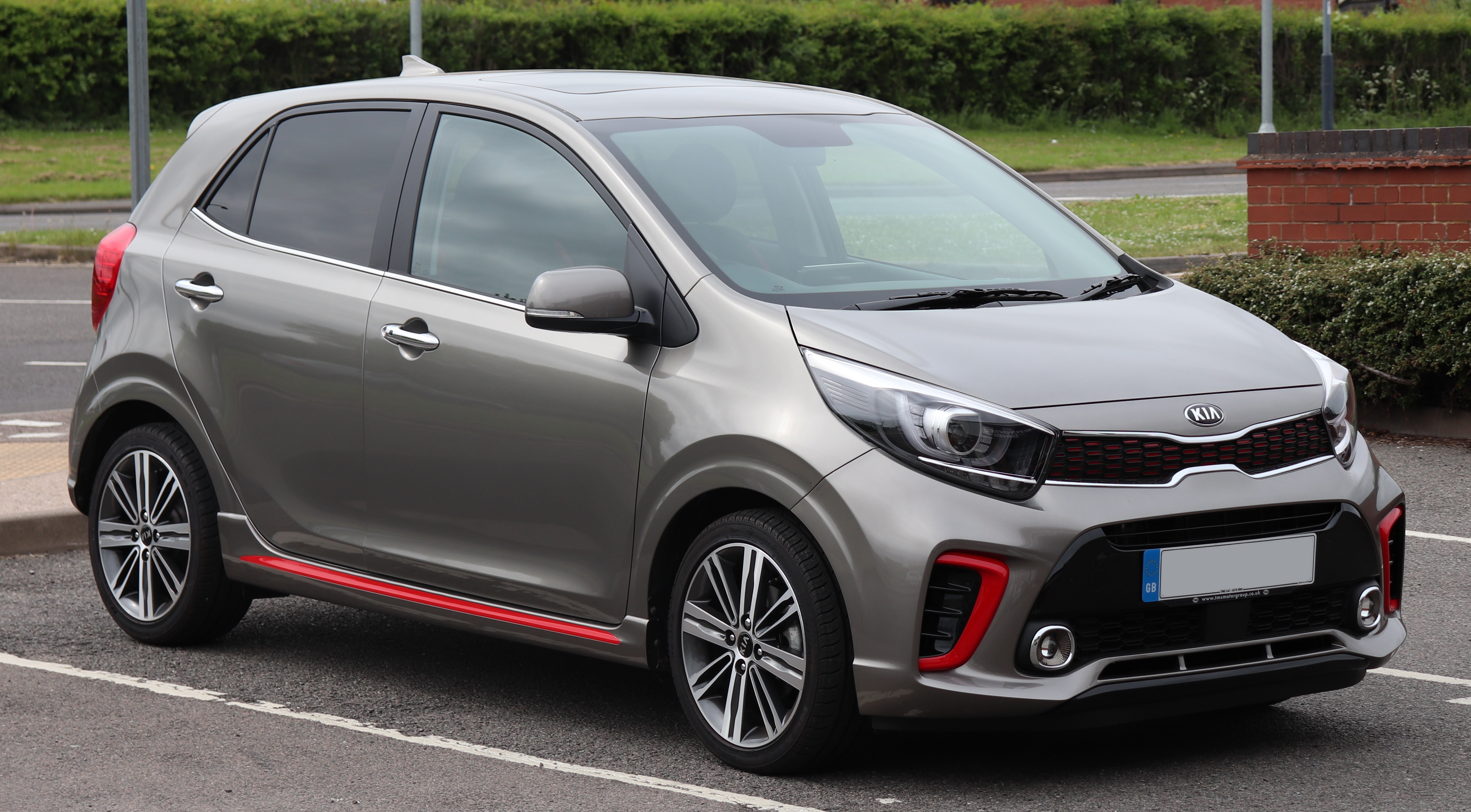
Govt to look at EV charging costs, fraudsters target car buyers on Cazoo, and EU moots adjusting its Chinese car tariffs – with Harry Bathe, episode 239
Car Dealer Podcast
Govt to look at EV charging costs, fraudsters target car buyers on Cazoo, and EU moots adjusting its Chinese car tariffs – with Harry Bathe, episode 239Car Dealer Podcast · Jan 16, 2026
OEM means Original Equipment Manufacturer. It refers to companies that make parts or cars that are sold under another brand. Working for an OEM means being part of making cars.
Volkswagen is a car company from Germany that makes many popular cars, like the Beetle and the Golf. They are one of the largest car manufacturers in the world.
The GLE is a luxury SUV made by Mercedes-Benz. It has a lot of space inside and comes with powerful engines, making it a good choice for families or anyone who wants a comfortable ride.
The BMW X5 is a fancy SUV that started being sold in 1999. It's popular because it drives well and has lots of space inside for people and their stuff. People talk about it because it helped make luxury SUVs a big deal.
Stellantis is a big car company that makes cars under different brand names like Jeep and Peugeot. It was created when two companies, Fiat Chrysler and PSA Group, combined.
Peugeot is a car brand from France that makes different types of cars, including small cars and SUVs. They are now part of a larger company called Stellantis.
EVs stands for electric vehicles, which are cars that run on electricity instead of gasoline. They are better for the environment because they produce no emissions while driving.
PHEV means Plug-in Hybrid Electric Vehicle. It's a type of car that can run on both electricity and gasoline, giving you the option to charge it like an electric car but also use gas when needed.
The Jeep Grand Cherokee is an SUV that has been around since 1992. It's great for driving off-road and also has a nice, comfy inside, which makes it good for families. People like to talk about it because it's tough and can handle different types of roads.
A 'four by four' is a type of vehicle that can use all four wheels to drive, which helps it go over rough or slippery surfaces better than regular cars.
EV makers are companies that make electric cars, which run on electricity instead of gasoline. These cars are becoming more popular because they are better for the environment.
MG is a car brand that makes budget-friendly vehicles. It has been around for a long time and is now owned by a Chinese company.
LIVE
The Cardiola podcast is sponsored by Autotrader.
John, have you ever wondered why I, along with 14,000 other dealers, choose to partner
with Autotrader?
Well, actually, I didn't think so.
I'll tell you anyway, with more than 84 million consumer visits every month, it connects us
with more engaged car buyers and delivers more deals than anyone else in the UK.
And now, with the launch of buying signals, we'll have brand new insights on every deal
showing how likely a customer is to buy the car they're interested in.
Plus, as someone who set out to use AI and data as much as possible in my business,
I've found their technology, data and tools genuinely invaluable.
But when I do get stuck, which is, let's face it, most of the time, Autotrader is always on hand
and committed to supporting us to get the very best from our package.
To find out how they can help you, visit trade.autotrader.co.uk.
Welcome back to the Cardiola podcast, where we pick our favourite stories of the week
and ask an industry guest to choose which were the best.
I'm John Ray, and joining me this week is the incomparable Mr James Batchelor.
Batch, lovely to see you.
It's been a while.
Do you know what? I think in all the years I've been doing the podcast,
that is the nicest intro that you have ever given me.
There's usually some off-hand remark about caravans or, you know,
Quentin Wilson, God rest his soul impersonator.
But no, thank you very much, John. Delighted to be here.
Which, as we know, I'm purely here because James Bagger isn't.
Yes, James is often one of his typical low-budget holidays in the Alps.
Unfortunately, Batch, you've had to be risen from your slumber
at this ungodly hour of nine in the morning to record this.
But I'm very pleased you're here. How are you? How have things been?
Very well, thank you. What a start to the year.
I was hoping for a bit of a relaxed couple of weeks at the start of 2026,
and it just has not been the case.
There's been so much news to do, there's been something new.
Cars to drive, so much going on.
And I know that's a good thing, but I'm a bit tired already.
Yes, I know what you mean.
I still feel like New Year was about nine weeks ago, doesn't it?
It does, it really does, yes.
Busy, busy, busy here.
James and I are gearing up for our NADA trip next month.
Which, of course, if anyone would like to come and join us,
you're very welcome to. You can buy tickets to come to NADA
on the Cardiola website, including an enormous package of flights
and hotels, etc.
Because I suspect that's going to be a very interesting conference.
It's my first one, so I'm very much looking forward to that.
Well, no, I was going to say, have you ever been to Las Vegas before?
No.
Oh, well, what an experience.
It's quite a strange trip to go there with James, who doesn't drink.
Well, yeah.
Well, it's not just the drinking.
It will probably be lots of filing copy back to Cardiola.
It's not just the drinking. Of course, it's the gambling as well.
But that's an entirely different subject, isn't it?
Yes, I think James is only gambling biases on the Heine and I are 20s, really.
Anyway, I'm going to introduce our guests now,
because I can see we're firing on all cylinders this morning.
But our guest this week is, I'm thrilled to say,
head of regional sales at GLEUK, Harry Bays.
Harry, thanks for joining us.
Not a problem at all, gentlemen.
Lovely to be here on this fine Friday morning.
Thank you for the invite.
Such a fine morning indeed.
I mean, it stopped raining briefly, so that's a good start.
So, Harry, tell us a little bit about your background.
How did you end up in the car industry?
Obviously, we'll come onto GLEUK in a moment,
but I think you've got quite a wide ranging background in the motor trade, haven't you?
I have, yes. I think I ended up in it like a lot of people did,
and I've got to love for cars, making money and all that good stuff.
So, I started off as a salesman, or trainee salesman, should I say.
It's a local Ford dealer in Oxford, where I'm from,
and really sort of fell in love with the trades, selling cars,
I was predominantly on used cars, and worked my way up to business manager,
general sales manager, and ran a Honda site,
and then a Volvo site over the course of a 25-year career,
and then just got to the point, I've got young children, weekends,
things like that, and I thought, Joe, I really want to change,
I really want to work for the OEM.
I love the idea of being on the other side of it,
and know plenty about the industry, obviously in the wider world,
when it comes to manufacturers, but never actually worked for one.
So, I looked around, and you can't not notice
the Chinese entrance at the minute, can you?
They're everywhere, and the trajectory is quite impressive.
So, here I am at GLEUK as head of regional sales,
so we're a growing team.
I was one of the first five employees
in our Milton Keynes office back in March.
March the 10th last year was our grand opening of the office,
so turned up, didn't quite know what was going on, what to do.
You know, there wasn't a huge amount of people around,
as you can imagine, sort of sat down, laptop, mobile phone, go right.
Here we go, when's the car coming?
What car is it? What's it all about?
Next thing I know, I'm off to China,
and we're learning all about the brand,
so yeah, it's been a fantastic journey,
getting to where I am today.
But yeah, absolutely loving this role,
but sometimes do miss the buzz of, you know,
buying and selling news cars,
because that's always been a passion of mine.
I mean, it must be almost like a startup,
you know, being in the company that you're in at the minute,
because of, you know, you have,
as you say, you've been established in the UK,
less than a year really, haven't you?
Absolutely, absolutely.
I think, you know, the business was started five or six months,
I think, before we all started effectively,
and ultimately it was just the basic stuff.
But yeah, it's a real startup,
and it's got that vibe of a startup internally.
I mean, the excitement, the enthusiasm,
the want to succeed within the team,
is something I've very rarely experienced in the past.
You know, you get a sales team, for example,
the fire and all cylinders, it's phenomenal,
but it's a job to keep them there,
we've all got that sort of right attitude towards,
we just want to do a good job.
We're learning, we're learning an awful lot.
Obviously, we've got the likes of, you know,
Volvo, Polestar, Lotus,
LBC in the UK,
but we are really our own separate company.
So all of the sort of support has come from China with that,
and they've been absolutely fantastic
getting us off the grounds with everything we need.
Obviously, the cars here, the launch event,
the investment from China into the UK is phenomenal.
I mean, one thing I learned really on with Geely
is that they will do something like enter the UK as a market.
I mean, if you can succeed in the UK,
you can succeed anywhere in the world,
but you know, they've done this in other countries before,
and I think ultimately the investment has been phenomenal,
absolutely phenomenal.
I mean, our marketing spend, our launches,
everything else, the amount of staff we've got,
I mean, we've got 60 plus staff in the UK now,
which is a similar size to MG, I believe,
so we're really, really going to town on it.
And a great mix of people, real different backgrounds.
People have been with, say, Volkswagen,
BYD, if you're BYD staff, as you know, Adam,
and we've got a real sort of eclectic bunch of people who can
pull from different backgrounds and different experiences,
and it all sort of comes together nicely.
So, you know, it's a great bunch, and it works.
I think Michael Yang, our managing director,
has recruited people along, obviously,
their ability and their past, but also their attitude,
and that really shows through.
I mean, the feedback we are getting from the dealers
as a company is really good so far,
that the positivity is great.
So, yeah, it's a start-up, it's new, everything's building.
Yeah, there's some hiccups down the road,
there's some problems we overcome,
but normally we can get through it quite quickly.
And I think from my point of view,
something that the dealers like, I hope they like,
is the fact that I've come from, I was one of them.
So, I understand what they go through,
because I've been on that side of the fence,
and I've had that experience of dealing with an OEM
and the pinch points and the annoyances
and the things that they sort of throw at you that you like.
You've never sold a car in your life, have you?
So, you tend to have that,
and I think they appreciate people within the manufacturer industry
who have worked for the network, within the network.
But yeah, no, it's great, it's really exciting times,
good bunch of people, great set-up,
and yeah, there's some big things to come from Geely.
Some good products coming,
we've got the Star Ray launch next month,
that's going to be a great seller for us,
obviously a Phev that does some proper miles,
and yeah, it's some other cool products coming as well.
You've probably seen the orange thing
that's been dropped recently,
that's, you know, they've got some really good stuff,
and obviously they're looking up at BYD
with the volume and the aspirations are there.
So yeah, all good fun.
Harry, when I talk to dealers
who have just taken on a Chinese car brand franchise
for the first time, particularly the ones who have,
perhaps they've had Ford, Vauxhall, Volkswagen,
one of the long-running legacy brands,
the thing that they always say,
the most surprising element is the speed and the enthusiasm
that comes from working with the Chinese brand.
It's just like they launch a car and then bam,
it's there in the showroom, isn't it?
And there doesn't seem to be a delay.
You know, when the Chinese say they're going to do something,
it kind of happens almost immediately.
I mean, from considering your background in the motor trade,
I mean, have you been surprised by that as well?
Oh, massively, massively.
I mean, it just happened so quickly.
You know, a new product is coming.
For example, the Star Ray,
we knew that it was going to be very quickly after the GLE-X5,
should I say, and it's here.
You know, they're in the country, they're ready to go,
and the next one is imminent.
We started talking about the Star Ray
straight after the launch of the X5,
and then we're going to talk about the next one
straight after the launch of this one.
It's so quick and it's so quick.
And they will make a decision very, very quickly
and act on it very quickly and get it out very quickly.
There's no sort of delay.
There's no messing around with politics and endless meetings,
et cetera, that I've experienced in the past.
So yeah, it's such a breath of fresh air to be fair.
It's quite nice to have that speed, speed to market,
which is key in this ever-moving market,
because there's a lot of, as you said, Chinese brands at the minute,
and they're all quick at doing things.
And yeah, they don't hang around.
As we look at BYD's growth up to their 50,000 units last year,
it's phenomenal, absolutely phenomenal.
Can that speed sometimes be a bit of a disadvantage,
because you haven't really got the time
to actually establish the brand or tell customers about it.
You were just saying how your first day at work
was March last year,
and then you're launching your first car
towards the end of the year.
You've got another one coming.
You haven't really had a lot of time
to actually talk to customers
and tell people about the brand.
Were my wrong?
No, I absolutely agree.
This is a short space of time,
and one of the most difficult things
for a new entrant in the UK is building brand awareness.
And we're extremely fortunate
to have a really good marketing department
headed up by Mark Blundell,
who was at the beginning of BYD's journey as well.
So if he can copy and repeat that for Geely,
it's going to be fantastic.
And you see some of the stuff we're doing marketing.
I mean, as soon as you search Geely on Instagram,
Facebook or whatever,
your algorithms are in there,
and you're just getting served all the time with adverts.
We've got out of home.
We've got television, how smart,
all that sort of good stuff is just about building awareness.
And I think the key thing for us in the UK,
which you obviously will happily take advantage of and build on,
is the Volvo Polestar Lotus connection.
And that's on our culture wall in our showrooms.
The customer goes in the showroom.
They'll see those badges on the wall.
And that really is quite a powerful tool
to get around that occasional negative perception
of a new brand.
What's this brand all about?
Who's this brand from a customer point of view?
They don't know the brand.
They don't know anything about it.
They've seen it.
They like the look of it.
What's it all about?
And the salesman also or salesperson says to a customer,
look at this.
These are other companies within the Geely family.
All of a sudden, the customer's like,
okay, I know that brand.
I trust that brand.
These brands are linked.
Okay, I'm happy with that.
And that's something we really go to town on.
As far as we're allowed to,
but in that way,
culture wall in the showrooms has got all of the Geely brands around it.
And yeah, it's quite a powerful tool
to try and build that momentum.
But I know exactly what you mean about customer perception.
You speak to people today,
and they say, I've heard of BYD.
You speak to people now that haven't heard of Geely.
Give it a 12 months down the line.
Hopefully we'll be in a similar boat.
But as I said, as soon as you explain to somebody
that Geely is the parent company of,
it all becomes clear.
So it's just building that brand.
And that's the big thing for us at the minute
is going heavy on marketing.
Again, one thing I've learned from the Chinese
is the investment is there.
They don't set out with anything.
So the investment is there when it comes to marketing
and when it comes to getting us out there in the UK.
So it's a challenge and it's good.
Obviously for you guys, that's a big thing.
And lots of, as in the ownership of Volvo and Lotus and so on,
I could go on.
That's a big part of your sort of secret source
in a way for breaking through in the UK, isn't it?
But there are a lot of Chinese brands at the moment,
of course, aren't there?
And I think one of the things that's being said is,
they will reach a point where some of those disappear
because there's just not the space
for every single Chinese brand in the UK.
Some would argue there's not the space
for all the European brands and perhaps some,
all the Chinese ones still succeed
and some European ones will disappear.
I mean, what's your take on that?
I think you're quite right.
And well, I know you're right.
There is, there's only so much of the pie
to go around effectively and everybody wants a slice of it.
And I think from Gili's points of view,
the company worldwide is growing
and it's 39% growth year on year,
just over 3 million units worldwide.
So a big, big company.
And we will effectively just keep on going until we get there.
There is no, there is no failure option.
I think when it, when it comes to the Chinese culture
and it's, you don't, you set out to succeed and that's it.
And ultimately, I believe that us, you know,
you don't want to speak of the others as much,
but you've got some big, big brands in there,
like I said, BYD, Gili, obviously MG, et cetera,
that are, that have got the backing
and they've got sort of the fast start if you were.
But yeah, there will be some casualties along the line.
You can see the decline in volume
from some of the legacy brands last year.
It's quite scary, some of the European brands
and you can really see and so can the buying public.
Just have to look around at cars
and you can see the price disparity between the legacy brands
and the Chinese new entrants.
And 10 years ago, I think the public, even five years ago,
the public perception of a Chinese car was like,
huh, I'm not going to buy a Chinese car.
I don't want a Chinese car.
They're not good.
I don't know about them.
My neighbors will laugh at me.
I don't want a Chinese car.
Where today, it's almost becoming the other way round.
In my view, I think a lot of customers,
a lot of people will look at it and go,
that's a really good car.
It's a Chinese car, but it's 10 grand cheaper than something else.
Actually, it looks really nice and it's really good
and the quality is there.
And I think that's sort of changing in the buyer's eyes,
in the public's eyes, to come around to.
And yeah, the products nowadays are the tech,
the quality, the fit and finish and the general feel
is extremely good.
You know, I think that's the key.
They've got, as we know, China is an absolute powerhouse
and everything it does.
And you look at any bit of tech in your house,
it's made in China and that's come now to cars.
And it's growing.
So yeah, there will be some casualties
and it's going to be an interesting year.
I know last year, you voted,
I can't remember whether you yourself, John,
voted and was it a car or the story of the year?
Or something like that in the Chinese car?
Year of Chinese car is 2025.
I think it's going to be 2026.
I really do.
But 2028 and so on, probably.
Well, for me, I hope so,
because, you know, I've got more weeks to play.
But yeah.
I mean, it's giving us a lot of time,
so thank you.
It's very helpful for us as well.
I mean, of the people who, you know,
put their name down for a GV so far,
it's very interesting.
What's the, I'm sure you say,
it's lots of things about the car
and it's a fantastic product,
but is price one of the, you know,
the big driving factor?
And I don't think that's a dirty word,
you know, I think we're in a cost of living crisis
and cars are very expensive.
But yeah, you know, is price a big part of it?
Price is a big part of it, admittedly,
but a car's the second biggest purchase
you make in your life.
And you don't necessarily want the cheaper.
I mean, nobody makes a bad car anymore.
The old Lada jokes from years ago are all gone.
Nobody makes a bad car.
So price is key.
But I think people want quality.
They also want technology and spec nowadays.
And that's definitely where we, as a company,
you know, we do really well.
I mean, the GDX5 is the only car in its segment
with massaging seats, for example.
And the tech, the speakers in the headpress
for your telephone calls, et cetera.
It's all really good stuff.
And people like that.
And I think that is definitely something
that the Chinese do extremely well,
is put a lot of kit as standard in their cars
and also keeping it simple.
But yeah, I agree.
Price is definitely a driver.
There are some very good products that are out there.
Cherry, for example, have come out just under £30,000.
And then you look at our Star Ray,
that's exactly the same boat.
And side by side, our spec is slightly better.
So I'm hoping that car, I'm not hoping,
I know that car's going to do well for us.
You know, everything's pointing in the right direction.
So I'm working on the offering at the minute,
a PCP offering with the team.
And, you know, the idea is to make it as compelling.
And not necessarily, you know, we don't want to go,
yeah, this is the cheapest in the world
because you end up with a race to the bottom.
But it's just, it's that perceived customer value piece.
You know, the customer has to look at that and go,
that's great value.
That's what I want to buy.
Not necessarily the cheapest,
but it has to be really good value.
So it's a mixture of having, you know,
the cheapest car in the market
and actually people that want to buy that cheapest car
and some necessarily don't,
they want something with some toys and some gadgets.
But yeah, you can see where we price the Star Ray EMI
when it comes out and, you know,
give you an idea that that is,
that's where we want to be, we want to be in the mix.
You know, we've got a D-segment SUV coming soon.
So that's going to be a bigger car.
And the products will keep flowing.
So yeah, price is definitely a factor.
But I don't think it's the be all and end all
of the purchases decision.
One of the other things that I sort of feel
like the Chinese entrance have pressed the reset button on
is sales models because we had agency sales coming in
starting to proliferate a little bit
in bigger European manufacturers.
And, you know, I mean, even some,
some Geely group brands because like Volvo and Polestar,
of course, have been dabbled with agency sales.
I think they're still using it.
You guys aren't doing that.
And I think most other Chinese car makers aren't doing that.
Just what's the sort of motivation from your side
behind not going agency?
We don't sell cars to the public.
We sell cars to dealers.
Dealers are the best people positioned to sell cars to the public.
In my opinion, when I was at Volvo,
when it went to the agency flip,
and the biggest thing we had at that time was the sort of
the lack of control over what's going on with that deal,
the lack of input.
You know, often you'd have a customer,
you know, you're a sales executive selling a car
and you've got a customer rings up and says,
can I change my mileage from 8,000 to 10,000 a year, please?
And you go, yeah, of course, you tackle on the finance system,
you change it, you get it re-accepted, job done,
you move on with your day.
With agency, you had to, okay, Mr. Customer,
you have to ring up Volvo.
We have to do this, you have to do that.
And, you know, we can do it,
but it's going to take a couple of days.
And then, for example, you had a bit of a dartboard at the time
that they would have to refund the customer,
they deposit, redo the entire deal,
and then, for example, put it back through again.
So it ended up being quite disjointed,
disjointed affair.
And I think ultimately, in my opinion,
from somebody who's done it for years, is the dealers do it best.
That's what they do, they deal with customers,
they deal with everything.
Let's just do the wholesale model, you know, that's what we're in.
Wholesale them a car, give them some margin,
then they can do that, what they please.
That's up to them, you know.
That's my opinion, but obviously it wasn't my decision
that that's the way we're going to go,
that it was always like that from the start.
I just think it seems to be the easiest, simplest route
for a manufacturer to come into a market
is give a network that knows what they're doing,
all of the tools to do the job.
We've got the cars, we've got everything behind the scenes.
They've got the rest of the tools to do their job.
They've got the salespeople, the admin staff,
the ability to register, all that sort of stuff.
So just let them crack on with it.
So I think it's an easier route to market,
is probably the reason why we've done it.
But in my opinion, I think it's the best way to do it.
I've never been a massive fan of agency at all.
I don't think, personally, I don't think it's the one way to go.
Well, on the subject of dealers, Harry,
do you want to give us an update on where you are
and your future plans for your network?
Yeah, absolutely.
So we've got 36 dealers that are in soft launch phase,
as we call it at the minute.
We've got 50 plus on the books.
I mean, we will have over 50 dealers supporting us
for Star Ray Launch next month.
So yeah, 36 dealers soft launch.
So soft launch for us means they've got
demonstrators on the ground registered.
They've got at least one technician trained in the workshop.
They've had their frontline staff,
so are the sales, service advisors, business managers, etc.
through our own in-house Geely products and brand training,
which is a one day training course that we do every month.
And that's over.
We've done over 500 people through that so far.
And you can see from the customer feedback that we get
that staff are knowledgeable.
They know about the car.
They know about the staff are enthused.
And I'm a massive believer,
and I believe this is the right way to do it,
is you should train your sales staff.
You should train everybody frontline to be,
to know all about the product they're selling,
to know all about the car, to know all about the office,
to know absolutely everything.
So when a customer walks into that showroom,
they've got a sales executive who's been on the training.
They know how this works and how that works.
And it's often overlooked.
You know, training sales people in this industry,
I think is overlooked because you've got a new starter
into the business and you go,
right, he just needs to sell some cars and chuck him in a deep end.
But we've said we will not let a dealer have
demos and start trading until their frontline team
have been through this sales training.
And I stuck with that from day one.
And that's working because we are seeing some,
some real good pockets of success
and some great customer feedback
when it comes to the experience in the showroom.
Yes, the showroom's not got all the amazing,
lovely CI done, you know, the tiles, the furniture
and all the lovely stuff.
But the customer walks in and they're speaking
to a salesperson who knows about the car.
They just, they just can answer their questions.
And often as we all know, you know,
customers know a lot more about the car
than the sales executive before they walk into the dealership.
But we want that to be the other way around.
So, you know, it's been really good.
So, yeah, 36 soft launch dealers at the minutes,
over 500 frontline staff, trains and more to come.
So Kevin Watkins is my training manager
and he's absolutely superb.
And we're working with a really great provider
to get our training done.
So I'm a really massive believer in training.
I think it is overlooked and under-budgeted
and lots of businesses.
But again, my opinion.
Yeah, so will all these dealers,
will they just be separate sites?
They won't be alongside other Geely brands.
So are they going to be separate Geely showrooms
with bespoke Geely branding?
Yeah, for all our showrooms at the minute, it's purely Geely.
So that's how we're set out.
The model, for example, Zika, Lincoln Co, etc.
potentially come into the UK, I'm not 100% sure.
They'll be separate standalone brands.
So, yes, we're partnering with some dealer groups
where we're going into other dealers.
For example, sharing half of a Ford showroom
or sharing half of a Volkswagen commercial showroom
or something like that.
But we haven't got the facility.
We're not geared up to go, okay, here's Zika.
Zika can go in next to it or Lincoln Co
can go next to it.
It's purely Geely.
It is purely Geely.
I mean, could that potentially sort of...
Sorry, I mean, could that potentially...
I know it's too early to say.
I mean, you're still in soft launch phase.
But I mean, could that potentially change in the future?
Because of course, like Stellantis, for example,
with Leap Motor, they're in...
I went to a Leap Motor showroom the other day
and in the same showroom, in the same room,
they're alongside Voxel and Peugeot.
I mean, could you...
Could Geely's be so alongside Volvo's, for example,
or is the idea just to keep them separate
for that brand recognition?
It's to keep it separate.
I mean, when I first started, when I first questioned,
I think it was even interview stage, was
where will the showrooms be in Volvo dealers, I assume.
No, it's not. It's completely separate.
Completely separate.
I mean, we're not obviously Volvo, Polestar,
I get that, I understand that.
But you've almost got the parent company in China,
Geely Holdings, we're Geely Auto UK,
then you've got Volvo, and then you've got,
obviously, Lotus, Polestar, et cetera.
So the way the company operates is you've got
the mothership, if you were,
and then you've got the different brands coming off it.
So, yeah, we...
I can't see it's ever being in a Volvo showroom.
I don't... It just wouldn't fit.
But some of the other Geely brands, it might do.
I mean, our showroom's set up at the minute,
but I've got a four, a six or eight car showroom,
CI, depending on the size of the real estate
that the dealer group has.
We work with them, but there's no talk about
why you're going to need this size showroom
for this brand that's coming at the minute.
There's nothing.
So I think it's going to be a completely separate entity,
if and when those other brands come to the UK.
Slightly tricky question before we move on to our stories.
I mean, enormous,
enormous uptick in sales for Chinese brands this year.
BYD, one of them particularly.
I think Jakun, Cherry, enormous as well.
What are your sales ambitions for this year?
Bear in mind, you've got...
I mean, you've got the X5.
I mean, the Starray is coming along shortly, isn't it?
No relation to the Starray.
It is, it is.
We want to get to 1% market share as quickly as possible.
We're at 0.02 tail in the last year,
first couple of soft launch months,
some really early starters with 478 units,
which is a start.
It's a starting point.
The ambition for the UK is 20,000 units next year.
And looking at the projection of Starray and the X5 and an and,
you know, I think we should be fine together.
We just need the momentum.
The current momentum with our network development team
is phenomenal.
That will continue.
Obviously, no doubt with that.
We need the sales side of it.
The dealers doing a really, really good job.
You know, the conversion rates in the showroom is fantastic.
We just need that brands to naturally evolve and grow.
And as you said at the beginning,
growing a new brand in the UK is extremely difficult
and extremely costly.
But that is happening.
And when that eventually does happen,
we will see some real volume.
So some big aspirations for this year
and indeed next year and going forward.
So we have a plan.
We have ambition as a brand.
And as I said, there is no option to, you know,
to do anything else other than plow on with that.
And, you know, as you know, China extremely rich country
in this area, wanting to penetrate this market
and indeed Europe and indeed the world.
So it's, yeah, it's going to be good.
So it's big ambitions.
Exciting times ahead for this year then.
Well, Harry, thank you for joining us.
You can stick around while we go through our
favourite stories of the week.
And then you get to choose at the end who's the winner.
So I suppose you're better going with that, haven't we, Batch?
Yeah, why not?
Now, a quick word from one of our sponsors.
John, have you ever wondered why I,
along with 14,000 other dealers,
choose to partner with Auto Trader?
Well, actually, I didn't think so.
I'll tell you anyway, with more than 84 million consumer visits
every month, it connects us with more engaged car buyers
and delivers more deals than anyone else in the UK.
And now, with the launch of buying signals,
we'll have brand new insights on every deal,
showing how likely a customer is to buy the car they're interested in.
Plus, as someone who set out to use AI and data
as much as possible in my business,
I've found their technology, data and tools genuinely invaluable.
But when I do get stuck, which is, let's face it, most of the time,
Auto Trader is always on hand and committed to supporting us
to get the very best from our package.
To find out how they can help you, visit trade.autotrader.co.uk.
This is a paid partnership in association with Dealerway.
John, guess what?
Oh, God, you've bought more ducks, haven't you?
No ducks, John.
Wrong there.
I've actually got a new habit.
I've signed up for Dealerway,
alongside more than 2,500 other rated and vetted car dealers
to sell my trade part exchanges.
The site is designed for dealers
to sell their part exchanges for more money quickly and easily.
There's no sellers fees, and buying a car costs just £99,
one of the cheapest around.
And when I haven't got the time to list the car myself,
I can even watch out for the details, and they do it all for me.
That sounds awfully familiar.
So are you selling all your stock there now?
Not exactly, John.
But if I do have a sudden influx of Kia Picantos,
I know where to send them.
Dealers can find out more at dealerway.co.uk.
Now, back to the podcast.
Matt and I are going to run through our favourite stories of the week,
and at the end, Harry gets to decide which one was chose the best ones,
and who is the winner.
I won last week, apparently.
I don't remember doing that, but I had to check.
So I'm going to start with news about EVs,
which, of course, is my favourite subject after Chinese cars.
And this is some news from the Treasury, well, sort of.
As a report suggests, the Treasury is eyeing up the cost of EV charging,
because of their concern around all the things that the Treasury is going to,
or Rachel Reeves is going to do,
to claw back a bit of money on EVs,
which includes the three-pence-per-mile charge,
which comes in in something like 2028, I can't remember.
And, of course, there's been changes to things like London congestion charge,
which affects anyone who's in London.
And there was a sort of retrospective thing around tax,
lots of things to hit EV drivers that weren't there five years ago.
But this report in the Daily Telegraph suggests that
Whitehall officials are keen to reduce bills for both consumers and businesses.
And the government is exploring ways of cutting what they call
network charges at public charging points.
I don't know if that's network charges in the price.
That's their term for using the charging network,
or there is some specific, they're trying to drive down the cost
that the network operator is charging.
I don't know.
But, of course, there's lots of difficult things about charging,
setting up a public charge point operator, I would imagine.
One of which is, I don't think their electricity has any sort of price cap on,
because if you're running a business in the UK,
you'll know that your electricity is far more than
doing it in charging your car at your own house.
It's more expensive to charge it in your dealership than it is at home.
So I imagine that's one of the issues.
There's lots of things around the cost of the chargers themselves, of course,
the cost of getting the planning applications in for all these chargers,
lots of paperwork, it's all very complicated, isn't it?
But it's, so this is news that the government is looking to reduce that, thankfully.
What they're not looking to do is reduce the VAT on it.
That's the interesting thing here.
So one of the suggestions that's often put forward is,
remove or reduce or align whatever word you want to use,
the VAT rate on public charging, which is 20% with the VAT rate on home charging,
which is 5%, because that's what your electricity VAT is.
So I'm pleased something might be in motion.
I think it's incredibly necessary.
And I think it's only come about because they've,
well, I think they've had an overwhelming amount of correspondence to suggest that
actually all the measures that they're putting in place on top of the problems
that are already with only an EV in the UK is just going to drive down demand.
Yes, yes, well, what do you think?
Yes, well, I did have this story down as well, annoyingly.
But yeah, I mean, this subject of VAT, this yawning gap between VAT on home charging
and on public charging, I mean, it's a drum that's been banged by lots and lots of people over the
past year to two years, most notably the SMMT.
Of course, they've been very adamant that this needs to be looked at and changed.
I do think something does need to happen because the more people who buy electric cars,
we are moving away from electric cars being the preserve of well-heeled people and people
who can afford an electric car. We are very, very quickly moving into the mass market now.
I think it does need to be looked at.
The other part of this story as well is there are rumors that the Zev mandate is going to be
looked at as well. I know a lot of manufacturers, unsurprisingly, it's the manufacturers who have
been unable to meet that target last year and the year before who are calling most loudly for it to
be looked at. On that subject, I do think the government will be pressurised to look at the
Zev mandate at some point. We hear that last year manufacturers didn't hit that required 28%,
but as we know, there are loopholes and different ways around it, so you can't really take that
as a given that the Zev mandate is failing. Of course, it goes up to 33% this year and again,
I think it's 50% the year after or very close to that. What I will say is there is going to be a
lot more talk around public VAT charging and the Zev mandate this year. I think those are the two
things which are going to be, we're going to be talking a lot about that this year and I think
the government is going to be under pressure to look at this stuff because at the moment,
there's both carrots and sticks aren't there and the industry is calling for fewer sticks and more
carrots. It's almost like the government is stuck between, I'll use the Rachel Reeves term,
balancing the books. Is that a Rachel Reeves term? It's a general government.
But there's stuck between that and clawing back tax revenue, which is coming down the road as EVs
whereas we transition into EVs, there's going to be a loss of fuel duty, etc. hence that 3P thing.
But at the same time, of course, the reason not to keep tweaking the Zev mandate is net zero is
also coming down the line. But there seems to be an element of creative accounting when it comes to
net zero in terms of, well, if we say as a nation, we're going to reduce our CO2 emissions by XYZ.
Like all the sort of derogations that are involved in the Zev mandate and, well, if you reduce your
fleet overall emissions by 90% against 2021 or whatever the year is, then that's fine. You
don't need to sell lots of EVs. And it's just, yeah, I'm now on the same page as you back to
where I just think probably the Zev mandate is going to have a tweak. I didn't think it would
because I just thought they'll reach a point where you can't push it any further before it hits the
target for CO2 reductions as a whole country. But maybe there's something to be worked out there,
I don't know. Harry, what do you make of this story? Yes, it's a lot, isn't it? And I do think
you're quite right. There is some creative accounting going on. But I think the one thing
that strikes me has always sort of made me think how and why and that just was ill-conceived as the
whole Pence per mile thing. How are they going to do that? How are they going to get the revenue
from that? How, how, how, how is the question going through everybody's head at the time? And I
just think it's not been thought through properly, some of this. And there is loopholes and ways
around it. And actually, the whole bigger picture probably isn't, it just doesn't make sense. I don't
think it builds trust in the government. And we're trying as a country to cut down our emissions,
grow EVs. And then they put things like government grant in that is super complicated and difficult
for dealers. And they launched it and custom to the public with no dealers signed up. And it took,
it took time to, it just, it didn't work. A lot of it doesn't work in my opinion. I just think
they just need to, I think Rachel Reeves needs to rethink some of this strategy and make it work
for the public and the industry. What do you think, Harry, about what, Harry, what do you think about
this, this idea that the Zev mandate will have to be looked at watered down, potentially even
changed dramatically so the UK falls more in line with the EU? Or do you think it's just a case of,
look, those are the rules in place, it's mandated, you know, it's all set in stone, manufacturers
have just got to get on with it. And in time, the consumer demand will follow suit.
I think it's a bit of a difficult one again, because you're right, consumer demand will
follow suit. But if you've got manufacturers that are forced to do certain things and not sell
certain cars to meet these targets, it all just becomes extremely costly. And, you know, you
end up with scenarios where you've got, for example, a ton of pre-registered EVs kicking around that
isn't making anybody any money. And they're done for a reason just to hit a target where people
don't necessarily want them. So I generally think it needs to be watered down to that European level
and just make it make a bit of sense. I think the government needs to listen to the industry a bit
more. You know, I don't know the ins and outs of how they get their information, but I just think
some of them need to, you know, there needs to be a bit of a mechanism where us as an industry
can feed back to the government. So this is what we think we're experts on this, a bit more of a
local level. Yeah, it's one of those things that just have to roll with it, unfortunately at times,
don't mean there's not much we can do. But yeah, I don't agree with a lot of it, I must admit.
Well, it's a nice time to be in a car operation that currently only sells EVs, I must say.
Not so much longer. Yeah.
No, not exactly. You know, we've got EVs, we've got Phev. Yeah, it's a good time for that.
But just very quick, sorry, just very, very quickly, very quickly. Harry, on that point,
I mean, do you think these constant sort of rumors and calls for the mandate to be watered down,
you know, push further back, you know, kick the can further down the road? I mean, really,
it probably does help the Chinese car makers this, doesn't it? Because, you know, it's as we
spoke about earlier on, the Chinese are very, very good at, you know, if the market changes,
they've got a car for that market, they're able to launch a car very, very quickly. Whereas,
you know, the European car makers, I mean, they haven't got quite got to the stage where
engine production has been switched off. But we are getting to that stage where European car makers
are having to make really, you know, decisive decisions on what future technology do they
invest in. I mean, with this constant wrangling of what's going to happen, I mean,
surely this is going to help the Chinese, isn't it? Establish more market share.
You're quite right. I think it does fall nicely into the hands of the Chinese
manufacturers because they are very quick at bringing a vehicle to market.
And that, yeah, it could benefit. But I think the chopping and the changes and the lobbying of
people to sort of water it down, as you said, and, you know, the target's changing, it does add
pressure to the legacy OEMs. I mean, like sort of what various brands for Stalansis,
that target's unsustainable, you've got the government was saying, you know, they're going
to allow flexibilities, just need to make their mind up and put something in,
put something down that works for everybody. You know, 15 grand a unit fine, if you don't
do this and these threats, you think, kind of just sort it out. Let's just sort it out and
make sure that it works for the UK car industry, because there's a lot of people employed by the
UK car industry is not just the OEMs who are making money off this, it's everybody involved.
There's a lot going on around that. And if, you know, if these don't work, then
employees in the UK don't earn any money, don't get paid. And, you know, it affects the whole
economy. So let's just get it sorted out. Just put something sensible in stone, don't change it,
that's it, move on. I think we should just wheel you down Downing Street and, yeah, get you in
the middle. Now we fixed all that. I think we can move on to our next story. James Batchelor,
off you go. Well, well, on the subject of brands, Jeep, just want to talk a little bit about Jeep
and Stellantis. Well, I should come on to that. That's you've hit the nail on the head there,
John. Our esteemed colleague Cameron Richards this week has been at the Brussels Motor Show,
which in itself, I think the Brussels Motor Show could very well be the next Geneva Motor Show if
the wind carries on blowing. I mean, a lot of new cars have been launched there this week. And,
of course, it's the first big show of the year, obviously, you know, so early on in the year.
But anyway, Jeep were there. A lot of other brands were there as well. And, you know, our colleague
Cameron sat down with the boss of Jeep Europe. And Cameron kindly asked a question which I had,
which is, you know, what is the future of the Jeep brand in Europe? And of course, you know,
because this the man in question, Fabio Catone said, obviously, because he's the boss of Jeep
Europe, he said, gave a very positive answer about the future of Jeep in Europe, as you'd expect.
But it does kind of beg the question because there have been a lot of rumors that following the
departure of Carlos Tevarez in December 2024, that this car company, Stellantis, you know,
constellation of brands as it's so-called, of 14 very well-known car brands around the world,
you know, what is the future of this car maker? It's quite amazing. We're even,
there are even rumors about this, really, because it was only founded in 2021.
But, you know, a lot can change in four or five years, you know, particularly with the Chinese
now arriving. You know, the old order doesn't necessarily work in the future. And, you know,
the answer from Fabio was there is a strong future of Jeep under Stellantis. But you do kind of wonder
which, you know, will Stellantis be broken up in the next few years? And if it is,
who are going to be buying those brands? Are the Chinese going to be buying some of these brands?
We don't really know. Or indeed, if Stellantis will be broken up. But it is an interesting
question, isn't it? Just because a brand has got a long history, you know, Jeep, you know,
everybody knows a Jeep. You know, if you think of a four by four, you probably think of Jeep along
with a couple of other car makers as well. But just because it's well known doesn't necessarily
mean that the future is bright and rosy for that brand. I always find Jeep and, well, I find Stellantis
a curious one altogether when it comes to, if we put our motoring journalist brains on, when you,
if you were to lay out all the Stellantis products, I find there's a quite strange and obvious
line down the middle of them a lot of the time where you can tell where stuff has been developed
in Europe and stuff has been developed in America. So strange situation where Jeep is a prime example,
actually, the smaller Jeeps are all based on European stuff. So you get in one and it's,
oh, I'm in a Peugeot. Great, you know, it's quite obviously got all the same stalks and it even feels
like a sort of French car to drive in a way, you know, the clutch is really high and it's all a bit
and the brakes are really biting and what sorts of stuff and it sort of rolls a bit like a Peugeot
2008 does. And then you move further up the chain and you get in a Wrangler or something like that
and it's just completely different, completely different infotainment, completely different
key, completely different way that it drives, different engine. It's a bit weird and I always
feel a bit uneasy with that that Jeep kind of straddles this strange like worldwide line of
development. But I've kind of thought for a little while, maybe Solantis just needs to go
and split back into two again. You know, you have, it's a very uneasy partnership to say that
Dodge and Chrysler and Jeep sit alongside Peugeot, Citroen, Vauxhall, whatever. I just don't think
there's a point where you can share manufacturing and you can share development costs for things,
but they just don't go together. There's never going to be a point where a Vauxhall is suitable
for the same platform as a Dodge. It just doesn't work. And I just seemed like a weird,
uneasy partnership to me. Well, yeah, I know. The bigger problem, of course, is the sheer number
of brands they've got. That's the bigger, and it's probably not even, I don't think it's technically
a problem that you've got Dodge and Fiat, well Dodge and Fiat and Vauxhall all in the same,
you know, come in, yeah, in the same organization because they don't really compete with each other,
but it's your DS and Alfa Romeo and Peugeot, Citroen, like all these European brands are just
so tightly compacted. And I think they've tried to, I mean, I'm not saying anything new here,
people know this already, but like, they've tried to separate them a bit, but it's, you know,
Citroen feels a bit lost at the moment, I feel, and I think that's reflected in the sales following
to the UK, they didn't have a good year last year, Peugeot did quite well. Peugeot is this sort of
premium brand that's not a premium brand, DS is the premium brand, Alfa Romeo is another premium
brand, it's all very confusing, I don't really get it. It is, it is, and I mean, I know I've said
this before, but I think Stellantis is in danger of, you know, becoming or at least looking like
a British Leyland, where you've just got too many brands that have all got lovely legacies,
let's face it, separately, you know, they've got lovely histories, but do they seriously all sit
alongside each other, you know, and are there enough customers who are going to be buying enough of
these cars? You know, there are big questions around Stellantis, when are we finally going to
realise that as much as we love Alfa Romeo's, they don't sell particularly well in the UK, even in
wider Europe, they don't sell particularly well. And, you know, when will Masarazzi finally be put
under the control of Ferrari again? Will it be sold off? And when will Stellantis finally realise
that DS has been a very, very costly folly? It just cannot, it's just, it's just not a feasible
project, but, but I mean, Harry, I just would be interested to get your, your take on, on just not
Stellantis per se, but just brands in general, will you, because, you know, your motor trade history
has been working with some of the biggest brands with the longest histories and legacies. I mean,
do you think brands are still going to be important moving forwards or, or, you know, UK consumers
more willing to accept new brands that are coming along such as Geely? No, absolutely. I do think,
yeah, from what John said earlier, you've got Jeep, for example, everybody knows Jeep,
everybody knows what it's all about. It's been around for donkey's years. Do they sell well? Not
really. But people still know the brand. Yeah. And it's a weird thing that you know a brand,
you know of a brand. I mean, I know, you know, all those brands at Stellantis own, they've been
around for donkey's years, apart from Leap Motors, obviously, Chinese, then you've got
the new Chinese cars that will sort of come in and go, well, actually, I'm cheaper. I'm
better quality. I've got more tech. So all of a sudden, from a customer's point of view, that,
oh, I know Jeep, I know Peugeot, and I know whatever that legacy brand is. But I'm not that
bothered. I'll just, because this is cheaper and better and, and, and. So I think brand is important.
It has to be known. But if the brand has lost its way with the product, or it hasn't got
a product that people want to buy, then it's irrelevant anyway, isn't it? You know, you know
the brand. But if the product isn't what the consumer wants to buy, they just won't buy it.
It's as simple as that. You know, you won't buy an inferior product just because it's got a brand
that you know. If Apple all of a sudden came out with a new iPhone, and it was absolutely horrendous,
people would buy it for a bit, but then assume they would realize that eventually, well,
I can buy this one because it's better and the brand sort of loses momentum a little bit. But
yes, Stellantis is weird. I've always thought it's a bit weird how they've got likes of Voxel and
Maserati and everything just like John said a minute ago, some of it just doesn't make a lot
of sense, does it? And I think, you know, when you have, you know, Citroen, Peugeot together,
people like that DS, obviously that makes a bit of sense. But then you start lobbying American
brands in there and Italian brands in there and Italian brand, it's just all a bit weird. But
yeah, I think the brand is important. It has to be known. But more importantly, the brand has to
make a product that people want to buy. Yeah, I think you're absolutely spot on. I think, sorry,
John, sorry. I think you're absolutely spot on, Harry. And, you know, using your smartphone
analogy there, I mean, you know, the famous thing, isn't it with Nokia and Blackberry particularly,
but you know, Nokia, you know, was the number one player, wasn't it? And it was assumed that
brand alone would see it and reap future success. And then of course, Apple comes along,
a product that was revolutionary and people wanted to buy. And then now look where Nokia and
particularly Blackberry, Blackberry no longer exists. So I think you're absolutely spot on,
just because it's a well-known brand doesn't guarantee future success, does it?
No, it doesn't. And other brands will come in like us, with obviously Geely and bring some
decent products, decent price, people all of a sudden have their heads turned.
And with some of these Chinese OEMs, I hope they all come to Geely.
I mean, just to chat, that would have been a nice ending, but just to tack on that,
I was going to ask, do you think there's a degree of complacency amongst European manufacturers?
Massively so. Massively so. It's extremely visible with some of the sort of activities they get up
to and the pricing that they put out there in the market. And you just look at it and think,
you know, from my point of view, obviously knowing the ins and outs of the Chinese OEM
hands, working with some of these legacy brands in the past, you sort of,
you sort of think, you see yourself, if you guys don't react to what's going on in the market,
it's going to fail. I mean, you just look at the SMMT numbers from last year, the percentage drop,
I can't remember any of them to be fair, let alone all of them. They must be sitting up in
their boardrooms and going, we need to do something about this, guys. What are we going to do?
How are we going to do this? I mean, I'm sure they are. They're very, very intelligent people and
very big, huge organisations, but it's not become evident, I don't think, in the real world yet.
So it's going to be an interesting year, interesting times for our industry, that is for sure.
Yeah, certainly. We're slightly running out of time, but I'm going to try and squeeze in.
Should we try and squeeze in two more? I don't really want to talk about, do you know what,
I'm going to talk about Chinese EVs. Can we change the subject, please?
No, carry on, that's what I want to talk about, specifically Geely voice, please.
Well, this isn't EU. It's all right, Batch, you can talk about the Geely girls, we'll leave that to
you. We'll come onto that. The European Union is what I'm going to talk about now as everyone
switches off. And they've set out a framework, exciting word, they're very European Union kind
of word, for Chinese EVs to avoid punitive tariffs, because of course, in Europe, as we've talked
about before, Chinese EV makers are penalised for bringing Chinese-made cars into the UK,
other than not the UK, into the EU, based on various different factors, but they've all had
varying different, am I right in thinking about it, from what I think of America, they've had varying
different percentage GGs from the top of them. Yeah, I think the highest is like 32.5% for brands
like SAIC and things. I could be speaking out of term there, but I think it has been a variable
scale, but that's the highest, I believe. Yeah, I think you're quite right. And I think it is,
it is MG who's been suffering from that. Although strangely, when you go on the MG website and say
Germany, it's still looked quite affordable compared to an OVW or something. So it's not really
worked. Anyway, China doesn't really like this for quite obvious reasons. But what they've been
lobbying for is a sort of a different way of looking at it. And the way forward seems to be this
basic price situation, I'll say basic, actually, it's very complicated. But the idea is rather than
percentage tariff on cars, they will say a car coming from China cannot be any cheaper than this
for this particular derivative and this particular battery size and all this sounds very, very
complicated. I couldn't quite get my head around how this is a better solution from the use point of
view than what they had before. But I thought it was interesting that in some ways, maybe the tide
is turning for Chinese cars in Europe a little bit because we talk about here should, sorry, Harry,
should Chinese cars have any form of tariff on them here because, of course, naturally,
they can undercut for multiple reasons. Let's say a British made EV just because we're not
quite there yet, are we in terms of making EVs cheaply and China is. What did you make of this
Dory batch? Well, I had this down as well. The thing that is worth mentioning is the European
Union is having a lot of wranglings with China because the Chinese are pushing for this one
kind of price point, the minimum price point. But also, the Chinese don't want their investments
in Europe, which a lot of Chinese carmakers are investing heavily in Europe, whether that's
car making or even, in some cases, sourcing components, but to a slightly less extent.
They want their investments protected, so they're thinking of the broader picture here.
I mean, overall, I just feel that this whole story, it keeps coming around occasionally,
the European Union is thinking of tariffs and tariffs that and tariffs. I just feel as though
much like the UK, it's almost like politicians are the same, no matter which country you're in.
I just feel as though Europe in general has been very slow to react to the Chinese coming here.
We've known that this is going to be happening for quite some time and it just feels as though
there's a lot of running around and making tweaks at the edges. Who does this ultimately
affect? I mean, does it help the customer? Yes or no? I don't really know the answer to that.
I don't think it, I'll come to Harry in a second, but amusingly, part of the lobbying for this has
been by Volkswagen because they make the Coupre Tabascan electric car in China and that comes
over and has in Europe a tariff placed on top of it. Some of it is coming, it's like the call,
it's coming from within the building in terms of how this is, but it just seems so complicated.
China's been pushing for minimum prices that's centered around a single broadly applicable
price, says this story, but the guidance from the EU requires model and configuration specific
pricing based on the final sale price, the first independent customer within the EU. In other words,
you need to set a minimum price based on all the things I talked about and then say
you can't discount this car. How is that going to work? Because surely you would just, I don't
know about pre-registration in other countries, but I'm assuming you would just pre-register it,
wouldn't you? And then, oh, we've sold it to the first independent, well, it's just, I can see
Harry. Just before I hand over to Harry, just on that point of European car brands and car makers
in general, they mean these decisions, political decisions need to be made while in advance and
properly thought out because car manufacturers look at BMW, for example, they've been making
the mini electric in China, they've been trying to bring it over to the UK, they've been developing
the Oxford site for the last few years, and all of a sudden they've had to put a temporary halt on
that and shelve those plans to actually start building that car in the UK because there are so
many political machinations and wrangling. Manufacturers don't know which way political
governments and governments in general are going to be blowing, say one thing, one minute,
and then it's changed the next week. So this does have huge implications to everybody, it's just
like, just make your mind up and stick to something. Harry, go on, we've made you sit there in
silence for a long time. That's fine, I absolutely agree, I think whoever came up with this obviously
must have been speaking to Rachel Reeves about the whole Pence per mile thing because it just
doesn't make, why make it so complicated? Just impose a tariff on the import cost of the vehicle
and that's it, job done. Why do they have to make it so, how much it's sold for and all this,
it just doesn't make sense and ultimately it's the customer that will suffer because you'll have
a Chinese made or whatever, wherever made electric vehicle that can come into a country at a very
competitive price but that country or Europe decides to impose these tariffs on it so therefore
it's not as competitive. I understand there's reasons behind it and I get all that but why make
it so complicated? Why does it have to be so complicated? Just make it easy, make it simple
and sort of get it done and then make a decision. Why does it have to be so complicated and then
can't make a decision on it? If you're looking at some of the stats about why they should, I mean
obviously you've got brands that have argued about it, don't swap tariffs for minimum prices on Chinese
width, it's so much noise around it that the average buying customer, they just get confused with it
all and it just becomes irritating for everybody involved but yeah again I don't know whether
the UK are going to stand with this sort of thing going forward at the minute, we're quite happy
here, it works for us and yeah it is what it is, obviously we're in Europe as well so that works
for us as well, obviously you've got Zika and then Geely in Poland and various other places
so yeah it's not stopping us as a brand covering Europe as a market, it just makes it more confusing.
Well it's nice to see that other governments are in disarray as well as ours.
Over to James Batchelor if you can squeeze one in before we run out of time.
Yeah I'm going to squeeze this one in, I'm not going to talk about the cheeky girls,
for anybody listening if they're interested in hearing why we're talking about the cheeky girls
then please do head over to our website, I'm not going to talk about that because I feel as though
the story that I do want to talk about is of more relevance and interest to our car dealer
listeners, so very briefly we heard this week that fraudsters are targeting car buyers who
are shopping on kazoo by offering them discounts that real dealers never could, so this came from
a report on BBC's Morning Live which even our glorious leader James Baggett made an appearance
on as a talking head, but this is quite a surprising development, this is something I
haven't heard about, sounds like it's a new type of scam so criminals are intercepting seller emails
to find out which cars they've inquired about and upon learning which cars customers have been
inquiring about they've then been contacting the buyers posing as the dealers and then offering
them significant discounts and often asking for a £400 deposit to secure the car, obviously we've
spoken to kazoo about this and they've been in touch with all of their dealer partners encouraging
them to change their passwords and they've issued some guidance to consumers as well, yeah it's
a type of scam I haven't heard about but really overall it just makes me feel as though you know
lots of consumers you know are you know and we've all fallen into this trap before not
necessarily with cars but with with anything, if you are offered a deal that does seem to be too good
to be true the temptation is to is to act upon it and grab that deal because it you know it may
disappear very shortly, of course the advice is you know if something does seem to be too good to
be true you know pick up the the good old-fashioned telephone and actually call the dealer and talk
to them about it you know but this is these kinds of scams I mean you know it's yet another scam
isn't it and we're probably going to be hearing more and more about these these kinds of things but
yeah slightly alarming thing to read this week, yeah it is and as far as we're aware or as far as
this morning my thing is concerned it seems to be well I don't want to say it's isolated to kazoo
I'm sure it happens across lots of other marketplaces whether it's cars or anything else
you know eBay for example is would be prime for this wouldn't it if you were buying something
and you were trying to negotiate or vintage or whatever but yeah it's a very it's a difficult
situation for them because you have to do a very awkward thing of emailing to say you know this is
this is happening please don't fall victim to this stuff but I can I can absolutely imagine
how it would because you know dealer communications like that are you tend to do things over email
or a bit of phone or stuff like that don't you and you could quite easily pretend to you know if
you're buying something Amazon you go on there you buy it is done or whatever you know there's
it's one of those sort of if you're buying a used car you do communicate in a bit more of an informal
way a lot of the time so I suppose it is right for someone getting in between you and the dealer
and doing this sort of thing yeah you're spot on you are spot on there and this is why this scam
has been quite kind of clever because you know the hackers have been able to hack into the email
conversations between all the communication between the dealer and the customer and of course in a
lot of these cases it does sound as though you know the customer may have offered a price the dealer
has rejected that price and then of course the the hacker then steps in and then contacts the
customer and of course the customer thinks that that's the dealer perhaps you know finally accepting
their offer so that's why it's kind of quite clever but you know this this is the problem with
with with online car sales isn't it you know it's you know there is a level of kind of trust
perhaps that can be a little bit misplaced at times should I quote our dear leader here with
his consumer advice he says I would never hand over well it's in the story I would never hand over
money for a car I hadn't seen to people that I hadn't met before so there we go even though I'm
sure some of his customers do put their trust in James but he is a popular youtuber now so there
you go it's like a creator you do um lovely well Harry I won't come to you for comment on that
because we're slightly running out of time but are there any stories you think we should have
covered this week but we haven't from my point of view no I think we're all good brilliant so
I'm going to have to ask you what was your favorite story or who chose the best stories
I'm going to go with the with the um the hacking one um for two reasons just to keep it one all
to keep it fair you know I'm sitting on the fence with with this particular one uh no I just
I just I haven't I hadn't read that one to be on I hadn't seen it anywhere and it just it
amazes me actually doesn't really amaze me because it's they get everywhere don't they these hackers
these scams these try anything to get money out of people and I think what your your leader said
is absolutely quite right you know you wouldn't hand over money to somebody you didn't know for a
car you haven't seen I mean you've got the likes of kazoo and cinch etc that obviously make uh make
a business out of it although cinch you know lost a lot of money last year as we know um and you've
you've got people that do that but that's fine but it really is open to to scam and interpretation
from these um these hackers that extremely clever nowadays that's the scary thing they're so clever
they make it look so real and if you can hack into an email communication between a dealer and a
customer and the customer isn't absolutely none the wiser you know it's a dangerous place to be
isn't it when you when you're handing over money um you know I'm a believer that you know personally I
wouldn't ever buy a car like that I always want to go and eyeball somebody and and shake their hand
and and have a deal with them and you know make sure it's all proper but yeah it's it's scary scary
times that we live in indeed indeed so scary that James Batchel is one and we're a little like that now
well all there's no isn't it quite right it is one all no it well yeah pretty much for the year
actually yeah um well on that note all that's left me to say is thank you Harry for coming on and
talking to us today and my pleasure to see your background and a bit more info about Geely it's
been great to have you on no problem at all thank you and thank you as well to Batch for joining
us from his parents upstairs spare bedroom uh and thank you for listening we'll be back next
week with another episode so make sure you're subscribed taking notified when that goes live
if you want to check out the stories mentioned today take a look in the show notes below or head
to cartonmagazine.co.uk thanks for listening and goodbye
About this episode
A lively discussion unfolds as Harry Bathe, head of regional sales at Geely, joins the podcast to share insights on the rapidly evolving automotive landscape. Key topics include the challenges of establishing Chinese brands in the UK, the complexities of EV tariffs in Europe, and the rise of scams targeting car buyers on platforms like Cazoo. The episode highlights the importance of brand perception, the need for effective communication in the digital age, and the competitive dynamics between legacy manufacturers and new entrants. Harry's firsthand experience in the industry adds depth to the conversation.