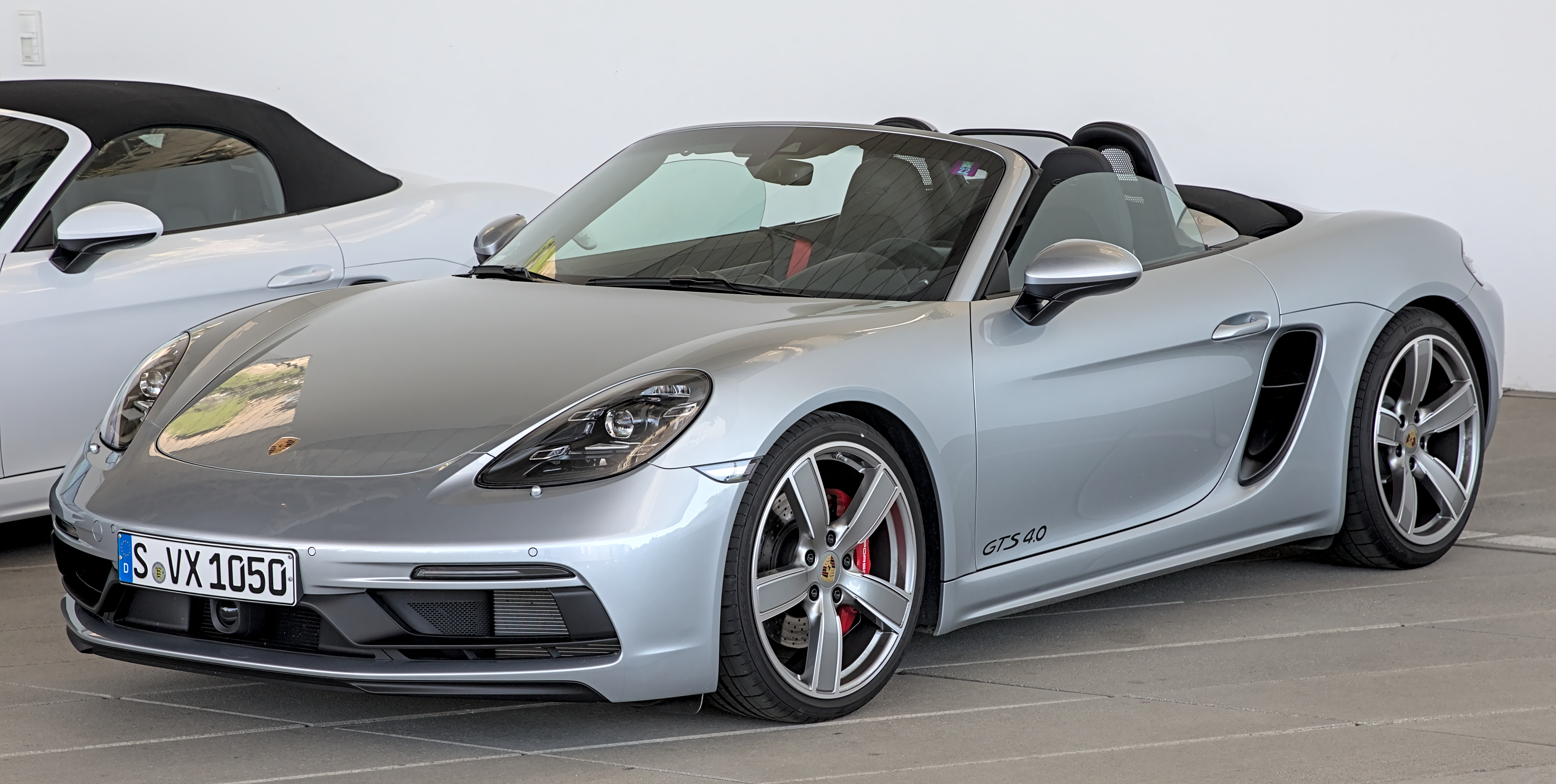
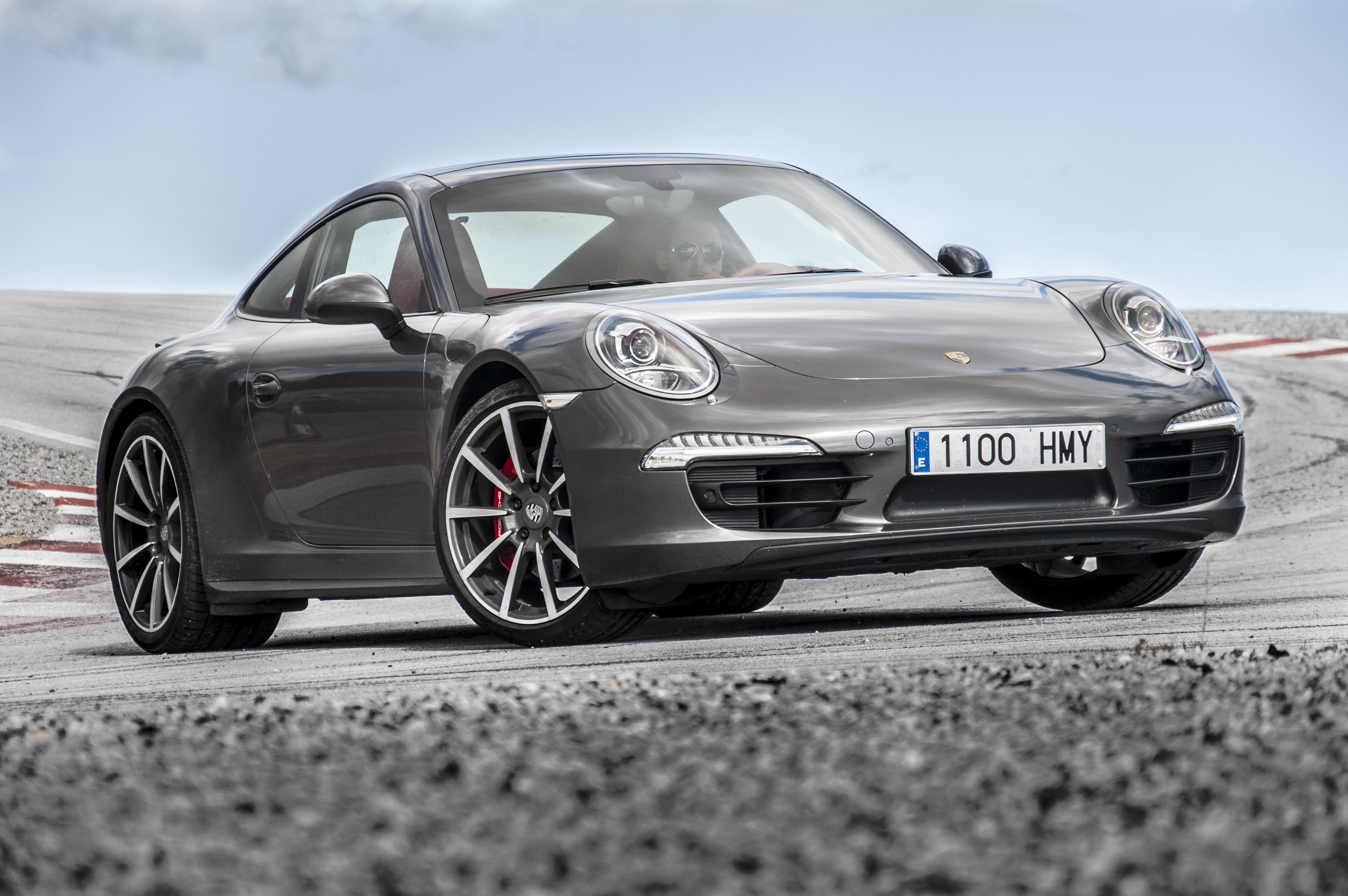
The Porsche Boxster is a small sports car that has the engine located in the middle, which helps it handle well on the road. Some versions have a four-cylinder engine, which is less powerful than the six-cylinder versions.
The Alpine A110 is a small sports car that is fun to drive and known for being very light and nimble. It's popular among car enthusiasts for its performance and style.
A four-cylinder engine has four small chambers that help create power for the car. It's usually more fuel-efficient than larger engines but can be less powerful.
A turbocharged engine has a special device that helps it produce more power by pushing extra air into the engine. This makes the car faster without needing a bigger engine.
A flat-six engine has six cylinders that are laid out flat instead of standing up. This helps the car handle better because it makes the car's weight lower.
Specific output is how much power an engine makes for each liter of its size. If an engine has a high specific output, it means it can produce a lot of power without being very big, which is good for fast cars.
A naturally aspirated engine gets air into it just by using the pressure from the atmosphere, without any extra help from devices like turbochargers. This can make the engine feel different when you drive it.
Low down torque means the engine can give you a lot of power when it's running slowly. This helps the car start moving quickly and makes it easier to drive in regular situations.
Gear ratios are like the settings on a bike that help you pedal easier or harder. Taller gear ratios mean the engine has to work harder to make the wheels turn, which can change how fast the car speeds up.
A V8 engine has eight cylinders arranged in a V shape, which gives it a lot of power and a unique sound. It's popular in many types of cars, especially performance ones.
A hot hatchback is a small car with a hatchback design that is built for speed and fun driving. They usually have stronger engines and better handling than regular hatchbacks.
The Ford Mustang is a popular sports car that has been around for many years. It's known for being fast and stylish, making it a favorite among car enthusiasts.
This is a type of engine that has eight cylinders and is 4.0 liters in size. It uses two turbochargers to make the car go faster and use fuel more efficiently.
when it had been a three-and-a-half liter push rod V8.
That's weird.
It is completely weird, but it is also true.
And it just sounded like
you were pouring a bucket of bolts through a cement mixer.
I remember Martin Brundle, one of his DVDs
that I got for Christmas a million years ago,
he drove one and said,
I think you said it sounds like a skeleton
dancing in a biscuit tin.
Yeah, well, very good.
Very good, yeah.
The first sort of thing.
Yeah, exactly.
It did the numbers, it had the power.
I think it had more power than the V12 was ever gonna have.
It made the car massively lighter.
They were able to massively shorten the wheelbase.
It was a much better car for having that engine in it,
all in all regards,
other than the characteristics of the engine itself,
which was so, if you're gonna go and buy
a mid-engine supercar,
stroke hypercar like that,
which 30-something years ago,
the company wanted 403,000 pounds for.
Oh my God.
And then we're gonna make,
what did they make, 350 of them?
You know, you don't want an engine
which sounds like a washing machine.
No.
Actually, not as good as a washing machine.
And it did spoil that sensory experience
which is so important to those sorts of cars,
which is a shame because,
I've driven an XJ2, but I've driven them then
and I've driven them much more recently.
And I think they are really underrated cars.
If you look at the fact that they're competition history,
I mean, David Coulthard won his class at the Morin one,
they got disqualified in the technicality,
but nevertheless, the car had the pace
and was a deserved winner of that category.
If you look at how few they made,
if you look at how rare they are,
if you look at how fast they went,
they were the fastest thing you could get
until the McLaren F1 came along.
And if you look at what you pay for one,
compared to anything else remotely similar at the time,
like a Ferrari F50, I mean, they are, you know,
they have never ever gotten over the reputational damage
that we've done by putting that V6 in them.
Didn't depositors sue Jaguar
when it was announced that the V12 was gone?
No, Jaguar tried to sue them.
Oh, because they wanted to pull their deposits?
Well, they didn't go through the cars,
they withdrew and there was gonna be this bit,
I'm not sure whether they ever got to court or not,
but I mean, talk about a PR disaster.
A nightmare.
Jaguar suing its own customers.
Can you imagine how well that went down?
And so, yeah, people call it a Metro engine
because it was, the engine was fitted to the Metro 6R4,
the Group B rally car.
A related version of it, yes.
And of course, that's not really a Metro, is it?
No, exactly.
It was an engine out of a mini-metro where it'd come all.
Yeah.
Keep rattling through them,
I know you've got plenty on your list.
Okay, here's one we both driven.
Yeah.
And we are going back in time,
you have driven one of these.
And I think this might be the greatest example
of the greatest engine in the worst car.
I think it's gonna take a lot of time.
Great engine, bad car gone.
Yeah.
Lamborghini LM002.
Oh.
Yeah.
Is your AC struggling in your summer budget
already stretched in?
I'm Corwin Keller, owner of Ideal Heating and Air Conditioning.
I know how pricey summer can get.
That's why we're offering 0% financing
on new systems for qualified buyers.
No interest, flexible payments,
just comfort you can afford.
With this offer and our 100% satisfaction guarantee,
you can stay cool without the stress.
Call us or visit heatingairomaha.com today
for a free estimate.
Ideal Heating and Air Conditioning,
committed to exceeding expectations.
Oh, oh, oh, oh, rally.
Check engine, ABS or maintenance light on.
Take the guesswork out of your warning lights
with O'Reilly Veriscan.
The service is free and provides a report
with solutions verified by ASE certified master technicians.
And if you need help,
we could recommend a shop for you.
Ask for O'Reilly Veriscan today.
Oh, oh, oh, oh, rally, auto parts.
I mean, that is an underwhelming car to drive.
Isn't it?
And actually this is not just a great engine
in a bad car.
It's also completely the wrong application
of a great engine.
Yeah, yeah, yeah.
It should never go on to that car in the first place.
One thing that's when I drove the LM002,
the one thing that just struck me about it
was just I hadn't expected was just how slow.
So slow.
So slow.
It's an Lamborghini, it looks like that
and it's got a V12 and you get anything?
It's all you got.
It was a bit rubbish as well.
It was like nine seconds to 60 or something, wasn't it?
It was just, it was just rubbish.
Yeah, that's such a good example.
Massively cumbersome, hideously ugly, bleh.
Truck.
And I say this, I'm utterly disparaging,
but the truth is, somebody said to me tomorrow,
do you want to come and drive an LM002?
I'd drop everything.
Which is stupid, I know, but yeah.
That's a good one.
Okay.
Oh, I've got another good one.
Yep.
Bit before your time, but not that old.
Mercedes-Benz R63 AMG.
Do you remember the R class?
Does that go into?
Yeah, yeah, yeah, yeah.
So that sort of MPV thing.
It was the big Mercedes-MPV.
I mean, hideously ugly, actually very quiet
and very comfortable.
And I thought it had a bit of a bad rap at the time
because it was just so awful to look at.
But the AMG version of that, with that,
I just don't think, what engine would that have?
Would that have been the five and a half liter
twin supercharged one?
Or the naturally aspirated 6.2?
I should know, shouldn't I?
What I do know is that whichever one of those engines it is,
it did not deserve a fate like being stuck
under the bonnet of an R class.
No, it was the M156, which is the 6.2.
Yeah.
It's a great engine.
Do you know what?
Can they still use in GT3 cars today?
Yeah, it is, yeah.
I was toying with mentioning this engine
because so what I said about BMW M
is that they have often had fantastic engines
but never put them in thoroughbred sports cars.
Whereas AMG, they have fantastic engines
and they put them in anything.
Yes.
They just chuck them in everything.
Absolutely everything because I guess they can.
From the SLS, a true front-mid-engine sports car,
all the way to an MPV and SUVs and saloons and estate,
they chuck their great engines
in everything they possibly can.
Yeah.
Maybe they should be a bit more discernible.
Perhaps, yes.
Do you want me to do another?
Yeah.
Okay, this is controversial.
This is really controversial.
Good, good.
Okay, this is, I was about to say
good car with a bad engine.
Okay, I think it's a bad engine.
I think people are going to struggle to accept
that this could have been a good car.
Let alone be a good car.
DeLorean.
What a story.
The DeLorean.
Yeah.
So this had a, the Duvrain,
the PRV,
V6 single cam.
Absolutely nothing of an engine.
Weedy thing.
Weedy thing.
160 horsepower.
Put into the back of a car,
which was already much heavier
than it was meant to be,
much heavier than it was designed to be
because it had had to be completely redesigned by Lotus
because the original design was totally impractical.
And then the engine was utterly inadequate.
They were going to do a turbo version of it,
but it never made it.
I don't even know,
they might have had a mule or something,
but it certainly never got anywhere near a showroom.
I mean, I've driven a DeLorean and believe me,
that is not, it's only problem.
It's got lots and lots of problems.
But what I would say,
and what I said at the time,
what I've said before about them
is that you can sort of feel,
even when you drive it,
and even when it's just sort of disappointing you
at every turn,
you can sort of feel,
get a sense for the car that it was meant to be.
And it is absolutely my belief
that if it had been developed properly
and if it had had a decent enough engine in it,
I'm not saying it would ever have been a world beta,
but it would today be regarded
in a completely different way.
And history would have been,
or maybe because it wouldn't have been that rubbish,
maybe it would never have made it
into the back to the future films
and people would barely even remember
what a DeLorean is these days.
But it wasn't a great car,
but it was a terrible engine
which dragged the entire thing down.
And the car itself,
which did handle a bit,
and we have a contributor,
Jez, who has one
and tried to set a sub 10 minute
of the Nürburgring,
and they do have a charm
and they are nothing like as rubbish
as I think an awful lot of people,
because I think they've come
with sort of the supercar equivalent
of people used to make,
so it's go-to-jokes.
It's a DeLorean and everybody knows
something funny about one.
But actually, I just think it's,
I think it's just a really, really sad story
of what might have been for that car
and also obviously particularly
the poor people in Northern Ireland
who were given all the hope in the world
that this would be a way out
of the grinding poverty of that area
and into a bright or a brighter future.
And it never came to be.
It's a good example.
I'm glad you mentioned Jez, Jez Medinger.
He's one of our newer contributors.
And he's brilliant.
If you haven't checked out,
go do it on the website now.
He's becoming a very prominent contributor, isn't he?
Across the platform.
And he seems like a bit of lunatic.
You're right, he took his DeLorean to the Nürburgring
to try and do a sub 10 minute lap
and he wrote a fantastic story about it,
which is on the website and app still.
But he also, I think he essentially hot rodded
his DeLorean because there was another version
of the PRV, maybe it was out of a Volvo or something
that does slot straight in,
but it has a good chunk more power.
So it might be that the DeLorean example,
the engine in that was dreadful
and there were better versions of the PRV, I don't know,
but no one talks about that engine
in particularly glowing terms, do they?
No, I mean, there were versions.
I mean, so they did a version of it in the Alpine A610
which was turbocharged and they did a GTA, didn't they?
And it was quite good then,
but it needed that extra oomph
and put in the back of a light car like an A610,
it actually did quite good work
and I thought it was fine that,
but in naturally aspirated form
in the back of a heavy DeLorean, sadly not.
How many more have you got?
Oh, how many do you want?
Let's keep going.
We're gonna go, okay.
So this is both a really good and a really bad engine.
Mm-hmm, right, okay.
It's a really good engine,
but it's an absolutely terrible engine.
Mm-hmm.
And it's the V8 that went into the Triumph Stag.
Oh, blimey.
Okay.
Do you know what I'm talking about?
I know what a Stag is.
Yeah, Stag.
Stag.
Stag.
What, how could an engine be both good and terrible?
Okay, so all you need to know is that
most Stags, I don't wanna say most Stags,
there was a time when most Stags
just had Rover V8s in them because they,
the problem was that they were just terribly unreliable.
Yeah.
This was a lovely V8 engine.
I say this, I've never actually driven the Stag,
so I don't actually know what I'm talking about.
But by reputation, it was very sweet.
I know it sounded really good.
It had decent power,
and it was also just really appropriate
to the kind of car that the Stag was,
which was this slightly sporting,
but more sort of grand touring oriented,
you know, open roadster,
lovely car, lovely, in theory, means of powering it.
But it just, if we had Richard Bremner on this podcast,
our fellow contributor who had been on the podcast before,
he would be able to spend the rest of this podcast
telling you what was wrong with that engine.
But it was basically, it was cooling related.
It might have been something to do,
and I may get this completely wrong,
but was it something to do with the fact that
because the V8 was essentially
two four cylinder engines put together,
and all the cooling went to one half of it,
and not to the other, I don't know,
but it just didn't fill people with great confidence
for its ability to get from one place to another without
sending you, you know, leaving you
steaming at the side of the road.
But it was a great engine when it was working properly,
which probably wasn't often enough.
Another example of that is the,
and you might have driven one of this,
in fact you probably have,
the six cylinder TBR engine.
Yeah, I've driven one, absolutely.
I mean, that's an absolute brute of a motor, isn't it?
Yeah, it came to mind the moment you said
a great engine just not reliable enough.
Yeah, that was the problem with that engine, wasn't it?
The Al-Melling, the only person I've ever referred
to as the late Al-Melling,
he's the only person who's death
I've announced without him actually being dead.
Oh dear, that's unfortunate.
Yeah, I can't believe why I did that, and.
He must have been so surprised to hear that.
Yes, I still feel bad about that,
but he didn't seem to have.
I think TBR owners will point out that
a lot of the reliability issues of that engine
have largely been resolved by specialists.
Yeah, I think they have, yeah.
But we can only really judge these.
I mean, it's like the 996, 997 Porsche flat-six engine.
Those engines and those issues are entirely resolvable now,
but that doesn't mean that on a podcast
talking about the kinds of engines
that these cars have when they were new,
we can't talk about it now.
No, quite right.
And they did have reliability engines,
reliability issues.
Absolutely they did.
Can you remember what actually went wrong with them?
No, not specifically.
I don't know.
Sorry, but while you were talking,
I mean, I don't know why this came to mind,
but it's actually relevant for this podcast.
I was following the other day
a Mercedes SLK sports car.
Roofed down.
Not my kind of sports car, but a lot of people like them.
Don't say that.
Richard Brennan's got one.
Sorry.
No, he doesn't like it either.
I was judging the festival with him last weekend,
and he was telling me just how much he didn't like his SLK.
But he still has it, good.
But the telling thing about this SLK
was the little badge on the back that said CDI.
Oh, that's a good call.
Yeah, and it just reminded me
that there was this era, I don't know, 20 years ago,
something like that, when particularly German manufacturers
were quite insistent on making diesel engines
available in their convertibles.
Yeah, Audi did it with the Audi Coupe, didn't they?
The Audi Coupe convertible, I guess it was, yeah.
Just, it's just wrong.
Roofed down.
Fire it up, bang, bang, bang, bang.
Yeah, yeah.
Absolutely right, that's a really good shout.
Right, let's keep going.
Okay, Audi S2 Coupe.
Oh, blimey.
Yeah, I know what you're talking about,
but I couldn't tell you what engine's in that.
Well, it's the engine, it's the 20 valve engine
that came straight out of the Quattro.
Yeah, okay.
So this is 1990.
I do know about this actually,
because my father had one.
And I just thought it was a terrible car.
And the contrast to the last of the Quattro,
so that engine, the 20 valve,
Audi Quattro when it came out in 1980,
had a 10 valve, a single cam engine.
And then right towards the end of production
at the end of that decade,
they did this twin cam 20 valve engine for it,
which was absolutely belting.
Sounded even better, much better torque delivery,
more power, just win, win, win, all the way along the line.
And those late Quattros were really, really good cars.
Because the early Quattros, if truth be told,
because they had a very basic agricultural 50-50 torque split,
they weren't as good as their reputation had.
They gained their reputation because they were so novel
because they were the first four-wheel drive car.
But the later cars,
which had torsion differentials in them
and had that 20 valve engine cracking things, excellent.
They then decided to make the S2 Coupe.
Put that engine in it,
but took all the fun out of everything.
It was just a pudding.
And my father had one because I think he had one
because what he really wanted was a 911,
but didn't feel he could afford a 911.
So he got one of these things and he used it for a bit,
but there was never any love for it at all.
And I don't think he hung on to it very long.
And I used to drive it around.
And it's just one of those cars.
It's the context.
If the Quattro hadn't existed,
if I'd never driven a 20 valve Quattro,
I probably wouldn't be that down on it now.
But it was just, even though it was,
I thought it was a really good-looking car,
the S2 Coupe.
Yeah, it does look good.
Yeah, it's a smart-looking thing.
Frankly, unlike the Quattro,
which I always thought was a bit ramshackle,
just that edge, that poise,
that enthusiasm to chuck you down a road,
just all gone.
It was just another comfortable,
slightly poor riding, actually.
Totally uninspiring Audi with a lovely engine in it.
Good one.
Let's do a few more.
Okay, you've got some.
No, I've run out, so we're going to concentrate on yours.
Okay, well, okay, I'm absolutely fine with that.
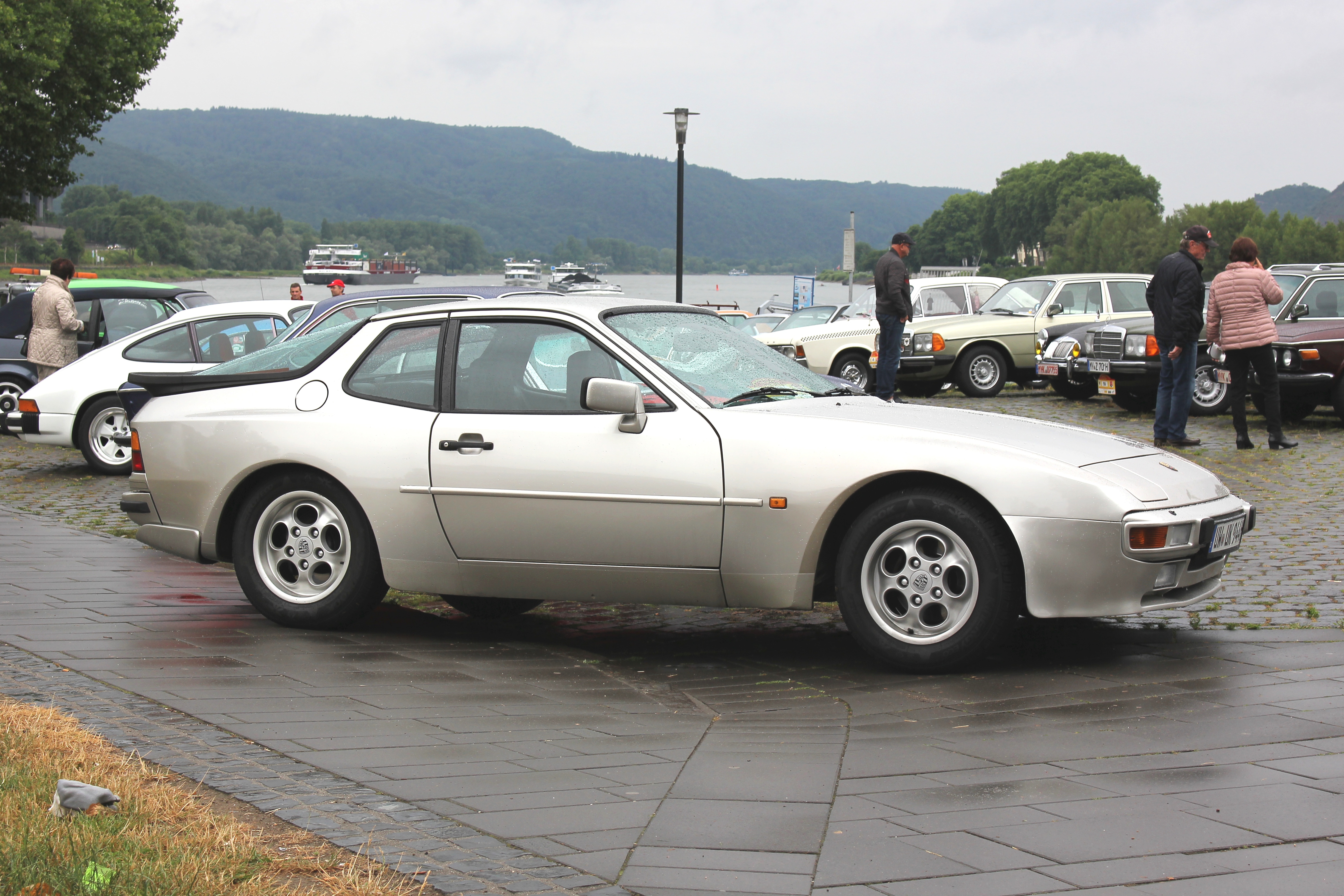
Porsche 924.
Yeah, yes.
With a van engine from a VW.
Volkswagen van engine, 125 horsepower.
So the 924, let's not forget,
it was never meant to be a Porsche.
Yeah, it's going to be a VW.
It's going to be a VW.
It's going to be a VW sports car.
It came along in the mid-70s,
which as some will remember,
basically it arrived on the back of the OPEC oil crisis
of the 1970, 1973, 1974,
by which stage the last car in the world
that Volkswagen wanted to have on its books
was an impractical 2 plus 2 sports car,
but it had been developed for Volkswagen by Porsche.
Porsche, on the other hand,
were quite keen on the idea
of a much more affordable Porsche
to sell in those sort of straightened times.
And so what was wrong for Volkswagen
seemed very right for Porsche
because here was an absolutely turnkey delivered car,
which they'd been paid to develop.
Which they could just go and stick their own badges on.
And that's how the 924 came along.
And the only drawback was
because it had been developed for Volkswagen
around Volkswagen engines,
it had an engine out of a Volkswagen Van in it,
which just wasn't good enough.
And yeah, it was just,
it was a 924 as a really fine handling car,
you know, trans axle, gearbox between the rear axles,
beautifully balanced,
you know, light, nimble, lovely,
but was never gonna convince anybody as a Porsche.
It is interesting that it was that quirk,
that, you know,
almost by accident that the 924 became a Porsche.
That then gave us the 944 and the 968.
Yeah. Those might never have happened.
And you know, and all the things
that they did to the 924,
before any of that,
to try to spice up the show a bit.
So, you know, the 924 turbo,
the Carrera GT and the GTS,
you know, they went racing at Le Mans with them.
And then, actually,
I think the first test I,
it was the first test I ever did
as a motoring journalist,
the first twin test I ever did
was a Porsche 924S versus a Honda Civic CRX.
And the 924S had the Porsche engine in it.
Okay.
So, Porsche developed the 2.5-litre four-cylinder engine
that would go on to power all the 944s, all the 968s.
But it was first actually put under the bonnet
of a 924 in 19,
I don't know.
But, and then it was sold side by side
with the 944.
So, you could have a cut-priced Porsche
with the 924S.
Or you could go and get a 944,
which was a sort of slightly,
well, it was the same shell,
the same sort of size,
but it had, you know,
it had flared arches and looked much more of the part.
And that was a good engine,
but no, in original 1975,
base 924, not up to it.
Good one.
Okay, more?
Yeah.
Golly, okay.
Scraping the bottom of the barrel a bit now.
Okay.
W12 Faten.
Wow.
I wonder how many of those were ever built?
A few.
Yeah.
I think they were sort of used
as chauffeur cars in Germany.
Yeah, I'm sure.
So this was the W12 engine,
basically as we think W12,
we think Bentley, don't we?
But it was a Volkswagen engine originally
and in naturally aspirated form,
it went into the Audi A8
and it went into the Faten.
The Faten itself is,
it's just such a curious car.
It's one of those things,
it was a Piek Vanity project.
He believed that he could get people to,
if they made the quality right,
if the product was good enough,
that people would spend a huge amount of money
buying a car that might otherwise be seen as a rival
for a top of the range Mercedes or Audi or BMW,
but with a Volkswagen badge on it.
And in that regard,
and it's quite rare that he got anything badly wrong,
but he got that spectacularly wrong.
And the car,
despite the fact it was beautifully built,
it was incredibly heavy.
Nobody wanted it because nobody wanted to,
please the person who turned up
at the golf club on the Volkswagen.
And, but they offered it with a range of engines.
They put the V10 in it,
they put the V12 on it.
The V6.
They put the V6 in it in petrol and diesel form.
They put the W12.
Yeah, I mean it was-
It's so strange that they offered a V12 and a W12.
No, they didn't.
No, V12.
No, there's no V12.
So I said V12, I meant W12.
Yeah, so they didn't.
But it was in naturally aspirated form.
It wasn't massively powerful,
but it made decent power.
And it sounded really nice
and it just had never, ever, ever have been put
under the bonnet of a car as homespunners as a F8.
Sometimes when I'm, when does this happen?
Maybe when I'm on the motorway
and it's late at night and the weather's foul
and I just want to get home
and I'm in something a bit sporting.
My mind does sometimes wander to the F8 on.
Well, on being asleep in the back of one.
Well, that or, you know,
spending four grand on one as my motorway car.
Well, my brother did that.
My brother had a F8 and had a three liter diesel F8
for a really quite a long time,
which he spent buttons on.
For exactly the same reason he's all thinking of it.
I don't know why he got rid of it in the end,
but it didn't go wrong.
He really enjoyed it.
I mean, it wasn't very connected.
You know, you wouldn't get Bluetooth
or anything like that,
but he really enjoyed just having it to smoke about it.
Okay.
Should we do one more?
Okay. Well, yeah.
So this is before even my time, let alone yours,
but you'll know what I'm talking about.
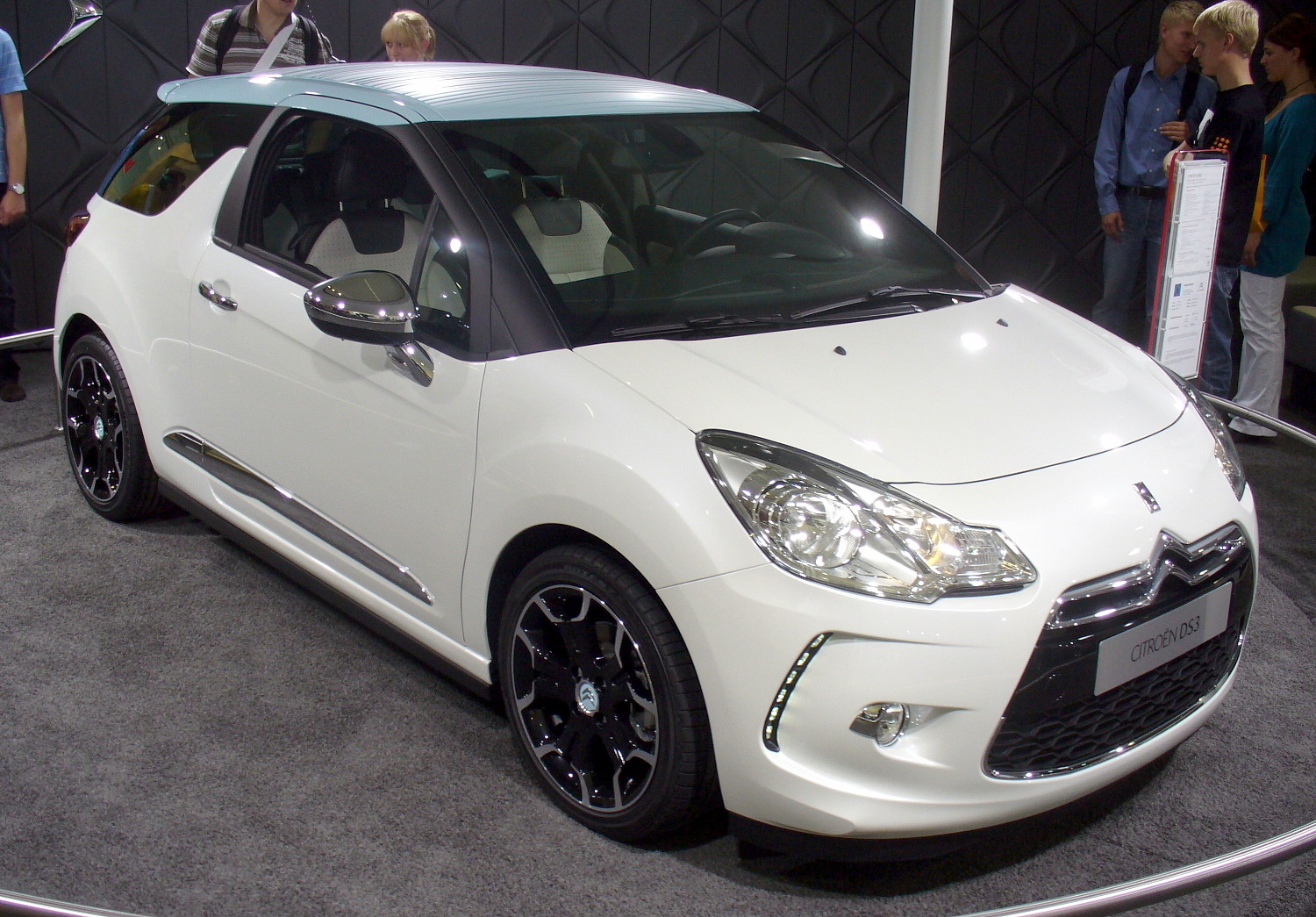
Citroen DS.
Yeah.
The Deus.
Yeah.
The Goddess.
This car, when it came out in the 1950s
was in design terms, it was a whole new level.
It was utterly beautifully.
Technologically, it was very, very advanced,
but it came with this dreary 1.9 liter four cylinder
mass produced piece of nothing engine.
And I always just thought it was such a shame.
I haven't driven many DSs,
but I've been in a few and I've driven,
I have to actually be honest, I think I've driven one,
but it was such a lovely thing to go about the place in,
but there's really no performance.
It doesn't sound nice at all.
And it's just struck me as being here as a car,
which is wonderful in basically every single regard,
apart from one, and to an extent,
it lets the entire thing down.
Yeah.
So yeah, it's just such a shame
because it was an absolutely outstanding car.
And I think of its reputation now,
for its beauty and for its technology
and the advances that it brought.
And I just think to myself, how much greater,
even than it is now, would it be remembered
if it had an engine which was even half as good
as the car that it was installing?
So broadly speaking, this current trend
for ripping petrol drivetrains out of classics
and installing EV powertrains.
That'd be a good candidate.
Yeah, generally speaking, I'm not in favour of that.
Ripping the heart out of a 911 or a Mercedes SL or something,
but there are some cars that are ripe for it
and the DS is one of the best examples.
Yeah, it would actually be really cool.
It would suit it.
You'd actually probably improve the car
because it would be even better
at what DS is a really good at,
which is just wafting around.
And you lose the drone
and it would probably have better performance too.
And the fact that it weighed more would be neither here nor there
because it's not a sports car.
So who cares?
Yeah, good shot.
There you go.
Electric DS, everybody.
Anyone up for it?
I'll have a go.
Have we exhausted your list then?
Well, there weren't two other things in it,
but I don't think they need to delay us now.
Okay, good.
That was fun.
Well, thanks everyone for listening.
Thank you for watching.
Just follow the show.
If you're watching on YouTube,
subscribe to the channel.
If you're listening via a podcast app,
just follow the show on that.
It means you don't ever miss an episode
and it really helps us.
And as a reminder,
if you're not yet subscribed to the intercooler's
online car magazine, do so now.
Please, there'll be a link in the description
or just head to d-intercooler.com.
And you can use coupon code POD20 at checkout
to get 20% off the first year.
And the intercooler, the magazine is
the multi-award winning ad-free online car magazine
where we publish a new feature length story
every single day of the working week
by a top draw car journalist.
The greatest bunch of motoring writers
assembled under one roof anywhere in the world.
Yeah, we're convinced of it.
We keep on saying it
and no one has ever contradicted it.
And if you go and look at the people
who are writing for us, you'll see why.
And we're adding to the roster all the time.
It just gets stronger and stronger.
We've got some good new names coming up.
We have.
And you can also listen to this podcast
completely ad-free if you're a subscriber.
There's also a midweek show called Ask the Intercooler.
That's only for subscribers.
So there's a whole litany of reasons why
you should go and subscribe to the intercooler
if you haven't already.
And there'll be a link in the description.
So please do that.
And in return, we'll keep doing this podcast.
We'll be back again next week.
See you then.
Oh, oh, oh, oh Riley.
Check engine, ABS or maintenance light on.
Take the guesswork out of your warning lights
with O'Reilly Veriscan.
The service is free and provides a report
with solutions verified by ASE certified master technicians.
And if you need help, we could recommend a shop for you.
Ask for O'Reilly Veriscan today.
Oh, oh, oh, oh Riley.
Auto parts.
About this episode
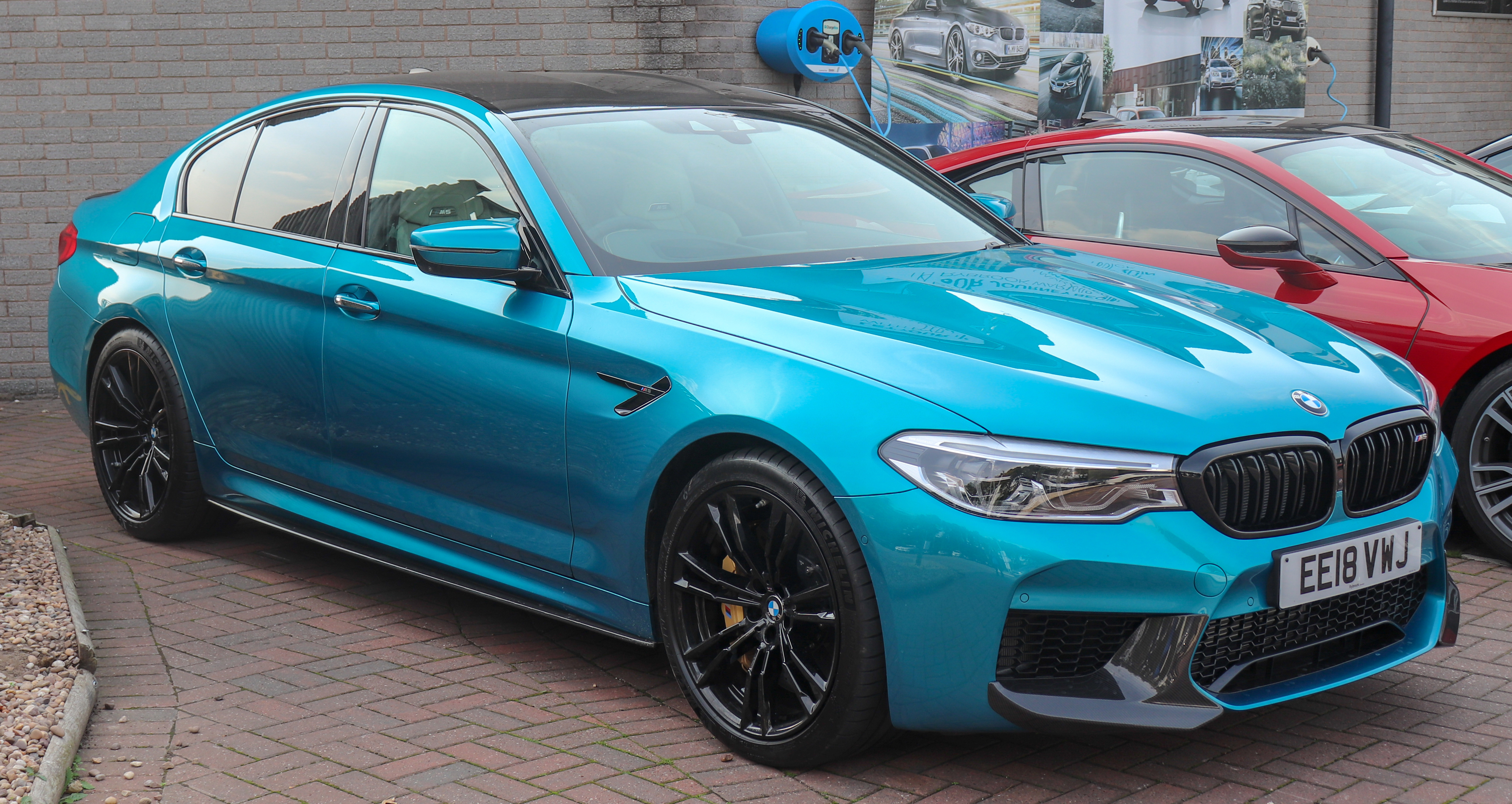
Exploring the intriguing relationship between cars and their engines, this episode delves into vehicles that either boast exceptional engines paired with lackluster builds or vice versa. Hosts Dan Proser and Andrew Frankel discuss various examples, including the Porsche Boxster's flat-six and the BMW M5's V10, highlighting how certain engines are misapplied in their respective cars. The conversation is lively and filled with insights, making it a fascinating listen for anyone interested in automotive engineering and design.
Dan Prosser and Andrew Frankel discuss the great cars that were let down by their crap engines, and the brilliant engines that somehow found their way into terrible cars. Examples include the wonderful Alfa Romeo Busso V6 that was never used in a truly great car (except maybe once), the front-wheel drive, V8-powered Lancia Thema 8.32, and every diesel convertible ever built.
Use coupon code pod20 at checkout to get 20% off an annual subscription to The Intercooler's online car magazine for the first year! Listen to this podcast ad-free, and enjoy a subscriber-only midweek podcast too. With a 30-day free trial, you can try it risk-free – https://www.the-intercooler.com/subscribe/
Find out more about JBR Capital here – https://www.jbrcapital.com
Use coupon code Ti10 to get 10% off your Supernatural Car Care order – https://supernaturalcarcare.com/