In NASCAR, “overtime” is when a race goes past the normal finish if there’s a late caution. The goal is to finish under racing conditions, but the hosts think it can create more wrecks and confusion than it solves.
They’re talking about NASCAR, the stock-car racing series. The hosts are using examples from NASCAR races to argue that the overtime format can lead to unexpected winners.
They bring up the Daytona 500 because it’s a famous NASCAR race. The point is that even when someone is leading at the end of regulation, overtime circumstances can change the winner.
A caution is when cars slow down because something happened on the track. If it happens near the end, the race rules decide whether the race finishes slow under caution or if they restart to race to the checkered flag.
“Checkered flag under yellow” means the race ends while cars are still slowed down for safety. Instead of racing flat-out to the finish, everyone finishes in the caution/pace-car mode.
A “plate track” is a type of NASCAR oval where the rules limit engine power to keep speeds down. Because cars run closer together, it’s easier for wrecks to involve lots of cars.
Concept
single file research too
This sounds like they’re talking about a “single file” restart, where cars line up one-by-one instead of racing side-by-side. That can make restarts safer, but it also makes the racing less exciting.
Denny Hamlin is a prominent NASCAR driver, and the hosts are discussing how he might have pulled away in a late-race lead battle. Mentioning a specific driver helps ground the conversation in real race dynamics and outcomes.
“Logging laps” here means counting laps completed under caution/slow conditions rather than racing at full speed. The hosts argue that modern cautions cost many laps, so stopping the race (red flag) could preserve more green-flag racing time.
IndyCar is the open-wheel racing series that runs the Indianapolis 500, among other events. The hosts mention IndyCar using a red-flag/stop approach at the Indy 500 to limit the number of laps lost, as an example NASCAR could try to emulate.
The Indy 500 is the Indianapolis 500-mile race, IndyCar’s flagship event. The hosts cite it as an example where race control managed late-race interruptions in a way that limited the number of laps lost.
The green flag signals the race is back to full-speed racing after an interruption like a caution or red flag. The hosts want more time under green rather than having late cautions consume laps and end battles prematurely.
Late restarts are the final restart attempts near the end of the race. Since there’s not much time left, drivers may push harder to gain spots, which can make things more chaotic.
Concept
points racing vs other scenarios
“Points racing” refers to NASCAR’s system where drivers accumulate points (or advance through playoff-style rounds) rather than only racing for a single win. The segment argues that when points are the priority, drivers may behave differently—potentially reducing aggression compared to situations where the only goal is position for a win.
In NASCAR, drivers can earn extra points that help them in the playoffs. If those points are easier or harder to get, drivers may race more aggressively or hold back.
In NASCAR, a “caution” slows the cars down because of a crash or debris. If the race ends under caution, the winner is decided without the usual full-speed racing at the finish.
Green-white-checkers is NASCAR’s way of trying to finish a race with a proper sprint at the end. It usually means a restart, then the final lap, then the checkered flag.
In NASCAR’s playoffs, the points situation gets reset when the postseason starts. That means drivers can’t rely on earlier points as much, so the last part of the season can feel more urgent.
A “natural caution” is when the race slows down because something happens on track—like debris or a wreck. If there are fewer of them, teams have to manage tires and strategy for longer green-flag runs.
In NASCAR, a “mile-and-a-half” is a type of track that’s roughly 1.5 miles around. Cars can behave differently there than on shorter tracks, so teams watch things like tire wear and passing patterns to see if the setup is working.
Term
take the air off aggressive
“Taking the air off” is shorthand for reducing aerodynamic drag or changing airflow management to help a car gain speed or stability. In NASCAR, how aggressively drivers use drafting and positioning can affect whether they can pass cleanly or cause mistakes.
They’re talking about what happens when tires get worn out or overheated. If you push too long without fresh tires, the car loses grip and drivers start making more mistakes.
Intermediate tracks are the middle-size NASCAR ovals. Cars often behave differently there than on short tracks, so passing and tire wear can look different too.
Toyota is one of the NASCAR manufacturers. The hosts are saying Toyota cars were running faster than the others, which made it harder for rival brands to challenge for the lead.
Chevrolet is one of the NASCAR brands. The hosts think Chevrolet’s current cars aren’t matching Toyota’s speed because Chevrolet has introduced a new body style and teams are still figuring out how to make it work best.
A “new body” means the race car’s outer shape has been updated. That can change how the car grips the track and how fast it goes, and teams usually need races to learn the best setup.
Passing is when one car goes by another. The hosts are saying the race had lots of real battles early on, then it slowed down and became less exciting.
They’re talking about Penske’s NASCAR teams. The point is that even strong racing organizations can have pit crews that aren’t consistently great, which affects race outcomes.
“Four wide” is when four cars try to race next to each other at the same time. It’s exciting because it can win you the lead, but it’s also risky because the cars are very close.
Kyle Larson is a NASCAR driver. Here they’re talking about how he set up a strong run late in the race and used his car’s speed and grip to pass and pull away.
They’re basically saying the car should be set up so the front isn’t scraping or digging into the air. The goal is to make the car more stable and less likely to do something scary when cars are running close together.
A splitter is a front aero piece on a race car that helps it stick to the track. If it “comes around,” it usually means the car’s front end didn’t behave as expected—like it got unstable or started to rotate.
Term
quaple incident
They’re referencing a specific scary crash from the weekend. The point is that it made teams afraid of setups that could let cars lift off the ground.
“Fontana” refers to the former Auto Club Speedway in Fontana, California, which was demolished after being repurposed. In racing conversations, it often comes up because the track’s layout and history affected how teams prepared and how fans experienced events.
Auto Club is associated with the Auto Club Speedway branding in California and has been tied to major motorsports events. When someone is described as a former president of Auto Club, it signals a motorsports-adjacent leadership role rather than a team or manufacturer.
This is an engine that uses hydrogen gas as the fuel instead of gasoline. It still makes power by burning the fuel, but it’s a different energy source with different challenges.
CUV stands for “crossover utility vehicle.” It’s basically a modern SUV-style car that’s popular with regular drivers. The tweet is saying NASCAR might use that kind of vehicle identity to make the series feel more clearly branded.
They’re debating what NASCAR’s O’Reilly series should “be,” and whether switching to EV/CUV ideas would make it clearer to fans. The host also says the series is already strong because the racing is competitive.
EV means electric vehicle. It’s a car that runs mainly on electricity from a battery, not gasoline. The hosts are discussing whether EVs could be used in NASCAR to help the series feel more modern.
Concept
brand identity vs manufacturer identity
They’re debating how NASCAR wants the series to look and feel like a specific brand, and also which car companies are tied to it. The host’s point is that EVs alone won’t fix the fact that not all automakers are currently showing up.
They say Ford has stepped away from the series. If a major automaker isn’t investing, it can make it harder for NASCAR to build the kind of car-company identity it wants.
“EV cars” means race cars that use electricity instead of gasoline. Because they drive differently, teams and drivers have to learn new ways to manage power and how the car behaves on track.
Topic
Cup series identity vs truck series identity (brand logos)
They’re debating how much the cars should look like regular, showroom vehicles. The hosts mention that even if the cars are made to resemble stock cars, everyone at the track knows they aren’t truly stock.
They’re talking about NASCAR’s lower series (the O’Reilly series) as a training ground for the Cup Series. The point is that drivers learn how to race there before moving up.
Racecraft is just a fancy way of saying “how to race well.” It includes things like knowing when to pass and how to control the car as the track changes.
They’re saying drivers often learn by racing late-model cars on small tracks. Those races are usually intense and teach you how to handle the car when you’re running close to other cars.
With an EV, when you press the accelerator, power comes on very quickly. That can make the car feel more immediate and can change how you drive it compared with gas cars.
Motor braking is how an EV slows down using the electric motor instead of only the brake pads. It can feel different because the car is “resisting” motion and may also recharge the battery a bit.
Formula E is a racing series where the cars are fully electric. They’re describing how, at one point, the cars were swapped during the race, which made it feel different from normal racing.
A hybrid uses both a gas engine and an electric motor. The electric part can help with acceleration and efficiency, and it can make the car feel different than a normal gas-only car.
They’re arguing that fully electric cars could make racing harder, mainly because of how quickly you can recharge and how much energy the car can carry. It’s not just about speed—it’s also about fitting EV limits into race rules.
They mention F1 as a place where racing with hybrid tech seems to be working. The point is that top-level motorsport has already adapted to new powertrain rules.
Topic
clash in LA
They’re talking about an earlier event in Los Angeles and how the discussion didn’t really go anywhere at the time. The exact event isn’t clear from this snippet.
Sometimes car companies say they’ll go all-in on electric, but if people aren’t buying enough, they slow down. It’s usually because the market isn’t ready yet—price, charging, and demand all matter.
Concept
nitro cross events
Nitro cross is a kind of off-road racing on dirt tracks with jumps. The big difference the hosts are talking about is that electric cars feel and sound different than gas-powered cars in this kind of racing.
Electric motors can give you power right away when you hit the pedal. Gas engines don’t always respond as instantly, so the car’s feel and how it slides can be different.
This is a discussion about how switching a racing product (series, brand, or event identity) from internal combustion to electric can affect fan perception and entertainment value. The hosts specifically point to the “audible experience” as part of what makes the racing compelling.
Xfinity is mentioned as the required name for NASCAR’s secondary series branding. The discussion highlights how long-standing sponsor titles become the default terminology fans and media use.
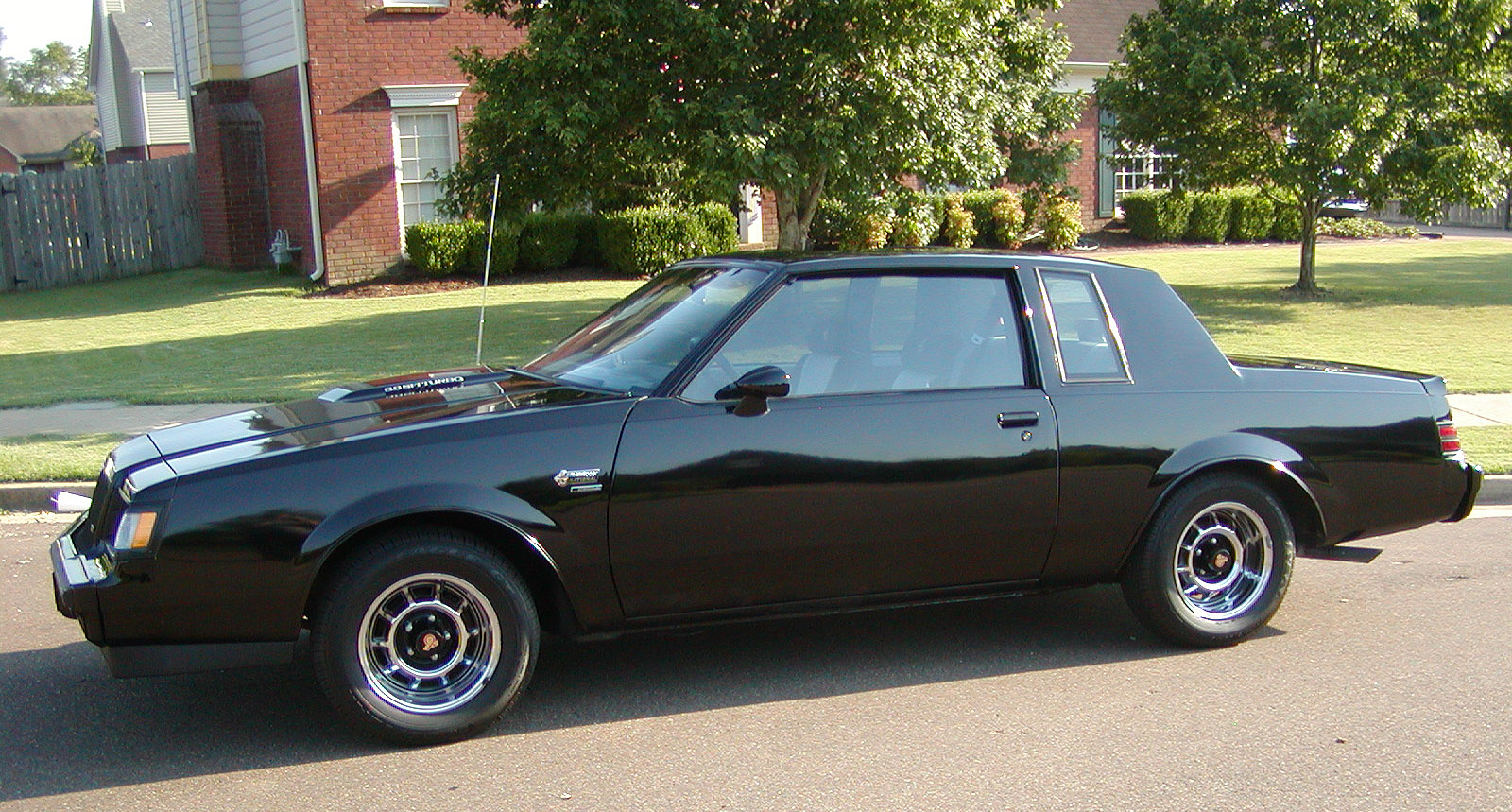
The Buick Grand National is a fast, performance-focused car made by Buick. It’s known for having a turbocharged engine that helps it accelerate strongly. People talk about it a lot because it’s considered a memorable model from an earlier era of performance cars.
The hosts reference the “Gander RV and Outdoor Truck series,” an example of how NASCAR truck-series naming has changed with different sponsors over time. It’s used to illustrate how sponsor titles can be long and cumbersome to write out.
In NASCAR, “Cup level” means the top, most prominent series. They’re saying that at that top level, it feels like there are fewer big personalities than before.
“Driver intros” are the pre-race introductions where drivers are announced and fans react in real time. The hosts use the volume of crowd cheers during intros as a measurable sign of “star power” changing over recent years.
Car
next gen car
They’re talking about NASCAR’s newer race car rules (“Next Gen”). The idea is that the cars and the way the series is run have changed, and that may affect how exciting it feels to watch drivers.
Topic
arc race
They’re referring to a specific race event (“arc race”) and talking about how the driver did. The takeaway is whether the result matches the level of competition they expected.
The “Bush series” refers to a NASCAR national series that has changed names over time due to sponsorship. The hosts use it to describe the typical ladder for developing drivers before moving up to higher-profile series.
A hauler is basically the big truck that teams use to bring their race stuff to the track. The hosts are saying fans should be allowed to meet drivers around those team areas.
“Car control” means being able to handle the car well while racing—staying stable and not spinning out. The hosts are saying that even avoiding wrecks doesn’t mean it’s easy.
To “spin” means the car rotates and you lose control for a moment. In racing, that usually happens when the tires lose grip, and it can happen even if you don’t crash.
They’re basically saying racing isn’t easy to learn overnight. Real success comes from lots of practice and learning how to handle the car in tough situations.
A year-long sponsorship means the same company supports a driver for the whole season. The idea is that the brand gets more chances to show up everywhere—ads, events, and even in stores—so people remember the driver and the sponsor together. If sponsorships are only for a few races, you don’t see as much of that in everyday places.
NAPA is an auto-parts brand that sponsors NASCAR. The hosts are saying that if NAPA sponsored a driver all year, you’d probably see more of that brand tied to the driver in everyday places like stores.
Brand activation is when a sponsor does more than just put its name on a car—it shows up in real places people visit, like stores and events. The hosts are saying that with fewer long-term deals, you don’t see as much of that today.
Home Depot is mentioned as an example of a store where you might see NASCAR sponsor displays. The hosts are using it to illustrate how sponsorship can show up in everyday retail.
Lowe's is another retail example of how sponsorship can create in-store visibility for a driver. In the segment’s argument, these kinds of displays are evidence of strong, long-term sponsor investment.
Company
900 Motorsports
They’re talking about a NASCAR team/brand called 900 Motorsports. The host’s saying you mostly notice that team’s branding during races, not in normal stores or posters.
They’re talking about “PR coaching,” meaning someone may coach a driver on how to act and talk in public. The host thinks it can make drivers seem more generic or less unique.
Jimmy Johnson is a famous NASCAR driver. They’re bringing him up to make a point about how drivers show up in commercials and become well-known personalities.
Domino’s Pizza is mentioned as an example of a brand doing a commercial with a NASCAR driver. It’s showing how racing stars can end up in everyday ads for regular companies.
This is a sponsor tied to Hendrick Motorsports. When the same sponsor and colors show up on a driver’s car all season, fans start to recognize that driver more easily.
Brand recognition means people start to connect a logo and car look with a specific driver. If the same driver shows up with the same sponsor all the time, fans remember them more.
John Hunter Nemechek is a NASCAR driver. The hosts mention him because he makes videos that let fans see what his life is like, not just the race results.
Chase Elliott is a NASCAR star. The hosts say he’s popular, but he doesn’t share as much online as some other drivers, which may limit how much fans feel connected to him.
Bubba Wallace is a NASCAR driver. The hosts mention him because his online video activity hasn’t been constant, which can make it harder for fans to know what’s going on.
They’re basically saying that if you don’t post regularly, fans lose interest. For drivers making videos, showing up on a predictable schedule helps people feel connected.
LIVE
From the agave fields of Jalisco, Billy's Tequila. Perfect in a margarita or straight over ice.
Celebrate the race of life with Billy's. Use Code Racer for 5% off at Billy's Tequila.com.
Please enjoy responsibly.
My Place Hotels is your perfect racing pit stop.
Year up for comfort and take the checkered flag on savings.
Hook today and enter promo code FRONTSTRECH for 10% off your stay.
What is going on ladies and gentlemen. This is another edition of the Front Stretch.
Happy hour program. I am back.
Big thanks to Mr. Chris Graham for filling in for me last week.
We got a great show on tap before we bring in our guests. I'm going to bring in my compadre.
He also was gone last week, but I'm glad we got two thirds of the band back together.
Mr. Dolan Hopkins at Pit Lane CPT. Mr. Dolan Hopkins, how are you buddy?
Thanks for having me.
I took everything off the wall. I'm moving with my fiancee. It's because it's about time I did.
So it's a very stressful time. There's been many curse words had today.
There will be some beverages consumed this evening and we're not done yet.
We have so many more wonderful things to move.
On the bright side, we've got Talladega coming up this week.
I'm really looking forward to it. I'm looking forward to going to the Boulevard with Nassi.
We're going to have a lot of good coverage for you guys.
It's good to be back by the way. I feel like I haven't been on happy hour in weeks.
You and me both buddy.
Yeah, it's been too long. I think the last time was like post Martinsville.
Right? I can't even remember.
Yeah, thanks.
Our producer Chris has brought in some new stuff that we're trying out.
Everything looks a little bit more professional now.
I saw that new graphic, that new 3D graphic.
We have 3D graphics now, ladies and gentlemen. That's where we are.
We're really moving up in the world.
I know. It is incredible.
I'm here while we wait for host number three to get in.
But how about we introduce a guest since we have one?
I think we should. He is probably our number one feature guest.
Is that safe to say?
Is he our most frequent guest?
Because he's also a good pal. He's a very, very, very, very special guest.
He is our most frequent, but he's probably our most valuable too.
We love John.
He truly is.
There's only one thing wrong about him.
He's an Oregon state fan. God have mercy on his soul because he has some terrible, terrible fall on winters.
To be honest, you could be rooting for a worse team.
You're a worse team to root for.
I have a Tim Tebow jersey in my closet if I need to break it out.
I think everybody in the United States of America should have a Tim Tebow jersey.
I have his national championship jersey and I have his Broncos rookie jersey.
Might as well.
You know what you should get me? You should get me a New York jet.
You should get me a New York jet's Tim Tebow jersey from when he spent like two months on the jets
and was absolutely garbage because we didn't know how to use him.
The jets killed his career.
The jets killed everybody.
They killed Aaron Rodgers. They murdered him. Their field killed him, the poor boy.
That is true.
Should we just go ahead and get on with topic number one?
I feel like, Chris, you can sit in on this while we are waiting for our third guest.
Mr. John Newby, our good pal from Savage Ventures.
You always bring the boom, my friend.
What was your topic of choice? Let's dive on into topic number one, brother.
Well, I hate that we have to discuss this every single year,
but you've got to talk about overtime and whether it has run its course.
What is the right answer for situations that unfold like they did at Kansas?
Because, you know, going off of like, there's been so many races throughout NASCAR in recent years
where the leader at the start of overtime did not win the race because of a wreck or whatever happened.
But even going off of what Stephen Stump, your voice, wrote out the other day,
I mean, just Danny Hamlin alone has lost six races due to overtime.
And then he go back to the Daytona 500 where Kyle Busch was the leader at the end of regulation.
He did not win, and the Ricky Stenhouse Jr. won the Daytona 500.
So I personally do not love overtime.
I always get stressed out when it happens because you're just like, OK, what chaos is going to unfold,
you know, Nashville a couple of years ago where there was five over times.
What is the best answer in your guys opinion for fixing this?
I mean, I listen, we're never going to go back to the, I mean, the current Indy car route.
I mean, I was in Long Beach and everything.
And if that race ended with a caution like three to go, it would be, well, sorry,
we're going to take the checkered flag under yellow.
That's just what IndyCar does.
And that's what they will do probably for years on end.
I wouldn't be opposed if they do like one overtime and then you're done,
just so we don't see the Nashville of what, 2024 or something.
Logano won after like 18 million over times.
That was that was a disaster or what we see at every single plate track where we wreck,
we bring them all together, we wreck again, we bring them all together, we wreck again.
I would be fine with just like one overtime.
But I don't think we should go all the way back to the extreme.
I know our other compadre Michael Mass who'd be like, oh, we need to turn everything back to what the 1980s was.
Blah, blah, blah, blah, blah.
We need to do a single file research too.
Blah, blah, blah, blah.
We need to rush them all this back.
Amen.
Yep.
1000% you would say that.
But I do feel like we can get a healthy compromise, Dalton.
What is your healthy compromise?
Yeah, it's like you said, Brian.
I think the days of going back to only racing to regulation are, you know what, let me rephrase that.
I think the days of having a late caution into the race are over.
I don't think NASCAR originally wanted to get rid of that just because fans were complaining about it back then because they didn't want to see a race end under caution.
And honestly, I can't blame them.
It is kind of a bummer to see a race end like that, especially if you have like a fight for the lead like we did at Kansas.
I mean, arguably, I think Hamlin was going to run away with that.
There was no doubt about that because just because Radek was in such dire straits.
But you also have to, if there's a battle for the lead, like an honest to God battle for the lead with like two laps to go and then a caution comes out and that just ends it.
That's no fun.
You can't have that, man.
I remember this discussion was brought up heavily after the championship finale last year and for good reason.
I remember hearing somebody say, hey, with like three laps to go, three laps to go is the cutoff.
But like anytime before that, if we're like within like the final 20 laps or something, red flag, automatic red flag.
Just halt the race so we're not logging laps.
And God knows that any caution we have nowadays is going to cost like 15 laps at least.
So I think that's a reasonable thing to do.
IndyCar did that with Indy 500 a few years ago and they somehow did it.
They somehow rained it in to where they had like a one lap caution.
But if we can somehow master that, I don't think we could.
But I think if you do red flag it, especially, I mean, look at where we're going.
We're going to tell they get right.
I can guarantee we're going to have a flag at some point.
So God knows we're going to have a caution within the last 20 laps or something.
And in one of the races, whether it's a wily or a cup, that's going to happen.
But wouldn't it be nice if we didn't let that caution log like 10 laps so we could get more racing in?
I feel like that'd be the smart move.
But at the same time, I don't want to see a caution in the race.
I want to see them race to the green flag.
So I know that's kind of hard to do to guarantee if you get rid of overtime.
But if you do that, you'll at least increase the chances of that happening.
Like if Martinsville, if we have a caution in the last five laps of Martinsville, we're going to overtime.
But if you red flag it as soon as possible and say like maybe give them like a quick one lap to pit or something like that,
you can still get it restarted, even if it's like two or three laps to go.
So it helps out the competition.
But I think that the idea of overtime, I'd still like the idea of overtime personally,
but I understand why people were upset by it, especially with what happened in Kansas,
especially with what happened in the championship finale last year.
And that's the hard part.
And the one thing I do find interesting about this whole conversation is overtime has led to some craziness in the days of when and you're in.
Because if you think about it like that Richmond race, Austin Dillon was going to win before the caution.
And then overtime happened and then obviously he wrecked Denny and Joey on the last lap.
So does that still happen in the chase era that we're in right now?
That's the part that I struggle with because overtime, you know, you'll still have late restarts where people do stupid things.
But then also it's a little bit calmer now because of, you know, the fact that everyone just wants good points.
So I just don't know, like, you know, the best way to approach these situations.
Isn't there something to be said?
My brain goes to the hail melon.
Yeah, I guess he needs a point or two either way.
In that respect, he needed a point or two.
But this is a really different scenario when you're talking about points racing in other scenarios.
That last dive of the last race of the round, that happens because of that scenario.
That scenario doesn't exist anymore.
So I see the potential where we just have less aggression because I'm content with third rather than trying for second and putting myself in a bad spot.
And I do see less aggression coming at the stage ends, Newby.
Like the stage ends, you would see people going all in for that extra playoff point, but not anymore.
I think we have seen people be like, OK, we'll just chill for a second.
I mean, it's just one extra point.
But I still feel like that there will be down the road.
I mean, probably in the playoffs, it's going to be aggression.
And then what happens, let's say, for example, Tyler Redick, he's had, I'm throwing out a number, 13 wins.
There's a caution with five laps to go at Homestead.
Ryan Blaney needs three more positions.
They all go into pit.
And for some weird, crazy reason, Blaney's picker actually delivers for once and beats Redick.
I mean, we're having the same argument over and over again because of one restart.
So I mean, Dalton, there's no perfect scenario.
What is it?
Well, it's like you said, there's no perfect scenario.
There's nothing you're going to do that's going to make everybody happy.
I still believe that, I genuinely believe that if we went back to the system of having the race and under caution,
or at least allowing that to happen like we used to, I think I still think it's the wrong move just because nobody wants to see that happen.
You don't want to see, especially if we are in that situation of where we have two guys duking out for the lead.
It's really hard to say.
Every race is a case-by-case basis.
Kansas? Yeah, okay.
Maybe you could probably argue that we should let them duke it out.
I don't know.
It's kind of tough to say.
But Denny Hamlin last year at Phoenix for the championship race,
I don't think anybody wanted to see that happen.
I think everybody wanted to end that race under caution right then and there.
We've already gotten it.
Well, look at, whoa, my God, Mike Neff is in here.
Where the hell did he come from?
You're welcome, guys.
I came from the freaking stream video because that's where I was.
And then I had to come manage my way over to get in here and needless to say,
I'm an angry young man because me and technology don't get along the greatest all the time.
And apparently I can't get on Slack on my computer.
So I had to pull up on my phone and manually type in the link to get here.
And just in time to hear you telling me that nobody wanted to see the end of Phoenix last year.
And you're wrong because I loved the end of Phoenix.
I just was very angry that Denny didn't win the damn race because he drove like a wussy on the final two laps.
Neff, I was with you.
I was with you.
We watched that race.
I was with you on the live stream.
We were both very disappointed.
I was disappointed he lost it, but I wanted to see the race.
I fully expected him to pull the Cory Hyman past like seven cars on a last lap and win the thing.
But no, and I know I'm in the minority on this all the time, but I always want more racing.
I don't care if we have 35 green, white checkers and there's four cars left to race.
More racing makes me happy.
What I suggested earlier is we just red flag it.
We just red flag.
We don't use the red flag near enough period.
They should red flag the end of every state.
I mean, that's, can we get rid of that whole fiasco?
But yes, I'm on board with that.
Hi, guys.
Glad to be here.
Thanks, Neff. Appreciate it.
Matthew Jensen says he loved the ending to last year.
He said this year's is going to be over real fast.
I don't think it'll be over real fast just because the playoffs reset come the last 10 weeks of the season.
But I mean, if he's going to be, if he goes on a tear like he's going on a tear now,
Nubi, it could be over really, really fast.
I mean, he's been producing a ridiculous rate.
Just the fact.
I mean, it's funny when you look at the fact he hasn't led too many laps when Denny's the series leader in laps led and
in a retic has just over a hundred.
But the way he can close out these races is ridiculous.
And it's just a huge turnaround from, you know, last year where anything that could go wrong would go wrong,
whether it was on the track or on pit road.
Let's dive on into our second topic of the evening.
Folks, there was a lot of kind of piggybacking off what Nubi said.
Before the overtime, there is a lot of this race is boring.
This is once again spread out.
Once again, no natural cautions until two laps to go.
This comes after the last mile and a half that we into in Las Vegas where there was only one natural caution.
Is it cause for concern for the mile and a half?
Because this race car is supposed to be designed for great racing at mile and a half.
Nubi, we'll start with you.
Is there cause for concern?
Not yet, because there are still ways where people are making passes using different lines.
What I think the biggest change is, is the fact that points are just so more,
there's so much more important this season.
So people are not going to make as many aggressive moves.
They're not going to, you know, try to take the air off aggressive as aggressively.
And so you don't see some of those mistakes and slip ups.
I don't think, I mean, there will still be some issues that happen with tires when they're trying to run too long, things like that.
But like you guys said earlier, the aggressive life, the aggression levels just down this year overall.
And I think that's having an effect on the intermediate tracks where they can get spread out where people aren't, you know, just nose to bumper like they are to short track.
So I think that a good test will be Charlotte just because we're going to have, you know, 600 miles of racing.
And it's that'll be a good option to see a good opportunity.
I should say a good opportunity to see how the car is handling a track surface.
That is what 20 years old at this point now.
So I think that'll be a good benchmark.
And if it that races a snoozer, then maybe start being concerned.
Dalton, what do you think?
Yeah, when it comes to the the mountain, no, I think it's, I think it's too early to start.
I agree with John.
I think it's a little bit too early to start getting started at the panic button when it comes to mile and a half, just because we have like, first off, I still saw passing at Kansas.
Like it wasn't, it wasn't an absolute.
I mean, it wasn't the best race you've seen at Kansas, but like Tyler Reddick still passed Jace Elliott or excuse me.
I'm sorry, Kyle Larson.
No, sorry.
They've kind of blend together after a while.
You're better than that buddy.
Look, it's been a long day.
Okay.
I've said a lot of swears like they still passed Kyle Larson the last lap.
Kyle Larson still made a really crazy move on the restart and made it for the, and got the lead.
Things still happen.
It's just, I feel like that they're, I think the real problem kind of lies with there is a lack of competition right now, just because the Toyotas are so fast.
And I'm sorry, let me rephrase that.
The Chevrolet's are not as fast as they used to be.
I think the Fords are pretty much where they were, where they have been in the last few years.
But the Chevrolet's, they can't seem to take the fight to the Toyotas as much as they used to.
They're still competitive, but just not in the level that they were, or they have been for the last three or four years.
So I think that's kind of why you saw Denny Hamlin, Tyler Reddick, other Toyotas up there fighting for the front, Chris Verbell, all those other Toyotas up there.
And there wasn't really a whole lot of challenge for the lead.
I don't think it was a car problem. I don't think it was a track problem.
I think it was just maybe a body problem.
The fact that Chevrolet has a new body and they clearly are still trying to figure it out.
I mean, everybody, all the Chevrolet teams have even said it themselves.
Like we're still trying to figure this thing out.
So it's a little bit too early to start hitting the panic button there yet.
I still think that the Mauna Hafts are fun to watch.
And I remember Dale Jr. saying this a long time ago, you're not going to hit a home run every single time.
It's sometimes you're just going to have a race that's just kind of eh.
And that happens. That happens in racing all the time.
What was the reaction like for you and your co-hosts on the watch party on Sunday?
Were they bored? Were they intrigued? What was the vibe like?
I don't know for sure what Trey Lyle had going on.
He seemed very distracted over the last half of the race.
And I understood it because I felt like most people were just watching a race.
They weren't watching heated competition.
And to be fair, I'm with Dalton.
The first stage at Kansas was great.
There was passing all over the place for the first stage.
And then the second stage rolled around and it was like, what happened?
All of a sudden we were just kind of parading every now and then.
Somebody'd make a pass.
Oh, we're going to have a pit stop and a few people are going to screw up.
And oh yeah, by the way, Kyle Bush still sucks bad.
But that was just kind of, that was the race.
And then we got to the near the end and things kind of picked back up a little bit.
We still get to see Dale.
We still get to see Ryan Blaney pass more cars than anybody else every weekend
because his pit crew continues to have struggles.
I'm dumbfounded how, and to be fair, it's not just Blaney's.
Most of the Penske organizations' pit crews are average and it's very shocking
considering that that's always been a strong point for Penske racing across the board.
But it was, I was pleased at the beginning of the race,
that I was disappointed in the middle of the race,
but then you saw a four wide move for the lead at the end
and Reddick running people down.
And let's face it, Kyle Larson was on the outside going down the back stretch.
I'm like, this race is over.
He's going to put it on the wall going through three and four
and just pull off to like a two second lead on the last corner.
And he didn't Reddick through it to the bottom and beat him, flat out beat him.
So that, the end of it was great.
I just, I don't, you know, I will always argue,
and I've argued since the car tomorrow and his stupid splitter came around
that we need to get the front of these cars off the ground.
Problem is they won't cause they're terrified of another quaple incident this past weekend.
So they, they don't want air getting under the car at any time.
And that, that is a major hindrance to coming and going on any racetrack,
but particularly my one and a half.
I find it fun that you bring up the quaple incident, just bring it up.
Oh yeah, we need to get the cars off the ground because they're afraid of a quaple incident.
Well, the quaple incident still happened and those cars are still like a load of the ground.
So I started to think that you just can't really do anything about it.
Yeah, it's going to happen.
I just want to minimize it, but I just, somebody in Daytona is absolutely terrified of cars taken off
and it has hindered us for 30 something years.
And Newby, I think I cut you off when I, when I was doing my next point.
Did I cut you off?
No, I was just complaining still about the fact that they demolished Fontana.
So you're good.
Don't, don't even start with right there.
I am on board with you my friend.
They got that track to where it was really a good racetrack and they're like,
okay, let's tear the son of a bitch down.
I just don't.
Speaking of the Fontana, guess who I saw at the IndyCar Long Beach Grand Prix on Sunday?
I saw the former president of Auto Club Dave Allen.
Oh, nice.
He was there.
Yeah, he was there as a member of IndyCar.
So I thought that was a little odd.
But yeah, every time I go to California in the LA area, I always think,
what could have been, you know, it's just, it's sad.
Let's dive on into our third point of the evening.
Once again, this is the Frontage Happy Hour program.
I am your host, Brian Nolan.
Dalton Hopkins.
We got the grumpy old man and Mike Neff and from Savage Ventures, Mr. John Newby.
Dalton, what did you want to talk about this evening, buddy?
Yeah, there's been a lot of, there's been a lot of talk about what was revealed by Adam Stern
and what was said by the NASCAR Executive Vice President, John Propst,
in which he said, so I'm going to just read the tweet right now.
NASCAR EVP, John Propst is helping plan the future of stock car racing into the 2030s,
including evaluating the potential of one day using its crossover utility vehicle EV
in the O'Reilly series as well as experimenting with a hydrogen combustion engine.
And then there was another tweet that came out a little bit later that said,
John says, CUV could give the NASCAR O'Reilly Auto Part Series clearer identity.
The quote, if you look at the brand identity of those three, the O'Reilly series,
of those three being Cup O'Reilly in the trucks,
the O'Reilly series struggles a little bit just from the car perspective
and you see it a lot because we refer to it often as whoever the entitlement sponsor is.
So in other words, it sounds like that NASCAR is thinking about using the O'Reilly series as a bed
to launch their EV, their electronic vehicles, their electric vehicles
and maybe using them in that series.
There's been a lot of pushback and I certainly understand why
because the O'Reilly series, a lot of people believe, including myself,
believe that the O'Reilly series is the best series the NASCAR currently has right now
just because of how competitive it is and how well they race those cars together.
I have said numerous times on this very podcast that they should just use the O'Reilly cars
as the Cup cars instead of investing however much money they did into the Cup series,
but they want brand identity, they want manufacturer identity, which I understand,
but here's the problem that I have with the idea of using EVs to bring brand identity
in that the current car they have right now, there's only Chevrolet's and Toyotas.
Ford has completely backed out.
They don't seem to really want to be invested into the O'Reilly Auto Part series.
So I don't understand what they mean by saying,
oh, we need to bring the EV cars in there to let Chevrolet and let Toyota and I guess let Ford
bring a little bit more identity into the series.
There's already identity in the Cup series.
There's a huge activation in the truck series for RAM.
Those cars, they still have the logos on them.
I understand you want the cars to look like they're stock,
but nobody there, everybody there knows it's not stock.
You want the cars to look like they're stock, invest in the Cup series.
And that's where your cars are going to look the most like your showroom cars.
The O'Reilly series is not meant for that.
The O'Reilly series is meant to be a feeder series into the Cup series.
And now what you're going to do is you're going to bring a car that a lot of young kids
that go through this sport are going to drive before they enter the Cup series
and they're going to get used to that EV car and they're going to go in the Cup series
and they're going to get their bus kicked even more than what they are already now.
And not to mention, you're also taking away a lot from a series that has just got some fantastic racing.
Rant, half rant over.
I normally would bring it to the guest, but, Neff, I see you bobbing your head over there
and I know you certainly have a lot to say here.
I mean, preach to me, brother, preach to me.
O'Reilly has been the best competition almost week in and week out for the last at least five years
and probably more like 10.
And it just, and as you mentioned, this is the feeder series.
This is where racecraft is established and honed and improved.
Yes, you learn a lot running late models on local short tracks.
Then you get to the trucks and you get to start experiencing bigger tracks.
You get to ARCA and you have to experience some bigger tracks.
But until you get to the O'Reilly series where you are truly competing
and racing against people that have similar levels of experience on similar size tracks
that are getting ready to go to the Cubs series.
I mean, that's where you develop the finer points that get you to that final level.
And if you throw this into EV world where you have instantaneous throttle response
and motor braking is a whole different level than it is in a combustion engine.
And the other part that just, I've watched electric racing, watched Formula E when it first came out
and I was actually intrigued by the fact that they switched cars in the middle of the race.
I thought that was one of the greatest things somebody ever came up with.
But I grew up in the 60s for goodness sakes and have loved the sound and smell of race cars ever since.
And now you're talking about removing the two biggest things besides the competition
that attract people to the sport.
That is the sound and the smell of being at the racetrack.
And you go to cars running around sounding literally like, I don't even know how to describe the sound of an EV.
It's like a whoosh.
Honestly, and I know none of you guys are old enough to remember this,
but it would sound like an entire race of the Turbine from back into Parnelly Jones days in India.
When the Turbine went around the track, you couldn't hear it.
It was just a whoosh when it went by.
It was wild.
And that's what we're looking at.
If we go, I mean, hybrid I get, any car obviously runs the hybrid thing,
which I thought was very weird this weekend during any race.
When somebody had their hybrid system basically fail, the car was immobilized.
I'm like, how can you have a, I understand the hybrid thing,
but how can the lack of hybrid completely immobilize a car with an internal combustion engine?
That made no sense to me.
So I get the hybrid idea and that could work maybe,
but I just pure EV is a death knell for any kind of racing in the United States.
John.
For me, I think Abby Jensen said it best.
F1, it's going well in F1, right?
So, yeah, I mean, Nubi, you correct me if I'm wrong,
but I felt like we heard this during the very first year of the clash in LA.
And I mean, I mean, it's still...
Second.
Second?
Okay.
Second, thank you.
But I mean, nothing really transpired from there all the way to here.
So I think let's just calm it down a little bit.
I think, sure, there may be some things that are going to happen down the road,
but I think for now it's going to be fine.
But I mean, when you have a guy like Dale Jr. on Twitter disagreeing with it emphatically,
I think, I mean, because Dale is kind of like God in the NASCAR world.
When Dale talks, everyone listens.
So I do feel like his impact and him not agreeing with this is going to go a long way.
Now, obviously NASCAR doesn't take everything that Dale says and puts it to paper.
I mean, it's not called the Dale series, but he does have a big impact.
So I think that's just a little bit.
But I mean, Nubi, I do feel like we need to take a step back and be like,
I don't think this is going to happen anytime soon.
I agree and I'm glad that you guys brought me last because there's a couple different things
I wanted to cover and you better articulate the actual finer racing aspects of the conversation.
I do agree that it's not going to happen anytime soon if it does at all.
Just because you see like the main automotive manufacturers be like,
we're going all in on electric and then they kind of back way when the sales don't show up.
What I do find interesting is I covered a couple of the nitro cross events, you know,
back when Travis Pastron was running that series before it went defunct.
The first one I covered, they had their top level cars were internal combustion engines
and their secondary series, their version of Xfinity or O'Reilly was also internal combustion engines.
Then the second one I covered, they had the top series in the all electric 1000 horsepower FC1X,
which to Mike's point, it was just a quiet race watching these things just go around a dirt track and jump.
The races were entertaining to watch, but you had no noise.
And then the secondary series still had the internal combustion engines and those things,
they still put on a great show.
They had like half the power.
They didn't have instantaneous torque, but they were just slide around.
They had like the audible experience like they're still flying, beating doors, going over the jumps.
And it was a much more exhilarating race to watch.
So that's something I'm also afraid of, of just completely killing a product with these, you know, electric cars.
And then the other thing I want to mention, this part of the quote really pissed me off,
because he's going off about how O'Reilly series you have to call it by the O'Reilly series because there's no identity.
They did that themselves.
They have, you know, they differentiated the cup series, they took away the monster, the sprint, all that different stuff.
They have the truck series, this truck series, but all of this secondary series, they hammered into you.
You have to call it the Bush series.
You have to call it the nationwide series.
You have to call it the Xfinity series.
You have to call it the O'Reilly series.
If you do an article, you got to have these terms.
You have to use these very specific logos.
It's like you're the ones pounding this brand identity into the product.
If you want to differentiate it and call it something else entirely, you could, but you're not doing that.
So don't start complaining that it doesn't have an identity other than the entitlement sponsor, because you put that onto this product.
Yep, absolutely, brother.
I mean, there's a bunch of us old farts that still call it the Bush series from time to time, and it hasn't been Bush for friggin' decades.
But I mean, it started with that and I agree with you because when I first got into this whole media world and nationwide was doing it during media tour,
that was part of the presentation at the media tour was going over how you had to brand it as nationwide and you had to use specific things in your articles.
And I was just like, are we starting to get to book burning level here at some point in time when we're dictating how we're supposed to talk about your series?
But yeah, that was absolutely true.
They steered us down this path for what's going on 40-something years, and now all of a sudden they're getting heartburn about it.
They need to check themselves in the mirror.
Saw somebody just comment, is it too late for Grand National to return?
And I gotta be honest, writing the NASCAR Grand National series would be a lot easier than writing out the NASCAR O'Reilly Auto Parts series.
Remember we had the NASCAR Gander RV and Outdoor Truck series?
Sure do.
Oh lord.
That's as almost as bad as No Waps.
When I first saw No Waps, I'm like, what is that?
Yeah.
At least it's better than what Ed Lane calls it.
Ed Lane calls it the No Wrap series and I'm like, nope, Ed, that doesn't make sense.
Don't wrap.
Mr. Mike Neft, Grumpy Old Man, you wanted to talk about popularity and most specifically Mr. Cleetus McFarlane.
So let's dive on into your topic, buddy.
I'm ready for it.
Before I do, I did get to see our friend KP in Rockingham on the Rockingham weekend.
He was giving me a hard time about how slowly I walked down a hill these days and I explained to him that $70,000 worth of knee joints could not afford to fall down going down a hill.
So I took my time.
But yeah, and kind of spinning off the Rockingham weekend, you know, there's a lot of talk these days, especially in the cup level about the lack of personalities.
And there's still some there.
I mean, Ryan Blaney absolutely leading the charge in a personality world without a doubt.
But you've got some of them that are still, you know, noticeable and willing to speak their minds a little bit.
But star power from people really cheering when driver intros happen has fallen off pretty dramatically in the last handful of years.
And again, I think part of it is this car. I know I bash this car all the time.
But I think just the overall playoffs and the next gen car and just everything that's kind of melded together has just kind of cut away from the excitement generated by the personalities in the sport.
And I go to Rockingham and literally walking out onto Pitt Lane, McFarland gets spotted and the crowd goes bananas.
And I mean just cheering and driver intros five times as loud as any of the other drivers in either of the races that he ran in.
And then he runs and he ran OK in the arc race. It's the arc race and he was he was at least competitive.
If he finished fourth, he finished fourth in the arc race. That's not OK. That's great.
Well, it would be OK if he actually would battle for the lead that he played during that time.
He was not battling for the lead during the entire race. So it wasn't great, but it was a good effort.
It was also an arc race.
Literally semantics Dalton Hopkins. That's just semantics.
Literally the end of the race. The winner gets out of his car and everybody cheers. McFarland gets out of his car on Pitt Lane and a place goes bananas for the fourth place.
I mean, the amount of merchandise in the stands.
I would never besmirch the legend of Dale Earnhardt, but it was getting there.
Every fourth or fifth person you saw in the stands had McFarland swag on.
I mean, that dude's merchandise hall had to be enormous that weekend.
But it's a shot in the arm to our sport that we need.
And I realize that he's not ready to be moving up, putting him in the Bush series for a race, I think, is a nice roll of the dice.
But he's not ready for that yet.
And they've got to let him build that race craft a little more in the trucks and in Arca.
But still what he does in the social media realm and in the interaction with fans world is what needs to be re-injected into this sport.
And I've heard older media types talk about how we used to have, I never get, I wasn't quite old enough to get that treatment.
But literally team owners and drivers would take media members to lunch and sit down and talk with them.
And they'd invite you in to their buildings and into their environment to let you see what was going on.
And nobody does that anymore.
You don't get to go up and hang out in a hauler for a half hour talking to the team.
And we need to get that back into sport.
We need to have an identity to the fans where, and I've argued this a long time too, we need autographs at the haulers, at the merch haulers.
That was a given every race weekend when I was growing up.
And then when they condense these weekends down where the schedules are a lot shorter and the corporate involvement is much bigger to where the schedule is so regimented for the drivers,
they can't get out to interact with the fans and that needs to stop.
There needs to be an opportunity for fans to physically interact with their drivers every race weekend.
And McFarland is bringing that back.
And I truly hope that the rest of the sport pays attention and realizes how important it not only is to the sport, but to the fans of the sport and bringing more of them back.
Chris, can we bring up that comment that you just brought up about Talladega Nights real fast?
I think it was Flyboy underscore gospel or something.
Yeah, there it is. Thank you, Chris.
Yeah, let's read it.
So Flyboy Gospel writes,
Cletus isn't an issue as fans are to them.
NASCAR is a meme.
Talladega Nights is a documentary to them.
So I will agree to an extent.
I think that's how this started.
However, I think after if anybody saw Cletus race, Rockingham and the O'Reilly series, I think they'll quickly realize that this isn't just a sport that anybody could just pick up like Ricky Bobby and Talladega Nights and just start winning.
This isn't a redneck Talladega Nights documentary.
I'm not saying anybody here believes that.
I'm just saying like those fans probably saw him almost get crashed.
Maybe was it like three or four times, spun like three or four times in that race and he struggled in an RCR car.
He did not hit anything.
That's a testament to how Cletus is with car control and there is an argument there.
The guy does do.
He is known for his stunts with cars and his knowledge of driving.
But despite that, he's still struggled and he struggles in just about every race he's in.
And I think that really goes to show like, hey, this is hard.
This is not easy.
These guys are good.
These guys are in these races because they've been doing it for their entire lives.
And even some guys who have been doing it for their entire lives,
they still don't get to the level that let's say that Todd Gilleland is in.
Let's say that Noah Gregson is in.
Even the drivers that aren't that successful in the cup series,
like those guys are still considered the best of the best when it comes to stock car racing and there's a reason for that.
You can't just pick it up and do good at it.
So there is a level there.
Now, considering what you were saying earlier, Neff, about brand, about driver recognition and star power,
I think that a lot of it does go there.
I personally believe, and I don't think this is all of it, but I personally believe,
sponsorship, this whole thing that we don't have year-long sponsors.
I genuinely believe that is a huge part of it.
Because look at it this way.
If you have a driver, let's go with Chase Elliott.
If he was sponsored by Napa the entire year, Napa would be associated with Chase Elliott a lot more.
And Chase Elliott would be recognized a lot more.
I personally believe because while Napa is giving Napa exposure,
that would go both ways.
Whereas Napa, I personally feel like would invest in Chase a little bit more
and have Chase Elliott posters when you walk into their stores.
I remember when I was younger and going into a Home Depot and seeing Tony Stewart stuff all over the place
and going into a Lowe's and seeing Jimmy Johnson stuff.
Those sponsors, if they invest all of this money, they invest,
let's say a year-long sponsorship brand, you would see a lot more activation in their stores
and a lot more activation in their brick and mortar areas.
But you don't see that anymore because they only have so many races sponsored nowadays.
So in return, the only time you're going to see a Napa-colored number 900 Motorsports Chevrolet
is when you're actually watching a NASCAR race.
You're not going to see that in a poster on a store or something like that.
I mean, you probably will in some locations, but I'm just giving an example.
There's not enough recognition anymore.
And I think the idea of these guys are so vanilla, I do agree to an extent.
I just feel like that there is a...
How do I say this without getting in trouble?
There is a hand being given to these cup drivers that kind of takes away,
kind of makes them a little bit more vanilla.
There is perhaps some coaching of the PR variety that certainly kind of...
There's a lot of that.
There is a lot of that.
Let's say neuters them a little bit.
So let's just leave it at that.
So I'm Jimmy Johnson, Boom Confetti.
Commercials, another example.
Another example.
That's a good commercial.
I would love to see...
I think I saw the Denny Hamlin at Domino's Pizza.
He sponsored my Domino's Pizza.
Remember that?
That was a good commercial.
I feel like that was one of the last best...
I like your PJs.
Good NASCAR driver commercials.
John, I haven't heard anything out of you and I'm so curious.
No.
John.
El Presidente NASCAR.
Well, I was frantically trying to find a question that I'd ask Kyle Larson when they
announced his extension with Hendrick Cars because I flat out asked him,
hey, how important it is for you guys and how big is it for you as a driver that you
do have the year-long HendrickCars.com sponsorship.
And both him and Hendrick Cars, whoever their executive was at that press conference,
they said that was a huge deal for them because, A, is Kyle Larson.
He's a very talented two-time champion.
But also, it's that brand recognition.
People see the Hendrick Cars colors and the Cup Series go, oh, okay.
It's Kyle Larson.
It's not like Hendrick Cars is on this guy one week.
It's on this guy one week in the Cup Series.
Obviously, they have that issue in the O'Reilly Series where there's multiple people running
that scheme and in the Truck Series.
But in the Cup Series, that is huge because it's that year-long sponsor for Kyle Larson,
who is one of the most successful drivers that we have.
So to your point, Dalton, that's a huge thing that helps build his recognition.
Even when he's a quieter driver, he still has that brand visibility.
The other part that I have noticed over the last few years is some people see the YouTube
avenue, the social media avenue of ways of connecting with their fans and they've tried
to embrace it.
Like John Hunter Nemechek and Daniel Suarez were both doing pretty good work with their
race vlogs, giving peaks into their lives.
Chase Elliott did it for a while, but then he kind of just tapered off and stopped doing
it.
Like Bubba Wallace has done it on and off.
There's been drivers who have kind of dipped their toes into that cleatest world of YouTube
content creation, but they haven't fully, fully gone all the way in, which I think has kind
of hurting because like you look like, hey, there's no consistent posting schedule.
Like, you know, Cleetus, he's going to have videos constantly going on.
Whereas like some of these drivers, they may have a video this week, they may have it a
video next week, then nothing for like two months.
So the fans are sitting there going, hey, I want to see what's going on in your life.
Like what are you guys doing over there?
And then Chase Elliott are like our most popular driver.
He is vocally, well, I guess he's not vocal because he's a very quiet person, but he makes
it very well known that he does not like to let people into his life.
He wants to be private.
He wants to live in Georgia, be away from the spotlight.
So he still has that brand recognition with, you know, sponsors plus his dad and being
a champion, but it could be like even bigger if he was kind of putting himself out there
a little bit more.
So I think that's part of the problem is like they see kind of the potential, but they don't
go fully investing into it.
And they just, they're not there yet with their efforts.
And then the other guys who do put in a ton of effort, like Noah, you know, the RFK guys,
they haven't won a lot.
So you can have like a big personality, you can have a huge presence, you can work on
building fans, but if you're not winning all the time, you're not getting that TV time.
Cause Mike, to your point, Noah constantly does merchandise signings at the hauler and
he makes it point to tell people like, Hey, just show up.
I'll do an autograph signing.
I'll do it for free.
You don't have to worry about getting wristbands or anything.
Just, you know, hang on out.
I'll sign your forehead, whatever.
But he's not winning races anymore, which is the tough part.
So he's putting in effort, but like if Noah started winning a bunch of cup races, I think
he could be huge.
Like he could go back to winning the most popular driver and stuff.
I agree.
So it's gotta just be like that perfect combination.
You need the effort, you need the willingness and plus you need the success too.
Completely agree, bro.
The thing is, and I was talking to a couple of people about this in Long Beach, just about
NASCAR in general, like when, and I was even talking to our compadre Michael Masi about
this, I was like, name me five drivers that people can name off the street that are not
NASCAR fans.
And obviously number one's Bubba for a good and for bad reasons.
Yeah.
And then, you know what people would probably say second?
Jeff Gordon, Dale Jr.
I mean, that is not a good thing.
And I mean, the NFL never has this problem.
I mean, the NFL spits out superstarks like they're chocolate on Easter.
I mean, Josh Allen, Joe Burrow, Pat Mahomes, Lamar Jackson, so on and so forth, soon to
be Super Bowl champion, Gino Smith of the New York Jets.
That's my dream.
But you know, that's okay.
But I mean, there's a serious problem and for Cletus to bring in this new energy and
I mean, I was, what race was it?
I think it was Las Vegas last year.
I get in my Uber and the guy starts talking to me.
I'm like, yeah, I'm a reporter for NASCAR and he's like, oh, I've interviewed Cletus.
I'm not a NASCAR fan, but I watched Cletus's videos and he's awesome.
I'm like, what?
Like he has no idea about anything regarding NASCAR, but it was Cletus.
And listen, I personally, I don't get like the hype around him.
I think he's awesome.
I think he's a great soundbite.
But the fact that he's trying this more power to him and if it helps bring NASCAR into mainstream,
that by all means that that's a good thing, Neff.
And I do feel like if he starts running, not just decent, but solid, I think he could,
it could be a very, very, very good thing for NASCAR.
Completely agree, brother.
It is a shot in the arm and if it's allowed to play out, it could be really great.
But at the same time, as Dalton pointed out, it needs to be a gradual process.
And if they work it right, it could even build it bigger because you get to stick with him and come from the ground up.
That's always been an argument in the last, I don't know, 30 years in the asphalt world is at the local level.
You don't get that kind of popularity and that kind of fan engagement because the drivers aren't around long enough.
Look, Lee Pulliam is an exception.
And let's be fair, I don't know if he's still there, but as of the week after Martinsville,
he was still the number one driver in merchandise sales in the O'Reilly series.
So he is there and has that following because he's been at the local level forever.
And that's where that has come along.
You know, Sam Ard, Jack Ingram, guys like that were at that local level for a long time and built that up.
The rest of these guys are there for a year or two and they move on up.
And that was one of the things for Josh Berry.
I mean, Berry ran local for a long time.
Not a really long time, but a long enough time that he built a following.
And that following is still there with them today.
That you get these people, you've got to build it up and you do that by spending years in the development series you get to come.
And that's where I hope with Cleetus that he runs trucks for three years.
I know they're not going to let him do that, but he should run trucks for three years before he really looks at a full time O'Reilly spot.
Because that would be the way to really build him up and draw more interest into this board.
Yeah, definitely help with those like Fox ratings as well.
Just because you'd have so many more people to and in on a Friday night or a Thursday night or a Saturday afternoon just to see how he's going to perform.
Whereas, you know, like the numbers are kind of inconsistent because you have the like the truck series, some of the lifers, you have some of the guys who are on their way up.
You have the Cup Series star stepping down sometimes, which is kind of an inconsistent field.
You never really know what you're going to get.
And if he was there for a couple of years to your point, people would be like, oh, I can watch Cleetus every Friday night, you know, or 25 times a year.
And that would help fill the stands when those stands are pretty bare on Friday nights and it helped with the TV numbers as well.
And speaking to Nolan's point about NFL building stars, who was banging the drum and buffalo tonight at the hockey game before it started?
Josh Allen.
I'm going to go on and say Josh Allen.
Yeah, Josh Allen wearing a saber shirt.
Because Dave, and I miss that about NASCAR.
You used to see NASCAR guys at other sports and being involved.
And, you know, I mean, we get clipped with his chiefs obnoxiousness because God knows why anybody would like the chiefs.
But it hits, you know, at least it was something.
You just pissed off a lot of Taylor Swift fans, Neff.
Oh, trust me, I know.
And I don't really give a rats because I don't know what to talk about you.
I shouldn't say that because honestly, Taylor Swift gets it too.
She has built that brand through a lot of hard work and I give her big kudos that she has built those Swifties.
I mean, I know she has a team and all that going on, but she has logged the miles and put in the effort to get to where she's at.
It was not handed to her in any way, shape or form.
Yeah.
Nolan, any final thoughts before we do our poor one out segment, buddy?
No, I think I think we've pretty much covered it.
I just we just keep having this debate.
And I think that really just one last thing I want to say.
I just I just wish the drivers talked more.
I just say just wish they actually opened their mouths and said words instead of running away from any microphone they can find and just being so private as they are because
boy, howdy, I feel like their fans would really like to know what they're what they're thinking.
I mean, people are upset about how about how, you know, we lack personality and drivers nowadays.
I personally would disagree because I think drivers have plenty of personality.
I think the problem is they just don't show it.
So that's I mean, what about that touch base on that?
Jimmy Johnson breaking his arm, falling off the top of a golf cart drunk.
That's personality.
And we never I still don't think we've ever heard that whole story in real life about what actually happened.
But he was drunk, surfing on top of a golf cart fell off and snapped his arm.
And that is some personality that we have never seen in front of the camera.
What year was this?
Neff.
Oh, 708 something like that.
Somewhere around there.
But yes, I had the pleasure of running into Marty Smith and Chad canals at a brewery in Mooresville.
Actually was in Harrisburg one night in the Charlotte area and got to hang out with them a little bit and Chad inform me of that story of how because everybody knew he had broken his arm in a golf cart incident.
But it wasn't merely as publicly known that he was surfing on top of a golf cart fell off and broke his arm.
Once again, the stories that Mike Neff has, you can find more about those on the the front trench watch party every single Sunday.
Newby, do you want to do you want to stay on for the the poor one out segment or should we let you go brother?
I'll say probably should go there's a story that I really need to get published before Talladega and I've been procrastinating like nothing else.
You are all good.
Once again, Mr. John and Newby, where can we find you on social media and then what's your next race you're going to be at?
So I'll be at Talladega this weekend.
So I will see Dalton and Massey there.
I will not be joining them in the Boulevard.
And then as far as social media.
What?
Sorry.
Let's even get here.
Get out.
Don't plug it.
Don't plug them.
Well, I'm going to put on a disguise and feel me when you're not looking.
So that's the thing.
I personally won't be there but someone who looks like me with a mustache and a fedora will.
I may.
Yeah, it'll be Juan Juby.
Yep.
That's right.
Yeah.
So the main spot I'm active on posting stories and random updates from races is Twitter.
And that's John, Newby, J-O-H-N, N-E-W-B-Y underscore.
So if you want to follow me there and that's where I post all the fun stories including a story I'll be posting.
God willing, tomorrow where I interviewed four different spotters about how they build the trust to make drivers believe them that, you know, they're clear.
They're not clear during a high stakes race at Talladega or Daytona or anywhere else where wrecks happen with increasing frequency.
So about 3,000 words into that story and still have a long ways to go.
Damn.
That is a big story.
I'm looking forward to reading it.
But my goodness.
I feel like 40 minutes.
Well, John, thank you so much for the time.
You are the man, buddy.
And we'll have you on again later in the season.
You're the best, bro.
Awesome.
Thanks again as always, guys.
Once again, John, Newby from Savage Ventures.
When we come back, we're going to be pouring one out and doing our final thoughts.
Coming up here on the Front Stretch Happy Heart Program.
My Place Hotels is your perfect racing pit stop.
Gear up for comfort and take the checkered flag on savings.
Hook today and enter promo code Front Stretch for 10% off your stay.
Once again, the poor one out segment presented by Billy's tequila wherever you want to give praise.
You want to give kudos.
You want to look at that beautiful.
Even while he's moving, he still has Billy's tequila.
I'm pretty sure Dalton's going to be drinking a lot of that after the week that he has had today.
Or the week that he has had.
So, Dalton, why don't you go first?
What are you going to be pouring one out for, brother?
Yeah, so I didn't get to do this last week just because I was...
Where was I?
I was on Fortix.
Whoops.
Yeah, that was a bad time.
But no, last week, I wanted to do this last week just because of...
I thought it was a good story.
I thought it was a feel good ending.
So, I'm going to kind of tie it into this week as well.
I'm going to pour one out for Ty Gibbs.
And I feel bad because Ed's not here to do it, to toast one with me.
So, I miss that despite the fact that he was calling me out on Twitter even though I agreed with him.
But regardless, I think Ty was long overdue for a Cup Series win.
And not to mention, he's having a fantastic season.
He's having a really great 20-26.
He's already got seven consecutive top tens.
I feel like he's probably the second best Joe Gibbs driver right now.
So, pouring one out for Ty Gibbs, happy that he's finally coming into his own.
And he's really proven himself as a good Cup racer.
So, a fun fact for those that don't know, Mike Neff collects shot glasses.
Neff, I got bad news for you.
I looked in Long Beach and I could not find it.
I was very jealous and dealt with in Long Beach and I could not find it.
That makes me very sad.
I know, I'm sorry.
I did think of you on Sunday morning.
I did think of you and I was like, ah, dang it.
You always think of me and I appreciate it.
I try my best, but who do you want to pour one out for on this evening, Mr. Michael Neff?
This is going to be an interesting one because I've wanted to pour this out all season,
but I haven't been on happy hour because I don't get invited by you guys,
but I'm going to start being a squeaky wheel to get on here more often.
I'm going to pour one out for a gentleman that I got to see perform live numerous times back in the early 90s
and who has now embraced his new life and is showing the world how his level of competitiveness
can breed into those people around him.
The level of competitiveness needed to be champions and that is one Michael Jordan.
I was in Chicago for the first three titles.
I got to see Michael Jordan play in person quite a few times and it was amazing,
but you look at him now and you watch the people around him
and you can just tell that him being there as much as he's being there is elevating that team to another level
and his desire and his passion for NASCAR and for his guys is pushing that team to another level.
Honestly, what I wanted to pour out initially for was him taking NASCAR to school
and actually winning a lawsuit against them because there's a lot of other people who have tried that and failed miserably,
but he pulled it off.
But just the way this season has started out and you can have all the conspiracy crap you want
and I know Chevy's struggling some and that's an interesting thing with the kind of money they've got behind them.
But the fact that Tyler Redick has gone to a whole another level as a driver
and that his pit crew has continually performed at the time that they really need to perform
to give him shots in these races and help him close the door, close the deal,
it's coming from the top of the house and that is from Michael Jordan and he being as involved as he's been
and that's a track as often as he is this year.
I truly think is making a difference in the success of 23 of them.
I'm going to pour one out for the entire organization of the weekend for the Long Beach Grand Prix
because if you've never been there, it is a smorgasbord of every single type of racing besides NASCAR.
I mean, from the time you get there, like 7.30 a.m. to 7.00 p.m., there's racing on track almost every single minute of every single thing.
There's a convention center right in the middle, so every stuff.
I mean, there's every single thing from stadium super trucks to IMSA to IndyCar and then more.
And then obviously the race wasn't good on Sunday, but I mean, you got to give it up to Alex Palau.
Third win in five races this season.
He finally got the big one, Indy 500 last year, gets another big one with the Acura Grand Prix of Long Beach this year.
I mean, the sky is the limit.
This is the IndyCar's Jimmy Johnson, so we just got to sit back and embrace it.
But I mean, kudos to everybody at Long Beach.
It's always a great time.
I wish the racing was better, but I mean, if you are a fan of racing, you should be going there at least once in your life,
because it is pretty damn good.
That is, for sure.
You know what else is pretty damn good?
That is the great riding of Mr. Dalton Hopkins, and I know that he's been going through a lot with moving and everything,
but Dalton, you get to relax and chill this weekend by hanging out at the Boulevard with Mr. Michael Massey Jr., the third.
Give us a little sneak peek of what you're going to bring to the table coming up this weekend.
Yeah, I've actually got one story that I'm going to be working on that was, I started last year and never really got to finish it.
I'm going to be, I'd like to bring up the Talvik and Boulevard itself into a story.
I'm going to try to include that, and then whatever else is happening out in the world, out on the track.
We've actually got an interview with William Sawalic this weekend as well.
He went out and he's been doing a lot of stuff globally.
He went to Africa over the off-season, so I'm going to go talk to him about that, about his adventures across the globe,
his globe trotting adventures, and yeah, you can check that out whenever it's released.
And of course, follow our coverage.
We work really hard, despite the fact that we'll be on the Boulevard.
We'll also be working really hard for all of you wonderful people out there.
Mr. Michael Neff, me and you, brother, coming up Sunday?
I hope so.
I've missed you, man.
You've been running around at Phoenix and Long Beach's stuff.
I hardly get to see you.
I know, I know.
I'm glad.
It is.
It is.
I hope we get a crowd at the Watch Party as all.
I'm trying and trying to build this thing up and I'm still trying to get us some gas.
One of these days, we're going to have a heavy metal legend come on with us.
I've also had a former member of Door Bumper Clear that has mentioned they may be willing to come join us at one point in time.
I've tried to get a couple old crew chiefs to come in, give us some insight from the crew chief side of stuff.
So you never know.
But the one thing that I'm not sure I liked tonight is that I didn't get to do a Billy's Tequila read the whole time.
And that's become a staple on our Watch Party.
So give a big shout out to our Billy's Tequila sponsors, man.
Those guys are great.
They take such good care of us.
And I invariably, it's so funny on the Watch Party for those of you that haven't been there for it.
If I go, you know, 40 or 50 laps without a Billy's Tequila read, people in the comment section are like, you need to get the Billy's Tequila read in.
You're forgetting the Billy's Tequila reads.
So they, they've fully embraced our sponsorship with Billy's Tequila and we love them for it.
But come hang out at the Watch Party.
You never know what we're going to talk about.
Trey Lyles getting ready to get married.
So we're raking him over the coals left and right over that.
He's also a Virginia Tech fan, which apparently the people that learn how to skydive at Virginia Tech are not very good at it.
We got to go through that this weekend.
Mike Massey shows up on occasion and still doesn't know where his front stretch at is, which I should have given you all grief tonight because none of you have your front stretch hat on tonight.
I'm very disappointed in that.
But the Watch Party is just a cool way to experience the race.
You're still watching a race, but you get to cut it up with us and get some different insight and you never know what kind of stories are coming out.
So to get a minute or 30 to hang out with us, come in and say hi.
You never know who's going to be there from around the world.
We have people from Japan and New Zealand that come in and join us.
So check it out.
We talked about types of grass a couple weeks ago.
Shout out Bermuda grass.
Big fan of that.
And not the grass that you smoke.
So all you degenerates out there.
I know what you're really thinking of.
No.
But it is always a good time.
So I definitely check that out.
But big shout out to everybody that supports the program.
Big shout out to our producer Chris Graham.
Hanging out with our crazy, crazy knuckleheads that we are coming up next.
So bringing the heat with Trelau.
Had a little bit of a brain fire.
I was like, what's coming up next?
So bringing the heat with Trelau with guest Kyle Petty.
And then he got through the gears and stock car scoop for Dalton Hopkins.
Michael Massey will be back next week.
Chris Graham, Mike Neff, I am Brian Ohn.
This was another edition of the Front Stretch Happy Hour program.
Thank you.
About this episode
Over tequila-fueled banter, the crew tackles three big NASCAR topics: whether overtime has gone too far after chaos at Kansas and other overtime-fueled heartbreaks, how mile-and-a-half racing is feeling “spread out” lately (with passing still possible but competition concerns lingering), and NASCAR’s rumored plan to explore EVs/hydrogen in the O’Reilly CUV series—sparking a debate about identity, feeder-series purpose, and the loss of sound/smell. They also discuss star power fading, with Cletus McFarland’s fan impact at Rockingham and the role of sponsorship/engagement.