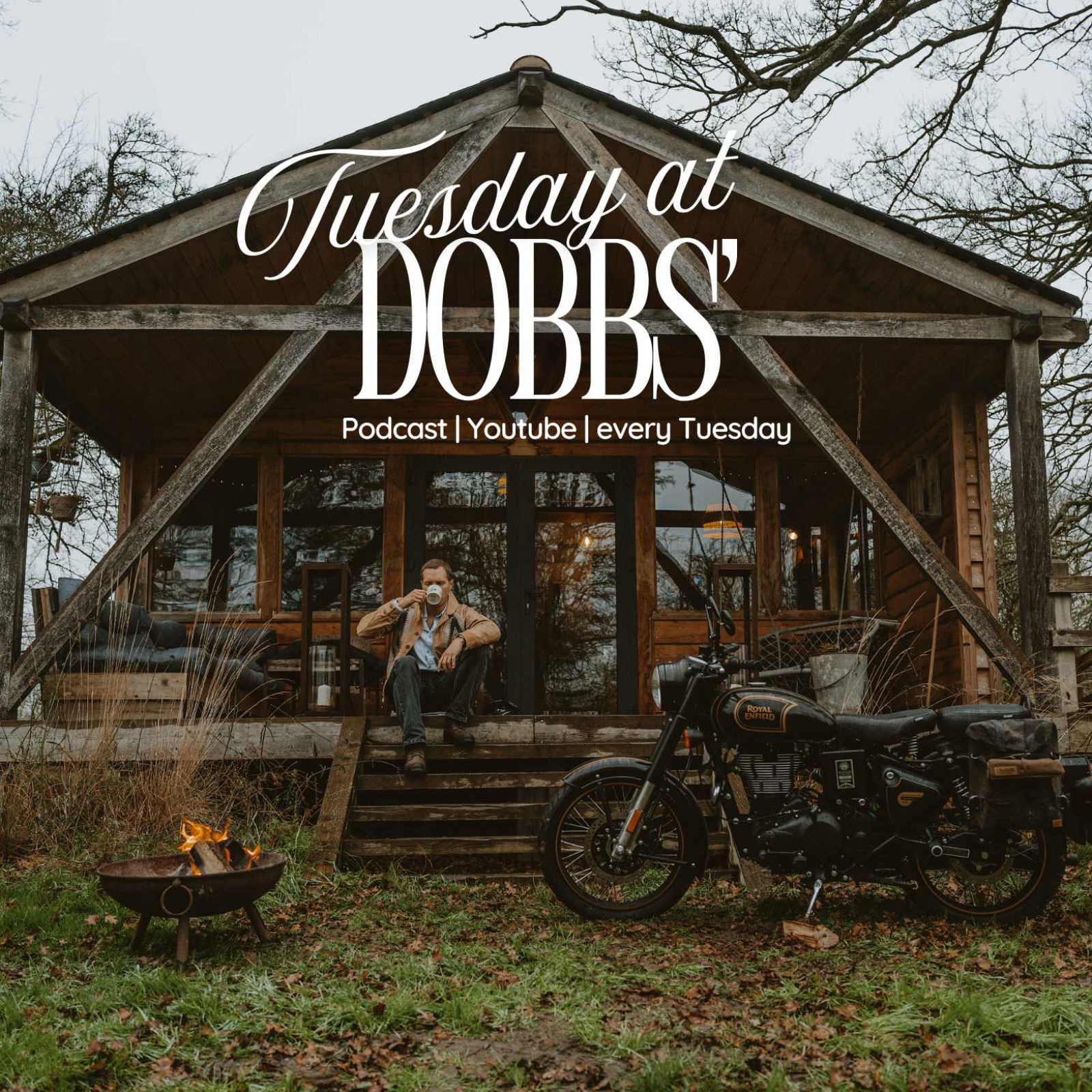
Heaven for buyers and hell for sellers | The classic bike market
About this episode
After returning from Goodwood, the hosts kick off with the BSA Rocket 3—complete with George Lazenby provenance—and use it to frame how documentation and desirability shape classic prices. They then pivot to buying decisions in the modern market, comparing a CFMoto 675SRR with a Triumph Daytona 675, including vehicle-history checks and whether to buy new or used. Honda recall talk and a run of auction results follow, ending with Norton Commando 750 pricing shifts and a look at Triumph Thruxton searches.
For 20% off your carVertical report, and 50% off a bundle, use code DOBBS and you can click the link here: https://www.carvertical.com/gb/landin...
__________________
You can check out all of our Libertatia gear including The Lost Biker Stories, here (thank you so much for your support): www.thelibertatia.com/
Please do leave a comment and share your thoughts.
If you've got a story, insight or pictures to share, you can also email [email protected] Instagram: www.instagram.com/@tuesday_at_dobbs
My other YouTube channel: @FreddieDobbs
__________________
Time Stamps: 00:00: Intro
01:20: The BSA Rocket 3 (James Bond's bike of choice)
05:19: The CFMoto 675 SR-R, or the Triumph Daytona 675? (including carVertical report at 9:02 - 10:38)
11:17: Honda's engine problems
13:28: Auction results (Norton Commando, Honda Dax, BSA Gold Star)
15:52: The bike to tempt into road riding (Triumph Thruxton)
]23:00: Bike of the week: Norton Commando 750
Goodwood Festival of Speed
"I have just returned from one of the biggest events on the British Motor and Calendar, the Goodwood Festival of Speed and I bought a three pound raffle ticket for what is one of my personal ultimate British bikes."
The Goodwood Festival of Speed is a big UK event where people show off cars and bikes. The host says they were there and that’s where they got the Rocket 3 raffle ticket.
The Goodwood Festival of Speed is a major British motorsport and automotive event held at Goodwood. The host uses it as the context for why they’re talking about the classic bike market and specifically why they bought a raffle ticket for the BSA Rocket 3.
BSA Rocket 3
"All will become clear, but let's start off with this. BSA Rocket 3, the bike I bought a raffle ticket for. This is a bike that came out in 1968, all the way through to 1975, 750 cc, 58 horsepower, 115 mile an hour top speed with a three cylinder engine."
The BSA Rocket 3 is a classic British motorcycle with a big 750 cc engine and three cylinders. The host highlights it because it’s tied to George Lazenby, which makes it especially desirable to collectors.
The BSA Rocket 3 is a British motorcycle known for its large 750 cc three-cylinder engine and big performance for its era (late 1960s into the 1970s). In this segment, it’s also famous because George Lazenby rode it, giving the bike a strong pop-culture and collector-story appeal.
three-cylinder engine
"750 cc, 58 horsepower, 115 mile an hour top speed with a three cylinder engine. This is a bike that gained even more notoriety, fame from the fact that it was George Lazenby's bike of choice."
A three-cylinder engine is an engine with three pistons working together. The host mentions it because it helps explain what makes this bike special compared with other bikes.
A three-cylinder engine has three combustion chambers that fire in sequence to produce power. The host uses this to describe the BSA Rocket 3’s character and performance, since it’s a key part of why the model is distinctive.
George Lazenby
"This is a bike that gained even more notoriety, fame from the fact that it was George Lazenby's bike of choice. George Lazenby bought this bike at BSA Rocket when it was brand new, came out in 68 and he would ride this bike to the Pinewood filming studios..."
George Lazenby is the actor who played James Bond in one of the Bond movies. The host mentions him because he owned and rode the BSA Rocket 3, which helps explain why the bike is so collectible.
George Lazenby is an actor best known for playing James Bond in the 1969 film On Her Majesty's Secret Service. The host connects him to the BSA Rocket 3 by saying Lazenby bought the bike new and used it as part of his real-life routine around filming.
On Her Majesty's Secret Service
"George Lazenby bought this bike at BSA Rocket when it was brand new, came out in 68 and he would ride this bike to the Pinewood filming studios along the motorway to head off for the filming of On Her Majesty's Secret Service."
On Her Majesty's Secret Service is a James Bond movie. The host mentions it because the bike story is tied to the filming of that movie.
On Her Majesty's Secret Service is a James Bond film (1969) that’s referenced here as the production Lazenby was heading to. The host uses the filming connection to explain why the BSA Rocket 3 became iconic beyond just being a fast motorcycle.
provenance
"This exact bike, Lazenby's actual bike with all the provenance that goes along with it, sold at auction about six years ago, if I remember correctly, for around about £25,000 to £30,000."
Provenance is the “paper trail” and proof of where something came from. In collectibles, that history can make the item worth more because it’s easier to trust it’s the real one.
In collector markets, provenance means the documented history of an item—who owned it, where it was used, and how it can be verified. Here, the host is emphasizing that Lazenby’s actual Rocket 3 has provenance, which boosts its auction value.

BSA Rocket 3
"So the BSA Rocket 3, they would have been in BSA dealerships all the way through to the very end when BSA became bankrupt..."
The BSA Rocket 3 is a famous old British motorcycle. It was known for having a strong engine for riding long distances, and the story here is about how it was sold right up until BSA ran into serious financial trouble.
The BSA Rocket 3 is a classic British motorcycle model from BSA, known for its big, high-power engine aimed at long-distance riding. In this segment, it’s discussed as a flagship product that would have been sold through BSA dealerships right up until the company went bankrupt.
concourse condition
"2000 miles on the clock, private seller, listed as concourse condition and show-winning BSA, forming part of my private collection..."
“Concourse condition” means the bike is in show-level condition, like it could win at a concours (a serious judging event). It usually implies it looks extremely correct and well kept.
“Concourse condition” is a collector-bikes phrase meaning the motorcycle is presented at a level expected for top-tier judging—typically extremely clean, correct, and often restored to factory-spec appearance. It’s used here to justify why the bike is being treated like a high-end collectible.
show-winning
"listed as concourse condition and show-winning BSA, forming part of my private collection reluctantly due for sale..."
“Show-winning” means the bike has won awards at motorcycle shows. Collectors often pay more when a bike has proof it performs well in judging, not just looks good to the owner.
“Show-winning” indicates the motorcycle has been judged and has earned awards at bike shows. In the classic market, that kind of provenance can support higher pricing because it signals verified presentation and quality.
classic car market
"Okay that is perfect but prices are all over the place. You can get these for about £6,000 now and this is the first indication we've got as to what's going on in the classic market."
The “classic market” is the world of collectible older bikes and cars. Prices there depend a lot on how good the example is and what similar bikes have sold for recently.
The “classic market” refers to the buyer/seller ecosystem for collectible older vehicles, where prices are driven by condition, originality, documentation, and recent auction/sale comps rather than just basic mechanical specs. The host uses the Rocket 3 price drop to illustrate how that market can move quickly.
Massive index file containing receipts
"Take a listen to this bit next, very interesting. Massive index file containing receipts, work done etc etc."
An “index file” here means a big paperwork folder with receipts and records of work done. Buyers like it because it helps prove the bike’s history and maintenance, not just what the seller says.
An “index file” in classic-vehicle sales is a curated folder or binder of documentation—receipts, service/work history, and other records. It’s valuable because it helps buyers verify what’s been done and supports trust in the bike’s condition claims.
CFMoto 675SRR
"Freddie been heavily researching the CFMoto 675SRR. What a bike for around 11,000 Australian dollars. Japanese manufacturers should be worried."
CFMoto 675SRR is a modern CFMoto sport motorcycle model, discussed here as a standout buy at roughly 11,000 Australian dollars. The host contrasts it with Japanese manufacturers, implying it’s competitive on value and performance in the current market.
wet weight
"£189 kilo wet weight, four years parts and labour warranty, £6,999 plus on the road charges about £250. 95 horsepower."
Wet weight means the bike’s weight with its normal fluids in it. It’s a more realistic number than “dry weight” when you’re comparing two bikes.
Wet weight is the motorcycle’s weight with all fluids included (like oil and coolant) rather than a dry, stripped-down figure. Using wet weight helps compare real-world mass between bikes more fairly.
on the road charges
"£6,999 plus on the road charges about £250. 95 horsepower. That sounds perfect. Everything about that."
On-the-road charges are the extra fees you pay to get the bike registered and ready to ride. It’s the difference between the sticker price and what you actually end up paying.
On-the-road charges are the extra costs added to the base price to make the vehicle legally usable, typically including registration, taxes, and fees. The host uses these to estimate the true purchase cost when comparing bikes.
Facebook Marketplace
"Facebook marketplace, of course. You know, a lot of people, they used to say to me, Freddie, are you put your money away in mouth? As you buy something on Facebook marketplace, I did."
Facebook Marketplace is an online classifieds platform where individuals buy and sell used vehicles and parts. The host references it as a place where they bought a Suzuki Jimny and suggests it can be a better value channel than buying new.

Suzuki Jimny
"... something on Facebook marketplace, I did. Suzuki Jimny was a Facebook marketplace purchase. So you can s..."
The Suzuki Jimny is a small SUV made for off-road driving. People like it because it’s compact and can handle rough roads better than many regular cars. It’s also commonly found on used marketplaces, so it comes up a lot in buying stories.
The Suzuki Jimny is a small, body-on-frame off-road SUV known for its compact size and go-anywhere capability. It often comes up in used-car discussions because it’s popular on marketplaces and can be a practical choice for light off-roading and everyday driving. It’s also the kind of vehicle people buy as a project or weekend adventure car, which makes it a frequent topic in owner stories.

Triumph Daytona 4
"Triumph Daytona 4,650 pounds listed a day ago. It's not been an easy decision, but I've decided [522.6s] to let my Daytona 675 go."
Triumph Daytona is a performance motorcycle model from the brand Triumph. Here, the host is deciding whether to buy one by checking its history so they know what they’re getting.
The Triumph Daytona is a sport motorcycle line from Triumph, known for performance-focused styling and track-bred heritage. In this segment, the host is weighing a specific listing price and using a vehicle-history report to judge risk before buying.

Daytona 675
"to let my Daytona 675 go. Lovely condition always looked after. I've done a service recently. Whoever [530.2s] owned it before me splashed out on it... So this is looking really good. Now that mileage issue is fine. [577.2s] No issue there at all. No finance, outstanding, no damage."
The Triumph Daytona 675 is a sport motorcycle model from Triumph with a 675cc engine. The host checks its history to make sure it wasn’t stolen or written off and that there’s no money still owed on it.
The Triumph Daytona 675 is a 675cc sportbike model from Triumph, often chosen for its balance of power and handling. The host uses a vehicle-history check to evaluate risk factors like theft, write-off status, and outstanding finance before making a purchase decision.
vehicle history check
"Okay, I'll tell you what, let me do a car vertical search on this. [543.3s] This is with the final piece of information we have to make our decision. Brand new CF Moto or [547.9s] used Triumphs. So let's have a look at this car vertical report. Car vertical, of course, [551.9s] vehicle history checker. Has the vehicle been written off? Has it been stolen?"
A vehicle history checker is a tool that looks up records about a vehicle’s past. It helps you spot red flags like theft, major damage, or money still owed before you buy.
A vehicle history checker is a service that compiles records about a vehicle’s past. It’s used to flag issues like write-offs, theft, damage, and outstanding finance so buyers can avoid unpleasant surprises.
written off
"Car vertical, of course, [551.9s] vehicle history checker. Has the vehicle been written off? Has it been stolen? [558.3s] damaged in any way? Is there any outstanding finance? It will check it all."
“Written off” means an insurer or authority has declared the vehicle a total loss due to damage or cost to repair. It’s a major risk indicator because it often affects safety, repair quality, and resale value.
outstanding finance
"damaged in any way? Is there any outstanding finance? It will check it all. So Daytona 675, [565.1s] 2010 model. Okay, report summary, potential mileage issue, but everything else, finance damage and theft all fine. [570.0s] finance damage and theft all fine."
Outstanding finance means the bike still has money owed on it through a loan or payment plan. The seller may not be able to fully transfer it cleanly until that balance is cleared.
Outstanding finance means there’s still a loan or payment agreement tied to the vehicle that hasn’t been fully settled. Buyers want to know this because it can complicate ownership transfer and may require payoff before registration.
potential mileage issue
"So Daytona 675, [565.1s] 2010 model. Okay, report summary, potential mileage issue, but everything else, finance damage and theft all fine. [570.0s] finance damage and theft all fine. So this is looking really good. Now that mileage issue is fine."
A potential mileage issue indicates the reported odometer reading may not match records, suggesting possible tampering, recording errors, or inconsistencies in the vehicle’s history. Even if everything else checks out, mileage concerns can affect trust and value.
Honda
"but that CF Moto, that looks like a superb, superb bike. Highly tempting. Next up, Honda. [678.6s] Honda will put it right. If there's one brand you can rely on, if they make a mistake, they will fix"
Honda is a major motorcycle and automotive manufacturer with a reputation for broad model coverage and strong dealer support. The host mentions Honda as a brand that will “fix” mistakes, framing it as a trust factor when comparing brands.

Dodge Hornet
"...ie, regarding the oil burning issues on the Honda Hornet 1000. I bought one last Mayan, have covered 4,500..."
The Dodge Hornet is a small SUV/crossover. The podcast mentions it because some owners have reported problems with the engine using oil. If you’re shopping for one, it’s important to check how much oil it burns and whether it’s been properly maintained.
The Dodge Hornet is a compact crossover that’s often discussed in the context of ownership experiences, including maintenance and engine-related concerns. In this podcast context, it’s mentioned alongside talk about oil-burning issues, which suggests the episode is focusing on real-world reliability and what owners should watch for. That makes it relevant for anyone considering one used and wanting to understand potential recurring problems.

Fiat 600
"... the pistons. But they're going to start with the 600s first as the oil burning issue with these bikes m..."
The Fiat 600 is an older, small car. The podcast mentions it because there’s an engine problem being worked on, related to oil burning. That usually means the engine isn’t sealing properly, so it may need inspection or repair.
The Fiat 600 is a classic small car that’s frequently discussed in restoration and maintenance circles. In this podcast context, it’s brought up because of an oil-burning issue being addressed, starting with the 600s first. That makes it a good example of how older engines can require specific troubleshooting and rebuild work.
piston rings
"Freddie, check out a few of the recent auction results... regarding the Honda Hornet oil burning issues, Honda have now resolved it with updated pistons and piston rings..."
Piston rings are parts inside the engine that help keep oil from getting into places it shouldn’t. Here, the claim is that Honda fixed the oil-burning problem by updating the piston rings.
Piston rings are the metal rings on a piston that help seal the combustion chamber and control oil consumption. In this segment, Honda is said to have resolved the oil-burning issue by fitting updated pistons and piston rings, which directly targets the mechanism behind burning oil.
pistons
"regarding the Honda Hornet oil burning issues, Honda have now resolved it with updated pistons and piston rings and the GTNF models have started arriving at dealerships now."
Pistons are the parts that move up and down inside the engine. The hosts say Honda fixed the oil-burning problem by using updated pistons.
Pistons are the moving components inside an engine’s cylinders that transfer force to the crankshaft. This segment says Honda resolved the Hornet oil-burning issue using updated pistons, indicating a hardware change to improve sealing and reduce oil consumption.
cylinder wall
"Similar story to this CBR 600RR, although in these models, it's actually an issue with the cylinder wall, which has now been adjusted and recalled bikes are getting engine swaps."
The cylinder wall is the inside surface of the engine cylinder. They’re saying the CBR 600RR problem is tied to that surface, and Honda adjusted it and sometimes replaced the engine.
The cylinder wall is the inner surface of the engine cylinder where the piston moves. The segment says the CBR 600RR’s issue is actually with the cylinder wall, which was adjusted, and that recalled bikes may receive engine swaps—suggesting wear or machining/sealing problems.
Bonhams
"Just take a look at this. First up, this is an auction that was from Bonham's, I think back in June, so only about a month ago."
Bonhams is an auction company. In this segment, they’re using Bonhams auction results to show what classic bikes are selling for.
Bonhams is an auction house that sells collectibles, including classic vehicles and motorcycles. Here it’s referenced as the source of the auction results used to gauge the classic bike market.

Ford F-150 Lightning
"...0, Triumph Daytona sold for £4,600 and a 1967 BSA Lightning sold for £2,070. But it's all about desirability...."
The Ford F-150 Lightning is an electric pickup truck. It uses electricity instead of gasoline, but it’s still meant to do the same kind of work and hauling you’d expect from a truck. The podcast mentions it because people talk about how desirable it is and how that affects pricing.
The Ford F-150 Lightning is an electric version of the F-150 pickup, built to combine everyday truck practicality with an all-electric powertrain. It’s often discussed in terms of desirability and market value, especially when comparing it to other collectible or enthusiast vehicles. In this podcast context, it’s part of a broader conversation about what people want and why certain vehicles hold attention.
ACU race licence
"of the track day companies. In the early days, they were okay with you booking on with an ACU [1025.7s] race licence but presumably as lawyers got involved, this changed to full licence because you never"
ACU is a UK organization that oversees motorcycle racing rules. A race licence is basically permission to compete in official races, and the speaker is saying the requirements got stricter over time.
ACU stands for the Auto-Cycle Union, the UK body that historically governed motorcycle sport and licensing. A race licence is permission to compete in organized events, and the speaker says the rules shifted from allowing booking on with this to requiring a full licence.
full nut and bolt restoration
"stunner Oli and I did or I spent the next few years doing a full nut and bolt restoration. [1062.5s] This finally hit the road in 2023 and at 53 years old, this was my first experience of riding on the"
A “nut and bolt restoration” means taking the whole thing apart completely and rebuilding it piece by piece. It’s the most detailed kind of restoration, not just a quick refresh.
A “nut and bolt restoration” means rebuilding a vehicle by disassembling it down to individual fasteners and components, then refurbishing or replacing parts as needed. It’s a thorough, time-consuming approach often used for classic bikes and cars to return them to a correct, road-ready condition.
four-stroke
"a bike that's twice the weight I'm used to and whether I'll even like a four stroke fingers crossed"
A four-stroke engine is a common type of motorcycle engine. It works in four steps to make power, and it can feel smoother and more predictable than some other engine types.
A four-stroke engine is an internal-combustion design that completes its power cycle in four piston strokes: intake, compression, combustion/power, and exhaust. The host is wondering whether they’ll like a bike with that engine type, which can affect how the bike delivers power and smoothness.

Thruxton
"so Ali I really hope that you like the Thruxton let's take a look at this what can I find here Thruxton wise first off I'm going to show you one forget about money to hell with budget I want to find the ultimate Thruxton for me"
The Thruxton is a motorcycle model from Triumph with a classic cafe-racer style. The host is focusing on finding the best one they can and talking about what they cost.
The Triumph Thruxton is a classic “cafe racer” style motorcycle known for its retro road-racing look and performance-focused riding position. In this segment, the host treats it as a specific target model (“ultimate Thruxton”) and discusses availability and pricing trends.
1200 cc engine
"with the gold forks that incredible stance of the spoke wheels knowing it's got a 1200 cc engine this is chrome limited edition 1147 miles"
“1200 cc” means the engine is bigger (it’s a measure of engine size). Bigger engines often pull harder and feel different than smaller ones.
“1200 cc” refers to engine displacement, measured in cubic centimeters, which roughly indicates how much air/fuel the engine can move. In motorcycles, larger displacement often correlates with stronger low- to mid-range torque and a different riding character than smaller engines.
spoke wheels
"with the gold forks that incredible stance of the spoke wheels knowing it's got a 1200 cc engine"
Spoke wheels are the classic kind of motorcycle wheels with metal spokes connecting the rim to the center hub. They’re part of the bike’s traditional look and can feel a bit different than modern wheel designs.
Spoke wheels are wheel designs made from a rim laced to a hub with metal spokes. They’re often associated with classic motorcycle styling and can also influence ride feel and wheel weight compared with modern cast alloy wheels.
dry miles
"I like this with the Thruxton at £4,000 2007 model the best advert ever I I've had this bike from new but it's only done 6400 dry miles I mean"
“Dry miles” means the motorcycle’s mileage accumulated under dry conditions, implying less exposure to rain and road grime. Enthusiasts often treat dry-mileage bikes as having less wear and corrosion risk than bikes that were ridden in wet weather.
polishing it than riding it
"if you're looking for one of these buy this spent more time polishing it than riding it it's always been gated in an extremely good condition"
They’re just saying the bike looks great but doesn’t get ridden much.
No automotive term here—this is a casual remark about a bike being maintained for appearance rather than used. It’s not a defined mechanical or market concept.
classic bike market
"do you remember the one at auction we saw that sold for £4,160 and auctions are the best indicator as to a bike's true worth and we know the market for classic bikes is at the moment imploding slightly so I'm going to see what I can find"
They’re talking about how the market for classic motorcycles is doing—using auctions as a clue to what bikes are really worth.
The host discusses how the classic motorcycle market is behaving right now, including how auction results can reflect “true worth.” They also suggest the market is currently weakening (“imploding slightly”).
Request an Explanation
Heard something you'd like explained? We'll add it to this episode.
Sign in to request explanations for terms you heard.
Want to learn more?
Browse our glossary for plain-English explanations of automotive terms, jargon, and concepts.
Help improve this episode
See something that's not quite right? Our annotations are AI-generated and can sometimes miss the mark. Click the flag icon on any annotation to suggest a correction.