The Ford Model A is a classic car made by Ford between 1927 and 1931. It was very popular and is known for being a reliable and affordable vehicle during its time.
The Ford Model T is one of the first cars that many people could actually afford, made a long time ago in the early 1900s. It changed how cars were made and helped more people drive for the first time.
A Roadster is a car that can be turned into a convertible, meaning you can take the roof off to enjoy the open air while driving. It's usually a two-seater and looks sporty.
A rumble seat is a special seat that is located outside the main part of the car, usually at the back. It's like an extra seat for someone to sit in while enjoying the ride outside.
A trunk is the space at the back of a car where you can store things like bags or luggage. In older cars, the trunk can sometimes look different from the car itself.
Power steering makes it easier to turn the steering wheel in a car. Without it, you have to use more strength to steer, especially when parking or going slowly.
The 1934 Model 40 Phaeton is an old car made by Ford. It's a convertible, which means it has a roof that can be taken off, and it was popular in the 1930s for its stylish look.
The Volkswagen Phaeton is a fancy car that was made to compete with other luxury cars. It has a lot of high-tech features, but it didn't sell very well because it was expensive.
Synchronized gears help make shifting gears in a car easier and smoother. They help the gears match speeds so you don't hear grinding noises when changing gears.
Cadillac is a well-known American car brand that makes luxury cars. They are famous for their high-quality vehicles and have been around for a long time.
Packard was a famous American car brand that made luxury cars a long time ago. They were known for being very well-made and stylish, often bought by wealthy people.
Chrysler is a car brand from America that makes different types of vehicles, like cars and SUVs. They have been around for many years and are known for their unique designs.
The AMC Javelin is a sporty car made in the late 1960s and early 1970s that people loved for its speed and cool looks. It's part of the muscle car group, which is why many car fans talk about it.
Gooding auction is a place where people can buy and sell classic cars. It's famous for selling rare and valuable vehicles at events held in different cities.
A three-speed transmission is a system in a car that lets you change gears three different ways, helping the car go faster or save fuel. It's a simpler type of transmission found in older cars.
The Chevrolet Bel Air is a well-known car from the 1950s, famous for its stylish design and features like tail fins. The 1957 model is especially popular among collectors.
Tri-five is a nickname for a series of Chevrolet cars made in 1955, 1956, and 1957. They are known for their cool designs and are very popular with car collectors.
Bring a Trailer is a website where people can buy and sell classic cars through auctions. You can place bids on cars you like, and the highest bidder wins.
The Rampside is a type of pickup truck made by Chevrolet that has a ramp on the side. This ramp helps you load and unload things easily, like a lawn mower or motorcycle.
The Volkswagen Beetle is a small car that became very popular because of its cute shape and low price. It was made for many years and is known for being reliable and easy to drive, which is why people still talk about it today.
A boxer style engine is a type of engine where the cylinders lie flat and move in opposite directions. This helps the car handle better and run more smoothly.
Car
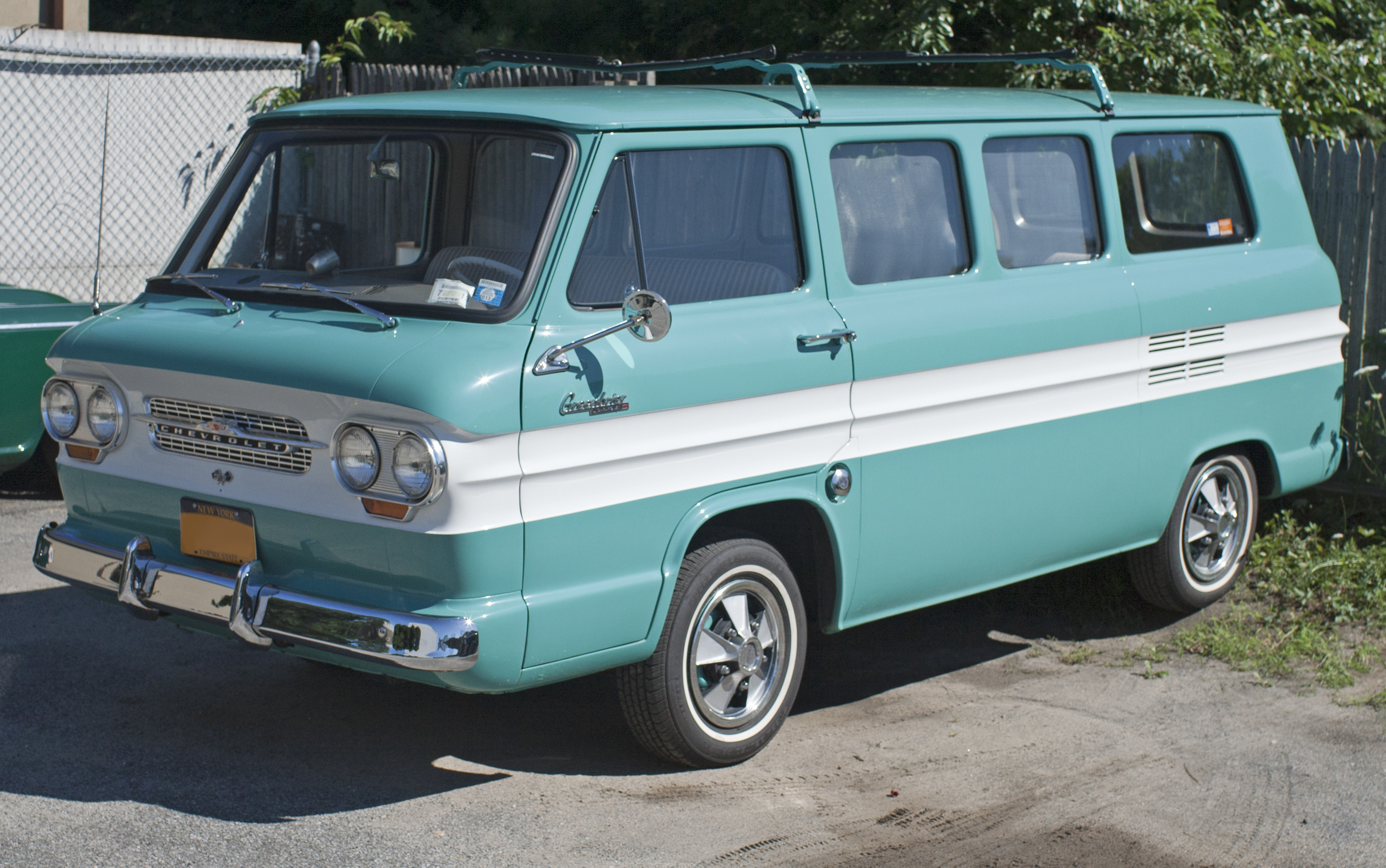
Chevrolet Greenbrier
The Chevrolet Greenbrier is a type of van that was made by Chevrolet. It was based on the Corvair and was designed to carry people or cargo.
A four-speed manual transmission is a type of gear system in a car that lets you choose from four different speeds. You have to shift gears yourself, which can make driving more fun.
Car
Chevrolet truck
A Chevrolet truck is a type of vehicle made by the Chevrolet company, known for its durability and utility. The 1972 model is part of a classic generation of trucks that many people find appealing.
The Chevrolet Corvair is a small car made in the 1960s that had its engine in the back instead of the front. It became famous for some safety issues, which is why people still talk about it today.
The Ford Mustang is a sporty car that first came out in the 1960s and became famous for being fast and fun to drive. It's loved by many people and is often seen as a symbol of American cars, which is why it's often talked about.
The Ford Bronco is a tough SUV that can handle rough roads and off-road adventures. It was first made in the 1960s and is still loved today for its ability to go anywhere.
The 1978 Datsun 280Z is a classic sports car known for its sleek look and good performance. It's part of a series of cars that many people love to collect.
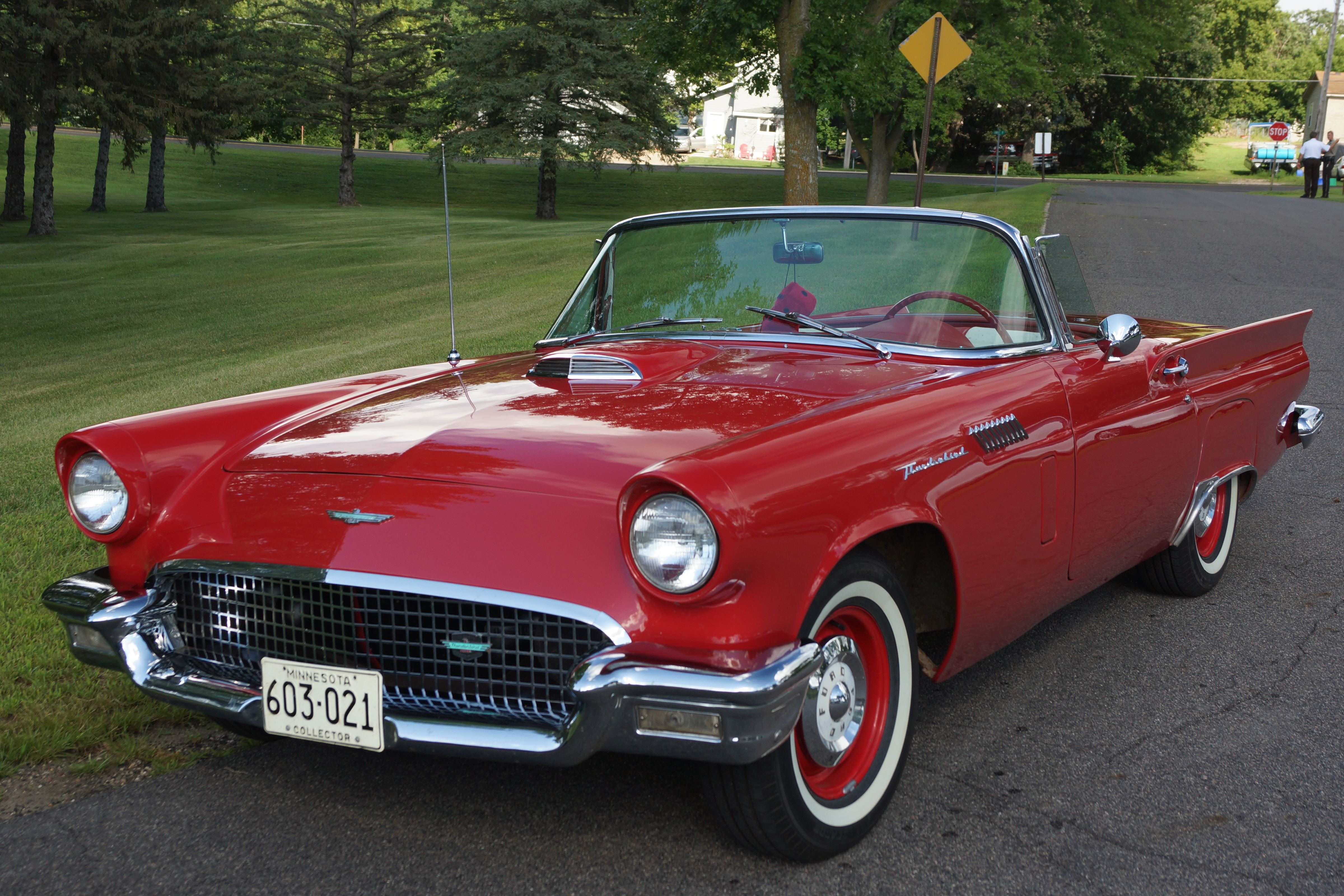
The Ford Thunderbird is a fancy car that was first made in the 1950s and is known for being stylish and comfortable. It's like a classic American car that many people admire for its looks and performance.
The Ford F-100 is an old pickup truck that many people love because it's strong and can carry a lot of stuff. It's been around for a long time and is often talked about by truck fans.
LIVE
Well, welcome to another edition of my car.
Good world.
Glad to have you here.
I hope you enjoy today's topic where I'm going to be talking specifically about my car collection.
What vehicles I own and why I own them and how happy I am are.
I start to say how happy I are to have them near me.
You know, sometimes I just will set up a chair.
I know this sounds weird, but I will just set up a chair in my basement and I'll get
me a cold beverage and just sit there and look at a vehicle and just start at the front
and my eyes will just play over the fenders and all the way to the back and look at the
wheel wells and the way the windshield angles and I don't know.
I think about the past and who in the world designed this beautiful thing and how did
they make it?
How did they form those perfect lines in those fenders?
What kind of machine?
What kind of stamping machine stamped out that beautiful fender and everything that you can't
see?
You know, the engine, the transmission, the suspension, how all of that works together
in beautiful harmony to make this thing look so good and go down the road in a special
way.
I don't really have anything that isn't enjoyable or fun to drive or something that doesn't
put a smile on other people's faces or that's not kind of enjoyable to look at.
So yeah, I'm a little weird but there's not anybody that comes into my dealership and
isn't somewhat impressed by the collection of vehicles that are in the showroom because
I'm not the kind of guy that likes to hide them away.
Unfortunately I don't have enough room to display all of them but I'm just going to
start with some of my favorites.
I'm going to start at the oldest vehicle first and it was made in 1930, the year that my
mom was born and that's probably the main reason I bought it.
A guy called me right after she had passed away and he said, I've got a car you might
want to own and I said, well, what is it?
He said it's a Model A and I said, you know, I'm really not into Model A's or Model T's
for that matter and he said, well, this one's really special, it's a really nice restoration.
He wanted to sell it because it was his wife's favorite vehicle and she had passed away and
he just didn't want to look at it anymore and I said, okay, what is it?
And he said, well, it's a Roadster, which means that it's a full-time convertible.
I said, well, I'm interested, you know, that's pretty cool.
And I said, when was it built?
And he said, 1930, I said, I'm very interested.
So I ended up buying it and it's out here in my showroom and it really is pretty.
I mean, it's got a rumble seat, it's got an original looking trunk that they used to use.
It's separate from the vehicle.
I mean, you can actually detach it, unstrap the belts that hold it on and take it into
wherever you happen to be going at that time.
You know, back at that time, really, people didn't go on vacations.
I mean, the Model A made it a little bit more accessible, you know, to go to a beach or go
to a, you know, some type of resort or visit the big city.
But at that time, you know, roads weren't that good and you can tell that they needed
pretty big wheels and tires to be able to navigate the lousy roads that existed.
But this one, of course, doesn't have to navigate anything.
I take pretty good care of it.
Drives like a tractor.
None of the gears are synchronized.
No power steering, no power brakes.
Matter of fact, I'm the only person at Gateway 4 that really can drive it.
Well, I got one guy who works on it occasionally and he can drive it and he loves it.
But it's called a six wheel.
Now it's only got four wheels on the ground, but it's got two spares, one on one fender,
or mounted inside one fender, not inside, but on top of one fender.
And another one mounted on the other side, convertible top.
It's kind of a milk chocolate brown with yellow wheels and a deep, rich leather seat.
Now back then, I mean, I guess it was leather back then, but it's just really pretty and
I love it.
OK, next is a 1934 Model 40 Phaeton.
Now what was that?
Well, it's a Phaeton was a four door convertible with a stretched wheelbase.
And vehicles had advanced a lot between 1930 and 1934.
Matter of fact, in 1932, the Ford Motor Company came out or introduced the Flathead V8 engine.
And it really transformed the vehicle.
They had to change the chassis and everything to be able to handle the extra horsepower.
A whopping 85 horsepower.
Oh, by the way, the Model A has 45 horsepower, but the V8 really changes the whole dynamic
of driving this thing.
It's just smoother and quieter.
The gears are synchronized in this, so it's easier to shift.
But that's another one of those cars that to me, it's one of the most beautiful cars ever made.
And there are so many different beautiful vehicles out there.
The old Packards and Cadillacs and Chrysler's and and Doos and Bergs.
But, you know, those were vehicles for rich people.
This car, maybe for somebody that was a successful business person, it definitely wasn't a daily
driver for somebody unless they lived in Southern California or Florida, where it didn't rain
that much because it has a convertible top and it has side curtains that you can put in
if if you need them, but they are very complicated and hard to install.
So I just leave them out and put it in the showroom.
And again, it's just one of those things that's just beautiful.
It's a deep blue color with yellow wheels and big wide or white wall tires.
And it's just, I don't know, it's one of my favorites.
I plan on holding on to that one.
It was actually owned by a gentleman who lived in New Hampshire.
He had it restored by a man who lives in Knoxville, Tennessee, because this guy in Knoxville is
just brilliant.
He's retired.
He's not doing it anymore.
But the guy that owned the vehicle lived up there in the Great White North and he was a national
or NCAA champion, javelin thrower back in the late fifties.
He qualified for the Olympics and actually through the javelin in the Olympics for the United
States in the 1960 Olympic Games.
He did not win.
He got 12th place, but he was an engineer.
And over the years, he developed a pretty serious collection of a lot of vintage cars.
And this was one of them.
And he'd gotten up in years and decided to sell his entire collection at the Gooding
auction, which takes place, well, multiple places around the country.
But the one I typically go to is at Amelia Island every March.
And so when I walked under the tent and saw that vehicle there along with all of his
others, I just fell in love with it.
Didn't think I'd have a chance to buy it, but it went so cheap that I could not resist it.
And I was one of the first bidders, and I was obviously the last bidder and was able
to bring it home.
But that flathead V8 and that little three speed transmission and all the chrome that
it has, the grill is absolutely gorgeous in this vehicle.
And it has two horns that are way out front with the headlights.
And like I say, it's just it's a feast for the eyes.
OK, the next oldest vehicle that I have is let's see, let me make sure I got this right.
Yeah, it's a 1957 Chevrolet Bel Air two-door hardtop.
Now, when I say hardtop, that means that it doesn't have a post between the side
window for the driver and the side window for the rear seat passengers.
It's just, you know, where two windows, glasses and the molding around them comes
together. And that's the most popular body style.
It has the tail fins that they had in 1957.
They call the 55, the 56 and the 57 the tri-five.
And they were probably the most collected vehicles of all time.
I may be wrong there, but you go to a typical car show around here.
You're going to see one of those three years of cars.
Now, 58s have become popular for a long time.
They weren't.
And even the 59 and 60, I thought they were the ugliest cars ever made by Chevrolet,
but they've turned out to be quite beautiful.
It's funny how your taste change over time.
I'm glad my wife's taste haven't changed too much in husbands since 19.
1978. OK, I'm going to take my first break.
I'll be back here in just a minute.
OK, I am back.
So I bought the 57 on bringitrailer.com, which is an auction website.
They'll have approximately a thousand auctions going on at any one time.
It's a seven day auction.
I've sold close to three million dollars worth of vehicles on that website.
Most of those vehicles were not mine.
I was selling them for somebody else.
There's a lot of work involved.
And so if you ever have an older car that you want to sell or need to sell,
or then then I'd be happy to help you with it and give you some advice on
what the whole process is.
It's so easy to sell something on bringitrailer
because you don't have to load it up and take it anywhere.
You just take a lot of good pictures.
You describe it in detail on their website.
You pay the ninety nine dollar listing fee.
And then within a couple of weeks, it'll go live on their website.
Seven day auction.
And I've done really well there.
And I've bought several vehicles on that on that website.
OK, next oldest vehicle would be my 1960.
Let's see, 62 Corvair 90.
That's what its official name is.
Most people refer to it as the rampside.
Just imagine an old style van with a pickup bed on it.
That's what this looks like.
And it has a ramp on the side that folds up.
It's part of the bedside, but it folds down if you need to unload something
like a lawn mower or motorcycle or something.
It had to be a really small motorcycle to fit in there.
It was not a real successful version of the Corvair.
You know, back in 60, Ed Cole decided,
well, several years before that decided he needed a vehicle
to combat the success of the Volkswagen Beetle.
And he was determined to break the mold.
As far as American automaker is concerned, he said, OK, I'm going to make this thing.
And well, he and his engineers are going to make it air cooled with the engine in the rear.
And he thought that would simplify things a lot and be very competitive
with the Volkswagen.
However, the Volkswagen was a four cylinder with a boxer style engine.
And he was going to make this a six cylinder.
And then he said, well, you know, Volkswagen has also got a van.
And they also have a truck, which is kind of, again,
it's like a van body on the front, but it's a truck on the back.
So I can do the same thing with the Corvair.
So that's what he did.
He came out with a Corvair van.
They called it the Greenbrier and then the rampside truck like I have.
So we just absolutely love this truck.
Everywhere I go, when people see it, they say, what is that?
You know, they think it's a customized vehicle, but it's not.
It's actually something that that Chevrolet decided to build.
And they quit doing it in 1963 because they just wouldn't sell.
It just was not a practical vehicle for people who really needed a truck
because the engine was in the rear and above the engine,
the bed had to be a little bit higher than it did in the middle.
So it was just it wasn't a flat load surface.
And people just didn't really like it.
There were a lot of businesses that thought it was great, but not enough.
And they didn't sell them in enough numbers to make it viable.
OK, the next oldest car would be my 1965 Corvair.
It's a Corsa, which was the highest performance
Corvair that they had at that time, except there was an addition
called the Corvair Monza and it had a turbocharger on it.
It had a hundred and eighty.
I think it was one hundred and eighty five horsepower.
My car has one hundred and forty horsepower.
It's a flat six has four one barrel carburetors on it.
Mine is a red convertible with a four speed manual transmission.
And I've had this car longer than any other car that we're going on 30 years now.
And I bought it from a guy that was a customer of the Chevy store.
He called one day and got to me and he said, Lenny,
I've got two vehicles I want to sell to you.
One of them is a nineteen seventy two Chevrolet truck.
And I said, wow, very interested in that.
He said, I've got another vehicle and I have to sell them both.
I'm not selling selling them separately.
I said, what's the other one?
He said, a Corvair.
I said, no, thank you.
He said, well, I'm not going to sell just one of them.
I got to get rid of both of them.
I said, OK, bring it and I'll look at it.
So I got paid to come to the showroom at the Chevy store.
And they said, there's somebody here has some old cars for you to see.
So I was kind of getting excited.
And when I walked out of my office,
I looked and I could see the Chevy truck.
And unfortunately, it had been heavily modified.
You ever seen those engines that come completely out of the hood?
And, you know, they'll stand up.
They have a supercharger on them or a big air intake or a real high rise
intake manifold. Well, that's what this was.
It looked like a truck you'd take to a drag strip.
So in my mind, at that time, it was ruined.
And then I walked a little further and where I could see the Corvair.
And I said, oh, it's a convertible and it's red.
And as I was walking, I walked out of the front door,
I was approaching the steps, started walking down the steps.
And I was saying to myself, please be a four speed, please be a four speed
because I didn't want it to have one of those goofy little shifters
on the dash like those Corvairs had back then.
And I look inside and down there on the floor, there's the shifter
with a white little shifter knob.
And I was so excited and, you know, what he wanted for both vehicles.
I mean, I look back, that's one of those things you look back on and say,
why didn't I buy it?
I could have bought both vehicles for five thousand,
but I told him that I did not want the truck.
And we argued a little bit.
He said, OK, I'll say the Corvair for twenty five hundred dollars.
And today, you know, the Corvair is probably worth thirty thirty five thousand.
It's really, really nice.
And I've repainted it once and taken good care of it.
It's in my basement at the house. OK.
So that's my Corvair story, except for the fact that Corvair has got
a really bad reputation from Ralph Nader.
You may have remembered the book called Unsafe at Any Speed.
What was he talking about?
Well, the Corvair wasn't unsafe at any speed.
People just didn't know how to drive it.
And one of the things you have to do with the Corvair,
it takes fifteen pounds of air pressure in the front tires
and twenty five pounds of air pressure in the rear.
But pre nineteen sixty five, the vehicle had swing axles like a Volkswagen.
And, you know, you're going around a curve in a Volkswagen or a Corvair
or any or even a Porsche with a rear engine.
You you do not let off the gas.
You just keep your foot on the gas pedal to get around the curve.
Because if you take your foot off the gas in mid curve
and you're going pretty fast, the rear ends and the front ends
or the rear end and front end will swap ends.
And, you know, people just they were putting the same air pressure
in the front and rear tires, which made it handle really squarely, as we say.
And they did know how to drive the car.
And many years later, after the Corvair was long gone,
the government did a study and said, well, the Corvair wasn't unsafe at any speed.
It was due to driver error, but by then it was too late.
And really, it wasn't that article or that book that destroyed the Corvair.
It was the Mustang.
When the Mustang came out in 1964 and a half,
that was that was the beginning of the end of the Corvair, because,
you know, Corvair was kind of expensive to build.
It had aluminum block and it was in the rear engine.
You would think that that would be cheaper.
It was a unibody constructed vehicle, which was also more expensive at that time.
So it was it failed because of that, but I'm really glad to have mine.
OK, the other vehicle that I have the next oldest would be my 1966 Mustang
Fastback K code. OK, so it's a completely restored car.
It's out here in the showroom. Absolutely gorgeous.
It was sold new in Santa Rosa, California to an 18 year old
whose dad cosigned for him to buy the car.
How do I know this?
Because I have all the original paperwork.
I have the original California tags that go on that car.
I have so much paperwork for that vehicle
that really adds to the value of it. What does K code mean?
Well, they have engine codes that are stamped into a part of the VIN number.
And the VIN number on this particular vehicle is stamped on the inside
of the left inner fender and is 13 digits long.
And the fifth digit tells you the engine size.
And if it was a six cylinder, it was like a D code.
If it was a small or two eighty nine V eight with a two barrel carburetor.
What was that? I can't remember what code that I think was a C code.
And then there was an a code which have a four barrel carburetor.
Well, this one is a high performance engine.
Still only had two hundred and seventy one horsepower,
but it's a K code and what makes it really rare and valuable
other than the fact that it's completely restored is that it's a fastback.
It's not a GT, but it's a four speed manual with a high performance engine.
And I bought that car on bring a trailer for sixty seven thousand dollars.
Today, it's easily worth in excess of a hundred thousand.
So I'm not bragging.
I'm just saying that that's what I that's one of the things that I do with my investments.
I mean, I used to buy property and stuff like that.
And I'm a car dealer, but I do a lot of my investments are these cars.
And the only reason I hold on to them is because I well, I love them,
but also because they're increasing in value.
Now, if I see one of them really dropping like a rock,
if I don't have any real love for it, I'll probably cut it loose.
And there are some that I will. OK, I'll take my last break.
I'll be back in just a minute.
OK, I am back and I need to pick up the pace if I'm going to finish this.
OK, the next oldest vehicle is a 1970 Ford Bronco.
So I always wanted a Ford Bronco.
Well, not when I was a Chevrolet dealer, I could care less.
But when I became a Ford dealer, I wanted one.
And this is before they got really hot, OK, before the new Bronco came out.
So I was on Craig's list and I was looking on eBay motors.
This was before bring a trailer even existed.
And I couldn't find anything.
And then one day this vehicle pops up and it's a one owner with 36,000 miles on it.
And it was in Florida.
And I called and found out about the history.
The guy had bought it new at a dealership in Wyoming.
He lived in Montana and he was an amateur gemologist.
Well, he passes away and his grandson ends up with it, goes to get it,
drives it all the way from Montana to Florida, realized, no, thank you.
He doesn't want this.
So he turned it over to a used car dealer who put it on.
I can't remember whether it was eBay or Craigslist, one or the other.
And so I saw it and I called and I negotiated a deal.
I bought that 1970 Bronco with 30 some thousand miles on it for $17,500
within probably what four years that same vehicle was bringing in the 60 70.
Now, I would say that vehicle is probably worth in the mid 80s.
So that was a pretty good investment.
OK, the next oldest vehicle I have is a 1978 Datsun 280Z.
It's actually in the showroom over here.
And one of the listeners to this radio station called me one day and said, Hey,
I got a car you need to own.
Since you've just become a Nissan dealer and build a new showroom.
And I said, I'd love to hear about it.
Well, he make a long story short.
He told me about it.
1978 Datsun 280Z with 67,000 actual miles on it.
And he came in and we talked about it and I said, what do you want for it?
And he said, ten thousand dollars.
And I said, sir, that does not sound like enough.
Let me do a little research because I want to pay you a fair price.
He said, really? I said, yeah.
So I went to his house and I looked at it and I did some more research.
And we ended up coming up with a number that he was very happy with.
And and I was happy to and that's sitting in my Nissan showroom.
OK, and now for the problem, child.
It's a 2010 chassis.
The cab on it is a 1949 F four, which was a heavy duty Ford truck cab.
And it has a 1968 Thunderbird engine that I blew up.
It was a four twenty nine.
I blew it up.
I didn't put dynamite on it.
It just it just kind of came apart.
And so I had to take the engine back out and took it to the engine shop.
And they said, hey, Lenny, let's turn it into a four sixty.
You have a lot more horsepower.
I said, go ahead.
And so nine thousand six hundred dollars later, I got the engine back and put in it.
And it's got to let's see what else.
So it's got a 1968 engine on a 1949 cab and a 2010 chassis.
Oh, yeah, the the rear fenders are off a 1952 Ford F 100 truck or F one truck.
So I should probably name it Frankenstein.
I mean, that's what it is.
But it's a car hauler.
I had I had a bed built for it, which I overspent on that.
And I'm going on five years.
It's over at a shop right now, getting some fine tuning done.
I'll be doing fine tuning on that for the rest of my life.
The other cars have proven to be very reliable.
I mean, occasionally a battery will go dead or, you know, the gas filter gets clogged up.
But no, this this other one has been a nightmare.
But someday it will be available for my second Saturday cars and coffee.
I'm hoping for the first one to be in April of next year.
So we can start that up again.
But that that's my car collection.
And I hope you've enjoyed kind of going through it.
It some of it brings back great memories.
Others not so much.
But if you need any advice, I've got plenty of experience in this vintage car stuff.
And if you want to know what something's worth, I can tell you that.
If you want to know the best place to go with it, I can tell you that.
If you want to know somebody that can maybe fix it or paint it or get some new
chrome done, I can tell you where to get that done.
So you get all that and more when you listen to my car guru.
Send me a text message.
If you have any questions, four, two, three, five, five, two, twenty, twenty.
Really easy to remember.
Thanks for listening and I'll see you next time.
About this episode
Dive into the personal car collection of the Car Guru as he shares the stories behind each vehicle, from a beautifully restored 1930 Model A Roadster to a unique 1970 Ford Bronco. He discusses the emotional connections to his cars, the history of each model, and the logic behind his purchases. With anecdotes about rare finds and the intricacies of vintage car ownership, this episode offers a heartfelt glimpse into the passion that drives car enthusiasts.