Here, “online training” means learning courses you do on a computer or phone instead of in a classroom. The point is that the shop manager wasn’t making it easy to get started.
A “lube tech” is a shop role focused on lubrication and basic service work (often oil changes and routine inspections). In the episode, it’s used to debate what skill level that job should require—diagnosing issues versus only doing simple tasks.
An alternator is what keeps the battery charged while the engine is running. If it’s not working, the battery can run out and the car may act like it’s losing power.
The battery is the part that provides electricity to start the vehicle and run electronics. If it’s weak or failing, the car may not start or may behave oddly.
A “flush machine” is a tool shop techs use to run fresh fluid through a car system. It’s often used for services like fluid exchanges rather than troubleshooting problems.
Car
1996 Polaris XLT 600
This is a Polaris snowmobile from 1996. “XLT 600” is the model name, and it tells you it’s a 600cc-class machine built for riding in snow.
Heat exhaustion is when your body gets overwhelmed by hot conditions. It can make you feel lightheaded, nauseous, and like you have to stop what you’re doing.
A used car dealer sells cars that aren’t new. Here, it’s relevant because the speaker describes learning on the job at a dealer and then getting thrown into bigger repairs than just basic maintenance.
A Ford F-150 is a popular full-size pickup truck. Here, it matters because the person says they replaced the engine on one very early in their career, which is a big job compared with routine maintenance.
An engine replacement means swapping out the engine in the vehicle. It’s a big repair because the engine connects to a lot of other parts that have to be put back correctly.
The transmission is what helps the car shift gears and send power to the wheels. If a shop is doing transmission repairs, it usually means the car isn’t shifting or moving correctly.
Electrical diag means figuring out what’s wrong with the car’s electrical system. It can involve checking sensors and wiring, especially when the car’s computer is reporting errors.
“Safetied” means the car has been checked and approved under the local safety rules. It’s basically the difference between “sell it as-is” and “sell it only if it passes the minimum safety checklist.”
Rocker panels are the body panels running along the lower sides of a car, between the doors and the wheel wells. On modern unibody cars, they can be structural members that help carry loads, so rust or missing sections can make the car unsafe.
A full frame means the car has a separate metal frame underneath that does most of the structural work. With that design, some outer body parts may not be considered as critical to safety as they are on unibody cars.
A unibody is when the car’s body acts like the main structure, instead of having a separate frame underneath. That means damage to parts like the rocker panels can affect safety more than it would on older cars with a separate frame.
A salvage yard is where vehicles that are too damaged or unsafe to return to normal road use are taken for parts or disposal. The discussion links safety standards to keeping unsafe cars off the road and sending them to salvage instead.
Frame repair means fixing the car’s main structural support after it’s been bent, damaged, or badly corroded. Since that structure affects safety, it’s closely tied to whether the car can be approved for driving.
The Cupra Born is a small electric car with a hatchback body. It runs on electricity from a battery instead of using gasoline. The podcast mentions it while talking about adjusting to life changes, which is often part of choosing a car.
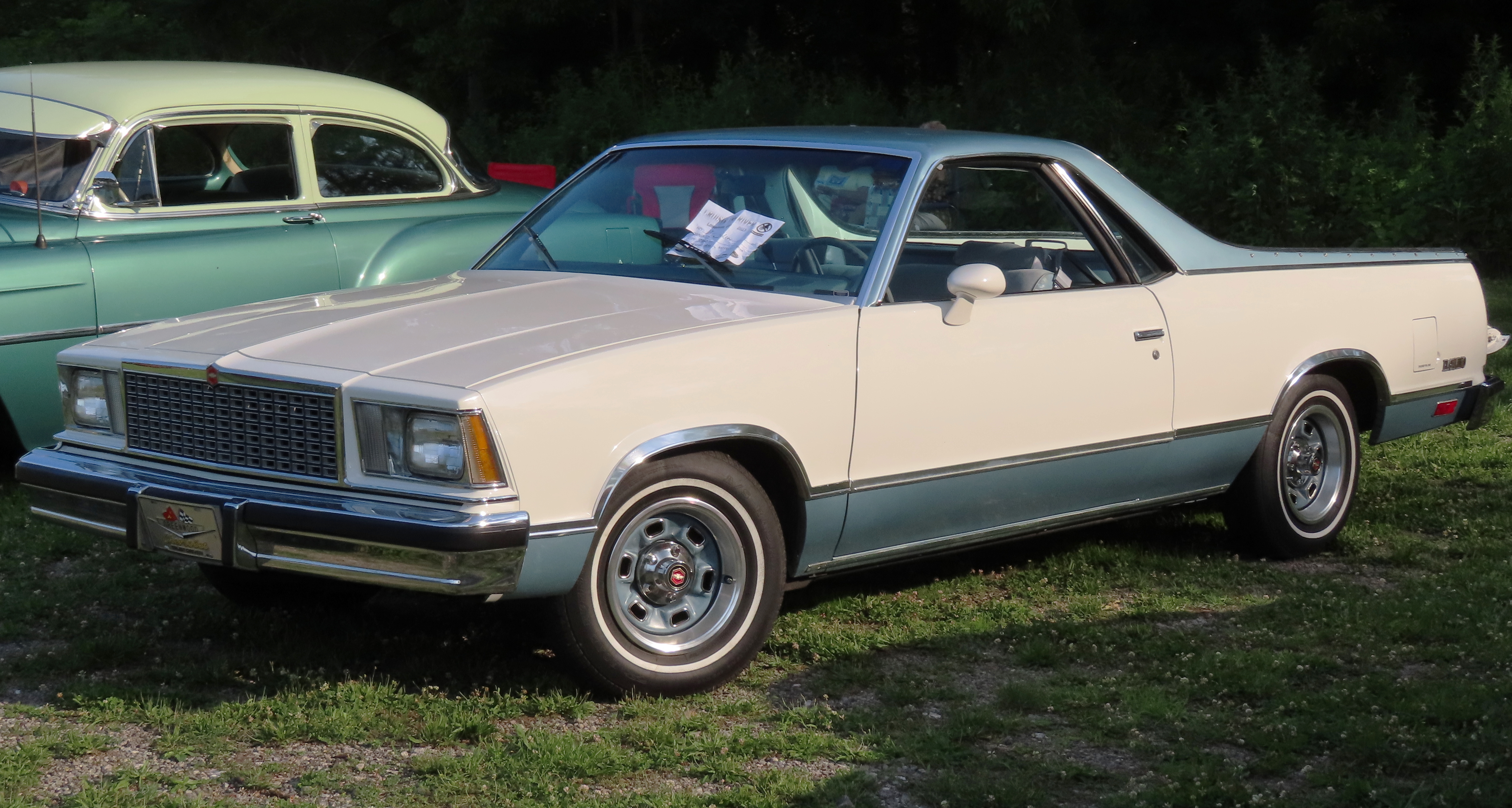
The El Camino is a Chevy that looks like a regular car, but it has a small truck bed. A ’78 is the version from the late 1970s, and people often fix them up as hobby projects.
“Scan it for codes” means plugging in a diagnostic computer to read error messages stored by the car. Those messages can tell the mechanic what part or system is having trouble.
The Cadillac SRX is a mid-size luxury SUV made by Cadillac. Here it’s the specific vehicle they were stuck fixing, because the passenger seat wasn’t working.
In car troubleshooting, “no power” means the seat (or another part) isn’t getting electricity. If it only has a couple volts instead of the normal 12 volts, that usually points to an electrical problem like a fuse or wiring.
A misfire means the engine doesn’t burn the fuel in one or more cylinders when it should. The car can feel shaky or weak, especially when you’re driving harder.
The 5.4 Triton is a Ford V8 engine size (5.4 liters). In this story, it’s the engine that was causing the misfire problem.
Term
break off
“Break off” means something on the engine can snap or come apart. The speaker is saying that’s a known problem on that engine, but they don’t specify which part in this clip.
Here, “plugs” means spark plugs. They’re the parts that make the spark that lights the fuel in a gas engine. The “headache” is that spark plugs can be hard to remove if they’re stuck or corroded.
“Coils” are ignition parts that create the electricity for the spark plugs. If a coil is weak or failing, the cylinder can misfire. Replacing “eight coils” suggests the engine has eight cylinders that each need proper ignition.
They’re talking about using an impact tool to loosen the stuck parts. In this case, it helps get spark plugs out without as much struggle. That can prevent damage and save time.
Coil boots are protective rubber covers for the ignition coils. They help keep water and dirt away from the electrical connections. If they’re damaged, the engine can misfire.
A leak down test listens for where air escapes from a cylinder. If air leaks past rings, valves, or a head gasket, the engine won’t seal well and can misfire. It helps narrow down the exact mechanical cause.
A compression test checks how well each cylinder is sealing. If a cylinder can’t build enough pressure, it can’t burn properly and may misfire. It’s a common way to find mechanical causes.
“Hemi” is a nickname for a certain Chrysler engine design. It has a combustion chamber shaped like a half-sphere, which helps the engine breathe and burn fuel efficiently. Here it’s just the type of engine they were working on.
A rock arm is part of the valve train that helps open the engine’s valves. If it can’t move, the valve may not open when it should. That can cause that cylinder to misfire.
This is a 2001 Ford F-250, a big work truck. The point here is that the truck had serious problems with the frame and cooling, so it became a stressful job for the technician.
A leaf-spring front end is a suspension design that uses long, layered springs. The host mentions it to describe where the frame problem is in relation to the truck’s front suspension.
The leaf spring shackle is a small mounting/pivot piece that helps the suspension move. The host mentions it to pinpoint where the damaged metal is on the truck.
Magnafluxing is a way to check metal for hidden cracks without cutting it apart. The host is saying that frame repairs should be inspected with proper testing, not just welded and assumed to be fine.
A safety inspection is an official check intended to confirm a vehicle meets minimum safety requirements. The speaker references it to explain that repaired frames may need to pass scrutiny after welding so the vehicle is considered safe to operate.
A 2012 Chevrolet Silverado 1500 is a full-size pickup truck. Here, it’s the truck the speaker worked on for a “frame” job, which is a big, structural repair.
A box frame is the truck’s main metal support structure made from enclosed steel “tubes.” The speaker is saying they always inspect a particular spot on that frame because that’s where problems can begin.
The Chevy HHR is a small car with a retro look. The speaker mentions it because the customer noticed a strong fuel smell, which usually means something in the fuel system is leaking or has failed.
“Fuel line rotted out” means the metal tube that carries gas has rusted through. That can cause fuel to leak, which is why the car smells like fuel and it can become dangerous.
Term
pre-vent line kit
A “line kit” is a set of replacement parts meant to fix a specific part of a fuel line. The speaker is saying there’s a ready-made kit you can buy, but some people try to do it another way first.
Flare unions are metal connectors that join tubing by using a flared end. They help make a tight seal, which matters a lot for fuel lines so they don’t leak.
This means they used 3/8-inch copper tubing from a plumbing aisle for the repair. It’s a budget-friendly substitute approach the speaker says can work on older cars.
Ball joints are parts in the front suspension that help the wheels move and steer smoothly. If they get loose, the car can feel unstable and the alignment won’t stay correct.
The Ford Expedition is a big SUV. Here they’re talking about a problem with the suspension—ball joints were loose—so the owner was planning to get an alignment.
A wheel alignment adjusts the angles of the tires relative to the road so they track straight and wear evenly. If suspension components like ball joints are worn, alignment settings may not hold until the worn parts are replaced.
The Tesla Semi is a large electric truck used to move cargo. Instead of using gasoline or diesel, it runs on electricity stored in batteries. The podcast mentions it in the context of hauling a truckload of items to cities.
The brake master cylinder is the main part that creates pressure in the brake fluid when you press the brake pedal. If it’s wrong or not working, the brakes may feel like they don’t work at all.
Term
bleeding the m- master cylinder out
Bleeding the brakes means getting air out of the brake fluid lines. Air makes the pedal feel soft and can reduce braking effectiveness.
The right rear axle is the part that sends power to the right rear wheel. If a seal leaks there, fluid can get onto braking parts and make the brakes work worse.
A proportioning valve is a brake part that controls how strongly the brakes apply to different wheels. It’s there to help the car stop straight and not skid or lock up the wrong tires.
A disc kit is an upgrade that swaps drum brakes for disc brakes. Because disc brakes work differently, the brake system may need to be set up correctly so the pedal feel and stopping performance are right.
The starter is the part that turns the engine over when you turn the key. If the starter is bad, the car may not start, even if everything else is fine.
Bench testing is when a mechanic checks a part outside the car to see if it works. It’s a quick way to confirm the starter is actually fixed before putting it back.
Key programming is when the car is set up to recognize your specific key. If you get a new key or replacement fob, the car usually has to be programmed so it will start.
Project cars are vehicles bought with the expectation they’ll need significant work—often repairs, upgrades, or mechanical restoration—before they’re fully usable. In this conversation, the point is that without the shop’s help, the owner can’t keep buying cars that require major mechanical work to get running.
These are machines that heat tires so the rubber “cures” and sticks together the right way. Because they get extremely hot, they can accidentally start fires if the shop isn’t set up safely.
An overhead door is the big garage door that opens upward. In a repair shop, it matters because it determines how easily cars can enter and how the bays are laid out.
These are small lift platforms that raise a car using a folding “scissor” mechanism. They’re useful in tight shops because you can move them around instead of dedicating space to a permanent lift.
“7.3 Power Stroke” is a Ford diesel engine size (7.3 liters). Diesel engines are often chosen for towing because they make lots of pulling power at low speeds.
This is a Ford F-350 pickup truck from 1997. It’s the kind of truck people use for towing and work because it’s built to handle heavy loads, and the speaker also mentions it has a diesel engine and a manual gearbox.
“Five speed” means the truck has five forward gears. That can help the driver pick the right gear for towing, like when you’re going uphill or slowing down.
“OBS” is short for “Old Body Style.” It’s a nickname people use for the older-looking generation of Ford pickups, and the speaker is saying they’ve always liked that classic look.
Tech Assist sounds like a help service or support tool the mechanic used while diagnosing a tough problem. It’s there to give guidance when you’re stuck.
PCM means the car’s main computer for the engine and drivetrain. It tells the engine how to run, and if it’s bad, the vehicle can act weird or not start—so replacing and reprogramming it can fix the problem.
When you replace a car computer, it usually needs to be set up for that specific vehicle. Programming makes sure the new module “knows” the car and can control it properly.
Car
Farmall M
Farmall M is an old tractor model made by International Harvester. The host is saying his is a 1948 tractor that’s been parked for a long time and they’re planning to restore it.
A carburetor is the part that mixes fuel and air so an older engine can start and run. In the episode, they’re taking it off to clean it because the tractor has been sitting for years.
Term
pressure washed
Pressure washing is using high-pressure water to remove dirt and grime from a vehicle or engine components. In this context it’s part of the restoration workflow before disassembly and cleaning of the carburetor and intake area.
Carb cleaner is a solvent used to remove varnish, gum, and other deposits from carburetors and related passages. The host sprays it after pulling the intake, then reconnects the battery and tests for spark to see if the engine will fire.
Spark is the electrical “zap” that lights the fuel in the engine. The host checks for spark to make sure the ignition system is working before expecting the engine to run.
Car
Farmall 806
Farmall 806 is an older tractor model made by International Harvester. The speaker bought it mainly to run a loader for moving snow, but it’s ended up doing a lot of other work too.
An LS swap is when people put a GM LS V8 into an older car or truck. It’s popular, but some enthusiasts dislike it because it can feel less “authentic” than keeping the original engine—though EFI makes it easier to drive.
EFI means the engine uses electronics to spray fuel in the right amount. The big benefit is that it usually starts easier and runs more consistently than older carb setups.
Throttle body injection is a way to feed fuel using electronic injectors at the throttle. It’s a common upgrade path because it can make an older engine easier to start and drive than a carburetor.
Car
Dodge Warlock
The Dodge Warlock is a pretty unusual classic Dodge pickup. The story here is about modernizing it with a newer Hemi engine so it’s easier to run than a carbureted setup.
OBD2 is the built-in computer diagnostic system in most modern cars and trucks. It lets a mechanic plug in a scanner to see error codes so problems are easier to find.
The axle shaft is the part that spins to drive the wheels. If it has to come out, it usually means the repair needs access to the parts near the wheel.
A carrier bearing is a support bearing that helps the axle spin smoothly. If it seizes (basically locks up), the axle won’t come out easily and the repair becomes much harder.
A pressed-in wheel bearing is a wheel bearing that’s forced into place. To replace it safely, you usually need a press, not just regular hand tools.
LIVE
You don't grow unless there's some discomfort to the growing. It's to understand, it's to go back to like you said, when your former boss says to you, "Now I've gotta change what I can actually buy or what I can do in my business because you're leaving." I want every technician out there to understand that that's the end goal, is that when, that you are vital and valuable, and when you leave, you cause a ripple.
Because that's the only way that's ever gonna change this industry to the sense of we actually start to see the value in ourselves and the value of what we're able to do, is when we see what the absence of that person actually does to the bottom line.
Welcome back, ladies and gentlemen, to another exciting episode of the Jaded Mechanic Podcast. You're getting another weeknight episode here from the Jaded Mechanic Podcast, and I go, "You know, you guys don't care 'cause you always listen on Tuesdays anyway, so it's always a weekday." But what I mean is I'm recording on a weeknight, so if you see me fall asleep or yawn a couple times, it's 'cause it's, you know, after a day of work.
Um, and, you know, some of you are tired of hearing all the Canadian accents and the Canadian jokes and the Canadian humor and all this kind of stuff. So we got you a good old boy from America again. Um, Mr. Caleb Mac, how are you tonight, brother?
Good.
Now you, we... I just saw your little young lad, Xander, and, um, we were looking at the shop that you have behind me and, um, you're kind of just getting used to your surroundings again, aren't you?
Yep.
You're... Yeah. You were, um, when I first talked to you, I think it was about just over a year ago, you were talking about quitting your job, and you went and did mobile, and now you're finally you're, you're kind of moving into a brick and mortar again, and you're happy to be there, which is good. Yep.
Congratulations, Caleb.
Thank
you. So, yeah. Now kind of give us w- your, the rundown, the skinny. Where are you? You know, how long you been there? What do you love? What do you hate?
So, I'm, I moved to Edgerton, Minnesota. It's way bottom southwest corner of Minnesota. Mm-hmm. About an hour from Sioux Falls, South Dakota, and about an hour from Iowa.
Right on.
Uh, moved down here January 17th, opened my doors February 16th. Uh, was mobile up in Fergus Falls, Minnesota. Last, uh, last May I quit my job, was the 1st of May was my first day on my own. Uh- I was at a, was at a used car dealer, uh, for
a
little less than four years. From there, I was at a-- started my career at, uh, I think I was 17, went to work at a Chevy dealership as a lube tech.
I,
I've, I've-- I just announced my, or not announced, I just celebrated my one-year anniversary at, uh, the used car dealer I'm at, so I can kind of definitely relate to, um, to the trials and tribulations of that. It's kind of I say it gets painted with a bad rap, but I'll say this, it's not, um... The way they treat me and the way they pay me is better than- Yeah
most of the people that I have worked for up to this point in the industry, right? So, and not saying something, um, you know, I think they get labeled as a bad rap a lot of the time because of the shady operators, which, let's be real, it doesn't have to be, you know, you don't have to have a car lot out front to be a shady operator in this industry.
We see them all day long. We talk to them. We know of them. Um, but I think it's a tough grind for them, you know, because everybody... Well, you know what it's like. They buy a used car, and they expect it to be a new car, and it's a new car to them- Yeah ... but it's not a new car, right? So what's it like doing mobile in Minnesota?
Summertime, great. You see some beautiful scenery-
Yeah ...
the places I was going. Uh, wintertime sucked-
Mm-hmm ...
both from trying to run a business and also just because of weather.
Yeah. 'Cause you get- Uh- ... you get very similar weather to what I get in Canada. Like, it really- Yeah. There's even parts of Minnesota that are farther north than where I am actually, right?
So I mean, it's, uh, you, you guys know what the weather's like. Like, you, you guys understand it for sure, so yeah. Yeah, so- What I've seen- ... before I
move...
Go ahead. Sorry. What I, what I've seen of Minnesota is just absolutely beautiful, just absolutely. Like, Land of 1000 Lakes- Yeah ... there's so much. For a fish head like me, right, like I could probably retire there- Right
and, uh, and never get sick of it, so. But yeah. So go ahead.
I'm from Wisconsin originally, so I'm... I prefer Wisconsin more than I prefer Minnesota.
Really? Uh-huh. Yeah. I've never been to Wisconsin. Never been. Never been to Minnesota either, but-
Where I'm, where I'm from in Wisconsin is very, it's very backwoods.
Yeah, yeah.
Uh, and that's, that, that's my personality.
Same. Same. Definitely the same. As backwoods as a Canadian can get anymore, really. It's, uh- Right ... we're not allowed to get as backwoods as we used to be. So- Yeah ... tell me then, kinda you started out in a Chevy dealer as a lube tech, and, you know, that's kinda...
I didn't start in my dealer as a lube tech. I kinda was a little more established by then. But what was, what was your dealership experience like? Was it like... You know, 'cause you see how it goes in the conversation sometimes, right? Everybody's got a lot of negative to say about it, but I mean, I kinda, I owe my footing in the industry to my time at the dealer.
100%. Yeah. I'm- As much as I didn't care for what I was doing and the people I worked f- worked with, uh, I'm thankful for the opportunity that it provided me-
Yeah ...
to go from setting, uh, modular homes and double wide, double wides at 16, going all over the freaking place-
Mm-hmm ...
to something that's more, more consistent schedule.
Right.
Uh, which, yeah, I was fresh out of, still kinda in high school or whatever, so it didn't matter a whole lot to me, but I wanted to have a set schedule. I didn't wanna, I didn't wanna go all... I didn't wanna go three hours from home every day-
Yeah.
So once- ... and get home at 8:00.
Once you were in the dealership, how was the trajectory for you?
Like, did you move up pretty quick?
I was, I was there for two years. Uh, 20- August 2019 was my first day. I left there July 12th, or First or, first or second weekend of July
Yeah
Uh, of '21.
Okay.
Stayed in, I was in the lube tech, lube bay the whole, whole time. When, when COVID came around, I got laid off, uh- Yeah
for, I wanna say three, four months, something like that. Uh-
So that, that part sucked. Uh, and they finally, when they finally brought us back, uh, it was at a very limited-
Mm-hmm ...
we limited who... We had three bays. We only had two bays open. Uh, and they didn't bring everybody back at once.
Yeah. Kind of staggered.
Uh, yeah. So I was, my experience was Not great. They were hiring just anybody off the street that claims they can change oil on a car.
Mm-hmm.
Uh, a few people that show up, show up late consistently every day. Or when we were slow and we were just sitting there on our phones, soon as that door opened up, I was, I was usually the first one up to the vehicle.
Right. Yeah.
Uh And I just, when there's work to do, I work.
Yeah.
Uh-
You get that hustle.
Yeah. There was, there was one guy, he would, he would always, as soon as work came in, he'd go to the back and go to the bathroom. Uh-
Oh ...
guys that don't, don't work, don't pay, don't listen to the rules, like don't play on your phone while there's cars in the bay. Uh, he was a service writer. He was writing the- Okay
he was writing the ROs or whatever, and I had, I had been there longer than he did. He was on his third attempt to working there. The second time he almost got fired for doing dope at work
What,
like- But when there's... Yeah.
And then- What, what makes people, what makes people hire those people back? You know what I mean? I- And I'm not, I'm not throwing dirt on the people that struggle with addiction. I'm not, I'm not trying to do that. Yeah, no. That's not the goal here. But I-
All I can say is desperate.
They're desperate for workers. Well, I was
gonna
say- They're desperate for people ...
Caleb, I was gonna say, is that the shortage, right? It's so bad that if they can get somebody that can kinda do the job, even if they are, you know, stinking of the reefer and Yeah ...
like,
you know, a little glassy-eyed, it like, they, they keep them, and I just, I don't, yeah, I don't understand.
Yeah.
It, it drove me nuts when I, my last... When I was... There was two people that I liked working with. That was it.
Mm-hmm.
Out of 10 guys. Uh.
Yeah. That's
tough. And we were just nailing out the cars, and there was a b- we'd all, we'd all get a bonus on like tire rotations, all that kind of stuff. We, we called out tire rotations if the customer wanted tire rotations, but all the tires were even, we still did it anyway.
Yeah. Yeah.
Uh, and my coworkers, they hated it.
Yeah, they didn't see the point in it.
No, they hated doing rotates. So that just, that fueled my fire even more to, "Okay, we're just gonna keep calling rotates when, when they need it."
Yeah. Uh- So
did
any kind of mentorship for you at this dealership?
No.
No. None.
Service manager made, made some empty promises. Uh, he's like, "Yeah, maybe we'd be willing to pay to y- for you to go to tech school." Uh, I asked about moving up to work in the main shop doing lube tech stuff up there.
Yeah.
Uh, or even to do the online training that GM has.
Right.
Every time I asked about it, he never had the time to help me get, get an account set up to get to work on to do it 'Cause I was, I wanted to grow.
I didn't wanna just change oil and rotate tires for
20 years And that, isn't that frustrating though, right? Like you, you hear them, and again, like it's not just in my circles, but in some of the other podcasts that I listen to that have a more dealer-based, um, audience we'll say, they talk about how, you know, the guys don't wanna take the online training, and then y- there you are begging for the opportunity to take the online training, and you got a manager that can't be bothered to spend the 10 minutes and get it set up so that you can actually do it.
Like- Yeah ... I, I'm so, I'm so over in this industry of people pointing the fingers at, I'll say it, I'll say it, the technicians, 'cause I mean it's like they... First of all, we can't even decide on what competent looks like at a, at a certain level, right? From a, a lube tech, like some people want lube techs that actually can diagnose a, an alternator.
You know what I mean? Right. Like it sounds crazy, but they, they wanna be able to diagnose a battery. And then other places want a lube tech that like literally doesn't even know how to take the tires off, and all they want them to do is just figure out how to hook up flush machines. Like we can't as an industry even decide what a level looks like, and then you have all these people that are saying, "These technicians can't do this," or, "I can't find a technician to do that," and it's like nobody really knows what they're even trying to find.
Like they're always trying to find the most for the least amount of pay. That's what it is. They want the n- Yeah ... the most skill for the cheapest price, and it, and it doesn't work like that anymore. The, the p- the pool has gotten too shallow. So, so he won't sign you up for online training, so you just kinda...
And how did you get some of the opportunity to learn some of the other stuff that you learned, uh, away from him? Um,
yeah, it just... So what, what started the fuel of deciding to be in this industry was a 1996 Polaris XLT 600-
Okay ...
that had a stock engine- Mm-hmm ... and hadn't been running in 15, 20 years.
Yeah.
Uh, got the engine freed up, got it running, rode a couple hundred miles that first season Uh, and yeah. Then I'm like, then working construction, I get, I get heat, heat exhaustion really bad.
Okay.
And I had that happen when I was... We were out somewhere out in North Dakota, about three hours from home, setting the modular, and my coworker looked at me and he's like, "You're white-
Yeah
and you need to go sit down." And I, I didn't feel right. Lightheaded, just kinda queasy.
Yeah.
Uh, so after that, after that happened, I'm like, "Okay, I, I can't do this anymore."
Mm-hmm.
I can't... I don't wanna be three hours from home when something happened at work-
Yeah ...
kinda thing. Uh, so after that happened, that's when I started like, okay, I wanna, I wanna do something closer to home.
Was looking at... And I wanted to be in the trades.
Mm-hmm.
Uh, wanted to, wanted to do welding, but I have asthma, so it was like, oh, that's not really a good, gonna be a good fit.
Yeah, that can be an obstacle, for sure. Uh- You, you breathe a lot of fumes. Yeah.
So it was like, all right, well, automotive, automotive industry.
Started as a lube tech. Applied at the Ford dealer in town. They didn't want nothing to do with me. Applied at the Chevy dealership. They, they called me. We were on our way back. We did the circle tour. My dad and I did the circle tour of Lake Superior, like here on our motorcycles in 2019. Uh, so we were on our way back, we were in Au Train, Michigan, and the service manager called me.
He's like, "Hey, when you get, when you get back, I'd like to talk to you about coming to work for us. I'd like to offer you the job."
Mm-hmm.
Uh, so I got my foot in the door.
Yeah.
Uh- But
did he ever give you a reason why they didn't move you up?
No.
No. Nothing.
I, and I didn't, I didn't bother to ask. Uh-
Is it a smaller scale dealership, Caleb?
I I don't, I don't know 'cause I'm... I don't have any other dealership experience to really base it on. It-
Like
how many- They have- How many- I wanna say there was 10- In
the back? 10 techs in the back?
I wanna say there was 10 bays in the main shop. Right. 10 or 12 So I, yeah, I- So that's
not
a
small, that's not a small dealership, you know?
No, it's not small by any m- it's not small by any means, so it's also not huge.
Yeah. Yeah.
Uh-
Pretty typical.
It was a, in a town of 14, 14,000 people. Uh, so left there in '21, so I got offered a job at the used car dealership, and it was on-the-job training. It was no tech school-
Right ...
for me. Yeah. So it was all just learn as you go.
Uh-
And you had somebody at the used car dealer that was kind of a more of a senior tech that you could learn from?
Yeah. Yeah, kinda. It was, they showed me how to do a couple things, and then it was just throw me to the wolves and figure out how to do stuff, and if I have a problem, ask for help.
Right.
Right. Uh, and it was not, "Okay, you're just gonna do brakes, and tires, and oil changes."
Yeah.
First month being there, I replaced an engine on a Ford F-150.
Mm-hmm.
Never doing it be- never done it before.
Yeah. Yep.
Uh, but it was... And then pretty much my entire time there was heavy line repair, engine, transmission, uh, electrical diag.
Yeah. Did that feel good though to at least get something a little more-
Oh,
yeah ... substantive than an oil change, right? And a tire rotation.
Oh, yeah. Oh, yeah. It felt, it felt good.
Yeah.
Uh, first couple years were, well, first couple years were fine.
Yeah.
Then as I started learning more, started growing, then I started to see the, like, just stuff I didn't agree with.
Yeah.
Yeah. Uh, like, look at the car and tell us what's wrong with it, and we're not gonna fix a damn, not gonna fix a thing on it, and sell it for retail price. Uh- Yeah ... and not bother to say nothing-
Right.
Yeah ... to the consumer. Uh- So it was frustrating
Up here, we can't really do that. I mean, we- Yeah ... I mean, you can sell a car as is, right?
But if you sell a car from the lot and you sell it safetied, there has to be a bare minimum that it has to pass to be safetied, right? Yeah. So it's- Bare
minimum level. Yeah Yeah.
Like, I'm, I'm making examples all the time, like the sunroof doesn't have to work to pass the safety. The air conditioning doesn't have to work to pass the safety, right?
So- Yeah ... do, do I safety cars that the air conditioning doesn't work? No, I don't, right? Like, we make it fit. But now there's a lot of cars that by the time we, we do get into that, it exceeds the value of what we can actually put into the car. You understand what I mean? Like, there's no money left. Oh, yeah.
So then it goes- Oh, yeah ... it goes back to auction. Um, but we're, we're not allowed to sell it really to the customer as is. I mean- Yeah ... and, and because it's just too much liability, we don't want any part of that. It's just- Oh, yeah ... you know, because it, it's too You know, we get a lot of cars up here. I don't know what it's like where you are, but we get a lot of cars that are, say they're seven, eight years old, they're starting to get rusted enough that, like, they're not worth, they're not worth trying to re- Yeah
to get back out there, right? Because-
Because, like, on, on y'all's safety or whatever, is it, 'cause I heard you talk before, rocker panels have to be intact?
Yep. Yep. Which before it didn't. Okay. But that was, that was when the stands or- standards were written back in, like, the '70s when almost everything still was a full frame, right?
Well, yeah. So the rocker wasn't considered structural. Now with everything being unibody whatever, um, it, it certainly is a structural member. So I mean, I saw lots of cars go through the safety years ago that, like, had no rocker, and I'm like, "This is, this is BS," right? Like, that car's not worth putting tires and brakes on.
Yeah.
It's not rusted because just 'cause I can't poke my hole through the finger of the floor pan yet doesn't mean that in two years I w- I, I'm certainly gonna be able to, right? Right. And, and that's just something that I'm glad to see the standards change. But again, it's one of them things, Caleb, when you start talking about bringing standards in, and everybody immediately in the industry goes, "I don't, I don't want any part of that.
I don't want any part of standardization or, you know, um, certification." That's another word that they don't like, yet I think that, you know, if you're doing it on the legit up and up, you shouldn't have anything to worry about, you know?
Yeah. So- Like, I'm not one for government control, but I think that some kind of, some kind of safety inspection-
Yeah
doesn't have to be super intense. No. But to get the, to get the crap that's got a rotted out frame- Mm-hmm ... or any kind of frame repair-
Yeah ...
off the road and in the salvage yard.
Yeah.
Like, I don't wanna take a car away from a cus- from a customer, but I also want everybody to be safe that's on the road.
Sure. Uh-huh. And it's, it's not... It's different if, like, you've owned it for 10 years- Yeah ... and now the rockers are rotten. That's different, right? Yeah. That's your, your choosing to, you know, do that with the vehicle. It's another when somebody sells it to somebody and says it's perfectly st- safe and they see, you know, the spray foam in the rocker or they, or they see the hole and they go, "Oh, you have nothing to worry about that."
The person driving the car doesn't know what makes a car safe and what makes a car unsafe, right? Right. Right. And that, and that's, again, where I have the problem with the lack of s- of standards that's, you know. Yeah. Because everybody goes, "Well, I know what's right and I know what's wrong." Well- You know, human nature and the amount of people that are in, you know, the penal system would show you that a lot of people that say they know what's right and wrong don't.
So
Right. Yeah.
So-
And that, that was my experience too. Yeah.
Like,
as, as time progressed, so 2023, January 2023, Xander was born.
Mm-hmm.
Uh, I was doing, I was pulling cabs off of trucks for $16 an hour
And being expected to buy my own tools.
Yeah.
And my personality is, if I'm gonna be doing this for a long time, I'm gonna invest in the good stuff.
Mm-hmm.
Maybe I went a little overboard on some things buying from the tool truck, but like that's, that's my personality. Like I want-
Yeah ...
if I'm doing something, I want something to be, I wanna use something that's good.
And you wanna make the investment in yourself.
Yeah. Yeah.
Yeah.
Uh, so I really, I struggled after my son was born, I, I especially struggled with like making barely anything to- Yeah ... cover all of our bills. Uh, so then it was sometime in the middle of the summer A friend of mine from church, he was working for an asphalt sealcoating company, uh, and he was having problems with his truck.
Mm-hmm. A
work truck or whatever. He's like, called me, he's like, "Hey, we'll give you 90 or $120 an hour to do the brakes." Uh, I'm like, "All right, sweet." Uh, so that kinda started the doing the stuff on the side kinda thing.
Right.
Uh, and we were talking and so I was looking online at, looking on Indeed at other job postings.
A tech with same, same level of experience at the Ford dealer, $20 an hour.
Yeah.
Show that to my boss, ask him for a raise. About a week later he comes back to me and he's, uh, we were talking and he's like, "Yeah," we were talking and, uh, him and his business partner or- Mm-hmm ... their brother-in-laws, uh, they, they were talking and were like, "We'll give you a $1.50 an hour to get you up to 18.50, and then 8 to 10 months from now we'll give you another $1.50."
And I'm like, "Okay, thank you." And went, went back to work, and it just, it ate at me, like, "Okay, so you're telling me I'm not worth it now."
Yeah.
But oh, eight to 10 months from now I'll be worth it.
Yeah.
When I go somewhere else, it might be worth more than $20 an hour at that point.
Yep.
Uh, so then talking to my friend and he kinda pushed me to go apply at one of the other shops in t- independent shops in town.
Um, and my Snap-on dealer, he saw the writing on the wall before I did. Uh, he's like, "Hey, you should go talk to this guy because he buys, he buys the stuff that he needs for the shop."
Right.
Uh, and so I went and talked to him, and he, he made me an offer at $20 an hour on the clock, plus an additional $12 per hour I bill, labor hour I bill.
That's a big jump for you. So I'm like,
dang, that's $32 an hour- ... if I can hit 40 hours a week.
Yep.
Like, I'm happy there.
Mm-hmm.
And then the plan was do that for a year, see where I'm at, and then m- move to full flat rate, 'cause he's a flat rate shop. Uh, so I went back to my boss, showed him the email with the offer.
Like, "If you guys can match this, I'll, I'll stay." Like, I really don't wanna move
Right. You're comfortable. Yeah.
Yeah. Like, that was before starting, starting to see a lot of the stuff that was going out, uh, both on the paying customer side and also the used car side.
Right.
Uh, so he's like, "Well, make sure that that's actu- that offer is actually accurate."
Like, okay, fine, whatever. So I did. I, I called the, called the other guy, he was like, "Yeah." So told him the next day I saw him because he was working like Monday, Wednesday, Friday, and then switched to Tuesday, Thursday-
Mm-hmm ...
every other week. Uh, talked to him and then, yeah, another, another week went by. We went upstairs, talked a little bit.
He's like, "Well, we'll give you a, uh... Would you stay for 26 an hour?" And I was at 18.50. Right. I'm like, "All right." And then some promises about if you can keep track of your hours, then we'll look at maybe some kind of bonus or whatever.
Yeah.
Uh, but it's hard, you know, it's hard to keep track of your hours because it's used car side, and you get pulled away from working on one thing, and you're in the middle of something, and then you get pulled away to go do this thing.
Yeah, or- I don't know ... a lot of the stuff that you do doesn't get billed, right? Like that's just- Yeah ... the reality. And then, and that's, you know, I've said that for so many years, like it's everything is, everybody thinks that it's like the flat rate mentality or the production-based mentality is like, oh well, you know, we do it for free.
But I don't, it's not even about the money amount, right? Like I don't mind, wipers are a good example. That was a good thing in the conversation.
Oh, yeah.
I don't care like if, if you don't wanna give me .2 for installing two wipers, no problem. But make sure that it's documented somewhere that like .2 is what it's supposed to pay.
Yeah.
And, and track it all so that- Yeah ... when we look at it at the end of the month, end of the year, end of the quarter, whatever, and you see this, this s- not a surplus but a deficiency of, of time, then go look in the next column of all that unbilled, right? Yep. And then that, that makes that number not look so terrible.
But see, as long as we've always, as I've ever had these conversations, as soon as it's not billed, it's not tracked. And that's the problem that I have with every technician out there, flat rate or not, incentivized, hybrid, it doesn't matter. If those hours aren't being tracked, you're not really looking at real numbers, right?
So you- Dad, one's you. Hey, Xander.
Thank
you. So you get the, you get the raise-
Yep ...
and you start... So how, how were you tracking your hours, Caleb? Were you writing it down or- I-
Yeah ... I was, I was trying to, but it- Oh ... it was hard. Uh- Yeah ... so 'cause I would, I'd get pulled away for stup- stupid little things.
Yeah, go put air in a tire or go-
Yeah
change a light bulb or yeah.
Go down to the gas station, put gas in the car, uh, kind of thing.
You got some salesmen like I know I'm familiar with that like they don't, they don't wanna- Yeah ... put gas in the car. Yeah. That's-
Or they'll make the detail guy do it, but then, oh, the detail guy's in the middle of something or he's not there.
Sure. Yeah. Yeah.
So then I'm the one that gets the short straw. Uh, so that went on for a couple months. I asked about, asked about a kind of bonus thing 'cause I was kind of tracking my hours the best I could. Mm-hmm. And so- I get the whole, "Oh, we, we don't do that around here" And made it sound like I was the highest paid guy in the shop
Right
I'm like, "Okay, whatever."
Uh, so I, I stuck it out for another year and a half or year, year and a half, something like that. Uh, while I was, while I was home with my wife and Xander when he was a newborn-
Yeah ...
my boss and his wife came over to see the baby.
Like- Okay ...
uh, and then he told me that my coworker, the other used car guy, he w- he put his two weeks in
He was 65, so- Right ... he was ti- it was his time to retire from turning wrenches. Sure. We get it.
Yeah. '
Cause I, I could see him struggling over the last previous few months and tried to help him with things that I, that I could. Mm-hmm. If I saw that he might need a hand, I went over to try to help him. Uh, and so I...
Then I was the only used car guy for, I wanna say close to six months. Uh.
That puts more workload on you.
Yeah. Then I'm like, "Well, now my workload doubled, but my wage stayed the same."
Yeah. Um- That's the, that's the... If I could make one proponent for why sometimes flat rate is the right way is for that very, to protect yourself from that very situation, right? Because it's like- Yeah ... you're not... Like, everybody thinks flat rate is like, well, if they don't sell anything, they don't make anything.
But when there's more work than you can get through, and they have you for eight hours a day, and I'm not trying to say that anybody ever is just sitting around going, you know, they're not in high gear, they're just kinda coasting. All of a sudden they lump more workload onto you for the same amount of pay.
That's just wrong. That's just, that's the only- Eh ... excuse I could say for why, as a technician, you should always know your production. And everybody that knows me knows I'm not a fan of that word. I, I think it's way overused and way misunderstood. But you have to know that if your goal, you know, if you can do an easy 8, 10 a day, and all of a sudden you're asked to do 14 consistent, but you're paid still like you're only there eight hours, you're getting screwed.
There's no s- what, it's two ways to slice it. Yeah. So the guy leaves, the workload goes up, the pay doesn't go up. What's the next, what's the next conversation that you have?
Uh, I didn't. Okay. I just kinda, I just kinda let stuff bottle up because it didn't seem like they were too motivated in having those kinda conversations.
Yeah. Now that independent shop that had the offer in to you, that ship had sailed, right? You couldn't go like, "Oh." I
maybe could have. I never even thought about it.
Okay. Okay.
I was like, um, he probably, he probably found somebody. Mm. Like, I just, I never, I never thought about it again.
Right.
Uh, so maybe a hindsight, maybe I should have.
Uh- I'm
not saying that. That's not
what I'm trying
to say ... but
now if I, if I didn't, I wouldn't be where I'm at now.
Mm-hmm. Okay.
Uh, but I was, I was burnt out. I was getting jaded. Like I, like I was burnt out to the point I wanted, I wanted absolutely nothing to do with cars outside of work I have a '78 El Camino- Okay
that I've been working on, 'cause I've wanted one since I was a kid.
Nice.
And it sat in the garage for close to two years because I-
Didn't wanna look
at it ... didn't have any motivation to work on it. I understand.
I understand.
Um, and so time went on, a few months or like six months later, they finally hire another guy who had worked there previously.
Hmm.
He was gonna be the other, other used car tech. Like, great. Finally get some help Yeah, that didn't last very long. He'd get pulled by the... He'd get pulled from service side to work on customer vehicles.
Okay.
And he, he did the bare minimum.
Right.
He'd pull a car in, do the oil change, he'd scan it for codes, do brakes, whatever-
Yeah
uh, to get it just say it's done.
Mm-hmm.
Uh, and there was several vehicles that he got pulled off of that I got stuck with. One of them was a It's between 2012 and 2016 Cadillac, the mid, mid-size S- SUV. Yeah. Uh, SRX, I think it is.
Yeah, the kind of the Equinox-looking little thing.
Yeah.
Yeah.
Uh, passenger seat didn't work.
Hmm.
Traced it down to no power, or couple of volts when it should have 12. That's the kind of stuff I enjoy.
Mm-hmm. A
lot of people call me nuts, but- I get it ... I like the stuff that makes my brain work.
Yeah, I get it.
Uh, so traced it down to a bad wire. Got the interior to just overlay a new wire, not try to find the, find the problem in the harness and fix it.
Uh, so gutted it, pulled the r- run a new wire, but foam on the carpet, backside of the carpet is all soaking wet.
Yeah.
Every... And there's a puddle of water in the back seat. Uh, sunroof drains are leaking.
Yeah.
Because of mice. So I leave the car sit apart for a week so it can dry out.
Yeah.
Because it's, it, I think it was summertime or kinda close to summertime, so if it sat outside and with water in it, it's gonna get mildewy and-
Yeah
it's gonna, gonna stink.
Gonna gross.
And then nobody's gonna be happy.
Right.
Uh, and then yeah, it was... So it was that kind of stuff going on, uh, and just bad attitude-
On
them? ... from that guy. You core. Yeah. Oh,
yeah, yeah.
From that guy, and then another guy in the shop, just bad attitude, just... And it drove me nuts.
Um, so it all just kind of like... And then he'd complain about if he had to pull a vehicle in after I pulled it in to inspect it to figure out what, what the vehicle needs
And I'd order parts so that all he has to do is literally just put the parts on
Right. But
he didn't wanna
do
that Uh, threw a fit. "I don't wanna touch a vehicle that somebody else touched."
But
then I was always the one that the vehicle he pulled out said it was done, customer drives it, "Oh, there's a problem with it."
Yeah.
I'm the one that got it.
Yeah, of course.
Uh, and it's stuff that's like how do you not feel that if you've been- Yeah ... working on cars since you were 15 years old, and he was in his 30s.
Yeah.
Like
how do you- It's called- ...
not notice that?
It's called doesn't wanna do the job, right? He doesn't wanna-- He probably has- Yeah ... an idea about what it is, and he doesn't wanna do it, you know? Yeah. It's like, like me, people laugh at me, but like my, my road test for every car that I recertify is seven miles, including like a highway jaunt up to 65- Okay
70, 75 miles an hour sometimes, and then back. It's a short- Yeah ... trip, but I, I'm close enough that it's like I can get out, I can get onto a main highway, I can get up to that speed, I can hit the brakes, feel for any pulsation, feel for any vibration, any bearing noise, all that jazz. Watch for an overheat- Yeah
kind of stuff, and then I bring it back to the shop and, and I evaluate. That's it. And I don't know how these guys do that, that they shake down a car without getting it up to, you know, more than 30 miles an hour. Like, I don't understand how you- Right ... find that. 'Cause like they're not-
Well, he would go out and, he'd go out and drive them, but it, like- Yeah
there was an F-150 that was misfiring on almost every cylinder under load. Ignition misfire.
Yeah. Of
course it is. And it's the 5.4 Triton with the break off, the ones that like to break off.
Yeah.
I go drive it, and I feel it. Yep, it, it's terrible.
Mm-hmm.
And I'm like, how do you not feel that? It's in the... As soon as you get up to 60 miles an hour-
Sure, yeah
it starts happening.
Yeah.
Uh, so it was just stuff like that, and it just kind of kept building up and building up and...
And see, if he's paid, if you guys are paid hourly, it doesn't really matter what that job becomes, right? Like if it, if it ends up- Yeah ... being a nightmare to get the plugs out of it, we know there's been tricks now to get the plugs out that like everybody used to make a big deal out of that job.
And now, you know- Yeah ... guys come in there with a good impact and rattle the plugs loose, and they come right out, right? Like it ain't the end of the world. Totally. You jam eight new coils in it 'cause it's an old Triton, right, and it'll need eight coils. It either does then or it will soon.
And,
uh-
And it was a used car.
It was just throw- Yeah ... plugs in it and coil boots. It was never... If the coils aren't doing nothing, we're not doing nothing with the coils.
Yeah. Yeah,
yeah. Uh, which I, on the one hand, yeah, I get it. On the other hand, I don't wanna do the same thing again.
Well, and me, I replaced way more coils that actually fixed the misfire than, than the plug.
You know what I mean?
Okay. Yeah.
I didn't, I... Yeah, if it had a carbon track on the plug, it needed a plug. Yeah. But like I did the old carb, the coil swap for years on those- And that's... Like I didn't, I didn't go taking plugs out unless I absolutely had to, you know? Right. Because I didn't want that, that headache of one breaking off and then, you know.
Right. So- Yeah.
And it was 85% of the time she was a coil, you know? So-
Yeah. For me, almost, I wanna say 75% of the misfires, misfire conditions that I experienced on cars from the auction was never a spark plug or a coil.
Yeah. It's gonna be something.
It was always something else. Yeah. And it was always... I, it got to the point where I'd open the hood, I'd see a brand new coil on the cylinder that's misfiring, and I'm like Okay, so there's the problem.
It kind of just eliminated- ... taking the plug out and- Yeah ... swapping it. It's like, all right, well, let's go deeper. Compression test, and then a leak down test, depending on what the compression test did. Uh, if it was a Hemi, I had two Hemis that, uh, cylinder five intake-
Yeah ...
misfire. Rock arm wouldn't move.
Yeah, I know.
Exact same cylinder.
Yeah.
Exact same lifter. Uh, one of them completely turned in the lifter tray.
Yeah.
Uh, the first one I did, I didn't pull the cab.
Okay.
I stood in between the motor, the engine and the, and the core support, 'cause I'm skinny enough that I can fit.
Mm-hmm.
Uh, but then, oh, you gotta climb in and out of that-
Yes
if you get forget, if you forget something. Uh- Yeah ... so the second one I pulled the cab.
Mm-hmm.
And oh my goodness, I will not do it again. I will not do it without taking the cab off.
Yeah.
Uh, so it was stuff like that I enjoyed. I didn't, I don't like, I still don't like doing brakes.
Mm-hmm.
Even though it's the most profitable service I offer.
Sure, yeah.
Or one of them, uh-
I just find I hate the dirt, I hate the dust, I hate the grinding, right? Like, it's just-
Yeah ... if
I had a
set- The, the repetitive- Exactly ... the repetitiveness of it.
Yeah.
Um, and if I had a big, big project like that, I knew what I was doing for a few days.
Mm-hmm.
Uh, and then from December, November, December 2024, uh, pretty much up until I left, there was a lot.
There was one truck that... And then what really, what really started my like, okay, I'm, I'm either leaving and... Like, I was to the point where I'll go flip hamburgers at McDonald's.
Right.
Like, I was just done. Uh, I didn't know any, like, Changing Industry podcasts. I didn't know, like... I felt like, okay, well, every shop is gonna be like this.
Yeah.
And I want no part of it. Uh- So it was, there was a truck, '01 F-250, 7.3 power stroke, little over 100,000 miles Body is really clean, no rust. It's been repainted
Comes from the auction. It's got a bad water pump. It's pissing coolant, all the coolant out. Uh, but the frame rails are rotted out.
Mm.
On that era of truck, it's a leaf spring front end.
Yeah.
Right in be- right in front of the cro- engine cross member and right behind the leaf spring shackle on both sides.
And you can see dayl- daylight through the box frame. I'm like, "Frame's rotted out." Tell my boss that, and his answer was, "Go get some steel from the steel yard, put some steel on it, and we'll send it back to the auction."
What happened was it went to the auction, did not get a bid, came back.
Yeah.
And they stuck a couple grand into it to fix it And then when I tried to refuse to work on it, 'cause I'm like, "I... Yes, it's your name on it. It's still my name as the technician on
it." That's right. Yeah. If you- Like,
I want no part of it.
If... Yeah. I don't even know Like I know up here, like I've never had to weld a frame and I'd... Like, if I go to my last final day in the industry and never have to, I'm a happy guy. Because like- Yeah ... it's one thing to say, "Okay, get some channel and lay it up in there and weld it." And I'm not, I'm not gonna argue with people that says, "Listen, you know, I made it stronger.
I boxed it." I'm not arguing that you did, but the end of the day, all those, from what I understand, all those welds are supposed to be actually like magnafluxed and checked and, and, uh, and approved and signed off on. Yeah. I know because like I've, I've heard other guys that have had to put, repair a frame and put it through for, you know, safety inspection.
Like, they get in there and get pretty, you know, checking it to make sure that it's strong enough. Yeah,
and I'm, and I'm sure that the composition of the steel itself on a frame rail is different than just the steel you can buy off the shelf at the steel yard.
Sure. Of course it is.
I'm sure there's some science-
Yes
like
way above our heads as to... So I just Then I got chewed out for trying to refuse to work on it.
Mm-hmm.
Yeah. I was... My boss told me, "I worship the same God you do. What difference does it make if I pay you to work on that truck or this car?"
What does God have to-
I'm like... Yeah. I'm like- We're
not selling it to God, you know?
Yeah.
Like-
Yeah. I'm like, "You can set your morals and whatever off of your version of the Bible, but I'm gonna... I have mine set off of- Yeah ... how I interpret the Bible."
Yeah.
And to me, that's, that's not right.
No, and see, like, you've pulled a cab before. You've pulled, you know, we've all pulled a box off a truck before.
Well, if you've done those two things, then you're, you're right there to doing a ca- a frame swap. Like, I mean, Toyota- Right ... they used to sell- I've done that. Yeah. So why not just find a frame and put it in the truck, you know? Do it the right thing. Like, this is why- 'Cause it takes too much time and costs too much money.
Well, and this is... I have the same conversation with my boss all the time. Like, it... And I know it sucks when, you know, you get one and it was worse than you saw, but, like, I'm not of the belief that you should just sit there and look at pictures on a screen and make your, your, what you're gonna pay for it based on that.
Like, I'm not so stupid as to think that I know there's a lot more money left on the phone.
He, he looked at the truck in person-
Well, then he don't know
what
he's doing ... before
he bought it. Yeah.
Well, then that's his problem. There you go. Yeah. It's on you, you. It's not Caleb's problem- Yeah ... it's his problem,
right?
Yeah. Um- Don't know where to look... Don't know where to look, why don't you bring somebody that does with you?
Yeah. Sounds- There was several, um... So the truck that I did a frame on was a 2012 Chevy S- Silverado 1500.
Yeah.
Just completely shot.
Of course it is. They all did.
Yeah.
Yeah.
And then every... I just, I got really good.
Every si- every time I saw one of them trucks come in, I always check the box frame right at, right where it goes up to the box.
Yeah, yeah. Right where it makes that little kick
up. Yeah. Um, so that truck ended up going, that F-150 ended up going to a 19-year-old kid And I just didn't, does not sit well with me.
Uh, there was a Chevy HHR that they sold. Customer brought it back because they smelt fuel.
Mm-hmm.
Fuel line rotted out
Instead of buying the $120 pre-vent line kit off of eBay. Yes, I- Yeah ... know all the king you trusted off eBay, whatever. Uh, like sometimes that's the answer for especially older cars like that.
Yep.
Uh, the answer was the Fleet Farm plumbing section and some 3/8 copper plumbing and some flare unions
Yeah. No
Cut out the bad part, put in a new part Yeah.
Yeah.
That's one. Uh, so it was stuff like that. And then, yeah, November 24 is when I decided I'm gonna go out on my own.
So- Tell me what was the setup to get out on your own? Like, you had-- did you have a van or did you have just a truck or?
I-- So I bought a, uh, December of '24, I bought a, uh, 8 by 23 enclosed trailer.
Okay. '
Cause I'm like, I want a trailer so that I can just, when I wanna be done working for the weekend or whatever, I need my truck, I can just unhook my trailer.
Right.
Unhook the trailer and be done.
Yep.
Uh, go do what I wanted to do, hook it back up and be ready to go.
Yep.
Uh, it was probably bigger than what I needed, but I got it for 4,500 bucks at an auction.
For a trailer in today's money, that's not a bad price, especially for that size of trailer.
Well, that's it. It's better to have more than you need than, you know, be running out- Yeah ... and having to make compromise on what you can bring with you, right?
Yeah.
So.
Um, so I started on the side doing what I could for marketing without my boss finding out.
Hmm.
Uh, 'cause I figured they weren't gonna take it very well. I-
So you would do these jobs on weekends or nights after work or
any- After work, weekends, whenever I, whenever I could make it work. Wow. 'Cause I'm like, I need to build a customer base so that I can get out of here.
Good for you, man.
Good for you.
Um, so I, I did what I could and then Easter, Good Friday of '25, we were leaving to go to Wisconsin with my grandparents for Easter. I was gonna be leaving early that day anyway. I was talking to my boss and he's like- What's this, uh, you going or advertising doing repairs or whatever?" I'm like, "Oh, I see a better op-" I, I should have phrased it better.
I should have phrased it differently, but I was just, I was done.
Yeah.
Uh, I said, "I, I see a better opportunity for me and my family in front of me." He's like, "You need this to know this?" "Yep, I'll give you until the end of the pay period, and then I'll, then I'm done." Uh- There
isn't really anything wrong with the way you phrased that though, I don't think
No.
No. Uh, like I don't think I phrased it bad, I just think maybe there's a different way I could've phrased it that maybe would've sounded, sounded a little better, whatever. Uh, but that's all in the past and I'm significantly happier. Uh, and I wanna say, I think it was January, sometime January of '24 or '25 rather, I was...
I wasn't getting any calls for work, for doing stuff on the side. Might have been February or March too, I, I don't remember. Um, I wasn't getting anything, and I didn't... I kept going to, going to work and just hated it every day. Had earbud- Yeah ... had an earbud in every day. Mm-hmm. Listen to music or podcasts.
That's right, right around when I found ASOG, and then your podcast, and then Changing the Industry.
Yeah.
So I, once I got all that, or was listening to all that, but there was one day before work, I had listed all of my tools on Marketplace.
Wow.
Like I was, I was done, and I didn't care. Like I'll, I'll figure out something to do, but- Yeah
I was like, "Okay, I'm done." Uh, was able to... Then I deleted the post. I didn't, I had... My phone was blowing up.
Sure.
And then my boss saw it on Marketplace, so he asked me what that was about. Uh, I'm like, "I'm just getting tired, getting tired of it." Uh, didn't go anything about like on trying to do stuff on the side, nothing like that, but, uh-
And isn't that, isn't that crazy?
Like just to kind of cut you off for a second there, not intentionally. At this point you've got what, maybe 10 years into the industry, and you're already like to the point where it's like, "I need out. I need to sell my tools." Yeah. 2019
to 2025.
Yeah. Not even 10 years. Yeah. Not even a decade. Yeah. You know?
And you're already... That's... Yeah, I've been there.
Uh.
Yeah.
So I got through it, uh, when I, I got connected with Josh Goins.
Good.
Uh, because I saw a post on Facebook about what's a fair markup on a used engine.
Mm.
Uh, and it sparked a, it sparked an argument.
Yeah.
And I thought I was right that, oh, 20 per- one- 20% markup across the board is fair.
Yeah.
Fair to the customer. Didn't matter what it was Oh
That word,
that word fair is a funny word. It really
is Yeah. Uh, then so, so back and forth between me and Josh about why it's not fair and whatever, and he finally gave me his shop number and told, told me to give him a call after work. So I did, and we had... We talked on the phone for hour, hour and a half, and he got me, he got me set straight.
Yeah. He has
a way of- He sent me a-
Yeah ...
sent me a, a sample parts matrix, whatever, and it's like, "You're not being fair to the customer. You're not being fair to you. You might be being fair to the customer, but you're not being fair to you."
Yeah.
Uh, so that was... And then, yeah, what happens if a wheel falls off?
What are you gonna do then? You need profit to be able to make it right Uh, so that's what-- And that's what really stuck with me is like, I'm here to serve, I'm here to serve people. We're, we're called to serve people. Like, then that's what it's like, okay. That, that's what set me like, okay, I need to charge, charge appropriately and Uh, had a, then I set up a parts matrix and
So, um-
And see, Josh, Josh learned that lesson the hard way, right?
Yeah.
Because he was in the same shoes that you were in, and he had to, he had to come back around the second time into a business for himself to figure it out, right? Yeah. And that's, that's kind of like... Yeah, I love that dude. I talk to him, uh, several times a week.
Yeah. I watch his, I watch his, you know, YouTubes every day, and it just kinda keeps me- Yeah ... you know,
motivated. I've fallen behind on it. I've fallen behind on his videos, but I've-- the ones that I've seen, I've really enjoyed them. Um- Yeah.
He, he's-- The first time I met him was last year at Tools. Okay. And I got to spend a lot of time with him in Pennsylvania.
And, like, so he's originally from Pennsylvania, right? So it's not- Yeah ... he comes up from North Carolina and goes. And I got to spend again when I was just there last month, I got to spend a bunch more time with him. And I mean, he's quickly becoming one of my favorite people to just sit and chill with, uh, when we're at these events- Yeah
'cause it's like we're, we're so aligned with everything, and it's like, you know, I can be frank with him, and I can, and I can say to him, "Nah, man, I, I think that's the wrong way to go about this with your technician or this with your," you know-
Yeah ...
your office staff. And he doesn't get hurt. He doesn't get upset.
He doesn't, "Oh, well, F you," like, "You don't run a shop." He just- Right ... takes it, and he analyzes what I say and, you know, thanks me. And, uh, and, uh- Yeah ... and that's just like all I wanna do is bring perspective. Like, I'm not sitting here telling most people that I-- you're doing something wrong. Right. Like, I'm just gonna bring a perspective.
And he's such a, he's such an, a cool, collected guy that it's, it's really helps to be around him. I, I really enjoy the time we spend together, so shout out to him.
Yeah. So he, he got me in touch with, uh, Lucas-
Yeah ...
and then Mike Allen.
Mm-hmm.
Yep.
Uh- And Dan, Dan Tekin-
Yeah ...
in Ohio, uh, and then the ASOC Mastermind.
So I, I was a part of that for a while. Uh, then in the process of me moving three and a half hours south-
Mm-hmm ...
it... There was some disagreements and no, didn't really get to say my side of it or whatever, and so I, I left the group.
Yeah.
So I'm like, "All right, well, I'm, I'm done." Mm-hmm.
Like-
So when you hit the road with the, with the s- with the trailer full-time, like was there jobs that...
'Cause I know, like for a little bit I dabbled in, in having like a... I found myself, you know, between jobs and I would, I would, you know, do cash work on the side. And like, I would have people calling me up going like, "I, I need a transmission put in a, you know, four-wheel drive Dakota," or, "I need a, a transmission stuck in a, you know, Grand Prix."
And I'm like, "I'm not... I'm on the ground, dude. Like, I'm not, I don't have a hoist here. Like, I'm not doing..." Did you- Yeah,
I- ...
take on anything like that or did you kinda-
Nope.
Yeah. Just
stuck- I was very, I was very selective on what I did.
Oh.
Because I'm like, I'm not doing something that's gonna put me underneath a car on jack stands for hours or Like-
Yeah
and I don't wanna be at somebody's house for eight hours.
Yeah. That's the other thing, right? Yeah.
I wanted the, I wanted the quick and, quick and easy, in and out, couple hour jobs, whatever.
Mm-hmm.
Uh, and so it was, it was a good experience being mobile. Uh, I met some, met some really cool people.
Okay.
Uh, where I moved from was a, it's a very big touristy area when it's summertime.
There's all the lakes.
Yeah.
Uh, I met some really good people, some really cool people. Uh, I met one guy who was in the Navy during Desert Storm.
Hmm.
Turns out he was on the same boat my uncle was on.
Okay.
So we were talking and he's like, "What's your uncle na- uncle's name?" I tell him. He's like, "The goofy guy that, that, uh, makes balloon animals?"
Like, "Yep."
He's like, "I was on the same boat."
That's small.
Yeah. I'm like, how in the world does that happen? Small town Minnesota, the guy's from South Carolina, up here vacation, whatever.
Yeah.
Uh, ball joints were getting loose. He was going to get an alignment done and ball joints were loose on his Expedition.
Right.
Uh, so I, he called me. I'm like, "I got time today." Like, "I'll go out there." And yeah, he was, he was a cool guy. Uh, and there was one, another guy from Colorado. I did brakes on their, uh, on his son's Toyota Tundra.
Okay.
Did some stuff in my driveway, but I tried to not do a whole lot of that so I didn't get shut down by the city or nothing like that.
Yeah.
Uh, but from May, May to July, I had, I had... I was growing each month a little bit. Then after July it dropped off. Uh, and then I started like, okay, I need to start looking for a shop-
Mm-hmm ... '
cause it's gonna turn wintertime here soon. Uh, and couldn't, couldn't really find anything. I found one place that was available, but they wanted, uh- It was 2,000 square foot.
It was part of a 17,000 square foot warehouse complex, or warehouse, that they're done doing whatever they were doing with it, so they gonna rent it out. Uh, so we go look at it and it's like, all right, well, this is gonna need a lot of work for it to be a shop. You gotta put dividing walls up and whatever, uh, get power out to it for a lift or two, and tire equipment, whatever.
Uh, and so they finally talked to my realtor and gave them a number, and they're like, "We want..." It was gonna end up being, like, $2,500 a month. They wanted me there for five years, and they wanted me to spend the 10 to $20,000 to get the place usable for me.
Right.
I'm like, "No, I, I can't afford..." A, I can't, couldn't afford $2,500 a month.
Uh, and so I kept looking, kept looking, uh, and then was talking to the city, and they have some, they have some land in, in town, but it's- Right ... right off the main drag. But, like, it's a pretty busy road. Uh, like, location would've been great. You could buy the land for 30 to 40 grand. It would've been, like, two and a half or three acres, and then I was gonna build a shop.
Mm-hmm.
Uh, so we started going through that process, and then went to an auction in August with my father-in-law, about an hour east of us. Uh, and was talking to him about it, and possibly about, "Hey, can I borrow some money from you to buy the land so I can build a shop?" And then a few days later he calls me, and that's when the idea of moving down to where we did came up.
Uh, he's like, "I'd rather... If I'm gonna loan you money, I'd rather loan you money for the entire entirety of the project or property."
Right. "
But I'd like it to be closer to where I'm at so that if you need a hand with something, I can, I can help you."
That's kind of a nice gesture.
Yeah. And I'm like, "Yeah, that, that makes sense to me."
Like, uh, so he was talking to a guy that, a guy that he knew about a place right outside of town. Uh, he's like, "Well, that place isn't available, but, uh, we got this place. Used to be a boss tire shop." Um, so it's a house and a shop and a few acres right outside of town. You can see it from the main road going into town from the highway.
Uh, it was an operating tire shop for 30 years. Uh, so not a traditional tire shop like where most of us are normally used to. He w- he would go to the cities with a truck, with a semi, get a truckload of tires- Okay ... and he'd bring them back and re-vulcanize them.
Right.
Put patches in and vulcanize them. Uh, and so that's what this place used to be.
And so my father-in-law was like, "I'll loan you... I wanna loan you the money to, to buy it if you guys wanna move down here." Uh, so we, we talked, me and my wife talked about it, came down to look at it end of September Bought it in November, had some stuff to work out between November to January, and moved down here, and in four months being open, my total gross revenue is a little over $1,000 more than what my total gross revenue was all last year.
Wow. Good.
Yeah.
Good.
So-
That feels
good ... I'm in a... Yeah. 'Cause I was-- I think if we stayed where we were, I'd probably be working for somebody else again. Yeah. Because it-
It's tough, eh, the mobile thing. Um- Yeah.
Yeah ...
because it, it's just-- It's, it's up and down, right? Like, a-as people... And, like, you talked about that before we got on, like, you met some of the, like, the people that were the most challenging to deal with as customers, right?
Yeah. Like, they-- They're limited. I, I see them as only two things. They're either limited budget, right?
Yep.
And it's like you're most of the time to do the job right, they just don't have the budget to do the job right. Yep. And if you keep just doing the job crappy, you're never gonna grow your business because crappy work will follow you no matter what you do.
Right. Or they're the people that, like, have enough money that they could be at a shop getting it fixed, but they think that they can deal with you and, and devalue you to-- and then you gotta still come to them. Like, and, and I never- Yeah ... understood that. Like, the people that and I-- no, no hate on my listeners.
If, if you're doing mobile and you're not charging the same as what the shop rates are around you, you're, you're, you're missing the boat because you're offering a service of convenience to them, right? That that's the thing. So if they're... We just had a conversation on TikTok, the other guy, and the other guy's trying, and he's a good person.
He's not a bad guy, but he's telling everybody like, "Listen, start out at 100 bucks and, you know, you can grow your-- you can make $100,000 next year and be booked solid- Yep ... with $100,000." And I'm like, "It doesn't work that way, dude. You can't- Yeah ... it-- the math, the math doesn't-" That's
what I did. I was- Yeah ... when I started, I was, uh I was like $10 less than the shop that I left.
Yeah. And they were, I wanna say they were like 120.
Mm-hmm.
Uh, and yeah, it, it didn't get me good customers. It, I mean, it got me some good customers. It got me all the people that are out of town-
Yeah ...
that are in the small towns that they, their car might not make it to town.
That's right. Yeah.
So that's- But that-
I spent a lot of time behind the windshield.
Mm-hmm.
Uh, I went, I drove over an hour to go work on a 19, uh- ... 29 Ford.
Wow.
That was on a, some kind of Chevy chassis.
Right.
He paid a guy to put a brake master cylinder in it, had no brakes.
Yep.
And he's, I'm like, "I'll, I can, I'm like, there's gotta be a shop closer to you than, than me- Yeah
that you can take it to." And then he just, he's like, "They're all booked all or they don't wanna touch it." Yeah. Uh.
Fair.
And we... Which, yeah, I now, I probably wouldn't have done it Like, it was pretty straightforward. It literally was just spend a couple hours bleeding the m- master cylinder out and bleeding all four corners, and driving it a couple times, try to get the brakes as good as I could.
Yeah.
Uh, so it was a significant improvement, but the, the axle seal on the right side, right rear axle was leaking. So it's like the brakes aren't gonna be that great anyway because it's, they're all covered in gear oil.
Yeah, and there's, there's, uh, you know, there's ... When it's all that kind of hot rod thing, there's bias that, you know, you're supposed to put a proportioning valve in there and then dial the bias- Oh
and a lot of guys don't do that. Like, there's, there's so much- Yeah, there was no
proportioning valve in there ...
there's so much geometry that goes to, like, if you're running manual brakes and you put a disc kit on the front, like, what's the sizes and all. There's so much engineering that goes into that, that a lot of people just, like, slap some parts on and go, "I don't know why this pedal is forever soft," or, or the pedal's hard- Right
but I've no ... Like, the thing'll slide through the every intersection I come up on. Yeah, there's- Right ... 'cause there's engineering involved and you don't have it.
Yeah. It was, it was all drum, all four corners of drum brakes. Uh-
No ...
but, like, I didn't really wanna do it to begin with, so I, I called the guy and told him, like, "Okay, just for me to show up, it's gonna be..."
I wanna say it was, like, $300, $350-
Mm-hmm ...
just for me to show up.
Yep.
Uh, he's like, "Okay. I don't really have another option right now, so I got the money. Don't worry about it." Like- Okay ... "Yeah." So I went down and did it. He was, he was a cool guy. He was a- Oh,
yeah ...
Vietnam vet, I think he was On a small little lake ridge, small little town.
It was a-- He was a cool guy. Yeah. Uh, so it was nothing about, like, the customer or nothing. It was just the car. Like- Yeah ... I had no idea what I'm going into.
Yeah.
Uh-
I remember when my short stint, I drove 80 minutes one way to look at a no start on an older, I wanna say it was a mid-'90s Nissan, I don't remember what it was.
But I get there, check it out, starter's bad. And the guy says to me, "Okay, um, I kinda thought it might be the starter was bad, so, uh, there's a guy back in town," like in Kingston, um, "that I'm gonna take the starter to, and he's gonna rebuild it." And I'm like, "Okay, so, like, when do you want me to come back and install?"
He's like, "No, no, we're gonna do that today."
So, so Caleb, here's, here's how it goes. I've driven 80 minutes to his place. Starter took me all of 20 minutes to get off. Um, I make the 80-minute drive back to Kingston. Him and I, we go to this little shop that was-- that's not even there anymore, and, uh, there's an old guy behind the bench rebuilding starters, and he takes my starter, and, you know, it's just a, it's a Nip and Denzel starter, right?
He puts a-
Yep ...
puts a s- set of contacts into the, into the solenoid, and he, and he bench tests everything else. He's like, "Here you go." And he, and he goes, "That'll be, you know, 100 bucks or whatever." And, uh, the guy that I brought-- came with, you know, he rode down with me, talking the whole way, right? Gives him the 100 bucks for the starter.
And I'm thinking, "Okay, now drive back to his house, put the starter in." And so I had four hours probably by the time... You know, and so while he's rebuilding the starter at the shop, I'm talking to that sh- shop owner, you know, and kinda where am I at in my career and all this kinda stuff. This is long before, you know, the podcast and Facebook and everything.
And, um, the customer's cool as hell, talked to him. So I, I get back there And then, you know, 20 minutes, put the starter back in the car, vroom, fires the car up, everything else is great. And he's like, "Thanks. What do I owe you?" And I said, "Oh, give me 250 bucks." And I, like, and I think 250 bucks, and then I'm like, I do the math, I'm like, "You idiot."
Like I spent... 'Cause I was driving a, I was driving my old Cherokee at the time. I spent p- pretty near 70 bucks in gas. So if you break down my hourly rate, I, like, I wasn't-- I was an idiot. Right. Yeah. But it was kind of cool to, you know, and I'm sure that old gentleman now is probably not with us anymore. Um, or if he is with us, he wouldn't remember me or the car.
Right. Um, and the, this, the starter rebuild shop is long gone. Um, I drive by it and it's an empty place now. And, and it's those kind of things, like, where sometimes the... You know, it's like you said, you don't know what you're going, gonna get into when you get there. And that's why sometimes I, you know, with the mobile guys, I'm pretty hard on them when I see what they're doing 'cause they're charging way too little for what they do.
But at the same time it's like my h- they'll always have my respect 'cause it's that, that confidence- Oh, yeah ... I don't know what I'm getting into, but I'm just gonna fix it, you know?
Yeah.
Um.
Yeah. Like one thing that my old boss told me the week that I'm leaving, he picked me up from the Chevy dealer, dropped the car off to get a key programmed.
So we're on our way back to the shop, take a longer way back, and he's like, "I gotta rethink who-- I gotta rethink the cars I'm buying 'cause I don't know when the shop is gonna fix them."
That's right. Yeah. "
I was buying, I was buying the stuff I was buying because I knew you were gonna fix it." Like-
That's right
"Thanks for telling me that."
Yeah.
The week that I'm leaving. That made me feel good.
Y- Like- I, you know... And that's, that's interesting, Caleb, that he'll even say that to you, right? Because most- Yeah ...
most
owners don't. And here's- Yeah ... the very reality, right? Like we've seen the conversations, you and I have seen them pop up, and they go, "Oh, I don't have a tech that can do this, and I don't have a tech that can do that."
And it's like you and I know we've all seen it, we've all said to them, "Well, you have to change what you're saying yes to until you get a tech." You and I know they don't. Yeah. They don't say yes. No. Or they don't say no. No. They, they bring it in and muddle through it and, you know, I understand why they do that.
But it goes back to, Caleb, like I said, that what's your real value? Well, your real value's not a dollar amount, but your real value- Right ... is when somebody says to you, "I have to completely change my business now because I don't have you anymore."
Yeah
I don't know if you can... Can you put a dollar amount on that, Caleb?
Like it's-
Right ...
you know, and they have to change- Yeah ... completely what they're buying because they can't buy the project cars anymore and have- Yeah ... you stuff an engine in it or a transmission or get it running again, weld a frame. They, they can't do that. And, and I- Right ... where I work, I'm pretty s- I'm pretty solid with them that it's like I'm not here to rebuild junk, you know?
I'm here to, to make like cars certified to sell them.
Right.
And-
Yeah. I, I didn't wanna... That was one thing I didn't like is just some of the stuff that was going out the door, I just didn't sit- So- Didn't sit well with me.
No. So tell me about the new shop. What's it like? How big?
So 2,800 square foot with a 300 square foot office.
So I'm in the office area right now. Okay. Um, the building is solid concrete because the previous guy burnt it down a couple of times.
A couple of times.
And his insurance company told him that- It can't burn ... if you do this, if you're gonna keep doing this, it's gonna be concrete 'cause we're not building, buying another building.
Right.
Wow.
Uh, so the guy that had this place is a very interesting guy- Mm-hmm ... from what I can understand. He passed away in '21.
Okay.
Uh, but everybody knew this place. Like n- not a lot of people probably recognize it because it's significantly different than it was because there was thousands of tires- Wow
on the yard. Like that you, there, you could fit a semi and one person between the house and a drop-off and it was just tires. Holy. But if you had some weird sized tire, he knew exactly where it was. It's in this pile under the, these tires.
Yeah.
He'd know right where it was. Um- Is
that why it kept catching on fire?
Like was it tire fires that were actually catching it on fire?
Yeah, it was from the vulcanizing machines because you, you know, you're getting the tires up to several hundred degrees to get everything to flow, and then you gotta leave it on for overnight or something like that- Mm-hmm ... for the patch to set.
Yeah. Uh, and that's, that's what, that was the cause of it. Uh-
Oh ...
so, but I, so it's got, it's got one overhead door, so it, it's definitely a four bay shop, but it's tight.
Okay.
It's more like three bays with a lift and then a flat bay or one of them portable scissor lifts.
Yeah. Yep.
Uh- So it, like there's plenty of room for, for another tech in here-- for a tech in here- Okay
or a couple. Um- Yeah ... but it's s- it's awesome.
Just you
right- My commute to work is like 50 feet.
Oh, nice. Nice. That helps.
Um, yeah. It's
just-
It's just me right now. I'm hoping to hire... My plan is to hire a tech by the end of next year I wanna get consistent and stable before-
Yeah ...
before I bring, bring another family on to try to feed.
And that's exactly what you just said, to bring another family on, right? Like, it, it's one thing... We say that all the time, you know, to bring another person in here. But, like, if you're bringing in an established tech versus a young person, and that's the, the two different things. When you bring an established person, you're bringing the family along, right?
Because- Yeah ... they have to earn enough to be able to pay for that. Right. Like, I, I was very lucky in the sense that, like, the re- only reason I could survive sometimes, it was just me. You know? Like, I, I didn't have... Like, I wasn't married, you know? So I was... And I had, like, I had child support payment, sure, but it wasn't like it wasn't killing me, like, that I had, you know- Right
multiple kids and all that kind of stuff. I'm, I'm too hard to get along with for that, so. But, so what's, what do you kinda... 'Cause we see the struggles in a lot of the new people when they come into a building like this. Like, are you, are you still able to be a little bit picky and say, "I'm not gonna do this and I'm not gonna do that.
I'm gonna stick with my strengths," or have you kinda had to relax?
I've, I've pretty... It's, it's been hard for me to say no- Mm-hmm ... because I wanna, I wanna build a relationship with people. I don't wanna- Sure ... and I don't wanna just fix their car and then never see it again. That's right. I want... A, I'm in a very small town.
Yes.
Like 1,200 people, and the county has only got 10,000. Yeah. Um, but, so I wanna build a relationship with people. I don't want to put out quality work. Um, so I've been... There's some things that, like, yeah, maybe I shouldn't have taken it on.
Mm-hmm.
But because I was able to do it-
Yeah.
Mm-hmm ... that builds that relationship for, A, I'll go back to this guy.
Yeah.
Uh, and then, like, I wanna say end of February, beginning of March, uh, I- I'm in a very rural area. The closest towing company is 20 minutes Nobody that lives a couple miles from me is gonna wanna to- call a tow truck from 20 minutes away to come tow their car two miles to me.
Right.
Um, so... And I had gotten a couple of calls.
Like, I had one guy, I had one call, his wheel fell off.
Okay.
He's like, "Can you tow it?" I'm like, "I, I can't. I'm sorry." I, like I have a trailer. I could've, I probably could've put it on my trailer.
Yeah.
But I didn't know about the insurance side of it. Was I gonna be protected if I, if something were to happen?
Yep.
Uh, so I said, "I can't tow it. You can get it towed here and I can fix it." And I, I didn't see it. I didn't see the vehicle.
Mm-hmm.
Uh, so I kinda was like, "All right." I didn't really... It took a couple... It was a couple weeks after that that I called my insurance agent, he's like, "It doesn't really affect your policy at all.
You're allowed up to five tow trucks." I'm like, "All right." He's like, "Call Trevor, see if he still has his truck. They haven't been towing for a couple years."
Right.
So I did. Uh, he put me in touch, my insurance agent put me in touch with another guy that's half hour, 45 minutes fr- from me that has a repair shop and towing.
Mm-hmm.
Just to talk to him about it before I spent money on a truck, and then, oh, it turned into a flop or something like that. So I was trying to do my research like, are the numbers gonna work out? Is it, like, worthwhile to have?
Yeah.
Uh, go look at the tow truck. It's in really good shape. It's a '97 F-350 regular cab with a five speed, 7.3 Power Stroke.
Yeah, pretty reliable.
Yeah. And it's the kind of truck that I, I enjoy.
Mm-hmm.
Growing up, my dad had a '92 F-250, so I've always, I've always- Yeah ... liked the, the OBS Fords.
You're familiar with it, yeah.
Uh, and he's like, "I want 8,900 bucks." It's got a full record body on it. I'm like, all right. We were going to Wisconsin for the weekend, so I was looking at the numbers over the weekend and like, will this really work out?
Is it gonna be worthwhile, a worthwhile investment? Uh, and at first it was... I was a little nervous about buying it 'cause it's now another expense.
Mm-hmm.
Uh, but it's been one of my best investments, I think, 'cause it's already, in three months of having it, it's already paid for itself.
That's awesome. That's
really- Not just f- not necessarily from the toll revenue itself, but from the repairs that I've gotten in the shop because of it.
Yeah.
Uh- Yeah. I- Which I had one that really, really tested my, tested my limits, and thank you to all there at Tech Assist.
Okay.
Like, I'm o- one guy, so I don't have different people to really fall back on. Like, "Hey, what tests do I do now to..." Like, based on what I'm getting to talk through it with.
Right.
And I pay for all that for my service information, so like, I got it, so I'll use it.
So we, we went through it, ended up... It ended up being a PCM. Uh, and then put the PCM in it, and the PCM ended up being bad-
Mm-hmm ...
from Ford. Huh. It was sending out, like, on the starter relay control circuit, it was sending out like 57 volts to the starter relay. Oof. Yeah.
Wow.
Like, yeah, something's not right there.
So put a different PCM in it, program it, away we go. Truck is running. Uh So it was-- And yeah, I-- There was a lot of unbilled time in there that-
Yeah ...
so I chalk it up as a learning opportunity and I know for, know for next time. And-
Did you-- Have you heard about Brandon Steckler? This is a little pitch for him.
His newest thing that he just an-announced two weeks ago, it's called SWAT, and it's like- Yeah, I just- Yeah ... I
just saw, saw that in, uh, Josh, Josh Goom's post.
Yeah. I think that's going to... Uh, I'll, I'll go out on a limb and I'll say I think it's really gonna revolutionize what's, what's happening in the industry.
Oh, yeah. Right? I think because no one, Brand- like you can't, you can't get better insight and better guidance than Brandon, for starters. Um, and secondly, I think it's like- He is gross ... it's gonna fill a real... And I'm not trying to say that you don't know what you're doing. No. I'm not trying to say that. But there's-- Oh, shoot.
Okay. We lost your camera. Now you're back, your camera's back. We lost your camera for a second. Okay. Um, I'm not saying you don't know what you're doing, but I'm saying that like you-- just like you said, you always need sometimes somebody to reach out to, right?
Yeah.
And, and he's, he's awesome at being able to say, "Okay, what have you done and what do you need to do?"
Yeah. And then, you know, I think, I think it's gonna be excellent for you, so. Oh, yeah. I know Jo- like Joshua, our friend Joshua just used him and was absolutely raving about it. He was one of the first ones to, to use Brandon.
Yeah.
And I think it's gonna be-- I think Brandon's gonna grow something that's gonna like be incredible.
And I, I-
Yeah, it's definitely gonna be worthwhile and-
Yeah ...
like I wanna grow, I wanna grow my experience on the tech side of it.
Mm-hmm.
But now I'm, I'm more, I'm more wanting to push myself to being the owner-
Yeah ...
and not turning the wrenches all the time.
Yeah, because like... And I, I don't-- You know, like I, I talk to so many people and, and the, the idea that they say, you know, you can't work in the business and on the business at the same time, that's just BS.
I could show you so many- Right ... so many success stories, multiple store owners that like work in it. And- Oh,
yeah.
Like Nate Winston.
Sean, my good buddy Sean Miller. Um, you know, like there's so many guys that have built multi-store operations now. Uh, Tommy Markham, uh, Zeb Beard- Oh ... you know. Yep. Chris Ganey. Like those guys work in their shops at the same time that they work on the shops. And- Yeah ... you know, I think that like when you have your strong team You can, you can do both because it's, it's not about- Yeah
you can delegate the tasks, right? And it's some people just don't wanna delegate to the point where they don't have to be on the property. I'm not judging people that do, but like, there's, there's certain ones that just like the more that I can delegate, the more we all get done together. Right. And then the more profits we all have, and that's the whole thing.
Whereas some wanna like step away from it and just watch it. Nothing wrong with that either. I'm not trying to say that.
Yeah. Like I don't wanna do that by any means. I wanna, like, I wanna be, I wanna be in it. Yeah. I just don't wanna be the guy turning the wrenches- Yeah ... all day, every day.
It's hard on the body, man.
Yeah. It really is. Like I'm, I'm 24 now. I got T-boned in 22.
You're just a baby. You're just a baby.
Yeah. I got T-boned in 22. I have a bulging disc
in my lower back. Yeah. And this job- So it's- ... this job doesn't help that.
No. You
know? I'm 50.
No. Yeah. It's- Nope ... so I've been more focusing on like, okay, I wanna get better.
Yeah.
Hire somebody to replace me so I can focus more on the business side of things, more marketing, better marketing The towing side of things, it's like I'd like to grow that too, not just as a- Yeah ... add-on, but like, okay- Sure ... yeah, I need to tow, I need to tow somebody like... And so that I have the flexibility, like I can go out and do it.
Right now, are you doing
the towing?
Or it doesn't- Are you doing all the tows? You're doing all the tows. Yeah. Yeah.
Yeah.
Yeah.
And I, I haven't been, I haven't been busy enough most of the time to, that it cuts into the shop.
Mm-hmm.
So it hasn't really taken away from the shop too much to... It's- Yeah ... been like, okay, I'm, I'm waiting on parts or I'm waiting on something.
Right.
But okay, yeah, I got time. I can go out and do it quick Uh, at least get it towed here to the shop so I can be one of the next ones I get in.
Uh-
Uh,
the end, the end goal for you, is this to grow this so that you can pass it on to Xander and your kids?
Yeah, if they, if they want to. It's not gonna be a...
Like, I'm not gonna force them into- Right ... working for me, but if they wanna do it, great. If not, that's fine too.
Um- I mean, does he already like being around this stuff?
Oh my goodness. He- Yeah ... he's taking lug nuts off by himself.
That's-
Like, I'm... I literally just hold the impact. Yeah. And he does, he does the rest of it himself.
Good for him.
Uh, like those tires I was swapping around this afternoon were, uh, were tractor tires.
Yeah.
So I kinda... Some people might say I have a problem with 80-year-old iron, but-
Yeah, well-
Uh- ... '
cause you were talking with me, you, you got that Farmall last week.
Yeah.
Last week. You sent me a
picture. Yeah. So that's a 1948 Farmall M.
Uh, that was a close friend from church, it was his tractor. He passed away Memorial Day weekend. Uh- So that's gonna be a, that's a restoration project. All right. Um, that's a bring it back. It's been sitting for 20 years.
Okay.
I think somewhere 10 to 20 years. Uh, so I- Like it's in pretty good shape. The tires were shot, so I was looking for a parts tractor to...
That had good tires on it. Yeah. Found one of those on Tuesday, so I had to go pick that up. Um, so I was swapping the tires around. I'm gonna get it inside here Pro- maybe tomorrow, uh, so I can pull the carburetor off and clean it and... When I got it home, pressure washed it. Engine spins over. It wasn't stuck, which was a huge sigh of relief.
Pulled the intake off, sprayed some, sprayed some carb cleaner in it, hooked the battery up. Had a spark. It pretty much popped right off.
Nice.
Yeah. And I'm like, that was, that was awesome.
Pretty cool. Um- Now, have you got enough... Like, have you got some property that you wanna farm on? Is that the-
I got three, I got 3.3 acres.
Um- Okay ... so I don't necessarily wanna farm. Like, I, I have a, I have a Farmall 806 that I bought for a loader tractor for moving snow.
Okay.
Which has done a lot more than moving snow-
Yeah. ...
for me. Uh- Yep ... it's been moving everything.
Yep.
Uh, and I just, I've always, I've always liked old tractors and old cars.
Yeah.
I'm more... Now I'm kinda more like I want old trac- I like old tractors more.
Mm-hmm.
I don't have, I don't have much motivation for old, old cars anymore.
Yeah. That kinda, that kinda went away for me, too. I mean, I appreciate the way they sound and smell and-
Yeah,
yeah ... look, but
like- I appreciate 'em, I like 'em, but like a project that I wanna work on every weekend or something like that, no.
Yeah. I- I- I don't, I don't wanna mess with a carburetor, like, every damn Friday night before I take it out. Yeah. You know what I mean? And I know guys are like, "Oh, you don't have to." Well, you do, right? Like, it's just, they're, they're- Yeah. I want something, like everybody hates the LS swap for the world, you know?
But like, I really enjoy that idea that like... I mean, look at Skanner Danner's truck, like it's EFI, you know? Yeah. 'Cause he wants to be able to get in and hit the key and drive it like a modern truck, you
know? And I'm looking at, I'm looking at putting a EFI throttle body injection on my El Camino because I want, I want that.
I want to... When I have it running, I wanna be able to just get in it and go.
My, my friend has a, a truck kinda similar to, to Paul's. Uh, it's not a f- It's what? They, it's an old Dodge Warlock is what it is. Okay. And the last time I talked to him, he was swapping a modern Hemi into it, you know? Okay. Like, and this is a guy that like, at one point he had a 440 in it, he had Indy cylin- cylinder heads.
He had like... He was gonna turn almost 600 horsepower and all carbureted. Dang. And after like... Yeah. And after messing around with the modern Hemi enough, he's just like, "There's no way I'd go back to a carb. No freaking way." Yeah. I just... You know, the truck will work better, perform better Uh, be more enjoyable, like with that modern...
You know, and he did the same thing. Yeah. Like it's, it's a Hemi out of an '08 Ram, I think. Uh- Okay ... all standard wiring harness. Like, so took the harness, sent it to a guy, the guy eliminates all the harness, flashes the, the ECU so it all is just basic. Okay. Get in, turn the key. It's just like, you can scan it through OBD2, but- Oh, that's nice
any of the shit that you don't need. There's no skim, there's no, uh, you know, none of that stuff. It's just a bare bones program. It's what you want. That's nice. That's how I would... Anything going forward, that's how I would do it. It'd be just the only way for me. Yeah. Like I don't wanna go back to having to like mess with a choke and pump the d- gas and- Yeah
set up a distributor. No, I don't want any of that crap. None. Just-
Yeah ...
turn the key and go. I...
Yeah. I was, when I got the El Camino, I wanted to keep it carbureted because I'm like, it just, I didn't, I didn't grow up around that kind of stuff. Yeah. So for me it was, it was cool. It was, it's fun. And I enjoy it, but like, I'm, I don't know, a tractor that's 80 years old-
to me is a little more fun though.
I get it. I get it.
Uh,
so yeah. So what, um, so you said you wanna hopefully have a, a tech come on within the next, what'd you say, year?
Yeah.
Yeah. Okay. Okay.
Yeah. I'm not sure what that's gonna look like yet, but I'm mostly just wanna get consistent. Mm-hmm. Get consistent work.
Yeah. It's like the last two weeks for me have been pretty quiet. Uh.
It's, it's quiet everywhere though, Caleb, right now.
Yeah.
You know, I don't think it's- But it- ... to be alarmed about.
It's, yeah, it's been a good op- it's been a good opportunity to get some stuff done that I've been needing to get done. Uh, like one was I need to clean the shop.
Uh, so I don't know if you saw that picture on Facebook Or not
I don't
think I... You have to off- But my pneumatic oil drain- Oh ... decided to-
Yeah, yeah ...
that it was time to spill about 15 gallons of oil.
Mm.
Uh, it wasn't, I f- I shut the ball valve like everybody forgets to do. I didn't have that. Yeah. I had the hose come out of my tote- Yeah
after I plugged my air hose in, and it sprayed everywhere.
Yeah.
Uh, so I, I dealt with that at the beginning of this week, but yeah, it So it, it's been a good r- good opportunity to get caught up on some of my own stuff.
That's good.
Um-
Well, I don't wanna, uh, I don't wanna keep you all night. I know your, your wife and your kids are waiting for you, but I, um, I wanted to thank you for reaching out to me and wanting to have this conversation- Yeah
'cause, uh, you know- Yeah ... we see a lot of the guys that go to the mobile side, but we don't see too many of the guys, you know, leave the mobile and come back into the, into a shop. And, and I- Right ... I think that there's a lot more of them out there that really need to think about doing that because I think-
Yeah
you know, the mobile thing's hard on the body. Being in the shop's hard on the body, but the mobile's even worse. Crawling around on your hands and knees is just-
Oh, yeah ...
that's for young people. And, uh-
And jack and jack stands out of the trailer to jack a car up to-
Yeah ...
do brakes or, oh, you gotta pop an axle shaft out.
Oh, that's- I got a Toyota- Yeah ... '04 Toyota Camry, you know, the right, right side axle, the carrier bearing gets seized.
Yep.
I, I think I spent five hours beating that stupid thing out of there.
Yep. Yeah.
Then it finally came out.
Yeah, and it's like, and what for? Like, you might as well just- Yeah ... you know, order the damn thing and do it all, right?
Just get in there with a torch and... 'Cause I mean- Yeah ... I've worked on the, the Nissans up here that have that, and, uh, I don't... Like, we don't spend any kind of time. We just get the torch and cut it, and you get a new one. Okay. You know what I mean? 'Cause it's just-
Yeah ... to
heck with it. Like, it- it's just not worth the time that you're fighting with it.
Right.
You know? Yeah. But sometimes it is what it is. Like, sometimes you can't get the parts, and then it's like, okay, I gotta like, you know.
Yeah. Like, I had the whole, I had the whole shaft and-
Yeah ...
everything, but the Just that bearing was seized in the hou- in the carrier on the side of the block and
Even, even when you look at some of the more and more of the modern wheel bearings that are pressed in and out, like it's really hard to- Yeah
do that job as a mobile tech, right? If you're not lugging around- Oh, yeah ... like, yeah, there's a hub shark and I know it's a great tool, but like there's just some times that like I'd rather have the whole thing in, in a press, you know?
Yeah.
Some-
I had bought a, I had bought a 12 ton Harbor Freight press for that because I had a Kia, Kia Soul that was a pressed in wheel bearing.
Yeah. I had two, two pressed in wheel bearings that I'd, uh, I did while I was mobile, which- Yeah ... was, weren't terrible. They, they weren't seized terribly bad, so they... the 12 ton press was able to handle it.
Yeah. Do you use that torch trick to get the race off? You ever seen that?
I, I've seen it. I've tried it a couple of times.
I just, I couldn't get something set up enough for it to- Yeah ... really work, but-
There's, there's an art to that one too, for sure, 'cause you gotta get it really hot and get it spinning good.
You know, it's- Like, uh, Ryan Stratman, Stratman Automotive in Texas, like I watch all of his rear end videos. I had to rebuild a re- rear differential in October-
Okay
on the ground.
Yeah.
Uh, on a Chevy three-quarter ton. That was a, that was a treat. Uh, but I use, I use my MAPP gas torch on the, on the bearings to heat them up to get them off the carrier.
Mm-hmm.
So like, in opinion, like it's a lot easier doing it that than trying to set it up in the press and... Granted, I didn't have a bearing splitter either.
Mm-hmm.
But like, still just easier.
It is. Well, I, uh, I won't keep you. I wanna thank you for coming on tonight.
Yeah.
No,
thanks for having me. Any
closing thoughts or, you know?
Not really. I mostly just wanted to be able to share a little bit of my background that hopefully somebody that's in that same kind of area, like-
Yeah
to give them a push to like- To go out. Not necessarily go out on their own, but to leave where they're comfortable-
Yeah ... in a
sense.
You don't grow, you don't grow unless there's some discomfort to the growing. That's just the reality. Yeah, yeah. I mean, it's kinda like what I wanna be is I wanna be what Joshua was for you is what I wanna be for a lot of the people in the industry, right?
Yeah. It's not the, to get down to the fine numbers or anything like that, that's not what it's about. It's to understand, it's to go back to, like you said, when your former boss says to you, "Now I've gotta change what I can actually buy or what I can do in my business because you're leaving." I want every technician out there to understand that that's the end goal, is that when, that you are vital and valuable, and when you leave, you, you cause a ripple.
Because that's the only way that's ever gonna change this industry to the sense of we actually start to see the value in ourselves, and the value of what we're able to do, is when we see what the absence of that person actually does to the bottom line. Yeah. And when that, that happens, then we're gonna really see this sucker change.
And I'm not, I'm not coming at it from an argumentative or a combative state to the people that are the employers, but I'm just telling... It's like I tell every technician, man, you make yourself indispensable, and this ro- road that you're on becomes a lot easier for you. Because people will bend for you.
People will s- will make accommodations, they'll make exceptions, they'll sacrifice to keep you. Yeah. So have the a- But it always comes down to attitude. It's not your ability, because if you have a shit attitude and all the ability in the world, you're just a toxic MF-er- Right ... and nobody wants you around.
Right.
You know?
And I, I did kinda, I did kinda turn toxic towards the end there, but I was around tox- toxic
every day. I've been
there too.
I've been there too.
And it was, it was hard to be my normal happy self, even after w- after work. It was-
Yeah ...
I was Pardon my French, but I was an ass
I was too
To my family after work.
Yeah. And that's-- see, and we can't do that. That's- Yeah ... you know, that's what, in the end of the day, that's what, who we're supposed to be doing all this for. And, you know- Yeah ... going to work and making yourself miserable to make a bunch of money, to then come home and be miserable to the people that you're making the money for, it makes zero sense, and don't do it.
Right. So. Well, Caleb, I will let you go, my brother. Um- All right ... I wanna hear lots from you in the future about what's going on. I wanna have you back- Yeah ...
when
you get your tech news. You're going to ASCA,
right?
Yes, sir. Are you coming?
Yeah.
Oh,
dude. I was one of the, I was one of the lucky winners from the Confessions of a Shop Owner.
Awesome. See, so Mike, uh-
So-
As much as I bust on Mike, he's a good dude.
Oh, yeah. Mike, Mike is a good guy. I, I-
That's awesome, man.
I- I'm
looking-
Yeah, I'm, I'm looking forward to going, and I got a bunch of family in North Carolina, so-
Okay. Um-
It's a bonus both ways.
Well, then you and I will sit down at ASSTA then, and we'll- Okay
we'll have a conversation and, and talk about... Will that be your first event?
Yeah.
Yeah. Okay, dude. We're gonna have- 'Cause I,
I didn't know that any of this existed.
Oh, dude, you and I are gonna have some fun then. I'm gonna, I'm gonna,
we'll have- Like, uh, Michael, uh, is-- got the Big Bird shirt.
Michael Gunther, yes.
Yeah.
Michael Gunther, yep.
He's two hours from me.
Okay. Okay.
He's coming to see me on the 16th of July.
All right then.
We're going camping in Yankton, South Dakota-
Nice ...
the following weekend, which is 15 minutes from his shop, so I'm gonna make it down to- Awesome ... to see him.
So when you come to ASSTA, I think then you might get a chance to meet the world-famous Buckaroo Buck and Bob, John Firm.
Uh, essentially Michael's- Yeah,
I'm-
Michael's adopt- I think
he's- ...
dad, so.
I think he's actually coming with Michael.
Yes, that's-- well, they're, they're pretty much family now at this point. They're kinda- Yeah.
Well, they're-- no, I think he's coming up to, coming up to Minnesota.
He is. He's going on a fishing trip.
Yeah. Yeah,
going to Bloomington, uh
I'm... He said it's put on by- So
I don't
know if- ... Federated Auto- He's coming
with or- Yeah. Okay.
Something put on by Federated Auto Parts. John Firm was asking me how to catch the fish up north, and I'm like, "Listen, I'm not gonna tell you how to do it. I'd have to show you."
And, you know, 'cause John talks like he's quite the fisherman, and I'm not saying that he's not, but when you come up here, I keep saying it, teasing him like I'm gonna bring him to Canada, uh, and get him to spend a couple weeks up here and I'm gonna show him what real fishing looks like 'cause, uh- I- ... it's
not
the same, so.
It's not, it's not- I would like
to make it up to Canada again. I had-
Yeah ...
when we did the Serve with Thurl experience, I had a blast.
Oh, it's... Yeah, depending on when you come, what time of year, it's, it's an amazing- Yeah ... it's amazing place.
It was, it was July. Uh-
Yeah ...
we just met some really cool people.
Yeah.
Met some interesting people. Yeah. Met some... But I met a lot of really cool people. Like, there was one guy, uh... So we were in Sault Ste. Marie, Ontario.
Mm-hmm.
That was one of our stops. Uh, we were fishing on the St. Marys River.
Yeah.
And we were talking to a guy. Uh, my dad was in the Navy.
Okay.
That guy was in the Canadian Navy.
Yep.
So they were talking, uh, and he knew we were staying overnight at a hotel. He-- The next morning we got a call from the front desk of the hotel, "Hey, there's somebody down here looking for you guys." It's that guy from the pier. He show, showed up at our hotel and gave us a Canadian flag.
Nice. Yeah.
Uh, he's like, "Here, take this home with you."
So I had that, I had that in my trailer all last year, uh, just for that story.
Very cool. But- I appreciate that. Yeah. Yeah. I-- We, we rib back and forth. We rub a lot on, on Canada and, you know, some days, like, I wish it was the Cana- the Canada that I grew up in, you know? Right. And I'll say that, but it's still a pretty awesome place to be.
Yeah. So, and you know, I- It'll be better--
I think it'll be better too once you guys are the 51st state.
Hey, listen, there's some pluses to that. There's some pluses to that for sure. You know, it just depends on, on, on what you see as, as, as the plus and... Yeah, this is gonna blow up. Right. So I'm gonna have a bunch of comments when they make that into a Short and be like, like- Hell yeah
and be like-
That's why I said it. I
know. It's good. It, it'll all depend on what side of the aisle you're on is, is what I'll say- Yeah ... you know? And, um-
You should come down so we can blow up a beer dam.
Yeah
We did that, me and my father-in-law did that a few years ago
Oh, shit. I, I, I
probably- He was a farmer- Yeah ... and they were causing, they were flooding his field, and I bought 10 pounds of Tannerite and brought it down and-
Yeah.
It was fun.
It's much harder to get- Could've been
better ...
it's, it's very hard to get Tannerite in Canada, I'll tell you that.
It's not as easy as you guys. Yeah. You're lucky that way, so. But, um- Yeah ... I'll probably be knocking a couple out within the next month or so. You never know. 'Cause some of the p- some of the lakes I go in, they've got some, and, uh- Okay ... yeah, like, it, it, it's, you know, in order to get some of the boats up into the lakes that I wanna go, they're, they, the little buggers like-
Yeah
block them up and then it's like, how the frig am I gonna get my boat through here? But-
Yeah ...
you
know. No, he... I know my father-in-law set a couple traps, couple beaver traps up by one of his fields yesterday. Went and checked them this morning. They were both set off. One of them we caught a snapping turtle.
Mm-hmm. Yeah.
Uh
That happens.
So that was, it was a little, a little nervous getting it out, but, like, I didn't want the thing to... I mean, it's a turtle, it moves slow anyway, but, like-
It moves, it, yeah ...
I didn't want it to turn around and-
Yeah, well- ...
try to get me ...
they move slow. They can turn their head pretty flipping fast, let me tell you.
Yeah. I've, I've had more than one in the boat with me, and, uh, it's never a fun time.
Yeah. So I, I ended up grabbing the tail and just winging it.
When you see what those things can do to a, a, like a boat oar when they snap onto it- Oh, yeah ... like, you don't, you don't wanna put, you know, it's like your shop teacher said, don't put your thing where you would never put your finger.
Yeah. Yeah. Uh, you know, so, and it's, that's the truth 'cause, like, I've seen them, I've seen them crack a, a frigging boat oar with the, with the jaw and it's like, nah, I ain't putting my fingers very close. And their head will turn really fast, so- Oh, yeah ... I've had, I, I've had some big ones hit the line when I'm fishing and come in with the bait and, like, they're, they look like a manhole cover, you know what I mean, out of the side of the boat.
Oh, man.
They're,
they're not little ones. Like, they're, they got moss on their backs, dude. Like, they're, they're giant. Yeah. And, uh, they got a stench all their own, and yeah, you don't... And they pee all over the boat when they're in the boat. Like, they're just, they're, yeah.
Yeah. That's, that's nasty.
All right, dude, I will let you go.
Um, I can't wait- All right ... to see you at Augusta. We'll have a great time.
Yeah.
And, um, thank you for being on, man. We'll, we'll pick this up at Augusta. Yeah. We'll, we'll continue this. I'm looking forward to it. All right. All right. Thank you.
Yeah, you too. We'll see ya.
Love you all. Hey, if you could do me a favor real quick and like, comment on, and share this episode, I'd really appreciate it.
And please, most importantly, set the podcast to automatically download every Tuesday morning. As always, I'd like to thank our amazing guests for their perspectives and expertise, and I hope that you'll please join us again next week on this journey of change. Thank you to my partners in the ASAP group and to the Changing the Industry podcast.
Remember what I always say, in this industry, you get what you pay for. Here's hoping everyone finds their missing 10 millimeter, and we'll see you all again next time
About this episode
Burnout is the thread that ties Caleb Mac’s path together: he quit his job, went mobile in Fergus Falls, Minnesota, and later opened a brick-and-mortar shop in Edgerton. Along the way, the conversation covers dealership timelines, lube-bay and COVID-era staffing realities, and the frustration of limited mentorship and confusing pay structures. They also dig into practical shop thinking—tracking hours, diagnosing misfires, and even how safety rules like rocker-panel integrity affect what stays on the road.
Launch your tool game to the next level with Launch Tech USA! HERE
In this episode, Jeff sits down with technician-turned-shop-owner Caleb Mac to discuss the challenges of leaving the comfort of employment to build a business from the ground up. Caleb shares his journey from dealership lube technician to opening his own repair shop in rural Minnesota, reflecting on poor mentorship, burnout, ethical repair decisions, and the lessons that shaped his approach to business. The conversation also covers pricing strategies, mobile repair, towing, diagnostics, hiring, and balancing entrepreneurship with family life.
Timestamps
00:00 Discomfort Drives Growth 00:49 Podcast Introduction and Caleb Returns 02:03 Opening a New Shop in Minnesota 03:51 Mobile Repair During Harsh Winters 05:20 Dealership Lube Bay Challenges 10:43 Learning Without Mentorship 13:08 Why Caleb Chose Automotive Repair 16:27 Fast Learning at a Used Car Dealer 18:27 Safety Standards and Rust Repairs 22:20 Burnout, Pay, and Tool Costs 25:32 Raises, Pay Tracking, and Moving On 34:06 Bad Coworkers and Comebacks 38:06 Road Tests and Accountability 39:53 Coils vs. Spark Plugs Debate 40:48 Looking Beyond the Misfire 41:34 Hemi Lifter Failures 43:47 Ethics of Frame Repairs 49:34 Launching a Solo Business 54:30 Pricing and Parts Matrix Strategies 59:08 The Reality of Mobile Repair 01:02:11 Finding a Permanent Shop 01:17:47 Tour of the New Shop 01:22:23 Adding Towing Services 01:23:25 Insurance and Business Research 01:24:19 Buying a Tow Truck 01:25:19 How Towing Quickly Paid Off 01:25:47 A Challenging Diagnostic Case 01:27:14 Using Brandon Steckler's Resources 01:28:39 Shop Owner vs. Technician Responsibilities 01:31:58 Building a Family Legacy 01:32:53 Farmall Restoration Project 01:35:15 Carburetors vs. EFI Swaps 01:37:42 Hiring During Slow Seasons 01:39:26 The Physical Toll of Mobile Repair 01:42:50 Final Advice and Mindset 01:45:46 ASCA and Industry Networking 01:48:09 Canada Stories and Fishing 01:53:12 Wrap Up and Call to Action
Follow/Subscribe to the show on social media! TikTok - https://www.tiktok.com/@jeffcompton7 YouTube - https://www.youtube.com/@TheJadedMechanic Facebook - https://www.facebook.com/profile.php?id=100091347564232