Shock absorbers help keep your car stable and comfortable by reducing bumps and vibrations from the road. They make sure your car doesn't bounce too much when you hit a bump.
Drum brakes are a kind of brake system that helps your car stop by pressing brake shoes against a round drum. They are less common in modern cars but were widely used in the past.
Rudge Whitworth wire wheels are special types of wheels made with thin metal spokes. They are often found on older cars and are lighter than regular solid wheels, giving the car a classic look.
A 12 cylinder engine is a type of engine that has twelve individual cylinders. This design usually allows the car to produce a lot of power and run very smoothly.
The Indianapolis 500 is a famous car race that takes place every year in Indiana. It's known for being one of the biggest and most important races in the world.
The Ferrari 125 is a historic car that was the first one produced by Ferrari in 1947. It represents the start of Ferrari's journey in making sports cars.
Hemispherical combustion chambers are a type of engine design that helps fuel burn more efficiently, which can make the engine perform better. They have a rounded shape that helps air and fuel mix well.
An overhead camshaft is a part of an engine that helps open and close the valves. It's located above the engine's cylinders, which helps the engine run better and more efficiently.
A timing chain is a part of an engine that helps keep everything running in sync. It makes sure the valves open and close at the right times, which is important for the engine to work properly.
Carburetors help engines get the right mixture of air and fuel. Weber carburetors are popular for performance cars because they can help the engine run better.
The Volkswagen Beetle is a small, round car that became very popular in the 1960s. It's famous for its cute shape and was one of the first cars to be affordable for many people. People talk about it because it has a fun history and is loved by many.
The 24 Hours of Le Mans is a famous car race that lasts for 24 hours straight. Teams compete to see who can drive the farthest in that time, making it a big test of speed and endurance.
The Fiat Mille is a small and affordable car that became popular in Brazil during the 1980s and 1990s. It's known for being practical and easy to drive, making it a good choice for many people. People talk about it because it helped make small cars more common.
The Carrera Panamericana was a long and challenging car race in Mexico that took place in the early 1950s. It was designed to celebrate the completion of a major highway and was known for its tough conditions.
The Ferrari 212 Inter is a fancy sports car made in the early 1950s that is known for its beautiful design and strong engine. It was one of the first Ferraris made for American buyers, showing how the brand wanted to appeal to a new market. People talk about it because it's a classic car with a lot of history.
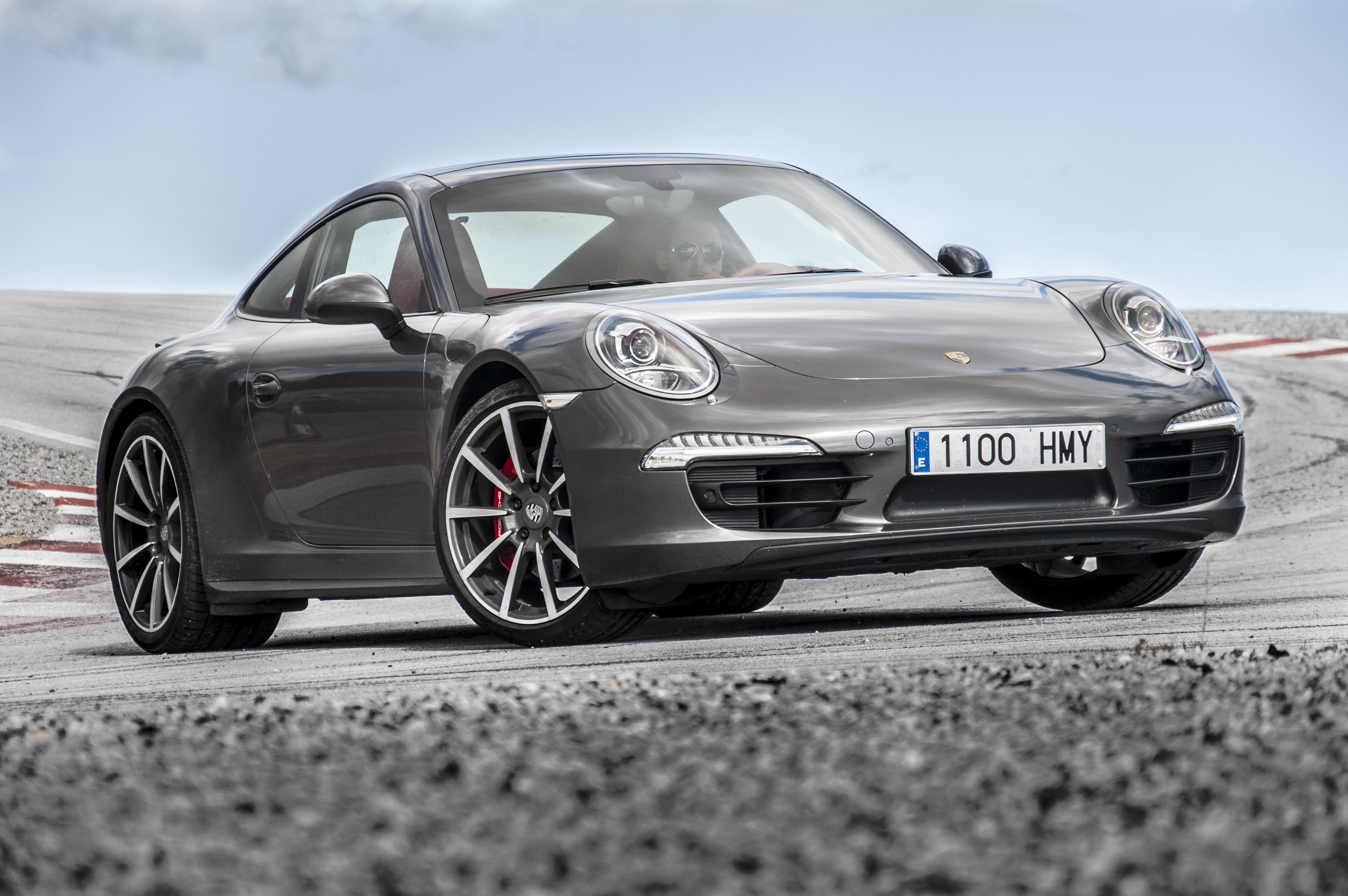
The Porsche 911 is a famous sports car that has been around since the 1960s. It's known for being fast and stylish, and many people love it for its performance on the racetrack. It's often talked about because it's one of the most recognized and respected cars in the world.
The Ferrari 250 GT is a beautiful sports car made from the late 1950s to early 1960s, famous for its powerful engine and stylish look. It helped make Ferrari a well-known name for luxury cars. People talk about it because it's considered one of the best classic cars ever.
The Ferrari Dino 208 GT4 is a car made in the 1970s that was special because it had a V8 engine, which was new for Ferrari at the time. It was named after Enzo Ferrari's son, making it an important part of the company's history. People talk about it because it's a unique and meaningful Ferrari.
The Subaru Baja is a mix between a car and a small truck, made from 2003 to 2006. It has a back area like a truck for carrying things, but it also has seats for passengers. People talk about it because it's different and useful for various activities.
The Mitsubishi Endeavor is a mid-size SUV made from 2003 to 2011 that is known for being roomy and practical. It's a good choice for families because it has plenty of space and is comfortable to drive. People talk about it because it offers good value for a used car.
The Ferrari Scuderia Spider 16M is a special convertible sports car made in 2009 that celebrates Ferrari's racing achievements. It's designed to be very light and fast, making it exciting to drive. People talk about it because it's rare and has a strong connection to Ferrari's racing history.
The Ferrari 308 GTB is a sporty car made from 1975 to 1985 that is famous for its stylish look and powerful engine. It helped Ferrari attract more customers and is loved for its performance. People talk about it because it's a classic car that many fans admire.
The Ferrari F40 is a very famous and powerful sports car made between 1987 and 1992. It's known for being simple and fast, and it was the last car that Enzo Ferrari himself approved. People love to talk about it because it's considered one of the best Ferraris ever.
The Ferrari F355 is a sporty car made between 1994 and 1999 that is famous for how it looks and how well it drives. It helped make Ferrari popular again in the 1990s, and people love to talk about it because it's a great combination of style and speed.
The Ferrari F50 is a super-fast sports car that came out in 1995. It has a powerful engine that comes from racing cars, making it very exciting to drive. People talk about it because it's a special car that shows Ferrari's racing history.
The McLaren F1 is a super-fast sports car made in the 1990s that is very special because of its unique design and technology. It has the driver sitting in the middle of the car, which is unusual. People talk about it because it's one of the most famous and expensive cars ever made.
The Ferrari LaFerrari is a super-fast car that came out in 2013 and uses both a regular engine and an electric motor to be very powerful and efficient. It's known for its cutting-edge technology and is considered one of the best supercars ever. People talk about it because it's a symbol of Ferrari's innovation.
The Ferrari SF90 Stradale is a super-fast car that uses both a regular engine and electric motors, making it very powerful and efficient. It was introduced in 2019 and shows how Ferrari is using new technology. People talk about it because it's a modern take on a supercar.
The Ferrari Daytona SP3 is a special sports car made in 2021 that pays tribute to Ferrari's racing history. It has a very powerful engine and is designed to be fast on the road and the racetrack. People talk about it because it's rare and has a lot of history behind it.
LIVE
This podcast is brought to you by Everyplate. Everyplate is the go-to dinner solution for busy families juggling work, school or activities. Try Everyplate and get $2.99 per meal on your first box, plus free steak for a month. Go to Everyplate.com-podcast and use code gas-stake to claim your offer. That's code gas-stake. At Everyplate.com-podcast to get $2.99 per meal on your first box, plus free steak for a month. Offer is vary by plan, $1.310, serving of steak per box for a month.
For four weeks with active subscription, ditch the dinner time dilemmas with Everyplate. Did you know that at Chevron, you can fuel up on unbeatable mileage and savings? With Chevron rewards, you'll get 25 cents off per gallon on your next five visits. All you have to do is download the Chevron app and join to start saving on fuel. Then, you can keep fueling up on other things like adventure, memories, vacations, vacations, quality time, and so many other possibilities.
Thanks for watching, and I'll see you next time.
There's never any pressure, just perfect proposals. Shane Company, your friend and jeweler.
Maranello Italy, 1945. A broken and beat down Enzo Ferrari takes a seat in his once thriving factory, after being bombed by the Allies as a husk of its former self.
This is Enzo's second factory after the first one is bombed and relocated to what was supposed to be a safer spot outside of town.
Enzo looks out at the charred machinery, the jagged bricks, and the airstrike craters. It's a huge loss to a man who prioritizes work in his business over everything else.
But the war is over, there's nothing left to do, but rebuild. Instead of wallowing and misery and throwing up the white flag, Enzo is formulating a plan.
No longer forced to produce engines for the war machine, he is free to spend all his time and energy doing what he wants, making race cars.
He takes one last look at the rubble, puts his hat on, and walks away. In the end times, Enzo found a new beginning.
How did Enzo Ferrari find his footing in post-war Italy? What was his first breakthrough car? And how did he make his name synonymous with speed, luxury, and Italian pride?
This is the past gas season 1 finale, Ferrari Part 2.
Welcome back to the show everybody. My name is Nolan Sykes joined as always by Bart Bidlingmeier.
Hi, great to be here, thanks for having me.
You're welcome. And, Joji Weber.
What's up, Wing Wing Nation?
Slime off of slugs back.
Slime off of slugs back.
Keep it up to be here.
Oh, keep it juice, I forgot about that one.
That's my sign off, but I'll save it for later.
Okay.
As you do with juice, right?
Of course, yeah.
I have a hard time saving it for later. I just drink it now.
I've got one of the Welch's, like the grape, the sparking grape, you know, the fancy stuff for the holidays.
Anyways, I've just been working on that.
As you can put it screw it back and put it in the bowl.
Yeah, this morning I was a little thirsty and I was like, glue, glue, glue.
Anyways, it doesn't keep the bubbles, all right?
Well, it's a twist top. The Welches is a twist top.
Yeah, I think I prefer the sparkling grape to the Maranelli sparkling cider.
And I know that might be a controversial thing to say out loud.
Maranelli is a little bitter to me.
Yeah.
It's like barks though. It has that bite, dude.
It does.
The bubbles are smaller.
So they get into your cracks on your tongue.
You guys have cracks on your tongue, right?
Yeah, it's cracked.
Yeah, it's cracked.
Sure.
Whoa.
Food science, huh?
Yeah, this is the final episode of past gas and its current format, which is crazy to say out loud.
We've been doing this since late 2019 and then went into, you know, COVID and had to figure out how to do the show remotely.
We did.
We've had a lot of ups and downs, but what a journey it has been in its current form.
We're going to bring, you know, shows going back in April, in 2026.
April, 2026.
So we're going to be gone for a little while.
We're going to be in the lab.
We're in the lab.
We are currently in the lab cooking it up.
And I'm really excited to see how that will be received.
Well, I'm trying to get past caring about that.
Sure.
Something I've kind of lost side of a little bit is the fact that if you just make something, the way that you want it to be made,
it will likely resonate with other people and say, like, try until it doesn't, who cares?
Yeah, you made it.
Except in this case, we are a business and we do have like goals that we want to hit.
And at the same time, like, if people see that you're making things just to try to satisfy an algorithm or like something that you perceive the audience to be,
then it's just not going to feel as good.
Yeah.
And I'm just, I've learned that firsthand, but also you see other channels and other networks do that.
And you're like, no, it's just doesn't, it's kind of lost its magic a little bit.
Yeah, like if you saw our series on Skibody Toilet, that was the wrong direction.
Yeah.
It was a deep dive, though.
I appreciated the research.
You know, we really worked on it.
But, um, no, but it's like cars in that.
Yeah.
The past gas in its next really complex character, though, you guys, I mean, really explored the greatest.
It's what we're doing next is something that more kind of closely, um, satisfies like a creative need rather than what we think is like a,
a market want or something.
I don't know how to.
We've always tried to be as genuine as possible and done stuff that we wanted to talk about and and
taken suggestions from people, but only if it also fits in with what we want to talk about.
I really feel like past gas, I mean, this, which call it season one, kind of tongue and cheek.
It's been like 309, 390, no way.
319, 320 or something.
320 or so episodes.
I feel like the last like year and or six months, even has been like, I've had a lot of fun with recording these episodes.
I feel like we found like a new groove, um, but still, uh, there's still higher mountains to be climbed.
There's a lot of meat on the table, too.
Like we, we ended up doing a lot of deep dives on stuff, but are limited to one episode or something.
You know, like, and and there's stuff that we don't talk about because, uh,
there'd be too much backstory that we have to explain.
And so it's kind of relegated to like one paragraph or something when in reality,
like that paragraph could be stretched into a half an episode because it's so interesting.
Right.
And so what we're doing with this.
It's like the difference between the rank and bass lord of the rings and Peter Jackson's lord of the rings.
Is the, is that the animated one?
Yeah.
Yeah.
Yeah, exactly.
Exactly.
Fresh meat.
Meat on the table, boys.
Anyways.
But with this new format, what we get to do is explore like the whole scene,
which paints a much better picture of like the whole thing because out of context, you might be like,
you know, there's a dealership that put big engines in, but like what you don't realize is like,
that was innovative for the time.
We're not doing the ankle.
It's maybe season two if you want guys want, but, um,
what we're talking about is the whole context that led up to some of the coolest moments in motorsport and in cars
and in, you know, like all these cultures converging at one point.
And I feel like the golden area of JDM is like a really cool season to start off with as the arc is insane.
It starts post-World War II and it goes all the way up until the early 2000s.
Yeah.
We already started.
I say we are amazing writer Anthony has been working on that.
We have two scripts done reading through them and like, oh yeah, this is, this is it right here.
So anyway, enough future talk.
We still have to finish the story on Enzo Ferrari.
When we left him, he was not in a good spot.
He was an interesting spot.
He had kind of hedged all of his bets.
He was ready to emerge.
Yeah, but also he had worked with every conceivable faction of World War II.
He was a member of the fascist party, but also he was harboring anti-fascist revolutionaries in his,
in some buildings that he owned, his employees would like fix guns and like provide weapons to these anti-fascists.
Make caltrops.
What are caltrops?
Like the pop tires are like.
Oh, they spikey jacks kind of little guys.
Okay.
Little road urchins.
Road urchins.
Or CNN.
That's a stick.
Road urchins.
Car club name.
The road urchins.
They smell.
They smell like fish.
Yeah.
And then he was also making tons of money from misleading his government.
So just a very complicated is like such a, I don't know, I think that's lost me.
Oh, he's a complicated figure.
But it's like, I think in his case, that is true.
Yeah.
I think it is.
Yeah.
It's accurate to say it's complicated because it's going to be both sides of the line.
He wasn't I think sure which way the scale would fall, you know.
So he's kind of putting eggs in a lot of different.
Not to excuse his behavior because he was definitely not in a bunch of photographs wearing fascist.
And he benefited greatly financially from working with them.
Yeah.
But now that war is over, he's trying to rebuild.
And I don't know.
He's just planning on people just forgetting that he was in those photographs.
Let's see if they worked.
The end of the Second World War had left destruction across Italy.
But for Enzo Ferrari, it was just the beginning of a new chapter in his pursuit of speed
and engineering excellence that had been his lifelong passion.
With Ferrari about to unveil the first car bearing his own name after the war,
he was about to transmit a signal of hope to his fellow countrymen whether he knew it or not.
It was in 1923, though, after competing in the first circuito del Salvia in Ravana,
that Ferrari met Countess Paulina Baraka, mother of renowned World War I fighter ace Francesco Baraka.
As the story goes during their conversation, the Countess made a suggestion
that would ultimately become associated with Ferrari's logo.
Enzo, why don't you put my son's prancing horse on your car?
It will bring you luck.
With these words, the Baraka family gave Enzo a photo of Francesco covered
with a dedication that entrusted the horse emblem to him.
You know, it's very likely that this quote comes from Enzo himself.
When, in fact, he could have just stolen a dead guy's symbol.
Yeah.
You know, we don't know.
We don't know.
He authored his own in autobiography.
Yeah.
Interesting.
The stallion was always black.
But Ferrari added his personal touch by placing it against a yellow field.
The color of Modena, his birthplace.
And thus, I've been there.
It's f***ing yellow, dude.
Modena.
He's got the river full of peace.
And thus, was born the Gavalino Rompante.
The legendary symbol that Ferrari still features on its car to this day.
Once the war had finished and reconstruction was underway,
Ferrari refurbished the Maranella factories and assembled a team that would be capable
backing his ambitious vision.
He's back, baby.
That's right.
One member of his team was Enzo's childhood friend and engineer,
one Giacino Colombo.
Sorry.
I don't know why I put so much in.
I know.
Let's have a little team.
Yeah.
Yeah.
Yeah.
It just feels right to say it.
Plus, if I say Giacino Colombo doesn't quite feel as right.
It's downed pretty cool though.
Yeah.
Giacino Colombo.
Hey, Giacino Colombo.
Giacino over here.
Giacino was famous for designing the Alpha Romeo 158.
Instead of following Alpha's eight cylinder engines, Ferrari and Colombo were more interested
in standing out by designing something even harder to work on.
Yes.
A 12 cylinder engine.
I wonder if it's Giacino.
Probably is.
There's two C's.
Giacino.
Giacino.
That sounds Brazilian.
Yeah.
Yeah.
He's like he's got cauliflower here.
And he's coming into the ring just a big deed.
The inspiration for this choice came from an unlikely source.
American car maker, Packard.
Packard.
Interesting.
I had heard this before.
In 1912, Enzo saw photographs of a 12 cylinder Packard that had raced in the Indianapolis
500.
During the war, Packard 12 cylinder cars came into Italy as military vehicles on behalf
of the American forces.
And their advanced technology left an impression on him.
Though Packard eventually abandoned the 12 cylinder, Ferrari swore to make it the basis
of his business.
Many criticized this move.
Accused him of, quote, digging his own grave.
And yet, Ferrari's persistence carried the idea forward.
He later acknowledged that the engine success would not have been possible without innovation,
such as Tony Vandervelle's thin wall bearings, incremental refinements like increasing the
bore and adjusting the wall bearings these days.
You got to have thin walls, incremental refinements like increasing the bore and adjusting
the distance between cylinder axes to expand capacity, ultimately transformed the engine
into a work of mechanical artistry.
In 1946, the design of Ferrari's first prototype car was complete, embodying both the resilience
of post-war Italy and Enzo's uncompromising ambition.
To him, racing was not merely a sporting endeavor, but the final test of the car maker's
craft.
The process began with the racing authorities' announcement of a formula after which
Ferrari and his team would shape their vision around those parameters, it had to meet the
rulebook.
Well, he often maintained that a race car never quite met its original blueprint, instead
it was a mix of ambition, compromise, and innovation.
It would take a year to plan such a car, and six to eight months just to construct it.
Once assembly and testing were complete, the true test of a car was on the track.
For Ferrari, a race was the culmination of hours and hours of labor, precision, and sacrifice.
Only when all the individuals involved, designers, engineers, mechanics felt the same
fervent pride in what they had created, was satisfaction, absolute.
When Ferrari unveiled its first production car, the 125 in 1947, it was as much a statement
of aspiration as an assertion of identity.
Built upon a conventional tubular steel ladder chassis, constructed by Milanese carmaker
Gilco Autolai, the car-balanced innovation with convention.
Ferrari employed a 2,420 millimeter wheelbase, nice, or 95 inches, which gave the car its
sporty proportions, and a 72 liter fuel tank was fitted behind the rear axle under the
spare tire.
The front of the car had independent suspension in the form of double wishbones and a single
transverse leaf spring, while the rear employed a live axle on leaf springs and an anti-roll
bar.
Hydraulic, how day, who day, who dolly, who dolly, who dolly, I'm just going to say like
that shock absorbers were installed at all four corners, with breaking, being done through
a single circuit system powering drum brakes.
The car sat on 15 inch English made, Rudge Whitworth wire wheels, that's hard to say.
You can't even get the English words on this one, it's like Ruth Kriss, steakhouse.
Ruth Kriss, ass wheels, five inches wide at the front, and six inches wide at the rear
originally wrapped in, be readily rubber.
I love just thinking about Rudge, just how shitty wheels were, I mean, just like the fact
that any of these cars handled is, it is actually astounding that any of these people survive.
It's the wheel of this fatty, just described it, this is how thick the wheels are.
I love your moon discs by the way.
That's awesome.
Yeah, thanks, dude.
They scratched the shit out of the wheels that I put them on though.
Oh no.
Yeah, I didn't, I got moon discs, but they're not from moon irons.
Oh man.
Dude, they were out of stock and I avoided them now.
Now I'm learning I made the wrong decision.
There's only one.
There's some from like Speedway, and they're like all metal, including like the things
that keep it defeated, and they just like, I mean, I need to learn patience, I often make
decisions.
I'm like, I need this now, yeah, and then it just fucks me, you know what I did the other
day, I added three items to my Amazon order from the grocery, and they came that came
that same day, because it's like, if you, if you make $25, if you order $25, you get
same day delivery, you know, that 20.
I haven't had an oven for the last three weeks because I got the bright idea to use
my credit card points to buy a low's gift cards, so I could buy an oven, four days before
things giving, they deliver it on Tuesday.
It doesn't fit, because I didn't measure anything.
So then they have to take it back.
And once that's processed, they run me on a gift card that is mailed to me, so then
I can buy another oven, and then wait for that to deliver.
So I bought two hotplates and an air fryer for, to cook for Thanksgiving, and it was miserable.
What did you just do, a turkey breast then?
Well, I didn't do the turkey, so I was like, I let them lie down, I was like, I can't
do it.
We did talk about this, but you didn't mention that you cooked on hotplates, I was embarrassed.
This is a dumb, foible thing, but I, so I like, it was fine, I did, I was like, I don't
want to do a turkey breakers, it's just like, I know, like, yeah, yeah.
But then I ate leftovers, I ate leftovers on Sunday, which is what, three days, and
I got food poisoning for a week.
No, did you why, did you, you probably what happened was you had pooped before and wiped
your butt and not washed your hands.
So it wasn't chocolate sauce on my stuffing, yeah, that makes sense.
Um, total digression.
I lived in a, one of the first, like, first houses I lived in LA was this townhouse,
I lived with Eddie, lived on like the first floor, and our house, house didn't come with
an oven, we bought an oven and installed it, but didn't put like the Teflon tape on the
gas, the gas, and like every morning, that is so one dangerous, yeah, for like many
reasons.
Yeah.
And like every morning for like three weeks, you would, you would, you would, you would
feel anymore.
Eddie would come out and be like, bro, I got a terrible headache.
Did you not smell it?
No.
Did you guys were just placing yourself for how long for like three weeks, good, and then
we're like, a bunch of Sylvie Plass over here, like, what, like what has changed?
And like, right, why are we suddenly getting headaches, so we, I was like, oh, yeah, we forgot
to put the fucking life right, right.
You guys, you guys fart so much beforehand that it already smelled like it also, like
the place we were like stoke, like we spent all of our money on rent.
And like didn't have any money to like, to buy, to tape, to buy taste or like the furniture.
So for like months, we just had a rug in the living room and like a TV on the floor.
And then finally James gave us, um, his couch, that big leather couch, that was in the
second story of the pool house, he was living in.
I have to get it up there.
Well, we had to get it out of it.
Yeah.
Yeah.
That was crazy.
Yeah.
The couch moving go though.
You helped me with my 110 inch, that couch, that was, was the worst couch, like that tested
me.
Yeah.
It took 45 minutes to get through the front door and through the door, like, I think the
geometry.
Yeah.
Sometimes you're like, well, how did it?
How did I get it?
Now I get it out of this position.
I got a moving company.
We got it jammed in the doorway.
The couch was clearly way too big for the doorway.
For literally 45 minutes, we were like moving it millimeter by millimeter, trying to get
it just, just enough like clearance.
And then the universe is like, okay, these guys have had enough.
And like, I think the atoms of the couch, like, there's, there's, if you guys ever read
dirt gently, holistic detective agency, no, there's a part about, like, there's a plot point
about how the couch got into a position that it couldn't get out of and it involves, like,
space time.
It's a good bit.
We got it in.
We've all been there.
It was such a relief, dude.
Yeah.
Yeah.
That place was nice.
I love that place.
Yeah.
I wish I could have been a bachelor for just a little bit longer.
It was a cool spot.
Well, you two get a second chance, right?
Force attorney.
Okay.
Accident taste.
That's what they mean by accident lawyer, whoa, shouldn't it, shouldn't it marry her?
I was a pretty big accident.
At the heart of the 125, was it's most defining feature, a brand new 60 degree V12 engine
designed by Giacchino Colombo with contributions from Giuseppe Busso and Luigi Botsi, the unit embodied
Ferraris aspiration to set itself apart from its competitors.
Sometimes you sound like an elegant Italian and sometimes you sound like a British, I just
read the line, dude.
Whatever I'm feeling in that exact moment when I'm reading that, I love it, it's going
to come out.
Sometimes you sound like Sebastian, man of sky, sometimes you're Luigi Botsi, constructed
with a light alloy block in the head, it had hemispherical combustion chambers.
It's a hemi and a single chain driven over the hemi, got a hemi and a single chain driven
overhead camshaft for each bank, overhead hemi V12, right, with a chain driven cam.
Well, that's just a time, time chain, it's a timing chain, it represented the cutting edge
of post-war Italian engineering, it used a single spark plug per cylinder and twin magnetic
merrelli magnetos for ignition, wow, a two magnetos, that's cool.
A bore of 55 millimeters and a stroke of 52.5 for a total displacement of 1,496 cubic
centimeters or one and a half liters.
So that's basically, I mean it's almost square.
Very close to square.
And it's about two inches of a bore and stroke.
So think about how small that engine actually is, 12 cylinders, one and a half liters.
That's a little guy.
Two versions of the engine were planned from the start.
There was a sport engine and a touring engine.
The sport version designed for competition employed a 9.5 to 1 compression ratio and three
down draft Weber 32 DCF carburetors to produce a hundred 18 horsepower at 6,800 RPM.
The touring engine on the other hand dropped the compression ratio to 8 to 1 and had a
single Weber carburetor, but never found its way into actual use.
A single carb on a V12 sounds kind of a lot of work.
A third version intended for grand pre-racing was also planned, though it was months away
from production at the time that the 1,25 debuted and that had 19 carburetors on it.
The first two chassis that carry the new engine, the 0,1 and 0,2 were fitted with distinct
bodywork designs, each revealing for our experimental spirit.
Cassie won received a spider body built by Giuseppe Peretti and that was the same one
that was in Wild Wild West.
Yes, a convertible, marked by its integrated front wings, it had a softly contoured profile
and short rounded tail.
Cooling, common-deer at the front half of the car, a nose intake in the center was flanked
by brake ducts beneath semi-flared headlights.
We've seen this car without the Peterson.
The 125?
Yes.
It's a little ugly with these vents.
Wow.
It is.
Yeah, it is.
It is.
The vents are distracting.
I'll say it.
And a small horseshoe-shaped intake above the grille that supplied the carburetor's
via an aluminum snorkel, the hood also had louvers that assisted in cooling the engine.
At the rear, a detachable panel allowed access to the spare wheel, fuel tank and rear axle.
Cassie number two took a decidedly different path, who was constructed by defunct Modena
Coach Builder, Karatsaria and Saloni, and possessed a cigar-shaped body with cycle
wings, aka light, minimalist fenders.
The front featured an enormous air intake and the car's components, such as the headlights
and even spare wheel, could be quickly unbolted to render it compliant for formal-a-type
events with a single cedar configuration.
So if you're just taking a cruise through the countryside and somehow you happen upon
a performance.
Just one race.
You just take all that stuff off and you're ready.
Inside both cars embrace simplicity.
You only had switches, a range of functionality in mind.
You don't want to be looking down at your gauges while you're flying around a track.
No TVs.
No TVs.
You don't want that espresso machine hissing at you like in the S's.
There's a wood-trimmed three-spoken arty steering wheel, providing tactile connection
with black leather seats.
And it's all cut to a minimum, reinforcing for always commitment to performance above
all else.
No creature comforts like your dam espresso machine, even though that would be pretty sick.
Yeah.
VW didn't have a contact machine attachment for the beetle back in the 60s.
That's insane.
Yeah.
That's insane.
Now we just have white monsters that you get at the gas station.
You know?
It's if they're out of the blue one.
I drink two white monsters and it created a third.
Come at me.
The 125 S made its racing debut at Biachenza in May of 1947, with Frankl Cotezi at the
wheel.
The car, powered by the painstakingly developed one and a half liter V12 led the race until
the final two laps, when a retirement was forced by a seized fuel pump.
Enzo would afterwards refer to this first prototype as a quote, unorthodox car.
Yeah.
It's performance left no question regarding its potential, competing against Maserati.
Stuan Guilini, Sistalia, and previous employer Alfa Romeo, Ferrari served notice that beating
these established companies Alfa Romeo in particular was an obsession.
He was serving notice.
Like a Stuan Guilini, I'm certain.
Stuan Guilini.
That's a colonial.
Stuan Guilini.
Hey, Stuan Guilini.
Get down here off that rafter.
Come start the sauce.
Get down off the f***ing shed.
Get off the shed Stuan Guilini.
No.
Son, did you get served?
When you get served, you dance back.
We'll be right back after these messages.
This podcast is brought to you by Shopify.
One of the fresh start energy of the New Year and finally launch your business with Shopify.
2026 is the year you rewrite your story, own your future, and make your entrepreneurial dreams
come true.
Start your business with Shopify in 2026 and become who you're meant to be.
Shopify gives you everything you need to sell online and in person.
Millions of entrepreneurs have already made this leap from household names to first-time
business owners just getting started.
I mean, don't use the Shopify.
Shopify gives you all the tools to easily build your dream store.
Choose from hundreds of beautiful templates that you can customize to match your brand.
Start up as fast as Shopify's built-in AI tools that write product descriptions and headlines
and help you edit product photos.
Marketing is built-in too, create email and social campaigns that reach customers wherever
they scroll.
As you grow, Shopify grows with you, handle more orders, expand a new market and do it all
from the same dashboard.
In 2026, stop waiting and start selling with Shopify.
Sign up for your $1 per month trial and start selling today at Shopify.com slash gas.
Go to Shopify.com slash gas.
That's Shopify.com slash gas.
Go to your first, this new year with Shopify by your side.
Some people just know they could save hundreds on car insurance by checking all state first.
Like you know to check the restaurant location first before agreeing to go to lunch with
a friend.
Day of, you're getting ready to leave.
You put it in your map and bam, lunch is an hour away?
Bad on your friend for not mentioning it, but bad on you for trusting your friend.
Now you've got to book it across town to get to the best burger in town?
Sure.
It's worth it.
Making first is smart, so check all state first for a quote that could save you hundreds.
You're in good hands with all state.
Potential savings vary subject to terms, conditions, and availability.
All state North American insurance company and affiliates, Northbrook, Illinois.
Now back to the show.
All that hard labor paid off quickly.
In 1949, Ferrari recorded one of their first signature victories on the international scene
at the 24 hours of Le Mans.
The world's most renowned endurance race, driver's Luigi Chinetti and Lord Selsen piloted
the Ferrari 166 mm-barquetta touring to victory after a full day of continuous driving.
The barquetta made its debut at the Turin Salon in 1948, and its potential was already
evidence earlier in the year when Clemente Bihondetti and Ettori Salani won the Mille Maglia,
the second place also being captured by Ferrari 166 driven by Felice Bonetto and Pierre
Luiz Carpani.
You're doing great with these pronunciations.
Felice Bonetto is a signer.
I wish I was like Italian or something.
Why don't we come up with your Italian name right now?
Okay.
Nolan.
Nolan Agi.
That's it.
Nolan Agi.
Nolan Agi.
Nolan Agi.
Nolan Agi.
Nolan Agi.
Nolan Agi.
Nolan Agi.
Nolan Agi.
Nolan Agi.
Nolan.
Nolan Agi.
Nolan.
Nolan.
Nolan.
Nolan.
Nolan.
Nolan.
So there was Luigi Kanetti, Chinetti.
Chinetti, a two time them all champion of the 1930s, was 47 when you earned Ferrari its
first victory at the circuit de la Salle.
That's like 80 in today's years.
He's oldest.
Resourceful in Stibern, he placed an oil reserve tank in the footwell of the passenger
seat.
that raising the hood in the course of the race would be a waste of valuable minutes.
And you know what, his plan paid off. Sometimes stubborn old guys are right.
Genetti drove nearly all 24 hours of the race by himself with Lord Seltzen driving for just one
hour. It's funny that there's always been like a landstroll in this type of raising.
Landstroll got the last recorded overtake with DRS because they're not doing DRS next year.
Really? Yeah, so he got it. Whoa. Wow. Yeah.
Well, he got one record on the book.
Even with the slipping clutch, the team persevered to give Ferrari a place
in the annals of motor sport. The barcada won its next race at the Targa Florio
and the 24 hours of spa differential. And in doing so, it became the name on everybody's lips.
I love the spa differential. Yeah. Oh, oh, oh, oh.
Then you said his co-driver was Lord Seltzen.
Lord Seltzen. He was fondly chopped.
He's a real bubbly. No, they have a longstanding feud with the Schwab's family. I know that.
Well, there's that three race series where they just got Schwept.
Hey, nice. There's got to be more Lord Seltzen's out there.
Oh, it's the third Baron Seltzen.
David, he was offered Lordship and turned it down because he was like, that's not
what I've. He's like, look, if there's a war, I don't want to be one of the people
we're sending into it because we're all knights. That's who's doing the fight.
His name was Patrick William Malcolm Mitchell Thompson, the second Baron Seltzen.
Sounds like a frat.
Going through the roster.
So amid these rising European successes came another milestone.
Ferrari's victory in the grueling Carrera Panamericana of 1951.
A 2,000 mile race across Mexico conceived to publicize the completion of the Mexican section of
the Pan American Highway, the race mix geopolitics with a good old-fashioned sporting event.
Ferrari was represented by two cars driven by Pierrot, Tarufi, and Luigi Canetti in one,
and Alberto Escari and Gigi Vilaresi in the other.
Dude, this is like, if they're like, hey, let's put Lewis Hamilton in this car
and race like if he did Baja basically.
Not really, but like, yeah.
I mean, yeah.
Science senior does offer out stuff.
At first, organizers questioned whether the Ferrari entries would even qualify,
and Enzo himself was reluctant to invest this far from Italy.
But the Italian sports center convinced him, citing the necessity of exposure
in the profitable American market.
The car chosen was the 212 Inter, Ferrari's most advanced model to date.
With a 102-inch wheelbase, the chassis could accommodate a second rear seat,
a necessity for the career's regulations.
Built on an X-Brace tubular frame, the car featured independent front suspension,
and a live rear axle with two variants, one with leaf springs and another with radius rods.
Interesting.
So, under the hood was Columbus biggest V12 yet.
Bored out and stroked out to 68 by 58.8 millimeters for a nice 2.5 liters of displacement,
and produced 130 horsepower at 6,000 RPM.
From 1951 to 53, Ferrari produced 78 examples of the 212 Inter,
which qualified the vehicle for the career's volume production category.
Most chassis were coach built by high-end Italian body builders,
Vignale, Gia, and Pinanferina.
Those are my two favorite Italian body builders.
Big guys.
In the career, Enzo and chief engineer Aurelio Lumpredi commissioned one Alfredo Vignale
to design a special 2-in-2 enclosed notchback body.
Adding to requirements of the race, the Vignale version had a slightly more raised
roofline to provide more headroom for the rear seat riders.
So, you have four deep roll-in through Mexico.
I think they had four drivers in there.
I think it was just for obligation, but the 9-11 also raced in this.
Oh, yeah.
No, it didn't.
Later it did.
I think it did at some point for sure.
Because it's named after the career.
Pedamacron.
Well, regardless, Joe, the gamble paid off on the mixed surfaces and long
straights of Mexico.
Ferrari's 2-1-2 enters stunned competitors by reaching speeds exceeding 120 miles per hour.
Dude, I just read about the C-snale that stuns its prey by shooting insulin into the water.
And so...
The fish, they go into like a...
You said stunned.
Yeah, yeah, Jesus Christ.
It is on you, Nolan.
Yeah, I guess I'm sorry.
Dude, this snail is f***ed, though.
It shoots out insulin and it stuns the fish.
That's like kind of feeding near it.
Then this big old sock thing goes over the fish and then it...
It's like Iron Maiden where it just like all these little needles with neurotoxins,
like jam into the fish.
Snails love neurotoxin and neurotoxin.
Yeah, I mean, they're slow and like very vulnerable, so they have to have some firepower.
They got to commit some war crimes on some other...
Yeah, got to.
Yeah.
So, American observers...
You're like the Pete Hegseth of the ocean.
American observers skeptical of Italian machinery on open roads were forced to re-evaluate
as Ferrari's cars not only held their own, but dominated this damn race.
Financially, the race proved worthwhile as well.
Ferrari's teams grossed $37,000, or about $450,000 in today's money in winnings,
while the two carrairs were not only sold locally for a 17 grand each, which is 200k today.
More importantly, the event signals Ferrari's arrival on the global stage.
Not only is the competitor in Europe, but as a brand destined to capture the imagination and the
wallets of international customers.
Oh, right. You've captured my wallet.
Give me a Ferrari.
Now you've got my cash.
So, okay.
Very happy with that.
Just the two of them together.
It's like this dude.
I love thinking of a guy.
Two C-plus jokes in her own makes an A-plus joke.
You've captured my wallet.
Now you've got my cash.
It's so stupid.
I'm sorry.
Stupid.
I made it come from scratch.
All right.
Right, just because I thought about some sad.
Let's go out.
No, that's a lie.
I'm very proud of that.
That one.
Yes.
So dumb.
The early 50s were pivotal years for Ferrari, as the company transformed from an ambitious
newcomer to a dominant force on the international stage.
In 1951, Ferrari secured its first F1 championship, Grand Prix Victory,
a landmark achievement that symbolized Enzo's determination to challenge the giants of the sport.
In the following year, Alberta and Scari secured another win, confirming that Ferrari was not
a one race wonder, but a strong contender to the highest honors in motor racing.
Ferrari's growing prominence inevitably drew sharper competition from rivals.
Alfa Romeo, Enzo's former employer and most personal adversary,
remained a formidable force, while Mercedes-Benz re-entered racing with increasing strength.
If you want to know the process of why they had to re-enter racing, check out
from Mercedes episode, and they also worked with the Nazis as well.
Yeah.
Ferrari's symbolic breakthrough came at the 1951 British Grand Prix at Silvestone
when Jose Froly and Gonzalez and a Ferrari 375 held off Alfa's drivers to take victory.
I really like the look of the 375.
I think that's when it starts really just solidifying the shape.
That's really do yeah.
Just like so like nothing above the belt line.
For Enzo, this moment was bittersweet quote,
I feel like I've killed my own mother, he famously remarked,
acknowledging the emotional complexity of surpassing the company where his own career had begun.
I probably would have ordered it differently.
Yeah.
Well, yeah, but he refused to remember from the last episode he actually killed his own mother.
So he knows how that feels.
Yeah, 1952 was remembered for more than Ferrari successes in Formula One.
I saw a tweet that said,
man, imagine how hot Freud's mother must have been.
1952 was remembered for more than Ferrari successes in F1.
It was the year the company introduced one of its most iconic creations,
the V12 powered Pininfarina designed 250 GT.
This model would come to define Ferrari's dual identity as both a racing powerhouse
and a manufacturer of luxury roadcars.
Its impact was immediate and profound.
The 250 GT dominated endurance racing like the Mila Maglia and the 24th of Le Mans,
as well as becoming one of Ferrari's first commercial successes.
In its production lifetime, Ferrari built 1,317 road-going cars
and 231 competition spec cars, establishing the 250 GT
as both a technological benchmark and a financial cornerstone for the firm.
Determined to keep the momentum, Ferrari turned to Aurelio Lempredi
to develop the Type 375.
With a stiffer frame, longer wheelbase for balance,
more aerodynamic bodywork and improved Weber carburetors,
the car represented Ferrari's most advanced single-seater yet,
speaking of international recognition,
and so boldly entered the Indy 500.
I was like, why do I know Lampredi?
The V12 was named after Lampredi.
So is that Lampredi V12.
That name's not familiar.
The attempt captured global attention thanks to the publicity efforts
of journalists Bill Quinn,
who emphasized Ferrari's daring entry
with a 4.6-liter single-seater.
Finally, a normal name, right?
Bill Quinn.
Though Alberto Escarri qualified with four nearly identical laps,
a fractured rear wheel hub forced a retirement.
Despite the disappointment,
Ferrari's presence at Indy fueled American enthusiasm for the brand
and cemented its reputation as an international competitor.
That's such a dumb reason to DNF.
Yeah.
Like a wheel hub, how often does that break?
We only brought four.
We only brought four.
We only brought four.
He's taking six months of...
And we're in Indiana.
Where are we going to make deals?
But triumph was soon tempered by tragedy.
In 1955, Ferrari's star driver, Alberto Escarri,
who was already the winner of 13 races for the team,
crashed at Monaco.
Leading the race and with nine laps to go,
he skidded into the harbor in a dramatic accident.
Miraculously, he survived with only minor injuries.
Because he just, he went into the water
at the before he go into the tunnel.
And there was no tunnel at that point.
I don't think, but I don't know.
I can't say for sure, but I remember this was where he was really
superstitious because he wore some different color helmet
and his brakes failed or, you know, brake fade or something.
And he skidded off that turn and went into the harbor.
And I think just because you didn't have seat belts at that point,
I think you just floated out of it.
But he was like, okay, this Escarri I'm talking about,
he was like, this is...
I have to reassess him.
But then tragically, something else happens.
Reflecting with Juan Manuel Fangio in the hospital,
Escarri confided that he felt his star was fading.
In days, his warning had materialized.
Testing it for our sports car at Monza,
Escarri crashed and he was killed.
He was not wearing his helmet.
The tragedy was made all the more haunting by the parallels with Escarri's father,
Antonio, who also died after 13 victories.
On the very same date, May 26th,
Enzo would forever link the Escarri family's fate to his own.
There were additional blows.
In 1956, Alfredo Dino Ferrari, Enzo's son,
died of muscular dystrophy.
Enzo had desperately tried to get Dino involved in the company's work,
even persuading him to contribute to the styling of the 156,
which raced with a 1.5 liter engine.
Grasping at hope, Enzo believed he could tune his son's health like one of his cars,
creating calorie plans and diets in an effort to preserve kidney function.
That just sounds like responsible parenting.
But when Dino died, he was shattered.
Unfortunately, the tragedies kept coming.
In 1957, the Mille Miglia ended in catastrophe when Alfonso de Portagro's Ferrari
suffered a blown tire and plowed into onlookers,
killing the driver, his co-driver Edmund Nelson,
and nine spectators.
The incident prompted the immediate retirement of Pierre Tarroufi,
who had just won the race.
Still, Enzo responded to setbacks, not with retreat,
but with renewed innovation.
Somehow, he's going to race faster than death.
Sounds like.
That's a lot of tragedy.
I mean, that decade has a lot of deaths.
It's the point at which cars were becoming that fast,
whereas before it's like, all right, you can walk away from some of these things.
I'm not going to wear a seatbelt off fly,
but I'm only on like 40 miles an hour.
I don't still kill you, but still.
With a lot of different technologies, you're able to kind of set up the...
Something happens correct for it.
Something happens correct for it.
And with racing, this is the point at which,
because they hadn't had to do that.
And now suddenly, they're at this point,
and they've missed out on 50 years of making things safer.
And now all of a sudden, they have to start from scratch,
and the cars aren't.
The tracks also were meant for slower cars.
And so they're feeling growing pains,
trying to adjust these faster cars to these slower tracks,
which is insane to think about that we still race on some of these
circuits, because, you know, Monaco's like,
people are going 220 miles per hour,
down the marina.
I don't know if they actually hit.
I don't think, no, not 220.
That's like Baku, probably still like 190 at least.
Yeah, I want to say.
On the same, basically, the same track where they started racing 100 years ago.
Oh my god.
I think Monaco is such a cool place to visit if you're like into racing history at all.
Because you'll be walking down the sidewalk and be like,
wait a minute, this is it right here.
Really cool place.
Even if it's insanely expensive and like,
just spend like four hours there, you don't have to.
Anyway, South of France.
Bring snacks.
Bring snacks.
Yes.
You can just tell everyone's there.
So rich, you're just walking around your like,
yeah, it's crazy.
Anyway, that same year, for our debut,
the one and a half liter V6 engine,
known as the Dino V6 in honor of his late son,
it powered the Dino 156 F2, which made its competitive debut at the Grand Prix of Naples.
There, the car finished third against two V8 machines,
a promising result that pointed to Ferrari's resilience.
We'll be right back after these messages.
Thanks to our sponsor, Handcook Tire, the official tire sponsor of Donut.
We had Donut love Handcook.
They make tough tires for rough adventures
and daily driving without compromising comfort and drivability.
Handcook's Dino Pro off-roading tires offer great traction in tough terrains
and they're great on a wide range of vehicles,
from SUVs to light trucks to our own Baja blasting Ford Ranger.
Handcook became the official tire sponsor of Donut last year
and we have not looked back.
We use them on all the Donut cars in our lot.
They've got an aggressive design that not only looks great,
but it also protects you from punctures and gives you grip on sand, gravel, mud,
you name it.
And they last a long, long time.
Thanks to Handcook's durable compound,
you can get a lot of trail or road under your tires.
And I can hear you at home.
I'm afraid of driving off-road.
I love pavement.
Well, Handcook's got you covered there too
with their Ventus brand of tires optimized for high-speed driving
and stability on your beloved roads.
Get your tire journey started at handcooktire.com
and see just how far these wheels can take you.
That's h-a-n-k-o-o-k and cooktire.com.
Thanks, Handcook.
This podcast is brought to you by Underdog Fantasy.
Football season is drawing to a dramatic close
as my beloved Packers are on the bubble this week.
I'm so sad about that.
But Underdog Fantasy is the best place to get in on all the action.
Playing on Underdog is easy.
Just pick whether your favorite players will go higher or lower
on stats like rushing yards, receptions, touchdowns, and more.
Get your picks right and you could win up to 5,000 times your cash.
This week, I'm going to pick the bucket years to win over the Panthers.
I think Mike Evans is going to get higher than 16 and a half yards.
With Underdog Unwrapped, you'll unwrap tons of promos all throughout the holidays.
We've got boosts, give me picks, deal reveals, and even some surprises sprinkled it.
Now is the best time to get in the game.
Download the app today and use promo code Gas to score $75 in bonus entries
when you play your first $5.
That's promo code Gas.
Underdog.
Make picks win money.
Must be 18 plus 19 plus in Alabama and Nebraska 19 plus in Colorado for some games.
21 plus in Arizona, Massachusetts, and Virginia.
And present in a state where Underdog Fantasy operates.
Terms apply.
cassets.hundreddogfantasy.com slash web slash play and get terms
underscoreddfs, underscored.html for details.
Offer not valid in Maryland, Michigan, New Jersey, New York, Ohio, and Pennsylvania.
Concern with your play.
Call 1-800-Gamber or visit www.ncpgamberly.org
In New York, call the 24-7-hope line at 187-78-hope-and-white or text-hope-and-white-467-369.
This podcast is brought to you by every play.
Every play is the affordable low-stress way to cook great meals
while balancing work, social life, and budgets.
I got a toddler at home and he is very picky about what he eats.
He basically only eats chicken and potatoes.
And honestly, when it's just me, I run out of ideas as far as what to cook him.
That's why I really like every play.
They have a rotating selection of craveable comfort forward dishes.
One of my favorites is crispy buffalo ranch chicken, which my kid loves.
And caramelized onion smash burgers.
There's 35 plus weekly choices to tailor to your family's preferences.
And the pre-portioned ingredients reduce stress, mess, and food waste.
Meals can be ready in 30 minutes, which is great if you're a parent.
So try every play and get $2.99 per meal on your first box plus free steak for a month.
Go to everyplate.com slash podcast and use code gasstake to claim your offer.
That's code gasstake at everyplate.com slash podcast to get $2.99 per meal on your first box.
Plus free steak for a month.
Offer varies by plan.
One free 10-ounce serving of steak per box for four weeks with active subscription.
Ditch the dinner time dilemmas with every plate.
Now back to the show.
No longer chasing Alfred Omeos or Mercedes-Benz's output,
Ferrari was now the standard by which all others were measured.
The company had endured hardship, heartbreak, and tragedy,
and emerged from the other side stronger.
And heartburn.
A lot of garlic.
With both its race cars and road cars,
commanding the respect and envy of the world.
Enzo Ferrari found himself becoming a symbol of Italian ambition and a celebrity in his own right.
He was a man who was feared and admired by the world and nicknamed
Incomendatory with his dark glasses, restrained demeanor, and commanding presence.
He was the embodiment of success, having built a company from the post-war rubble
and to an international colossus.
Let's say that word.
Ferrari established his consumer business to fund racing endeavors,
which in turn helped boost sales on the consumer side.
Every Ferrari that won on the track could be bought in a showroom
or at least a similar version.
Ferrari tested his cars relentlessly, in competition,
but also on test tracks, to remain in front.
His obsession later culminated in the construction of the Fiorano test track,
a stone's throw away from the Maronella factory.
There, engineers and test drivers could push prototypes to their limits in safety,
so that every Ferrari bore the mark of racing tradition.
Enzo even controlled his own public image,
publishing the Enzo Ferrari story in 1964 to present himself in a mythical way
that he was able to control.
Behind the myth was a ruthless manager.
Ferrari was famously inclined to play his drivers against each other,
having believed that internal competition brought out the best in men.
The strategy brought victories, but at a very human cost.
The Vatican daily observatory Romano,
infamously attacked him, saying Ferrari valued machinery over lives and accusing him of
quote, devouring his own sons.
I think that Pope even condemned him publicly.
That's right.
Well, the Pope was the editor of this newspaper.
This was also followed by the infamous palace revolt of 1961.
After the death of Dino Ferrari in 1956,
Enzo withdrew emotionally from the factory, allowing his wife Laura to take the center stage.
Laura was just as confrontational as her husband,
and quickly became a devise of influence.
When she verbally assaulted company sales manager,
Jurelamo Gardini, Enzo fired him for protesting, and unrest ensued.
Several of Ferrari's top men, including sports car development chief Giato Bizzarini,
chief engineer Carlo Citi, and Scuderia Ferrari manager Ramolo Tavoni,
rallied to Gardini's defense.
Together, they issued a signed letter of protest.
Enzo's response was swift and absolute.
Within days, every one of the signatories was gone from Ferrari.
Whether they were fired or they resigned is still subject to debate,
but the event became company lore as the grand walkout or the palace revolt.
The exos would go on to form a T.S. or Automobile Tourism E-Sport,
a rival spawned by Enzo's autocratic rule.
Many of those engineers would go on to work at Lamborghini as well.
We talked about that in the Lamborghini story where Lamborghini just did a really good look
that all these guys just left Ferrari and he was able to scoop them all up.
And that they've hated Ferrari.
If politics within Ferrari painted the firm as tyrannical,
on-track disasters simply added to the company's complicated image.
In the late 50s and early 60s, Ferrari drivers seem to be cursed.
Eugenio Castellotti was killed in 1957 at the Modeno Auto Domo.
Luigi Musso perished during the French Grand Prix.
Peter Collins was killed with the Nurburgring.
Then, tragedy hopped the guardrails as Wolfgang von Tripp crashed at Monsa in 1961,
dying instantly and taking with him the lives of 15 spectators.
We've talked about that story before too long.
He was in the downhill story.
These losses overshadowed Ferrari's triumphs,
including the international cup and the world championship of drivers in 1961.
Each tragedy brought legal scrutiny.
Italian authorities treated every death as a potential homicide case
and it ends of himself with summoned by investigators more than once.
As Ferrari entered the mid-1960s, its reputation was as great as it was disputed.
On the track, the company was synonymous with speed and showmanship,
but off of it, Enzo Ferrari was struggling with economic insecurity.
The road car arm meant to generate revenue,
struggled to produce a profit,
and the constant draining of funds into racing depleted the company's coffers.
It was at this weak point that Ford came a nodding.
In 1963, negotiations between the two companies
presaged a union that might have redefined the world's motor industry.
Ford sought to acquire a youth-oriented,
high-performance market and prized Ferrari as the jewel of its European crown.
The offer was a lifeline to Enzo, and one available as long as it was on his terms.
But Ford, with Henry Ford the second or Hank the Dew said its reins,
would not accept mere control.
They not only wanted to buy Ferrari,
they wanted to rename it to bring Maronello into the kingdom of Dearborn,
and Enzo bulked.
To surrender Ferrari's independence was unthinkable.
I think also he was fine with selling the road car division.
He wanted to keep the racing.
Yeah, he wanted to be in control of that.
Use the money he made from the sale.
And then they tried to sneak in a clause of the contract last minute without
thinking that he's not going to read the contract.
Because they'd been through it so many times.
And that's why it's really funny.
Even when we start doing the show,
we did Ford vs Ferrari.
This whole story was part of it,
but often the story is framed as the underdog Ford.
Against the mighty Ferrari.
First of all, it took them like three tries to be Ferrari at Le Mans.
But also, you're a billion dollar company.
Let's be a little more honest about it.
And you're trying to screw him out of this.
Struggling at this point.
Yeah, yeah.
It's like, oh, we finally, it's like a nuclear bomb versus coughing baby.
You know, like the difference that's a meme.
No, okay.
But that's like, okay, great.
You beat the guy who like a different version of the story is it's like David and
Goliath and Goliath wins.
And like David said some mean things to him.
So like, it's justified that Goliath, like,
smashes them over the head with a giant baseball bat.
That's funny.
History's funny.
So told by the winners, when the deal collapse, that's right.
Ford must must make us pretty big winners.
Because of how much history.
For huge winners for big winners.
When the deal collapse, Hank the Deuce was furious.
Ford vowed not to just compete with Ferrari but to beat him on his own sacred ground
endurance racing.
This rival recombinated in Ford's historic victory at the 24 hours of law in 1966.
When the American manufacturer swept the podium and ended Ferrari's dominance of the race.
But even as Ferrari endured humiliation at Le Mans,
new blood within the company was preparing for renaissance.
Enzo had always believed that people defined a car as much as machinery.
And in the aftermath of the palace revolt of 1961, he brought in talent that would reshape
Ferrari's future.
Maro Fajari became a master technical director, establishing the foundation of the 312 series,
a lineage of cars that would keep Ferrari in Formula One.
It's interesting that he is this idea of, yeah, but it's the people that make the car.
As long as they're doing exactly what I tell them to.
I'm a people too.
On the roadcar side of things, designer Sergio Scaglietti finished up the 250GTO style
refining an already legendary model into an engineering and aesthetic work of art.
By the end of the 60s, Ferrari was once again financially strapped.
Success on the racetrack alone could not sustain the company and mounting pressure from producing
road cars strained its limited resources.
Enzo Ferrari, who had resisted foreign control all his life, was driven to making a concession.
In 1969, Fiat was allowed to purchase 50% of the company.
Enzo had sole control of the racing department, but Fiat provided the capital for the funds
necessary to modernize the Marinello plant and expand the Fiorano test circuit.
This partnership helped Ferrari ride out difficult times as the 1970s created a volatile era
for the car industry. The oil crisis hit Ferrari particularly hard, forcing the company to rethink
its strategy. Traditionally defined by large powerful engines, Ferrari expanded its V8 line to
appeal to a broader customer base. The 308 GTB introduced in 1975 became the backbone of Ferrari's
roadcar program. Early versions featured lightweight fiberglass construction and honestly these cars,
I mean, they're pretty cool, but also a huge pain in the ass to work on.
The Mondial, right, is the same one, but a four-seater.
The Mondial is the same. It's just has rear seats. Yeah, and that thing was kind of a stinker.
Yeah, it wasn't that it was it was difficult to like. Yeah, but I could see the charm there.
If the road division bent to economic reality, Formula One remained for
our his battleground. In the early 70s, Scooter Rhea Ferrari doubled down,
fielding the 312T series that carried Mickey Lauda to world championships in 1975 and 77.
Followed by Jody Schechter's title in 1979. The wide flat 12 engines that a once-man
Ferrari's ace eventually proved ill-suited for the new era of ground-effect cars,
prompting a pivot to smaller turbocharged V6s. Meanwhile, Ferrari got itself entangled in the
FISA Folka War, a political conflict about regulations and revenue sharing in Formula One.
Enzo aligned himself with FISA in order to support stricter control against focus attempt
at more relaxed rules that benefited private teams. So influential was Ferrari that the Ferrari
Vito became as a known force in championship bargaining. By the time 1987 rolled around,
Ferrari had survived oil shocks, recessions and the vagaries of Formula One politics.
As a celebration of the company's 40th birthday, Enzo built a car that was a testament to rebellion
and heritage. The Ferrari F40. It took only 13 months to create this minimalist and uncompromising car.
Its tubular steel chassis was wrapped in Kevlar carbon fiber and aluminum honeycomb panels.
It featured minimalist floor plans, pull cord door releases and fixed bucket seats to reinforce
its status as a road-going race car. It was the first Ferrari to hit 200 miles per hour and the
final car designed under Enzo Ferrari's stewardship. Enzo died on August 14, 1988 at the age of 90.
The F40, which was launched the year before, was a reflection of his dream.
Fans queued up to buy what most believe would be the last true Ferrari, with Fiat now owning 90%
of the company. There was a concern that Ferrari would cease to exist as a racing brand and become
a luxury badge. The real watershed came in 1991 when Luca Cordera de Montesimolo became president
of Ferrari. Enzo Prodeje, Montesimolo brought new strategy and discipline to Ferrari.
Montesimolo professionalized the F1 program by employing one Jean-Tot,
Michael Schumacher, Ross Braun and Rory Bern. And by building one of racing's all-time great
teams, their efforts yielded six consecutive constructors championships and five consecutive
drivers championships with Schumacher behind the wheel. Montesimolo also brought Ferrari
roadcars back to life. The F355 and 550 Maronello restored honor to the range, but it was the 360
Modena that brought an aluminum space frame that made Ferrari's lighter and more responsive.
The Ferrari F50, which was launched in 1995, tried to live up to the F40's heritage.
Designed by Pininfarina, it carried a 4.7 liter V12 derived directly from Ferrari's F1 program.
With a chassis rooted in F1 tech as well, only 349 of these cars were produced,
making it far rarer than the F40. Though critics at the time dismissed it for lacking the raw edge
of its predecessor, especially as the McLaren F1 seized the supercar spotlight, the F50 has since
earned cult admiration among collectors. Even more so than the founder tribute was the Ferrari Enzo,
featuring carbon ceramic brakes on a Ferrari roadcar for the first time,
that F1 derived aerodynamics and a 6 liter V12, it was the brand's distillation of racing tech
and roadgoing passion. I would love the drive and Enzo real bad.
Montesimolo also brought in Ferrari's influence by overseeing Maserati's production from 97
to 2005, strengthening synergies between the two companies. We love when we strengthen synergies.
I love it. I'm going to like what you're saying. I'm going to check back. I'll circle back on that
story. I wish on synergies. It's important that we align on this. I'm so aligned. I'm so aligned.
Yeah. I'm synergized right now. Straight up. Okay, much of Ferrari's dominance in this period was
owed to relentless development and testing at Fiorano. By the start of the 21st century,
Ferrari had not only survived recessions, oil embargoes, and the death of its founder,
but had emerged even more powerful by managing its dual role as a racing legend and manufacturer
of some of the world's most desirable sports cars. In October 2015, Ferrari went public on the
New York Stock Exchange, later listing its shares on the Milan Borsa. The move marked a new chapter
in the company's history, which was no longer defined solely by the vision of Enzo Ferrari,
but by its role as a modern luxury brand navigating the corporate and digital age. From the outset,
Ferrari's leadership made its strategy clear. Exclusivity would be its greatest asset,
rather than pursuing mass market expansion for a double down selling Fiora cars at higher margins,
creating repeat buyers, collectors, and loyal enthusiasts. The company prioritized, quote,
quality of revenue over volume and approach that aligned with its heritage of rarity and prestige.
It would be crazy if they put out like a Yaris Ferrari. Well, remember,
dude, that's a build. That's a viral build right there. It's so viral.
Around the same time, Ferrari began preparing for the electric age.
It doesn't 13. It introduced the La Ferrari. It's first hybrid supercar. Ferrari La Ferrari,
which is silly. I think whenever I have to say it that way, it's so fun. It's not a La Ferrari.
It's the Ferrari La Ferrari, which combined a V12 with a high-tech electric motor system.
There's also the SF90 Stradale released some years later, which evolved on the formula by
combining a twin turbo V8 with three electric motors to develop a new generation of plug-in hybrid
supercar. Ferrari also invested heavily in internal electrification capacity, battery,
R&D alliances, and e-axle assembly facilities. Doing so, position itself for a portfolio that
will ultimately include fully electric vehicles, as well as SUVs like the Bit of Sungway,
which pure blood kind of weird. In this economy? In this political? Yeah, kind of strange.
For a company so committed to the sound and feel of combustion engines, this transition was
as much cultural as it was technological. Ferrari's embrace of hybridization extended from the road
to the track. The 2014 introduction of the 1.6 liter V6 turbo hybrid power units radically changed
the landscape of F1. They still don't sound very cool. The hybrid era has both been a challenge
and opportunity for Ferrari. F1's setbacks and regulatory controversies tested the brand,
while endurance racing triumphs in groundbreaking road cars demonstrated its capacity for reinvention.
Looking at Ferrari's history, this period will likely be remembered as another
transitionary time in which the company learned and grew. A turning point towards whatever
innovations will define the next chapter of the prancing horse. What's the Italian name for the
prancing horse? Savannah Nini Rampante. Rampante Caballero. The Caballino Rampante. The
prancing horse. Caballino Rampante. Mehi Rampante for years to come. Yes, sir, wow. Is that
crazy horse? Like rampant? Yeah, I think it has a different meaning than
prancing, like dancing pipe. Maybe he's doing a sick nose grind on the coping, dude. Wow,
what a story. Enzo Ferrari. What a brand. I think Jeremy Clarkson or he made this famous
anyway, but it's like when the race cars or when F1's not doing that hot, the road cars are really
good, vice versa. I think we're kind of in that period right now because I do it. I saw one of
those SF90s in Beverly Hills. I think it was a slatted rear. Yeah, I think I see SP3 Daytona.
Yeah, that one. Dude, so fucking cool and looks like really good and dark green. Oh, yeah,
I like that. Yeah. All right. Wow, guys, thank you so much. It's got up to the
one on it. No one. What if I told you that? One point sex leader.
All right, guys, thank you so much. That has been part one and two of Ferrari Enzo Ferrari.
This has been season one of pass gas, which feels hilarious to say I'll laugh. But again,
we're becoming back in a few months. Thank you guys for listening. Honestly, it means a lot to us.
You guys are the reason that we do this and you're the reason that we're going to bring it back.
So stay tuned. We're stoked about it. I think like I said, that's why I want to make stuff is
to be stoked about it. Yeah. And hopefully you guys like it as well. I'm so stoked that Bart could come
back. Yeah, it's been fun. I like hanging out with you guys. Yeah, us too. Thanks for being here.
Yeah. Happy to be here. Thanks for having me. My name is Nolan Sykes. Bart Bidling Myer.
Follow him at Bidsbardo. Follow Joe at JoeGWeber. Keep it juiced. Thanks for our ride of this week. Anthony
Harden, Jr. Thanks to our crew, Edgar, Mark and Audrey. And thank you for listening. We will see you
in a few months. You're on pass gas. See you next time. Keep it spiky snails. Yeah, look out for those
About this episode
Enzo Ferrari's journey from post-war devastation to automotive legend unfolds in this finale of Past Gas. The episode explores how Ferrari rebuilt his company after World War II, introducing groundbreaking innovations like the V12 engine and iconic models such as the 125. Listeners will learn about Ferrari's fierce competitive spirit, his complex relationships with rivals like Alfa Romeo and Ford, and the tragedies that shaped his legacy. The discussion also touches on Ferrari's evolution into a symbol of Italian pride and luxury, culminating in the brand's modern adaptations in the electric age.
Thanks to Allstate for sponsoring today’s episode! Click here [https://bit.ly/3Kj2XLO] to check Allstate first and see how much you could save on car insurance.Thanks to Hankook for sponsoring today's video! Click here [https://bit.ly/44f5Sgl] to learn more about Dynapro tires!Thank you EveryPlate for sponsoring this episode. Try EveryPlate and get $2.99 per meal on your first box, plus free steak for a month. Go to https://everyplate.com/podcast and use code gassteak to claim your offer.And thank you Underdog Fantasy for sponsoring this podcast. Download the app today and use promo code GAS to score $75 in Bonus Entries when you play your first $5. Must be 18+ (19+ in Alabama & Nebraska; 19+ in Colorado for some games; 21+ in Arizona, Massachusetts, and Virginia) and present in a state where Underdog Fantasy operates. Terms apply. See https://assets.underdogfantasy.com/web/PlayandGetTerms_DFS_.html for details. Offer not valid in Maryland, Michigan, New Jersey, New York, Ohio, and Pennsylvania. Concerned with your play? Call 1-800-GAMBLER or visit www.ncpgambling.org. In New York, call the 24/7 HOPEline at 1-877-8-HOPENY or Text HOPENY (467369)This week, in the season 1 finale of Past Gas, we finish the story of Enzo Ferrari and the era that turned the Prancing Horse into a global obsession: the iconic 250 GT and 250 GTO, the tragedies that haunted Ferrari racing, the moment Ford tried (and failed) to buy Ferrari, and the final thunderclap of Enzo’s reign: the Ferrari F40.Thanks to all of our listeners, we will see you in 2026!
Learn more about your ad choices. Visit podcastchoices.com/adchoices