The P0171 code is a warning from the car's computer that says there's too much air and not enough fuel getting into the engine. This can cause the car to run poorly.
Dorman makes replacement car parts that can be used instead of the original parts. They are popular for fixing cars when the original parts are broken or hard to find.
An intake leak happens when air gets into the engine in a way that the engine computer doesn't expect. This can cause problems with how the engine runs.
A mass airflow sensor is a part that checks how much air is coming into the engine. This helps the engine know how much fuel to use for the best performance.
A manifold absolute pressure sensor checks the pressure in the engine's intake area. This helps the engine know how much air is available to mix with fuel for better performance.
A wheel bearing helps your car's wheels spin easily. It's like a small part that lets the wheels turn without getting stuck, making your ride smoother and safer.
The knuckle is a part of the car's suspension that helps connect the wheel to the rest of the car. It allows the wheel to turn and supports the weight of the vehicle.
Feather edged means the tire tread is wearing down unevenly, making it feel sharp. Cupped tires have dips or waves in them, which can cause noise and make driving less smooth.
A carbureted car is an older type of vehicle that uses a device called a carburetor to mix fuel and air for the engine. These cars can sometimes handle different types of oil better than newer cars.
The catalytic converter is a part of the car that helps clean the air by changing harmful gases from the engine into less harmful ones before they leave the car.
Car
Tesla
Tesla is a company that makes electric cars. They are known for being very advanced and environmentally friendly.
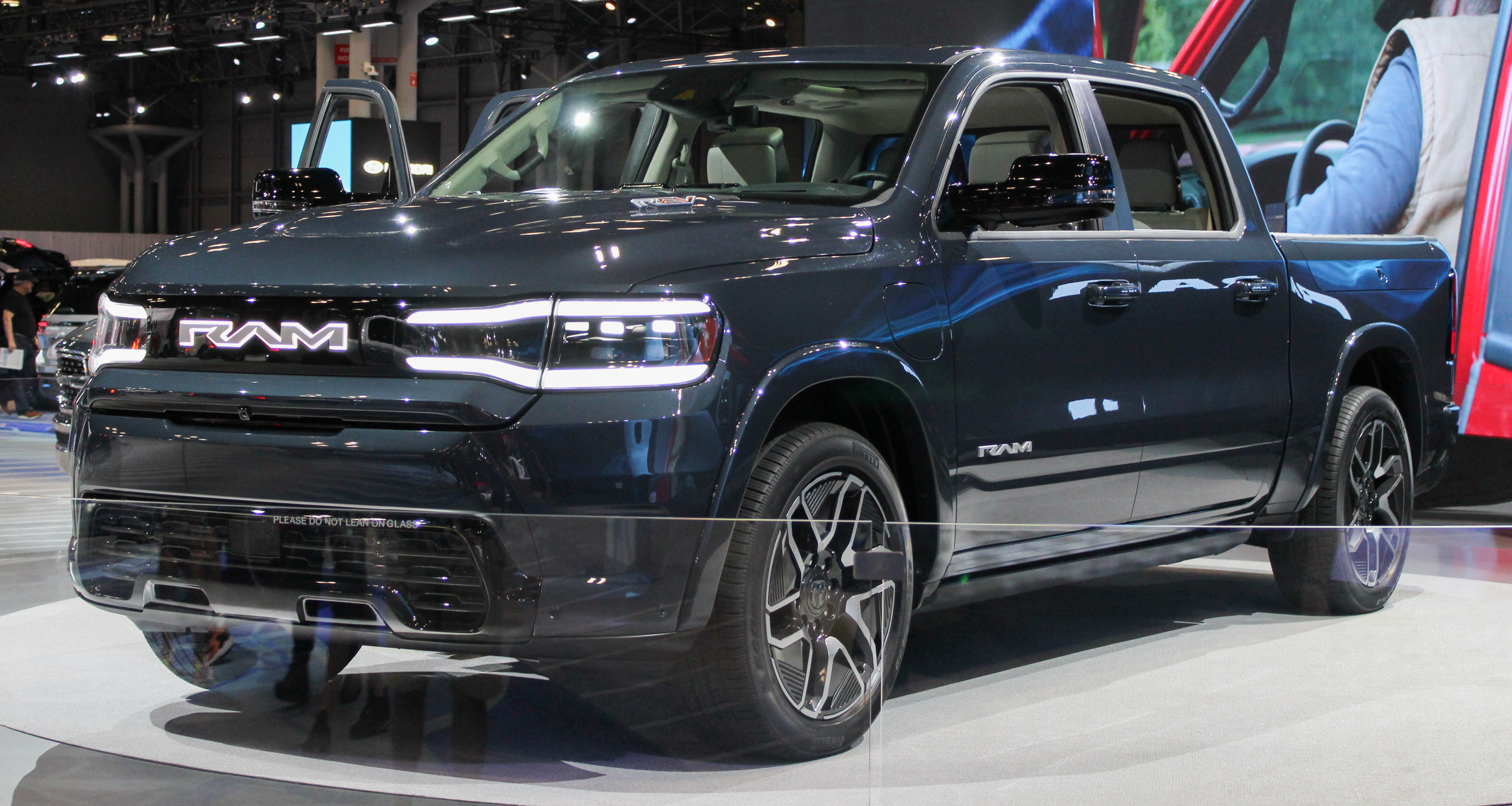
The Ram 1500 is a large truck that can be used for carrying heavy loads or towing. The 2003 version is known for being reliable and has many features for comfort and utility.
Spark plugs are small parts in the engine that help start the car by creating a spark. If they are worn out, the car might not run well or could have trouble starting.
A coil pack is a part of the car's ignition system that helps start the engine by providing the necessary electrical spark. It's important for making sure the engine runs smoothly.
In a coil-on-plug system, each spark plug has its own coil, which helps the engine run better and use fuel more efficiently. It's a modern way to ignite the fuel in the engine.
The idle air control motor helps keep the engine running smoothly when it's not accelerating. It controls how much air gets into the engine to keep the idle speed steady.
The Toyota Camry is a popular car that many people like because it's dependable and gets good gas mileage. It's a comfortable car for everyday driving and is often chosen by families.
The Ford Super Duty Lariat Tremor is a big truck that can handle heavy loads and rough terrain. It's great for people who need to tow trailers or drive off the beaten path.
The Volkswagen Jetta is a small car that many people enjoy driving because it feels sporty and has a nice interior. It's a good option for those who want a stylish car that’s easy to park and use every day.
LIVE
You're listening to an on-core presentation of the Under the Hood show.
Welcome to the Under the Hood show podcast.
Thank you very much for listening and downloading the podcast app, Russ Evans.
Who brings us the Under the Hood show podcast?
Berkeley won classics.
Your key to collector car insurance.
And road ready wheels.
Replica OEM wheels add huge savings.
Use the offer code hoodie for even more.
And by car dash part, over 200 million used parts ready to ship to you fast.
Don't forget we stream the show on YouTube and Facebook.
We'd love to have you join us there.
Here is the Under the Hood show podcast.
This is Under the Hood.
Welcome to the Under the Hood show.
We are glad to have you with us.
Russ Evans is here to answer your automotive questions.
Thanks for joining us under the hood.
So is Shannon Nordstrom.
Welcome, hoodies.
Thanks for tuning in so we can help you tune up.
I'm Chris Carter here to answer your calls at 866-594-4150.
We've got some folks that have been on hold for a little bit.
We either have Dan with a 97 Bonnie or Bonnie with a 97 Dan.
I'm not sure which.
Dan, you're on the Under the Hood show.
What can we do for you?
Hey, how's it going?
Great show.
Thank you.
So I've got it.
I've got a 1997 Pontiac Bonneville.
I've had the upper, lower and upper intake manifolds.
I've got this change and I've changed the O2 sensor.
I've changed the map sensor.
They keep giving me a P0171 code where the car will race the engine,
the codes, and then it will come back on pretty quick.
And then the car goes down the road good,
but it will die at the low RPM.
But the PVC valves replaced everything.
The plenum, I heard, can go bad.
I bought a new plenum, but they didn't put that on.
They just used the same one that was on the car.
But I keep getting that code and I can't.
Ever since I changed the O2 sensor, which I ordered online,
I've just had this problem go over and over.
And they were just chasing our tail around the circle.
OK.
And then from the PVC or the brake booster,
there's a big line that comes to that plastic plenum in the back.
And being a friend of mine that had a full scanner,
went around the intake, see if there was any leaks
spraying around it.
Well, then if I push on that plastic piece that
comes out of that plastic out of the plenum on the backside,
it will read up like it's getting air.
But it doesn't do it unless I kind of push on it
because it kind of wobbles.
What do you think on that?
I mean, on that vacuum that comes from that brake booster
to that plastic plenum, is that supposed to move around or?
Yeah, it'll move around some because it's just an o-ring
in there.
But if it reads like it's got a leak when you push on it,
then it has a leak.
But it's also probably leaking when you're not pushing on it,
just not as much.
And that'll throw a code for an oxygen sensor pretty quickly.
You can get lean codes that way.
Yeah, for sure.
It might just be that that intake is just a poor intake.
Something happened when they made it.
I mean, we use a ton of Dorman products intakes in our shop.
We replace these 3-8s, not as many on the 3-8s
as we used to, because we don't see the cars as many.
But we still do.
Well, when we get them in, we put a Dorman products intake
on it, and I have not had a problem with that.
What you do have to make sure of, though,
is that you pull that little PCV valve cap off
on the far passenger side and make sure all the parts are
in there.
There's a little spring in there and a PCV valve.
And if it's missing parts, it'll pull too much vacuum
and it'll internally leak and cause codes downstream as well.
So you've got to make sure all the pieces are in there
in the order that they're supposed to be in.
So is that something that minor of a thing
could cause all these?
Oh, gosh, yes.
An intake leak that's, let's say,
you've got an eighth inch hose on an intake.
This one doesn't have that.
But if you had that and you pulled it off of a car,
it can set a code.
That small of a leak, an eighth inch drill bit hole,
that size can throw everything off.
It needs to meter all that air, either with a map sensor,
manifold air pressure sensor, or a mass airflow sensor.
If it's got unmetered air coming in, it says,
hey, we weren't designed this way
and it'll set that code.
Just like your car was setting that code all the time,
Chris, it was just a little.
So we looked, was there a vacuum leak?
No.
What's going on here?
Mass airflow sensor, is there a leak in that air intake tube
between the sensor and the, no.
This three eight, it's right on the throttle body,
so it's not gonna leak.
Any small vacuum leak is gonna cause this thing.
And it may just be a coincidence that you put
an oxygen sensor in and it did this.
Maybe that the old sensor wasn't sensitive enough
to pick up this problem and wasn't working right.
So now he's got a good one in it
and it's setting this code.
Does that help you out there, Dan?
Yes, so you're saying on the PVC,
on the back of the, on the intake,
there's a PVC on the side of it, right?
No, it's on the driver's or the passenger side
of that intake manifold on the top.
The very last thing, on the very end,
there's a little cap there that comes off
and it's under that cap.
It's a little round cap about two inches across
and that's where the PCB valve sits.
And it's, yeah, that's, it's internal.
It's got its vacuum from inside the manifold.
Dan, thanks very much for the call.
Good luck.
866-594-4150.
Let's talk to Jim.
You're on the end of the hood show.
Jim, what can we do for you?
Yeah, I got a 2003 Toyota Corolla recently getting
like a wobbling sound on the passenger side wheel
when I get up around 20 miles an hour.
Any idea what would cause that or how I can fix it?
The old woop, woop, woop, woop sound?
Yes, yes.
Bingo.
Wow.
Jim, I feel, I felt that relief there
that you were understood.
Yes.
That's it.
Yeah.
Good.
It sounds like a wheel bearing.
Does it?
Wheel bearing, okay.
It sounds like a wheel bearing to me.
That's an O3.
That's going to be one of those press-in ones too.
Not bolt-on.
Bolt-on wheel bearing hub assemblies are amazing.
Three bolts and then a nut in the middle
and you pull it out of there.
Sometimes a little bit of a tricky ABS sensor wire
you got on plug or something.
But the press-in ones, now that's a different story.
We have a special tool now that one of our guys
came up with.
It's pretty awesome.
We just, we take the bearing,
we take everything off, the brakes,
take the axle nut off and then we put this thing in there
and you just pull it out in the car.
It's like an on-car press.
Oh, so you don't have to pull the knuckle?
No, you don't have to pound the heck out of it
to get it off of there either.
Ah.
Sweet little deal.
So if Jim brought this in with this sound,
how long would it take you to diagnose
and figure out what it is?
20 hours and about 30,000 bucks.
Okay.
We can guarantee that'll fix it.
Yeah, for sure.
Even if we have to replace the car.
Yeah, it's a, it's like a three hour project.
Okay.
Per side.
But you'd be able to tell right away.
Oh yeah, driving it and raise it up, feel it as you turn it.
Now, you know, a lot of shops and people at home
will repair that by buying a used part and a knuckle.
They'll buy the whole knuckle with a bearing attached
and say I'm buying this knuckle
because I need a good bearing.
And they'll say, oh, so they'll spin it
and they'll check it and make sure it feels good
and it's not rusted up.
And then you can just bolt the whole knuckle on,
which is three bolts and it's bolt on instead of press in.
You don't have to worry about the press in things.
That's the way a lot of do-it-yourselfers do it
at home in their driveway.
What are you gonna do?
I'm gonna put a new bearing in.
Okay.
In, because I got this cool tool.
He's got that cool tool.
Right.
But before that, I was doing it mostly
by doing the whole assembly like that.
Now, there are, there are a few
that you can get for a few cars
like Dorman products was selling a loaded knuckle assembly.
Yeah.
They're starting to see a little more of that.
Yeah.
So you can buy loaded knuckle assemblies
and pre-pressed axle assemblies with bearings on them.
That's important.
Because if you can buy a whole axle
and put it in in 45 minutes
versus pounding the heck out of the thing
and beating yourself up trying to swap it
and maybe damaging the new bearing
and it takes you three hours to do it.
It's a hundred bucks more.
Why would, you know, in some cases,
why would you want to spend that?
Save yourself and...
They're cost for the assembly.
I think you can get a bearing.
Just the bearing itself is, I'm just a guess.
I'm somewhere between $45 and $120 for a bearing only.
But that certified gold seal certified
used knuckle assembly is probably 85 bucks.
Yeah.
It could be somewhere between 50 and 100 bucks
wherever you're at and check with the miles
with the car and where it was hit.
Be careful just making sure of that stuff.
But also, don't be afraid to try
to rotate your tires and see if the noise moves.
Yes, because if you have tires
that are feather edged and cupped,
you can feel it when you run your hand over the tire.
It's don't put a wheel bearing in it
because you gotta get the tires smooth first.
Rotate the tires from front to back
and see if the noise moves.
Unless all four tires are that way.
Jim, thanks very much for the call.
Good luck.
866-594-4150.
Let's talk to Jim.
You're on the end of the hood show.
Jim, what can we do for you?
I have some old, well, it's not old.
It's about a year old.
A lot more gas or small things like that
like a leaf blower.
Yep.
I got old gas.
I was wondering if I can pour that in a car tank,
car's gas tank and it won't be a problem.
Well, if it's just a year old, just a year
and it doesn't smell horribly like turpentine,
yeah, you could probably do that
and then put some fresh gas in your machines.
I know people that do that all the time.
Once it becomes a year old,
once it gets really old and stale,
car's not gonna burn it.
But if it's clean and it's not an oil gas mixture,
yeah, people do that all the time.
They dump it out and then they put the fresh gas
in their lawn mower
and don't forget to run that piece of equipment
for at least a few minutes
because the old gas will still be in the carburetor
and that'll make it go bad really quick.
But it's oil.
There's two cycle engine on the lawn mower
for string traveling or whatever.
It's 2% but I thought if I,
I've been told if you pour it into a full tank
of car gas, it'll be all right.
If you pour it into a 20 gallon tank of gas
and it's a quart of gas out of that
or a pint of gas in a weed eater,
it's not gonna do anything.
That's such a small amount.
I got probably half or three fourths.
I got probably half or three fourths of a gallon.
That's a lot.
That's a lot of oil to put.
I would not put that in a car.
Unless it's an old one.
If it's a carbureted car, yeah, I'd probably do it.
It's not gonna hurt anything.
But in general, in general the answer would be no.
No, you don't wanna put anything in
because it gets into the catalytic converter
and causes problem.
But if you got like an older classic car
or something, I've burned two cycle oil
in different things.
But the problem is is oil burning in there
turns into carbon and carbons up the heads
and causes problems.
What you might do is get a five gallon container
that you've got sealed and put some,
like if you change oil and do enough oil changes
where you've got majority of an oil
and then put that in with it
and you could easily get rid of that
at somebody that accepts oil for oil burning.
I gotcha, okay.
You just can't.
When we put gas in our oil and our recycling often,
we'll put like a half gallon here and there.
Yeah, you just can't do much of it.
In a 200 gallon container, it doesn't hurt.
Yeah, we do that ourselves sometimes.
If not, if you're really worried about it
and you've just got that little bit.
Now this is sounding like I don't wanna hold it that long
but every year at Earth Day, at our place,
we do take small quantities of oil and antifreeze
and gas from people, but we gotta know what it is.
Cause this stuff that we deal with every day,
we take that just for that one day for people.
Then there's other places,
a lot of places take oil for their oil burners
and if you could make sure that you got that mixed in
with a quantity of oil, it'd be fine.
But here's it, that's a good question.
What if you don't?
You're just a regular person that has a three quarters
of a gallon of two cycle gas.
What do you do with it?
If it's, and you don't even have maybe a way
to use it anymore.
City hazardous waste disposal area?
They'll take it and they take, you know.
I believe they will.
Yeah, they look at your driver's license to see.
You can't go there every week, but they, yeah,
you can go, I've actually taken some gasoline
that was really bad, a gallon of it that was nasty.
Cause they take paints and thinners
and that kind of stuff from the citizens.
But it can't be mixed.
If they pull that cap off and they look in there
and they question what it is, they're not gonna take it.
They need to know, we used to take waste oil
from customers.
So then what?
We stopped.
What do you do with that?
Because we said no water in that.
And it's like two of them in a row had water.
I can't take this.
So then what?
What if the city won't take it or he lives out on it?
What do you do with it?
Lots of things you can do with it
that I can't tell you on the radio,
but none of them involve pouring it
onto the ground, none of them.
There's other ways to dispose of it,
which is environmentally friendly,
but it's not on the ground.
But you've got to find a place that recycles it.
And they will, you'll find,
if you're within the city limits somewhere,
you're gonna find a displace disposal place.
Or if you've got a mechanic you go to regularly.
If you're spending the money
and have your car worked on, ask them.
If they don't take it, they may know.
If you host, I found that if you are the host
of a radio show for 18 to 20 years,
they'll help you out, the people that do that.
Do you have a car problem?
Yeah, yeah.
Or if you, yeah.
Generally any problem.
Pretty much, yeah, yeah.
Jim, thanks very much for the call.
866-594-4150, let's talk to Paul.
You're on the end of the hood show.
Paul, what can we do for you?
Well, first of all, I'd like to say congratulations, guys.
Thank you.
Thank you very much.
It's been enjoyable listening to you guys.
You know, it's all through the years here.
And I think I know for a fact
that you guys are reaching out even further.
Well, we appreciate that.
Thanks very much, Paul.
I actually got a job out of New York.
He shipped his Tesla all the way to me
because nobody out there would touch it.
There was a coal part that he had the body shop
fix up and everything died.
All the batteries are died and nobody will touch it.
And he heard you guys and he did a bunch of research
and he found me.
Wow, I never, I never thought of that connection
when I saw your, Paul, he just recently
bought a small piece of equipment from us
that we had surplus.
And so now I realize who I'm talking to here,
but I saw your Facebook post of the car toaster
dropping off the Tesla Model X from New York to work on.
I never made the connection that they heard about us
on the end of the hood show.
Interesting.
Talking probably to you about your Tesla.
Yup, that was the connection and 2019 Model X.
We know how it goes with salvage vehicles.
I thought maybe that one was gonna be,
I thought maybe that was gonna be your own.
It's beautiful.
I wouldn't mind having one.
Well, that's an awesome story.
I'm glad you called in and told us,
as Paul Harvey would say, the rest of the story.
Yeah.
Because that's pretty neat.
Yeah, we found out and talking to Paul,
he's got a forklift business is his main gig.
And so, but he's gotten curious
and dug into these Teslas, Russ knew this
and told me, hey, go, yeah, I know Paul,
he's done this before.
And so then he came up and bought
the little Yale motorized pallet jack that we had.
And I didn't have a ton of time to talk to him,
but he had said that he was fixing some cars for people.
And we had a common connection between
Gruber Motors and Phoenix, which I had visited.
And he knew him from,
sounds like they have a closed group of guys
that are doing the behind the scenes Tesla stuff,
trying to figure out how to make it work.
And it was interesting to spend a few minutes talking.
You know, I really missed an opportunity, Paul.
I should have invited you to come with me
when we unloaded the three electric buses
at our bus garage, which was no more than a mile
from where we were standing.
Yeah.
I really missed an opportunity to not just say,
why don't you come up here and check these out with me?
But, well, next time I'll do better.
Well, there definitely will be a next time.
All right, well, awesome.
Well, thanks for the extra.
Thanks very much for the call.
866-594-4150.
Let's talk to Ken in Idaho.
Ken, you're on the end of the hood show.
What can we do for you?
I have a 2003 Ram 1500, which is 4.7 with 291,000 miles on it.
And I've done a tune up on it.
And I put everything back together and now it won't
So I thought, well, this is an original one.
So I replaced it.
That's not it.
I can't figure it out now.
So I wonder if you guys can help.
I've had a few people that have run into this problem.
And it's not one thing that does it.
You've got to go back and look and see,
did a part get put on it to replace a worn out part that's
just no good and causing this problem?
When you go putting plugs and wires and things on
is one of the plugs bad.
And the original ones were good.
They were just worn, but they were functioning.
And now you've got one that's truly dead.
That happens.
We've had multiple things that can cause these issues.
Or did something get pumped causing a vacuum leak
when this happened?
Because the changing of spark plugs and wires and caps
and things should not ever affect your idle
as long as you're replacing them with as good or better a part.
There's no relearn or anything like we talked about recently?
No, that's pretty straightforward like that.
If you change, if you've got a vehicle with a fuel filter,
which would be older than this,
sometimes when those are changed
and dirt gets introduced in the system
and you can have issues there,
but that's not the case in this one here.
And I would have went down the same path as Chris
thinking about that they had to relearn,
but you probably never disconnected power or anything
during your tune-up, correct?
Yep.
Yeah, so unless we had a failure somewhere,
what did you do as part of this tune-up?
What was replaced?
Plugs, wires, cap, rotor?
No, it was the coil pack.
The coil pack?
The coil pack we replaced.
And then...
Oh, that's a 4-7.
No, a 3-4-7 would be a coil-on plug.
Yep.
Yeah, we were thinking of the little bit older ones at first.
So, yeah, if you replaced all those,
it shouldn't have changed anything.
There's zero relearn, nothing electronic to mess with.
It may be that one of those is dead
and you're gonna have to scan it
and see if it shows a misfire on a cylinder.
And that would tell them right away, right?
Yeah, yeah, that's where I'd go next.
We're gonna have to scan it and see what's going on.
And let's say it had an idle air control motor fail,
just coincidence, by touching it, that can happen.
Ken, thanks very much for the call.
Good luck.
The Under the Hood Show podcast
is brought to you by exclusive sponsors
like Berkeley One Classics, celebrating 50 years,
your key to collector car insurance.
And by car-part.com with over 200 million parts,
find them online at car-part.com.
And by Road Ready Wheels, OEM replica wheels
at a huge savings, roadreadywheels.com.
Thanks for listening to the Under the Hood Show podcast.
We wanna tell you about our partner at Road Ready Wheels.
Road Ready Wheels has the very best
aftermarket OEM replica wheels available
with a direct fit of the factory center caps
and TPMS sensors, so you don't need special caps and sensors.
Simply transfer yours over when you replace the wheel.
With near perfect ratings on Google, Amazon, and eBay,
consumers like you are extremely satisfied
when it comes to Road Ready Wheels.
Maybe your wheels leak air
or maybe you wanna upgrade from an old rusty steel wheel.
Road Ready Wheels has both aluminum alloy
and new steel wheels to fit many cars on the road today.
They stock thousands of wheels ready to ship
and have free returns and shipping,
plus save 10% more when you use the code hoodie at checkout.
Aftermarket wheels can be very expensive
and it's so hard to choose what you want.
With Road Ready Wheels, you get an OEM looking wheel
that fits like it should, but costs much less.
Save money today and get yours at roadreadywheels.com.
Special discounts apply for large quantities
and dealers and they have a special electronic data feed
and online portal waiting for you.
Find out more by going to roadreadywheels.com
where you can use their online vehicle selection tool
to find your Road Ready Wheels today.
That's roadreadywheels.com.
When I got my first specialty car,
I called up my agent and had him
put it under my regular auto policy
and had very minimal coverage.
Even dropping coverage in the storage months
to keep the cost down.
That was before I met the professionals
at Berkeley One Classics.
I'm Shannon Nordstrom, host of the Under the Hood show
with Russ Evans and Chris Carter.
Berkeley One Classics ensured me
with an agreed value policy.
That means if you suffer a loss,
there's no haggle over the value of your vehicle.
They also show me that I could ensure my vehicle
for what it was really worth
and keep my coverage year round and still save money.
I did not know that my homeowners policy
did not cover my car
when it was stored in my garage for the winter.
For 50 years, Berkeley One Classics
has ensured a wide range of vehicles
from sports cars and rare exotic cars
to antique vehicles including cars,
trucks, tractors and motorcycles.
Berkeley One Classics makes it easy to get a quote.
Just visit them on the web at berkeleyclassics.com
and use their online quote tool
or give them a call, 1-800-603-3330.
That's 1-800-603-3330.
When you need parts for your car,
finding them is half the battle
and we have a great source for you
to find those parts you need at great prices.
If you need parts, whether it be for a brand new car
or going back about 20 years, it doesn't matter,
check out car-part.com.
It's fast and it's easy.
Over 200 million parts strong all across North America,
over 4,000 recyclers to choose from,
giving you the largest selection available.
Whether it's an engine, transmission,
doors, seats or wheels,
you can find them on car-part.com.
We even let you know what parts from other models
and years fit your car.
Many recyclers supply pictures of their parts too.
We even have a mobile app.
Search US and Canada
or buy from your local independent recycler.
Whichever you choose, buying recycled
is good for the environment and good for your wallet.
If you're a repair shop,
there is a professional version available for you
at no charge.
That's car-part.com, car-part.com.
Check it out today.
Welcome back everybody.
It's time to get back under the hood
with a motor medics.
Let's talk to Frank.
You're on the under the hood show.
Frank, what can we do for you?
Yes, I have an older 72 cmc backup
with a 350 motor and a 350.
I do a triple transmission
and it's been in storage quite some time.
And I got it out and it's running everything
and I'm going to change the train.
I want to drop the transmission fluid on out of it
and put fresh in.
Is there any advantage of going to like a deck six
over the original ATF or just stay with what's in it?
Okay, so you got a 1972 Berkeley classic GMC.
Pick up with a 350 and an automatic trans
and you want to change that transmission fluid.
So I wouldn't, hmm.
It's a good question, huh?
The reason I wouldn't go with the synthetic upgrade
for that for the deck six
is because I'm worried about leaks
because of the age of it and everything.
Unless, you know, if I'm rebuilding one
and it's brand new and I'm putting it in there today
I'm going to go with the better fluid.
But because this is an older one
and we're just doing a fluid change
I'm going to change the fluid
with the original Dextron three fluid.
I don't want to go with the synthetic
because I'm concerned about fluid leaks.
I don't want those, especially a pump seal leak
because then you got to pull it out
which isn't too hard in this 72 GMC
and rebuilding it, if you pull the whole thing out
and took it to a trans shop and set it on the bench
and they rebuild it for it's probably going to be
12, 1300 bucks to have them rebuild it.
They're pretty affordable, but you don't want to do that
if you don't have to.
I'd stick with a plain old factory Dextron three.
Okay, that's what I wanted to know
is just your opinion on how that would work.
Hey, this 72 GMC, we've got a game we like to play here
and it's called, you know, guess the color
on the Berkeley classics.
So don't tell us the color here.
One of our partners, Berkeley classics insurance.
We'd like to guess this.
So I'm thinking this 72 GMC, is it all original?
I mean, that's all.
Whoa, whoa, whoa, whoa.
No, you don't get to.
Doesn't matter.
Yeah.
Okay, it's gold.
It's blue.
I'm going to say it's orange red color.
Frank, what color is the truck?
It is a blue one with a white insert.
Nice.
Well done, Ross.
Is that all original?
Now you can guess.
Yes, it is.
Okay.
Yeah.
Well, then it qualifies to be a Berkeley classic.
Absolutely.
Even if it's not original, but.
Frank, thanks very much for the call.
Good luck.
Yeah, that's when you just, because of the new oils
are going to be, or the, yeah, the new fluids
going to be more uniform and not.
Yeah, it's just, it tends, it's fully synthetic fluid
tends to leak more than non-synthetic in a older
vehicle that's been running regular fluid.
And new cars, everything's running synthetic pretty much.
So.
866-594-4150.
Let's talk to Bruce here on the end of the hood show.
Bruce, what can we do for you?
Yeah, hi.
So I have a 2006 Toyota Camry.
It has about 93,000 miles on it.
And when I bought the car, I noticed
that one of the calipers, the front passenger
caliper was kind of sticky.
You could feel it pulling, and then I would get out and feel
it, and it was hot.
So I decided to go ahead and just replace everything
on the front end on both sides.
New calipers, new shoes, new rotors, the whole nine yard.
And then I put it all together,
and it was still pulling, or still grabbing.
So then I went and replaced the actual rubber brake lines.
There we go.
Thinking that would have fixed it.
And I still seem to be having the same problem.
Now just to let you know, I do have custom wheels on there.
So the rotors and everything is exposed to the elements
a little bit more.
And I very rarely ever drive this car, so it sits.
And the rotors will get rusty looking
because I'm just not driving it enough.
So I'm not sure what's going on here.
I don't have any ABS light coming on or anything like that.
So I just I don't know what it could be.
Raise it up off the ground on jack stands.
Start the car and pump the brakes like 30 times.
All the way as far as you can.
And then hold it down tight for a minute.
And then get out of the car and walk around
with that brake released.
And see if you can turn the wheel freely.
If you can move it freely with your hand, it's not sticking.
But if one side drags and the other side doesn't,
at that point, you'll want to just crack the bleeder screw
loose on that wheel a little bit and then close it
and then see if it turns free.
If it does, the caliper is not sticking
because you've released pressure and the caliper moved.
It released.
So that tells us it's got to be in the brake hose
or further back.
So the next step then will be to repeat the process
of pumping up the brakes and holding it.
Make sure the wheel is dragging again.
Then we're going to crack it loose
where the metal line meets the rubber brake hose further up.
And if it again releases it, then we
know that it's further up the line.
But if it releases slowly, then we
know that there's something going on in that hose.
Then the next thing up the line would be your ABS pump,
which valve could hang up in that and cause that issue.
But usually it's going to be something further down the line.
But the first thing we want to do is get it off the ground
and verify that they're actually dragging.
One is tighter than the other side.
And it could be a little bit of rust
causing that to feel that way.
But these cars don't have a lot of problems.
The biggest problem we see is when people do a brake job
at home and haven't replaced the hoses
and they just take the caliper off and they drop it
and they let it swing from the hose.
Hang there like a pendulum.
Yeah, it pulls the inside of the hose
and it stretches it inside.
It makes the hose constrict in there.
And then when you put it back on, it's even worse.
Yeah, I did use the caliper hangers when I did do the job.
Great.
But it's very peculiar because sometimes when I drive it,
the RPM's running up to like 3,000 RPM
because it thinks I'm climbing a hill or something.
That's tight.
And then eventually, yeah, eventually it will break loose
and the rest of the day it's fine.
But it's like starting out when it's cold,
everything's cold, they seem sticky and grabby.
And then as I go, it loosens up and rolls just fine.
Yeah, I'd want to know if that's if...
And another thing you do too is when it's tight like that,
if you put it, just get in the car and you start it
and you roll a couple of feet and go,
yeah, it's doing it right now, put it back in park
and then you could go right to your master cylinder
with a wrench and just crack each side,
open the front and the rear for the pressure,
you don't know which one's front,
so just crack it open and close it on both of them
and then get in the car again without touching the brake,
just enough to get the shifter to release and move it
and see if it's free again.
If it is, the pressures at that master cylinder holding it,
which means your master cylinder is sticking
and a few of those, we've had a problem with the pedal
and the rod inside.
They've been changed over the years
and for some reason, not all of them
that were manufactured, depending on when they were
manufactured, the rod has to be shortened up
just a little bit, like an eighth of an inch,
which is not much, but we've taken them out
and we've ground them down a little bit,
put them back in, because they don't release
all the pressure.
They just, just what happened when they got
a new master cylinder put on them,
so there's a difference in the rod inside
and what the master cylinder takes.
Does that help you out there, Bruce?
That sure did, thank you for your time, I appreciate it.
Thank you.
Thanks very much for the call.
That was nice to listen to,
because Bruce knows what he's doing.
And you were able to give him, that was,
it was not helpful to me at all,
but it was interesting to hear that happen.
I like calls like that.
You were tracking though.
Yeah, I was tracking, yeah.
866-594-41, 5-0, let's go to Arizona
and talk to Walter, you're on the end of the hood show.
Walter, what can we do for you?
Hi, thank you for bringing your great show to Arizona.
You're welcome.
Thank you for listening.
I'm calling regarding a 2001 Ford Super Duty
with the 7.3 liter power stroke.
And what I want to ask is if you're familiar
with the scanners and readers to diagnose these vehicles,
because unless the unit has what they call a Ford package,
it just basically, what they sell out there,
it reads a little bit, but it doesn't do the system.
Meaning like check, like buzz the injectors
and things like that.
And can you recommend any good brands these days?
Yeah, for one that's gonna do what you need,
you're probably gonna need to get into like an
Autel scanner or something like that
that's a little higher than the basic code scanners
that do OBD2 and you can get, some of them will come
depending on the investment you're making it
with the software package in it
that'll cover up to the current year,
like now it'd be 23 or 24.
Other ones you have to buy a package for your vehicle
and you could buy it one time,
which will cover what you have for,
it'll have all the current stuff in it.
Some of them come with, you get one vehicle.
You can put one vehicle in,
but if you wanna get extra, yeah.
As soon as you buy it, you go online and you download
and it says, okay, which one or two vehicles do you want
and you put it in and that's what you're stuck with
permanently unless you buy more.
But that's what you're gonna need,
but I always tell people, go to YouTube,
look at that model scanner and see that other people
in the real world are doing what you wanna do
with yours and often they'll-
And what are they using?
They'll review it very well and say,
well this one won't work for this Ford
or for this Chevy, your Chrysler, Toyota.
Unless you buy this with it, so beware of that.
You don't wanna go out and just spend the money
and purchase one.
Are you having problems or are you just generally curious
and wanna be prepared?
Yes, I wanna be prepared.
And also I know it's an old vehicle,
meaning 22 years old and a lot of mechanics,
they don't know how to work on these older 7.3 liter diesel.
So that's why I want to check into it.
So at least if I could get a reliable reader or scanner,
I'll have a starting idea to present to the mechanic.
And this is Walter, I think you're the perfect candidate
for this and getting that nicer one
that does what Walter wants it to do
is gonna probably pay off for him.
This isn't someone who has a code
and wants to just read it, right?
I mean, this is where the investment would be worth it.
Well, and if he's keeping up on his fuel filter changes
and his oil filter changes using a high quality oil filter
like the Ford Motorcraft or Wix or there's other brands.
I mean, these diesels are very imperative
on having the oil system work correctly
and the fuel system work correctly.
If he's doing all that, with a 7.3 diesel,
you're not visiting the mechanic very much.
Right.
Pretty solid engine.
I mean, that's, they were lauded.
I mean, they were, that's not a word,
but they are just praised in the diesel market.
And then, you know, Ford switched that in over two mid-year.
They went to their six liter
and then they created another challenge
for the industry at that point.
Yeah.
Walter, thanks very much for the call.
Good luck.
Let's talk to Bob.
You're on the end of the hood show, Bob.
What can we do for you?
Yeah, I have a 2017 GMC 1500 with a 5.3 in it.
Last spring, the voltmeter would intermittently drop down
to just above 12 volts.
I put a voltage voltmeter on it
and I was reading 12.5 on the battery.
I replaced the alternator.
Now it is starting to do it again
and it's very intermittent.
It'll drop down to where it's just 12.5 volts again
and then bang, it just jumps right back up to 14.
Have you encountered anything like that?
Are you having problems with the vehicle not starting
or anything else?
Are you just alarmed by the fluctuation?
No, I'm not having any, by the fluctuation
and the fact that when it did it the last time,
I just went and put the voltmeter directly
on the battery and the battery voltage was only 12.5 volts.
When the voltmeter jumps back up to 14,
so does the battery voltage.
But I am not having any trouble starting the vehicle.
Well, it's all computer controlled.
You got a volt, you got a volt sensor
that's sensing that in the computer
and it's telling it how much to charge
and when to charge and all that.
So if you've got a problem in that sensing system,
that'll do that.
If it thinks the voltage is correct,
but it's not, it won't give any kind of code.
And a lot of times it won't even show that,
code won't turn to check engine light on,
you've got to scan it with a scan tool
and see, so that's the first thing I'd do
would be to scan it and see if there's any history codes
in there or pending codes.
That'd be great if it told you
that you've got a battery voltage sensor issue on it.
Some of them that used to have an inductance sensor
on the positive cable,
but then they've gone away from that now
and they're sensing it a different way,
but yeah, that's probably what's going on.
It may not cause a problem.
It's meant to charge at different rates as it's running,
but it's meant to keep the gauge on the dash steady.
So if the gauge on the dash is steady in the same place,
but you're reading that by checking
with a volt meter on the battery,
I probably wouldn't worry about it at all.
But if you see a fluctuation in your gauge inside
where it's 12 and a half and then 14
is jumping back and forth a lot.
Yeah, when it's doing that a lot,
something's a little off
and it may be that the alternator,
you've replaced the alternator to fix it.
It may be the alternator's failing again.
We put a significant number of alternators on those vehicles
so it's possible that's what's going on.
Okay, well, thank you, sir.
You bet.
Thanks very much for the call.
Sometimes you can see it in your headlights.
You pull up against the building
when you're pulling in,
you're like, where are my lights going bright and dim,
bright and dim, and then you know
there's a failure and most of the time
it's an alternator going out.
866-594-4150, let's go to Michigan and talk to Kim.
You're on the Under the Hood Show.
Kim, what can we do for you?
Oh, hey guys.
So I have a 2016 Volkswagen setup with a turbo engine
and I bought it brand new myself and I'm the only driver.
And I've driven it back and forth
throughout the country all over the place
and it was a great vehicle
but now it is burning oil and thick smokes
coming out the tailpipe so I took it to the dealership
and they said it is a piston ring failure
and it's something that I looked online
and I guess Volkswagen is known to be having this issue
with the turbo engine for the year,
couple of different years of vehicles
that they've manufactured
and I was quoted $10,000 for repairing this
and they didn't say how they were going to do it
but other people have said I just need to
entirely replace the engine.
Is this truly a $10,000 repair?
Is it something so hard?
Or am I just, you know, I'm a woman
am I maybe being lied to?
Well, there's a lot going on with that.
Yes, it is a problem with the piston rings.
It's more of a, they've changed oil formulas
and a lot of manufacturers are having these issues now
with these engines so they've got to change
the way their engines are built in order to compensate.
So people are having these failures
and they're costing them money during the,
you know, they're out of warranty
so they've got to be done.
If you have the dealer do it,
$10,000 is a pretty fair price.
They're going to probably replace
the whole long block engine.
You can have it done at another repair shop
where they'll put a certified used engine in one.
I just finished one yesterday in our shop for this
and it was, it was like along the lines of 7,500.
But it's still, that's a pretty expensive out of all cars.
That's one of the more expensive engines on that to do.
But it's, there is no fix.
You can't buy pistons and rings for those as far
as I'm aware to take them apart and repair them.
So your option is a certified used one
or that brand new one.
But because of the value of the car
which is still pretty high on those
we'd probably go with the certified used one.
And if you're in the market after it's repaired
because it'll bring more money with it running
I would probably think about moving on to a different one
so you don't have this problem again.
So the short answer is it's not her, it's the car.
No, it's the car and warranty companies
don't want to cover it
because they claim it's a known issue.
Yeah, and you can always get a second opinion
just to make sure.
The fix is to replace it one way or another.
You can't just go out and buy piston rings
and pistons for it.
Let's say you could.
Let's say I gave you a set of brand new piston rings
and pistons right from Volkswagen.
So this is just for fun.
Yeah, just for fun.
Let's say you could.
And I'm handing you the parts say, here you go.
If you were to go to a repair shop
and have those put in
it's probably gonna cost about $6,000 to do it
to pull the engine out completely tear it down
put those parts in, put it all back together.
So you see where I'm going there
that's pretty expensive too.
So if you get what we call a certified used engine
so when our shop does them,
of course we're in South Dakota
which is far away from where you are
but if we were doing it here,
this one we did yesterday
we bought a certified used engine.
It was shipped in from another facility.
It wasn't in ours and then we install it with a warranty.
Kim is not going online
and looking for a certified used engine.
No, no, no.
Her shop was.
Their shop, whatever shop she wants.
She could investigate herself
to figure out where the market is at.
And if you don't know,
if you don't know where to go for a shop,
if you've been going to the dealer
because obviously you went there for this first repair
to find a shop what we suggest
we use AutoZone as a commercial partner of ours
and we tell our customers if our listeners
not our customers
but because they're already our customer
we're using AutoZone.
If you're looking for a shop
so AutoZone sells to literally hundreds of commercial
you've got them all over in your area
and they're selling to hundreds of people shops
not just do-it-yourselfers that are repairing their cars.
So they'll know what shop orders a lot of parts
for Volkswagen's.
And what shop is, you know,
oh, hey, we went in there delivering parts
and they got a Volkswagen on the hoist all torn apart
and they do this a lot.
So they, and they may even know them a little more
intimately than that.
They may talk to these guys a lot
like our drivers, they come in,
they know who we are,
they know what we work on.
So I would suggest asking them
who they think might be a good place to do
major engine repair on a Jetta, on a 16 Jetta.
And they should be able to help you out with that.
Thank you guys so very much.
You're very welcome.
Thanks very much for the call, good luck.
That'll do it for another hour of The Under the Hood Show.
Thanks for joining us.
Don't forget, you can watch The Under the Hood Show
on our YouTube channel.
For Russ Evans, Shannon Nordstrom, I'm Chris Carter.
Thanks for joining us on The Under the Hood Show.
With Russ Evans, this is Shannon Nordstrom thanking you
for tuning in to The Nordstrom's Under the Hood Show.
Have a great day and remember, PTLA.
The opinions heard on this program
based on the many years of experience of Russ and Shannon
are offered for entertainment value only
and as a guide to your repair needs.
No claim to repair or cause is given or implied.
Always consult with your own certified technician
and follow all safety procedures
before attempting any repair.
To be a part of the show, call 866-594-4150.
Find out more by visiting Under the Hood Show dot com.
Under the Hood is produced by Prairie House Productions.
All content is the property of Nordstrom's
Automotive Incorporated
and may not be used without our permission.
Copyright Nordstrom's Automotive, Inc.
About this episode
Listeners get live automotive advice as the hosts tackle various car issues, including a persistent P0171 code on a 1997 Pontiac Bonneville, a wobbling sound from a 2003 Toyota Corolla, and oil burning in a 2016 Volkswagen Jetta. The team discusses troubleshooting techniques, the importance of proper part replacement, and the nuances of older vehicles. They also share insights on brake problems, engine repairs, and the best practices for maintaining classic cars. The episode is filled with practical tips and real-life examples from callers seeking help.