Yeah, Chris is not here this week because he's like dying of a cough.
He claims he isn't sick, he just is coughing too much, which I don't know if he's just
too proud to admit that he is sick.
No, you know what it is?
California got him sick.
It's California's fault.
That's right.
He didn't say that.
Yeah, he told us it's the dust from California from being at Camp Overcrest last week.
He claims that he ingested a lot of dust and therefore he is ill.
Which I think we all probably inhaled the exact same amount of dust, so I don't know
what that excuse is.
Anyways, that said, that's exactly what we wanted to talk about this week.
We have been head down, busting ass for months, really, but especially the last couple of
weeks before this when we were on the ground in Monterey, where we set up Camp Overcrest
and Sports Car Vacationland, which was the antidote to Monterey car week.
And I feel like, Jeff, we should zoom way out.
I always like assuming, like, oh, if someone's new to the podcast, let's start there, right?
So like what was the vision for Sports Car Vacationland and how would you kind of illustrate
that?
Yeah, for those who've never been to car week, Monterey car week, it's every August
in the middle of the month.
Or even those who maybe haven't been there for like 10 years or so, what's happened
with car week over the last 10 plus years is things have become very untethered from the
automotive enthusiast.
For people who actually like driving cars and people who tend to be into more of the enthusiast
culture, what has happened is the caliber of car and the type of car that really gets
featured and celebrated there has become extremely exclusive, extremely expensive to the
point where you see these events, things like the quail being $1,500 plus to attend.
Just to attend, yeah.
Yeah, for a car show for a day.
And they're at very nice golf courses, they're in very stunning environments.
And not that there's anything wrong with that, but as a whole, car week has really
kind of shifted and moved that way.
You still have the historic at Laguna Seco, which is super, it's awesome, it's incredible.
There are still a lot of really cool events around car week, but as we've noticed and
noted now, things have maybe gone away to the more ritzy, exclusive hypercar culture.
I think it's always been very like exclusive high end because the one event that stands
out that I knew by name years ago was the Pebble Beach Concourse at Lagunce.
And so that was kind of like one of the main anchor events of Monterey Car Week.
And then it became kind of this mecca where like all of the big events in the automotive
world take place out in Monterey during this week.
And so it's always been kind of the highest of the high end, but I think it's to
your point gotten out a hand where now it's like, it's not accessible for normal
people to go out there if you want to see this.
Even if you do want to throw on, you know, a sport coat and go kind of cosplay as a
millionaire and just to kind of see and be around all this, which I don't think
our type of person wants to do anyways.
And yet you want to see car week and experience it because it's a cool experience.
And so that's what we set out to do, right?
Was to make something a more accessible and be really almost a reset or something
aimed more at the, the every man, the actual easiest.
Overcrest doesn't really do car shows.
It's been like we've always said, we don't want to do car shows.
That's not really our jam.
And there's, I mean, hey, there's hundreds of car, thousands of car shows you
can go attend if you want to stare at cars.
We're, we're much more kind of linked to the driving of the cars.
And that's what we've, we've done at our events.
So there's two big requests that we've always gotten.
One is do something in California, please.
So I don't have to leave, you know, my state.
And then the other request that we've gotten is do something that is accessible.
And we hear that because, you know, the rally has just grown in popularity
so much that we are only able to allow in a fraction of those who apply.
And I know that for you, I, Chris, Stephanie,
we just, we feel the pain every year when we have to say no to so many great people.
And that sucks.
So we wanted to do something that, hey, anyone can come to this.
You can come hang out, you can come be with the Overcrest community
for most of the week, which you can talk about that, Jake.
But we created that and this was year one and it was awesome.
Yeah, it was a lot of work.
It was awesome.
It really what I loved.
And I think this was, I mean, this was obviously your kind of your,
your silo or your area to manage was the artist side of things and creative
and how it really was a celebration of, OK, if we're going to do, quote,
unquote, a car show, it has to be Overcrest.
It has to be something that's more dynamic and interesting.
And a lot of that is, you know, bringing in some of these creators and artists
and we could maybe kind of go down the line and just talk about what was there
because I think some of it was so cool.
And you've probably seen, you know, everyone listening
has seen on social media some of these things, but maybe it's more interesting
to talk about how they came about or kind of the behind the scenes.
Yeah, I don't know where we even start, but.
You know, for those on the outside looking and wondering what it was,
we were at a working winery, which people hear winery
and they think Guji Northern California wine.
This is more of like a farm.
Think of it like a working farm.
It was dusty.
It was a little bit dirty at times.
We more or less took over a lot of buildings
that were being used with tractors and storage and whatnot.
And so this space was was outside of car week by what,
an hour or so up in the depending on, you know, the traffic.
And so it's it that's very on brand for us.
I think it was by a design that it took a little bit of sacrifice
to get there. And guess what?
The drive there was amazing.
Everyone that came out was like, oh, my God, these roads out here.
Like I didn't know it was going to be a rally to get out here.
Yeah, it's funny talking to Jeff's work.
He was like, you know, he's like, I put the pin on the on the
count, you know, on the Maps app to drive out there.
And I was like, oh, my gosh, this is going to take me so long.
And then he's like, and then when I turned up Kishawa Road
and he's like, I got three minutes in the twisty, he said,
oh, I see what they're doing here.
And and he's had a great drive up.
So yeah, part of it was we asked people to pay a little bit of a price
to get up there, you know, they're going to have to do some driving
at spirited road with some twisties.
And you had to get a little bit of the overcrest experience.
Yeah, 100 percent.
And then as you as you came in the gates, you know, we had
well, the first thing I guess you're going to see are hay bales.
And I kind of I'm trying to think back to whose idea this was.
I think I need to blame you.
Yeah, because we wanted to do something to tie the event together.
And, you know, the more like the juxtaposition of having a cool car
and then having it anchored by something that is more.
I don't know, natural.
And so hay bales was a really cool idea to have a set piece background.
And I was going to tie all these other components together in the show.
Yep. Well, hay bales are this really interesting intersection
between motorsport and rural life.
And so you've got this is where the idea came from really was the idea that.
So, you know, you've seen in the good wood and all the old rally footage
and whatnot, people use hay bales as barriers in motorsport
and and lots of racing, different kinds of it.
But then, you know, overcrest is really about getting out in the middle
of nowhere. It's about exploring off the beaten path.
And, you know, invariably where we go, there's lots of farms.
There's lots of rural life.
And so hay bales kind of became this this really cool cross
between the two worlds that we used to use as a brand element.
And so with that, we thought it'd be a great idea.
Let's bring in a bunch of hay bales.
And so we ordered 600 of them.
Yeah. And they turned out to be a little heavier than we thought.
It was literally a full semi truck load full of hay bales.
And the property was, you know, so remote down this awesome road
that they couldn't bring an 18 wheeler down there.
So they had, I think it was eight trips where they had to unload
the semi truck onto smaller like delivery trucks and bring them in one by one.
And so 600 hay bales that weighed.
I don't know what they even weighed.
80 pounds a piece, maybe.
Yeah, about 70 to 90 pounds each hay bale.
It was it was a herculean backbreaking effort to get all these in place.
We yeah, we were lucky that we had, you know, Ian and Chase and Ben
and people on our team that just kind of stepped up and said, I'll do that.
And they lifted a lot of hay bales.
Shout out to the bale boys.
The bale boys.
Yeah. So we move, you know, that's maybe a little bit
behind the scenes.
But when people arrived, you saw a large hay bale,
lots of sets of hay bale walls with signage on it.
And it really set the scene and the tone and kind of framed the entire show
was having hay bales and cars and then, of course, artists and artists.
And so I think, you know, for lack of a way to structure, you're talking about all this,
I like the idea of just kind of walking through it
and maybe talking about a little bit of, you know, when you go through a museum,
you can like buy extra, you get the little earpiece and you'll hear about the exhibit,
you know, as you go through, that's what I want this to be.
OK, so you can you can think back and you're going through it.
So did you know that there were over 600 hay bales delivered to the property?
But as you come through this and you saw what you called the chicane.
So after the big hay bale wall where you literally had, you know,
these hay bales to kind of make it a sort of motorsport chicane,
which is really cool.
And then you saw some of our branding and I don't know why we do this.
It is extremely cool, but it's always every time I'm like, that was it.
We we literally hand paint.
I say we it's mostly 100 percent you we hand paint buildings.
This is not vinyl.
This is not washable paint.
This is permanent paint that you painstakingly hand paint multiple murals
and brand everything.
And then literally the day after the event, we paint it over.
Yeah, I have all the photos and the calluses to prove it.
So this is a little bit behind the scenes for folks.
We showed up Sunday before the show was on Thursday.
We showed up Sunday and I think, you know, all of us, Jake,
we felt the like clock ticking.
It was like 100 percent show up, get to work.
So the first night I penciled out all with three large scale
murals on the side of these barns of buildings.
I penciled till about one a.m.
The first night just, you know, mapping everything out with Chase
and you helped a little bit.
And we got that done the second day.
I got up at six thirty a.m. and started painting.
And I took a little bit of a lunch break, but pretty much painted till 11 p.m.
That day it was it was a lot of black paint.
And, you know, invariably, you'd take something like that on.
And, you know, you're you're in hour one, hour two, going,
how is this ever going to happen?
Like, I don't I don't know if we can actually do this.
And then when it's all sudden done and people show up,
you know, every time we go, that was totally worth it.
It was so cool. It was so unique.
And so, you know, do I want to do it again again?
No, but but it was so great to have it.
And I know a lot of people will see that, but it is interesting.
And I think what makes it special, it is just a moment in time
because what's painful for me is the next day, literally taking
a roller and painting right over it like nothing like it never happened.
Like it was never there.
Five gallons of white paint.
We painted all back to normal.
Yeah, it's yeah.
It's crazy that we've done that.
So we had the big murals, one of which was our wheel museum,
which was a really cool exhibit partner with WheelPrice and had a lot
of other cool people, you know, awesome people helping with that
to build that entire room out that was OK.
Here's a little behind the scenes.
When you walk through the WheelPrice Wheel Museum at Sports
Garbication Land, what you were walking through was a horse stable
that when we arrived was full to the brim as a wood store shed.
Yeah, like hundreds of boards.
We had that we had like 15 to 20 friends help us clear it out.
And we did it in under an hour.
We cleared the entire thing out of a swarm of activity
and people that just came and grabbed a few two by fours and moved them.
And it was amazing how quickly we were able to get that place cleaned out.
You and Jason Larson did a ton of work
and then Pele as well on the Wheel Museum, and it turned out awesome.
And I think you should just describe people, you know,
what went into that and what it was.
Yeah, so what, you know, the vision here was to have
and I realized what was it?
It's it's not a museum.
It should be called a gallery.
Yes, but museum sounds cooler, but it really was a gallery
because it was not like the best or most influential wheels of all time.
What we had was, I think, 15 wheels that were selected
just as being like cross sections of automotive culture, motor sport,
just to kind of shine a light on like, look at all these
kind of different, cool, unique facets of things.
And a wheel is like a literal perfect representation of automotive culture
because it's a literally what the car moves on and be it is so distinctive
and so expressive, right?
It's the first thing you customize as a car guy, you get different wheels for it.
So yeah, we had to figure out.
We had some awesome partners and friends that, you know,
lent us these wheels to use, one of which was a Formula One wheel off
of a Honda race team from like circa 2001 or something.
And another one was Benetton.
Benetton car, yeah.
That's what it was. Thank you.
And, you know, then we had Ken Block, Skimkana six,
the vehicle that was in that video.
One of the wheels from that car.
We had, I think it was Richard Petty's Daytona 500 winning.
You know, what was that that would have been the Chevy?
We had that wheel there.
So first of all, I say all this to think, OK, hold on, we got to.
I got to make these secure somehow.
Like we can't just set them in a room and like people can like
walk out with a wheel and be like, what happened to that?
Oh, sorry, you know, partner that lent us this and trusted us with this.
So I ended up fabricating, making, researching.
There was a couple that I found.
Actually, I was about to make like these these mounts for wheels,
but I wanted it to spin.
And so I was going all out and like I had all my welding rig
ready and how I was going to bolt these together.
And I looked online and I was like, oh, yeah, you can get these
from China, Alibaba.
And there was only like a handful.
So we had the Dayton 300 spoke just like your classic, you know,
low rider, just the iconic wheel of that whole scene, the Dayton
300 spoke with the center knockoff.
So we had that on a spinning rig, which is such a cool wheel.
Actually, I've never like really worked with one and how it all
mounts together in the bracketry.
That was cool.
And then we also had these faced brackets for a lot of those other wheels.
We had the Wu Tang wheel, which was newest to me.
I think before we had sourced this and discussed this.
So the Wu Tang clan, of course, apparently had a like a joint.
I don't know what you'd call it.
Some collab with Raceline wheels in like 1999, 98, something like that.
And there's only two sets of these wheels ever created.
And so we got one of them from, I think, Raceline's.
Yeah, Raceline provided a wheel wheel price with it.
And we should also say, like super huge thanks to wheel price for sourcing
so many of these wheels and they make wheel prices a really cool group of guys
and they've got an awesome site, but they sourced a lot of these.
And yeah, some of it was right from the source.
BBS sent us three of their kind of iconic wheels, brand new.
We had a BBS RS01, we had a BBS E88, which is an awesome motor
sport wheel, and then we had a LMR, I believe.
Yes, as well.
So that was super star wheels.
Like there's just a lot of really cool stuff.
Yeah, some really, really rare JDM stuff that was like, that's not even my scene.
But I was like, oh, wow, these are bizarre and really cool.
And so it was it was awesome having that.
And it was literally in a horse barn.
So we had hay on the floor.
Again, just kind of that juxtaposition of like, you know, motor
sport, automotive design, really shiny elements in this kind of very agricultural
setting, which was the vibe.
Yes.
So that was super cool.
Ton of work went into that.
Hopefully, hopefully people enjoyed seeing that.
In the same structure, but it was, you know, had to enter on a different
side was the full barn.
And that barn was one of our largest kind of visible structures at the show.
We partnered with the guys from group chat in Austin, Jim Bauer and Keith and
Jed Rogers and Aaron Ross, they sent their first kind of roadshow version
of manual focus, which is an art show where they feature, you know, prominent
automotive art, they sell art, they auction it at their show, but they wanted
to do a roadshow and it was a perfect opportunity for them to kind of
bring a cross section of what they do into sports car vacation land.
And they transformed the inside of this barn into just a really cool space.
And they had, you know, everything from, you know, prints from, from Sid,
your friend Sid and, you know, sculpture piece from ornamental conifer
and just all kinds of really, really cool stuff, both for sale and just
to look at, they brought in a barn find 9 11 that was non running.
And I heard that was Jim's, what was it?
What did he say?
There was some story behind that car.
Did you talk to him about that?
Yeah, it was the first car you ever, first 9 11 you ever drove.
That's what it was.
Long story short is it's coming back to him to restore.
It was a friend's and so it's coming back to him to restore.
But they brought it to the show and parked it in the gallery.
And it just, it created for a really cool moment.
So yeah, those guys notched out of the park.
I mean, as far as like just being able to give them really the inside
of one of our best structures on the property, they, they did a great job.
And they just ran with it and showed up and showed up right.
And it was awesome what they did.
Put in a ton of work.
I should say too, if you're interested in manual focus, they've
got their next show in Austin on the sixth and seventh of February.
Definitely worth checking out.
Word is overcrest might have something at the show.
So we're, we're, oh yeah.
Oh yeah.
Um, and then in the center of kind of that main area, the square, uh, there
was a 9 11 that was being painted by the artist Felix Holst.
Uh, but it was suspended in midair by its nose, literally hanging vertically
in midair and that was a massive undertaking.
There's so much credit that goes to Jake Solberg for this happening and
everything from like getting the fluids out of the car to, you know, getting
it rigged up, um, Felix had, uh, a team of people in LA build like a rig.
Uh, these are actual Hollywood, um, rigging specialists that made it for
the car, but then it was on you and Felix really to get it on the
car and get the car in the air.
Yeah, there's, I mean, if you want like kind of the quick recap, there's
a really cool video on Instagram, but basically the story is, you
know, we reached out to Felix and we said, we're going to do this thing.
You know, what do you want to do?
And so he said he always had this idea of painting an art car, but doing
it in a way that was literally gravity would drip the paint down as
if it looked like speed lines.
And so how you do that is you literally have to paint the car
vertically in the air and drip paint down it.
And so we were like, yeah, that's cool.
Let's do it.
And so he went out to, it was a, uh, it was a stunt car, like rigging
specialist.
It's the guys that do like all the stunt movie cars.
And so they, he told them the vision and what they were able
to do was basically make these reinforcement brackets that are
able to safely lift a nine 11 up from the front sub sub frame, excuse
me, but then the other problem we were trying to figure out,
because I was on the phone with him this whole time kind of
planning this and you were too, it's like, okay, sure, you can
start lifting from the nose, but all that's going to do is, you
know, crunch the ass end as soon as it gets the wheels off the
ground.
So then they built this whole other kind of like structure that
extended beyond the rear subframe and gave it a position to lift
off of cool, all well and good.
They tested it once it worked.
And then it was basically, okay, now, you know, bring the car
out and everyone, first of all, I would have to say assumed like,
Oh, so is that just like a bear shell?
Like, did you put it together for this?
It's like, dude, no, he, he drove it into place.
Like this was a running, driving nine 12.
And so first things first, you drain all the fluids out of
it so that when it's hanging, it's not leaking all over.
And then you have to figure out how do you safely lift
this thing?
And I was the one that secured the rental telehandler
crane and knowing that I'm also the one that secured our
insurance policy for the event, I go, well, I'm not, and this
was literally my thinking because I was like, okay, in hindsight,
I should not have been the one liable for this, but also I
don't know who else I would want to have liable to do this.
So it was on me to, that was probably one of the sketchiest
things I've done is lift a Porsche with a crane.
Again, I don't mean to sound too much like a corporate
shill, but thank you mobile one for helping us rent that crane.
Yes, 100% because we learned through this process.
It is not cheap to hang a car in the air.
And it took, it took some serious equipment.
And I think watching you, first of all, just get the
fluids out, get the car up in the air.
I will say what's great about having a big telehandler
with big forks is that if you don't have a lift
around, you can literally just lift the car up and now you
have a hoist to work under.
So that was great.
Yes.
Yeah.
So you did get the right equipment, but Jake acquired this
telehandler, which then was able to put the car in the
air, nose up vertically, perfectly vertically.
And after taping the car, I mean, it, I agree.
Like people assumed that it was just a shell or whatnot.
But then when, when Felix actually put it in the air, it
had wheels on it, it had the interior and I mean, it was all
there and for anybody with eyes, yeah, you could see it all.
Yeah, like literally, we just took the car that drove there
and hung it up.
Like it's not a big, you know, it's not a sculpture.
It is a car.
And Felix's work turned out awesome.
I mean, like the spectacle of him painting that in the
middle of kind of like the entire show was so
cool and he had a really cool vision for what he wanted to be.
And he nailed it.
I mean, it was just, it was so fun to stand around and just
wash it happen.
Yeah, that was my favorite part, A, because I had such, you
know, a hand in kind of prepping everything.
And also just because it was such a cool exhibit, like it
was, it was just a spectacle, right?
And having this live painting of it that I think you're
probably going to see around quite a bit because it is
such an iconic, cool thing in the story behind it.
So that was awesome.
We also had, gosh, we had so much else going on.
Yeah, yeah.
We had an artist paddock with eight different bays and
different artists in each bay doing something unique.
Bailey Clayton hand painting a Porsche and then also hand
painting an old truck.
Um, we had, uh, the artist from Oslo actually, his
name is James Martin.
I guess goes by a studio cartoons deluxe.
He partnered with FCP and we had an entire stack of
old CRT TVs with his animations playing on it.
And it just was like, for a static display, it was so
cool.
Yeah.
And, you know, so big things to FCP for that.
They're also, as you know, a sponsor of the
podcast.
And so I'll take a minute here, FCP Euro.
They are of course an online retailer of OEM genuine
aftermarket and performance parts for European cars from
BMW to Porsche, Volvo, Audi, Volkswagen and more.
Their catalog is a one stop shop with over 275,000
unique products with expert assembled kits that make
shopping simpler.
You don't have to guess with the process.
You know, you don't have to wonder if you need
also a gas kit with, you know, that oil change
kit, or if the bolts are stretch bolts that you
need to replace.
You just buy the kit makes it handy.
Plus they have that lifetime replacement guarantee on
every single product they sell, including wiper blades,
brake pads, oil filters, wear items, literally you
can send it back because they just stand behind
and ask no questions when it comes to
replacements and returns.
With their opening of their distribution center in
Mesa, Arizona, a FCP Euro is also shipping parts
from both coasts, which means you can get your
parts in three days or less with free shipping.
So FCP Euro awesome partner.
They do awesome stuff.
Check them out.
They're passionate about the real cars and the
people behind them.
FCP Euro dot com.
Yeah, so next to FCP Euro, we had some other
really cool things.
Jason Whipple from Alterman came and suspended a,
you know, three piece wheel in air using, using lines.
So it looked like almost a 3D.
You've seen like the exploded views of like a diagram
or like a, you know, and that was real.
Right.
And it was really cool.
I loved that.
Yeah.
And so he did a great job.
It's super cool.
Yep.
I, we had, gosh, how many of those bays were there?
I love so.
The building is basically an open-sided, they called
it the tractor barn.
The owner of the property, Greg, called it the tractor
barn.
And you originally, the vision was like, it looks
like a race paddock.
Right.
Cause it's all these open bays.
Yes.
Yes.
And so we're like, well, this is the artist paddock.
And now, as we are leaving, he kept referring to
that space, not as the tractor barn, but as the paddock.
So I love that we got, we got the owner, calling
his own building the paddock, which, which it does.
It looks like one of those paddocks from Goodwood,
except rather than pavement, it's got, you know,
it's got some concrete, but then right outside,
it's got the dirt.
Um, so it's again, kind of that mix of like motor
sport with rural, it just organically happened in
the space.
And we had, in fact, one of my favorite, like rural
with, with motorsport was, um, 9-Eleven Outlaw was
there. Joel came all the way from, uh, Austria and
camped with us and was such a good sport.
He had a really cool exhibit.
Uh, Joel makes, you know, handmade shift knobs and
mirrors and all kinds of accessories for cars.
But Greg wasn't able to move the old tractor that was
in his bay.
I think it was an Alice Chalmers C, if I remember
correctly, narrow axle.
Uh, and it came with the property and it was not
running.
And he was like, I, it's going to be too much work
to move.
It's big, like, right?
You can't move it.
Or like, that's cool.
Cause Joel flew over here.
He can't bring a huge exhibit.
We'll see if he can make it into his space.
Like, we'll just use it.
And I remember going over there when he
was setting up, I was like, dude, this looks
really cool what you did here.
And he goes, yeah, the one thing here, oh, this
is what I'm known for.
My terrible accents.
Yes, it is.
But Jake, the one thing is, you know, I wish the
tractor here, it has a shifter.
And if I could remove the shift knob and get
to the fit, that would be amazing.
But I tried to just do it.
And so I see that was good.
Wasn't it?
So I, I found a pipe wrench and I was able
to get the shifter off of the tractor.
And then he was able to put one of them on
there.
So it like it perfectly fit now that like it's
an Easter egg of like, wait a minute, the
tractor even has one of these knobs on it.
Yeah, it was his was a cool booth.
We, we also had Chris Runge in there and
Josh, Joshy robots.
Joshy had a really cool exhibit.
He, I mean, he puts so much work into
that booth.
And I, for the people, you know, who
don't know the behind the scenes of how
that actually happened, you know, Josh
worked on basically building almost like a
sim rig, except he built it all by hand,
welded it and he's got a really cool new
product coming out without like pimping
his product too much.
It's basically a sweatshirt that can be
removed while you're driving without
having to pull it over your head.
And so he had a stop clock where
people could, you know, put on one of
the demos of the sweatshirt and time
how fast people could get out of the
sweatshirt.
Just super cool interactive exhibit.
And then, you know, you had Chris Runge
next to him with, I mean,
brought an entire English wheel, showed
metal shaping, he brought the entire
aluminum buck for one of his cars.
Like such a cool, cool exhibit.
Yeah, Chris is a good dude and cars.
Yeah.
Yeah, he's he's a really good dude and
just grateful he came out right next
to that Carrera books set up a like,
I don't know how to describe it,
almost like a little living room with
it was like a lounge, of course, or
yeah, it was like an outdoor lounge.
I don't know.
There was like a carpet and there was
chairs and a lamp, but it was great.
It was almost like a little library or
reading nook.
And you obviously had a hand in this
Jeff, but they put together the
sports car vacation and coloring
book, which is so cool.
I've got one in my hand here.
And yeah, they took a lot of our
artwork that we've used and they
they turned it into black and white
for coloring.
And then they they even made a sports
car vacation line crayons.
And I saw that when I opened I was
like, wait, even branded.
Yes, it was cool.
So a huge shout out to Carrera books.
They they brought their A game.
And I think that's like overall,
you know, there's a lot of artists.
The biggest thing that I took away
is people really got creative and
people really brought a lot of their
own ideas and energy.
And just I was just blown away by
people really embracing the idea of
doing something different and showing
off their creativity.
And that's what made the event.
Jake is like you and I and Chris
and Stephanie and, you know, our
team, we only have so much we can
do. We can paint buildings.
We can create the spaces.
But it's it's people coming in and
adding their flavor that made it so
kind of unique and special.
Yeah, 100 percent.
Yeah, right outside the the paddock
there, the artist paddock was the
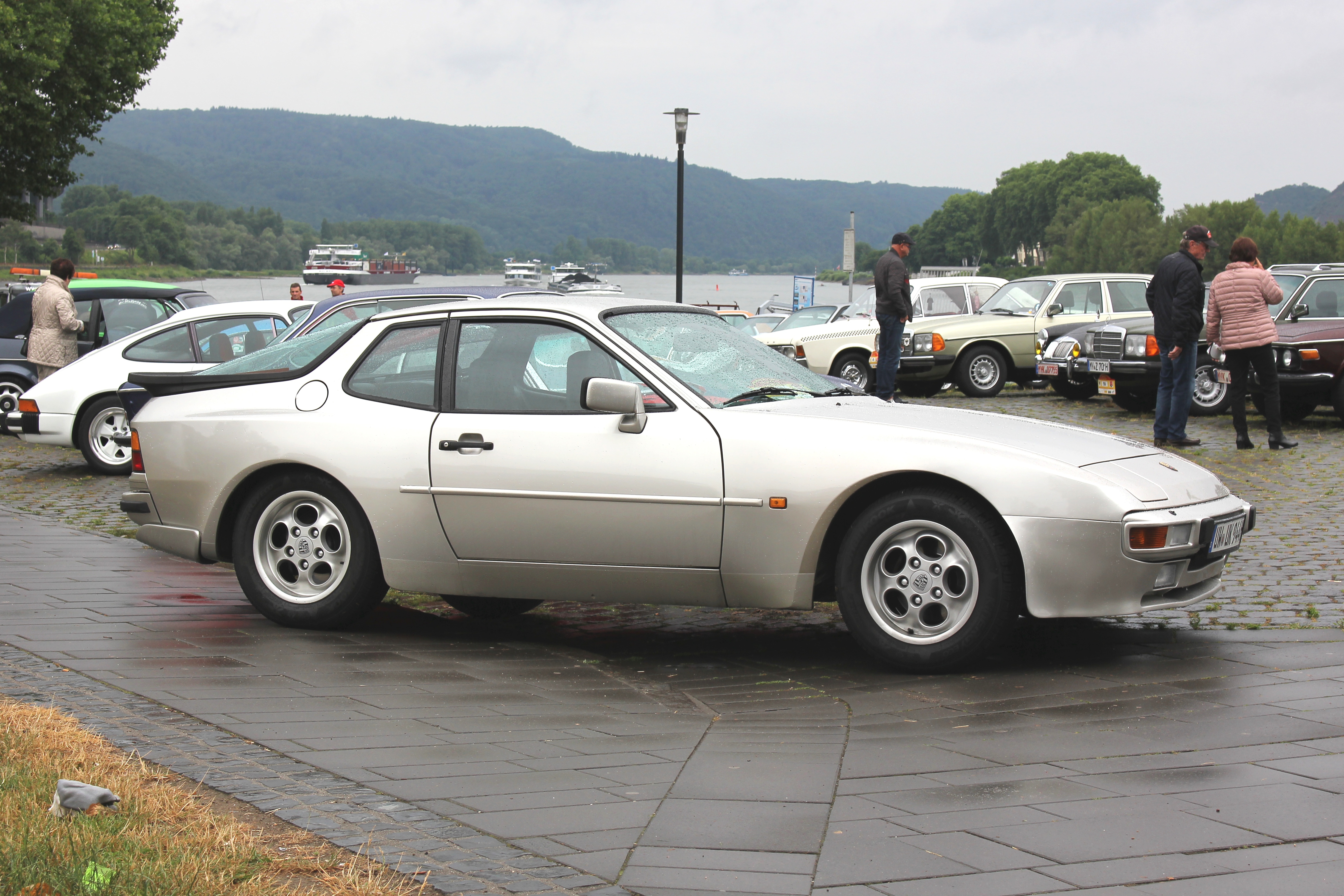
guys from 944 driver.
And I loved this.
They they also wanted to do their
own version of like an art car.
And so they had a one of their 944
turbos that was like Safari build
that they wrapped entirely in white.
It was just completely white vinyl
wrap. And then they set up a paint
booth and had people paint it.
This was interactive with with
super soakers full of paint.
Yeah, which was such a rad cool
thing to see.
It was so rad.
So you could walk up to the booth.
They had three different colors
in each in a different super
soaker. So you grab the color
you wanted. You had to stand in
kind of a, you know, an area
they wanted to shoot from.
But they built a paint booth and
you could shoot the car wherever
you wanted.
And it was fun.
Then the next morning they still
had it out there.
Everything was drying, getting up
and just seeing, you know, you can
look up 944 driver and see that
the cars all over the internet now.
But it just super, super cool
concept and it fit their brand.
But it just also gave people like
opportunity to be creative on their
own and have some input into their
thing.
100 percent. Yeah, super cool.
I'm feeling like we're forgetting
people, too, which I don't want to
do. This is not a fully, you know,
inclusive exclusive list, you know,
like Project Cars Anonymous,
Michael Gideon, his new brand and
brainchild was super fun.
I wasn't there when he did
the meeting.
I didn't know I was not there for
the meeting.
I think that was probably the most
people other than the film event,
which we'll talk about at the end
with Petrolicious.
The most people in one spot is
when Michael in one of the
Artist Paddock Bays held
the first project Cars Anonymous
like meeting and
Jake, what was so cool about it is
it was like.
I think people may be expected to be
scripted.
It wasn't even scripted.
It was just guys kind of pouring
out their hearts about their
project cars and all of the,
you know, the cars that got piled
up in their backyard and their
garage. And and it was like a
true self-help.
It was literally a group therapy
meeting. Like it was meant to be
kind of tongue-in-cheek, but it is
a thing.
Yes. And Michael
gave him a lot of credit.
He prepared. He he really
did a great job of just keeping
it hilarious.
I mean, the amount of like times
where laughter was breaking out and
big roars, it was,
you know, I've been to a few
golf tournaments and you hear the
roars break out when, you know,
somebody sinks a big pot a couple
of holes over.
It was like that, like every now
and then you just get this big roar
of people laughing.
And it was the meeting.
So awesome job by Michael.
There was also other just like random
weird fun things happening.
Steve Pelletier, Donuts and Drip,
like Horde, I don't know how many
thousands of dollars into making this
little go cart.
It was a go cart with a vintage
van body on it, which is
so cool.
And then he went all out on this
thing.
Yeah. So he was puttering around
and, you know, Sid, your friend,
Sid, did one of her art
car like installation flowers
on a 90s Diablo,
a rare spec color.
There was just like all kinds
of things to like find and discover.
And, you know, I think it's what
we set out, what we wanted to happen
was just this special
antidote to car week where you could
go and see things.
People expressing themselves
in different ways and see
things you wouldn't otherwise see.
A lot of the artist community came
out. A lot of creatives were there
and it just created almost
like a breath of fresh air.
At least that's what we were told.
We're biased, but
it just was a breath of fresh air.
And I was I'm so proud
and excited of all the artists
that came out and all the car
people that kind of injected
their own spirit and their own flavor
into it, even people like Pickle.
Doing he he did an art car
for for one of the cars that was just
on display, like just so cool.
Yeah, couldn't be more pumped.
There was so much to kind of discover
and that was all by design.
Speaking of discovering, Jeff,
not a sponsor of Sports
Corporation Land, but certainly
sponsored the OrcRest podcast.
OnX Off-Road has your app
for your next adventure.
If you're looking to discover
trails, 750,000 miles
of them, comprehensive offline maps,
you can explore, worrying about
cell service because it is offline.
The app features trail ratings,
detailed information and discover tool
to help you find trails near you.
Includes public and private land boundaries.
You always know where
you can really off-road camp and explore
and features cell service layers
so you can plan your route
without leaving service.
It also has wildfire layers.
You can help avoid active fires,
smoky areas and has also
a whole suite of tools like the
route builder, waypoint marking,
real-time updates, route sharing.
You'd be fully equipped for any adventure.
Try it for free for seven days
and hit the trails with confidence.
Download OnX Off-Road today.
Yeah, we had, I don't know,
we had a whole food vendor area.
We had Garage 79 was up there
pouring some drinks.
We had actually our host, the winery.
Tirononzo was up there pouring wine.
And CSF and AC Solutions
brought. That was the biggest.
They had an ice cream supplier.
The thing, too, is, Jake,
it was not like cheap milling in ice cream.
It was like, no.
So I don't know if it was Italian.
I forget. The guy had some big spiel about it,
but it's basically like you take ice cream.
This wasn't soft serve.
It was like ice cream out of the cooler.
And then he has fresh fruit.
And so you pick your fruit combos
and then it all goes into this cone-shaped thing
that it spins it together and makes it a soft serve
with the fruit and pours out.
It was really cool.
It was cool to watch him do it
as much as it was to eat it.
And it was awesome. Super cool.
Yeah, it was cool.
And AC Solutions and CSF,
you know, they had like really cool.
Yeah, exactly.
But like they attention to detail,
you know, there was the branding on all of the cups
and the napkins.
It was it was really neat.
Very, very cool.
Yeah, yeah.
Very cool, Jeff. Cool.
Well, the end of the night, you know,
as things kind of transitioned,
because when we started at like 4 p.m.,
it was sunny and bright.
And then as the sun started to go down,
that's when we transition things
to the auto cinema event from Petrolicious.
They partnered with us to build out a theater
in the middle of a field on this property.
And I, you know, we knew it was going to be really cool, Jake,
but the actual like setting of it
and how beautiful it was was kind of far beyond anything
I thought it would be.
Yeah, yeah.
I mean, I the photos that people were able to capture
to was so cool, just that environment
being down in a valley with Sunset
and having everyone down on hay bales,
down in the field, watching the film together.
It was a super cool kind of magical experience.
It was and really, really cool production by Petrolicious.
They they put together a lot of films.
And, you know, there was some other surprises
and different films that were inserted in there as well.
That just it was such a cool night.
And it was a great way to kind of wind things down.
Yeah, we had Kindred Motors, who were on the podcast
a couple episodes ago, they brought a few of their Broncos out,
which is super cool to see.
And it was just really cool vibes.
I think we just I'm so gracious to everyone
that came out and helped make it happen.
Not only our partners, but so many volunteers
and our community that just showed up.
It was overcast community showed up.
And I think, you know, we're always reminded by
I at least I am just how generous and giving of people
their own time they are to come across the country.
A lot of these people drove, you know, from all over the country.
And then they showed up and then they bailed hay bales, you know,
or they they helped to unload wood or, you know, what not.
And I just it kind of regrounds, you know, when you do a big event
and you maybe bite off a little more than you can chew.
It reminds you just how awesome the overcast community is
and just how many good people there are in it
and they do things for the right reasons.
Yeah, one hundred percent, you know, and and that's why
as an aside to the entire sports
Garabagationland event, we had kind of a home base
home away from home for a lot of our community
and especially a lot of the vendors and other people
to help make it happen, which was, you know, camp overcast,
which is on the other side of the property.
And, you know, that was kind of a whole magical environment
in its own, like we put up all the lights and just seeing everyone
kind of be able to come back together and hang out at the end of the night.
And we had, of course, the Nocian Tire Swing,
which I think was such a cool idea that we hung this massive tire.
It was I think their biggest, the Nocian's biggest outpost.
All trains, you can get.
And so it was this awesome tire swing that we had out there.
Nocian, of course, a sponsor of the podcast as well.
So I'll, I'll give them a little shout here.
They have, of course, not only that outpost AT, which I had that tire
on my Cayenne, which I really liked, but of course, they have their
surpass AS01, which is their high performance all season tire.
So it's specifically made for drivers like us who want the most out of their car
without, you know, worrying if it's going to rain or if you happen
to maybe come across some icy roads.
So it lets you kind of just keep going on your adventure
and also get the most out of your performance tire.
So not only does it come with a 55,000 mile warranty, it also offers
Nocian Tires Pothole protection.
If you happen to get damaged to your tire beyond repair,
Nocian will place it for free.
So check it out.
NocianTires.com slash Surpass.
Yeah, the camp was awesome.
Camp Overcrest was our, you know, it was a 1.0 and we definitely
had our challenges.
People were really good sports.
The setting was beautiful.
Like the property was super cool.
Yeah, there's there was two snafus that I guess is worth talking
about tongue in cheek.
I hopefully we, you know, they say comedy is a trauma plus time.
Right.
And so hopefully enough time has passed here to make this comedic.
But we we thought we were going all out and making like all of the,
you know, all the comforts of home that you would need with
hot showers on site and full restroom like indoor restrooms.
We're not talking port-a-potties.
We're talking these high end trailers that we paid, you know,
a premium for it to get out there that you can have a full set up.
And it was great until it wasn't because they kept breaking
and there was no hot water and we had the vendor out there every
single day trying to troubleshoot it.
And it was just it was there was a lot of frustration and angst
behind the scenes.
And to people's credit, I didn't hear a whole lot of bitching
and moaning and complaining.
It was just kind of adversity that, you know, hopefully people bonded
over around, you know.
Yeah, it was it was it was not ideal.
And I think no people, the people that were that were there knew
we were not stoked about it.
And we were constantly kind of battling with both the company
that we paid a lot of money to make this happen.
And then I basically went in there once we were finally done
with sports garbagation on the show, I was able to then dedicate
my time to troubleshooting their own trailers and hot water setups.
And it was just a just a hopefully a comedy of errors at this point.
Those are survived. Yeah. Yeah.
That and Jeff, you did not fall victim, but I keep hearing
of more and more victims of the poison oak.
Oh, yeah.
My legs are destroyed and I'm still itching and putting on like
I'm still itching.
No, I'm still itching.
I've got it on my I had a little bit all over in my chest.
I had a little bit. I don't know how it got there.
It's because anything on your hands, it's spread. Yes, it's.
So I I made the mistake of parking the van in a bush of poison oak
is I think probably were the majority of it.
So Jake, you and I, we come from, you know, we're in Minnesota,
which is poison ivy country, not not poison oak.
And so yeah, I'm very good at spotting poison ivy.
Yeah. But I didn't even think twice.
I was like, it's a we've been there for two or three days.
And I I Nevin Pontius was there camping.
And as as Nevin is, he's just a colorful character.
He was, you know, walking out into some bush to go pee.
And I another kind of an older, maybe more wiser gentleman at camp
just said, I think that's poison oak.
You know, he mentioned that to me.
And that was my first time that I heard those words.
And I thought and I looked it up and we were surrounded by it.
Oh, so much, so much of it.
And you're right to our I would like to use the excuse that it's not native here.
So I don't I don't know.
I mean, I think we do have it here.
But anyway, us gum shoes from Minnesota got some poison oak.
And we're still dealing with it.
But I, you know, all things considered bathroom, showers and poison oak.
It was a lot of fun and people were really good sports.
And, you know, we certainly we certainly didn't make money on on any
of the camping venture, but it provided a really cool place for people to be.
And the evenings, you know, we had string lights and we had a very good vibe.
And it was just awesome just to hang out with people.
Like that's exactly that's what made it so special.
You just don't get that much time where it's like, hey,
we've got two or three hours.
Let's just hang out.
Not only that, Jeff, we didn't have cell service on property.
Like if it was maybe if you had T-Mobile, you had like one bar some places.
And so and we didn't like that's not necessarily a good thing.
Like we thought it was going to be a big detriment to people, which it probably was.
But thinking back, you sat around.
It felt like the nineties as kids, like we were at summer camp.
No one had a phone.
You weren't on your phone, like texting or doing things.
Like literally, people were just there in the moment
talking to you other because you couldn't be on your phone.
So I had several people comment be like, OK, not only is the vibe great
because we're all at camp and like we're all these just people
who are excited to be out here and you can't use your phone.
So we're all being like very present.
And so is, yeah, it was kind of this weird, magical, almost accident of
of the environment that I don't know.
Hopefully, you know, hopefully you look back.
What does Chris call it?
Serendipity Serendipid.
Yeah, no, I was just going to say it was probably type two fun,
like not fun in the moment.
But looking back, I think it was kind of like super special.
And I hope that was the other thing about the show itself.
Sports Car Vacationland is, you know, if we were
wanting to maximize our social media footprint and have, you know,
we would probably offer Wi-Fi so that people could have been
posting stories in real time.
And wouldn't have made it so far out.
Yeah, but a lot of people have their phones put away
and they're present and it was very cool that way.
Yeah, a hundred percent.
So I think takeaway is, you know, it was a lot of work.
It was a lot of fun.
And most of all, it just it was so cool to see the community
come out in every aspect of it, right, from all the help we had,
all the unique exhibits and just out of creative ideas.
So huge thanks to everyone that came out and made it happen.
Thank you.
Oh, there's so many people.
We didn't, you know, there was even other things like the driving
well friends, the driving well friends exhibit.
And there was other things that, you know, Joshy put time in.
There's so many people put so many, so much time into so many
facets of the show that it's just it's hard to even remember.
Thank everyone. It's awesome.
Yeah. Thank you for.
So here's one.
We'll leave it at this because everyone, of course, is going to ask, all right.
So same time next year.
Are you doing it again?
Is it going to be different?
And Stephanie on our team came up with the best analogy.
She goes, you're you're literally in labor here.
We're laboring very hard.
And you never ask a woman in labor if she wants to have another kid, right?
And so I think we're still coming out of like laboring with this thing.
And so we don't know.
We're still kind of in reflection.
We love we love that it happened.
And I I think a lot of people would love to see it happen again.
So we'll just have to stay tuned and I guess see what happens.
That's that's the thing about Overcrest.
You are rewarded for going to the 1.0
because we've done many things that we don't do a 2.0.
And if you're willing to make the sacrifice to be there,
you may get to be at something that doesn't happen again.
And who knows, we'll figure out something fun to do.
Oh, I'm sure we will can't can't have idle hands.
Couldn't have that.
All right, guys, thank you so much for joining us.
Check us out social media, of course,
if you haven't seen some of the stuff we're talking about.
It's really cool.
I'm even like a surprise seeing like, oh, I didn't even get to see that
or check it out.
So of course, also shout out to drivers club members.
Head over to OvercrestProductions.com slash drivers club to join
with little five dollars a month.
All right, with that, we will see you guys next week.
I'm sure Chris will be back here,
hopefully not coughing up a lung and half of California's dust.
And we'll be talking about who knows what.
All right, guys, take care. Take care.
About this episode
The hosts dive into the creation of Sports Car Vacationland, an alternative event to Monterey Car Week, aimed at automotive enthusiasts. They discuss the vision behind the event, which sought to make car culture more accessible and inclusive, moving away from the exclusivity of high-end car shows. Highlights include unique art installations, live painting, and interactive exhibits that engaged attendees. The episode captures the hard work and creativity that went into the event, along with the community spirit that made it special, despite some logistical challenges.
No velvet ropes. No concours tickets. Just old roads, 600 hay bales, a Porsche hanging nose up while Felix Holst painted it live, and a community that built something unforgettable.
In this episode Jake and Jeff take you behind the scenes and the chaos and magic it took to make it happen.