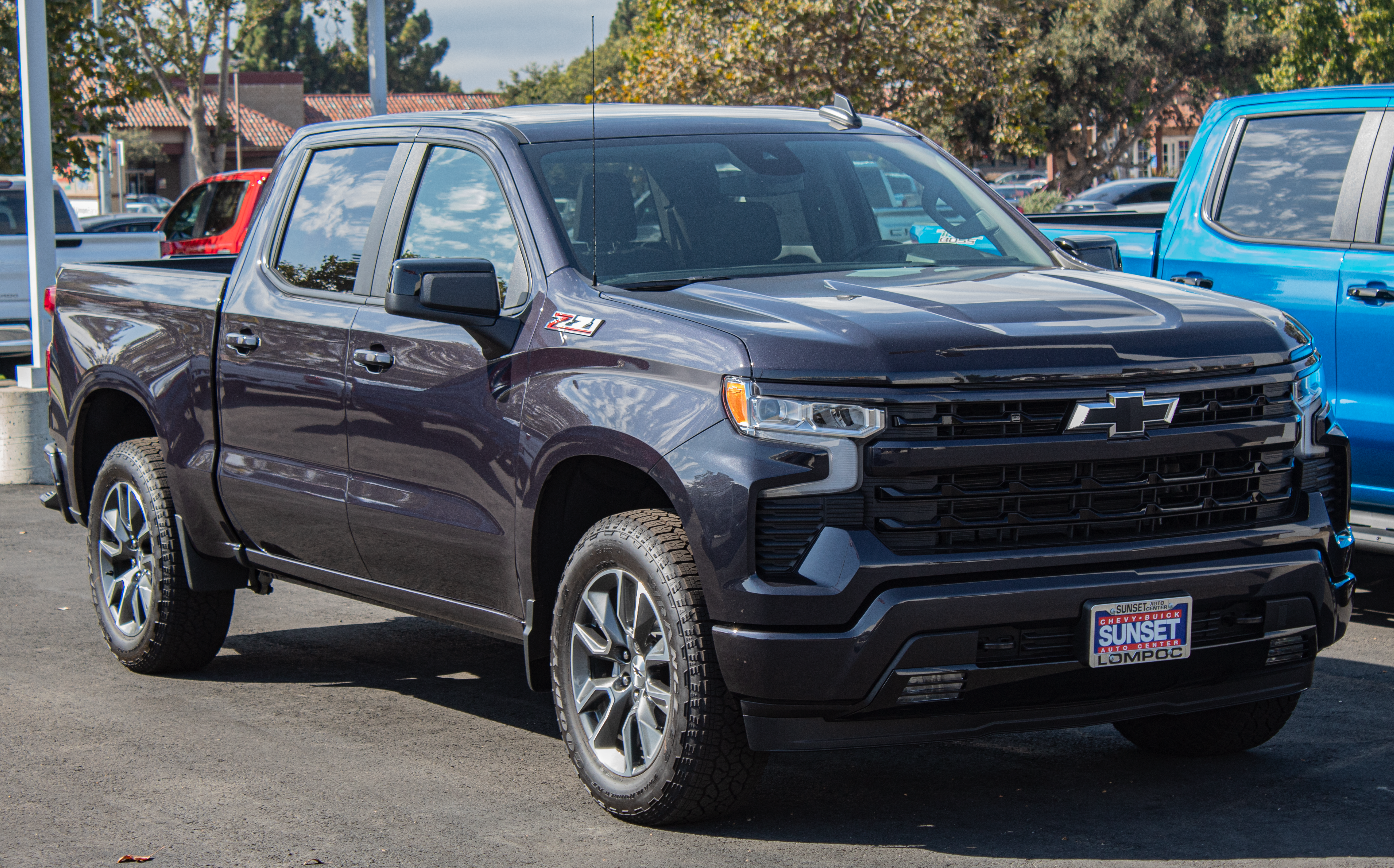
Fully automated assembly lines are factories where robots and machines do most of the work without people. This helps make cars faster and cheaper to produce.
Hyundai is a car company from South Korea that makes many different types of vehicles, including affordable cars and luxury models. They focus on new technology and eco-friendly options.
Boston Dynamics is a company that builds advanced robots. They are known for making robots that can walk, run, and perform complex tasks, often used in factories and for research.
A wiring harness is like a bundle of wires that connects different electrical parts of a car. It helps everything work together without getting tangled or mixed up.
Putting together a car door is complicated because it has many parts like windows, locks, and wires. Each door needs to be assembled carefully to fit perfectly with the car.
The striker cover is a part that helps keep the trunk closed tightly. It makes sure that the trunk lid fits well and doesn't rattle when you're driving.
Restomod is when you take an old car and fix it up, but also add new parts to make it better and more fun to drive. It's a way to keep the classic look while using modern technology.
Engine management is the technology that helps control how an engine runs. It makes sure the engine gets the right amount of fuel and air to work well and be efficient.
The Daytona 500 is a famous car race in the United States, taking place every year in Daytona Beach, Florida. It's a big event for NASCAR fans and is considered very important in the racing world.
A fiberglass car is made from a special lightweight material that helps it go faster. The Corvette was the first American car to use this material a lot.
The Ford Mustang is a popular sports car that has been around since the 1960s. It's known for being fast and stylish, making it a favorite among car enthusiasts and a big part of American car history.
The Oldsmobile Bravada was a type of SUV made by Oldsmobile. It was known for being comfortable and having nice features, but the brand stopped making cars in the early 2000s.
Car
Oldsmobile Lero GLS
The Oldsmobile Lero GLS was a four-door car made by Oldsmobile. It was known for being comfortable and stylish, but it was one of the last models produced before the brand shut down.
The Chevrolet Chevy II is a small car that was made in the 1960s. It was known for being affordable and reliable, making it a good choice for everyday driving.
The Chevrolet Silverado EV is a new electric truck that runs on batteries instead of gasoline. It offers the same usefulness as a regular truck but is better for the environment and can save money on fuel.
Gulf Coast Auto Shield is a business that helps protect your car's paint and windows. They offer services like special coatings and films to keep your car looking new.
Ceramic coating is a special liquid that you put on your car's paint to protect it. It helps keep the car shiny and makes it easier to wash because dirt doesn't stick as easily.
Paint protection film is a clear layer that you put on your car's paint to keep it safe from scratches and chips. It helps your car look good for longer.
A radar detector is a gadget that tells you when police are using radar to check how fast you're going. It helps you avoid getting speeding tickets.
LIVE
Welcome to another In-Wheel Time podcast.
This is your place for all things automotive, the award-winning In-Wheel Time car talk show.
Just ahead, we're going to talk to you about recalls and I'm going to start off with our story
of the week. I think that you should listen before you do that. You talked about Foremaster and Ford
in September. I recently, I love them. They're great. They're fantastic. I don't know why I didn't
get them before. You know, it's so funny because that was the thing that just kind of hit on that.
And remember when they came out, we're going, well, what's the difference between going to
Walmart and this? Yeah. And then you get us out of those and you go, well, wait a minute, they actually
fit. Yeah. And the little plugs, the little secure devices, all that little scutching. And you
know, a little heavier. Yeah. Yeah. And having lived up north with all the snow and the slush and
all the ugly, nasty stuff that you get on your shoes and bring it into the car, these things,
they hold all that in and you get to the, sop it up or you can take it out. Yeah. Yeah. And
it's a great company, American company that make American stuff there.
Everything from dog bowls to, I know, cup holders. Actually, and I bought one of those
cell phone holders and I use that in my Corvette because the cup holder in the Corvette, I swear,
it's that deep, that deep. It holds nothing other than a quarter or two. And so it doesn't work.
It's worthless. Anyway, our story of the week from Automotive News. And I think that we all can
somehow, in a strange way, relate to this. Automotive manufacturing is on the brink of a
radical workforce transformation as the industry's race toward fully automated assembly lines
signals a fundamental redefinition of factory work. At least one automaker will achieve 100%
assembly automation by 2030, according to analysts at Gartner and Moorburg Research.
The shift represents more than operational efficiency. It marks an inflection point
where artificial intelligence, humanoid robotics and digital manufacturing converge
to eliminate nearly all human roles from the assembly process. Now, you worked on the assembly.
Yeah. I've known other people that have worked on the assembly line. And so all of this is about
to change. The implications extend far beyond the factory floor, reshaping everything from vehicle
design principles to workforce training pipelines to the economics of auto production. A U.S. or
Chinese automaker will likely be the first to create a 100% assembly automation line toward
the end of this decade, as several players in those markets are already setting up disruptive
manufacturing processes and reveal more of a focus on humanoid robots. Automakers such as Hyundai
and Mercedes-Benz have already taken steps to increase the use of humanoid robots. Marzy,
you paying attention over there? Yeah, it's not like somebody's putting somebody out of a job.
Well, listen up. Hyundai plans to deploy Boston Dynamics humanoid robots at its Georgia
manufacturing complex starting in 2028. That's less than two years ago. Yeah, right. The automaker
unveiled the strategy January 5th at the Consumer Electronics Technology Expo in Las Vegas. The
company aims for production scale deployment of humanoids in automotive manufacturing
and a scalable production system capable of producing 30,000 robots annually.
Oh my God. Can you imagine going to a Texans game is nothing but robots there? I don't see it.
Mercedes has launched a pilot project with humanoid robots that it says could begin working alongside
assembly workers by 2030. Alongside, yeah. Well, to start off with. Hey, R2D2, you want to go to
lunch? Yeah, there's that. About an oil break. Yeah. I don't see it. Okay. So you build the car
with robots. Everything's automated. Assembly line. You go down the line. Who's going to drive
that car off the line? Well, that's a thought. You can't do it. Well, Robbie, the robot will do it.
But my question is when something goes wrong, would you know it will? It will because I mean,
it's still a mechanical device and sooner or later, it's going to need some sort of
maintenance or attention or something's going to break or a part doesn't fit quite right.
And they cram that windshield in there anyway, and suddenly it shatters.
And then they move on to the next. Yeah. Yeah. Well, since this story was written, I read another
story with similar tendencies and the issue that they're currently dealing with dashboards.
Oh, because you got to fit them in the car and yeah. And so now what are they going to do with
the wiring harness that goes up to it? Well, for the most part, they're all plug and play. Yeah.
So get that robot to start plugging in, plug in all those dashboards in and make it all work
with because, you know, today with a human, you don't have to stretch the wire. The wire is cut
just exactly right to fit up to the plug with nothing left over. Right. Yeah. So that's what
they're currently dealing with, wiring harnesses, things like that, very intricate things. Or
here's the other one. And Mars, I think that you were on the tour with me. We went through forward.
We couldn't understand why the doors went off to another part of the complex,
because the doors are the most complicated of the automobile. And so they send them off to a
different area of the factory. To be put together. Yeah. They put all the innards of the door in
there and then they send the door back down the line to match up with the car that it was painted
with. Okay. So it's going to be robots assembling it. So the door is already going to be made
when that robot touches it. Well, there's going to be a human putting that glass in all the switches
and diodes at the beginning, and then they're going to say, okay, R2-D2, go ahead and put it on.
And then he goes and puts it in the trunk or whatever. Yeah. But there's movies to be made
about all that. If you think about it though, when you're assembling a car, like you say,
the dash, for example, those wires plug in underneath and for them to touch to talk is
the old idea that you don't have any extra slack because you're saving pennies. That means the
dash has got to be in place. Well, can the robot get up under there or are they going to have to
redesign how they put the parts together? Exactly. That's what I was thinking. Maybe the dash goes in
first. They're going to have to change the way they assemble the car. So let me finish the story.
Okay. Nevertheless, from an employee perspective, digital products and AI are making engineering
and manufacturing work more challenging according to Detlef Gerst, Javel, AI and digitization
expert on the executive board of IG Metall, Germany's largest trade union. Fast product
changeovers and a wide variety of variants require cooperation between AI technology
and well-qualified, flexible employees. In other words, you, Jeff Zeekin, that we're
tires on the car. Now you're going to have to go to school. A lot of school to learn how to
integrate this robot to that car because the other jobs that are plain and simple, they don't exist
anymore. Digital helpers are changing human tasks and skills thereby making further training and
personnel development crucial. Employees must be able to understand and assess digital technology.
In other words, they need a high degree of expertise as well as rising demand for skills
related to digital technologies, advanced manufacturing and the transition to electric
mobility. Workers will increasingly need the ability to adapt the change, learn throughout
their careers, solve problems, work in teams and operate safely in technology-rich environments
according to the International Labor Association. Okay. So you go into the factory and you say,
I'm going to hijack all the robots in here and they're going to go after all of the human,
all the humans in there. You're going to revolt. Do you see where the movie starts right there?
However, full automation of the assembly line need not necessarily lead to job losses. Those
employees will be reallocated to other support functions like maintenance, engineering, logistics
and material handling or inspection. Likewise, Labor Organization anticipates that some routine
and manual tasks may be reduced. Many jobs are likely to change in their content and new jobs
are expected to emerge. The emphasis is on the evolution and transformation of jobs within the
industry rather than a simple one-for-one replacement of existing roles. Jeff, you worked up there.
So wasn't that in a constant learning process? Every time a model changed, you had to kind
of learn, okay, this one's coming through and instead of bolting the black to the blue, I got
a bolt white to the red or something. Right. There's different models have different things
that go on. It seemed to me like it would be a constant state of change so that that learning
process would be ongoing and this might not be too much different. Well, the model change is a
model change overall for the vehicle, but putting a part on A car and then Y part on B car, that's
all part of the assembly process and you've got that segregated or categorized how you want to
put that on the vehicle. I had the striker plates for when you push the button in the glove box and
you push the button and the trunk went up. That was all fancy back then. Well, that device in
the trunk was as a cover and they call it the striker cover. I put three screws in that every
third job. So as the car came through, say like a Corvette Corvette comes through zip zip zip,
I put three screws in and I go sit down and then two jobs went by because somebody else was doing
those jobs. Somebody else at number two, somebody else at number three doing the same job, but you
didn't do every everyone that rolled through the assembly. So then you count one, two, three and
you get up and you do yours and you go sit down and as the cars go by. I don't think they do it that
way anymore. No, they don't do it that way anymore. I was young and I was getting paid a lot of money
because I was a factory worker, but now it's all automated now. So that striker cover I talked about
in the trunk is probably pre-made in that somehow before putting on that added piece. Yeah. Well,
it's something to think about. Your cars for your unions come in. Yeah, it's so expensive. And I think
that you're going to see that the price of cars will continue to rise because robots are not cheap,
but they are cheaper than paying insurance in the long run. Insurance, retraining somebody to
not only put the tires and wheels on, but now he's going to have to bolt up the transmission
to the engine or they're going to have to put the engine in. You get the point. Yeah. Prior to that,
my brother worked for the same Fisher body my dad got us in. My brother was part of a fire crew. He
would ride around in a golf cart with fire extinguishers and so he did all day. And if you
saw a fire, they put out a fire. They didn't have many fires, but that was just a job that they had.
Mars, there's something yet for us to do. This is back in the 70s again, guys. So
yeah, I remember once I had a job in a refinery that I was on the fire crew,
but they didn't have any no fires. If there were no drills, if somebody hollered, there was a fire.
Yeah, this is in. Everybody came running. Everybody went to the middle of the plant,
like idiots, you know. Well, anyway, it's something to think about. I would imagine that
the majority of cars are going to be built with robots. Yeah. Well, they already are to death.
They are like all of the welding stuff. Those those those bodies and the frames and all of the
parts and components that are underneath the car that you don't see. Those go into a metal cage
and you have all these robots doing all of those weld points, go to a tire plan. It's all automated.
It's all automated. It's our plan. They've got the, you know, the big arm robots that
they've got all that names, but a lot of that stuff to me is not as intricate as those
delicateness trying to put the wiring harness together or or mount the computer and plug it in
things like that. Let me tell you something. I am very good with the wiring harnesses.
And I sit back and I look at all those wires and I'm going,
you should have seen him this morning with a one eighth plug.
Where does it go? Where does it go? All the wires are black. There's no color code. What do I do?
It's on the call you, Mike. Yeah. And get the next guest on. Yeah. Call Mike. He'll figure it out.
Yeah. Thanks. Well, I thought that that was a pretty interesting story and it's only the beginning.
All this stuff being presented at the consumer electronics show in Las Vegas. Is it open to
the public? I don't know. I don't know. I don't think so. I think it's kind of like SEMA. It's
industry. Yeah. Anyway, uh, buddy. Yeah. I think you're right, Mike, because, uh, yeah, you have
to be a manufacturer. Like you said, like a SEMA thing, journalist, something, you know, something
in the industry. Yeah. It'd be nice to have a car, a hot rod car, a Randy Bortcharding high-end
rebuild, the Resto mod thing. Take that to CES. In addition to SEMA, then you're going to go over to
the consumer electronics show. What would be the point of taking the car to CES? Well, I mean, you
know, it would probably have some sort of fancy computer in it or, you know, engine management
or something. It was all paint. The whole car was painted in detail by a robot.
Or have it painted with the wiring harness painted in the paint on the outside of the car.
Don't they have, I don't know if it's one of the auto shows or somewhere I saw that there's
actually a clear car, a clear vehicle. All the parts are clear, even on the engine. I missed that.
Yeah. I would like to find it. Maybe it was a dream. I don't know. Maybe a display for somebody
or something. It could have been. Every day is a dream for me. He's living it. I'm living it. Hey,
just ahead. Jeff has the racing calendar. Mars has this week in auto history and I'll bring you
some of the stories making automotive use headlines this week. The end-world time car talk show
continues right after this. Back in a flash. The Tex-Mex dining experience is defined by
loopy tortilla. Your destination for Texas' best beef fajitas and frozen margaritas.
Since 1983, loopy tortilla has served authentic and time-tested recipes made with the freshest
ingredients. Atmosphere is part of the award-winning experience at loopy tortilla. All developed
in the Little House near Highway 6 and I-10 in West Houston. Visit any of the loopy tortillas and
you'll see the same attention to detail in each and every location. Start your loopy experience
with queso flamiato and guacamole along with a classic frozen margarita. Dine on famous loopy
beef and chicken fajitas or pepper shrimp brochette or a fish or vegetarian entree
and finish with a scrumptious flan for dessert. Find loopy tortilla in Houston College Station,
Beaumont, Austin, San Antonio and Dallas-Fort Worth. There's a Texas location near you.
The recipes are authentic and time-tested. The ingredients always fresh. Loopy tortilla,
he's pretty good. Make a splash. Live the dream. It all happens at the Houston Auto
Votive Show at NRG Center. Check out classic autos to today's cars and trucks. Experience
off-road adventures with Polaris, Ram and Camp Jeep. Explore five acres of the newest sport boats,
fishing boats and much more. It's all here. From the open road to the open water. If it thrills
you, you'll find fun for the whole family. Get your tickets now. The Houston Auto Votive Show.
Making waves and fueling adventure. Well-timed car talk show invites you to join us for a live
broadcast every Saturday, like this one. 10 to noon central time on nwiltime.com, Facebook and
YouTube. We hope you check us out. If you miss us, you'll be able to connect through our podcasts
from every different podcast source than you could possibly imagine. Well, all the popular ones.
And you know, really, there's three big ones and the rest of them all fall well below that. But
whatever, you got a podcast that you listen to. Chances are you'll find us on that podcast.
Ours is free. You don't have to pay to get on ours. Yeah, you'll, you'll want to pay because
it's so good. All right, time now for Jeffrey's racing calendar sponsored by the Texas Muscle
Car Club Challenge. Guess what I got? I've got the racing schedule for everything. I've got Cup
coming up. Daytona 500. You're going to start February 1st for the Cookout Clash at Bowman
Gray Stadium. That's going to be February 1st. Then you got February 12th, the America 250
Florida Duel. And then February 15th is the actual 500 to 230 PM on Fox HBO and Fubu. Guess what
else I have? Fubu. I think it's Fubu. Fubu, Fubu, whatever. Fubu, whatever. And then I got
Xfinity. Same schedule, same track, just a different grouping. You got the Xfinity Boys
and then the trucks. So the trucks are going to go February 13th on the 26th. And then of course,
there's some eight years that are going back to truck. Tony Stewart's going to run a truck.
And there's also one of the craftsmen. One of the craftsmen, I can't think of his name. He's
retiring. Oh gosh, I can't think of his name. I've got the article somewhere. And of course,
I got NHRA. NHRA starts March 5th through the 8th to 57th annual NHRA Gator Nationals in Gainesville,
Raceway, Gainesville, Florida. You ever been to Gainesville? I've probably
through it when I was a kid. I don't remember. Ever been to the racetrack there? No. Oh my god.
It's in a swamp. Yeah. It's in a swamp. Two lane road that goes out into the swamp. And then all
of a sudden, boom, there's the racetrack. It's weird. Well, Don Garlets is weird. Always has been.
And he will confess to that. Yeah. F1 Cadillac obviously is going to be announcing their
livery during the Super Bowl. I actually saw a preview picture of it. It looks pretty good.
It's just a black car with a little logo on it. So they're going to, they're going to,
it's pretty cool. A lot of them are introducing this stuff. Two weeks is the testing for forming
up. Two more weeks. Two more weeks. It's like the patio. The patio took seven months, but it took
seven months, but every time we go, hey, how's it coming? Two more weeks. Seven months later,
they finally opened the outdoor patio. 13 foot hole in the ground and no concrete around.
Two more weeks. Two more weeks. All righty. Then Mr. Mars has this week in auto history.
Yes, sir. Found a few things this week that I thought. I didn't mean to catch you off guard.
He caught me off guard. Did I catch you off guard, Mike? Not me. I was kind of watching Jeff wait
and make sure he was ready. I'm hanging on with my thing. Okay. So this week in automotive history,
in 1896, the first automobile accident was reported. Now this is just basically the earliest one.
Of course, it was in New York when a motor car struck a bicyclist. It just started the whole
world as that we know now. Then in 1899, Fiat, everybody's favorite, is founded in Italy. Now
in Turin, Italy, it grew into one of Europe's most influential automakers because it produced
everything from tiny city cars to race winning machines. And of course, it ended up being bought
up through Stellantis, through Burgers, everything. And that's how we ended up with Fiat in America.
In 1904, and I did not know this, Henry Ford becomes president of the Ford Motor Company. I just
assumed he was president whenever he created it and started it. That picture was taken before
the dementia set in. If you look at the eyes, but anyway, so he had a vision for affordable
transportation, which focused on efficiency, durability and mass production. And of course,
that's what led to the moving assembly line and really where we are today with automobile
manufacturers. Mike, if you look, if you look at him and you move his eyes, follow you.
Look, go ahead. Step by step. Then in 1950, the first Corvette design concept was approved. Now,
this was kind of early in. I did not realize it took that long from the time they decided
they were going to do this. So they actually produced one. Of course, it was inspired by
European sports cars and it brought the American performance in. And let's not forget,
this is the first fiberglass car built in America too. And they had to try to perfect that. Have
you ever seen an actual, I saw a number two. Have you ever seen number two? Yeah, they're pretty
pretty rough. Yeah, they were all made by hand, weren't they? Actually, yes, they were. And the
fiberglass is all laid by hand. And you can actually see the fiberglass beneath the crappy
paint job fibers in the glass. Yeah, it's truly amazing. I've never knew, but that's the way it was.
Interesting. And they let it out the showroom for. Okay, in 1954, Hudson and Nash announced
merger plans. Now, this is, I think it's crazy. Hudson Motor Company, car company and the Nash
Kelvinator revealed their plans to merge, forming the American Motors Corporation.
Exactly. You know, I tried to do a thing on that, but it didn't work out anyway.
I've driven a refrigerator before. So AMC, the idea was that they were going to compete against
the Detroit's big three. And they did produce a lot of iconic motors like the Javelin. They even
actually produced the Jeep Cherokee originally. Then rolling over to 1966 Chevrolet reveals the
Camaro name. Now this is for the pony car. And this was designed to compete directly with the Ford
Mustang. And it was a small, they considered the Camaro a small, vicious animal that eats
Mustangs is the way they backed up this name for the naming process. Then in 1966. Wasn't the
original name of the Banshee of the Camaro? Oh, I didn't think so. Maybe then. I thought that
that was the Pontiac version. Okay. Banshee comes to mind. Somebody had a Banshee. Yeah.
That may have been an ex-wife or something. I don't know. Then in 1968, AMC introduced the Javelin.
Now this again was to compete in the pony car market against the Mustang and the Camaro by
this time. But they did find a lot of success in the Trans Am Racing series and among road
enthusiasts out on the road because it really had some nice performance and some really nice
look on it. That's a classic. Then in 1992, this started it, the Lexus SE Coupe
debuts at the Detroit Auto Show. Now this doesn't look like the new one, but the new one I think
is one of the most beautiful cars in America today. But you can see where it gets its heritage
of the lines on this car that built up to the newer one. It's just a beautiful car. Then in 2003,
the final Osmobile was built. Now what's interesting about this is they announced the new
Bravada SUV launch. They were going to start selling these SUVs. Two days later, they announced
they're going to kill Osmobile. Now it took them about four years to go through the shutdown process
as they killed different models each year instead of just shutting it all down at one time. And the
last one that was actually built, in fact, the last 500 has special plaques, say the final 500 on
them, but it was a Lero GLS 4 door vehicle that looked just like this one. And after it was produced
and they shut everything down, it ended up in a couple of museums. The museum shut down and they
auctioned it off to a dealer only auction. And that car is now in Florida at a dealership down
there somewhere in that part of the world. That's this week in automotive history. Thank you,
sir. A couple of stories making automotive news headlines this week, about a half a century
after creating the iconic slogan, baseball hot dogs, apple pie and Chevrolet. Chevy is again
wrapping itself in the American flag for the nation's 250th anniversary. The brand is rolling
out five special editions. It's calling the stars and steel collection models all built in the US
add stars, stripes and a 250 graphic along with red accents and select premium options that underscore
patriotism package will be available on certain trims of the Silverado 1500, Silverado HD,
Silverado EV and Colorado pickups. Chevy will also sell 250 stars and steel Corvettes,
which come in either Arctic white with a Santorini blue interior or black with an
adrenaline red interior. Take them away. He's called blood red in GM, moving its global headquarters
this week into a newly finished building in the heart of downtown Detroit.
The automakers offices with all of their 21st century conveniences pay deep homage to the
mid-century modern design of its global tech center campus in suburban Warren, Michigan,
which opened 70 years ago this May. GM's new headquarters on the side of the former J.L.
Hudson's department store. Do you remember that? Yep. I'm on work there. Corporates the timeless
elements of year Eero Saranen's technical campus through the use of clean lines, curves,
stone and ward warm wood tones. According to Rebecca Waldmeyer, who just graduated from the
verb department at GM's architecture and experience design center. Yeah. Well, they're
moving out of the Rensen. Rensen was done. Yeah. I was there multiple times,
tours and things. We said meetings there in the General Motors building. I actually went there
once in ATD. Yeah. They take us there for two weeks, twice a year. I still don't understand
why they did that. That downsizing, I guess. Well, yeah, it could be. Now that property was
actually purchased from Ford Motor Company to build the Rensen for General Motors. Well,
didn't build it for General Motors, but they built it. But the property did belong to Ford
one company. I did not know that. Interesting. All right. You can take a monorail to the ball game,
back to the hotel, back to the Rensen. Well, is this new GM center on Woodward Avenue?
I don't know. I don't know for sure. Warren, the Warren Tech Center that has been there forever,
like you said, but I'm not sure where they're, where it's at. Okay. Just thought I'd question you.
Of course, you haven't lived there in 50 years. Yeah, about that. Yeah. Okay.
Well, we'd love to hear from you. Shoot us an email. If you'd love to talk to us, we'd love
to hear you. The address is info at inwheeltime.com. Time now for a break on the In Wheel Time
car talk show. And we're going to be right back after these important messages.
You own a car you love. Well, why not let Gulf Coast Auto Shield protect it?
Houstonian John Gray invites you to his state of the art facility to introduce you to his
specialist team of auto enthusiasts. We promise you'll be impressed. Whether you're looking to
massage your original paint to a like new appearance, apply a ceramic coating, install a paint
protection film, nano ceramic window tent or new windshield protection called Exo Shield.
Gulf Coast Auto Shield is where Houston's car people go. Curved your wheels? Instead of buying
new one, I'd have them repaired. How about a professionally installed radar detector?
Gulf Coast Auto Shield does that too. Get a peek inside the shop and look at the services offered
by getting online and heading to gcautoshield.com. Better yet, stop by their facility at 11275
South Sam Houston, Tollway, just south of the Southwest Freeway and get a personal tour.
Gulf Coast Auto Shield is your place to go for all things exterior. Call them today, 832-930-5655
or gcautoshield.com.
Apple or Android, In Wheel Time podcasts can be found everywhere, on the stream and through
downloads. Whether you're on the road or at home and jones in for a different kind of car talk show,
give In Wheel Time a try. Honest new car reviews, fun and formative interviews with real car people,
weekly automotive news, features like Jeff's car culture and Mike's driving destinations,
all on In Wheel Time. Check us out on SiriusXM Podcasts, iHeart Radio, or while you're shopping
on Amazon through Amazon Music. InwheelTime.com has a list and we know you love lists.
Podcasts are available on Apple Podcasts, Spotify, Stitcher, iHeart Podcast, Podcast Addict,
Tune In, Pandora and Amazon Music. Keep listening and we'll see you soon.
About this episode
A deep dive into the future of automotive manufacturing reveals a significant shift towards full automation, with humanoid robots set to take over assembly lines by 2030. The discussion highlights the implications for the workforce, including the need for retraining and new skill sets as traditional roles evolve. Guests share personal anecdotes from their assembly line experiences, while exploring the balance between efficiency and job security in this rapidly changing landscape. The episode also touches on the potential for new job creation and the ongoing integration of AI in automotive design and production.
Fire up your curiosity: what happens when AI, humanoid robots, and digital manufacturing collide on the factory floor? We dig into the bold prediction that a fully automated car assembly line could be operating by 2030 and unpack what it really takes to get there. From wiring harnesses and delicate dashboard installs to the complexity of door modules, we separate headlines from the hard engineering work that makes or breaks automation at scale.
We share practical examples of where automation already excels—welding cells, tire plants, high-repeat processes—and the spots that still challenge robots’ dexterity and sensing. You’ll hear why design for automation is emerging as a core discipline, how sequence changes can unlock access for robots, and what it means to standardize connectors, tolerances, and fixtures so machines can move fast without sacrificing quality. Humanoid robots get their moment too: we explore why early pilots will likely focus on ergonomically tough tasks and where a human-in-the-loop model delivers the best results.
The human story runs throughout. We talk reskilling, safety, and the rise of hybrid teams where technicians, integrators, and maintenance pros keep fleets of robots humming. You’ll get a clear view of how jobs shift rather than simply vanish, with new roles in diagnostics, quality analytics, logistics, and digital twins. Along the way, we hit the latest racing calendar highlights, revisit pivotal moments in auto history, and cover fresh news from Chevrolet’s Stars & Steel special editions to GM’s new Detroit headquarters.
If you care about where cars come from, how factories evolve, and what tomorrow’s automotive careers look like, this one’s for you. Subscribe, share with a friend who loves car tech, and leave a review telling us where you think humans should stay in the loop.
Disclaimer: This post contains affiliate links. If you make a purchase, I may receive a commission at no extra cost to you.
---- ----- Want more In Wheel Time car talk any time?
In Wheel Time is now available on Audacy!
Just go to Audacy.com/InWheelTime where ever you are. ----- ----- Be sure to subscribe on your favorite podcast provider for the next episode of In Wheel Time Podcast and check out our live multiplatform broadcast every Saturday, 10a - 12nCT simulcasting on Audacy, YouTube, Facebook, Twitter, Twitch and InWheelTime.com.
In Wheel Time Podcast can be heard on you mobile device from providers such as:
Apple Podcasts, Amazon Music Podcast, Spotify, SiriusXM Podcast, iHeartRadio podcast, TuneIn + Alexa, Podcast Addict, Castro, Castbox, YouTube Podcast and more on your mobile device.
Follow InWheelTime.com for the latest updates!
Twitter: https://twitter.com/InWheelTime
Instagram: https://www.instagram.com/inwheeltime/
https://www.youtube.com/inwheeltime
https://www.Facebook.com/InWheelTime
For more information about In Wheel Time Podcast, email us at