A hybrid drivetrain means the car uses both a gas engine and an electric motor to save fuel and pollute less. It can run on just one or both at the same time.
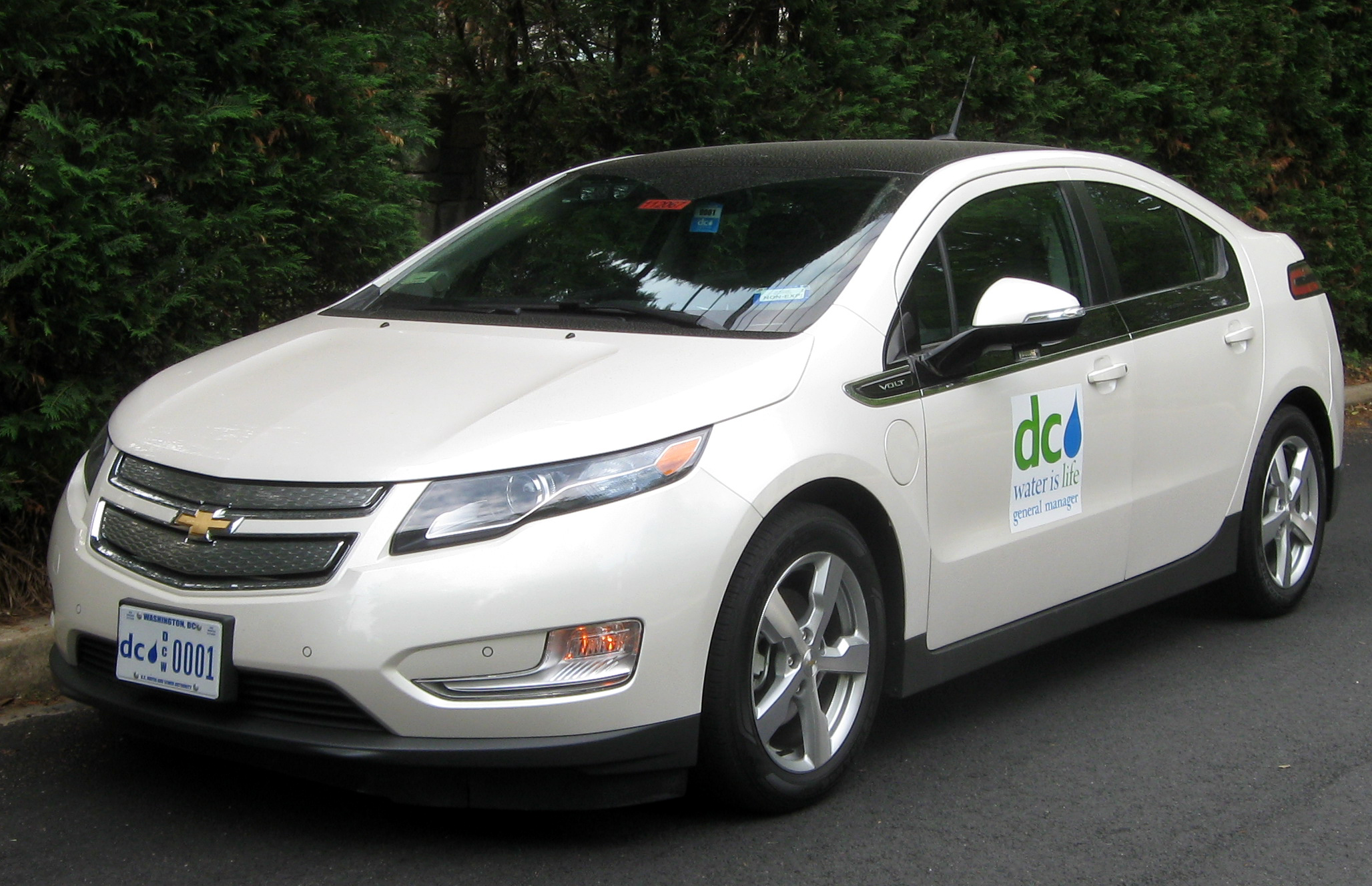
A plug-in hybrid is a car that uses both gas and electricity, and you can charge its battery by plugging it into a wall outlet to drive farther on electric power alone.
The Subaru Forester Hybrid is an SUV that uses both gas and electric power to save fuel and help you drive safely in different weather or road conditions.
Off-roading means driving a car on rough ground like dirt or rocks, not on regular roads. Cars made for this have special parts to help them drive better there.
A turbo is a part that helps a car's engine make more power by pushing extra air into it. This means the car can be faster without needing a bigger engine.
This means you can borrow money to buy a car and only pay a small amount of extra money (interest) over 6 years. It makes buying a car cheaper than usual.
Mechanical all-wheel drive means the car sends power to all four wheels using parts like gears and shafts, helping it grip the road better when it's wet or snowy.
The Kia Telluride is a medium SUV that can come with a hybrid engine and all-wheel drive, making it good for carrying people and driving in snow or rain.
An HOV lane is a special road lane that only cars with more than one person can use. This helps reduce traffic and pollution by encouraging people to share rides.
A tax credit is money the government gives you back when you buy certain cars, like electric ones. If this credit goes away, people might not want to buy those cars as much.
So Travis, I think what we should dive into first is the resurrection of the Cherokee.
It spent a few years off and now it has come back as a hybrid.
And at least for the moment, it's only a hybrid, which is something I hadn't expected.
Yeah.
And in a strange turn of events is the least Jeep that Jeep currently makes, and it could
be one of the most important Jeeps that Jeep is going to make for the future.
So that's kind of sitting in a weird spot there, but I think hybrid is the right way
to introduce this because what people are looking for, I think, is a hybrid with a bit
more personality that certainly has practicality included, but it still looks and mostly feels
like a Jeep, even if you're not Jeep in it.
Yeah.
It's sort of the right sized grand Cherokee, which I guess makes sense, right?
That Cherokee and Grand Cherokee have long looked a lot alike, well, except for the last
generation, which I always thought was a little fuggly, but this generation is so much better
looking, I have to say, but it's also a little bit more wagon than I had expected.
The other thing that I hadn't expected was for Jeep to have completely reinvented their
hybrid drivetrain.
For those that don't know, the hybrid systems design is a planetary power split style system.
So the same fundamental design that's used in the Ford Escape hybrid that's sailing off
into the sunset, the RAV4 hybrid, most notably in the US, and of course, the Chrysler Pacifica
hybrid.
So this is not Stellantis's first trip down the planetary power split lane, but it apparently
shares nothing with the Pacifica plug-in hybrid system other than the design philosophy.
And I think that's probably a good thing that they go in a slightly different direction.
And then obviously the output in this and the engine attached to it is very different
than what we got in that Pacifica to begin with.
So it is a big step for Jeep, and especially the things like the packaging of that battery,
it is one of the smallest batteries you're going to find there, but that helps when it
comes to terms things like internal volume.
And even though it is a bit wagon-like, there is still a bunch of space in here.
Yeah, I think wagon-like is actually a good thing in my book, at least.
It is unquestionably longer than average for this segment.
It's quite a bit longer actually than the RAV4, but the roof line is a little bit lower.
So it has some of those classic outback vibes of being easier to load stuff onto the roof.
So I think that's an asset for it in its segment.
The hybrid all-wheel drive system is also an interesting twist because like the CR-V
hybrid and the Forester hybrid, this has a mechanical all-wheel drive system.
So you're not depending on an E-axle, a separate electric motor in the back like you do in
the RAV4.
So it has that traditional feel, which we experienced definitely down there in Southern
California because it was absolutely pouring while we were filming the Cherokee.
It has that advantage, but unlike the CR-V hybrid and the Subaru hybrid, they decided
to make the battery a small liquid-cooled lithium ion pack that they put basically under
the body, under the passenger compartment.
And that allows it to have a spare tire well that is completely unrestricted.
And that is going to be a differentiator for some.
I don't really know how big the market is.
These days, I don't know how many people even check to see if there is a spare tire or if
it's a piece of their shopping list at all, but I know there are going to be some folks,
especially anyone who wants to jeep with their jeep.
It is a better idea to have a spare tire than lower line on a fix-of-flat because that's
great for a small puncture, but if you are off the beaten path, you're more likely to
tear something than you are to go ahead and puncture it.
It is interesting that Subaru is also leaning into the hybrids as well as their off-road
general demographic that they've always had there, but they don't have a spare tire or
even the capability to do it at all in the hybrid lineup.
And there are constant rumors that we will see a hybrid wilderness at some point, which
kind of makes sense since it is the higher output engine, but I'm wondering what will
happen there.
Will they somehow figure out how to squeak a spare in there?
In my brain, it's less of a problem if RAV4 doesn't offer a spare, which incidentally
they offer a spare in everything, including the plug-in hybrid.
So I'm just saying, if Toyota chose not to offer a spare, it would make more sense for
them because they're not targeting this off-roading woodsy demographic.
So we talked about it.
The battery is the main issue, and instead of making basically a custom battery, they
went, here's off the shelf and we'll just put it in this space.
So it's R&D and it's additional cost.
It's not a world of cost, but I think a wilderness could be the push that says, hey, the wilderness
models sell very well for Subaru.
If you have a wilderness hybrid, I think that's hitting the market like a huge home run.
So they say, okay, now that we've got the system in place, now we're going to spend
the additional money that we expect to recoup when it comes to this wilderness trim.
I think there's an argument for the marketing there and it says, how does the hybrid work?
We're going to get it out.
We're going to keep moving with it.
The wilderness isn't the one that pushes it.
And then in subsequent years, we can see that change being applied to other hybrid models.
It's just about making the switch over in the first place.
Yeah.
And mind you, that's all speculation because we have no idea where the hybrid models coming.
I would assume that a hybrid outback would probably come before a hybrid wilderness
forester or a hybrid wilderness anything.
I think it would actually make the most sense in the cross trek, to be honest, because the
cross trek doesn't have a turbo.
Well, actually the forester doesn't have a turbo option either, like the outback does.
So in my mind, it would make the most sense to try and oomph up the cross trek hybrid.
But only time will tell there, of course.
The Cherokee also is priced right, which surprised me because even though the MSRP
is a little higher than I think some people expected,
it's probably going to average about 10% off when you actually get one out the door,
which should put it under pretty much everybody.
I think we've talked about before, G-pad, that bit of a pricing issue.
And not only have they addressed it in the models that are already out there,
things like the Wagoneer, things like the Grand Cherokee.
But again, this Cherokee has to hit in the right spot.
It is a little bit bigger than a lot of the competition.
So that is something to keep in mind.
It is technically a little bit more vehicle and being hybrid only is going to increase
the base price because hybrid technology is a little bit more expensive.
I do believe in the returns there financially, but still it increases that base price.
But where you're not going to find a discount on something like a Toyota RAV4,
you might get good financing, but not going to find any discounts really.
I expect you will see that on the Cherokee.
If not right away, probably pretty soon.
Yeah, it's probably going to be that kind of thing that has a headline advertisement,
$2,000 off, 0.9% financing for 72 months.
That's sort of their shtick.
I am curious to see what the upcoming offered version of the Cherokee ends up being,
because they hinted very broadly at it and to some other folks that asked later,
apparently they were a little bit more upfront and that there is going to be
a trail rated version coming at some point in the future.
But rather strangely, the off-road versions of the Grand Cherokee have also decided to
take a bit of a hiatus because the trail hawk is gone from the Grand Cherokee lineup.
It took the four by eDrive train with it, of course.
So what we see in these next incarnations, I'm going to be intrigued to see if I could wish
something into being.
It would be a resurrection of the previous generation Cherokees,
really interesting all-wheel drive, four-wheel drive system with the two-speed transfer case
and a locking rear differential.
But I would probably say maybe they could tweak that one into pairing with an eight-speed automatic
rather than the ZF nine-speed.
I understand the nine-speed's mission has really aggressive starting ratios, etc.
But it's just not the smoothest transmission on earth.
And I'm not sure the average Jeep owner cares enough to put up with the way that the nine-speed feels.
If you're going to do that, though, you're looking at a whole different powertrain.
So that would basically eliminate the hybrid personality that goes along with it.
And I don't know how quickly they're going to try and move away from that.
I wouldn't actually have been surprised if they started with something like a trail hawk
because, again, that's going to be name recognition.
That's going to pull people in.
It's going to say, hey, even though this Cherokee does feel a little bit different,
obviously, than the outgoing one, it's still Jeep trail rated.
I'm not so sure how quickly they're going to jump away from the hybrid.
I think they like even just for a simplicity sake to have everything that direction.
And can you do a trail hawk that's hybrid?
Or do you get rid of the trail hawk name in that instance and just have a trail rated version?
Well, the rumor mill, as it stands now, points to end of this year.
We will see that model and it will be on sale and it will probably be some form of two liter turbo.
Details still sketchy and uncertain there.
But it looks like they're going to be giving us an off-road version real quick.
So they're not going to let just the hybrid stand for too long.
And it sort of makes sense because when you read some of the early reviews out there,
Motor Trend got their hands on a Cherokee somehow many months in advance.
And then they decided to off-road it, even though it's not the off-road trim.
So you can see where recovery hooks would go in the bumper of the Cherokee.
It just does not have them front and rear.
And they decided to take it off-road.
And then they complained about the skid plate not being a skid plate.
It was a fabric panel, blah, blah, blah, blah.
It's like, well, this is the efficient model.
This is the hybrid one.
Jeep never said it had a skid plate, et cetera.
So it was not meant for that kind of bashing.
That's just an underbody arrow panel.
The question will be, what does that next one look like?
Because this one has a little bit less than average on the ground clearance side in this segment.
Future Trailhawk version of the Cherokee would probably be somewhere around
nine and a half in order to compete properly in the segment.
But it is interesting.
It's not going to get an air suspension or anything like that.
No, it seems unlikely.
It feels like Grand Cherokee is alone in that front.
And speaking of Grand Cherokee, it is interesting that, again,
its off-road model took a hiatus.
And now you have basically Overland's personality blended into the limited
trim with an optional package, but not with the off-road bits that we used to find before.
So it appears that we're waiting for the next group of Grand Cherokees to drop,
which is probably why they didn't talk too, too much about it.
This is sort of, hey, there's a new engine.
It's basically a replacement for the old 5.7-liter Hemi,
only way less than half the displacement and half the cylinders.
And then coming at some point, there's going to be a more offer-capable Grand Cherokee.
And the rumor mill is that the Hellcat will return as well.
Yeah, I'm curious between the Cherokee and the Grand Cherokee,
what two-liter engine it would be getting.
Is it going to be the new Hurricane 4 that we see in that Grand Cherokee?
Or is it going to be easier to drop in the last year's model?
But I expect these hurricanes have been, in development,
the same timeline as that Cherokee has.
So I would expect that we see that one carried over, but I'll have to wait and see.
That's the rumor, is that it will be the new Hurricane Turbo,
but most likely not producing the same horsepower and torque that it does in the Grand Cherokee.
That would be a lot.
Because, yeah, transverse transmissions generally can't handle that much oomph.
So that's an interesting pairing there.
Before we move on to our next topic though, let's dive into viewer comments and questions.
We have a whole bunch actually coming through this time.
So again, if you have any comments or questions, we prefer the voice memos.
Those are always fun.
You can just record one on your smartphone.
Email it to hay at autobuyersguide.com.
That's H-E-Y at autobuyersguide.com.
Or you can use the regular old telephone and give us a jingle,
669-842-1947.
That's always easy and leave us a voice memo there, voice mail there.
And then we have a comment or question from Andy Hutchin.
Yeah, so Anthony wants us to know what to say.
It's all right.
We'll get it.
We'll get it right.
Anthony says, hey, Alex and Travis, I want an EV SUV with dazzling ambient lighting,
soft ride quality, 250-ish miles of range, and pleasant styling are next on the list.
And I'm partial to coupe slash sportback rears.
I own a Genesis GV60 performance and the lighting is just too subtle, though I love the exterior.
What cars have dazzled you?
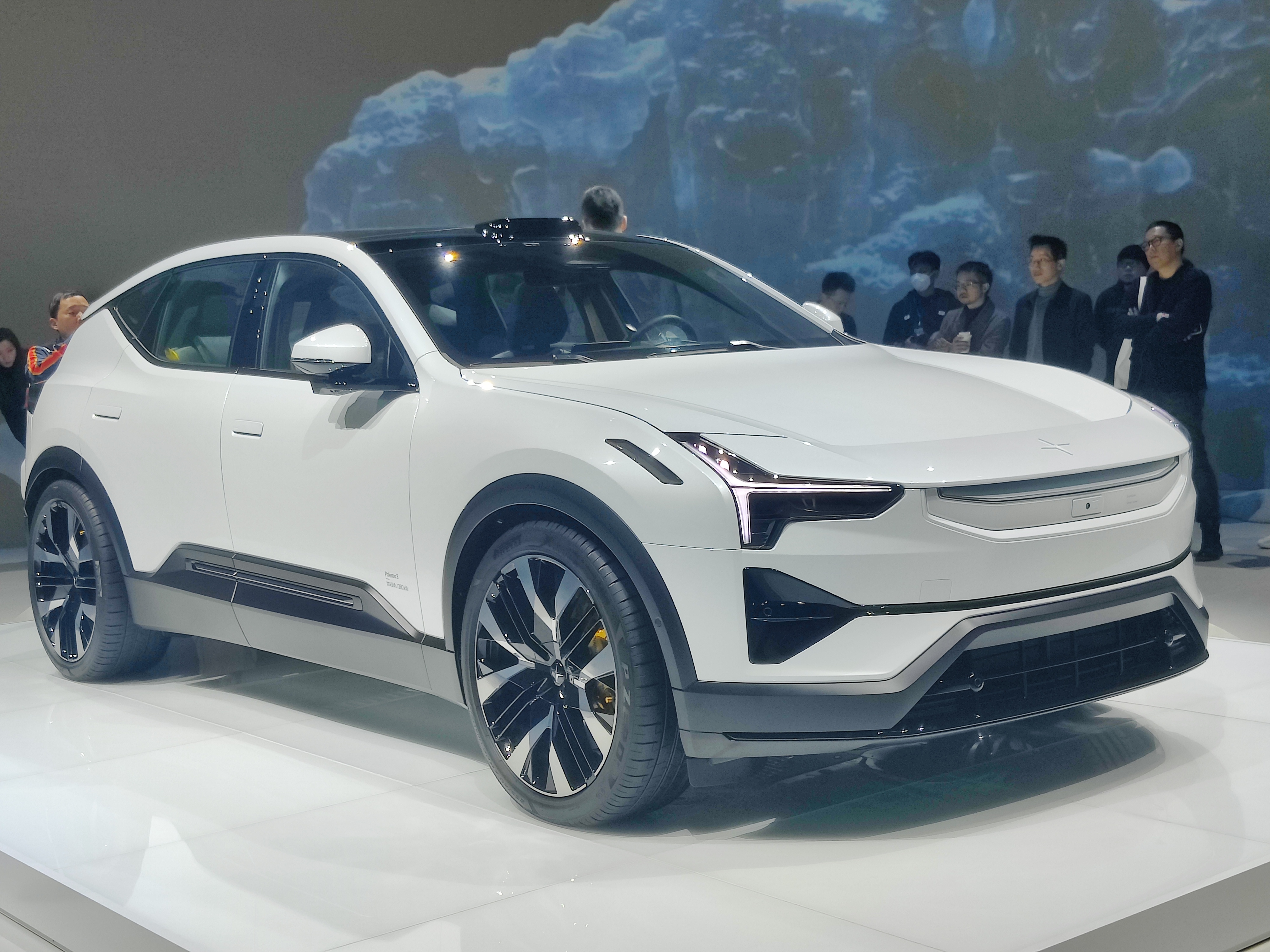
EQE, Macan, Polestar 3.
I like a higher driving position as well.
Thank you for any advice.
By the way, never a Tesla.
Wanted waiting to be surprised and delighted.
This is an interesting question, Anthony.
So I would say Polestar 3 has to be off the list because Polestar has preferred very subtle
ambient lighting.
So on the dazzling side, that's out of contention.
If GV60 already isn't enough, then the Polestar 3, while being a great car to drive,
not going to fit that bill.
Yeah.
Macan Electric, I think also you should cross off your list because it is also on the more subtle
side of things.
EQE definitely has a light show going on, though, inside because they've got the multicolor
ambient lighting that can change.
It can also rotate like a color wheel.
You can do the animated motions where you change your temperature and it goes blue or
goes red, depending on whether you're getting hotter or cooler inside.
Act fast because Mercedes electric car lineup is shrinking, unfortunately, in the United
States here.
You might also want to check out something like the BMW iX.
It's not exactly that coupe, sportback vibe, but it also has some decent ambient lighting
on the inside.
And it would probably fit the bill as, again, Polestar 3 would be a little bit understated.
GV60 styling, if you love it, I'm right there with you.
But again, it's a little bit more unusual and the BMW would be a little bit bolder as well.
Our next message comes from Brandon, who has a Sonata N line, which I've always been a big
fan of, actually, and I'm a little sad they didn't make a full on Sonata N.
But anyway, his question is, he wants to know if putting summer tires on it will help it
off the line as well as in cornering.
The wheel spin is insane as he points out and he's wondering should he trade it in for
something like an all wheel drive Genesis G70.
He uses the vehicle mostly for a weekend car and the back seat is not a big deal.
He's wondering if summer tires will fix the problem and what we recommend.
Now, my first thought here would be summer tires are always an easy thing to toss on
because you aren't trading in your car.
It's not going to affect its resale value, etc.
So you could toss on some summer tires and see how it goes for you, see if you like the
difference.
On both of those fronts, cornering and straight line acceleration, they should make a reasonable
difference as long as the surface is good.
Dry, regular asphalt, regular cement, you should see better acceleration and better
cornering because the Sonata N line has a pretty aggressive starting ratio and it has
a lot of torque from that 2.5 liter turbo.
I was always surprised they didn't give it all wheel drive.
At any rate, I would probably go with something like an Eagle F1 or a Pilot Sport tire,
but I would say any summer tire would be an interesting one to try.
So something like a Bridgestone Potenza would be less expensive.
And then if you don't like it, you can always trade it in when you still have enough tire
treadwear life on those tires and you aren't out a huge amount of cash.
That's probably the direction I would go is if you're between these two,
if you love your car, but there's just a component that you'd like to see different,
in this case, you want some better traction, especially off the line,
it is way cheaper to try different tires than it is to buy a new car.
And then you have to assume that the new car doesn't have its own thing that you'd want
to go ahead and change, which would be equally priced as something like new tires.
And I ought to say an all wheel drive G70, nothing against it, but those are entirely
different vehicles. I mean, they're very different personalities.
So if you love your Sonata, give it a chance.
And the worst case scenario, which admittedly there is, is you put new tires on them,
you go, this didn't do anything. And you essentially flush the cost of tires,
but easier to flush the cost of tires than to jump into a new car and then decide, oh,
I actually miss my old Sonata.
One of the things I like about the Sonata end line is that it's still a big comfy sedan.
And the performance is somewhat surprising. So if people don't expect the Sonata to do
what a Sonata end line can do as far as, you know, acceleration, especially
passing acceleration is really nice in it. The transmission, I really like that DCT.
I know it's not everybody's cup of tea, but I like the combination going on in the Sonata
end line. And I'm surprised and saddened that they never, they never took the next leap
and tried to make an N version, an actual N. I think that's because in Hyundai's mind,
they went from this place where they were having N line as an elevated thing.
And then they decided that N shouldn't just be one step above. It should be several steps
above. It should be the ultimate that Hyundai can do with that vehicle.
And it feels like the N went electric more than anything else.
And then it's hard because you start looking at electric performance and you go,
what engine are we putting under the hood of this sedan to get anywhere near something like
an Ioniq 5N or Ioniq 6N? And it becomes a harder pill to swallow. And again, where does the money
go? Hyundai put a ton of money into electrification. I imagine that went real back.
There's a bit more synergy on the electric side, even though they use unique inverters and motors,
et cetera. There's a bit more synergy in the R&D side. And then on the Sonata side,
they would have had to have cooked up a unique transverse engine and transmission in order
to be able to handle the kind of power that you'd need in a full on N. I would assume that Sonata
to be real N would probably have to be 350-400 horsepower or something like that.
And that's pretty difficult to do with a traditional transverse transmission there.
Moving on, we have Ron Cullingan from British Columbia here. He says he's been in the market
for a three-row mid-size SUV. Lincoln Aviator comes out on top for him. He would love to get our
opinion and he currently has the least vehicle of Ford Explorer Platinum. He wants to know if
we're going to be reviewing the Aviator anytime soon. So I don't have it on my calendar anytime
soon, do you? I think I'll have to reach out to Lincoln on that one because it has been a while
since we looked at it, if I am correct. Yeah, I can tell you, I was in the back seat of one last
week, but second row and it was pretty comfortable. It sounds like Ron's done some pretty extensive
search and I don't know if he's actually gone and seen it in person or if a lot of this has been
online and you know, by the numbers. But if you're coming from a Ford product, then staying within
that Lincoln family is going to be one that's pretty comfortable. You know, most of the things are
going to be where you expect them and the sounds are going to be somewhat similar. But I like the
Aviator. Is it where I would go? Probably not, but again, that's going to be down to individual
preference. But I have to say it is a nice looking rig. No two ways about it.
Yeah, on the Aviator front, I would say if you have an Explorer Platinum, the Aviator is not
going to be a world of difference away, but that's a pro and a con. If you like what you have now
and you want something that's a little bit more luxurious, a little bit more powerful,
that's going to be the Aviator. If you want something that's vastly different in any one of
those metrics, you know, significantly more luxurious, significantly more powerful, etc.,
then you will have to look elsewhere. But in that segment, there's not a lot like the Aviator. So
you'd be hard pressed to really find much that would be similar, except for more expensive
alternatives, mind you. So Acura MDX is the Acura competitor. It's a front wheel drive based all
wheel drive vehicle. It doesn't have the same kind of power or driving dynamics of an Aviator.
Lexus TX is a lot bigger. It's a little bit softer. Again, doesn't have the driving characteristics
of the Aviator. Really the closest thing that we have in the US, especially among US brands,
would be a Grand Cherokee L. But until Jeep decides to give us something other than the
two liter turbo, it also falls behind in performance. You've got the Durango, but it's not on the luxury
side of things. So you can get Durango with the 6.4 or the 6.2 liter supercharged engine. I mean,
crazy engines over there, but it's getting a little on the old side. So that's a tricky one as well.
And then we have the...
Most competitor like Cadillac would be electric at this point. So definitely not the same thing.
I wouldn't say a bad option, but quite a bit more expensive to start and again fully electric.
In that segment at the moment, the sort of luxury three row segment, I generally would go two
different directions. I would go towards BMW X7. I think on the larger side of things, if you're
looking for luxury, comfort, solid performance numbers, the X7 I think is a fantastic machine.
It's expensive. It can get up to $200,000 if you are careful, but it doesn't start 222 crazy.
I mean, it's expensive, but it's not. It's not sell a kidney crazy, right?
And then on the other side, I would probably go towards something like a Volvo XC90 because
it's the stable, family friendly, still powerful vehicle that gets good fuel economy. So you can
do the T8 plug in hybrid system, 455 horsepower. It's really quick. It is faster actually than
any version of the aviator, but it's got a very different personality and obviously a very different
dynamic. Yeah. The XC90 was kind of the one I was thinking was roughly right size, but an
entirely different personality. I don't think it's as dolled up as you get in something like
a Lincoln product. Pro or con, leave that one up to you. Nice finishes and an attractive look,
but you're going to have more flash within that Lincoln. Yeah. I think the Volvo is a little better
done. It's a little more subtle, but the quality of the wood and the leather and the assembly quality
etc. is generally going to be higher. If you're the kind of person that's offended by part sharing,
the Volvo doesn't share parts with any mainstream brand, although I don't think that's a problem
with Lincoln. That's something that some auto reviewers complained about for the American
luxury brands and then they forget that Audi and Volkswagen share a great deal and that,
you know, my Durango still has window switches and shifter and stocks from a Mercedes, etc.
It's okay for them, then it's just fine for Lincoln. I don't understand the problem.
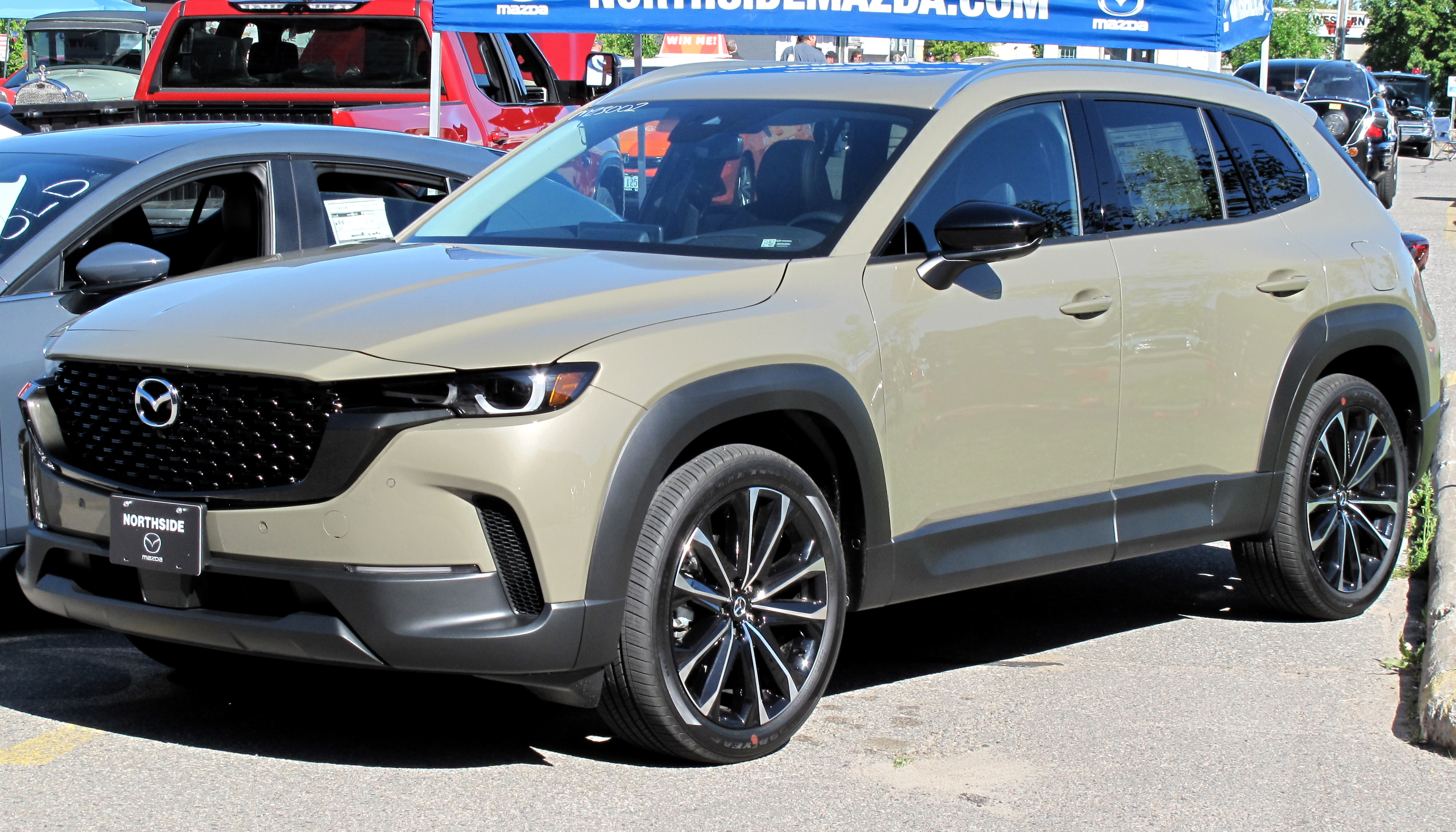
Moving on, we have Jonathan here who is ready to upgrade from a 10-year-old Volkswagen Passat
and they have a Mazda CX-5 that feels too small. They are looking for a family car, one kid and
a big golden retriever. They want to do daily commuting 25 to 30 minutes and they want to plan
road trips for yearly use here. They live in New Jersey, so there's a mix of highway, local roads,
wet weather, rain, snow, and they are prioritizing reliability, comfort, and value. Cheaper the
better, they say, are the biggest priorities. They would love to hear, especially our thoughts
about pilot, passport, pathfinder, and enclave, which is an interesting grouping.
Well, I think we have to immediately eliminate the enclave because it doesn't start with a P
and all the other ones do, so it seems like an outlier there from the start.
We're going to get back to the question. Can I talk about the CX-5 for just a second,
because we drove that last week and while it does feel a little bit too small for the one you have,
it has gotten an update and especially in the rear, there is quite a bit more room,
I mean a few inches, but I think that really does add up. The only downside with that new CX-5
is there's only one engine. It's a carryover from what they had. It's the base engine available in
the CX-50 and even though the outside still looks like a CX-5, small updates that I do
think subtly shift where the design language is going. The big update there is on the interior
and I think it's a much nicer feeling interior if big, big screen equals nice feel for you.
And I have to say the downside of the big screen is that's where pretty much everything is.
Buttons are sparse and for some folks like me, I can make that work. Right now I have a Tesla
and it's only got one big screen and pretty much everything is on there.
But if you like to fiddle around with things like your climate controls, this is going to be a little
bit irritating unless you, I'm going to say hey G so I don't activate everybody's smart assistance,
but if you, it's got Google built in, so you can say hey G, change the temperature, but you can't
say at least that I tested out in the moment, you know, change where the air is blowing and make
it on the windshield and your feet. Right? It's not that conversational. So an update, a good update
I think for the CX-5, only one engine and they are going to be more on the way. But that's all I
got for the CX-5. The, what they have now might be a little bit smaller than one available now,
which probably isn't what they're looking for. They're going for bigger, should be a little
bit more comfortable. Yeah, it's definitely not getting you up into that Honda passport size
category. I will say, I like the thought of the hey Google connectivity, but it doesn't,
it doesn't do everything as you mentioned, and it's not a differentiator. It's sort of this one
of these checkbox, you got to have it because everybody else has it. And now I'm always just
doing the big push because they didn't have it before. The CX-5 is interesting because it does
feel, it feels a little placeholder at the moment because it's an all new CX-5 with a lot of
interesting stuff, but the engines clearly weren't ready yet. So they're launching with the oldy
six speed and the 2.5, which I'm not the biggest fan of that pairing anymore. It's just feeling a
little on the old side. And guess is that next year we should see the hybrid, although there
have been some rumors that maybe it would be pushed till late 2027. I hope that's not the case.
Mazda did say that a, and I believe I'm in this instance right now that they lie to us,
but they said a vast majority, we're talking 80 plus percent of the CX-5 people purchase are going
to be that engine. So if you're making big changes, it makes sense to obviously release the most
popular engine and it is by a wide margin. But the argument there is because they don't have
something like a hybrid available. So that one, I think pretty quickly, we take a huge chunk,
a lion's share at some point of the engines that people select, but that's the CX-5. Back to the
ones available, pilot, passport, pathfinder, or enclave. I do think the enclave is an outlier
here because it's big. I mean, that is quite a bit bigger than you find in something like a
pathfinder or a passport. Nothing wrong with it. There's a lot of room, but probably not,
probably more room than you need with one kid and a big old retrieve.
On the comfort side though, it does do very well. So I would say, depending on where the
golden retriever is sitting in the car, if that third row is folded all the time, you have a big
kennel in the back, you've got the room for that. If the dog's not in a kennel, you still got a lot
of room for luggage and the dog and the kid and everything in enclave. I don't think that's so
weird there. I would probably skip pathfinder. It's getting a little on the old side. If you're
worried about reliability, you're going to be basically stuck with focusing on the Japanese
brands or the Koreans would be my recommendation there. So on the value front, I would look towards
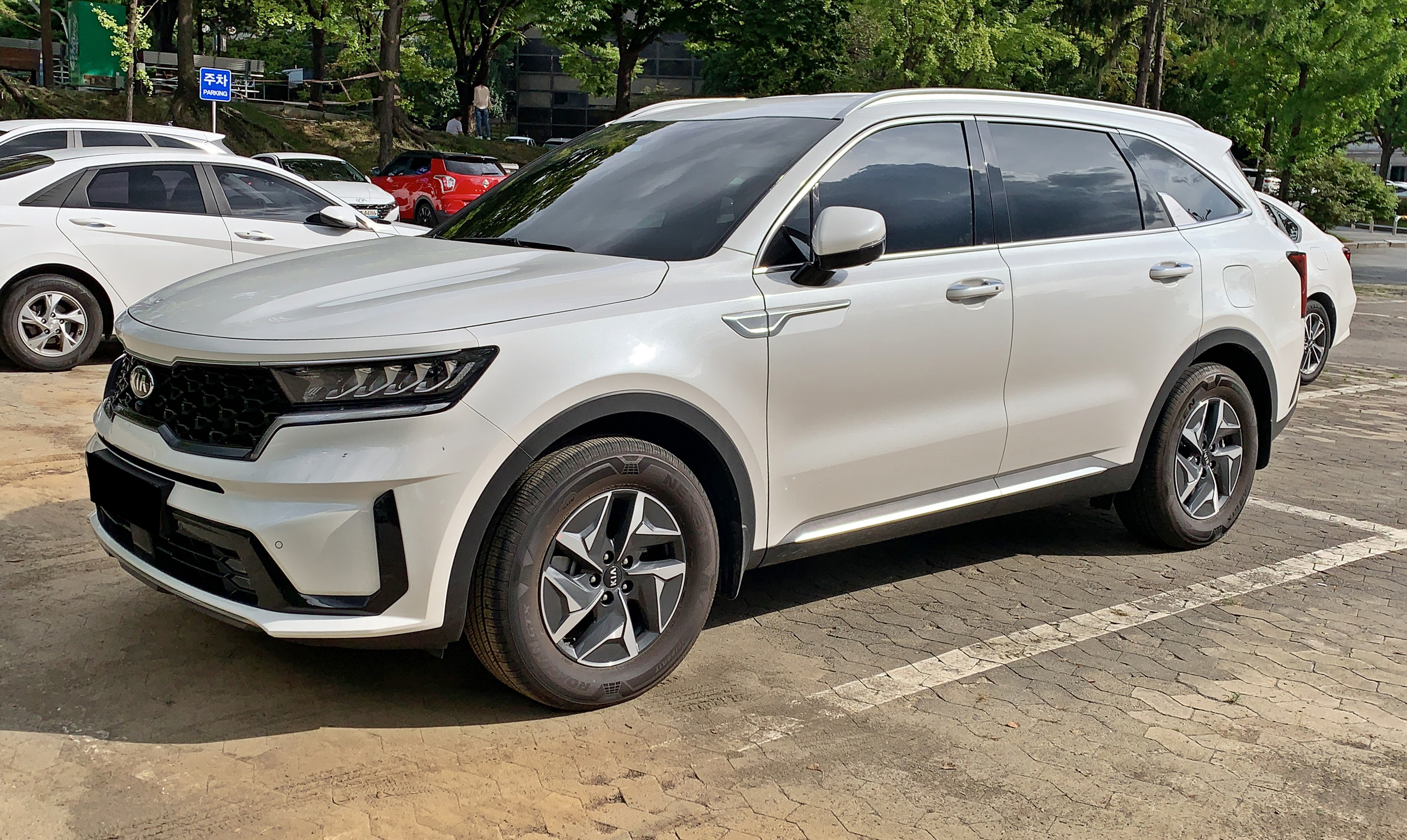
something like Kia Sorento. Probably the Kia Sorento hybrid would be a good fit right now.
You probably could also get a screaming deal on a highlander coming soon because
highlanders sailing off into the sunset, if you don't mind an older design,
because it's being replaced by a three row electric vehicle here in pretty short order.
So it does appear that general interest in the regular highlander has dropped and therefore
that could be the value proposition there. Pilot I think is a solid option and passport I think is
a really, really solid option. I love the look of the passport. It's really practical in the big
cargo area in the back, very square and upright back there, which I really appreciate. But passport
and pilot feel a little bit behind on the tech side of things. So if you want bigger screens,
flashier screens, that jazz, then you might want to look towards something else.
Yeah, I have to say between the, the pilot has gotten closer to the passport. So for 26,
those updates make it, and now that's far behind the passport took a big leap in styling and
interior updates. But between you and me, if you had one kid and a golden retriever, I would probably
skip the third row altogether. And I'd say give me the extra room and I would go some like a passport
over the pilot. Not there's any wrong way to go. Having a third row doesn't hurt. And they're,
you know, not too different in the overall size. But I'd say I do like what the passport has to
offer. And if that's not the direction you wanted to go. Sorrento, I think is a good right size
fit, but you could also look at something like a Telluride. Did Telluride and Palisade depends
on how big you want to go, of course. So since you've mentioned passport and you've mentioned,
you know, Enclave, obviously we're, we've got multiple different size categories going on here.
I think, I think the Palisade is the better looking pairing in the Korean twins. I like the last
generation Telluride more. I like this generation's Palisade more than the Telluride. But the hybrid
system looks like a pretty decent win there. The fuel efficiency is not as great as I thought it
would be, but it's not great on the Grand Highlander in comparison either when we're talking about the
hybrid max system. Grand Highlander, regular hybrid is also a good win, but it's big. So depending
on, you know, how big you really want to go there, that should tell you what direction to go in.
The whole two-row, three-row thing is a weird and interesting debate. I totally understand
the desire for the third row because even with one kid, what if the grandparents want to go with you,
then it's a lot easier in a three-row to do that than to try and squeeze even three across a big
bench seat in the middle. And the seats just fold in. It's not the end of the world. It might
technically cut into a little bit of cargo space, but not immensely. I also noticed that,
funny enough, in a very competitive segment, the four options put in front of us,
each only have one engine available, three of those being a V6, the other being a turbo four. So no
hybrids actually listed here among that bunch. Yeah. I would really recommend some of the hybrids
in this segment because you are going to notice a big difference, especially on the daily commuter
front. If you're driving 30, 40 miles a day, something like that, or even longer, I'm assuming
you're 25 to 30 minutes is one way there. So you could be, I don't know, 50, 60 miles a day.
You are going to notice a pretty decent difference in fuel economy in the long run if you try a
hybrid option. If you're worried about the sort of wet weather snow side of things, then look
towards one of the hybrids with the mechanical all-wheel drive setup. So something like that
Sorento or the Palisade or the Telluride, those are the larger vehicles that have a mechanical
all-wheel drive system. The Toyota hybrids have an E-axle setup. So they're still going to get
you down the road in some of those conditions. But if it's slightly trickier than that,
the snow is a little bit deeper, or you just want a more traditional feel when you're in
inclement weather, then you might want a mechanical system. Next up, we have something from Lindsay
here. This is more of a comment here on the podcast. We asked about plug-in hybrid drivers,
and he is pointing out that up until recently, California highway drivers were allowed to use
the HOV lane if they had a plug-in hybrid or an EV. And this he thinks is a perfect example of why
perhaps the Outlander plug-in hybrid was a popular in California, but also why he thinks that maybe
plug-in hybrids are not plugged in in meaningful numbers. The tricky part with that in California
would be the demographic who's buying the plug-in hybrid, they would be the single-family home-owning
demographic by and large. And so it's a very big peak right there when you take a look at who's
buying cars and where they live. It's a huge percentage is single-family home-owning suburban
dwelling, etc. We're talking high 80% of buyers fit this demographic. And they're the kind of people
that could plug in, but they're also the kind of people that are probably, if they're buying this
as a commuter car, they're probably also thinking of the cost of operation. So I would argue that
they would actually still be pretty likely to plug it in because they'd be lowering their costs
versus the relatively high cost of gasoline in California. Yeah, it's an interesting question
essentially posed here is, I think this goes this direction. I would not be surprised if you found
some of the higher end luxury options, not just in affordability, but folks saying, I'm going to
get this, I'm going to spend the extra money because a plug-in hybrid is more expensive.
You know, I want a BMW 5 Series, but I'm going to get a plug-in so that I can go ahead and jump
into the faster lane. I wouldn't be surprised if those specific folks might not plug in as much
because it really is a cost of convenience, save them a few minutes a day or even more. I also have
to say that I was always really jealous. You know, Washington follows California in a lot of things,
they're in a very similar boat, but we did not do the electric or hybrid HOV lane thing. And
that's one I certainly would have appreciated, but it's a good question. And I think you're
probably onto something there. I would, I would guess though that where you're leaning is the,
you know, buying the hybrid plug-in hybrid, plug-in hybrid specifically for HOV access,
you probably see more of that on the second or third owner who says, I'm getting this car
because of this access. Yeah. And that one's going to be harder to get data on. And I wasn't
sure about this, Alex, so help me out. Was that sticker something that stayed with the car or
could you then get, you know, could you be a second or third owner and get a sticker applied
to the model? Yes, the stickers do go with the car, so you can sell it, but it's probably not a
big deal on the secondary market because the way these stickers worked was they had an expiration
date and this is the key. So if you buy your car in the middle of year, you kind of get hosed a bit.
The, to make the most out of the sticker program, and this is where you can see that people were
interested in it, but they weren't really trying to game the sticker program. If you were, then sales
of all plug-in hybrids and electric vehicles in California would have had this huge peak right
around January 1st, just before and just after, because the way these worked was that they would
expire January 1st of the fourth year after they were issued. So you get three solid years basically
to drive your vehicle theoretically in the HOV lane, maybe a little bit longer, depending on
exactly how your timing went on this. California went through waves of how these stickers worked
and what things were eligible and what things weren't eligible. So initially it was hybrids,
then it was plug-in hybrids and whatever, and there were minimum requirements around what
would qualify, etc. But the long and short of it is California ended up in this point where
electrification has driven far enough and deep enough that there were too many things in the
carpool lanes, even though they had this particular eligibility window where they expired.
But I think also on a humanist liberal front, it ran into other headwinds in California as well,
which is when you think about this, this is really, yes, it's fostering the adoption of EVs
and it's helping push them out, but it's also helping foster plug-in hybrids that maybe you're
not going to get plugged in in their second lifetime. It's a problem there too, but it's also
a massive handout to the wealthy because you have to be able to afford a new car every three years
to keep up your sticker. So you're buying a new quote-unquote commuter car to access the HOV lane
and that kind of goes with the somewhat discomfort that people have around the fast track lanes where
you can pay to go in the HOV lane. So it's HOV for free, paid access for people that aren't HOVs.
It kind of is bundled with that Lexus lane vibe where maybe this lane is highlighting wealth
disparities in America's most wealthy subdivisions here in the Bay Area. San Jose is full of
incredibly high net worth people where buying a new car every three years is not a problem.
They'd buy a new car every three months if it let them use the carpool lane.
Yeah, yeah, and we don't have the same issue here in Washington, so it's probably one of the
reasons we didn't get on board, but there have been more, I mean, and the whole point of the HOV
lane is to encourage lower emissions, right? If you have your car full of people, ideally.
But also, it's also meant to encourage reduction in traffic, which the HOV
stickers did the opposite of because it wasn't getting you out of your car. It was keeping
you in your car all by yourself, whereas they want people to drive together.
Yeah, yeah, and it always felt like, you know, nothing against it, but it's built for families
who are taking the kids to school anyway, right? You're obviously traveling with the family,
and I guess it was the option for single folks or people who didn't drive around
with anyone else on their own.
No, I mean, did I use the carpool lane with my stickers? You bet your sweet potato you did.
That made no sense, but yeah, I totally, totally used all the stickers and all the cars that we
had. That was fun, but on a rational society level, was it a good idea? I would go with probably
not, and maybe it's time for it to be sunsetted. Was I happy that it was there? Sure. Did I use it
there? Also sure, but should it have stuck around? You know, maybe not. It's probably a good idea
that it's gone away. Alex, I did want to talk about some of the news that's come out over the last
week or last couple of days or even the week before. We've had sort of an interesting filming
schedule here, and I wanted to start out with, I guess, sort of bad and weird news. I'll start on
the weird. Tesla says the cheapest Cybertruck is here for 10 days only, and it's strange to have
a report posted by, you know, a journalist that says it's finally landed and then have a retweet,
subtweet, ex post, whatever you want to call it from Elon that says only for the next 10 days.
Leave it to Elon to leave things weirdly ambiguous. People are talking about this is a
canceled model. It'll only exist for 10 days. I'm not so sure that's what they're talking about.
It is a weird twist, but then Cybertruck has had such a strange and bizarre launch
being advertised as the solution to three quarter ton and one ton trucks, and then turning out to
be kind of a weird square mid-sized truck that doesn't sell very well from the plans of half a
million yearly sales to whoopsie, maybe we're going to sell 50,000 if we're going to lucky.
I just don't know where Cybertruck is really headed.
Is $20,000 off because it's the same motors, it's the same range is, or well,
the performance seems to be the same. Is it worth it to consider for $20,000 less?
That's the trick, right? Is the Cybertruck worth looking at at any price is the ultimate question.
You have to like the style. So I will say either you love the style, you don't love the style.
It reminds me of the trucks that my brother would draw when he was about eight years old,
and he loved square things. Every sedan was a box, every truck was a box, etc.
I love square things too. I love a good sharp edge.
This is a bit too sharp for me. I don't like the look, mind you. I don't think I would take it
over a lightning, but then lightning is sailing off into the sunset. That's the trick.
You take the market that could be here and you immediately bring it to about here,
and then within here. The tricky question and the ultimate one for Cybertruck
potential shoppers is, what does it do better than any of the other electric trucks out there?
And the answer is it looks, it's better at looking square.
I think at $60,000, which is the starting price for, well, depending on when we posted this,
it might actually have already gone, and we already have outdated info.
Either way, at $60,000, it makes a whole lot more sense. It's looking at
just over 300 miles of driving range, and they say it's a powered tonneau cover,
but not the vault bed, so I don't know what the difference is there. And unfortunately for us,
we don't have a representative at Tesla that we can go ask, like we could if it was.
So we just find out later, and you have to order it now. And I reached out to a Tesla showroom
and said, do you guys have these? They said, no, probably not until the next,
maybe a couple quarters. So you'll just have to find out when you find out. But at $60,000,
it makes a lot more sense, but I don't know if it's going to move a whole lot of units.
Yeah, $60,000, it's still by lightning, even if it was a slightly used one.
Just be better at truck things. And that's the thing is the Cybertruck is not great at truck
things either. It's like a lifestyle truck, but the Rivian's a much more interesting lifestyle
truck. Yeah, and it's better performance, longer range, and all that jazz. I am surprised that
somehow Tesla didn't push the envelope further on on other areas with the Cybertruck. Some things
were a little bit cart before the horse, not just the styling. The 800 volt architecture is cool,
but to make the most of it, you have to charge at an EA station, not a Tesla supercharger station,
because there's only a small handful number of Tesla stations that can charge their own truck
as fast as the average EVGo or EA station oddly enough. It's a very strange twist there.
Then you have the relative unreliability of the steering rack, the fact that it turns out it's not
really built like a tank. When you take a look at offered reviews and some of the other durability
reviews, et cetera, there are definitely some areas where it falls behind. It is that street
performance truck that looks cool. Whether you like the look or not, that's up to you guys.
But yeah, it's selling about as well as I thought it would. If I was looking for an interesting,
exciting truck, one of the places I would have looked was Scout, but that's not going to be
available for at least not this year and maybe not even next year. It could be into 2028,
that's a report to say here. That one is a little bit confusing for me. Let's start with what Scout
is and what it isn't. It is not the all-American startup. It is funded by Volkswagen, which actually
makes this a little bit more confusing because if it was a full-on startup that had puzzle piece
funding, you could see where they run into hiccups and delays. It's a little bit more
understandable because they're really starting things from the ground up. But these are people
who already know or have access to people who already know how to build vehicles and they've
been advertising and they've been at auto shows and they've had full prototype models for a year,
year and a half now. So that's a pretty big pushback. Yes, it seems to be related to the
reality that, A, the tide has changed against plug-in hybrids and electric vehicles in the
U.S. with the tax credit going away and interest becoming political. So that's obviously a headwind
to work against. The other problem seems to be that they totally miscalculated how many people
would be interested in what kind of scout. So this should have been telling of the era that we are in
in that apparently something like 80% of preorders were the extended range plug-in hybrid,
not the gas, sorry, not the battery only model. So I think that maybe this has decided,
this has also kind of pushed things in a different direction because I suspect if I were them that
they had, they had assumed it would be the opposite. And I assume that because they planned for it to
be 80% electric, maybe 20% plug-in hybrid, that the plug-in hybrid system was a lot less fully
baked. Because to have you noticed, they gave a lot of details on everything except for what
engine would be used in that plug-in hybrid. Yeah, they basically just said, and there are going to
be limitations if you get the plug-in hybrid. It's an engine. Yeah, who knows what they were.
And I think the problem is they're really working hard on what that means now and maybe shifting
gears a little bit there because their initial trajectory, what it looked like was electric
one would come first, then at some point after that, then we'd have the extended range one with the
smaller battery pack, etc. And I think that as a result of this shift, obviously some of their
demanded production stuff is going to have to change around. But I think maybe they had to
hit the accelerator on the development of that extended range drivetrain, either actually finishing
it where maybe it was pushed off into the distance before or changing it because of this new reality
where more people are going to be interested in it. So maybe they're going to have to make some
changes so that way there are fewer limitations, whatever those limitations might be. Yeah,
maybe that becomes the launch model rather than the Bev. And it sort of raises an interesting
question in this changing landscape of things. I'll admit, you know, I put a pre-order down,
more of a, let's just see how it goes. And I, for the truck, selected the extended range option.
I think it makes a lot of sense. I like extended range technology because I'd rather have a small
generator that I don't touch very often. And, you know, programming is really key. But let's
assume it's a small generator you don't touch very often versus a really, really big battery that you
also only use occasionally. So that's kind of my ethos there. But Ford is doing the same thing.
He said lightning is going to go away, but don't worry, it's going to come back and it's going to be,
you know, a lightning extended range, essentially. But we don't have pricing or timing or anything on
that. So half-baked, maybe, but there's no information. And supposedly Ram is still bringing
us a Ram. And we're going to see that drivetrain first in the wagon here. Yeah, Ram is my biggest
disappointment there because they came out, you know, they were essentially the first ones out
front and said, we're doing this. I want to see how this technology takes off. But I remember
asking Rivian a few years ago, probably a year or so, I said, are you looking at a generator option?
And it's a small thing that's always been stuck in my head. I saw, you know, there's a patent
filed for some like a toolbox generator that whether or not it stays there all the time or
it's removable, debatable. But I said, Rivian, you know, you didn't build this to have a generator
on board, but is it time to start looking at it? They said, no, no, no, we're staying all electric.
I think that makes sense for something like the R2, which should be around the corner here,
basically any time. And it might be really hard to do with something like the R1S. But for an R1
T, do you try it? Do you find a little motor that you can stick there in the bed, sort of like
what Tesla was going to do with a battery pack and see what the market does? I think the problem
with that is just too functional. You would really be limiting your cargo space and your payload
capacity by an incredible amount. Because even a small generator in the back is going to be a lot
heavier than I think most people realize for a constant duty generator and all the rectifiers
and power control systems that would be required to make it charge the battery pack.
So we're talking probably 1000 pounds of added weight, which would, you know, really destroy
payload towing and every other aspect of vehicle dynamics. Emissions also kind of tricky there,
because you couldn't just have a tiny Honda generator to be part of a vehicle package like
that. It would have to be, you know, California Air Resources Board compliant and it would have to
have, you know, catalytic converter and you'd have to have a gas tank and emissions diagnostic
software and all that would have to be cooked up and put on board. So I think the problem is it's
sound simple, but in reality it's not as simple to drop in a generator as it is to drop in an
additional battery pack in a production vehicle that has to be crash tested and emission certified
and all that. That's the tricky part. I think that with the RAM side of things, I could see kind
of why they're pumping the brakes a little bit on it too. It all has to do with the tax credit. So
if the tax credit is there, $7,500 on the top of these things, then that makes them a lot easier
for some people to stomach. It's an easier upgrade in your brain from 550 horsepower into the six or
700 horsepower EREV thing. Like, oh, I want the performance and okay, I'll take this battery pack
along with it and well, you know, the battery pack is not that big of a deal because the $7,500
tax credit's there on leases or whatever. And so, you know, check, check, check and that makes it
easier to stomach versus a TRX for instance. You know, we've got EREV, you've got TRX, like, you
know, kind of two sides of the same coin, but the TRX is intrinsically less expensive because
it doesn't have this expensive battery pack. It could level the playing field with the tax credit,
but the moment the tax credit's gone, that's a problem. It's also more of a known entity. You
know, you know what isn't going to happen with the TRX plus TRX is still using a lot of components
they have in the RHO and so it's a building block, not a whole new concept. But someone has got to
put this concept out and the only one that's really existed was something like the i3 in this
specific, you know, layout. And that one's a really hard one, you know, it's a date and time and a
how expensive it was and the different technologies and some of the clear downsides.
Somebody's got to put this thing out here first, but it doesn't seem like it's going to be scale.
And the i3 really existed in a unique and different window where they needed the ZEV credits for
California. And so that's the tricky bit. If we're talking about extended range EVs
as a thing, they're all plug-in hybrids that we're looking at now because legislatively
that's how they're treated. They're all treated as plug-in hybrids. They operate as a plug-in hybrid.
The difference in the i3 and its particular categorization was that it got credited as
a full electric vehicle by the state of California. So it counted as if B&W sold one full EV,
whether it had an engine in it or not. And that's because of that Rev-X categorization in California,
which required the tiny gas tank. And I don't think that would really work with the pickup
truck side of things where they're like 100 miles of EV range, 95 miles of gas range,
everyone would be like, what the fuck's the point? Like, how does that make sense?
And then it would qualify for the same treatment in California, the Rev-X category there.
As it is now, though, whether it's a serial hybrid or parallel hybrid, it's still a hybrid
by every definition and it has a plug. So therefore, it is a plug-in hybrid
to the categorization people out there, categorization Nazis like me.
But I'm just wondering if maybe this segment was too much in its infancy
when the rules changed on us. And maybe that is where this is all going wrong.
We'll see if Ford really sticks to lightning as something like this, because I really just wonder
if Ram's looking at this going like, hey, wait a minute, why don't we just sell some Hellcats?
Yeah, it's a good question. And I mean, again, the whole point for me, the reason I am on board
with this is smaller batteries. It just in this broad scope, smaller batteries. But it's been another
blow to small batteries because the Nissan Leaf with the small battery in the very low price tag
has also gone by the wayside. Yep. And I find that one the saddest of all because a sub $30,000
EV with solid range figures to 200 miles range is nothing to sniff at. And okay performance,
it'd be better performance than any other subcompact or compact thing in America.
That would have been all kinds of fantastic. The reliability of an electric drivetrain,
the low emissions, the ability for you to plug it in at your place of work and not have to stop
by the gas station, etc. Like if we were to all come by come together in Kumbaya ourselves into
a low emissions future, that's the kind of vehicle that some of my employees would be interested
in. And some did express interest in it. They thought, ooh, does it come in that teal color?
Maybe I'll buy it, you know, one of the base models when it comes out. Yeah, no on both fronts.
So yeah. No, not that color. And now no, you can't have it. On the other hand, I still think the
lease is going to be a good deal. The leaf is going to be a good deal on lease returns,
especially some of those 24 month lease returns. I think that's going to be like the sweet spot
for depreciation, because they'll have maybe, maybe 18 to 20,000 miles on the clock. So a lot of
those, those low miles two year leases are, those are going to be interesting. Because
10,000 miles a year is not a lot. It's not a lot of use for a car. It's not going to be that worn
in after two years, 20,000 miles. So that's probably where people are going to have to go
if they want something affordable on that front, assuming that they can actually shift a whole
lot of leafs the way they are now. Yeah. And, and again, the only direct competition, it was the
Chevy Bolt, but that's also on a, on a time clock really. And, and whatever the next bolt is,
is probably going to be a little bit more expensive than where this one's coming in. You know,
this was, this really was a placeholder, a slight refresh. It's here for the moment.
I'm still a little bit confused. Why? Not mad that it's back, but still a little confused.
Yeah. The why is it coming back for such a short time? That doesn't make a lot of sense,
except that from what I have heard is that this generation of the bolt will also be built in
other countries around the world. And for its short stint in the US, being produced where it is
now made sense for the inflation reduction act and its tax credit schemes that had to be built in
the US. And at the moment makes it makes sense for tariffs, but in the world where tariffs
continue or are uncertain because the screen court just knocked down some and now we've
got a whole batch of new ones. So in this world where tariffs are at the very least uncertain,
it doesn't really make a lot of sense to try and plan importing it from wherever,
but the rumor mill has indicated that it will be built in other world markets by GM and
therefore will live on other places, which is why it made sense to create a whole other
addition of it. It's not really a next generation bolt because it is using heavily from the prior
model, but almost a next generation and why that made sense. Yeah. And the most next generation
about it is an upgrade in some of the powertrain tech, but that is all borrowed from vehicles
that already exist. So it's more of a hand me down, but not in a bad way.
Well, the big thing and the big change for the bolt is of course the battery technology because
they went with an LFP battery. So it is much different than the original one. Borrowing the
drivetrain bits from Ultium made a lot of sense and then tweaking them around the cheaper battery
pack also makes a lot of sense, but not just for the US, it makes a lot of sense for other world
markets. So if we sort of read between the lines here, the interesting twist is that initially
the battery cells are going to be made by a Chinese supplier, but they will actually be
replaced by US cells built in Spring Hill, Tennessee, if I recall correctly, in late 2027.
So this weird shifting window with bolt where everything looking at it, it's all looks like
it was designed for the Biden era standards. And perhaps part of why it's going away is the
reality that, hey, those standards don't exist anymore. So the trains already left the station,
we're barreling in, it's too late to stop now. So it's going to land at the station. But then
how long is it going to stick around as long as it needs to, to make use of the
facilities there at the Fairfax assembly plant. But again, the rumor mills also indicated that
it would probably be built by SAIC in China as something else. There have also been rumors that
maybe it would be built in GM South Korea for emerging markets in Asia, something like that,
because it does fit in some of those regions, especially if it could be built either in China or
in South Korea for other markets in Asia that are interested in electrification with a Chinese
battery pack that could really lower costs. And then the volume of the Ultium componentry that
they jammed onto it to also help reduce costs. I mean, bolt was a pretty, pretty bare bones vehicle,
but as cheap as its initial design powertrain design was, it's hard to compete with the volume
that you have behind all the other Ultium motors, driving the cost of them likely down to below what
we saw in the original bolt. And it's not a bad idea to be exploring LFP production, not just for
the bolt or the next generation bolt, but for some of these other models that it might be
perfectly good to drop in and make use of. Obviously, you're not going to see that in
something like the Hummer or the big battery GMs, the Silverados and the Esclades and that sort of
thing. But I almost feel bad. I almost feel bad for these companies who now have such an
uncertain future in so many different directions, whether it's the incentivized adoption of electric,
whether it's there are no emission standards ever again. I mean, what in the world do you do with
your R&D, except for maybe pull back some of the more... You start writing off your R&D costs.
Yeah, start flushing that off and go, well, that's, and that's why we see every manufacturer having
massive write offs here. It's not that the electrification initiative lost them the billions
of dollars they wrote off. It's the not electrifying, the not continuing down the R&D path
that is costing them that cash because it was a dead end as far as they were concerned.
And depending on exactly how this is going, because technology is moving quickly enough,
it does make sense in a very strange sort of way. Think about it this way. If you're early on in the
R&D of a dedicated new brand new electric vehicle platform, and then you go like, well, geez, these
rules are weird, and it's going to be at least four years, possibly more until the rules change
again, even if they do change again and flip flop back. So why would we continue development here
and then hit the pause button on it? And then in four years or five years come out with a product
that maybe is a few years behind in technology, it actually may make more sense to just go, you know
what, throw that in the bin. And then later when we see whether the winds are changing or not,
that's when it's time to come in and reinvest in something that's newer
and more in tune with that timeframe in the future. That seems to be what's going on there.
But in the world of uncertainty, we have not seen a dramatic on shoring of anything here. It hasn't
changed. You shouldn't. Yeah. And in a way, we've seen the exact opposite because we saw a dramatic
on shoring of battery assembly and battery component manufacturing, et cetera, based on
the tax credit scheme and its particular incentive structure around who got the tax credit and mineral
content and sourcing content and excluding China from all those production pipelines, et cetera.
We actually saw that that created battery plants in the US and it caused manufacturers like Volvo
and Polestar to decide to build a model in the US. It caused Hyundai to invest dramatically
in Georgia. And now what happens to some of those plans, we don't know, but it doesn't really make
sense for them to continue in the way that they were. Yeah. And unfortunately, you probably won't
have everything answered before next week's episode. No. But until then, drop us a line.
Always hit us up at the Apple podcast app and give us a review because we have only 63 ratings
over there. And I would love to see that be a hundred before this summer.
Could we hit triple figures? I don't know. I don't know. But I believe has Travis even gone in and
reviewed himself. Travis really isn't an Apple person, but maybe that's what I put on my to-do
list. Travis is bringing shame on this entire operation. I listened to it via Spotify. Deep,
deep shame for not even the low hanging fruit of reviewing himself.
Travis can't even give himself five stars. Well, that's a deeper issue that I talked about
with a therapist and that's something that we'll have to discuss on a later episode.
And with that out of the way, we'll see all of you next week.
About this episode
The discussion centers on Jeep's revival of the Cherokee as a hybrid-only model, highlighting its blend of traditional Jeep traits with modern hybrid technology. The hosts explore the Cherokee's design, hybrid drivetrain innovations, and practical features like a spare tire well. They also compare it to competitors like Subaru and Toyota, speculate on future off-road variants including a Trailhawk version, and touch on pricing strategies. Additionally, the conversation covers the Grand Cherokee's current lineup changes, the potential return of performance models like the Hellcat, and the broader shift toward electrification in SUVs and trucks.