Body-on-frame means the truck has a strong metal frame underneath, and the body is attached on top. It’s a common design for trucks that need to tow, carry loads, or handle rough roads.
The Palisade is a big family SUV with three rows of seats. It’s made to carry people comfortably and handle everyday driving. People mention it because it’s known for offering a lot of space and features for the money.
Car
Hyundai
Hyundai is a major automaker, and here they’re talking about bringing truck-style vehicles to the US. The key point is they’re planning a serious push, not just a one-off concept.
Car
Kia
Kia is also planning a body-on-frame truck for the US by 2030, which is a notable shift toward the traditional pickup market. The segment’s mention of “powertrains” suggests they’ll offer multiple propulsion options to compete.
Powertrain is the “how it moves” system—what makes the car go and how that power gets to the wheels. When they talk powertrains, they’re basically talking about the engine/motor and drivetrain options.
The F-150 is a large pickup truck from Ford. It’s built for towing and hauling, and it’s available in many different versions. The podcast mentions it to explain how truck sizes and buyer categories are separated.
The Ford Ranger is a smaller pickup truck compared to full-size trucks. It’s meant for hauling and driving on rougher roads, but it’s easier to handle than the biggest trucks. The podcast brings up the Ranger Raptor as a more extreme, off-road-focused version.
Mid-sized trucks are the “middle size” pickup category. They’re usually easier to live with than full-size trucks, but still meant for hauling and towing.
Interior space refers to how much room the cabin provides for passengers and cargo, including legroom, headroom, and overall practicality. The segment suggests Hyundai is targeting interior space as a way to address shortcomings that buyers experience with many mid-sized trucks.
The three-row segment refers to SUVs with seating for up to seven or eight people, typically targeting families and buyers who need more interior space. The hosts use it to explain Hyundai/Kia’s strategy: enter major mainstream categories before expanding into more niche off-road-oriented offerings.
Repeat customers are people who buy the same model again. The hosts are saying Tacoma earned trust over time, and they’re wondering if the newest version keeps that same “easy ownership” feel.
Emission standards are rules about how dirty cars are allowed to be. If a car has to meet those rules, the company may change the engine or add tech to reduce pollution.
Rear disc brakes are the modern style of brakes on the back wheels. They tend to work more consistently than older drum brakes, especially when braking a lot.
Rear seat comfort is how good the back seat feels for passengers. In this episode, they’re saying that if the back seat is cramped, the truck isn’t really usable for families.
A turbocharged engine uses a device that helps the engine make more power. Here, they’re saying other brands are using turbos to get more punch out of their trucks.
A touchscreen is the screen you tap to control things like music and settings. They’re saying even with screens, the trucks will still have real buttons and knobs for important controls.
Buttons and knobs are the physical controls you can feel and use without looking. They’re saying the trucks will still keep those for things like volume and climate control.
Range anxiety is the fear that your electric car won’t have enough battery to get where you need to go. It’s usually worse when charging stations are far apart.
A recall is when a manufacturer asks owners to bring vehicles in for a safety or compliance fix. The speaker uses recall frequency as a proxy for how “quality” is perceived, which can influence buyer confidence and dealer workload.
A solid rear axle means the rear wheels are connected by one sturdy unit. It can be tough and traction-friendly for rough driving, but the ride can feel more rigid.
The segment argues that beyond capability, buyers want trucks and SUVs that look distinctive and “cool,” even if the vehicle’s real-world performance isn’t the main reason. This is a key go-to-market idea for new entrants: design cues can drive first impressions and purchase decisions.
LIVE
Hello, everyone, and welcome to The Drive Cast.
I'm definitely not Kyle Sharanka.
You can tell by the hair.
I'm Joel Federer, Director of Content and Product at TheDrive.com, and The Drive Cast
is our weekly podcast, giving you an inside behind-the-scenes look at the biggest stories,
controversies, and people shaping the automotive industry.
Today, senior editor Caleb Jacobs and I are talking about a shocking turn of events,
both Hyundai and Kia are preparing body-on-frame pickup trucks.
Sounds far-fetched, but it's true, and it's quite the development as these two juggernauts
continue to blaze a trail forward, challenging the rest of the industry on multiple fronts.
It's true, and as a truck guy, I never expected Hyundai and Kia to go body-on-frame.
Even saying that feels kind of weird, and yet they keep expanding, whether it's luxury cars
or boy racer EVs, and in that way, it makes sense that they'd move into the 4x4 space.
Seriously, no kidding.
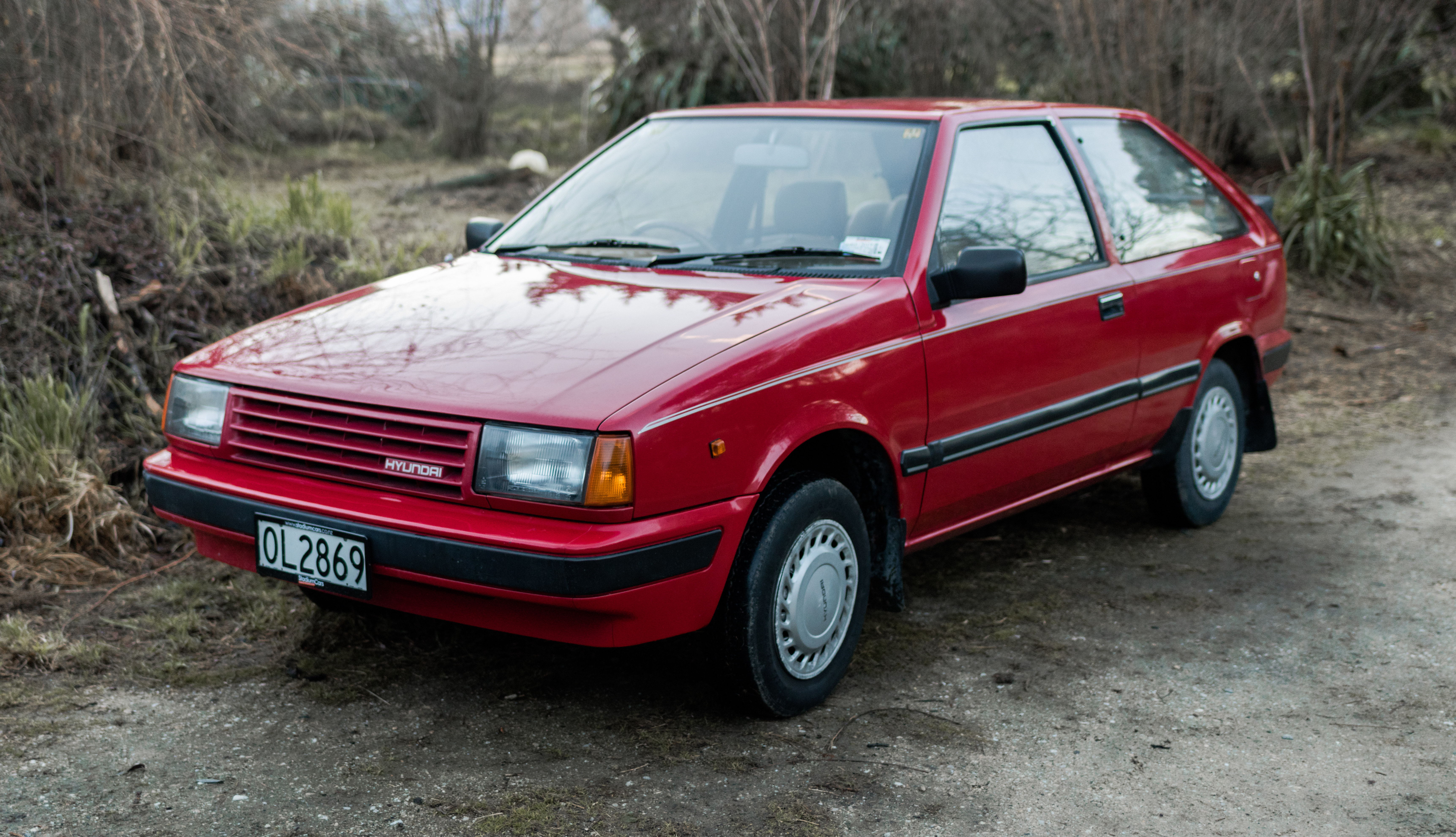
If we hop back into the way-back machine, I'm not sure anyone would have expected Hyundai
to be what it is today, or Kia for that matter, back in the 80s or the 90s.
I still remember those cars despite being a kid.
The impression is real, and the stigma, and the time it wasn't exactly a positive one.
From cheap economy cars you bought because of a budget, to morphing into a true,
world-class leader challenging the industry's best in multiple segments,
these two companies are barely a shell of what they once were.
Who saw this coming? And yet, here we are, from the Palisade and Telluride,
some of the best in their respective classes, I might add, to truly impressive EVs and sharp
looking economy cars. Hyundai and Kia have been underestimated at multiple points,
and now the industry is watching closely.
Yeah, exactly. The domestic brands and the Japanese ones, for that matter,
have already learned from experience what Kia and Hyundai can do in other segments.
These guys don't mess around when they set their mind to something.
It doesn't sound like we have long to wait.
Now Hyundai has announced it will kick off a family of body-on-frame vehicles in the US
before 2030, and tease them with an SUV that looks like a Bronco competitor.
A week later, Kia confirmed it too will be bringing a body-on-frame truck to the US by 2030,
and it even talked powertrains. I actually sat down in New York with
Hyundai America's Vice President of Product Planning and Mobility Solutions
to discuss what the automaker's body-on-frame truck needs to be to be competitive.
Caleb wrote up those stories and has extensive knowledge in this segment. Plus,
Nissan's about to get serious in the same segment as well.
So, this week is behind the scenes on Hyundai and Kia,
preparing and wanting to sell you a pickup truck, and what comes next.
By the way, if you like what we're doing here, do us a favor and hit us with a five-star review
on Spotify or Apple Podcasts. It really does help get the drive cast in front of more people.
Okay, let's go.
Caleb, real talk. Can you believe we're about to sit here and discuss
body-on-frame pickup trucks and probably SUVs from Hyundai and Kia?
So, I can say I do believe it, but it's still strange, right? We've seen just exactly what
Hyundai and Kia have done lately. They've made lots of big moves. They've surprised people.
They've made all these futuristic looking cars and EVs that have car sounds, whatever else.
So, it makes sense to me that they would move into a segment that makes like boo-coos of money.
I still just don't really know what that's going to look like yet.
Even though they showed us this concept at the New York Auto Show,
I don't know how people are going to receive it. It seems like a mixed bag right now.
You know, for historical context, we did have the Borrego at one point from Kia,
and that was a real body-on-frame SUV that punched above its badge and its price.
I remember that. That was cool.
That was a deep pull. Holy cow.
It had a V8 where you could get a V8. I think the V6 was pretty doggy,
but the V8 was like, I remember the V8 was like being compared against luxury SUVs.
The two Kia Borrego owners out there in the world right now are probably listening to this podcast,
and they're like, hey, don't rag on my boy.
I hope so. I hope Kia Borrego owners are listening to this podcast. Come on, yes.
Email us if you want a Borrego, okay? I want to hear from you if you want a Borrego. What's
your hot take? All right, so before we get into it, who do you think is the king of the segment
and why and which one's your favorite? I mean, midsize pickup, no doubt it's Toyota.
Tacoma is the top dog in terms of sales, in terms of buyer loyalty.
There are so many repeat Tacoma buyers, except that usually goes like 15,
20 years in between new purchases, right? We'll see if that's the case with this 2.4
liter, the turbo four, all of that stuff. Man, and as far as which one is my favorite,
I don't know. Ford Ranger Raptor feels kind of like a cop out. I wouldn't own a Ford Ranger
if it wasn't a Raptor. I'll tell you that much right now. Hang on, I want to dig into that.
Why wouldn't you own a Ford Ranger if it wasn't a Raptor? It's not appealing. Nothing about it
sounds awesome to me. Ranger Raptor, absolutely. But just the standard Ranger, I don't know,
nothing about it. I don't like it. I don't like the way it looks. I don't really like the way that
it feels. I don't know. I'm just not about it. I guess I would say, I'd say I want a Gladiator,
and that probably shows how little I care about rattles and squeaks and everything else.
I think it's the coolest still in the segment. I'll just talk about reviving a
stick shift Gladiator. It kind of makes me think. I'd say Gladiator is probably the one
that I want the most, but it's not the best. I actually kind of do like the Ranger. I think
the reason I like the Ranger is I like the way it looks now. It's a robust vehicle. It's far more
capable than it's a coma, both on paper and real world. It's developed as a global truck,
right? It's developed to work in the outback, and so it's more of a robust truck if you want to do
truck things, like payload and towing and all that stuff. I kind of appreciate that about it,
and I like how it looks now. And by the way, Gladiator, I'm down with you. I had a Gladiator
once at the lake. I took doors off and went to Dairy Queen. It was fun to roll around the lake.
It was a cool truck. It's fun. It's not a great truck truck, but it's a cool truck.
This is going to be out of the right field. I kind of like the Nissan Frontier.
Okay. Yeah. Yeah.
That V6, it feels old school.
I actually haven't spent very much time in a new Frontier. I do like it on paper, in theory,
everything like that. I think for me, the thing is, is that I've got three kids. There's zero
chance of me owning a mid-sized truck. I just can't fit my whole family in there. It just doesn't
make sense. And so it would be strictly a vanity purchase. And for that reason, I think I'm like
all in on Gladiator because I can take off the doors and the roof.
All right. Let's get into today's topic. Now that we've established that Caleb likes the
Gladiator, it's like his guilty pleasure. If they make a manual, he might buy one.
So real talk. We are here and we're talking about body on frame, Hyundai and Kia pickups,
and likely SUVs. What do we know, Caleb? What do we know for sure so far?
Yeah. So at this point, Hyundai and Kia both come out and said by 2030,
they're going to have mid-sized trucks. That's been kind of in the rumor mill for a little
bit, at least for Hyundai. It's relatively new for Kia to come out and say as much.
And then Kia also said that they are going to have a hybrid and then an extended range
electric vehicle. So I'm curious to see how that's going to play out in the mid-sized space.
You know, we have scout that's supposedly coming with that, but we really haven't seen it
in practice yet. So we do know that's coming. Hyundai here recently at the New York Auto Show,
they showed off that bolder concept, which a lot of people are saying is like a mix between
the Wrangler and the Bronco. I think that's right. I also don't think that's a horrible thing.
It just depends on how they deliver in terms of quality. There's not much that we know outside
of that. Like you've mentioned, you spoke with Hyundai Executive at New York Auto Show,
pretty, pretty intent on nailing the formula from the beginning, right? They like, they know that
people want the right powertrain. They also want good efficiency. And this is my biggest complaint
with most mid-sized trucks. And Hyundai says they're going to address this is that they need
interior space. And so those are maybe like lesser thought of, you know, like considerations whenever
we're talking about mid-sized trucks on paper, but in practice, not many of them are that great
to live with if you have a family. So the announcements have been different just so everyone
knows. But the key factor here is both automakers said they're going to make body on frame pickup
trucks for the US by 2030. Like that's the commonality. The difference is, and you got to read between
the lines here, Hyundai said that they are going to make it in America for America with US made
steel with a plant that doesn't exist today, which means they're going to build a plant as well.
They've committed to build a plant. Now Kia said none of that stuff, but I guarantee you
that they're going to make that Kia's pickup truck with that same steel and the same plant that
doesn't exist today in America because otherwise you have to pay the chicken tax. So they're not
going to be able to do that because you're not going to be competitive in price, right? That's why
trucks are made here in America. So there's that. And Hyundai didn't say anything about powertrains.
Hyundai said nothing about that stuff. So you start taking these two things and you cross them over.
But Caleb, my biggest question I got to ask you is the truck guy, why now? Why is this happening now?
Oh man, well, it's because essentially everybody else is doing it and they're having success,
right? It's not just domestic manufacturers. You've got international manufacturers
selling in big numbers here. We've already talked about Tacoma and we'll continue to bring that
up. But then you get into the SUV space, which has been talked about less by Hyundai and Kia,
but I think we will inevitably see that happen. Whatever you see, like a new Toyota 4Runner,
which I know you and I both have feelings about, and then there's Bronco, there's Wrangler,
buyers continue to go there, right? It just shows that there's business to be done in those segments.
And at a time when every manufacturer sells an off-road trim of whatever car they make,
even if it's not at all adventure ready, I don't know. I think they just see the dollar signs,
right? I was actually just going to put it is because they've done everything else. So this is
like the next hill to die on, right? We've already done EVs and we're doing a great job there. We've
got stylish vehicles. We've taken on the three-row segment with the Palisade and Telluride,
but I kind of like yours of like, why not? Like we can do it. And I also do agree with you, dollar
signs. And to your point, Toyota owns the segment, right? Boy Ford wants to. If you looked at Ford's
marketing, you'd think they own the segment. They want to own the segment, but Toyota owns the
segment. And now Ram's coming back. Ram's bringing in Dakota. Ram has actually said, we have a CEO
quote on the site that says Ram says, Toyota better watch out. Okay, Ram, aim high. It's good to
have goals. I love it. You know, if you're going to aim for aim, somebody aim for the king. But
Toyota is king. They sold 275,000 of these things last year. 275,000 Tacomas. That's a 41% year-over-year
increase. It's almost like if you make a new truck, people might buy it. It's crazy business scheme.
Who knew? But that did a lot, right? Caleb, like they went turbo four, they went hybrid,
they expanded the lineup, they leaned in on the design, but it's compromised in other ways.
That thing is king. Why is it king and give us a quick overview on this thing? Because this is the
target, right? Sure. Well, Tacoma is really interesting. For generations, they have had repeat
customers. They've like banked in on their reputation for simplicity. And then with this
generation, they have really changed that up. That's not so simple anymore. And so I think that was,
honestly, it was a little surprising to see Toyota take that step. And I think some of these steps
were forced, right? Like to meet emission standards, they had to go with the turbo four.
It's higher performance than the old V6. Like it makes sense to be competitive with other players
in the space. It makes sense. But the Tacoma now is not really anything like the Tacoma of
yesteryear. You have to remember that this generation, it finally introduced rear disc
brakes, right? Like that's how simple that truck used to be. But I think still, it just shows the
power of marketing. It shows the power of brand reputation. Whenever people talk about midsize
trucks, they say, Oh, yeah, you buy a Tacoma that's just like the default. So honestly, it's even more
that way with mid sizes in Toyota than it is full sizes in Ford, right? We've seen like continued
dominance of the F series, you know, for the last almost 50 years. But like you said earlier,
the gap between Toyota and the next player in the midsize space, I mean, it's massive.
I actually am glad you mentioned Ford. So Ford came in and with the new Ranger and they really
tried to take a big swing. But last year, and keep in mind, I just told you they sold 275,000
Tacomas last year, right? Last year Ford sold 70,000 Rangers, not an insignificant number,
mind you. But like, that's not even 50% of Tacoma sales, right? Combined the GM Twins,
the Chevy Colorado and the GMC Canyon in 2025 sold 145,000. So again, we're now at basically half,
I'm rounding numbers, don't call me half of the Tacoma sales, right? So Tacoma owns this segment.
So now when I was in New York, I talked to the executive at Hyundai, Ms. Boyle, and I asked her
about what this truck needs to be. What does this truck need to accomplish? They know the
competitive segment. They all looked at this, they've clinics this, right? What does she tell me,
Caleb? What does she tell us? What did we report on? Yeah, well, so she brought up, you know, a list
of feedback items that they heard from people. And whenever you say they clinic this, that is
probably the best way of putting it. People explain that they want efficiency. Just because this is
a segment that's filled with turbo four cylinders doesn't mean they're all getting good fuel economy.
So people want a truck that they can drive around every day because that's what people use trucks
for now. And it's not a major hit to their wallet. So that's important. They want better interior
space so that way they can fit actual humans in the rear seat. That's important to them. It may
be surprising elements that she brought up. They want good space, good efficiency, they want good
performance and power. That's still important to them. And as you look around and you see
what Toyota, Ford, Chevy are now able to do with turbocharged engines, you still have to have a lot
of punch. You still have to have a lot of power, whether people actually ever use that or not is
another thing. But trucks, arguably even more than sports cars, numbers matter.
You know, and to your point, yeah, you got three kids, you know, we talked earlier, maybe there's
a fourth, you don't know about, I'm kidding. And there's even four kids, he's got three kids.
But you're not the target demographic for this. And even me with two kids and a boat that weighs
5,000 pounds, like that's, I'm not target demographic for this thing. But if you get in
the back of a Tacoma, it's miserable. And the new one is like modestly better than the old one.
That's not a high bar, right? You don't want to be back there. Caleb Jacobs does not want to sit
back there. Yeah, yeah. And for listeners, Caleb Jacobs is a big boy, six, five, two,
90. I am not fitting very well in the back of the Tacoma. But I'll tell you what,
I did ride, this is ridiculous in the back of a TRD pro with those isodynamic seats,
the seats with the shocks. Oh dude, it was horrible. I was at the forerunner lodge,
okay, we was in Southern California. We're at this like, you know, off-road range type thing.
And they had a jump setup and they were like, who wants to go for a jump
in the Tacoma TRD pro? I was not quick to raise my hand. They said, Caleb,
you should get in there. And no kidding, they stuck me in the back. I'm the biggest there by
like five inches in height and at least 50 pounds in weight. And they're like, yeah,
you should sit behind the driver. Okay, I took a video of it. So that's up. I think that's up on
Instagram. The backseat of Tacoma, that ain't it, not for your boy here, but nevertheless.
By the way, the backseat of a Ranger or the backseat of actually basically anything
than over at Tacoma is better, but it's still not a place you want to be. Like,
I don't want to take a road trip in the back of a Ranger, right? And for reference, an F-150
or a Ram 1500, these trucks are now huge, ginormous. Like you could increase the cab size by a little
of a Ranger or Tacoma or whatever, and you're not encroaching on Tundra F-150 space because
those trucks are so big, they're like limos in back now. It's crazy. Yeah. Well, and it's a
frustrating point to me because midsize trucks have grown in overall space, right? Like in terms
of footprint, they're about the same size as full-sizers from two decades ago or whatever.
I don't think they match it in interior space. Like you're doing a lot in terms of making them
look more aggressive, right? They're taller, they're wider, they're everything else. But
you don't actually gain anything in the way of usability, livability, maybe is a better way
of putting it on the inside, but that's neither here nor there.
We'll have a touchscreen, but these trucks are going to have buttons and knobs. We're going to
have a volume knob. We're going to have HVAC controls, all that stuff. Let's talk a little
about the powertrains though, because Hyundai wouldn't talk to us about powertrains. They just
kept saying that people want power, they want capability, they want efficiency, but that's
it, right? They left all that out. There's a lot of ways to get to what she just said
in that. Kia told us we're going to have a hybrid and an E-rev. Hybrid's interesting
because the only hybrid in the segment right now is currently the Tacoma. It's only in the
high-end models and is not efficient hybrid. It's a power hybrid, right? It's quick,
but it's not efficient. And we don't have an E-rev in anything. And by the way,
these things are going to show up by 2030. We just heard today that the Scout might not be here
until 2030 now. Like these things could show up at the same time, totally different price point
spectrums and capability and all that stuff. But like, I don't know, man, we'll talk about the
next four years. What do you think about the E-rev idea? On paper, it's best of both worlds,
right? Like, I think that it delivers what people want. They want to have crazy power,
the electric brains, but they don't want to deal with range and anxiety. In practice, though,
there's so much added complexity. I know that automakers are capable of it, but that doesn't
mean that's what people want. And especially, you know, we talked about price points,
how in theory, it's probably a lot different than Scout. I don't know that it will be.
How could you possibly make an efficient, like dual motor, you know, like dual power train
effectively for any reasonable amount of money? By the way, so everyone knows an E-rev, extended
range electric vehicle, is basically an electric car, right? It's an EV with a battery pack and
that powers the electric motors. But then there's a motor, a gas powered, what's called a generator,
right? That is the range extender. So that generator will kick out when you need extra power
or your juice runs out, it will power the battery to sustain the battery to then power the wheel.
So that motor, the gas powered motor, it's just a generator. It's not connected to your actual
drive wheels. Now, you really want to just dub it down. You can say it's a hybrid,
it's a really fancy hybrid. Why would you call it a hybrid, Joel? Because is it an electric car
if it has a gas tank? Is it an electric car if it has a fuel filler neck? Is it an electric car
if I have to go to the gas station? It's a legitimate question, right? It's a really fancy
hybrid. Granted, the gas motor does not connect to the wheels. So I'm sure Caleb
is making an argument about this, but I do agree with Caleb. It's the best and worst of all worlds.
Like, it's the best of worlds of like, I'll never run out of juice and I don't have to charge,
I could just go to a gas station. But also like the e-rev, the extended range version of the Ram,
we all mapped it out. Once you run out of juice, you're basically getting like 19 miles per gallon,
which is basically a V6 Ram pickup truck. You're just getting rid of the, what's the point?
Yeah. All right. Here, this is where, this is where we have to interject, okay? In the Ram,
all right? The range extended Ram that's got electric motors, got batteries, can be stupid,
quick. And you know what's under the hood is a penistar V6. It's there because it's ubiquitous.
It's there because Stellantis makes a million and one of them every year. It's cheap. They're
available. They can get it. So, you know, in terms of Scout being owned by Volkswagen,
like right, we're probably going to see a two liter Volkswagen engine under there.
Whenever we're talking Kia, it doesn't have to be some, you know, crazy, like big power gas engine,
because it's not driving the wheels. It just has to run at a constant RPM, engage and disengage
as needed. So, I don't know, like you can't go around saying it's like, oh, this thing's got a
beast under the hood, because odds are it's probably like whatever's in the K4, a two liter,
a two five. But here's the thing, to your point earlier, the worst of all worlds.
Now you're lugging over long two powertrains. I'm lugging along a gas engine. I'm lugging along
a much bigger battery than a hybrid or a plug-in hybrid. And let's just say, look,
the average American drives 40 miles a day and five miles in a shot. So, if you have an e-rev,
what's your use case? How many times a week, a month, a year, are you going to use that gas engine?
90% of charging takes place at home. 65% of America has a single family home. People hate
statistics because it proves them wrong. But like, statistically speaking, there's not a good
reason we need to have extended towing. Yes, going in the middle of nowhere, like going to Baja and
off-roading and camping for like two weeks at a time. Yes. How often are you doing those things?
statistics, we're talking data. Let's just get real practical. Kia and Hyundai dealers, not that
great, chief. I agree with you. Like, their dealers have not kept up in terms of experience.
By the way, we can see the same thing in terms of like, Ford dealers versus Ford quality. Although,
Ford quality is, you know, they most recalled automaker last year or something like that.
But like, the reality situation is that how many people do we know that had, you know,
a rear drive motor unit or whatever go out on a tell-you-ride and they had a nightmare experience?
Or, you know, my friend Eric Tingwall, he works at Motortrend. They had an EV9. I read his year-long
review with the EV9. He talks about his family road tripping and all these things. He's like,
the EV9 was amazing. My worst experience with the EV9 was dealing with a dealership.
So it's like, it really doesn't matter how great your car is, by the way,
if your dealership experience is terrible, because people experience the dealers,
not the executives and engineers that engineer these cars, right? You live with the car,
but when it breaks, things go wrong. Let's talk a little more about the actual product we're here
to talk about. You know, Hyundai is planning a massive product expansion, right? And they're
talking about a family of body-on-frame vehicles. Now, while Boyle was very, very strictly like 100%
on beat, the truck will be first, they are planning a family of body-on-frame vehicles.
They have not said what that family will look like, but you know what they didn't show in New York?
A truck. You know what they did show in New York? An SUV that was body-on-frame. And it wrote on
37s. It had independent front suspension. It has solid rear axle and it had external bypass shocks
that were completely fake, by the way, but they were there. But it looked like a Bronco, right?
Right, Caleb? It looked like a Bronco. Yeah, yeah. And frankly, I think that the SUV is probably going
to be the most successful. We've seen that happen already as like, you know, new automakers moved
into the space. I understand it's a little bit different. Rivian led with the R1T, followed
it with the R1S. R1T doesn't sell, right? It has nothing to do with how good the pickup is or how
bad a pickup is or anything like that. Like, we're just seeing that there's more appetite
for adventure SUVs. Like, it doesn't matter. You have the most hardcore four-wheelers by Wrangler
and you have kids in college who just found out that they can get approved for a loan at,
you know, 11%. Like, both of those people buy Wranglers. Both of those people are a lot more
likely, you know, especially the younger ones to buy a Kia or a Hyundai Adventure SUV,
because they see what everybody else has. It's like, okay, yeah, sure. Like, I just like the way
this one looks. So I don't know. It's tricky to me because Jeep and Ford, to somewhat of a lesser
degree, they have that reputation with hardcore four-wheelers and brand new car buyers, right?
Like, people who have never bought a new car prior, like, they both want a Jeep.
I am not sure that's going to be the case with Hyundai and Kia, even if the hardware is really
impressive, even if the numbers are awesome, right? They brought this thing out, the Boulder
concept with 37-inch tires. I am still not sure that rolling out a production adventure SUV
with 37-inch tires is going to be enough to conquest hardcore Jeep and Bronco four-wheelers.
I don't know. Well, that's just it. Every one of these sales is going to have to be,
maybe not everyone, but a majority of these are going to be to conquest, right? You're not going
to steal sales and palisade for this thing. And to your point earlier, Wrangler sells a ton more
than Gladiator, fraction of the sales. Gladiator is a fraction of sales in Wrangler. But just for
people, for perspective here, Jeep Wrangler sold 167,000 units last year. 167,000 Wranglers were
sold last year. Ford sold 146,000 Broncos. So if you even get a fraction, let's just say they
somehow steal, they can sell 80,000 of these SUVs and they sell, let's say Ford sold 70,000
Rangers, they sell 40,000 trucks. I don't know, I'm making this up, right? If you sold 100,000
units of these from Hyundai and then another 70,000 out of Kia, right? By the way, those numbers,
now you're starting to beat GM's twins with the Colorado and the Canyon. Those numbers start
combining. Now, GM doesn't have an SUV based on those. The Blazer is some crossover car based
thing. So, Caleb's going to have a heart attack. I have nothing new to add to that conversation.
I just can't, I still can't believe that the Blazer is not a K5 remake. I just,
perfect segue into our ending question for you, Caleb. Since you were about to have an
heart attack on the Chevy, let's move off that for a second. What is the body on frame
Kia and Hyundai need to be to win? You already said that the SUV is more important and I heard
you. We know the trucks coming first. What do they need to be to win and can these things compete?
Can they conquest anybody? This maybe sounds superficial. They have to do well is look good.
I know that's simplistic. That's what people want. They want a truck that looks cool,
that looks like it can do a lot, whether or not it actually can, and then impresses their friends.
They want to buy something that doesn't look like everything else on the road, yeah? So,
whether it's a pickup, whether it's an SUV, I think that they're going to have to nail the styling.
Now, this is like a multi-layered approach, right? With them just now moving into this
category, they just got to make sure that they're solidly built, that they develop a good reputation.
And then whenever time comes, who knows, like 10 years from now, maybe more, and it's time to follow
it up, then I think you stand a real chance of getting Jeep and Bronco buyers to come over.
Once you've shown that you can play in that space, that you can develop and build an engineer,
a solid product, it's going to be a long-term deal. I don't see any way that Wrangler and
Bronco buyers are going to switch over to Hyundai and Kia right off the bat. Not because of anything
bad, the Hyundai and Kia does simply because we're kind of stubborn. Four-wheel drive buyers are,
they just like what they like. They definitely need to look cool. Like flat out, they got to look cool.
I think if you botch the launch, you're in trouble. These things got to roll out and they cannot
like have a massive instant recall. They cannot have engines blowing up or powertrains failing.
I also really think that you're not going to conquest Wrangler and Bronco buyers, like you said.
But at the same time, Gladiator looks cool and it's not flying off the shelf, right? It looks
like a Wrangler with a bed and it's not flying off the shelf. So Tacoma looks cool. Tacoma's
living on reputation, TBD, how they hold up with the turbo fours. So I really do think if you come
out and look cool, that Boulder looks cool. I think you could get some sales. I also think you
could steal sales from like a Bronco sport or you could steal sales from a Cherokee. Look, the
Cherokee doesn't look like a Cherokee. Chief's going to call me, but it doesn't look like a Cherokee.
I don't care. It looks like a Liberty. It should've just been called Liberty. It's a whole editorial on
that. I think you could steal Cherokee sales. I think you could, right? Because if you want Cherokee,
you didn't want a Wrangler. You didn't want to live with a Wrangler. So maybe you want to live with
this. I don't know. I think it's interesting. We'll see. TBD, we don't have that long to wait.
Could be here before Scouts. Who knows it? Oh boy. Oh boy. There's a lot of stuff to be here
before that, but we'll save it for another pod. Another pod. That's a great way to end it, Caleb.
That's it for this week's episode of The Drive Cast. Thanks to Kia and Hyundai for deciding
its time to join the pickup truck wars. To Caleb for his time and insights. Thanks to our editor,
Tyler Mark, and thank you for listening. We'll be back next Wednesday. And be sure to check out
TheDrive.com for our full coverage and a whole lot more. Subscribe to one of our fine newsletters.
They're free, by the way. Follow us on Instagram, Facebook, TikTok. Subscribe to us on YouTube.
We got lots of cool videos coming up. We'll see you next week. Bye, everyone.
About this episode
Hyundai and Kia are preparing body-on-frame midsize pickups for the US by 2030, a surprising move for brands known for modern styling and EV momentum. The discussion compares their plans to Toyota Tacoma’s dominance and highlights what buyers demand: better real-world efficiency, usable rear-seat space, and strong performance without sacrificing daily drivability. Hyundai’s focus appears to be US production and interior space, while Kia is teasing hybrid and extended-range EV powertrains. The hosts debate whether e-rev complexity and dealer experience will hurt adoption, and what it will take to win over Bronco/Wrangler fans.
In a shocking turn of events: Both Hyundai and Kia are preparing body-on-frame pickup trucks. Sounds far-fetched, but it’s true, and it’s quite the development as these two juggernauts continue to blaze a trail forward challenging the rest of the industry on multiple fronts.
It doesn’t sound like we’ll have long to wait. Now Hyundai announced it will kick off a family of body-on-frame vehicles in the U.S. before 2030 and teased them with an SUV that looked like a Bronco competitor. A week later, Kia confirmed it too will be bringing a body-on-frame truck to the U.S. by 2030, and it even talked powertrains.
Senior Editor Caleb Jacobs and Director of Content and Product Joel Feder dive behind-the-scenes on Hyundai and Kia preparing to sell you a pickup truck, and what comes next.
Stories mentioned in today's episode:
Hyundai Targets Bronco, Wrangler with Body-on-Frame Boulder SUV Concept
Hyundai Learned the Hard Way What Truck Buyers Do and Don’t Want
Midsize Trucks Have All the Same Problems. Hyundai Thinks It Can Fix Them
Kia’s Launching a Body-on-Frame Truck by 2030: TDS
00:00 Intro
06:55 Hyundai and Kia have body-on-frame trucks coming
13:26 What Hyundai has told The Drive its truck needs to be
16:55 Which powertrains will these trucks have?
21:21 Kia and Hyundai dealers are a risk
25:45 What do these trucks need to be to win?
Learn more about your ad choices. Visit megaphone.fm/adchoices