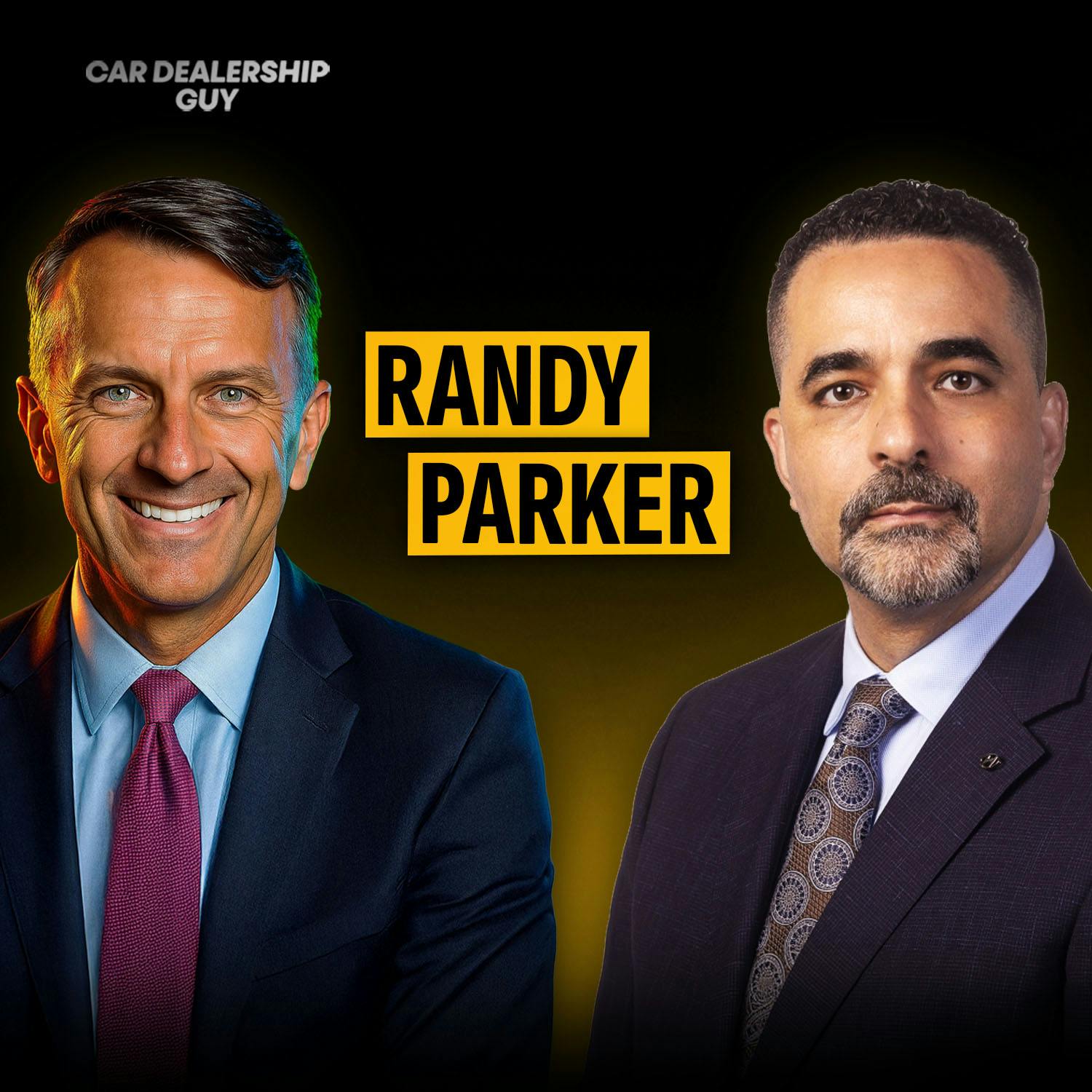
Hyundai & Genesis CEO: Record Sales Volumes, Dealership Profits, and the Fight to Protect the Franchise | Randy Parker, CEO of Hyundai and Genesis Motor North America
Car Dealership Guy Podcast
Hyundai & Genesis CEO: Record Sales Volumes, Dealership Profits, and the Fight to Protect the Franchise | Randy Parker, CEO of Hyundai and Genesis Motor North AmericaCar Dealership Guy Podcast · Mar 17, 2026
The Hyundai Genesis is a luxury car made by Hyundai that is designed to be more comfortable and fancy than regular cars. It was an important step for Hyundai to make nicer cars.
Electrification means making cars that run on electricity instead of just gas. This includes cars that use both gas and electric or only electric power.
Cars need tiny computer chips to work properly, and there haven't been enough chips made recently. This has made it harder for car companies to build enough cars.
Dealer profitability means how much money a car dealership makes after paying all its costs. They make money not just by selling cars but also from things like repairs, used cars, and loans.
A VIN is like a car's fingerprint, a special number that helps people know everything about that car. Dealers use it to check if a car has problems or is a good buy.
The luxury vehicle marketplace is where fancy cars are sold. These cars are usually more comfortable, have better features, and are made by brands that people think are special.
Hyundai Motor Group is a big company that makes cars. They own Hyundai and Genesis, which are brands that make different types of cars, from affordable to fancy ones.
Dealer investing means car sellers spend money to make their showrooms nicer and give better service to customers, helping people feel good about buying cars there.
A product portfolio means all the different kinds of cars a company sells. It shows what choices customers have when they want to buy a car from that brand.
Luxury customer experience means making people who buy fancy cars feel special by giving them great service and nice places to visit when they buy or fix their cars.
LIVE
CDG Circles signups are back open.
If you want to learn from the best dealers in the country,
this is the digital peer group where it happens.
Over 3,000 dealership rooftops represented.
Recent dealer-only conversations
include Stellantis acquisition caps, AI selection
and integration, pay plan revamps, cooling new car sales,
used car sourcing strategies, and more.
Don't miss it.
Join us now at cdgcircles.com.
This past year was by far one of the most toughish years
that I've experienced in the automotive industry.
This past year we had to deal with a lot,
a lot of different variables.
First and foremost, probably the biggest variable
that we had to deal with last year were the 25% tariffs.
That was a huge hit to our bottom line.
Hey everybody, I'm Sam Dark,
and today I'm joined by Randy Parker,
CEO of Hyundai and Genesis Motor North America.
Hyundai is one of the few brands
still growing sales volume while
much of the industry pulls back,
but it hasn't been smooth sailing.
Randy breaks down how Hyundai is navigating a market
that's down 5% in early 2026,
absorbing 15 to 25% tariffs and managing pressure
on dealer inventory and profitability.
He also explains the company's tens of billions
in U.S. manufacturing investments
designed to secure the brand's next 50 years.
A big thanks to our sponsors
for making today's episode possible.
Reynolds and Reynolds, Lotlinks,
and Nomad Content Studio.
Now let's get into the show.
Randy Parker, CEO, Hyundai Genesis North America.
Welcome back to the Cardulorship Guide podcast.
Thanks, Sam.
It's a pleasure to be back.
Thank you.
We're excited to have you back now.
There's an interesting thing I noticed.
I went back and watched your interview with Yossi
about a year ago.
Last time you had the Hyundai logo sitting there.
You've added a logo.
Yeah, you're now CEO of both Hyundai and Genesis Motor North
You've got full accountability for both.
Walk us through that.
Well, I had to get some luxury into my life.
I bought my first watch when I got promoted
a couple of years ago.
Actually, my wife made me buy the watch.
The first watch that I ever had,
first luxury watch that I ever had.
And so anyway, I had to add a little bit of luxury
to my life, so we decided to add Genesis.
How's that been?
What's your take in the early months
of your accountability over the years?
It's been fantastic.
To be quite honest with you, Sam,
I would say that I'm really grateful
and honored to be in this position.
And to have the full confidence of my mentor,
Jose Munoz, who's now, who leads Hyundai Motor Group
in terms of the global CEO.
To have the full confidence of our vice chairman,
Jay Chang, and of course the executive chair,
Mr. Chang, to have their vote of confidence
stepping into this role for both Hyundai and Genesis
has been pretty amazing.
And it's given me a lot of confidence to come in
and just keep the ball moving, man.
Yeah, yeah.
So speaking about the ball moving and confidence,
you posted, Hyundai posted a record January, 2026.
I don't know what the final closeout was for February,
but Hyundai by metrics of units sold
in the marketplace is winning.
What has created that environment in January, 2026?
Well, the environment has definitely changed
this year, the market is actually down 5%
between January and February combined.
It's a really, really tough market right now.
I guess the good news for us is that we did grow our business
in January and February, but it wasn't easy.
But let me take a step back, you know,
over the past five years,
I think we've had a tremendous amount of success.
We've had record retail sales now for five years in a row.
Last year, the mantra was five for five in 2025.
And the mantra this year hasn't changed.
It's six for six in 2026.
We wanna grow our business to record levels this year as well.
We're off to a good start, but I gotta tell you,
January and February were extremely, extremely difficult
with the market being down 5%.
So how is Hyundai responding to that?
Cause that is a curiosity of my own, just full disclosure.
So Ziggler Auto Group, I work for Aaron Ziggler.
He's the owner of the company.
This cart dealership guy gig is my side gig, I love it.
It gets me the opportunity to speak with people like you.
We have two Hyundai stores.
So we've got a Hyundai store in Racine, Wisconsin.
We've got a Hyundai store in Holland, Michigan,
right on the Great Lakes there.
Okay, so let me ask you a question, Sam.
I'm not gonna let you off the hook, man.
Let's do it.
Are you investing in facilities?
Are you investing in the brand?
You know what?
Yes, yeah, absolutely.
In fact, we just built a beautiful new facility
in Holland, Michigan.
It's in the process of opening up.
And, you know, the Racine facility is not terribly old,
but it continues to grow.
So yes, absolutely investing.
Awesome, awesome.
Well, let me know when that grand opening is.
If I can make it, I'd love to be there.
We'd love to have you out.
We would love to have you out.
So it's interesting.
Last time you talked with Yossi,
Hyundai to your point was on the offense.
The environment has changed really in the last 30 to 60 days.
Margins are compressing, you know,
producing that dealer profitability is a huge challenge.
Do you see that more as a function of marketplace?
Is that strategy on Hyundai's part?
What's contributing to this kind of shift
in this more challenged marketplace
in the last 30, 45 days?
Yeah, that's an excellent question, by the way.
The market has definitely changed.
And it started well before, you know, the last 60 days.
I would say this past year was by far
one of the most toughest years that I've experienced
in the automotive industry.
This past year we had to deal with a lot,
a lot of different variables.
You know, first and foremost,
probably the biggest variable
that we had to deal with last year were the 25% tariffs.
And that was a huge hit to our bottom line.
So we had to deal with that.
And we're still dealing with tariffs this year.
The IRA tax subsidy went away this past year
at a time that we were investing in EVs.
And so that's been a huge deal for us to deal with.
There was a government shutdown this past year.
We had an ICE raid at one of our battery affiliates
at our meta-plant campus in Savannah, Georgia.
That was a huge distraction.
And on top of that, we're dealing with
negative consumer sentiment, high inflation,
high unemployment.
And so it was a real, real struggle this past year.
And yet we were still able to break through
and have record sales.
I think 2026 is gonna be no different.
I think it's started off very challenging.
All of those variables that I just discussed,
we're still gonna have to deal with.
We're still gonna have to deal with tariffs.
Now we're paying instead of 25%, we're paying 15%.
In fact, we're gonna pay more tariffs this year
because we're paying 15% for an entire year.
Last year, we jumped started with 25%,
but we didn't pay 25% for the entire year.
And so when you look at it pound for pound,
we're gonna actually pay more tariffs
this year than last year.
That's number one.
Number two, we're still gonna have to deal
with the IRA tax subsidy going away.
We're dealing with that.
As a matter of fact, we're bucking the trend right now.
The EV market has been turned upside down.
Again, at a time that we were investing in EVs
in terms of our meta plant facility in Savannah,
but we're bucking the trend.
You know, our EV sales this past month were up 6%.
IONIQ 5 was up 33% in the month of February.
So although the market is turned upside down,
we wanna demonstrate leadership in that space.
We think that really gives us a competitive advantage
while other OEMs are backing away,
pulling their production and backing off
some of their programs.
We wanna keep our foot on the accelerator
and continue to demonstrate leadership in that space.
Producing IONIQ in the United States
has been very, very good for us.
We've seen a new type of buyer that's come into our showroom.
Hopefully you're seeing the exact same thing.
And so we view that as a competitive advantage.
Now, we don't wanna sell EVs at the expense
of hybrid or ICE,
but we definitely wanna continue to invest.
But still, we've gotta deal with that, right?
Now there's a war that's taking place in the Middle East.
How is that gonna impact confidence
in the United States and the minds and the eyes
of the consumer?
We're gonna have to deal with that as well.
And all of those other variables that I talked about earlier
in terms of consumer sentiment, high inflation,
now we potentially have to deal with higher gas prices.
2026 is gonna be another very, very challenging year.
But I've always said from day one,
if we do two things well,
and I think we've done this over the past six and a half years
since I've been at Hyundai,
if you take really, really good care of your customer
and you take really, really good care of your dealers,
you're gonna always net out in a very good place.
That's been our mantra from day one.
Now, we're not perfect.
We strive to be perfect.
And in the process, hopefully we can achieve excellence.
But we're gonna try and do those two things well,
no matter what comes out of left field.
And if we do those two things well,
I think we'll net out in a very good place.
So let's talk about some of the topics you just brought up.
So starting with EVs,
I think this is an interesting time for EVs.
And I've noticed anecdotally in our own stores
sitting at our Hyundai store in Racine,
there's an increased curiosity this week.
Again, we're recording in March of 26
for movement away from ICE vehicles,
which is astonishing a little for me in the Midwest
where we haven't been very EV dependent.
We haven't had a lot of EV adoption.
Do you think some of the fluctuations in oil prices
and some of the uncertainty around crude oil and gasoline
may push people more towards EVs?
And what is Hyundai's long-term plays
that relates to EVs without the government subsidy there?
I think a lot of opponents were expecting
EV demand to fall off a cliff.
It fell to be sure,
but maybe not as much as some expected.
As you looked down the road,
what do you see the future of EVs being?
You're investing in it,
you're investing it here in the US,
and that'll help with tariffs,
but what's your long-term play on EVs?
Well, I think EVs are here to stay first and foremost.
And again, I'll go back to what I just said previously,
leadership, leadership, leadership.
We want to demonstrate leadership in the EV space.
We think that gives us a competitive advantage.
There was an EV market pre-IRA,
and there's going to be an EV market post-IRA.
We just don't know where it's going to net out,
but what I can tell you is that whatever the market size is,
we want to demonstrate leadership.
We want to be on the top of the leaderboard
at the end of the day.
And I think with the products that we have right now
that we're producing in the United States and America,
built by American people,
I think that gives us a competitive advantage
in the marketplace.
And so we're going to continue
to keep our foot on the accelerator.
As I said, not at the expense of ice or hybrid,
but we really want to meet the customer
on their journey to electrification.
And I think we're doing that.
If you look at our performance in the month of February,
we had an increase in hybrid sales of 79% year over year.
I mean, that's huge.
That's big, right?
And that's where the future is.
And so the good news from a Hyundai perspective
is that we've got a seat for every purse.
So no matter which way the consumer wants to pivot,
we can pivot with the consumer.
In fact, at the meta plant facility,
that plant, as you know, Sam,
was slated to be 100% EV.
In the fall of this year,
we're going to be producing hybrids in that plant
because we're pivoting that quickly
to meet consumer demand when it comes to hybrids.
We're going to produce and sell more hybrids this year
than we did last year.
But at the same time,
we're going to keep our foot on the accelerator
on the EV side as well.
So again, it's going to be a little bit of
the pulleys going like this, right?
Ice hybrid EV.
We don't know exactly where everything is going to net out.
But the good news from a Hyundai Motor Group perspective
is that we can pivot very quickly
and meet the customer on their journey to electrification.
This episode is brought to you by AutoVision.
How many steps, teams, days, and dollars
does your reconditioning process currently take?
For many dealerships, recon delays slow down inventory turn
and eat into used vehicle profits.
Reduce your cycle time with recon vision,
an automated reconditioning workflow
that tracks vehicles from start to finish,
giving you a clear view of your entire recon process
while reducing cycle time.
Because when recon moves faster,
your inventory and your profits move faster too.
Visit autovision.com slash recon vision
to learn how you can maximize your used vehicle profits.
That's autovision.com slash recon vision
or click the link in the show notes below.
We've been talking on our daily dealer live show
recently about China and Chinese vehicles,
BUID in particular.
Many have said BUID will never make it into the US.
Senator Bernie Moreno among many.
Trump himself has said, you know what?
That's not necessarily true.
He's sort of left the door open.
How do you see, how does Hyundai compete
in the global market against some of those Chinese brands?
And if that came into the US marketplace,
do you have any thoughts about how we would compete?
You know, it's probably a longer term play,
but is that something we should resist?
Or is that something we should be open to competing
against if it comes?
Well, I mean, you know, I can't control,
I can only control the things that I can control.
You know, what happens in terms of, you know,
the political landscape and what happens in terms of,
you know, what the Chinese brands are gonna do
in and all around us.
And if they're ever gonna come to the United States,
I can't control that.
But what I can control is that we wanna be prepared
for anything that comes out of left field, Sam.
And I think when you look at our track record
over the past five years,
I think we've been pretty good at adapting
to big changes in the market, right?
You look at COVID, what do we do during COVID?
We demonstrated leadership, we took care of our customers,
we took care of our dealers and what happened?
We had record sales and that lasted for a couple of years,
right?
Then we had the microchip shortage and what do we do?
We took care of our customers, we took care of our dealers,
we kept the supply chain moving and what happened?
We had record sales.
This past year, we had to deal with tariffs.
What do we do?
We had to deal with the IRA subsidy going away.
What do we do?
The CDK hack, you know, that hurt for several months.
And what do we do?
We took care of our dealers, we took care of our customers
and we had record sales.
So I think we've gotta be prepared
for anything that comes out of left field.
And I think with the leadership that we have
in place right now, the investments that we're making
to future proof the company moving forward,
I think we can compete in any environment, you know?
So, you know, I'm a former basketball player
and I've always been a proponent of steel, sharpens steel.
I wanna play and compete against the best.
If the Chinese brands do come into the US, guess what?
I think from a Hyundai Motor Group perspective,
we're gonna be able to compete.
That's excellent.
So where do you feel the most pressure right now
within Hyundai in the automotive markets place?
Demand, affordability, policy, inventory, mix
or dealer economics?
Where's the most pressure?
All of the above.
All of the above.
And you know, Sam, your question is really profound
because today we've got our National Dealer Council
coming into Southern California
so that we can continue to work on a lot of those things
that you just discussed.
So we've got a lot of work to do.
You know, probably the one thing
that is keeping me awake at night right now
is just the inventory levels.
I think that's probably the biggest pressure
on our Hyundai dealers.
You know, as I mentioned, January and February,
the market was down 5% so we've gotta adjust.
And so, working with the dealer council
and working with our team and we're gonna show
the dealers tomorrow, the roadmap that we're gonna take
to lower dealer inventory levels by the end of Q2.
I think we've got a very aggressive plan.
And if we can do that, I think that's gonna help
relieving a lot of that pressure
and help with dealer profitability moving forward.
So it is an interesting comment that you make.
We hear it a lot on the show Daily Dealer Live.
OEMs will control inventory through rebates and incentives.
Stair step is another lever.
We've seen various OEMs, Nissan, Stellantis and others
use stair step aggressively.
Hyundai's done some of that.
Stair step can sometimes be a huge benefit
to larger groups or dealers that focus on incentives
or on a volume, but it can also hurt
when you're trying to solve for dealer profitability
if you miss those marks.
What's your take on stair step now and into the future?
And what's your best lever as an OEM
to help bring down that inventory?
First of all, I hate the term stair steps.
Everybody does.
I hate that. What would you call it instead?
You know, we call it an objective based program.
And you know, we've had, you know,
our objective based programs since I started
with the company six and a half years ago.
And as I said, we've had record sales and record profit.
And you know, some years are better than others, right?
And so our programs, let me just say this, Sam,
our programs are never meant to demotivate dealers.
Our programs are meant to motivate dealers
and reward dealers for really good performance
and reward dealers if they're investing in the brand.
That's the way we're building and designing our programs.
And we're doing that hand in glove
with the National Dealer Council.
And we're going to continue to do that, you know,
going forward, but really the focus right now
for us should be driving throughput
through every facet of the dealership
to help drive profitability.
It's not just front end gross.
I mean, obviously front end gross is something
that we need to focus on and we are and we will
through selling more cars.
But you know, the back end, used cars, finance, accessories,
these are the things that we really need to focus on
to help drive dealer profitability.
If you look at where we were, say, six years ago
when I first joined the brand as an example,
you know, our service departments,
we're not at tier one level, right?
We didn't have the capacity.
We didn't have the facilities today.
We've got over 60% of the dealers you included
that have invested, you know, in facilities,
invested in more capacity so we can meet, you know,
the service demand that's out there.
And it's really helped us improve our bottom line profit.
And I think that's going to continue to excel.
Six and a half years ago,
we weren't one of the best in terms of used cars
and now we're starting to get into that tier one level
in terms of a certified pre-owned.
But that's a really good book of business for us
and a way for us to generate profit at the dealership level.
Finance, you know, we're working hand in glove
with the Hyundai Capital to ensure that we've got
the right programs and the right structures
to help, you know, our dealer partners
make money there as well.
And so all of our programs and our policies
are geared toward rewarding good performance
and rewarding dealers that are investing in the brand
and we'll continue to do that.
And if something is broken,
we'll work with our dealer counsel to fix it.
So you talk about meeting with the dealer counsel.
This is an interesting kind of conversation,
not only just for Hyundai, but for all OEMs.
There's a dealer counsel,
dealer counsel makes recommendations.
The OEM then takes those recommendations,
implements some of them.
What would you say to a dealer that said,
hey, does the US have full command control
to make the decisions for the OEM
for Hyundai to be successful in this marketplace?
Or are those decisions made overseas?
I've asked Nissan the same question.
What would you say about that?
Dealer counsel comes to you, makes a recommendation.
Are you able to make those changes?
Oh, absolutely.
I mean, we pivot very, very quickly
and we listen to our dealers on an ongoing basis.
I mean, we probably meet with our dealer counsel
at least four or five times a year.
We take that process very, very seriously
and they give us really good insight
and it's helping us make better decisions moving forward
and we can pivot very, very quickly.
And no, we make those decisions here locally.
Of course, we'll always include our global CEO
because he's got really good insight as well.
But through those means,
we adjust very, very quickly based on what's happening
in the marketplace and we try to support the dealers
in every corner of the business where we can.
You know, it was interesting.
In the pre-show, we talked a little bit,
maybe you could go into this a little.
We talked about how important it is
for the people we work with to have our back.
The more we have that, we have confidence.
You talked about yours and Jose's relationship
prior to even coming into this role.
And you even used a sports analogy
that I thought was really good for this case.
It is important to work around people we trust
and when we trust each other,
we can do things, tough things,
even in challenging environments and marketplaces
that help to win no matter the challenges.
And you listed so many that automotive is facing,
not just Hyundai, not just Genesis,
but automotive period here in the US in 2026.
Right, right.
Yeah, no, I mean, having full confidence of your mentor
and the guy that brought me into Nissan,
say 13, 14 years ago,
and that also brought me into Hyundai means a lot.
And Jose and I, we've got a great working relationship.
He's been a great mentor to me
and he's taught me a lot over the years.
And it's because of his leadership and his mentorship,
it's what's given me the confidence
to do what I'm doing today.
I try to take the best of what Jose has to offer,
blend it in with what I think my superpowers are
and spit out a pretty good executive, right?
And so, but I'm always looking to continuous improve, right?
Continuous learning I think is also important
and hence the reason why Jose and I continue to work
very, very closely together.
And he'll tell you, if he was sitting right here,
that his top three priorities right now,
even though he's global, right?
And he's got a huge responsibility,
his top three priorities are USA.
Why? Because the US is the biggest
and most important market in the auto industry.
And if I were a dealer,
and I think this is really, really important, Sam,
if I were a dealer and I'm looking to invest in the future,
if I wanna expand my portfolio,
I'm looking to add more brands,
I would seriously be considering joining Hyundai
in terms of expanding or just joining Hyundai, period.
And I got a lot of people that knock on my door
every single week asking to be part
of the Hyundai and Genesis family.
And I think it's because of all of the investments
that we're making in the United States.
We're future proofing the company for the next 50 years.
So let me explain.
It starts with our manufacturing facility
in Montgomery, Alabama.
We have the capacity to produce up to 400,000 cars.
And we employ roughly about 4,000 people at that plant.
The meta plant facility, huge footprint.
That was all part of a $12.6 billion investment
in the United States.
Phase one, we can produce 300,000 cars.
Phase two, 500,000 cars.
And on that site, on that campus,
we're employing roughly about 8,700 people.
And then just recently, our executive chairman, Mr. Chung,
along with the president of the United States
and Governor Landry from the state of Louisiana,
we made another $26 billion investment.
Let me repeat that, $26 billion investment
on top of the $12.6 billion that we made in Savannah
in bringing a steel plant to the state of Louisiana.
American made steel for American made products
for American made people.
That's the future.
So we're investing right here in brick and mortar
in the United States of America.
And then on top of that, you look at the investment
that we made in Boston Dynamics.
Why did we do that?
To give us a competitive advantage
in terms of leveraging robotic technology
to make us more efficient
and to make us more competitive moving forward.
And then of course, we're a fabric of the United States
as well when it comes to not only manufacturing footprints,
but because of the philanthropic work that we do
in the fight against pediatric cancer, right?
Through Hyundai Hope on Wheels, this past year,
we've donated more than $26 million this past year
in the fight against pediatric cancer
for a lifetime donation close to I think $300 million.
And this year we're gonna donate even more money
to Hyundai Hope on Wheels.
So if I'm a dealer or if I'm an investor,
where do I wanna invest my money for the future
and for the longterm?
I'm gonna invest in a Hyundai Motor Group.
This episode is brought to you by Lotlinks.
What if you had a strategist
that could actually look at your inventory,
your pricing, your market and real shopper behavior
and then tell you exactly what to do next?
That's LotGPT.
It's the industry's first AI-powered inventory strategist
built specifically for car dealers.
It analyzes your VIN level data
and surfaces which vehicles are at risk
where the opportunity is in your market
and what actions you should take.
VIN by VIN, no digging through reports, no guesswork.
And the best part, it's free for dealers.
Just head to lotlinks.com slash LotGPT
and request access or click the link
in the show notes below.
I appreciate that recap
because we at our own Auto Group,
we see the strength of the product.
Hyundai's got great product right now.
You guys are absolutely winning in that marketplace.
A lot of the product right now
and it sounds like as a dealer counsel,
you're meeting to have the conversation on that.
So I think those are structural advantages
to Hyundai and our marketplace.
US operations and production facilities commitment
here in the US.
What would you say your biggest vulnerabilities
are currently in 2026?
What are the things you're working to solve
aside from inventory this year?
Well, I mean, you know, our motto is, you know,
plan for the worst and hope for the best.
You know, I think if nothing else,
I think the past six years has taught us that, right?
That you always got to be cognizant
of what could come out of left field.
But again, you know,
I don't want to make things too complicated.
You know, at the end of the day,
as long as you do a couple of things, well,
take care of the customer,
take care of your dealer partners,
we're going to net out in a really good place.
I mean, I think that's the formula for us going forward.
I think again, the more that we can invest,
you know, in the things that we just discussed,
the more that we can anticipate
what's coming around the corner and plan for that,
I think we're going to, you know,
I think we're going to always net out
in a really good place.
And you talked about product as an example.
Yes, today we've got really good product,
but I got to tell you, the future is bright.
And if you come to the New York auto show,
make sure you watch it because we're going to show you
something that's going to be the future.
Not going to divulge what we're going to show
at the New York auto show,
but that $26 billion investment that we talked about
in terms of the steel plant in Louisiana.
Part of that is additional capacity
to what we already have.
Remember I said 400,000 in Montgomery,
300,000 phase one in Savannah,
500,000 phase two in Savannah,
and there's additional capacity that we're looking at
because we've got some greater plans, you know,
for the portfolio going forward.
And so the future is bright, you know,
from a Hyundai perspective.
I like it, I like it.
Well, let's transition to Amazon.
Amazon Auto, Hyundai had a partnership,
has a partnership with Amazon Auto
to sell vehicles on that platform.
From your perspective, how's that going?
And what are next steps,
or what does the future look like over this year
and near future?
Yeah, good course.
No, it's going extremely well.
You know, we're selling a lot of cars through Amazon,
you know, but we're also learning a lot as well,
you know, in terms of the customer journey.
What we're finding, believe it or not,
is that a lot of customers will start the process online,
and then what happens is they'll stop
and come into the dealership to complete the transaction,
which is really good for us
because we got so many dealers
that are investing in facilities.
And so they like our products online,
but then when they come to these brand new facilities,
they get even more, you know, enamored
in terms of the product and the brand itself.
And so it's going extremely well.
We're learning a lot.
But the way I look at it is that from a dealer perspective,
consumers have many different channels today
that they can research and try and buy a car, right?
It's not just Amazon, but it's Amazon,
it's Facebook, it's Instagram,
it's Kelly Blue Book, it's Edmunds, it's True Car.
There's so many different channels
where consumers can go to gather information
and start the process of buying a car.
And I would say that from a dealer perspective
is to understand what really works in your market
and lean into that, you know, as much as possible.
Yeah.
All right, I wanna go back to some comments
that you made to Yossi a year ago when you were on the show
and just get your take on what the current
or the update state.
So you said, nothing happens in our business
until we sell a car.
That's obviously still true, but in 2026,
the bigger challenge is getting the customer in,
getting the deal bought.
You talk about it a little bit
when you talk about all the different lead sources there are,
whether it's Amazon Autos or the different lead generating
tools, the different digital tools,
different advertising channels.
What actually makes economic sense for the dealer in 2026
to get the customer through the door?
Well, how are you looking to support that effort for dealers?
Yeah, yeah, great question.
So let me repeat, nothing happens in this business
until we sell a car.
And how do we sell cars?
We sell cars through our dealer partners.
And so we're gonna continue to support the dealers
to help build the brand in the marketplace.
One of the things that we launched this year
that we're really proud of is the new co-op program.
Hopefully you're familiar with it, Sam,
but it gives the dealers an opportunity
to really start to get back to the basics of selling a car.
You know, when I was a district sales manager
back in the day, you know, dealers spent a lot of time
being a fabric of the community, you know,
investing in people, investing in resources,
investing in, you know, the community,
the Little League baseball teams,
the Boy Scouts and, you know, Girl Scouts of America,
those types of things.
I think we gotta, this year we need to get back to the basics.
You know, let's not make this too complicated,
but leverage that co-op program to really build your brand
at the tier three level.
Now dealers have got, they've got more money at tier three
to spend on building their personal brand
in the marketplace.
I think that's really, really, really important.
I know that there's a lot of consolidation
that's happening in the industry.
You know, back when I was a district sales manager,
there was a, we had a dealer,
a different dealer basically on every corner.
And that was so much fun, right?
Because to me, that's where the rubber meets the road.
That's where consumers buy cars.
That's where consumers go to kick the tires.
And every dealer and every dealership
was its own little city.
And they had their own way of selling cars in the community.
And to me, that's what made the business so much fun.
And honestly speaking,
I don't think it's any different today
other than the fact that now you've got all of these
different variables that you've got to deal with.
You know, all of the online tools and digital tools
that you've got to leverage to bring people into your store.
Right?
But at the end of the day,
I think it's still very, very important for dealers
to do what they do best and really have a,
number one, have a passion for the brand.
Number two, invest in people, invest in training,
invest in resources, invest in the community.
And if you do those things,
you become a fabric of the community
and the community recognizes that the consumers
will credit you with their business.
And I think that still rings true to this day.
And I think if we can do that well,
we can be very, very successful at the tier three level.
All right, so the other quote that I pulled out
of the interview from last year is,
you said, our products are second to none,
which you've leaned into that today
by talking about your additional production capacity,
your investment in technology.
Which Hyundai products would you say right now
are the true traffic machines?
And which ones still need help converting product
excellence into pricing power?
So what's the best and what's evolving today
in Hyundai's lineup?
Well, all of the products are performing,
you know, very well in the marketplace,
but I would say that the halo for the brand right now,
of course, is the Palisade.
Since we launched it, you know, less than a year ago,
it's been a huge hit in the marketplace.
It's resonating extremely well with the consumer.
And what we've decided to do is really push Palisade
as the frontal image of the brand, you know, if you will.
We launched it back in May of last year,
and yet today we're treating as if we're relaunching it
or that we've, you know, we got a new product.
Although it's coming up close to a year,
we're not looking at it as it being a year old.
We're still looking at that as being a new product
in the marketplace.
And so we're investing heavily in terms of marketing
and advertising and promotion to make Palisade
really the halo for the brand.
And we've seen through a GFK studies
that when we do that, consumers really, really recognize us
as a powerful brand in the marketplace.
And so we're going to continue to push Palisade,
but that won't be at the expense of all of the other products
that we're selling in the marketplace as well.
But our affordability products are doing extremely well
as well in the marketplace.
So Elantra, Kona, they're performing well
in the marketplace because right now,
I think consumers are also looking for affordability, right?
And so we've got to make sure that, you know,
we provide the right level of production,
the right level of programs to help support
the dealers to sell those products.
And then of course, as we discussed, we have EVs,
we have hybrids, I think we can pivot in, you know,
no matter which way the customer wants to go.
And I think if we can do that and do that well,
we'll be very successful moving forward.
So I'm going to make an admission here,
and some people are going to give me a flack for this online
because they're going to say,
hey, you need to be more objective,
but guess what my demo is?
It's a Palisade, it's the 2026.
I actually, you know, honestly,
it is an impressive vehicle.
Like it is, the redesign is very nice.
The power, it's great power, it's very well laid out.
Beautiful design, great technology.
I mean, the car is absolutely stunning.
And so yeah, we want to promote Palisade
a lot more than we have in the past.
And that's really working for us.
But I got to tell you, the future is bright, man.
The future is bright.
There's never been a better time to be a Hyundai dealer.
The only thing I need to figure out with my Palisade
is how to get it out of car wash mode.
So when you go through an automatic car wash
and you get at the end of the tunnel,
I need to see the YouTube video that takes you there.
All right, final quote from your conversation last year.
You said, we focused on quality of sales,
less fleet, less incentives, stronger residuals.
So do you still feel Hyundai's protecting quality of sales
the same way as last year as the market forced
more tactical behavior back into the system?
Yeah, absolutely.
No, I mean, we've got a better book of business today
than we did say a year ago and even five years ago.
And so we're going to continue to focus on building
high quality vehicles, improving our residual values,
improving the value of the franchise moving forward
based on all the things that I just mentioned.
That's a big priority for us moving forward.
This episode is brought to you by Nomad Content Studio.
Many dealerships are still getting social media
completely wrong.
They either ignore it, post inventory photos,
or hand it off to someone on staff with no strategy.
Meanwhile, the dealership down the street
is racking up millions of views
and turning those views into real car sales.
That's where Nomad Content Studio comes in.
They're the team behind the dealers you actually see online.
Their system trains a videographer,
tells you exactly what, who, and how to film,
then storyboards, clips, their all footage,
and post a content daily across all your social platforms.
They literally do it all for you.
They're the same team behind some of the top dealerships
and biggest automotive influencers today.
I believe in them so much that I even personally
invested in them.
If you want your dealership to be next,
head to TryNomad.co, that's TryNomad.co to book a call,
or click the link in the show notes below.
So on our daily dealer live show,
we've talked a lot about a direct-to-consumer model
that is becoming more prevalent.
Obviously, Tesla came into the market,
Rivian others that had no prior distribution network.
Scout recently came into the US,
and they're fighting legally to be able to go around
franchise Volkswagen dealers.
What's your take on that?
Like, should an OEM overseas be able to come into the US
and subvert the franchise model and go direct to consumer?
Or is that unfair in 2026?
Let me tell you this.
Nothing happens until we sell a car.
Nothing happens in our business until we sell a car, right?
Yeah.
How do we sell cars?
Dealers.
Today.
Yeah, so our business model is to sell cars through dealers,
and that's never gonna change as long as I'm sitting
in this chair, so that's how we're gonna go to market.
So we'll let the other OEMs explore and do stupid things
while we focus on our relations with our dealer partners,
because we think that's the best way to sell cars
and satisfy our customers.
You guys are the front-facing image of the brand,
and we're gonna continue to sell cars
to our dealer partners, period.
What's your vision of Genesis now that you're at the helm?
Genesis is an aspirational luxury brand
that has taken off in parts of the country,
but is probably under-dealered in other parts of the country.
What is your vision long-term for Genesis,
and what's Genesis' place in the marketplace
in that luxury vehicle marketplace?
And Genesis is the crown jewel of Hyundai Motor Group.
I couldn't be more proud of the brand.
I'm really looking forward to see where this brand can go,
and I really do believe that the sky's the limit.
The product, and with the dealers investing in the brand,
I think you're gonna see Genesis continue to reach levels
that we didn't even think was possible.
And the product portfolio,
and I've seen the product portfolio for the future,
it looks outstanding.
We're gonna be able to compete in the luxury space.
And I think as long as we continue to just do things right,
take really good care of the customer,
I think the product, the marketing,
the advertising is gonna take care of itself.
I think with dealers investing in these beautiful GRD facilities,
we'll help provide that level of experience
that luxury customers expect.
I think we're gonna be in a really good place
in the sky's the limit for Genesis.
What's the biggest misunderstanding about Genesis,
would you say?
Because I think there are some dealers nationally
that look at the investment required and say,
hey, we don't know that the sales can justify it.
Is that a misconception?
What would you like to tell dealers
about the value of investing in the Genesis brand in 2026?
Well, I would tell those dealers to go,
speak to any of the dealers, any of the 90 dealers
that have already invested in building new facilities.
And they'll tell you that the investment
justifies the return.
If for some reason you're in a location
that you believe is not viable for the Genesis brand,
then come and talk to us.
The network is shrinking, which is a good thing.
We wanna get it to somewhere, it's shrinking.
When I first started, we had over 600 Genesis dealers.
Today we've got 200 and we wanna shrink it
just a little bit more to provide more throughput
and provide a better customer experience.
And so that's something that we'll continue to focus on.
But the misconception I think is that Genesis
has pivoted now to becoming true luxury.
It's a true luxury brand.
And that's what we're focused on right now
is trying to separate the two brands from Hyundai and Genesis.
And I think if we can do that and do that well,
I think we provide for a better customer experience
with both brands by doing that.
And so that's gonna be our continued focus.
And as I said earlier, the sky is the limit
when it comes to Genesis.
All right, lightning round.
One KPI every Hyundai GM should watch every single day
from your perspective, Randy.
Traffic.
One dealership behavior that destroys profit faster
than people want to admit.
Turn over.
Ooh, that is good.
That is good.
One thing dealers misunderstand
about the Hyundai strategy.
That we have a seat for every purse.
Okay, okay.
Yeah, wait, we're expand on that.
Well, I mean, if you look at our product portfolio, right?
As I mentioned earlier, we can pivot
no matter which direction the consumer wants to go.
You know, we've got SUVs, we've got hybrids,
we've got passenger cars where a lot of OEMs have exited.
We've got entry level all the way up to Palisade.
And so we've got everything in between.
So I think we've got some great products.
And as I mentioned, come to the New York Auto Show
and you're gonna see the future for Hyundai.
We're gonna tease you a little bit.
Second to last question,
one Hyundai product do you think is underappreciated?
I think it's Sonata.
Okay, okay.
I think it's Sonata.
Yeah, I think Sonata is very underappreciated.
You know, it's a beautiful car, great design,
great technology, great safety.
And we don't sell enough of them.
So that to me in itself,
can give us a competitive advantage in the marketplace.
And then one leadership trait, Randy,
you appreciate and you value more now
than you did 10 years ago from your seat
as head of Hyundai and Genesis.
Passion, you know,
you gotta have a passion for this business.
You know, I enjoy waking up,
coming to work every single day
because I'm so passionate about this business.
And I think in any business,
as long as you're passionate about that business,
that's half the battle.
And then the other half is just performing, you know,
is getting it right in the marketplace,
growing your business,
setting records,
and always looking for opportunities to grow.
You know, I kind of look at it
from a surfer's point of view.
If you're standing on the sideline,
watching the, you know, the surf come in,
you're never gonna catch a wave, right?
In order for you to get better,
you gotta get out there and get on that surfboard
and start surfing.
Now, there's gonna be some peaks and valleys.
You're gonna fall and tumble, you know, quite a bit,
but every once in a while,
you're gonna catch that big wave
and you gotta be ready for it.
And I think as long as you demonstrate great passion
and you've got that intuit factor every single day,
you're gonna be ahead of the curve.
Yeah.
Well, Randy Parker,
we absolutely appreciate you being
on the Cardinalship Guy podcast for the second time
in the first time this year and second time overall.
We appreciate you joining the show
and being so transparent and sharing your perspectives
that is now the head of both Hyundai and Genesis.
Randy Parker, thank you.
Thank you, Sam.
Thank you, Sam.
Really appreciate you guys having me on.
Thank you.
All right, hope you enjoyed that episode.
Please give the podcast a rating,
consider subscribing to the show
and check the show notes for links to what we talked about.
Thanks for tuning in.
I'll see you guys next time.
About this episode
Randy Parker, CEO of Hyundai and Genesis North America, shares insights on navigating a challenging 2026 automotive market marked by tariffs, inventory pressures, and shifting consumer demand. He highlights Hyundai's record sales growth despite a down market, the company's significant U.S. manufacturing investments, and leadership in EV and hybrid vehicles. Parker emphasizes the importance of dealer partnerships, quality sales, and adapting to evolving market conditions. He also discusses the future of Genesis as a luxury brand, the impact of digital sales channels like Amazon Auto, and Hyundai's strategy to maintain profitability and competitiveness amid industry uncertainties.
Today Sam D'Arc is joined by Randy Parker, CEO of Hyundai and Genesis Motor North America.
Randy breaks down how Hyundai is navigating a market that's down 5% in early 2026, absorbing the cost of 15–25% tariffs, managing dealer profitability and inventory pressure, and making tens of billions in U.S. infrastructure bets designed to secure the brand's next 50 years.
This episode is brought to you by:
1. Reynolds & Reynolds - Reduce your cycle time with ReconVision, an automated reconditioning workflow that tracks vehicles from start to finish and helps maximize used vehicle profits. ReconVision doesn’t just help you track your reconditioning, it helps you fix it. Visit @ here for more information.
2. Lotlinx - Meet LotGPT, your AI Inventory Strategist built exclusively for car dealers. It reveals competitive insights, shopper behavior, and pricing dynamics, and even identifies underperforming VDPs with merchandising recommendations to boost conversion without cutting price. Put LotGPT to work for your dealership today, totally free, @ here.
3. Nomad Content Studio - Most dealers still fumble social—posting dry inventory pics or handing it off without a plan. That’s where Nomad Content Studio comes in. We train your own videographer, direct what to shoot, and handle strategy, to posting, to feedback. Want in with the team behind George Saliba, EV Auto, and top auto groups? Book a call @ here.
Check out Car Dealership Guy’s stuff:
For dealers:
CDG Circles ➤ https://cdgcircles.com/
Industry job board ➤ http://jobs.dealershipguy.com
Dealership recruiting ➤ http://www.cdgrecruiting.com
Fix your dealership’s social media ➤ http://www.trynomad.co
Request to be a podcast guest ➤ http://www.cdgguest.com
For industry vendors:
Advertise with Car Dealership Guy ➤ http://www.cdgpartner.com
Industry job board ➤ http://jobs.dealershipguy.com
Request to be a podcast guest ➤ http://www.cdgguest.com
Topics:
05:35 The Hidden Cost of 25% Tariffs on Automakers
08:45 The 2 Things That Decide Whether an OEM Wins or Loses
10:15 Why Hyundai Is Doubling Down on EVs While Others Pull Back
11:10 The Strategy Behind Hyundai’s “Seat for Every Purse” Lineup
15:30 The #1 Problem Keeping Hyundai’s CEO Up at Night
17:30 The Real Way Dealers Make Money
27:25 What’s Actually Happening With Amazon Car Buying
29:30 The Old-School Dealer Strategy That Still Wins in 2026
36:25 “Nothing Happens Until We Sell a Car”
Car Dealership Guy Socials:
X ➤ x.com/GuyDealership
Instagram ➤ instagram.com/cardealershipguy/
TikTok ➤ tiktok.com/@guydealership
LinkedIn ➤ linkedin.com/company/cardealershipguy
Threads ➤ threads.net/@cardealershipguy
Facebook ➤ facebook.com/profile.php?id=100077402857683
Everything else ➤ dealershipguy.com