It’s a filter that keeps pollen and dust from getting into the car’s air system. If it gets clogged, you’ll smell more dust and the air inside can feel worse.
The Volkswagen Beetle is one of the older cars the host already has. They’re bringing it up to explain what they’re replacing and why they’re shopping for a new Hyundai.
The Hyundai Santa Cruz is a small pickup that still feels like an SUV to drive. It has a real open bed for hauling things, but it’s based on the same underpinnings as the Hyundai Tucson.
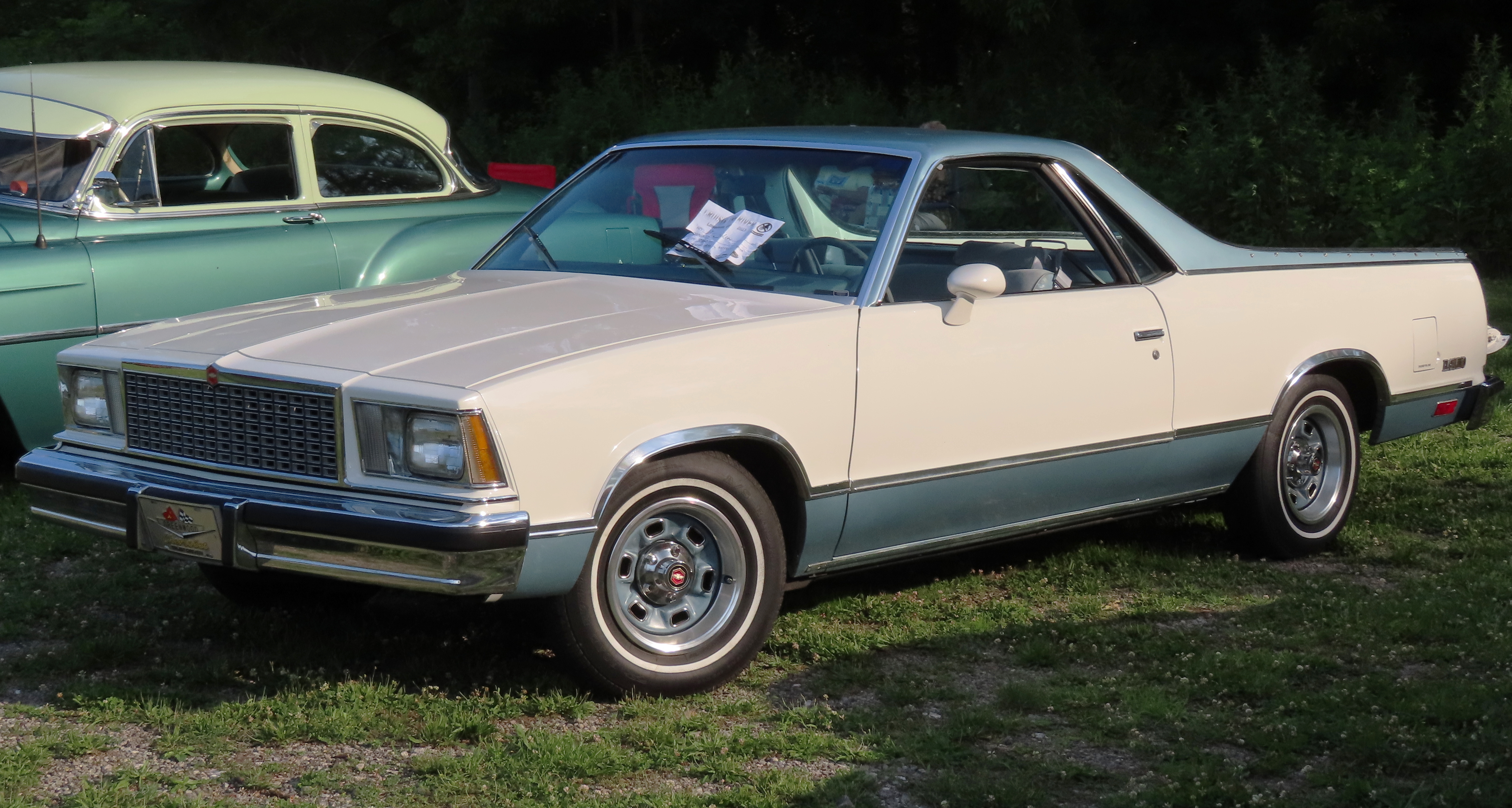
The Chevrolet El Camino is a classic vehicle that mixes a car and a pickup. It has a car-style look and comfort, but it also includes a truck bed for hauling. The podcast brings it up as an example of that “half car, half truck” idea.
The Ford Ranchero is a vehicle that’s meant to feel like a car but still has a truck-style bed. The podcast mentions it as an example of a “half car, half truck” idea. It’s the kind of vehicle people consider when they want some hauling ability without a full truck.
A turbocharged engine uses a device that pushes extra air into the engine. That extra air helps the engine make more power without needing a bigger engine.
“Compact truck” here is the host’s framing of the Santa Cruz: it’s marketed like a small pickup, but the driving experience is described as closer to an SUV crossover. The point is that the Santa Cruz blends truck utility (an open bed) with crossover-like everyday usability.
Torque is the force that helps you get moving and pull when you press the gas. It’s a big part of why one car feels quicker than another, even if horsepower is similar.
A dual clutch transmission is an automatic gearbox that shifts faster than a typical automatic. It uses two clutches to keep power flowing smoothly when changing gears.
CVT means “continuously variable transmission.” Instead of shifting between set gears, it smoothly changes the ratio so the engine can stay in a good power range.
A roll-top cargo cover is a protective cover for the back of the vehicle that rolls up when you need access. It helps keep things from getting exposed to weather and can also reduce flapping/noise while driving.
This is a storage box under the bed floor that you can lock. It’s useful because it keeps gear out of sight and helps protect items from theft or weather.
A flat floor means the back area becomes level when you fold the rear seats down. That makes it easier to slide in and move things like camping gear or sports equipment.
Fuel economy is how far the car can go on a gallon of gas. Higher fuel economy usually means you spend less on gas, and the host is using it to compare the Tucson versus the Santa Cruz.
mpg means miles per gallon—how many miles you can drive using one gallon of gas. It’s a common way to compare how expensive it will be to run different cars.
“Half car, half truck” is a way of describing a vehicle that drives like a regular car/SUV, but still has the useful cargo features of a truck. The point here is that the Santa Cruz is convenient day-to-day, but more flexible when you need to haul stuff.
A steering wheel warning light is a dashboard message that something in the steering system may be acting up. If it comes on intermittently, it’s still a good idea to get it checked so you don’t miss a real problem.
Electric power steering uses a small motor to help you steer. It doesn’t rely on a belt-driven hydraulic pump, so if the car’s charging system is weak, steering assist can feel different.
The alternator charges the battery and powers the car’s electronics while you’re driving. If it’s not working right, the battery can run down and warning lights can come on.
The Toyota Highlander is a family SUV. The podcast mentions that a part called the harmonic balancer pulley can start to wear out. If it fails, it can cause engine problems, so it’s something to address early.
The harmonic balancer is a front engine part that helps reduce vibration and it’s tied into the belt drive. If it slips, the belt may not spin the alternator correctly, causing warning lights and loss of power assist.
DSG is a dual-clutch gearbox used by Volkswagen. It shifts fast because it has two clutches, but if you hold the car on a hill while lightly pressing the gas, it can overheat the clutches.
If you keep a dual-clutch gearbox half-engaged for too long (like inching on a hill with light gas), the clutches can get too hot. That can wear them out faster.
A CVT is an automatic transmission that doesn’t use set gears. Instead, it can smoothly change how “geared” the car is as you accelerate, which can feel different from normal automatic shifting.
A semi-automatic transmission is a hybrid between manual and automatic. You still choose gears, but the car does some of the clutch work for you so shifting is easier than a fully manual setup.
The PT Cruiser convertible is a Chrysler car with a “retro” look that came with the option of open-top driving. The host mentions it as the previous car his wife owned before the Hyundai.
The Hyundai Santa Fe is a family SUV. Here, the host says their Santa Fe lasted about 10 years, but eventually the steering system started leaking, which became the biggest repair cost.
The steering rack is the part that helps turn the wheels when you turn the steering wheel. If it starts leaking, it can cause steering problems and is usually a repair you don’t want to postpone.
The ABS light means the car’s anti-lock braking system isn’t working correctly. ABS helps you stop without the wheels locking up, so the car may not brake the same way until it’s fixed.
A wheel sensor (typically a wheel-speed sensor) measures how fast each wheel is turning. ABS uses those signals to detect impending wheel lockup; if a sensor fails, the ABS light can come on and ABS may be disabled.
The Toyota Corolla is a common, everyday small car. The speaker is saying that in this crash, the Corolla would probably have been hit harder or been less safe than the other car.
The Ford Taurus is a larger sedan that many people used for regular driving. The podcast mentions one that was hit from behind, which is a common type of crash. After a rear-end collision, repairs and safety checks are usually a big part of what happens next.
A turbo engine uses a device that pushes extra air into the engine. That helps it make more power, even though the engine size is still around 2.5 liters.
The Hyundai Tucson is a popular compact SUV. Here, the speaker is comparing it to the Santa Cruz by talking about the Tucson’s non-turbo option, pricing, and whether it’s available with all-wheel drive or front-wheel drive.
A non-turbo engine doesn’t use a turbocharger, so it typically relies on natural airflow through the intake to make power. In everyday buying terms, people often associate non-turbo setups with simpler hardware and fewer turbo-related components, though real-world reliability depends on the specific engine design and maintenance.
Front-wheel drive means the front wheels do the work of moving the car. It’s often cheaper and can be more efficient, and in this segment the speaker is comparing how much cheaper it is and whether it’s easy to find in certain regions.
Dual-climate controls mean the driver and passenger can each choose their own temperature. It’s a comfort feature that can make rides feel more tailored to each person.
They’re talking about how annoying or time-consuming it is to buy a car at a dealership. The host is weighing the hassle against the lower price they were offered.
“Out-the-door” price is the total you’ll actually pay at the end. It includes the car price plus things like taxes and fees, so it’s the best number to compare between dealers.
A dealer documentation fee is an extra charge the dealership adds for handling the paperwork. It’s worth asking about because it can change the final price you pay.
They’re pointing out that different Hyundai dealerships can charge different fees. So you may need to compare dealer-by-dealer, not just brand-by-brand.
The dealer invoice is what the dealer pays for the car (or what they’re billed by the manufacturer). If it’s much lower than the sticker price, there may be room for a discount.
“Sticker price” means selling the car for the full list price on the window sticker. The host is saying dealers make more when they sell above it, and less (or even lose money) when they sell below it.
Dealer incentives are deals from the manufacturer that help dealers sell cars faster. They can include rebates or financing offers that make the car cheaper than the sticker price.
When the host says “financing… at a few percent,” they mean the interest rate on the loan. A lower interest rate usually means you pay less overall and have a lower monthly payment.
A warranty is a promise to fix certain problems for free. An extended warranty is extra coverage you buy so the car is still covered after the original factory warranty runs out.
Ceramic coating is a protective layer you put on your car’s paint to help it resist dirt and water. It’s meant to keep the paint looking nicer for longer than regular wax.
Paint protection is anything you do to help keep your car’s paint from getting damaged or looking dull. It can include coatings or other treatments you pay for.
Mother’s is a car-care brand that makes cleaning and paint-protection products. The host is saying they have a ceramic-style spray you can use during washing.
In the context of rust prevention add-ons, “electronic sensors” refers to devices that are plugged in and intended to reduce corrosion. The host argues these aftermarket systems are unreliable and may not work as advertised.
Term
prevent rust
Rust is when metal starts to corrode, usually from moisture and road salt. The host is talking about products meant to stop that, and he’s skeptical about the electronic ones.
A transmission is the part of the car that helps send power from the engine to the wheels. The host is saying some Honda models had transmission problems.
Oil dilution means gasoline can leak into the engine oil. That makes the oil less effective at lubricating, which can lead to extra engine wear over time.
A low emissions engine is tuned to put fewer pollutants into the air. Sometimes that tuning can cause unexpected issues if the engine doesn’t get hot enough or doesn’t run in the right conditions.
The host is talking about a type of engine used by Toyota and Lexus that uses two turbochargers. They’re saying some of these engines have had internal problems.
They’re asking whether it’s normal for problems to show up when a company switches to a brand-new engine design. Sometimes new designs have teething issues, but it shouldn’t be automatic.
The frame is the main metal structure that everything else mounts to. Replacing it is a big deal because it’s about the truck’s safety and structure, not just a cosmetic or minor fix.
A junkyard is where old or wrecked cars are taken apart for parts. The host is saying people were using salvage trucks to try to get Toyota to pay for them.
Undercoating is a protective spray or coating put on the bottom of the car to help prevent rust. It’s mainly meant to protect against salt and wet roads.
“Rust-proofing” is a treatment that helps stop rust from forming on the car’s metal parts. It’s usually done by coating the underside so water and salt can’t reach the metal as easily.
The Jeep Wrangler is an SUV designed for off-road driving. The podcast mentions that some 2021 to 2025 Wranglers are being recalled because of an issue related to electric parts. A recall usually means the manufacturer wants to fix it at no cost.
Power steering wiring is the set of electrical wires that help the steering system work. If a connection is bad, it can cause overheating and potentially a fire, even if you’re not driving.
ABS is a safety system that helps you keep steering control when you brake hard. If there’s an ABS issue, the system may not work correctly, and that’s why recalls can involve electrical parts like fuses.
A fuse is like an electrical safety switch. If too much current flows, it stops the circuit to prevent damage or overheating, and recalls may replace it or protect it from moisture.
The Honda CR-V is a compact SUV used for everyday driving. The podcast says some CR-Vs are included in a recall because the tire repair kit bottle or part may be defective. That’s important because the kit is supposed to help you handle a flat tire.
This is the container in the emergency kit used to help you temporarily fix a flat tire. The concern here is that, in a crash, the bottle could come loose and hit you, so the recall adds a way to keep it secured.
The Honda Accord is a common Honda sedan. In this episode, they’re talking about a recall for certain years where the rear support structure can corrode and fail, which can be dangerous.
The Ford Expedition is a large SUV. They’re talking about a recall where the chrome trim can peel, and the concern is that it may create a safety hazard for occupants.
An occupant safety issue is a problem that could harm people inside the vehicle during normal use or a crash scenario. In this case, the host argues that peeling chrome on the center console could injure someone (e.g., when an arm rests on it).
The Ford F-150 Super Duty is a heavy-duty truck. The episode mentions a software recall where a glitch can make trailer brakes and some exterior lights stop working, which is a big safety problem.
The Ford Ranger is a pickup truck. In this episode, it’s mentioned as part of a recall where a software problem can affect trailer brakes and exterior lights.
The Ford Maverick is a smaller pickup truck. The episode says it’s included in a recall where a software glitch can cause trailer brakes and exterior lights to fail.
The Ford Focus is a compact car. They’re talking about a recall where some cars can stall, meaning the engine can stop unexpectedly, which can be risky while driving.
The Chrysler Pacifica plug-in hybrid is a family minivan that can run on electricity and gas. The episode says some were recalled because of a possible battery problem that could lead to a fire.
The National Highway Traffic Safety Administration (NHTSA) is a U.S. government agency that tracks car safety issues. They provide recall information so you can check if your vehicle is affected.
The NHTSA app is a free government app. You enter your car’s VIN number, and it tells you if your car has any safety recalls that you should get fixed.
They’re talking about a theft trick where someone tries to use a USB device to get the car to start without the key. The point is that updates and added hardware are meant to stop that kind of attack.
It’s a stronger metal cover added around the ignition area. The goal is to make it much harder for someone to break in and start the car without the key.
The ignition column is the part of the steering-column area that’s involved with turning the car on. Thieves sometimes try to break or bypass it to start the car.
LIVE
W-A-T-D presents John Paul, the car doctor. All things automotive. Have questions? Call or text 7-8-1-837-4900.
Now, here's John Paul, the car doctor.
And good Sunday morning everyone and welcome to another edition of the car doctor program on 959 W-A-T-D.
My name's John Paul, the car doctor here to help you with your car problems, suffering from, I don't know, allergies or something, pollen.
Still a lot of pollen around, which is probably a good reminder to go, you know, after it all settles down.
Go look in your cabin air filter in your car and see if it's all full of pollen. If it is, take it out, throw it away and buy a new one.
I've become sort of enlightened, I guess, with some of the new pollen filters that I have.
Well, I just got an email. We're waiting for somebody from the Packard Club, Craig Henley, to call in.
And I just got a text message from the PR person at the Providence Convention and Visitor Center, or, yeah, that's what it's called,
and said, waiting for Craig to call in, and I gave her the phone number, the special guest line phone number, and she sent me back a little heart.
I don't know what that means.
Is that true love?
Is that what it is? I have an idea. How about have the guy call in? And he was going to call in because he is the president of the Packard Club.
And Packard Automobile's been around, you know, they were, you know, right up there with Cadillac and, you know, some people think Rolls Royce and LaSalle and all kinds of stuff.
And the 59th Annual National Meet is going to take place in July in Providence.
So I thought it'd be kind of a fun thing to talk about. And it's going to be July 15th from 10 to 3.
And we'll wait and see if Craig Henley calls in. She just said, she just texted me back and said, just gave him a reminder.
I don't know what that means, but good that she did. So we'll see what happens.
Next week, in theory, I'm supposed to be doing my program from downtown Hyannis at the Father's Day car show.
But that's a little bit of a mystery too, because the person that was kind of working with me to set it up, I called and left him a message last, I don't know, Tuesday, Wednesday, Thursday, something like that.
Said, hey, just want to check in, see if we're all good to go. We need to make sure we have a computer line that I can hook up to so I can hook up my equipment so I can be there and have it heard back.
I don't know what's going on. Everybody, you know, fortunately, Jesse still talks to me, I think.
I do. look forward to it.
Yeah, yeah. But, you know, we'll see what happens. We'll see what happens here.
Well, you know, normally what we do is we usually have our guests and then I'll do some sort of a review about something.
So I'll do the car review part now. How's that?
You know, this week's car review is a little bit different because I'm also considering buying a new car. Well, I need to buy a new car because we have an old Volkswagen that sits here.
And we have another old Volkswagen that's only got 34,000 miles on it that sat in Florida.
Well, I left my Hyundai Santa Fe in Florida. I drove the 2015 Volkswagen Beetle home. That will become sort of this car that will stay here.
The older Volkswagen Beetle, which was it's weird that we have two Volkswagen's. It wasn't intentional. It just was a good deal.
That's why we got it. But I'm looking to replace to get a new vehicle to have to go back and forth with.
As a turn, you know, the vehicle I'm looking at is a Hyundai Tucson because it's about the same size as my old Santa Fe.
It'll be comfortable for my wife to drive it when she wants to because she didn't mind driving the other one.
But in this case, my road test car is a Hyundai Santa Cruz.
Well, the Santa Cruz, if you don't know what it is, it's a truck for people that don't know they need a truck.
Think El Camino or Ranchero.
So sort of half car, half truck. The difference is this little ute is a four door. It's built on the Tucson platform.
So the Hyundai Santa Cruz in this case has a 2.5 liter turbocharged engine and I think it, you know, quietly sort of looks at what people think they need.
On paper, it's a compact truck. In practice, it feels more like a little SUV crossover with kind of extra capability, especially when compared to the vehicle that I'm thinking about buying, which is a Hyundai Tucson.
And mine, I'm not going with the turbocharged engine because I don't think, you know, more power is always good, but I don't know that I need to spend the money on a turbocharged engine.
So I don't think I need to do that. Let's start with the Santa Cruz's turbocharged engine. Let's see what that is.
It produces 281 horsepower and a pretty hefty 311 foot pounds of torque. It transforms into what could have been kind of a mild mannered utility vehicle.
Something is pretty quick. Press the accelerator and the dual clutch transmission. So it's not a CVT. It's not a conventional transmission. It's a dual clutch.
And it pops through the gears really well. When you step on the gas, it takes off. It does good.
The engine I'm looking at in the Tucson is the same 2.5 liter engine, but it makes 100 horsepower less. It's 287 horsepower, which is, I think, 10 more than my Santa Fe.
And 178 foot pounds of torque. It delivers the power more gradually. It's around town, you know, certainly good.
Cruising on the highway, climbing grades, you know, it lacks the urgency maybe that the Santa Cruz still has, but it's still fine.
Yet speed isn't the whole story. The Santa Cruz really kind of, I think, makes its place by combining decent performance with the practicality of an open bed.
It's shorter than a traditional truck. Well, I have it. I went and got 10 bags of mulch. That was kind of nice to be able to put it back there and just sweep it out afterwards.
You might not do that inside an SUV. You might. I mean, I have a cargo tray in mind, so it's been known to carry all kinds of dirty stuff in there and then take the cargo tray out and wash it out.
What's kind of nice, too, is this has a couple of interesting features. It has a roll top cargo cover, which rolls all the way up.
It's a fully-opened cargo cover, so you don't have to undo anything or roll anything. It doesn't flutter in the wind.
But it also has a lockable underbed storage compartment if you've ever seen the Honda pickup truck, similar idea with that.
So it's kind of nice. You almost don't even know what's there until you go looking for it. So you can lock the bed, lock the cargo underbed storage compartment.
Makes it kind of nice. Here's where it doesn't feel like a truck. It feels comfortable. It's sufficient. It's quiet.
Inside the cargo area is nice. Fold down the rear seats. You get a nice flat floor. The interior of the two are nearly identical.
They work out really well. Fuel economy is where the Tucson gains some ground without the added boost and drivetrain demands.
The Tucson is more efficient. The Santa Cruz is maybe 25 miles per gallon. The Tucson remains the better, pure crossover.
It's simpler. It's more efficient. It's arguably more practical for traditional daily use. But the Santa Cruz adds this kind of unexpected layer of freedom.
You've got muddy bikes you want to put back there. You've been camping. You want to throw all your tents and stuff all in the back.
You don't have to worry about stuff getting dirty. You just hose it all out afterwards. So it's a good vehicle.
In fact, somebody I know had one. They got rid of it because they were towing a big trailer. And then they decided they didn't want the trailer anymore.
And they went up on another Santa Cruz because they liked it so much. So the question is, do I buy a Santa Cruz or a Tucson?
We'll have to wait and see. I think I'm leaning towards Tucson. But the Santa Cruz is really good.
And if you're looking for sort of that half car, half truck that's mostly car, when you drive it, it's mostly car. You wouldn't know anything different.
But when you want to be able to throw something in the back, the Santa Cruz is a pretty good option.
Our phone number 7818374900. 7818374900. Let's talk to Walter and wear him.
Walter, good morning.
Walter hung up.
Walter hung up? Well, all right. Well, too bad for Walter.
And no word from our guest, I guess.
No.
Not yet.
Okay. Very well. We'll wait and see. Someone wrote to me and said, I have a Toyota Corolla.
I recently had the steering wheel warning light come on intermittently.
Steering wheel warning light along with a battery light. What should I ask when I bring it in to have a check out?
The Corolla uses electric power steering, like a lot of cars today, rather than a belt driven hydraulic pump.
Chances are it's pure electrical, probably the battery's just going dead. The alternator's bad.
Could be a slipping belt, something along those lines.
I would just explain exactly what you see and what you feel to the repair shop.
They'll check for trouble codes, but I would be suspicious that battery voltage is low.
Either the alternator's not doing what it should anymore.
Maybe the alternator belt slipping.
What I have seen in the past on some Toyota vehicles, not the Corolla so much, but more the Highlander, is the harmonic balancer pulley actually starts to slip.
The rubber insulator between the two parts slips, and in certain weather it'll actually slip around the inside and the outside part of the pulley.
And all of a sudden you'll lose a little bit of power steering, the alternator light will come on, that kind of stuff.
Could be that. Let's talk to Tom from Kingston, always like talking to Tom. Tom, good morning.
Good morning. So the vehicles you're talking about, you said something about double clutch, what does that mean?
It's sort of a manual transmission that shifts automatically.
So it uses two types of, two manual clutches that are through the magic of computers and, I don't know, magic elfs or something.
They're able to shift one year or another.
So basically a manual transmission with two electronic clutches that make it all work.
What's interesting about it is, and this was...
Okay, wait a minute, do you have to touch it?
No, no, you don't do anything.
Manual, but still on the magic.
Yeah, so it's basically similar to something as exotic as a Ferrari transmission to something as plain as, you know, transmission you find in a Volkswagen.
So it's sometimes called a DSG transmission, but it's a dual clutch style automatic.
So where it can get a little bit funny, if you're somebody who's, say you're parked on a little bit of a hill and you're not on the brake, but you're lightly holding the gas pedal,
it's basically like riding the clutch in a standard transmission and you can actually overheat the clutch and wear the clutch out.
So you have to be a little, but you wouldn't know that unless you did it.
But other than that, it feels perfectly normal, shifts are good, it's sort of a different...
It's better than, in my opinion, better than a typical CVT, the continually variable transmission.
I prefer this over that, but some of them are good, some of them are not as good.
Volkswagen had a really good one. Ford, in their focuses, used a dual clutch transmission.
They worked good for like the first year and then they had all kinds of problems.
So that was my next question, how long has it been around?
20 years, maybe? And probably longer.
It's almost, and it isn't, but way back in the 60s, you could buy a Volkswagen Beetle with a semi-automatic transmission.
And what it was, you put it in low gear, it only had two speeds basically.
But you put it in drive or drive low and you just stepped on the gas and drove away.
But then when you put your hand on the shifter, it would actually disengage the clutch and then you'd shift into the second gear, high gear.
And it was kind of the same version of that, only this is in a much more modern setup with many more gears.
So you could say it's been around for 60 years and maybe even longer, I don't know.
But in its latest configuration, been around since the mid 2000s, I guess.
Now your choices of the two vehicles you're talking about, are you talking brand new?
Yeah. I think so, I think so.
Although it's, you know, people talk, they say you buy brand new, what happens?
Yeah, I know. All that stuff.
And you kind of almost filled in the next words, the frugal part of me says, do I really need brand new?
Can I get away with, you know, a former enterprise rent a car that's got 45,000 miles on it?
That's a 2025 that I can buy for $10,000 less.
And you know something? I bought enterprises for many years.
Yeah.
They were great.
Yeah.
What it was about them.
No, no.
My friend of mine told me, oh, Tom, go ahead, get down there.
They had a place over in Hanover.
Yeah.
Now you got to go to Norwood, but you know, not that far.
But it's one of those things that, you know, I'm thinking about it, but I sort of went back in my memory
and thought about cars that I bought new and cars that I bought used and reliability wise,
the car that my wife had before this one was a PT Cruiser convertible.
We bought it from S&E Auto Sales over in Weymouth.
It was a former, I'm making it up, dollar rent a car, budget something that only had 6,000 miles.
Whatever.
Yeah.
And it was, and it was fine.
It was good, you know, until it wasn't when it got into a car crash.
And then the Hyundai Santa Fe that I owned in 07, I put a lot of miles on that, driving
back and forth to Providence, Rhode Island and from Abington to here on the Cape.
And it was always a, it was a solid dependable car for 10 years.
And then the steering rack started to leak.
And that was probably the, that was normal after 10 years, but that was the one big expense I had with it.
And I sold it to a woman I worked with.
And I think I sold it to her, you know, we had a bunch of miles on it by then, but I sold it to her for say $4,000.
And she said, well, I want to bring it to my mechanic and never checked out.
I'm like, well, of course, go ahead.
So I gave her the car and she had her checked out and she came back and she said, well, you know how you always say,
replace tires when they get down to 430 seconds of tread, not to 230 seconds.
You know, that car is going to need tires soon.
I said, well, it's funny you say that because I have a brand new set of Michelin tires that if I kept the car,
I was going to fix them.
I was going to put them on there.
And I said, but as it turned out, you know, I decided to replace the car instead.
And I have these, and I have these tires and I said, I'll sell you the tires separately from the car.
So it doesn't change, you know, whatever you have to pay for tax or whatever.
And she was fine.
And about two weeks before I was going to give her the car, the air conditioner stopped working.
I think I wanted 5,000.
I said, I'll tell you what, I'm going to sell it to you for 4,000.
But the air conditioner stopped working, but I recharged it and I put some magic air conditioner stuff in there.
I said, it's freezing cold now.
It's working just the way it should.
I said, I don't know if it's going to last through the summer.
It's going to last through the week.
I don't know.
Well, she had a couple of little minor problems with the car while she had it.
She used to, you know, see her in the hallway at work and she would say, you know, that car you sold me.
I said, what's wrong?
Well, you know, the ABS light came on.
It could be a wheel sensor or whatever.
And then about a year after owning the car, she said to me, I don't know about those tires you sold me.
They're all worn out.
I said, what do you mean they're all worn?
Michelin, you know, it was like $1,200 worth of tires that you bought for like 300 or 400 or whatever it was.
And she goes, oh, they're all worn out.
And then she sends me a picture a couple of days later of the car all smashed up.
And I said, what happened?
You know, all my daughter was driving it and she was texting while she was driving and she ran into the back of a landscape truck.
And she said, the good news is, well, no, she laughed too.
And she said, the good thing is she was driving that car and not my Toyota Corolla because if you're driving the Corolla, probably would have got killed.
You know, the back of the truck was probably even with the windshield.
She said, this way it just kind of smushed the front of the car and the engine and told the car.
So she sends me the insurance form that she filled out.
And I looked at it and I said, no wonder why this car needs tires.
You drove it 52,000 miles in a year.
I said, how did you even do that?
She said, well, you know, we got three kids in college and every time we went to go move somebody, we grabbed that because it was bigger than any other car we owned.
And my husband would use it for work when he had to go do stuff.
Yeah, they were crappy tires.
Yeah, they were crappy tires that went 52,000 miles.
And the kind of thing she laughed about when it was all done, she got something like $6,500 for the insurance settlement.
Wow.
So she paid $4,000 or something for the car and extra few hundred dollars for tires and she ended up making money.
So I said, so this was a pretty good car in the end, right?
And she said, yeah, it was.
Yeah, definitely.
Just quickly we had a friend of ours, she had a Ford Taurus.
She paid $800 for it and she got hit from behind and pushed her into a UPS truck.
And the insurance company wanted to give her what she paid for two years ago, $800.
And she says, Tom's a good deal, right?
And didn't lose any money.
No, no, no, no.
I said, can I take over?
Can I pretend to be your husband?
And I called up the insurance company.
She ended up getting $2,200.
Oh, yeah.
Yeah.
Well, I mean, the insurance company's jobs are to pay as little as they can, whatever they can.
So there's always, to me, there's always room for negotiation with insurance companies.
Yeah, and the justice says, we know this French fry stains on the glass and the seat.
Yeah.
I says, you know why?
She says, why?
She has grandchildren.
Yeah.
Well, and that's, you know, that's the funny part.
When we had that guy on from, I can't think of the name of the company, but, you know,
would work with people when they got, you know, insurance settlements and they automatically
put in, oh, it was a smoker's car.
Whether it was or it wasn't, it all of a sudden became a smoker's car.
Yeah.
You know, so it was, you know, it's one of those things that the insurance companies
again, try to try to just get as little money, you know, pay out as little money as possible.
So a week from today, what do we have?
Hard to say.
Hard to say.
Yeah, a week from today.
It's Father's Day.
Yeah.
I might be doing my program from downtown Hyannis.
They still don't know yet.
We'll wait and see on that.
That should be fun and nerve wracking at the same time because it always, you always wonder
whether everything's going to work.
And my radio equipment works perfectly, but it's not really designed for mobile applications.
It's more designed to be in one spot and I can make it work, I think.
But I want to go test it, but I need to talk to the guy who's trying to set all this up.
And, you know, I've never done a, as Jesse pointed out, every week I do the program,
it's pretty much a remote broadcast because they do it from home.
But I've never done an actual out in public remote broadcast with WATD in the four or
five years I've been here now.
So, you know, when I was at, you know, WROL, did that a few times when I was at, you know,
WJDA, did that a few times, even their sister station up in WBSX, up in Salem.
I did a program remotely from there a couple times, but haven't done anything with WATD.
So, I kind of want to do it to see how it will work, but I'll be up all night if it actually goes through.
So, you know.
I need a little cooperation at the other end.
Well, it's, and again, just a technical cooperation too.
Make sure stuff's going to work the way it should.
So, right.
That's always my, that's always my, you know, a little behind the scenes of stuff.
But, you know, we got Jesse in the control room.
It's all going to be fine.
Yeah.
Now these two cars, have you tested them as far as height wise?
Yeah.
Okay, good.
Yeah.
No, I'm driving, I'm driving the Santa Cruz now and it's, it's good.
Like I said yesterday, I went to the Agway store, you know, a few miles away, got a bunch of pine bark mulch,
you know, threw it in the back, didn't worry so much if a bag was leaking,
because they just came home and then swept it out.
So, and size wise, last night we, neighbors of ours said,
oh, we want to go out to dinner with you.
And nice of them, they actually paid for dinner, which I didn't expect at all.
And we went to, you know, a very exotic Cape Cod place, the 99.
Yes.
Yeah.
Which was, which this, the 99 in Yarmouth is actually always good.
But anyway, we went there and he drives a, he was driving his Chevy pickup truck,
that's only a regular cab.
And he goes, well, we have to go in your car.
And I said, well, that's fine.
And, you know, put four people in it.
It was comfortable for four people.
I, you know, moved the front seat up a little bit so they have plenty of legroom and,
you know, and it was all, it was all good.
So, so it rides good.
It handles good.
The 2.5 turbo engine, more power than I need, because I don't really care as much about
that, but it is nice to have it.
The Tucson I'm looking at, cheaper vehicle, price wise, non-turbo engine, which reliability-wise,
they're probably both about the same.
But in my head, I'm thinking non-turbo might be a little bit more reliable.
And what's the price range for those vehicles?
The Tucson is in all-wheel drive.
They start around $32,000 and they can go up to, you know, you can go up to way more,
you know, up in the 40s, I guess, if you've got the fancy.
And front-wheel drive.
And front-wheel drive, not that much cheaper, $1,500 cheaper.
And you can't, if I was in Florida, I could buy a front-wheel drive version here up in
the Northeast.
Nobody has them.
They're just not available.
Because nobody really, you know, the little bit of money difference, $1,200 or whatever
it is, difference between front-wheel and all-wheel drive, isn't worth having the dealers keep
them in stock and sitting on it if nobody wants it.
And the Santa Cruz, the one I'm driving is a Santa Cruz Limited.
So top of the line, full, everything, stuff.
That one is $45,000, but they start in the mid-30s.
So if you don't want the turbo, if you don't want the medium-stage gray paint, which is,
only comes in, like, the Limited or the SEL package, I think.
You know, this has a little bit nicer dash setup, just as a little bit better, you know,
a little bit fancier, you know, dual-climate controls and all that sort of stuff.
But, you know, you could probably buy a decent one with everything you'd really want in it
for probably, you know, high 30s.
Oh, that's nice.
Or you could go to Enterprise and you could buy a used one for $25.
If you were younger, I'd say go to Enterprise.
Yeah.
But I'd say, you know, right now at this time of life, I think I'd get new.
Yeah, well, I had to go to Middleborough this week to actually pick this car up.
And I stopped at the Hyundai dealer in Plymouth and said, oh, you know, I'm just curious.
I said, you know, the other thing is AAA is a vendor for Hyundai, so we get some kind of deal.
And it's not, you know, because the base model vehicles, there's not a lot of profit in those.
So, but I just wanted to say, you know, I got this certificate.
It says I can buy it for $31,500.
You know, how much of a hassle is it dealing with the dealership?
And the sales lady was very nice, but she kind of, you know, she acted like a salesperson.
I mean, she just did her job.
And I said, well, I just want to know, you know, do you honor this price?
Here's the certificate.
And what will it cost me going out the door?
And the one thing that still continues to bother me to this day is dealer documentation fee.
And it became popular 10 years ago, maybe even longer ago, and used to be only be a couple hundred dollars.
And now, all of a sudden, it's 300 and 400, 595 at the Hyundai dealer in Plymouth, 895 at the Hyundai dealer in Fallon River.
You know, and it's where they're real profit.
And they're like, oh, you know, we need to do it, you know, paper.
I'm like, that's just somebody came up with this idea.
And in New York, as an example, the dealers can't charge more than $50 documentation fee.
I'm not sure why some state rep hasn't filed legislation to limit documentation fee to like $100.
I know.
Other than dealers are probably pretty big contributors.
I don't know.
Well, maybe, I don't know.
You know, when I went out to buy my vehicle, I shopped around all different places.
Tana Ford and all the, you know, Ford, I ended up on a Muzzy Ford.
And at that time, they had the documentation fee and all that stuff like this.
You're going to charge me that, take it off the price of the vehicle.
Right.
That's all, you know.
Oh, I don't know if we can do that.
You know, the song and Dancy do those soft shoe.
Yeah.
It's like, okay, well, listen, I gotta go back.
I'm going over to Tana Ford now.
Oh, wait a minute.
And it's interesting because it's preprinted on the sales agreement because if I went
there and they charged me and they didn't charge you, then it becomes discriminatory
sales.
So they're discriminating and they can get, that's why it's all preprinted on their
sales agreement.
Now, can they take it off the price of the car somewhere else?
Sure, they can.
Now, it depends on how much money they make on the vehicle, whether they choose to do
that or not.
You know, some of these cars, you know, you look at the dealer invoice, you know, the
MSRP saved for the Tucson is $34,000 and the dealer invoice is $32,000.
So in theory, if they sell it at sticker price, they're going to make $2,000.
But you know, right now, nobody's selling at sticker price.
I mean, you know, during the middle of COVID, you know, that was, they were marking cars
above sticker.
But right now, you know, figure you're going to take maybe $1,000 off that price.
So there's $1,000 profit in there.
Now, you got to sell a lot of cars over the course of a month, if you're only making $500
or $1,000 per car.
And then in some cases, they're selling the cars at below sticker, below invoice, because
there's incentives to get rid of them.
Maybe they're adding other, you know, stuff like, I don't know, paint treatment that they're
making money on, or maybe they're just financing the car at, you know, a few percent, you know,
say they're financing the car at four or five percent.
Well, as a dealer who does the financing, they get 1% of that.
So, or a half a percent, whatever the case is.
So they make money during the financing part of the procedure too.
Yes.
So true.
Yes.
So they can afford to sell the car at less they paid for it.
And then if they're really big, high volume dealership, they'll sell a car at a loss knowing
that the car they sold before that they made a whole bunch of money on.
So it really, you know, you can't, you can't sell stuff for less than you pay for it, make money at it.
So, you know, it's just...
Well, you know, that's what they told me with the vehicle I bought when I went out there, because
when they talked to one of the other four dealerships, they said, no, they can't sell it to you for that price.
They'll lose the money.
Yeah.
So I said to the dealership over on Muzzy, he says, how are you doing that?
He said, well, first of all, it's the end of the month, year.
Yeah.
Oh, and I told him I'm going to pay cash.
Yeah.
I'm going to write you a check.
Oh, no, you got to finance it.
And then at the end of 30 days, get out of it.
Yeah.
And then I get a three and 36 warranty with the Ford.
Well, we got to sell you one for a five year 50, you know, 50,000 miles.
Yeah, it's only $1,800.
No, thank you.
Oh, thanks.
Oh, no, do me a favor.
Take it, because this way we make some money.
Yeah.
Cancel it again within 30 days.
We still get credit for it.
So that's how they make their money.
Yeah.
Yeah.
The cool thing about that place, they gave me...
The guy gives me a credit card.
And come on back, I'll have things ready for you.
I said, great.
I went over there, filled up a gas and grabbed a package of candy and whatever else I wanted
and put it on the credit card.
And he goes, how'd you make out?
And I told him what I did.
And I said, I also filled up the back of the truck.
In my pockets, everything else was gasoline.
But usually you leave the place with a quarter of a tank or what.
Yeah.
It's...
I'm looking at the invoice of the Santa Cruz and it does come with a full tank of gas.
Nice.
It says Hyundai Pay, full tank of gas.
Yeah.
That's really nice.
They clean my license plate.
They say, if you get another 20 minutes, we'll put a sticker on there too.
Yeah.
Yeah.
So it's nice how the dealerships are working a little bit better.
And now there's no Muzzy, right?
Yeah.
I know.
There you go.
All right, Tom.
Always good to talk to you.
You have a good rest of the weekend.
You too.
Take care.
Bye-bye.
Why don't we take a break?
Pay some bills.
My name's John Paul.
This is the Car Doctor Program.
And you'll be sitting on 959 WATD.
We'll be right back.
Even car geeks and do-it-yourselfers rely on AAA to give them extra peace of mind on
the road.
AAA offers 24-7 roadside assistance, whether you're in your own vehicle, a friend's car,
or even a rental.
Combine that with great rates of insurance, hotel, gas and buying savings, and discounts
on 8,700 brands.
And you're covered on and off the road.
Get a special membership offer today at AAA.com slash joy.
That's AAA.com slash joy.
Hi, it's Zoe, personal stylist at Macy's.
If you're like, what am I wearing on this trip?
To this wedding?
To brunch?
Your timing's perfect.
Our best brands are all 30% off.
I'll pull some great pieces that are made for you.
So you'll show up confident, looking amazing, plus 15-off designer beauty and fragrance.
Sign up for star rewards and earn even faster at Macy's friends and family.
Going on now.
Savings off regular and already-reduced prices.
Exclusions apply.
Or save on power tools like the Ryobi 2-Tool Driver Drill Combo Kit for just $99.
Make Father's Day about building something together with a little help from the Home Depot.
Exclusions apply to your Home Depot dot com slash price match for details.
And welcome back to the Car Doctor Program at 959WATD.
Let's see, we're going to Mike in Bridgewater, I think.
Mike, is that you?
It is me. Good morning, John.
It is. Good morning.
Any word on your longstanding issues?
Oh, I wasn't actually calling about that.
I was just at the Lexus on Thursday.
Yeah, so the answer is, say, maybe I'm still in the process of talking with Lexus themselves,
which is interesting.
You know, I don't want to belabor the point, you know, as far as what's going on.
And when I went National Highway and Traffic Safety there,
there's already some information there about other people that have put it in there.
So at this point, no, I thank you for asking about it.
I do.
It's part of this.
I'm trying to take a break because the aggravation is interesting anyway.
Yeah, so maybe if that's okay, I'll maybe a future call if that works for you.
Of course.
Yeah.
So what's up?
All this new talk, all this new car talks here, I always get excited about that.
But I'm curious, would you add anything on, not necessarily from the dealer,
but, you know, pay protection, all those kinds of things they offer you,
but then even more so, maybe, what about the AAA, you know, the real package
and the key fob package that all is there, typically if you get it at the dealership,
it's maybe even less than half.
Yeah, and I get a check because last I knew, we weren't selling warranty packages in Massachusetts right now.
And I'm not sure why.
Okay.
Well, thank you.
I actually called about that a couple of months ago.
Yeah.
Yeah.
And that was the case.
So I don't know what happened.
But anyway, no, I wouldn't buy paint protection.
I wouldn't buy fabric protection, which is just on cloth seats.
It's just scotch guard, basically.
You know, they use basically a garden sprayer and just spray the interior with it.
You know, there you go.
And, you know, they make a lot of money on that stuff.
Wheel and tire package.
One of the reasons I don't think we're selling wheel and tire package in Massachusetts because
the road's not that good.
I think it ends up the claims or so either not.
It's not working out, but, you know, but I'm that's a guess on my part.
But the those add on packages have lots of profit built into them.
And I would rather go out and buy it myself.
And even like, you know, Tom calling earlier when he said he bought something up at Muzzy and they told him to buy the extended warranty for five years.
Well, you know, that first three years, the car is covered by the factory warranty.
So you got the extended warranty that's covering five years, including from day one.
And the factory warranty is covering three years from day one.
So you're basically having like two insurance policies covering that first three year period, which is kind of dumb when you think about it.
You know, wait until, you know, at the end of the factory warranty, if the car's been a little bit lemon-ish, you know, not been that solid.
Maybe at that point you go, you know, maybe I should buy an extended warranty from either the dealer or AAA or somebody and go from there.
But if it's been a good quality car, I don't know that I would buy a warranty.
You know, if you were buying your like, you know, a Lexus or something, you know, generally the perfect vehicles for a long, long period of time.
You know, do you need to spend another $2,000 to get a couple years worth of warranty out of it that you probably never going to use.
So and paint protection, you know, today there's so many easy ways to make sure your car is good and you know, ceramic coating was kind of the the end all of wax treatments.
You know, it was like ceramic coat your car and now you can do a kind of a hybrid ceramic and I think mother's products has one now.
You wash your car, you get it all good and clean and while the car is wet, you spray this stuff on it and then you wash it off with a hose and it actually sort of gives the car a little bit of a light ceramic coat.
So, you know, I don't think I'd spend, you know, $2,000 just paint protect my car and then there's all the nonsense things, electronic sensors that you connect up to things as opposed to prevent rust.
Those never work, you know.
So, yeah, I bought it thing you plug in there and it's supposed to and as they pull it as $600 later because it ate the ate the harness on the Lexus.
Yeah, yeah, I'm glad you said ceramic because I went to one of, you know, I don't know if it was Boston auto show Providence, whatever, and I got the I got all the paraphernalia ceramic coating and it's expensive.
Oh, yeah, yeah. Yeah, and do it right. You know, it used to come, you know, the ceramic stuff used to come in a bottle about the size of a nail polish bottle.
And it was that little bit of material, but you had to make sure you put it on correctly and if you didn't put it on right, you would have some problems.
And if you were trying to match paint later on in life, that's original ceramic coat. That could be that could be a real issue when you were trying to repaint something.
So you'd have to buff it all off and lightly sand it all off and get it off.
Now, again, there's these sort of, you know, they use the word ceramic and everything these days. But, you know, I don't know that you need it.
So, you know, you talk to you talk to, you know, some folks that have had ceramic coatings applied to the cars and they're like, Yeah, it was expensive.
But, you know, 10 years later, the car still looks great.
Usually, usually with those people that say 10 years later, the car looks great is because they take care of the cars to start off.
Sure, absolutely. May I just share with you last, as far as this Lexus thing, if it should come down that I have to, you know, pay for it and all that to get it fixed.
You know, it's like I said, 4,000, whatever.
It would consider maybe buying another vehicle.
And you are, and Toyota is just to be, you know, they're bulletproof. I've known them since 78.
You know what I mean? It's one of those things.
But boy, I guess Hyundai and Kia have shown that they can stand up there.
You obviously, you think they're okay, even though when you look at the, you know, it's always Lexus Toyota.
Sure, absolutely. Yep.
No, I think Honda makes fabulous products.
And I'm stealing this from the old Honda, you know, and Toyota PR guys.
They're both, Honda and Toyota are both like belt and suspender companies.
They sort of do everything twice to make sure that there's not really going to be problems.
If I had to find a fault with any Honda product, some of their transmissions have been less than good.
And they've had some transmission problems.
But the engines have been solid.
Even when they came out with their new low emissions engine, you know, they had some problems where the oil was getting diluted
because the engine never really got hot enough to evaporate the moisture out of the engine.
And they had to change some software changes for that.
But overall, their Honda makes good solid products.
And of course, Acura is just a better version of that.
Toyota makes good solid products.
They're very fussy about the quality.
They had some issues.
And I want to, I'm going to say 2009, 10, 11 Toyota products.
You could see that they cut corners a little bit for whatever reasons they, you know, they thinned out wiring harnesses.
And, you know, they weren't using as heavy a wire as they were doing.
And, you know, there was some little bit of some problems, but the engines were still good.
Now the new twin turbocharged V6 engines that's in a lot of the Toyota and Lexus products, some of those have had some problems.
And where the old, like Lexus V8 was solid as can be, some of these twin turbo engines have had some issues going on with bearings or something.
And, you know, is that to be expected when, you know, all of a sudden you go from one engine design to another?
No, it shouldn't be, but it sometimes happens.
The good thing is Toyota typically stands behind all this stuff.
And sometimes they do it quietly.
They don't tell you, you know, they just, yep, oh, well, you were here.
We put an engine in your car.
It didn't tell you, but, you know, you're all set.
That's nice.
Well, they replaced the frame on the truck to remember that whole thing.
Yeah, yeah.
And that was, you know, and that was such a weird thing.
You know, people would drag in trucks out of junkyards, re-registering them to get Toyota to either buy them back or put a new frame in them.
Because Toyota was buying the trucks back at like full retail value.
So people were buying junkyard trucks for $1,000 and getting $9,000 back because they said, well, it's my truck and it's rotted out in the frame span.
So, yeah, so you never know.
You never know.
And, you know, you talked about, you know, stuff that you would buy undercoating.
You know, for the most part, factory cars are pretty rust-proof.
I've become a fan of this wax oil product, which is an undercoating spray.
It's best when it's applied professionally, but I've done, you know, I did the Volkswagen with it.
I did the Hyundai with it.
And I just, you know, bought a couple of cans on Amazon and crawled under the car a couple of years ago and sprayed all under there.
My Hyundai supposedly has an issue where the rear frame can get overly rusty.
When I was changing the oil on the car in April or May, when I crawled under there, it still looks perfect.
And is it because of the wax oil?
Maybe, but I mean, either I live near the ocean here or near salty water there.
It doesn't look underneath.
It looks good.
So, you know, is it the wax oil?
Maybe is it because the factory car had some pretty good rust proofing?
So, you know, to spend at the dealer a couple thousand dollars to have a car rust-proofed, depending on the product, I wouldn't spend that money either.
Yeah, and the new car will get wax oil at some point, maybe that kind of thing.
Yeah, yeah, yeah, absolutely.
Yeah, yeah, yeah.
All right, John, I know you've got time for breaking all that.
So thank you very much.
And I appreciate you mentioning Alexis maybe a few times down the road.
We'll talk again.
Thank you, sir.
Appreciate it.
All right.
Take care, Tom.
Bye-bye.
Well, I got a text message back from the person from the convention.
Visitors Center says I just left him a voicemail for him.
I hope he's okay, but not sure why he wouldn't be calling in.
So sorry to keep you waiting.
So there you go.
I don't know what happened to this guy, but things happen.
That's all there is to it.
Speaking of things happening.
Jeep recalled over a million vehicles 2021 to 2025 wranglers and gladiators are being
recalled due to electrical connection issue in the power steering wiring that can cause
a fire even when the engine's off.
Owners are urgently advised to park these vehicles outside away from buildings until
repaired.
I always hate it when they say that.
Actually, my Hyundai had a recall like that.
It was a ABS issue, and it was a fuse that got wet or something.
It only did.
They put a new fuse cover on it and stuck a new fuse in it.
But it was a don't park it in the garage.
Honda had two recalls this week over a million vehicles, 1.05 million vehicles, including
certain Honda Accord hybrids and CRVs for defective tire repair kit bottles.
And this one's kind of an odd one.
They can detach from wherever they're stored and become projectiles.
What?
So they're going to go in and put a piece of Velcro on it or something to keep that from
happening.
So you get into a crash, the tire inflation kit bottle flies around inside the vehicle
and hits you in the head.
I don't know if I'd call that a massive recall.
I guess numbers-wise it's massive.
Second, about 880,000 Honda Accord vehicles from 2022 to 2025, and 23 states of recall
for rear subframes can corrode and fail.
You hate this.
That's a one-year-old car in some cases.
I don't know.
I guess.
Ford had two notable recalls.
Another goofy one.
548,000 Ford Expeditions for peeling chrome.
Hard to know they have chrome.
They pose as an occupant safety issue.
And it's chrome on the center console.
So I guess you put your arm down and you go ow, and then it makes you drive off the road.
And then there was another, in the words of cars.com, massive action affecting over
4.5 million vehicles, F-150 Super Duty Ranger Maverick for software glitch that can cause
trailer breaks and exterior lights to fail.
Ford also recalled 250,000 Focus models for a stalling issue.
And Chrysler recalled 17,000 Chrysler Pacifica plug-in hybrids are recalled over a possible
battery defect that can cause a fire.
If you own any of these vehicles, you might be getting a recall notice in the mail.
But if you don't, but you're curious about recalls, you can go to the National Highway
Traffic Safety Administration website or download their app.
If you have any kind of 92% of the world has smartphones now, go to the Android store
or the Apple store, download the NITSA app, the NHTSA app.
And then when you download it, put in your vehicle identification number, that 17-digit number.
And what it will do is it'll track if your vehicle's been recalled.
So it'll say, oh, your vehicle's been recalled.
You should go get this done.
My Hyundai got a secondary recall.
It's not, it's, Hyundai's with keys were fairly easy to steal.
And it had something more to do with social media.
You could go in and smash the ignition and you could start it.
And they were showing people starting with a USB drive, which would dumb anything would turn the ignition at that point.
But you have to literally smash the column to do it.
So they came in and they put a anti-theft software kit in.
And now they've come up with a hardened metal piece that fits around the ignition column,
so it further prevents that from happening.
So if you own one of the, own a Hyundai that starts with a key, you can call your dealer
and they'll go put this hardened thing in.
And I've never thought about it.
Probably never have it done.
So, but the NHTSA website is really handy for that kind of stuff.
And if you just have a complaint, you can file it there.
So, you know, download the NHTSA app.
It's good to do.
Why don't we take a quick break?
My name's John Paul.
This is a car doctor program.
Don't know what happened to our guest other than hope he's okay.
You're listening to the car doctor program at 959WATD.
We'll be right back.
Hey, this is Kylie Evans.
This is the story of the one as a maintenance engineer at a beverage manufacturing plant.
Hi, it's Zoe.
Hey there folks.
It's Quinn Kelly reminding you to tune in Sunday night at five for the South Shore's
first voice in sports talk radio, the sports exchange on match coverage of local high school
action as well as a relatable voice on all things Boston pro sports.
We've got you covered live at five every Sunday night.
Have a question for our host miss last week's show or just want to share a great sports
story.
You can find us on Twitter at SE on WATD.
But remember, mark your calendar folks and we'll see you Sunday night at five for the
sports exchange on 959WATD.
Honored with a lifetime achievement award from the National Highway Traffic Safety Administration.
He's John Paul, the car doctor on 959WATD.
Well, we're just about out of time, but we have Mike and Revere.
Mike, if you can make it real quick.
Good morning.
I have an E-450-22 model year.
I was told that the tail light assembly, one of the bulbs seems to be out of one of the
indicators on the dash.
I was told that you need to place the whole assembly.
How difficult of a job is that?
Well, yeah, it's because it's an LED style bulb.
The whole thing's got to come out.
It's probably, and I'm just guessing, but it probably also needs to be reprogrammed once
you put it back in.
So you're probably looking at a decent amount of time to get it done.
I would check visually first to make sure that there's no kind of wiring problem or anything
going on that showed up in there.
But yeah, yeah, it can take time.
Okay, so Revere actually jumped up on the dash and hasn't stayed on.
I'll wait until it stays on at that point.
That's what you get for buying a Mercedes.
Well, now that's what you get for buying a new car sometimes.
That's the way it works.
Thanks, sir.
All right, take care, Mike.
All right, bye-bye.
Well, that music means we need to go.
And yeah, taillights can get stupid expensive on cars today.
And that's just all, you know, but I would check with your dealer just to make sure Mike,
some of these had taillight issues where they were getting wet and that could cause a problem.
So, and they came up with a technical bulletin for that.
That music means we need to go.
Until next week, make sure your weary seatbelts drive safely.
Be good to your car.
And if you do see an emergency vehicle by the side of the road, slow down and move over to today's lives.
Talk to you all next week.
Bye-bye.
About this episode
The Car Doctor Podcast weighs the Hyundai Santa Cruz against the Hyundai Tucson, using real-world practicality, drivetrain feel, and pricing to guide the choice. The Santa Cruz is described as a four-door “ute” built on the Tucson platform, with a 2.5-liter turbo and dual-clutch transmission (not a CVT), plus open-bed utility like a roll-top cover and lockable underbed storage. The Tucson is positioned as the more efficient, less urgent option. The discussion also pivots to dealer add-ons, doc fees, and how to handle warning lights and recalls.
In this episode we were going to be talking with the president of the Packard Automobile Club. The Packard Auto Show at Warwick City Park — a really special event coming through the RI Sports Commission/GoPVD.
This is the 59th Annual National Meet for The Packard Club, which has more than 2,600 members worldwide. As you may know, Providence holds some Packard history with the former Packard showroom downtown. The newly-opened restaurant in that space does have some décor that pays homage to the building’s auto history. Well that didn't happen, but we have great listeners and we did review the Hyundai Santa Cruz