Anti-lock brakes help you stop your car without losing control. They stop your wheels from locking up when you brake hard, so you can still steer your car safely.
Airbags are like big balloons that pop out of the car during an accident to help keep you safe. They protect you from hitting hard parts of the car, like the steering wheel or dashboard.
ABS brakes help you stop your car without skidding. They make sure the wheels keep turning while you brake hard, so you can still steer the car and avoid obstacles.
Dynamic stability control is a system in cars that helps keep them stable and prevent skidding. It works by using sensors to detect when a car is losing control and automatically applies brakes to help the driver regain control.
A yaw sensor is a part of a car that helps it understand how it's turning or rotating. It helps keep the car stable, especially when going around corners or on slippery roads.
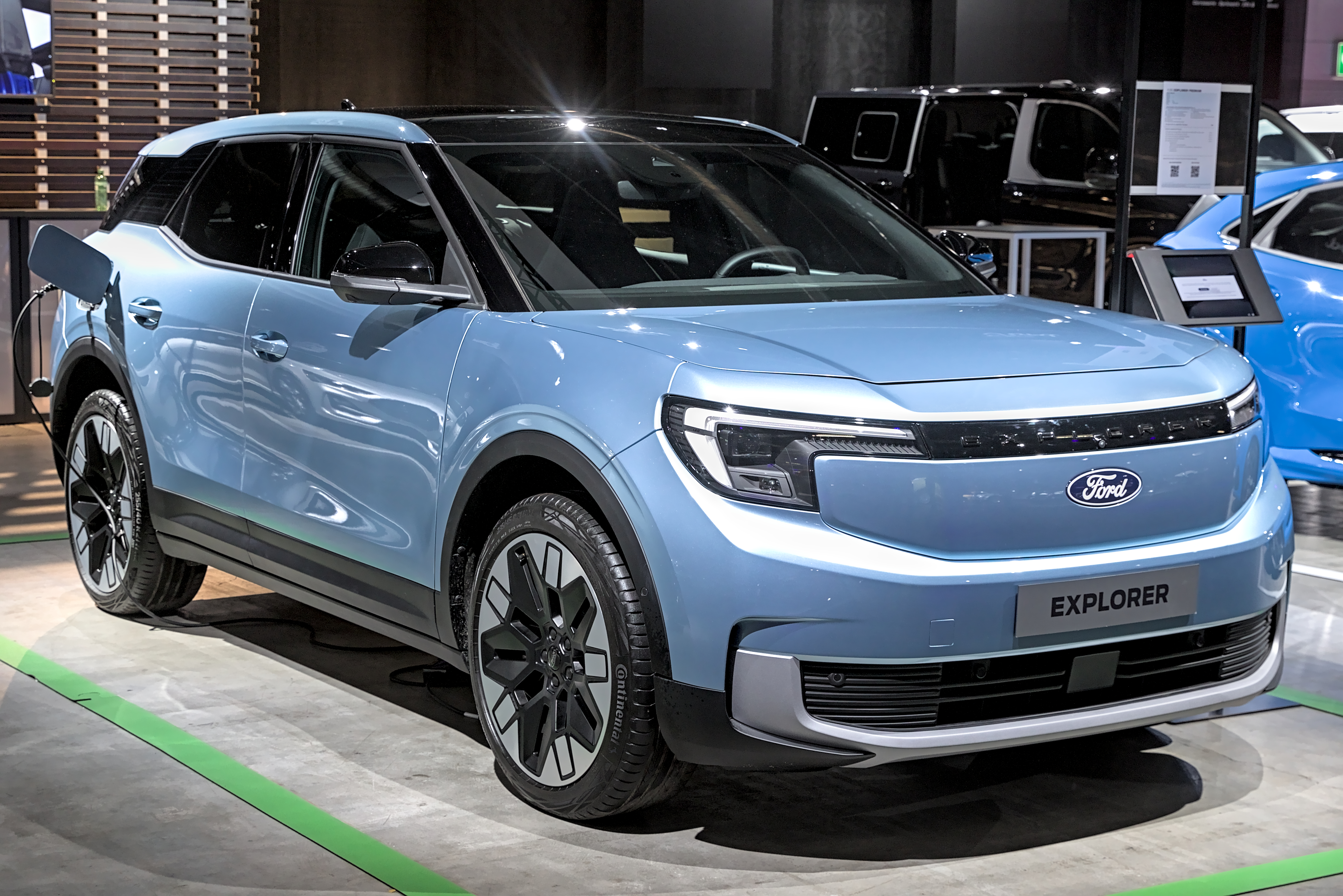
The Ford Explorer is a type of vehicle called an SUV, which stands for Sport Utility Vehicle. It’s designed to carry families and their belongings, and it became very popular in the 1990s because it was spacious and comfortable. People talk about it because it has influenced how many families choose to travel and what kind of cars they buy.
Firestone is a company that makes tires for cars. They became famous for having problems with some of their tires that were used on Ford Explorers in the late 1990s.
The center of gravity is where the weight of a car is balanced. If it's high, the car can tip over more easily, especially during sharp turns or sudden stops.
Defect investigations are checks done by safety organizations to see if cars have problems that could make them unsafe. If they find issues, they might ask for a recall.
Tread separation is when the part of the tire that touches the road comes off. This can be dangerous, especially when driving fast, and can happen if the tire gets too hot or doesn't have enough air.
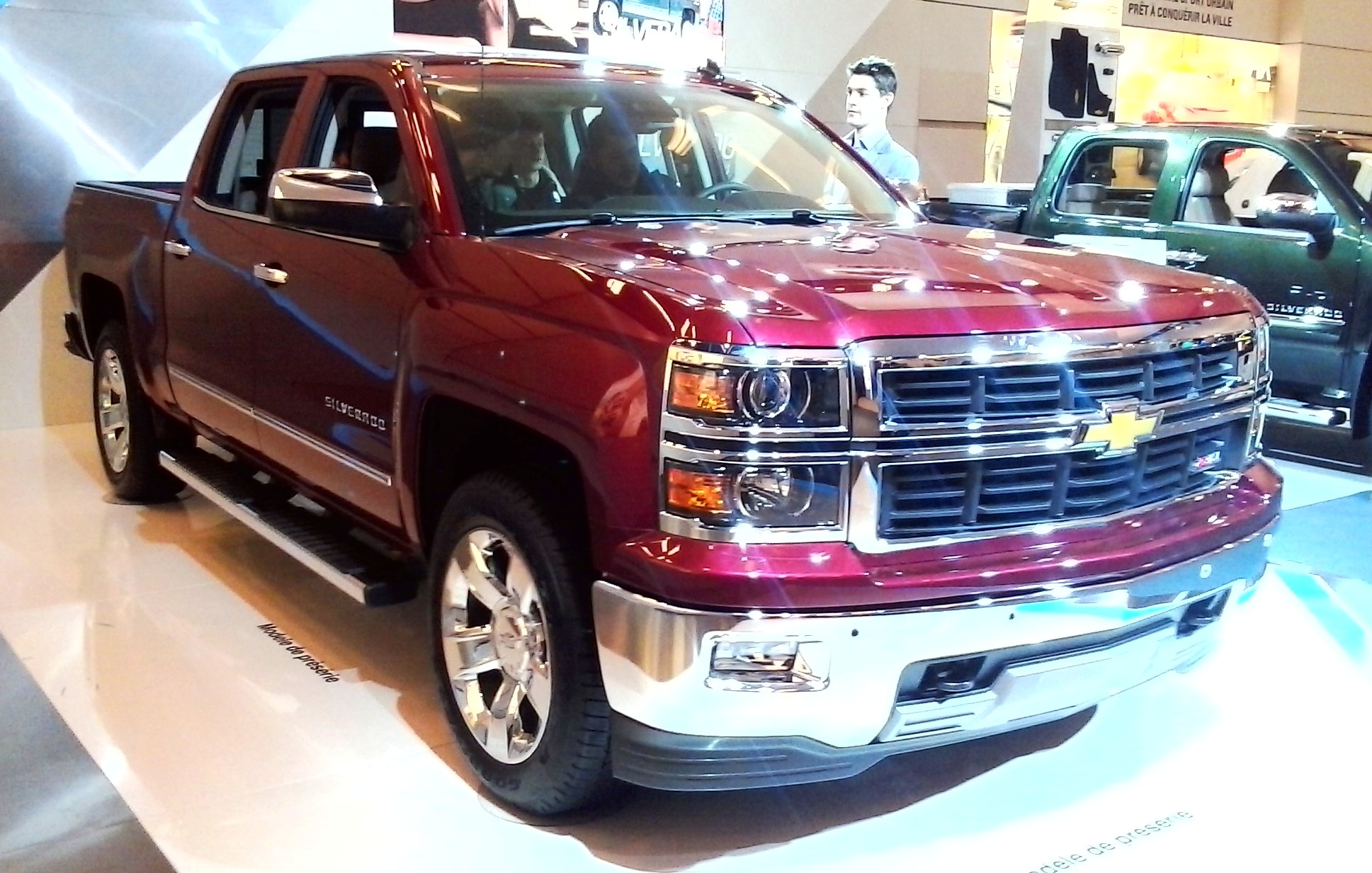
The Chevrolet Silverado is a big truck that people often use for work or to carry heavy things. It’s known for being tough and reliable, and many people like it because it can be used for both everyday driving and heavy-duty tasks. It’s a popular choice among truck lovers.
A VIN is a special number that every car has, like a fingerprint. It helps to identify the car and keep track of its history, like accidents or repairs.
The Nissan Sentra is a small car that is easy to drive and great for getting around town. It’s known for being affordable and saving on gas, making it a good option for people who need a reliable car without spending too much money. Many people like it because it’s practical and fits well in city traffic.
Monthly payments are the amount of money you pay each month when you buy something on credit, like a car. It helps you afford the car without paying all at once.
A maintenance schedule is a list of when to do things like oil changes and other services on your car. Following it helps keep your car running well for a long time.
LIVE
Hey folks, Lenny Lawson, The Car Guru.
If you haven't been outside, well, let's put it this way, if you live in East Tennessee,
Upper East Tennessee, there's a difference between East Tennessee and Upper East Tennessee.
We all know that, that live in Upper East Tennessee.
But if you've been outside here, or maybe over in North Carolina, you have realized
what deep snow is all about.
Again, I think the last time I went through this was like, was it 1993?
We had the really, really big snow, like 20 plus inches.
This has only been about a foot, or at least here in Greenville, Tennessee.
It's been about a foot.
But I did a show, maybe my last one, talked about winter driving.
Hope you paid attention, because it has been exactly that.
I've tested my anti-lock brakes, have you?
Have you put your foot on the brake really hard to see what anti-lock brakes feel like?
Because they will get your attention.
You'll think that something is getting ready to fall off the bottom of your vehicle.
That's how weird it feels.
So you put your foot on the brakes, and it starts going honk, honk, I mean, it starts
honking like a goose.
And then you feel this pushback from the pedal, like you're doing something wrong, but you're
not.
The key to anti-lock brakes is to keep your foot on them, because the vehicle will stop
faster and you'll be able to maintain control.
Because what it's doing is pumping the brakes way faster than you could.
And it also sends, well, it's responsible for sending power to the wheels that are not
spinning.
So if you have, let's say you've got a front wheel drive vehicle and your left front wheel
is spinning.
Well, the anti-lock brakes work to send more power, it's got speed sensors on the wheels,
and it will send more power to the right front, because the left one has lost traction.
That's a pretty cool thing.
And that's something that you can't do either.
There are no switches or dials on your dash that will do that.
The car is engineered to do that.
So some of the things that these engineers have been working on over the years have actually
been worthwhile.
There's a lot of them that haven't been.
But I would venture to say that airbags and ABS brakes are probably the best inventions
of all time.
Back in the 60s, safety was not a real concern to automakers.
You can tell that by the fact that the steering wheel had a diameter of about two feet.
And if you, like, had to slam on your brakes or something, it was a great place for your
teeth to get knocked out.
And also the dashes on most cars were steel.
A lot of metal on the dash.
That's been outlawed now.
But yeah, a padded dash was a luxury feature back in the early 60s.
So now we have airbags and analog brakes.
Another thing that we got, or another benefit of analog brakes, since there were wheel speed
sensors on every wheel, yes, we also got traction control, but we got another thing in the bargain.
It's called dynamic stability control.
Now, do you have to check the order box if you go order a vehicle for analog brakes,
airbags, traction control, or dynamic stability control?
No.
Those are mandated features that have to be on every car by the government and by the
insurance Institute of Highway Safety, because you will not get good crash ratings if you
don't have those features that are designed to prevent accidents.
So what is dynamic stability control?
Well, I'm going to try to not get real technical here because I can't.
But there is a sensor built into your vehicle called a yaw sensor, Y-A-W.
Hi, yaw.
No, it's not that one.
This is, it's spelled the same, but this is different.
This tells the computer on your car that it is not going in the direction it should be.
The wheels are turned in one direction, but the car is going in a different direction.
That's when you like, I don't know, you're driving down the road and you go off the
berm, you're over on the side of the road and you jerk the steering wheel to get back
on the road.
Well, what happens is your rear end starts to go, well, you lose control of it.
It depends on which way you're going, but it starts to go the direction you don't want
it to go.
Well, what happens is that the vehicle sees this happening and it applies brake pressure
and throttle where it needs to to straighten the car out.
And you don't even have to think about it.
And you can thank the Ford Explorer for that.
And really not in a good way, and I'll explain.
Back in 1991, the Ford Explorer came to be.
And most of the early models were equipped with Firestone tires.
Well, sometime around 1994, up into the late nineties, I think 1998, there were rising
reports of tread separation in hot weather states like, I don't know, Texas, Florida,
California, Arizona, but many of these incidents would end up in rollovers and it drew attention
to the really high center of gravity on the Ford Explorer.
So the tires were blowing out and they were blowing out on Ford Explorer's because that's
where most of the Firestone tires were going.
And when they did, because of the high center of gravity on the Ford Explorer, they had
a lot of rollover incidents.
So I mean, it led to National Highway Traffic Safety Administration opening defect investigations.
It was that that prompted Firestone to announce a recall of 6.5 million tires.
Do you remember this?
You remember this going on?
And then in 2000 through 2001, Congress got involved and started having hearings.
And then Ford and Firestone ended their 100 year relationship.
See, Henry Ford and Harvey Firestone and Thomas Edison were big buddies and they would travel
all over the country together and stay intense.
They were called the vagabonds.
There's a book about that called the vagabonds.
If you want to read it, it's really interesting.
But anyway, Ford and Firestone had been joined at the hip for all these years and all of
a sudden they ended their relationship because they were pointing fingers at each other.
Now, the result of this was a major redesign of the Ford Explorer.
In 2002, they went to a independent rear suspension instead of a solid axle rear suspension system.
And they also had a wider track and they installed stability control.
And that's where it came from.
I'll be back in just one minute.
OK, I am back.
You know, this was a really serious issue.
I don't mean to make light of it.
It was linked to 271 deaths and 800 plus serious injuries.
And it was caused by a combination of factors.
Number one, tread separation at highway speeds in hot climates.
Number two, low recommended tire pressure.
26 PSI was what they were recommending because it made the vehicle ride better and handle better.
But it wasn't enough.
I mean, we sell vehicles, but like my truck, my F-150 tire pressure rating is 36 pounds.
And that's pretty standard for modern vehicles.
Another issue is just the propensity of SUVs to roll over once one of the rear tires failed.
So if your right rear tire blows out, it's going to put the vehicle in a spin.
And today, the dynamic stability control helps control that.
And it keeps the car from spinning out under most circumstances.
And then another thing was just heat.
You know, certain production plants implicated that they had higher failure rates because
of the way the tires were constructed.
And they just didn't do very well in hot climates.
So Firestone's position was it was a vehicle design and a low pressure problem,
which increased the heat buildup of the tires and roll over risk.
Ford said, nay, nay.
Tire manufacturing defects caused the tread separation, regardless of the vehicle.
So as a result, Ford and Firestone had a divorce.
Ford redesigned the rear suspension of the Explorer, which at the time was the best selling SUV in the world.
And then there was a longer term impact on the industry, which included tire labeling
and testing standards.
So that's a good thing.
The SUV stability engineering, which I've been talking about.
Tire pressure monitoring systems became federally mandated by the TRED Act in the year 2000.
And OEMs, original equipment manufacturers like Ford and GM and so forth and tire suppliers,
they share liability and they share a lot of information so that they don't have issues.
So like I said, you don't have to order dynamic stability control, just like you don't have to order
a full complement of airbags or analog brakes.
These are standard features on your vehicle because usually this is the way it happens.
People died.
Accidents happened.
They were reported.
They were consolidated.
The government took notice because of complaints and issues.
Sometimes the manufacturers themselves will call attention to a problem that they're having.
And the reason they do that is because they don't want to be fined.
Because if the government discovers a defect first and forces a manufacturer to have a recall,
they can be fined.
And if the manufacturer discovers it first, reports it to the government, then there's less likely
to be a large fine.
And we're talking millions and millions of dollars in many cases.
And then it's up to the manufacturer to issue a recall.
I got one the other day on my wife's niece on Armada.
I think I was telling you about the navigation screen.
The infotainment screen was flickering every now and then.
Well, it hasn't done it, probably in the last 500 miles.
And then we were driving to Knoxville the other day and there it goes.
Just flickering.
And then it stopped and it didn't do it anymore.
The trip down there and the trip back.
So it's a very intermittent problem.
But apparently there's an issue with these screens and it's not a hardware issue.
It's a software issue.
So she got this recall note.
Well, I noticed the recall notice in the mailbox and I said, well, this is interesting.
So maybe this will address that problem.
I don't know that it will.
I'm hoping that it will.
But the problem that they're describing in the notice is not the one I'm having.
So I don't know if this reprogram will take care of the issue.
Hope it will.
So this is how it happens, though.
I mean, you get complaints.
You get a very high repair frequency in a dealership.
For example, we could have, let's say over a period of time, all Chevrolet
dealers are having Silverado pickups built within this time frame with within
this VIN range, vehicle identification number range.
And all of them are having a particular issue with the brakes or the battery or
the backup camera or something like that.
And so that's how the manufacturer gets notified.
Typically it are through warranty claims, but the government gets notified
through consumer complaints.
And both of those work together to keep us safe.
You know, I'm not complaining about the government getting involved.
To me, there are some beautiful things that government does for us.
And one of those is to figure out ways to make us safer.
Now, sometimes that gets a little out of hand.
And sometimes we just have ridiculous recalls.
But, you know, for example, I don't consider a backup camera to be a safety
related recall because for most of my life, I never had backup cameras.
Did you know we used our necks?
We turned our heads and we actually used something unique invention called a mirror.
And that's how we prevented ourselves from running into other people.
But no, now we have backup cameras.
I think, you know, over time, don't you think that evolution, like what will we
look like in 10,000 years?
That I asked chat GPT that very question.
And it said that we will not look that different if somebody from 10,000 years
and if we, you know, if the world doesn't come to an end before then, but I hope it does.
But anyway, 10,000 years, somebody from the future walks into Gateway Fort.
And chat GPT actually said, you would not right off the bat think that something's off.
But something definitely would be off.
It kind of indicated that they would be wimps because technology is doing
everything for them.
They just have to sit around, draw, check 10,000 years from now.
Can you imagine?
I figured our heads would be permanently bent forward and down because of all
the time we've spent looking at devices.
They would have to raise the goals on, on MBA to 14 feet because the average
height will probably be about seven, five for the average person.
Chat GPT also said we would be a more homogenous looking population because of
all the interbreeding of all the races.
There really wouldn't be races per se.
We would all just pretty much look the same.
So there you go.
Bet you didn't expect that on a show about cars.
All right, so let's change gears.
I was walking through my Nissan showroom this morning, as a matter of fact.
And I looked over and I saw a 2025 Nissan Versa.
Have you heard of it?
If you've never seen one, it's just a little four door car.
It's the smallest.
Well, it might be about the same size.
No, it's a little bit smaller than a Nissan kicks, which is a little SUV or
smallest SUV, but this Versa is a little four door sedan.
And currently it's the least expensive vehicle sold in the United States, but
it won't be for long because it's going away.
This 2025 model, I've got 10 of them left and they've been selling pretty good.
I've got 10 left and they're going by by.
There is no 2026 Nissan Versa.
Why do you ask, Lenny?
Well, because several reasons.
Number one, they cost too much to build and to be competitive in the United States,
the way they have to price them, they can't make any money selling them anymore.
Primarily because of the tariffs, the tariffs.
Well, this vehicle is made in Mexico.
That's Mexico.
And so it's imported into the United States and they have to pay a tariff to get it here.
Now, the car that's going to be replacing it is already in our lineup.
It's called the Nissan Sentra.
Now, the Sentra is about, well, the base model is about $2,500 more than the base
price on the Versa, but that $2,500 translate, well, you know, like on a 60 to 72 month
contract for the average payment buyer.
You know, that's going to translate to about $45 to $70 a month, depending on the
term and the interest rate.
And that knocks a lot of people out of the market.
They can't handle that much.
So this vehicle, MSRP is 22, about 22.4.
And if you look back pre-pandemic, that same car was priced, we were selling them for
$14,000.
You think we've had some inflation?
We sure have, but that's just a shame, you know, that the least expensive car in
this country is 22,000 plus.
Now, we do have a small rebate on it.
There's not much markup in that car.
If we sell it for MSRP, we make a whopping $400.
So, you know, there's just not a lot of room to negotiate on that.
But still, you know, if somebody's looking for a cheap car, this is your last chance.
So go to your local Nissan dealer, preferably if you live in East Tennessee.
Come see me in Greenville.
But if you don't, if you need a cheap car for somebody's going to be graduating from
high school or graduating from college in the not too distant future and they're
going to need a new car, they're driving a junker now that's got 320,000 miles on it.
This might be a good alternative.
Set it up on monthly payments or pay cash for it and stick it in the garage.
Just drive it every now and then so the battery doesn't go dead.
But it might be something worth doing, worth thinking about.
Especially when you think about the average selling price for a car.
In the United States, it just exceeded $50,000.
So this car is significantly less than that.
And, you know, the thing about it is nearly half of US auto loan borrowers right now
are financing vehicles for longer than 72 months.
84 months is very common, seven years.
Now, what's, what's the good news?
That's the bad news.
What's the good news?
Cars are lasting longer.
If you maintain them, if you keep the oil changed and you follow the maintenance schedule,
then it's very possible that your car will outlast your loan.
And then you might have something left over to use as down payment as a trade-in.
But if you don't take care of it, and then, you know, that includes the exterior of the car,
the condition of the car.
I mean, I see cars that are four and five years old that are just beat all to you know what.
People just don't take care of them.
It's like it's a commodity.
You might as well be driving a refrigerator.
And it's mostly young people that I see riding around in these cars that just,
they never wash them, they never get them detailed, they never detail them themselves.
To me, it's irresponsible.
Take care of what you own, and it will take care of you.
I'll be back in just one minute.
Okay, I am back.
I had a guy call me just the other day.
He actually believed that the phone number that I put on this show, 423-552-2020,
he actually believed that that is my actual cell phone, because it is.
And so he called me.
He said, is this Lenny Lawson?
I said, yes, it is.
He said, I have a question.
I listened to your radio show and I said, well, thank you very much for listening.
You're one of the few that actually call most people text or send me an email.
And so we had a good conversation about buying a used car from Carvana, or Carvana.
So that's the online site that you can actually buy a used car.
You've never driven it.
You've never seen it with your own eyes.
You've never given it the smell test.
You've never seen it.
So, you know, you have to trust what they put on the website and the pictures that they provide.
And then you commit to the car, arrange the financing.
Everything's all signed, sealed, and delivered.
And then some funky looking little van with a flatbed on it shows up with your vehicle, drops it off.
And supposedly you have a return privilege if you don't like the car.
Now, I'm sure there are a lot of caveats to that.
I haven't read the disclaimer lately.
I read it when they first came out and it looked like, you know,
it would be as easy as breaking out of Alcatraz.
But he was asking me if it was a good deal.
So I looked the vehicle up and I said, well, I mean, it's full retail.
So if it was a new car instead of a used car, you would be paying MSRP.
And how do you like that?
He said, well, I'd rather get a discount.
Of course you would, but they don't negotiate.
And plus you've never seen the car.
So I went through all the different things that ways you can get burned on a site unseen to purchase.
Guess what?
He changed his mind.
Now he was from a far off distant land, but he ended up buying a vehicle at a new car dealership,
a used car at a new car dealership, just like the one he was looking for.
And he's very happy.
He ended up buying an extended warranty included in the price
and still paid less than what he was going to pay at Carvana without an extended warranty.
So that's cool.
That's the kind of help that I can provide.
Call me 423-552-2020 or send me a text if you want to,
or send me an email to Lenny Lawson 2020 at gmail.com.
And I will see you on the next edition of my car guru.
About this episode
Lenny Lawson discusses the importance of understanding key safety features in vehicles, particularly anti-lock brakes and dynamic stability control. He shares personal experiences with winter driving and highlights the engineering behind these systems, explaining how they enhance safety during critical situations. The episode also delves into the historical context of vehicle safety, referencing the infamous Ford Explorer and Firestone tire incidents, which led to significant industry changes. Listeners will gain insights into how government regulations shape automotive safety standards.