Power trains are the parts of a car that make it move. They include the engine or motor and the parts that send power to the wheels. The conversation is about how car companies are changing what types of engines they use, like electric or gas.
Plug-in hybrids are cars that can be charged using a plug, like charging a phone. They can drive on electricity for a while before needing to use gas, which helps save fuel.
Gas cars are the regular cars that run on gasoline. They use a gas engine to make the car move, which is different from electric cars that use batteries.
Electric cars run on electricity instead of gasoline. They use batteries to power an electric motor, which helps them move. This is part of a trend where car makers are looking for cleaner ways to power vehicles.
Hybrid cars use both a gas engine and an electric motor. This helps them save fuel and produce less pollution compared to regular cars that only use gas.
Hydrogen fuel cells are devices that use hydrogen to create electricity. They are seen as a cleaner way to power cars because they only produce water vapor instead of harmful emissions.
Hydrogen infrastructure means all the places and systems needed to make and deliver hydrogen fuel for cars. Without enough stations, it’s hard for people to use hydrogen cars.
The Acura Integra is a small car that many people like because it's fun to drive and can be modified easily. It has been around for a long time and is known for being reliable.
Supercars are some of the fastest and most expensive cars on the market. They are designed for high performance and often have unique features that set them apart from regular cars.
Econo cars are budget-friendly vehicles that help you save money on gas and are often less expensive to buy. They are great for everyday driving but don't have the speed or power of sports cars.
Modulating brakes means gently pressing the brake pedal to slow down instead of just slamming it down. This helps the driver maintain better control of the car while stopping.
Stabbing the brakes means hitting the brake pedal hard and fast to stop the car quickly. It's a technique used by drivers to slow down quickly when needed.
The Acura NSX is a fast and stylish sports car that was made to be fun to drive. It has a special design that helps it handle well on the road, and many people love it because it feels exciting and powerful. It's a car that stands out and is often talked about by car fans.
it's not going to impact me or I haven't seen the different,
I haven't seen the impact yet,
but it's kind of a downstream effect, right?
It doesn't, it's not necessarily a light switch, right?
And so, yeah, we're just kind of starting
to see the impact of it, right?
And so, yeah, it'll be curious to see, you know,
how that shifts the types of products that come out,
you know, consumer sentiment, what they want to do,
what they want to buy.
So, yeah, interesting time.
Not going to name the car company,
but one car company continuously blames the tariffs
on their poor sales and them having to cancel stuff.
And they had poor sales before the tariffs was even a thing.
So at some point it's about the cars
that they're trying to push, the price point.
Like, what's something that your average consumer
doesn't really understand when it comes to product planning
because you guys have to look out multiple years.
When things actually change, they're unexpected
and causes you to completely shift, you know,
in your planning, you know, how disruptive is that
potentially or how disruptive can that actually be
that maybe you've seen?
You know, I mean, look, I mean, at the end of the day,
you know, I think every company,
every department of the company,
whether it's a planning team, the sales team,
the PR team, everybody has to try to react
as quickly as possible.
And especially given the environment today,
things, decisions happen really quickly.
Very, you know, that do have that,
like I said, kind of downstream effect.
And so along that way,
you kind of got to keep up with things
and see how it's directly going to impact
your given business and part of the business, right?
And so, no, I mean, like I said,
I've kind of moved on them in marketing
and things at the company, but no.
But like I said, you know,
I think every department has to,
no matter what business it is,
they have to look at things and go,
wait a minute, like this is really challenging.
How do we, how is this going to affect
the plans that we already had in place?
And then maybe how do you pivot and do stuff like that?
So yeah, it's challenging for sure.
Not speaking on behalf of your employer,
but just speaking as a YouTuber, you know,
what have you seen or in looking out at that shift, right?
I mean, reading the writing on the wall,
I mean, it seems to make sense that manufacturers
maybe say, okay, well,
we don't know where we're gonna be in 10 years
because we don't have the capacity
to support it right now anyway.
Maybe we should just kind of shift angles for now
and keep some of that stuff on the back burner.
I mean, is that what you're kind of thinking
at drive culture?
No, I mean, it, look, like I said,
it's whether you're a car guy or however you wanna like,
you know, if you're just an enthusiast
or if you're just someone that is trying
to keep up with industry news.
I mean, no one has the magic eight ball
and it'll tell you where things are gonna go.
I mean, you know, to your point about the YouTube channel,
the one good thing is I get to drive
a lot of different cars, obviously, and fire them out.
And so, you know, I think that's always inherently
been the problem when something, some new tech,
new features, you know, come into the marketplace
until actual customers get to use them,
get to drive them, get to try them out,
you know, formulating opinions is tough, right?
Which is why they go to YouTube
to hear other people's opinions.
But, you know, I'm not here to sway anybody
or say, you know, you're right.
But no, I mean, for me, it's like, again, I think,
you know, when you go back to like fundamentally
what people wanted, right?
People, and it didn't matter if you wanted a sports car
or a luxury car or an SUV or sedan,
people always wanted good looking cars.
They wanted cars that went pretty fast.
That was like always a bonus, right?
And they always wanted something that, you know,
again, made their drive, their commute,
either easier, more convenient, or more fun.
Like that as a transportation device,
I mean, that's what people are searching for, right?
And I think whether the car's electric,
you can get all those things.
Cars, hybrid.
And more of those things, actually, for most people.
Yeah, yeah, I mean, look, you know, for,
and so again, I think the powertrain component of it
is very flexible, right?
It depends on what customers want.
And it's great to have the different options out there.
It's great that customers get to experience
the different options.
Certain parts of the country right now
have better infrastructure than others.
Long term, we'll see where that goes, right?
But I mean, I think that it's great
that people can go out and say,
hey, look, you know, for me, AV works because of this
because I live close to the office, I can commute.
There's charges where I live in my state
in my office, place and tar, you know,
these other stores and places that you go to,
they have EV chargers.
Then there's gonna be certain parts of the country
where it doesn't exist.
Doesn't make sense, whether it may impact it,
the driving distance the person has to do, the commute.
So look, I mean, for them,
it's not about saying all together,
get rid of that powertrain then.
Right.
Go look at a different option
that works better for you, right?
And maybe it's hybrid, maybe it's gas, you know?
Maybe it's some hydrogen thing
that the people are trying to work on.
Hey, hydrogen fuel cells are,
I have a hydrogen fuel cell on the channel.
It's a real thing.
But again, that is an entire infrastructure play
as well, right?
You know, so again, if you live in a place
that has hydrogen fuel stations that are up and running,
it might actually be a great alternative for you, right?
But clearly that's a very small part
of the country right now.
So it's not gonna work for everybody, so.
Yeah, I mean, it's more that we don't,
the country just flat out does not produce enough
to support it, it just, the grid, it just doesn't.
Like you said, you know, no one has a magic eight ball now.
You know, whatever's coming is coming.
You know, articles, people said certain things.
I'm like, all right, cool, whatever.
But for something that's out now,
you know, I think the last time you were on,
we talked about your Integra, your Integra project.
The cool thing about working at OEM
or working in the industry is,
yes, you are privy to future stuff.
You obviously have to work on it.
Somebody's gotta be working on stuff for it to come out.
So clearly people know future stuff,
but of course we can't talk about it.
Fair.
With that said, though.
But I wouldn't, you know, I wouldn't ask you to,
you know, I'm not Barbara Walters, you know,
I'm not trying to get you on a gotcha.
No, the good thing is, is I still love my car.
I mean, my car is great.
Drink more of your drink and then keep.
I was gonna repair it.
All of a sudden, you know, no, no,
great thing is I've been still enjoying my car.
I've had it for two years now.
Don't drive it enough.
I've literally got like less than 5,000 miles on it.
And so.
I have a miniature of it.
Yeah.
That you gave me.
Yeah, I mean, that year.
Yeah, of course, no, man.
It's awesome.
Yeah, it's fun.
It's still such a fun car to drive.
Yeah, lucky to have worked on it.
Lucky to own one now and drive it.
And yeah, it's been good.
What's one of the biggest things
that people don't understand that goes into the vehicles
that you guys are rolling out?
That's a very vague question.
I was gonna say, I mean, like I said,
I mean, I think across the industry, you know,
most people don't actually know
how the sausage gets made, as I say.
So.
It's like in a sex boat.
There you go.
Yeah.
Behind the scenes, rare.
All the stuff that you guys have to do
to put on, you know, at the end of the day,
people come here and they go, oh, it's a great event.
They look at all the cars and then they go home
and you hang out with people and go home.
But, you know, but yeah, I mean, my, you know,
the planning, the years of planning for today
and the event and all the people behind the scenes
and all the activities and the complexities
behind that most of the attendees here
don't know about it.
So it's the same thing in art
and in the auto industry or anything else, you know.
I mean, the work, the time, the investment,
the blood, sweat and tears, all the stuff
that, you know, goes behind the scenes is unbelievable.
So especially something like as complex as like
the automobile, right?
You know, a device that has to, you know,
get someone safely, you know, from point A to point B
and last 30 years and 200,000 miles
and, you know, still be really high quality
and not fall apart and, you know,
provide long lasting joy and excitement.
I mean, think about, I mean,
there's not many other products that you buy
in your lifetime that have to live up to that standard, right?
So, I mean, our phones and stuff.
The British.
They don't last that long.
My mind did last.
No, I had to replace mine, you know, so I mean,
so that's the thing, I mean, and, I mean,
even your phones, our phones are great.
You know, no matter what brand or product you have,
I mean, phones are great, but, you know,
you get a new phone every year.
You know, you're always upgrading,
you're always getting the newest model.
It doesn't have to last for 20 years, you know,
it doesn't have to, you know,
go through the same safety and reliability and, you know,
I mean, so it's just a different level of complexity
in that industry.
What did you think of Ted's speech?
It was good.
I worked for Ted for a long time.
I know, yeah.
Yeah, and now he's good.
Like, that's when I first,
I didn't know you at the time.
Like we talked about last year,
but, you know, that's when we had
that first encounter in Columbus.
So you were there.
Yeah.
Yeah, you were there, yeah.
For sure.
Got pictures.
Yeah, I thought his speech was good,
but as I watch him, because I love the guy,
love you too.
Thank you.
You're welcome.
I love the guy.
As I watch him, I go, that's, he's passionate.
You could tell he's from, you know,
the engineering side, you know,
the equation when you were looking at the presentation.
So we had to give him like little, little signs.
That's too funny.
He missed every sign, that's it, but.
He did.
He missed all of them.
Yes, but that's, you know, look,
I mean, he's great, man.
The one thing I, you know,
I have so much respect for him is that, like,
you know, because now he's not
tied to the company, right?
He's, you know, he's moved on.
He retired, right?
And so he's not here on the company's behalf,
as he said.
He's not saying things in the company's behalf.
He's literally here as like everybody else.
And then, you know, all the regular attendees,
he's here as an enthusiast, as a car guy,
as someone that's passionate.
And obviously, given his role and what he worked on,
I mean, everybody here is, you know,
very excited for him to be here
and appreciative of him to be here.
But for him, it's just, he's here to participate
kind of like anyone else.
I thought to him, he's just like,
oh man, I was out on the track
and I got to drive a car.
And I was like, you literally did that
for your entire 30 plus year career.
Like you just drove cars on the track
and yet you're here and you're excited
to be driving the cars on the track.
You know what I'm saying?
So like, so that to me is, it's pretty special.
So anyone that, you know, loves their job,
loves their career, loves their company as much as that.
I mean, that's, that speaks volumes.
So I rode with him in the track
because we did the same thing in 2017 at Road America.
Yep, yep.
And it's funny because since NSXPOL is always
kind of around the same time of year,
give or take a few weeks,
the Facebook memories popped up a picture
of me doing a selfie
with Ted.
You know, he probably owes me either a drink
or a hot dog because every time I see him,
I mean, they're buying him a drink or food.
But I was, we went around the ridge twice
and I was glad he took a lap to cool the brakes off.
Yeah, wait, this is in your car?
No, this was in the, in checker type S,
the gold car, yeah, the gold car.
And yeah, I don't think I've been right since.
Oh yeah.
Yeah, I was, I was ready.
In fact, we were, the third lap we were going around
and just kind of talking like, you know,
how are the kids, how's the family
and all the things going?
And I'm like, I'd have to cut my sentence as short
because I felt, you know, I was like,
yeah, everything's going good.
No, no, it's the thing.
I mean, when you get, and along,
I mean, nothing recently,
cause I didn't participate in the track stuff this week,
but I'm way back in the day,
I getting during development
and throughout that whole process.
Yeah, I mean, I went right seat with him
and other, you know, very skilled drivers and stuff.
And when you do that,
you go right seat with someone
that really knows what they're doing
and like changes your whole perspective.
You're like, wait, the car can do that?
And it's like.
So going back to the first time
we were there together without knowing each other.
That's the first time I met Peter.
And he was taking his Toyota Tercel
or something like that
around the, your guy's little test track out there.
And so he was pulling up and all four doors had opened,
well, three doors had opened
because he was a driver
and everyone was just hopping in the car.
And I had that exact thought
going around that track with him.
At the time, I didn't really know Peter.
I had just met him.
Like he's like, my boy now, right?
Just a regular ass car can do that to your point
because those people know
what they're doing behind the wheel.
I wouldn't do that,
but I know I can.
And then the car can.
Well, yeah, you know what the car,
might be capable of, right?
And so at some level,
yeah, it just changes your whole perspective
because the way we drive on the street,
no matter what car you have,
whether it's a really fast supercar
or just a average, you know,
Econo car, the way you drive on the street
is totally different than how you drive on the track.
As it should be.
Well, as it should be, but I think,
but I think what happens,
especially with someone that's a beginner
that goes out on a track day for the first time,
they're still driving like they're on the street.
And so what I mean by that is like,
they're not looking far enough ahead.
You know, they're not breaking hard enough.
Right? In normal driving,
you don't break actually.
You're modulating in this kind of the slowly,
you know, decelerating
and trying to bring the vehicle to a stop on the track.
You're like waiting to the absolute last minute
and then, you know,
stab the brakes as hard as seemingly possible, right?
It's like, it's this instant kind of like on off.
And I remember one of the first times
I got to go right seat with like a professional driver.
It was that more than the speed,
more than maybe even a cornering grip and stuff like that.
It was the braking that threw me for a loop
because you're like,
they're waiting to the,
you're like, dude, what are you gonna break?
Like we're right at the turn and when are you gonna break?
And then like how hard that, you know,
that braking g-force, right?
It's just kind of like pushes you forward.
Now you know what a seat belt is really for.
And you're like, oh, please hold me, you know,
because you're just being thrown forward.
And that is such an amazing experience,
but it's, you have to experience it.
And quite frankly, most people don't get a chance
to go right to seat with Peter Cunningham
or someone might get a little set of right.
For John Rivers.
I'm not that good, but I can drive, I mean, you know,
but I mean, it's, no, I mean,
I take people for drives and do that stuff
and always try to behave myself.
But again, sure, if they're not used to it
or like, or at least have the confidence in you
that you know what you're doing
or that you're gonna stop or turn, whatever,
it's a big thing, so.
So we'll get you out of here
on a couple more of these little things.
So we did the group drive.
You guys, you drove, was it Casino White?
Yeah.
Or Casino White NSX Type S?
I was, yeah, NC1, just a regular NC1.
Oh, regular NC1?
Oh.
Ah, I mean, yeah.
You poor folk.
Just for clarification, yeah, it just was, yeah.
So. You're poor folk.
Drove that, yeah.
How was it, how did you like the drive?
Was it incident free?
Yeah, no problems.
Oh, yeah.
No problems, no problems.
The route that you guys had planned was really good.
Oh, that wasn't me.
Well, I mean, but just the route
that everybody was taking was really good,
because yeah, I mean, inherently everybody kind of broke up
and then there's people stopping off to take pictures
and then there's, you know,
then obviously there was the big lunch break in between,
so the route was good, it was scenic.
I mean, it was really beautiful,
the trees, the water that would.
The city of Northwest is beautiful.
Yeah, I mean, just a gorgeous backdrop to be driving
so cool again to see all the passionate owners and enthusiasts
and all of the cars, all the different colors,
the first gen, the second gen,
type S, everything mixed in together.
So, yeah, no issues out.
And I mean, you know, what do I know?
I don't know the entire event,
but I didn't see or hear really
of any other major incident.
So.
Did I tell you about my drive?
No, what happened?
Oh, no, something went down?
So I was volunteer to be a drive leader.
Okay.
And so I take off with the group
and I'm chatting with my co-pilot, you know,
a guy from back in Arizona who needed a ride,
you know, I handed him up the seat.
So we're chatting, so he has the route on his phone
and I have it up on the car play.
We're just talking, talking,
we missed one of the first turns.
I'm like, all right, well, we'll find a place.
He goes, we missed turning them people on radio.
Hey, I think we're supposed to turn back there.
I'm like, all right, I saw it,
I'm gonna turn around, whatever, it's good.
And then, you know, I'm always checking to see
who actually are still following me instead of cut off.
Everyone was still following me.
I was like, all right,
because they're like all president days
up there driving, we're good, right?
So then I'm kind of checking up, checking the rear,
checking the side, checking the rear.
And I look up and there's this dead baby deer
in the middle of the road.
Well, I thought it was like half a deer.
It was something dead and red, right?
And by then it was too late.
It was like right in front of the car.
I was like, oh, shit.
It's like, okay, nothing to do about it.
I'll have to check the car later, right?
So then I'm looking for a spot to turn around.
And, you know, these are all private drives, what not?
So I finally find a street that kind of dips off
to the left and goes down.
So I'm like, all right,
let me just bust a U-turn like right here.
So as I busted the U-turn,
the street kind of pitched down
and I scraped the bottom of the car pretty hard.
As I was doing U-turns, I was like,
I'm like, aw, beep.
So when we get back on the route and we're driving,
and one of my good friends from Arizona
is on me, like he is on my ass on the,
he's on my ass on those roads.
And I'm thinking, I go, who the hell is behind me?
Will that be, bleep bleep?
Like, all right, well, Jay Tuck,
it's not that he's the sacred name or anything.
So now I'm worried about him on my ass
on these roads that I've never driven on.
And you saw the routers like this
and then we come up to the first gravel pit.
Everyone was talking about there's two gravel pits.
You come up to the first one
and by then I'm going like, I don't know, 45?
And I see at the last minute, I'm like, oh shit.
And then I got the back end of the NSX like this.
Yeah, just kicked out.
Yeah, kicked out.
I was like, oh, bleep.
And of course, that was the last crazy thing that happened
but I'm getting shit the whole time
by my friends in the back, like, Jay's throwing dirt
and dust, who's kicking on dust?
I'm like, when you're at the front, it's a different.
You don't have as much notification.
You don't, and I've never driven
on that fucking road before.
No, that's too bad.
I mean, well, look, you were okay.
And they were tight.
You remember, I mean, tell the people how tight
some of those, especially when it got done
on like one and a half lanes wide.
Yeah, no, there was basically no split in the lanes.
It was just, yeah.
It was like a golf car pass almost.
And then somebody in the back.
So by the time we had doubled back,
we had another group behind us.
Like, I think Brian Miller's group was actually behind us.
So then now we had like 20 NSXs behind
instead of like eight or nine.
And somebody radio was like,
hey, is there a car up there
where it's kind of trapped behind or something?
You know, I'm like, hey,
I've volunteered to be a drive leader.
If whoever's back there talking,
feel free to come all the way up here to the front
and take the lead, you know?
Yeah, yeah, if you want to do this.
Yes, I'm not pushing a 55-60
because you saw that road.
Like I had no idea because it's, you know,
elevation, you don't know where the turn is.
We hit the main highway and after that,
it was all Gucci, but that was my experience with it.
Yeah.
But like I said, long as you were okay,
it sounds like the car is okay.
I mean, yeah, I mean, we drove that same route,
obviously, right?
So it was one of the gravel and, you know,
luckily it had, I wasn't the,
there was actually a couple of cars in front of me
that weren't either in our group or whatever else.
And so I had a little bit and,
okay, those people slowed down quite a bit.
Something must be coming up.
So I had like some, like I said, notification.
And so I, you know, slowed down
and, you know, just had to really crawl through there.
But other than some dust kicking up to your point,
it was totally fine.
So glad you made it out.
I'm glad I did too.
The rest of the drive, I think overall was great though.
So again, hats off to you guys there.
Can you put on your Acura hat for a second?
All right.
All right.
Well, I just want to thank you
for all your support for this event
and personally thank you for your support,
for me for some things.
And we couldn't do this honestly,
it's very cliche, right?
But we couldn't do this without you and Acura.
And so I 100% appreciate that.
And you know, I 100% appreciate you.
So thank you.
I thank you, man.
And look, I said, I'm not here
to speak on the company's behalf because-
You can take the hat off if you'd like.
No, no, but it's not gonna take the hat off
because there's so many, like,
just like there was a lot of people
that helped put this event together.
The company's way bigger than me.
The people that were here,
look, there's a, I won't name drop anyone,
but there was-
There's several.
There were several people from corporate that were here
that did an amazing job.
Absolutely.
Actually really did support.
You know, I probably didn't do nearly as much as they did,
but to be here, to work with you,
to see the events get better each year,
to see the attendance go up,
to see the response from the attendees,
like that's a win for everyone, right?
So I'm just lucky to, you know, again,
to be here, to be able to come and support these events.
And you know, I feel like that's the same belief
from the other people that attended too.
So yeah, thanks.
You give me confidence when I'm on stage.
I'm like, oh, Jay Rivers, Kelly's my girl.
No, yeah, no, man,
but you have you right in front of the table.
I was like, okay, so.
No, thank you.
I mean, yeah, like I said, you know, the hospitality
throughout the week was top notch.
And you know, again, like I said,
I think everybody that attended,
enthusiast, corporate guy, you know, NSX owner,
you know, spouse plus one.
Everybody just had an amazing time.
I didn't hear a bad thing.
So again, hats off to you guys.
Well, hopefully we can do this again next year.
I'm flying to that one.
So I don't know how much of this crap
I'll be able to bring with me.
Yeah, yeah, I know, but let's definitely do it, man.
It's exciting.
You guys put the announcement out there.
So I'll see if I can keep the street going
and definitely come next year.
I would love for you to, even if you're just,
I don't know, you have to find a way to make it work.
Okay.
John Rivers, thank you.
Appreciate you, man.
Well, another month, another closing.
If you like what you heard today
or like what you watched today,
if you're watching this on YouTube or Spotify,
make sure you go ahead and hit that subscribe button
to make sure you go and tell a friend all about it.
One of the guys sponsors, Right Honda and Right Toyota,
Spark 4-H AI for Marcus Foundry,
one login, one platform, all under your control,
AutoCannon officially licensed Honda in accurate gear.
Can't forget Patreon business supporter,
Koryo Automotive out of Winter Garden, Florida.
Automotive specialty tool out of Owingsville, Maryland.
The lucky breaks out of Caledonia, Michigan,
Beacow Small Home Design out of Ashbury, Virginia
and Traverse City, Michigan
and Shaping Success Treasure Valley out of Boise, Idaho.
If you're in position to help the podcast upgrade,
you can join the Patreon at patreon.com,
hard parking podcast,
or you can become a member on YouTube.
There's a buy me a coffee option there.
I want to support the show if you could value it.
This is one of your favorite shows to watch.
Why not support it?
Special thanks to Mark Stoneman,
Katherine Cox, Eddie Ramos,
Drifted Grays, Byron Jones,
Bo-Jong, Alistair Mina, Drew Bulkley and Dre Mullins.
Questions, comments and concerns,
leave a comment below
or email the show info at hardparking.
Follow the show on Instagram at hardparkingpod.
Make sure you're subscribed to this YouTube channel
if you're watching on YouTube
and I will see you guys next week.
Now it's stripping time.
Hey, nobody got time for that.
Shut up!
About this episode
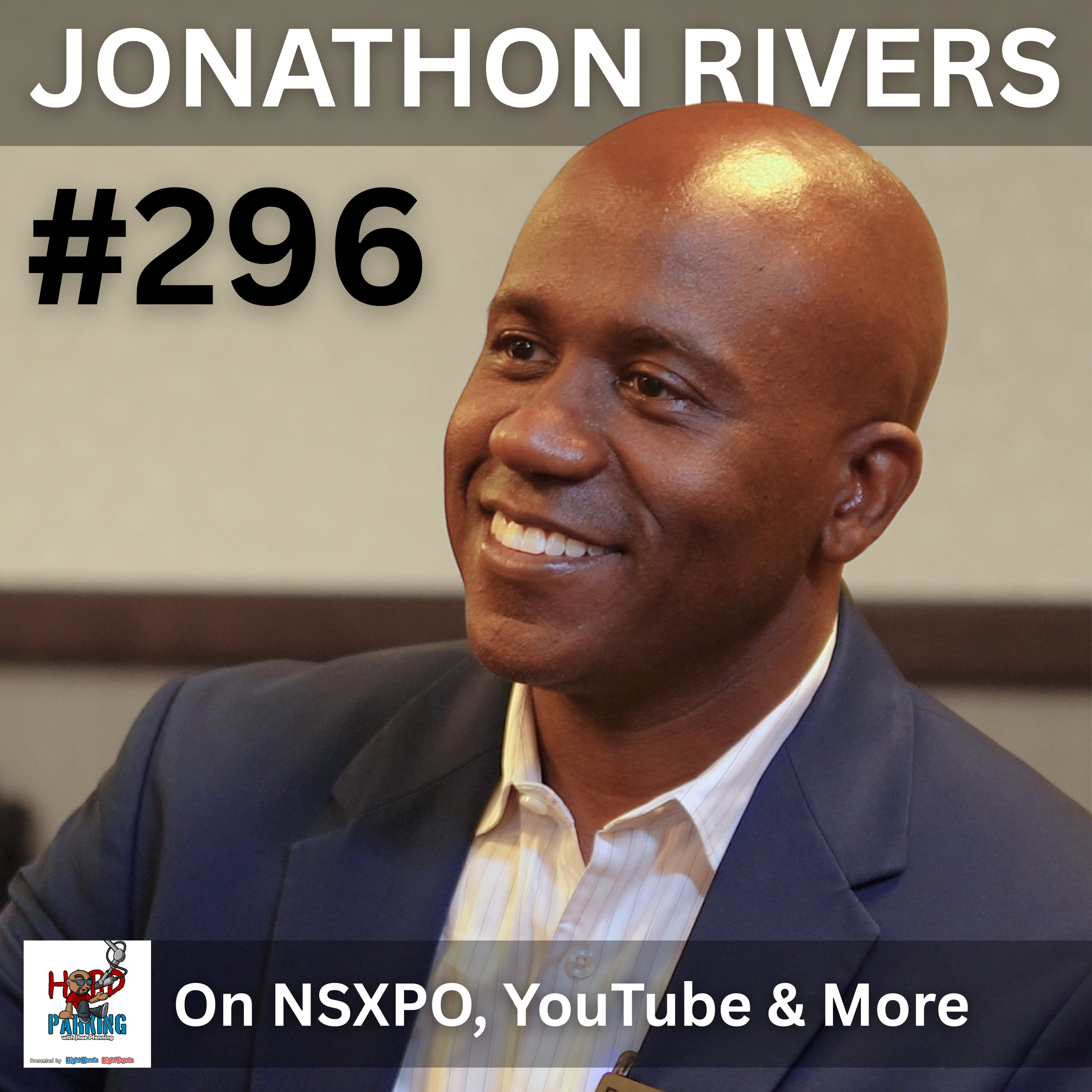
Jonathon Rivers from Drive Culture joins Jay Finning to discuss the recent NSXPO 2025 event and the evolving landscape of the automotive industry. They dive into the challenges of YouTube content creation, sharing personal anecdotes about their experiences with monetization and audience engagement. Rivers reflects on his long tenure at American Honda, the shift towards electric vehicles, and the importance of community in the car culture. The conversation also touches on memorable moments from the event, including a group drive and the camaraderie among NSX enthusiasts.
In this episode of the Hard Parking Podcast, host Jhae Pfenning welcomes back Jonathon Rivers of Drive Culture, fresh off the NSXPO 2025 banquet in Tacoma, Washington. As a 15-year veteran at American Honda and a passionate YouTuber, Jonathon shares insights on the grind of building a YouTube channel, from battling monetization woes to navigating copyright claims and the importance of audience engagement over subscriber counts. The duo dives into the thrilling NSXPO experience, discussing the scenic group drive through Washington’s tight, twisty roads, a near-miss with a dead deer, and the challenges of leading a convoy of Acura NSXs. Jonathon reflects on the auto industry’s evolving landscape—electric, hybrid, and hydrogen powertrains—and the complexities of product planning amidst tariffs and consumer shifts. With heartfelt thanks to Acura’s support for NSXPO, this episode is a must-listen for car enthusiasts, YouTube creators, and anyone curious about the behind-the-scenes of automotive events and content creation.