Intermittent Wipers: Dad's Basement Invention, Big Three Theft, Flash of Genius
To All The Cars I've Loved Before: Classic Car Restoration, JDM, and Automotive History
Intermittent Wipers: Dad's Basement Invention, Big Three Theft, Flash of GeniusTo All The Cars I've Loved Before: Classic Car Restoration, JDM, and Automotive History · Jul 8, 2025
Quickjack makes special lifts that help you raise your car off the ground, so you can work on it more easily, especially if you don't have a lot of space.
Car
Grave Digger
Grave Digger is a well-known monster truck that performs in shows and events. It's famous for its unique look and exciting stunts, making it popular with families and fans.
Vacuum carburation is a way that older cars mixed fuel with air to make the engine run. It uses air pressure to pull the fuel into the engine, which was a common method before modern fuel systems were invented.
This is a system that makes windshield wipers work only when needed, instead of all the time. It helps drivers see better during light rain by allowing the wipers to pause between wipes.
The Ford Mustang Mach 1 is a special version of the Ford Mustang that was known for being fast and powerful. The 1971 model had a cool design and was loved by many car fans.
A Hurst Shifter is a special gear shifter that helps drivers change gears more easily and quickly. It's often used in performance cars to improve driving experience.
The 351 Cleveland is a powerful engine made by Ford that was used in many cars. It's known for being strong and delivering good performance, especially in sports and muscle cars.
A drag package is a collection of upgrades that make a car faster for racing. These changes help the car accelerate better and perform well on a drag strip.
The Ford Pinto is a small car that was made in the 1970s. It is known for having some safety problems that caused fires in accidents, especially during a time when gas was very expensive.
The Ford Mustang is a famous car that many people love because it's fast and looks cool. It was first made in the 1960s and has become a symbol of American cars, often talked about in music and movies.
The DeLorean DMC-12 is a special car known for its unusual doors that open upwards and its shiny metal body. It became really famous because it was used in the 'Back to the Future' movies, which makes it a fun topic for car lovers.
John DeLorean was a car designer and businessman who started his own car company. He is best known for making a unique car called the DeLorean DMC-12, which has doors that open upwards like wings.
Quarter mile drag cars are cars built to race on a straight track that is a quarter of a mile long. They are made to go really fast in a straight line.
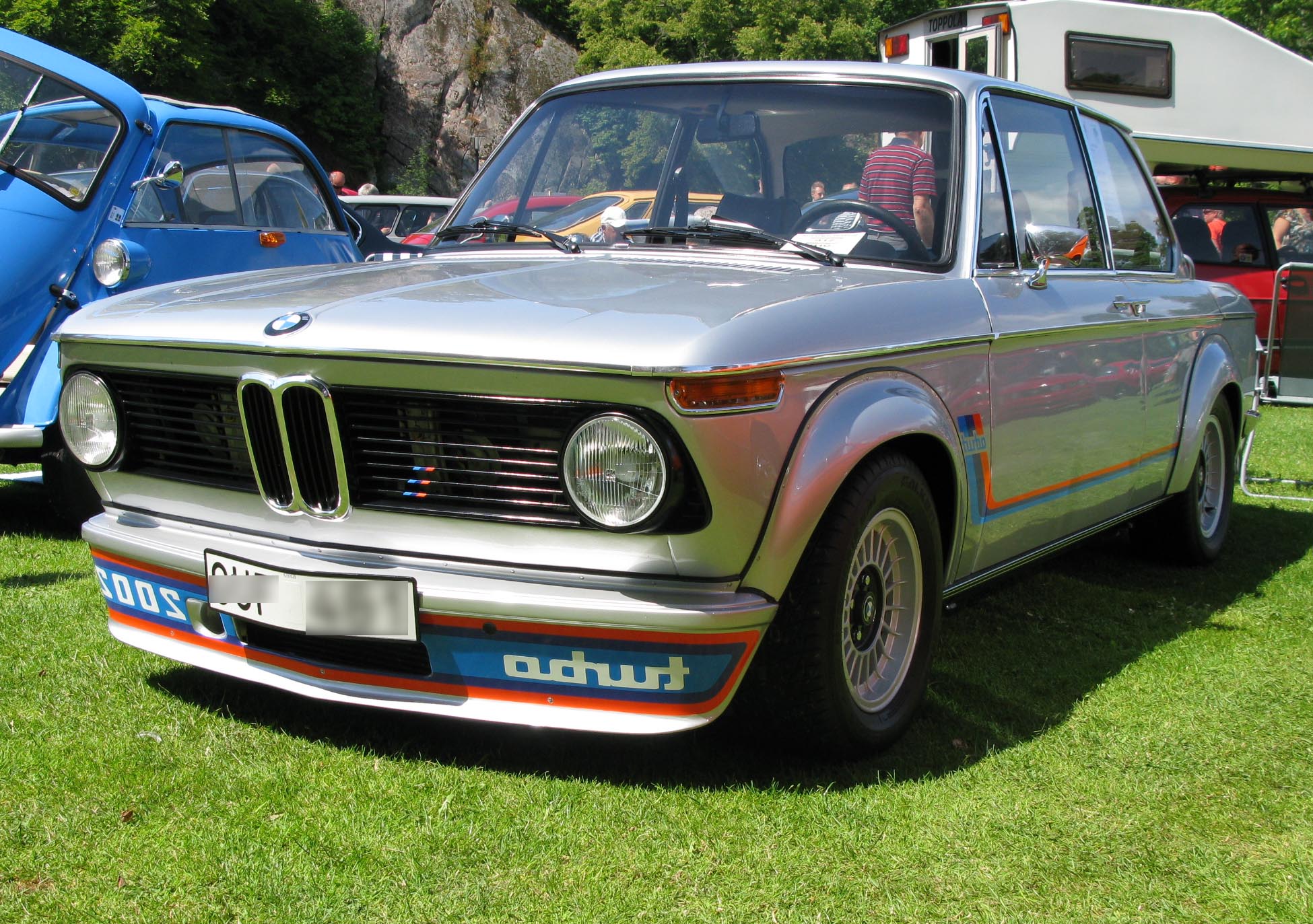
The BMW 2002 is a small car made by BMW that became popular in the late 1960s and 1970s. It's known for being fun to drive and helped BMW become well-known in the United States.
The BMW 3 Series is a popular car made by BMW that has been around for many years. It's known for being fun to drive and is often remembered fondly by car fans.
A Weber 40 is a special part that helps mix air and fuel for an engine, making it run better and faster. It's popular among car enthusiasts who want to improve their car's performance.
Normally aspirated means the engine gets air naturally from the environment without any extra help from devices like turbochargers. This can make the engine feel smoother when you drive.
The Porsche 911 (964) is a version of the famous Porsche sports car made between 1989 and 1994. It has a classic engine that doesn't use water for cooling, which is a key feature of many older Porsches.
DEs stands for Driver Education events. These are special days at a racetrack where drivers can practice and learn how to drive better, usually with help from instructors.
The Bricklin SV-1 is a rare car from the 1970s that has special doors that open up like wings. It's not very common, so people who like unique cars often talk about it.
Impact bumpers are special parts of a car that help protect it during crashes. They are made to absorb the force of an impact, which helps keep the car and its passengers safer.
LIVE
Welcome back to all the cars I've loved before, your authoritative podcast on automotive nostalgia,
where our guests are unique.
Each auto has an era, and every car tells a story, so you know.
It's time to plug in, get a little grease under the fingernails, maybe even your toenails,
depending upon how you change your oil, and slip onto that favorite T-shirt, car-themed
T-shirt, hat, or jacket.
How you doing, partner?
What's going on over there in the mid-Atlantic, these mid-Atlantic United States?
Do you agree?
My daughter just graduated high school as a big deal, on a weekend, had some family
in town.
Fantastic, congratulations.
Yeah, thank you.
Thank you.
So family was in town.
Yeah.
In meals ensued, over-eating, and yes.
Yeah, good to have my sister and my niece in town, and my brother-in-law, and my mom was
very happy to have two-thirds of her grandchildren, and two-thirds of her kids.
You had the whole crew?
That's a good showing.
Yeah.
Sorry, three-fourths of her grandchildren, and two-thirds of her children.
Three-quarters of them showed up.
Nobody was cutting halves or quartered, right?
I'm just saying, fractionally, that entire family being one over one.
I see.
Beautiful, wonderful.
You're well represented.
Beautiful.
Okay, and so there were no, were there any car projects, any garage-related fun?
Or was it all about family?
Mostly family.
I stuck in a little work.
I was waiting for a delivery, of course, for some parts, and I did over the
weekend order a, I think it's by a company called Quickjack, because I have a low, my
garage roof is not as high as I would like, because I wanted to build an apartment above
it, as you know.
So Quickjack will raise my cars about two to three feet off the ground, which is
a lot better than what I'm doing right now, which is crawling underneath of them, or
riding up a little ramp.
So I think it's going to only improve my mechanical abilities.
Yeah, I think you should stop by cars that are so low to the ground.
If you would just buy monster trucks, you could just walk around underneath them.
I think you might have the problem solved.
What do you think?
Well, maybe we could talk to Nicole Johnson about what monster truck to drive.
Maybe our Grape Digger is available.
Yeah, absolutely.
I could totally see you in that.
It's a great, great family car from what I hear.
It is.
Graphically speaking, over the past week, I want to welcome back our listeners
around the world.
Yes, we are heard around the world.
Welcome back to our listeners in Israel, Germany, Canada, and more closely
in these United States, Portland, Oregon at the top of the list.
Why are we so popular in Portland, Oregon?
Any ideas?
I know why.
Why?
Because it's somewhere near Nigel Tonacliff lived.
Oh, bang.
There you go.
Washington State, but pretty close, right?
Fantastic.
We did have a big bump.
First line academy driving school?
Yes.
Yeah, yeah.
I love how you can see the big bump in membership and the numbers
and these blips are fun to watch, the magic of reporting and analytics.
Okay, so we said Portland, Oregon, Tuckerton, New Jersey, Philadelphia,
Pennsylvania, Washington, D.C., Chicago, Detroit, big cities, the capitals
are well represented.
A lot of times, some weeks, it's just small towns all over the country.
The big cities as well, mixed in here, Detroit, how about Markham, Ontario,
and Montreal, Quebec for our friends north of the border.
Welcome.
You're always welcome here.
Yeah.
So one other thing is that we take continue to get pictures for our,
the new feature on the website, really one of my most favorite parts
about the website is, let's see, I said, hey, Doug,
how about the memory merry-go-round or the carousel of cars?
This is where you go to the website and you have pictures of the cars scroll by
and in website parlance, that's called a carousel because they go around.
Remember like slides on the old carousel that we had as kids?
Your folks had little slides and you project the image onto the wall.
So I said, you know what you call that?
The memory merry-go-round or the carousel of cars,
but then Doug took the cake by calling it the carousel.
No, carousel.
The carousel.
The carousel.
The carousel.
I love it.
CarsLoveCarousel.
Yeah, carslove.com, carslove.com.
Slashphotos.
Slashphotos will get you there.
Please join us, visit, if you like what you hear review,
you can write a review on the website or on your podcast streaming platform of choice.
Other than that, anything new with the website or our outreach,
anything worth mentioning, Doug,
or should we press on to today's guest to really exciting
because we have a fantastic guest today.
What do you think?
Let's press on.
This is a very special and unique guest.
Let's make it happen.
So I have to ask you, Doug, the world famous prompt,
how did today's guest find his way to your virtual garage?
Yeah.
So today's guest was brought to us by the gift that keeps giving indirectly.
So our wonderful guest, James McCrae from Eastern Shore of Maryland,
who I went to high school with,
referred me to a gentleman named Dirk Decker,
who, wonderful person, we have his podcast out there,
who was a helicopter pilot, as you know,
and very big in the Porsche community.
And Dirk, we had a great time with Dirk.
Yeah.
And he did a referral to Mr. Timothy Kearns, who we have,
who is also a Porsche fanatic,
but has a very unique tie to the automotive industry.
Tim, welcome to the show.
How are you this fine afternoon?
Wonderful, fellas.
Nice to talk to you.
Hey, thanks for making some time in your schedule today.
And you have a unique, you're an interesting guy,
but some very storied family history around the automotive,
around the automotive industry arena.
So can you tell us your familial tie to the automotive industry?
Well, I was a little kid growing up in the city of Detroit,
and my dad being part of the automotive culture there,
heard that they were trying to improve the mileage on cars.
This was way back in 1963.
And they were having a hard time with vacuum carburation.
So they wanted to make some electronic components,
and he developed the intermittent windshield wiper electronic control.
So interesting.
And one of these things that's so brilliantly integrated
into everyone's life right now,
you can't think of a machine without that.
But, you know, 50, 60, 70 years ago,
things didn't work that way.
And so how did this flash of inspiration come to him?
Well, on his wedding night,
he was opening the obligatory bottle of champagne
and it whacked him in the eye when it popped open.
And my mom says she knew it was all downhill from there.
But he got blinded in his left eye.
And as part of the recuperation, he would blink
and it would hurt when he blink.
And then he began to wonder how come
windshield wipers can't blink the way my eyes blink
because he's looking through the windshield, you know?
Okay, so that's such an interesting.
So did he ever regain sight in that eye?
Was it temporary blindness, permanent blindness?
Was he all the way blind?
It was permanent, but he had peripheral vision.
Got it.
Out of the side.
He wasn't fully legally blind.
He could drive.
Okay.
And so it struck him that, hey, so this is,
if we could cause it to go more slowly,
it's so much less wear and tear on the mechanicals,
on the blade itself,
and a better experience all the way around.
So how quickly from when that happened,
did he have some sort of prototype to show?
I would assume there's a lot of testing.
Well, it took him really just a couple of days
to create a circuit.
Fantastic.
Because he was one of the few people at the time
who was working with transistors.
He worked with Bendix.
So he knew what they were,
and that's what is the on-off switch that created the delay.
So it's a very simple circuit,
so simple that it began to haunt,
the simplicity haunted him later in his life.
Interesting.
Interesting.
And so he comes up with a prototype.
Now, how did the patent part of this work?
So not to skip ahead too far,
but someone took his idea.
And what was his flag in the dirt or flag in the sand?
Was there a patent that sort of predated
when other people began to come and take this idea
that you were visited in the future?
How did that work?
He had an initial patent.
With that he began to look for an initial manufacturer
to offer this product to.
And eventually he ended up with 30-some patents,
but it also got into a lot of litigation because, yes,
the automotives in Detroit heard about it.
As a matter of fact, his brother was a vice president
of one of the divisions of Ford,
and he managed to present it to Ford
through communications offered by his brother.
Gotcha.
So guessing, I'm sure Doug wants to hop in here
being the car nut that he is.
So his idea was presented and they said,
oh, no, no, no, we have no interest in that.
But then now that they have the idea, right,
he wasn't aware that it had even been integrated
until later on, and then he came back and said,
hey, wait a minute, this was my idea.
Well, yeah, it was sort of like that.
When you try to distill it down into a few sentences,
you're taking a lot of events that happen really quickly.
Sure.
But basically, yeah, he presented it to Ford.
Ford said, hey, come on in and show us how it works.
And then they were always trying to see the circuit itself,
and he always had that very well hidden.
Smart, yeah.
And then they tried to trick him into showing him
what the circuit was.
Eventually, you have to watch the movie,
and then you'll end up seeing all the details
that we're talking about now.
Gotcha, gotcha.
And the movie Doug was called?
Flash of Genius.
Yeah, and his father was portrayed by,
was it Greg Keneer?
Greg Keneer.
So interesting.
And I know Doug wants to get in here,
but the thing I find so interesting is to find an audience
with the executives of a company.
Whether your idea is good or bad is really quite an amazing
and striking thing that in itself was incredible stroke of luck.
Everything that happened afterwards was a bit of a domino effect.
But just to be in front of them,
I don't know, maybe it happens all the time.
I haven't worked in the automotive industry,
but that struck me.
What do you think, Doug?
I had watched parts of the movie,
and then I watched it last night just preparation.
And of course, one of my questions for Tim was how accurate
the movie was.
And it sounds like your family Tim was involved in the movie.
And we'll actually bring that forward into your first car,
which has a tie into the movie.
Oh, yeah.
Well, you're not supposed to watch your life flash
before your eyes.
Maybe just once.
Good point, yeah.
Good point.
Well, that's what it felt like when I saw it for the first time.
Oh, wow.
It was moving, to say the least.
And the movie came out in 2008, correct?
Yeah.
And when did they approach your family about it?
I think it was timed with the patent lawsuits,
or some win in 1990, perhaps?
Yeah, it was 90, I think 90 for Ford.
Then Chrysler followed that.
And then there was a third case that was going to be called the
world case.
Right.
And it was everybody else beyond that.
But yeah, there was, we were approached for rights to the
story and to make a movie even while we were just beginning.
So every year they would send us this little teeny check and
they kept the rights going.
But then finally they came across and they came across big,
in my opinion.
Yeah, yeah.
Yeah, for all our listeners, if you haven't seen the movie
or it's been a while, watch it.
It is really good.
It was good to see the young Tim Portray in there, Timmy.
Oh, yeah.
Help him with soldering, and by the way, that brought me back
because my dad was electrical engineer.
He's not with us anymore either.
But he taught me to solder.
And why did he do it?
I watched him soldering.
I saw the smoke.
I thought it was cool.
I burned my hand trying to do it behind his back.
And he's like, no, I'm going to teach you.
He gave me my first soldering iron.
And I still use it on, well, not that one,
but I still solder for my car projects.
Yeah.
And it teaches you all kinds of life lessons like patience.
Absolutely.
And I've gotten better over the years, actually.
And I started using it.
But yeah, just seeing your family come together with your dad,
including I think you and your older brother,
at least as Portray in the movie,
soldering some parts while your dad was getting the concept
together.
Oh, yeah.
It was great.
It really was inspiring.
And we could go on and on about the movie, I think,
kind of real quick.
It's one of the, correct me or help me get this right.
In terms of patent law or patent lawsuits, right?
It was a very long and well-documented lawsuit
or set of lawsuits or just maybe
some reform in patent law as a result.
Tim, I said a lot there.
Oh, yeah.
No, it really is.
It's seminal to modern patent law.
And he truly did change the patent law for all the
inventors that are coming in the future.
And they minimized, maybe not so much, minimized,
but they certainly had representation of the inventors
in the movie too.
And he did it for the inventors.
He didn't do it for the money.
That was always, yeah.
And really, it seems to me, and I know Doug wants to get
to your origin story of these cars,
but the arc of justice, the amount of years and decades
it took is really inspiring.
And you got to go see the movie.
And Doug will have all this linked to in the Liars Notes.
But when it takes years of his sticking to his guns,
knowing that he's right, holding feet to the fire,
I can't think of anything more daunting than entering
the legal system, which is Byzantine to begin with,
and then going up against just...
The big three.
Yeah, yeah.
Just phalanxes of corporate lawyers.
Can you think of anything more stacked against you?
Yet he was right.
Yet he persisted.
He won in the end, blazed a trail for inventors,
and changed the system that we know today.
And that's really so beautiful and profound.
Do you ever reflect on that too?
Yeah, every day.
Yeah, I love it.
It was 30 years, but it changed the world.
So it didn't seem that way at the time.
It was a real pain.
But we always had the dream that he would instill it in us
that, no, no, no, you got to pay attention to this
because it's going to make a difference.
And he got us all to participate 100%,
even after we all had careers.
We left our careers to assist him during the Ford case
and the Chrysler case.
Wow.
Wow.
Yeah.
And each of those was five-year...
Golly.
Yeah.
Yeah.
And it would have been so easy to give up.
It would have been so easy to throw in the towel,
but you didn't.
You didn't.
And that's such a good way.
Or take the settlement, right?
Correct.
I wouldn't do it.
Correct.
We had a lot of discussions around the family table.
I bet you did.
I bet you did.
And Tim, you are one of six children, right?
That Dr. Kern had.
Yes, there are six of us.
He had us because he needed a corporation to do exactly
what we did, which is to undeniably help him.
Yep.
Fantastic.
He was irreverently spoken of as the Kerns Corporation,
and you were all the board of directors,
as he spoke in the movie.
He did, indeed.
Yep.
And that's true, yeah.
And I'll throw this in, hopefully Christian won't mind.
Did any of your siblings become lawyers maybe as a result
or it led them in that direction, of course?
Well, it's funny.
Each one of us is sort of a piece of a lawyer.
Yeah.
As his father.
As is him.
Yeah, because we were all sitting there when my dad was learning
from the real law professors that he hired to help him learn
how to be a lawyer.
Yep.
And there's a whole long story of why that had to happen.
But yeah.
So Dennis was actually a private detective,
which is close to being a lawyer.
You know, you learn about what it is you need to defend
and where does the evidence come from?
Yes.
Yep.
And yeah, I was encouraging Christian,
and Christian hopefully you won't mind me saying it.
As we recorded this, Christian's son, middle son,
it was his first day of an internship at a law firm.
Wow.
Today.
Yeah.
So a paid internship at that.
So as soon as we're done recording this interview,
I can't wait to go, yeah, yeah.
He's a junior in high school, but on his mock trial team,
did very well at that, enjoyed it.
And he, so as soon as it's done, our conversation here is done.
I'm going to, you know, we're going to go have dinner
and chat about his first day.
So yeah, at this point, I think it would be proper
to hop in the time machine, go 88 miles an hour,
go back into history.
And as Doug was saying, there's an interesting tie-in
between the car scene with intermittent wipers
and his first car.
So let's tell us a little about that if you can.
Well, the first car was actually a 67 Cougar
that my dad bought.
There's a whole long story about where that came from,
but the first car that I felt was my car
that I paid for was a 71 Mach 1.
I bought it from a guy down the street.
My grandfather lent me $2,000 to buy it.
This was probably a two-year-old car at the time.
Sure.
351 Cleveland T10 four-speed Hurst Shifter,
all the drag package.
I didn't know it had a drag package until after I got it.
It was an amazing car.
Just a beast of a car.
I mean, just big and beefy and wide and angular,
just a menacing-looking thing.
Yeah.
How long did you have that car for?
I had it for about three, three, four years.
And it got 10 miles again.
780 dual-pumper vacuum secondaries.
Yeah.
It was suck at that down.
Yeah.
Even a jet engine.
Yeah.
At $0.35 a gallon, it was still a lot of gas in a lot of money.
Yeah.
So now that's very interesting.
You mentioned that last part because something happened
in the 70s that made it very disadvantageous to say the
least to own a car like that.
What happened in the 70s to cause you to move into your
next car?
Oh, well, that was the, I don't know.
What was it, a shortage?
You got it.
Yeah.
I forget exactly what caused it, but the end result was you
couldn't get any gas.
Yeah, exactly.
So with the gas crisis, right?
Yeah.
Yeah.
And what year was that about 75?
I don't remember.
Yeah.
75, 6, 7?
Yeah.
Yeah.
I think they were actually once OPEC, OPEC just tightening,
right?
Because although there's so much refining, we have all
the refining capacity we'll ever need in this country.
At the time, we didn't have the crude oil.
So all OPEC had to do, or as they should petroleum
exporting countries, all they had to do was kind of
rain in and tighten in.
So I just supplied them in 101.
When they do that, what happens the price of oil?
Boom.
So all the oil came here was just so expensive.
Okay.
So to refine it, it's just the feedstock was so expensive.
And yeah, and we were chatting about this before the show
and we've had all of these, we've had several gas
and I just find this fascinating that when I go to a
gasoline station now, I don't think anything of it.
In fact, oil, gasoline is so plentiful here.
Well, oil in this country now due to fracking
technological advantages is also in refining too,
that you can find gasoline anywhere.
I mean, it's 10 cents.
It's two cents over here cheaper.
You go do that.
You know, it's so plentiful.
But to have, I just can't wrap my head around what it
must have been like in the 70s.
I've seen even a herd of cars running dry and had to be
pushed into the gasoline station long lines.
Like you were saying it, even in odd numbers on the
license plate or on the day, that's just incredible.
So that had a big impact on you because the,
the Mach 1 wasn't, you decided to trade that in,
get something more economical.
Oh yeah.
I had like 25 miles to drive to the University of
Maryland to go to school.
And I needed, I needed something that was a little
more efficient.
So it became a pinto.
Yeah.
Before we, and there's obviously lots of good
stories about pentas in the news, right?
And the gas crisis and that's, yeah, the pinto was
kind of ready to go.
That's a success story for the most part.
You did tell us thinking about the Mustang and I
love this song that you picked out.
Thinking back, what was a favorite song of yours that
makes you, if you hear it on the radio, you think
about the Mustang.
If you think about the Mustang, you probably
think about this song.
Oh yeah.
I think that was, was it Steppenwolf I think?
Yes.
Yes, sir.
Born to be wild.
Born to be wild.
Yeah.
And I can just imagine you in that Mustang Mach 1
just burying the needle, watching the gas gauge
literally move to the left.
And listen to that song.
Oh yeah.
Yeah.
Yeah.
No, what a, what a wonderful story.
And it, obviously you became a car guy at
some point, maybe it was because of your
father, maybe it was because growing up in
Detroit for however long you lived there, but
certainly the Mustang was, was key probably.
Oh yeah.
Well, it, it, dad had a lot of interaction
with Ford.
Yes.
And of course growing up in Detroit, Woodward
Avenue was not far away.
So we would hit, we would hitchhike three or
four miles away on a Friday or a Saturday to
hitch what was happening on Woodward Avenue.
And that was just seminal to becoming the car
guy.
Yeah.
Every kid was.
Yep.
Yep.
Yeah.
If you're a Detroit guy, Detroit kid, right?
Right.
How did you not?
Right.
Yeah.
It's my, my niece who is visiting actually goes
to University of Michigan.
So we were talking about, I'm trying to get
my daughter to go out there, but selfish to
her selfishly, I want to go and see all the
car museums.
Well, I'm out there.
So.
Oh yeah.
And even visit John DeLorean's grave.
So there you go.
Which has a really wonderful tombstone of
the DeLorean with the doors open.
So it'd be great to see that.
Nice.
Yeah.
So back to the Pinto.
So tell us, tell us about the Pinto for,
and for people don't know the Pinto was
infamous for somewhat cost cutting that ended
up making a very dangerous car.
But at the time it got, what was the gas mileage
Tim, if you remember?
Well, I think it had to be in the low twenties,
which was pretty good.
It was a four cylinder, four small three speed
floor shifter.
Yep.
Yeah.
I mean, it's a cool shape.
Yeah.
Yeah.
And there were many, right?
There was the hatchback.
There was a two door.
There was a four door.
There was a four door hatchback.
There were many different models, right?
And a wagon.
Yep, wagon, full wagon.
Yeah.
And it's always still fun to see the tubbed
out Pinto with the M&H race masters in the
back and just this little ball of a differential
left between them.
Yeah, it's cool.
Yep.
Yep.
Yeah.
They get used for quarter mile drag cars,
right?
Yeah.
Some reason they caught on is popular.
I don't know.
They're just easy to modify.
Right.
Yep.
Cool.
And so after the Pinto and maybe when gas prices
got better, you moved on to a import car.
Can you tell us a little bit about that car?
Well, it was, yeah, import cars were cool.
And being a young architect, you know,
everybody had their import in mind.
Mine just happened to turn into a faster version
of an import car.
It was a BMW 2002.
Yeah.
And that was really like the first BMW,
first kind of, wasn't the first BMW in the U.S.
was it?
But it was the first like, it was the car
that made BMW in the U.S.
I think it was.
Yeah, I would say so.
Yep.
And they're still prized after, right?
Oh, very much.
Yeah.
Yep.
And then the three series followed, right?
Which really is the one everybody else remembers.
Right.
This was a precursor to the three series.
Yeah.
So you went from like super fast,
not maybe the best brakes, not the best handling
to slow and none of those things.
Right.
A BMW, which maybe wasn't fast,
but it was a whole different experience, right, Tim?
Oh, yeah.
I did hot rod it.
I put a Weber 40 on it.
You know, that was kind of cool.
Nice.
Yeah.
It was a nice car.
Yeah.
Yeah.
And, you know, certainly not one of your,
not the last of your German cars, right?
Because, and this is our connection with Dirk
and maybe how you met Dirk, right?
You were very involved with Porsche.
Well, I, yeah.
So after the BMW started to rust out,
I needed to, I needed to find a dependable car.
And this was at the time when Ford was just coming out
with the probe.
And I thought, well, I'll buy a probe, you know,
a modern technology, all those things.
And I went to, I went to get it.
And it was $25,000 or something like that.
Yeah.
And one of my friends said, well,
if you're going to spend that kind of money,
why don't you get a Porsche?
I said, what's a Porsche?
And they reminded me, so I went and sure enough,
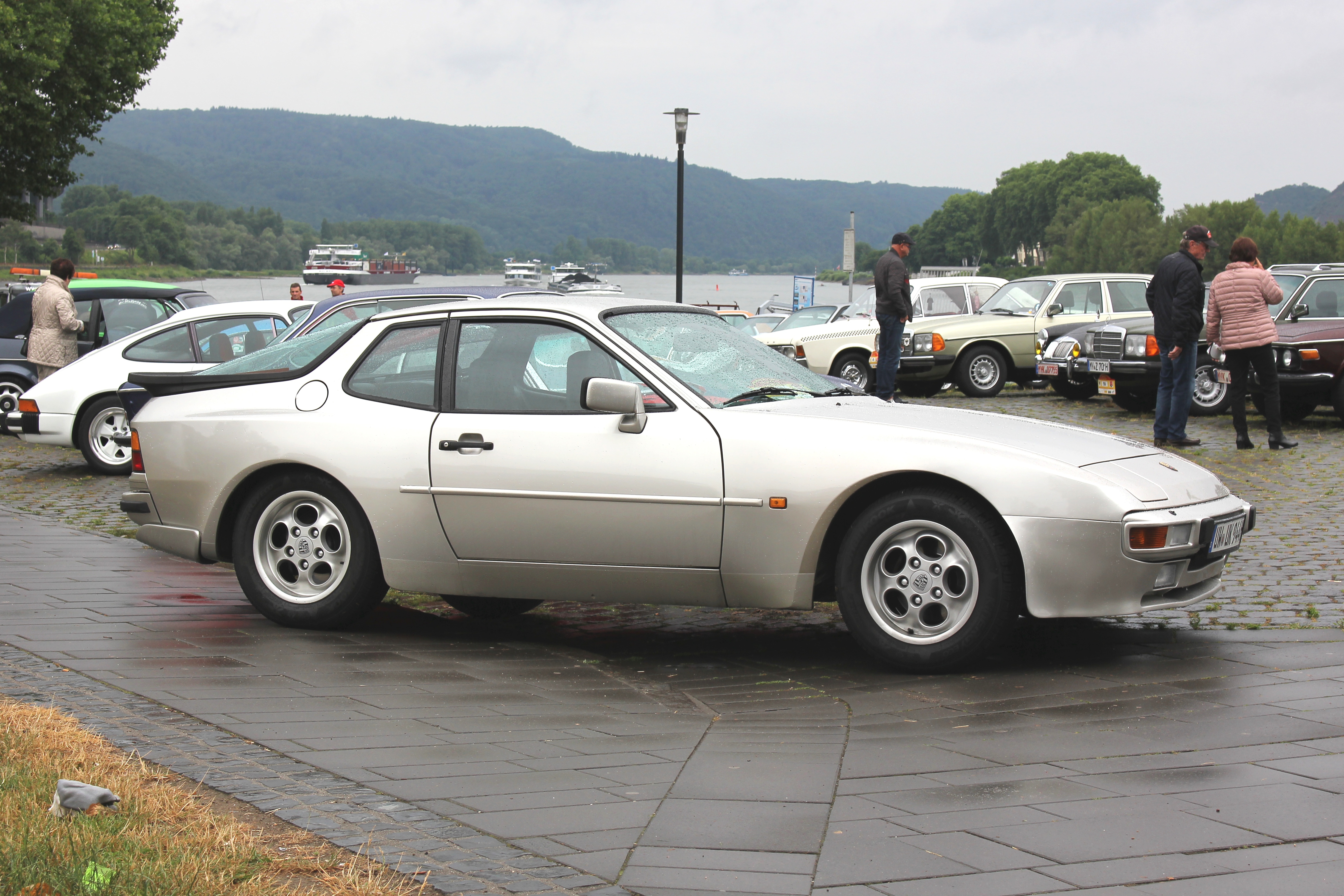
I saw at the local dealership of 944,
normally aspirated.
I didn't know that at the time, but I drove it.
I thought, well, this is, this is a nice car.
I like the way it is.
And I ended up buying it the next day.
And then as I'm driving that car around
Eastern Maryland where I am,
there was another 944.
And my wife now saw it.
She was my girlfriend at the time.
And she goes walking up to the guy and says,
my boyfriend has a 944 and he has a beard just like yours.
And that was the first time she met Dirk
and she introduced me to Dirk.
And that's how that relationship.
Oh, wow.
You've been friends with Dirk for 30 plus years then.
Yeah.
Yeah.
So the two of us went off and took our 944s to the Porsche Club.
Okay.
Yeah.
Nice.
And nowadays you have a 93 911,
which is a 964 model,
which is air cooled.
Very much.
And do you race that at Porsche events?
At the DEs.
Yeah.
With Potomac region.
Yeah.
I'm the DE Stuart.
Right.
So yeah, we've been doing that.
Well, we grew up through it.
Yeah.
Yeah.
And we're going to have,
we're going to have Voo win on who I,
who I met many years ago when I had a 996 very briefly,
but it'll be good to reconnect with him and Dirk,
Dirk help with that introduction,
reintroduction, if you will.
So, yeah.
So you're,
you're very involved in the weekend events.
And I guess you're considered it's a high performance driving
event instructor with that,
would that be accurate?
Yeah.
Yeah.
I'm a,
I'm a nationally rated instructor,
but I,
I choose not to instruct.
I do the,
I'm the Stuart.
I'm the,
essentially the policeman that puts cars on and off the track
and keeps track of them all.
Yep.
And yeah,
I think you said you're in the hot pit.
Is that the term?
Oh yeah.
Yeah.
Yeah.
And we have,
we have a reference back to the car or cell.
We have a picture of Tim wearing a cone,
like a cone costume in the hot pit.
Because there's a lot of fast moving cars in the pit.
Yeah.
And the one thing every driver knows is never hit a cone.
So that's why.
Exactly.
I became the cone.
Yep.
Smart, smart.
And it hasn't failed you yet.
No.
Yeah.
So Porsche,
no,
no,
we do like to ask,
I know we're running a little bit out of time here,
but if you don't mind,
what was the most dangerous,
what was the most dangerous car you were in and why?
The most dangerous car was my brother,
Dennis's serial number 13,
Bricklin.
And he asked me to help him renovate it.
So we were driving,
I was driving it on and off for a while.
And I was like,
oh,
oh,
oh,
oh,
oh,
oh,
oh,
oh,
my gosh,
I'm just driving it on and off ramp near Gaithersburg.
Maybe I was experiencing it a little,
too much,
but all four tires blue,
and I'm counter-steering not to hit the guard route.
Yes.
But you didn't hit the guard diwers, right?
No,
No,
not a bet when it was close.
Yep.
And the Irony,
or sorry, the Bricklin Goldwing vehicle was designed as a safety vehicle, right? I think
it was called the SV1. Oh, yeah, absolutely. Yeah. Yeah. And built with different materials,
right? I think fiberglass and some other things and like real impact bumpers and yeah,
it was really designed to be a safety vehicle. Yeah. But it wasn't safe with with dry
roti tires. So I don't know if you guys can hear me, but my zoom glitched for about two or
three minutes and y'all got into the Bricklin. So if you've already covered this, don't cover
to give how did he come across a Bricklin? Was it a difficult vehicle to get? He got it in
Detroit somewhere. I'll have to ask him. But yeah, he lives still in Detroit, the suburbs of
Detroit. So he picked it up there. And does he still have it by chance? I think he I think he
passed it on to somebody. Gotcha. Yeah. Yeah. And you know, James, James had a Bricklin at his
shop. I don't know if it belonged to somebody else. It was not your brothers though, apparently.
No, no, no. Yeah. And yeah, man, there's so many, there's so many things. I did want to ask. So you
you live on the eastern shore of Maryland. You're an architect. And for for a lot of people who
also love movies besides watching Flash of Genius, you did some work on a home or homes that was
featured in the movie Wedding Crashers, which a lot of people don't realize was taken in the
eastern shore. I think it was on an island near Oxford. Is that correct? Yeah, there's the
house is called Ellenborough. And it's it's on the Thredavin River. Okay, it was a state home from
the 20s. And it's it's undergone a number of renovations. So I got involved on an early
renovation to do a kitchen redo. And of course, those types of houses flip owners very often. So I
ended up doing a full renovation of the caretakers house on that same property. For a different
owner, it got subdivided off. So that's the way it goes here. Okay, gotcha. Yeah, a lot of
people don't know where that was filmed. And I, I just remember seeing the Annapolis Harbor, I live
in Annapolis, of course, and I saw the woodwind where they went on on the, I guess it was after
the wedding, post wedding. Yeah, yeah, they went on a cruise on the woodwind to that island, to
that home that you rebuilt. Oh, yeah. Yeah. So really all ties it together. And of course,
you lived in Maryland for 35 years? 1974 to 1970 to till present. Yeah, but on the eastern shore
since 89. Since 89. Yeah. And certainly Oxford's got some good history. Harriet Tubman, right? The
Underground Railroad. Yes, beautiful place. The Robert Morris was the signer of the
Declaration of Independence. Yep. The original Naval Academy was here in Oxford. And then it,
it suffered a burn. And that's when it moved to Annapolis. Oh, wow. I didn't, I didn't know that
piece. Yep. Wonderful. Wow. And of course, we still have the oldest continually running
car ferry is in Easton. I'm sorry, Oxford. And it goes, it goes to Bellevue, which is on the
St. Michael's neck. Okay. Gotcha. And there, and there's some great car shows in the eastern
shore, Easton, Oxford area, correct? And a wonderful museum in St. Michael's. Yes. And I've
been lucky enough to do a few car garages for some of the bigger collectors here. Yeah. Okay. Oh,
yeah, that's that's awesome. I know the, I know the museum just bought an old gas station. I don't
know if you're involved in that renovation. I got a, I got a Bob Kern story about that gas
station. Yeah. Awesome. Awesome. Yep. All right. He actually, he rebuilt the motor of one of my dad's
cars. Okay. Wow. Yeah. What a tie in, you know, and, and just makes me makes me happy. I live in
Maryland and try and get over the bridge whenever I can, except during summer, except on
Thursday and Fridays. That's right. Yep. Don't go anywhere. So with all that, Christian is having
some technical problems, but he, he asked me to thank you, of course. And, you know, we're hoping
to have you back. And I just wanted to kind of close out the show with, you know, he was Timothy
Kearns, wonderful man, architect, car aficionado, car industry veteran via his father featured in the
movie, flash of genius with Greg Keneer, wonderful movie, really some great family values, family
times, like growing up in a family of six children and doing all that just incredible.
And the things your dad did for inventors to your point, right? Really change the laws and,
you know, helps keep companies honest, right? It's probably the simple, simple thing to say.
Yes. Yeah. There's probably better, there's probably better terms. But yeah, we, we'd love
to have you back. So this is Tim Kearns. And you have just heard the high revving,
low mileage, late model, heard around the world, authoritative podcast on automotive nostalgia.
I'm Doug. You can reach me at Doug at carslove.com. He is Christian. You can meet him at Christian
at carslove.com. And Tim, if people want to find you, what would be a good way for them to find
you? Because I assume you may do some projects still from time to time. Oh, I'm still working.
Excellent. Let's see. tbkernsdesign.com. Okay. And you have tbtkerns.iCloud.com.
Okay. Yep. And we will put all that in the show notes when we post this episode.
Wait a minute. I'm back. Can you hear me? He's back. All right. We're going to end this show
the right way. You've just heard the high revving, low mileage, late model, heard around
the world, authoritative podcast on automotive nostalgia. Doug, reach me at Doug at carslove.com.
I'm Christian. Reach me at Christian at carslove.com. He's Tim. You know how to get a hold of him.
Please follow and tell a friend. If you like what you hear, go to your podcast streaming
platform of choice and leave a review. Yes, my phone completely took a dump. I went to
SOS mode in the middle of an interview, but I am back. I'm sure Doug did great.
And TroutCarsLove.com or our link tree at linktr.ee slash carsloved,
which is our digital switchboard as Christian calls it. I love it. And if I got nothing out of
this, you get some big laughs from Doug. Thank you so much, Tim. Sorry about what just happened,
but I'm sure we will see you at the next local car show, show, room, race,
sport. We appreciate you taking a walk with us. We'll see you next time.
About this episode
Timothy Kearns shares his family's remarkable story tied to the invention of the intermittent windshield wiper. His father, inspired by an accident on his wedding night, developed the technology that revolutionized wipers. The episode dives into the challenges of patenting the idea, the ensuing legal battles with major automakers, and the impact on patent law. Tim also discusses his automotive journey, from his first cars to his current involvement in the Porsche community, and reflects on the importance of family and perseverance in the face of adversity.
Every modern car has intermittent windshield wipers. Timothy Kearns' father, Dr. Robert Kearns, invented them in a Detroit basement—then spent decades fighting the automakers who copied his design.
This isn't your typical first-car story. This is about the invention that changed every car on the road, the legal battle that became the film *Flash of Genius*, and what it's like growing up as the son of a man fighting Ford and Chrysler in court.
Timothy's perspective on automotive history is unique: he watched his father's invention get stolen, fought over, and eventually vindicated in one of the largest individual patent settlements in automotive history. But at what cost?
In this episode, Timothy shares: - How his father invented the intermittent windshield wiper in a Detroit basement - What the early prototypes looked like (surprisingly crude for something so revolutionary) - The moment Ford and Chrysler started using the technology without permission - Why major automakers thought they could get away with copying a small inventor - The decades-long legal battle that consumed his father's life - How *Flash of Genius* (the movie) got some things right—and what they changed - What the patent victory meant financially, emotionally, and historically - The automotive innovation lesson that every backyard tinkerer should understand
There's one detail about the settlement that Timothy says the movie left out—and it changes how you think about winning a patent battle against the giants.
*** Your Favorite Automotive Podcast - Now Arriving Weekly!!! ***
Listen on your favorite platform and visit https://carsloved.com for full episodes, our automotive blog, Guest Road Trip Playlist and our new CAR-ousel of Memories photo archive.
Don't Forget to Rate & Review to keep the engines of automotive storytelling—and personal restoration—running strong.