Hello and welcome to Car and Drivers Into Cars, a podcast from iHeartMedia's Ruby Studio,
brought to you by eBay Motors.
I'm Tony Kiroga, the editor-in-chief of Car and Driver, and I'm joined by my co-host,
former editor-in-chief and current chief brand and content officer Eddie Alterman.
And together, we're Into Cars.
Each episode of this podcast covers a new car that we think is worthy of your attention.
The cars we select may feature a novel design, cutting-edge engineering, or something entirely new.
We'll cover the stories behind the cars, answering the whys and exploring the what's.
To bring you into the experience, we'll drive the things and let you listen in.
And then we'll sit down with the people who actually made the cars to answer our questions about them.
Come along for the ride and you'll hear it all, the good, the bad and the ugly,
in the way that only Car and Driver delivers.
This episode of Into Cars is a little different.
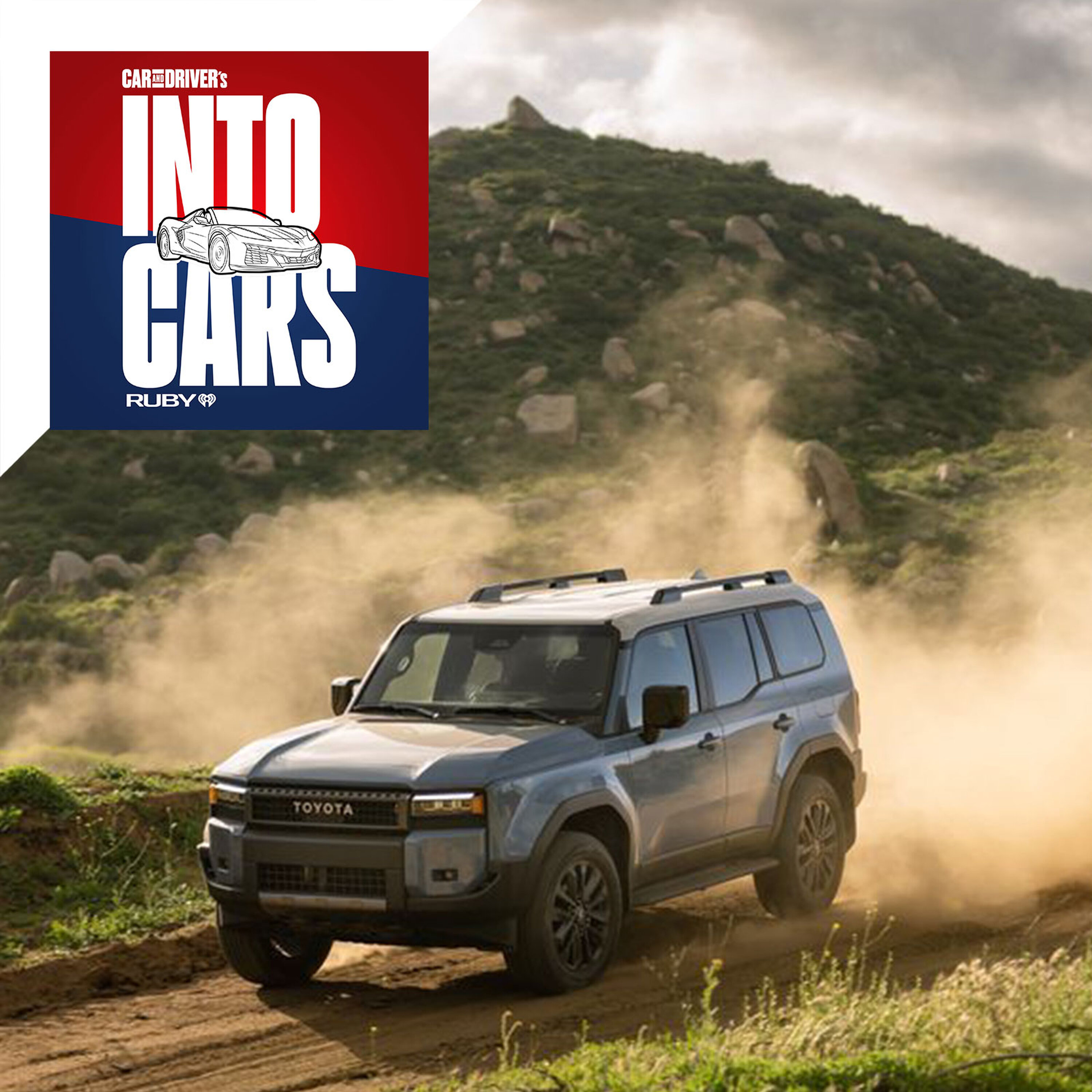
Today, we'll be off-roading in the reimagined Toyota Land Cruiser to find out if it lives up to its legendary name.
After crawling over rocks and getting dirty, we'll dust ourselves off and sit down with Marcus Umlaufe,
Toyota's general manager of truck strategy, to find out more about the engineering and decisions behind the Land Cruiser.
So here we have it, the long-awaited 2024 Toyota Land Cruiser.
It's been on hiatus, this model, since 2021.
It's changed a lot since then.
But a lot of the change is not dimensional, it's visual.
No, it's still a big truck.
It's the same wheelbase, I think it's the same width.
It's within an inch on height, or two inches on height, and the overall length is about the same.
So it's the same size truck.
It's just not the same Land Cruiser, though.
It's not the $87,000 Land Cruiser.
This one is a lot less money.
It starts in the mid-50s.
The one we have here, though, is a bit more expensive.
This is the first edition.
Yeah, fully loaded.
It's funny how it can present so differently than that last Land Cruiser that we had.
What was the model on that?
FJ...
FJ 200.
200.
Yeah, FJ 200.
The one in the 80s, I think, was the 62, and then the one in the 90s was the 80.
And then we went to the 100, and then we went to the 200, which was the last one.
And they were great.
They were really like the sort of Japanese Range Rover in a way.
They were really deluxe, very, very capable.
But I doubt anybody outside of Dubai used them off-road.
Yeah, certainly not the first owners used them off-road.
The second owners or third owners, because the things just lasted forever, too.
There was a repair shop in my old neighborhood in Los Angeles,
and the guy would drive the cars around trying to see what was wrong with them.
And he drove a Land Cruiser by me once.
I said, what's wrong with this?
And he was like, absolutely nothing.
He just lasted forever.
And I'm like 300,000 miles on it, so they don't break.
And they were complicated, too.
Yeah.
I mean, three locking diffs and a lot of electronics, but bulletproof.
This is more of a return to basics.
So it's on the new Toyota truck platform, the T-N-G-A,
and this is the supposed 250 series.
The Lexus LX is on the 300 series, which is over and above this.
But you get this for a lot less money than the Lexus.
And there are four similar vehicles off that 250 platform.
You've got the Lexus GX 550, which is a three-row SUV, but very similar to this.
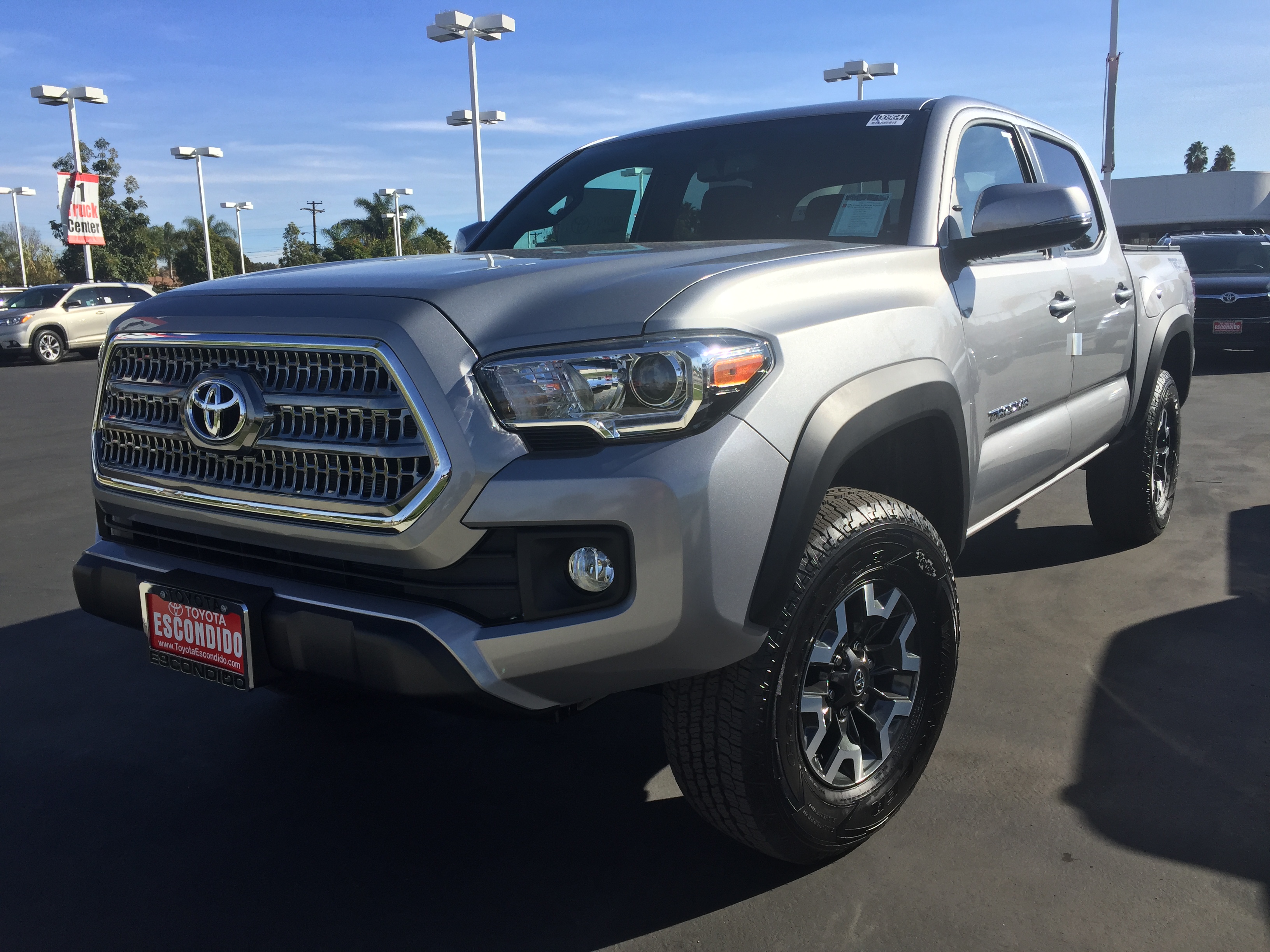
Then you have the Land Cruiser, then you have the 4Runner, and then you have the Tacoma.
It looks less like a luxury piece than the outgoing FJ200 Land Cruiser.
Yeah, that had sort of evolved into a luxury truck.
This has more of a retro feel to it.
It looks more like the Land Cruisers of the 80s, of the 70s.
It has some of that feel.
It even has some of the feel of the FJ Cruiser.
Like the headlights are round on the first edition and on the 1958 model.
So it starts at the 1958 model.
That's right, that's the base model.
But this, you know, it's fully loaded, but you get those retro round lights.
And I love the look of it.
Yeah, for sure. It's real upright.
I like my SUVs to have upright windshields, lots of glass.
If I'm buying an SUV, I want it to look like an SUV.
But there's also a functional benefit to that.
You can see how the thing better.
You can look down the side of it when you are off-roading.
You can see the raised capitals on the hood.
You know where the vehicle stops.
So a lot of things that they did,
I think were to make it a little bit trimmer off-road.
Although it still is wide, as you said.
It is, it is.
But yeah, like you said, you can see the corners.
And there's a lot of glass in there, and it's all upright glass.
Your view out of it is wonderful, and it's nice to see that.
The main difference between this and the GX550 is the engine.
That's right.
This has the Hybrid 4, the 2.4-liter, making three...
326?
326.
326 source power.
Same as the top engine that you can get in the Tacoma.
This one did 60 in our testing in 7.7 seconds.
The GX is over a second quicker.
Wow, and it's heavier.
Yeah, it's a significant difference.
That looks great, and I love this military khaki brown
with the contrasting gray roof.
Yeah, it's called Trail Dust is the color that we're looking at.
It's sort of khaki.
It's got a little tiny bit of olive in it.
It's cool.
And it sort of goes with the retro feel of it as well.
That's very cool.
Black 18-inch wheels and 33-inch tires.
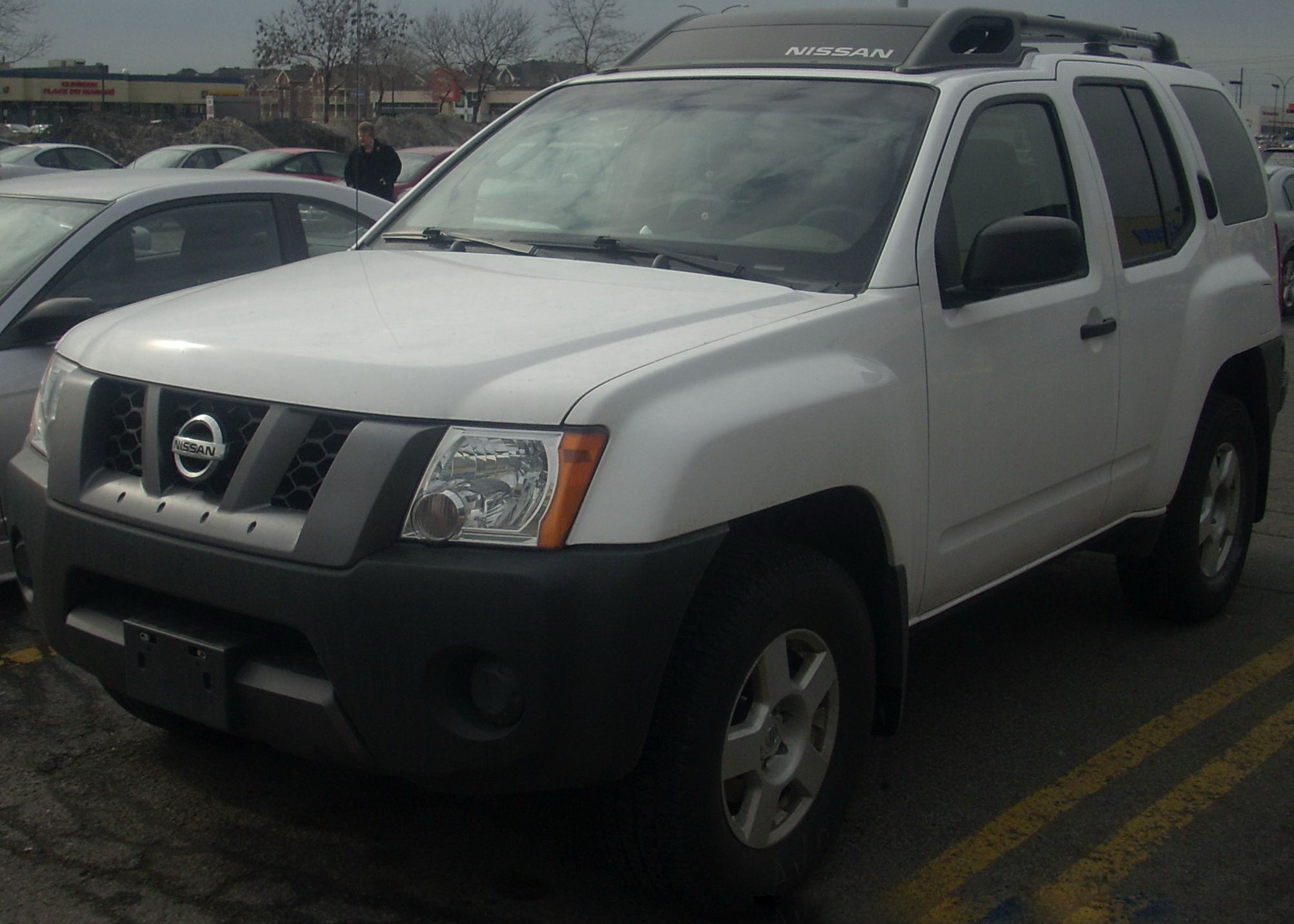
So it looks capable, but it also looks a little bit like a Nissan XTERRA.
Yeah, Nissan XTERRA is your capable, but yeah.
I think part of it is that roof rack.
That's true. That is adding to it.
It's a lot bigger than an XTERRA though.
It is big.
Let's go around the back.
You have the separate tailgate.
You can open the glass independently.
Oh, yeah, that's a Toyota hallmark of being able to open that rear glass.
Super cool.
So even the badging is retro.
Instead of having the modern Toyota badge,
which looks like a little cowboy hat, stylized cowboy hat,
Toyota has written out, and the font of Land Cruiser
is the classic Land Cruiser font.
And it's cool little touches like that.
And what does this thing tow?
I think it tows 6,000 pounds, which is less than the GX550,
which is a more powerful powertrain.
One of those cool retro touches is the mud flaps
that have little straps holding them in place.
The straps behind them are pretty good.
That's really cool.
Okay, let's hop in and check out the interior and drive it.
Oh, that's not a real expensive sound.
No, that was a little tinny.
I mean, you would get in the old FJ200,
and it was just like a bank vault.
That was really nice.
Everything was super solid.
Horizontal elevator, and super, super damped.
You'd never hear that vibration coming off the door panel.
No, that's real tinny.
And I think the materials in here are nice enough,
but it's clearly that this has been built to a lower price.
Yeah, for sure.
And it's way more affordable.
And the old Land Cruiser priced itself out of relevance.
The LX sort of took over that buyer.
And Toyota, to relaunch this,
they wanted to actually sell the Land Cruiser, which is shocking.
That one started at $87,000, and it was out of reach for most people,
but this one starts at $57,000, although the one we're sitting in is $76,000,
this first edition.
So not such a huge delta from the old FJ200.
It's aimed right at the meat of the market,
where the Bronco plays.
Yeah, where the Wrangler plays.
And interestingly, where the Forerunner's going to play too.
Yeah, I think Jeep finally found the top of where you can price a Jeep.
I think the 392 at over $80,000, I think,
is pretty much as expensive as an off-road is going to get.
But have you driven that thing?
It's wild.
It's wild.
It's worth every tiny bit.
It's really hilarious.
This is, you know, it's a return to the roots, as you said,
of a more affordable Land Cruiser.
I think they've positioned it smartly.
Yeah, it's more of a Toyota.
The Land Cruiser had sort of turned into a Lexus,
and then they built a Lexus out of it.
Yeah.
And then Lexus sort of was like,
OK, this is our vehicle now.
And then the Land Cruiser reinvented itself, in a way,
at 50% less money, basically.
I think the interior is, you know, it's a good $50,000 interior.
Some vinyl wrapping here.
Yeah, it looks kind of like leather.
It feels a little bit like leather.
The gauges look great.
Yeah, it's fully modern in that way.
But it's sort of upright in old school Toyota at the same time, too.
Yeah, it feels very utilitarian in here.
And there's lots of buttons and knobs, which I like.
You have a mode select knob here, a drive mode button.
You have crawl mode, hill descent control.
You have your locking center diff.
You have your locking rear diff.
You have the ability to disconnect the anti-roll bars
to get more off-road traction.
You got a switch for high four and low four.
So it looks totally legit.
But it's also something that you can just drive as an everyday.
Yeah, that's right.
And it's the hybrid powertrain shared with Tacoma.
So you get a tiny bit of electric power
and better fuel economy than the GX550.
I think the combined fuel economy number is in the low 20s,
around 22 or 23 miles per gallon.
That's pretty good.
Well, let's take it off-road and see what's up.
All right, buckle up.
We've got our off-road flag.
We're at Bundy Hill Off-Road Park in beautiful Jerome, Michigan.
And this is a place where we come to play on occasion.
I think we've taken the Bronco here.
Yeah, we'll bring comparison tests here, test out vehicles,
see how well they can do off-road.
Also, there are a couple handles here.
Oh, yeah, on the A-pillar.
And the A-pillar, I mean, look at how upright these A-pillars are.
It's great.
It's a great panoramic kind of widescreen TV effect.
We are off-roading solo.
Are you locked up?
Are we already stuck in here?
No, we're not stuck.
We're just creeping through real slow.
How nice that we're end-dipping.
You're still in high four, though.
I'm not quite ready for low yet.
OK.
We just got over our first obstacle.
I didn't hear too much scraping.
No, everything is still in working order.
And now it's in hybrid mode.
Silently creeping through this sand pit here.
That's kind of eerie.
It is weird, but we're saving the environment by trampling on it.
The off-road park, I think the speed limit here is 10 miles an hour.
I'm going five miles an hour very gingerly as we traverse this.
Yeah, and off-roading is the most fun way to go five miles an hour.
That's right.
You know, it's funny thinking about this versus the Ford Bronco.
The Ford Bronco has all sorts of trick electronic stuff like that trail turn
that'll pivot the vehicle like around a tree and really decreasing the turning radius
by breaking the inside wheel.
It gives you all sorts of video spotters.
But you know, the Bronco is really going after the Jeep
and really trying to out jeep the Jeep.
This is not doing that.
No.
I mean, it still functions as a regular SUV.
It's pretty quiet on the highway.
The fuel economy is decent.
Doesn't have those crazy knobby tires that you get with the Sasquatch package.
They'll leave that to the aftermarket when the old man emo lifted it.
That's right.
And there will be a healthy, healthy aftermarket for this thing.
So what are your first impressions?
It's pretty unfazed.
So what's funny is it's a hybrid.
So it's doing what hybrids do at low speeds and we're just running on electric motors.
And it's completely silent there.
The engine just kicked on.
That's very cool.
Oh, it says bottomless dump over there.
I don't think we want to go over there.
That doesn't look appealing at all.
So we're just traversing some off-road trails.
We've got it all the way up to 12 miles an hour.
The ride's really nice too.
It is nice.
It's hugely plush.
Does not beat you up at all.
And on the road, the structure of this truck feels really solid.
I was worried it was going to feel like the previous generation Tacoma,
which felt like there was no structure underneath you.
But it's really solid.
But I am missing the old Land Cruiser had this wonderful heavy steering
that felt like it was lubed by cold molasses.
And it gave the truck this like invincible feel almost.
And it felt like you were driving this 10,000 pound vehicle
just because it forced you to slow down.
It forced you to just not put any inputs in that were big.
And this one is more normal.
So I think that people appreciate this, but I kind of miss the old one.
Yeah.
The last one was like piloting a cargo ship.
Yes, that's right.
That's right.
But I think our biggest risk to life and limb here
is cutting a tire on one of these rocks.
That's right.
Yeah.
It's pretty easy.
One of the things that you want in an off-roader too
is a really predictable accelerator pedal
so that you can feed in just the right amount of throttle.
You can feed in just everything perfectly.
And this really does that even in hybrid mode.
It just gives you the torque that you need.
And it's very predictable.
I'm just in the passenger seat right now,
but it seems like a pretty easy vehicle to place.
Yeah, I can see every corner of it.
I can see exactly where the back window is.
I can see the front corners perfectly.
And then Toyota has lowered the side glass too
relative to the windshield.
So I can see out my door really well too.
Let's go up this guy.
Let's see if we can climb this.
Okay.
You might need to modify your settings.
Sure.
Let's lock up the center diff.
Okay.
And we'll lock up the rear diff.
A couple of buttons.
Why not?
Belt and suspenders.
On a pair of sands of belts.
Let's see.
Let's put it in dirt.
Okay.
It doesn't have an air suspension,
so we're not lifting it.
The ground clearance stays at 8.7 inches
no matter what you do,
unless you put larger tires on it.
Now we're climbing this grade.
That's not having any trouble whatsoever.
No, that's super easy.
There's some big rocks at the end of it.
It also has a big skid plate up front too.
All right.
This is a little more treacherous on the downslope,
so we're going to put it in.
Let's see how their hill descent control works.
Call it DAC crawl.
So if we hit the crawl button,
we can adjust the max speed that it's going to go.
So let's go all the way down to 2.
You can go as high as 18 as well.
That seems...
So it's going to use the brakes.
It's going to use the brakes to slow us down here.
Yeah, 18 seems a little...
Yeah, that's a little aggressive.
Oh, and it's holding it right at 2.
Oh, I just saw three, but we're going back to 2.
Oh, it's just so easy.
It takes all the thought out of it.
It's like an autonomous vehicle.
All I have to do is steer and avoid the really big ruts.
Not exactly new technology, but adjusting it's cool.
Let's climb this little hill here.
It looks like it's pretty steep up top,
so it's going to test the break over angle,
which is actually better than the old Land Cruiser.
Right.
It has the same approach angle as the old one,
but a better break over angle.
Yeah, and on the same wheelbase.
We're at the top, making a tight left.
It's going to lean a little.
Put back into the DAC crawl.
And just make this super easy on ourselves.
Parking warning.
Rock ahead.
Nice.
Okay.
That was easy.
That's good stuff.
It's been easy so far, which is good.
Can I take a-
Yeah, you want to try it?
I'll go.
Watch the door slam.
Oh, there it is again.
I don't know what your Uber passenger rating is,
but mine's pretty high because I don't slam the door.
So I'm not really even pushing it.
I'm not even slamming the door that hard,
and it's making that noise.
Yeah, that's a great tip, by the way.
Don't slam your Uber driver's door.
Yeah, you won't get a five-star rating.
You'll be down with these.
That looks a little...
That looks a little too ATV.
Yeah, it's a little narrow.
Yeah, the electric assist allows this four-cylinder
to bump up to 465 pound-feet of torque,
but it does have a really small battery.
And the pedal's nice.
It is nice, and it's very easy to modulate.
Oh, there's another break-over angle test.
There we go.
No problem.
I'm going to do it old-style, hill descent, just by braking.
That's a little bit more fun,
but that wasn't all that challenging.
I like that there's no steering kickback.
That's true, yeah.
You're not going to get any weird kind of phases
where the steering goes light
or it kicks back in your hand.
Right, and I haven't seen it snap once,
and we're going over stuff that's kicking the body around,
for sure.
But good tip off-roading.
Do not hook your thumbs into the spokes of the wheel
like you might do on-road,
because if there is kickback,
it could break your thumbs,
or at least give you a little zets.
Oh, wow.
I think we're getting a little crazy.
I think we are.
I wouldn't go in there.
OK, let me back up.
You can turn around.
OK.
There's a sign on the tree that says Wilde.
This is where that trail turn feature on the Bronco
would really help.
Yeah, for sure.
Because I'm making a 14-point turn here.
Try not to hit the trees.
This is where spotters would help as well.
Yeah.
But the plushness of the ride is really pretty shocking.
There's not even that much head toss.
Right?
I'm not getting thrown around that much.
It's got all this initial compliance.
Break over angle test.
Break over angle test.
Pretty incredible.
There it goes.
All right.
And then you can see the corner perfectly,
which allowed you to avoid that tree.
Very, very tight turning radius, which is nice.
It really makes everything seem pretty easy.
I know.
It really is easy.
Yeah, these mirrors are great
because you can see both sides of the car
the whole way down.
It really is good spotting.
Oh, we have an inclinometer.
There's a nice little inclinometer,
like the Mitsubishi Materia.
I think the really old Land Cruisers had that too.
That's a great touch.
That's nice.
Okay, let's exit out of here.
Oh, I haven't heard it scrape once.
Well, you don't know that's talent too soon.
I don't know if that's our driving talent
or the break over angle on the ground clearance.
Oh, there it is.
There's the front.
Nice.
Oh, look at that.
Okay, so this front camera gives you
kind of a ghosted view of your front wheel angle.
Yeah, it's like the car is gone in front of you
and you just see the tires.
That's wild.
I don't want to spend too much time looking at it, though.
I think you should drive the rest of your time with it.
No, it's really cool.
I mean, you have an onboard spotter.
It kicks off at about five miles an hour,
six miles an hour, though.
Very cool.
It figures if you're going that quickly,
you don't need a spotter.
But I think we decently challenged this thing
and it came through with flying colors.
Yeah, it's super easy.
It did not break a sweat.
No.
And like you said, it is extraordinarily comfortable inside.
I'm shocked at how comfortable it is.
I've gone off-roading and stuff
and just been made nauseated because you get thrown around so much.
It's hard to believe that the dimensions are so similar
to the old Land Cruiser
because this feels so much tidier
and so much smaller when you're driving it.
And some of that's a function of the control feel
and the lighter steering,
but it just feels way more manageable out here.
And this is not an off-road course
that's designed for really wide vehicles, either.
No.
And you sit a little bit higher.
It feels like there's a much higher age point in this vehicle.
Yeah, I think that's some of that's the lower glass
on the side windows.
It's not quite the original Range Rover
where if you're driving on the road,
people could see your hips.
But at least people can see.
They can see your wallet.
Yeah, exactly.
But incredibly comfortable, incredibly smooth,
and at odds with the tinny sound of the doors.
I think the ride refinement is extraordinary.
It is.
It's shocking.
Very fun.
This is cool.
The fact that this can do all this
without really breaking a sweat
and perform all the functions you need
of a regular sort of family vehicle
without paying much price for it on the road.
It's pretty nice on the road.
And you were mentioning that the steering
doesn't kick you back here,
which usually means that the steering
is completely aloof and numb on road.
And it's not.
It's pretty responsive.
It's easy to drive on the highway.
It's super easy to keep in your lane.
It works really well.
I always feel like when I can't find my way
out of one of these places,
it's like a little Blair Witch project.
Just go to the cottage at the back of the car.
Like I'm pretty sure we just passed that lake.
We crossed over that lake seven times for some reason.
Toyota knows what they're doing off-road.
Executing something like this
that has such a dual nature.
It's pretty spectacular.
This is quickly going to turn into a lost scenario
where we find out we've died in this off-road park
for the rest of our existence.
Yeah, when we get out of here, it'll be 2063.
And there'll still be a Toyota Land Cruiser.
Yeah, this will have gone up in value tremendously.
Oh, that looks like an exit.
I see the ramshackle buildings.
I see the corrugated tin huts.
We didn't die.
No.
We're back among the living.
Well, we still don't know what year it is.
Who knows what year it is up there.
All right, we made it.
Good, good.
That was fun.
It was fun.
It was surprisingly easy.
I know.
I mean, we didn't go up the 85% grades.
No, we didn't do anything too crazy,
but we did test out the ground clearance
and the break over angle
and the approach angle and the departure angle.
And you know, it's also incredible how quiet this thing is.
Everything has a great kind of veneer of refinement.
You don't hear the structure creaking at all.
Not at all.
You don't hear the suspension moving around.
A lot of off-roaders, you just constantly hear
the suspension moving around.
Felt like there was no torsional weirdness.
Good stuff.
Bank and park.
All right, cool.
We may have made it out of the sand pit,
but we aren't out of the woods yet
with this new Land Cruiser.
Luckily, after the break,
we're sitting down with Toyota's Marcus Umwalf
to answer our lingering questions about the truck.
Welcome back to Car and Drivers Into Cars.
To answer some of our lingering questions,
we're joined today by Marcus Umwalf,
Toyota's general manager in charge of truck strategy.
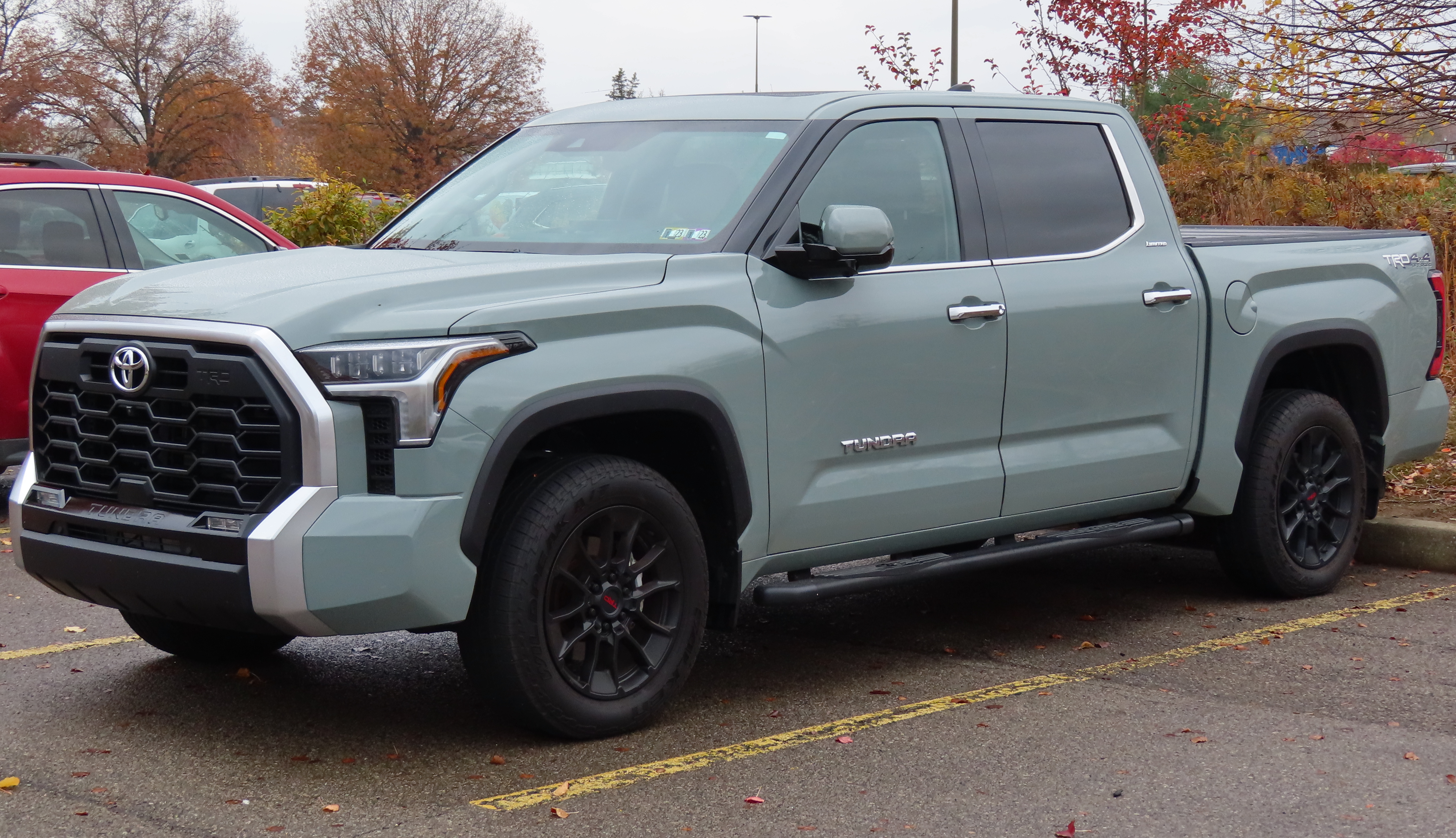
That means Marcus looks over the Tundra and Tacoma pickups,
the Sequoia, the 4Runner, and the Land Cruiser SUVs.
If it's body on frame and it's a Toyota,
Marcus is responsible for it.
In avid off-roader, Marcus developed
Toyota Racing Development vehicles in Australia
before making the move to the United States.
Welcome to Into Cars, Marcus.
Hey, Tony, glad to be here.
So Marcus has had a strategy for Toyota truck.
Let's talk a little bit about Land Cruiser strategy.
While the LX600 continues on the 300 series version of TNGAF,
this is on the 250.
It's less luxury oriented.
So why did you guys make that switch
and put the Land Cruiser on 250 instead of 300?
It's a really luxurious position of being to say,
we've got a lot of choices.
And a lot of this came from the new platform.
So as we develop the new F1 platform,
this is the first time I've been able to come up
with a platform for all of our trucks at the same time.
And really considering like, how would this execute
as a full size pickup, as a mid size pickup,
as a Lexus product or a Toyota product?
And I think being able to start with that clean sheet
of saying what should that platform be
that's going to serve all of these different purposes,
it was a really good opportunity.
Stepping back from there, we now have a bunch of tools.
So we say, okay, so I mean, the platform lead
was 300 series Land Cruiser.
So that was the first vehicle on the platform,
very closely followed by Tundra.
We had Sequoia LX, really so rounding out
that full size execution on that platform.
Then we said, okay, how do we do
a slightly smaller version of that?
250 series was a case of saying,
and the way I best sort of frame this is,
we have global vehicle with Land Cruiser,
and we have a lot of regional vehicles.
So let's say Sequoia 4Runner, they are very,
let's call it North American specific.
So we've got the benefit here of saying,
hey, we've got a global truck in Land Cruiser.
We also have a full size SUV in Sequoia.
And now for the first time, Sequoia gets a lot
of the benefits of 300 series Land Cruiser,
already built into the truck,
but at a scale that really is for the US market.
So it was a chance and from the very outset of saying,
hey, look, what should Land Cruiser be?
How do we take Land Cruiser back to its origins?
And really the LC250 is really ideally where that should be.
I do a follow up question to that, Marcus.
Was there any internal concern about moving from an 8 to a 4
and going lower in price and changing the sort of brand
position and lining it more with Tacoma 4Runner?
Did anybody feel like they were devaluing the vehicle?
I don't think so.
And I think at its very simplest,
it's recognizing who Land Cruiser customers really are.
I mean, Land Cruiser has been a name plate
that has been around for so long.
People that know Land Cruiser, love Land Cruiser.
And frankly, I mean, Land Cruiser had really started to drift
to become something that really wasn't the origins of Land Cruiser.
I mean, we were selling a handful of vehicles a year.
It was a fantastic truck,
but it was to a very small part of the market.
And so how do we take it back to where it should be?
We want to be able to have a truck that's more accessible
for price point, a truck that has the right spec
for people in terms of what they actually
want to do with the Land Cruiser.
And so it was a great opportunity for us to bring that back.
So Marcus, now that the Land Cruiser has moved down the price point,
it moves a little closer to Forerunner.
So how does the Land Cruiser fit into the lineup
with the newly announced Forerunner?
These are two tools to compete in one really competitive segment.
So if I looked back historically, we had Forerunner,
which was one tool to compete against everything.
The Rugged SUV space, I mean, it's super competitive, super passionate.
There's some great product in there.
And we had one tool to compete there.
It was very intentional to say if we have two tools,
how do they both play there?
So we have the Global Tool with Land Cruiser,
which has the heritage.
It's more boxy. It's more rugged.
It really has that global DNA.
And then how do we take Forerunner back to be also Forerunner
is really a story of return to its roots.
If we look at first and second gen Forerunner,
it used to be tied to the pickup truck.
So it's a little cheekier. It's a little sportier.
It was important to us to say they have to have their own role.
So Forerunner has got a wider range of powertrains.
So it really is the higher volume, broader coverage type vehicle.
Which is their regional truck.
I mean, it very much is a North American truck.
We then have the Global Truck, which is so globally renowned,
but it's a simpler strategy.
So it's really a case of if you want a Land Cruiser, you buy a Land Cruiser.
Forerunner really appeals to a whole bunch of other people.
But at the end of the day, I think it's going to build down to choice.
People just have two great products that they can really choose,
which is the best fit for them.
So it's our understanding that Toyota,
and I don't know if you can confirm or deny this
while still keeping your job,
has an internal measure for durability that has three categories.
Cars are the first category, as the least rugged and durable.
The second category is a higher level up for most of the truck line.
And the highest level, the most durable third tier
with something like a 10 year lifespan
of never being driven on paved road.
Does the Land Cruiser still abide by that in this 250 iteration?
Yeah, first and foremost, I really love my job.
So I'm not going to do anything to compromise on that.
So everything I can to keep my job.
But Land Cruiser is a fascinating nameplate.
And without going on too much of a tangent,
there is a huge amount of respect for it
and a huge amount of, honestly, responsibility to protect what that is.
And so I think you're exactly right that there are levels
of durability and severity that all of our vehicles are tested to.
As you can imagine, we have globally so much variation
in terms of markets, in terms of usage, in terms of expectation.
And vehicles need to be developed appropriately.
What I'd best sum up with Land Cruiser
is we understand the customer really well
and we make sure that Land Cruiser is a Land Cruiser.
And so when it comes to specifications and things like that,
it's not as simple as saying, this must survive 10 years.
It must say, okay, how is the customer using this truck?
And then what is their expectation to survive?
So when we look at severity, the way that we rate severity,
there's so many different things.
Is it about heat? Is it about dust?
Is it about water? Is it about how rough that road is?
And we talk about Toyota's renowned for Genji Gimboots.
So go and see.
And very much, this is almost the epitome of,
you've got to go and see it.
You've got to go and talk to these customers.
You've got to be in a crocodile-infested river in Australia.
You've got to be in a mine site somewhere.
You've got to be sort of in the middle of this engine somewhere
to really understand how are people using these vehicles.
And it's not a case of saying, here's just one test that doesn't.
It's a case of saying, if I know how the customer is using this
and their expectation to, it's not just, it'll get me there,
but it will get me back.
And it's easy to repair that it's reliable.
That if that really is the core tenet, if we know what they do
and we protect that someone can trust a link or is it a do it,
that's really what it boils down to.
I'm not dodging the question there as opposed to as much
as it's a case of saying, there's so many layers.
What we just need to do is make sure that we can actually test to that.
We might create a new test of saying, hey,
we just saw that someone in a mine site in Australia
is basically catching all of this mud underneath this truck
and it's pulling wiring harnesses off.
How do we make sure that we test for that?
And so it's really a case of saying, what's the real world test?
Not necessarily just the standardized test that would be run.
Can you talk about the decision to kill the Land Cruiser in 2021?
Why not continue to build it until the new one came out?
Did you have to kill it to relaunch it?
What was the story there?
Because LX came out pretty quickly.
It did. And Tony, we didn't kill Land Cruiser.
Land Cruiser had little pause until it was ready to come back.
And that's really how it played out.
And a lot of it was cancer platform.
So as that full-size platform went to 300 series,
we see our 200 series stopped.
So we had to cease with production of 200 series.
As it rolled out there, it was really Sequoia was our next product
which was coming to fit into that space.
So full-size body on frame, rugged SUV.
We now have the benefits of that 300 series development.
Sequoia comes out there.
I think a lot of what people couldn't see coming was like,
don't worry, we have an answer.
And I'll tell you a funny story.
I was speaking at the Land Cruiser Museum.
And so at the time, we had killed Land Cruiser.
And I basically said,
you're either the bravest guy or the dumbest guy
to turn up into a whole audience of Land Cruiser enthusiasts
after killing the Land Cruiser.
But I couldn't tell them what was coming.
And knowing full-world that Land Cruiser was coming back
in the form that it really should be in for the US market
was really exciting.
And so I'd sort of call it, it was really a pause
until the product cadence could actually get it back into there.
But it was really a pause rather than a death.
Marcus, you've spoken a little bit about
how Toyota adapts different cars and different platforms,
different trucks to different environments
in different countries and different use cases.
Can you talk a little bit about how Australia is different
from the US in terms of how they use their vehicles?
What is the off-roading culture like?
I mean, is there a lot of cosplay where people
get the most rugged G-Wagon or whatever they can
and just drive it to Erewhon or whatever?
Like in the US?
So probably the number one thing in Australia
is you assume that everything's going to kill you.
So if you start with that assumption, then...
Everything's poisonous.
That's right, exactly.
So you sort of start with that assumption.
The Erewhon in Australia is lethal.
The fascinating thing about the Australian market,
and this is why I mean, I've got a lot of Australian experience
but here permanently in the US,
because there is so many similarities
in terms of the lifestyle and what people do
with their trucks and SUVs is very similar.
So people really want to enable a lifestyle with this.
So whether it's their pickup trucks, whether it's their SUVs,
they want to be able to tow, they haul,
they use it for vacation, they use it for off-roading.
So there's a huge recreational culture.
There's also a very practical culture as well
that these are a tool of trade for many people.
And so I think there's a lot of similarities
in how people use it or why they want to use it.
The difference has really probably come in
into the environment and just how far.
The biggest difference that I draw here
is it's really hard to find two gas stations in the US
that are all that far away from each other.
You might struggle to find maybe 100 miles
or something like that.
These places in Australia where you actually go on travel
and you have to carry extra fuel
because it is, the distance is too much.
So a lot of it is the distance, it's the remote nature.
And frankly, the fact that I mean,
if you do get stuck out there, you die.
It's a pretty remote and dangerous place to be.
But the reason why people are doing is really similar.
Marcus, how long are we going to see
body on frame vehicles in the mass market?
Is it going to be like the old 9-11 story
where the line just goes on and on and on and on and on and on
forever?
And yeah, I guess if you make them heavy enough,
they escape some regulations too.
So is the future really bright
for body on frame vehicles at Toyota?
So Tony, I'd get a little philosophical with you
and say, what is body on frame?
And it's really a case of you marrying a platform
with a different upper body.
And when we actually look at,
even where a lot of dedicated EVs have gone,
they've got a skateboard that marry with an upper body.
It's really more about what's the evolution of platforms
that you can electrify a platform.
You can still have the ruggedness and the strength
that you can go off-roading,
that you can actually still have a 13,000,
12,000-pound towing capacity.
You still can haul.
So I think it's going to be how do you have platforms
that evolve to be able to do that?
But I think necessarily it's not a case of body on frame
evolution.
It's really a case of how do you marry a platform
with an upper body in a smart way?
Well, that's interesting.
And I think you're going to have to sell the customers on that
because they expect body on frame to look a certain way.
And there's also a theory that American cars
were never comfortable not being body on frame.
That's why Americans love body on frame.
So basically, a Cadillac Escalade is very close to a 70s car.
I mean, it's a V8 and a body on frame.
So that's something Americans are very comfortable with
and understand.
So even when it evolves,
I think you're going to have to convince customers.
For sure, for sure.
And at the end of the day, I'd also argue,
I think there's a large group of customers
that just want to have the right end product.
But I think there's a lot of enthusiasts
that understand the architecture of their vehicle.
There's a lot of others that probably come along
and say, does it have the performance?
Does it have the strength?
Does it have the space?
I think if you could execute a really good product
for the customer, whether it's an SUV or a pickup truck,
and you've got a slightly different architecture,
sure, you're going to have some people that will sort of debate
how you got there.
There's also a lot of people, if you can do it right
and you don't make them compromise,
then I think they're really going to judge the end product
and how that comes out.
Marcus, I hear you have a 72-scout project.
How's that coming along?
What can you tell us about that?
So you're not going to give me a hard time
for it not being a Toyota?
It's okay.
No, no, no, no.
There's a new scout coming too.
Well, there is.
But what do they say about the forbidden fruit?
You grow up in a world of when there's linkers everywhere
and then you come to the US
and you find something new and unique.
It's pretty exciting.
And actually, a little bit of the backstory
is our first family tractor in Australia
was a 1939 international H model.
And so I had an affinity.
I said, hang on.
So he's a really cool truck by a tractor company
that I have an affinity to.
So I had to buy it.
So this was a COVID project.
The price was right.
And I completely undersold the amount of time
to my wife was going to take to work on it.
But it's been a great project with my boys
to really sort of teach a 16-year-old here
with Cabaretta Works and rebuild the Cabaretta
in a motor.
And I just love the simplicity of something
designed by a tractor company.
It had a 196 and I got a 345.
And literally the 196 is just half of a 392.
So the Velotrain comes across.
I mean, they just left four cylinders off.
Oh yeah.
It had that giant four-cylinder engine.
Absolutely.
So I got it with that.
But it's literally half a V8.
So you can use so many parts.
So anyway, without geeking out,
I just love the practicality of a tractor company
that says, we're going to use the same parts.
We'll just build four cylinders and V8s.
And it's, yeah.
It's a necessity.
Yeah.
Yeah, absolutely.
Just like Lamborghini.
My favorite design element inside
is that the Land Cruiser says Toyota written out in script
instead of having the Toyota badge inside on the airbag hub.
So I saw that and I was like, yes, they got it right.
They know what's what.
That's awesome.
That's awesome.
I've got to tell you, Tony, I was really excited
when I saw the very first concept sketch with Kevin Hunter
and the Kelty team, little side story.
The thing that's really exciting is the concept
and what came out the other side are so similar.
So sometimes when you actually put it through
the big sausage making machine,
I mean, things really get diluted.
You lose a lot of the emotion and passion.
But when I very first saw that, I go, I can see FJ62.
I can see FJ80.
And this is really at the height of when everyone's paying
way too much money for 97 triple lock 80 series during COVID.
It was just cool to actually see the truck and go,
it's super modern, but basically it totally
without trying to be a retro ripoff,
without trying to be the old Land Cruisers,
it still has the DNA of Land Cruiser.
And as much as you just say it, as much as you engineer it,
it's really cool when you sort of see a bit of that too.
It seems like from the outside that you guys have
an easier time slipping through truck designs,
like the FJ Cruiser that went from concept to production
and not that much was changed.
But I don't necessarily see that in the cars,
but the trucks, they seem to get through unchanged
from the original designs, which is really cool.
We're very, very lucky, especially in the U.S.
where, I mean, truck is so unique to the U.S. market,
we've got such a fantastic team between Newport Beach
and Ann Arbor.
Well, next time you're in Ann Arbor at the R&D facility,
we're right off the street, so.
Yeah, come have lunch with us.
All right, all right.
We'll bother you with a lot of annoying,
nitty-gritty questions about stuff.
All right, it's a tight.
Thanks, Marcus.
Thank you.
Thanks, Gus.
That interview was brought to you by eBay Motors.
Visit ebaymotors.com for more.
Car friends, the Toyota Land Cruiser's resurrection
as a less expensive off-road focus SUV strikes me as a good idea.
The new Land Cruiser proved itself off-road
and handled everything we threw at it.
The old Land Cruiser had priced itself out of relevance.
Bringing the Land Cruiser back will undoubtedly prove
to be a wise move for Toyota.
Undoubtedly, but I missed the old one.
I liked its under-the-radar luxury.
We've already got a forerunner.
Why do we need this thing?
Well, you can still get it as a Lexus, I guess.
Yeah, but I don't want the Lexus.
For more on the new Toyota Land Cruiser,
visit caranddrivers.com and be sure to pick up the latest issue of Car and Driver Magazine.
Well, Eddie, that's a wrap on the first season of Car and Drivers Into Cars.
We got to experience some seriously interesting and compelling new vehicles over the last six
episodes, from the Lamborghini Huracan Strato to the most expensive Cadillac Ever
to Toyota's Reimagined Land Cruiser.
We hope that you had fun riding along with us
and learning from the folks who helped create the cars.
Each week brought surprises and a few laughs.
If you enjoyed the show, don't forget to rate and review wherever you listen to podcasts.
And stay tuned for season two.
Car and Drivers Into Cars is a production of Car and Driver in iHeart Media's Ruby Studio.
Our show is hosted by Eddie Alterman and myself, Tony Kiroga.
Our executive producer is Matt Romano.
Our EP of post-production is Matt Stillo.
Our supervising producer is Sierra Kaiser.
This show was edited by Sierra Spring.
Special thanks to our location sound recordist, Matthew Sisko.
Thanks for listening.
About this episode
Exploring the reimagined 2024 Toyota Land Cruiser, this episode dives into its off-road capabilities and design changes compared to its predecessors. Hosts Tony Kiroga and Eddie Alterman take the new Land Cruiser through rugged terrain, discussing its hybrid powertrain, retro aesthetics, and affordability. They interview Marcus Umlaufe, Toyota's general manager of truck strategy, who shares insights on the Land Cruiser's evolution and its place in Toyota's lineup. The discussion highlights the balance between luxury and ruggedness, making for an engaging listen for off-road enthusiasts.