EPA regulations are rules made to keep the air and environment clean by limiting harmful stuff cars can put out. These rules help make sure cars don’t pollute too much.
A stop-start system turns your car off when you stop, like at a red light, and turns it back on when you start driving again. This helps save gas and reduces pollution.
Starter cycles mean how many times your car can be started before the starter part gets worn out. If you start your car a lot, this part can wear out faster.
A manual transmission is when the driver changes gears themselves using a stick and a pedal called a clutch. It gives you more control but is harder to use than automatic cars.
The Kia Soul is a small car that looks a bit like a box and is good for city driving because it has lots of space inside. People talk about it because it's a cheaper option that still has nice features.
The Ford Mustang is a famous sports car that you can still buy with a stick shift to change gears yourself. It's one of the few sports cars that still have this option.
The Chevrolet Corvette is a fast sports car that used to come with a stick shift, but newer ones mostly have automatic gearboxes. Chevrolet now mostly makes SUVs and trucks instead of cars.
The Tesla Model S is a fancy electric car that doesn't use gas and can go really fast. The Plaid version is a special model that is super quick and impressive to ride in.
A coal-fired power plant is a big factory that makes electricity by burning coal. This can cause pollution, which is why people worry about using electricity from these plants to charge electric cars.
Electric vehicles, or EVs, are cars that run on electricity instead of gas. They don't make smoke from the exhaust, but they need to be charged with electricity.
The Ford Edge is a medium-sized SUV that feels more like a car to drive but gives you the space and height of an SUV. Around 2020, cars like this got more expensive, which is why people talk about it.
The Chevrolet Cobalt is a small, simple car that many people bought because it was cheap and easy to use. People talk about it when remembering how cars used to cost less money.
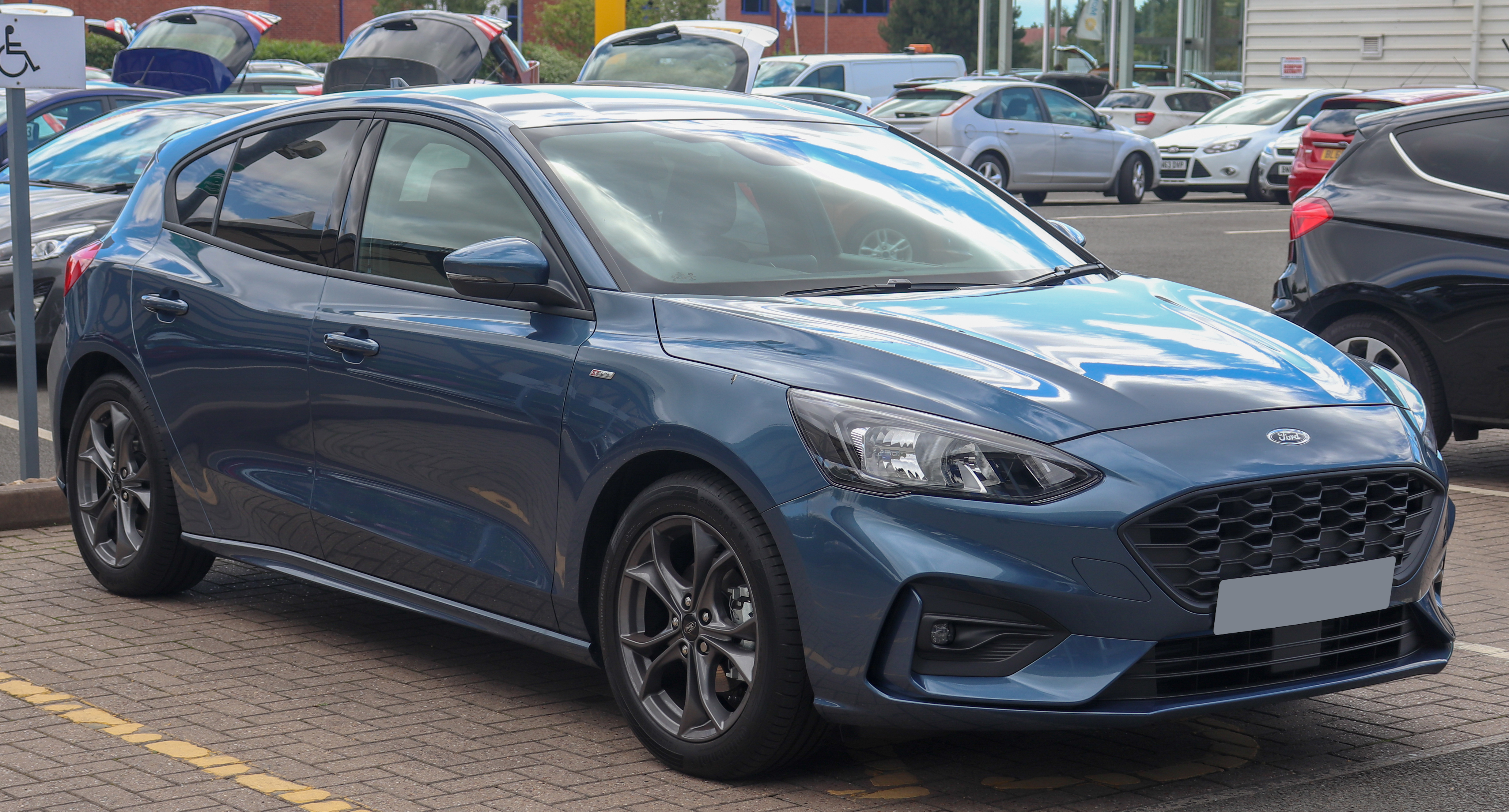
The Ford Focus is a small car that many people bought because it was cheap to run and easy to drive. It's often remembered as a good, simple car from the 1990s and 2000s.
Auto stop start means your car turns off the engine when you stop, like at a red light, to save gas. When you start moving again, the engine turns back on by itself.
The Jeep Cherokee is a small SUV from the late 1980s that people liked because it could drive well on rough roads and last a long time. It's often talked about because many people remember it as a tough and dependable car.
LIVE
You're listening to the get out and drive podcast fueled by AMD with your host, John
custom car nerd Meyer and Jason old car guy car will be bringing you gear heads, everything
you've never wanted to know about cars and why they should be on the road and not in
your garage.
Are you ready to get out and drive?
I was getting down to our new music.
Fantastic.
If you guys didn't notice, we did change up our music a little bit, very similar to
what we had, but unfortunately we kept getting copyrighted.
Go figure.
No, thank you.
I'll walk the blockbuster guys, welcome to the get out and drive podcast fueled by AMD.
My name is Jason.
This is John and speaking of regulations, we're going to try and talk a little bit about
some of the EPA regulations that have recently been turned back as part of the current administration
in the US.
Before we jump into that, John, I do want to talk a little bit about the fact that these
regulations are EPA regulations and they were put in place.
Some will argue and we're not going to get political on this episode, but some will argue
that they were put in place for the environment, obviously environmental protection agency,
to help keep people safe, to help keep people healthy, to combat things like climate change
and global warming and all those trigger words that tend to be a thing that we talk about
these days.
Do you remember back, you and I are only a few years different in age, but do you remember
back like in the late 80s, early 90s, acid rain was like, oh, I, I remember, nice fear.
Yeah.
Oh yeah.
That was, that was amazing.
It put them little circles on your car.
Yeah.
Like today we have what's called hard water spots.
You go to the car wash and if you don't get it dried, it leaves these little spots all
the place.
Well, back in the 90s, 80s and 90s, Mother Nature was doing that for us because the water in
the sky was full of crap and pollution.
And when it rained, it left spots and I truly believe that's why Dodge had so many bad paint
clear coat problems in the 90s.
It was acid rain.
I know it was.
No, no, it was not.
I 100% know the answer, but that's okay.
I know you do.
I just, I just think it's not acid rain.
Somebody was on acid.
Yeah, I know.
But in, in back then it was acid rain in the 2000s.
It was what hole in the ozone or something.
I think they had a hole in the ozone from all them girls with the big hair hairspray
from the, you know, 80s, giant 80s, small hair.
That did it.
That's what did it.
Yeah.
And then into the 2010s, it was, you know, the earth's temperature was increasing.
Therefore, the glaciers were melting, causing more flooding and worse weather.
And they, they called it global warming now into the late teens and early 2020s.
Climate change seems to be the buzzword that seems to affect everybody.
And we are not here.
Maybe we are.
We are not here specifically to take sides one way or the other on whether any of this
stuff is true, whether what, how it relates to you and me, John, and everybody that listens
to us in the car industry and more specifically the collector car industry and where these
rules come into play.
So how do you think that some of these EPA rules have affected you in your daily life?
They took diesel boys off the air.
Thanks.
I mean, I was happily watching along, cutting catalytic converters off and eliminating,
you know, the blue goo all over, I just, I was happily minding my own business and then
no more.
Thanks.
Yeah.
I mean, I, I always had, I never owned a diesel vehicle, first of all, and I always had a
problem with the death fluid, if people don't know what that is, a diesel exhaust fluid
comes in a box, comes in a bag, comes in a plastic container, and you pour this stuff
in your container and it sprays particulate after combustion, keep the particles from
coming out and black stack in the world, you know.
But I don't think the carbon, no pun intended, I don't think the carbon footprint of all
that plastic crap is, is, is even helped at all with the fact that, you know, what they
say death does, I mean, am I wrong?
So what you're saying is death is meant to, well, the whole theory behind it is to lower
tailpipe emissions.
Correct.
But what you're saying is, is that the carbon footprint involved in lowering tailpipe emissions
from death is less than the carbon footprint in the freaking containers and boxes and
plastics that comes in when you buy it.
Oh God, yeah.
Because you, you take that stuff and the cardboard and then the bag and then the plastic and
the cap and everything, and what do you do when you've got, you're done with that?
But John, that's, that, that doesn't matter.
It doesn't matter because all you do, hear me out, all you do is you just, you just put
it in the garbage can and then it gets recycled somewhere.
It's all the, the magic, the magic place called the throwaway.
Yep.
Yep.
Is that the same place that batteries and windmill blades go?
Yeah.
Oh yeah.
I think it's fine.
We don't worry about that.
Okay.
It gets recycled.
Cool.
I'm fine with that then.
Yep.
Let the global, let the whole entire globe warm up.
Yep.
Cool.
So next week, folks, thanks for joining us.
We'll be driving EVs from here on out.
We taught, no, boy, that's not what this is about.
This is, we're basically trying to talk about the deregulations that the current US administration
has deregulated the EPA rules and it affects a few things.
So a couple of things we're going to talk about is auto stop start.
We're also going to talk about EV mandates.
We're also going to talk about the cost associated potentially with the reduction in, in, in
these deregulations.
We're also going to talk about the reliability of vehicles, again, in theory, by getting
rid of some of this crap, as John and I would like to call it.
Oh, hey guys.
This is Jason here with AMD and you're watching the Get Out and Drive podcast.
Check this out.
Here's your reminder to support the companies that support your right to get out and drive.
Auto Metal Direct is a premier manufacturer of high quality restoration parts for classic
American cars and trucks.
AMD offers a wide range of components, including body panels, trim, glass, weather stripping,
and much more.
Crafted to meet or exceed original equipment specifications.
Be sure to visit AutoMetalDirect.com as you get your ride ready to get out and drive.
So I want to jump right in because it's a hot button topic is auto stop start.
It's been around for several years now.
If you guys don't know what it is because you don't care and you drive vehicles that
are old enough that you don't have it, it was a feature put in so that when you pull
up to a stop light, a stop sign or your vehicle stops, as long as your foot's on the brake,
the engine shuts down, but everything still maintains your air conditioner, your radio,
all that stuff.
And as soon as you lift your foot off the brake, the starter gets a little bit of juice
from an auxiliary battery, starts your engine back up, and you can go.
Yes, there's a delay.
Yes, it's annoying.
Most people shut it off, but it does not default in the off position.
Shut your car key.
The next time you go to turn it on, turn it on, it's automatically defaulted on.
You know the whole stupid reason behind all that?
Yes.
It is the stupidest thing I've ever heard in my life.
OK.
You have a master's.
Oh, go ahead and explain it.
Go ahead, John.
I'll let you explain it.
The theory you want to explain it so people can hear it or listen and understand it or
how I see it.
Dude, I want you to I want you to tell why it was brought on and the whole premise
behind it, and then we can talk about the bullshittery afterwards.
All right.
So your car runs for 100 percent of the time, right?
If you turn it off for like, I don't know, 20 percent or when you're stopped,
your car's not running.
Zero miles per gallon.
Zero miles per gallon.
So it's not emitting harmful pollutants while you're sitting in stoplight.
So that's better for the environment, right?
Pull up to a stoplight, turn your car off, turn your car back on and let it go.
Seems great in theory, right?
Just turn it off.
It wears down your starter.
It wears down batteries.
It wears down absolutely everything having to do with the car because now you're using
your starter 80 percent more than you would because you go on a trip and you start your
car once every several hundred miles on a tank of gas or whatever if you're driving a long trip.
Now you stop and start your car every single time you touch the break.
That's dumb.
Yeah.
And again, the theory behind it was that if your car is not running, it's A, not
polluting, but B, your saving fuel.
So the question then becomes, is it, do we outweigh the cost of having to replace
that small little auxiliary battery every three or four years?
Because apparently that seems to be what's happening.
Your starter, your starter is being used significantly more now than it was pre this
option.
And there's people out there, John, that will argue that a starter from new has, and I'm
just going to throw a number out there.
I don't know what the number is, so don't don't count this, that a brand new starter
has a predetermined number of cycles.
Let's use 1500 cycles, OK, which may equate to 150,000 miles.
So if you had to replace your starter once every 150,000 miles, you're probably not going
to complain about it.
Wear and tear.
OK.
Right.
Once every 10 to 12, 13 years, you may have to replace a starter in your car on average.
OK, so let's take that 1500 starts.
Now you're 150,000 mile or 10 or 12 year time period has now been cut drastically down
because rather than only starting your car two or three or four times a day, you're doing
it at every freaking stoplight.
Right.
It turns into 200 times a day.
Right.
So you've taken those 1500 starts or whatever that number is, and you've
considered you've cut down considerably the number of starts or life expectancy.
Right.
An old fellow once told me, if you've got a knife that's sharp, what's the absolute
worst thing you can do with that knife?
Cut something.
Well, yeah, because it'll dull it.
Exactly.
That's the worst thing you could do with anything that's new to use it.
Right.
A starter, same thing.
It's made to start, but every one time you start it, it reduces its life expectancy.
That's my train of thought, and I'm sure that John feels the same way, and I'm
sure many of you guys feel the same way.
And yes, there's going to be some engineer out there who says BS to both of us, but
we live in reality, folks.
Starters don't last forever.
They do only have so many cycles on them.
And if you're, if it's shutting off and the starter is engaging at every
frigging stoplight, that's not going to take long for a drill.
It just stands to reason you're going to wear it out quicker.
And then the engineers put it under the intake.
Oh, yeah, in some vehicles.
Yep.
Thanks.
Tell you what to come or tell you to Sandra.
Yeah.
So cat, cat like North Star.
I want to, I want to take that argument out of the equation just for a second,
John.
Okay.
Let's say the wear and tear is not an issue.
Okay.
Let's, let's just say the wear and tear is not an issue.
Let's say the MPG savings or the harmful effects to the environment.
It's doing its job.
Okay.
It's saving the environment and you're, you're saving considerable amounts of
fuel.
Let's say all of that is true for one second.
It's damn well annoying.
If anything, and I'll tell you why, not because your car shuts off, but because
when you take your foot off the brake, there is that split second that the car
has to start.
Mm hmm.
And then kind of engage into gear again.
Right.
Before you can start rolling forward.
And what happens is you let off the brake instinctively.
You want to touch the gas.
So you're sitting there for two or three seconds and then all of a sudden
you turn on that engine.
Everything's kind of jarring because nothing's engaged to its full potential.
Some again may argue that, you know, you get used to it.
Now I've never driven one of those.
What happens on a hill?
Well, again, so modern vehicles will, would automatically engage the
parking brake while you're waiting.
Okay.
Electric parking brake, mind you.
Okay.
But yes, you, some vehicles do have an anti rollback feature because it essentially
would put the car in park for you.
Wow.
Cause it's all electronic, right?
So again, we talk about all of these electronics.
It's not just stop, start.
There's a lot of other things that are going on there.
Extra wear and tear.
More computer.
I'm going to, I'm going to say something else.
Stupid.
Is there, is there, uh, cause I have no idea.
I mean, hell, that car I drive around's 30 years old.
Um, is there a stop, start feature only on automatic?
Yes.
Okay.
Yeah.
Well, I mean, it stands to reason they don't sell manual transmissions anymore.
Okay.
And if they do, if they do very few, okay, your sports cars, you can't buy a
pickup truck with a manual transmission anymore.
Right.
So what would you have that's got a manual on it, uh, an Austin mini or mini
Cooper, whatever they call it.
No.
Okay.
Some sort of Kia soul or some of your BMWs, maybe your low end Kias and
Hyundai's, your Chevy Cruz, of course, Chevy doesn't make any cars anymore.
So no, they don't make any.
Your Mustang would have a standard transmission on it.
Corvette Chevrolet doesn't make any, any cars.
They, they make the crossovers and that's it.
No Corvette and they have SUV crossover things, but no, no sedan, no sedan.
Chevy trucks is your base car now.
Okay.
Wow.
All right.
Way to go.
There you go.
So again, we're not talking facts here.
Okay.
We are all we're talking about is, is our reality in, in the feeling of some of these
things.
Do I think again, like I said, let's take the wear and tear out of the, out of the
equation for a moment.
John, do you think for one second that for the inconvenience of having to deal
with stop start, that you're saving enough fuel or saving the planet enough to
warrant the extra effort and cost that goes into making that happen?
A whole hardly never.
I mean, I, I can tell you, I haven't looked at the black and white numbers.
No one, no one showed them to me.
Maybe somebody will put them in this comment section and show them to me.
But what are the black and white numbers of the same vehicle prior to
start and stop and with start and stop?
What is the gain?
I don't know.
Yeah.
And so to piggyback off of that, there is a cost involved in making that feature
happen.
Some will say it's just electronics.
Maybe you're right.
But somewhere along the way, it cost GM, Ford, Stellantis, all the manufacturers
out there who are using it because it was mandated to be done.
It cost them engineering dollars to put that feature on there.
And if we get rid of it, we're going to talk about this down the road.
So hold on to this thought, think about it.
If we get rid of that feature, in theory, should the price of the car go down?
Don't answer that.
We're going to kind of combat to that because that's part of what these EPA
deregulations say may happen.
Let's move on to the next one, John, and that is EV mandates.
Do you have EV mandates in Missouri or did you?
I think so.
I didn't have anything to do with it.
Still driving a 30-year-old car, no idea.
I see them pass by me on the highway.
I see them broke down in the wintertime on the side of the road, but no idea.
So in the US, there was EV mandates put in by the previous administration
that said by, I don't know what year it was, you don't have to forgive me, 2030.
I believe maybe it was 2035.
Either way, that all new vehicles sold would have to be electric.
So it would not prohibit you from buying a used gas engine, because after that point,
they would all be used, but the mandate basically stated somewhere along those lines.
And any and all governmental rebates to buy one would cease.
And again, I'm speaking just from what I know from the past and somewhat here in
Canada is that in certain provinces and states, the state governments and
provinces would say, I'm going to give you $4,000 in tax credit if you buy an EV.
And what that was supposed to do was help lower the cost to make the EV look more attractive.
Well, when they're 25% more expensive to begin with, right, I said, I'm not against EVs.
But what I'm against is you telling me that that's my only choice if I want to buy a new one.
And I'm also against the fact that you're going to take away any incentive to buy a cheaper vehicle.
So I will be 100% on board with buying an EV vehicle, even in the used market down the road,
if I can get similar mileage on a charge as I do with the gas.
So in, you know, we're talking if I can get five to 600 miles out of a tank of fuel.
And I'm not just saying equal, like you've got to sell me on this, I need more.
I need more than what my gas car can do to sell me on this.
Also, it needs to be either at the same price or less money than an equivalent gas powered
in order to entice me to buy it. And I don't want to be forced.
I like EVs. I've driven one a couple of times. They're frigging fast. They are torquey as all get out.
I haven't driven one, but I've ridden in a Tesla Plaid and it was impressive.
Yeah. Like, don't get me wrong. The speed and performance you get out of an EV hands down
is way, I shouldn't say way, is a lot better response than a gas powered engine.
My problem is I come from a gas, gasoline alley, gas power, gas smell, engine sounds,
not just burning rubber and whirring noises. And don't pump that through a speaker for me either.
Thanks, Edelbrock. Magnaflow. Thanks, Magnaflow.
I don't think I've ever laughed so hard at SEMA in my life.
That wasn't a mock E. I think that Magnaflow had that set up on, wasn't it?
It was. Back in 22. So, EV mandates as of the breakdown, as of the announcement
were gone. And they weren't in every state from what I'm understanding. They were in certain
states and most of those states would have been states that follow California. Obviously,
you know, California with the population that they have and the density had stricter regulations
and EPA mostly follow their doings. A lot of other states, Maine, as small as Maine is,
I think Maine has barely got a million and a half people and they follow California emission
standards. So, other states were following those, making the mandates kind of crazy,
but not all states had them. But as of now, apparently, those mandates are supposedly
gone. Again, you folks can correct me, but I think that's part of this deregulation.
And I know we talked about Stop, Start for just a second and we talked about
the EV mandates. Don't you think this is a Band-Aid on amputation? It's not going to permanently work.
I don't understand anything having to do with electric cars because the power has to come from
somewhere. I never understand that. People say electric cars or EVs, any of that stuff is zero
emissions. That's not true. You know, it's zero emissions of the tailpipe, but the carbon footprint
of recycling, disposing, creating, maintaining everything. And EV does not offset the EV
clean energy at all to me, ever, ever. And I can't get over that.
Because a lot of people don't think past the purchase of the car or think up to, they only
think from the purchase of the car forward. So if there was zero emissions related to the
manufacturing of the car and its battery and all the plastic and the tires and all that stuff,
and the cost of shipping those electric motors and all that raw material across oceans and across
the planet, and all that stuff, even if that was net zero, I still believe that from day one,
from mile zero forward with your EV, yes, there's no tailpipe emissions,
tires still wear out, which is minimal. They take a specific tire because they're heavier,
right? But tires wear out. The battery does not last forever.
And where does that battery go when it depletes? In the magical away place.
She threw it away. I talked about that earlier. It just goes away and gets recycled, but recycled
into what? Into what? So, but that's again, that one there, I think that the people who believe
that they are better for the planet, I think they can argue from from mile zero forward.
I think they have an argument there. But where they where I don't believe they have the argument is
that EV car at minimum takes just as much carbon footprint to build as a regular gas engine
plus the battery, right? So, there's a lot, there's a lot to unfold there and unpack, but
we're just dumb yokels, John. We don't know anything. We're not engineers. We can't argue that
because, well, you know, we're just, we're gasoline guys, right? So, it'd be different if
you were diesel guys, because every time you drive a diesel down the road and it puffs black smoke
out while you're polluting the earth. Sure. Yeah. Right? I mean, it's, it's soot, which falls back
down to the ground. Right. In which the soot came from. Right. Oh, we can't argue that.
Don't tell anybody I pour all my oil back in the ground.
Well, if that's where it came from, if you have the right number of rocks to sand filtration,
you can pour it back in there. You're fine. Oh, I've read that popular mechanics from 1956,
I know. How to change your oil. Seriously, folks, we're like, as much as you might think
that we're joking, there was an article that stated how to properly dispose of your oil
back in the 50s. Literally, it was into the ground. I mean, that's where, you know,
old Jed, the millionaire, that's where he found it. He found John's oil change,
made a millions of bucks. You discard it. He moved to California. Then he got regulated.
So, what are the results of doing these rollbacks on these regulations, John? Like,
what should we see as a consumer? Should we see cleaner air? Should we not see
black smoke coming out of the tailpipes of diesels? Should we not see the coal-fired power plants
generating power to charge these batteries on these EVs? Will we run around with a windmill
sticking off the roof of car? Like, where does this go? What is the benefit to deregulating?
Jump in and join the Get Out and Drive podcast, What Drives Youth Initiative,
by supporting these organizations that support the next generation in the automotive industry.
Operative talent is committed to inspiring and empowering the next generation of automotive
professionals. Learn more at operativetalent.com. The RPM Foundation safeguards the critical skills
necessary to restore and preserve collector vehicles by supporting hands-on training and
engaging the next generation of craftsmen and women. Learn more at rpm.foundation.
You might have some answers. Yeah, what do you got? What can help so?
I'm reading that federal funding for the state of Illinois was $148 million from 2022 to 2026
to build EV charging stations. Also $14.9 billion in federal grant funding to support
charging projects. Both of those numbers will be lost in Illinois.
And $7 million in federal funding to repair or replace EV chargers. And some of the mandates
in that Illinois has is that all new single-family homes and multi-unit residential buildings
must be constructed with EV capable parking spaces and associated power.
Missouri does not have a consumer mandate for EV vehicles, but for its state agencies it does.
That 50% of the state agency's fleet vehicles must be EV. So lead by example,
I guess what they were getting at there, I'd say. Yeah, I guess so. I mean, the guy,
they're trying to get their fleet vehicles back to electric, you know?
Yeah. And again, I think, you know, without causing a huge argument, which we may already
have done, I think in certain cases, fleet vehicles within a municipality or a state affair,
EVs probably would do the trick because as a rule, they're not generally crossing,
you know, 10,000 miles a day. They're going commuting,
right? Whether it's meter reading, parking attendants or city workers, whatever it happens
to be, they're not going far from home base. So if you've got an EV that gives you 250 miles in
a charge and you're just potting around, makes sense that that car would suffice in that particular
situation. But again, we got to go back and talk about, you know, charging. Where is the charging
energy coming from? Right? That dirty, dirty, dirty coal plant. Dirty, dirty, dirty wind.
Dirty, dirty, dirty wind. Right? Like, wind is not free, folks.
Solar is not free. Water is not free. Obviously, coal is certainly not free. Energy costs money.
Lithium is not free. Lithium, cobalt, all plastic. It's all not free. So the whole point, I think,
at least in the article or the press release that I watched with Lee Zeldin, who was the
EPA minister leader, whatever you call them down there, and the president,
in theory, they were talking that by reducing or rolling back these mandates and all this stuff,
the doing the deregulation was cost savings. And the number that they used was
$2,400 US average savings on a new car. That's it. That's it. That's kind of like peeing in the ocean.
So, again, $2,400 per person, I guess, or per vehicle.
A, it should be more than that. Cost of new cars today is absolutely ridiculous, but
also, B, will we see it? I won't. And I'll tell you why. I don't think that we will.
Yes. Since COVID, which I think in 2020, I think that was kind of that
over the edge when car prices, new car prices just took off. I think that since then,
people have been buying cars, proving to the manufacturers that they'll pay $80,000, $90,000,
$100,000 plus for a pickup. That they'll pay $70,000, $80,000 for an EV. And that the cheapest car
that you can buy in the US right now is still over $37,000. Wow. Where are my cobalts,
cavaliers, Ford focuses for $15,000? Oh, I forgot. They're back in the 90s.
That's why I'm invested in Chevy Ventures.
Is that like a growth venture?
It is a growth venture. So far, we're up to three of them in our family.
Money in the bank, isn't it? Oh, yeah.
So earlier in the episode, I asked if you thought the auto stop start was, if we got rid of it,
if it was going to save you money. According to the EPA, $2,400 on every new car you should see,
which you won't. The manufacturers are not going to relinquish that extra $2,400 to you.
They're going to add their pocket. So like I said earlier, no savings.
Oh, wow. Who has seen this completely foreseeable end?
So somebody was quoted as saying, no more climate change participation trophies.
And I think what they were getting at with that was
no more virtue signaling over cars. No more. I'm going to put this dumb little feature in here
that's going to save you thousands of dollars, which I don't believe stops start saves you
anything net. No. Okay. Maybe you say it was another it was another band-aid on the amputation.
Yeah. Hell yeah. Right. It might save you a tenth of a mile per gallon over
a whole tank of fuel.
Maybe. And even if that's being generous, what does that cost you? Pennies.
For what? Just a $6 battery you've got to replace?
It's for the battery you got to replace and the starter you got to replace and every other damn
thing and relays and fuses and everything.
Well, John, because I know that right from the beginning, anybody who's listens to us,
who may be like-minded, may feel the same way that we do. But there's going to be a few people
out there who see the thumbnail and see the title who are going to watch this. They're going to be
so mad by halfway through. They're not going to hear what we're about to say right now at the end
of this episode anyway. Right? Is I think that the CAFE standards that have been set forward
as of right now have caused several problems within the automotive industry. One,
unreliable cars. And I'm not just talking used cars. I'm talking unreliable new cars,
which in turn follows the unreliable used car. Because if you think it's unreliable
at zero mileage, we've got 100, 150, 200,000 on it. When you and I are buying it,
let's see what the problems are. You think it's unreliable now? When do you drive it?
You're right. A Lou Glock. It's stock, man. So, and then at the very end of it,
I think that what we need to do is rethink the whole thing. We're not trying to get better
fuel economy. What we need is more reliable, and again, I know this is never going to happen,
what we need is more reliable vehicles that last longer. Because if I was ever in a position to
be able to buy a brand new car, I'm the type of guy that's probably going to keep it for a long
time because of the price of it. But if it's reliable, I am going to keep that for a very
long time. And when the time comes to replace it, if it was in fact a reliable vehicle, I may go buy
another one. But because I am who I am, and you are who you are, we've talked about this plenty
of times in different scenarios. We are the original automotive recyclers. We are doing the
world of favor by keeping the old ones, albeit maybe not as fuel efficient, and maybe not as good
for the environment. But I feel that that far outweighs the carbon footprint of pumping a bunch
of plastic onto the friggin' roads day out over price crap. Who's winning? I truly believe it's
you with your 89 Jeep Comanche or Cherokee. Oh, 89 Cherokee. I think I've outworn my carbon footprint
on that. Twice over probably at this point. I'm pretty sure. I'm pretty sure. But see, you know,
because everything you're saying works into planned obsolescence. Oh, for sure. The dealers
would never sell a brand new vehicle if it was reliable. Well, there you go. It's no different
than buying an iPhone. It's no different than buying a new dishwasher or a refrigerator that
orders Doritos for you or anything. All that crap is going to break and you're going to get a
different one and you're going to get another one. Automated manufacturers are going to have
things three years. That's how long they want you to have it. You're going to have a five-year car
alone. You can keep the car three years, roll it over into the next one because you don't want to
have to put tires and windshield washer fluid and wipers and maintenance and anything on these
vehicles. And they'll give you another one with all the brand new Geegogs fasteners and crazy
coolness. And you're going to keep up with the Joneses. That's going to happen. And they don't
care about the second owner. They don't care about the third owner. They don't care about anything.
It's brand new. Take the wrapper off it. Take it out of the box. I don't care what happens to it
after three years because the auto manufacturers are going to be selling you another one.
Yeah. Well, I'm going to make this one last point and then we're going to end the episode.
But the Ford CEO, Jim Farley, has recently come out saying that we've got 6,000 bays
in our dealerships that are empty of repair techs. And how do you fix that?
Right? That tells me that when I go to the Ford dealer and I need to get my Ford repaired
and they tell me it's going to be three weeks because our schedule is backed up that A,
they don't have enough techs or B, they don't have proper qualified techs because most dealerships
don't have an in-house transmission mechanic anymore. They frame it out to the local transmission
shop or the Ford dealer across town or in the next town over that does have one.
Or all of their mechanics are plug-and-play. Parts replacers. Yep. Parts replacers.
Gone are the days. They plug in their little, gone are the days so you can repair it. Yep.
You plug in the computer, the car tells you what's wrong with it. You take out the transmission,
you put in another one, zoom, the customer goes down the road. Yep. I had to turn a customer away
the other day at my shop. I've got two licensed technicians that run in my shop. We got four
bays. We're always working on something. I had to turn a customer away that day because I didn't
have the information I needed to make a proper diagnosis. And they're like, well, can't you
just put the part on? I'm like, I can throw a part at it. I said, but if it doesn't fix the problem
that we think it is, because we weren't able to properly diagnose it, you just paid $600 for the
part, $300 for me to install it, your $900 plus tax into something that did not fix it. Who are
you going to be mad at? I don't want that responsibility. So right to repair is another,
that would be a great episode to talk about too at some point. Right to repair. You said earlier
that manufacturers don't care about us in five years down the road. When we're buying that car
with 100 or 150,000 miles, they don't care about us. So all the information that we need to fix those
cars after they're out of warranty, they're not sharing. Not to mention a lot of the newer cars,
if you put a part on and you fix the problem, the car still has to have its little butt padded.
And you have to help it and tell it that you fixed it. And it has to agree with you.
That is a big deal. Not just fixing a car, but letting the car tell you, okay, it's fixed,
and all the lights go out, and it's magic. A little black box works right. Tomorrow it doesn't.
If that last little segment is not a great segue into the next generation of car mechanics,
there's plenty of jobs out there for you. You're going to be learning a lot of electronic
hands-on over the mechanical hands-on because everything in a car today is electronic.
So look, there's jobs out there for you if you want them. And if you're willing to put the
elbow grease in to learn a trade, whether it be mechanics, auto body,
customization, street rods, whatever it happens to be, if you're looking to get into a trade,
there's a trade out there and they are begging for you to come work for them.
We also partner with the RPM Foundation and one of their big key attributes is raising money
to make sure that these kids have an opportunity to learn a trade in school.
So I think that it's a great idea. Maybe there's somebody out there who can figure out how to
make a reliable engine that's A, good on fuel, and B, reliable, but C, doesn't cost an arm and a leg
to repair down the road. So we need those people getting into the trades, getting into the automotive
trade especially to help deal with things like what we talked about here on this episode, John.
I think this is great. I think it is a step in the right direction. I hope that there is
some cost savings there. I hope that we do see that, but I also hope that we learn new ways
to find out how to make up for the miles per gallon, the reliability,
this cost savings on these outrageously priced new cars today.
I don't know, man. It's ridiculous. I can't even tell you the last time I tried to go look at
or even investigate the price of a new car or truck. Seeing six figures for a vehicle,
I can't handle it. I absolutely can't handle it. Well, by the sound of things, we'll all be driving
slate trucks here in the very near future anyway. Oh, yeah. I'll grab a pot for a bare bones basic
truck two-seater. Roll up windows. There you go. Yeah. If you guys have any information that you
want to share with us on this topic, go ahead and leave it in the comments. If you're watching this
on a platform that doesn't allow comments, head on over to our website, getoutanddrive.com.
Go down to the very bottom of the page to the list or hotline. Tell us what you feel,
whether we're right, wrong, a couple of idiots talking about stuff we don't know what we're
talking about, shouldn't be talking about. I don't know. You could be right, this guy.
Thanks for tuning in. Thanks for watching. Don't forget, National Get Out And Drive Day
happens on the first Sunday in October. This year, it's on October the fourth.
John had to remind me. Again, head on over to our website and register. That way we can make
sure we get some stickers out to you. So you can enjoy National Get Out And Drive Day.
The Get Out And Drive podcast is always looking to support the next generation in the auto industry
and hobby through our What Drives Youth initiative. Our friends at AMD know that younger enthusiasts
are out there building vintage cars and trucks while incorporating modern comforts. AMD restoration
parts maintain that classic look needed for RestoMod builds. If you are a younger enthusiast
working on a build using AMD parts, we want to hear from you. If chosen, you and your build will be
featured in an upcoming What Drives Youth segment on the Get Out And Drive podcast. Visit GetOutAndDrive.com
to let us know about your build or tag us in your build posts on social media. Visit
AutoMetalDirect.com and use the code G-O-N-D for a 10% discount exclusively for our listeners
for a limited time. AMD, build for enthusiasts, buy enthusiasts.
Cruise on over to our website GetOutAndDrive.com for all the info you never wanted to know about
our podcast. Hit us up on our listener hotline, be the first to know what's happening, get industry
news, and grab your Get Out And Drive merch. Connect with us on social media, find us on
Facebook, Instagram, and TikTok. Follow us on X at Get Out And Drive pod. What Drives Youth.
About this episode
John and Jason dive into recent EPA deregulations and their impact on drivers, especially in the collector car community. They discuss the history of environmental regulations, the controversy around diesel exhaust fluid, and the practical downsides of features like auto stop-start systems. The hosts debate whether these regulations truly save fuel and reduce emissions or just add complexity and cost, highlighting issues like increased wear on starters and auxiliary batteries. The conversation blends humor with critical insights on how deregulation might affect vehicle reliability, costs, and driving experience.
The guys discuss the new EPA deregulations in the US. Does this help or hurt the diesel and gas vehicle repair, sales, and customizing industry? Let us know what you think.
Buy the guys some guzzoline! https://buymeacoffee.com/getoutndrive
The Get Out N Drive Podcast is Fuel By AMD ~ AMD: More Than Metal https://www.autometaldirect.com/
Visit the AMD Garage ~ Your one stop source for high quality body panels for your restoration https://www.autometaldirect.com/amdgarage
For all things Get Out N Drive, cruise on over to the Get Out N Drive website. https://getoutndrive.com/
Be sure to follow GOND on social media! GOND Website: https://getoutndrive.com/ IG: https://www.instagram.com/getoutndrivepodcast/ X: https://x.com/getoutndrivepod FB: https://www.facebook.com/Get.Out.N.Drive.podcast YouTube: https://www.youtube.com/@getoutndrive
Recording Engineer: Paul Meyer
Subscribe to the Str8sixfan YouTube Channel: @Str8sixfan