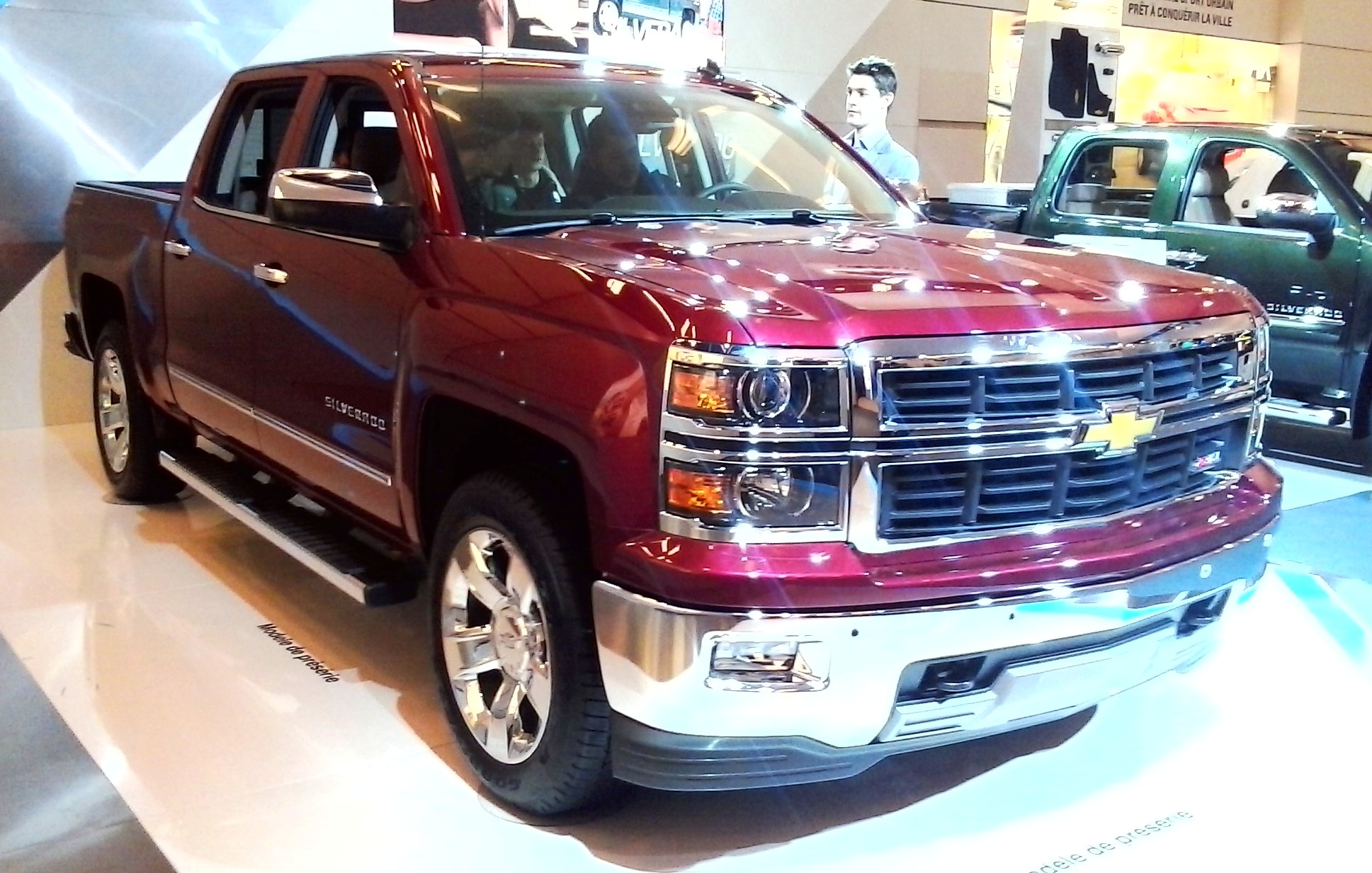
The Chevrolet Silverado is a big truck that people use for work and everyday driving. It's popular because it can carry heavy loads and has lots of different options to choose from.
Autonomous driving means that a car can drive itself without needing a person to control it. Tesla has a system that they call 'full automated driving', but it's still being tested.
The Dodge Charger 6-Pack is a powerful version of the Charger, a car known for its sporty look and strong engine. It's designed for those who enjoy fast driving and performance.
The Lexus LX 600 is a fancy SUV that is great for both driving on smooth roads and off-road adventures. It's known for being very comfortable and high-tech inside.
Autopilot is a feature in some Tesla cars that helps with driving. It can steer, change lanes, and adjust speed, but the driver still needs to be alert and ready to take over if needed.
Full self-driving is a feature in Tesla cars that aims to let the car drive itself without any help from the driver. However, the driver still needs to watch and be ready to take control if necessary.
The Ford F-150 is a popular large truck that many people in the U.S. buy for work and personal use. It's known for being strong and having a lot of different options to choose from.
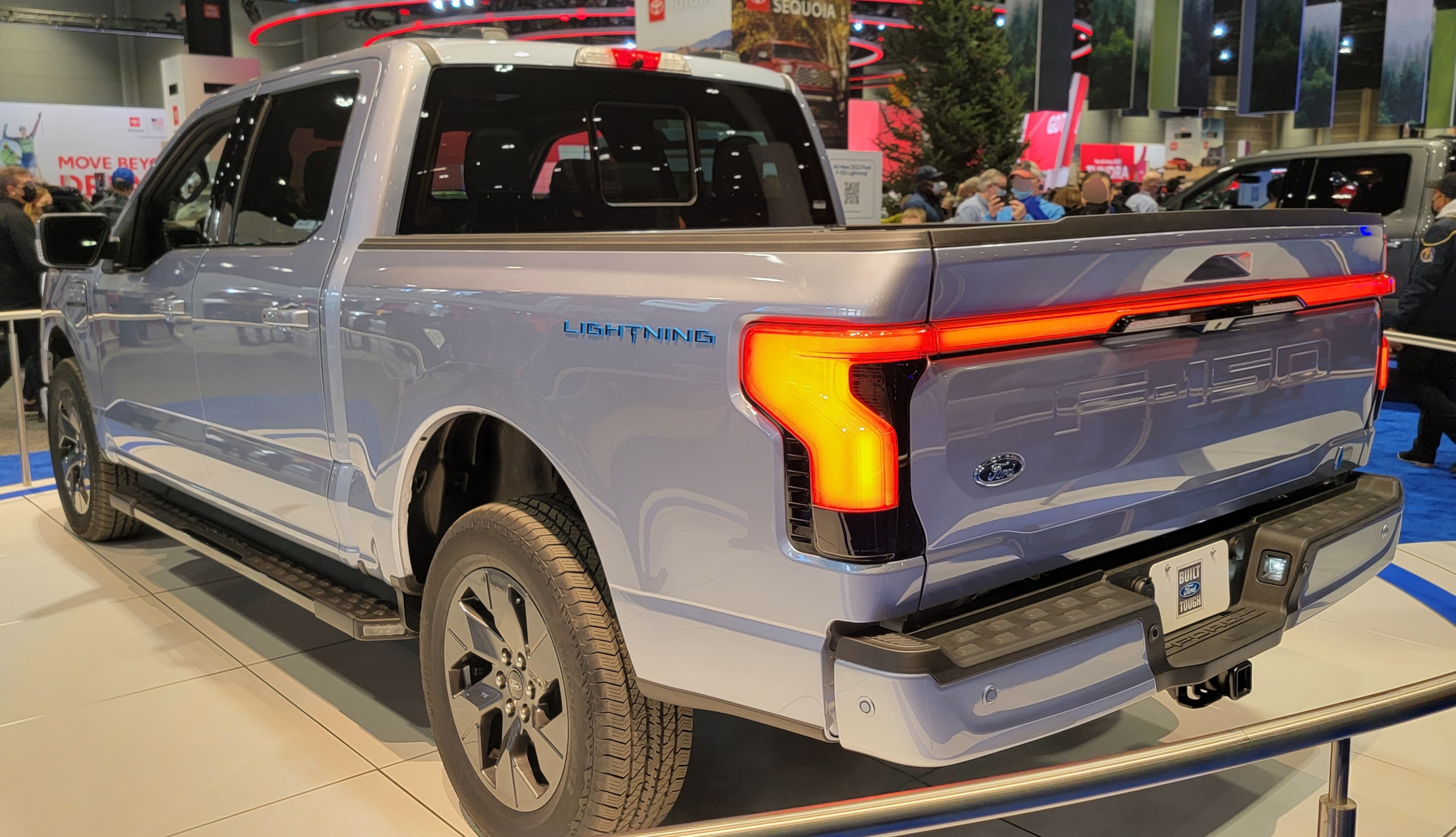
The Ford F-150 Lightning is a fully electric truck that builds on the well-known F-150 model. It's part of Ford's effort to make more electric vehicles available to customers.
A range extended EV is a car that mainly runs on electricity but has a gas engine that helps recharge the battery when needed. This means you can drive further without worrying about running out of battery.
An internal combustion engine is a common type of engine that works by burning fuel to create power. This is how most traditional cars operate, using gasoline or diesel to run.
The Chevrolet Silverado EV is a new electric truck from Chevrolet. It's designed to be environmentally friendly while still providing the utility of a traditional pickup.
A 6.2 liter V8 is a type of engine that has eight cylinders and a total volume of 6.2 liters. It's known for being powerful and is often used in trucks for heavy-duty tasks.
The Willys Jeep is a tough little vehicle that was used by the military during World War II. It's famous for being able to drive anywhere and has inspired many modern off-road cars.
Rear wheel drive means that the back wheels of the car get power from the engine. This can make the car handle better and is often preferred in sports cars.
A six cylinder engine has six small chambers where fuel and air mix and burn to create power. Muscle car fans usually prefer V8 engines because they are bigger and often more powerful.
The V8 Hemi is a powerful engine with eight cylinders arranged in a 'V' shape. It's famous for being strong and fast, making it popular in muscle cars.
An eight-speed automatic transmission is a system in a car that helps it change gears automatically. This makes driving easier and can help the car use less fuel.
A lift back is a style of car where the back door lifts up to let you access the trunk. It's a mix between a regular car and a hatchback, making it easier to carry things.
Average transaction price is what most people end up paying for a car after all the deals and negotiations. It shows how much cars are really selling for these days.
The Oldsmobile 442 is a classic car that was known for being fast and powerful. It was popular in the 1960s and 70s, and many people still love it today for its performance.
A 16-inch center display is a big screen in the middle of the dashboard that shows information and controls things like music and navigation. It's like a tablet for your car.
This is a type of engine that has six cylinders and uses two turbochargers to make it more powerful, which helps the car go faster and pull heavier loads.
The Range Rover is a fancy SUV that can drive on rough roads and still feel comfortable inside. People talk about it because it's expensive and has a reputation for being very luxurious.
The Porsche 917 is a famous race car known for being super fast and winning big races. It's talked about a lot because it helped make Porsche a top name in racing.
The Ferrari 512 M is a super-fast race car from the 1970s that is famous for its powerful engine. It's often talked about because of its impressive racing history.
The A-Class is a small, luxury car from Mercedes that is stylish and packed with technology. It's a good option for those looking for a smaller car with a premium feel.
The S-Class is a top-of-the-line car from Mercedes that is very comfortable and packed with the latest technology. It's often seen as the best of the best in luxury cars.
The Lancia Delta is a small car that was really popular in racing and known for its cool design. It's often mentioned because of its success in competitions.
The Camry is a popular car that many people buy because it's dependable and gets good gas mileage. It's a good choice for everyday driving.
LIVE
This is America on the Road named Best Radio Show by the International Automotive Media
Conference and now in its 33rd year on the air.
Thanks for being with us as we bring you the latest automotive information from around the
world.
I'm Jack Neerad.
With me is guest co-host Matt DeLorenzo.
Matt, how were your Christmas holidays?
It was great.
Good time with family and great to have a couple days off.
Yeah, absolutely true.
I got a new hip over the holiday, so I'm going along with that.
Plenty of automotive news to talk about this week.
California has hit Tesla with a 90-day ultimatum to fix misleading self-driving claims.
Waymo vows to reprogram robotaxies after they ground to a halt in San Francisco after a
power outage, so we'll have more on that.
For its F-Series pickup truck, we're on to its 49th straight year as America's best-selling
truck, 800,000 sales in 2025.
We'll talk about that coming up.
Chevrolet is saluting America's 250th anniversary, which is this year, with the stars and steel
collection of patriotic limited editions across Corvette Silverado and Colorado models.
Interesting graphics.
Tesla is also in hot water over its sleek flush door handles.
It faces growing backlash after reports that power failures and crashes trapped occupants
in the vehicles.
That's a pretty big deal.
What are your quick thoughts on Tesla's troubles, Matt?
It's interesting because they're doing a lot of untested technology, really.
The autonomous driving, they call it full automated driving, and the thing with the
door locks, it is a little bit troubling.
They've been in the news a lot for things like this.
Absolutely troubling.
America on the Road is brought to you by drivingtoday.com, the publisher of my latest
book, Only One Thing Stays the Same, and Mercury Insurance.
If you're looking to save some money, you should switch to Mercury for your auto and
home insurance, California's saving average of $670 with Mercury.
So imagine how much you could save.
Get a quote today at drivingtoday.com slash auto insurance.
That's drivingtoday.com slash auto hyphen insurance.
Well, as you long time listeners of the show know, Matt and I are longtime friends.
We're colleagues.
We served together at Kelly Blue Book for a long time.
What is your test vehicle this week, Matt?
I have the opportunity to drive the Dodge Charger 6-Pack, which is the internal combustion
engine version of the Charger.
I look forward to your take on that.
I drove it too.
My test vehicle this week is the 2025 Lexus LX600.
So we'll tell you all about that.
Our guest is Mati Lorenzo.
So stay with us, and we'll be right back right here on America on the Road.
We're so glad you're with us, and stay with us.
We'll be right back.
Welcome back to America on the Road with Mati Lorenzo.
This is Jack in the Red back with you.
Chris Teague off this week.
I think he's got a little bit of COVID these days.
He said his daughter brought it brought it home from a sleepover.
So a gift that keeps on giving there.
But let's talk about automotive news here.
And this autonomous driving from various companies is getting some long looks,
and they're not very happy looks either.
Fresh challenges specifically in California, where both Matt and I reside.
Tesla has been ordered by the California Administrative Law Judge to revise its
marketing for autopilot and full self-driving, doing that within 90 days.
We've been talking about this for years on the show, Matt.
You and I have talked about it.
I think Chris and I have talked about it.
But the judge says that the terms autopilot and full self-driving
mislead consumers into believing the systems allow hands off independent operation.
I think they're probably justified in believing that.
What's your take on this?
Well, I think that's the thing is that there's basically five levels all to full autonomy.
And currently a lot of the systems out there are between two and three.
And three, they still require you to keep your eyes on the road and
be able to take over the car on a moment's notice.
And I think that that's the real hang up here,
is that it truly isn't autonomous or full automated driving,
if you have to be on guard to take over the car at any moment.
Yeah, no, and I 100% believe that and we've been talking about that.
What I think is a little hinky here is now if Tesla fails to comply,
they'll get a 30 day suspension of its ability to sell vehicles in California,
which is of course the biggest electric vehicle market.
It's it's biggest market and the biggest electrical vehicle market,
I think in the world, but certainly in the country.
And what I think is a bit hinky here is suddenly this has been going on for years.
They've advertised this for years and years and years.
When Tesla was based in California, this didn't seem to be an issue, but now it is.
Well, I think the thing is that politics has have entered the realm here.
Musk moving to Texas and sort of changing sides a little bit politically,
whatever that means, makes him a bigger target.
And there's an administrative state out there that can either be your friend or
enemy and right now it appears to be Tesla's enemy.
Right, right. Let's talk about Waymo too.
We talked about this on the show last week about their robo-taxis in San Francisco.
Basically just pulling to the side when there was a blackout in San Francisco.
And that caused some problems.
It caused some gridlock because they just quit operating and that was a problem.
I think they pulled over to the side, but they're they're supposed to treat
dark traffic signals as four-way stops.
That's how you and I treat them.
We seem to be able to do it, but the Waymo robo-taxis couldn't do that.
Now they're saying they're going to reprogram this, but this, I think, again,
points out we're a long way from this technology being fully based.
Yeah, you know, stories like this, it does nothing to instill confidence on the
part of the people that get in a fully automated vehicle with no driver.
Again, it's fits and starts.
Supposedly four of these vehicles were at a four-way intersection with no
operating street lights and they just sat there causing the gridlock.
And that's the thing.
It's all about learning.
You know, there's stuff that people have learned over the years and through
intuition and working.
We know all the rules of the road or maybe 80% of conditions, what to do.
And the autonomous vehicles are still getting up to speed and it's
going to take some time, like you say.
Yeah, I'm wondering if it's going to be in my lifetime.
Because, you know, it's those four-way stops.
I've got a five-way stop within a stone store of my house here that I don't
think an autonomous vehicle could figure out how to do it.
There's plenty of honking going on with humans, but I think autonomous vehicles
would have a tough time with that.
Let's talk about the Ford F-150.
I mean, maybe this is the least newsworthy news story of the year.
49th consecutive year as America's best-selling truck sales over 800,000 units.
That's a massive amount of sales, especially in this kind of marketplace.
How do you think Ford has been able to do this?
Well, I think two things.
One, if you go back that 49 years, that would put us back at about 1979 when
Cafe really started to kick in and full-size cars went away and Americans
adopted full-size pickup trucks as personal transportation, which was a vehicle
that was primarily used for work up until then.
And so, one, it's a reflection of the unintended consequences of Cafe, that the
fact that the most popular vehicle in America is a pickup truck.
The second thing is I think that the trucks themselves have evolved.
They're quite luxurious.
Crew cabs weren't the norm back in 50 years ago.
Now that you have, essentially, a four-door cab, room for five passengers,
again, it's become the American household vehicle of choice.
Right.
One of the things I found interesting about Ford's discussion of this was one
of the reasons they cite for being so successful in this marketplace is they
continue to listen to customers.
And one example of that is the F-150 Lightning.
I mean, it's kind of interesting that by listening to customers, they decided,
hey, we're going to trashcan this thing.
And kind of, if not start over, I mean, change it pretty markedly.
I got to kick out of that, whether you found that amusing or not.
Yeah, I mean, it was an interesting experiment.
And I think this is one of the things that if you're going to do an electric
vehicle, I wouldn't start with a vehicle that is going to be compromised in
range because of the job it's supposed to do, which is towing and hauling stuff.
And unfortunately, that's the case.
People found that it really wasn't a functional pickup truck, per se.
And now they're talking about bringing it back as a range extended EV with an
electric or with a gas engine on board act as a generator, which will take
care of some of the range issues.
And it also will probably help it in towing and carrying stuff.
Yeah.
And my answer to that would be throw away the battery and the electric motors.
And, you know, you use that internal combustion engine and you'll be
right in pretty good shape.
Chevrolet is rolling out a bunch of different specialty vehicles in their
Stars and Steels collection, including a Corvette that's pretty cool.
And, you know, some trucks and this and that.
I'm wondering, Matt, have you ever bought a special addition vehicle ever?
Yeah, me either.
I mean, I kind of don't want one, right?
I mean, I think maybe it's cool as you buy it, but then I don't know how you sell it.
Right.
Or maybe this is the kind of thing that you keep for.
I think these are kind of cool and they're probably good, good values.
I mean, for instance, there's a Chevrolet Silverado EV that's getting some
cool stuff and probably a very low price right now and some conventional
trucks, too, a 6.2 liter V8 in the Silverado light duty RST.
But, you know, I don't know the longevity of these vehicles.
You know, I think they're more like collector pieces.
You know, remembered like the pace car additions of various cars.
Somebody who's had a little bit of success like this has been Jeep with a Wrangler.
So there's some, you know, faux military type looks with big stars and, you know,
make them look like Jeep, military jeeps and that kind of thing.
No, Willie is 41, I think is the most recent example of that, which is kind of cool.
But I think in terms of the mass market, this really isn't going to move the needle all that much.
I mean, collectors might be interested in it, but, you know, it's an interesting concept.
But I'm sure they're not going to sell very many of them.
Right. Let's talk about this Tesla door handle issue quickly.
I mean, it's a big problem, I think.
And I have to wonder why we're reinventing things that I don't think need to be reinvented.
And in this case, there was a safety issue.
Yeah. I mean, I, you know, I thought about this when you sent the rundown earlier today.
And even my test car, the Charger, has an electronic door release.
And I'm thinking, why would you go away from a mechanical release that have worked for
over a hundred years for something that could fail and essentially trap you inside a car?
Especially a car like a Tesla that had shown a propensity to catch fire in an accident.
So it's a huge concern, but not just limited to electric vehicles.
I think all vehicles, it's a question to have is your ability to safely get out of it in a dire
situation. Right. Well, when we come back, we will be road testing some pretty cool vehicles.
So stay with us for that. And we'll be right back right here on America on the road.
I received a letter from the reader this week, and I thought I'd share it with you.
Here's what he wrote. I just got around to reading Dance in the Dark and wanted to
say how much I enjoyed it. I'm a compulsive reader and this one was right up my alley.
An unlikely hero. A lot of twists and turns. Some adult content.
And humor that rose naturally from the action. Keep on writing and I'll keep on reading.
Of course, that's just the kind of letter any author would love to get. I hope that others get
the same enjoyment from reading Dance in the Dark and my newest crime novel. Only one thing stays
the same. Both are available exclusively at amazon.com. That's Dance in the Dark,
and only one thing stays the same. Both written by me, Jack R. Neyrad. Thanks for looking for them today.
Welcome back to America on the Road with Matt DeLorenzo. This is Jack Neyrad back with you.
We're so glad you're with us. We really do appreciate it. It is road test time and Matt,
you're driving one of the coolest vehicles. I think I've driven this year. I'm really curious
as to your take on the Dodge Charger. Yeah, you know, I've driven both the now the the electric.
I drove earlier in the year and now I have a Charger six pack, which is the performance version
of an inline six twin turbo engine. So it's gone back, you know, they have an electric one and then
they have a gas one. And it's it's sort of the American muscle car reinvented. Yeah, it's a straight
six cylinder engine, three liters in displacement with two turbos. And in the scat pack configuration,
it makes an amazing 550 horsepower and 530 pound feet of torque. So this thing really, you know,
puts the muscle in muscle car. It is fast. Factory says that it can get to 60 miles an
hour and 3.9 seconds can do the quarter mile and 12.2 seconds. I don't doubt that having driven
driven it. Yeah, it's just and it's it's really again, very high tech. It offers all wheel drive,
but there's a switch in there that allow you to turn it into a rear wheel drive muscle car. So
if you know, burnouts are your thing, which were my thing probably about 20 years ago, not anymore.
But you have the ability to do that kind of they get that kind of performance out of this vehicle.
But it's a big full size car. I mean, it's they offer it in a two door and four door
configuration, two door and four door and a very innovative, I think kind of manufacturing process
to allow them to use that. It kind of goes way back, I guess, in a lot of ways, because we used
to see two and four door versions of a lot of things. But in this case, I think it's a pretty
cool car. What I'm curious about, and from a very high level is how the muscle car aficionado is
going to warm up to a six cylinder engine. I mean, you and I, and you both know one of the coolest
six cylinder engines you're ever going to see. Certainly you're ever going to see an American
car and maybe a car from no matter where really high tech and tons of horsepower, but it's a six,
right? Yeah, you know, and Chrysler has invested a lot in the V8 Hemi Mystique, if you will. Right.
And the thing doesn't sound like a V8 sounds like a six and it doesn't have that same level of
throaty rumble that you get from a normally aspirated V8. I suspect they're going to bring
the Hemi back to this car. This is an interesting exercise. It was done for fuel economy reasons.
And now that Washington has rolled back a little bit of the increases in fuel economy, Dodge has
room to bring the V8 back to this particular car, which I think they will. But that said,
it really is quite a technological achievement. You're given, you know, with an eight speed
automatic transmission, the all wheel drive system, it really is a well put together performance car.
And it's big. I mean, this truly is a full size automobile, big back seat, comfortable front seat,
and it's a hatchback. Doesn't look like a hatchback, but it's got a lift back, which adds quite a bit
of utility to the entire package. But it's not cheap. I mean, the starting for the lower horsepower,
420 horsepower version is about $52,000. The one that I was in has all the bells and whistles,
and it goes out the door at over 65,000 bucks. Yeah. Well, I mean, there was a time when that
seemed like a ton of money. I think as we were reviewing cars more recently, that seems like
more of a bargain. I mean, with the average transaction price of a vehicle around 50,000
bucks, I think you get this kind of crazy high performance vehicle for $52,000, $53,000 to begin
with and well equipped. And it's got really cool electronics, right? I mean, it is in a lot of ways
a throwback. You know, I had a 65, 442 back in the day. It kind of reminds me of that vehicle in a
lot of ways. But at the same time, this is not an analog vehicle. There's a lot of electronics in
this that make this thing very, very cool, I think, from that point of view. It has a huge 16-inch center
display, which dominates the dash. And other really kind of cool features, it's got a pistol grip
shifter, which old timers like me will remember from the late 70s or early 70s, late 60s.
And then one of the odd things is that they kind of have a sport steering wheel that's more of a
square than a round. You know, you see some performance ones have flat bottoms. This has a
flat bottom and almost a flat top. So it's a little unusual. But the car is fun to drive. The seats are
very comfortable. And like I said, the fact that you get over 500 horsepower is simply astounding.
Again, for that kind of money. Yeah. Well, you get that kind of horsepower, that kind of performance,
because this is a very quick car and also handles quite well. I mean, I drove it in the wet around
Ann Arbor during North American Car of the Year testing. And I thought it hooked up very, very
well. The fact that it's all wheel drive and you can turn that off is very, very... Truth be told,
this is my car of the year. This is my choice for North American Car of the Year. So I like the
vehicle a lot. Yeah. And you know, it's kind of a rare bird because you don't see too many full-sized
cars anymore, sedans or coupes. And they offer both. So I give them hats off. I think they found
an interesting niche. I don't believe the electric one will stick around very long. I just think that
was very expensive. The range could be an issue, especially, you know, again, if you want to go
fast, you know, if you go fast, you're not going to go far. I just wonder who buys that one. You
know, and we've seen that with a lot of electrics and a lot of performance electrics. I think the
six pack that you drove is the one to choose and it's cool. So I like it a lot. Well, you probably
run into this mat. Sometimes you get into a vehicle and it just seems perfect for what you're going
to use that vehicle for. And I found out with the test vehicle I have, the Lexus LX600, it happened
to be the vehicle we used to transport my family around Fort Worth for my middle daughter's wedding.
So all of the stuff that had to do with that. And I mean, we were toting people and stuff and,
you know, we really helped set up the whole reception and the wedding ceremony was at the
same place as the reception. So, you know, a ton of stuff. And it was just a champ for that. It
was just perfect. Of course, having a luxury vehicle like the Lexus for this was pretty good.
It had, it also has just unbelievable off-road prowess that we didn't call into account there.
But, you know, just all around in terms of toting six or seven people around and toting a ton of
stuff in more than luxurious kind of accommodations. This was perfect for that. I would say it is not
inexpensive. This might surprise you, Matt. I mean, or maybe not, but the LX600 Premium
has an MSRP of $106,000. And the as-tested price of the vehicle we were driving around
Fort Worth in was $120,000. For a Lexus. So interesting stuff. Yeah, for a Lexus. We're
talking about a V6-powered Lexus II, a six-cylinder-powered vehicle, 3.4-liter twin turbocharged V6,
409 horsepower, 479 pound-feet of torque. These turbocharged engines have a lot of low-end torque,
which is nice. They tune them for that. So I certainly found that to be true. 10-speed automatic
transmission worked flawlessly. Full-time four-wheel drive, which was not all that useful in the
weather we had in Fort Worth. And then the combined fuel economy is 19 miles per gallon.
If you're buying a $120,000 car and then complain about the fuel economy,
you kind of have rocks in your head. How do you feel about the LX these days?
Well, it really combines luxury and capability and capability in a lot of different levels.
You know, the advanced electronics and everything really do make these true off-road vehicles.
But the real virtue is being able to carry around a lot of people and stuff in comfort.
And they do that in spades with the LX. And, you know, I think they've carved out a niche
for themselves. They're competing with things like the Navigator, Range Rover, things like that,
and hence the price tag. So, you know, in terms of the level of refinement to the interior,
it really is a well-done vehicle. Yeah. It has an adapted variable suspension,
of course, and it has a bunch of off-road features, which, you know, didn't come into play with us at
all, but crawl control, multi-terrain select, those kind of things. This is a very capable
off-road vehicle. I mean, the only thing that stands against it there, I think, is it's just size.
And then you have this just beautifully luxurious interior with semi-aniline leather,
wood trim, soft touch surfaces. We love those soft touch surfaces, don't we, Matt?
And just front seats that are super comfortable, heating and massaging. The second row has plenty
of space. Ours had captain's chairs there. I'd say if there was one tiny thing to nitpick,
it's the amount of cargo space behind the third row when the third row is deployed. It's pretty
small, 11 cubic feet, and it's not exactly, you know, it's kind of vertical as opposed to
any kind of length. I mean, it would be hard-pressed to get, I think, one suitcase in there,
but that was the only thing that I would complain about. And then it has the Toyota
Lexus infotainment system. What's your take on that? You know, I think Toyota has kind of gone
their own way in developing specific software and things, features. You know, it still is
Apple CarPlay and Android Auto-compatible. So there's that. You know, if you want to use your
phone, you can. But if you don't, I really like the Toyota system. I think it works quite well.
Yeah. Overall, the LX600 is a very, very nice vehicle. I loved it a lot. I think
folks should take a look at it. I think they should take a look at the vehicle that you tested
as well. And when we come back, we're going to have a really good guest. His name is Matthew
Lorenzo. So stay with us for that. We're going to chat about a bunch of things when we come back.
Stay with us. I'd like to tell you about the most exciting and authentic racing novel I've ever read.
It's called Closing Speed, written by award-winning author Ted West. In 1970, the Indy 500 pole
speed was 170 miles an hour. But at Le Mans, Vic Alfred's Porsche 917 raged down the Mulson
straight at 248 miles per hour. The racing pit of the Porsche 917 versus the Ferrari 512. The
fastest road racing ever. And Rodentrack sent a promising new rider, 27-year-old Ted West,
to cover it. He traveled from Brands Hatch to Monza, the Targa Florio, Spa, the Nürburgring,
and Le Mans. You got to know the races personally and the women who loved them. The racing was
blindingly fast. Driving horrifically fragile cars at those speeds took unheard of courage.
That was around every corner and the drama tensely real every moment. Closing Speed is the most
realistic, intimate racing novel ever written. As a look into the very heart of the sport,
an incomparable racing read. It's available now at Amazon. That's Closing Speed by Ted West.
Look for it. Welcome back to America on the Road with guest co-host Matt DiLorenzo. There's
Jack in your red back with you. And we also have a terrific guest and his name is Matt DiLorenzo too.
Matt, you've got a new book out and I want to start off by talking about that a little bit.
It's always exciting when we publish a new book, right? Ted, tell us about it.
Yeah. It's called Mercedes AMG Race Bread Performance, basically the history of AMG
and how it became a division of Mercedes. A couple of engineers who worked for Mercedes back in the
60s wanted to go racing at a time when the factory was winding down its racing efforts.
And they kind of were working under the radar at work and they came up with a race car and
they got their boss to approve them to run it and they were successful. But at the end of the day,
Mercedes was going off in a different direction. They were building their sales network in America.
They didn't really have time for the type of stuff that these guys are working on. So they left and
formed their own company, AMG, which was for Hans Werner Offrecht and Erhard Melker, where the A and
the M and G is Gross Auspacht, which is the town that Offrecht was from. And they were successful
in racing, but they were kind of frenemies with the factory. Everybody thought Mercedes were
perfect and you couldn't make them any better. Well, certainly the Mercedes people thought
Mercedes were perfect, right? You and I experienced that for decades, really.
And there were no tuners of Mercedes vehicles while there were plenty of tuners who were doing
BMWs, VWs, European Fords, all this stuff. But they kind of hung in there and got very
successful at doing what they did, enhancing the performance and going racing and winning races.
And it got to the point where they actually took over when touring cars became a big thing again in
the 80s. They took over Mercedes racing program and won the championship a number of times.
And that's when Mercedes said, hey, these guys are for real. Let's get them on board.
They started selling the AMG products through their dealers, which led to them buying a majority
stake in AMG in 1999. And then by 2005, they bought the whole company and brought it in house and
turned it into their performance division. So it's now Mercedes AMG. And essentially,
their big target isn't, you think, oh, it's got to be BMW down the road. Mercedes AMG is looking
at another neighbor there in Stuttgart by the name of Porsche. And Porsche is now doing SUVs and
sedans and all this other stuff. And naturally, Mercedes looks at Mercedes AMG as their counter
point to what Porsche is doing at this point. Yeah. And they've done some really cool stuff
recently, right? I mean, they're using that AMG brand on what I got in regard as the coolest vehicles
that are coming out of Mercedes-Benz overall. It's just some really cool stuff, right?
Mm-hmm. Yeah, they have, you know, there's a dedicated sports car in the GT.
They have a dedicated GT four-door, which is like a four-door coupe kind of sedan thing.
They built this AMG-1. It was kind of a one-off limited production, which actually took
the Formula One engine that they were racing with its kinetic energy recouping system,
the CURS system, and put it on the road, which is just an amazing feat in itself.
And now they're working on some electric vehicles, but they're also recommitting themselves to
ICE technology. And they're working on the next generation of the GT. And then they have two
inversions of a whole host of standard Mercedes products from the G-Wagon down through the A-Class.
Yeah. Is there one story from the book that really stands out to you that you think is,
you know, a cool story that our listeners should hear?
Well, the really cool story is how they got on the map in 1971. They took a full-size,
which was the S-Class at the time, car to put a big V8 engine. It went to Spa in 1971 and
finished second overall first-in-class. And the car was called the Red Pig because it was so big
and heavy, but boy, was it fast. Yeah. Yeah. That sounds very, very cool. Well, what a great book.
I remind us of the title of the book and how to get it, Matt. It's Mercedes AMG Race Bread
Performance. And you can find it on Amazon and Barnes & Noble. Yeah. Look for that author
named Matt DiLorenzo. And you're going to find a bunch of great stuff there, including that book.
So look for that. Well, Matt, we entered a new year here. And I want to talk about 2025 because I
think it was a very consequential year in the auto industry from a lot of points of view.
When I look back at it, you know, I think probably the change in fuel economy regulations and the
switch away from the push for electric vehicles was the giant story not only of 2025, but maybe
of the decade, maybe of the century so far. But what's your take on that?
I agree. I think that that will go down as a major moment in the history of the auto industry.
I believe that our domestic industry, two things had happened, that and also the tariffs on China.
I think both the fuel economy regulations, the EV mandates really put our domestic
industry at risk because the big part of their market are big SUVs and pickup trucks. And by
getting that relief, they've allowed them to stay in business. I don't think we would have a Chrysler
with us much longer if those rules stayed in effect. Certainly, it was a big lifeline to dodge.
And so, you know, to me, it really, it really helped the domestic industry and helped the consumers
because now consumers again will be able to choose what type of technology they want in their cars
rather than being forced along this path through high fuel prices, incentives and other other
means to get you to give up your car and get into an EV at a time when even the charging
infrastructure still isn't fully built out. There's still range issues with EVs or safety issues
with EVs. There's a lot of things that still need to be sorted out. Granted, that technology
will stay with us, but it's, you know, we've gotten a government out of picking winners and
losers in that. And I think that's a big development. Yeah, I think it's a giant development. You saw
companies like Ford Motor Company and Stellantis really embrace the changes. And, you know,
to a great extent, Ford was pretty gung-ho about electric vehicles, but I think they were seeing
the handwriting on the wall. The consumers just didn't have the enthusiasm for them at the premium
prices. And I think you and I are both fans of electric vehicles, of the technology, but we're
not necessarily fans of the pricing of these vehicles. And there's kind of no way around it,
right? I mean, economies of scale aren't going to solve that problem.
Yeah. And, you know, it's a three-legged stool. You had the government policy. You had the
manufacturers. You had the consumers. And the consumer leg just didn't stand out. And, you know,
even a $7,500 incentive, you know, there are a lot of people saying, oh, that's what's killing it.
You know, most of the electrics that were being sold were well over $60,000.
As a percentage, that's like a 10% spiff. It's nothing, really. And once the early adopters had
gotten into their EVs, the fact that there weren't a lot of really affordable EVs or the Delta between
comparable gas version of, say, a Camry and an all-electric sedan,
it just didn't wash with the consumers. I think that's the most important part is,
you know, the price differential. I mean, you have a rational buyer and, you know,
most people are straining a bit to buy a new car. It's expensive for them. And so they want to save
money when they can. And when they look at a price differential of 10, 15% between a common
technology that everybody understands and a more exotic technology that has some limitations to it,
it was kind of a no-brainer that most people are going to stick with the conventional.
Yeah. And the other part of that whole thing and another big story of this year are the lower
gas prices. So, you know, gas cars have gotten more efficient. There's more hybrids out there.
Fuel economy has gone up. Consumers weren't feeling as impacted by higher gas prices,
but now with dropping gas prices, there's less of an incentive to make a change in
what they're doing in terms of the types of cars that they own.
Yeah, absolutely true. Absolutely true. But it seems like affordability is another giant issue.
And maybe it can be addressed now that why don't you tell our listeners, because I'm not sure that
it's clear to people how convoluted it had become trying to match up with regulations and, you know,
get the fuel economy to where it needed to be for car companies to sell the profitable vehicles
that they could sell them that people seemed to want. But, you know, there's a lot behind the
scenes that I think is now kind of cleared away. Yeah, you know, if you look at it, you had companies
like Tesla generating these massive credits that they would sell to other manufacturers,
which they could use to offset the penalties they were incurring for selling, you know,
low fuel economy vehicles like big trucks and SUVs. Well, the government took away the ability,
said we're not going to find you anymore for a cafe. And that all of a sudden made the credits
that the electric car companies were generating, which was a pretty good source of revenue for them,
irrelevant. And two, it took a big load off the manufacturers in terms of resources if they didn't
have enough tax credits, that came out of the bottom line. They had to raise prices on the
products they were selling. So, you know, you had a situation where the incentives were not
necessarily to bend the cost curve down on EVs, but rather government was taking a big role in
bending cost curve up on gas vehicles to get that sort of parity. But then you end up with
average transaction price of $50,000. And then all of a sudden people are screaming, oh, it's an
affordability crisis. Well, guess why that happened? Yeah, yeah, it was not the car manufacturers
that want this to happen. It was, you know, trying to match regulations and make that happen.
Are there other things that happened in 2025 that you think are important for people to
think about, vis-a-vis the industry or individual vehicles?
Well, I think the whole, the tariff issue is something, we haven't seen it really
impact car pricing the way that the so-called experts were predicting.
Yeah, and it couldn't.
No, but, and I think the other thing is, I think the important thing is trying to keep
predatory priced vehicles out of the market. Now that people say, well, that's the affordability
issue, but, you know, we need a domestic industry and we do, you know, a lot of the cars that are
built in America are built by foreign companies. So I think that that's, that's the important thing
is to protect American jobs, protect American workers and, you know, build here what you sell
here is an important plus.
And I think we've seen a lot more investment and it hasn't been realized yet because you
can't build car factories overnight or just switch production overnight, but I think we're
going to see a lot more manufacturing in the United States. And I think it's a very good
thing for American workers, U.S. workers, to be building cars that are purchased by U.S.
buyers as opposed to those being built elsewhere, even if it's elsewhere as Mexico or Canada.
I think we much rather have them built in the United States.
And then, you know, supply chain issues as well. And the more components and things we can source
in America, the safer we'll be as well in terms of not having disruptions in the market like we
saw during COVID with the long, you know, with the disruptions and shipping and all that.
Right. Well, when we come back, it will be listener question time. So stay with us for
that. We'll have a listener question for you and stay with us. We'll be right back right here
on America on the Road.
Welcome back to America on the Road with guest co-host Matt DiLorenzo. This is
Jack NieRadback with you. We've come to the end of the show. This is listener question time. I
hate to get here so fast because I always love to talk with Matt about cars. And we also love
to answer your questions. Heaven knows, Matt and I have had long years of answering consumer
questions. Send your questions to editoradrivingtoday.com. That's editoradrivingtoday.com. And Matt
here is what I think is a good question from Samuel. He lives in Omaha, Nebraska. He asked this,
I'm amazed at the size of the screens and some new cars I've been looking at. Are touch screens
like that making cars less safe? Well, they are big. And, you know, when we're at 16 inch screen
in that charger is evidence of that. But, you know, I think it depends on the ease of the interface.
Now, if it's a big screen and the icons are big and you're able to touch it and kind of
not be distracted by it, it's not that big of an issue. It's the desire of the manufacturers to
run more and more systems like adjusting mirrors or adjusting your steering wheel or adjusting
your seat heat. Things that could be handled with a button with a minimal amount of distractions,
I'm all for. But I think that that when you start running those types of normal functions that you
could adjust yourself through the screen, you do open the door to driver distractions.
Yeah, I think we reached the end of the screen sizes and maybe we're going to see, I think we
will see more discrete controls. Well, that wraps up our show for this week. We want to wish each
of you a very happy new year. Matt, remind us of the name of your new book and where to get it.
It's called Mercedes AMG Race Bread Performance and you can find it on Amazon.
Look for it. It's a great book. My crime novel, only one thing stays the same is available in
eBook and paperback form on Amazon as well. In our post Christmas sale, it's very cheap right now.
So look for that. If you like our show, pass it on. Listen on this radio station each week.
Let your friends know where you hear America on the road. And of course, we're available as a
podcast, right, Matt? Yes. And it's really great to catch up. And then actually, you can see it
like YouTube and see what we look like. It sounds like. Yes. And that might be frightening to you
or it might be funny for you. But it's a good thing. Check out our YouTube stuff. Our thanks to
Mercury Insurance for sponsoring the show and to our sports byline network stations for carrying
it. We love terrestrial radio. Hooray for radio and AM radio. Thanks to Matt for being with us.
We do appreciate it, Matt. Thanks for having me on, Jack. And you have a happy new year.
Thank you very much. Join us again next time for another edition of America on the Road.
Hi, I'm Jack Arnie Redd and I'd like to tell you about my newest crime novel,
Only One Thing Stays the Same. In a style reminiscent of James M. Cain and Jim Thompson,
two of my writing idols, the book chronicles a blue collar worker's up and down love affairs
with two modern Southern California women who continue to surprise, shock, and ultimately
confound him. As the story unfolds, an unemployed aeronautics worker named Bill McCurdy becomes
disillusioned with his wife and slips into an illicit affair with a teenager from down the street.
Before long, he begins to think of doing the unthinkable, but despite his desperate attempts
to make things work, almost nothing goes as planned. His misguided quest for simple love
doesn't turn out to be simple at all. And before the roller coaster ride stops, he learns quite
personally and very finely that Only One Thing Stays the Same. Only One Thing Stays the Same
is available in Kindle eBook and paperback form exclusively at Amazon.com. I'd appreciate it
if you'd look for it today.
About this episode
The discussion centers around the 2027 Dodge Charger Scat Pack, touted as a sophisticated muscle car with a powerful inline-six twin-turbo engine producing 550 horsepower. Co-hosts Jack Neerad and Matt DeLorenzo explore its performance, technology, and the potential return of the V8 engine. The episode also covers automotive news, including Tesla's regulatory challenges, Waymo's robo-taxi issues, and Ford's continued dominance in the truck market. Notable guests and insights into the future of electric vehicles and consumer preferences add depth to the conversation.
This week’s America on the Road is a special episode for several reasons. Not only is it the 300th episode since AOTR was rejuvenated as a radio series and podcast, but it also features one of the most innovative musclecars Detroit has ever developed — the 2027 Dodge Charger Scat Pack equipped with the 550-hp SixPack turbocharged in-line six. For this special episode, host Jack Nerad welcomes guest co-host Matt DeLorenzo for a milestone edition packed with road tests, breaking news, and a deep-dive review of the biggest automotive stories of 2025.
🚙 Matt DeLorenzo Test-Drives the 2027 Dodge Charger Scat Pack
In our weekly road test segment, Matt explores the 550-hp 3.0-liter twin-turbo inline-six (SIXPACK H.O.) Charger Scat Pack, which leverages its 531 lb-ft of torque and unique electronics to accelerate from 0-60 mph in 3.9 seconds with a quarter-mile in 12.2 seconds and top speed of 177 mph. It features standard all-wheel drive with switchable rear-drive mode, Launch Control, Line Lock, dual-mode active exhaust, and Brembo brakes for burnouts and drifting. The interior boasts premium leather-and-suede seats, a 12.3-inch Uconnect touchscreen, and race-inspired accents. Starting around $57,000, it offers thrilling performance in a versatile sedan body as an integral part of Dodge’s multi-energy lineup.
🚗 Jack Nerad Test-Drives the 2025 Lexus LX 600
While Matt was contemplating smoky burnouts, Jack had a more sedate assignment. Fresh from driving the Dodge Charger himself, he put the flagship Lexus SUV through its paces during his middle daughter’s wedding week. The happy occasion highlighted the SUV’s refined 3.4-liter twin-turbo V6 producing 409 horsepower and 479 lb-ft of torque, paired with a smooth 10-speed automatic and standard full-time four-wheel drive. TVery capable off-road as well, the LX 600 features advanced tools like Crawl Control, Multi-Terrain Select, and Adaptive Variable Suspension, while delivering a serene cabin with premium semi-aniline leather, dual-screen infotainment, and optional 25-speaker Mark Levinson audio. Priced from over $100,000 (starting around $106,850 for the Premium trim), the LX 600 blends luxury, legendary Toyota-based reliability, and genuine adventure readiness like few rivals.
🎙️ Special Guest Interview
Host Jack Nerad sits down with veteran automotive journalist and author Matt DeLorenzo, a frequent AOTR co-host with decades of experience from Road & Track to Kelley Blue Book. They discuss Matt’s brand-new book Mercedes-AMG: Race-Bred Performance and his insights on the ever-changing auto industry.
📰 This Week’s Headlines
Autonomous Driving Challenges Mount
California issues Tesla a 90-day ultimatum to correct misleading Autopilot and Full Self-Driving marketing, while Waymo robotaxis stall during a San Francisco power outage, prompting software updates and regulatory review.
Ford F-Series Claims 49th Straight Year as Top Truck
Surpassing 800,000 sales in 2025, Ford celebrates relentless innovation in its iconic pickup lineup.
Chevy Unveils Patriotic Stars & Steel Collection
Limited-edition 2026 models across Corvette, Silverado, and Colorado honor America’s 250th anniversary with flag-inspired graphics, premium upgrades, and donations to veteran causes.
Chevy Unveils Patriotic Stars & Steel Collection
Limited-edition 2026 models across Corvette, Silverado, and Colorado honor America’s 250th anniversary with flag-inspired graphics, premium upgrades, and donations to veteran causes.
Tesla Door Handles Under Fire
Flush electric handles face backlash and federal probes after reports link power failures in crashes to trapped occupants and fatalities.
📩 Listener Question of the Week
Samuel from Omaha, NE asks: “I’m amazed at the size of the screens in some of the new cars I’ve been looking at. Are touchscreens like that making cars less safe?”
Jack and Matt discuss the safety implications of massive infotainment screens based on their extensive experience.
🎧 Where to Listen
Catch America on the Road on this station every week, and subscribe on Apple Podcasts, Spotify, YouTube, and Rumble. You’ll also find road test videos, interviews, and shorts on our YouTube channel.
Special thanks to Mercury Insurance for sponsoring the show and to our Sports Byline Network affiliates nationwide.
🎙️ Hosts
Jack Nerad — Award-winning auto journalist and author of Only One Thing Stays the Same
Chris Teague — Longtime auto critic and journalist
📢 Presented by
• DrivingToday.com
• EMLandsea.com
• Mercury Insurance – Switch today and save. Californians save an average of $670.
📺 Watch & Subscribe
Find America on the Road on YouTube and Rumble. Subscribe for road test videos, shorts, and extended reviews.