The Chevrolet 3100 is an old pickup truck model made by Chevrolet. The 1957 version is popular among collectors because of its unique look and history.
Bring a Trailer is a website where people can buy and sell classic cars through online auctions. It's popular among car enthusiasts looking for unique vehicles.
A reserve is the lowest price a seller will accept at an auction. If the bids don't reach that price, the item won't be sold.
Car
Packard
Packard was a brand that made luxury cars a long time ago. Their cars are considered special and can be worth a lot of money today, especially if they are in good condition.
The Toyota 4Runner is a tough SUV that can handle rough terrain and is known for lasting a long time. Many people like it for its reliability and ability to go off-road.
The Mercury Monarch was a car made by the Mercury brand in the late 70s and early 80s. It's not very popular now, but it was known for being comfortable.
A salvage yard is like a junkyard where old cars are taken apart to sell their parts. They can make money by selling things like engines and wheels from these cars.
The rear differential is a part of a car that helps the back wheels turn at different speeds when going around corners. This helps the car handle better and stay stable.
CATSKIN makes leather seat covers that can be used to upgrade the look and feel of your car's interior. They have different styles and colors to choose from.
A leather interior means that the inside of the car, like the seats and dashboard, is made from leather. It's usually seen as a nicer option compared to cloth and can make the car feel more luxurious.
A detailing brush is a soft brush used to clean cars, especially in tight spaces where dirt can build up. It's gentle enough not to scratch the surfaces while helping to get into small grooves.
Toyota is a well-known car company from Japan that makes many different types of vehicles. They are famous for making cars that last a long time and are easy to drive.
A dash cam is a camera that you put on your car's dashboard to record what happens while you drive. It's useful for showing what happened in case of an accident.
The headlight assembly is the entire part that includes the light bulb and the cover that protects it. It can be very costly to replace, sometimes over $2,000 for just one side.
A laser measuring system is a tool that uses lasers to measure distances very accurately. It's important for fixing cars, especially after accidents, to make sure everything is aligned correctly.
A unibody constructed vehicle is made with the body and frame as one piece. This design helps make cars lighter and more efficient, which is why most cars today are built this way.
Carfax is a company that gives you a report about a car's history. It tells you if the car has been in accidents or has any problems in the past, which is helpful when buying a used car.
LIVE
Hey folks, welcome back to another edition of My Car Guru.
Hopefully I will share something with you today that will improve your car life.
That is my mission.
I improved somebody else's car life yesterday.
He had a 1957 Chevrolet 3100 pickup truck.
It was his grandfather's who bought it new on November 2nd, 1956.
But it was a 57 model.
So it had been in the family a long time.
It was passed on to this gentleman's uncle.
And so he kept it for a number of years.
And then the gentleman that I'm talking about decided, well, you know, he, and like
a lot of people do, I mean, they have these cars stored in their garages, cars and trucks.
They have boxes stacked on top of them.
You know, it becomes just a part of the mess, you know, that's in the garage.
Or it's out in the backyard, sitting on a set of blocks or, you know, the tires are
flat.
It's all rusty.
Or maybe it hadn't been out there that long and hadn't had a chance yet to completely
disintegrate.
We like to get them before they disintegrate.
They actually have value then.
But anyway, he heard about me through a friend.
He had never formally met, but he said, Lenny, I hear you do a pretty good job selling
vehicles.
What do you think about this one?
And I was semi-impressed.
I mean, it was a very weak paint job.
It had been, the color had been changed, had a little rust in the cap corners.
And it was horrible on the underside, but it was all surface rust.
So I can live with that, but it looked pretty good.
I took pictures of it, many pictures, close to a hundred, put it on bringitrailer.com.
We had set the reserve at 22,000 and in the last two minutes it hit, well really in the
last 20 seconds of the auction, it hit 29,000.
He's happy.
I'm happy.
So get happy.
If you have an old car that you want to sell, let me lower your expectations
here just a minute.
If it's got four doors on it, it better be like a Packard or a Duesenberg or something like
that because typically four-door cars do not bring the money, especially if they're from
the 80s.
So if you've just, you know, you've got some 80s or 90s older car and you think,
well, why don't Lenny put it on bringitrailer?
I won't.
I won't waste your time or mine.
But there are sports cars, anything that was a very low production number, they'll bring
some money.
I mean, I do see people selling Toyota trucks and forerunners and stuff like that.
Occasionally you'll see fairly late model Mustangs, Camaros, Corvettes.
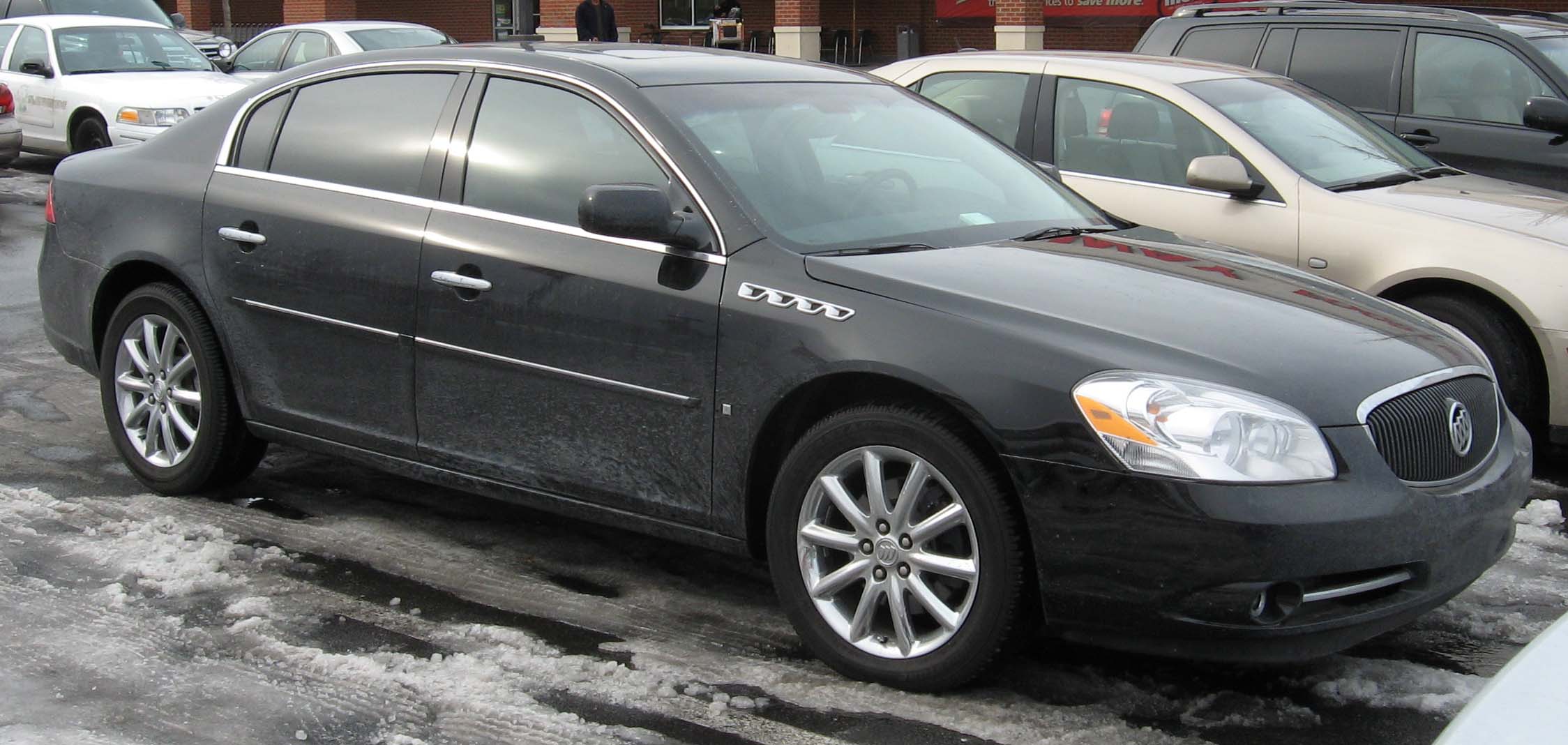
But if you've got an old Mercury Monarch or a Buick Lucerne, do you remember those?
I'm sure you don't.
Nobody does.
No, those are not going to bring the money.
I mean, they might bring a couple thousand dollars.
You know, are you better off to just call the junkyard, haven't come get it?
Some cases you are.
You'll be surprised how much these salvage yards will pay for an old slab of iron because
they can part it out and they can take a $2,000 investment and turn it into a $8,000 or $10,000
return simply because they sell the motor, sell the transmission, sell the rear end or
the rear diff, sell the wheels, the seats, the steering wheel, just whatever else they
can sell.
I mean, I bought the seats for my 49 model project, my money pit.
It's a car hauler that I've been building for the last four years.
I bought the seats for it from a junkyard out in the county here in Green County.
There was a Mustang, 2000, what was that, 2005 Mustang convertible that had been totaled.
And I walked up to the junkyard owner and I said, Jerry, you got any seats that might
work good in this 49 cab for this car hauler that I've gotten?
He said, hmm, you know, it's just funny how those guys, they know where everything is.
He said, yeah, I think I've got an older 2005 Mustang that's totaled that has red leather
seats.
Now they're probably, they've been rained on, but the guts are good.
And I said, well, as long as the guts are good, so I went down and looked at it
and yeah, they were okay.
So he actually gave me the seats.
And I called a company in Knoxville, Tennessee that sells CATSKIN leather seats.
They're called American Radio, believe it or not.
That's the name of the business.
And made an appointment, ordered the fabric that I wanted, the color, not fabric, but
the leather.
And they came up to the dealership.
He parked his little van out there on the lot, grabbed the seats, cut the original
leather off of it, and then fitted those, the new leather hides onto it.
And it looks gorgeous.
So it turned out pretty good.
If you own a vehicle that's getting a little long in the tooth, but you love it, and it
has leather interior, and you want to upgrade it.
For about $12 to $1,500, you can pretty much replace the entire interior with very
nice high quality leather, probably better leather than the leather that you had in it
to begin with.
But it's a great way to upgrade your vehicle and make it last longer.
As expensive as new vehicles are, that might not be a bad choice.
And even if you're restoring a vehicle, maybe something from the, well, let's say
I'm not sure how far they go back, probably in the 90s and 2000s, they'll go back
that far.
But it's a great way to do it.
If I had taken it to just a regular upholsterer, there's this place up the road near Johnson
City, Tennessee that I go to, it would have cost probably 30% or 40% more.
So that's an option for you.
I mean, for a lot of folks, the interior takes the most beating.
At least hopefully they have a carport or a garage to keep their vehicle in.
Those of you who don't, maybe live in an apartment complex or something, car
covers are a pretty good idea.
Because you want to keep your car in great condition so that when you trade it in that
you get good value for it.
I mean, you can't imagine how bad, well, I've talked about it on this show, how
bad interiors get abused and what people just keep and how nasty they are.
It's just amazing.
Of course, I have no room to talk.
I looked at my console today on my F-150 and looking pretty nasty.
My problem is that I fixed my T, I put open three sweetened lows and then I put it in the
T and the air conditioning is blowing and it just goes all over the place.
Makes a mess.
So I'm going to have to get my brushes out, so I'm going to get it out of all the
grooves.
I don't know why manufacturers make interiors so difficult, but you have to buy these
little reconditioning brushes.
If you want to do it right, you can't just wipe it down because the grooves are
too deep.
So you need just to get a little brush.
You buy them at auto parts stores and it's called a detailing brush, soft bristle.
And you can use that and just make that interior look so good.
Now, if I can just train my guys how to wash windows, we'll have it
licked.
Okay, I'll be back in just one minute.
Okay, I am back.
You know, a lot of people buy these old cars for nostalgic reasons and they finally get
to a point where they have some liquidity.
Well, the guy that bought this one has had liquidity all his life because he owns
11 dealerships in the Chesapeake, Virginia area.
One of them is a big Toyota store.
So he ain't hurting for money, but he wanted this particular truck because that's what
he drove when he was just a little kid, delivering parts.
Well, I don't know that he was delivering parts.
I think he wrote in it while somebody else was delivering parts, but it was
a 57 Chevy 3100.
He sent me a picture of it.
I think that's him as a child behind the wheel and smiling at the camera.
That's pretty cool.
That's a good reason to do something like that.
I think what he's going to do is once he gets the truck, he's going to turn it
over to his body shop and he's going to say, make it look just like the old one.
And it will probably become a family fixture at one of his stores.
So the current owner brought me the title of the vehicle, signed it.
You know, if you didn't know somebody really well, would you sign a title to a
car and hand it to him without having the money in hand?
You know, those types of transactions require a lot of trust.
And of course, I've not known this gentleman personally.
I mean, he's known me over the years.
He grew up here in Green County, so he didn't mind handing me the title,
signing it over.
But that's not something that's really smart to do for the average consumer.
I mean, there's still people that keep the title to their vehicle in their
glove box.
How's that for brilliance?
I mean, if they steal your car, they have the title to it.
Pretty much their car wherever they go.
But this guy is a claims supervisor for
a large insurance company in this area.
And we were talking about what's happening in the body shop business right now.
There's a major consolidation going on.
Now, in our area, there's two big corporate players.
Caliber's one of them.
I think the other one's Gardner or something like that.
But they're buying up body shops one after the other.
And you know why they're buying them?
To close them.
They're eliminating competition.
And one of the reasons for that is that body shops need volume.
They need throughput.
Just like a restaurant.
They need the people coming in, placing their order quickly,
eating their food, and getting out so somebody else can sit at that table.
It's called throughput.
And so body shops need that.
And one of the big reasons is that insurance companies pay ridiculously
low labor rates per hour for body labor.
The typical service department at a new car dealership, for example,
will charge anywhere from $100 an hour to $200 an hour.
It's almost as much as plumbers charge.
But yeah, it's a highly technical field.
There's no doubt about it.
It takes a lot of skill.
But it doesn't take any more skill than repairing a wrecked car.
Do you know how much they get around here for repairing a wrecked car?
$52 an hour.
Now, I'd say the average in Upper East Tennessee for a new car dealer,
for a service department, for mechanical shop, is probably $150 to $160 per hour.
And body shops are doing it for $52.
And when that's all you're getting, then you've got to get a lot of business
and you've got to process it.
The other side of that, one of the dilemmas of body shops right now is
you can't get people to want to do the work.
It is not easy work repairing wrecked cars.
And a lot of vehicles today just aren't repairable.
I have a good customer that just bought a Ford Bronco probably six months ago.
She had one of those dash cams.
And she posted the video of her accident from that dash cam on Facebook.
And I see her post a lot and I said, oh no.
And I was just thinking, how did she record that?
And then I thought about all the dash cams that people use now.
But this guy came around, it was a two-lane road, blind kerf.
This guy comes around on her side of the road.
And he had no clue that she was there.
Just ran all over the front of her vehicle.
But I didn't think it totaled it.
I saw pictures of it.
But it doesn't take that much of a collision because when the airbags go off,
that's major, major cost.
And it's not only the airbags.
It's all of the airbag sensors that have to be replaced.
The bumper, the headlights are extremely expensive these days.
I mean, some of the headlight assemblies can cost in excess of $2,000 to $3,000 just for one side.
So you wonder why insurance rates are so high.
This is one of the reasons.
But a lot of wrecks are repairable.
But you've got to have the right kind of equipment to do it.
I mean, if I have a pretty solid accident, it's taken a good hit or a bad hit.
I should say.
And I take it to a body shop for an estimate.
If they are the low bidder, I'm going to find out why.
Because I want to know if they have the right equipment.
Do they have a laser measuring system?
If they don't, I might not let them work on my vehicle.
Because the repairs have to be very precise.
If you don't have a bent frame, like if you have a body on frame vehicle and the frame is bent,
then if it's not fixed right, then that car is going to wear out tires or truck, since most cars don't have frames.
If it's a unibody constructed vehicle, which 90% of the vehicles out there are other than trucks,
trucks typically are body on frame.
And most crossovers and SUVs are unibody.
The body is the frame structure.
If they take a hard hit, then they have to be pulled with a frame machine back into shape.
And the only way to make sure that they're back where they're supposed to be within factory specifications is with either a ruler,
like old school yardstick, or a laser measuring system.
I'm going to go with lasers.
Now let's talk about paint.
What type of paint do they use?
You know, your car, your new vehicle, was probably painted with a water-based paint.
And most body shops, they don't like water.
It requires more skill and a better paint booth.
They use solvent-based paints.
Now is there a problem with painting, like let's say you get hit in the left front,
and you've got to paint your fender and blend the door to make the paint match,
but you're not going to paint the rest of it, and it was painted with water-based paint,
and then the new paint's going to be solvent-based.
Now it's not a problem as long as it matches.
You know, I've always heard that with home paint, for example, you have latex enamel,
or you have latex paint and enamel paint.
And so you were never supposed to, let's see if I can get this right.
You're not supposed to paint latex paint, which is water-based, on top of enamel,
but you could paint enamel on top of latex.
Well, apparently that doesn't apply to car paints.
So I'm just going to be curious as to the type of paint.
As a consumer, I just want to make sure it matches.
You know, when I pick it up, is my car going to be two different shades of white?
Because if it is, I'm not picking it up.
You know, if you take your vehicle to a body shop and you pick it up and it's got overspray,
tape lines all over the place and overspray on the frame and on your trim,
your molding, your weather stripping, I mean, that's just ridiculous.
The first thing I would do would be to, well, probably leave and then call my insurance company
and say, listen, these guys at ABC Body Shop have ruined my car.
And I'm not happy.
And I want you to go look at it and inspect it because there's tape lines all over the place
and Lenny Lawson said, that's not good.
Remember, tape lines are where, let's say they're painting around your fender,
but they don't want to get any overspray on your engine.
They have to raise the hood so they cover it all with paper and tape.
Well, when they peel that tape off, there's a line left.
It's where the new paint overlaps the old paint.
You shouldn't have tape lines on a modern repair.
That's going to be unacceptable to me, but most people don't even look.
They say, there ain't no problem.
You know, when it becomes a problem, when you try to trade it,
that's when it becomes a problem because that's the first thing the used car
appraiser is going to do.
He's going to feel all over that car.
You'll think he's in love with it the way he's feeling it,
but he's feeling for tape lines around the door jams,
around the edges of the doors, the gas store, around the trunk,
around the hood.
That's what they do.
You know, because sometimes it won't show up on a car fax that a vehicle's been wrecked
because people pay for a lot of damage out of pocket because they don't want to
raise their insurance rates and they don't want people to know they wrecked
their car, I guess.
I don't know.
But remember, the insurance company is the one that's writing the check
and they're not going to write a check to the body shop until you pick up
the vehicle and you're satisfied.
So if there is overspray and there are tape lines,
I'm going to say get rid of the tape lines and get rid of the overspray
and I'll come back and pick up the vehicle because the insurance company
is not going to pay them until you're happy or they better not.
But this is something that you kind of need to be stingy about
because it's not costing you any money now except for your deductible.
The big cost is, like I say, when you go to trade the vehicle.
So it could be a problem.
OK, I'll be back in just one minute.
OK, I'm back.
One final point about this body shop thing.
Just because it's a big box body shop like caliber doesn't mean that
their technicians are any better.
Matter of fact, they're probably not as good as some of the good old
boys that work at some of the older body shops because they've
been doing a lot longer with worse equipment and less modern
technology and they do it better.
Not all of them.
But you need to connect with other people who have had car or
auto body repairs and see where they got their vehicles fixed.
Talk to your insurance agent or your insurance adjuster.
They don't like to recommend body shops because they can get
in trouble for that.
Now over the years I've always assumed that there were a lot of
adjusters that were being paid under the table by certain body
shops to get them the benefit of the business size.
I hate to think like that, but that's the world.
And when one body shop is loaded down with customers and
most of them come from one particular insurance company,
then it's not necessarily a bad assumption to make.
And if you feel that your adjuster is steering you to a
particular body shop, then I'd be suspicious of that.
And I would want to call around.
You could call car dealers and say, where do you guys
recommend somebody having body repairs?
Most new car dealerships do not have body shops anymore
because many of them found out, including me, that it was
really hard to make money with a body shop, especially at $52.
Well, back then it was probably $42 a flat rate hour when I
finally threw in the towel.
But also just trying to get signed up as a pro shop with
some of the insurance companies.
It's just like pulling teeth and they don't want to add
body shops to their network.
And if you make one mistake you do get added on, you
make one mistake, they'll throw you right back off.
So I got tired of dealing with them.
So I still have a body shop.
It's just not being run by me.
I collect rent.
That's all I do.
And I love it.
Well, thanks for listening to this edition of My Car Guru.
If I can help you with any of these types of decisions,
anything related to your car life, don't hesitate to
send me a text message to 423-552-2020 or email me
at Lenny Lawson 2020 at gmail.com.
And I'll see you on the next edition of My Car Guru.
About this episode
Navigating the aftermath of a car accident can be daunting, but this episode provides essential tips and insights. Lenny shares a heartwarming story about restoring a family heirloom, a 1957 Chevrolet 3100, and discusses the realities of selling vintage cars. He emphasizes the importance of understanding body shop dynamics, including labor rates and repair quality. Listeners learn about the significance of maintaining vehicle interiors and the potential costs involved in repairs, especially with modern vehicles. Lenny also highlights the value of trust in transactions and the nuances of insurance claims.