The Jeep Wrangler 4xE is a special version of the Wrangler that uses both gas and electric power to drive. It's designed for off-roading while being more environmentally friendly.
The Grand Cherokee 4xE is a version of the Grand Cherokee SUV that uses both gas and electric power, making it more efficient and better for the environment.
The Alfa Romeo Tonale is a small SUV that you can drive using both gasoline and electricity, which helps save fuel and reduce pollution. It's important because it's one of the first cars from Alfa Romeo that uses this new technology, showing they are keeping up with modern trends.
ADAS means Advanced Driver Assistance Systems, which help drivers by providing features like automatic braking and lane-keeping assistance to make driving safer and easier.
The BMW iX3 is an electric SUV that combines the practicality of an SUV with the benefits of electric driving, like lower emissions and reduced fuel costs.
Conventional hybrids are cars that use both a gas engine and an electric motor. They don't need to be plugged in; instead, they charge their batteries while you drive.
The Jeep Wrangler is a tough, off-road vehicle that can also run on electricity. It became very popular when it started being sold as a hybrid in 2021.
Torque is how strong an engine is when it turns. More torque helps a car speed up faster and carry heavier things, which is important for driving on rough surfaces.
LIVE
Welcome to Daily Drive for Monday, January 12, 2026.
I'm Kellan Walker in Las Vegas.
Today on the show, Stellantis is pulling the plug on its entire lineup of plug-in hybrids
for the 2026 model year.
BMW and Qualcomm say their jointly developed driver assistance system now has third-party
customers lined up.
And a court hearing Tuesday could determine the fate of chipmaker Nexperia.
Plus, mobilize CEO Amnon Shashua talks about the company's $900 million bet on humanoid robotics.
2028, we believe, is the year for commercialization of these robots.
Let's run through all the news you need to know to keep up in the auto industry.
Stellantis is pulling the plug on its entire lineup of plug-in hybrids for the 2026 model year.
That means the Jeep Wrangler 4xE, the top-selling plug-in hybrid in the U.S., will be gone,
along with the Grand Cherokee 4xE, Pacifica plug-in, and Alfa Romeo Tonale plug-in variant.
The move is a major shift for the company that led the segment with 22% market share.
But here's the thing, plug-in hybrids only captured 1.8% of the total market last year.
Instead, Stellantis is pivoting to conventional hybrids and range-extended electric vehicles,
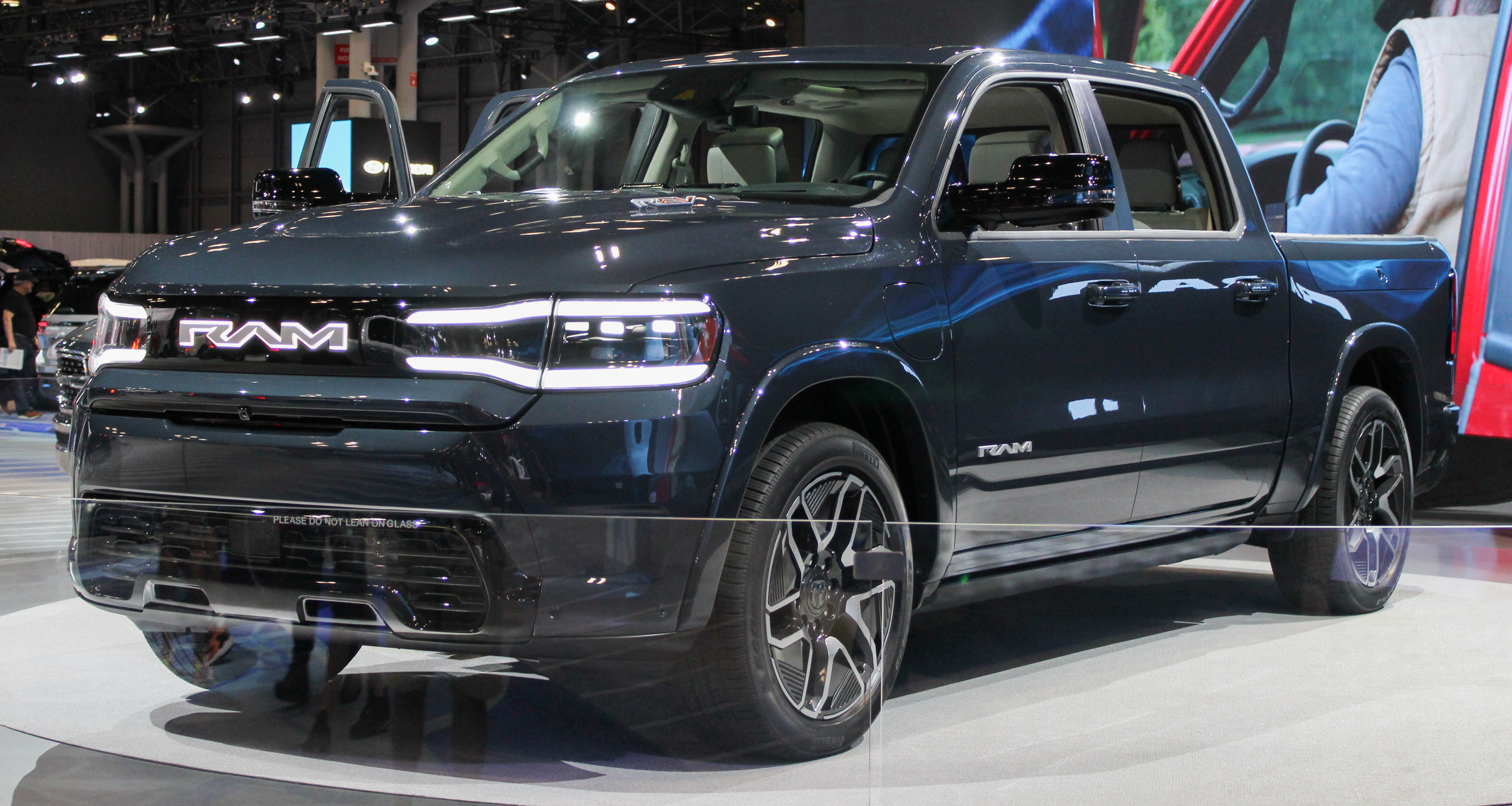
starting with the Jeep Grand Wagoneer and Ram 1500 this year.
BMW and Qualcomm say their jointly developed driver assistance system now has third-party
customers lined up, though they're not naming names yet.
The partners created the RidePilot ADAS system together, with Qualcomm handling the chip hardware
and perception software while BMW built the drive policy layer that decides how the vehicle responds.
The system debuts in BMW's new iX3 electric SUV.
The companies have been in talks with potential customers, including several automakers for months.
And a court hearing Tuesday could determine the fate of chipmaker Nexperia.
The company has been split between Dutch control and Chinese owner Wingtec since October.
The standoff has already disrupted production.
Honda halted plants in the fall while Volkswagen and ZF scrambled for alternatives.
Behind the scenes, both sides are preparing to operate independently.
The Dutch parent is investing $300 million to shift 90% of capacity outside China by mid-year.
Meanwhile, banks have withdrawn hundreds of millions in financing and competitors like OnSemi
are positioning to capture Nexperia orders.
And those are today's headlines.
You can find more details on all those stories at AutoNews.com.
Stilantis' decision to abandon plug-in hybrids represents a significant strategic shift for the automaker.
Our own Vince Bon Junior covers Stilantis for Automotive News.
Vince, welcome to Daily Drive.
Thank you.
So Vince, what's driving this decision?
Well, for what it sounds like from Stilantis' recent statement,
they're saying that consumer demand is the main factor behind this.
If you look industry-wide, conventional hybrids with no plugs,
have been pretty popular in recent years.
Toyota sells bunches of them.
And Stilantis thinks that they're going to get onto that ship
and try to move some of these conventional hybrids versus plug-in hybrids.
Them doing this really is a big shift in the PHEV market.
The Wrangler was dominating the plug-in hybrids since it debuted in 2021.
And then over the next couple of years, the Grand Cherokee hybrid was introduced.
And that was in the top five for a couple of years.
The Chrysler Pacifica plug-in hybrid was up in the top five as well.
And so, you know, that segment loses a really big leader
and now some other brand can take over.
Interesting.
Now, Stilantis is pivoting to conventional hybrids and range-extended EVs instead.
What does this tell us about where the company thinks the market is heading?
Yeah, well, like I just said, you know, Toyota has been dominating in the hybrid space
and Stilantis believes they can probably get into that
and try to capitalize on some of this excitement.
And, you know, the funny thing about the plug-in hybrid Wrangler and the Grand Cherokee,
even though they get the, you know, a little bit of EV range,
the big thing about them was that the torque was a lot higher than the gas models.
And so that was a good, you know, benefit for all the off-road customers
who wanted to, you know, try to climb some rocks or something.
So that's one thing they'll lose without having that PSGV powertrain.
Perfect. Vince, thank you so much for joining me.
Yep, no problem.
You can read all of Vince's reporting on Stilantis at AutoNews.com.
Coming up, mobilize CEO Amnon Shashua discusses the company's $900 million acquisition
of humanoid robotic startup, Menti, and plans to bring commercial robots to market by 2028.
That's next on Daily Drive.
PACE Awards recognized traditional and non-traditional suppliers worldwide
for new product, process, and business model innovation,
and entries must be innovations already commercialized through a sale to an automaker.
Still pre-commercial, but past the pilot stage,
PACE Pilot recognizes post-pilot pre-commercial innovations across automotive and future mobility,
products, software, IT systems, and processes with the potential to revolutionize an automaker's business.
All submissions are reviewed by an independent panel of judges,
and MIMA is the exclusive lead sponsor.
Ready to be recognized? Apply by February 9th at AutoNews.com.
Welcome back to Daily Drive. I'm Kellan Walker.
Mobileye announced at CES last week that it's acquiring Menti Robotics for $900 million,
making the Israeli tech company's entry into the humanoid robot business.
Automotive News' managing editor of content Jerry Hirsch spoke with mobilize CEO Amnon Shashua
at CES about the acquisition on the latest episode of the Automotive News Shift podcast.
Here's their conversation.
Good to see you again, Amnon.
See you, Jerry.
Big news today, a $900 million acquisition of a robot company, Menti.
Tell me why.
So, you know, humanoid robotics in the past three years went through a really accelerated cycle
due to this AI that is moving very, very fast.
And Jensen last year, you know, put a title for both autonomous vehicles and robotics,
called it physical AI, which I think is the right title.
Mobileye as an AI company in part of physical AI, which is autonomous cars,
for mobilize, it's very natural to expand to the full scope of physical AI
by going into humanoid robotics.
There's lots of synergies in terms of the AI stack.
Both use visual language models, both use simulators.
They both need to handle the sim to wheel from a simulator to the real world.
Both use control.
The only difference is that cars are operating in a structured environment,
and robots are operating in an unstructured environment.
But there's a lot of synergies, a lot of shared AI stack,
and it's a new time for mobileye.
And I believe, looking 10 years forward, there'll be millions of robots.
There's shortage of manpower, shortage of labor, assembly plans, production plans, home use,
elderly care homes, there's so many uses for places where there's shortage of labor
that a intelligent robot with the dexterity of a human
and being able to follow instructions, being able to observe and imitate what it observes.
And at the cost structure, let's say cost of a car,
I think the world is ready for it.
And the technology is ready, just a matter of productizing.
So for mobileye, it's really a natural step forward.
And mentee has shown quite impressive maturity.
It's a vertically integrated effort.
They designed the actuators themselves, they designed the electronics,
they designed the gear, they designed the AI.
Many of the demonstrations you see out there of humanoid robots is teleoperator.
They're someone in the backstage that is moving his hands with their VR goggles.
What mentee is doing is fully end-to-end AI.
The robot understands the instruction, has the capability to follow instructions.
They have clips that show robots working for 18 minutes straight moving boxes from place to place.
They have a clip which I think is very, very innovative where a robot observes a human performing a task.
The robot sends the clip to the cloud.
In the cloud, it moves into a simulated world.
There, there is reinforcement learning training and within minutes.
Today, it's within hours, but when you go into production, it will be within minutes.
It goes back to the robot and the robot performed the task.
So it shows this generalization.
Here at CES, there's a lot of talk about physical AI.
And I'm not sure people really understand that,
but what we're talking about is AI that gives intelligence to a machine
rather than AI that is searching for patterns in the internet and information in the internet
and coming back and telling you how to draw an illustration or write a term paper.
That's right.
So the AI that most people are familiar with, you know, you work with Gemini, HRGPT,
it starts in the digital world and ends in the digital world.
Physical AI is that the AI is used for decision-making of a machine in the real world.
So an autonomous car is making decisions of how to merge into traffic,
how to continue moving without violating any traffic laws,
without colliding with other road users, whether pedestrians or vehicles,
and moving safely on the roadway.
So you have decisions in the real world.
And it's a complicated task because driving is a multi-agent phenomenon.
Your action affects the action of other road users.
You're planning something and then you need to change your plan
because the other road users are not supporting your plan.
You're trying to change lanes and the other guy doesn't allow you to change lanes.
You need to change your plan.
So it's a multi-agent phenomenon, but all the decisions are in the real world.
Same thing with the humanoid robots.
A robot is observing the world, understands the world, has instructions to follow,
whether to pick an object, to move it, place it in a separate location,
or do something, fold clothes, for example.
You have to perform a task.
So all the actions are translated to motor controls, to actuators,
and it's actions in the real world.
What's the go-to-market plan with this?
How many are you going to produce?
When are you going to start to produce them?
You don't have a factory that builds big things.
So who's going to produce them for you?
So Menti has signed an agreement with Amovio,
say Continental, change their name to Amovio.
We're going together to take the design of the robot
and work on making modifications of the design to make it ready for mass production.
We'll start producing test batches in 2027
and ready for commercial deployment in 2028 in domains which are more structured,
like fulfillment centers, assembly plants, production plants, retail,
and then two years later to move into home use.
Home use is more, it's less structured.
The tasks are open-ended.
The robot needs to continuously learn and follow instructions
or demonstrations of the customer to perform new tasks.
So it's a much more complicated use case.
So we see that as a second stage.
But 2028, we believe, is the year for commercialization of these robots.
And the unit economics volumes of about 50,000,
we can produce this robot in less than $20,000.
$20,000.
So it means that...
But that's not the price to sell them to your cost, right?
Price to sell depends on the market,
but it gives you a lot of flexibility whether it's leasing or whether it's selling the robot.
And these robots can work 24-7 because the battery is swappable.
So the robot has two batteries.
One battery that is operating all the stack actuators and compute,
and another bigger battery that is charging the small battery.
The bigger battery can be swapped while the robot is active.
So you can then work 24-7.
You swap the battery, you charge it, and you continue working.
You don't need to wait until the battery is charged.
So mentee will be working with Amovio,
which is the technology spin-off of Continental, the big tire company.
Hyundai at CES also announced a lot of robot news
focusing with their partnership with Boston Dynamics on their robots.
And of course, Elon Musk is constantly talking about robots and other things.
Why is the auto industry so connected with the push to develop humanoid robots?
Well, no, the auto industry has many production plants,
and there's a shortage of labor in these production plants.
They don't have enough labor to fulfill all the production demand that they have.
So this is why the auto industry is a good first customer.
The suppliers of the auto industry, the big tier ones,
they have lots and lots of production facilities, and the car makers themselves.
Now, I'm not talking about the robot that is assembling a car.
That they have robots that do that, dedicated robots.
There's lots of other work that people do, move objects from place to place,
take a cart with parts and move them from place to place.
This you can automate, but it can't be a narrow type of robot.
It has to be a robot that can move from place to place,
just like a human, a robot that can follow instructions.
A robot that has multiple tasks, not just narrow one task to be done.
So the auto industry, I think, is a natural first customer,
but also fulfillment centers, which is not related to the auto industry.
You know, fulfillment centers, these are jobs which have lots of labor shortage.
The jobs are somewhat boring and people get injured because you need to live heavy loads,
25 kilos or so.
And the turnaround is 100% per year.
So people don't stay in this job for years.
And this is another very good example for a customer for the first stage of robotics.
You can hear the full interview with Mobileye CEO Amon Shashua
on the Automotive News Shift podcast, available wherever you get your podcasts.
That's Daily Drive for today. I'm Kellan Walker.
Thanks to Automotive News executive producer Jake Neer,
as well as our own Vince Bond Jr. for his reporting for today's podcast.
We also have reporting from Douglas Bolduck of our sibling publication, Automotive News Europe.
You can get the latest news on Stellantis' electrification strategy,
humanoid robotics, and everything happening in the auto industry at AutoNews.com.
Come back on Tuesday for a conversation with CJ Finn,
US Automotive Industry leader at PWC,
who separates the hype from reality from CES in Las Vegas.
People's natural indication is everything's really, really exciting,
but you don't realize it's hype until it's too late and you've gone too far down the path.
We'd love to hear from you.
Let us know what you think of the show and the topics we covered today.
Send us an email at DailyDrive at AutoNews.com or leave us a voicemail at 313-444-2774.
And if you enjoy the podcast, remember to like, leave a review, and subscribe so you never miss an episode.
About this episode
Stellantis has announced the discontinuation of its entire plug-in hybrid lineup for the 2026 model year, shifting focus to conventional hybrids and range-extended EVs. This decision reflects changing consumer demand, as plug-in hybrids captured only 1.8% of the market last year. Additionally, Mobileye's CEO discussed a $900 million acquisition of Menti Robotics, aiming to commercialize humanoid robots by 2028, addressing labor shortages in various industries. The episode features insights on the evolving automotive landscape and the intersection of AI with robotics.
Stellantis is pulling the plug on its entire lineup of plug-in hybrids for 2026, including the top-selling Jeep Wrangler 4xe. BMW and Qualcomm announce third-party customers for their jointly developed driver-assistance system. Plus, Mobileye CEO Amnon Shashua discusses the company’s $900 million acquisition of humanoid robotics startup Mentee Robotics and plans for commercial deployment by 2028.