The Ford Escape is a small SUV that is great for families and everyday use. It's known for being spacious and easy to drive, but there are worries that it might not be available much longer.
The Ford Bronco Sport is a smaller SUV that is designed for both city driving and outdoor adventures. It's built to handle rough terrain while still being comfortable and easy to drive.
The Ford Mustang is a famous sports car that has been around for a long time, starting in the 1960s. It's known for being fast and stylish, making it a popular choice for people who love driving.
Range anxiety is the worry that an electric car won't have enough battery power to get to where you want to go. This can make people hesitant to buy electric cars.
SUVs are big cars that can carry more people and cargo. They are popular because they are spacious and can handle rough roads better than regular cars.
Hands-free driver assistance lets you control your car using your voice instead of your hands. This means you can do things like make calls or get directions without taking your hands off the wheel.
Self-driving cars are vehicles that can drive themselves without needing a person to control them. They use special technology to see the road and make decisions on their own.
Artificial intelligence is technology that helps cars think and make decisions like a human would. It can help with things like understanding your voice or recognizing other cars on the road.
LIVE
Hi everyone and welcome to the January 16th, 2026 episode of the Automotive News Canada
podcast.
I'm your host, Greg Lason, the digital and mobile editor at Automotive News Canada, coming
to you from just outside Windsor, Ontario, the automotive capital of Canada.
Today on the show we hear from Vice President of Insights and Intelligence at AutoTrader.ca
Marsh Acurek.
He talks to Automotive News Canada publisher Tim Dimopoulos about affordability, Canadian
buying behavior, the used market, EVs, tariffs and more.
The two spoke just before the holidays and right after AutoTrader's most recent survey
was published.
Search behavior is different from what consumers are buying, which is kind of understandable.
But first, a look at some of the top Canadian automotive stories of the week.
The government of Canada is seeking auto assembly investment from Volkswagen and Hyundai.
The pitch is part of a submarine procurement discussion with South Korea and Germany.
The federal government is trying to leverage a $60 billion defense contract to land more
auto assembly.
Ottawa has shortlisted South Korea's Hanwha Ocean Company and Germany's Tiesen Krupp Marine
Systems for the deal.
A source with knowledge of the matter confirmed to Automotive News Canada that the federal
strategy includes pressing for Hyundai and Volkswagen investments.
Brendan Sweeney, managing director at the Trillium Network of Advanced Manufacturing,
says Ottawa's pursuit of an assembly plant faces hurdles, but he says it's not necessarily
a non-starter.
In retail and product news, Canadian Ford dealers are concerned that there is no escape.
They say the discontinuation of the long-running model and a lack of an affordable alternative
in the lineup could push buyers toward competitors.
Says Kevin Zimek, dealer principal of Cambridge Ford in southwestern Ontario,
quote, I'm nervous because it's still a vehicle that's very much in demand.
In 2025, escape sales totaled $32,956.
That's up from $30,996 the previous year.
The nearest comparable crossover in Ford's lineup is the Bronco Sport, but it costs about
$6,000 more.
The final escape rolled off the line at Louisville Assembly Plant in Kentucky on December 17th.
Most dealers still have about three months of inventory remaining.
Finally, in EV News, Canadian Tesla sales declined an estimated 63.5% in 2025.
Sales totaled close to 20,000 vehicles last year, according to an estimate,
from the Automotive News Research and Data Center in Detroit.
Tesla's dramatic drop came amid wider EV market malaise.
EV sales in Canada declined 43% through the first three quarters of 2025.
Final numbers aren't yet available.
Tesla, though, was hit hard by Canada's counter-tariffs of 25%.
DeRosier Automotive Consultant says political problems also weighed on the automaker.
CEO Elon Musk courted controversy in the U.S. in early 2025,
with his active role at the Department of Government Efficiency.
In a February post on X, formerly Twitter, which Musk now owns,
he wrote, Canada is not a real country.
Says DeRosier's managing partner Andrew King, Mr. Musk,
certainly didn't help the company in terms of the branding
and the image with his political activities.
And that's a look at some of the top Canadian automotive stories of the week.
We now hear a conversation between Automotive News Canada
publisher Tim Domopoulos and Vice President of Insights and Intelligence at AutoTrader.ca,
Barish Acuric.
So, Barish, based on your latest year and survey at AutoTrader,
what does the data show about affordability and how it's shaping Canadian vehicle buying
decisions right now? I mean, affordability seems top of mind for everybody,
including car buyers. Tell us what the findings show.
Yeah, no, that's true. Not only for cars, I guess, but for everything else as well.
So, overall, that seems to be the common theme in Canada, not only in 2025,
but also based on our data in 2024 as well. So, what we've been seeing is that when it comes to
searches, search behavior is different from what consumers are buying, which is kind of
understandable. So, when we look at the top 10 searched vehicles, there's still like the Corvettes
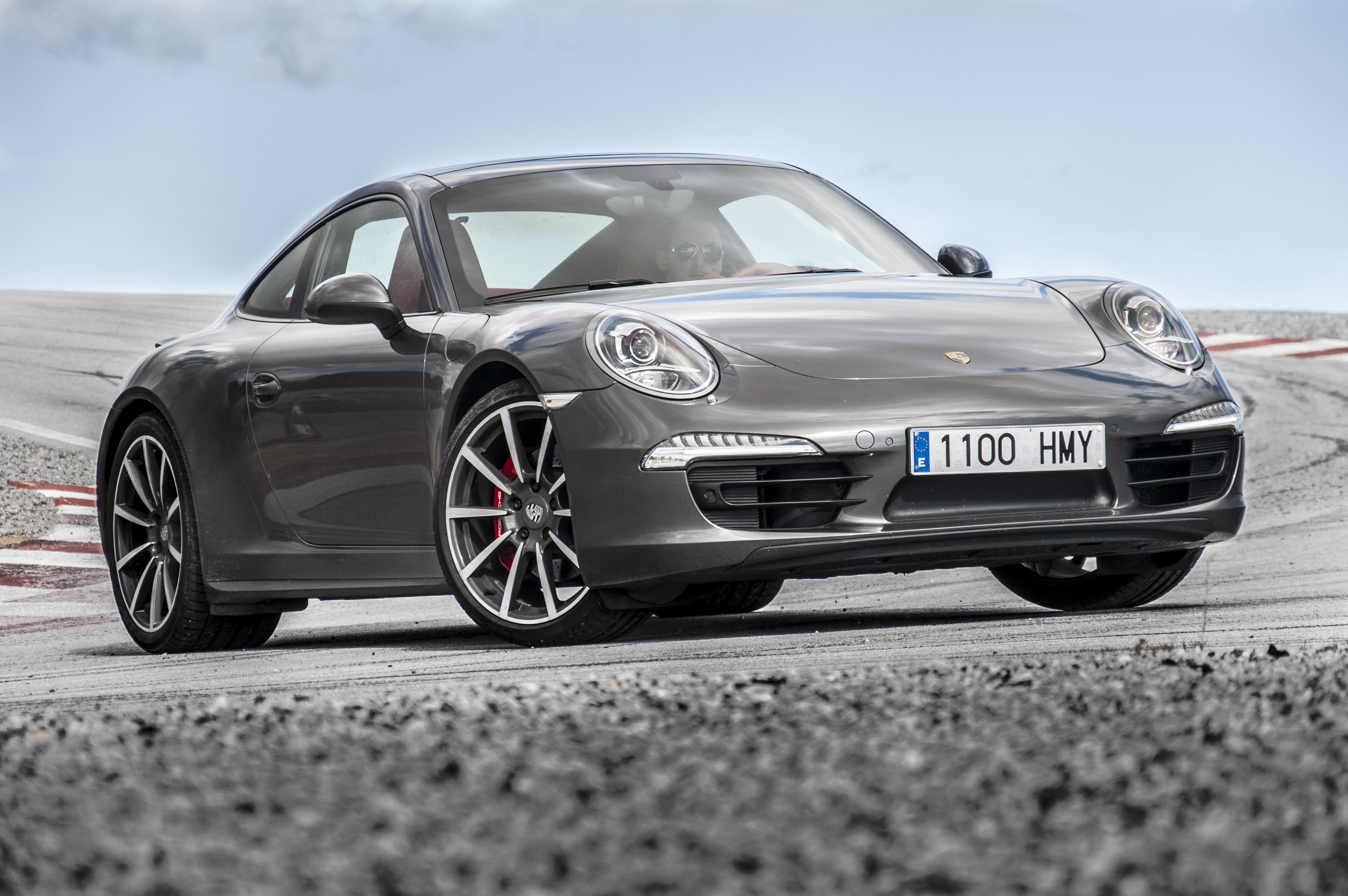
and 911s and, you know, the Mustangs and a couple of German luxury brands in there.
But when it comes to actually what people are buying, what consumers are buying,
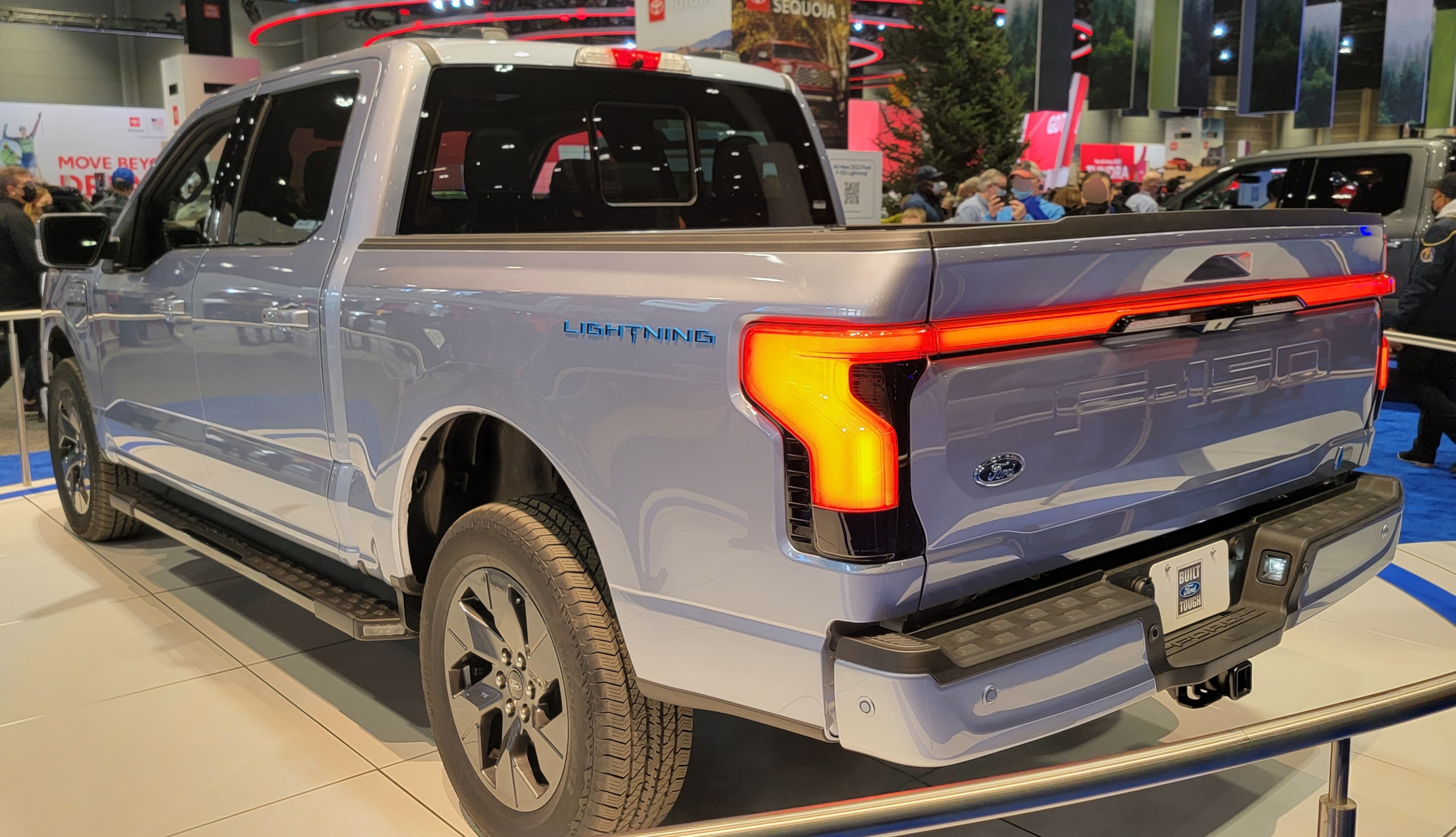
the reality is very different with the exception of Ford F-150. Ford F-150 has been the,
this was the 11th consecutive year of both top sold and top searched vehicle in Canada,
based on the data that we see on AutoTrader.ca. So, that hasn't changed. But when it comes to,
again, buying behavior, it's very different from what consumers are searching for.
Yeah. And also, according to your findings, the average new and used vehicle prices have
changed over the past year. Tell us about that and what's driving those shifts.
Yeah. So, we are seeing a little bit of divergence. If you look at the data at the aggregate level,
there's some divergence between new and used. So, new prices are down slightly. So,
I'm talking about listing prices, Tim, as usual. So, new car prices are down by 2.5%. The average
listing price is now 63,665 bucks. But on the other hand, as we all know, the view is a bit
different at the OEM level. So, there's certain brands that have lots of availability in the
market on the new side. And when you look at the transactional data, what we see that there's
lots of incentives attached to these brands. But on the other hand, certain brands, they don't
have a lot of availability. So, there's less flexibility on those. So, at the aggregate
level, the prices are down on new. But if you look at it by OEM, the situation is a bit more
nuanced. But on the other hand, if you look at the used car prices. So, we must have talked
about this in the past. But used car prices tend to start on the higher side in the beginning of
the year and they come down throughout the year. So, this year, because of the tariffs, we saw a
lot of consumers accelerated their purchases starting in around March to June-July time period.
So, used car prices, because of the increased demand, ticked up by quite a bit.
And now, they're coming down slightly. But on the other hand, on a year-over-year basis,
they're still up by 2.2%. And the average used car listing price on auditorator.ca now is
$35,494. Now, tariffs are a dynamic thing. We don't know where they'll end up. But what do you think,
just in terms of how they'll affect pricing in the short term and the medium term, do you still
think they'll cause pressure on prices as we see them? Or do you think we may be able to see some
level of stability when it comes to tariffs once we have an idea of how they're going to end up?
Yeah. So, look, if you think back, say, January-February timeframe in the beginning of the year,
there were a lot of doom and gloom scenarios. Oh, my God, the prices are going to go up by
$25,000 or X thousands of dollars. But that didn't materialize. So there are two high-level
reasons behind the fact that we didn't see these huge increases in prices. We've talked about it
inventory availability. There's still cars out there. Last time we looked at the data. We have
64 days worth of supply, which is decent. But again, the devil is in the details at the OEM level.
That's number one. Number two, USMCA, COSMA, whatever we call that thing nowadays. That's
obviously helping us out with preventing from price increases. So these are the high-level
main reasons as to why we didn't see what we didn't see, but why we didn't see price increases. So
going back to your question, what's going to happen with the trade war? We are going to have
to renegotiate COSMA in 2026. How is that going to end up? So I think that's super important.
But that said, we don't see large price fluctuations. But that said, if this keeps going on,
probably there's going to be some impact by how much I don't want to speculate.
But there might be some impact on new car prices down the line. On the US side,
the situation is a bit different. So when we look at prices, we've discussed the prices,
but the inventory situation is a bit constrained. And it's been going on for over a year now because
of the COVID era production and sales challenges. We estimated that 1.5 million fewer new cars sold
between 2020 and 2023. Obviously, these cars are not coming back to the market for obvious reasons.
So overall, the inventory supply is constrained and the demand has been there. It slowed down slightly
in Q3, but the demand is still there. So consistent demand, low supply, keeping prices on the higher
side. So we don't expect that to change until mid to end 2027. So probably prices on the US
side will stay high until that time. Speaking about demand, the roller coaster world of EV demand
has made some manufacturers scratch their heads and suck to their stomach. So what are you seeing
in the data when it comes to EV interest versus willingness to buy? And how does that compare
with consumer consideration for other types of propulsion like hybrids, for instance?
Yeah, good question. So on the new EV side, the market is not looking that good. If you look at
the data, we see it on our data as well. You look at Statscan data in Q2. Battery electric
vehicle sales are down by almost 40% on a year-over-year basis. And we've talked about this
in different forms. We've been expecting this. Incentives, obviously, especially during the
some financial and sensitive times, EVs in general, they tend to be more expensive than
their ICE counterparts. So now with the federal incentives being suspended since the middle of
January, obviously they have become more expensive. So which in turn has had an impact on new EV sales.
So no, no, it's not surprising. And, you know, to be perfectly honest and transparent, like this,
it was, there was a writing on the wall, right? We looked at different markets. Germany did the
same thing back in 2023. Their sales came down dramatically the following year. So we have been
expecting this. And again, there's still some sort of a deliberation. It seems like we're in some
sort of deliberation stage, but, you know, there's still, it's not unclear. There's no certain TS to
what's going to happen with these incentives, which is obviously not good for consumers.
But on the other hand, when we look at the hybrid sales, hybrid sales are showing exactly the
opposite. So again, going back to what we saw through Statscan as well as in our own data,
hybrid sales are up by 60% on a year-over-year basis. So there are a bunch of reasons behind it,
but when we think about our EV survey that we run on an annual basis, we know that battery
battery range anxiety is a big issue for consumers. Range anxiety, higher purchase cost and infrastructure,
lack of infrastructure for charging. So obviously, when you buy a hybrid vehicle,
there are less concerns around that. And, you know, when we look at the sales data,
we see that consumers are moving towards hybrids, both for new and used vehicles at this time.
Okay, let's break it down by segment from your research, which vehicle segments are currently
dominating shopper interest and how are emerging technologies influencing buyer decisions within
those segments? Yeah, so, I mean, look, this is not necessarily a tariff or COVID-related
phenomena, but what we've been seeing in Canada in the last 10, 15, if not more years is that
consumers are preferring larger vehicles, SUVs and, you know, light trucks, they're getting a
lot of attention. And obviously, given the demand, OEMs are producing more of those. So,
if you look at these, you both use the new market, they're more and more interested in SUVs and
light trucks. On the other hand, when it comes to technology, you know, hands-free driver
assistance and, you know, self-driving cars and artificial intelligence and natural voice virtual
assistance are becoming more and more embedded in vehicle systems. And probably that's going to
keep continuing in the near future as we see it. I'd like to thank Barsh for his time and Tim for
conducting the interview. If you'd like to be a guest on the show, have a suggestion or simply
want to comment, email me at glasen at autonews.com. And remember, you can listen to all our previous
podcasts on Spotify, iTunes, Google Play, or on our website, automotivenews.ca. Just scroll to the
podcast hub in the middle of our homepage. And don't forget, you can follow Automotive News Canada
on X, where we're at Auto News Canada. You can find me there too under at G-Lacin, A-N-C. And finally,
look for us on LinkedIn, just search Automotive News Canada. That does it for this episode of
Automotive News Canada podcast. We hope you'll join us next time. So long, everybody.
About this episode
Baris Akyurek from AutoTrader.ca discusses the evolving landscape of Canadian automotive buying behavior, focusing on affordability and market trends. Key insights reveal a disparity between consumer search habits and actual purchases, with the Ford F-150 remaining a top seller. The episode also covers the impact of tariffs on vehicle prices, a significant drop in Tesla sales, and a surge in hybrid vehicle interest amid declining EV sales. Akyurek emphasizes the growing preference for larger vehicles and the influence of technology on buyer decisions.
Canada courts VW, Hyundai plants; no Ford Escape; Tesla sales sink. Plus, AutoTrader.ca Vice-president of Insights and Intelligence Baris Akyurek talks about affordability, Canadian buying behaviour, the used market, EVs, tariffs, and more.