The Chevrolet Spark is a small, budget-friendly car that's easy to drive and park. It's great for people who want a reliable vehicle without spending a lot of money, especially for city driving.
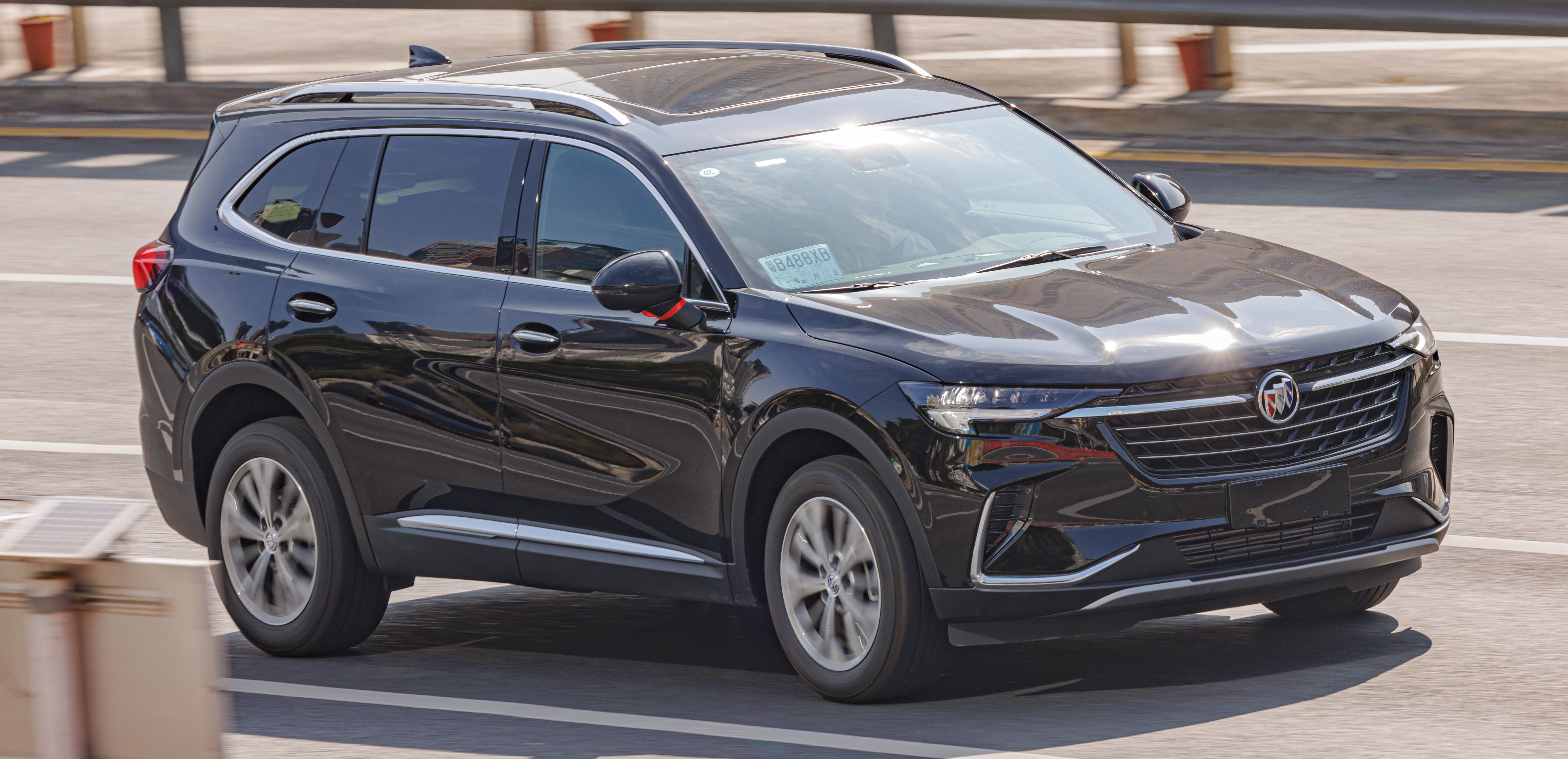
The Buick Envision is a small SUV that offers a comfortable ride and a nice interior. It's a popular choice for those looking for a family-friendly vehicle.
Tariff pressures are extra costs that companies face when they import goods from other countries. These costs can make it more expensive to sell cars, leading companies to change where they make them.
The Chevrolet Equinox is a small SUV that has a lot of space inside and comes with many safety features. It's a good option for families or anyone needing extra room.
Sourcing strategies are the plans companies make to decide where to get the parts and materials they need to build their products. This can change based on costs and other factors.
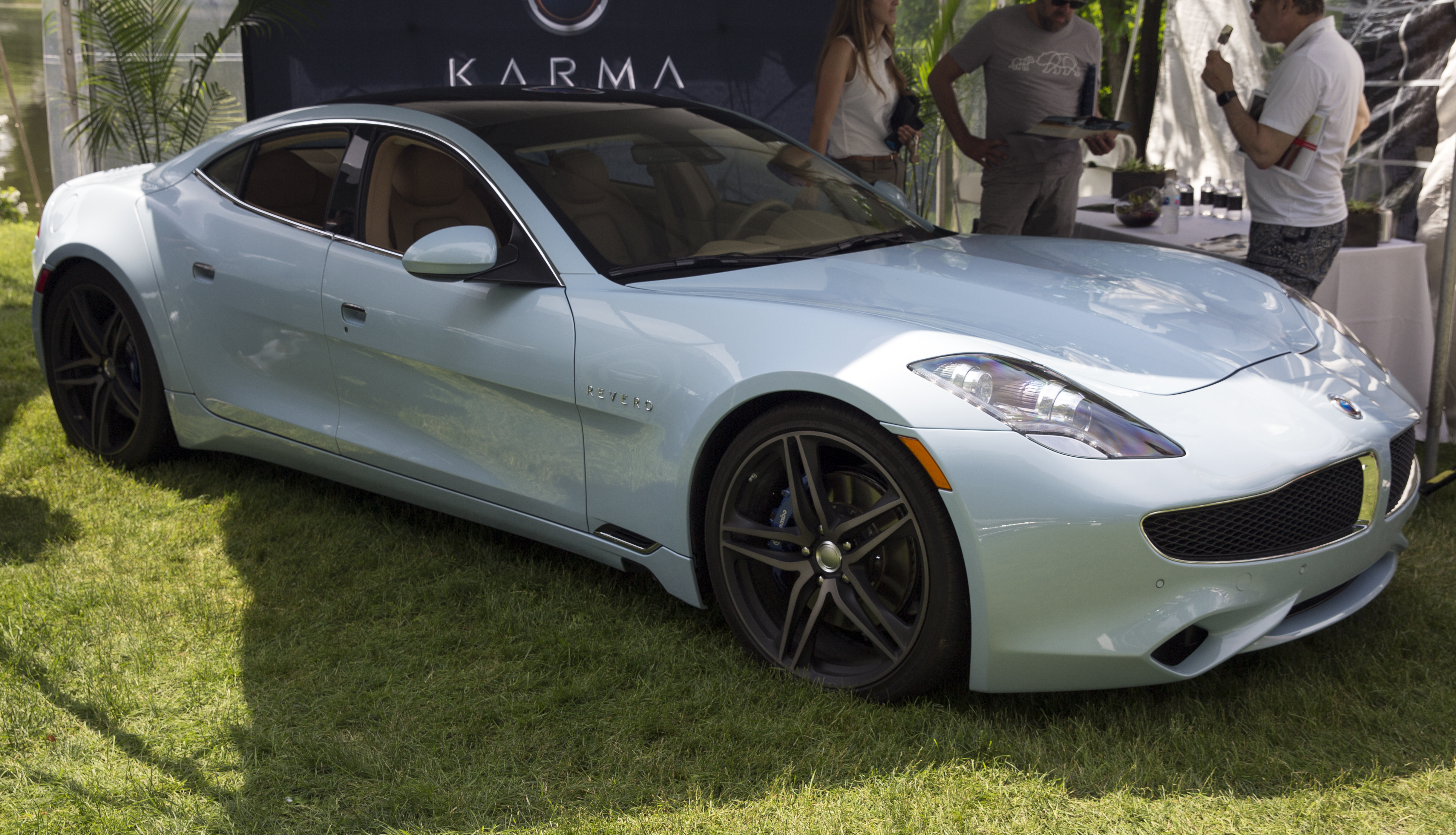
The Karma Revero is a luxury electric car made by Karma Automotive. It's known for its stylish design and advanced technology, but it has now completed its last production run.
Car
Karma GSR
The Karma GSR is a new electric car that is designed to be faster and more luxurious than previous models. It has a special body made of carbon fiber, which makes it lighter and stronger.
Car
Karma Amaris
The Karma Amaris is a new two-door luxury car that Karma plans to release by the end of 2026. It's designed to be very high-end and stylish.
When a car is hybridized, it means it uses both a gas engine and an electric motor. This helps the car save fuel and produce less pollution than cars that only use gas.
A range extender helps electric cars go further by using a small gas engine to create electricity when the battery runs out. This way, you can drive longer distances without worrying about finding a charging station.
SRT is a special group within the car company that makes fast and powerful cars. They focus on improving performance and creating exciting vehicles for car enthusiasts.
An electric drive motor is what makes electric cars move. It uses electricity to create power, which is more efficient and cleaner than using gasoline.
Car
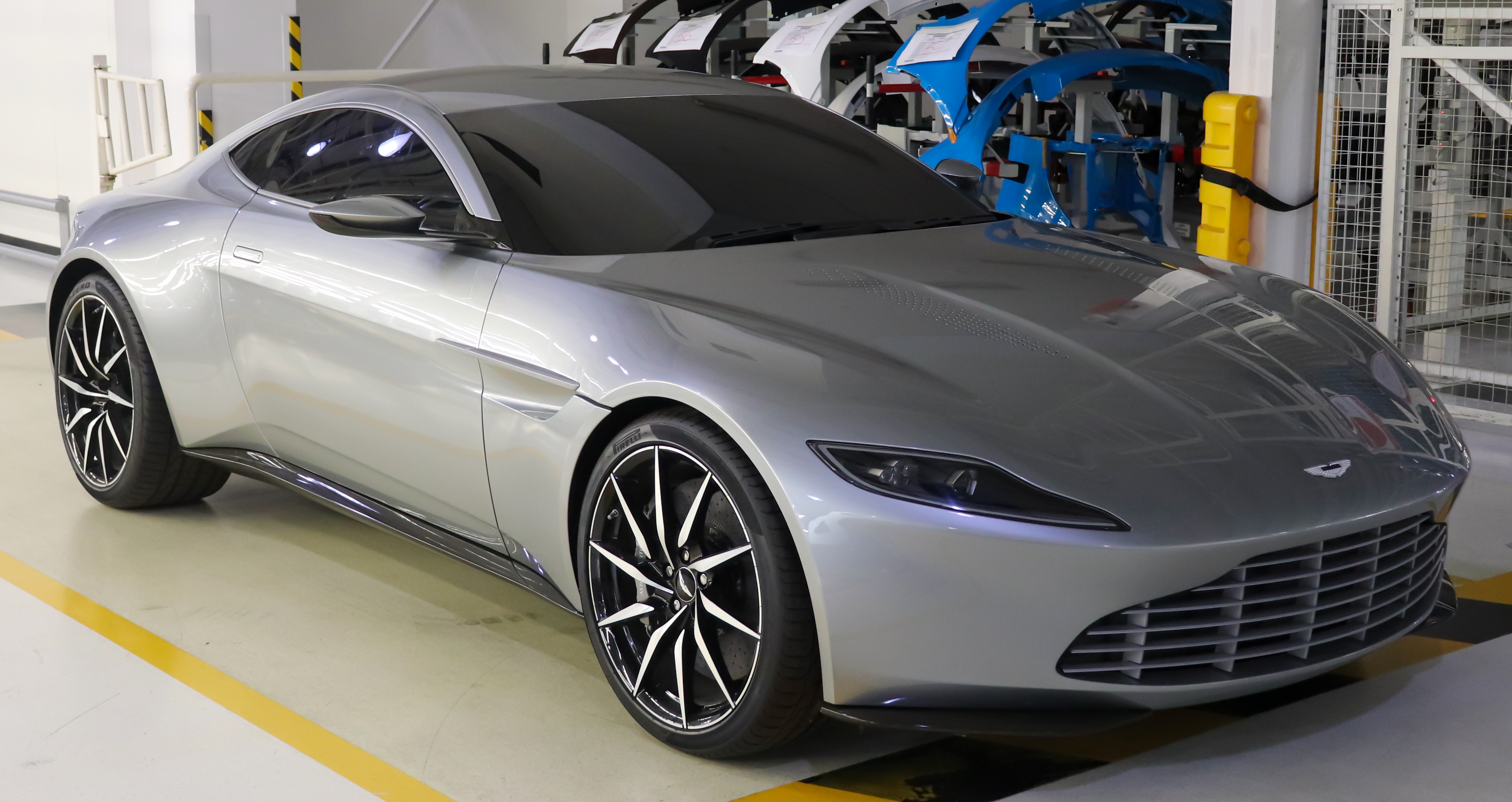
Aston Martin
Aston Martin makes fancy sports cars that are very fast and stylish. They're known for being luxurious and are often seen in movies like James Bond.
Fuel economy tells you how far a car can go on a certain amount of gas. If a car has good fuel economy, it means it uses less gas to drive the same distance.
When we say 'transformative' in cars, we mean big changes that make cars better, like new technology or new ways of driving. It can change how we think about cars.
LIVE
This podcast is brought to you by Reynolds and Reynolds, the industry leader in automotive
technology. Learn how Spark AI, Reynolds Unified AI data layer, can help you unlock your full
potential by visiting rayray.com slash spark dash AI. That's R-E-Y, R-E-Y dot com slash Spark dash AI.
Welcome to Daily Drive. For Thursday, January 22nd, 2026, I'm Kellan Walker in Las Vegas.
Today on the show, GM is moving Buick crossover production out of China and into Kansas.
Cash buyers are costing dealers big money in the FNI office and Scott Painter is back at Truecar
and taking it private. Plus, karma automotive president Marcus McCammon
discusses the company's complete product reinvention ending its 11-year-old name plate
and launching a new lineup of ultra luxury models. Higher performance, quicker new technology,
new interior, whole carbon body, everything about it has moved up two levels from where the brand
has been in the past. Let's run through all the news you need to know to keep up in the auto industry.
GM is shifting production of its Buick compact crossover out of China and into the U.S.
The automaker announced the successor to the Envision will be built at its Fairfax assembly
plant in Kansas starting in 2028. That moves production of the top-selling vehicle imported
to the U.S. from China to American soil, where it will be built alongside the Chevrolet Equinox
on a shared platform. It's a strategic pivot amid tariff pressures. The Envision has faced
higher duties under Trump administration trade policy with sales dropping 11% last year to just
under 42,000 units. The decision adds to GM's $5.5 billion in recent U.S. manufacturing investments,
reinforcing its domestic footprint as trade tensions reshape sourcing strategies.
Cash buyers are costing dealers serious money in the FNI office.
19% of new vehicle sales in the third quarter were cash deals, up from pre-pandemic levels.
That's even as vehicles got pricier and interest rates dropped. It's a problem for dealers,
since the average cash deal generates just $461 in FNI gross profit, compared to nearly $2,000
on financed sales. But there's opportunity. 21% of cash buyers still purchased service contracts.
Dealers like Holman are offering 0% payment plans specifically for FNI products, helping convert
some of that lost revenue. As one executive put it, it's about value selling, not cost.
And Scott Painter is back at Truecar, the company he founded in 2005. And this time,
he's taking it private. Painter led an investment group, including AutoNation and Zurich,
North America, that closed a $227 million deal on Wednesday to buy the struggling
vehicle listings platform. His mission? Make Truecar profitable for the first time ever.
Painter left in 2015 after dealers fled over pricing concerns. The company has never turned
a profit despite years of restructuring and platform overhauls. Now, he's focused on building
partnerships with Truecar's 11,500 dealerships nationwide. And those are today's headlines.
You can find more details on all those stories at AutoNews.com. Suppliers signaled more confidence
about their company's performance at the end of a Tremultuous 2025. But they remain more pessimistic
about the future of the auto industry overall than their automaker and dealer peers. That's
according to the latest automotive news auto industry confidence index. Joining me now to
talk more about it is our own John Irwin. John, welcome back to Daily Drive. Thanks for having
me back. So John, why are suppliers more confident than last year? And what are the big lingering
concerns? Yeah, we saw a little bit of improvement in how suppliers are thinking about their own
businesses at least. We look at the previous survey that we did in the third quarter of last year.
About 47% of suppliers said that they were feeling, you know, optimistic to some degree
about their own, the performances of their own business. But that jumped all the way up to 60%
just a few months later. And I think a lot of that is driven, there are a few factors at play,
but a lot of it is driven just by, I think a lot of companies demonstrated a decent amount of
resilience. I mean, you think back to like the middle of last year, just given all the
uncertainties surrounding, you know, tariff policy, where things might end up on electrification,
what companies plans will be there, what government policy will be, there was just a lot of unknowns
and there still are a ton of unknowns, a lot of uncertainty moving forward. But there's,
I think at least a little bit more confidence in where things might end up for a lot of companies
where they're seeing, okay, we have an idea at least of, you know, where automakers are thinking,
you know, their electrification plans are going to look like the next few years,
I'm going to be pulling back, maybe that's good for our business if we're, you know, more in the
ice space or what have you. And also the production has sort of held up, I think, to a larger degree
than some people in the supply base were expecting, which is obviously good for, you know, suppliers,
you know, the more vehicles that are built, the more parts that they need to make. And I think
that's held up to a degree. At the same time, though, there's certainly, you know, some concerns
that are lingering for the auto industry and for the supply base in particular. We surveyed for
the first time for this most recent survey, suppliers and asking them about financial distress
in the supply chain. Pretty significant majority of suppliers say that that's a concern for them.
They're worried about, you know, smaller companies in their supply chains,
are they going to be able to hold up? They might have to do if, you know, let's say a
small company, they go bankrupt or they run into some sort of issue in production or, you know,
things that relate to tariffs, you know, how are those going to impact those smaller companies?
That's a pretty significant concern. It's something that I know suppliers and automakers
as well are keeping a close eye on moving forward. But yeah, a little bit of improvement
overall in terms of how suppliers are at least doing their own businesses, that's for sure.
Well, you write that a lot of the negativity about the future is about the overall health
of the industry rather than expectations for how their companies would perform individually.
Can you explain that? Yeah, it's interesting, you know, the majority of suppliers are feeling
good about their own businesses, but at the same time, significant majority of them are
more pessimistic about when we ask about the state of the auto industry than their automaker and
dealer peers. And I think a lot of that, again, is just, I think driven by long term uncertainty
and concern, I guess related in large part to, I think trade is a big part of it. You know,
we have this year, there's still a lot of uncertainty just about where, for instance,
the USMCA might end up, you know, we're looking at, you know, negotiations this year, there's a
review slated for July, but you know, we've seen Trump sort of float the idea of exiting the USMCA,
there might be significant changes to it. Obviously, long term, you know, that's something
that suppliers in North America at least are really, you know, they need to know what the
rules for trade are going to be moving forward when they think about where they want to invest in
that sort of thing. That's the case for automakers as well, but I think for suppliers, it's a
particularly acute issue. And, you know, a lot of them are also, you know, just thinking a little
bit about the strain in the tier two, tier three level, there are a lot of smaller companies that,
you know, we just might not hear of, you know, a lot of tier one suppliers might be feeling
pretty good about their own businesses, but, you know, if that some small company, you know,
deep in the supply chain that makes one little component that's crucial for, you know, the entire
supply chain, if they run into an issue, you know, we've seen that with semiconductors recently where,
you know, if there's this one company that makes one part and we're so tied up with that,
you know, there might be issues down the line. And I think those concerns are still
very much lingering, especially just given a lot of the long term uncertainty of surrounding
tariffs and trade and that sort of thing, what the ripple effects of that might be
throughout the supply chain. So, yeah, I think companies are, you know, feeling good about
maybe some of the resilience that they're, you know, they're showing individually, but they're
concerned maybe just more broadly about the industry where things are at and where they
might move in the future. And, you know, things will continue to evolve, you know, as hopefully
they'll get more certainty on trade policy no matter what's going to happen one way or another
in the coming months. And that might inform how they view the state of the industry moving forward
once we get that. But in the meantime, it's just a lot of treading water, I think. And that's,
for a lot of companies, they'd rather be moving forward rather than just kind of
sitting and waiting around. John, always thorough. Thank you so much for joining me.
Thanks so much. You can read all of our results from our latest automotive news auto industry
confidence index at autonews.com or in the pages of this week's print edition of automotive news.
Coming up, we'll hear from Marcus McCammon, president of Karma Automotive. That's next on Daily Drive.
If you're an automotive supplier and you know your team is building the next big thing,
prove it on the industry's biggest innovation stage. Automotive News is now accepting applications
for the 2026 PACE program. PACE awards recognize traditional and non-traditional suppliers worldwide
for new product, process, and business model innovation. And entries must be innovations
already commercialized through a sale to an automaker. Still pre-commercial, but past the
pilot stage, PACE pilot recognizes post-pilot pre-commercial innovations across automotive
and future mobility, products, software, IT systems, and processes with the potential to
revolutionize an automaker's business. All submissions are reviewed by an independent
panel of judges and MEMA is the exclusive lead sponsor. Ready to be recognized? Apply by February
9th at AutoNews.com. When your AI tools are siloed, lost data, duplicate entries, and confusion
are inevitable. Spark AI isn't another AI tool to manage. Instead, it's a unified AI data layer
changing the game by ensuring your solutions are making life easier and working at their highest
capacity. Don't miss Spark at NADA. Watch Ray, our new AI assistant, bring everything together
in one intuitive command center for smart, fast decision-making. Ray answers your questions at
any time providing instant messaging, insights, help videos, or live support. Instantly analyze
your sales history and market trends or generate a sales report with one prompt. You can even ask
which cars to buy at auction today for the best return. Schedule an appointment at our booth
for everything from a short demo to a full retail management system demonstration using our core AI
products. Visit rayray.com. NADA. That's R-E-Y-R-E-Y.com. N-A-D-A. Welcome back to Daily Drive. I'm
Mark McCammon. Welcome to Daily Drive. Thank you. Appreciate you having me on.
First of all, tell us a little bit about your experience here at CES and what are some of the
through lines you're hearing and what is Karma hoping to get out of this show?
Absolutely. CES is something I've been a part of probably since 2014. It's interesting to come
and see how it's changing. I think for us as Karma, it's interesting to see how the world is
converging on what role software and AI are going to play in everything. For us, this is a
trend that we've seen coming for a long time. We see that even in the ultra-luxury segment,
we think that there's a role for how AI plays into the lifestyle and experience of the vehicle
and the brand that we really need to lean into. For us, what we're doing is working on expanding
and establishing partners. We're looking for who's pushing the envelope next. Frankly,
the biggest thing is we think we're looking for the models that enable collaboration for the future
because that's the path to success. Give me your perspective. I'm really fascinated
where you sit here and what CES must be like. It's so important for the ultra-luxury segment
to be cutting edge, to be offering the latest and the greatest. That's got to be a really big
job. Just looking around this hall, how many companies are saying that that's exactly what
they're offering? How do you navigate that? Yeah, it's daunting. For us, the relationship
with the customer has to be bespoke. We have to think about how do we use the technologies
and the products that are here as a platform that we can build unique experiences on top of.
I think that this is part and parcel to the way that software and tech are going to play into
automotive into the future. It won't be that you build a single one-version vertical solution and
it fits everyone. You have to create a baseline from which the consumer can find the experiences
that matter to them, and then you can deliver it to them in a quality, packaged, and repeatable way.
So does that mean building a base of partners that is extremely wide, that you have a lot
of different places to go to? Because if one person wants one solution and another person
wants a different solution, it changes which partner you're going to tap for that.
Yeah, I think it's about building an ecosystem of the right core. I hate when people use the
analogy of the cars of the future being like cell phones on wheels and springs.
We hear that a lot. I know, but the reality of the cell phone is that inside of an Apple operating
system or an Android operating system, there is an opportunity for all manner of services to come
to you as a customer, and you can cater those services to the way that you want to live. So
we're turning the car into a cell phone, but if you think of that process that there's an ecosystem
of services and there has to be some uniform platform underneath them that allows me to tap
into them at your request, that's the way that we look at the market. And there are some suppliers,
some tier ones, and tech companies who have a similar thought process.
So we're sitting here January, early January. What does 2026 look like for Karma? It sounds
like you have some big plans for new products. Very big. Yeah. So 2025, we closed out with the
last of our Revero product line. So the Revero is the nameplate that we launched the company on
in 11 years ago. Okay. So now Revero has seen its last production build. And now everything for us
is focused on the entire new product portfolio that we've been debuting. So the GSR will launch
in the middle of this year, and it will replace Revero as our Grand Coupe, higher performance,
quicker, new technology, new interior, whole carbon body, everything about it has moved up
to levels from where the brand has been in the past. And then after that,
then we start moving into our GTs, our GT coupes. So the Amaris will be the first one,
the first two door that you've ever seen coming from Karma. And that's due,
the first one to roll off by the end of 2026. That's big plans out. I'm curious what the
space for ultra luxury is like in 2026 right now. I mean, what are the, what are some of the
advantage, maybe the advantages in this segment and what are some of the challenges, especially
as you're rolling out these products and trying to get attention, trying to, you know, build a
customer base. Yeah. So I think the, the advantages, let's start off with the ultra luxury space in
the US for one is frankly, the largest and the most profitable across the entire segment globally.
So we usually account for about 30 to 33% of sales for all the manufacturers in this segment.
So it's the right place. The other thing is the amount of people in that buying space has,
is increasing at, depending on who's doing the analysis between 7%, 15% Kager year on year.
So we're seeing more wealthy people who are buying into these car experiences. The other thing is
that the notion of customization and bespoke vehicles is also rising. So, so that, I mean,
we see that from every one of the conventional manufacturers, whether it's premium brands
or ultra luxury brands. So we see that that is really playing to our, to our strengths.
And then there's also a strong motivation to buy American. Okay. And it's not just here in the US,
but it's globally. So the fact that we design engineer and manufacture the cars here,
they're rare. They're intended to be rare. I think we're fitting. Now, the thing that's unique is
everyone always sees Carmen, they think we're an electric vehicle company. We're not. So all of our
vehicles are hybridized. But frankly, so is most of the other super sport cars that are in the
marketplace. We just tend to put the electric drive as a primary mover, as opposed to the secondary
mover. That's exactly what I wanted to get into next. I've been thinking a lot about the range
extender model recently. I'm an EV driver myself. I love EVs. And honestly, I'm one of those people
that likes the environmental benefit of an EV. But I'm also sort of at odds with other people,
like minded people about range extenders, because we hear time and time again, that one of the things
that is a barrier to EV adoption is that people just haven't experienced it. They kind of like
think about it. They think green first, and then they say like, no, I have a, you know, I live
somewhere where there's no chargers. There's no, you know, the infrastructure is just not there.
And honestly, I just don't have the interest with range extenders to me. It's like, wow,
you could get a lot of people that otherwise would sort of poo poo the idea of an electric vehicle
into an electric drivetrain. And they could see all the benefits. Talk about that strategy from
your perspective and sort of maybe a broader look at what that could mean for the market.
Yeah, I think when I think about range extenders, I usually think about through a cultural lens,
right? So the the issue that many people have faced when we talked about electrification
is you gave them a notion that there had to be some kind of compromise, right? So the electric,
oh yes, it's it's torquey and it's fast and it's quiet. But the quiet you took away my my exhaust
note and I bought a Mustang because I like the way it sounded great. I don't have to ever go to
go to a gas pump. But now I have to think more more judiciously about when I'm going to travel
long distances. I mean, there's some, you know, like loose, the other manufacturers lose it and
they have different solutions to it. But you gave the person an opportunity to put a barrier up.
When we think about range extenders and the way that we execute them, we think about freedom.
Okay, so what I say is, you know, I was at an event here in Vegas and and I was with a bunch of
engineers, cartooners, kind of old gear heads, right? And when I said that we had electric
drive, I got booze. I said, but hold on, we are all they actually booed you actually boo. Okay.
And I said, but look, look, I'm a gearhead. I helped start the SRT group. I ran Celine for a
period of time. So I've been around high performance vehicles my whole my whole career.
And I love them. Okay. And when you're making a race car, you're trying to make something more
efficient period. So an electric drive motor is efficient. So let's use the efficiency. And
but if I can tell you that I don't have to make you think twice about where you go,
because you still have a gasoline engine. So now I take the notion of a barrier away. Okay. And then
if you get to choose when you use one or the other, then what I gave you was freedom. And if you
find that you as you experience our cars and our range extenders, that you love the EV experience
better, then guess what? I created a convert. If you don't, then that's fine. You you still have
the ability to drive as fast as any Aston, but you're going to have five, 10 times the fuel
economy, right? And less greenhouse gas emissions than any of the other cars in this in the segment.
I mean, it's a win-win. Yeah, absolutely. Before we wrap up, anything else that you want to add?
Yeah, I mean, I guess the biggest thing for us as we go into 2026 is for people to understand
how karma thinks about value, right? For us, we see that our vehicles, you asked me about the
benefits of being at that, the loftier place in the market. The other thing that it allows me
to do is to lean into technology without having to compromise the benefits of it because I'm
worried about the price point. And what that does is allows me an opportunity to be a contributor
to the broader conversation. So, you know, I used to run automotive systems at Wind River. I ran
Ricardo's automotive business for a while. And what what I see is the future, the next five to
10 years for the industry is going to continue to be transformative. I want karma to be a
participant in that transformation, even as we are helping people to reengage with their passion
and love for true driving. So that's what we're all about. And I maybe this is a loaded question,
but do you see that there's more room or less room for emerging companies right now? Oh,
that's a very loaded question. Well, well, I think I think the answer is yes, right? So and not to
be elusive, right? Yeah, but I think that there's more room because everyone that's changing the
narrative is is an emerging company, right? The emerging companies are challenging the way that
the that the established companies think about what they do in at every level of the company.
And then when you go globally, it's even more so now. And but the less is because the the the
companies that are here and are established are more vigorous and more focused on what their
long term long term survival looks like. So if I'm coming into this as an emerging company,
and my agenda is only one for myself and for my company, then there's high probability that you
fail. But if you're in it to be a part of the society and the change that's going to happen
across the industry and help delete to the growth of future, then I think that there's a lot of
opportunity. Marcus Buchanan, CEO of Karma Automotive. Thank you so much for joining us here at CES.
Thanks for having me. And I really appreciate it. Have a great rest of the show. You too.
That's Daily Drive for today. I'm Kellan Walker. Thanks to automotive news journalist Lindsey
Van Hully, John Hutter, Mark Homer, and John Irwin for their reporting for today's podcast.
You can get the latest news on the ultra luxury segment, GM's manufacturing strategy,
and everything happening in the auto industry auto news.com. Come back tomorrow for more on
how all cash deals are hurting dealers F and I bottom lines. We'd love to hear from you.
Let us know what you think of the show and the topics we cover today. Send us an email at daily
drive at auto news.com or leave us a voicemail at 313-444-2774. And if you enjoy the podcast,
remember to like, leave a review, and subscribe so you never miss an episode.
About this episode
GM is shifting Buick crossover production from China to Kansas, a strategic move amid tariff pressures. The podcast discusses the impact of cash buyers on dealer profits and Scott Painter's return to Truecar, aiming for profitability. Additionally, Marcus McCammon from Karma Automotive shares insights on the company's product reinvention, including a new lineup of ultra-luxury models. The episode highlights the evolving landscape of the automotive industry, focusing on manufacturing strategies, financial challenges, and the future of electric and hybrid vehicles.
GM shifts production of its Buick compact crossover out of China and into the U.S. starting in 2028. Cash buyers are costing dealers serious money in F&I. Plus, Karma Automotive CEO Marques McCammon discusses the company’s complete product reinvention, ending its 11-year-old Revero nameplate and launching an entirely new lineup in 2026.