The Ford Maverick is a small pickup truck that came out in 2021. It's known for being affordable and good on gas, making it a great option for people who need a truck but don't want something too big or expensive. Many people started looking for practical vehicles like the Maverick during the pandemic.
CPO means Certified Pre-Owned. It's a term used for used cars that have been checked and certified by the manufacturer to be in good shape, often with a warranty.
The Lincoln Nautilus is a mid-size luxury SUV from Lincoln. It's known for being comfortable and having a lot of tech features, making it a popular choice for luxury car buyers.
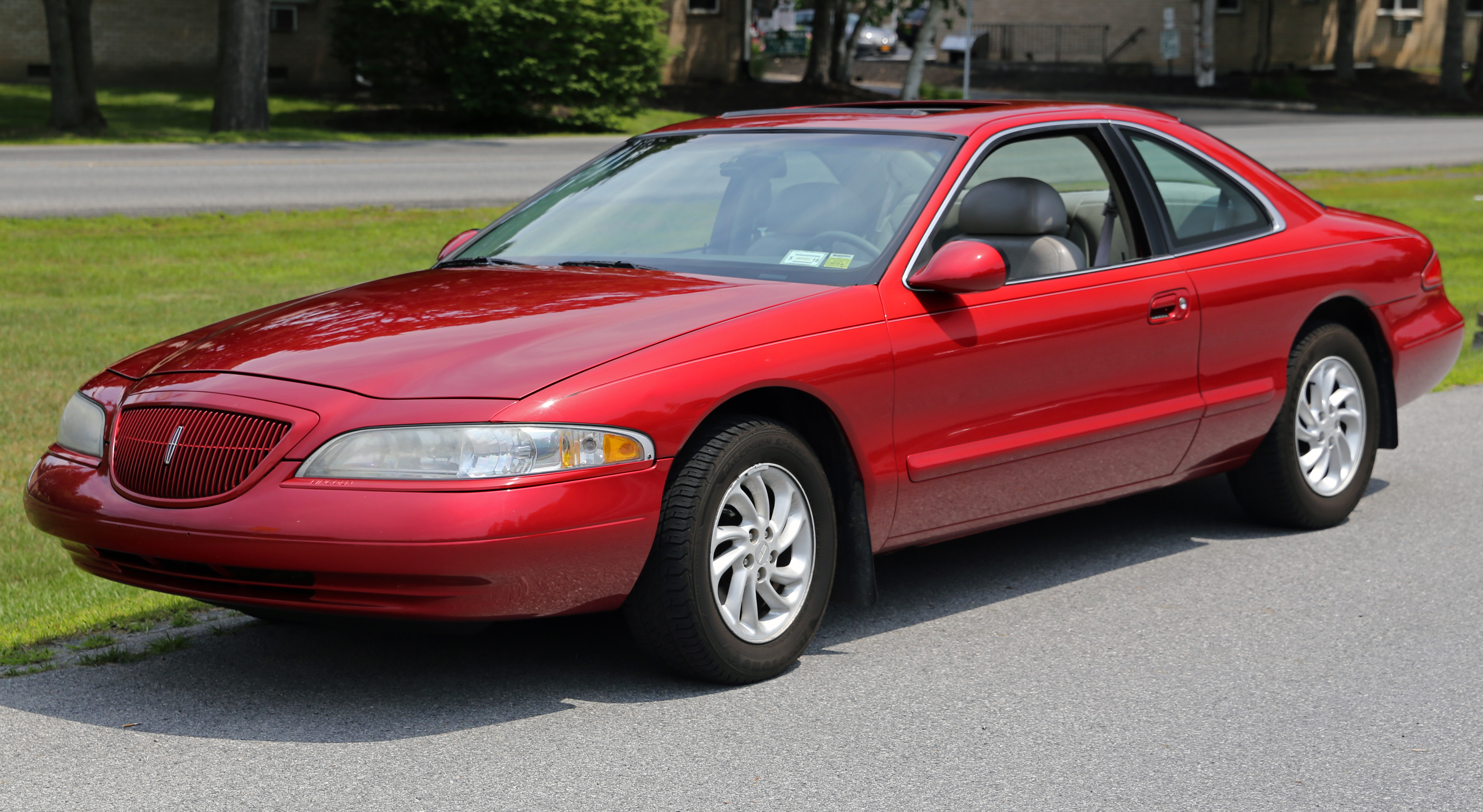
The Lincoln Mark VIII is a luxury car made by Lincoln in the 1990s. It was famous for being very comfortable and having a special suspension system that made it feel like it was floating when you drove it.
LIVE
This podcast is brought to you by Reynolds and Reynolds, the industry leader in automotive
technology. Learn how Spark AI, Reynolds Unified AI data layer, can help you unlock your full
potential by visiting rayray.com slash spark dash AI. That's R-E-Y, R-E-Y dot com slash Spark dash AI.
Welcome to this Weekend Drive edition of Daily Drive for the fourth week in January,
2026. I'm Kellan Walker in Las Vegas. We're breaking down some of the biggest stories in
the auto industry from the past week and looking forward to what's in store in the days ahead.
Joining me today are Larry Velikwet, who covers Toyota, Subaru, and Mazda for automotive news.
Larry Legend, good to have you back on the show.
Always good to be here, Cal.
And Michael Martinez, who covers Ford and the UAW for automotive news. Mike, welcome back to Weekend
Drive. Thanks, Cal. So, before we get into this week's news, Mike, you were at the Detroit
Auto Show this month. Any lingering thoughts or stories from the show or surrounding events that
are still resonating? I'd say it's the affordability crisis. And I say that's going to be top of mind
for everything we cover this year. You heard Ford's executives talk a lot about that. Jim
Farley noted the reason why Ford had its best sales year since before the pandemic last year
was because of vehicles like Maverick. You heard Stellantis CEO Antonio Filosa say they're going
to bring more $40,000 and maybe $30,000 vehicles to market. It is what everybody's talking about.
Gotcha. And speaking of affordability, let's start with what might be the theme of both 2025
and 2026 so far. Tight wallets and policy whiplash. Now, President Trump announced 10% tariffs
on eight European nations this week, including Germany, France, and the UK escalating to 25%
unless Denmark sells Greenland. He had a tense visit to Davos, but now he's backing down,
saying there's a tentative framework for a deal. Mike, as soon as things seem to be settling down,
this just becomes more chaos for auto executives trying to plan long-term investments. Now,
what are your thoughts on this? Well, I mean, this is what life is now, right? And it's what life's
going to be for the next three years, at least. I mean, I don't know how you can plan for anything
at this point. You just have to listen to what he says or tweets or truths, whatever you call it,
and wait to see if he backs down in a couple days. Half the time what he says does not last,
whatever he's proposing policy-wise, changes from one minute to the next,
so you can't really plan for it. This particular one, yeah, it was super relevant at the start of
the week, and now by the time our listeners are hearing this, it doesn't matter anymore. So
what really matters? I don't know what else to say about this other than it's how it's going to be
for the next three years. You have to take it day by day.
Now, Larry, Germany's VDA said the costs would be enormous, and then it all changed within days.
Where do you think it all goes from here? Is there any way of knowing?
Where it goes from here, nobody knows. But what I will say is that if your plans are changing by the
day or by the hour because of the changing tune of this administration, you're not doing it right.
Lay out a plan, stick to a plan, make sure your plan is flexible enough to deal with contingencies,
but don't react. Because if you react, you're going to drive yourself crazy,
and your kids, your family is going to need to see you at some point. If you're an exec at a
supplier or at an OEM right now, you've just got to lay down your plan and try to do the best you
can. It's the only way to go. In terms of the suppliers, what I would say, and we're going
to get into this a little later, suppliers have it rough because they don't have the cushion,
the margin to change plans that, say, automakers do. They live a lot closer to the best,
and they have to react. At some point, just on the off chance, it's real. They have to at least
plan. I don't know what you do if you're a supplier, but I know you're a lot closer to
bankruptcy than you were a couple of years ago. Larry, speaking of trade, Canada announced
its entering formal discussions with the US to review USMCA starting this month. Prime Minister
Mark Carney says there are tremendous benefits if they work cooperatively, but the US has a long
list of grievances about dairy, digital services, alcohol. What are you watching for? I thought
Jerry Stiller was dead, but we have now entered Festivus. We're going to start with the airing
that suppliers and automakers have banked on for decades now. If we're going to change it
in a fit of peak because somebody wants to air their grievances, I don't know what you do with that
other than to try and lobby to let people know how important USMCA is to Canada, to Mexico,
and especially to the United States, and especially to consumers in the United States
who are worried about their vehicles being affordable. That affordability issue is going
to be a theme, and it's going to be a bigger theme if something happens to USMCA.
Mike, this could reshape North American auto production. How significant is this review?
Well, first of all, I'd say, Larry, after the airing of grievances, I would pay good money to
watch the feats of strength. In terms of how consequential this is, potentially not at all,
because let's be honest, does USMCA really matter right now? Trump completely upended
trade between the three nations based on his tariff policy and his own whims.
Effectively, you could argue it's effectively rendered useless right now, that USMCA doesn't
matter. Trump, when he was in Detroit the other week, said it's irrelevant. He doesn't care about
it. He doesn't care about this review. In theory, if they don't do anything with it, they just sort
of let it ride out until it dies of whatever year in the future that is. It's a ways away.
I don't know that it matters beyond what he is decreeing online or in the White House
about individual tariffs. You're already seeing the North American market disrupted because
companies are bringing more production in-house. In many cases, they're bringing it from Canada
back to the United States or up from Mexico back to the US. You'll probably see that continue
to appease Trump in the current regime that we have, but to Larry's point, parts, still a big
part of this, still a significant part of the industry relies on parts crossing the border,
both North and South of the US. It could be consequential, but again,
does it matter if Trump's just going to change things unilaterally anyway with tariffs?
Yeah, and if you're Canada or Mexico, how do you negotiate in good faith when the person on
the other side of the negotiation apparently is not negotiating in good faith? That makes it
extremely difficult to try and get a bargain that everybody can live with. We thought we could,
we had a bargain everybody could live with the last time we did this, right?
And now we come back. Trump gets back into office, says, I'm not going to live with this anymore.
There's something I want to point out here, and it's a, I've got a column coming up on this,
but the latest CPI estimate, consumer price index estimate, very interesting
sub-fact in there. The rate of inflation for motor vehicle maintenance and repair
was double the rate of inflation across the overall economy in 2025. Now, some of that
is tariffs. It's the price of parts going up. And because those parts, those replacement parts
largely are built in Mexico and some more in some in Canada. If you're bringing in parts,
they don't have to be whole sub-assemblies to being shipped to an assembly plant.
The price of parts is going up and that's making the cost of operating an automobile
higher for everybody, especially in collision, everything else. These are,
these are big issues that are going to hit this year. And will it come to a head? I don't know.
Good stuff, guys. Coming up, we'll talk about what the latest auto industry conference index
tells us Lincoln's plan to grow despite shrinking its lineup and more. That's next on Weekend Drive.
If you're an automotive supplier and you know your team is building the next big thing,
prove it on the industry's biggest innovation stage. Automotive News is now accepting
applications for the 2026 PACE program. PACE awards recognize traditional and
non-traditional suppliers worldwide for new product, process, and business model innovation.
And entries must be innovations already commercialized through a sale to an automaker.
Still pre-commercial but past the pilot stage? PACE pilot recognizes post-pilot pre-commercial
innovations across automotive and future mobility, products, software, IT systems,
and processes with the potential to revolutionize an automaker's business.
All submissions are reviewed by an independent panel of judges and MIMA is the exclusive lead
sponsor. Ready to be recognized? Apply by February 9th at AutoNews.com.
When your AI tools are siloed, lost data, duplicate entries, and confusion are inevitable.
Spark AI isn't another AI tool to manage. Instead, it's a unified AI data layer,
changing the game by ensuring your solutions are making life easier and working at their
highest capacity. Don't miss Spark at NADA. Watch Ray, our new AI assistant, bring everything
together in one intuitive command center for smart, fast decision-making. Ray answers your
questions at any time providing instant messaging, insights, help videos, or live support. Instantly
analyze your sales history and market trends or generate a sales report with one prompt.
You can even ask which cars to buy at auction today for the best return.
Schedule an appointment at our booth for everything from a short demo to a full
retail management system demonstration using our core AI products. Visit rayray.com. NADA.
That's r-e-y r-e-y.com. N-a-d-a. Welcome back to Weekend Drive. I'm
the latest auto industry confidence index results that we released this week. We surveyed
automakers, dealers, and suppliers about their business conditions in Q4. Mike,
what stood out to you from these results? Well, I'd say the thing that jumped out to me was the
fact that dealers kind of are now more pessimistic, or at least in this latest survey, than suppliers
have been. And we know Larry mentioned it earlier in this podcast, a difficult time
they're having. And when you think about it on the surface, it doesn't necessarily make sense
because, hey, sales ended up obviously very brand to brand, but they did okay last year compared to
2024, even with the tariff uncertainty. But we're hearing from dealers who are saying that
they worry about things like overhead costs and the cost of product. Again, I think some of that
relating back to the fact that the trade policy, the federal policy is changing, vehicles continue
to get more expensive, customers are worried about that. So it's harder for them to think
that 26 will be a growth year because there's so many headwinds on the horizon, so to speak.
So that's surprising to me because I think by and large, dealers are pretty optimistic people.
And to see that now their numbers have fallen below that of suppliers,
concerning, especially as we head into the NADA show in a couple of weeks.
You know, if you think about it, right, dealers went from during the pandemic,
they had their most profitable year ever, years ever. They made money hand over fist
during the pandemic. Now, every aspect of their business is getting squeezed. New vehicles are
getting squeezed, their new sales are getting squeezed because of affordability. Used pre-owned
vehicles are getting squeezed because of a affordability and B supply, you know, attaining
supply because you're getting leftover residual effects from the pandemic and the lack of
manufacturing during those periods and the lack of leasing. And then now that that is extending in
that affordability issues extending into the service lane. And that has always been a, you
know, service profits. And if those start getting cut along with these other two pieces of the puzzle,
that portends some hard times ahead. Now, Larry suppliers were more confident about their own
company's performance, but more pessimistic about the industry overall than automakers and dealers.
That's an interesting split. What do you make of that? It's run since we've been doing a survey
that's been consistent, right? Because as you're answering this survey, you can see, you know what,
what's going on in-house. You can't really see what's going on across the rest of the industry.
If you're a tier one supplier, you hope that your tier twos and tier threes that you deal with
that supply the components that you need to make your product to send it up to the OEM,
you hope they're in good enough financial shape to get through to weather any storm.
Because a disruption there means you're disrupted and then your disruption interrupts production
at the OEM level. You have this giant web, right? It's not so much a supply chain as it is a supply
web and any disconnect anywhere in that web can stop production. We saw that during the pandemic
and we can see it again. If somebody goes bankrupt and they cease operation,
that has really, really bad consequences. Look at the aluminum fire,
which wasn't somebody going out of business. That was a natural disaster. Natural disasters
happen. You can see disruptions and now you've got this web stretch really, really thin
and suppliers are stressed. You can see why they believe they're having trouble
being confident in their futures. Well, Larry, dealer confidence dropped five points from Q3
down to 62. Affordability was the biggest challenge. Are we going to see this affordability crisis
ease up in 2026 or is this the new normal? I don't think we're going to see it ease. I don't see
anything that shows things are going to get cheaper anywhere. It's not just tariffs. I mean,
it's interest rates. You look at what happened this week with the 30-year T-note. That's going
to push mortgage rates up. That has a knock-on effect for auto lending rates. It's the wrong
time to be in debt right now. If debt is an issue, that does not portend well for dealers
because these are big ticket items and they're getting more and more expensive.
I don't know what we do to solve this. Automakers are trying to make some moves
on the periphery, doing as much as they can to try and decontent vehicles, to get them down to
a number that is maybe a little more manageable. They're trying to do things with lease
subvention to try and keep the vehicles moving. It's going to be a tough sled for the next couple
of years, I think. Mike, you spoke with Lincoln president Joaquin Nuneo-Wayland this week. He's
telling dealers to defy the odds and grow sales in 2026, even though Lincoln just shrunk its U.S.
lineup to three nameplates from four. Walk us through this. Well, I imagine when most people
tuned in today, they didn't expect to be talking about Lincoln because
Lincoln hasn't really been worth talking about quite frankly lately. Yeah, they lost 25% of their
lineup by discontinuing the Corsair along with Ford discontinuing the Escape. Think about that.
They only sell three vehicles right now. They've been going through a little mini surge. I don't
know. There are over 100,000 units now. This tends to upend that right now because I think they
sold something like 26,000 Corsairs. But you're trying to see they have new leadership with Joaquin
and he's trying to turn the page and evolve Lincoln further. We had some news a week ago
that they are splitting off from the Ford brand and moving their headquarters into the train
station, which locally, that's exciting. Anybody that's seen that building, it's a beautiful building.
It can, I'm sure, strike inspiration and be a good thing, positive thing for that brand.
He is a product guy. He's an engineer. He has an engineering background, worked at GM, Cadillac,
full-size SUVs, which is what Lincoln is specializing in right now. So he's trying to rally the troops
in this message. This is his first interview, I believe, was with us with Automotive News.
And he's saying, it doesn't matter that we lost a product, I still want you to aim to do better
than last year. And they're going to try to do that just like with what Larry said around the
periphery. Different trims decoupling certain features so it's less expensive, maybe doing new
features on things like rejuvenate, that sort of spa-like mode that has the massaging seats and
the scents and the coast-to-coast screen playing very relaxing music and images. So, you know,
Lincoln's at an inflection point right now. He's trying to keep everybody pumped up and ready to go.
I don't know if it works. I think it's a pretty long shot to say that they're going to grow
sales with one less product, but you never know. Larry Lincoln lost to Corsair, their entry-level
crossover. Nuno Weiland says they'll lean on certified prion to make up for it. Does that
strategy work? It's a stretch. It's nothing but a stretch. I don't know, no dealer right now,
no matter the brand, is having good luck trying to get enough CPO units to certify, right? Everybody
is struggling to find enough vehicles to certify for their dealers. I don't have enough units in
operation, especially if they cut the Corsair, to try and feed a CPO, you know, to grow CPO
for the rest of their dealers. I don't understand how this works. It's great to say,
go thread the needle, but you've got to have at least the wherewithal to do it and the
supplies to do it. I don't know how it works that way. I will note one thing, guys, that, yeah,
this looks pretty bleak and how are you going to grow sales with 25% of your lineup gone.
He hinted in the interview I did with him that we could see a replacement sooner rather than
later for Corsair. He said that small luxury segment is very important to the brand even
though they just cut their product. He didn't insinuate anything. This is all my speculation.
They do sell the Corsair overseas. We saw what happened with Nautilus. They moved that production
to China and they import it. Not the best decision now that Trump got back in, but they're still doing
it. Again, 2025, they grew sales. Could they do that with a China-built Corsair? It would fly in
the face of what other companies are doing. We just saw this week that Buick is moving
in vision production from China back to the US, but there could be a way for Lincoln to fill that
hole quickly and maybe have a chance to have a positive 26. You guys are saying that there's a
chance that I might get the Mark 8 back? I'm just kidding. So you're saying there's a chance?
I wouldn't rule out anything at this point, but I don't know. Mark 8's for everybody.
Do you remember that Saturday Night Live commercial where they did the bris in the back of a Mark 8?
They had a moille doing a bris in the back of a Mark 8 to show how smooth the rock is.
Hey, what are my favorites? Oh man, those things floated on air, man. Larry, Mike,
it's always a pleasure. Thank you so much for joining me. Shalom. Thanks, Kyle.
That's all for this weekend drive edition of Daily Drive. I'm Kellan Walker.
Thanks to Automotive News executive producer Jake Nier for his help on today's podcast.
You can get the latest news on trade policy, Lincoln's growth strategy,
and everything happening in the auto industry at AutoNews.com. Come back on Monday for a
conversation with Oscar Tolumshu, general manager for automotive and manufacturing at Amazon Web
Services. I think there's a lot of pressure to actually compress that R&D cycle. So how are
automakers using AI and Gen AI to accelerate their vehicle development? We'd love to hear from you.
Let us know what you think of the show and the topics we cover today. Send us an email at
DailyDrive at AutoNews.com or leave us a voicemail at 313-444-2774. If you enjoy the podcast,
remember to like, leave a review, and subscribe so you never miss an episode.
About this episode
Trade chaos and affordability dominate the automotive landscape as President Trump announces new tariffs on European nations, creating uncertainty for auto executives. Experts discuss the implications of these policies on long-term planning and the ongoing affordability crisis affecting consumers. Lincoln's strategy to grow sales despite a reduced lineup is also explored, with insights from industry insiders on the challenges ahead. The episode highlights the complex interplay between trade policies, market conditions, and the future of automotive brands.