The Toyota RAV4 is a popular small SUV that many families choose for its space and efficiency. The latest version is only available as a hybrid, which means it uses both gasoline and electric power for better fuel economy.
A hybrid car uses both a regular engine and an electric motor. This helps save fuel and is better for the environment because it produces fewer emissions than cars that only use gasoline.
The Chrysler Pacifica is a family-friendly minivan that has lots of room for passengers and their stuff. It's popular because it has cool features and is comfortable for long drives, making it a great choice for families.
The Chrysler Grand Caravan is a minivan that offers a lot of space and comfort, making it a great choice for families or people who need to transport large items.
A minivan is a family-friendly vehicle that has lots of space inside and sliding doors, making it easy to get in and out. They're great for carrying kids and their stuff.
The Hellcat engine is a very powerful engine made by Dodge. It's famous for being super fast and strong, often used in their sports cars like the Challenger and Charger.
Overlanding is a type of travel where people go to faraway places, usually in rugged vehicles, and often camp along the way. It's about the adventure of getting there, not just the destination.
The Chrysler Voyager is a more affordable minivan that still has plenty of room for families and their belongings. It's a good choice if you're looking for a practical vehicle that doesn't cost too much.
The Chrysler 200 is a type of car that Chrysler made from 2010 to 2017. It's a sedan, which means it's a car with four doors and a separate trunk, aimed at families and everyday drivers.
The Chrysler Sebring is another car that Chrysler made from 1995 to 2010. It came in different styles, like a four-door sedan and a convertible, and was popular among families.
LIVE
Hi everyone and welcome to the January 30th, 2026 episode of the Automotive News Canada
podcast.
I'm your host Greg Lason, the digital and mobile editor at Automotive News Canada, coming
to you from just outside Windsor, Ontario, the automotive capital of Canada.
Today on the show, I'm joined by Chrysler CEO Chris Fuel.
She's here to talk minivans and the resurgence of their popularity and sales.
She also discusses the future of the Chrysler brand, affordability and the brand's plan
to enter the car market.
We've got one of the largest cohort groups, the millennials, that are coming into the
parenting life stage and they are considering minivans at a much higher level than they
had in previous years.
But first, a look at some of the top Canadian automotive stories of the week.
There's been a ramp up in Canadian RAV4 output.
Toyota is dismissing tariff risks tied to Canadian production and is increasing production
of the compact crossover.
The automakers top selling North American model now in its sixth generation will be
offered exclusively as hybrid.
Toyota Motor Manufacturing Canada President Tim Hollander says the automaker is demonstrating
confidence in Canada with a $1.1 billion investment at the factory in Woodstock, Ontario.
Canadian RAV4 sales in 2025 totaled $75,573.
The automakers sold $479,288 in the United States.
Also in manufacturing news, General Motors is sticking to its plan and eliminating the
third shift that Oshawa assembly plant.
About 700 people will be out of a job on January 30th.
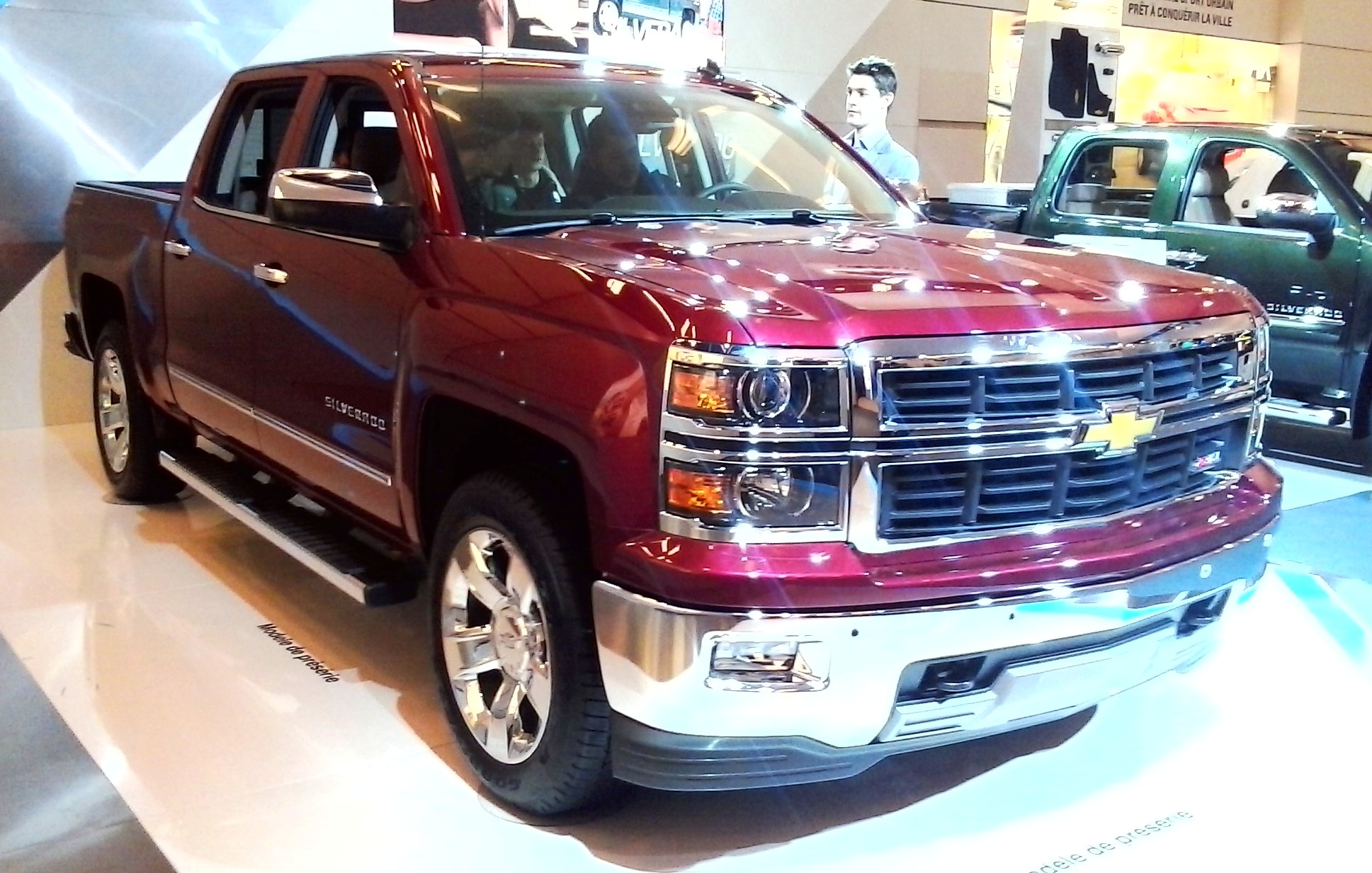
The shift reduction at the Chevrolet Silverado plant east of Toronto had been expected for
more than eight months, but GM delayed the change in September citing higher demand for
the light-duty Silverado.
But the automaker told Automotive News Canada on January 27th that no further extension
is planned.
The production of about 50,000 trucks is being moved to a factory in Fort Wayne, Indiana.
GM originally cited trade and tariff uncertainty as some of the reasons for the move.
And in retail news, Century Auto Group has added to its growing portfolio in Atlantic
Canada.
The dealership group recently bought Moncton Honda.
CEO Michael McGilvery calls the acquisition a major milestone.
He says the high volume location will likely boost the dealership group's revenue by close
to 50%.
Says McGilvery, I've never seen a store like it.
If you walk in, you see difference makers.
It's larger than anything we have.
And that's a look at some of the top Canadian automotive stories of the week.
I'm now joined by Chrysler CEO Chris Fuel.
Chris, thanks for your time.
I appreciate it.
Great.
Happy to speak with you.
Yeah.
It's good to have you.
Let's just jump right in because we're a little behind.
Chris, let me ask you, minivan sales have surged in Canada, obviously led by the Pacifica
and the Grand Caravan.
They're also up in the US.
What's going on in the minivan market in North America?
Well, the minivan segment in general has been really strong.
A double digit surges in the first half of the year and then settled into a more normal
pace in the second half of the year, but that allowed Chrysler to gain market share in H2.
And a lot of that had to do with additional support that we were providing from both marketing
and sales, and we improved our inventory position in the second half of the year as well in
both the US and Canada.
Happy to report that we retained sales leadership in the US and also regained minivan sales
leadership in Canada for 25 calendar year.
Is there something that was leading to a kink in the supply chain or in terms of inventory?
What was ironed out if that was indeed part of the reason for the resurgence?
What happened in 2025 that smoothed it out and allowed you to sell more minivans?
Well, what happened was Liberation Day, so with the uncertainty related to tariffs and
what the various costs related to the tariffs were going to be, we derated the line speed
at Windsor for a brief period of time until we got a better understanding for how the
tariffs were going to be impacting the business.
And that reduction in production for about six weeks got our inventory levels down to
about a 30, 40 day supply in Canada and the US.
And when we ramped production back up in late May, it allowed us to restore the inventory
levels to healthier levels and improve our mix and thus improve our turn rates.
Are customers moving from other seven or eight seed vehicles to minivans because they provide
the same thing, but they also provide cargo with stow and go and they have various other
options and advantages over other seven passenger vehicles.
Are you seeing any movement or shift of customers away from a seven passenger vehicle that's
an SUV to a minivan?
To a certain degree, yes.
We've got one of the largest cohort groups, the millennials that are coming into the parenting
life stage and they are considering minivans at a much higher level than they had in previous
years.
So that's really attractive.
We're also seeing a shift in demographics where we've got older buyers.
So minivans have always had a bimodal distribution of customer segments.
You've got parents with younger families and the millennial cohort is growing in size and
their consideration for minivans and then you've got Gen X and boomers who are entering
the grandparenting life stage, they're also active road trippers and minivans are a great
option for them as they're doing their road trip travels and also the vehicle has really
attractive ingress and egress and comfort level that's attractive to those customers.
We're also seeing a higher level of consideration for people who are gig economy workers.
Maybe they provide Amazon or Grubhub or DoorDash delivery services, DIY repairs like the fact
that they can fit a four by eight sheet of plywood in a minivan when all of the seats
are folded flat.
So it's a really attractive multi-use vehicle and for customers who aren't necessarily
using extreme off-road four by four performance kinds of features, it's a good value for
them as well and it's a vehicle that can serve customers who are looking for the value end
and that's where the Grand Caravan is a really attractive option for customers as well as
a fully equipped pinnacle Pacifica model which has won multiple awards for the most luxurious
interior in the minivan segment.
So we've got something for everybody.
What is the future for the minivan market and specifically the Pacifica now that 2025
and its resurgence is in the past, what do we see in 2026 and beyond?
We're seeing the minivan market continuing to maintain its current volume levels or even
growing slightly.
What we're excited to talk about is the fact that Pacifica is launching a refresh in April
of this year.
So we start a production at Windsor begins in late April and we'll start to see those
new models hitting dealer lots in May.
So very excited about that.
We'll see a fresh and exterior as well as a fresh and interior and some new technology
features incorporated in the vehicle.
So we'll be in a position to talk more about that as we get closer to launch.
Earlier this week I saw a video of a minivan with a Hellcat engine installed inside.
Obviously these are gear heads and enthusiasts that are tinkering with product that is out
there and available.
And earlier this year, Christ Brawl, I guess last year now in 2025, Christ Brawl unveiled
the Grizzly Peak concept called it the ultimate adventure minivan.
Does any of this mean there's real potential for off-road upscale performance and overlanding
badging and branding for this segment?
Is that realistic?
Why or why not?
It is realistic.
We're always looking for opportunities to tap new markets and fill unmet needs.
And Grizzly Peak in particular really hit the sweet spot when we showed that at the
Overland Expo last year.
So this is a vehicle that when we took it to the Overland Expo and talked to customers,
this is attracting a new buyer to the minivan segment, predominantly men around 40 years
old.
They said, finally, we're seeing a minivan that's attractive to me.
And why it's attractive is not only the way it looks, but the way it performs and the
fact that it can be used as an overlanding vehicle or a daily driver, and it's just very
appealing to those particular customers, and it's a much better value than a tricked
out Sprinter van, for example, that can cost upwards of $100,000 or more.
You know, this is a vehicle that we can bring to market for $50,000 or less.
In terms of Chrysler as the brand, there was a plan to make the brand all electric.
There was talk of the airflow concept coming to fruition as an EV.
What's the future for the brand now and that product roadmap look like as you and I speak
today?
Yeah, so we're definitely pivoting away from the intention of positioning Chrysler as
an all electric brand.
It's obvious that customer preferences and needs have shifted.
And also, you know, as we celebrated our 100-year Centennial anniversary last year, it's important
for us to really get back to the roots of the brand, and that's being a brand that's
squarely positioned for the mainstream market, delivering beautiful products with high-value
innovation, well-engineered with the highest of quality.
And Chrysler has always been known as a mainstream brand that delivered great value and luxury
at an affordable price.
So that's really the direction that we're moving forward in, and the refresh specific
is going to deliver outstanding value and give customers something in every price range
that they can imagine from the Voyager and Grand Caravan at the value end of the equation
to select and limited, which are squarely positioned in mid-market and then the pinnacle
trim level that is more skewed to upscale premium minivan segments.
I'm glad you brought up that affordability topic because Chrysler lacks what many would
consider an affordable entry-level vehicle, but it used to have the Chrysler 200, the
Chrysler Sebring.
In May of 2025, you told my U.S. colleague Lindsey Van Holley, and I'm quoting now,
I do feel very strongly that there is going to be a resurgence of car offerings.
Do you still feel this way at Chrysler, or why or why not?
100%, and I've been saying this for the nearly five years that I've been at Stellantis.
I do believe that customers are not only clamoring, but they're demanding more affordable vehicles,
and with our talented design team coming up with some really beautiful design executions,
both on the exterior and the interior, we're seeing really interesting executions for car-based
vehicles that have the interior versatility and flexibility of a crossover, even of a minivan.
So I think that we can provide customers with that head-turning design at a really good value
of an affordable price with the interior versatility of other vehicles in the market,
and I think that's going to pull people into an increasing mix of cars as we see the segments
evolving going forward.
Okay, I'm going to put you on the spot with the last question,
that when might we see something new that isn't a Pacifica in showrooms from the Chrysler brand?
Well, we have a lot of great new products in the pipeline.
I'm not in a position to give specifics regarding what they are at the timing,
but I have gone on record previously saying that Chrysler brand is going to enter new segments
that we haven't played in in a long time, predominantly crossovers, and also you can expect
a car offering to come from us soon.
Thanks for this, I appreciate it, Chris.
All right, thank you.
I'd like to thank Chris for her time.
If you'd like to be a guest on the show, have a suggestion or simply want to comment,
email me at glasen at AutoNews.com.
And remember, you can listen to all our previous podcasts on Spotify, iTunes,
Google Play, or on our website, automotivenews.ca.
Just scroll to the podcast hub in the middle of the homepage.
Man, don't forget you can follow Automotive News Canada on X, where we're at AutoNews Canada.
And you can find me there too under at glasen, A-N-C.
Finally, look for us on LinkedIn.
Just search Automotive News Canada.
That does it for this episode of the Automotive News Canada podcast.
We hope you'll join us next time.
So long, everybody.
About this episode
Chrysler CEO Chris Feuell discusses the surprising resurgence of minivan popularity, particularly among millennials entering parenthood. The episode highlights Chrysler's strategies to regain market share with models like the Pacifica and Grand Caravan, addressing inventory challenges and evolving consumer preferences. Feuell also touches on the brand's shift away from an all-electric focus, emphasizing affordability and new product offerings, including potential crossovers and a return to car models. The conversation provides insights into the future of Chrysler and the minivan segment.
RAV4 output ramps up; GM Oshawa cuts a shift; Century Auto expands. Plus, Chrysler CEO Chris Feuell talks about the resurgence of minivans, the future of the Chrysler brand, affordability, and the brand’s plan to enter the car market.