AI-driven features are smart functions in cars that use artificial intelligence to make things like climate control and driving easier and more personalized.
Car
VW ID.1
The VW ID.1 is a new electric car from Volkswagen that will be available in 2027, designed to be eco-friendly and efficient.
First Brands Group makes car parts like filters and brakes. They are currently in financial trouble and are trying to reorganize their business to pay off debts.
Rebestos is a brand that makes parts for car brakes, which are important for stopping vehicles safely. They are part of a company facing financial difficulties.
Fram is a brand that makes filters for cars, helping to keep engines clean and running well. They are part of a company that is currently having financial issues.
Emissions regulations are rules set by the government to control how much pollution cars can produce. They help keep the air cleaner and protect the environment.
Electric pickups are trucks that run on electricity instead of gas. They are made for carrying things like regular trucks but are better for the environment.
The Cadillac Escalade ESV is a big, fancy SUV that can carry a lot of people and stuff. It's known for being very comfortable and having lots of cool features, making it a popular choice for those who want a luxury vehicle. People talk about it because it's a symbol of wealth and style.
Car
Chevrolet BrightDrop
The Chevrolet BrightDrop is an electric van made for businesses to use for deliveries. It's part of a new trend to make delivery vehicles more environmentally friendly.
AI, or artificial intelligence, is technology that helps machines learn and make decisions. In cars, it's used for things like self-driving features and improving how cars work.
Autonomous vehicles are cars that can drive themselves without a person controlling them. They use special technology to see and understand their surroundings.
Waymo is a company that works on self-driving cars. They are known for creating technology that allows cars to drive themselves without a human driver.
Term
AI
AI stands for artificial intelligence, which is technology that allows computers to think and learn like humans. In cars, AI helps them understand their surroundings and drive safely.
EVs stand for electric vehicles, which are cars that run on electricity instead of gasoline. They are better for the environment because they produce no exhaust emissions.
LIVE
You have data everywhere, but is it working together?
Meet Curator, the automotive industry's first unified intelligence engine.
Curator unifies data from all corners of your dealership
to transform marketing, sales, and customer interactions.
See it today at GooboGoo.com.
Welcome to Daily Drive for Friday, January 9th, 2026.
I'm Kellan Walker in Las Vegas.
Today on the show, General Motors takes over $7 billion in charges
as it scales back electric vehicle production.
Volkswagen partners with Qualcomm for a long-term chip supply deal
to power its software-defined vehicles.
Aftermarket parts maker First Brands Group launches a sale process
as it navigates Chapter 11 bankruptcy.
Plus, we'll hear a piece on our live panel discussion on the CES floor
about how AI is reshaping the auto industry.
We're not even seeing half of the story or even 10% of the story as of today
because the potentials of AI are so significant.
Let's run through all the news you need to know to keep up in the auto industry.
General Motors is taking over $7 billion in charges
as it scales back electric vehicle production.
$6 billion covers reworking its EV footprint mostly for canceled supplier contracts.
Another $1.1 billion relates to restructuring its China Joint Venture.
The move comes as GM shifts a major Michigan plant
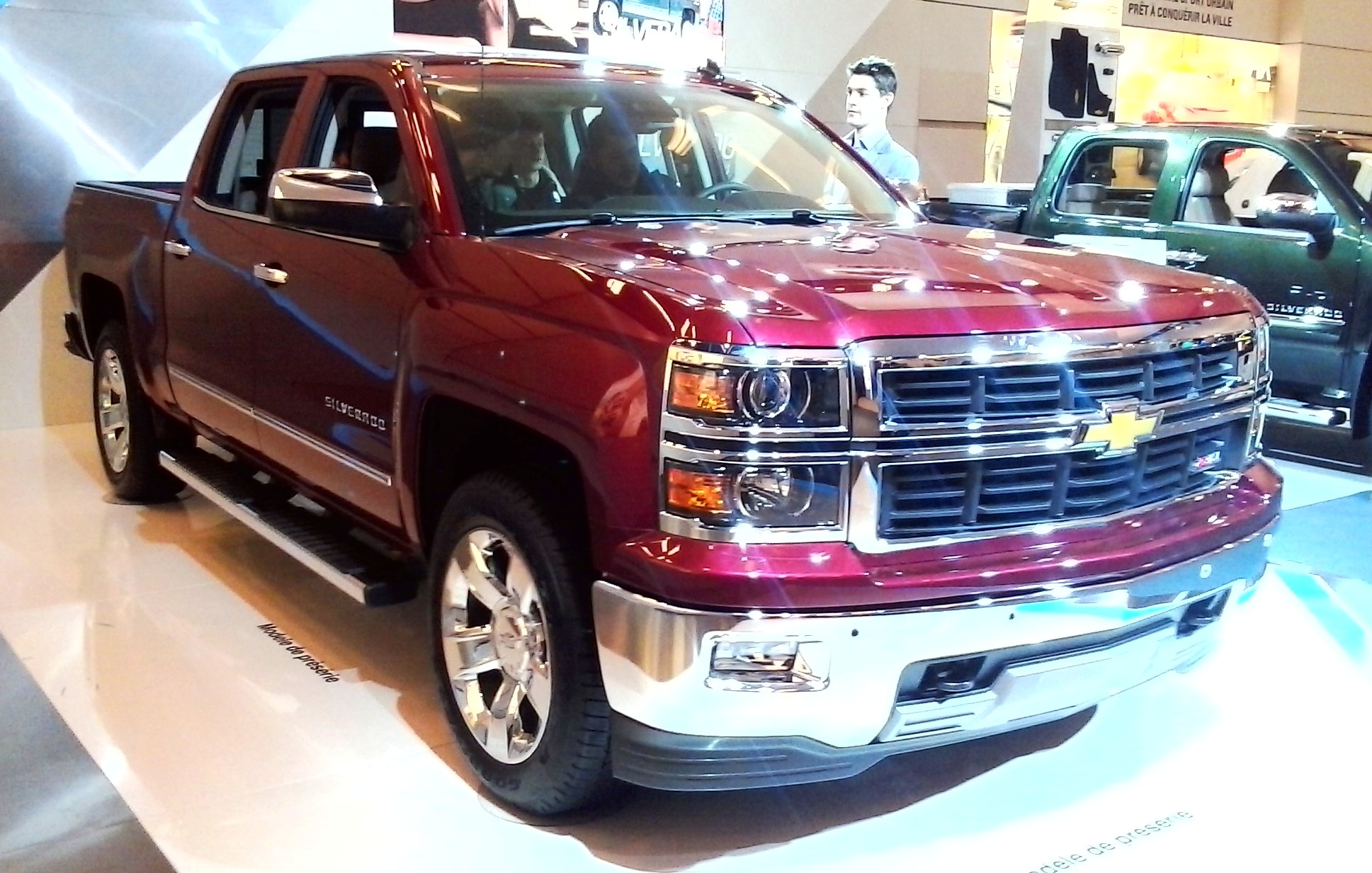
back to building gas-powered Silverados, Sierras, and Escalades
and stops producing bright drop vans amid weak demand.
The automaker expects more charges in 2026, though significantly less than this year.
Volkswagen is partnering with Qualcomm for a long-term chip supply deal
to power its next-generation software-defined vehicles.
Announced here in Las Vegas at CES,
the agreement makes Qualcomm the primary provider of infotainment
and connectivity technology for VW's new platform developed with Rivian.
The chips will enable AI-driven features like personalized climate control
and automated driving functions across VW Group brands.
The technology debuts in VW's ID-1 electric minicar launching in 2027.
VW says securing semiconductor access is critical
as infotainment and driver assistance now account
for a significantly higher share of vehicle value.
And aftermarket partsmaker First Brands Group launched a sale process Wednesday
as it navigates Chapter 11 bankruptcy.
It's marketing its business either as a whole or in parts.
The company makes Fram filters, Rebestos brakes, and AutoLite spark plugs.
First Brand will run out of cash in late January without new financing.
The bankruptcy stems from billions in debt tied to what restructuring advisors call
fraudulent factoring transactions involving fake or inflated invoices.
Founder Patrick James faces fraud allegations
and a Justice Department investigation claims he denies.
And those are today's headlines.
You can find more details on all those stories at AutoNews.com.
Joining me now to talk about GM staring down $7 billion in charges
is our own Lindsey Van Hulley, who covers General Motors for automotive news.
Lindsey, welcome to Daily Drive.
Hi, Kel. Happy New Year.
Same to you.
So, Lindsey, how should we interpret this strategic pivot
and what does it mean for GM's competitiveness going forward?
So, yeah, $7 billion is a big number.
You know, they announced ahead of their fourth quarter financial results
at the end of the month that they're going to take $7.1 billion in charges.
The bulk of that about $6 billion is related to reworking its EV production footprint.
Another $1.1 billion is related to the restructuring of its China joint venture
that they've announced earlier.
But really, I mean, the bulk of it is related to EVs.
You know, it follows a $1.6 billion charge GM took in the third quarter for the same thing.
And I think what that signals is really the changes that they're making
in production and capacity given how the market is slowing down.
You know, we all know that with the ways that consumer adoption has unfolded,
it hasn't been as fast, I think, as automakers had expected and planned for several years ago
as they were working on battery cell and EV development.
And now, especially with some of the policy changes around emissions regulations
and the end of the $7,500 tax credit, that that's slowing even more.
You know, GM talked about record third quarter EV sales right before the tax credit went away.
But, you know, they dropped 43% in the fourth quarter.
So they're looking at all of this, recognizing where the market is,
and trying to basically kind of fit their production to match what demand is.
They don't want to overbuild EVs that are going to sit on dealership lots and, you know,
require a lot of incentives and discounts in order to sell.
And so they've taken a lot of steps to try and shrink what that capacity looks like.
So one plant in Michigan was going to be retooled to build electric pickups.
It's now going to be retooled again to build gas versions of those,
plus the Cadillac Escalade SUV.
It was planning three joint venture battery plants with LG Energy Solution
and sold a stake in a third plant back to LG,
recognizing that it has the capacity it needs with two plants at the moment.
And in October, GM said it'll stop building the Chevrolet Bright Drop electric commercial van
that it was made in Canada because demand was lower than expected.
So I think GM is accounting for these changes that they've made,
and they're trying to stay competitive and focus on costs and production
by trying to match as best they can what that output looks like with where demand is.
You know, this $7 billion is a significant hit for the company.
Does this suggest the company believes the EV market just isn't going to materialize
or is this more about GM specific execution challenges?
I think it's a recognition that the market isn't materializing at the pace
that they had sort of set up for, and that's not unique to GM.
I mean, I think all automakers are having to look at what they had planned for,
what they had set up and really where adoption is.
And so I think that's what we're seeing here.
You know, when we talked with GM CEO Mary Barra back in the fall, she said,
you know, EVs remain the company's North Star.
They have not said that they're making any changes to their portfolio.
So all of the EVs that they sell from Chevy, from Cadillac, from GMC
are still in production.
They're still going to be sold, so they're not making any changes there.
They're not closing any plants or anything like that.
I think what they're trying to do now is really, you know, try and see where customers are
and build the vehicles in the supply that customers are looking for.
I think they want to be very careful that they're not overbuilding
because that creates more challenges in incentives and aging vehicles on lots and things like that.
So I think they still expect that the market is going to...
There are still people who are going to want electric vehicles.
They're still going to make them.
They're bringing the small Chevy Bolt back early this year.
It'll be on sale, so they're not backing away from them.
I think they're just trying to be conscious and mindful of how many they're building right now,
based on where customers are.
Perfect. Lindsay, thank you so much for joining me.
Thanks, Kel.
You can read Lindsay Van Hulley's reporting on General Motors at AutoNews.com.
Coming up next, we'll hear from a live panel discussion at CES featuring
McKinsey's Kirsten Heineke and automotive news reporters
discussing how AI is transforming the auto industry.
That's next on Daily Drive.
Your dealership has no shortage of customer information,
but when that data is conflicting, messy, and spread across a multitude of platforms,
it's impossible to activate properly.
As the automotive industry's first unified intelligence engine,
Curator enriches and unifies your customer data across platforms,
like your CRM, your DMS, your website, and even your marketing efforts.
It then injects that information back into your most vital systems to provide a single view
of each customer and equip your sales team with the information they need to close a deal.
When one of the largest volume Subaru dealers in the country wanted to tap into its data
goldmine, they turned to Curator.
In just four months, Huberger Subaru experienced a 55% higher closing ratio
and a return of 15 times their investment.
Want to see it for yourself?
Check out the case study at gubugu.com slash Curator.
That's gubago.com slash Curator.
Welcome back to Daily Drive.
I'm Kellan Walker.
Earlier this week here at CES, Automotive News hosted a live panel discussion on the floor
in the West Hall of the Las Vegas Convention Center.
Mackenzie Partner, Kirsten Heinecke, joined Automotive News reporters Molly Boygon and
Laurence Eiliff for a conversation about AI's transformation of the automotive industry.
Here's a piece of that discussion.
Let's start with AI.
Kirsten, how has the focus on AI at the show changed from previous years?
So I think the main change is it's everywhere now, right?
So we used to have AI sort of as a side topic.
It used to be startups talking about it.
It used to be the innovators talking about it.
And now I feel like everybody's talking about it.
And given that we're at CES, we're talking more about the customer facing applications.
You mentioned the whole notion of consumer centric thing, how you interact with the car,
how you can also integrate all of the different things you have in your vehicle and basically
have on AI assistant to go into navigation, infotainment and everything else in the car.
But we're also talking a lot at least sort of behind closed doors.
We're talking about the optimization potentials you have around AI.
I'm just coming from a breakfast where we were talking about the challenges of having AI now
as part of the development team and how you actually need to upskill your entire team.
Even people who are fresh out of university, sort of fresh out of university,
need to continuously upskill.
So I think it's everywhere.
And we've got these conversations that are very much around the consumer
and how the consumer is going to benefit from it.
But we also see massive benefits on the internal side of each company, efficiencies, that's all.
Up and down the value chain.
100%.
And Lonnie, obviously AI has played a big role this year in accelerating the deployment of autonomy
and robotaxies.
What are you seeing from the show about the use of AI and those applications?
Well, it's really interesting because I was talking to, you know, John Kraftjic from
the ex-Waymo CEO.
And one thing he was talking about was there was a time when all these 10 years ago,
all these companies were going to make autonomous vehicles and they raised a lot of money
and they spent a lot of money and they burned a lot of money and then they disappeared, right?
Waymo survived, right?
Because they took a kind of a slower approach.
And but now with AI, a lot of companies are springing up.
Even, you know, like Rivian wants to now have, you know, autonomous vehicles in the future
and the neuro because they can use AI to write the software, to have the vehicle
have perception kind of like a human.
They're recreating human perception.
You know, Tess was doing that without LiDAR and stuff, but others are doing it with LiDAR
and radar.
And I was also talking to the head of a Chinese LiDAR maker, the biggest LiDAR maker, Hsai.
And he was talking about how they're able to incorporate cheaper LiDAR because of AI software.
In other words, they have, you have the hardware and the software are working together and it's
bringing down the cost.
And he was telling me that one in four EVs in China have LiDAR.
Even a simple LiDAR that's looking out ahead of you could slam on the brakes if it's dark
or if the sun is coming in your eyes, which is a very common scenario for car accidents,
somebody hitting a pedestrian.
And so it's just amazing.
Like, you know, we were talking about earlier, it's like AI is everywhere.
And it's just enabling all these really interesting things in the in the car space
and the robot space and the robot taxi space.
It sounds like it's sort of able to fill the gaps that had been dogging the industry for so
long with deployment of some of these technologies.
At the same time, there is a question that you hear and read about, are we in an AI bubble?
Is the influence of AI overstated or overvalued?
Kirsten, I'd love to hear you answer that question.
So I guess we're only going to find out in a couple of years if this is a bubble or not.
What I do believe is we're not even seeing half of the story or even 10% of the story
is what we're seeing as of today, because the potentials of AI are so so significant.
And if you just think about the capabilities of a tool like chat GPT, how that's improved over
the last couple of generations compared to what it was five years ago, two years ago,
and how quickly it's accelerating now.
And I think we're going to see that same development happen also over the next couple
of months and years.
And I do believe that while it might be a bubble in some cases and while maybe some
of the investments are a bit sort of overdoing it, nonetheless, I do believe that we're only
seeing 10% at least of the potential.
So there is definitely much, much more to come.
More to come.
The thing I would add is just I've heard some really skeptical voices who say like there's
this incredible hype machine that in two years your car will drive you around and you'll be in
backseat, that robots are going to be building everything.
And not just Elon Musk, who's kind of at the forefront of these kind of wild predictions
or ambitious predictions, but also other people in the robotics space.
And some of the people I've talked to says, wait a minute, it's going to take longer.
It's going to be a process like the Waymo process.
Little by little, it's going to be incremental.
There's a lot of really hard things to figure out.
So I just, I do hear some skeptical voices saying be careful of the hype machine.
Yes.
And if I may comment there, I think especially for autonomous driving and robotex, right?
You're 100% right in saying that AI is accelerating many new companies and it's also
making it much, much easier to get to a solution very quickly.
Nonetheless, the safety of all of the systems still needs to be ensured.
You still need to make sure that these vehicles work perfectly well.
And that's what I like a lot about the Waymo approach.
I think they could have scaled much, much faster if you think about how much technology
leadership they have, but they took a cautious approach, which I think is good,
because we need to make sure that the public also accepts the technology and that they
don't freak out about any potential accidents that happen, because obviously accidents are
happening and aren't going to happen just by scaling up the number of vehicles out there.
But the safer we make it and the more time we give it, I think this is the right strategy.
Yes, I think.
And in terms of that public safety and public trust approach, I wonder if you see
that as a part of the conversation at CES, because I agree that that's important,
but so much of the show is about the technology and you mentioned Waymo as having this kind
of disciplined approach. Do you think that that's being echoed across the industry,
or what is being done to kind of facilitate that consumer trust?
I think so. I mean, we're having these discussions almost on a day-to-day basis with our clients,
because now take robotexies again. I think with robotexies, we're now at a point where we show
that the tech is working. We also show that the economy, the economics are starting to work.
So now we need to scale it. And what does scaling mean? Scaling means you're always going to find
thousands, a million adopters somewhere globally that love the tech and are doing it for it.
Take the Waymo users in the valley. Obviously, these are all people that love the tech and
they're very open to it. But if you want to convince not only the folks in the Silicon
Valley or in San Francisco, but also the folks somewhere else in Europe, in the US, doesn't
matter where, you need to make sure that you include the public in the dialogue. And I think
actually you mentioned some of the companies failed, right? Some of the companies failed because
they didn't do a proper job in getting community buy-in and making sure that everybody's involved,
right? And that's why we need to have this dialogue and why it's very important not to get to a
thousand vehicles in a city, but once you want to get to 10,000 vehicles, 15,000, 20,000 vehicles,
and get it to a scale like Uber or other right-hailing players are today, we need to do that. And
we're having these conversations. And speaking of Uber, what were you going to add to that?
I was just going to say, in addition to the race for robotexies, like for the technology and the
deployment, there's a race for funding. And so I think sometimes we hear there's going to be this
and there's going to be that because these companies need money, need a lot of money to do this. And
there's a lot of competition in the space. I mean, in Silicon Valley, how many AI startups are there?
I mean, I have no idea. It's probably in the thousands. And so I think that that's part of the
hype. I just want to make that comment. I was in San Francisco last year and in driving to the
airport, as you know, Lonnie, there's billboards everywhere for everyone is an AI hyperscaler,
whatever. It's very popular industry right now on the on the robotexie side. So Lucid,
Nero and Uber have been talking about their partnership at the show. Lonnie, why are they
joining forces? And what what does it say about the state of robotexie development?
You know, I think there's a there's a really interesting case for Tesla, right? Just like
with EVs, where they built their infrastructure from the ground up, they built it in a bubble
and they had all the elements there, the charging, they're also doing that they make cars, they have
the software, they've been working on FSD for 10 years. So in the case of like Nero, Uber,
and Lucid, Lucid makes the cars, right? Because Nero and Uber can't do that. Nero,
which is an outgrowth, I mean, it has founders from Waymo, right? They're going to create the
software, the Nero driver and then Uber has the platform. So because they don't have all the pieces,
they're coming together and you're seeing a lot of those, you know, collaborations, you know,
right now Rivian says they're going to do it on their own, but we don't know, maybe they'll
collaborate, maybe they'll bring Volkswagen in because you know, there's money and volume scale
there, right? And so I think these companies are trying to bring together the different elements,
the funding to make it happen because it's complicated. You can watch the full recording
of our Congress Conversations live stream from the floor of CES on the automotive news, LinkedIn,
YouTube and Facebook pages. That's Daily Drive for today. I'm Kallen Walker. Thanks to automotive
news executive producer Jake Nier, as well as our own Lindsay Van Hully for her reporting for
today's podcast. We also had reporting from Douglas Bolduck of our sibling publication,
Automotive News Europe. You can get the latest news on AI and automotive, GM's EV strategy
and everything happening in the auto industry at AutoNews.com. Come back tomorrow for our weekend
drive episode. Our own Molly Boygon and Jerry Hirsch break down the biggest takeaways from CES
2026 and discuss the week's other big news stories.
We'd love to hear from you. Let us know what you think of the show and the topics we cover today.
Send us an email at dailydrive at autonews.com or leave us a voicemail at 313-444-2774.
And if you enjoy the podcast, remember to like, leave a review and subscribe so you never miss an episode.
About this episode
General Motors faces a significant $7 billion charge as it pivots from electric vehicle production to gas-powered models, reflecting a slowdown in EV demand. Meanwhile, Volkswagen partners with Qualcomm to secure chips for its software-defined vehicles, emphasizing the importance of AI in automotive tech. A live CES panel discusses AI's transformative role in the industry, highlighting its potential for enhancing consumer experiences and operational efficiencies. Experts debate the future of AI in automotive, addressing both optimism and skepticism about its rapid integration and the challenges of public acceptance.
General Motors takes over $7 billion in charges as it scales back electric vehicle production and shifts back to gasoline-powered trucks. Volkswagen partners with Qualcomm for chips to power its software-defined vehicles. Plus, insights from CES 2026 on how artificial intelligence is transforming the auto industry with McKinsey’s Kersten Heineke and Automotive News reporters.