Hello and welcome to another episode of the Autobire's Guide podcast.
Today, we're going to be talking about Ram's V8 return.
We're going to be talking about the new Model Y performance, what
we're driving this week, and, of course, taking a deep dive
into the death of the EV tax credit
and how you might still be able to get one
after the end of September.
So Travis, it's been a hot second since we've seen each other.
Yeah, I mean, been on the road, running around.
I worked in some camping this weekend.
It was about 100 degrees.
That was a lot.
But before we dive too far into this,
I want to ask we've gotten this request a couple of times
and I'm home for a whole week.
And I want to dive in, do some research,
and put some stuff together for the folks who want to know
the best way to buy a new car or a used car.
So for all of our listeners, call in, email us, leave comments.
Let us know what you want to know specifically
about the car buying process.
We will try to work that in for our next episode,
which would be how to buy a new car.
Yep, and you can email those voice clips to
heyatautobiresguide.com and you can call us
on the regular old telephone at 669-842-1947
regular toll rate supply.
Just work your way through the voice message
and leave your comments after the beep.
Please and thank you.
But yeah, it's been running around like crazy.
I've driven some cool stuff in the last couple of weeks.
Right now I'm driving a Tacoma trail hunter here at home
and I do feel like I'm driving a Tacoma complete
with the entire Toyota accessory catalog.
But it does speak to me in a way
that does kind of annoy me.
Have you found the trail or are you still hunting?
Still hunting, still hunting.
But I've got all the lights I need for it.
I've got the fog lights that are either yellow or white.
I also have the light bar,
but you have to know how to get to those different things.
But I've got everything I need, I feel like.
Did you make sure and get your hunting license?
I hear that up there in the liberal Pacific Northwest
that they're gonna get ya if you don't have your license
and you're caught hunting.
Mine is expired, so I'll have to be very careful about it.
Oh no, oh no.
And are you bow hunting or rifle hunting?
The bow season.
I'm trail hunting, Alex.
What are you using to hunt this trail down?
The trail hunter.
But you gotta kill it.
No, I'm just hunting it.
Okay, okay, okay.
Bow hunting season has expanded
versus rifle hunting season.
So you gotta a few more days
if you wanna go that route.
How much time do you wanna give me off
so I can go bow hunting for these trails?
I don't think the answer's a lot.
So I think that's probably not the route for me.
It depends on what kind of new drives you have coming up
that you have to cover.
So.
That's very well.
I just got back.
So I got back from a Ram 1500 V8 event
and hopped in a hybrid Tacoma.
So that was an interesting juxtaposition
but the V8 Hemi is back.
Did you protest?
Well, there's a symbol for the protests
and there is plenty.
I expect a full line of merchandise coming
with this symbol to protest.
And here's the thing.
I really like the emblem, right?
The badge itself is super cool, right?
It's basically the straight piped V8 block
with the ram head on top of it.
And it looks fantastic.
It just doesn't need to be the symbol of protest.
That's kind of where you'll ask me because.
Especially when they're protesting themselves.
They decided to not make the V8,
put it in that truck anymore,
brought in I think some great hurricane replacements.
Even the standard output has more power
than the Hemi does.
And then they brought it back and now they're protesting.
Yeah, we'll kind of leave that one.
But that was interesting.
For the record, if you love V8s and I love V8s, right?
I own one.
Yeah, no, I own two at the moment.
I own one.
Yeah, love V8s, nothing wrong with them.
But ram is the one that canceled it.
Nobody made them cancel it.
I know that there's a lot of weird rumors going on
on the online formers about,
I don't know, Nancy Pelosi arm wrestling someone
or something, but no, ram was just like,
hey, we have a brand new engine
and we're going to build only one engine
so we can reduce our complexity.
And they're good engines.
It's a good engine.
They didn't say, oh my gosh,
we can't build this thing anymore
because of all these standards.
And here's an engine.
And it's a hybrid four-cylinder.
Good luck.
They put together a really nice engine.
Yeah, I mean it's standard output and a high output.
And now we're protesting them.
If you want to tow heavier loads in a hilly area
like I do, you want the V8.
If I bought a ram 1500,
I'd probably buy the V8.
So full disclosure there,
but it's the reason for its cancellation
was not government legislation.
It was not liberals in California.
It was Ram.
Ram decided, let's not have a V8 anymore.
But if you want the V8,
you have to pay $1,200 more
than this standard output hurricane engine,
which is, it ended up being like 2895.
If you start with the standard V6,
and then if you have the standard output
as standard is 1,200 on top of that.
If you get the high output,
don't worry, no charge.
And that only applies to the limited longhorn, I believe.
Right, because the top, top trims,
you can't get the V8.
Right, so you'll be able to get it in the Rebel later.
So that'll be coming.
And honestly, that might be one of the coolest applications
of it, at least for me.
But the RHO and the tungsten
is still going to be that high output hurricane only.
But I, again, I just have a hard time understanding
why you'd pay $1,200 more for an engine
that's less powerful.
I recognize that it sounds really good.
And Ram says, and I hadn't kept track of this,
but Ram says that it's coming in cheaper
than it was as an option when it left,
because the hurricane engines are less expensive.
And then obviously this is built on top of it.
And it comes standard with the Sport Exhaust,
which does sound really good.
But they also now have,
and I didn't capture this for the video.
So this is exclusive for our podcast listeners.
But they now have a Magnaflow exhaust.
So a partnership with Magnaflow for the hurricane
to make that sound a little bit better.
Yep.
The main reason you would want the V8,
full defensive of the V8 here,
the main reason you would want it
is if you are doing a lot of towing
in mountainous areas or hilly areas,
because the inline six engine
cannot keep a heavy trailer under control
speed-wise going downhill.
It just cannot happen.
So in my area, for instance,
I'm always towing from sea level
up and over 2,200 feet down to where I live
and then the reverse on the trip back.
And the EcoBoost engines in Ford's lineup, same problem.
The 2.7 liter turbo in the Chevy lineup, same problem.
The turbos in the Chrysler lineup, same problem.
If you have 8,000, even 5,000, 6,000 pounds
on the back of your truck
and you're on a steeper hill,
that engine does not have the engine braking
to keep that trailer at a specific speed.
So you are left writing the vehicles brakes
and the trailer brakes importantly.
And remember that trailer brakes
don't have the cooling capacity of your vehicles brakes,
your tow vehicles brakes.
So you could get to a situation,
especially on the Continental Divide in Colorado
or going up and down to Tahoe in California
and down the backside in Nevada,
where you could experience real brake capability loss
before you've reached the bottom of the hill
if you're in one of these vehicles.
Which you obviously do not want to do.
But my question for you Alex and your vehicle,
right now is the only vehicle you own, your Durango?
We have the Grand Cherokee and the Durango.
Well, the Grand Cherokee is.
And then the company has a few cars
that we're talking around here and there.
So your vehicle is what you use for everyday stuff
and you do a lot of towing with it.
And I know you do a lot of towing
pretty heavy towing.
In your situation, which is hilly, but not expansive,
I think, would you think that it's worthwhile
to get the V8 in your application?
Because yes, you do quite a bit of towing,
but you're not towing every day.
You're not towing up those particular grades,
that sort of thing.
Is it still, hey, I'm gonna get the V8
because I'm still worried about my brakes
or just trying to be.
I still would because if you really do have
a 10,000 pound trailer on the back
and we'll routinely tow right up to
and just over the tow limit of the Durango.
So 9,500 pounds, 10,000 pounds,
something we do relatively often.
And we do tow at least monthly with loads like that,
just the random projects that we've got going on
and taking equipment here, taking equipment there.
And in those situations, when we have done
those same towing tests with an F-150 hybrid,
for instance, or the Silverado 2.7 liter turbo,
just on highway 17, when you get to the bottom of the hill,
you're definitely smelling trailer brakes
by the time you get to the bottom.
And so you know that even though
the trailer is still responding properly
and you could still stop in an emergency,
how much longer is it gonna take to stop?
And the answer is not zero.
It will take longer to stop.
You're compromised, yeah.
And you do a lot more towing than I do.
So I just want to ask in your situation.
But some fleet customers may be interested in the V8
for various fleet reasons as well,
which is probably why in this lineup,
as well as in the Ford, we see the V8 in the base trims.
And one thing that honestly caught me off guard,
Ram said that 40% of the customers
would look towards other brands
if a V8 was not available.
And that was a shocking number to me.
Now, that doesn't mean
that they would never purchase another option.
They're just saying, hey, if you don't have a V8,
we're gonna go look elsewhere.
It doesn't mean they're gonna buy it.
Maybe they drive those hurricane engines
and they go, oh, these are actually pretty good.
But yeah, 40% is a pretty big number.
But talking about towing capacities,
on the flip side, not this week, but last week,
I was looking at hybrids.
And one of those hybrids came in
with actually a pretty substantial tow rating,
3,500 pounds for a hybrid.
And that was on that new Jeep Cherokee.
Yep, that was kind of surprised by that.
It's not that you can't tow
heavier amounts with a hybrid.
It's just that generally speaking,
most companies don't bother designing their hybrids for it
because the average customer does not tow that frequently
including in pickup trucks.
Just one quick comment on that one before we forget.
So Ram did say that they expect initially
about 40% of sales once production's fully a back online.
About 40% of sales initially to be the V8 engine,
but they expect that to drop down
closer to the 25% mark.
And apparently the F-150 is currently running
between 20 and 25% depending on
the quarter and the month V8 share.
So that is probably rational.
I think that the Ram customer, it's possible
they may be more inclined to the V8
since historically the Ram has been V6 or V8 for so long
rather than their V6,
rather their inline six turbo rather.
But the interesting thing here is that every single year
that F-150 has been on sale in this generation
with the EcoBoost engines,
EcoBoost has taken an ever greater share of sales.
The numbers back from 2023,
it was about a third of F-150 sales were V8
and now we're down to about 20%.
Yeah, that's a significant drop.
And I do think that's gonna be one of those,
hey, why don't you try it before you buy it?
And that might even just be what's available in the lot.
So, hey, we don't have that V8 in that trim.
Why don't you go drive this trim?
That one has the EcoBoost.
And that's when someone goes, oh, okay.
Well, this isn't so bad.
But like I said, those Ram folks might just be going,
hey, I haven't had it, I'm gonna replace mine.
Or here we go, I'm gonna trade in my hurricane,
I'm gonna get my Hemi.
And then after that,
it might settle back down a little bit.
Yeah, I mean, I know this is gonna be an anathema
to people that live in Texas or some people,
my family members.
But if you are in Texas, even if you tow,
I'd get the inline six.
If you live in an area that's relatively flat,
I know there's a hill country,
trust me, compared to the West,
it's Texas lump country,
because they're like speed bumps to me, right?
Sorry people.
But I have a lot of family that live in hill country
and they're like, we have hills.
And I'm like, hills are like 2,000 feet
and the mountains are like 10,000 feet.
So no, you don't really have any there in Austin.
There are higher elevations in Texas,
just not there in that area.
But at any rate, if you live in those areas,
just get the inline six
because 550 horsepower does not happen out of that 5.7.
It's a lot of fun.
People point to the fact that like,
oh, well, you know, it's an inline six,
but it's not more efficient.
No, it's not more efficient
because it's making 550 horsepower.
If it was making power outputs
that were similar to the V8,
it would be more efficient.
And that's what we see in the standard output.
Exactly, a 410 or 420 horsepower versus 395.
So I mean, just the numbers are there.
It's more, but yeah, I don't know.
It's just, it was an interesting juxtaposition,
but then also like I said,
the last week I was looking at two hybrids.
I was looking at the Sportage Hybrid
and then a quick look at that Jeep Cherokee Hybrid.
And those are also two very-
Sportage or the Sportage.
Sportage, I'm gonna go Sportage.
You can do whatever you want with that.
But you know what?
I think this one might be a Sportage because...
Is it posh?
Well, SX Prestige is what we're driving.
Apparently the SX Prestige says over 50%
of the hybrid units.
So over 5% when you go hybrid
are going with the SX Prestige.
So top of the line.
And that was kind of shocking.
So yeah, a little bit posh,
but also the front I think got a little bit boring.
And I put it out in the video
and the comments, some of them were with me.
I was kind of surprised
because I know you aren't the biggest fan
of the Sportage front end.
I didn't like the old one.
Yeah, and I'm not saying I loved it,
but I certainly didn't hate it
and it was sort of different, sort of unique.
And now it just seems a little bit bland.
And so I guess we could call this the Sportage
because it's gotten just a little bit posh
and lost some of its edge, I think.
But still nice and attractive
and the rest of the body is pretty much the same.
And the interior now has the dual 12.3 and screens.
And it's certainly nice to drive.
It's very comfortable.
I'm really curious how that Jeep Cherokee is gonna drive,
but we are going to have to wait on that one.
Yeah, I won't say that the Sportage got beat
by an ugly stick previously, but it was real close.
It just didn't look right to me, the boomerang-y things.
And it didn't really go with the other Kia models either
somehow, so I think this new one's more cohesive
with the lineup.
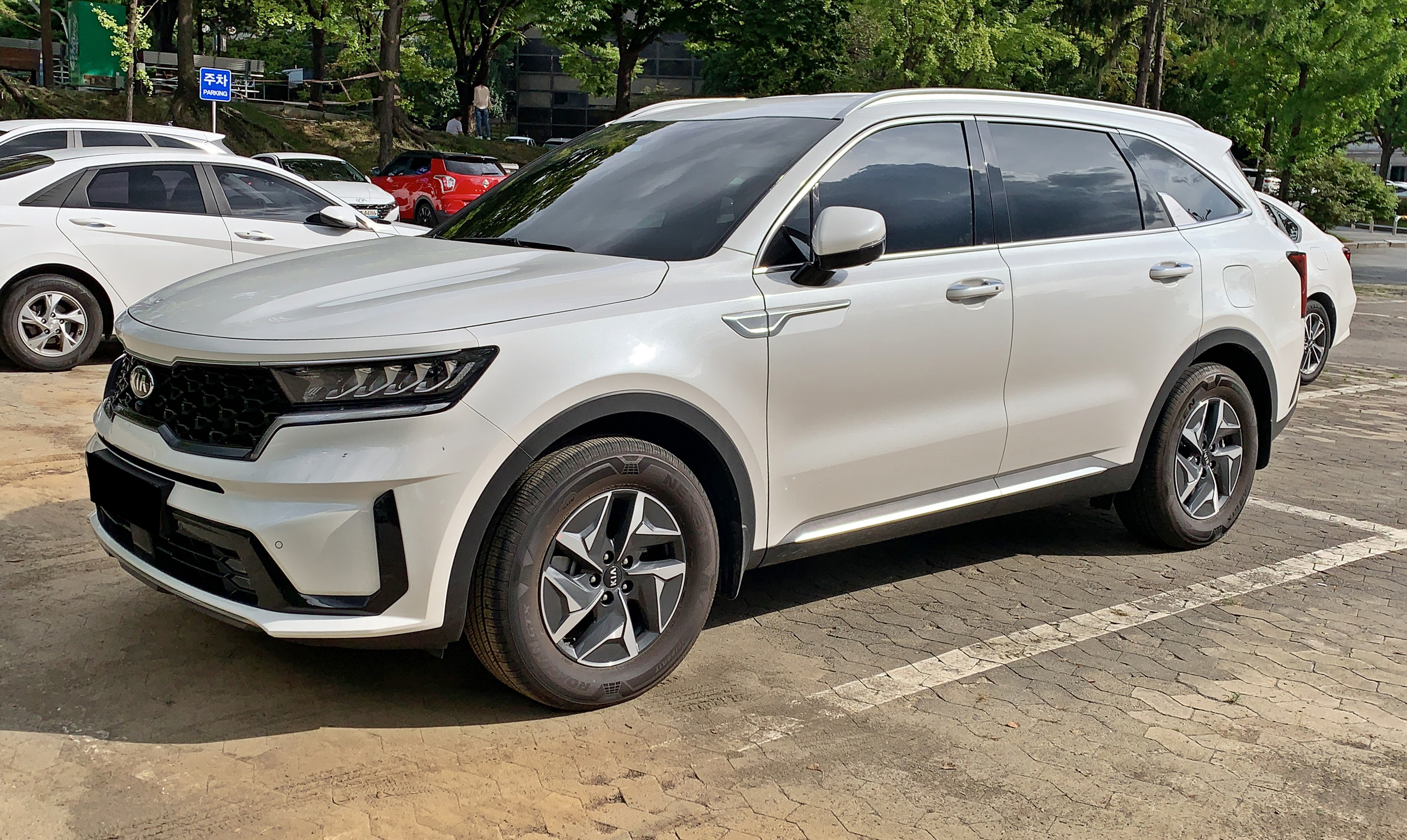
It looks a lot like a Sorento in a corner,
that's for sure.
The best part of the Sportage always for me though
was I liked the interior
and at least when you're inside,
you can't see the outside from the inside.
So that's what's saving grace.
Problems that solve themselves.
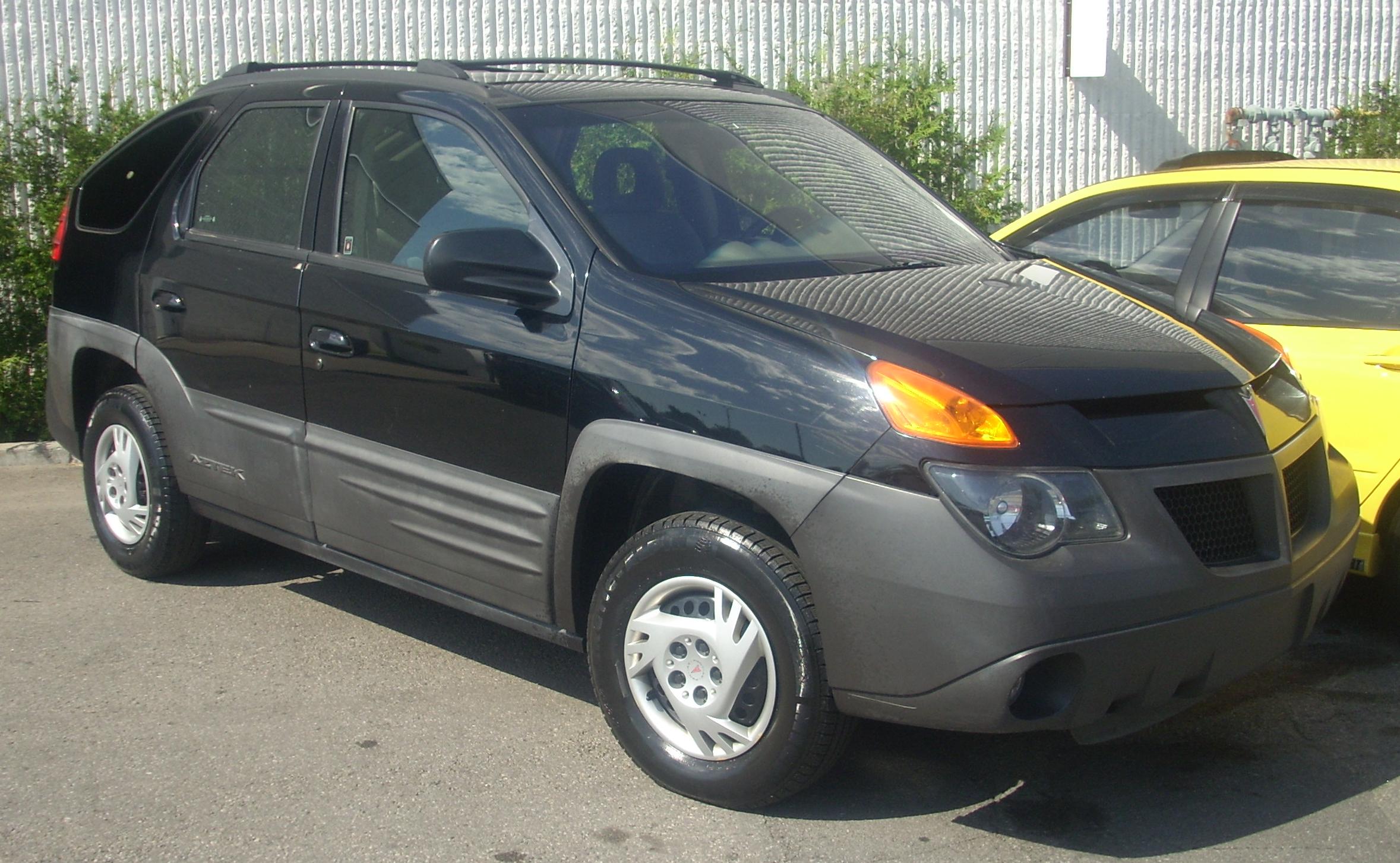
Yeah, kind of like the Pontiac Aztec and the vibe
and lots of other things.
The vibe, huh?
Okay.
Didn't like the vibe somehow, was not vibing that one.
So Cherokee, yeah, I'm intrigued.
If you are a listener or a viewer
that has not seen the new Jeep Cherokee,
run out and check that out.
All rumors to it being renamed,
nope, that's not happening.
It is, the Cherokee name is back.
And it is not the Cherokee that I think
a lot of people wanted it to be.
Give me a second.
I don't know why they didn't change the name.
I don't know why we didn't go with a compass
or a Liberty or just something.
We have a compass already.
Well, I know, but you could use a nameplate
that has existed in the lineup and not use Cherokee
because this isn't a Cherokee.
And also, one of the questions
when they quit using Cherokee was the questions of,
should we stop using the name of an Indian tribe
who didn't really give us the go-ahead on this one?
But this is not a Cherokee at all.
And the old Cherokee was kind of over-engineered.
It did different things that it honestly
probably didn't need to do.
This one I think is more practical, but less capable.
And I think that's actually gonna fit perfectly
in the lineup because you can now have a 2G household
where one is your Wrangler, your four-door
and one is your Cherokee.
And then actually you drive the Cherokee everywhere
but you take the Wrangler for adventures.
But see, I actually would argue
that this is a real Cherokee
because the Cherokee has always been that.
Yeah.
And I know that I'm probably gonna have a fatwa
out on me now, but here's the thing
because back when a fatwa, you know?
Ooh, no.
We're not supposed to say that anymore?
I don't even know what that means.
Let's see what the definition is.
It's a non-binding Islamic legal opinion or decree
issued by a qualified religious scholar or Mufti
to guide Muslims on religious, moral,
and ethical matters according to Sharia law.
Okay, yeah, I learned something today.
Anyway.
There we go.
They're gonna say, naughty, I have been expelled.
Anyway, moving on, let us know if that was inappropriate.
I don't know.
Anyway, Cherokee has never been the most capable thing.
And I know that people wanna think back
on the original Cherokee and say,
but yeah, but it had a two-speed transfer case
and you could lock it and this and that and the other.
But remember what world that Cherokee existed in.
It existed in a world of body on frame SUVs
and the Wrangler existed still.
So it's not like Cherokee came first
and then Wrangler was created.
We had the classic Jeeps of the war Jeeps turned into
the Wrangler over time, et cetera.
And it was in that world that Cherokee was born
as arguably one of the first crossovers.
And I know people hate it when we call grand Cherokee
and Cherokee crossovers,
but you know what, they are the OG crossovers
because they were unibody vehicles
that were designed to be better driving
than the body on frame SUVs of that era.
And yeah, Cherokee had solid axles
and it wasn't great to drive versus a modern vehicle,
but compared to a Wrangler of its era,
it was definitely better compared to the other things
of its time, Bronco, et cetera.
It was the rational, practical,
easier to drive lighter weight thing.
And I would argue that Cherokee is that exact same thing
because if you want something more capable,
there's grand Cherokee or there's four door Wrangler.
You know, so we have size, by the way,
the four door Wrangler and the Cherokee are the same size.
Yeah, exactly.
So in a way, as sad as I am about some of their decisions,
bearing in mind that we don't know the full lineup
of Cherokees yet,
because there's probably gonna be a Trailhawk versions,
following me other versions, right?
There was mention of Trailhawk in a little presentation
and curious what that would be, but yeah.
It could always resurrect their two-speed transfer case setup.
It could resurrect some of these other things
that we don't see yet,
but launching Cherokee with a hybrid system
makes a lot of sense
because what's the best-selling thing in America?
It's a RAV4 and for 2026, it is all hybrid.
2025, it was huge hybrid percentage,
but for 2026, all hybrid, CRV, about half hybrid.
So that's the world that Cherokee needs to compete with.
It does it in an interesting way
because the internal space is not radically different
than you find in those competitors,
but it is a little bit bigger, certainly boxier.
The fuel economy numbers are interesting, 37 combined,
but it's 41 or 42 city and 33 highway,
and that's 100% gonna be the boxing nature of it
and that little 1.6 turbo working a little hard
at those higher speeds.
And the mechanical all-wheel drive system
help hurt some of the highway.
Yeah, and it's probably not something
I would worry about longevity,
but I am really curious
because that's a powertrain I've never driven.
It exists, it's already out there in Europe,
but we're getting for the first time here
and they're building it here, which is kind of cool.
So a new powertrain coming over to the US.
Yeah, we should dissect that a tiny bit
because it's interesting because there were some concerns.
I'm not gonna dismiss people's concerns
on reliability, longevity, et cetera,
because Stalantis has not had the best track record,
but this is not-
It's hard to ask the question.
Yeah, fair to ask the question.
This is not an all-new drivetrain.
The average owner's probably not gonna own it long enough
for it to be too much of a concern.
So this is more of a problem for lease returns
and secondary market buyers going forward.
But the good news is this is not an all-new drivetrain.
They might wanna call it that.
It is a warmed-over Prince engine,
so the Pujo-Satrone side of Stalantis,
the French side,
that had the 1.6-liter engine for a while.
It was even used by BMW for a while
on the mini lineup and a few other things.
And this is sort of a next-generation version of that
because they took the opportunity
when they moved production to Michigan,
so it's gonna be built in Dundee.
When they moved production there,
they took the opportunity to revise things
and modernize whatever they wanted to modernize
on the engine.
So it's related to but not exactly a Prince engine.
And the transmission, by all appearances,
is related to but not exactly the same
as the one that actually is what we're driving this week here,
the Pacifica plug-in hybrid.
So it is basically the same design as the Chevy Volt
and Chevy Malibu, the Ford hybrids,
the small hybrids like Maverick and Escape,
as well as Toyota's RAV4 and the Prius,
basically the same general design theory of operation
and all those patents for all those companies
are licensed from Pace.
So Pace is the company that actually holds the patents
on how a planetary power split hybrid system works
and all those manufacturers license that back from them.
So this is a quote-unquote Toyota style hybrid
because they're the ones that popularized it,
but it's not like they're licensing it from Toyota.
They're not, you know,
Eisen has no hand building of this particular system.
But functionality-wise, the expectation is
that it should drive and feel very much like a Ford Escape,
a Ford Maverick or a RAV4 because fundamentally
it's the same kind of hybrid.
Yeah, and that's certainly not a bad thing.
Yeah, it's mechanically very simple.
There's one planetary gear set, two electric motors
and that's it.
If you want to go backwards,
it just turns the motor backwards.
There's no reverse gear.
Very, very mechanically simple on the mechanical side
where Stellantis has struggled in the past
and again, hope that this is an improvement
over what we saw in Pacifica.
But where Stellantis had struggled in the past
was some of the electronic control systems
in Pacifica plug-in hybrid.
They had a few recalls.
It seems like they have become more reliable over time.
I know a decent number of Pacifica plug-in hybrid owners
that have had either no problems at all
or just very minor problems like the, you know,
basically they get recalled,
the car was gone for, you know,
week to a few days and comes back and it works fine.
So I'm not overly concerned on that front.
I am more intrigued to see,
is anybody interested in it?
Yeah, is it gonna be enough for people to really take pause
or are they going to say,
oh, there's a new Jeep and oh,
it's got really great fuel economy
and oh, I went and drove it and it feels good,
off we go, you know?
Yeah.
Honestly, it'd be one of the few Jeeps
that I would look at
and that's because it would fit in my life
probably better.
And I think the space works.
And it does still feel like a Jeep inside,
but I don't expect we'll see a passenger screen.
So that's also a plus.
Thank God, yes.
I am curious to see exactly how the pricing lines up
because we do know pricing already.
It's gonna start at 36,995,
including destination eventually,
but the first one's going on sale
will be the more expensive limited trim at 42,495
and the overland at 45,995.
But essentially base MSRP is for these trims
spanning from 36,9 to 45,9.
I think actually is pretty darn good.
There were a lot of complaints on our Facebook
about this versus RAV4 pricing
and I would implore everybody to remember
this is including destination.
The RAV4's headline price does not include destination.
Also, we do not know the pricing of the 2026 RAV4,
which is gonna be all hybrid and refreshed,
but the general expectation
by everybody that I have talked with,
we're all basically putting the starting price
of the new RAV4 right around the 36 to $35,000 price point,
including destination for the front wheel drive model.
So it's probably going to be about the same
is the general thing here.
The Cherokee's all wheel drive standard at the moment,
maybe a front wheel drive model in the future,
but the RAV4 will start as a front wheel drive model
with all wheel drive optional
for somewhere between $1,000 to $2,000 extra,
depending on what that pricing finally sorts out to be.
So-
And then admittedly the RAV4 is gonna have more room
because let's say you're looking at a woodland,
but you can get a woodland plug-in hybrid
and that's going to be pretty significantly more expensive,
but also powerful and more interesting to drive.
But not a different car, just a different battery at that point.
Yeah, and the Jeep is also gonna have cash on the hood.
We all know it.
So the reality is the RAV4,
even if it gets priced $1,000 to $1,500 less than the
Cherokee, they're probably gonna transact about the same
because we get cash on the hood.
The question to me has been,
is Jeep serious about realigning their prices?
Because the classic complaint with Stellantis
and with Jeep, the Jeep's parent company,
if anybody didn't know Stellantis,
the complaint had been that their sales are slipping
and this is a canary in the coal mine.
Oh my God, they're gonna go bankrupt.
Well, their sales did slip,
but part of that was because their transaction prices
started going through the effing roof.
And when you look at Grand Cherokee,
Grand Cherokee sells so much more expensive
than Highlander or Passport,
I would argue it's not a competitor to those.
This is knocking on luxury brands doors
transaction price wise.
So this belief that Jeep is selling to subprime customers
and they're only shifting nasty V6s to Hertz, right?
Absolutely not true.
When you look at the average transaction prices
of these things, they were not selling
as many models as they used to
because those customers, the subprime customers,
the V6 customers, they were being priced out
and instead they were just selling more
of these to the customers that wanted the passenger screen
and leather everywhere, et cetera.
And I think at some point their executives were like,
whoa, whoa, whoa, we're losing market share
and that's also important.
So we need to like, we need to unring this bell
and try and get it back.
But what I don't know, and did they say anything
about other models in the lineup?
What I don't know is like, is this pricing realignment
gonna help Compass and Grand Cherokee
because Compass is bonkers expensive in some trims
for what you get.
There was conversation, I mean, there was mention,
quick behind the curtain, there were two events for this
and I was horribly sick for the first one.
And so shout out to Jeep for getting me
out to the second one.
But that was much more of what I would call
an influencer event.
And for anyone who watched that video,
I was clearly the ugliest person there on site.
And we were all doing very different things
from, I guess, what I was doing.
But so the conversation wasn't as in-depth
as we get in some of our other events.
But there was talk about, we understand the pricing
and we're gonna be making adjustments
and here's what we've already done.
And they obviously can't talk about future products
or future plans, but just understand
that Jeep says they're making some of those changes.
Let's hope that they stick, especially with Compass
because once upon a time they had a really cheap Compass
and a pretty cheap Renegade
and those days are just not here anymore.
I miss that Renegade.
They're just funky personality.
It was a cutesy little thing.
So there's more product coming.
We'll see what that does to Jeep's pricing over time.
In a weird way, this new Cherokee
is sort of like a bigger Renegade
where it's not the same Jeep as people think of Jeep
but it doesn't mean it doesn't exist or have a place
or it's still pushed the brand forward.
It's just not a Wrangler.
Yeah.
And this kind of brings us along to a topic
that a lot of folks had asked questions about
which was, what is really an automotive platform anyway?
Because Compass's closest relative in North America
is kind of unusual.
It's the Wagoneer S, the EV.
Okay, I didn't know that.
Yeah, and it is distantly related
to the other STLA large vehicles.
So, Solantis has these new platforms,
STLA, this and that and whatever.
And some of them are heavily related to previous platforms
but they've been rebranded in their latest tweaks.
So this is STLA large transverse
which is semi-related to STLA large longitudinal
which is Charger and that whole big car platform
they've got going on there.
Right.
So, most likely this has some relation
to some of the other vehicles in the Solantis portfolio
but details are a little sketchy.
But the long and short of this is
that car companies rarely redesign everything.
Usually what they create is at least informed
by a previous generation product.
And why wouldn't it be?
Unless there was something dramatically wrong
with the thing that came before.
So we see this sort of gradual evolution over time
on things and this is really obvious
for instance in the Toyota line of vehicles
where there's been some argument like,
well, what is a new Camry?
Can we say it's all new when it uses
this many percentage of parts from the previous generation
or the opposite when we take a look
at Honda's line up for instance
and the Honda PR people will look at you
with a straight face and say that MDX
is not related to the Honda pilot at all.
You're like, really, really, huh?
Then why are there parts that are shared?
Why are some of these dimensions so similar?
And the reality is that a car company
can call anything they want a platform
and anything they want not a platform.
And so that's where it probably means less
than it ever did before
where a manufacturer would create one frame
and they'd stick a whole bunch of different bodies on it.
And this is like, this is the GM whatever car platform
and that was more obvious
because the frame was the same.
But these days it can be anywhere
from a car manufacturer creating
a quote unquote common platform like Volkswagen
where they've scaled this thing up and down so much
that when you go from the baby car to the big car
on the same platform, really nothing shared
other than like the HVAC system, et cetera
but they're still calling it a platform
and it can be everything in between.
It generally does not mean much other than
manufacturers trying to reduce costs.
That's the biggest thing
that manufacturers are trying to do.
They wanna engineer a crash structure,
a mounting point for radiators and engines upfront
and suspension components that can be as common
as possible across vehicles of different sizes
so that way they can reduce costs and complexities.
And we see this for instance like in the Volvo lineup
where all their gasoline vehicles are in two sets.
They have the small ones and the medium and big ones.
And that allows them to have
common engine mounting points and transmission mounting points
so that same engine can just fit in everything.
And it does have an impact on cost reduction
versus a manufacturer like Honda
that maybe has a bit more variation
even though things are related.
And that's part of why some car companies
will introduce a new engine
and then the next year,
every model lineup has a new engine
versus other car companies
where there's a bit more variation in these things
they introduce a new engine
and then they can't really roll that into the other products
because well, there are too many changes for this
and for that and it wouldn't fit
and it's just not worth modifying until later.
Yeah, it's not the same plug and play
as people might assume.
Quick note on that one.
So Ram talked about the Hemi coming back
and they said obviously the Hemi fits under the hood
but in 2025 they changed the electrical architecture
and that electrical architecture was not designed
to work with the V8.
So it doesn't mean all we have to do a massive overhaul
but essentially you need to program
and plug in V8 programming.
So things like the adaptive cruise control
where it knows engine braking
and it knows ramp up speed
and those sorts of things, active noise cancellation
because obviously it puts out different tones
and so there's actually like a whole reprogramming there.
That was sort of an interesting one.
So I'd be curious how much it kind of how much it costs
just to do that overhaul in very short order.
Obviously it's the same engine that left, but yeah.
No, and then you get shared vehicle structures
and when I think architectures or platforms
I mostly think frame.
I start with frame and go how many other pieces.
So like you have the Dodge Charger
and the Jeep Wagon your ass
which are not the same kind of vehicle
but they're built off of the same platform
and things like the same battery packs being used
and the same power outputs
would mean the same motors.
Obviously those things all coming together
but then the Charger is extra interesting
because obviously it has an internal combustion
and a full EV and all those things coming together
but every time you make a platform
that can do a ton of things
you've compromised all of those things somewhat.
So that's also the balance
is how do you make it work?
They're creating common sets of components
that can be plugged and played together
because I'm gonna go out on a limb
and bet that the next generation Grand Cherokee
is gonna be related to Wagon your ass
because it's got a pretty big transmission tunnel there.
It's about the size of the Grand Cherokee.
It kinda all fits there.
It would make a lot of sense if it was
but in a nutshell the way that a lot of car companies do this
is that they just make sure
that when they're designing a crash structure
and engine cradle in the front
that this has the supports
and the crash structure load paths
to mate to vehicle bodies
the rest of the body that between the front
and rear suspension that part of the body
and white of various different sizes.
So they wanna make sure that you could have
a high riding vehicle or a low riding vehicle
and that there are these two load paths
that will work equally well with the crash structure
at front that way that way can be consistent
but this is part of why,
pardon me, this is part of why
some vehicle manufacturers lineups
are looking very homogenous in terms of design
because you have to have cowl heights
that are relatively similar for this all to work
and have them all be related
and for these all to function nicely together.
And that's why you might have this variability in options.
So like in the Volvo lineup, that's what they did.
They created a crash structure at front
that had a high and a mid load path.
S90 got the low path, XC90 got the higher path
but the structures are very common
between the two is in the crash structure
and the floor structure.
It's the roof structure that changes
on the vehicles but because of the way
the commonality of components functioned
and the mounts for the suspension and everything else,
Volvo could not fit the four corner air suspension
from the XC90 in the S90
because everything got shrunken a little bit
and they were like, eh, too expensive
to redesign an air suspension just for this
so it's gonna get a regular one
and just have airbags for leveling in the back.
So that's kind of how a lot of manufacturers
handle platforms and the more money the car company has
on the higher the volume, the more variation
you can do in these platforms.
Like the Volkswagen modular platforms are extremely variable
because they've got a whole bunch of different variations
for the front and the mid
and the back section of the vehicle
so they can mix and match them
and create vehicles of different sizes
and shapes more easily.
But that took a lot more engineering effort
to make sure that this relatively common design
of crash structure at front
can mate with all these various different roof heights
and body heights and things behind.
Suspensions are also really expensive to engineer.
So engineering a suspension that can be utilized
across multiple different cars
and it can be plugged and played
and varied for different applications is also helpful.
So in the Honda lineup, for instance,
the double wishbone suspension designs
that we find in some of the Acura models
is undoubtedly using very similar mounting points
and load paths to the McPherson strut setup
and other Honda vehicles.
Because again, they really are related to one another.
It's not that there's no relation at all.
The question is just how closely related
are these first cousins, second cousins, et cetera.
And then you get vehicles like the trucks
where there's a million different configurations
of these things.
And I as an engineer or the beam counter
would be pulling my hair out
trying to figure out how all these things came together.
I did a quick look while we're at Ram this week.
And I think it came out to 10 different configurations
and that's combining your big horn
and your lone star into one.
So don't tell anyone the same thing.
And that also doesn't count.
That's just the different trim levels.
That doesn't count for the now four engine options
and the two different cab sizes
and the two different bed sizes
and four by two or four by four.
This stuff gets crazy.
Absolutely crazy and you have to have volume.
You have to have volume to make it work.
And that's why with Volvo
you don't get a myriad of options.
Right.
And with those Rams, it's options galore.
But I did want to talk about, you brought it up.
I want to talk about cars that are going away
and cars that may be on their way.
I saw a report this morning,
like I said, I've been running around
and it said the Civic Type R is done.
And I think that one sounds true to me.
What are your thoughts?
Well, according to the reporting so far
it's just ending production for Europe
because Europe does have an impending emissions change
in January, 2026.
The current engine does not meet those emissions standards.
So I would assume since we recently got a mild refresh
to the Civic and the Civic Hybrid, et cetera
that it may return at some future date to Europe
if there is a next generation type R
but I'm going to go ahead and guess
that the current generation type R
will continue on sale in the US
until this generation Civic goes away.
Honda has not commented yet on US or Japanese sales
for Civic Type R, just the European market.
Well, and that's the vehicle that not only
is fantastic to drive
but is limited versus a lot of the competition
because it's front wheel drive only
and it's manual transmission.
And that really does limit
who's going to be interested in buying it.
But also gets huge markups at dealerships.
So you're talking about a bombastically expensive
Honda Civic at the end of the day.
And that one ends up being a bit of a tough pill to swallow.
I hope we don't see it go, you know.
I'd be curious though,
if we lose something like the Type R
and obviously sounds like Europe is,
if we have it for a couple more years
I'd say that's probably a safe bet.
Is there going to be something like a push
or an opportunity for something like the Honda Prelude
to come in and slide in there
as the performance Honda
available at your local dealership?
I mean, obviously the drivetrain would fit
since the Prelude is a Civic
and it already has the Type R suspension, et cetera.
So I would love to see a world
where we did get a Type R Prelude
but I think I would more love to see a world
where we finally got an all-wheel drive Civic Type R.
And I know that would offend some folks out there
because the purity of front wheel drive, et cetera.
But I think that to stay relevant,
the next Type R needs to get more power
and we're already, I think beyond the amount of power
that you really should have
in a front wheel drive hot hatch.
It's too hard to handle in some situations.
You do, they've tried their best
but you do still get some wheel chatter,
some cowl shake there.
A little dork steer.
Yeah, a little, yeah, whoo.
But I would love to see an all-wheel drive Type R
even if it was a very mild all-wheel drive setup
where you could turn it off
if you wanted to or something like that.
I would love to see that.
So would you, would you do an all-wheel drive Civic Type R
and do a front wheel drive Prelude Type R
or would you want to say,
hey, let's do an all-wheel drive Prelude Type R
and the Civic Type R stays front wheel drive?
Oh, interesting, interesting thought.
I would like to see an option, maybe.
Maybe that's how you do it.
Maybe it's a Type R with optional all-wheel drive on both.
Because if you can work it in, right?
This is about sharing parts.
If you can increase the production capacity
of the Type R powertrain,
then it makes sense, volume-wise,
to add a different powertrain,
all-wheel drive or front wheel drive
and you can play with one or the other,
see which one sticks and then move it to the other
so you're being a little bit careful on those things,
but that can be an interesting way to do it.
Architecturally, it would require
a really significant redesign of Prelude
and since it's brand new,
I'm going to go ahead and guess
that they're not going to do that.
But for a next-generation Civic,
if it was designed to accommodate all-wheel drive,
which I think is actually a very rational thing to do
since we do have an all-wheel drive Corolla,
we have an all-wheel drive Mazda 3, of course,
and then we have the all-wheel drive Impreza,
all which sell relatively well.
Americans are definitely embracing all-wheel drive
in a way that they didn't necessarily
in this segment 20 years ago.
Of course, obviously with that
has come in increasing prices,
but I think it would be a logical move for them to try.
Are they going to do it?
That's unknown.
Their Honda's Type R team really, really
is into the front-wheel drive performance category.
Yeah, but then you've got things,
it's not the same, but you have the WRX,
you have things like the GR Corolla,
you have Golf Rs, all of these all-wheel drive
performance hot hatch type vehicles,
and the Civic ends up kind of falling behind again.
Yep, yep.
And again, still a fantastically expensive Civic
that is not quite as fun to drive as a GR Corolla,
and even though the Corolla has the same interior,
just like the rest of the Corolla is basically,
you get the performance out of it.
So that feels like you're dollar-stretching
in ways that the Civic might not.
And the rumor mill is telling us
that Golf R might get about 400 horsepower
this next time around with basically
the Audi five-cylinder turbo from the RS3,
just wholesale jammed under the hood of the Golf R,
which would be pretty fantastic if it,
A, happens, and B, makes it to the U.S.,
which neither is certain.
And C had a manual, which certainly won't.
Yeah, certainly won't.
DCTO, yeah.
Okay, so that was a car that may be going away.
I also heard some rumblings that Toyota says
we're gonna build a smaller pickup.
We're going after the Maverick.
And Dodge has talked, or excuse me, Ram.
Ram has talked about that as well.
Do we bring a mid-size?
So what do you think would come back first?
A smaller Toyota or a mid-size Ram?
I think the mid-size Ram might be first,
but we'll see.
I am intrigued by this sudden realization
that Americans like small trucks
because it seems like it was real obvious.
With all the small trucks we bought.
Yeah, but, well, I mean,
Maverick is selling like hotcakes.
And it's like, see, Dunn told you so.
But it would have to be a relatively similar format,
probably for Toyota to do.
So it's not gonna be small, small.
It would probably end up being about Maverick-sized.
So about Ford Explorer, Dodge Durango,
dimensions on the outside.
RAV4 based would be very logical,
probably hybrid as well,
in order to meet the emissions regulations
for that size vehicle.
The mid-size Ram, I'm gonna go ahead and guess
is gonna be more of a different vehicle.
It's gonna be more of a solid competitor
to Ranger, Tacoma, et cetera.
Seems like that is a no-brainer for them.
Honestly, I have been shocked that they gave that up.
I mean, it's been a really long time
since we had the Dakota.
Yeah, would they call it a Dakota?
Would the Ram Dakota?
I don't know.
That doesn't roll off the tone, does it?
It doesn't, it doesn't.
But that's what it was, right?
So it's a callback to exactly
what they'd be trying to do.
The Dodge Ram, and I still do it, right?
I say Dodge 1500 and that's my bad.
Dodge Dakota works, Ram Dakota?
Yeah, I don't know.
Yeah, Ricotta, the Ram Ricotta, I don't know.
Ricotta cheese?
Sure.
Well, I mean, if it was based on a fiat,
it could be the Ram Ricotta.
Sure, there are so many different ways you can do this.
It could be the Margarita.
I think that Ram would come out first, I agree.
And I keep thinking, you know,
RAV4 or even like, you know, the Corolla truck,
the Corolla Cross, something like, you know,
in that realm, which is leaning less truck,
more lifestyle trip to the nursery, you know,
or a small trip to a Home Depot or a Lowe's.
Problem with an even smaller one is the fuel economy
would have to be even higher in order to meet
average fuel economy regulation requirements.
Like Maverick's already real close.
So I don't know if you could truly get that much smaller.
And also you couldn't really get much smaller
and have a usable bed,
because the one of the Mavericks
also already pretty tight.
It's pretty small.
Yeah.
And nobody wants, yeah, nobody wants a two-door truck.
No, no.
I, two-door trucks, two-door trucks sell like weak old fish.
Like nobody wants that.
Fleet only, you know,
and that's even still only occasionally
because they want to have room for stuff
and crews and that whole thing.
All right, so the last one that I was scrolling through
and I saw just a report on and it's been,
it will, it won't, it will, it might.
And then what would it look like
is that Hyundai Envision 74.
And there's a, oh, it might be making its way out here
in very limited quantities.
But if they did that,
I think they have to make some changes
because right now it's the hydrogen fuel cell EV,
I mean, big battery with a hydrogen,
you know, it's a plug-in hybrid, essentially.
It's a large battery plug-in hybrid,
but that is a fuel cell powered option.
Tons of power, really cool looks,
at least I think so, you know,
the futuristic retro coupe DeLorean,
probably too close to a Cybertruck for my liking at this point,
but that's Cybertruck's fault, not the Envision 74.
But if they bring it out,
do they just make it a pure EV
and basically run a 5N, Ionic 5N components underneath
or is it just completely different?
That would be my guess.
My guess is that we're not gonna get the hydrogen one,
but you know, we'll see if we get it at all.
What we are definitely gonna be getting
is the new Model Y performance
and we have the details from Europe already.
Yes.
So you know it's coming soon.
We don't know exactly when,
but if details are out in Europe
and pricing's out in Europe already too,
so you can order one of these if you are there.
You will get new bumpers, a spoiler,
21-inch wheels with staggered tires,
heated ventilated seats, more bolstering,
and two tenths of a second faster to 60 than the old one.
Yeah, so very similar to what we saw
on the Model 3 performance changes,
which is what it was always going to be.
Interesting sort of a downside,
we will get the Model Y performance,
but we won't get the six-seat Model Y.
That's China.
Which would probably sell better.
That would be kind of an interesting thing
to see over here.
I am curious because the seats in the back
of the Model Y L by all reports that I have seen
are not generous, so...
No, they never were gonna be.
No, I wonder if it would sell here well.
It depends on how much room,
I guess I think how accessible it is.
And I'm thinking like that's dedicated for the children,
but then you gotta be able to make sure
the kids can get back there in their car seats basically.
Is there enough room for that to work?
The question sort of would be,
this is sort of Mitsubishi Outlander 3-row kind of thing.
If you're gonna buy a Model Y L,
why would you not just buy something
with a real third row like an EV9 or an Ionic 9
or I know, you know, the Cadillac Vistik
or something like that?
So any of these actual 3-row things that are there?
Well, Vistik would be pricing,
that would be the first one,
but I see where you're at there.
I think my theory of it.
Depends on what it would be priced like in the U.S.
I mean, it's probably not gonna be cheap.
No, can't be cheap, but it has to undercut the Model X for sure.
Does it?
I think so, unless the Model X just disappears,
but I don't think that's ready to happen
in the lineup.
There has been this thought process
that maybe Model X is not long for this world
because it's not selling.
No, it needs a lot of revamping.
I mean, it's not like it's a bad vehicle,
but I think the family doors have failed
and their design hasn't changed.
And spec-wise, it still stands up pretty well,
but it's missing some features at this point
that you get in other vehicles.
But I'm a little surprised that Tesla is doing
a six-seat Model Y at all
because it's its own sub variant.
And obviously the Chinese market
is a very large car market,
but to kind of only do it for there,
it seems unusual.
Well, Tesla's really having some uphill battle
in some markets.
So part of I think the reason
that Model Y performance is launching in Europe first
is because Europe has had a meteoric sales slide.
Tesla sales are down 40% in Europe.
It's a bad slide.
And BYD is really picking up the slack there.
BYD sales are up 300% in that same time frame.
So it really seems like the Chinese manufacturers
are where a lot of shoppers are going there
for good reason, to be perfectly honest.
And so I could see why in China
they wanna try and do something
and they have different factories there.
So of course, so they're gonna be building
this one in China.
So in order to bring it to the US,
they'd have to retool this line.
And that's the question.
It's like, how many people would actually buy
a Model Y that's a little bit longer
and has a third row that's not really very competitive
and Model X's issue in that space
is that it was the only three-row for a while,
but now we have better three-row options.
And the third row is usable in Model X.
Funny, it matters, three-row options.
Yeah, Model X's third row is usable,
but it's not great, great.
And compared to an Onyc 9 EV9 R1S,
like it's a lot smaller.
So for the same price,
you could get a bigger backseat
and the newer thing in the Rivian.
Or for a whole lot less,
you could get the Kia or the Hyundai.
Or from the drive and EX90, you know those lines.
EX90's third row is not huge either.
I don't know if that's too much of a difference
from the Model X,
but it is less expensive than the Model X already.
So there, yeah, there are a lot of options there
for just roomier or similarly sized, but cheaper third rows.
And don't forget the ID Buzz.
Yeah, ID Buzz has a ginormous third row.
Very short range, though.
So that's the tricky part with that one.
Yeah, I know.
I mean, good news, there are just more options every day
or just about more options every day
in all these different categories.
There's a couple trucks that will be driving here
in the not too distant future.
EV trucks with different trends and capabilities.
So that'd be cool.
But none of those are gonna get the tax credit
because that is ending the end of September.
But good news, the IRS has ruled
that if you have a binding contract on your vehicle,
which means you've put down a significant down payment.
This is not just a few hundred bucks.
This is a significant down payment.
Then they will actually honor the EV tax credit
even if it gets delivered after the end of September.
So in theory, if you've got a VIN
and it's in the factory and you've signed for it,
you've put your money in.
You don't even need a VIN, huh?
No, you just need a binding contract for the sale.
So you place the order for your whatever,
your Chevy Blazer.
And you put, I don't know,
five to $7,000 down on your Blazer,
then you will get the tax credit with that Chevy Blazer.
That screams gray area.
Yeah.
Especially without a VIN.
If it's like, hey, it's on the assembly line,
it's in the factory, you're saying this car.
But there's precedent because this is the exact same ruling
that the IRS gave for the ratcheting up
of the rules previously when mineral content,
et cetera, was a concern.
So like, did this vehicle qualify for the 2023 tax credit
but not the 2024?
Well, if you have a binding agreement,
even if it's delivered in 2024, you get the credit,
ditto, 24 to 25 transitions, et cetera.
So there is history on this
and the IRS has had a plan and a rule set around this.
So it's basically that exact same thing
only for the ending of this deal.
So I don't think I would be too worried about it
because they'd have honored it
and it doesn't seem like there is any additional pushback
on this since it's kind of winding its way down anyway.
But in a nutshell, if you are scurrying
to try and find your ideal, whatever,
look at that rule making process
and see if it works for you kind of a thing.
Yeah, sort of a last chance, last thing.
Because we are seeing a big rise in GM EV sales
seemingly because people are doing the,
oh my God, the tax credit's gonna go away.
I need to get my EV sooner rather than later.
Yeah, I mean, you'd rather don't rush to buy a car
if you aren't ready to buy a car.
That's a quick tip for a preview
for next week's episode.
But yeah, if you're going, yeah, I think now is the time
this is what we wanna do, then go for it.
Yeah, yeah, and GM is happy to take your cash
because they're one of the biggest recipients
of this currently with the tax credit
because pretty much everything in their lineup
gets the credit, essentially, unless it's too expensive.
Like the ones that are too expensive don't, but.
Right, and some of those trucks
in the Cadillac Escalade IQ, those are gonna be close.
I think there are a few of the trucks,
the Silverados and the Sierra's,
you can get under the tax credit dollar,
but they're not gonna be the fully loaded ones for sure.
No big batteries.
Or the fully loaded big battery.
Yeah, yeah, those aren't gonna qualify
because they're too spendy.
But yeah, run out and spend your cash now
before that tax credit disappears into thin air.
And don't forget before you sign off from listening to here,
please send us your questions for car buying
so we can get to them next week.
Yep, 669-842-1947 is your magic number
and we will see all of you next week.
I'll be out trail hunting.
About this episode
Ram's V8 is back, and the hosts discuss its implications alongside the new Jeep Cherokee and Kia Sportage. They dive into the return of the Hemi, the hybrid capabilities of the Cherokee, and the aesthetic changes in the Sportage. The episode also covers the EV tax credit expiration and how to secure it before the deadline. With debates on towing capacities, engine choices, and the future of small trucks, this episode is packed with insights for anyone interested in the evolving automotive landscape.
In today's rambling episode, we talk about the resurrected HEMI in Ram's 1500 truck, and why it is and isn't a big deal. Tesla has a new Model Y Performance, Jeep's new Compass is starting as a hybrid-only soft-roader... And that's ok. Why? Because news flash: it's never been a Wrangler. Also: since there's a 4-door Wrangler, and a 4-door Grand Cherokee... Why does the Cherokee need to be similar to either of those? Oh, and we chat about how to get the EV tax credit if you have an EV on order but it won't arrive "on time."