The Chevrolet Corvette is a fast and stylish sports car that many people love. The latest version, called the C8, has its engine in the middle of the car, which helps it drive better and go faster. It's a popular choice for car enthusiasts and is known for being exciting to drive.
Rova is a company in the automotive industry that shows off their products at car events. They help people learn about their brand and what they offer.
The Toyota Century is a high-end car from Toyota that's very popular in Japan. It's known for being luxurious and is often used by important people like government officials.
The Buick LeSabre is a large car that was made by Buick for many years. It's known for being comfortable and having a lot of space inside, which is why many people liked it.
SEMA is a big car show in Las Vegas where people show off custom cars and parts. It's a place for car lovers and businesses to connect and see the latest in car modifications.
The pedal cluster is where the driver uses their feet to control the car, including speeding up, slowing down, and changing gears if it's a manual transmission.
Performance turbos are special parts that help car engines produce more power. They do this by pushing extra air into the engine, allowing it to burn more fuel and create more energy.
Garrett is a company that makes turbochargers, which are parts that help car engines run better and faster. They are popular among car enthusiasts and are used in many performance vehicles.
Turbosmart is a company that makes parts for turbochargers, helping them work better. They create products that can improve how much power a turbocharger can provide to an engine.
Car
Diamond T
Diamond T was a brand that made trucks, especially popular in the 1940s and 1950s. They are known for their unique look and strong build quality.
The Tesla Semi is an electric truck that is designed to be better for the environment and save money on fuel. It can go a long distance on a single charge, making it great for transporting goods. People talk about it because it represents a new way of thinking about trucks and transportation.
A bell crank is a part that helps move other parts in a car, like the shocks, by changing the direction of force. It's important for how the car handles bumps and turns.
A tag axle is an extra axle on a vehicle that helps it carry heavier loads and stay stable, especially when towing something. It can be adjusted based on how much weight is being carried.
A dynamic setup means that parts of the car can change how they work while you're driving, depending on the situation. This helps the car perform better and handle different loads.
Car
Mercedes-Benz S63 AMG
The Mercedes-Benz S63 AMG is a fancy and powerful car that combines luxury with high performance. The 2025 version has new features that make it even better than before.
The Mercedes-Benz 600 is a very luxurious car that was made from the 1960s to the early 1980s. It was often used by famous people and leaders because it is very fancy and comfortable. People talk about it because it represents the height of luxury in cars.
The Mercedes-Benz W108 is another luxury car that was made in the 1960s and 70s. It was known for being stylish and comfortable, making it a popular choice for people who wanted a nice car.
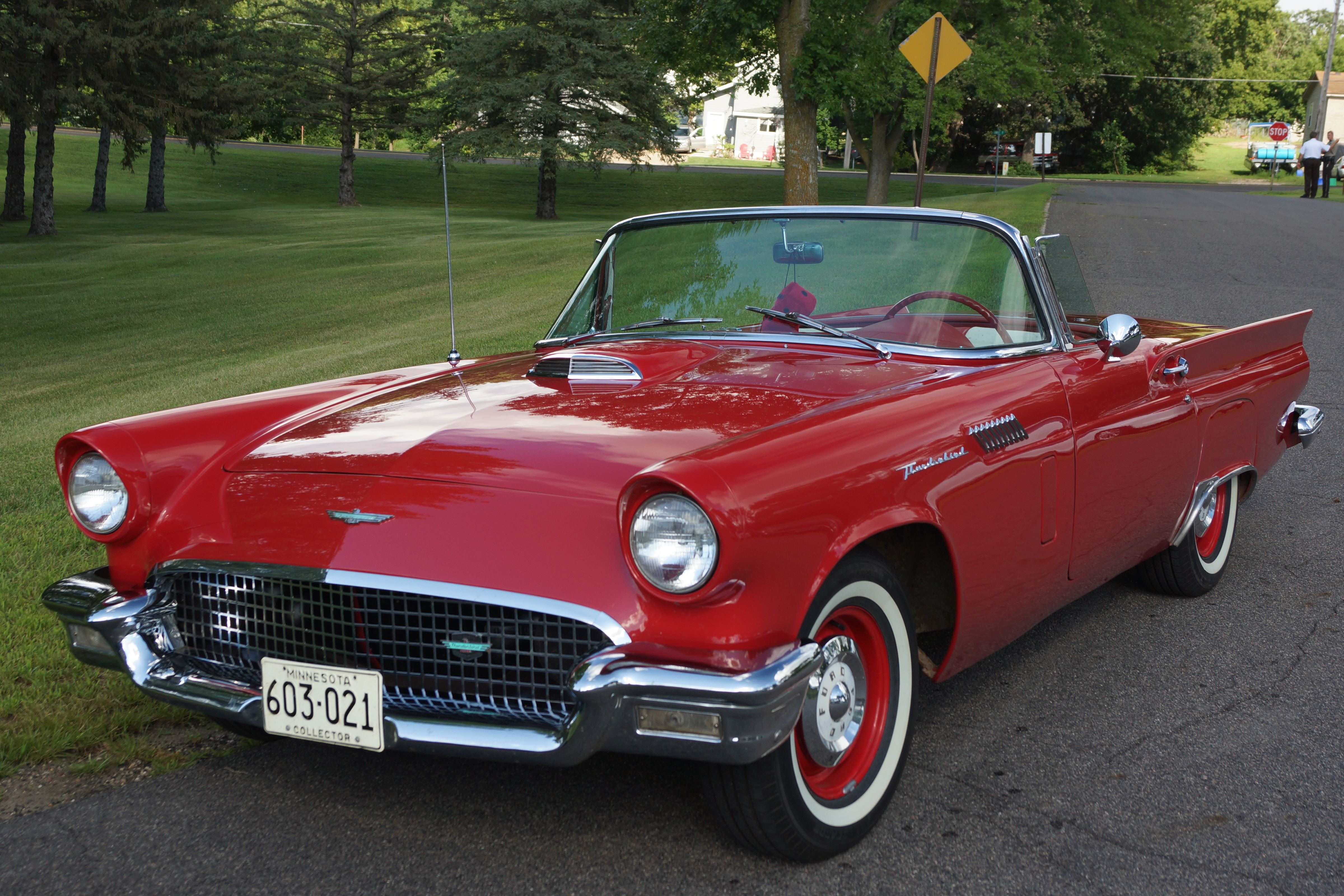
The Ford Thunderbird is a stylish car that was first made in the 1950s. It was designed to be a luxury car, meaning it was comfortable and looked nice. People often talk about it because of its unique design and history.
The '57 Thunderbird is a famous car from 1957 that has a unique look and was designed to be a luxury sports car. It's well-known among car enthusiasts and is considered a classic.
The Porsche 356 is an early sports car made by Porsche, famous for being fun to drive and lightweight. It was produced a long time ago, from 1948 to 1965.
The Volkswagen Beetle is a small, round car that became very popular and is known for its unique shape. It was made for many years, starting in 1938 and ending in 2003.
Car
Auto Union 1000SP
The Auto Union 1000SP is a small car made by a company that was trying to sell cars in America in the 1960s. It was known for being well-designed and different from other cars at the time.
Volvo is a car brand from Sweden that is known for making safe and reliable cars. They have been popular for many years and are recognized for their focus on safety features.
The Mercedes-Benz S-Class is a very fancy car that offers a lot of comfort and high-tech features. It's known for being one of the best luxury cars you can buy, with lots of space and a smooth ride. People talk about it because it shows what top-of-the-line cars can do.
The Cadillac El Dorado is a fancy car made by Cadillac, known for being luxurious and stylish. The version from 1960 is famous for its beautiful looks and strong performance.
The Ford Mustang is a classic American car that is known for being fast and fun to drive. It has a sporty look and a powerful engine, making it popular among car lovers. Many people talk about it because it's a symbol of American car culture.
The Chevrolet Chevelle is a classic car that was made from the 1960s to the 1970s. It is known for being a strong and fast car, especially the sportier versions called SS. Many people like to talk about it because it's a famous muscle car from that time.
Car
Saab 700
The Saab 700 is a car made by the company Saab. It was produced in the 1980s and 1990s and is recognized for its distinct look and powerful engines.
The Chevrolet Corvair is a small car that was made in the 1960s and is known for having its engine in the back instead of the front. It had some unique features that made it different from other cars, and it’s often talked about because it played a role in changing car safety rules.
The Volkswagen Golf GTI is a small car that is really fun to drive and has a sporty feel. It's practical because it has a hatchback design, which means you can fit a lot of stuff in it. People talk about it because it’s a great mix of being fast and useful for everyday life.
LIVE
And I only used this guy's name because I
couldn't think of anyone else off the top of my head.
I said, what if Chip Foose were to walk by and look in my car?
There's some photo.
I said, I mean, God is my witness.
I literally said multiple times, what if Chip Foose were
to look at my car?
What would he think?
What do you think?
That young kid worked really hard at what he does.
Or he decided to sleep or go out on Fridays or whatever.
And I literally used Chip's name, not knowing that, again,
foreshadowing, that we were going
to have an actual hangout time.
Mr. John Ludwig, man, how's it going?
Are you cooked?
As cooked as I'll ever be, I think.
Well done.
Man, it's been a hell of a ride for you.
I've been following you, obviously.
Been following your exploits.
I watch everything you put out.
And I've noticed that you've been getting quite a lot done
off-camera, which means you are literally
busting your ass.
How did, which leads to reward, right?
You know, you work that hard
and get to accomplish something.
I was watching your most recent episode
and you're on camera and you're walking up to the truck
where the Audi is.
It's in there.
And I can see that you are beaming, man.
I can see the joy on your face.
I can see it.
I can see the gears turning in your head.
How are you feeling at that moment
when you were on the Seamah grounds,
walking up to pull your car out of that truck
and bring it into the show?
I don't think I have the answer you or anyone listening
to this would want to hear.
Because I know where that answer is.
But I think I was just in logistic mode
because leading up to that clip, we had flown six hours to Vegas.
We'd gotten up at, I don't remember, three in the morning.
And even though the car had left a few days
before we flew to Vegas, there were still
lots to do, the car left in such a hurry
that I was still designing and laser cutting parts for the car.
And then obviously packing, camera gear, just, it was like,
it was a rat race right up until 3 AM when we left.
So to fast forward to us seeing the car,
we had gotten an Uber to like a random business
across the street from the backside of Central Hall
where all the trucks were unloading.
And the truck driver has an 80-foot setup.
And he's trying to do this.
I mean, I've been to SEMA plenty of times before.
And I've seen the chaos, the circus that's out back
while people are unloading.
But I've never been immersed in it
and tried to logistically figure out where my truck is,
where my car is.
And so I was on the phone with him.
We're trying to get through.
It wasn't really any security.
It's such a circus you can basically just walk in there.
And at that point on Monday, SEMA starts on Tuesday.
And so when I started filming,
I hadn't even taken the time to like film
before we went to the convention center
to like have a few minutes to be like,
hey, we made it to Las Vegas.
We're good.
So instead it was in the midst of the circus
and everyone, I mean, it's hundreds of vehicles
unloading and stuff like that.
So when we saw the truck, I just started filming.
And so in my head it was, has it arrived in one piece?
The truck's in one piece.
The dude's killer.
Yeah, Nathan from Sterling Transport.
That guy's an MVP.
Veteran SEMA car transporter took great care of the car.
But I was just worried about the car itself falling apart
just driving all the way to Vegas in a trailer.
I had to do the shop dust is still on the car
in this clip.
I don't even know where to begin.
I mean, I guess, yeah, you're right.
It was surreal.
It totally was.
There's two sides of that coin.
I feel like the coin was like that last clip of inception
where the top is just spinning and you never see
which if it topples or not, you know, it's like one side was
this is insane, both in the way of the amount of work
that my father and I did and some friends
waiting up to this point and we got the car in the trailer
but also it's in the trailer and it's at SEMA.
And also the fact that I was just so cooked
that it was just, I was on autopilot at that point
like go help him like unstrap the car.
I helped him get this crazy C8 IMSA road race car
off the trailer because he needed to spot it.
The car was so wide.
So I was, we were just immediately in work mode.
He's, my car was the next one out and it was just work mode.
Yeah, that's that C8.
I think the beginning of that clip, you can see the,
oh no, I guess not.
I guess I might not have started.
Yeah, there it is.
Yeah.
I was wondering about that.
Where did that clip come from?
Like what's going on?
I didn't have any context to that clip
because I forgot the film.
Again, I'm an autopilot.
I forgot the film how crazy that car was.
Nathan was like, because it was up top.
It was up top in the trailer and it was a non, well it ran
but it was a sequence to get it running
and all that sort of stuff.
Let me like readjust the context here.
Yeah.
And ask it in a different way.
What does it mean to you or what did it mean to you
before you even had the car there
to have a car shown at SEMA,
like an official SEMA car in a booth,
basically you're representing it.
How do you, is it Ro or Rova?
Americans know it as Ro
but obviously being a German company,
the W's got the V sound.
So we'll call it Rova.
So a company like Rova then is representing their company.
They spend ungodly amount of money to set up this booth,
get your car there, have you there.
And so it's a really big deal for not only for you
but for them and all the other people
that are involved in the show.
What does it mean to you to have a car there,
to finish the car and get it there?
What does it mean and why is it important
to have a car at SEMA like this for you?
Impostor syndrome with a capital I and a capital S.
It was, I think it's because of the car.
Like I, my Toyota Century had an invite back years ago
but it was on me to get the car there and stuff.
And it was like, well that'd be a cool car
to have there and it never happened.
But the 1000 SP is like something in my
like lane of cars I like putting together
and to the untrained eye are just people
who like paint and shiny things.
It's just like a junk car, you know?
So there was a lot of conversations I had
with Ken Mooney who's the president of Rova USA.
And there was a lot of like, there wasn't pressure.
The pressure I put on myself, they've been at Apex
which is in line with SEMA across town
the same weekend as SEMA.
So basically your SEMA badge gets you into Apex.
They've been at Apex with a booth
for like 15 years or something like that.
And this was their first time having a booth at SEMA.
So there was a lot of like pressure
for lack of a better word on that.
But they were also at Apex.
So they were like putting the marketing budget into this,
you know, because neither,
having a booth at neither of those is cheap.
So with that added on to the mountain of stress.
And they made it a breeze.
So I need to say that Ken and the whole Rova team
were just like, bring it as it is, like in July.
Like when I gave the final, yes, you know,
beginning of the year, Ken called me,
hey, we want to have one of your cars at the booth.
We're going to be at SEMA this year.
Like, yeah, okay, nothing.
I should have set things in motion then
but there's nothing set in stone.
So I just, I worked on that Buicklesaber
and like random stuff for the year.
So come July, Ken calls me and he's like,
hey, just got off the phone with the booth builder.
We got our booth design like,
like getting built around your car.
Are you in?
And I'm staring at the car in the shop and I'm like, yes.
It's literally one of those like, say yes.
Is it like this?
Yes.
Yes. Exactly.
Exactly.
Like, like head in hands type.
Yeah, so I knew it was going to be a marathon at that point.
And, but Ken-
That must have been right around the time I called you
and I was like, hey man, come to the rally.
Come out to sports car vacation land.
Come do this other stuff and you're like,
and I think you had just started to realize
the gravity of the situation that you put yourself in.
Yeah.
Yeah, I was definitely disillusioned thinking that
we were going to,
because we spent two weeks in England in July as well,
helping my buddy bag that Volkswagen SB2.
And I'm glad we did it,
but it was two weeks away from not getting any progress
thrown on the 1000 SP.
And I canceled all other trips except that one.
And even Kayla was like,
do you really think we should go over to England
for two weeks with the amount of work you have to do?
And I kind of said, I think I'll need this.
Like between now and November will be nothing.
Like I didn't have a chance to bring on any commission work.
Like I made no money for three months building this car
and literally just hemorrhaged from all orifices place
we could get this card on.
And so, yeah.
So to finally answer your question,
it felt actually unbelievable to have a car at SEMA
with all of those variables considered,
all of that considered like having to miss the rally
when you, Jeff, Jake and I had talked multiple times
about being a bigger part of the rally this year.
And it was such,
it was something I was looking forward to in a big way.
And I know that the SEMA thing took precedent
like immediately mid-summer.
And it had to with the amount of work
that it was just me.
It was just me.
And my dad's always been there.
He's always wanted the help.
And when he literally drove Kayla and I to the bus station
to go to England for two weeks,
he literally said before they drove off,
when you come home, I'm gonna help you on that car
and get it ready for SEMA.
And thank God he did because it wouldn't have made it.
It wouldn't, like if it did go,
which Ken was willing to,
Ken was like, just bring it as it is.
And I was like, as the builder of this car,
it cannot go as it is when he said that to me in July.
Because he saw the car.
He's like, it's great.
And I'm like, thank you.
Like, they relieved,
they did everything they could to relieve
a lot of that pressure because they did trust in me.
And trusted in, is that my phone?
And so that trust, I carried heavily.
You know, I wanted to make sure this car
was as good as I could have it.
And I know this is a little bit of foreshadowing,
but I'll say this now
because I know we'll probably get to this.
But it's so crazy because I talked to my,
I said this to my dad and I said this to Kayla.
I said this to a handful of other friends
to the point where if Kayla heard me say it,
it probably got worn out.
But I said, what if,
and I only used this guy's name
because I couldn't think of anyone else off the top of my head.
I said, what if Chip Foose were to walk by
and look in my car, there's some photo.
I said, I would, I mean, God is my witness.
I literally said multiple times,
what if Chip Foose were to look at my car?
What would he think?
What do you think that young kid worked really hard
at what he does?
Or he decided to sleep or go out on Fridays or whatever.
And I literally used Chip's name,
not knowing that again foreshadowing
that we were gonna have like an actual hangout time.
And so I...
One thing I do when I walked,
when I've been to SEMA a few times now,
and I'll walk around and I'll look at people's projects.
And the first thing I look is like,
are the spark plug wires hooked up?
Is the math plugged in?
Like you look at all these things, does the car run?
Does it run?
And it's gotta be like 25% of the time now.
So it's like something where it's just like,
it doesn't run.
So I can, and I think most people do that.
And for someone that's a builder,
you don't want a guy like me walking up
and being like, dude, I can see from here
that there's no fuel lines hooked up to those carburetors.
I was worried about guys like you.
Like I was worried about guys like you.
Those airlines aren't hooked up to anything.
Let's go in here.
Yeah, and after going through what I just went through,
honestly, needing a team.
Like I needed like a team of people.
I mean, luckily my dad and I pulled it off
with some help with some other friends,
but like, I understand now,
and yeah, like there's tons of different rooms
of this conversation of quote unquote,
unfinished SEMA projects.
There's all sorts of different stories
and variables and timelines and stuff.
But in my timeline, I understand why some cars
are there without spark plug wires
because mine had no reason
or had really no reason to have spark plug wires in it.
Like it did, it drove off the trailer
and drove to the door to queue up to go in.
But like that engine bay wasn't done.
Like not even close, wiring was just zip tied to stuff.
The truck was down the street waiting for us
and we could barely get the thing running
from the driver's seat and we just, that was the last thing.
I wanted the exterior of the car, the suspension,
all the firewalls, sheet metal work,
interior seats, door cards, pedal cluster.
Like I wanted everything in the car done
because if time ran out,
if the sands of the hourglass had run out,
at least the car would display well at SEMA.
And I would be one of those guys
who just there's no spark plug wires,
there's no fuel lines, there's no,
and it would just be what it is.
And I would just have to muscle my way
through the internet hate or whatever.
Well, a lot of times no one would ever know
but you would know.
Right, yeah, for sure.
Yeah, yeah.
You would know and that's what changes it
from a sculpture into a machine, right?
Yeah.
And things are never really done.
It's just what state of closer
to potentially done are they?
Yeah.
You know, like even this thing is like not done.
Yes, it drives around, but it's not done.
Yeah.
What do you think SEMA means to car culture as a whole?
I think it means a few different things.
For someone like me who started a YouTube channel
and has like a brand built around literally my hobby.
I didn't start customizing cars
because I had a YouTube channel
or it wasn't like what I chose to do on YouTube.
You know what I mean?
Like, oh, do I play video games?
Do I open products?
Do I do parkour or do I work on cars?
Right, so this is like, this is like what I do.
John Ludwig parkour extraordinaire.
Let's do it, man.
I'll pay to watch that.
Not after, not after all the years
of falling off my BMX bike.
Next on Patreon.
For someone like me, it means like an opportunity
to have FaceTime with industry people and companies.
It's always been a great week to network,
you know, and try to bring on people
that see value in what I do.
That would help, would help me be able
to continue keep the lights on
or to continue keep the lights on doing what I love to do.
Otherwise, it just isn't sustainable.
As you know, you know, it's like,
you couldn't do the rally,
you couldn't like do all everything behind the scenes
of the rally and the podcast
if it didn't make sense financially
because you just, you wouldn't have the time to do it
because you'd be working a job to bring in money,
you know, and so for guys like me,
it's huge because you get a chance to see new tools,
yeah, see new products on the market and stuff,
but also get a chance to talk to marketing managers
because most of those companies are there
to start those relationships as well.
Which is something I didn't know well enough
when I first started going to SEMA.
It was more or less like, it's SEMA,
so it's like so much new industry stuff there.
Let's do that.
You know, let's go see all this stuff.
But as a shop owner, you know,
you might want to see what the latest fluids are,
what's new in oil, what's new in performance turbos,
you know, go to the Turbosmart or Garrett booth or something.
So I guess there's-
Does it have an impact on car culture, do you think?
Do you think it flows down?
Yeah, I think it does now more so,
that social media is so prevalent.
I think in the early 2000s,
it was more industry forward, you know?
And I think now it has a huge impact on car culture.
This year specifically,
I didn't know what on earth was going on.
And like Hoonigan is normally the only set of guys outside
that has like a burnout drifting demo thing.
And this year, there was just like,
there was multiple outdoor burnout pads
where there were multiple vehicles all at once,
just spinning around, running into each other doing burnouts.
And I was like, what is-
I think they're trying to open it up
to a more general public type of thing,
which I think inevitably is gonna have a bigger impact
on culture.
I think one thing that I like about SEMA,
there's a lot of things I don't like too.
I just wrote an article about this thing.
Is that I kind of, when I look at the classics,
you know, one of the things that people love to do
is they like to take the classic car
and they like to try to do something new,
which is very, very hard.
You know, the more popular a car is,
the more calcified what you're allowed to do with it
has become, just from like what the internet
and what car culture is,
will permit you to be able to do without getting flamed, right?
And so a lot of people will take a ton of risks
and more often than not, they don't work.
Yeah.
More often than not, they don't.
But every once in a while,
you'll get something that does work
and it becomes like a,
it becomes special, it becomes like Canon.
It becomes something that will make an impact.
I don't know, I haven't had a chance to look back
and see all the cars that were at SEMA this year.
I just was kind of accosted by social media.
You know, that green Mercedes comes to mind
of something that I was like, oh my God, yikes.
But at the same time, yeah, but at the same time,
I look at that thing and I go,
what an unimaginable, as a guy that's built a car,
unfathomable amount of work when in that car.
Yeah, yeah.
It's not my style and I would never choose
to have a poster of that hanging in my garage,
but the craftsmanship is unreal.
You know, I think that's one of the lessons of SEMA
is the craftsmanship and the handiwork there
is just off the charts.
Yeah, I think that's my favorite part
aside from the whole networking aspect of it.
I think my favorite part is drawing inspiration
and motivation from people's work.
There's a shop from Arizona.
I can't remember the name of the shop,
but it was a truck that was in the RestoMod air booth
and it was a diamond tee.
It was like a 1950s, 40s or 50s diamond tee,
like semi truck that had a twin axle frame
that Porter built, had built.
And it was just the most,
I didn't get a chance to walk around much,
but I did walk, I went to that truck
more than once, multiple, multiple times
because it was just the most insane thing I'd seen.
Bell crank, shock placement for both axles.
Apparently there's a lot of tech in that thing
that I wasn't aware of, like the tandem axle,
like the tag axle is like, they can like on the fly,
like put pressure on it for towing.
Like they can like, it's a dynamic setup
on the fly for towing.
So it's actually functional for towing heavy trailers
and stuff.
I say all that to say that like,
I drew so many cool ideas from someone else's work
on that truck, like the frame rails were pressurized.
Like there were hard lines for the air system
coming out of bungs like on the frame.
So that's dope.
That sounds awesome.
That thing was crazy.
Yeah, there it is.
It was wild.
I scrolled through a couple of pictures
of that thing, Mrs. Producer.
Yeah, I didn't get a chance to really see that.
I think it's body dropped on an old,
brand new Mercedes, basically.
Brand new, yeah.
I read that it was a 2025 S63 or whatever the new S AMG is.
Like brand new.
I wonder how much they had to stretch the chassis
to get it to fit.
The front end just doesn't work though.
No, no, but I mean, you got to be a visionary
of some kind to see that thing through, you know?
Yeah, again, it's insurmountable about a work
when I see stuff like this, I just, I can't,
I don't have anywhere near the skill
to do it, 99% of that.
Well, now it's probably a multiple person.
Oh yeah.
I mean, that's a shop guide, interior, welding,
bodywork, stereo, engine guy.
I mean, that's a, you know, that's a concert
right there is what that is.
I'd be remiss if I didn't speak up about this.
The W100 600 is one of my all-time favorite vehicles,
short wheelbase or the Pullmans ever built.
So I did cry a little bit when I saw
what they had done to a W100 600.
But tons of work, tons of incredible work,
but yes, personally, not my style.
How dare you do that to a W100 600?
I'm trying to stay positive, man.
I'm trying to like.
I mean, even the white W-108 that was in the Toyota
Treadpass as well, it was all wide-bodied
and just wouldn't surprise me if it came
out of the same shop.
Yeah, I'd like to build one of those someday.
I mean, it's interesting thing that that thing
existed at the same time or similar time.
Yeah, it was a little overlap.
Yeah, a little bit of overlap.
I'd like to have one.
Pullman. Oh, that's not a Pullman.
That's a short wheelbase,
but that is one of the dreams.
It's just so nuts.
People think they look like W-108s,
but when you see them next to each other,
it's unbelievable how much wider it is,
how much square the pillars are.
They're just beautiful cars.
Okay, so I want to rewind back a little bit
to talk about your Audi.
Talk to me about auto union and what the state,
when that car came out,
what was the state of what we now know as Audi?
Like what was the state of the company?
What were they doing?
Why did that car exist in the first place?
So I guess, I guess to like,
I mean, I don't know all the details,
but I did tell this story
or this information thousands of times last week
when people were asking-
You're well rehearsed.
Like, what the hell is that?
I'm sure-
Yeah, exactly.
Like a lot of people came to the booth
because it looked cool,
but also a lot of people came to the booth
because it was a curiosity.
What is it?
Where did it come from?
Whatever.
So auto union, German car manufacturer
from the 20s, maybe the teens,
but throughout the 20s, 30s and 40s
were not only producing cars in Europe,
but setting like land speed records.
Like they were a force to be reckoned with in motorsport
and auto union was four companies.
It was auto union, DKW, Horch and Wanderer.
And those four companies were the four rings
that build up the, what is now the Audi badge.
So that's where the four ring logo originated from.
In 1960, when my 1000 SP was made,
they ran that car from 60 to 65,
but only made 5,100 of them ever.
Worldwide.
Worldwide ever.
And 900 of them were Cabrios.
So 900 convertibles.
So 40, I think it was 5,000 total.
So it was 4,100 coupes, like mine.
Look at that.
That's the Avis, isn't it?
Yeah, that's gotta be Avis.
Yes.
Yeah, I can't remember.
In Berlin.
Oh yeah, the track, yeah.
Yeah, or possibly even Mercedes.
Mercedes had that high speed track.
Yeah.
Yeah.
So yeah, auto union was just like a famous.
Or monsters, yeah.
Yeah, yeah.
And what's really cool about the 1000.
Which is crazy though,
thinking about coming out of World War II.
Yeah.
All of a sudden this is what they're doing
and the engineering that they're able to complete
after being completely decimated.
Well, and that's kind of like,
that's kind of like where the 1000 SP comes in.
So visually it has a lot of American styling to it.
It's known as the baby T-bird
because the rear end looks like a 57 Thunderbird.
And I remember the guy's name that designed the car
but he spent time in America at like Ford and really,
and you can see the.
Yeah, wow, look at that.
The LEDs and the two.
Even the rear end is even more on canny between the two.
Is this attributed to like a love of America
or just like wanting or having been so withdrawn
from the West and we think of East Germany
that when it finally opened up,
that Western thought and Western concepts were okay
that everybody's like,
fuck, let's make a Thunderbird of our own.
Well, I mean, when you think about it,
that wall coming down was 1989.
So this was like in the light of the wall being up
and auto union, I think it was more relevancy
than anything.
I'm not a scholar on the matter
but it makes sense that they were trying to chase
the American Fin era to be relevant to sell cars
because Germany, this was 15 years after World War II
and Germany was a broken country.
I mean, for good and sake,
the USSR owned half a Berlin East, you know.
There's pictures of like women.
There's no men left.
It's just women like moving rubble through Berlin
with buckets like hundreds and hundreds
and hundreds of others.
It was brutal.
Yeah.
And apart from the relevancy in their design,
it's, again, I'm not a scholar,
but basically it was important to America
as well as other first world countries
that Germany get back on their feet economically
after World War II.
And this was only 15 years after World War II.
And there was still a real strong sentiment in America
that ain't no one gonna drive a German car.
Like look what those guys did.
And that was still very much,
some people saw through that,
that they were innocent people in that country and whatever,
but be though as it may,
German automotive manufacturers were not doing that well in 1960.
People were buying Beatles and Volkswagen and Porsches,
356s and stuff were here.
Well, still, I mean,
you had 400,000 Americans die in World War II, right?
So, I mean, everybody knew someone that was gone.
Everybody knew someone that died, you know.
Their son, their cousin, their friend or whatever.
And then there was the Germans that did it.
And then you see some guy driving around in a beetle,
you must kind of go, you know,
that's gotta make you think.
I'm sure that was going on, you know.
I, yeah, it had to have been going on
because it was just, it was so polarizing
because you only got information
to the radio and the newspaper, you know, so.
And the movie theater,
you go to the movies to see the bumpers
in front of the movie.
And all the propaganda, yeah, exactly.
So basically in 1960, when Auto Union made the 1000SP,
they were trying to get into the American automotive market.
They were owned at the time by Mercedes-Benz.
Much like, I don't know,
much like who's an American,
like I know Ford owned the majority shares of like Volvo
back in like the early 2000s,
but Volvo is not an American car company.
But either way, Mercedes in 1960 owned Auto Union, right?
So Auto Union had been sold off at some point.
Mercedes was keeping them going.
In 1960, Mercedes-Benz didn't have established
Mercedes dealerships in America yet.
American automotive manufacturers
or the American government
was trying to get automotive manufacturers in America
to almost endorse German automotive manufacturers
and bring them into the States,
to sell more of their cars,
to get Germany's ecosystem back on its feet
and get the whole gears turning, right?
And no one from what I've read really wanted to do that.
Enter.
Surprise.
Like why?
Right, exactly.
Exactly.
So Studebaker steps up and basically says,
yeah, well, they signed a contract with Mercedes.
So in 1960, and what's really cool
is I had a 1960 S-Class, a W111 Fintail
and that car was sold at a Studebaker dealership in 1960.
So if you wanted to purchase a Mercedes in 1960 in America,
you had to go to a Studebaker dealership.
Since Mercedes owned Auto Union at the time,
if you bought an Auto Union or a DKW Junior,
you bought it at a Studebaker dealership,
which is crazy to me that, and who knows,
maybe it was European families
that had migrated to America at some point
and they kind of knew more about the cars
than the average American did.
But it's crazy to me that my 1000 SP,
which is a North American market car,
it was sold here in America,
that somebody in 1960 went to a Studebaker dealership
and bought the front wheel drive two-stroke
in-board brake German car rather than a Studebaker.
Studebaker must have been desperate.
I mean, they went out of business in the 60s.
Well, at some point, right?
Automotive scholars would probably know way more than me.
That was either a Hail Mary pass for them to stay afloat
or it was basically the beginning of their demise.
I'd imagine they were struggling by 1960 anyway.
If you are taking that on in that climate,
you have to be struggling.
I would think.
You had to be floundering.
I'm not a scholar in this stuff either.
I'm just guessing, why would you do this
unless you really needed it?
You'd be seen as like a turncoat almost.
Maybe.
Like an American company, turncoats
and all of a sudden they're selling all this,
these German cars.
Yeah, I really don't know what the climate was
through and through,
because obviously there was a lot of people
that probably held contempt over anything German
or Japanese.
But there was probably a lot of people that,
I don't know, like saw the importance of,
or simply how good a German car was.
There were no front-wheel drive cars in America
at that point.
We didn't see the Cadillac El Dorado until later on, right?
I mean, that was in 1960.
I think the auto unions were the first
front-wheel drive cars in America, 1960.
Well, if you think about any of the old Porsche stuff,
any of the old stuff like this,
it was always owned by like some professor,
some like chemist or some like,
some smart guy or some,
it wasn't usually,
or it was some famous race car driver,
something like that, of course.
But it was always like for the regular guy buying them,
most people went out and they bought a Mustang
or a Chevelle or a Galaxy or something like that.
But it was always some like quirky dude
that worked at the local college university
that probably would have ended up with a DKW.
It wasn't Joey Carpenter in the union.
That was buying those things, just that wasn't that.
In that story, like the car's stories
are what drive me insane sometimes.
I don't drive me insane, but they like,
I ponder it quite frequently of
who bought my 1000 SP from a student baker
dealership in 1960?
Who bought my DKW Junior I have at a student baker?
Who saw that ad that we're seeing right now?
That was probably an ad in popular mechanics
or something, right?
They saw that and they went, damn, look at this guy.
He's in a Swiss Alps driving this frickin' auto union car.
I gotta at least go test drive it.
It's crazy.
Some guy did that, walked in.
Yeah, blows my mind that someone drove off the lot
with my car when it was brand new
and chose that car over all the others
for one reason or another.
It's crazy.
All right, so tell me about acquiring your car.
You know, your SP.
Where does this thing come from?
So,
blessing or curse after you've done something
in the same way for a length of time,
people start to know what you're into, right?
So,
yeah, I mean, I like to say it's a blessing
because when I was a kid or when I first started like,
when I first started customizing cars
and you know, there's always that old timer
in your town that has like 100 BMWs in the yard
and you're like, how did you acquire all these?
Oh, you know, so-and-so just wanted to get rid of it
and they found, you know, they just,
and I'm like, well, how do you become that person?
Like where people just call you
because they want to get rid of their car
or they found a deal or something?
Well, turns out I've slowly been becoming that guy
and I got tagged on a marketplace ad.
It was on marketplace.
My buddy Gavin was the first one to tag me in the listing
and I may have sent it over,
I sent over a bunch of photos,
but I think they went like a Google Drive or something.
Okay, so that's the second one I bought.
I had two of them.
Cause you're that guy.
Dude, I think, yeah, there's the two of them.
Um, uh, the, I don't know if I sent the screenshot over.
Basically, my buddy Gavin was the first of like 100 people
on the day it was listed to tag me in it.
But his post said, hey, John,
this car would look great over a Beetlepan
cause I'd put the BMW 700 over a Beetlepan.
Those were the actual marketplace photos.
Those there, I saved them.
Every time I buy a car,
I always try to save the Craigslist or marketplace photos
and a screenshot of the ad, everything.
Yeah.
Yeah, those are all in the ad.
That's what it looked like.
That's what I had to go off of.
And what excited you about this, man?
Looking at this thing, this thing is like, it's done.
You look at that thing, you go, that thing is cooked.
The fact that it was,
so auto union of the sixties, of the fifties and sixties
never really did anything for me aesthetically.
I like the juniors.
The juniors are pretty cool,
but they're kind of like a cartoony version
of my BMW 700, right?
If you see the 700 in the junior next to each other,
there's a lot of similarities.
They're a two-door coupe,
they're a fintail, like a rear-fendered finned car,
kind of the same size, 700s a little bit smaller,
but BMW just had that style.
Like it's just style.
And the DKW juniors like a little bit more like clown car,
not really, but in comparison, kind of.
The 1000 SP is like sports car.
It's got a hood scoop, it's got the fins,
it's a miniature looking 57 Thunderbird,
and let's be honest, the 57 Thunderbird
was a sharp looking car.
I love how aspirational the SP looks.
It looks like it's really reaching for something,
like in terms of design elements and everything like that.
Yep, to be fair, the photo we're looking at now,
the bottom part of the photo is when my dad
and I dragged the 700 out of the woods
and cut the trees down that were growing inside it.
So that was before we straightened it out and all that,
but again, the roof was all buckled and stuff.
But you can kind of see what I'm talking about,
even though the 700 is like in terrible condition
in that photo, the 1000 SP was like the production race
car, there's dimple dies in places
you didn't even know existed in that car.
It was mind blowing when I started to pull the interior out
and I started diving into, I mean, look at the comparison
of the two cars in that photo, you know?
It's like the 1000 SP's just speed,
like it just looks speed, even though it's a front wheel drive
three cylinder two stroke car.
But it looks like if back in the day
when something was supposed to be fast,
like if you were watching Looney Tunes
and it was supposed to be fast,
it would just kind of like lean forward a little bit
and it would just kind of like tilt a little
and start just like leaning forward
and the backwards stretch out a little bit.
Everything fast had to like kind of lean out of the camera.
Yeah.
That's what it reminds me of.
And that's what that car did.
And so that was the immediate draw
because I love anything rare
and that you don't see often, right?
I mean, that's why I did the Corvair.
That's why I did the BMW 700.
That's why I did my Lada 2101.
When that car popped up, I had to have it.
I had been tagged tons of times
and I was still living in Chattanooga, Tennessee at the time
and it just so happens that my dad was in town
because we helped him buy a pickup truck down in Tennessee,
like a rust free, never seen salt pickup truck.
And he had come down to pick it up
and drive back to New Hampshire with.
And he was there for a short week or about a week
doing some maintenance on it
before making the 1200 mile drive home.
And that's when this listing came out
and everyone was tagging me in it.
That's my dad leaning up against it
when we went to get it.
So basically the next morning or that night
I'd meshes the guy and the next morning
my dad and I were driving 10 or 12 hours
one way to go get this thing.
It was up near Cleveland in a town called Hinkley, Ohio
sitting behind this guy's barn.
It was even on Google Maps and you Googled his address.
You could see it sitting along the wood line
of his property.
I just like, it's just, it looked good.
Like the auto union 1000s are kind of ugly.
They look like a Volkswagen Beetle.
They're kind of like this bubble top car.
Those are the auto unions you'd normally find
if you look for them.
Like it's just a 1000, right?
Never seen a 1000 SP before.
Do you know what a SP stands for?
Sport, sport, I've got it.
Let's call it, just say sport purpose, yeah?
I've got a 1960, hold on one second.
Okay.
So I've got, I've got a, the second 1000 SP I bought
came with this, let me see what, I think it's 1961.
Is this the same book that we figured out
how much horsepower the DKW had?
Yeah, we already talked about this.
Yeah, yeah, this has been, it's already before.
I think they talk about it in this book
but it was sport something and I can't remember
exactly, yeah, exactly.
Of course it was probably in German too, so.
Yeah, I figured if I could flip on to it real fast
I'd tell you but it's, yeah.
Yeah, it doesn't matter.
Sport something, because it was that much more sporty
than the 1000, you know, the 1000 was just a Beetle
like competitor basically.
So having never seen one before,
knowing how rare they are, it actually looks good
because there's a line I do draw, you know,
like I don't want to like quote unquote build
or slam a car that I think looks ugly
because there's a lot of cars out there
that I just, I'm not into.
I'm not into just everything that's rare
but this actually looked good
and the fact that it had the four-ring logo on it
is just the coolest because I'm a Volkswagen Audi.
That's where I got my start was Mark I's,
Mark II's Volkswagen's and so in the quest for rarity
that's hard to do in Volkswagen.
Like, oh, Mark I's, you don't see those that often
but you go to a Volkswagen show
and there's probably a few there.
You know, you go to somewhere like H2O
and there's a whole paddock full of them.
Yeah.
So it's like,
I got two windshields for sale over here
for Schrodinger Mark I.
If anyone needs one, brand new in the box,
Pilkington right there, plug for me,
two brand new windshields for Schrodinger.
I bought three because I need to replace one.
Now I got two.
If you need one, hit me up.
All right, carry on, John.
Okay.
This is hard because then you start looking
in the European market, you know, it's like, okay,
so what do we not have here in America?
And back in like 0809 when I started
to like really start customizing cars more,
that was a little bit easier
because you didn't see polos, you know?
You might see like a bread van maybe, you know?
So it was like bringing over Euro market models
that we didn't get here was like the thing for a while.
It still is the thing, but you'd be like the only one.
The internet makes the world so small, dude.
Yeah.
You know, it really does.
Yeah.
And the fact that more of these cars are eligible now
to be imported legally.
Like when I did my 2F Polo,
I'm sure there were more here in the States,
but I'd never seen a bagged one in the States.
And that was like scratching that itch, you know?
Like, ooh, let's do like a Volkswagen
that you don't see that often here in America.
Like this is like the layer that I wanted to exist in
where it's pre-Audi and to follow up on what Auto Union was,
Volkswagen purchased Auto Union from Mercedes-Benz in 1969.
And that's when they dissolved the four companies
and turned it into Audi.
But because of how iconic Auto Union was
throughout the previous decades, leading up to that point,
they left the four-ring logo because of how iconic it was.
So, 69 was the advent of Audi.
And that's also when Volkswagen purchased NSU
and we saw the K70, which NSU built and manufactured,
but then went bankrupt once they were all sitting at ports
ready to be delivered.
Volkswagen bought NSU out of bankruptcy
and just slapped Volkswagen badges on it.
And it's like, oh, there's a water-cooled
front-engined front-wheel-drive car
which Volkswagen had never designed before
or manufactured before.
And the acquisition of Auto Union
is where we saw all the first Audis, the Audi 50,
the C1100s, those were longitude-mounted
front-wheel-drive in-board brake cars,
which is literally what Auto Union was.
So to go back on the 1000SP, it was,
I have to get this car.
Did you know it existed before you saw it?
I'd seen photos of them before,
but had never seen,
had never taken the time to absorb what that car actually was.
Like the second I saw that marketplace listing,
I just, I nerded out.
I was Googling everything.
I was just absorbing everything that that car was.
Did you know the vision you were gonna have
for the car when you got it?
So you get it, you bring it home,
and you're like, okay, this on a Beetle pan.
How do you go from there to where you are now?
Like, is it like an evolution?
Do you decide everything you're gonna do ahead of time?
How does that work?
How do you decide what you're going to do?
The vision stayed the same.
I even mentioned it to my dad when we were at the car,
like when we got to Hinkley, Ohio,
and we were walking around the car for the first time
and kind of taking it in.
I even said to him,
because I was living in Tennessee at the time
and my dad is living in New Hampshire.
So I wasn't,
I was working on everything by myself at the time.
And I had never dove into mega fabrication projects
by myself like that before.
My dad's helped me on a lot of those projects.
All those cars, like the roof chop on the Corvair and the 700
and anything else I built was always in my dad's shop.
And even if I did most of the project myself,
a lot of the big projects my dad and I did together.
So I remember saying to my dad
when we were picking that car up,
like this one's gonna be a serious project
to put on a Beetle pan,
not just because I'd be taking it on myself,
but just looking at the car.
And it's like everything underneath it's gotta go.
That's the 1959 Volkswagen Beetle
that I bought from my buddy Kyle in South Carolina
that is currently underneath the 1000 SP.
So that's where the-
So when you look at the 1000 SP,
I'm trying to understand the structure of it.
Is it a unibody car?
Does it have a pan?
Like how does that car-
It's a frame car.
That's the pan once I got it done.
I think there might be a photo of the frame
in those photos too.
It's a frame car.
And Auto Union was doing that
to kind of keep tooling costs down
amongst their, across their model line.
And the DKW Junior is on a very similar frame.
The 1000 SP is on a very similar frame.
The van that DKW built was on the same type of frame.
They changed the little things up here and there
like the DKW has inboard front drum brakes
with a torsion suspension, much like a Beetle.
And the 1000 SP has transverse leaf springs
front and rear with outboard brakes,
which was a little bit more-
Is that the frame there?
That's the frame.
Yeah, so that's when my buddy Ben had flown over
from England for the week
and we decided to dive into that
and separate the body from the frame.
So that's the full frame
with three cylinder two-stroke
front wheel drive setup on it.
Did you just decide to do the Beetle thing
to make it harder?
Or did you not just work with the frame that's already there?
The reason why I wanted to put it on a Beetle pan
the moment I decided to go get that car
was parts availability.
Like 100% parts availability.
Cause I like driving my car.
So like, yeah, I'm kind of entering this weird phase
where I like, we could talk about fab work shortly too.
We will, yeah, we wanna get there.
That is, I like driving my cars
but I'm entering this weird phase
where I like looking at them more
only because I've got too many
and they all seem to break at the same time.
So I'm like, I'm like being forced into this weird bubble
of like, I'd rather just like open the garage doors
on a nice day and just look at them, you know?
Because it's like, oh, that needs to be.
And maybe, just maybe drive it.
Maybe.
Right.
Just be able to.
To be fair, I do drive them all.
I mean, I've been cross country the short way
north to south into Corvair.
I've driven the 700 four hours each way to a car show.
Like I put the miles down in these cars.
This summer specifically,
it seems like everything fell apart on every single car.
So I think it's just this summer.
I've been like, I've done nothing but work on the 1000 SP.
I hardly drove the Corvair, I hardly drove the 700.
I just liked looking at them
and I've rolled them out of the garage on nice days.
So to answer your question, Beetle running gear
so I could buy parts for it
because there's 12 of these known to exist in North America
and only 4,100 coupes ever built worldwide.
And all of my automotive friends in Germany
have never even seen one before, where they all came from.
So there was a part of me that really wanted to keep
the three cylinder two stroke front wheel drive
because that's just cool.
You know, it's like, you don't see any cars that run that.
I really wanted to keep all that.
And there was a point at which I hadn't cut the body up
a ton yet when I founded the second 1000 SP.
So there was one on Craigslist in Nashville, Tennessee
that came with a garage full parts, extra engines,
transmissions, and those transmissions are really crazy.
If you think about it for a second, it's a two stroke,
right, which means the oil delivery
is when you're giving it fuel.
So when you're on diesel down a hill,
you're up in the RPMs, but not giving it any oil, right?
Cause you're not giving it any fuel.
So these transmissions, much like the Trebants
and the Subarus and the Sobs,
a lot of the two stroke setups
have a freewheeling aspect to them.
So I think in the auto unions,
third and fourth gear will freewheel.
So when you diesel in third or fourth gear,
it slips into neutral and goes to an idle
so you don't burn your motor out
like desalting down a hill high in the revs.
It's insane.
Like the, I'm sure an engineer could dissect all that.
Is this some sort of,
it must be like a centrifugal thing
that senses when you're, or vacuum maybe?
Like how does it, how does it know
that you're not on the throttle?
Is it linkage based?
It's what they call like fluid coupling
and my W111 Mercedes had what they called
a Hydraq system in it.
And this car was a four speed manual column shift car
without a foot clutch.
And it's very similar to the Beatles
that had the auto stick.
Or Sport-O-Matic and a Porsche.
Yeah, exactly.
So it's a manual gearbox,
but instead of a hydraulic or cable
mechanically driven clutch that you apply,
it's an electronic to vacuum
to mechanical operated clutch system.
And it's in the bell housing,
instead of a torque converter, it's a fluid coupler.
And basically it slips
and it lets you come to a stop at a red light
in gear without stalling.
And then when you apply gas or throttle
that the motor lets all the fluid couplers like slip
and grab and it's crazy.
It's like a...
It sounds just like a torque converter though.
Basically, basically with like rudimentary
things around it making it work.
But it's a manual gearbox though.
Like when I basically, the 16 Mercedes I had,
I bought a same year Mercedes
that had a four speed column shift hydraulic foot clutch
and did the swap so I could drive it.
So I didn't break any parts
on this bizarre Hydraq system, right?
So having swapping the two of those,
they're realized, oh, they're the same exact gearbox.
They just have different bell housings on them.
So the 1000 SP has like kind of a similar idea
but backwards where you...
Sounds like a thing that's impossible to get parts for
is what it sounds like. Exactly.
So you put the, you're gonna do the beetle pan.
You're gonna put the body on it
and you kind of have a vision for it.
But I'm guessing like the fabrication
kind of happens out of necessity as you go.
Cause that's gotta be a tough thing to foresee
all the fabrication that you're gonna have to make.
So you kind of, you get the body,
you lower it over the pan and then you start looking, right?
And then you're like, okay, how am I gonna make this work?
For me, sometimes I think the mistake I make
is I only see like one thing at a time,
like, okay, I have to solve this problem with this swap.
And then I solve that problem
and then I move on to the next one
and I've already created new problems
because of the way I engineered
the solution to the first problem.
That's my trouble that I run into all the times.
I can't see a big enough picture.
And I don't know if that comes from impatience.
Maybe I'm just moving too fast
and I wanna not be not working.
I always wanna kind of be moving forward.
How do you deal with that fabrication process?
And especially with this car, how'd you put it together?
So it started with not knowing how much of the floor,
firewalls, front and back I needed to cut out.
Cause I didn't wanna cut it all out.
If I could leave some, you know, like I,
I'm not a professional car builder.
I say this quite candidly a lot on the YouTube channel
and I usually get roasted like positively from people,
but I'm not a professional car builder.
So when I look at something, it doesn't know.
Hold on, what is the difference
between you and a professional car builder?
I guess when I say it in my head, when I say it,
I think of someone who's like getting paid
by someone else to build a car.
Is that what it takes?
I guess that's technically what the actual term would be.
I think of someone who is like, I don't know.
Yeah, I guess they're beyond hobbyists, dude.
It's like someone who like is better than me
or more knowledgeable or has been around longer
has done it more.
You know what I mean?
Like more season.
Everybody roast John.
Yeah, please do.
As we've listened to this podcast, that's, that's you.
You're a professional car builder by that definition.
All right, continue.
You started looking at the firewalls.
I didn't know how much to cut out, right?
So I didn't want to cut it from rocker panel
to rocker panel across the whole floor,
cut the whole floor out of the thing,
which in hindsight, I should have just done
because that's ultimately what I did.
So it was bring the body down to the pan.
Oh, it's touching the transmission.
Okay, cut out a hole for the transmission.
All right, set it down more.
Oh, now we're hitting the tunnel.
All right, cut up, cut a section down the middle
to let the tunnel hit or clear the tunnel, the beetle pan.
All right, now this is hitting.
Now that's hitting.
Now the frame horns are hitting now.
So it ultimately, over the course of longer time
than I should, I should have just cut it all out,
which I think someone who was more seasoned,
AKA a professional, would just cut it all out.
You were gun shy to cut it all out.
You didn't want to.
Oh, absolutely.
Scared, gun shy, but also didn't know
if I could use some of that structure.
I don't want to create more work for myself
if I didn't have to.
And I think a lot of people would probably traverse it
in a similar way too, because it's like, well,
if they had all the confidence in the world,
they'd cut it all out anyway.
But I didn't know how I was going to build this thing.
So basically what happened was I had to cut everything
out of the body.
And as I went, I had to create structure,
cross members, I had to cross brace it,
because that body-
It becomes a wobbly mess after a while, right?
Exactly.
Or the glass would separate from the body.
What you're looking at in that photo
is ultimately a lot of the framework I built.
But also, how low I went with the car,
because that rear window was a couple inches
from touching the rear glass.
Or the tire was a few inches from touching the rear window,
rather.
So once I got everything cut out,
in temporary bracing all put in,
I could get it down over the pan where I wanted it
and then start building the permanent frame structure
inside the body.
It kind of presented itself as I went, right?
I didn't know when I cut everything out,
I'm going to create the front half this way,
like the tubular front half,
and I'm going to create the tubular back half this way
to allow room for the motor.
It was like, I need to do this, this, that,
and a cross member here, that's a good photo.
So that's the last photo before we painted everything
and set it down over the pan.
So that's ultimately what my frame looks like.
And up the rocker panels are two by two inch box tube.
That go all, I mean, heavy duty,
two inch by two inch box tube.
They go up each sill, up the rocker panel,
to the front half, to the front body mounts.
There's four body mounts up front on the beetle pan,
and there's four body mounts in the rear.
And you can see some of them in that photo,
but I had a big one and a half by three inch cross member,
that the big one that goes side to side at the back there
with my firewalls, up in the rear parcel shelf,
that's all firewall.
The open areas are removable firewalls.
The vision was there at the very last few days
before the car left for SEMA
because it was like, all right, the structure's done.
It can now sit on the beetle pan with strength.
It can hold its own weight on the beetle pan.
But how are we going to create all the framework
for firewalls?
How are we gonna create all the framework for?
For the pan up.
Exactly.
And to back up all the way.
Surprisingly, and this blows everyone's mind,
I had to shorten that Volkswagen beetle pan
by two full inches to meet the wheelbase of that 1000 SP.
That 1000 SP is a two inch shorter wheelbase
than the Volkswagen beetle.
To anyone that has only seen it in photos,
that is indeed how small that car is in person.
A beetle's a 94.5 inch wheelbase
and the Auto Union was a 92.5 inch wheelbase.
What was the most challenging part of this?
All, like the whole thing.
Like the importance of the structural integrity
of the frame I was building in the body
to withstand shock load and road vibration and be safe.
Like that was, I mean,
every time I saw a comment in an episode,
like you're overbuilding this, it was like, good.
Yes, I am.
Thank God.
I gusseted everything.
I triangulated everything.
You should see my welds.
I've got welds over welds on my front subframe
of this thing.
I'm like, I'm like, that's probably fine.
Just like more.
Yeah, every joint I made was like,
chamfered cut.
So they were filled with weld when I could.
When I first bought my CNC plasma table,
which I had to learn how to use from YouTube
and learn how to CAD design on YouTube and all that.
I was CNC cutting three inch gussets,
two inch gussets,
one inch gussets with three inch radius,
two inch radius.
I just plasma cut a whole bunch of radiuses.
And I mean, that's some of the framework up front.
So that's some of the panel work
that actually started bead rolling.
So I put my first bead roll ever
on anything in this car.
Like I'd never bead rolled anything in my life.
What's a bead roll for people that don't know?
That line, that indent you see on that panel right there.
On a flat panel.
Yeah, on a flat panel.
Yeah.
Well, if you take a flat panel,
you wiggle it like this.
He makes that, wew, wew, wew, wew, wew, wew, wew sound, right?
You put the bead roll on it.
It adds all this.
You always hit the bead rolls on the floor
and the floor pans.
Those are the factory floor pans.
And they put those there for strength.
So that gives a flat piece of metal strength.
What you're seeing there is my friend, Chris,
who had flown over from England a couple of weeks ago
to help me paint everything.
Actually, him and his wife flew over for holiday,
but I was like, I can't holiday.
So Chris stayed in this shop with me almost every day.
I'm sure that was holiday enough.
Oh yeah, he's a car guy through and through, yeah.
What are you taking away from this project
and the build and everything you learned?
Like what is the most applicable lesson you've learned
to the next car that you build, whatever it is?
Less scared, more certain of myself
and my capabilities to dive into something,
to not just be more efficient with my time,
but also with just being headstrong
about not being afraid to cut something out
and rebuild it and have it be just as strong,
if not stronger than the factory did it.
Because the way I have to see it,
and I know a lot of quote unquote car builders,
seasoned car builders will see it,
is these cars are all built by other men.
Yeah, it was a team.
Yeah, it was millions of dollars of R&D
and like crash testing and like, yeah.
It was like a big project.
But like back in the 1960s,
there wasn't machines welding this.
People made all the dimple dies.
They stamped the panels.
They welded the parts.
Had a beer on the lunch break
and came back and continued to work.
Prost.
Yeah, and so I guess it's like,
and even Mike Burroughs and I talk about this a lot too.
It's like he was pretty transparent
about how horribly his 308 was put together
from the factory.
And once you start seeing a lot of that stuff
and getting your hands in a lot of these projects,
my takeaway is I'm more headstrong with my capabilities
and where I've drawn my line of like,
I'm good under this line.
Like I'm totally capable
and anything beyond it is now uncharted territory,
which is where I started this project.
So I'm more confident with some of the new tools
I have in my shop,
which Woodward Fab had helped supply me with
like the bead roller, a shrinker stretcher.
I'd use the metal break before, but never had my own
and dimple dies.
Like I'm all I want to do now is put dimple dies
and bead rolls and things, you know?
And like that makes your work look more professional
but also makes it stronger and lighter.
You know, the dimple dies make the material lighter
but also give it its strength back.
Yeah, I'm just, it's been a bore.
It's been a ton of work
basically went broke, getting it ready for SEMA.
Just focused on the work necessary to get the car
to where it wasn't an embarrassment to be there,
or at least not that I would feel like it was an embarrassment
but also to just order everything I needed.
Oh, I need a universal fuse panel, order.
Oh, I need X amount of feet of 12 gauge wire,
order, order, order, order, you know,
without, and I wasn't bringing on any laser work,
any laser engraving commission work.
I didn't have the time and I stayed filming
and I stayed editing and I kept the episodes
coming out as best I could.
I just like, I saw it as, this is the year I turned 40,
this is the year I had a car that was me.
It wasn't just like my Toyota Century
that I just, yeah, it was fun to bag that car
but like this car was like the first car
I ever built, mostly by myself.
My dad, I couldn't have done it without my dad
in the last couple of months leading up to it
but like it was a lot
but the way I saw it was it's like,
whatever, this is like the year I sacrificed a lot
to get this car done for SEMA
because Ken and the Rover team trust that this car
is the right choice over literally any other car
in their booth at SEMA.
And day one when the gates opened
and there wasn't two minutes
without a crowd around that car all day on day one.
I think it's when I finally realized like, we did it.
And it wasn't until that moment
it wasn't when I saw the car and the transport truck
and that first clip in yesterday's episode
it wasn't when we backed it out of the shop
for the first time, that was a huge victory
backed out of the shop under its own power
drove onto the transport truck under its own power.
It was like, when it was parked in the booth
booth was built, cars done, cars aired out
and there's a crowd around it
and all this left to do is tell its story.
It was like, all right.
And yeah, there's not really a holiday waiting after SEMA
it's like time to get to work to like recoup financially
for the last three months.
But it was such a character building experience
to like know where my limits were
know what my capabilities were.
And yeah, I don't know.
And how humbling it was
that so many people rallied behind me.
You know, Kayla, like cooking food.
I was just gonna ask about Kayla.
That's something I wanted to touch on
and just ask you how important
cause she's I always see her in the background
of what you're doing.
She's always there.
She's with you.
She's got your back.
I just wanted to like tell me about her a little bit
and how her support helps you through all of this.
Yeah, it helps that she's like into cars.
As you know, you know, you've known her a long time too.
Like she understands it, which is great
because when I said yes to this car going to SEMA
she saw what state the car was in when
I literally like was like,
I don't know how I'm going to get this done.
And the whole way she had faith like the whole way,
even if I was like,
she doesn't know what she's talking about.
You know, like if I felt that
looking at the amount of work necessary
and she was like, you're gonna get it done.
Like she trusted and had faith
that I would get the car done even when I didn't.
Like there were so many, so many like defeating days
where I ended the day at 10, 30 or 11 at night
and had no more gas left in the tank.
And I didn't get anything done
because I had to just redo half the stuff I was trying to.
Yeah, I just make something, cut it out,
make something, cut it out.
And then you end the day
or one day closer to SEMA
and nothing's been done on the car.
Yeah, still an open loop.
It didn't no progress.
You were wherever you were that afternoon.
Or I stared at the wall all day trying to
not wait on the muse,
but like something to click,
something to make sense.
And the whole way she was like, you're gonna get it.
And she actually believed it.
It wasn't just comments to keep me afloat in the moment.
And yeah, and it was huge.
It was a huge support system.
She'd come home from work and just like make dinner.
And I'd literally run up to the house,
eat and spend a few minutes
and run right back to the shop
or eat and then I'm up here in the office
editing tomorrow's episode
because it's Saturday night
and I haven't started editing
and I have to get it done for tomorrow morning.
You know, it's just,
I really, really love and appreciate
the support from her
because I don't know,
like I probably would have thrown into the town.
I almost did.
I mean, to be fair,
I don't know if I told Ken and the Rover guys this.
Like there was a few times where I was like, I'm done.
There's still enough time for them
to find some other car to get in the booth.
I can't do this.
Financially, like taxing,
spiritually, emotionally, even more taxing.
And I'm not the only person with this story at SEMA.
I'm sure there's dozens of other people
who worked harder than me
or remortgaged their house to get the car done.
You know, I'm not an isolated event.
I am just another victim of the SEMA crunch.
Like every year I go to SEMA,
I know someone that went through this
and it's like, oh boy, I'm so glad.
All we have to do is walk around
with our backpacks and film stuff.
And it came knocking this year and I answered.
And we came out of it.
There's a lot of work to do.
There's a lot of recouping to do.
What's the end game here?
All right, this chapter is not closed, obviously.
The car has some work to do.
I'm sure there's other things you want to do
with the car, but what's the end game for you?
Like ideally, where do you want to be?
Where does this all go?
Do you know?
Do you have a feel or are you just kind of like,
I'm just going to keep doing what I love?
Like how does this, where are you going?
It's a mixture of both of those things.
Or it's a mixture of, I'm just a kid with,
I don't even know if ADHD is real, right?
But whatever, for that, like that.
I can't, I naturally put all the irons in the fire.
There's hardly anything smoldering in there
and I'm just piling all the irons in, right?
So there's an element to that
where I just don't know any other speed.
I grew up playing music
and I had like more than one band at the same time.
At the same time I was writing BMX professionally
and traveling all the time.
And all my band mates were like,
when are you going to be home for a week
so we can go on tour?
And it's like, well, I don't know.
And it's like, I've always just been chaotic,
but also driven to learn more
and like refine my passion for things.
So with the car stuff, the YouTube channel was never the goal.
I got pushed into the YouTube space
by friends who made it work on YouTube
and people, friends and the audience on Instagram saying,
hey, it'd be cool if you documented these cars
on YouTube because we'd love to watch the process, right?
So those two things is what pushed me into that space.
And then once I started to grow
and started to pay a little bit of money,
it's like, oh, like maybe this is the new path.
Like I like filming, I like editing to an extent
and it's been a burnout lately, but it was fun.
It's like, wow, it's actually pretty fun
documenting these projects.
Moreover, fun when my dad's a part of it
because now I've got video footage of my dad
and I working on these cars.
And when, if things go the way they're supposed to,
he'll be gone before me.
And at which point I'll have all of this just stacks
and stacks hard drives upon hard drives
of footage of my dad and I building these cars together,
but also the comments of people talking
about how they lost their dad
or they wish they could have done this with their dad
or don't ever take this for granted
because my dad died earlier.
It's like it's a constant grounding
and perspective reminder.
I would do anything to go work on the,
anything, any car, lawnmower.
I don't even care what it is.
I could do anything to work with my grandpa
on something, the garage.
Any, I would give like all of it,
all my material possessions to be able to go do that.
And it's easy to say that kind of stuff
when they're gone, but yeah, people are right.
Yeah, and they are.
I mean, and I was real close with my grandfather too.
And I lost him five years ago at 89.
He lived the full life, but it's like every time
I'd come home with a new oddball car,
he'd wanna go for a ride in it.
Like I took him for a ride in my Lada,
thing Russian instrumentation,
but he was blind, he'd gone blind late in life.
And so he couldn't really see the car
and he was telling me what it sounded like.
It sounds like that old four-cylinder John Deere tractor
I had, you know, it's like I'd give anything too
to have him back and like take him for a ride in 1000 SP,
you know, and so because he's gone,
it's not because he's gone,
but it's like I hang on to that even tighter
with my dad now, because it's like just my dad.
And so.
What do you think the reverse is for him?
You know, if you had to surmise,
do you think he's aware
that he's giving you these memories and these things?
Yeah, he is for sure.
Because I think, you know, I grew up in the garage.
He was, he owned an automotive repair shop,
but he was racing Mark I's circle track dirt and on the ice
here in New Hampshire when, you know,
the lakes freeze in the winter.
And he was the sitting chairman of our lakes,
our ice racing committee and stuff.
So we're like, I grew up at the tracks on Sunday
in the shop throughout the week.
And my course went to music and then went to BMX
and spent over a decade doing just that.
And then came back to the automotive thing
in a real like, like spectrum living way.
It was just like I was obsessed.
Like, and then my dad and I's relationship
went to a whole different level
because now I'm trying to make my hobby
that's also his hobby, like my living.
And so he knows, yeah, because I like,
I call on him for so many things.
Like when I was still living in Tennessee,
I'd call him to just get his advice on,
what would you do here?
Or it's not running right and it's doing this.
What do you think?
You know, I call him before I Google things.
And I usually start the phone call with,
I know I probably could have Googled this.
Yeah, I used to do that.
Yeah, but like, because I can call him.
He is on the other side of the phone.
I'll use Google or AI or whatever,
Cybertronic nebulous thing we have plugged
into our face, like when he's gone
and he's not gone.
So I'll use him.
And so I know that he feels the same way
because he's, I don't want to say he's a man of few words
because if you ever met him,
he'd tell you story after story after story.
He's just great to be around
and he'd light up the room talking about stuff
and laughing, but like,
but he's, it's been later in life
that I've heard him say the,
you should be proud of the work you did on that.
Or perhaps, perhaps I just never did any work that I,
It's about time, John.
Jesus, I've been waiting for about 40 years
for you to step up.
It could literally be that.
It could also be that.
But I know how like rare and far and few between
hearing that is, and I hear it a lot more lately.
And I think it's both because I've dialed in
what I really want to do,
but it's also, I think my dad like just thoroughly,
thoroughly just like, thanks God that he has the time
to do this with me, you know,
and that we have such a strong relationship.
You know, he's one of my best friends.
So as far as to, to come full circle
with what's the end game,
what do I really want to do?
There is that element of just flying in the wind,
throwing everything I got at the wall,
just go, go, go, do, do, like new project.
Oh, what's next?
Oh, new project.
Like, oh, something shiny.
Let's do that in my case.
Yeah.
But I think it's also now that I'm in it
and there's a foundation under this whole thing now
and the cement's starting to cure a little bit.
I've had the unbelievable,
unbelievable experience to have like partners
with what I do.
There's companies that like see the value in what I do.
So there's been parts, there's been tools.
There's been money.
There's been financial help.
There's been things that I never, ever, ever
would have thought I would have been eligible for
or even had the opportunity to have.
So I've kind of taken these opportunities
and tried to like put that onto this foundation, you know?
And it's like, all right,
if this company sees value in what I'm doing,
let's keep doing it.
But how do we refine it?
If I'm gonna keep posting videos on YouTube,
how do I figure out the analytics of this?
How do I title the videos better?
How do I thumbnail them better?
How do I, if I'm gonna do this,
like how does this actually become feasible and viable?
So I guess to answer your question,
it's like I want to be able to build cars
like the 1000SP with my dad
for however long I get to do that
and hopefully be able to make a living doing it.
Cause I deliberately chose to not work
on other people's cars
cause I saw how much that war on my dad
trying to keep good help in the shop,
have to deal with customers.
And then on the fabrication end,
the custom stuff he did in our home shop,
chasing people for money, visions changing,
you know, clients also do this instead.
You know, and I just saw him always like
just pulling his hair out.
And I know that that's where,
it's not really easy money,
but that's where the money is.
It's like, I could promote tomorrow
that what is garage is now taking on client work.
And I'd probably have a car in here by the weekend
to bag it.
And sometimes I think,
well, is it worth hiring someone to do that?
But then it's like, well,
maybe I work harder at just keeping it just me,
maybe hiring someone to help film or edit
when I feel it's time.
But to just keep doing what I'm doing,
but hopefully it, yeah,
hopefully just continues to grow between
and I hate peddling merch and stuff,
but my buddy Ray from Montana
who does all my design work now,
we've tried to funnel ourselves
or funnel Waduk's garage into the best merch ever.
It's not cheap.
We're selling expensive stuff.
It's the best shirts.
It's the best hats.
It's embroidered things.
It's embellishments here and there.
I do most of the laser cutting
and laser engraving for all the hard goods we make.
I'll put a link in the show notes too
if anybody wants to pick up something from John.
I know I ordered a shirt.
Thank you.
I appreciate it.
I'm sure it'll be on the way eventually here soon
now that you're home.
I think it's making a brand that is rooted
in family heritage, has substance to it.
It's not, I'm not, I don't want to be a YouTuber.
It's not just, I kind of am by default now.
It's not about being a YouTuber.
I had an opportunity to like sign posters
when I was writing BMX, you know?
And it's like, I wasn't chasing an attention thing.
It's seeing those comments of people being like,
you don't know how good you have it working with your dad.
It's like, it's hard to convey through a screen,
but like the fiber of working on your car
with your dad or a lawnmower or a sewing machine.
Anything?
It's, so Ludwig's garage is like,
I mean my dad's business was Ludwig's service center.
The script logo, like on my hat here was his logo
in 1978, like it's him.
It's my family's heritage, you know?
And to carry the torch of how my dad
was putting food on the table, but in my own way.
I don't want to work on other people's cars.
So how can I make money working on my own cars?
That's through content creation and selling merch.
But is it just killed day on shirts?
No, it's like good merch.
So it's hard to, it's hard to like convey that
when it's like-
No, I get it, man.
Or read through in a YouTube video,
being like, link in the video description below.
It's like, that sounds like, like and subscribe.
It's like, unfortunately, that's what it takes.
Yeah, we, we, yeah, that, yeah, that's the,
is that the back of the shirt I ordered?
So that's very similar.
So that's the poster that we gave out at SEMA
in the Rover booth.
So that's a little bit more Rover forward.
The-
You gotta send me one of those.
I will, absolutely.
I've got a whole bunch, but that's the shirt.
The garage that Rafe drew, that's my father's garage.
That's the porcelain-sided 1950s city service building
that still stands in my hometown
of Meredith, New Hampshire right now.
And so to just, to just solidify what I was just saying,
it's like, we put my dad's garage,
which says Ludwig Service Center on the garage,
which it used to say back when my dad
was running his business out of it.
What is it now?
What is this, what is it used for?
Is it a coffee shop or something?
It was a, dude, I wish.
And I wish I had the money to buy that place
when he sold it.
In like 2017, he bought it in 95, quick synopsis.
It was built in like 1950, 49 or 50.
Porcelain-sided city service,
which is the company that became Sit Go
in like the 60s or 70s, late 60s.
So city service stuff is like super rare.
And oddly enough, my dad collects city service
parts of memorabilia,
and he oddly enough owned a building.
So the city service logos were baked into that porcelain
as they did with porcelain signs.
They baked the logos in.
So everyone that painted over it,
decade after decade after decade after decade,
you can strip all that paint off,
but what's baked into that porcelain like resides.
And so ultimately, my dad swept the floors of that place
in the mid 1970s when he was in high school
or was like firstly married to my mom in 1975.
They just celebrated their 50th wedding anniversary
last month, used to sweep floors in that shop
and pump gas.
And then in 1995, he bought the place
because he'd already started his business in 78.
And in 95, bought the building,
bought the property,
ran Ludwig's service center out of that building.
In 2005, he closed the business down
because he couldn't keep good help.
And just, it was just on verge of a mental breakdown,
he shut the business down
and then rented the garage out to another business
until 2017 when he sold it.
And so right now as we speak,
the building's derelict.
Well, it's not derelict.
My dad was repairing that place year after year after year,
fixing the leaks in the roof, repairing the back wall,
structurally, it needs to be torn down.
That's the building there.
They have with the city service logo baked into it.
About five years before he sold the building,
we, he still owned it and we just used it for storage.
And that right there, that photo there
is the last day he owned it.
We had a little cars and coffee meet
and a whole bunch of local hot rodders came
and just hung out and kind of like,
revolving door through the day.
We just hung out there all day
before they closed on selling it.
But it stands today, but what's really cool,
we need to make sure we follow through with this.
In the contract when he sold it,
is the porcelain siding is my dad's.
He kept the porcelain siding in the overhead doors.
And it's a reminder now of us talking about it
that I need to like make sure we go soon
and get a lawyer about that to just,
because the building needs to come down
and whoever owns it now who we sold it to
needs to remember that we need to take all that siding off
before they start putting it in a dumpster.
Because I wanna encapsulate a building
with that siding one day
and rebuild that city service building.
And whatever my dad doesn't sell,
he's got a double-sided porcelain city service sign.
I'd rebuild a city service station
and run Ludwick's garage out of it
that's like a period correct type store
where it's like, we sell our merch,
but there's like revolving cars on display in a gallery.
I want something like that so bad for Overpass 2.
I wanna spot, I wanna spot to do the podcast,
have some merch, hang out,
like a co-working space for me and the team.
You ask, yeah, you ask what Endgame is.
Oh, that's Endgame for me too, man.
I would love to be able to do something like that.
That's so bad.
Is, and I guess the end-end game
would be to do it in a building that has that skin on it,
the old city service building.
So, three-bay shop, walk-in retail store
for Ludwick's garage, podcast studio,
where I actually build the cars,
and maybe not, maybe that's just the retail space.
And that's where some of my cars are on display
or other people's cars.
In one month out of the year, it's Japanese cars
and we do a Shakotan-style vibe for the month.
And it's like a coffee shop.
And then someone, whoever's in there
is like, maybe they have their own brand,
they can have a rack.
Yes.
They can have a rack for sale and sell their shirts
and like, you know, it's open on Saturday mornings
or something, you know?
Yeah, exactly.
Just like what the motoring club has done
or what all these other people have done
with some of these like-
Yeah, like period corrects is kind of similar,
I guess, in a way.
Yes.
But also if you get the space,
it's like you've got like a membership thing going on
where people have access to their shop or,
yeah, I don't know, that's Endgame is to-
How does Rova feel about having to display
a city bus in their booth at SEMA next year?
We did joke-
That's going to be a big booth.
They better pony up.
We did joke about the bus possibly being outside
because it's just so big.
It's like 31 feet long.
Yeah, could you imagine that square foot cost
on that booth?
Woo!
Dude.
And so I guess, and I know we could talk about this
forever, but like to touch on SEMA real quick.
Excuse me, the car getting there,
being in the booth and the surreal feeling
that it's happened, it's here,
like it's aired out in the booth,
in the central hall of all places,
like not North Hall, not West Hall,
and not South Hall, upper world, the tools are.
It's like, it's in the mecca.
It's across the aisle from Larry Chen's booth,
who's the featured artist of SEMA.
It's two booths down from Chip Fuse's booth.
You know, it's like a high-trafficked area
and to see the nonstop crowds around that car
and to see the look on Ken
and all the Rover team members' faces that there was just,
there was constant crowds in the booth.
It was like such a relief to me
that we were able to pull it off.
That like, not only-
You didn't let them down, man.
You did it right.
Yeah, I mean, and that's serious to me.
The whole way I was actually worried about that.
And God bless Ken and all that whole team
because they were like always trying to put the fire out.
They're like, don't worry about it.
But to have, dude, day one,
and say what you will about this dude,
but like day one, Richard Rawlings
and the whole gas monkey crew and their entourage
are in the booth, mind blown over the car
and Richard's trying to buy it from me.
And yeah, that's his thing,
but it came to what's the,
I don't want to sell it price for the car.
And it's, I don't know what to tell you, man.
I don't want to sell it.
And then the personal phone number
with a handshake that's passed to me
and he's like, call me.
And I'm like, I probably won't, but okay.
The whole time knowing that it's probably could be
life changing money, you know, it could be.
And then his assistant bringing up the rear
as they left being like,
I've never seen him this jazzed about a car before.
Like he's going to be persistent about it.
To then Bucky Lassick hanging out in the booth with us,
who's become like a quick friend,
like literally the whole rest of the week
we're like hanging out and like,
and then dude on Thursday,
Chip Foos is hanging out in the booth,
like hanging out, talking to us about the car.
And-
This is interest paid, man.
This is interest paid on personal capital and work.
Yeah, I want to, if you've got a minute,
I want to talk about the Chip Foos thing real quick.
Yeah, absolutely.
I got to keep it real bad.
And I know you guys probably don't take breaks on these.
So-
On market, go P.
Go get that.
No, it's fine, it's fine.
We're rolling, I'm good.
We're rolling?
All right, he's going to hold it.
He's letting it go right now.
It's warm.
So what's funny is leading up to SEMA,
Ken and all the guys saying,
it's cool as it is.
Bring it as it is.
Don't stress, get your sleep.
Just bring it as it is.
My response to that, to not just Ken,
but to my dad, to Kayla, to everyone.
And they can all witness this.
Every single time, my response was,
and this was for just sheer lack of a better name
in the industry, all I said was,
what if Chip Foos looks in this car?
What's he going to think?
Is he going to see, even if it's something
he's not like aligned with style-wise,
is he going to see work that someone
put their best foot forward to bring the SEMA?
Or is he going to see something unfinished
because someone took the easy way out
and thought, I'm tired, I think I'll sleep now.
Or I'm going to bring on more commission work
because I need to pay my bills.
Or did someone say, this is an opportunity,
I'm going to work as hard as I can
to get this car done, right?
And what's funny is, is I kept saying,
what if Chip Foos looks in my car?
What if Chip, like not knowing
that his booth was going to be two booths down,
not knowing that my car was going to be in central hall,
none of that.
Just, it was a first name.
What did he say about the car?
So what happened was,
was I realized the car was in central hall.
And then when I looked at the floor plan for the year,
like three weeks a month ago,
I saw that Chip Foos' booth was like two booths down
and I'm thinking, oh boy, he might actually see the car.
So day one, Tuesday,
now I've seen Chip at SEMA before
and I've seen him at concourse events.
He's always on the move.
Kayla's met him.
Kayla's actually been to his shop many years ago.
They did like a, a Volks, like an R32
or a Volkswagon golf project Chip did.
And she was a part of that in one way or another.
So Kayla kind of have seen,
has seen him as well at some of these events.
And I've seen him over the years at concourse events.
And he's always got to go here for a signing,
got to go there for a meet and greet.
Oh, you got to go there and speak.
And his wife and his handlers are always moving him.
He's always on the move.
Whether or not he looks tired or not or optimistic,
he's just always on the move, right?
So Tuesday, day one,
I see him and his crew walk by
and they're kind of moving fast.
And I see him looking at the car.
He's just looking down at the car
and then looks up and they keep walking.
And then later in the day,
he's walking by a different direction.
And he like looks down and looks at the car.
Doesn't stop.
You can tell they're headed.
They're headed to the booth to do the meet and greet
or they're headed here, there were.
Yeah, he's that guy's on a mission at all times.
Always scheduled to keep.
It's, and when you're that prolific
of a person in that industry,
you're there because you have a schedule to keep.
You know, you've got sponsors and whatever.
So Wednesday, he walks by the booth with his crew
and he's looking at the car.
And he does it a couple more times Wednesday.
And I tell Kayla, I said,
as you see Chip looking at the car
as he walks by every time, she's like, yeah.
So I wonder what he's thinking.
Like I wonder, like from a car.
Does that thing have any spark plug wires in it?
Yeah, yeah, exactly.
I was just curious as a car visionary,
someone who can take a blank piece of paper
and draw a car and then build that car.
That's crazy.
Say what you will about the drama on overhauling
or whatever, the guy's a car visionary.
He's an artist and he's a car builder, right?
So, and even if you don't like the style
or the wheels or whatever, like the guy,
he's there for a real reason.
And yeah, Richard Rawings created what he created
and he buys and sells cars
and he's got a crew of guys that modify cars.
But Chip is a car builder, right?
So I'm actually interested,
what he thinks when he's looking at my car
when he walks by it.
But I appreciate his time and I'm not stopping him.
I see him coming, I just stay,
I'm just, he's got somewhere to be.
I'm curious what he's thinking.
Thursday morning, I'm standing in the aisle
out in front of the booth talking to somebody
and out of my peripheral vision comes a group of people
and I step out of the way to just get out of the way.
And I look over my shoulder as they pass by me
and it's Chip and his crew
and he's walking backwards in front of them,
talking to them and he gestures to my car
and he goes, and this is our next project.
And I go, hey, man, hey, hey, hey, hey, go easy.
Like, you know, it's just like,
it's just sounding like he was roasting the car.
So I just like, I just like jokingly,
you know, it was clear I wasn't actually mad.
I was like, hey, man, take it easy.
And he quickly says, no, man, I love it.
I love it.
And they keep walking.
And I was like, all right, I'm sorry, I'm sorry.
That was it, right?
So that was our first interaction.
And it was natural because I kind of got out of his way.
And then he said something about the car that I heard.
So I was like, hey, bro, take it easy.
It's an open door.
Yeah, yeah.
So that was our first interaction.
But I let it go.
I didn't try to take any of his time or stop him.
Yeah, you're a fanboying hard.
I love it.
Um, I, it's, he's a legend.
How could you not?
It's, yes.
That's the discernment, right?
So he's a legend because I don't get star struck.
Like I really don't.
Cause like, like one, and I'm not bunny-trailing here,
but it sounds weird telling or even saying this, I guess.
But the first time I ever met Dave Mira, he knew who I was.
And that like blew my mind.
And I think shattered, it shattered all starstruckness
I would ever have because I played Dave Mira's video game.
Right.
And now I'm on a ramp with him at a skate park
and I go to introduce myself and he's like,
like, I love all your front wheel tricks.
Like he knew what kind of stuff I did on my bike.
And I was like, oh, this is,
we're just two guys that ride bikes.
So now with cars chips, just another guy that likes cars.
He's in the end, it boils down to that.
Yes. So that's where I'm at.
So honestly, that's where I'm at.
Yeah, I'm fanboying because I like that he took the time
to even acknowledge my car.
Yeah.
But it is just two car guys, right?
So we have that interaction, right?
So later in the day, I have a good line of sight,
two booths down.
I just happen to be zoning out looking that way
and ship and his crew come around the corner
coming towards us.
And from two booths away, he's pointing at my car
and gesturing to his guys and he's talking, right?
So as they're approaching from like two aisles away,
they're talking about my car.
He's pointing at it.
He's looking at his guys, his assistants
or his employees, whatever.
And he's, there's context here.
He's talking, he didn't just point and nod.
He's like talking about the car.
So I thought, all right, here's,
this is when I intercept
and I actually like engage him about the car
because I just want to ask him, like, what do you think?
What do you think?
Whatever, I didn't even think that.
I just, they're coming, they're at the booth now
and I step out into the aisle and I went,
hey man, I'm really sorry
if I went too hard on you this morning.
I just wanted to make sure you weren't roasting me too hard.
And he goes, no man, it's the most bitching car here.
And I was like, excuse me, what?
And he's like, no, I love it.
Like, and so he, at that point, they, they like stopped
and they're, they're just hanging out with us, right?
So we're talking about the car.
And he's like, he's like auto union.
And I was like, yeah, pre Audi,
talking about auto union and how, yeah,
I nerded out about, I can't believe someone bought
one of these out of Studebaker dealership.
And he's like, no, it's crazy.
You're like, oh, and so we're now just two car dudes
chopping it up about auto union.
And then it turns into what I did to the car.
He's like, man, like slamming it down low to the ground.
Like that was like, that was the move.
And I was like, thanks man.
Like, that's all kind of my thing.
And I kid you not, he goes, he goes, you know something.
I saw a car at the bank the other day.
And it was, it was, it was really cool.
I'd never seen one before.
I think you'd appreciate it.
It goes, so he pulls out his phone
and he's just as boomer as me.
This is, these are the photos.
Kayla is firing these photos while this is happening.
And if for anyone watching, it's like,
there's a carousel of photos of Chip talking to us.
Yeah. So we're looking at our phones.
You know, his wife is like really into, you can see her.
She's like, oh yeah.
So Chip goes, Chip goes,
I saw this car at the bank the other day.
That's him in his phone, looking through his camera roll.
He can't find the photo, right?
So he's going to me.
He's going, oh, I'm sorry.
I'm so sorry.
It's right here somewhere.
And I was like, Chip, we're good.
Like this, I'm, I have nowhere else to be.
He's like, and I'm watching him scroll, scroll, scroll, scroll.
Car, car, car, car, car, car, car, car, car.
Oh, it's a dog, dog, dog.
You know, it's a normal camera roll.
And I'm like, I'm like, it's cool.
Like, I'll wait, you know, I'll wait.
Well, as long as you want to scroll through your photos,
I'll wait.
And God is my witness.
He finds the photo.
He's like, oh yeah.
So I saw this, I can't believe this.
He goes, I saw this at the bank of the day.
How cool is this?
And it's a BMW 700.
And I went Chip, buckle up, buddy.
I got something to show you.
And I just know when my body dropped one and he went,
he's grabbing his assistance.
He's like, look, look, look.
Look, it's that chorus on the other day.
Like, oh, he already did one.
And he like, he was in his assistance,
like trying to get his glasses out and Chip's like,
look, he's like, I'm trying.
I'm trying.
Oh man, that's so sick.
And so they were geeking out.
Oh, when he showed me his phone,
there was like this like hot wave of heat that went over me.
I was like, buckle up, buddy.
I'm about to show you something.
Yeah, and that's the 700 there.
So that was the coolest moment.
Cause Chip was like, check this out.
Isn't this cool?
I've never seen one before.
And I was like, I already did one.
So then the conversation turned into the boss.
And I was like, well, if you like that,
and you know what's funny is I never showed him
the Corvair, which is the car I should have showed him.
Cause we chopped the roof.
You know, we like did kind of like a chip-fuse thing
and knew it, but left the patina.
And I didn't think about that at the moment,
but I showed him the bus and he was so jazzed about the boss.
He's like, are you going to like drop it?
So I'm like, yeah, yeah, I'm going to slam that thing.
Obviously.
Yeah, obviously.
And he's like, he's like into it
because he's like talking about what he would do to the boss.
And we had like a few minutes to actually talk about,
he's like, oh man, like, man,
I'd make that thing front wheel drive
and make the rear open like an old air bus
and drive your cars inside.
I'm like, dude, that'd be so sick.
Like, but I'm going to turn it into my mobile merch store.
And he's like, oh, that's killer.
He's like, oh, you know, like, yeah,
you can go inside and buy merch at shows and stuff.
I'm like, yeah.
So then he gets back to his camera roll, right?
He's like, I got to show you something.
I got to use something else here.
And he's scrolling, I'm so sorry, I'm scrolling.
So I'm like, it's cool.
We're still chilling.
It's like 20 minutes in at this point.
And none of the guys are like, we got to go chip.
They're all just like, we're all just having a good time
like talking about cars and laughing and stuff.
And he's, he looks so, so, so long for this thing.
And I was like, well, what is it chip?
I go to the bus that one of my buddies has
behind a shop and I've always wanted to buy it.
It's an old Greyhound bus like yours.
And I've always wanted to buy it
and make it like a permanent fixture in my backyard
as like a guest house or something.
You know, just like something cool.
There's just like a permanent fixture of the yard.
And I was like, oh, it's pretty cool.
And he goes, this is when it was like, not fanboy.
This is, I felt like we were friends.
He goes, dude, and agree with me if you agree.
He goes, he's scrolling.
He goes, ah, you know what?
I'll look for the photo later tonight
and I'll put it to the front of the camera
and I'll come back later and I'll show you.
And I was like, sounds good, man.
Like sounds good.
Like he would, he was willing to like,
it was important enough to like go look for the photo later
to come back and show me a photo of like this bus.
And it's tough, man, when you're in places like this,
it's hard to make genuine connections with people
because all of the interactions are so fast.
Yeah.
For me, it's like, if you're at a show like Lyft
or something like that and you're talking to people
about, you know, overcross your podcast or whatever,
it's all these very bite-sized conversations, right?
And they're all fleeting.
They're all very fast.
Same thing at SEMA.
See somebody you know, how's it going?
What are you doing?
Blah, blah, blah.
Gone.
They're elastic, you know, they're gone.
So having like genuine connection with people
in these environments, I think is rare.
And I think maybe he probably felt the same way you do
about having a nice connection with somebody, you know?
Yeah, I'd like to think so
because he seemed comfortable.
Because we were just chatting about cool old cars.
Like there was no, I didn't want his autograph.
We didn't get a selfie.
Kayla was standing like five or six feet away,
like further in the booth, but it was clear.
I was engaging with her when we were talking,
kind of talked about that she'd been to the shop before,
his shop or whatever.
And what another notable part of this interaction was,
there was like a little bit of a huddle going on,
like a half circle huddle.
And Kayla was outside of that a little bit,
but engaged in the conversation in one way or another.
And Chip stepped out of that huddle
to shake her hand and introduce himself.
And then his wife did too.
His wife stepped out of that huddle
and introduced herself to Kayla.
And it wasn't one of those fleeting moments
because I didn't, I mean, there's a place
to stand in line at a meet and greet,
but you get 30 seconds with the person
and they're saying the same thing.
Where are you from?
You know what?
And they signed a thing, you get a quick selfie.
So nice to meet you.
I love you on that TV show and they leave.
And if that's your only interaction with the guy,
that's great, you know, you got a chance to see him.
But like, for me, the most meaningful part
of the car being at SEMA was the 20 minutes
I got to just chill and hang out with Chip.
Like he enjoyed the car.
And the next morning on Friday,
we were there early before doors opened.
So it was just, you know, a few people in the hall.
And Kayla and I were just in the booth
and him and his wife, by themselves,
without his assistants or handlers or anything,
were walking to their booth and they walked by the booth
and Chip looked at me and he nodded and he said,
good morning.
And I said, good morning.
And then his wife said, good morning too.
And it was just like a,
I didn't try to command more of his time.
It was just, we were just like, hey, what's going on?
You know, and it was just cool.
I don't know.
It's very, it's a, well, it's validating.
Right?
And you know, when someone that is,
you know, I think if I built something
and someone like him was like, dude, that's pretty cool.
I would feel really good.
Yeah.
You know, you feel really, really good about that.
And, you know, being able to have
that natural interaction is neat,
especially for some people that are so busy
that when they take the time to slow down
because of something that you've done,
it feels good, man.
It feels good for a square.
And I mean, that feeling resounded through the whole week
with everyone that came up to the car,
it blew my mind how many people at SEMA came up to the booth
and said they were subscribers on the YouTube channel
or they watched the videos.
That was actually surprising to me at car shows.
Why would it be surprising if thousands of people
watch what you do, man?
Why did it shock you?
Because I think it's, I'm lost in the minutia
of how to make it all work, you know?
I like, I have to stop what I'm doing to remember
to film an intro to the episode, film an outro.
Oh, did I take a thumbnail photo?
And then I'm editing the videos
and I'm staring at it for hours,
you know, 10, 12 hours an episode or whatever.
Alone.
Alone.
And then I upload it.
And then it's-
It's tough to remember, dude,
when you upload that and you look at the,
it's got 25,000 views.
That's, imagine, you know, I think about stats too,
you know, with podcast or whatever.
Yeah.
Battery died.
Your battery died.
That's okay.
We still got you on audio.
We'll wrap it up here in a minute.
Every single one of those people
or those numbers is a people.
All of those thousands, 25,
imagine 25,000 people in a room.
That's like a football stadium.
Like a college football stadium of people
that are watching you in what you do.
And you should take a lot of pride in that, man.
You've built something cool.
You're building a brand that's cool.
I'm really looking forward to seeing where things go.
I appreciate it, man.
Thank you.
And I can't wait to hang out in that bus.
It's gonna be fun.
Dude, I can't either.
The last thing, the next,
because I'm sure some people were wondering,
the last thing or the next on the channel
is buttoning the 1000SP up.
I'd like to get like the mechanicals sorted out.
But I'm gonna start on that red DKW Junior Barn Find.
This one.
Okay.
The bus won't fit in my shop.
It won't fit in my dad's shop.
What are you supposed to do?
Work in like freezing as thermal underwear?
Yeah.
The plan, the plan was to start on that bus this spring
and work on it through this winter
and get a full head of steam on that project.
And then the whole SEMA thing happened.
And I almost said no,
just because I was so sick of working on that 1000SP.
Yeah, that car there, the car.
That, that's the one that sat,
and we talked about this car already,
but that's the one that sat in a barn 40 minutes north
when we're here in New Hampshire for 62 years
and no one even knew it was in there.
So I'm gonna start on that car.
Did you ever get the motor freed up on that thing?
I didn't, but it's been sitting for,
since January with acetone and an ATF sitting in that thing.
So I'm hoping we can return to it,
even though I'm gonna do an airplane.
I know, it would be cool to try and get it running, you know?
Yeah, for sure, absolutely.
So that might be what happens next,
but the winter months,
I'm gonna be working on that car
and then in the spring we'll dive into the bus
like pretty full time.
But yeah, it's been a crazy ride, man, and...
Well, hold on, it's not over yet.
You're still going, it's a crazy ride.
John, I really appreciate you hanging out with me, dude.
It's been fun, as always.
Thank you for having me, dude.
I really appreciate it.
I'll try and get out there this winter
and turn a wrench with you.
Do it.
We can put a shovel in your hand.
You can help us shovel snow.
I got my own snow to shovel here.
Yeah, I know.
Yeah, but it's sort of...
I don't need that character building.
I've already done that.
It's worth it being close to family,
but yeah, Lord knows I wish we were somewhere warmer.
All right, man.
Take care.
We'll see you next time.
Thanks, Chris.
About this episode
John Ludwick shares his journey of building a unique Auto Union 1000 SP for SEMA, detailing the challenges and triumphs of the project. He discusses the emotional weight of showcasing his work at such a prestigious event, especially the validation he received from industry icons like Chip Foose. The episode dives deep into the fabrication process, the importance of family support, and the lessons learned along the way. Listeners will appreciate the behind-the-scenes look at the hustle and dedication required to bring a dream project to life.
John Ludwick doesn’t build for attention. He builds because he can’t stop. The Auto Union 1000 SP that nearly broke him wasn’t a commission or a content play. It was obsession turned physical. Every weld, every sleepless night, every dollar gone was proof that the only way forward was through. What started as a forgotten German coupe became a full reimagining of Auto Union’s spirit, shaped in a small garage by a man who refuses to quit.
Support the obsession and check out John's merch here: