The Nissan 240 is a type of sports car made by Nissan. It's known for being fun to drive and is often modified by car lovers to make it faster or look cooler.
'Hopping up the engine' means making changes to the engine to make it more powerful. This can include adding new parts or adjusting how it works to improve speed.
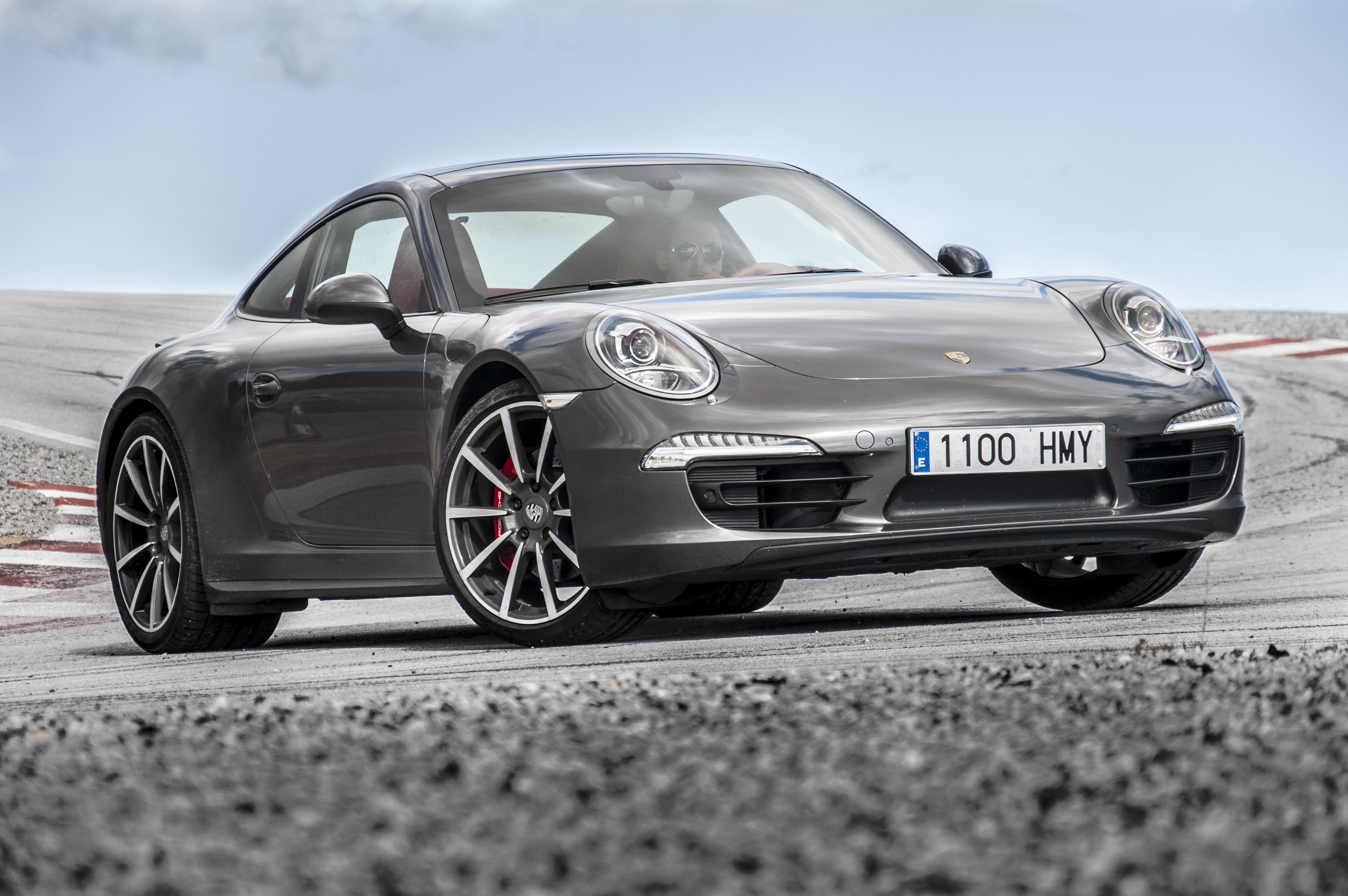
The Porsche 911 is a famous sports car that started being made in the 1960s. The 1967 version is one of the early models, known for its unique look and great driving experience.
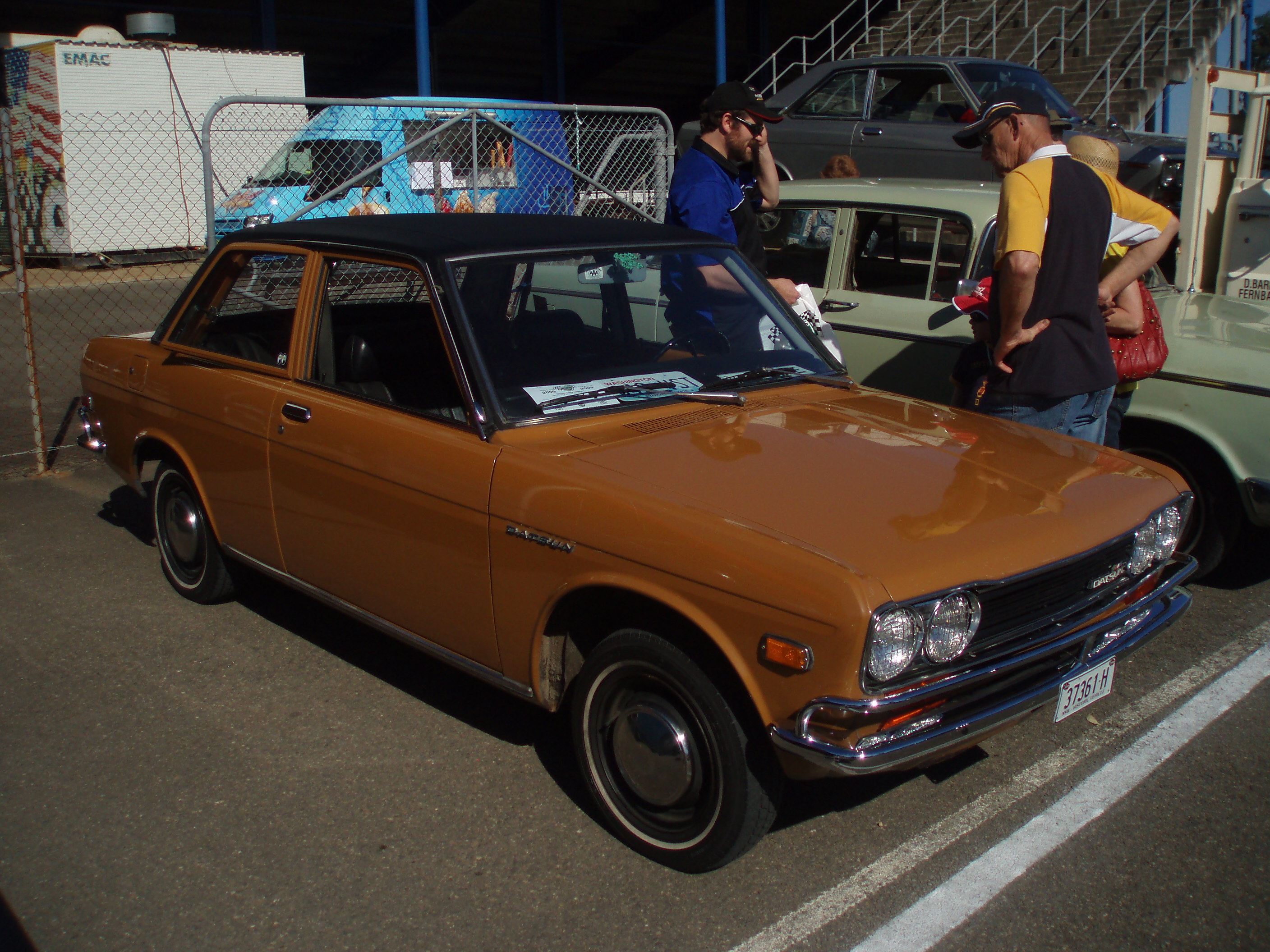
The Datsun 240Z is a classic car from the 1970s that many people admire for its sporty look and good performance. It was one of the first Japanese sports cars to become popular in America, and people often talk about it because of its cool design and history.
The Nissan 240Z is a cool sports car from the early 1970s. It's known for being stylish and fun to drive, and many people like it because it's not too expensive for a sports car.
Matching numbers means that the parts of a car, like the engine and the body, are the original ones that came with it from the factory. This is important for collectors because it shows the car is authentic and can be worth more.
Carburetors are parts of an engine that mix air and fuel together so the engine can run. They help make sure the engine gets the right amount of fuel to work well, especially in fast cars.
A rear engine car is a type of car where the engine is located at the back, behind the rear wheels. This design can help with grip and handling, but it can also make the car feel different to drive compared to front or mid-engine cars.
Normally aspirated means that the engine gets air naturally without any extra help from turbochargers or superchargers. This can make the engine sound different and feel smooth when you drive it.
The Chevrolet Corvette is a fast and stylish sports car that many people love. It's known for being powerful and fun to drive, and it's often talked about because it's a big part of car racing and American car history.
Daytona is a well-known race track in Florida where many big car races happen, including the famous Daytona 500. It's a popular place for motorsports fans.
Laguna Seca is a famous racetrack in California where many car races happen. It's known for being very challenging for drivers.
Car
Abarth Carrera
The Abarth Carrera is a special version of the Porsche 356 that has been modified to be faster and sportier. Abarth is known for making cars perform better.
The Porsche 356 is an older sports car that was made by Porsche. It's known for being light and fun to drive, and many people love it for its classic style.
The Porsche 917 is a famous race car that won many races in the 1970s. It's known for its unique look and powerful engine, making it a favorite among car enthusiasts.
The Porsche Cup is a racing series where all the cars are Porsches, and everyone races the same model. This makes it fairer because the competition is based on the drivers' skills rather than the cars' differences.
Car
Porsche 962
The Porsche 962 is a famous race car made by Porsche in the 1980s. It was very successful in racing competitions and is known for its speed and advanced technology.
Formula One is a top-level car racing series where teams compete in fast cars on different tracks. It's famous for its exciting races and high-tech vehicles.
The Kia Rondo is a family-friendly car that has a lot of space inside for people and things. It's designed to be practical and easy to use, which is why some people talk about it when discussing good cars for everyday life.
The Indianapolis 500 is a famous car race that happens every year in Indiana. It's known for being very long and exciting, with cars going really fast around a big track.
Mickey Thompson was a famous car racer and inventor who created special cars for racing. He is well-known for his contributions to different types of motorsports.
The Datsun 510 is a small car from the late 1960s and early 1970s that people really liked because it was fun to drive and handled well. It's often mentioned in racing stories because it was successful on the racetrack.
LIVE
Welcome to Porsche Pattern with Bracken Helms, the show where we hear Bracken and his distinguished
guests from the Porsche community patter on about Porsches and all things automotive.
Porsche Pattern is sponsored by Circuits Explore.
Circuits Explore creates authentic, automotive apparel made for life-minded automotive enthusiasts.
The links for Circuits Explore are in the shown notes.
Okay, let's get to it.
John Morton, part four.
Okay, there's a few comments I want to make on this one.
Actually, they have nothing...
Well, the first one has to do with it.
The other ones are just kind of like, I guess, update.
So I asked him, was there anybody that was really supportive in your career?
And he says Peter Brock, but I could feel that he really wanted to say Sylvia, but maybe
he was trying to keep it professional and thinking that I just wanted an answer of like
a name or a company or a racing team or whatever.
And so I do have a little story with that.
So I was talking to Jerry Woods, and he said they were at some show, like I
don't know if it was a vintage show, but they were all there just having fun.
And he went up to Sylvia, who was in the stands, keeping time and doing what she does.
So Jerry joked with her and said, what are you doing?
We're all here having fun, what are you doing?
She says, John wants to know how he's doing out there.
So I thought that was kind of funny.
John was wondering, I guess maybe if he was as fast as each lap or as fast as
he was out last time he was out, and so he had her up there running his numbers.
OK, so next he was talking about how he got that 1971 Z and they had a big show coming up.
Well, it was last week.
It was the 20th anniversary of the Japanese classic car show that was last Saturday,
the car which he still has not gotten delivery of.
Now he has.
Now he says it's in his house, but I went straight to this car show and it
won the 240 period correct modified class because like he said, it's mostly
stock, but they did hop up the engine a little bit and put some of the stuff on that
like he raced with.
He also mentioned that it was the 60th anniversary of BRE.
But the guy that built his car also won the overall show award with a different
car that he built.
He not meaning John Morton.
He meaning the guy that built John Morton's car.
The crazy thing is I don't really even think he's in the street cars.
I don't think he'd buy a fun car if it wasn't just given to him.
And then once it was given, I guess he spent a bunch of money like restoring it.
He said to me, too bad my friends didn't own a Porsche.
I wish I would have been gifted a Porsche, which I don't know if he was
saying that to humor me or if he meant it.
I felt like he meant it, but that's also thinking.
I think he's just trying to humor me because I'm a Porsche guy.
Anyway, here's John Morton, part four.
What about street cars?
Do you know much about street car, the Porsche street cars?
When I got with Sylvia, you know why I know her.
You she was running.
She was doing a story on you or on the team book.
Oh, she was writing the book and you had to ask Peter Brock.
Can she do this because she came to you first, right?
And you're like, hey, it's not my team, lady at a race.
Yeah, I don't know how you know all that stuff.
But yeah, but she had a 9-11 when we started being together
that she bought new in Germany in 1967.
So 67 9-11.
So it's a short wheelbase.
Yeah, it's the one that doesn't have a little space.
Yeah, it was our car for, you know, several years.
And then she sold it and she didn't want another one.
And, you know, she's 85 years old, so it doesn't want a new Porsche right now.
Yeah. No, she's 84.
And I've never owned a Porsche Streetcar.
I've owned a friend gave me a car she bought before she was married.
And her husband basically gave it to me in 1971, 240Z.
They'd been damaged and repaired poorly.
The damage happened 20 years ago or one.
Anyway, so now it's I spent a lot of money making it perfect.
It's perfect.
I haven't even taken delivery of it yet.
I've driven it.
It's going to be shown at a show, a big Japanese car show next month.
It's a 71 first year.
It was built 70.
It's a one owner bigger engine.
Same serial number, same engine numbers, matching numbers.
But it's been hopped up and it's got the same carburetors.
We ran when we won the two national championships with Duel Makuni.
Four or three Makuni carburetors.
OK.
Difference in racing a rear engine car.
You mean with the Datsun?
Well, yeah, I mean, most cars are front engine or mid engine.
And so like how much different is it to race a rear engine car?
I when I bought that Lotus 23, I had not driven a rear engine car anywhere.
Maybe I drove a Volkswagen or something.
But I had not experienced racing a rear engine car at all.
We took it out to Riverside and I took a few laps in it.
And it felt weird because it was rear engine.
I'd never driven a rear engine car and just the Lotus seven.
And Miles was out there because we had to leave.
Both cars had to go to Canada and leave that night.
He was out there driving a Cobra two eighty nine team car
that he was going to race in Canada and they were going to go in the same truck.
He was there and I said, could you take my car out
and take a couple laps in it and see what you think?
It feels a little different to me.
So Miles got in it and drove it two laps, three laps, whatever.
So it's fine. No problem.
So OK, if he says it's fine, it's fine.
We loaded it up that night, went to Canada.
I qualified second in a two liter class.
And how was it racing against Porsche?
It was fun because everybody thought they were the the cats meow.
And when you beat them in a Jaguar or an Nissan, it's
or a Datsun in the case, we won two national championships against
our competition with the TR six triumphs and the nine fourteen six Porsches.
We beat them. Yeah, it was fun.
If you're in an underdog and you beat an overdog,
it's it's more fun.
Well, we kind of already went over that.
You're going from a nine sixty two to the Jaguar to the Nissan.
You preferred the Jaguar of those three.
It was partly the aura of driving a normally aspirated V12
that had the nicest sound and it was a small team.
It was Bob Tullius's team.
We were not supposed to win.
And Hurley and I won two races in that car.
Riverside, the last race.
We won Palm Beach against the Corvette GTP car
and the cars that we shouldn't have been able to be.
Yeah, sixty twos.
Have you ever been to a rent sport reunion?
Yeah, I was at two of them.
I was at the first one I was at was Daytona.
I think the first one they had two.
OK, have you?
Yeah, I've been to.
I went to four when I first moved to California.
Then rent sport reunion five.
I went as a vendor six.
I went as a vendor and seven.
I went as a vendor.
What were you selling?
I sell I could send you a link.
I sell Porsche apparel.
Oh, apparel. Yeah.
So which one did you go to?
Do you want to go to any at Laguna Seca?
Yeah, I went to the first one.
I think I raced Miles Collier.
The Scarab was theirs.
That crashed.
It's perfect again.
I drove the eight cylinder Porsche spider of theirs.
But at that rent sport, I drove the first
Abarth Carrera ever made.
That's cool.
Except it was a 1600.
It wasn't very fast.
It's a 356 chassis, basically.
Yeah. So yeah, we're at the same one
because I went to four.
Four was the first one
at Laguna Seca.
I remember when I went to four,
I remember meeting up with some of my Porsche friends
and they didn't even know what it was.
They were like, well, are you going to works?
And I'm like, I can't go to both shows.
So I picked to go to rent sport union.
And they're like, you should have went to works.
And now to hear that would be like,
you picked a stupid car show on a golf course
over rent sport union.
Yeah. But yeah, it was like,
yeah, it was not that big yet.
Like it was pretty special.
Like I wandered wherever I want.
I did whatever I wanted.
Now it's crazy.
Yeah.
There was a 917.
You've seen it.
I'm sure it's like purple flames on it type.
The hippie car.
Huh?
I think it's called the hippie car.
It looks like it's got purple flames
and it's green and purple.
Yeah, it's the hippie car.
I took Sylvia around Laguna in that car.
And we had to sit there with it running
because the starter wasn't working.
It just an exhibition lap.
I think that was the first rent sport in Laguna.
You got your pilot's license kind of thanks to Porsche,
but you also got screwed out of a bunch of money.
Thanks to Porsche.
Well, you were running the series
and they gave all the money to the other driver
because you were a second driver.
And so you got screwed out of money,
but you got a pilot's license out of it.
I got screwed out of money,
but I didn't know about the Porsche Cup.
I never heard of it during that year
until later.
I mean, I didn't know that you got more points
till I heard your story.
So even though you guys were the same driver,
he got quite a bit more money and...
He bought me flying lessons.
Yeah, so you've got flying lessons thanks to Porsche.
Yeah.
What race did you feel that you got most in the groove
where you're just like, I'm on fire today.
Like, everything's going my way.
Yeah, I had one race like that
and that was that Riverside race that I won.
In the Jaguar?
Yeah, in the Jaguar.
Okay.
Because I felt like,
and the guy I was passing is Holbert's 962
with Chip Robinson driving
because they were going to win.
We didn't qualify that well
because the car wasn't all that fast,
but late in the race, it kind of came alive
and the track was old and kind of worn out.
I think I'd preserved my tires a little better than Chip.
I was catching him and I just felt inspired
and I thought, you know,
Parnelli feels like this every race.
How come I don't feel like this every race?
But anyway.
What racing series was most enjoyable to you?
The most enjoyable was,
I hadn't had a lot of success
at the time I'd started driving for Datsun.
The national championships in the Z
and then the two Trans Am championships in the 510.
I don't like to be identified as a Datsun driver
because I drove a lot of other cars,
but I did the best.
There was nobody that,
the last year of the 510, the 72,
Brock had a third car.
We built a third car to put whomever in.
Brock trying to get the best drivers
that would take a ride in that car.
Sam Posey, Bobby Allison,
Herschel McGriff, Peter Gregg, Bob Sharp,
and I could beat them all.
It's not fair.
I mean, if I'd been in Bobby Allison's Coke machine,
you know, this Chevy and raced him at Riverside,
he'd have beaten me.
I felt so good in that, you know,
I knew that car and if Allison had been driving it
the whole time, he would have been good in it too.
Well, but I mean, let's not, anyway.
Yeah.
You don't really have too much of an ego
when it comes to racing.
You downplay rather than upplay.
Yeah, well, you get less disappointed
when you're disappointed if you're ready for it maybe.
Yeah.
What racing series did you find most challenging?
You know, I can't say Indy cars
because I never had a car that was, you know, even close.
But I would probably say the most difficult
was 5,000 and Can-Am were very competitive.
And I ran more of Can-Am than 5,000,
basically the same car.
I mean, I'm younger.
So like I look back at motorsports
and, you know, I wasn't there at the time.
So it's all either black and white footage
or grainy footage.
And it's like the drivers are greasy.
They're dirty.
They're, you know, it's just gritty racing.
It's just like raw.
And now you think about racing now.
And it's like, especially if like Formula One,
it's kind of like a model, like a fashion show
or like a Kentucky Derby.
Like everybody shows up with their little hats
to like, well, they want to see their horse win.
Like it's kind of hoity-toity now.
Yeah, to some degree, it's the biggest difference
in racing is it used to be a dangerous sport.
It's not a dangerous sport anymore.
Vintage racing is more dangerous than real racing.
People don't get hurt much anymore, let alone killed.
They used to get killed all the time.
I mean, often, first time I went to Le Mans,
a guy and he was in a rondo and blew a tie
or something, he hit, it killed.
That was intimidating.
Cause it was on the straight.
But you don't even think about it.
I mean, if you do, you're thinking
because it used to be that way,
you don't factor in that level of danger that you used to.
Everybody always talks about the mentality of a racer.
Like you got to be focused.
I mean, you can't be daydreaming.
I mean, you're always focused.
They get in the zone when they do their little rituals.
To add on to that from the past,
they had all those same things,
but they also had like, I could be dead.
I could die.
One of my friends could die.
I mean, that's got to add like extra tough mentality.
The best thing I read recently was something
that a quote out of a book Andretti wrote or had written
was a quote by Andretti said, and this is back.
You know, he was racing in the 50s.
And he said, if I had stopped to think
about the danger of what I'm doing,
I probably would have never gotten back in a race car.
But he said, I respond to a different challenge
or however you word it,
I race like I'll do anything to win a race
without thinking of the consequences.
I'm butchering this quote,
but the consequence that I don't think about
is I don't want to think about it.
He was in an era that was super dangerous,
but it isn't really very dangerous anymore.
I think it changes your mindset.
I mean, they crash still in this,
but hardly anybody gets hurt.
So it's not something you have to think about,
but Andretti avoided thinking about it on purpose.
And I remember that because it was dangerous
back when I started.
So that's kind of a similar question.
I was going to ask like, did you fear death
or did you just didn't let it enter your mind?
Like when you're starting.
It's almost like you can't make it not enter your mind
because you know about it.
There it is.
I choose to do this because it's what I want to do.
I always said it's fear of a regular job
that keeps you doing something stupid.
So what were some of the differences
between different eras?
I mean, did it change much or just the cars changed?
You know, there are tracks like Elkhart Lake
that are just exactly where they were before,
but they've added safety enhancements
to all of them, including the oval tracks.
When something happens gradually,
you know, it's not like you pick up and it's different.
Did you lose anybody close in racing?
The thing that impacted me the most
and it still does was McDonald.
And what year was that?
64.
Okay.
Because I told you about having Miles drive my Lotus
a couple laps to tell me it's okay.
That happened and we went back to the shop.
The cars were loaded up to go to Canada that night.
Most Ford.
I hitched a ride in the truck to get to Canada
with my car in the back.
Mine, McDonald's and Miles.
And I'm not sure if we had another Cobra for Bob Johnson,
but I'm driving in the semi.
And as we drove, it was the week before Indianapolis.
The race in Canada was the week after Indianapolis.
So we thought, cool, we can listen to the ND 500
while we're driving to the race.
And we were all pulling for McDonald
because he was driving, not a good car.
He was driving one of Mickey Thompson's
goofy little cars.
Friends of his told him, don't do that.
Don't drive that car.
But he had made a commitment.
So he was going to drive it.
Qualified wealth for the car he was in.
The race started and we're listening to it on the radio
and he crashed with Eddie Sachs.
Killed him instantly and McDonald died a few hours later.
It burns.
Okay.
If you could redo one race, what would it be?
The race with Peter Gregg in the Datsun 510,
Buttkins Glen, because he won.
And the reason he won, it sounds like sour grapes,
but it's not sour grapes.
He was, like you said, your father was an asshole.
My grandpa.
Oh, your grandfather.
Well, he was not a popular driver.
Yeah.
And he was going to drive the Datsun.
The first race that he was going to drive was mid Ohio.
And I had the pole and the car overheated right away.
The car was totally reliable,
except the first part of that season, 72.
And Gregg won the race.
He was very good, I'm not.
And then the next race I think was Watkins Glen.
He outqualified me and I thought my engine's not right.
Watkins Glen had a speed trap.
The only track that I know of
that had a speed trap way back then.
And my car's like 10 miles an hour slower than his car.
And there were identical cars.
And he said to me, as an asshole would,
when you start driving faster cars, you'll get better.
That's what he said to me,
even though I'd won the championship one year
and it was dominating the second year.
He had to be a prick.
Something inside of him made him have to be a prick.
And so they looked at the speed, the trap speeds,
and they put a new engine in my car
and the morning warmup, I went faster than he qualified.
So the race started and Quick gets the lead in the Alpha.
And he's second,
because he on the pole, I think, every second.
And I'm third.
I'm following him.
He couldn't get by Quick in the Alpha, so I passed it.
And I got by Quick and I pulled away.
And I had about, I know, several seconds on him.
And it was, we had discussed before, we don't have to stop.
We've got good enough mileage, we don't have to stop.
So I thought, okay, I got this race one.
I'm, you know, several seconds ahead of him.
And he was way back, but he was gone.
And I thought, oh, he broke, because we're not stopping.
Yeah.
He broke.
And so I backed off because I had a huge lead.
So a lap or two later, Brock calls me in for a pit stop.
And I thought, why?
I thought I'm in trouble because I backed off so much.
Greg, if he stopped and it was a good stop,
he's made up all the time he'd lost
that I had pulled away from him.
So I made a stop and I didn't come in like,
back then there were no speed limits.
You come into pits at 120 miles an hour if you wanted.
And I didn't ever feel comfortable doing that.
So I came in at a brisk briskly,
got the fuel and left as he went by.
And I had like two laps and I couldn't get back by him.
So he won.
The reason he won was because I backed off
because I didn't know we were going to make pit stops.
Yeah.
Because I had passed him and pulled away from him.
So that race bugs me because that's the only one
of those races that bothers me.
Did you have a rival you felt that made you better?
No, not exactly.
I guess George Fulmer was a rival,
but that was way earlier.
The Lotus Porsche, that goes back to the 60s.
Did you have any rituals or superstitions?
No.
Where do you think you would have been
in your racing career had you had money?
Probably did.
No, I'm just kidding.
I would have at some point raced at Indianapolis.
It's really hard to say.
I would have not suffered through the early part
of my career looking for money.
Because you definitely like went through your ruts.
If you want to talk about dead periods,
right after Shelby's was the first one.
And that was very early in my racing.
That ended when I started driving for Dotson.
And when I stopped driving for Dotson
or when Dotson team disbanded,
I had another long period of long struggle
trying to find money and racing in the Can-Am series
and the Formula 5000 series.
Then gradually I was making a living again.
I made a living during the Dotson period.
Not a great living, but it was,
for me, it was good at the time.
What did your parents think of you leaving college
and just chasing this dream?
Spend it all your money.
Money that was supposed to be for college.
I think my father always thought I'd get over it.
And my mother, I think she thought maybe
that's what I ought to be doing.
And she was more supportive.
Like he just kind of thought, I'll wait this out.
I think that's kind of what he,
I'm not sure he cared that much.
He go to the races, but he wasn't very supportive.
Like the time I was in Lotus, my own car,
it was entered by Shelby and I had an engine failure, one race.
And he looked at the car, you know,
with the hole in the side of the block
and he said, I guess you're not gonna get killed today.
So is that support?
Not exactly.
Yeah, I got what you're saying.
What about you?
Were you like scared?
I mean, or were you just, I'm going to do this.
To me, it would be a little bit scary.
Like I'm in school doing what I'm supposed to do.
And then-
I didn't like doing what I was supposed to do.
I didn't like school.
Okay, so leaving school probably wasn't that tough for you,
but still like taking this money,
like I guess you could have like used that money
to like invest in something else
and just go spend it on race cars.
Was there any fear at that point?
No, I never had any money that I was worried about losing.
Did you have an individual
that really was very supportive in your career?
In my career, yes, at a time in my career,
Peter Brock was supportive.
When you were driving, was it just like pure intensity
and focus or was there fun
or what's going on while you're racing?
Is it just like not fun till that race is over
or are you enjoying it while you're doing it?
I enjoyed racing,
but it's always full of nerves and sometimes doubts.
But yeah, I wanted to be a racer,
so I liked that I was racing.
I never was overly confident, was probably a handicap.
Was there a time where you felt scared
or rattled while driving?
During the act of driving?
Yeah, or even going into it,
like you're getting ready to go race
or you got a race coming up
and something kind of got in your head.
Well, there's always a little trepidation
when you're gonna race.
I think almost everybody feels that way.
They want to do it.
I don't call it fun.
I never called racing fun.
I called it tense.
Fun is what water skiing is,
or riding a dirt bike, that's fun.
Driving around in a race car on a test track
doing that sort of activity
when you're trying to sort a car out.
I enjoyed that.
Was it fun?
I wouldn't call it fun, but I enjoyed it.
And I also enjoyed the races more
after they were over than before they happened.
Thanks for joining us for today's episode.
If you enjoyed the show,
please subscribe, comment, like,
and share with your friends.
Feel free to send questions or suggestions
to the email in the description of the show.
Special thanks to our sponsor, Circuit64.
Goodbye for now.
We hope we can get together again for our next episode.
Now get out there and enjoy the cars and the people.
About this episode
John Morton shares more insights from his racing career, reflecting on the support he received from figures like Peter Brock and his partner Sylvia. He discusses his recent win at a car show with his modified 1971 Datsun 240Z and reminisces about the challenges of racing rear-engine cars. The conversation touches on the evolution of racing safety, memorable races, and the mindset needed for competition. Morton also reflects on the camaraderie and rivalries in his career, providing a candid look at the highs and lows of being a professional driver.
John Morton is a race car driver. He raced with the Shelby, BRE Datsun, Lola, Porsche, Jaguar and Nissan. Then started vintage racing after 2002.
-1971 & 1972 Trans Am Championship in Datsun 510 -1979 class win at 24 Hours of Daytona in Ferrari 365 GTB/4 -1984 class win at Le Mans in a Lola. -1993 & 1995 class win at 12 Hours of Sebring in Nissan 300ZX -1994 winner of 12 Hours of Sebring and class win at Le Mans.
In this episode we talk about: -1971 240Z he was given. -Racing against Porsche. -Event that led to becoming a pilot. -Racing back in the day. -Chasing the dream of being a race car driver.