IndyCar is a racing series where specially designed cars race on different types of tracks. It's famous for the Indianapolis 500, a big race that a lot of people watch.
Formula One is a type of car racing that features very fast cars on special tracks. It's popular worldwide and has many famous races, including the Monaco Grand Prix.
Le Mans is a famous car race that lasts for a whole day. Teams of drivers take turns racing their cars around a track in France, and it's known for being very challenging.
A stock car driver races cars that look like regular cars you see on the road but are specially built for racing. They often compete in events like NASCAR races.
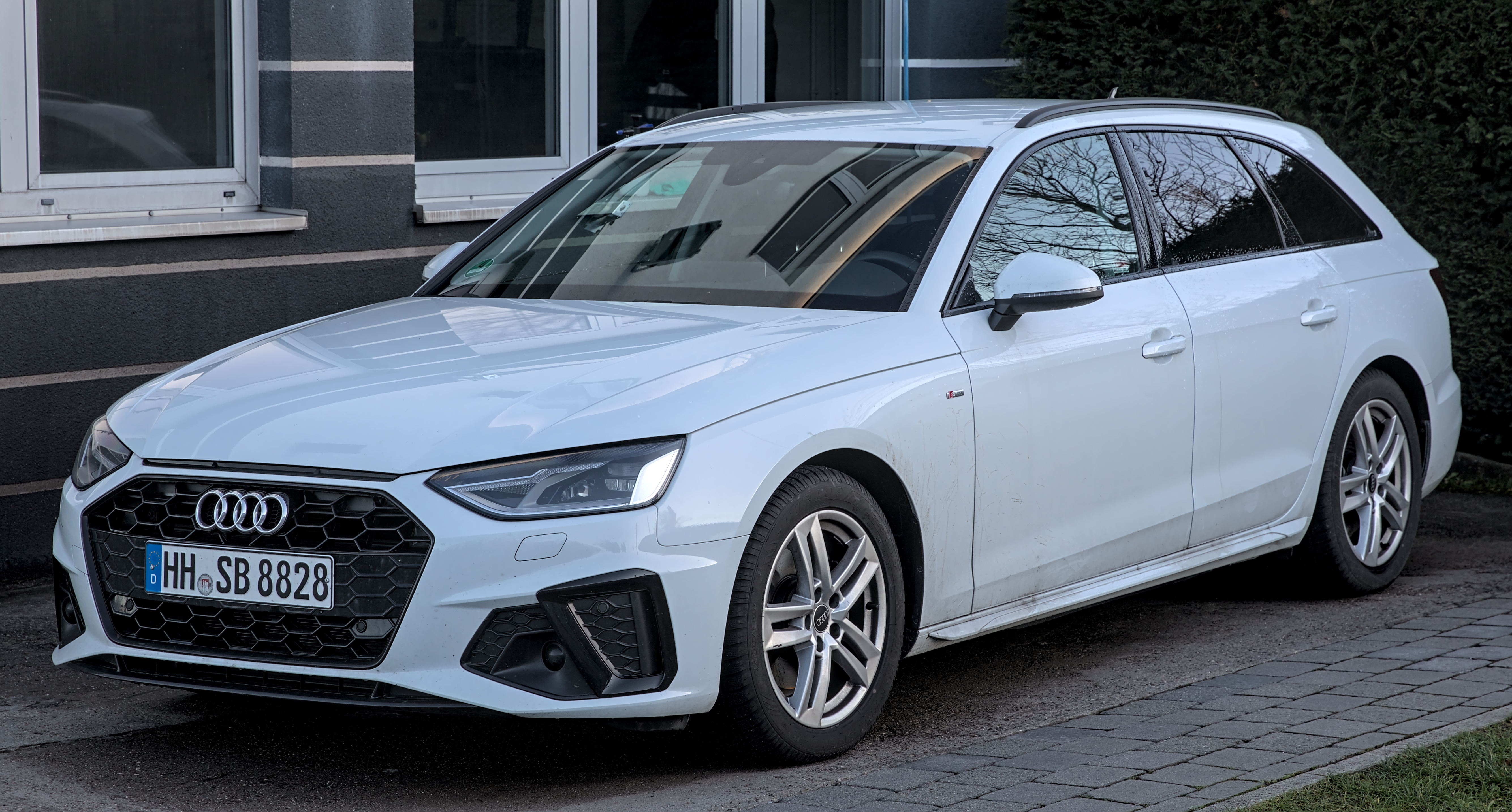
The Audi A4 is a car that many people like because it drives well and has a lot of nice features. It's a good option for those who want a mix of fun and practicality.
The MGA is a classic sports car from the 1950s that many people love for its good looks and fun driving experience. It's a favorite among fans of vintage cars.
Factory delivery means you get to pick up your new car straight from the place where it's made. It's a special experience where you can see how the car is built.
LIVE
Welcome to Porsche Pattern with Bracken Helms, the show where we hear Bracken and his distinguished
guests from the Porsche community patter on about Porsches and all things automotive.
Porsche Pattern is sponsored by Circuit 6-4.
Circuit 6-4 creates authentic automotive apparel made for life-minded automotive enthusiasts.
The links for Circuit 6-4 are in the shown notes.
Okay, let's get to it.
John Morton, part six.
All right, this one starts out a little funny or a little sassy.
I mean, I hope it didn't.
It sounds disrespectful as hell when I listen back to it, but I don't feel like it was in
the time.
We were kind of playing with each other and I asked him, what gets you excited?
And he didn't answer and I kind of had an idea what I thought he was going to say.
And so I told him that and then he's like, I thought you were the one that was supposed
to be asking me the questions here.
And so I say to him, I did ask you and you were not answering.
So I was going to try to help you.
I don't know what happened, but I don't feel like at the time I feel like
we were just kind of going back and forth, but I never want to be disrespectful.
And a lot of times, especially because this one was done, it wasn't done in person.
It was done over Zoom.
So I can't necessarily laugh or because it will take the voices blend together.
So when I talk, all of a sudden it kind of mutes theirs and vice versa.
So I try not to laugh too much or make comments.
But man, when I asked him, what time period would you go to?
And he says, blah, blah, blah.
Well, I mean, I wouldn't want to be a pilgrim.
I don't know if that's funny in general or it was just funny to me.
But when he said I wouldn't want to be, I wouldn't want to be a pilgrim.
Oh my God, I was trying to, I was like dying inside, but I couldn't laugh.
I think I told him later that I was dying, but oh my gosh.
One more thing that I wanted to comment on this.
He wanted Sylvia kind of in the background in case he like got the dates wrong or she
wanted to like chime in and I told that to Jerry Woods and he's like, she was
already there and she was already listening to it.
You're a fool for not having her participate in the interview because you
know, she had good things to say.
But before going in this, I didn't know who Sylvia was.
I've since read articles and now I know, but yeah, I guess I'm a fool.
Anyway, here's John Morton, part six.
Okay, what gets you excited?
I think I know what the answer is.
Do you want me to tell you what I think it is?
No, you're supposed to be running this show asking me questions.
I did.
What gets you excited?
Flying my airplane.
Yep.
That's what I thought it was going to be.
If you could have one wish, what would it be?
To be about 30.
Okay.
Best advice you've ever gotten.
The best advice I ever got maybe was from my mother because I had a
girlfriend that I was going to marry and I was young.
I was 20.
One, she was 18 and my mother said, if you want to be a racing
car driver, you better think twice about marrying right now.
I married that young.
And, but I think my mother was right if you're going to devote
your life to something as selfish as racing, which it is.
And to some degree, ruthless, which it can be, you probably
shouldn't take somebody down with you.
It takes a very special mate to have a successful relationship with
somebody who's so devoted to, in this case, racing and in other
cases, could be reacting.
It could be running a company.
It could be whatever, but doing it in pairs.
You know, it's a challenge because it's a selfish endeavor.
Yeah.
What would you tell a 20 year old, John Morton?
I'd tell him it's too late.
You've got to start at nine.
Like you're talking as far as racing and everything.
Yeah.
Yeah.
Well, it's the only thing I know how to advise them on.
Leave the drugs alone.
I never took drugs.
So I mean, who hasn't smoked a joint in their lives?
I don't do any of that.
I smoke cigarettes for years.
Hardest thing you've ever had to do.
Get a divorce.
Did you have mentors?
I kind of did.
I think I was sort of mentored by Miles, I guess.
Ken Miles, a little bit, not in the true mentoring, but I drove with him
and he had to make that decision.
He had to make that happen.
Peter Brock, in a sense, he was an employer and he became
very supportive of me.
What's your prized possession?
My motorbikes, my scooters.
Do you have a lot of motorcycles or scooters?
Yeah.
I just put one away that I'd been riding.
That's a 1949 wizard that I'd been riding around town, but it belongs upstairs.
It's a little museum type place.
It's a little museum type place and my airplanes, two airplanes.
How big are your airplanes?
Like how many do they seat?
I have actually three airplanes.
Two of them seat two, the pilot and a passenger.
And the other one's a four-place plane, so three people and the pilot.
I hate flying.
I'm scared to fly.
It's not like I'm afraid of dying.
We don't want to get into all that.
If you could change something about yourself, what would it be?
It's too late.
I'm 83 years old.
It's too late to change.
If you could acquire a skill, what would it be?
I'd like to be more of a reader.
Girlfriend was written 27 books and I've read them all, but I haven't read much else.
I've read books, but I'm not a reader.
I'd like to have been a reader.
So if you could go back in time, what time would you go to?
I'd want to go back to a period in racing.
I don't want to be a pilgrim.
What era of racing would you go to?
The area of racing that stimulated me to do that, the whole rest of my life, was in the late 50s.
But would I want to go back to it?
Probably not, because you learn through the progression in racing, the safety.
Let's take, for an example, a really good IndyCar driver from the 50s that survived,
Sabukovic, who did not survive, or the Bettenhausen senior who didn't survive,
and a lot of them didn't.
And that was the period, not because they didn't survive, but that was the romantic period to me.
Not IndyCars only, but Formula One and sports cars.
But I wouldn't want to go back to it because I've learned enough about how dangerous it was.
It was what it was at the time.
That's what it was and that's what attracted me, not the danger, per se,
but the fact that there isn't any danger left or almost none.
To me, takes away some of the charm.
Some, it didn't charm as a wrong word, but some of the attraction.
Okay, what do you feel is your counting achievement in life?
The thing that I'm proudest of that I've ever done outside of racing is I wrote a book.
I didn't know I could write a book.
I saw Sylvia write books.
I watched her write them.
They didn't make her happy writing them.
When they were done, if they were well received, that was positive.
It's not a happy being drawn to something that doesn't make you happy, but you have to do it.
And in a way, there were times when racing was that for me.
But to be asked to write a book and said, we'll pay you to do it,
I would have never done it on my own.
I would have never done it without that stimulation.
And I took it on as a challenge and it did pretty well.
Yeah.
Any regrets or things you would redo in your life?
Yeah, lots of them.
I can't go into them all now.
I don't know.
I'm not even sure what they are.
I don't see myself as not having raced being a racing person.
If it could have been speed, boat racing.
When I was a kid, I loved the little hydroplanes, the little outboard hydroplanes.
And then I was drawn to the unlimited hydroplanes and it gravitated towards cars.
Best memory?
My best memory?
Yeah.
Well, one of them was Riverside winning that race, that last race.
That that was a big memory, a good memory.
Most of my best memories have to do with racing.
The best person that ever happened to me is Sylvia, my mate,
because she was doing something difficult as well with her writing.
And so she completely, and I mean completely supported because I was doing something difficult too.
Okay.
So I'm going to ask you some of the people that you've been associated with
and you can maybe either share a story or tell me something.
So Carol Shelby, you know, he was one of my heroes before I knew him.
And when I got to know him,
he gradually moved down a couple notches in a way.
But now that it's over, his life is over.
We kind of ended on a high note.
He said something to me once, I won't forget.
And he was sick, you know, he was not too long from the end of his life.
He said, I should have kept you.
And that made me, I don't even, you know, there was so much bullshit
in what he said that I don't know for sure if that was serious, but I like to think it was.
And I did drive for him in some vintage races in the Cobra Coops in England,
and he chose me to do that.
So, you know, I have to take him at his word, which is kind of scary.
I mean, I'm sure he did.
I mean, knowing you and how you downplay things, I'm sure it was probably legit.
Ken Miles?
You know, his driving in that facet of his life with Shelby is a large part of the success story.
Not as much as Phil Remington's, but Ken Miles was, I was very sad when he was killed
as I was when McDonald was killed, too, because those were the people that I really started,
that I knew they weren't just heroes.
They were closer than that.
I had positive feelings about him, and there were times when I could see his personality was
kind of counter to mine, but he was somebody I admired.
George Fulmer?
He was a competitor because we were doing the same thing.
I had a Lotus 23, and he had put a Porsche engine in his Lotus 23.
He started out with a Corvair engine in it, which was a loser.
And a friend of mine, he came to build him a gas tank for it.
And my friend said, I won't even work on a car that has a Corvair engine in it.
If you had a Porsche Spider engine, I'd be interested.
So George brought over a Porsche Spider engine in a station wagon a few days later,
and they built a car around it.
They modified the 23 engine.
He won the USRSC championship, and it set him on the pretty steep path of success.
I mean, he did very well, and he was a very good driver, had tremendous success with the
Penske team and others.
He got farther than I did.
Joken Moss?
He was a friend because we drove together on the Busby team.
I liked him.
He was a very likable person.
I'm sad that he's gone.
You know, he was a pretty laid-back guy for a Formula One driver.
And when I knew him, he was finished with Formula One, but he was a very competitive driver.
Hurley Haywood?
That was one of my favorite years with driving with Hurley with the Jaguar.
We won two races, and Wackenschau was supposed to win all the races in the
English version of the Jaguar team.
The time I spent with Hurley that season, the 87 season, was the season that Bob Tulius,
who was the Jaguar team in this country, was given the kiss off by Jaguar, and the deal went away.
The last successful American Jaguar team I shared with Hurley, and it was 1987,
with the Group 44 team.
We won Riverside, and we won Palm Beach.
We did well in other races, too.
Do you have any personal stories with Hurley?
No, not really.
It was fun racing with him.
He was a good driver, and you know, everybody knew his secret in racing, and I knew it,
and I didn't care.
I mean, it didn't make any difference.
He was a good person and an excellent driver, and I think things have worked out really well for him.
Okay, Vossick Pollock?
He was a good friend, and he did right by me.
I was in a race where a wheel nut came off, and I didn't have a spare wheel nut to
finish the race with.
We had to borrow it, and he sent me a card afterwards.
He wasn't involved in that, my team, sent me a card with $100 in it and said,
buy yourself another wheel nut.
Filmer and I drove the 934s at Watkins Glen for him, brand new 934s.
I drove the 906s were his that I drove.
I drove his 910.
Didn't race it, just drove it.
I drove some cool cars.
I drove all this Porsche stuff.
It was a brand new GT-R, 911 GT-R.
The one without roll-up windows and instead of leather on the dash, it had some kind of
junk.
It was just a cheap, a flimsy, it wasn't a flimsy race car.
Like what, here's this?
I mean, when did they start?
Did you say GT-R?
No, it's a 911-R.
Oh, it's a like 67-68, yeah.
A lightweight 911.
Right, right.
Yeah, I just tested it.
I didn't race it.
What did you think of it?
I don't even remember.
It didn't make a strong impression, because it wasn't worth a million dollars in.
John Paul Jr.?
I drove with him.
I mean, I know that John Paul Sr., people have told me crazy stories
about him, and I'm just like, oh, Lordy.
I drove with him, too.
I drove at Le Mans with him.
I drove at Le Mans with Sr., I drove for a season with Jr., with Phil Conti racing.
And then when he started getting sick, we, Sylvia and I, and three or four other friends,
would go spend an evening with him, have dinner, and Sylvia wrote a book about him.
I don't know if you read it, but she wrote a book.
No, I wasn't even aware that she wrote a book about him, let alone wrote it.
It's called 50-50.
And what that meant was, right from the get-go, we had a 50-50, whether he'd get
Huntington's disease or not, because it was in the genes.
His brother didn't have it.
His sister died of it.
His mother died of it.
His grandmother, I think, died of it, and he died of it.
The last year or two years of his life, we were very close.
You can read it.
It's an interesting book.
How many books had she written before she started writing yours?
She'd won a Mademoiselle award with one of them.
She was extremely well-received at first two books.
And the third one was, too, but that was, those were the two she had written
before me, not long before I knew her.
She did kind of a textbook teacher's book, How to Teach in the South.
But she'd written two successful novels.
And they weren't car-related.
No, she did write two car-related novels later.
She wrote one called On the Seventh Day, God Created the Chevrolet,
which is really a novel about two brothers that
one became a race car driver and the other one didn't.
Prominent stock car driver fiction.
She did one with a kid and his aging aunt driving a pickup truck across the country
because she knew they were going to put her in a home.
It's called Big Cactus.
It's really about youth and dying, old age and dying.
So what's her biggest book?
Probably the best-selling one she ever did was her first and second ones.
They were on the New York Times.
She was Mademoiselle Woman of the Year and she had a scholar,
you'd call it a scholarship to Stanford, who Wallace Degner was.
No.
He was a teacher and environmentalist.
Very famous and she got a Wallace Degner scholarship to study under him at Stanford,
which she did before I knew her.
Which book is her favorite?
I don't think she'd even have a favorite.
I think probably if it was Big Cactus, I think she'd probably say Big Cactus.
How did she get into racing?
She'd always like cars.
She went through high school and college and graduate school with a model A4
that she bought with babysitting money from her brother for a hundred bucks.
At the end of that car's reign of years, she got a job teaching in the University of North
Carolina, Asheville, North Carolina.
She taught there at the University of North Carolina, Asheville.
And she went and bought an MGA and then she bought a nine Porsche 356 Super90 Roadster.
And she loved that.
She took it to Stanford when she went.
And then when I met her, she had already half worn out in 1967, 9-11 that she bought in
Europe, went to the factory to get it.
Yeah, you told me that.
Did she have any after that or that was the last one?
That's the last Porsche.
We sold it to a friend that was a crew chief on a team I race for, one of Jim Busby's mechanics.
Well, that's all my question.
Well, the question kind of ended a minute ago, then I was talking about your girlfriend.
Yeah, she's the reason I kept it up.
If I had not had her, I don't know how far I would have got.
I don't know how far I got anyway.
After the BRE stuff, after the Dotsons, I really needed her to not financially.
She didn't have the money and we were both broke.
Or we both lived semi-poverty for several years, but I continued to race.
I think I told you the Voschik thing when he called me.
I mean, not Voschik had happened.
He was involved with the Interscope, Ted Field.
What story was that?
We lived in a one bedroom apartment for seven years near here in El Segundo.
But I got a call.
I had no money.
I got a call from Ted Fields that said,
Danny has got a conflict with Le Mans.
Would you be interested in driving for me?
Yeah, yeah.
And he told you, I can't pay you very much and you're thinking,
that's more than I've ever made.
Yeah, way more.
First time I ever got paid any amount of money of any consequence.
I mean, I got paid by Dotsons, BRE, but small potatoes.
Anyway, well, I enjoyed it.
It was fun.
I hope it comes together good for you.
All right.
Thanks so much.
Okay.
Thank you.
Thanks for joining us for today's episode.
If you enjoyed the show, please subscribe, comment, like, and share with your friends.
Feel free to send questions or suggestions to the email in the description of the show.
Special thanks to our sponsor, Circuit64.
Goodbye for now.
We hope we can get together again for our next episode.
Now get out there and enjoy the cars and the people.
About this episode
John Morton shares candid reflections on his life and racing career in this engaging sixth part of the series. He discusses his passion for flying, the challenges of balancing relationships with a racing career, and the importance of mentorship. Morton also reminisces about notable figures in racing, including Ken Miles and Carroll Shelby, revealing personal anecdotes and insights. The conversation touches on his prized possessions, regrets, and the evolution of racing safety, making for a thoughtful exploration of a life dedicated to motorsport.
John Morton is a race car driver. He raced with the Shelby, BRE Datsun, Lola, Porsche, Jaguar and Nissan. Then started vintage racing after 2002.
-1971 & 1972 Trans Am Championship in Datsun 510 -1979 class win at 24 Hours of Daytona in Ferrari 365 GTB/4 -1984 class win at Le Mans in a Lola. -1993 & 1995 class win at 12 Hours of Sebring in Nissan 300ZX -1994 winner of 12 Hours of Sebring and class win at Le Mans.
In this episode we talk about: -Mentors he has had. -Skill he wish he had. -Crowning achievement. -Some of other people he has met along the way. -Books Sylvia [Wilkinson] has written.