This is a light setup that uses air to hold the lights in place. Because it’s inflatable, it’s easier and faster to set up on location than heavy, fixed lighting equipment.
A proof of concept is an early prototype built to demonstrate that an idea can work in practice. Here, the aluminum frame and boom setup was used to validate the lighting approach before developing the inflatable version.
A belly tanker is a fuel tank that can be carried under an airplane and then dropped. The story here is that people later turned those tank shapes into race cars because they looked aerodynamic.
Concept
World War II drop tanks
During WWII, aircraft could carry extra fuel in tanks that they could drop later. Those tanks had a streamlined shape, so hot-rod builders reused the look for race cars.
Bonneville is a well-known place where people try to set speed records on salt flats. The host is saying these cars were usually used for top-speed runs rather than typical road racing.
Topic
road racing motorcycles
Road racing motorcycles are motorcycles raced competitively on tracks. The speaker is describing how they got involved in racing bikes early on.
A tire distributorship is basically a middle step between the tire brand and the customers. The speaker is saying they helped supply motorcycle tires for a large region.
The Jensen Interceptor is an older, sporty car made in the UK. It was designed for comfortable long-distance driving while still feeling fast. People bring it up because it’s one of the most well-known Jensen models.
The crankshaft is a key internal engine part that turns the engine’s motion into power. If a bike is known for crankshaft problems, it can mean the engine may need major repairs sooner than you’d expect.
Term
V4
A V4 means the engine has four cylinders arranged in a V shape. It’s a more complex engine design than some simpler setups, so repairs can be trickier.
A wrecking yard is where old or broken vehicles are taken apart so parts can be reused. It’s a common way to find replacement parts when you can’t buy them new easily.
Car
GSXR 750
A GSX-R 750 is a Suzuki sport motorcycle. It’s built to be fast and responsive, which is why it’s a big deal as a first bike.
Car
GSXR 1000
The GSX-R 1000 is Suzuki’s larger-displacement sport motorcycle, typically known for strong acceleration and high top-end power. Here it’s framed as a “big boy bike” with around 130 horsepower, which sets the context for why the speaker later moves into racing.
OMRA stands for the Oregon Motorcycle Road Racing Association, a regional organization that runs road-racing events. In the segment, it’s where the speaker finds a novice school and race series to get track experience.
A “novice school” in motorcycle racing is a beginner training program designed to teach fundamentals like riding technique, track etiquette, and safe progression. The speaker uses it to transition from street riding to organized road racing.
Race tires are track-focused tires designed for grip and predictable behavior at racing temperatures. The speaker contrasts not having race tires with buying “takeoffs” from established racers, implying the tire choice strongly affected performance and safety.
In racing slang, “takeoffs” are used race parts—often tires or wheels—that were removed from a bike after a session or event. Here, the speaker buys takeoffs from an experienced racer to get better equipment for their first race.
The “20 seconds” refers to a staggered start or handicap-style timing where slower or smaller bikes get a head start. The speaker explains that the event releases different classes in waves, then gives time gaps to manage speed differences.
“250s” and “600s” are shorthand for motorcycle engine displacement classes (in cubic centimeters). The speaker is describing how the race is organized into waves by bike class, with smaller-displacement bikes starting earlier.
The Fiat 600 is a small car made by Fiat in Italy. It was designed to be an affordable, practical car for everyday use. People mention it when discussing early compact cars and how they became popular.
Stock suspension means the motorcycle’s original factory suspension components rather than upgraded track-focused parts. The speaker notes the bike had stock suspension and older takeoff parts, implying it wasn’t set up for optimal racing grip and control.
Kawasaki is a well-known motorcycle brand. Here, the speaker says they worked for Kawasaki’s factory racing team, meaning they helped prepare race bikes.
“Dial in the chassis” means getting the bike set up so it handles the way the rider wants. It usually involves adjusting suspension so the bike turns and grips consistently.
AMA Superbike is a high-level motorcycle racing category in the U.S. The speaker is saying they weren’t at the very top level where the biggest stars race.
Air-cooled engines use airflow to keep the engine from overheating. In racing, how you cool the engine can affect how consistent it feels when you’re pushing hard.
Liquid-cooled engines use a coolant that circulates through the engine and radiator to control temperature. It’s one way to keep the engine from getting too hot during racing.
Displacement is basically how big the engine is. “Twins” means two cylinders, and “smaller displacement twins” means smaller two-cylinder engines compared to what the speaker’s group was running.
It’s software that helps sort through lots of pictures. Instead of you manually checking every photo, it can automatically find the ones that look best and skip the bad ones.
They’re talking about using the inflatable lights for car photos, not just in a fancy studio. They also mention using it in car dealerships where space and setup time matter.
LIVE
This is hard park and brought to you by right on and right Toyota out of Scottsdale, Arizona.
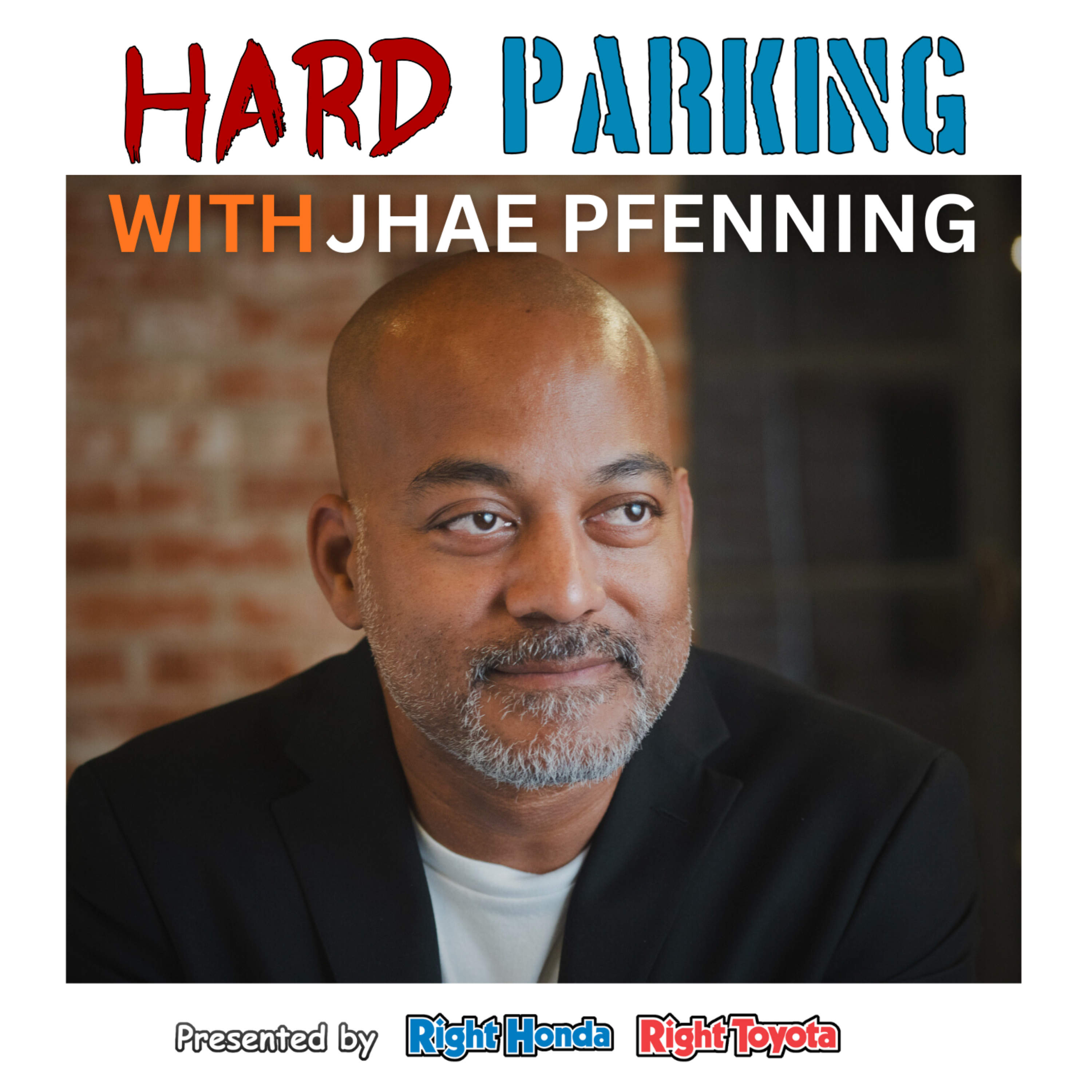
I'm your host Jay Finning recording from my home studio here in Gilbert, Arizona.
It is Mother's Day weekend, but today's episode we're not going to cover Mother's Day.
We're going to say that for next week because I traveled to my home away from home which is at
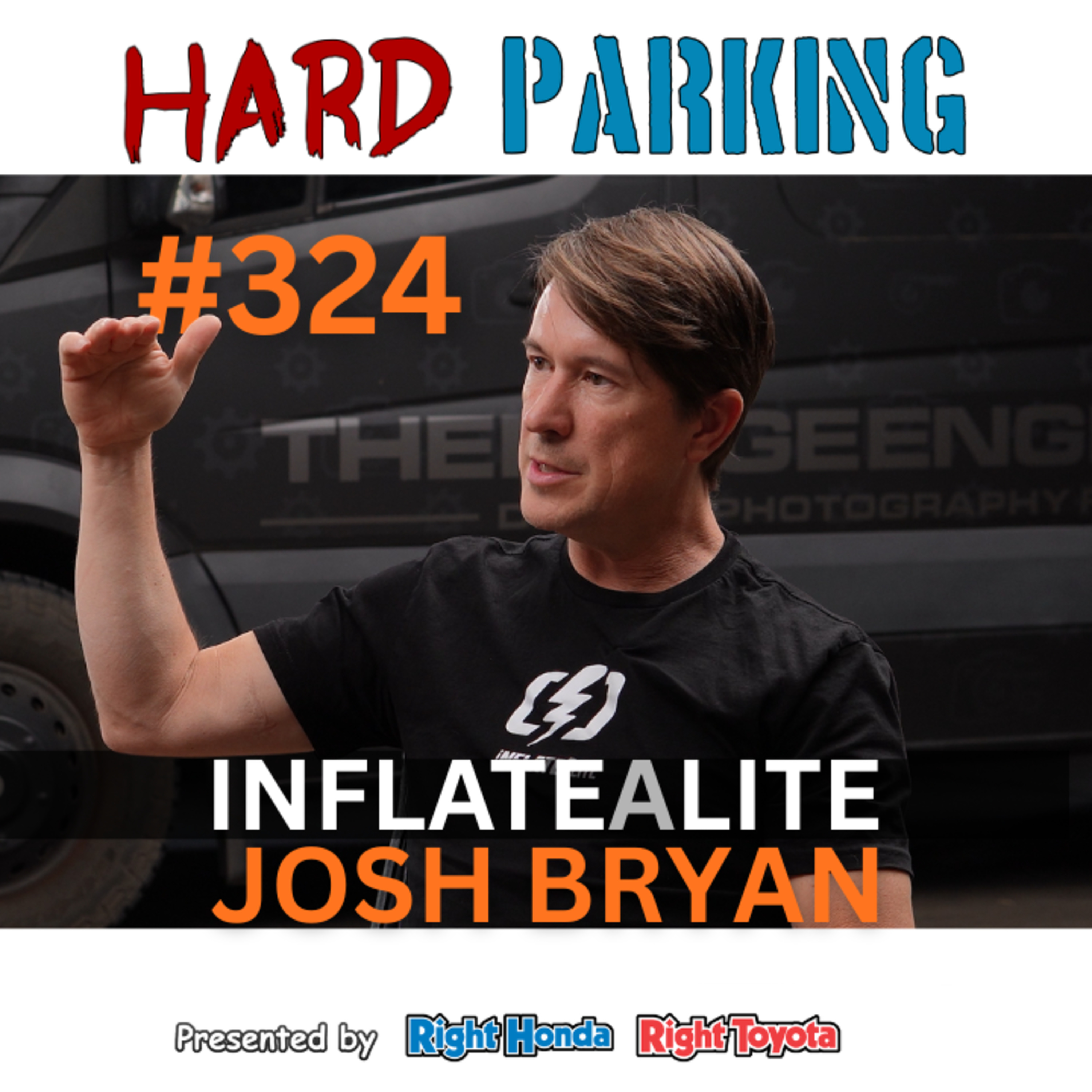
the warehouse and sat down with Josh Bryan. Josh invented an awesome lighting system,
an overhead lighting system called inflator light. He also has an incredible story, humble beginnings.
You're not going to want to miss it. All that and more coming up after this word from Arcus Foundry.
If you're on a business and you're tired of juggling tools, chasing logins and constantly
feeling like the tech side of things is heavier than it should be, this might hit close to home.
That tech fatigue usually shows up as an outdated website,
reviews slipping through the cracks, missed calls when you're busy, or social media that's always
on the back burner. Most business owners know something's off, but fixing it feels like a
bigger project than they have time for. Sparkforge is just to take that weight off. It handles the
tech behind the scenes, helps clean up how your business shows up online, makes sure calls and
messages don't get mixed, keeps reviews from slipping through the cracks, and wrangles social
marketing so you don't disappear for weeks. If you're curious, there's a short discovery session
and it comes with 90 days free to actually see if it makes things easier. No pitch, no pressure,
just a real conversation about what's working, what's broken, and what you can simplify.
So head over to getsparkforge.ai forward slash hard parking to get started.
So we're here at the warehouse with Josh Brian. Yes. I invented an inflator light and we're
actually underneath the light. So this is a time that I don't have to bring anything other than
the cameras. Yes. Tell us about the inflator light. Yeah, you bet. So like you said, we're under one
right now, a one that would be oversized typically for this application, right? This is designed to
shoot cars for this type of application, probably a 12 by 12 would be better. But anyway, it is a
light bank, produces really nice diffused light. And our big difference between us and a traditional
like a chimera or something like that is the quick setup, the lightweight, and gives you
flexibility that you didn't have in a traditional product. So why inflator light? Why did I develop
it? Yes. Yeah. Okay. So let's see the light story. Yeah. So we'll get back to my background. I'm an
automotive commercial automotive car photographer. And over the years, I built several studios.
And which was great, you know, you bring the car in, you shoot it, it doesn't matter what the weather
is doing, what time of day it is, all that sort of thing. But I started thinking this would be
really cool. If I could light a car or anything for that matter, anywhere, and have it look like
it was in the studio, like what if you could light a car at sunset with a mountain range in the
background, or the ocean or the city or who knows, right? And so that was, that was the beginnings
of inflator light. So I originally built a non inflatable version, just a basically an aluminum
frame, hung it off a boom on a van for proof of concept. And it worked great. You know, I went
out, I think the first shoot I ever did, this was probably four years ago, was in an aircraft
museum on the Oregon coast. And I had this belly tanker. And do you know what a belly tanker is?
I don't. So these were a race car that were built out of like World War II drop tanks for
World War II aircraft. So they would have these tanks that looked built kind of like a bomb,
right? And the idea is that fill the tanks with fuel, they would use the fuel out of
their first and they would drop this tank, it was basically something that could just be
gotten rid of so you didn't have to drag in the weight, right? So after World War II,
hot rod guys got these and they were like, hey, these look pretty aerodynamic, right?
Let's put wheels on them, an engine in them, and they made these these little race cars.
And you'd see them at like Bonneville and other places, usually for like top speed
sort of stuff, not so much like roundy round racing or road racing or anything like that.
So anyway, back up to this, I had this really cool belly tanker that was going to go up to
auction. And I thought what better place to do it would be at this, you know, aircraft museum.
So we went out there, we set it up, set up the boom, and the prototype essentially,
and it was really cool. We had this custom fabricated race car out of aircraft parts,
and then an actual aircraft in the background. So that was the beginning.
And so I used it and it worked great. Just wasn't very convenient.
Sure. Having to set up this frame.
Right. We had no control over the light because
it just had lights hanging over the top of it. So any spill would just spill out.
Like if we were shooting in here, the wall would be lit up, the ceiling would be lit up,
you get reflections all over the place. So I did a commercial job for these guys
that were building pickup truck canopies. They do, they're called inflatable pickup
truck canopies. They're made out of this material called drop stitch, and it was super tough,
and you only had to put like six or seven pounds, and it was rigid enough to like stand on the top
of the canopy, right? And I was really intrigued on this, on this shoot. So I said the engineer,
their engineer was on the, the project, and I said, Hey, like, how big could you make
something out of this material? And I said, I don't know how big do you want to go? I'm like,
I don't know, 12 feet long, 24 feet wide. He's like, Oh, I see what you want to do.
So I actually worked out a deal with these guys because they were kind of getting started
at the time. It didn't have big budget. I didn't have big budget for R&D that he would help me
with the design side, the engineering side, and the factory they were using to like build the
prototype. And so that's what we did. We traded it out. We built the first one, it worked great.
And then it was like, Okay, now we have to patent it for this application.
And we have to work out, you know, the, the bits and pieces to make it so it's commercially
viable so anyone can use it. And that took, you know, roughly a year and a half, probably to do
that, to get to where we're at today, which is 12 foot by 24 foot light bank, 12 foot by 12 foot
light bank, and then a 12 by 12 butterfly and an eight by eight butterfly. And the difference between
a butterfly and a light bank is the butterfly is literally just a frame that holds the material.
And you can put whatever light source you want behind it, you can even use it outside to like
cut the sun down and make it not so bright. Whereas a light bank is actually enclosed in
it, you can put the light source inside it. So you can turn into a complete unit. And you don't
have to worry about spill and the light getting everywhere, you know, and you've got mounts for
lights and stuff like that in there too. So there's two different products, two different uses,
although they could cross over in theory, depending on what you're doing, or be used in conjunction
with each other. Rekha, was that a butterfly that we were using that you guys were using here before
then? So I think that was like a was on a roller stand, I believe so. And it was like vertical.
Yeah, it was like on the floor.
Yeah, the two products overhead is the butterfly. So if there wasn't a ceiling,
okay, so you could hang a butterfly from the ceiling if you wanted to.
I've seen a butterfly and I've seen one in action.
Yeah, yeah, really common on movie sets.
Probably did. Yeah.
So how did you get involved in shooting? This was all way before the inflator was all
I guess a little bit of like who are you? Yeah, a little bit of history. I mean, we got to go
way back. We got to do it to little baby Josh, I guess. So essentially, I've got kind of an
interesting background. I was born in the US. But when I was six years old, moved overseas to
Indonesia. My dad was an aircraft mechanic for a mission organization. They essentially flew
people to the hospital in remote places where there's no access. So like, I spent a lot of
time in Borneo or Kalimantan now as you call it in New Guinea, Papua. And in the interior of those
islands, these are great big islands, right? At the time in the 80s, there was no infrastructure.
So if you got bit by a snake, or having trouble on childbirth, or we're in some sort of accident,
the only hospitals essentially were typically on the coast where there was more infrastructure.
So to get from the interior out to there, you either walked or if there was a river took a boat.
And so it was either days or weeks, essentially to get. And so you can imagine that dad didn't
work very well. Were you a careful child? Not at all. We had airplanes.
Oh, we got this. Don't worry. Yeah. So my dad took care of this fleet of aircraft. And it was a big
fleet. Helicopters fixed swing. So he was in charge of that and kept these airplanes in the air.
A lot of times you couldn't get parts for them. The aircraft were older. There was laws governing
how many new aircraft you could bring in the country and things like that. Anyway.
And then my mom was a photographer. Self-taught. She did a lot of portraits and landscapes and
things like that. So an interesting background as far as like my dad, you know, mechanic,
very strong technically. My mom, you know, photographer. And then I grew up with not,
you know, no TV, no electricity during the day. Just in the evening, at least for the first,
like five or six years that we were over there. When we moved to New Guinea, we lived on the
coast, not the interior. And so we had roads and electricity 24 hours a day and that sort of thing.
But growing up like that, it was, I think it was different than a lot of people experience,
obviously. I was 17 when we moved back to the state. So between my junior and senior year.
But essentially you couldn't go to the store and buy anything. So you had there. Yeah. So if you
wanted something, you essentially had to somehow create it, build it. And so that's what I grew
up with. So fast forward, moved to the States. I really wanted to be a pilot because that's
I grew up with aircraft and stuff like that. But I got distracted by motorcycles, got back to the
States, started racing motorcycles and had motorcycles. So did you, did you have one back
then? Did you get around on that? Yes, absolutely. Cars were very few and far between very expensive.
I find a lot of these other countries that people visit just in general outside the United States
are just motorcycles everywhere. Yeah, absolutely. It's the affordability made so much less expensive,
especially with these type of bikes that we used were like small displacement, very inexpensive,
you know, nothing fancy, no, you know, nothing bigger than like 200cc essentially, at least back then.
So yeah, so I
Makes sense.
Got into motorcycles and really enjoyed them, learned how to work on them.
My dad and I built some bikes, you know. So when I moved back to the States, started with that,
went to work at a motorcycle shop, started road racing motorcycles.
Road different.
Yes, totally different. And then had my own motorcycle shop for many years. And so I was
essentially racing motorcycles, had a motorcycle shop and then later the motorcycle tire
distributorship for Pirelli for the basically everything west of the Mississippi. And so I was
heavily involved in the motorcycle road racing scene, both racing and doing the tire, doing the
race tire thing. And that was spanned from like basically 1993 until 2009. And then 2009, you
know, definitely at the end of my shelf life, so to speak. And the economy obviously took a huge
hit around that time. And a lot of the money you made was from selling the tires and a
lot of the recreational racers who were my biggest clients in that weren't racing bikes at that time
because there was there was no money. So I kind of was at it. I didn't know what to do. And I went
to work for a friend of mine that I still he's my biggest client actually. People probably know
him best as 911 R and bring a trailer, Matt Crandall. He had a little car store was doing kind
of a lot of regular stuff, but some kind of exotic stuff as well. I went to work for him just selling
cars. And then after about a year of that, I realized, Hey, you know what? Cars are, you know,
starting to be promoted and advertised more on the internet. Things are really changing.
Everything's ramping up. There's a call for better photos, you know, picked up a camera.
And it came pretty naturally. Completely self taught. I had no, you know,
official schooling or, or anything. You two wasn't there. Not really. Not really. Yeah.
Yeah, I guess not. Yeah. And so I just started taking pictures of cars. And one thing led to
another. And I want to say it was a year or two after I built my first studio. And I had no idea
what I was doing, like no clue, had no budget. So I built my own light. My first light was literally
used in actual parachute for the scrim, you know, for the diffusion and fluorescent lighting tubes.
I didn't know anything about strobes. And it was in this old building that was kind of this,
it'd been this boot like rave. And it had like black on the walls. It was all blacked out. And
it actually worked really, really good for a studio. Just, it was just luck, right?
And I built that one. That was the first studio I built. And then a few years later,
you know, I built different lights in there and kind of learned how to do lighting, that sort of
thing. And then move to a bigger space, different space, started using strobes, building a more
correct light, figuring out how that worked and how to shoot in the studio and all that stuff.
And then finally built a third studio. And that's when inflatable light kind of came around.
The idea is for it being able to take it mobile. And so that's kind of the back story on it. That's
the back story on how I got started in photography. Is it a system that beyond your use, your marketing
out so people can purchase all these inflatable lights? Along your journey, have people approached
you and asked you, you know, how did you do this? How did you do that? It's like,
because you're so self taught in a lot of things, right? You know, is it hard to be like, Hey,
let me show you how to do my craft. Because one day, you know, we're all part of this, this big
photography, videography journey, but we're friends, but we're also kind of competitive
in the same space. It's like, where's your mindset with that? Because I've known friends that
like, yeah, I'll help anybody, but I have other good friends that like, well, I will to a certain
extent because I don't want them taking food off my plate. Absolutely. Absolutely. That's a really
good question, actually, really good question. And I've really, my view on that has shifted over the
years for a long time. I would say up until maybe the last three or four years, I was like very
secretive because I'd spent a decade or more learning these things. And a lot of the stuff
isn't stuff that even today you can go and YouTube and learn, not with the big, not with big lighting
and doing correctly. And a lot of people are very guarded about it. And I get it for sure,
because there is that, there is that fear, right? I think at some point, I realized like, look,
just because you have Max Verstappen's F1 car does not mean you can go win an F1 race.
Just like when I was racing motorbikes, just because you had Valentino Rossi's or Mark Marquez's
MotoGP bike did not mean that you were going to win. Do you need that to win? Yes, you have to
have the right equipment to win. But just having that right equipment does not guarantee you that
and 99.9% of people can't anyway, right? So having the right equipment helps,
but it still takes that innate ability to be able to do that. And so I became less fearful of sharing
the knowledge. And still, I mean, this is a business for me. This is how I make my living.
And I like to be able to make a good living. That's one thing. And on the photography side,
I've never sold myself short on that. If I see a lot of guys doing stuff for cheap,
I would just rather not do it. I'd rather have a few clients that pay me what I'm worth,
which is on the very top end of in this market, or not do it. And what's weird is when I came to
that realization, I got busier than I ever been. It was almost like when I doubled my fees,
people wanted it more. It was this really strange thing. So nowadays, every week,
I get emails and phone calls. I'm like, not that I don't want to do it, but I just can't.
I don't have to do it because I'm doing inflated light. I'm still doing the image engine,
which is my photography business. So anyway, to back up to the sharing of the information,
I'm really open with people to a certain degree. When it comes to another business
that is trying to build out a lighting system, then I'm happy to share that information,
but it comes at a fee. So if it's an instance, like I was just in Miami,
looking at a space, we're going to put two lights in. And essentially,
their ceilings are too low to be able to use an off the shelf unit that we build.
And so we're going to build them a custom unit. Actually,
there are contractors who are going to build it, and I'm going to direct it.
And so that's a consulting fee. I'm not going to just give them that information.
Because again, now it's been, what, 15, 17 years that I've spent building this up,
and they're going to use it to make money. And so I think that's fair.
100%. Yeah.
So, but if just somebody comes up to me on a shoot or something,
I'm very, very open with the information.
Yeah. And that kind of goes a line with some of the stuff I've heard over the years with
anything, right? It's like, you can buy this podcast, you can buy the best microphone,
so you can buy what you think is the best camera, you can buy all the name brand stuff,
the mics you see Joe Rogan using or all those guys. But unless you know what to do with it,
if you studied it, if you really hone it in, then it doesn't really mean anything.
And you always hear people say it's not always, it's not the equipment. It's the person behind
the camera a lot of times. Case in point, you know, I've had these basically beginner,
I call them, you know, entry level cameras. And your fine tuning is how we got the settings for
today. Right.
I'm sitting there like, I mean, I don't know, and I've been doing this for a couple years,
but you're a professional. Yeah.
And so yeah, that's the type of the knowledge and the assistance I think that people should
be able to at least expect from somebody that has that, but you know, the trade secrets and
things because it's your bread and your butter. Totally. I want to kind of go back and double
click in and when you first get here and you start the motorcycle racing and do all that stuff,
because I think, well, I know a lot of people on bikes, that's kind of like their dream,
they want to get to that. Sure.
And a lot of hard work. Yes.
You know, and you went through that short as far as a kind of like bullet points to
how we got here today. Right.
But what was that? Do you remember what it was like coming back here and going from like a 125 cc
studded dirt bike through the trails. Right.
And now you're doing the road bikes. Yes.
You know, what was that first experience like and then what really pushed you over the edge
to like really wanted to compete in that space, not just do it.
Yeah, that's a great question. Yeah, we didn't have anything very fast. We thought it was fast,
but it wasn't. Yeah.
When I came back, you know, I'd sold my motorcycle. I was 17 years old.
I'd sold my motorcycle over there, obviously. I wasn't going back.
Came to the States and I think I was in the States for one day and I saw this
already 350, which is an old 352 stroke. It was old even in 1991 or 92, whenever that was.
And it was for sale, the garage sale, like on the street that where we were staying.
And I bought the thing, you know, for not very much and fixed it up, got it running,
hadn't run in a long time, sold that, bought this VF 500 of 500 interceptors. A lot of people know
which was kind of an entry level sport bike. Again, it was, you know, probably six or seven
years old at the time. And those bikes were known for having some issues with crankshafts.
And it was a V4. So it's a pretty complex engine. And I bought the bike with a bad engine.
My dad, aircraft mechanic, very technically astute, right? It's like, well, let's just
get a crankshaft for this thing and we'll rebuild it. So remember, we went to this motorcycle shop
to buy and it was a wrecking yard, motorcycle wrecking yard.
And we're like, yeah, yeah, they still have them. But back then it was more common, I would say.
We went in and we're talking to the owner and we're like, yeah, we just want the crank out of
this, out of this bike. And the guy is like, well, who's going to put this thing in? That's
like a really hard motor. We're like, yeah, we'll do it. And he was like, he was blown away, right?
So we bought the crank, rebuilt this bike and I actually ended up going to work for him later.
But anyway, back to the bikes. So that was my, that was kind of my first real sport bike, right?
And I thought it was so cool. And then from there, I graduated to a GSXR 750. And my parents,
you know, my parents, I don't know what they were thinking. I'm a senior in high school.
I had a GSXR 750 and I, you know, I worked, I made all my own money and they're like,
hey, it's your money, buy what you want. So the GSXR 750, an old five liter highway patrol,
you know, like X, like cop car. I don't know how I survived, right?
I'm just thinking, given the age and like kids in general, but especially guys,
you give them something with a lot of speed and a lot of power anywhere between the age of 18 and
23 and it's a crap shoot. I never wrecked any of it. That's amazing. Never, ever.
Then the GSXR 1000 turned into an FCR 1000, which at the time was like a big,
that was a big boy bike, right? It was like 130 horse, so much was like
top of the heat back in the early nineties. And I went to work for this other motorcycle shop,
right out of high school. And the mechanic there was like, okay, you're going to kill
yourself on the street. Like you should sign up and do a race. And there was a local racing
series, OMRA, the Oregon Motorcycle Road Racing Association, at the time I lived in Portland.
And so I'm like, okay, great. So I went and I did, they had a novice school, they called it.
And I didn't have good tires or anything, like no race tires. So I bought like these takeoffs
from one of the established racers of the time and put them on and race this 1000,
you know, in my first race. And at the time, it's so funny, they would run.
1000 in my first race, first race, right? And they raced all the novices together.
But what they do is they let the little bikes go first and they would give you 20 seconds or
whatever, right? And then the next wave, so they had like 250s, 600s. And then they opened bikes,
right? I think I got second that first race, you know, starting from the back. So there's a lot,
you know, and, but I was like, okay, this thing had stock suspension, old takeoffs.
I'm like, okay, I'm, I'm probably, I'm going to kill myself. So after that, I sold that bike.
The mechanic that worked with me that kind of got me going is like, you can see a little
potential is like, Hey, I've got this old FC 600. Let's pull it out of the barn, essentially,
all do all the mechanic on it and help you at the track and you race. And it was off to the races
from there. It dialed it down a little bit, dialed it down. I think back then you had to do,
it wasn't very many, like two or three novice races. And then you were up, you know, then you
were just kind of thrown into the wolves in the local series. So the next year I went to a,
to another, I think it was a 600 and won one of the local series championships and then
got into the more serious stuff after that. But I still didn't really know what I was doing
with suspension or anything like that. And I actually went to work as a mechanic for the factory
Kawasaki race team, Rob Muzzy back then and wrenched on this wild Canadian guy. His name
was Steve Crevier. He's still around. I was his chassis mechanic in 1994 and did the whole season
like all across the US did all that. So that was the first time I'd been to a national. I wasn't
racing. I still race locally, but I hadn't done that yet. But it allowed me to learn a lot about
the inside of the racing at that level, learned how to dial in the chassis, learned a lot more
about suspension. So then after that, I got a lot more serious about it and then started doing
nationals myself. And by the end of my career, I had a real sponsor and real bikes and everything
was paid for and all that stuff. And I was a really good privateer. I was never going to run at the
front of an AMA Superbike race at the time. It would be like Eric Bostrom and Nikki Hayden and
all that. But I was a good, I was really good and some of the more oddball classes being creative
with what bikes to run. Like we ran air-cooled Buells when everyone else was running like
liquid-cooled, smaller displacement twins. And we were super successful with that.
And it was a great, really fun time in my life, traveling all over. We go to Daytona in
the spring and sometimes in the fall too, depending on which race series. Laguna Seca, Road America,
which is my favorite track, just all over the place. And met people there that I'm still friends
with to this day. In fact, a lot of my friends, I met racing and it was a really cool way to see
the U.S. and a really cool way to just see the world through different lens for a long time,
for 17 years or however long that was. See the world through different lens.
Oh, right. Yes. I wasn't even trying.
You know, I think it's interesting is, as we're sitting here and you got the cameras and we got
the light and you know, your mother was a photographer. But all the wrenching, all the design,
you know, father being an airplane mechanic. Yes.
And you do it on the motorcycles. Like there's, that connection is there.
It's very interesting, you know, and it's just kind of transitioned from
working on your own stuff, designing and building, solving your own problems,
growing up in a place where there wasn't a lot of tech. Yes. You know, and now you're in
pre-internet too. There was no Chris Fix and there was none of that stuff.
And you know, you've been able to carry that forward and not succumb. Like I would imagine
you use the current technology, obviously to your advantage, not as like a cheating device,
or whatever that be. 100%. Well, a lot of information that's out there is just wrong too.
I mean, they say AI is going to take over the world, and it may. In some way shape or form.
But I'll tell you what, as wrong as it is about like pretty basic things, it'll be a little while.
And the other thing that I'm unconvinced with that is the creative end of things.
Like it is looking at what's been done. Is it ever going to be able to
really think outside the box because it's trained in a box, right? And it's there.
Like I really, I really wonder about that. I don't know. I'm not, you know,
that's not my field. What do you think it would touch your space other than,
you know, I have a lot of photographer friends and they're kind of mixed on this.
Because for the potato shooter, like myself, with like an iPhone,
you know, my work is how can I make it look good on the gram?
Heavily compresses everything. So I can just take a photo and be like, hey, AI, do this.
And I think that like, what do you think that's going to fit in? Because you're not a
gram shooter. Obviously you're on the professional level. You know, do you think
at the end of the day of people, they're still going to want,
they're still going to want that organic human touch.
And ideas and ideas. Or do you think people are just going to get lazy?
It depends on the industry, right? So I am, I feel like I'm pretty future-proofed with what I do
because 95% of what I do is cars that are going to auction. These aren't new cars. These are rare,
collectible, most of them, some of them are average, but a lot of them are rare, collectible,
old, and condition is super important, right? And as far as I know, there's no way to AI
a car to represent its true condition. You know, the rust, the rock chips, the chips in the windshield,
because if you look at my work, I'm very known for pretty photos, right, in the auction space.
But there's like 20, maybe 30 pretty photos and there's 170 photos inside the car, inside the
motor compartment, underneath the car, in the trunk, looking at the details of this car, right?
So I feel like myself and the guys are in my space, I think we're pretty safe. I really do.
Could backgrounds be replaced and things like that done? Sure. I think where it's really affecting
people is in commercial professional photographers or like maybe food photographers, clothing
photographers, new product, like say a camera, right? That stuff is all pretty easily AI'd and
even clothing now. You can take one model, shoot them, and then put the clothes on them and post.
And so I think, you know, shoes, any sort of apparel, I think that that could,
it could definitely eat into that. I think it depends on what your niche and your specialty is.
I feel very safe, but I know a lot of guys that have already lost a lot of work because of, so
so yeah, it's gonna really depend. Again, though, I think we get back
and even new car, even new car stuff, a lot of those photos that you see for like BMW or Porsche
or whatever, and I know some of the guys that are very successful in that space, those images are
created in such a way, almost all those are composites. So in other words,
in multiple images being combined, the car might be shot in the studio and then placed outside,
you know, in post or vice versa. They're taking multiple, multiple shots to make one image,
which is completely different from what someone in my space is doing, because we're doing a large
volume of photos, a large volume of cars. And so it's a very, it's a very different sort of thing.
But again, even with the new car thing and the composites, I do think the creativity
comes into play. And I think at some point, we as humans will be craving something authentic
and creative and new. And even if it isn't maybe, quote unquote, picture perfect, right?
Like, like maybe in the future, maybe a little bit of imperfection will be
like desirable, right? I don't know. It's hard to, it's hard to predict.
Yeah. I mean, I can see it in your space from, and I talk about this often from a productivity
angle. Maybe you, you know, you upload your 1800 photos that you just took and be like,
get rid of all the ones or this, get rid of all the ones or that.
Sure. Your software out there, there's a really good job with it.
Oh, yeah. Yeah. Especially for like wedding photographers.
Absolutely.
So for me, you know, when I shoot a car and I'm going to deliver a client 200 photos,
I've done it so much, especially when I'm using lighting that I'll probably only shoot 220,
230 photos. There's only going to be 10, 15% max to get thrown away.
If you're shooting people at an event like a wedding, you could take 8,000 photos
and only use a couple of hundred of them. That's where that AI calling, you know, eyes shut,
people not smiling, heads turned the wrong way. It can figure all that out and it's very, very
useful. It's not replacing anything. It's just making productivity a lot better.
Yeah. So what do you see the future of inflate a lot?
Well, we've got two distinctly different clientele. So and the one I didn't really think about,
but the most obvious one was automotive use, both in studios and in dealerships.
It might not even have a specialized studio. They might just have a blank wall,
but they still want a good light to be able to shoot their inventory.
And this is more of a high end dealership doing maybe Ferrari or Porsche or high end use stuff.
Those are kind of the obvious play, right? And most of these units are not being used outside
on a boom like I do because that does get really expensive. It's probably 200,000 bucks to duplicate
the setup, right? And unless you're using that week in, week out, it doesn't pencil.
If you're using it every week and you're being able to bill for it, it's great,
but if you're going to use it twice a year, it doesn't make sense. But in a studio, it totally
makes sense. So we've got that. And then the second market that we're seeing that we're
actually getting a lot of interest from is the cinema world in studios. So we've got
one of each size of each product in a studio in Kentucky, Lex Studios. Kentucky's got a very
generous tax kickback program for people filming there for both TV and movie. So we've got them in
there as rentals. And the Grip guys love them because they're super easy to set up. They love
them because they're very safe on set. You're not lifting hundreds of pounds of metal over
people's heads. You've got a hundred pounds in this case of an inflatable that essentially,
even if it fell down on us, it's got enough wind resistance and stuff. It doesn't really do much.
So, and I like the cinema side because those guys have a lot bigger budget.
They do. I mean, those guys are used to paying $80,000 to $100,000 for a lens.
20 grand for a light all ready to go is like, that's like cheap. Whereas a car guy is like
20, 25 grand by the time you get the lights in and stuff. My God, that's a lot, right?
So we're really trying to branch out into that. And in fact, this weekend,
there's 11 of the smaller butterflies being used on a commercial shoot in Dallas
with a, I can't say who it is, but a very well known director out of the UK.
And so that's the first time I've really had one of our products in front of someone like
really well known, right? So to be very curious to get the feedback from that.
So those are essentially our two markets. We've got our automotive and by automotive,
it could be car, motorcycle, anything in that space. And then we've got more the cinema side of
things. Final question. Could you ever have imagined getting to this point? I know there's
a lot more to go, but I would say this is fantastic. Your entire story is fantastic.
You know, going from the dirt bikes, right? In the jungle. In the jungle, yes.
Like straight up. The bike racing in the States, you know, to doing this and having
product that can go on commercial shoots and studios and things like that 15 years ago.
And not even five years ago, you know, I'd have to look back at my phone, but I think the very
first, that belly tanker that we shot in that, in that museum, I want to say that was probably like
2022, maybe end of 2022, something like that. So it's been a, it's been a really fast progression.
Not linear. No. And you just never know. You just never know, like you can meet someone today
and have a conversation with them that can completely change the course of your life,
right? You just don't, you just don't know. And I think, and this is what I tell guys that I'm
working with as far as like coaching and things like that for photography is the butterfly effect
is huge, right? Something you do right now, how you answer the phone this instance when that unknown
number calls you, you know, it's probably, it's probably some sort of spam, but it could, it could
be, it could be a big director, right? Right? It's like, Hey, I saw this and I want to, that,
those little things you do to put that action into motion are really important. So it's really
important and something that I've always done since the very beginning of my photo career
was I always put my best foot forward, like I always delivered the best product that I possibly
could within that time constraint, that budget, whatever it is, because you don't have forever
to fiddle with something, right? But you can certainly do your very best with the tools you've
got. And so I've been very, very, very particular in what I put out there, be it an image, be it
an answer to a question on Reddit, the punctuation is correct. You know, I'm just, I'm kind of a
stickler for that stuff because you never know, because it reflects on you and, and, and how you
do things in general, right? And so I think one thing that really helped me, you know, kind of go
from just this kind of steady line to, to like this, to where we are, and hopefully we just keep
going, right? Is putting in that best effort every single day, even when you could probably deliver
a mediocre product and people would be totally happy with it because they don't know any better.
But you will know.
I know. I know. And I have clients all the time say, well, can't you just, you know, like,
do it a little easier or more quickly? I'm like, no, that's, that is not the way to do it. That's
not the, that is not how I want to go through life and present myself to the world. So I think
that's, you know, that's been something that I've been a stickler on and really serious about
and continue to do. It doesn't mean you can't have fun and do crazy things and stuff like that,
but, but just in your work and what you're putting out there, it needs to be as good as you can do
it. Josh, that was inspirational. Thank you. Thank you. And hopefully inflate a light, inflates.
Hopefully. Continues to inflate. Hopefully so. You know, it's, I mean, all we can do is do our best
and hope that we've got a winner and that it translates to bigger and better things.
Thank you. Thank you.
So if you will. So look, all right. First off, I want to thank Josh Bryan for being on the show.
That was awesome talking to him. Incredible story. I loved it. Tell me what your favorite part was.
If you watched it on YouTube, which I really hope you did, or at least Spotify, you will have seen
the awesome lighting. You also would have seen his camera kind of flutter in and out
that continues to be a thing I struggle with end on end. The funny thing is when you're setting up
this, the shot, I can't even talk today, when you're setting up the shot, you have to get
closer to the little monitor, the preview thing on the camera itself. And I can't actually see
close. I need to bring my reading glasses, but at some point he was in frame. I got to get it
ironed out. It bugs the hell out of me. Also, if you want to follow him, go to inflate a light,
just like it sounds on social media, on Instagram, you get linked directly to his website. And it's
funny because Arcus Foundry, which obviously sponsors this podcast said, Hey, Jay, we have this
awesome teleprompter that we're working on. And I go, I don't want it. And he's calling me out
because I'm always looking, I'm always reading. I kind of like reading this. I think reading
this is better than a canned close. Plus, if I were to move the camera back, I wouldn't be able to
read the text on the teleprompter. Because like I just said, I can't read anymore. So with that being
said, I want to thank right Honda and right Toyota, Spark Forge, Arcus Foundry, the aforementioned
auto cannon officially licensed Honda and Acura gear, Patreon business supporters, Kuyah Automotive,
out of Warner Garden, Florida, automotive specialty tool out of Owings Mills, Maryland,
the shaping success treasure valley out of Boise, Idaho, the lucky break sports breakers out of
California, Michigan, and big house, small home design out of Ashford, Virginia, and
Traverse City Mission, Mitch Traverse City, Michigan. I did mention West Angersley. I did mention
Boise, Idaho, catch Wes and I every Wednesday at one drink Wednesday on Instagram. Even if you
don't go ahead and go over there and give us a follow. We're trying to get up to a thousand
so that we can go live again from that page. Last year around August, Instagram said, hey,
if you don't have a thousand followers, you can't go live. And so West goes live from his page and
I joined him from the one drink Wednesday page, but it would be nice if we go live originally from
the one drink Wednesday page. And we can do interviews and all sorts of cool stuff. So check
us out. If you want to help the podcast upgrade, go to Patreon, our podcast, but none of you ever
do. Other than Mark Stoneman, Catherine Cox, A. Ramos, Richard Grace, Baron Jones, Bo Jung,
Alex Kramina, Drew Bunkley, and Dre Mullins. Thank you for financially supporting the show.
Questions, comments, or concerns, info at hardparking.com. Follow me on social media at hardparkingpod
on Instagram. Also want to get to a thousand. I'll talk to you all next week.
Shut up!
About this episode
Josh Bryan’s overhead inflatable lighting system, the Inflator Light, takes center stage as the conversation traces its origins from a non-inflatable aluminum prototype to drop-stitch inflatable “light banks” and “butterflies.” The hosts connect the design to real-world use cases like outdoor car photography, film sets, and automotive studios/dealerships—plus why portability and safer overhead setups matter. Along the way, they compare equipment vs results, discuss AI’s limits for capturing true car condition, and share how Josh’s racing and rebuild background shaped his approach.
Host Jhae Pfenning heads to The Warehouse event center in Mesa, AZ and sits down with automotive photographer and inventor Josh Bryan. They dive deep into Josh’s inspiring journey and his groundbreaking Inflatealite — the revolutionary inflatable overhead lighting system that’s changing how pros light cars, bikes, and large scenes on location.
From humble beginnings to creating lightweight, fast-setup 8x8, 12x12, and massive 12x24 overhead lightbanks, this laid-back ~44 minute conversation is packed with real-world photography insights, inventor stories, and practical tips for anyone who deals with lighting setups.
Whether you’re a car photographer, filmmaker, or gear enthusiast, you’ll love this one.