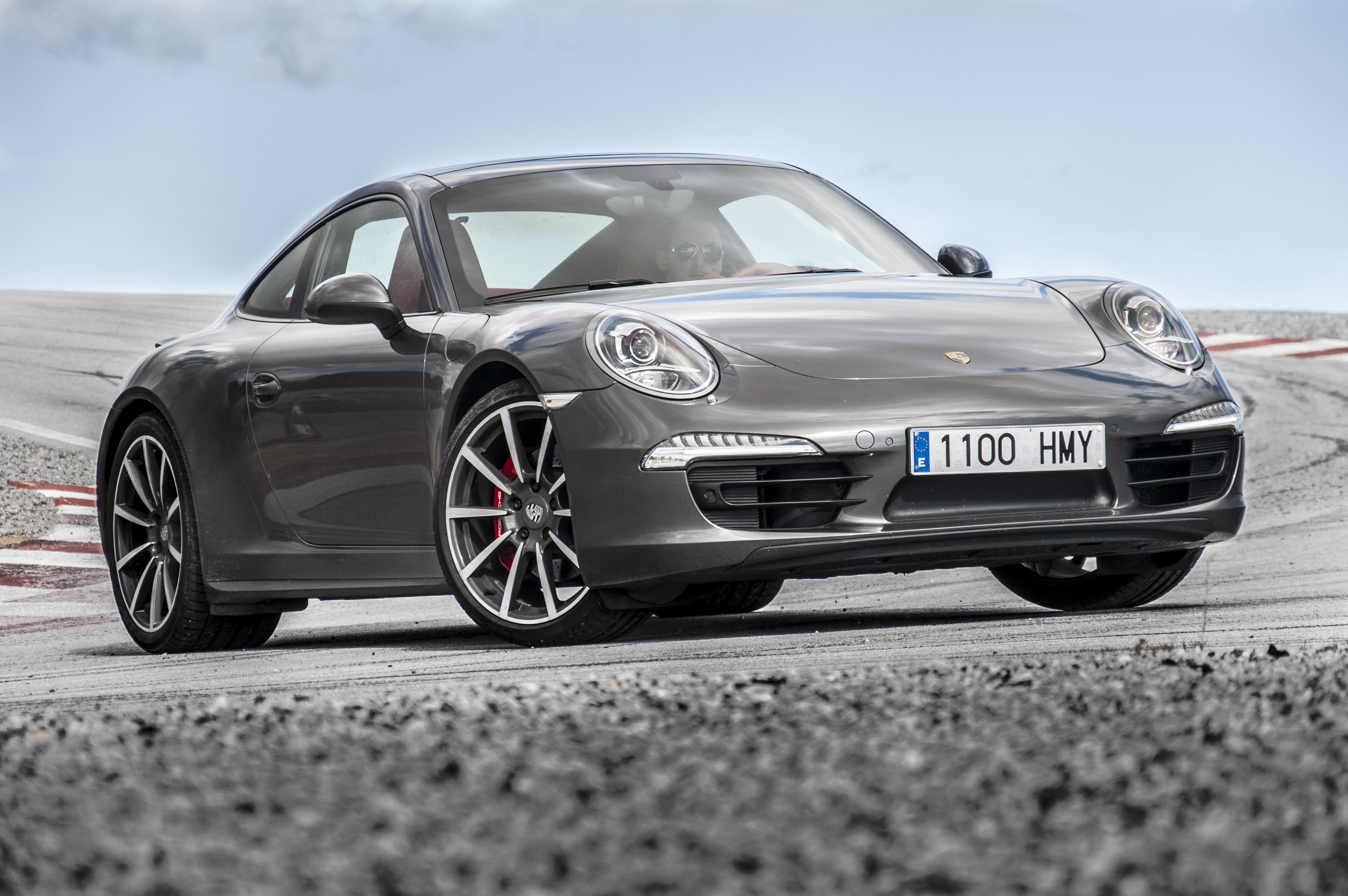
The Firebird is another American sports car that looked similar to the Camaro but had its own unique look. It was made by Pontiac, a brand that no longer makes cars.
LiDAR is a fancy way of saying the car uses laser beams to “see” its surroundings. It helps the vehicle know where things are so it can drive without bumping into them.
These aren't even people who like love their cars, right?
It's a utility object,
which is to say, right now,
we've got an idea in our head,
that's my car.
And it says something about me,
but not really.
That's how it's marketed still though.
Like when you watch cars,
it's still marketed as a
you can define yourself with this car.
This every segment car segment
is for a particular person.
And a for a particular role or whatever.
So, it's still marketed and advertises
a personality choice.
Listen, Chris, I made
what I call rocket pop,
blue, white and red pullovers.
And I made black pullovers.
I'm going to pimp the shit out
of those rocket pop pullovers, right?
Like that's the bright fly eye catching
version of the pullover,
but I'm going to move the black ones.
That's what people will say, yes.
So, I think what you're sensing there
is the thing that attracts our attention
is not actually the thing
we end up saying yes to,
the thing that actually is in our hearts.
As a society, as a society.
Collectively, what are the decisions we make?
They're buying Nissan Maximas
and Nissan is just charging them 20% interest
and that's actually the product,
not the car.
Got it.
Oh, here's another world.
Another world is where we have
all of these Robo cars,
hive mind,
they're all connected to each other.
The way they already work is by,
you know, with their LiDARs,
scanning the environment
to tell exactly what's happening,
not just in their line of sight,
but around the corner.
So they've got this
real-time map of the environment,
which is to say,
you know, we're still early days,
but the thing is developing super fast.
They will know everything
that's going on the road
at any given time,
anywhere, all the time.
Yes.
100%.
That's going to happen.
Yes.
In what world are they letting you
drive in that landscape?
Why is that allowed?
So the question is as much
why will Josh driving like an ass hat
in downtown San Francisco
not mess up the rhythm
of all the robots talking to each other?
As the question is,
in what version of Cowboy Country,
America,
do enough people look at that
and say,
no, we should definitely not let
Josh drive with the robots.
Because the reality is,
what the robots are programmed for
is to assess the real world risks
and to adjust, right?
The kicks I would get
by chucking my sweatshirt
into the street
when they would come down the way,
that's what they're programmed for,
which is to say,
they're programmed to deal with me.
And here's the part that makes me uncomfortable.
Yeah, but you're saying that
like the robots have the choice
of whether you're going to be the one
that's allowed to drive or not.
No, I'm saying the transition
isn't us collectively saying,
no more humans, only robots.
It may be that.
But I think what it's going to be is
more and more people,
it's the same like with electric cars.
We miss the sound of them.
We missed the ritual of going to the gate.
I don't know what people's excuse is.
Whatever it be at the end of the day.
Listen, we got three or four vehicles.
One of them is electric.
It is by far the lowest maintenance,
easiest to drive,
easiest to park,
easiest everything, cheapest.
I don't even see it as a car anymore.
It's so easy to take care.
Are you kidding me?
So when people start making
their purchase decisions,
this same group of people who,
yeah, they've grown up on the romance of the car,
but at the end of the day,
when they make the choice,
they choose the gray maxima, right?
Those same folks,
they're going to start making
the less expensive, easier to maintain
more reliable choice, right?
And you and I and all the rest of us,
Romantics, are going to be out there saying,
are you going to let us
be on these streets any longer?
Yeah.
They won't care.
They're going to be in their Game Boy,
sitting in the back of the robot car.
They won't care.
Totally cool.
I think most people don't care,
but I think there's this certain level of control
that regulators would just go,
dude, you unsafe.
You know, we remember the time
when everybody was dying.
This is what freaks me out.
You can't interrupt this.
Yes.
Utopia, it's literally a driving Utopia,
is what it is.
I think it's going to be realistically,
in our lifetime, we're fine.
I think we're fine.
Here's what I think is going to save us.
That urban world divide,
I already can't get my rocks off
driving in San Francisco.
I have to lead the city
to go out to the twisties, right?
So already the question is not,
am I going to drive like an asshole
in San Francisco?
I already don't, right?
I'm super, super chill within city limits.
Until we get out,
it's when the fun happens, right?
So that's not a question.
But the thing that,
and this you may be able to relate to,
the thing that does make me uncomfortable
is all these hive mind robots
that are all over town
that got their eye on me as a threat, right?
Like they just do a threat assessment
of this 9-11 shaped object
moving through San Francisco, right?
They're going to scan the car
and they're going to go
and they're going to immediately listen
to the other podcast we have
where it says Josh is ready to die.
They got me.
They got me.
And then that said, it's over.
They're going to drive you off the road,
off the bridge into the San Francisco bay.
From the surveillance perspective, right?
I don't have,
one would think,
we live in this society where it's like,
I'm not guilty because I committed the act.
I'm guilty because you caught me and proved it.
We're going to live in an environment,
a transportation environment
where you got all these little eyeballs
moving about the city,
always watching you.
You ain't going to get away with shit, right?
That's what makes me nervous.
How do you feel about that?
I hope, collectively as Americans,
I hope that we step up
and we create some firewalls.
Because on the one hand,
already statistically speaking,
the robots are way better
and way safer at driving than we are.
I mean, that's cool.
And I like that people
who don't want to be holding the wheel
don't have to be holding the wheel
without giving up their autonomy
or their sense of individuality.
I like that a lot.
But at the same time,
if we're not soft-soul
about how we legislate
and create the environments
that these hive minds exist in,
culturally, we will create a monster.
We were never going to be down with, right?
Maybe we shouldn't matter, though, dude.
Maybe you and I shouldn't matter.
Why do we matter, is it?
That's fair.
You know what I'm saying?
I do.
Maybe we're just idiots.
I do.
We love cars and we're just this fringe.
Like, who gives a shit about us?
Society can move on.
I think the answer to that question
has way less to do with us
and people who own cars
and way more to do in general
with American culture.
The question is...
Like rebel culture?
Like break the rules, punk rock.
Fuck you.
I don't give a shit.
I'm not going to tell me.
Perhaps.
Or, for that matter,
any type of individuality
that...
I think culture has to come from
the freedom to stretch out ideas.
And if we create a society
that just as a default is constrictive,
we won't make room.
There won't be fertile ground for free ideas.
Now, that said,
there's got to be some, like,
ground rules
in order to create an environment
where people are able to flourish, right?
Are able to feel safe, be safe,
and work in community,
and work to our higher goals.
I tickled something.
I'm just thinking of, like,
I go...
My brain just goes,
why does society need any new ideas?
Haven't we come up with...
Other...
I'm not talking about engineering.
Ideas and tech ideas.
I understand.
I'm talking about, like,
cultural, social, religious.
Why do we need any more...
We don't need any more ideas.
Do we?
Do we really?
So...
I'm not saying that people
shouldn't believe in what they want to believe.
I'm saying, do we need to...
Do we need to constantly try
and make progress all the time?
Can't we just go,
this is pretty good.
Can we just do this?
Realizing humans are these imperfect beings,
and we're just...
Can we just be like this?
Yes.
So says the caveman.
You were standing...
But we're, like, thousands of years
of new ideas away from caveman.
Okay.
Okay.
Okay, and just consider,
you know, 100 years into the future.
Chris, 100 years into the future says,
okay, okay, now's the point
at which we press pause.
No new ideas.
We're good.
You could say that at any,
at any point in human civilization.
And I think it, you know,
becomes a self-defeating argument
because really it's a subjective question
about when...
Yeah, you would think that eventually
society would either A, become enlightened.
Yes.
Or B, crash and burn.
There's like this tipping point of...
Yes.
We're either gonna become
the enlightened species that
is almost similar to Pluribus,
the new show that's out where it's this
hive mind of people and blah, blah, blah.
Everybody's no war piece.
Everything, everything's fine.
Yada, yada, yada.
Or there's just a complete collapse
of civilization when we start over.
And we come up with all these new ideas
all over again.
I like it and I have a third possible
path forward.
Okay.
And I'm gonna change venues
because the cat is enjoying her toy.
The third possible path forward
is that there's always work to be done.
And this, I think, directly
addresses your question of
why do we always have to be trying
to make things better?
Well, because there's always work to be done.
So for example, in the 19...
I think you started in the 50s,
but it didn't actually get any traction
until the 60s.
Ralph Nader started pushing for seat belts.
Ralph, leave us alone.
Why you always gotta be pushing things
forward, right?
And as a result, we got seat belts
in every car.
And, you know, there's a lot of people
who get to live their healthy lives
because Ralph kept pushing things forward, right?
Every corner of society, we have
progress that wouldn't be there.
Women being able to own property,
let alone vote, right?
Women being whole members of our society.
In the last 100 years, though,
we've seen massive change that's been good.
I agree.
I'm not saying that change is not good.
There's been many times in human civilization
where we were horrible, toxic, just the worst.
Yes. Yes.
But is there a point where...
And I'm just talking...
I'm thinking of like this
high-flying autonomous car civilization.
And I'm thinking in my brain,
what else is like this in this civilization?
There's so many things that are going to be automated
and we're a universal basic...
Income because nobody's going to be doing tricks or whatever.
We're literally going to have robots
that'll be able to complete all the tasks that humans can do.
Yes.
It's inevitable.
Yes.
That doesn't seem great.
And maybe we should just chill.
And work on those social issues.
Maybe we can work on being better people
rather than continuing to advance.
And I sound like God.
I sound like the worst leadite in the world right now.
I know it.
I know I do.
I disagree.
I think you perhaps are the classic fish swimming in the bowl
not realizing it's water that they're swimming in.
Because it's so close and it's ever been thus
that you think this is as it should be.
But let me just suggest not to pick on any concerns.
But if these robots, if we do do a good job on them
and they do as promised, which is to say,
pick up the slack, right?
Do a lot of the work that otherwise
would be needed to be done by humans.
And then your nightmare comes true,
which is people now have to work as much or at all.
There's no frustration and struggle
for which to overcome and succeed.
Nothing's hard.
I will kick that back to you.
I think,
challenge me on this, but I think
being a race car driver is a valid profession.
I think it's admirable.
I think it's I think it's downright sexy.
And I think we should have race car drivers.
But I think you could also make a pretty good case
for why it's not a profession.
It's bullshit and we don't need them.
What if we could make a world where there were
more race car drivers?
There were more gardeners.
There were more people who made pullovers
you could take off without taking your seatbelt off.
There's an alternate timeline where we're not
It sounds like a world where everything's great
and nothing is special.
I don't want everybody.
I don't want everybody to be a race car driver.
More gardens isn't special?
I'm well, I'm sorry, race.
I don't want more pullovers like this.
I want one.
I want you to make it.
I want it to be special.
I don't want race car drivers.
I want a few that I can that are
a spectacle and it's marvelous.
And there's this breadth of difference
between that guy and me.
I want that contrast and that value of this
versus the I suck at race car driving.
I want to suck.
I want to not know how to make a three-point pullover.
I want someone else to do it so that I can marvel
at the time, effort, frustration, and success
and the result of that whole work.
I want that.
I don't want more people to be able to do that.
I want it to be hard.
And I will tell you,
you get a hard scrabble race car driver.
You get a gardener who's in touch
with the worms and the earth.
You get an ass hat who came up with some goofy idea
because we have the room in our lives
to spend our energy on that.
We have surplus in society
that the race car driver doesn't actually
have to go work in the iron mill
and instead can pursue race car driving.
I'm not telling you you have to be a race car driver too.
I'm telling you, as society creates these surpluses
in work effort, we can start developing
all of these other endeavors
that we wouldn't have the resources to chase.
Right?
I think without Roblox,
I think if it's if it doesn't demand sacrifice,
I think it becomes less valuable.
Are you telling me developing a three-point pullover
doesn't demand sacrifice?
I think it does.
But if you don't,
a lot of that sacrifice is financial
because you have to be able to provide for your family.
Totally.
Yes, I'm in some heavy debt right now.
I'm with it.
So if that sacrifice doesn't exist
and the reward,
it's almost like human beings need
the reward of what they're doing.
And I can see where this conversation is going.
You're about to make my point for me?
Yeah, I can see it.
Like I can see on the horizon that we live in a political system.
But I think human beings need to be rewarded for hardship.
I think scars are important.
I think imperfection is very important.
And I don't think giving people more time
is the answer.
This goes off the rails very, very quickly.
I have a case in point.
Me being able to step away from advertising,
even as I've had to go into debt to do it,
has created the opportunity for me to be able to come up
with absurd ideas.
It doesn't happen if I can't afford to step away
from the advertising agency, right?
So I understand what you're saying.
Humans need to struggle.
I agree.
Humans need to struggle to struggle.
We would not be satisfied
if we didn't have that in our lives, right?
We would not.
That's like a nature, man.
That's like intrigue and grass and everything.
It's that hardship makes everything stronger and better.
If it's not there, we're just going to have this milk, toast,
wet, paper towel society that crumbles and fails at any hardship.
My point being that we all feel that.
We all feel the craving to struggle and to strive.
We all feel it within ourselves.
And then we look across the way at the person who lives
in that community way over there and say,
yeah, but if you cut them a check,
they're going to be a bum and sit on the couch all day.
Wait a sec.
You're not a bum, but they are.
How does that work?
Wait a sec.
Your family is in a...
No.
If we create a community in a society that values
making big, beautiful things with your energy
as opposed to clocking in at the factory, right?
Why don't we have the robots clocking in the factory
and you can make, dare I say, the podcast.
Do you think that human beings, that everybody pines or would do that?
Do you think people, if they had the time
and they had the space in their lives,
would like...
I don't think everybody's built that way, man.
I think there's different human beings that are raised
different ways and some get the genetic lottery and some don't.
Some of the creative people are the way they are
because of the hardships they had and the way they were raised.
Yeah.
If we wipe the slate clean for everyone,
I just, I fear that the ingredients will not be there
to create beautiful things.
I just...
I hear you.
Here's the thing that gives me hope.
This is like this.
It's that line where it's like, yeah, well, we need more of this,
but like, oh, no, it can't be too easy,
but we should try to make it as easy as possible for everyone
so that we can have more of the beautiful things in life,
but oh, we can't...
What we already do with our spare resources is excellent.
We join our church and create celebration.
We join a quilting circle and create community.
We say yes to a rally and drive across the country
to go drive in circles so we can drive home.
We're already doing it with the resources we got,
and the assumption that if I don't have this nine to five
with an ass whole corporation or middle management boss
putting their thumb on me, I won't also participate
in all these other parts of my life
that are sort of closer to my heart.
The assumption that once the toil goes away,
I won't pursue my humanity.
How does that track, right?
I think we're talking about scale, right?
So you're talking about scale.
Like it doesn't have to be race car driver.
It can be guy who likes to just drive with his bros.
It's a nice little picture.
Yeah, I mean, I think that whether I like it or not,
and generally I do not,
I believe we are heading towards a society
that is very, very autonomy based.
I think we are going to need a UBI as much as I may hate that.
There needs to be some sort of universal basic income.
This is a car podcast, right?
Where we need a universal basic income
where people, because obviously it's like,
hey, I've seen the ads where when electricity came out,
everybody's like, everybody's going to die, right?
We don't know what the economy will do.
It's a very complex and verbose structure
of human beings that can often be very unpredictable.
We may, this is uncharted territory for civilization.
We maybe don't know how people will react
in this Petri dish of autonomy and AI.
We don't know.
Maybe, I don't know what jobs will be created.
I don't know what economy is going to, who knows?
I have no...
We don't know the specifics,
but we do know the behavior.
Here's a screwdriver, literal screwdriver, right?
What's it do?
It drives a screw.
It's a hammer.
Over there in a box is a drill driver.
No, that's a hammer, Joshy.
That screwdriver can be a hammer.
I'm just saying.
That's not a noise.
That's a noise.
You can even pry to it.
Anyway, continue, sorry.
What do we do?
What do we do with not this one,
but the one I plug into the wall, right?
Will we get that screw driven in?
Look at the split.
Well, what am I going to do with that extra time?
I'm going to drive a second one in.
At some point in time,
all of this mechanical efficiency
has to do something for me, right?
I built the shelf in half the time.
Can I please have that half the time back
to go write my wife some poetry, please?
I can guarantee you that is not how...
Not that doesn't work in the economy we've got,
because I can guarantee you,
if you become more efficient or I become more efficient,
I'm not working less.
I'm just going to have more of my labor extracted from me.
Oh, sounding like a peer socialist.
I like it.
I just know that's how it works.
As we've gotten more efficient over time,
that's how it's always been.
And so as it is with the robot cars,
where as we feel this change coming,
we have to legislate to create guardrails
to protect, for example, against the surveillance state,
so too as we feel these mechanical efficiencies
entering into our life,
we got to legislate so that we don't get exploited,
right?
So that we do have that time back to go...
Bless our own communities, right?
Like to actually do stuff for the neighbor
and not be like, I ain't got time.
I ain't got time.
Right?
No, you get your time back and the mechanical efficiency,
i.e. the robots, fill in the gap.
Or another way we could go is that all of that efficiency
gets translated economically into the pockets
of the folks who own the robots initially,
and we don't get our time back.
And in fact, we get ever invested
into being consumers in their endless...
Oh, here we go.
You're right, it is a car pocket.
I'm pro-robot cars.
I'm pro-robot cars.
I'm stoked.
I'm excited to toss it up with them
and then get out into the cars.
I have a dream of being 96 years old.
I've got this 911 over there and it's banned.
And all of the autonomous cars are driving around
in Minneapolis and I've got cancer.
I'm going to die.
Mad Max.
Let's go.
I'm taking that car out.
I'm going to just rip down like Hennepin Avenue
or Main Street.
We're up Main Street, any town.
And I'm going to tear it off.
See how many of those robots you can pit.
Yeah, right?
Just get out of the way.
Binky Bunky.
Imagine the guy that has a dump truck
sitting in the back of his field
that's just like, fuck this,
that he puts a snow pile on his dump truck
and just plows all those autonomous cars off the road.
Yeah.
Interesting times ahead.
Brave new world.
Interesting time.
Thank you for coming on and talking to me, man.
Everybody go to earththorrobots.com.
Check out this guy's cool merch.
I have great respect for you, Joshy.
I'm really impressed by what you accomplished.
I sense how difficult this was.
It's a labor of love.
Yeah.
It is.
And good on you, man.
We'll see you around.
We'll see you next time.
See you, guys.
All right.
Take care.
About this episode
A deep dive into creativity, honesty, and the challenges of bringing ideas to life unfolds as Joshy Robots shares his journey from advertising to creating unique automotive apparel. The conversation explores the nuances of authenticity in personal expression, the struggles of entrepreneurship, and the impact of technology on driving culture. With a candid exchange about the future of autonomous vehicles and societal shifts, this episode offers a thought-provoking look at how innovation intersects with individual passion and community values.
Joshy Robots is a copywriter turned maker and designer, the person behind Earth to Robots, and someone who refuses to let good ideas stay theoretical. In this episode, he and Kris talk about honesty, friction, and why the best things are usually the hardest to make, moving from advertising and design to driving, autonomy, and what gets lost when the world tries to make everything easy.
Grab a pullover:https://www.earthtorobots.comSupport this show:Https://www.overcrestproductions.com/driversclub