Sebastian Mackensen is the top boss of BMW in North America. He is responsible for managing all of BMW's sales, marketing, and dealer relations in the United States.
The Chevrolet Tracker is a small, budget-friendly SUV made by Chevrolet. It is designed for city driving and everyday commuting, offering a higher seating position than a standard car without being too large to park.
Turn rate is a measure of how fast cars are sold after they arrive at a dealership. If a dealer has a high turn rate, it means cars are selling almost as soon as they get delivered, rather than sitting around waiting for a buyer.
The CR-V is Honda's incredibly popular compact SUV. Families love it because it has lots of room inside, gets great gas mileage, and lasts a very long time.
These are government discounts given to people who buy electric cars to encourage cleaner driving. When these discounts go away, electric cars become more expensive, and fewer people buy them.
The X5 is BMW's highly popular luxury SUV. This newest version is special because it can be bought as a regular gas car, a plug-in hybrid, or a fully electric vehicle, all using the same basic design.
Spartanburg is a city in South Carolina home to BMW's biggest factory in the world. Almost all of BMW's popular SUVs are built here and shipped to drivers across the globe.
SAV is BMW's special name for an SUV. They call it a 'Sports Activity Vehicle' to highlight that it drives more like a sporty car than a heavy, clunky truck.
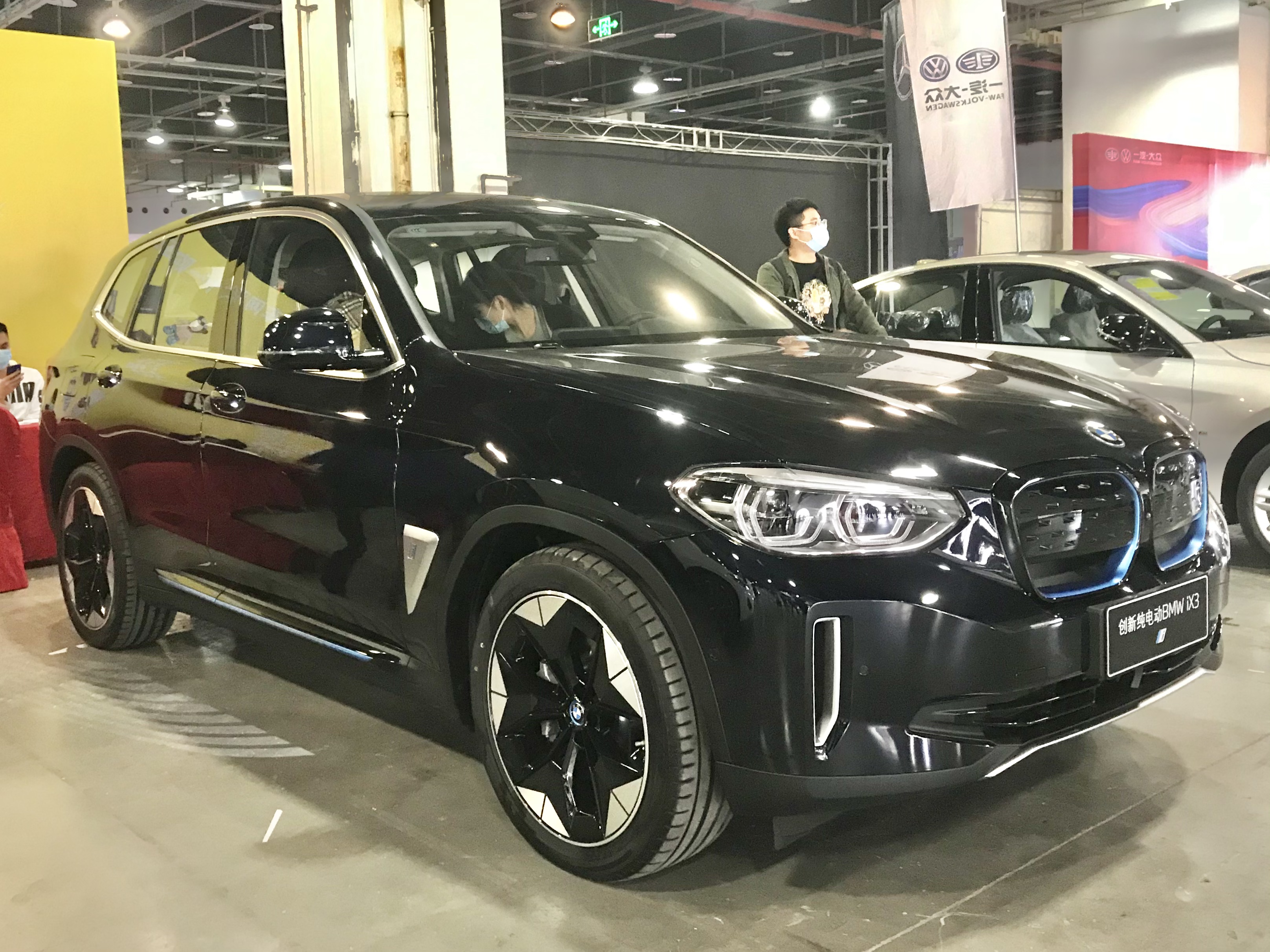
The iX3 is a fully electric version of BMW's popular small SUV, the X3. It looks and feels like a normal luxury SUV but runs entirely on battery power.
This is a major BMW factory located in Mexico. It builds popular cars like the BMW 3 Series, but shipping these cars into the U.S. can sometimes be complicated by import taxes (tariffs).
LIVE
This podcast is brought to you by Reynolds and Reynolds.
There are three waves of AI transforming our industry.
Explore what they are,
where AI technology is headed,
and what these emerging innovations mean
for automotive retailers at reyrey.com
slash AI-waves for more info.
Welcome to Daily Drive for Wednesday, July 1st,
2026. I'm Jake Nier in Detroit in for Kellan Walker.
Today on the show, new vehicle prices just hit a record high
and buyers aren't flinching.
Hybrids are surging and two brands are leading the charge
and GM is putting pressure on its suppliers to automate.
Plus, BMW of North America CEO Sebastian Mackensen
joins the show to talk about the redesigned X5
and how he's chasing a fourth straight U.S. sales record.
Every month starts with a zero, every quarter starts with a zero,
and whenever we finish 2026, we will go and work at 27
and make the best out of it.
Let's run through all the news you need to know
to keep up in the auto industry.
New vehicle prices have hit a record high
and they're still climbing.
The average marketed price of a new vehicle ended June
at nearly $52,000, up almost 5% from a year ago.
That's according to Automotive News and Catalyst IQ
vehicle price and inventory tracker.
Compact sedan saw the biggest jump, up 12% year over year.
But Rick Wainschel, Vice President of Analytics at Catalyst IQ,
says buyers aren't flinching, turn rates are up,
and vehicles are selling faster despite the price hikes.
Hybrids continue to have their moment in 2026
and Hyundai and Kia are leading the way.
Both set June sales records with hybrid volume
surging 74% at Hyundai and 187% at Kia.
Honda was also up 17% on strong Accord and CR-V demand.
Industry-wide, hybrid deliveries likely rose more than 9%
in the first half of the year, according to Cox Automotive,
even as the overall market declined.
JD Power and Global Data put hybrid share
at 16% of retail sales in June,
while EV share softened to 7.4% after federal tax credits expired.
And General Motors is rolling out a first
of its kind automation policy for its suppliers.
GM recently launched what it's calling
the Overall Automation Maturity Index,
pushing suppliers to score a 4.5 out of 5
on a scale ranging from manual operations
to so-called smart factories with AI-driven robotics.
Three supplier executives told our colleagues
at Crane's Detroit Business that falling short
risks losing future GM business,
though GM says the program is a goal, not a mandate.
Joining me now to talk more about this story
is Kurt Nagel, reporter at our sibling publication,
Crane's Detroit Business.
Kurt, welcome back to Daily Drive.
Thanks for having me.
So what's driving this new policy from GM?
It's a few different things, but mainly the reindustrialization
of the US bringing manufacturing back to the US
poses an issue for automakers and auto suppliers.
One of those big issues is the labor dynamic.
You need people and wages are going up exponentially.
So GM sees this and they see these labor costs
spiking throughout their supply base,
and the answer for that to them is automation.
It's interesting too because there seems to be a disconnect
about what suppliers are telling you
and what GM is saying that suppliers see this as,
if they don't meet these goals, they risk losing business.
GM is saying this is just a goal.
So what's with the disconnect?
Yeah, and I want to give GM the benefit of the doubt.
They just had their Plant Moran Supplier Index scores
where they had pretty high rankings and positive feedback
in terms of their partnership approach to suppliers.
At the same time, they're certainly worry about this push
because GM's not doing it just for fun.
There's a purpose here.
There's a reason why GM is saying,
you supplier need to audit your plants.
In some cases, we're going to come out and do that for you,
and we need you to work toward these goals.
Now, how aggressively they decide to implement
toward those goals remains to be seen,
but suppliers are rightly a little bit worried going into this, I think.
So who foots the bill?
That's a great question, and that also remains to be seen.
It's a big concern for suppliers,
because, sure, automation, theoretically,
comes with significant cost savings on the back end,
but the upfront cost associated with investing
in expensive robotics and artificial intelligence
and software management programs, et cetera, that is not free.
And so the jury is still out on who is going to pay those upfront cost
and then who's going to benefit from those theoretical cost savings in the long run.
That's really interesting.
Kurt, I appreciate your reporting on this
and know that there will probably be more to report on this in the future.
I think it's a fascinating story.
Kurt Nagel of our sibling publication,
Crane's Detroit Business, thanks again for joining us on Daily Drive.
Yeah, thanks as always, Drake.
Coming up, BMW of North America's CEO, Sebastian Mackensen,
talks about the redesigned X5
and whether four straight U.S. sales records is actually on the table.
That's next on Daily Drive.
Three waves of AI are transforming our industry, as we know it today.
Here from A.J. McGowan, vice president of research and development
at Reynolds and Reynolds on all three ways of AI and automotive,
where we're heading and what the latest cutting edge innovations mean
for automotive retailers.
So I want you to picture what it would be like on that same Tuesday morning
that we talked about earlier with a full,
a genetic infrastructure in place.
Your service manager wouldn't start the day by reading reports.
Ray hands them three ROs that need attention and tells them why.
Your sales manager wouldn't spot check calls.
Ray already routed the ones that mattered.
The GM doesn't reconstruct yesterday.
Ray reconstructed it overnight and gave them a summary.
And your controller doesn't have to pull the deal-level analysis every Friday.
Ray runs it on Thursday and flags anything that's worth a conversation.
Decisions can get made earlier in the day with better information by fewer people.
That's what the agenic wave actually feels like in your store.
It feels and sounds a little bit like science fiction,
but at the end of the day, it's not.
It's just a faster Tuesday.
If you're interested in exploring how AI can improve operations at your dealership,
visit rayray.com slash ai-waves.
That's r-e-y r-e-y dot com slash ai-waves.
Welcome back to Daily Drive.
I'm Jake Neer.
The redesigned BMW X5 just made its debut in Spartanburg, South Carolina,
where it's been built since the very first generation.
It's one of BMW's top sellers in the U.S.,
accounting for roughly 20% of the brand's total volume.
And this fifth generation model arrives with five powertrain options for the first time,
including a fully electric variant.
Sebastian Mackensen is CEO of BMW of North America.
He's been in the role about five years,
during which the brand has posted three consecutive U.S. retail sales records.
He spoke with our own Jack Wallsworth at the plant in Spartanburg.
Well, Sebastian, welcome back to Daily Drive.
It's great to be here with you in South Carolina.
This seems like a really notable moment for BMW.
It's not every day the X5 gets redesigned.
It's a big seller for the brand.
You know, curious what this model means for BMW and for the dealers as this redesign,
you know, gets ready to be launched.
Okay, first of all, thanks for having me.
It's always exciting to be in conversation with you guys
and be part of the automotive conversation in general.
I mean, the X5 being our first SUV ever, or SAV, Sports Activity Vehicle,
now in its fifth generation, coming out from Spartanburg once again,
like the other four is, it feels like a sweet spot moment.
First of all, because the product is in the sweet spot of our portfolio,
it's really this all-inclusive SUV, SAV, which serves space needs,
serves utility needs, but obviously serves ultimate driving machine capabilities
and caters to those who like a great driving vehicle.
And it's one of our top sellers in the market.
Now, having said that, to get that into a new generation
is a very pivotal moment and a very exciting moment.
Exciting because it's emotional.
It's, again, 20% of our sales in this one car,
but it's also pivotal because we have to get it right.
We call those very same reasons because we want to keep it at that positioning
and we call it, dearly, internally, the boss.
And it is really sitting in that space.
It's very attractive to many segments of the market
when it comes to the consumers in the market.
And to bring it out now with even five drivetrains,
first time in an all-electric drivetrain as well,
it's definitely a landmark day today.
Sure.
So kind of going off the model of lunch
with the all-wheel-drive version in October
and then more variants will come out next year.
There's five powertrains.
It's a lot of variety, I guess.
What would that rollout look like?
Will certain markets get certain powertrains?
Will they try to spread it out evenly?
Curious, giving you a plug-in hybrid, EV, internal combustion.
Yes.
So internal combustion, EV, and plug-in hybrid are pretty universal.
I wouldn't say every market in the world.
I mean, we export cars from this plant to 120 markets.
There are some markets who are almost fully electric
and others who are 0% electric,
but those three are really offered in most markets.
We have a diesel offering in those markets
where that is a very popular powertrain.
We do not offer the diesel version in the US.
And we have a hydrogen version,
which will also be at first offered in selected markets only.
Okay.
Got it.
Have you driven some of the different powertrains on the XRs?
I've driven the gasoline version of the 40 engine,
and I've driven the iX5 40 as well.
So those two I've driven personally, not the other CFs.
Okay.
All right.
I'll be cool to kind of see them all when they're all rolled out.
It's also interesting to me like how the car car looks similar,
no matter the powertrain.
Yeah.
But I mean, that's probably something that customers will probably be drawn to
or might appreciate given that it looks like a BMW, I guess.
I could have said it better.
That's really our strategy because we are convinced
that people want to know a certain brand and a certain product category.
Let's say in this case, an X5 SUV.
And then they can take the decision
which drive frame suits their lifestyle needs
and their mobility needs the best.
And then they can go for whatever that is.
But we don't think a customer because of a drivetrain choice
should have to compromise on the vehicle itself.
So you say they look very similar.
I would actually say they look the same, not in every detail,
but they're actually the same, the same architecture,
the same sheet metal on the exterior design
and the same interior customer interface, digital experience, all the same.
That's pretty cool.
I guess the ice version, will that be the volume powertrain?
Yes.
For the time being, this year we are selling an 82% internal combustion engine.
The remainder is either plug-in hybrid or fully electric.
And that will remain the majority of our business.
Will the electric drivetrains continue to grow now with the new offerings?
I would say yes, but the internal combustion engine
will remain in the U.S. the dominant propulsion technology.
So this plant obviously is really important for DMW in terms of exporting.
I was curious with the X5 being such a big model for the U.S. business,
because the U.S. kind of get priority for X5,
or is it still part of the bigger global play?
I was curious how you...
I give you a two-fold answer.
In theory, we order vehicles at global sales planning in Munich,
and Munich talks to production and has the cars produced, and then we get them.
So it's the same for every market.
Now, we have a short communication channel with Bartenberg,
and sometimes we can use these contacts to maybe call in a favor.
On the other side, we have a very short time to market.
So if a car gets produced in Bartenberg and goes to the U.S. market,
we obviously can bring it to wholesale earlier,
then if it goes to one of the global road markets,
so depending on the production cycle and the time in the year,
that might also play a role.
But there are times when we like to use the home field advantage.
So you got the IX3 launching in September, X5 will launch in October,
more variants next year.
It seems like 2027 could be a really big year for BMW,
given that you have lots of fresh products that are SUVs that us Americans love to buy.
Is 2027 being a big year with kind of that expectation for BMW,
or is that what you're bracing for?
Short answer?
Absolutely.
Long answer?
Long answer is that we have three record years when we look at retail sales looking backwards.
25, 24, 23 in reverse order.
26, knock on wood.
I would hope, and that's at least what we're striving for,
is to make it a fourth record year.
And if that works, I would agree with your assessment.
So I like your view on that product cadence that was coming out,
also the feedback from our dealers.
We've seen some of the future product recently at a big meeting we had in Nashville, Tennessee.
And definitely the plan is that with that product momentum,
but also based on our strong network and the brand position in the market,
that we will continue that streak of record years.
But hey, we can never take that for granted.
Every month starts with a zero, every quarter starts with a zero,
and whenever we finish 2026, we will go and work at 27 and make the best out of it.
It's a big sales day.
I know Q2 sales haven't been released,
but how is G2 trunnion referred to in W?
I would say chances are high that we should be ahead of last year for the Q2 itself,
and for the first half year.
And then looking ahead, how's your outlook for the remainder of 26?
Hardly believe we're almost halfway through the year.
That's right.
I agree.
We talked about that recently.
We just met at NADA, which is only, I guess, three and a half, four months back.
But it feels like a lot has happened since then.
So if we look for the remainder of the year, I mentioned earlier
that we are poised to make 2026 another record year.
In order to make that happen, we have to sell at least one car more than 2025.
And I would hope that's a few more than only one more.
And looking at the luxury market in general, how are things in the market?
Does it still seem pretty good for the luxury brands?
What are we hearing from dealers?
So for the full half year, first half year, if we look at it,
once we know the numbers from June, I think we will see a better last three months
than the first three months, months of this year
and the last three months of last year.
A little bit even into April of this year,
we have seen a difficult development in the year over year comparison.
We also had a special year last year when the announcement of tariffs
and the implementation and then non-implementation of whatever measures
could come led to a very specific behavior end of March, early April.
So we had to wash that a little bit out of the comparison numbers.
But we had, including Q1, we had a bit of a rough start into the industry,
including BMW.
We have seen a much better development in Q2.
And I would say all the market is in a solid good situation.
It is competitive.
Manufacturers are being ambitious about their sales number
together with their individual specific dealer networks.
So it is a competitive market fight, a healthy market fight out there,
but it is a solid demand at the same time.
Looking at tariffs, how is tariffs settled here under June of 2016?
Does it still seem very fluid or does it seem like it's at a more not normal pace,
but kind of like the dust has settled?
Or I guess how are auto makers like BMW looking?
On when it comes to the tariffs, which we are affected by for the US business,
I would say we have seen some stability.
We have seen the 15% for imports from Europe.
I would look at them as a pretty stable market condition right now,
where I would have liked to see something else than stability
is with imports coming from Mexico, because they are still north of 25%.
And we have a plant in San Luis, Q2C, so that's not helpful for us.
And yeah, that's a bit the situation.
So there weren't too many movements recently.
I hope that if there are movements that they go in the direction
of supporting the global business.
And again, just in case to remind you, we are also a big exporter.
So like the new X5 and like the four generations before in Spartanburg, South Carolina,
and then we shipped them from Charleston to all over the world.
And secure jobs in the US for export vehicles,
which I think is exactly what the administration is looking for.
Right. Yep. So Sebastian, you've been in Europe for about five years.
I think it'll be this fall.
You know, how has the end of you evolved the most time
and how is it kind of being the same?
I'm just curious.
Yeah, maybe the product.
I mean, that's a difficult question to answer myself, right?
Because I don't like to talk about either myself or the time I'm here,
because that's indirectly talking about myself.
I'm glad that, as I mentioned before, we had in these years, we had three record years.
When it comes to sales growth, when it comes to absolute sales,
which also included growth in share, that's something I'm really happy with,
that we were able to do that.
At the same time, what we really have solidified,
and we talked about that in earlier meetings,
is our cooperation model with the dealer network.
That is really a backbone of our business success.
We're typically out there on the third place,
when it comes to the ADA, dealer attitude survey.
And I continue to believe that that is a big, big basis for being successful
when you have a franchise dealer network and an OEM,
which might have the same interest in some areas
and might have not the same interest in others,
to align those forces and make it possible to work in the same direction
and make sure we are together serving the brand and the customer.
Everybody profits of that, the dealer side and the OEM side.
And that's really what I think we have underscored and enhanced even further
during the last years since I'm working here.
And that's something I'm a bit proud of,
but I'm also happy that we can enjoy the success of that.
Sure. I appreciate the time.
It's been a great time of the year in South Carolina, seeing the new car.
Thank you, and I hope we get you behind the wheel anytime soon.
Best for sure.
BMW of North America CEO Sebastian Mackensen spoke with our own Jack Wallsworth.
That's Daily Drive for today.
I'm Jake Neer in for Kellan Walker.
Thanks to our own Larry Velikwet and David Phillips for their reporting for today's podcast.
We also had reporting from Kurt Nagel of our sibling publication, Crane's Detroit Business.
You can get the latest news on new vehicle prices, the hybrid surge,
and everything happening in the auto industry at AutoNews.com.
Come back tomorrow for a conversation with Alex Euler of SBD Automotive
about the impact of the DRAM chip shortage on vehicle tech
and what it means for the industry.
What makes it especially stark for automotive is the uniqueness of the industry,
the lower volume, the fragmentation of the technology generations.
We'd love to hear from you.
Let us know what you think of the show and the topics we covered today.
Send us an email at DailyDrive at AutoNews.com,
or leave us a voicemail at 313-444-2774.
And if you enjoy the podcast, remember to like,
leave a review, and subscribe so you never miss an episode.
About this episode
Record-high vehicle prices and surging hybrid sales dominate the headlines as Hyundai, Kia, and Honda see massive volume growth. Meanwhile, General Motors is shaking up the supply chain by pressuring suppliers to adopt AI-driven robotics and automation. Finally, BMW of North America CEO Sebastian Mackensen joins the show to discuss the highly anticipated redesign of the X5 SUV. Mackensen explains the brand's "power of choice" strategy, offering five different powertrains—including a fully electric variant—on the exact same platform to chase a fourth consecutive U.S. sales record.