The Honda CR-V is a very popular, mid-sized family SUV. It is known for being reliable, spacious, and easy to drive, making it one of the most common cars you see on the road today.
The Ford F-150 is an incredibly popular full-size pickup truck. It is famous for being America's best-selling vehicle for over 40 years and is used for everything from heavy construction work to daily family driving.
The Toyota RAV4 is a small, highly reliable SUV. It was one of the very first small SUVs ever made and is loved by buyers for its great fuel economy and long-lasting durability.
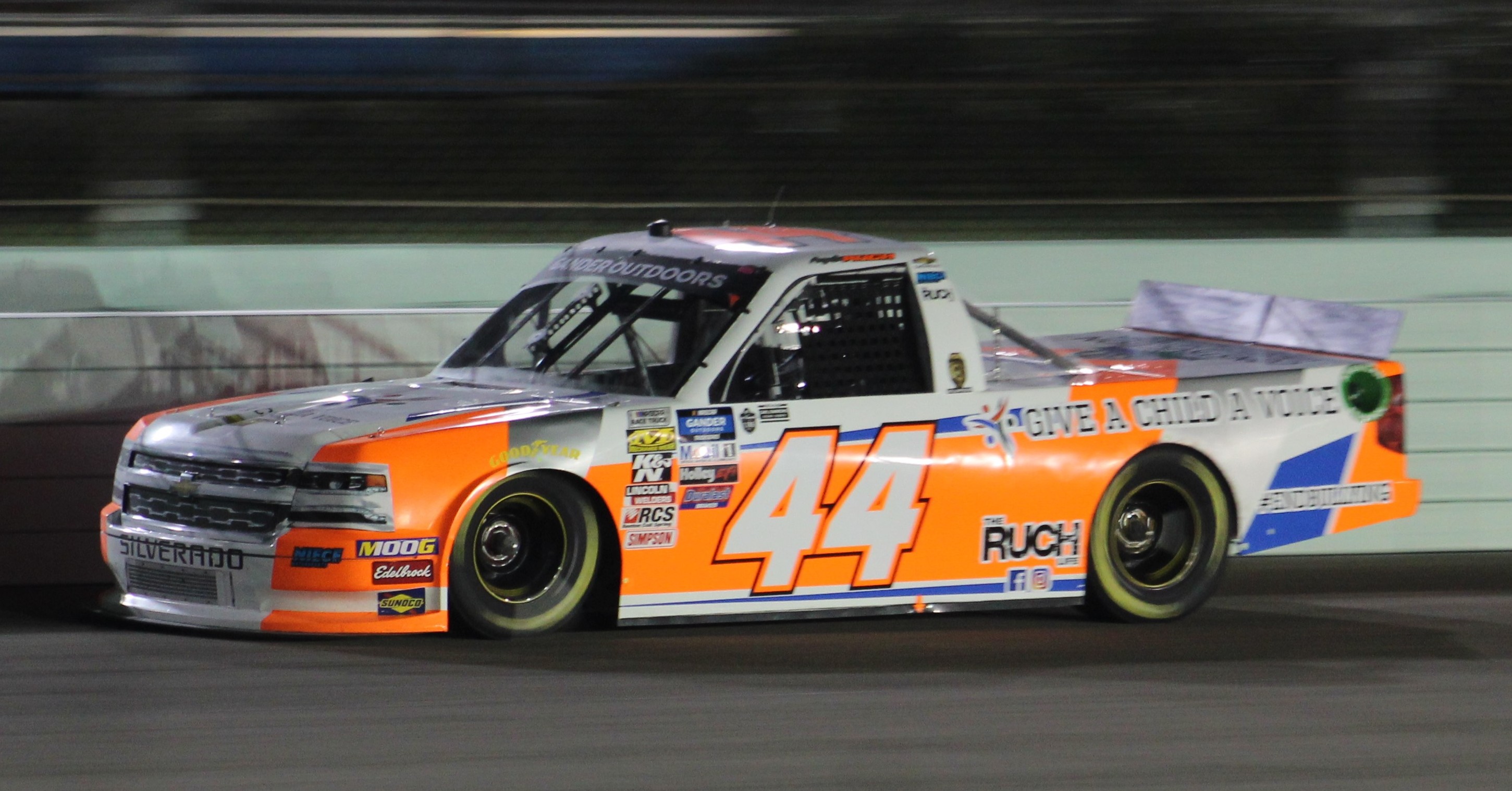
The Chevrolet Silverado is a large, powerful pickup truck made by Chevy. It is designed for heavy lifting, towing trailers, and working on farms or construction sites.
A model changeover is when a car factory stops making an old version of a car so they can rearrange the machinery to start building the brand-new, redesigned version.
Lease retention is when a car company successfully convinces someone who is finishing a car lease to sign up for a brand new lease with them, rather than switching to a competitor.
The Toyota 4Runner is a tough, old-school SUV built like a truck. It is highly prized by outdoor enthusiasts because it can handle rough dirt trails and lasts for hundreds of thousands of miles without breaking down.
The Ford Escape is a small SUV designed for everyday driving and families. Ford decided to stop making it to focus on other types of vehicles, like larger trucks and electric cars.
Jessica Laudermilk is a top sales executive at Honda in America. Her job is to make sure Honda dealerships have the right cars and that they sell well.
DRAM is a type of super-fast computer memory. Just like your smartphone or laptop needs memory to run apps quickly, modern cars need it to run digital screens, navigation, and safety features.
A software-defined vehicle is a car that behaves more like a smartphone on wheels. Instead of needing to buy a new car or visit a mechanic to get new features, the manufacturer can send wireless updates to change how the car works or add new apps.
A tier one supplier is a company that makes big parts of a car—like the entire dashboard or the braking system—and sells them directly to car brands like Ford or Toyota to be put on the assembly line.
A System on Chip is a tiny computer chip that has all the main parts of a computer built right onto it. It allows cars to run complex features like digital maps and self-driving sensors without needing a giant computer box.
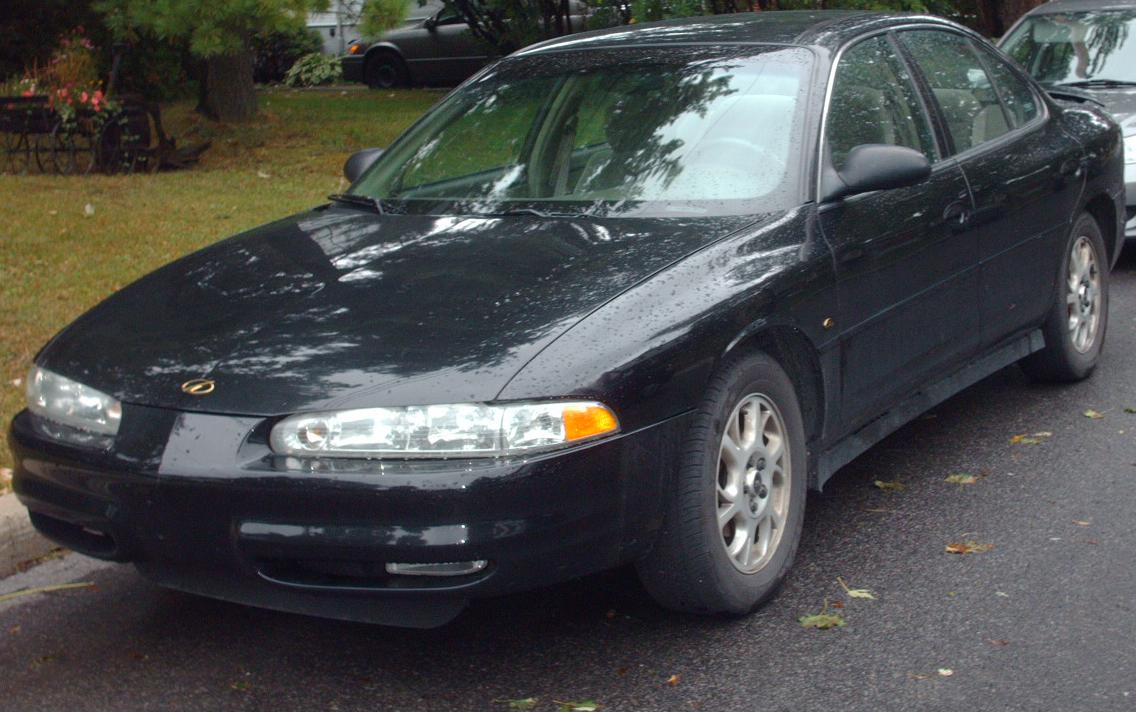
The Oldsmobile Intrigue is a mid-sized four-door car that was made around twenty years ago. It was built as a comfortable family car before the Oldsmobile brand was shut down.
LIVE
This podcast is brought to you by Reynolds and Reynolds.
There are three waves of AI transforming our industry.
Explore what they are, where AI technology is headed,
and what these emerging innovations mean for automotive retailers
at rayray.com slash ai-waves for more info.
Welcome to Daily Drive for Thursday, July 2nd, 2026.
I'm Jake Nier in Detroit, in for Kellan Walker.
Today on the show, Honda's CR-V just knocked the F-150 off its throne.
Toyota's hybrid lineup is roaring back, while GM and Ford both stumble in the second quarter.
And Nissan's CEO says the Renault Alliance is just fine, thanks for asking.
Plus, a look at why the DRAM chip shortage is hitting automakers so hard,
and why it's the suppliers who may feel the most pain.
They're servicing all of these different verticals.
They're going to go where the margins and the volume are.
Let's run through all the news you need to know to keep up in the auto industry.
Honda's CR-V has dethroned the Ford F-150 and Toyota RAV4 to become America's best-selling
light vehicle through the first half of 2026. The CR-V moved more than 226,000 vehicles,
beating year-to-date estimates for the F-150 and Chevrolet Silverado,
that's according to global data. Rival inventory woes played a role,
an aluminum plant fire has hobbled F-150 output, and a RAV4 model changeover caused RAV4 sales to
tumble 36%. But Honda's lease retention strategy and hybrid demand have kept the CR-V flying off
lots on its own merits. We'll have more on this story in a minute with our own Urvaksh Karkaria.
With that in mind, the RAV4 does seem to be making a comeback as of last month.
Toyota's hybrid lineup drove a 10% June sales gain, with the RAV4 up 91% and the Forerunner up 127%.
GM, meanwhile, posted its third straight quarterly decline down more than 4%.
Ford's Q2 sales slid 10%, hurt by weaker F-Series output after that aluminum supplier fire,
and the discontinued escape. On the upside, Stellantis notched its fourth straight quarterly gain
on strong RAM volume, and Nissan extended its retail sales winning streak to 16 consecutive months.
And speaking of Nissan, CEO Ivan Espinosa is pushing back on speculation that the
automaker's alliance with Renault is fracturing. Speaking at Bloomberg's New York headquarters,
Espinosa downplayed Renault's decision to abstain from reappointing longtime board member
Moto Nagai, saying Renault simply felt Nagai had been with Nissan too long. Espinosa said,
quote, The reality is, now we are collaborating better than ever. The comments come as Nissan
works to recover from one of its largest ever annual losses, and targets a return to profit this
fiscal year. And those are today's headlines, you can find more details on all of those stories
over at AutoNews.com. Joining me now to talk more about the new top-selling vehicle in the US
is Ervach Karkaria, who covers Honda and other automakers for us at Automotive News.
Ervach, welcome back to Daily Drive. Hi, Jake, good to be back.
Okay, so how much of this CRV surge is Honda's own doing, and how much of it has to do with Ford
and Toyota just having their own problems? I mean, it's definitely sort of in the
man bites dog category, that a model like CRV came out of nowhere, and, you know, dethroned
both the F-150, and to a lesser extent, they're more direct competitor in the SUV segment,
or in the crossover segment, the RAV4. It definitely has to do with Toyota and Ford's
supply issues. Ford has struggled with the F-150 ever since, you know, the novellus plant in New
York, state New York, caught fire in 2025, that's made a significant dent in the ability to supply
dealers with the F-150. RAV4 was also an issue with Toyota. The model got redesigned. There were
multiple changeovers in several North American plants, which, you know, I don't know what exactly
happened, but it definitely, you know, was not as smooth as expected. So for sure, the CRV benefited,
but that's not to take away anything from Honda. You know, Honda positioned itself,
did everything it needed to capitalize on its rivals' troubles. So good for them.
Specifically on CRV, you know, they have seen a surge in lease maturities this year,
which means that that's created a demand for additional new CRVs. They've also done a good
job with lease penetration, with attractive incentives on leases. So they've kind of primed
pump to be in this position, and, you know, they've capitalized on it.
So as Toyota and Ford ramped production back up of their best-selling models,
how long do you think Honda can sustain this top spot? Is there a chance that they might
hold on to it through the end of the year even? Yeah, that's a great question. I think
Honda has put itself in a position to even end the year as number one with the CRV as the best
selling model according to an analyst at Global Data, just based on the numbers. It's on pace to
still be the number one segment at the end of the year. Now, whether that happens in practical
terms is to be determined. And, you know, Honda brand head of sales, Jessica Laudermilk said,
you know, they aren't, you know, stepping off the gas just because they think that the Toyota and
Ford will increase their supply. They're going to continue to be aggressive. However, she also
said that Laudermilk also said that, you know, they may have to pull back on some incentives
because the car is doing really well. So why give more incentives for a car that's doing so well?
So we may see a pullback in CRV incentives. The other challenge that Honda also has is that
they are running CRV at capacity. According to auto forecast solutions, CRV production is up,
you know, about 1% in the second half of this year versus the same period last year. I mean,
the dealers are like, we need more CRVs, there's demand, let's go. But at the same time, you know,
Honda has like got to deal with the practicality that, you know, they are pumping out as many
CRVs as possible right now. Where do they find capacity for additional CRVs? What Laudermilk
said is that while production is unlikely to increase on CRVs overall, they're evaluating or
studying the possibility of switching the mix of CRV more towards hybrids. As you know, hybrids are
getting more and more popular, especially in the near term with rising gas prices.
I got to say, Irvaksha, I did not expect to see this news in my inbox this morning. And
it's a really interesting story. I know that we will be hearing more about it through the second
half of the year. Thanks so much for joining us on Daily Drive. Thanks for having me and have a
great fourth weekend. Coming up, a look at why the DRAM chip shortage is an especially painful
problem for the auto industry and why your tier one suppliers may be the ones taking the hardest hit.
That's next on Daily Drive.
Software is becoming more and more important with each model year. As new software problems
arise, so do solutions. This week on shift, we're looking at how software can predict
maintenance issues and prevent costly recalls. John Heinlein, chief marketing officer at Sinadis,
also talks about why a different type of electronic architecture can enable easier
updates to vehicle capabilities. It simplifies and provides you the ability to do better power
distribution in a soft way and it allows you to do better smart upgrade ability. Heinlein also
explains whether open source platforms can support critical safety features. Join us for
shift available this Sunday wherever you get your podcasts. Three waves of AI are transforming our
industry as we know it today. Here from A.J. McGowan, vice president of research and development
at Reynolds and Reynolds on all three waves of AI and automotive where we're heading and what the
latest cutting edge innovations mean for automotive retailers. So I want you to picture what it would
be like on that same Tuesday morning that we talked about earlier with a full agenic infrastructure
in place. Your service manager wouldn't start the day by reading reports. Ray hands them three ROs
that need attention and tells them why. Your sales manager wouldn't spot check calls. Ray
already routed the ones that mattered. The GM doesn't reconstruct yesterday. Ray reconstructed it
overnight and gave them a summary. And your controller doesn't have to pull the deal level
analysis every Friday. Ray runs it on Thursday and flags anything that's worth a conversation.
Decisions can get made earlier in the day with better information by fewer people. And that's
what the agenic wave actually feels like in your store. It feels and sounds a little bit like
science fiction, but at the end of the day it's not. It's just a faster Tuesday. If you're interested
visit ray ray dot com slash a i dash waves. That's r e y dot com slash a i dash waves.
Welcome back to daily drive. I'm Jake near. We've been covering the dram chip shortage from a few
different angles in the last couple weeks from Kearney structural analysis to Qualcomm's view
from the silicon side. Today we're getting into the nuts and bolts of what it actually means for
the vehicles being built right now. Alex Euler is consulting director at SBD automotive North America
and he breaks down why automakers are in a uniquely tough spot stuck between legacy computing
platforms and next generation architectures and why that fragmentation is making an already painful
shortage even worse. One note since this interview was recorded, Euler actually has announced that
he's leaving SBD automotive for a new position. He hasn't said yet what that position is. He spoke
with our own Molly Boygon. Alex Euler, consulting director at SBD automotive North America. Thanks
so much for joining us. Thanks, Molly. So let's start at the very beginning. What is DRAM? What
a fun acronym we have here today. Yeah, I mean, every computing device has a thing called RAM or
Random Access Memory and it's part of the fundamental building blocks of any computer. So
like I said, your laptop, your smartphone, all of the electronic components in your cars use RAM
and it goes in generations through different standards and a lot of the other components
in your computer modules have to support those different generations of DRAM as those evolve.
So what's really changed is AI really pushing adoption and acceleration of the newest generations
of DRAM so that you get the best performance possible for really high computing workloads
that are being driven by AI. So that's a bit of a double-edged sword, it seems like,
you know, as you say, these AI models are using DRAM, the auto industry is using DRAM.
So what's going on? Why are DRAM costs up these days?
There's no one cause, it's actually a confluence of factors and there's some uniqueness to the
automotive industry that plays a factor here. We're very familiar with long sourcing cycles
and in a lot of cases, you know, the computing modules that are going in your car were
designed and specified, you know, five, sometimes even 10 years ago and you can imagine that then,
you know, that's using generally last generation or in the best case current generation
technology across the board. So it can be very difficult for automakers to keep pace with the
design of their modules with what's happening in consumer electronics data centers and that
the suppliers who actually supply the memory modules, you know, they're servicing all of
these different verticals, they're going to go where the margins and the volume are and if you
look at automotive, the volume isn't there and the margin is okay, but because they're stuck on,
you know, a lot of that volume is committed to older generation technology, you know,
it puts them in a difficult position of where to dedicate that fab time, you know, the plant time,
right? Do you spend it on your high margin customers who are paying top dollar for the
latest technology to power data center growth, to power, you know, iPhone volume, for example,
or do you dedicate it to kind of the older gen tech that, you know, is probably getting harder
and harder to create economies of scale on. So I think, you know, there's the automotive sector
kind of being a little bit of an orphan in that entire process, but software defined vehicle
is actually also an element of this because you're in this active transition phase for
automakers where not only do they not necessarily have a standardized technology stack across their
entire portfolio, you're actually splitting it between generations where part of it is using
older generation technology, including older generations of memory and newer generations
of technology, which are using newer generations of memory. So even that at that level, economy of
scale is failing us a little bit here. So that's really interesting. I think I had misunderstood
the origins of the shortage. I thought that it was that the auto industry is sort of competing
with AI companies for DRAM, but it sounds like in fact the producers of DRAM, the manufacturers,
are incentivized to focus on the AI companies because those are the ones using the most cutting
edge technology. Those are the ones with the most significant margins and volume rather than that
two sectors are competing for the exact same technology. Is that right?
Well, it's both of those things, right? So what makes it especially stark for automotive is
the uniqueness of the industry, the lower volume, the fragmentation of the technology
generations, but at the base level, memory costs are going up regardless because of
an increased demand and how long it takes for supply to ramp up. And if you look at the FAB
companies, the memory providers, Samsung, etc., they were really burned in COVID. They had an
oversupply as a shock of COVID and found themselves in a reverse situation where
pricing tanked because they were way oversupplied. So it's really hard for
discrete manufacturing and high-tech manufacturing companies like that to quickly
respond to rapid changes in supply and demand. And so economics is just taking hold here.
Demand is outstripping supply and so prices go up and the lower margin, lower volume
elements of that demand curve tend to be the ones that feel the most pain.
I wonder if you have a sense of if any OEMs are more exposed than others or if it's sort of a
blanket hardship that applies evenly across the industry?
I think by and large, it's a blanket hardship. However, there is the angle of Chinese memory
suppliers and if there are suppliers there who are willing to ramp up production of
automotive trim at scale, if you're a company who is able to source that type of component
and not run afoul of Department of Commerce rules,
you could be less exposed. But I'm really on the edges of theorizing here. I think the other
dynamic is just thinking about the automakers who are caught in between that software-defined
vehicle and non-software-defined vehicle generation. In principle, the automakers who have been
slower to adopt new computing platforms could be more at risk because of that legacy issue,
especially if there aren't other suppliers who are willing to ramp up production of the equivalent
technology. But because how long it takes to ramp up that production, it's sort of an evolving
kind of question. In the meantime, actually, it's the tier ones who would be absorbing more of the
pain because their pricing contracts with the OEMs were negotiated well before the memory price
shock. Maybe there are clawback mechanisms or renegotiation triggers, but certainly in the
short term, compounded with the tariff problem, suppliers are the ones who actually might have
a bigger issue overall. Do you see manufacturers making significant investments in additional
fab capacity or are the companies just sort of betting that this is a temporary hike in demand?
Probably want to get input from an analyst who covers semiconductor as a dedicated topic on
that one. I think they'll have a better perspective on that. I guess looking at it from the automotive
lens, I could see... I mean, the demand feels pretty durable and there is kind of this
on-shoring trend for silicon manufacturing and fab. So, I think as part of that, there could be sort
of a natural growth to the supply available cross-sector, but I don't know that there's
significant investment happening specifically to serve automotive memory requirements. The economy
of scale just doesn't work in favor of those economics, I think. That makes sense. Maybe one
rubber band or like butterfly effect there is... We've seen a lot of OEMs in sourcing the design
of their silicon, right? So, instead of sourcing it entirely from an SOC manufacturer, they said,
hey, we're going to actually design all of that IP ourselves. That would give them a faster cycle
to upgrade their memory and compute architecture versus deferring that to a tier one, but it also
directly exposes them to the price shocks. So, it kind of is a two-way street there,
but I think that's an implication in all of this. The fallout from this could impact OEM design
cycles in that way. Yeah, that's really interesting. And when you talk about the suppliers being the
ones to absorb the price shocks and you mentioned also the tariff impacts on suppliers, then I'm
also thinking about, given that you mentioned SDVs, something that we've spoken about quite a bit,
which is the consolidation of vehicle architecture and therefore the reduction of hardware in the
vehicle. Basically, how significant is this on top of everything else that the automotive suppliers
are dealing with? I think broadly, it's a pressure, but not like something that's going to break them.
I would say that's a qualitative viewpoint. I haven't looked at the exact hit on margins that
this has, but I'm kind of looking at the broader set of challenges that suppliers are facing. This
feels like one that simply adds pressure to the business model, but isn't singularly
breaking its tariffs that are frankly the far bigger issue because that infects their entire
business. It's not just the electronics portion of the business. It's any component that is being
supplied by that supplier to the OEM. And then layering on top of that, the Department of Commerce
BIS rules that also govern electronic sourcing and the supply chain around that.
I'm not saying that that one is also a structural risk, but it creates a lot of
complexity that needs to be managed, and that results in costs.
Alex Euler, Consulting Director at SBD Automotive North America, thanks so much for joining us.
Thank you, Molly.
Alex Euler spoke with our own Molly Boygon. That's daily drive for today. I'm Jake Nier
in for Kellan Walker. Thanks to our own Irvaksha Karkaria and David Phillips for their reporting
for today's podcast. You can get the latest news on first half vehicle sales, the DRAM chip
shortage, and everything happening in the auto industry at AutoNews.com. Come back over the
holiday weekend for a special weekend drive edition of the show that'll post Friday morning.
Our own Larry Veliquette and Michael Martinez break down some of the week's top stories
and make their picks for the biggest story of the first half of 2026.
The numbers, like you said, are really, really interesting. Let's see how it plays out if it's
sustainable. I think there's a lot of intrigue and it's going to be fun to watch in the second
half of the year. We'd love to hear from you. Let us know what you think of the show and the
topics we covered today. Send us an email at dailydrive at autonews.com or leave us a voicemail
at 313-444-2774. And if you enjoy the podcast, remember to like,
leave a review, and subscribe so you never miss an episode.
About this episode
Honda's CR-V has pulled off a massive upset, dethroning the Ford F-150 and Toyota RAV4 to become America's best-selling vehicle in the first half of 2026. Automotive News reporter Urvaksh Karkaria joins the show to break down how Honda capitalized on rival supply chain disasters and leveraged smart leasing strategies to secure the top spot. Additionally, SBD Automotive's Alex Euler explains why the global DRAM chip shortage is uniquely painful for automakers caught between legacy computing platforms and next-generation architectures, leaving tier-one suppliers in a difficult position.
Honda’s CR-V dethrones the F-150 as America’s best-selling vehicle through the first half of 2026. Nissan’s CEO pushes back on Renault alliance fracture talk. Plus, SBD Automotive’s Alex Oyler joins Daily Drive to explain why the DRAM chip shortage is hitting the auto industry especially hard and why Tier 1 suppliers may be bearing the most pain.