The Honda CR-V is a very popular, family-friendly compact SUV. It is famous for being reliable, spacious, and great on gas, especially if you get the hybrid version. It recently made headlines by selling more units in early 2026 than America's long-time favorite pickup truck, the Ford F-150.
The Ford F-150 is America's most famous and best-selling pickup truck. It is used by millions of people for both hard work and daily driving, offering massive towing power and a comfortable cabin. It has held the sales crown for nearly 50 years, making any drop in its sales ranking a massive industry story.
The Toyota RAV4 is a legendary compact SUV that basically started the modern crossover trend. It is incredibly popular because it is reliable, safe, and comes in highly efficient hybrid versions. A temporary pause in production to switch to a newer version of the car caused a temporary shortage in 2026.
This is when a car factory stops making an old version of a car so they can update the machinery to start building the brand-new, redesigned version. Because the factory is temporarily paused or running slowly during this switch, dealerships often run out of cars to sell for a few months.
The Toyota Crown is a premium four-door car made by Toyota that sits slightly higher off the ground than a normal sedan. It runs on a gas-electric hybrid engine to save fuel while offering a quiet and comfortable ride.
The Ford Maverick is a smaller, highly affordable pickup truck that drives more like a comfortable SUV than a giant work truck. It is famous for getting amazing gas mileage because it comes standard as a hybrid, and it has a clever truck bed designed for DIY projects.
The Ford Ranger is a midsize truck that sits right in the middle of Ford's truck lineup—larger than the Maverick but smaller than the giant F-150. It is built for people who need a tough truck for towing and off-roading but want something easier to park in a normal garage.
The Ford F-100 is an older, classic pickup truck that Ford made decades ago before they started making the modern F-150. It is now highly prized by vintage car collectors and enthusiasts.
The F-150 Lightning is the fully electric version of Ford's famous pickup truck. It looks almost exactly like a regular gas truck but runs entirely on battery power, has a massive front storage trunk under the hood, and can even act as a backup generator to power your house during a blackout.
The Chevrolet Tracker is a small, older SUV that was built to be affordable and capable of driving on rough dirt roads. It was discontinued in North America in the early 2000s, though the name is still used on newer small SUVs sold in other countries.
This is a dealership term for how fast cars are sold after they arrive from the factory. If turn rates are high, it means cars are selling almost as soon as they hit the lot, showing that buyers are eager and not waiting around.
The Ford Expedition is a very large sport utility vehicle (SUV) made by Ford. It has three rows of seats to fit big families and is built like a truck, meaning it can pull heavy trailers and boats easily.
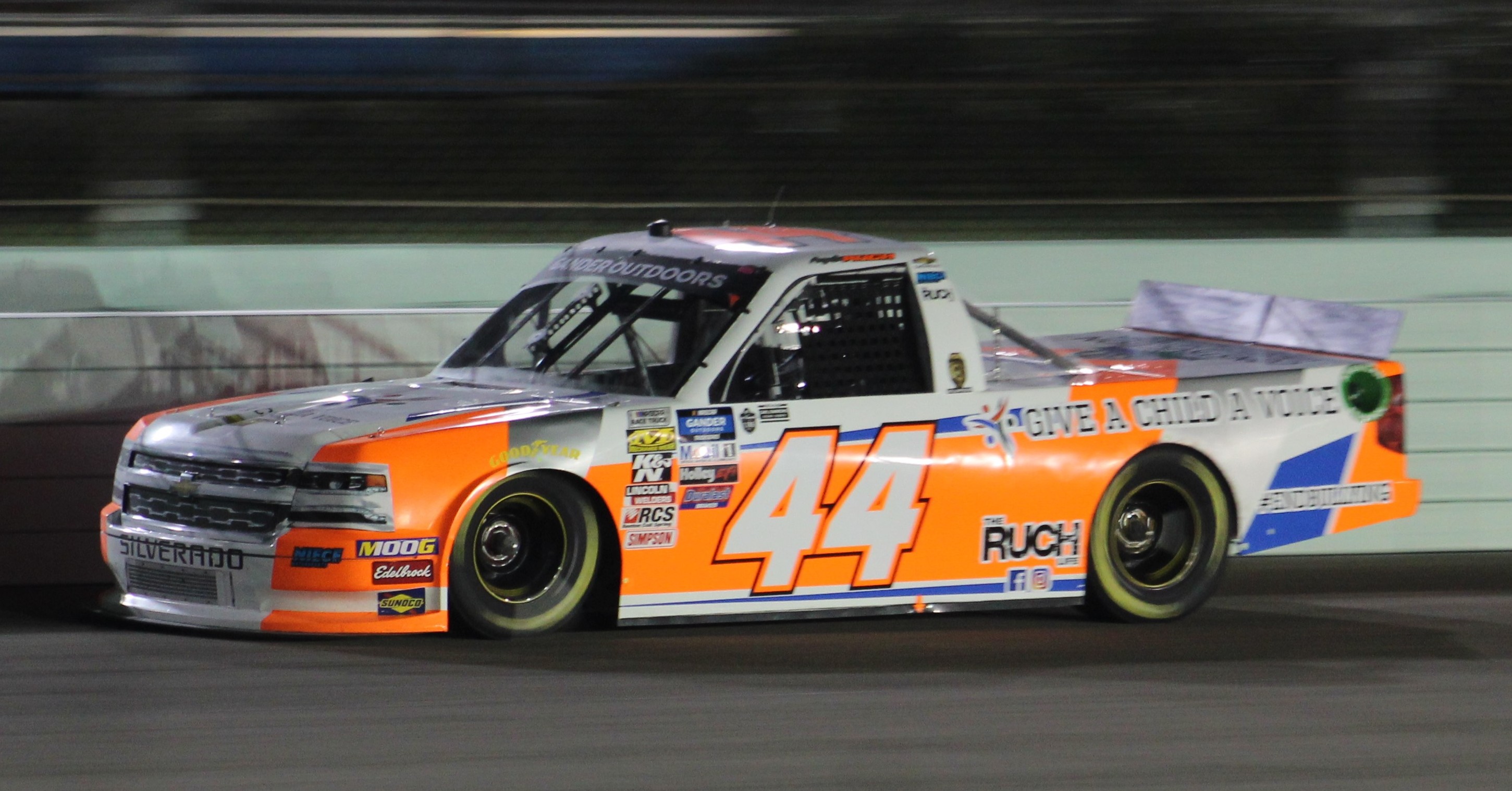
The Chevrolet Silverado is a large, powerful pickup truck made by Chevrolet. It is designed for carrying heavy loads, towing trailers, and everyday driving, with some expensive versions offering luxury features similar to high-end cars.
A range extender is a small gas engine inside an electric car that acts purely as an onboard generator. It doesn't actually turn the wheels; instead, when your battery gets low, the gas engine turns on to generate electricity and keep the battery charged so you can keep driving without stopping to plug in.
The Cybertruck is Tesla's futuristic, stainless-steel electric pickup truck that looks like a silver triangle on wheels. It is famous for its sci-fi design, bullet-resistant metal skin, and polarizing looks that make people either love it or hate it.
Carvana is an online store where you can buy used cars entirely on your phone or computer without dealing with a salesperson. They are famous for their giant, glass 'car vending machine' towers where you can go to pick up your purchased car using a giant coin.
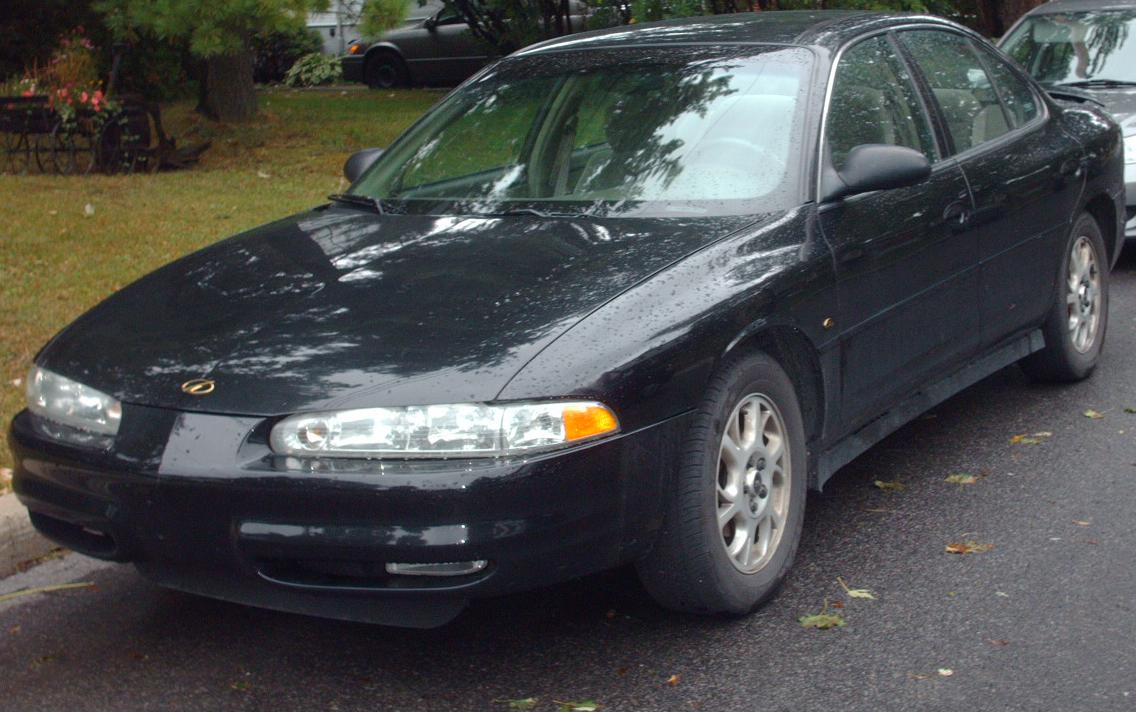
The Oldsmobile Intrigue was a midsize four-door family car sold in the late 1990s and early 2000s. It was designed to look sporty and modern, but the Oldsmobile brand was shut down by its parent company, General Motors, shortly after.
LIVE
This podcast is brought to you by Reynolds and Reynolds.
There are three waves of AI transforming our industry.
Explore what they are, where AI technology is headed,
and what these emerging innovations mean for automotive retailers at rayray.com.
AI-Waves for more info.
Welcome to this weekend drive edition of
Daily Drive for the first week of July, 2026.
I'm Jake Nier in Detroit in for Kellan Walker.
And happy 4th of July weekend, everyone.
Today on the show, Honda's CR-V just did something
I'm thinking nobody saw coming, knocking the Ford F-150
off its top spot of the US sales chart for the first half of the year.
New vehicle prices just hit a record high,
nearly $52,000 on average, and buyers apparently aren't blinking.
And then we're going to do something a little different
for the second half of the show today.
Mike and Larry each make their case for the biggest
auto industry story of the first half of 2026.
Joining me today, Michael Martinez, who covers Ford and the UAW for us
at Automotive News. Mike, welcome back.
Happy semi-quincentennial, Jake.
Nice. Well, well played being able to say that in one take.
We didn't have to edit that one.
And Larry Veliquette, who covers Toyota, Subaru and Mazda.
Welcome back to the show, Larry Legend.
I hope you're I hope you have some big plans
for the fourth of July holiday weekend here.
Yeah, I got a few plans, but I am fresh off the men's team USA win
yesterday over Bosnia Herzegovina.
So all excited now.
Yeah, absolutely.
Mike, have you been watching the World Cup?
I have. Don't watch soccer otherwise, but it's a lot of fun.
No, no, you watch a football.
My bad.
See, I'm a novice, novice fan.
Yes, the the the Americans are here, everybody.
Yes, all in the same boat.
Wow, there's something to care about.
Yeah, right.
All right, Larry, so let's start with the C.R.V.
Now, you cover Toyota.
The RAV4 is a big reason that the C.R.V.
was able to take that top spot.
In fact, it's nice to have you and Mike here
because this doesn't reflect on you at all.
But you guys are covering the losers in this equation.
Oh, sure. It reflects on us.
Well, our colleague, Urvash Krakaria, would argue that.
Yes, he would.
But but that model changeover caused the the RAV4 sales to tumble
36 percent in the first half of the year.
How much of this do you think is Honda winning?
How much of it is Toyota and Ford sort of handing it to them?
You know, I'm going to use a soccer analogy, right?
It is helpful to be in the right place at the right time
when the ball arrives at your feet.
We're really going for our European and South American listeners here.
Yes, we are for international audience.
They're in the right place at the right time.
They have they have hybrids in the lineup,
which is what you want right now.
They have the C.R.V., which has always been a powerful nameplate.
I would take issue with what you said about nobody saw this coming.
It frankly is a I mean, it's a function of timing
because of what happened to Ford and and the change over for the RAV.
Can they hold it?
That's that's a much larger ask.
But the fact that it's that is there, the Honda C.R.V.
is a sales monster and has been for decades.
I mean, it is the right place being in the right place at the right time
and sticking to your guns and improving your product all the time.
And then, you know, when you're when your opponent stumbles
and you're there to take the pass, you know, every once in a while,
you get to score a goal, don't you?
Go. I love. Let's keep it.
We got to keep this going.
The whole show. Go.
I was going to say, though, Larry,
we can't be all oracles of wisdom here.
OK, like, you know, some of us, you know, are just plebs.
But, Mike, Ford's angle here is kind of painful, right?
You know, this aluminum supplier fire at Novelis really hobbled F-150 output.
Do you think this is meaningfully bad for Ford?
And what's the chance that F-150 makes a comeback to keep its streak going
for either being the top seller in the US or, you know, being in the top two?
I'm just going to rip the bandaid off right away.
First of all, I have no soccer analogies, so I'm just letting you know.
But what comes to mind is that that line about if a tree falls in the forest
and nobody's around to hear, does it make a sound?
And I say that because Ford is simply going to pretend this doesn't exist
because if you've paid any attention to the automotive industry,
particularly when it comes to marketing, a lot of folks are running the same race
but with different rules.
And we should be clear about these numbers we've talked about.
They are estimates because Ford does not break out F-150 sales.
They only give you F-series sales, which is F-150 plus F-250,
350, all of the super duty line together.
Now, F-150 obviously makes a big portion of that,
but we do not know specifically what F-150 sales are.
We're relying on global data estimates, so we should be clear there.
And Ford isn't acknowledging those estimates.
If you look at their second quarter sales release that came out this week,
the first line, the first line of that release, F-series retains truck crown.
America's number one truck is on pace for 50 straight years as the nation's best selling truck.
So that's the rules they're going by.
F-series has a vehicle line, not F-150 as an individual vehicle.
And it's interesting, you see this whole race with different rules
play out in a number of different areas, including a patriotic angle,
which I think is sort of appropriate for this holiday weekend show.
There is an interesting story this week in the Detroit Free Press,
noting that General Motors published a blog post this week
touting itself as the most American automaker.
And if you read it, they say they employ more people than anyone else.
People being the operative word.
Now, again, if you've listened to this show or followed my Ford coverage,
you know Ford likes to tout itself as the most American automaker
based off employing the most US hourly workers, everybody in the factories.
So GM says people, Ford says hourly workers, and they're not acknowledging each other.
So yeah, both statements may be true, but, you know, again,
it's a bunch of people playing by different rules.
So is this meaningfully bad?
Not if they don't acknowledge it.
It's up to independent third parties like us to sort of let
the readers and the listeners know what's going on.
But you also asked, will F-150 bounce back?
There's a good chance that it could because the issue that hampered it
in the first half, the novellas fire in New York, it should be behind it.
The mill there is working, it's pumping out more and more aluminum.
Ford should not be capacity constrained in the second half of the year.
Will that be enough to overtake Honda or the RAV4?
Who knows, Larry?
I think that Ford should rename the Maverick, the F Maverick,
and then the Ranger, the F Ranger.
And and then they can add that to the F series totals as well.
There are some folks and other automakers that that use F Maverick
in sentences, but it's not that.
As I will tell you, there was a rumor that it was going to be the F-100.
Wow.
And still, I think there's still some chatter that this upcoming
EV pickup could use that moniker again to add to it.
I'll tell you, it was very exciting.
It was a good surprise when Ford broke out F-150 Lightning sales for us.
We were expecting them not to and they actually did.
So kudos to them for that.
Yeah, I will say I will add here.
Mike couldn't come up with a soccer analogy, but I have one, right?
Because Ford Ford really, really didn't learn the lesson
from from this World Cup match.
They were both they and Toyota, both in this instance, right?
They were fouled by outside forces, but they didn't.
They didn't roll around on the ground and scream and whine
and look like it in flop and look like somebody just just handicap them,
you know, and then get up and run like a deer.
So it was really a missed opportunity here.
They they should have waited for the called
foul. Get try to get to that red card.
Yeah. Mm hmm.
Now, before we get to your picks for the top story of the first half of the year,
I did want to talk prices because I feel like this hasn't gotten enough
attention in a lot of ways.
The average marketed price of a new vehicle ended June at nearly $52,000.
It's up almost five percent from a year ago, according to our own data
for automotive news and Catalyst IQ vehicle price and inventory tracker.
Compact sedan saw the biggest jump.
That's 12 percent year over year.
An analyst, Rick Wainchill at Catalyst IQ says buyers are not flinching
at this point and turn rates are actually up.
Larry, you wrote about this for us at automotive news.
We've heard all week about the forces pushing prices higher
between tariffs, tight inventory, the hybrid premium.
Is there a ceiling here or is this just the new normal?
You know, a couple of years ago, those of us that had would cover full size trucks,
right? It was an open this is maybe 10 years ago,
wondered what the ceiling was for full size pickup prices, right?
Because they were at the time they were pushing 100,000.
We're like, oh, this is nuts.
There's, you know, why would people pay this much for a truck,
especially when you have 77 year loans and eight year loans now
and $1,000 a month payments.
All of the metrics that that should be affecting sales
that should be slowing sales, the rising prices, the high interest rates,
the actually lower incentives haven't really worked.
And so we're we're trying to figure out it really is a mystery.
If you if you watch this for a while, why there isn't more of an impact.
And this tracker that we put on our website every day is a really telling example.
These are it's gleaned for those of you who don't know, it's gleaned from
all of the franchised auto dealers, it's VIN level data,
and it's grabbing the advertised price, right?
So inclusive of discounts and inclusive of discounts,
the average across all of those 2.8 million vehicles
$52,000 and and and continuing to climb.
Now, today's $52,000 is is not yesterday's $52,000.
Thank you, inflation.
But it's still it's a big number.
And I think the only reason that it's not a bigger deal to shoppers
is because, A, we've had increases in quality.
People are holding their vehicles longer, which is allowing
making the underwriting for six year loans and even seven year loans
make a little more sense.
Otherwise, this would be a huge deal, right?
Would be a very big deal and you would see some panic right now.
But you're still seeing everybody, you know, sections of the large swaths
of the industry cranking up some really large profit numbers.
Mike, what do you think this sends message wise to automakers?
It's just like it doesn't matter this affordability stuff.
I mean, just keep cranking out those super expensive vehicles,
you know, keep those margins high, as high as you can.
Is this just telling the industry like this factor
that we've been talking about forever isn't so much of a factor?
Yeah, I don't want to discount the impact it can have on real people.
I'm sure there's new college grads or folks not making a lot of money
who are really hurting right now and are very limited in terms of what they can buy.
But to Larry's point about a lot more favorable lease terms
and the content you are getting in vehicles today,
people are still buying them.
You know, Ford saying fully loaded F-150, people are buying them, fully loaded
expedition, people still want them, not everybody, but enough people still want it.
And you think back to the EV craze earlier this decade.
And obviously, I think the loss of the federal tax credit really drove the stake
through the heart and was sort of a mercy kill, I think, to a lot of these EV plans.
But I have a feeling they would have died out anyway,
because the customers simply weren't paying that premium that the automakers thought they were.
So you can still vote with your wallet.
And if people weren't buying fully loaded F-150s and Silverados,
the companies wouldn't still be making them.
So enough are. Do I think the price will still go up?
That average price, probably.
But at a certain point, you know, there may come that very issue
where it doesn't make sense for enough people and the automakers have to dial it back.
We're seeing that already with a lot more of an emphasis on entry level products
and some folks who got rid of them, realizing, oops, our bad.
It's an actually important part of a portfolio.
Maybe we'll see that more.
But all indications are that 52 is going to go up to 53, 54, et cetera.
You know, Mike raises an interesting point.
We talked a little bit last week about this event that we had with Cox Automotive
and our friend, our longtime friend, Aaron Keating at Cox,
she delivered this really, really in-depth analysis.
Speaking of a CRV, she compared the 2026 CRV and its price
compared to a 2016 CRV and its price.
And what you get as standard equipment now on the 2026 model
versus what you got for granted, much less
on the 2016 model.
But the equipment that was on the 2026 model in terms of safety equipment,
in terms of infotainment systems, the sensor packs that are there
that all come standard now, that, you know, things like driver assistance,
lane keeping, all these things that are that have, you know,
crept their way into the basic structure of what's on offer now.
It's not just inflation affecting this.
There is a lot more equipment that are on vehicles today
that wasn't there 10 years ago.
And I think it's a it's a really valid point that that needs to be talked about more.
Super interesting stuff.
And maybe it will factor into what we're about to hear next.
Coming up, Mike and Larry are on the board to make their picks
for the biggest automotive story for the first half of 2026.
I guess I'll be the Mel Kuiper in the situation.
Are you going to are handicap it and get it wrong?
Yes, absolutely.
That that's my role.
Here, what they come up with next here on Weekend Drive.
Software is becoming more and more important with each model year
as new software problems arise, so do solutions.
This week on shift, we're looking at how software can predict maintenance issues
and prevent costly recalls.
Don Heinlein, Chief Marketing Officer at Sinadis, also talks about why
a different type of electronic architecture can enable easier updates to vehicle capabilities.
It simplifies and provides you the ability to do better power distribution in a soft way
and it allows you to do better smart upgrade ability.
Heinlein also explains whether open source platforms can support critical safety features.
Join us for shift available this Sunday, wherever you get your podcasts.
Three waves of AI are transforming our industry, as we know it today.
Here from A.J. McGowan, Vice President of Research and Development at
Reynolds and Reynolds on all three ways of AI and automotive, where we're heading
and what the latest cutting edge innovations mean for automotive retailers.
So I want you to picture what it would be like on that same Tuesday morning
that we talked about earlier with a full agentic infrastructure in place.
Your service manager wouldn't start the day by reading reports.
Ray hands them three ROs that need attention and tells them why.
Your sales manager wouldn't spot check calls.
Ray already routed the ones that mattered.
The GM doesn't reconstruct yesterday.
Ray reconstructed it overnight and gave them a summary.
And your controller doesn't have to pull the ideal level analysis every Friday.
Ray runs it on Thursday and flags anything that's worth a conversation.
Decisions can get made earlier in the day with better information
by fewer people.
And that's what the agentic wave actually feels like in your store.
It feels and sounds a little bit like science fiction.
But at the end of the day, it's not.
It's just a faster Tuesday.
If you're interested in exploring how AI can improve operations at your dealership,
visit rayray.com slash AI dash waves.
That's R-E-Y R-E-Y dot com slash AI dash waves.
Welcome back to Weekend Drive.
I'm Jake Nier in for Kellen Walker.
It's halftime of 2026 and what a first half it's been.
We've had USMCA renegotiation starting and ramping up before the official start of them.
A record hybrid surge, shareholder uprisings in Japan, Ford topping the JD Power Quality Study
for the first time, I should say initial quality study.
Polestar getting forced out of the US market.
There's no shortage of candidates for this part.
We're going to get Mike and Larry each to make their case for what story
rises to the top for the first half of 2026.
So, Mike, you go first.
What's the pick for the biggest story of this first six months and why?
You know, sometimes when you have the first pick, you just have to go with the obvious choice.
You don't got to get cute.
So, I think I am picking the obvious choice.
It shouldn't be a surprise to folks.
For me, the biggest story in the auto industry is affordability.
And if you remember, this is what I predicted at the end of last year,
would be the biggest story in 2026.
Now that tease that I did at the end of the last segment,
like it makes me feel like I actually knew what you were going to say.
Folks should know we did not rehearse this ahead of time, so that's actually a great tease.
But, you know, I say affordability because it really underpins everything happening
in the auto industry today from the rise in MSRPs, whether it's tariff related or more content
related, you know, that continued dominance of trucks and SUVs that we've talked about.
The EV craze from a few years ago, shifting into the hybrid craze today, those vehicles,
both commanded price premiums, the threat of China.
What's underpinning that threat of China?
The affordable vehicles that they're able to give thanks to government incentives.
But now you're seeing automakers like Ford, like Slate popping up,
scrambling to get into that 25k to 30k range because of the affordability crisis.
So any story I think we've written about or talked about through the first six months of the year
is underpinned by what vehicles cost and what they're going to cost moving forward.
And I think that's going to continue to play a major role, not just in the auto industry,
but throughout the economy.
Thoughts, Larry? Did Mike steal yours?
No, no, he did not. But before I finish, I had to stop for a hydration break.
Stand by. There you go.
Is that a soccer reference to Larry?
Okay, okay. You can tell I don't watch very much soccer. You're like basically alone here.
It's okay. It's okay. I know. I know.
What are the odds of two other reporters being sports fans? I know.
Wait, I thought we were talking about football.
No, no, we're talking about sports.
Oh, I'm sorry. just kidding.
No, Mike didn't steal mine, but I will say he's absolutely spot on if we have written this over
and over again. It is the number one issue confounding this industry because we don't
know how to solve it. We have ideas where we can make incremental progress.
The slate experiment is one that would be a giant leap if it sells, but there's a reason
that all this equipment is on these other vehicles. It's going to be a real suggestion
to see if a real tell if people buy a new vehicle would strip down to absolutely nothing
compared to a used vehicle that has all this equipment on it for basically the same price
point when the used vehicle is probably going to last as long.
I'm really glad that you guys brought up slate because as we talked about last week,
I have been itching to talk about that, so I'm going to take this opportunity
to make a bold and maybe not crazy prediction. I actually am going to be on the record here
as the guy on the show that thinks slate could be a big winner. I actually do think that slate
is doing something really interesting here. The reason that I say that is because I have two kids
that watch YouTube a lot and their viral marketing ads for certain products
are everywhere these days. This seems to be how other companies are selling things and making
them popular. I think slate has a really interesting opportunity here to be maybe the first automaker
that really latches on to something like that. I don't know if that's their strategy,
but if they do and they can target young people with viral marketing with check out my slate,
check out this new wrap that I put on my car, check out the way that I'm making this functional
for myself and making it unique to myself. I think there's an opportunity there that other
automakers just don't have. You could throw a car up on, try to do a viral marketing campaign for,
I don't know, an accord or something like that, but it's just it's not the same thing.
But this is an interesting one and I think they have a lot of money they could throw at something
like that. I don't know if that's necessarily the one unlock to make this work, but I could see it
becoming a sort of a viral even fad for younger people. I have a bet and I would like to get
your, since we're talking about sports, let's put. You guys are itching to bet me on this one.
Yeah, I could tell Mike is also. Here's the line. Here's the question in line.
In when they both have finished their first full year of sales, who will have sold more,
more vehicles, Slate or Scout?
Well, I also have, see, this is why this is my Mel Kuiper moment for you guys. I also think that
Scout is interesting too because of the range extenders, which is another technology there,
by the way. They weren't originally, right? Yeah, exactly. Well, no, I think that that
actually could be a big factor for them. Maybe that's a topic for another show, but I'm the
chump that buys all the PR, the stuff from these companies. Okay, so what's your answer?
You know, if I'm going to make the show interesting, let's go with Slate. Okay, Mike.
So I'm going to say my point is that first year doesn't matter. Look at the Cybertruck,
completely different thing, but the same idea in terms of viral marketing or something that's
upending the industry with a different style. Obviously, it's not comparable in terms of
price or content, but just being that jolt to the system in terms of style. Yeah, a lot of early
adopters, a lot of people who wanted to get it because it was different, but that petered out
pretty quick. So I'll give you the first year of sales. I bet you Slate will do great. I bet you
the reservations, they're going to rack up reservations out the wazoo, but is it sustainable?
I don't know. And my customary mention of the Ford Maverick, Ford's been trying to perfect that
sort of DIY-ness with the Maverick. Maybe it hasn't worked. Maybe folks are buying it for other reasons,
but you can. You can buy a pretty stripped-down Maverick and you can build different stuff
in the bed to haul or carry things. That's part of the whole advertising for Maverick. So
will Slate be able to be effective there? Maybe, but when those buyers come home with their new
truck where you've got to hand crank the windows and don't have a display and they look down the
street at their neighbors with a Maverick or a Scout or a $30,000 Ford EV truck when that comes
out and they see so much more that they're missing for a marginal price increase,
I think maybe they'll have a little buyer's remorse. And when they can't get their Slate
truck fixed? Yeah, I think that might be one of the bigger concerns there and I agree with that.
And that's what any EV startup really is. That is a huge concern. I think the thing that turned
the tide for me in my thinking about this is when they said that they are going to start their
wraps at $500. And I think, I don't know if this is true for sure, but there are free installation
options, I think, for some of those things. That's a lot cheaper than trying to wrap other
vehicles. It just seems like this is part of the identity. The identity of the vehicle is
you get to do whatever you want with it. And for young people who can't afford much more
costly vehicles than that, it's kind of an interesting suggestion.
All I will say is Mike brought up the Cyber Truck, which was spot on, right? And I wish I
had thought of it. But I think that the Slate will do one thing better than the Cyber Truck,
which is draw fewer extended digits from fellow drivers. Then what the Cyber Truck does because
the number of times that I have watched the Cyber Truck go by and watched other and seen other
motorists extending a half of a two-fingered hello. They're not saying peace. Peace be with
you. They're not saying peace. No. All right. Well, anyway, that's my little weird moment
there for the show. But now, Larry, with that all being said, what are you looking at? What's your
top story the first half of the year? I am going to go a little bit for a surprise here.
Mine is Carvana. Mine is Carvana because of what this model that they have developed
could do to franchise dealerships nationwide. Because the numbers that they're racking up
are nothing short of stupendous. And if there's anything that dealers watch closely,
it's somebody putting up big sales numbers with low overhead, which is exactly what Carvana is
doing. Now, Carvana's case is a little different. It's not using these franchises, these Stellanus
franchises as they're not exactly the same as apples to apples, what other Stellanus franchises
are doing. But the numbers that they're putting up are nothing short of miraculous. And this industry
is going to take notice. And by the end of the year, I truly believe we are going to start seeing
changes across the board from regular operators looking at this and wondering what they can
adopt. If you look at what they're doing, and we're going a little deeper on this,
if you look at what they're doing, they've taken a lot, for those that don't know, they put a cube
basically in the middle of their showroom. And you go in and you put the app on your phone,
and you pick a car. You don't have anybody bothering you. You don't have anybody trying to
upsell you. It's all done basically self-directed. What they've done is taken the online
digital retailing experience that we kind of crash developed during the pandemic,
upsized it, taken off all of the friction that normal people hate about going to an auto dealership.
And in the process, pretty much guaranteed their own earlier business model of getting the best used
cars, because we all know that the best used vehicles are the ones that come in on trade.
They're the ones that all dealers cover. By doing this, by eliminating this friction out
of their new car buying process, they're almost guaranteeing that they're getting the best vehicle
trades. It's part of their algorithm. Now, the big open question is, is this making money? We don't
know. We believe so, but we don't know. That is the big open question. But this has, in my mind,
this new thing, right? It's only a year old. This new thing has the ability, has the potential
to upend the entire franchised distribution model.
I would just say I like Larry's answer, particularly more for the back half of 2026,
because I want to see how this develops. Because to me, everything he says is correct.
The only cold water I would throw on it is, there's a small sample size.
I'm trying to make a soccer analogy, but there's such low scoring anyway, so I can't really,
but it's like in basketball or another real sport, if somebody scores a bunch,
is average and 30 per game for three or four games in a row. Let's see how that plays out.
The numbers, like he said, are really, really interesting. Let's see how it plays out if it's
sustainable when you expand that across brands and throughout the country, more than seven stores.
I'm curious to see how that plays out and if the telltale sign will be if the other brands
are willing, other dealers who own other brands are willing to play ball there.
Yeah, I think there's a lot of intrigue and it's going to be fun to watch in the second
half of the year. Speaking of which, and here's a little nugget for our millennial listeners
and older. If you guys had to play Miss Cleo here, what would be your front runners? I was waiting
for it for Larry. I was waiting for it. What are your front runners for top stories for the
second half of the year? Mike, does Carvana reach up there or what would you pick?
I'd say it'd be top three. I am really curious, USMCA, how that develops and the ramifications it
has. If that gets settled and maybe we start to see some production changes long term because
they have greater certainty, I think that could rise certainly to the top three if not the first.
Larry? Well, Mike took the affordability one, right?
Well, I mean, that could rise to your top story for the rest of the year. That's fine.
Yeah, and I think that's going to be there. I think what he just mentioned too,
they're kind of obvious ones, but I think both. I'm not going to differ on the top three.
I thought I was really breaking new ground with Carvana here.
It wasn't on my list when I introduced the segment, so hey, I think that you're on to
something there. Well, guys, it's been a great first half of the year with you here on Weekend Drive
and we look forward to having Cal back in the fold very soon. I hope you guys have a great
Fourth of July weekend. Thanks so much for joining me today on Weekend Drive.
Happy birthday America. You don't look a day over 249, right?
250 is the new 248. There you go. Absolutely. I can't wait until I get there.
That's all for this Weekend Drive edition of Daily Drive. I'm Jake Nier in for Kellan Walker.
We're off for the rest of the July 4th holiday weekend here in the US. We'll be back with new
episodes on Monday. You can get the latest on first half vehicle sales, new vehicle prices,
and everything happening in the auto industry at AutoNews.com. We'd love to hear from you.
Let us know what you think of the show and the topics we covered today.
Send us an email at DailyDrive at AutoNews.com or leave us a voicemail at 313-444-2774.
And if you enjoy the podcast, remember to like, leave a review, and subscribe so you never miss an episode.
About this episode
Honda's CR-V has pulled off a massive upset, dethroning the Ford F-150 to claim the top spot in US sales for the first half of 2026. Hosts Jake Nier, Michael Martinez, and Larry Veliquette break down how supply chain disruptions and model changeovers paved the way for this historic shift. They also debate Ford and GM's competing claims over who is the "most American" automaker, and tackle the mystery of skyrocketing new vehicle prices, which have hit a record average of $52,000 without slowing down consumer demand.
Michael Martinez and Larry P. Vellequette join Jake Neher for a special holiday “Weekend Drive.” Honda’s CR-V just knocked the F-150 off the top of the sales charts for the first half of 2026, and new-vehicle prices just hit a record high. Then Mike and Larry go head to head with their picks for the biggest auto industry story of the first half of 2026.