Emission systems are the parts that help a gas engine reduce harmful exhaust. If someone modifies them, it can mean the car is no longer meeting pollution rules.
A tariff is a tax on imported goods. This phrase means the total yearly amount of money Toyota (or the supply chain) is paying because some Tacomas are built in Mexico and then imported.
The Leap Motor B-10 is an electric SUV/crossover from a Chinese EV company. The story is about getting it into Mexico first, using an existing dealer network to sell it.
The Alpina B10 is an electric crossover that’s being introduced in Mexico as part of a partnership that uses existing dealership locations. The main point is how the car will be sold and supported in that market.
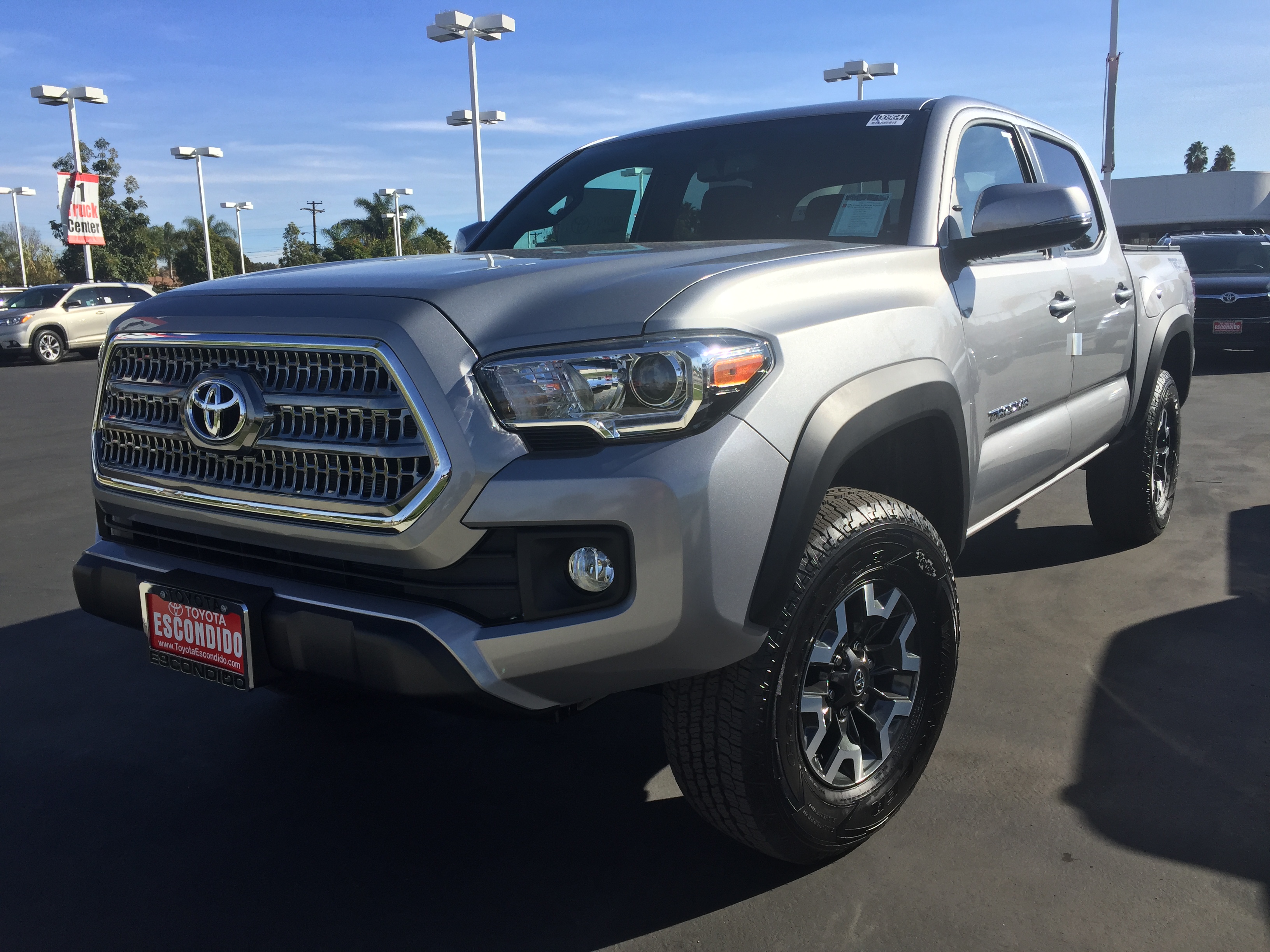
The Toyota Tacoma is a popular pickup truck. Here, the host is saying Toyota wants to build more of them in the U.S. to help avoid extra taxes (tariffs) on imported vehicles.
The Toyota RAV4 is a compact SUV and it’s Toyota’s biggest seller mentioned here. The host is saying tariffs on imported cars—like a 25% duty—can affect pricing and production plans for models like the RAV4.
A 25% tariff is a tax added when vehicles are brought into a country from somewhere else. The host is saying these taxes are a big reason Toyota’s U.S. profits got worse, even though sales were strong.
A tariff mitigation strategy is how a company tries to avoid extra taxes on imported products. Here, Toyota is shifting production so the cars are made in the U.S., which can lower the tariff hit.
The Maverick is a small pickup truck model. Here, they’re talking about a possibility that a plant in Mexico could be used to build a “Maverick fighter,” meaning a new or different vehicle based on that idea.
A unibody design means the car’s body and frame are built as one structure. A “unibody plant” is a factory set up to manufacture that kind of structure, not a separate ladder frame.
Body-on-frame means the vehicle has a separate “skeleton” frame, and the body is bolted on afterward. It’s often used on trucks because it’s strong for hauling and towing.
Term
build on demand
Build on demand means cars are made when there’s real demand, not just in big batches sitting in lots. That can help reduce waste and keep supply closer to what buyers want.
The Ford Flex is a larger family vehicle with three rows of seats. It’s mentioned because it can be built using flexible factory setups—factories that can switch between different vehicle models.
LiDAR is a sensing method that uses lasers to measure how far away things are. It helps a car “see” in 3D, which is useful for navigation and driver-assistance systems.
Term
radar's ability to cut through difficult weather
Radar is a sensor that uses radio waves. It tends to work better than cameras in bad weather like rain or fog, helping the car keep detecting objects.
Terradar is a company that makes sensors used to help cars “see” the road. The CEO is explaining a new sensor approach and how they’ve been showing it to car makers.
The front fascia is basically the car’s front body area—things like the bumper and grille. The claim here is that the sensor can still “see” through that front section.
A paid development program is when a car company pays a tech supplier to work on the technology with them. It’s basically a trial-and-improvement phase before the supplier is chosen for production.
An internal champion is someone inside the car company who really believes in the technology. They help push it forward so it doesn’t get stuck in internal politics or delays.
“Level three” means the car can do a lot of the driving for you, but it still needs you to be ready to take over. When the system asks you to, you have to respond.
“Advanced safety” means the car uses sensors and software to help prevent crashes, not just beep at you. It’s designed to notice danger earlier and respond more intelligently.
Term
redundancy based on different information
It means the car uses more than one kind of sensor so it doesn’t “lose its eyes” if one gets blocked or confused. Using different sensor types helps the car keep making safe decisions even when conditions are bad.
A camera is one of the main sensors on many modern cars. It can help the car detect lanes and objects, but in fog or heavy weather it may not work as well—so pairing it with another sensor helps.
Teradar is a sensor system the company makes for cars. The host’s point is that it’s used alongside a camera so the car can “see” better and stay safe when one sensor struggles.
Term
autonomy for the vehicles
Autonomy means the car can do more of the driving on its own. The point is that the car needs sensors that still work in tough weather so it can keep making safe decisions.
Concept
pay development program
This sounds like a formal program where a car company tests and works with a supplier to develop a new technology. The speaker is saying it’s a signal of whether the carmaker is serious about using the supplier’s tech.
A reference design is a “starter blueprint” of how the supplier’s technology will be built and connected in a car. It’s used to help the carmaker evaluate whether it can be integrated into production.
Term
B sample
A “B sample” is an intermediate prototype version of a part. It’s the kind of build the carmaker can test to see how well it fits and works before the final production version.
An ASIC is a specialized computer chip built for one job. Here, the company is saying their prototype includes a custom chip to handle the sensor’s processing efficiently.
“OEM traction” is basically how much momentum Terradar has with carmakers. It usually shows up when automakers agree to test the tech and pay for development work.
A PCB is the circuit board inside an electronic device. It’s where components are mounted and wired together, and the speaker says their design changes how antennas are handled.
Imaging radar is radar that helps the car “see” more detail about what’s around it. Instead of only detecting something nearby, it can build a more detailed view.
NVIDIA ORIN is a computer used in cars to process sensor information. The CEO says they’re using it now, but they want a more purpose-built setup for what they’re building.
Matt Carey is the CEO of Terradar. He’s explaining what his company wants to accomplish this year with carmaker development projects.
LIVE
Welcome to Daily Drive for Tuesday July 7th, 2026.
I'm Jake Nier in Detroit, in for Kellan Walker.
Today on the show, Toyota doubles down on Texas with a multi-billion dollar commitment
to American manufacturing, a Chinese EV brand makes its first move into North America, and
President Trump hands out pardons to people who modified their vehicle emission systems.
Plus, Teradar CEO Matthew Carey joins us to talk about the new sensor type that works when radar
and lidar fall short.
I don't want to be driving through fog and then my car hands it back to me and I'm like,
no, this is this is like when I want you to have it, right?
Let's run through all the news you need to know to keep up in the auto industry.
Toyota is making a big bet on American manufacturing.
The automakers board has approved a $3.6 billion expansion of its San Antonio truck plant.
The plan is to double its size and move most Tacoma production back to the U.S.
from Baja, California, Mexico by 2030.
The move is part of Toyota's existing commitment to invest $10 billion in the U.S.
The automaker says it will add 2,000 jobs.
It also helps chip away at what we at Automotive News found to be an $8.6 billion annual tariff
bill that Tacoma has been built exclusively in Mexico since 2021.
We'll have more on this story in a minute.
Chinese EV startup Leap Motor has entered Mexico using Stellantis' local dealership network
to distribute its B-10 electric crossover.
Stellantis holds a 21% stake in Leap Motor and the partnership is central to how the
Chinese brand is expanding globally.
Mexico is a deliberate first step, the company calls it, quote,
the start of its expansion into the North American market.
Leap Motor plans two more models for Mexico.
And President Trump has pardoned six people he says were prosecuted for, quote,
fixing their car, specifically altering vehicle emissions control devices.
Trump didn't name the individuals.
The move comes alongside a June 29 presidential memorandum directing the EPA to explore
easing rules around modifying emission systems.
Trump framed it as a cost of living issue.
He argues the certification process for aftermarket parts takes too long.
It's part of a broader pattern.
Trump has issued more than 1600 acts of clemency since the start of his second term.
And those are today's headlines.
You can find more on all those stories over at AutoNews.com.
Joining me now to talk more about Toyota's big investment in Texas is our own Larry
Veliquette, who covers Toyota and other automakers for us at Automotive News.
Larry, welcome back.
It's so good to make a midweek appearance.
It's always a treat, man.
And of course, you can hear Larry every week on our weekend drive edition of the show as well.
Larry, though, we couldn't wait for this one.
We had to talk about it.
I guess my big question is why.
Why is Toyota doing this?
Well, Toyota is doing this because it is maxed out on production capacity,
not only in the US, but globally.
It has products it wants to build and it has no place to build them.
They made more than 10 million vehicles last year, well over 10 million vehicles last year.
They sold everyone they made.
They have additional room to grow their sales to.
So the long and short of it, just from a business standpoint, exclusive of any tariff
considerations, they need more production capacity.
Now, tariff considerations way into this, right?
The Tacoma, which is what they're going to move part of the production
into the US from Mexico, from a plant in Baja, California to this plant in San Antonio by 2030.
Part of this is because of terrorists.
They had their fourth best year last year on record and they lost money in the US, which is crazy.
They had the fourth best ever sales and lost money in the US because of terrorists.
There are two very large drivers of that and that's the 25% tariff on vehicles coming out of
Canada, specifically the RAV4, their number one seller, and the 25% tariff coming out of Mexico,
which is their number three seller, the Toyota Tacoma.
So by moving this into the US, the production into the US, at least some of it,
it's a tariff mitigation strategy.
And we've been talking a lot about the RAV4.
Does this in any way give them room to maneuver on that?
Perhaps.
You're going to have a plant in 20, now it's not until 2030, let's remember.
That's four years down the road.
Yeah.
You're going to have a plant in Baja, California that was built and went online in 2003.
So it's still a relatively new plant and the question is what's going to go in there.
They haven't said, I'm not sure they know yet.
It's possible because it's in Mexico and Mexico has free trade agreements.
With most of the world, they can literally put anything there.
So it may not serve the US market, but it may.
It may be the place that they build their Maverick fighter.
If they convert that plant to a unibody plant from its current body on frame configuration,
that's a possibility.
If that's the case, then that could potentially allow them room for a fourth plant globally
for RAV4.
They could cycle that in, make that a very efficient plant, basically build on demand,
and add a small commercial van on the same platform.
And this, now we've seen Toyota do this flex manufacturing in Georgetown
and these vehicles on a similar platform.
That's a good possibility.
Larry Veliquette all over the story for us at Automotive News.
You can read more of his reporting on it at AutoNews.com.
Larry, thank you so much. Appreciate it.
Thank you, Jake.
Now let's turn to Terradar.
It's a tech startup developing a sensor that combines LiDAR level resolution
with radar's ability to cut through difficult weather.
Since CEO Matthew Carey appeared last on Daily Drive from CES in January,
the company has been running its summit sensor on automaker test tracks across Europe and the US.
It's already landed a paid development program with a German automaker with a second expected soon.
Automotive News Europe managing editor Doug Bolduc cut up with Carey late last week.
Hello, everyone. Doug Bolduc with Automotive News.
And I am happy to be together again with the CEO of Terradar, Matthew Carey,
who we spoke with at CES.
And there was a lot going on for the company at that particular event.
Can you catch us up on what you've been up to and how things are progressing with the technology
and with your conversations with some very interesting people?
Absolutely, yeah.
So last time we chatted at CES, we were unveiling summit, which is our high premium sensor.
And so what we're doing at Terradar is we're inventing a new type of sensor
that provides the best of both worlds between a radar and a LiDAR, right?
So we're able to see through difficult environments like rain and snow and sleet and fog.
We can see through the front fascia of a car, but at the same time provide the resolution
of a LiDAR.
So think of being able to pick up a child who wandered into the street 200 meters away
at night in the rain and being able to provide that level of safety.
And we were unveiling that product the last time we talked at CES.
We got to display it to different OEMs.
And since then, we've been busy.
So partially due to those meetings at CES, of course, OEMs come in.
They see a wonderful demo in a hotel room or out on the street and they're like,
this is great, but it's CES.
So why don't we get it onto our own test tracks?
And that's literally where we spend the last four or five months going in Europe
onto the test tracks there, the abandoned airfields from the Cold War,
and then also in the Midwest and all over the US as well.
So taking our sensor, it's an amazing experience.
You get to hand it to an OEM, they strap it to the front of their car with their folks
and you see your sensor driving around on the test track gathering data.
It's a very exciting moment.
And then the way that you tell you're actually making progress in the OEMs
or interested is, are they willing to give you resources?
Are they willing to give you money and run you through the rigorous purchasing process?
And so we've already announced for one OEM that they've selected us
and we're starting a paid development program, which is a huge deal on the roadmap to a bid
and we can talk a little bit about that.
But then it looks like we'll be entering a second one here shortly.
So very excited making real progress and learning a lot as we go as well.
OEMs are never afraid to tell you where you could be better.
And I think part of this process too, as you do this, you also end up inheriting a champion.
If someone in the company likes the technology, they end up kind of being
almost like a many spokesperson for your technology within the organization, correct?
Yeah, that's right.
It's not an easy thing to get.
You need someone fighting for you, right?
And to your point, they want to bring the technology inside.
But what matters, and we announced it was a German OEM and then of course we'll be
transitioning to hopefully a US OEM shortly.
You have that internal champion who wants to bring in the technology,
but it's not just about the technology.
It's about what is it that you bring to the vehicle that makes it easier to sell,
makes it safer, makes it better than their competitors, right?
And in our case, it's giving these OEMs a sensor that allows them to provide
advanced autonomy like level three or advanced safety, not just in nice environments that
we might drive in in California, but as you know in Detroit or in Boston where the environments
aren't so nice.
And at the very moment where the car might be wanting to hand it back to you is actually
the moment that you need the system working the most, right?
And so not just implementing the technology, but also champions inside that say,
man, if we get this capability, like this will change the way that we're able to sell our vehicles
and people are able to use them both from advanced features, but also from a safety perspective.
Yeah, because a lot of the technology that we're using right now, some of it is good,
but sometimes it leaves you feeling a little bit uncomfortable, like it'll fail when it's
very rainy or when it's very foggy.
And I think that one of the keys that you're trying to present with this technology is that
this will work in those instances.
So those times when you really want an assist, you'll get it.
That's exactly right.
So you can kind of think of it as you want sensors that provide their information in different ways.
And you look at a camera, they work like our eyes do.
And so it makes sense that when we have trouble seeing, cameras also have trouble seeing.
And even if you look at a LiDAR, the wavelength that that uses is actually pretty close to what
you and I see each other in.
That's why a LiDAR point cloud kind of looks so natural.
But it also means it suffers from a lot of the same things that a camera or our eyes do, right?
And so that's why radars traditionally have been brought in because it's a different wavelength,
makes total sense.
There are physics limits on the resolution that can be provided.
And this is also why Teradar makes sense because you want to get away from just these set kind of
visual style wavelengths into something else to provide that level of safety because you want
redundancy based on different information, not just the same information over again.
And so pairing a Teradar sensor with say a camera is incredibly powerful because
you get that redundant information that in case one falls out due to weather,
you're able to still provide safety and advanced features and autonomy for the vehicles that
we're driving in, which is, that's what I want.
I don't want to be driving through fog and then my car hands it back to me and I'm like,
no, this is like when I want you to have it, right?
Yeah, yeah, I want to feel comfortable in those kinds of tight situations.
And when we spoke at CES, you were tracking towards hopefully having a bid ready for this
year and then being started production in 2028 based on the successes that you've had so far
in 2026. Are you still tracking in that direction?
We are. So I anticipate that we'll actually be putting in three bids now, not one.
So we have a bit more visibility on that. So that's exciting. So we'll likely be putting
in a bid at the end of this year and then a likely two bids in Q1 and maybe one at the end of Q1,
early Q2. So we now have visibility on three bids that we're being invited for. Folks are seeking
information. This is part of what the pay development program is. You really, especially as a smaller
company, you want to see that to know that this OEM is indeed serious about you and not actually
just saying nice things to avoid hurting your feelings. If some OEMs don't care about hurting
your feelings, some do. It depends on the culture. But we appreciate the direct feedback regardless.
So yeah, we are on track for that. And then we're working with tier ones to produce our
sensors. So our reference design for a B sample will be complete later this year.
That's our full B1 sample with our custom ASIC. And then different tier ones over the course of
27 will be completing their own specific B sample. And that is for production in 28.
Well, thanks for that, Matt. And what about your goals for the rest of 2026? What are you hoping
to see the company achieve as we are sort of at the midpoint or a little past the midpoint of the
year? What are the things you'd like to achieve and say this year has been a success?
From our point of view, it's all about that OEM traction. So we want to complete that bid later
this year. And I frankly like to win another paid development program with yet a third OEM.
So we're working very hard on that. And then finally, the big thing is completing that final
B sample. And at that point, you really have something that is production mature, where in
many ways, it's actually easier to make once you have those three chips that contain our secret
sauce than a standard imaging radar, right? You don't have to put the antennas on the PCB,
the packaging gets easier, a whole bunch of like very technical manufacturing pieces,
including the SMT process. So I'm very excited to get to that point. Right now, we consume,
you know, we use that NVIDIA ORIN in order to stand in to do the processing. And while it's a
great unit, it's not ideal for what we want. So I'm excited to get to that B one sample,
to get that first bid out, we're going to learn a lot bids are very difficult to do,
even with the OEM really kind of rooting for you. And then finally, I would like to close an
additional paid development program, hopefully to be announcing it to you earlier than CES this
upcoming year. Okay, so the goal is three paid development programs and getting closer to getting
those bids in and three bids. That's exactly right. So we'll submit a bid this year. That is the
thing. So it will be submitted. Yeah. I love goals. We're like their definitive. So you can hear
from me, but like, we're going to get a bid in this year. All right, fantastic. Well, thank you so
much for taking the time to check in with us and give us an update on how the company is progressing.
For Matt Carey, CEO of Terradar, this is Doug Bolduc with Automotive News. Hope to see you again soon.
Thank you, Doug. That's Daily Drive for today. I'm Jake Nier. Thanks to our own Larry Velikwet
and Young John for their reporting for today's podcast. You can get the latest news on Toyota's
US manufacturing strategy, Chinese EV expansion in North America, and everything happening in the
auto industry at AutoNews.com. We'd love to hear from you. Let us know what you think of the show
and the topics we covered today. Send us an email at dailydrive at autonews.com or leave us a voicemail
at 313-444-2774. And if you enjoy the podcast, remember to like, leave a review and subscribe
so you never miss an episode.
About this episode
Toyota is committing $3.6 billion to expand its San Antonio truck plant, aiming to double capacity and shift much of Tacoma production from Mexico to the U.S. by 2030—partly to meet demand and partly to blunt tariff pressure. The show also covers Leap Motor’s first North American push via Mexico using Stellantis dealerships, plus Trump pardoning people convicted for altering emissions control devices. Teradar CEO Matthew Carey explains the company’s “Summit” sensor, blending radar weather resilience with LiDAR-like resolution for safer autonomy in fog, rain, and snow.
Toyota’s board approved a $3.6 billion expansion of its San Antonio truck plant, nearly doubling its size and moving most Tacoma production back to the U.S. by 2030. A Chinese EV brand makes its first move in North America through Stellantis. Plus, Teradar CEO Matthew Carey talks about how his company’s new sensor type could change what’s possible for autonomy in bad weather.