Look-to-book is a way to judge whether a dealer is pricing cars close to what they’re “worth” according to pricing guides. If it’s higher, it can mean better pricing or better inventory sourcing.
Instead of mixing different car versions all day, the factory makes a run of the same car. That can make production smoother and help the cars come out right the first time.
First-time quality means how often the car is correct the first time it’s checked. Higher first-time quality usually means less rework and fewer defects.
The Chevrolet Equinox is a small SUV that’s meant for regular driving, like errands and family trips. It’s the kind of vehicle dealerships keep in stock because many people want a practical crossover. The podcast mentions it in connection with new arrivals at a dealership.
Retail sales are when regular people buy cars from dealers. The episode compares that to fleet sales to show which group moved the numbers.
Car
Fiat Grizzly Fastback
The Fiat Grizzly Fastback is another new small SUV model. The episode says it will also be sold in the U.S. as a Chrysler, so it matters for dealers looking for fresh Chrysler products.
Car
Chrysler Arrow Cross
The Chrysler Arrow Cross is the other U.S. name for Fiat-based SUVs. The episode suggests it will be marketed as a Chrysler, even though it’s based on Fiat’s design and engineering.
The Chrysler New Yorker is a car model from Chrysler that’s meant to be a comfortable, larger passenger vehicle. The podcast mentions it because dealers are interested in what new Chrysler products will be available. It’s part of a discussion about the brand’s direction and offerings.
Badge engineering means the same basic car gets sold under a different brand name. The episode says these Fiat SUVs will be sold as Chryslers, with a few styling changes so they fit Chrysler’s look in the U.S.
The Airflow is a larger crossover Chrysler is planning. The show says it will share a common platform approach, which usually helps companies build multiple models more efficiently.
“One platform” means different cars are built on the same basic underlying design. That usually helps the company build them faster and cheaper because they reuse a lot of the same parts and engineering.
Powertrain is the car’s “moving system,” like the engine or electric motors and how they send power to the wheels. The episode is saying the exact options aren’t confirmed yet, but there will be multiple types of engines and electrified setups.
A mild hybrid is a car that has a small electric assist system. It helps the gas engine, but it usually isn’t meant to run like a full electric car all the time.
The Ram is a pickup truck built for tasks like hauling and towing. People who need a truck for work or heavy use often look at Ram models. The podcast brings it up to explain how Ram is usually aimed at truck buyers rather than a different kind of off-road vehicle.
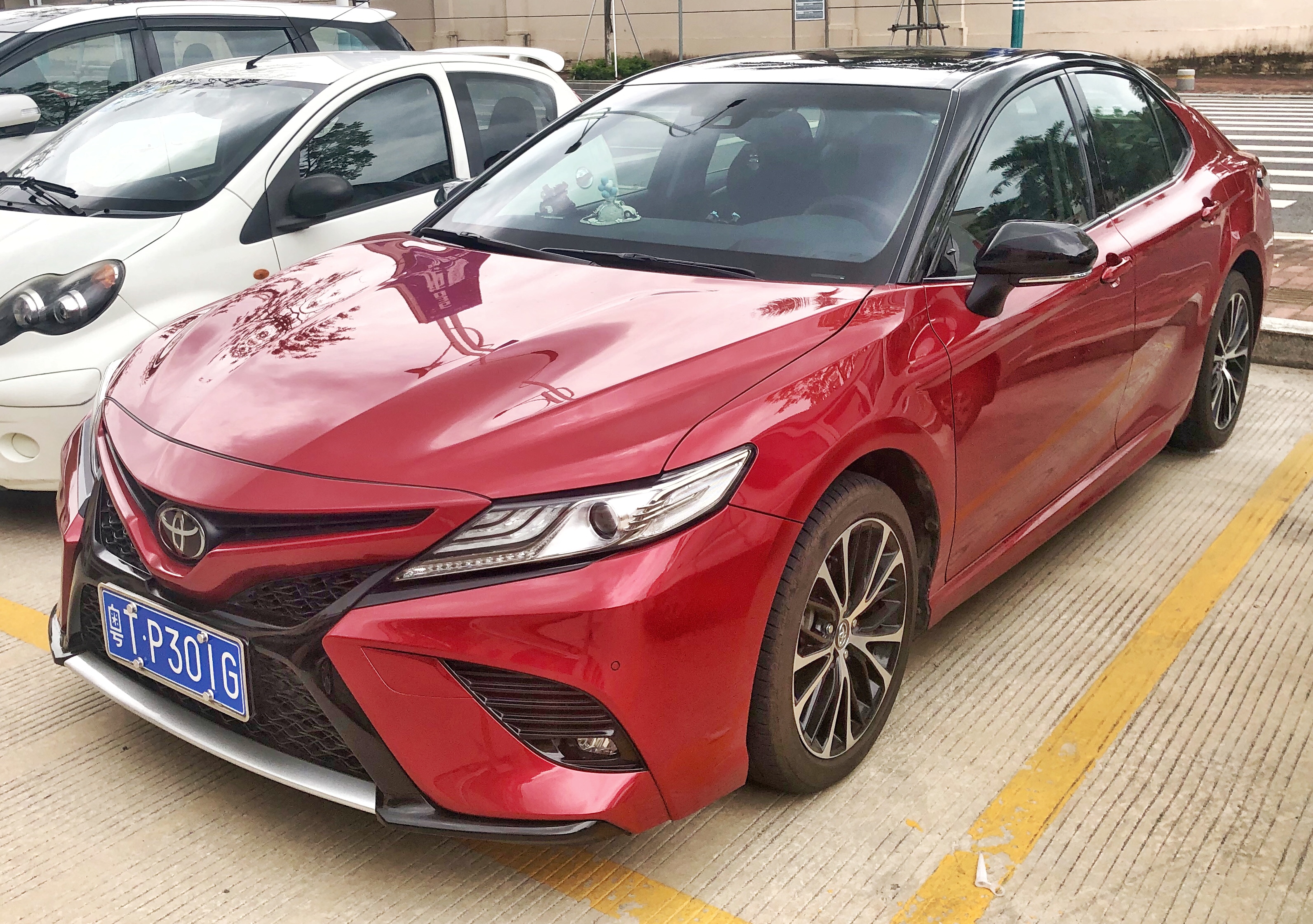
The Toyota Camry SE is a popular everyday car. “SE” is a trim level that usually adds a sportier look and some extra features compared with the base version.
“Question and answer feedback” refers to using the AI’s responses (and possibly user corrections) to improve future outputs or tune how the system behaves. In practice, it’s part of how AI tools get better at handling the kinds of questions shoppers ask.
Multimodal means the AI can use more than one kind of information, like text and images. So if you provide a question and a photo, it can use both to help answer you.
LLMs are a type of AI that can read your question and respond with an answer. Here, they’re being tested to see how well they help people when they’re shopping for cars.
LIVE
Dealers, need more used cars? Fast? With Kelly Blue Book Instant Cash Offer, you can connect
directly with local sellers to win more inventory, improve look-to-book, and lower cost to market.
That's the Instant Advantage. Request a demo today at b2b.kbb.com.
Welcome to Daily Drive for Wednesday, June 3rd, 2026. I'm
a new way of building cars, starting with its revived Chevy Bolt EV. May's sales
bounce was real, but smaller than expected. And Chrysler is finally getting new products.
Plus, a Georgia Toyota dealer is building an AI playbook for the showroom floor,
and he's giving it away for free. We learned where these models can be very specific,
where they might lag. And unless I tell it specifically where to look and give it at
least some direction and some guardrails, I'm going to get a lot of general information.
And that general information, as a consumer, may not work out in my favor.
Let's run through all the news you need to know to keep up in the auto industry.
GM is quietly changing how it builds cars. At its Fairfax plant in Kansas City,
General Motors is assembling the revived Chevrolet Bolt in batches of 30 identical vehicles at a
time, making Fairfax the first North American GM factory to use the strategy. Plant director,
Michael Youngs, says building the same vehicle back-to-back simplifies supplier scheduling,
cuts paint shop downtime, and has meaningfully boosted first-time quality.
Sam Fiorani of Auto Forkast Solutions notes the approach works best at low volumes.
GM says it plans to carry the method forward when the Equinox and a new Buick crossover arrive at
Fairfax. More May sales numbers are in, and the market's first monthly gain of 2026 was smaller
than expected. Global data's preliminary report shows light vehicle sales rose just 0.6% to about
one and a half million, with fleet driving most of that growth. Retail sales barely budged up
just 0.2%. Ford was a drag on the market, with sales falling 14% on weaker truck and SUV volume.
Toyota slipped as well, posting its third straight monthly decline, but Honda was a bright spot,
with American Honda up nearly 10% on record hybrid sales.
And Fiat has unveiled two new small SUVs, the Grizzly and Grizzly Fastback, with global sales
starting later this year. Stellantis showed both vehicles to analysts last month and plans to
badge them as Chrysler models in the US, called the Arrow and Arrow Cross.
Here to talk about what that means for dealers who've been clamoring for new Chrysler products
is Vince Bonjr, who covers Stellantis and its brands for us at Automotive News.
Vince, welcome back to Daily Drive. Thank you.
All right, Vince. So what do these products mean for the Chrysler brand after years of
being starved for new products? Well, for dealers, it's just finally. After all these years,
they've been just a minivan brand. They've been struggling to keep attention and get customers
excited about that brand. But now they have these two. I mean, they're badge engineered Fiat's,
but they'll have some slight differences in the front end for the American consumers.
They'll be priced under $30,000. And so they should be pretty affordable
and generate some volume for that brand, which badly needs it.
Yeah. So Chrysler's, they have some momentum coming. They have the two, those two crossovers
I mentioned, plus another bigger crossover called the Airflow, which will be on a global,
still a one platform. And so, yeah, they'll have three more crossovers coming in a couple years.
So Vince, do we know anything about powertrain when it comes to the arrow and the arrow cross?
Well, at this point, we're not sure what the powertrains will be,
but the Fiat counterparts in Europe will have gasoline, mild hybrid, and battery electric
powertrains to choose from. And so that shows the potential for the arrow vehicles and
what they can offer American consumers down the road.
Gotcha. Now, what does this tell us about the positioning of Chrysler moving forward?
It just tells us that Chrysler is going to be the practical brand in the Salinas portfolio.
You know, you have Dodge, it's going to be high performance Jeep off-road adventure.
Ram is all about, you know, working trucks and vans. And so Chrysler has his own lane as an
affordable brand. So these new crossovers will be competing in that $25,000 to $35,000 space.
They should have some, some mainstream appeal there. And so, yeah, I mean, it's going to be
just really just an expansion of that brand, which, which badly needs these, these new products.
Perfect. Vince, thank you so much for joining me.
Yep, no problem.
Coming up, a dealer in Georgia is building an AI playbook for the showroom and giving it a way
to any dealership that wants it. That's next on Daily Drive.
Dealers need more used cars, fast, you're not alone, and waiting for inventory to show up
isn't much of a strategy. That's where Kelly Blue Book Instant Cash Offer comes in,
backed by Kelly Blue Book's 100 years of trusted valuation expertise.
Instant Cash Offer connects you directly with local sellers,
so you can win more inventory right when you need it.
And because the experience is transparent and consistent from the first click,
it helps build trust early before a customer ever walks through your doors.
That trust matters. It sets expectations up front, reducing friction in the appraisal process.
What that means for your team is more control over how inventory comes onto your lot
and more time focused on selling cars, not chasing them.
It's a smarter way to source inventory in today's competitive market,
and that's the instant advantage.
If you're ready to connect with local sellers, win more inventory opportunities,
and lower cost to market with an approach dealers rely on,
check out Kelly Blue Book Instant Cash Offer.
Welcome back to Daily Drive. I'm Kellan Walker.
When a customer at Beaver Toyota in Stockbridge, Georgia,
brought a chat GPT quote to the negotiating table,
dealer Daniel Gover didn't fight it. He used it and the sale was made.
Now Gover is turning that experience into a free white paper for dealerships across the country,
laying out how to respond favorably when customers arrive with AI generated advice.
Gover also runs Vink, a dealer education company.
He sat down with our own Mark Homer to talk about what prompted the playbook,
what he learned running hundreds of AI prompts across multiple models,
and why he thinks dealerships that embrace this shift will come out ahead.
Daniel, thanks for joining me. I want to explore what I think is a really interesting idea I
haven't heard about this is the idea that dealerships need to counter what to do
when somebody who might buy a car decides not to because chat GPT told it not to.
The larger sense of it, zoom out for a minute. What we've discovered is there's a great need
for confidence in our consumers. We know that there's an issue in general with confidence being
just in its own slide backwards. There's a great need for dealerships to show reciprocity
and build loyalty. Just because somebody bought a car from me doesn't mean that I
deserve any loyalty from them. But the more that I bring the full power of the dealership
to the customer to show them the benefits and how much the dealership can do for them,
that's what we're working on. So we've been working on just that aspect of it
to show you that you've purchased a car from us, you service a car with us. Here's things that we
want to build out and give to you that are just because of that. And so just because of the business
that you've done with us, we want you to be able to come back to us. We want you to be that sort of
advocate for it. So Daniel, tell me about the customer who said no because of chat GPT.
Okay, yeah. So this was a client that was identified by the loyalty department, someone who
had purchased a car from the dealership in the past, had been servicing it, and
they had presented some options to this customer about if they would be interested in moving into
another car, customer said yes, and had already explored those options. And the customer then
went home and then in the follow up later on that day, the customer told the salesperson
that she put the deal information, the quote information into chat GPT and Claude, according
to what she told us. So multimodal, you could say. And we were at a difference then at the
total amount that the dealership had given her versus what the two AI models had.
So from that point then, what happened? Did you meet the deal that the chat GPT and Claude
wanted the customer to have or did the customer walk away?
No, that's where the thesis was born. We asked the customer, we asked her to look at everything
that we're giving at no charge, right? There's a dealership has a program of benefits called
Beaver benefits, and there was no charge to these. So we simply asked if the input that she had given
to both those models included what she was getting from the dealership for free. And she
agreed that she had not, that the input was more general as what was just on the deal sheet,
and didn't include anything specific about the dealership.
Did she say yes? Ultimately, wouldn't you counter?
Ultimately, yeah. Ultimately, we said, is it fair to think that the two models did not consider
these items? And for what we're asking at a difference figure, do you think that that's
worth it? Do you think even if you asked chat again, do you think it would agree? But do you
think in your own mind, do you think you would agree that chat didn't value these things? And
it's certainly worth the small difference figure that we're at. She did agree. She did buy the car.
And that's really how we got started with our first live fire test.
What I'm really intrigued about is the idea that salespeople have to now counter customers who
will take chat, GBT or Claude or other generative AI over them. So is that new? And if so, when did
that start? And has it happened again? It's probably been happening more than we've realized.
And I think certainly it's going to become more and more common. I think, like I said,
I think it's been happening without necessarily somebody being forthright and telling us that.
And I think the fact that they would tell us is to our benefit. I think that's fair. AI is in
every aspect of our lives. It's fair that customers ask about a car purchase. They ask it about
so many things. Is that a positive development for the sales team at a dealership? Or is that a
point of concern? Whether it's positive or a point of concern is all dependent on the preparation
and the willingness of each individual dealership. I believe that there is positive to it. Personally,
I do believe that there is positive to it. What do you see as the positive? It's going back to
what we're talking about with the aspects of reciprocity and loyalty. The reason I was mentioning
that is because these are going to become key things to play into how we market our dealership.
It's going to come full cycle because what we want is reproducible results.
And what I want is for salespeople and service advisors to be able to work with a customer
and their AI model and say, I'm glad you asked my AI all sorts of things all the time. I think
that's fair. Did you ask AI about servicing your car here? Did you ask your AI about buying a car
here? And what I mean by that is that the dealership would have a concrete system of
provable tangible benefits, things that they do for their customers, why their cars are priced
the way that they are, what they take into account. All of these things that we may know how to speak
to now need to be written. So it's like taking a refreshed look at the old Y buys that we have
on our site. These are now one in the same very important to working with models like that in
the dealership because you want chat to say that. Are the sales teams and dealerships ready for this?
I think it's not the smallest change, but I think that once we understand it and accept it,
the worst thing is for people to start fighting with it, right? Or fighting with the customer
because they use chat or generative search. Dealerships need to understand that we're a lot
of people working on making their sites crawlable. It's important that we understand that crawlable
is not always credible. We need to add credible information to the dealership on our website.
We need to make sure that every person in the dealership knows to speak to these things.
Now, I think the customers have given us the same playing field. Let's work in your AI,
the same place where you ask the question, but let's frame the prompt a little bit more fairly
about specifically where you're buying the car and everything you're getting when you buy the car.
Are sales teams fighting this or are they? What have you heard? Have you talked to other
dealerships about this? This is very, very new. It's starting at Beaver and they're very much
accepting of it, obviously. They're very, very open-minded, very willing to do this. Same mindset,
the customer has given us the same playing field to work with them on. There's less of a
paralyzation of choice because you're presenting me with different information. Let's work with
your information source to do that. In my mind, I think it's pretty reasonable and I think that
other dealerships may even find more creative ways of doing this. I'm certainly not saying this is
the only way to do it. I think that dealerships ultimately it's a small lift and not only would
it make the salespeople feel better, but people like buying cars where people like going to work.
The more the employees can talk about why this is a great place to buy a car and why we do these
things for you, like real things, they'll be happy about it and obviously customers would
benefit from it as well. In my mind, viewing it from this angle, this is an entirely positive push
for us. Do you remember the incident that we talked about? Do you remember what kind of car
the customer wanted to purchase? I want to say it was a Camry SE. Was it the customer male or
female or older, younger? Female and I would say over the age of 50. Interesting. So tech
savviness isn't necessarily age-specific. Well, and that's an interesting point about tech savviness,
right? Because there's tech and then they're savvy. And that's sort of the whole thing that we're at
with chat and answering questions is how specific we were with the prompt. And for the most part,
I think everyone is using that question and answer feedback in some form in whatever model they
choose to use. And ultimately, people are going to get better and better at asking better and
more specific questions. So in the background, what I did is I ran a multimodal study,
probably not big enough to be called a study, but roughly 250 prompts over three of the larger
LLMs. And the goal was to see where is it useful? Where does it provide general information? So
really, to be able, the same thing we've been saying for years, we search for cars the same way
our customers search for cars, we search for information the same way our customers search
for information. So we did that. And we learned where these models can be very specific, where
they might lag. If I don't give it specific information, specific prompts, or specific guard
rails, we know that it's going first of all, it's going to want it presupposes an answer. So depending
on how I pose the question, it's going to want to presuppose an answer. And that can influence the
answer that I get. And unless I tell it specifically where to look and give it at least some direction
and some guardrails, I'm going to get a lot of general information. And that general information
as a consumer may not work out in my favor, because it's taking an average of all the information
it can find. With that in mind, these kinds of challenges are opportunities for entrepreneurs.
So I'm getting the sense that you did something in your capacity within Q. Is that correct?
In the capacity with both, yeah, absolutely. With both. So what have you created or pushed to
create to respond to this? So I've given the preliminary playbook of AI in the showroom
to Beaver and working on working on a bit of a white paper that we can then
publish in part of our education department at VinQ. VinQ does a lot to educate dealers,
regardless of if it has to do with the product we offer or not. This is just about towards your
success. And I would like it to be collaborative. In other words, I wouldn't like this. I'm not
trying to say that this is the only source of information. The methodology that I used for it,
the prompting that we use for it, you know, I want to document all of that and make it easily
consumable for people to see so that they can expand on it and make it better and better. And
so ultimately this becomes not a great exchange of information that could possibly, if done correctly,
make things faster and reduce friction. And you're right, dealerships are entrepreneurs.
It's entirely entrepreneurial. So to be clear with what I think you're doing is you're basically
developing a white paper that you want to share with other dealerships about how to respond to
customers shaped by their AI. Yeah. And generally I would say how to respond favorably.
How to respond favorably instead of the hostile or defensive.
Absolutely. And this paper is based on, you mentioned 250 prompts. What does that mean?
So I wanted to try and ask as many of the common broad-based questions. So starting from things
like is this a good deal? What should my finance rate be? What does this, what does the lease mean?
What is, you know, what should my trade be worth? How do I know if I'm getting a good deal? So as
much of these sort of like general prompts across the different areas that the dealership would
encounter. So from the sale of a new or used car to the trade-in to the finance office,
and then asking these questions and seeing which model responds how and where. But the broader
theme is simply that the answers are always going to be somewhat too general, unless I give it specific
information about the dealership that I'm buying at. And that dealership has something tangible to
offer up. Daniel Govair spoke with our own Mark Homer. You can find more on this story at autonews.com.
That's Daily Drive for today. I'm Kellan Walker. Thanks to Automotive News executive producer
Jake Nier, as well as our own Vince Bond Jr. and David Phillips for their reporting for today's
podcast. We also had reporting from Andrea Milan of our sibling publication, Automotive News Europe.
You can get the latest news on dealership tech, Silantis and its brands, and everything happening
in the auto industry at autonews.com. We'd love to hear from you. Let us know what you think of the
show and the topics we cover today. Send us an email at dailydrive at autonews.com or leave us
a voicemail at 313-444-2774. And if you enjoy the podcast, remember to like, leave a review,
and subscribe so you never miss an episode.
About this episode
GM’s Fairfax plant is switching to batch production—building 30 identical revived Chevrolet Bolts at a time—while light-vehicle sales growth stays modest and fleet-led. Stellantis is also reintroducing Chrysler crossovers by re-badging Fiat small SUVs in the U.S. as the Arrow and Arrow Cross, with European versions offering gasoline, mild hybrid, and battery-electric options. The focus then turns to dealers: how to counter AI/ChatGPT advice with credible website info, fair prompt framing, and a practical showroom playbook—plus a “live fire test” where a customer brought AI quotes to the table.