If you think of yourself badly or you have low self esteem as I did, the world of validation will never fill that hole.
This is Hard Park and brought to you by Right Hunt and Right Toyota out of Scottsdale, AZ. I'm your host, Jay Finning,
recording from my home studio in Gilbert, AZ.
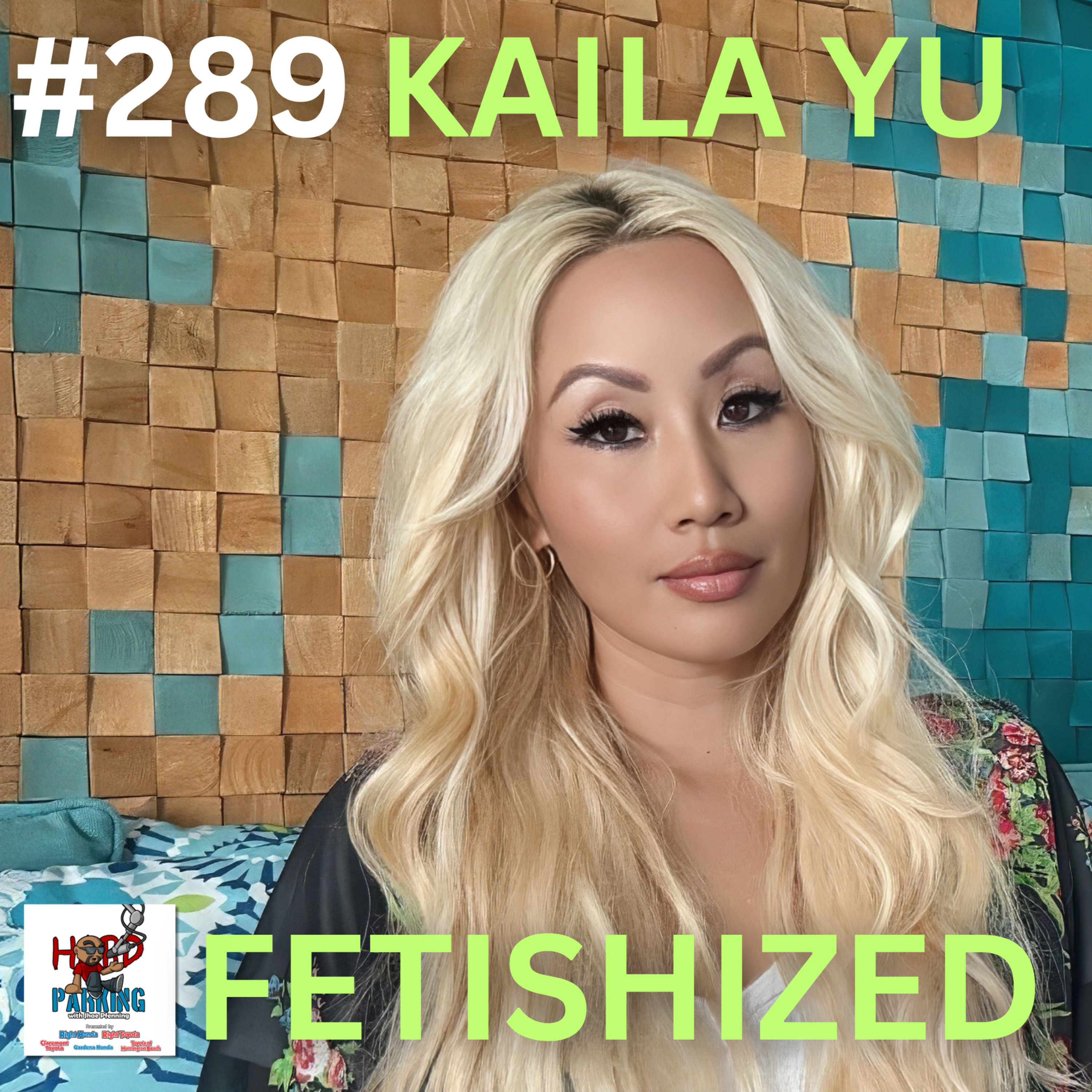
Coming up on today's show, I have the absolute pleasure of talking with Kyla U Kyla has a book coming out called Fetish Eyes, which you may or may not have seen on social media if you were following her. If this is your first time
hearing about it, perfect. If you're watching this on
Monday, the book comes out tomorrow.
If you're watching this on Tuesday, the book literally came out today. And if you're watching this past
Tuesday, the book is already out there.
So get out there and get it. You can get it at Barnes and
Nobles. You can get it probably anywhere
you would normally get books, including her website, kylieyoucom. You're going to learn about that
coming U in a few moments. I will say that in doing this
conversation with her, it wasn't until about halfway through the conversation where it finally hit me.
Oh my God, I'm talking to Kylie Yu.
And so after this conversation with Kylie Yu, you're going to want to stick around with the show because I'll give you my opinion. Things that had dawned on me as
I was editing the episode, as well as some other thoughts on the fetishization of Asian women and the culture.
All that more coming up after this word from Arcus Foundry.
So quick story for you, a listener.
Lost a big job, missed the call, never saw the DM probably because he has listened to this podcast.
It happens and it's fixable. Running a business shouldn't
mean juggling a dozen apps and missing opportunities.
Spark Forge helps you reply faster, capture more leads, and get more reviews, all without adding hours to your day.
One simple place to handle calls, texts, and social messages so you can focus on the work that pays.
It's like finally putting your business on cruise control without losing the steering wheel.
One login, one platform, all under your control.
Consolidate your tech in one place to save time, money, and headache. The future is here, and it's
powered by Sparkforge AI from our friends at Arcus Foundry.
Jump into a 30 day trial today by using code Hardpark at Get Sparkforge dot AI and stop letting yesterday's tech eat tomorrow's profits. Kyla, you.
First off, thank you so much for being part of Hard Parking.
I know you've been around, you've done a lot of things and we're going to cover as much as we can today.
So First off, thank you so much for making time.
Yeah, thanks for having me. Absolutely.
So you have a book coming out. Yeah.
Fetishized and this isn't your first rodeo.
And so I also saw that you kind of co-authored another book with travel, and so you've been doing a lot of things.
So First off, for my listeners and the viewers of this watching on YouTube and Spotify, tell us a little bit about yourself.
So yeah, my name is Kayla Yu. I am a former import model.
So that's my connection to the car automotive scene.
I spent probably about 10 years touring the world with Hot Import Nights and others, and then I pivoted to a music career and then later a writing career, most recently, I guess.
So you've done a lot of things, you, there's a lot to kind of go back and, and double click in there.
But how did you, how did you get?
And I don't want to like spill too much from the book 'cause that's the reason why there's a book so people can kind of dig in a little bit more. But going back to the beginning,
what inspired you to do the hot import modeling?
That was purely accidental. It was just a timing thing.
I mean growing up when I lived in Upland CA and we only had like a tiny Asian population say 3% or something at the school and we still took over a parking lot, a small parking lot mind you. But with the fixed up cars like
all the Asians had their lowered not even like Mr. Twos or cool
cars. They were like lowering Camrys
or something, you know whatever parents car they had.
So I was very anyone who was Asian American growing up during that time in the early 2000s late 90s was around the car culture. But I ended up pursuing pinup
modeling because my idol, Sunghi Lee, was this a Korean Playboy pinup model that I looked up to her.
So I ended up going that Playboy route.
And then when I was featuring on her website, then the Asian community came to know me, and then the car show companies just started reaching out. Yeah, going back a little bit,
it's always a weird way how people kind of get into those things. It's like, hey, will you show up
and do a photo shoot with us? We need someone and then you
kind of end up getting into there.
You said you looked up to the model.
What was it about her career or what you saw that it's like, hey, that's really cool. I want to be a part of that one
day. I mean, frankly, there were no
Asian American role models there.
I can't even name Lucy. Liu wasn't out yet, so I don't
even know who I could name. Like, she was just the only one
who I think, and she did happen to be really beautiful.
But I write about this in my book.
Like if I had other role models at the time, I maybe wouldn't have chosen a Playboy model if I had fifty other, you know, singers or dancers or fashion girls like people have today to choose from. Well, to be fair, in your
defense, and I think most people's defense, they don't go after girls that don't look good.
And so, you know, that being that's something to look up for sure. It's kind of rolling into that.
What are some of the, I think you've been out of the car scene for a while. Were you ever like real talk
really into the the cars at all or just kind of the cool opportunities and and possibilities of where you could go with that or did you maybe not know at the time?
I make a joke that a lot of important models know nothing about cars and I don't know anything about like the modifications or anything. But I do know growing up it was
like, Oh yeah, I want to date that guy with the dropped this and that. So it was definitely like I was
into the aesthetic, but I'm by no means like a car expert.
I'm like maybe a expert at the culture since I was so immersed in it. But yeah, I can't tell you like
what, exhaust or whatever, right?
Yeah. Which is fair because I think
that just by saying, wow, I really like the guy who drives the drop top, whatever that speaks to like every car guy's dream is the number one. Have a cool car, be on the cover
of a magazine. A lot of car guys and attract
the girl that appreciates the car and it doesn't have to be a Ferrari or Lamborghini. You know, there's nothing core
than if a guy's driving his Subaru and a girl's like, hey, I love your ride. They're like, oh, that just made
their weak, you know. So you feel that you don't have
to know much about the cars, you just have to know what you like.
Definitely. So parlaying from that, why you
know, why did you stop that? Because what I will say is I
haven't gone to car shows like that in a long time myself.
I went to, you know, hot important nights, Autocon, Spokom, you know, the big California shows.
You know, you see the girls and you know, there's more to them, many of them than what the average car nerd thinks in a lot of times. It's a means.
It's it's kind of a stepping stone for better, better things.
I saw you doing the travel blog. I've known others that have
taken that opportunity and you know, done books and done other big things because of that. You know, how hard was it, do
you think? How or was it for you?
And how hard do you think it is for others to see themselves beyond just being the really good looking girl that might be in the the autograph section or posing next to a car?
I think every girl who has some success in the industry is immediately looking on to what they can do next because you will be aged out of the industry.
There's always a younger model on her way up, so there's that.
And also for me, I left at a time where and a car show people will say like hot important nights isn't what it used to be.
And that was partially because Fast and Furious so mainstream, the industry, the car shows back then were like a place for Asian Americans to find community and culture because we had no other places to unite. So when it became more
diversified, which was in a way great for the industry, it also didn't make it wasn't our meeting place anymore.
So I think it changed a lot that way.
Yeah, I remember because because we're going to touch on that because you, you know, had a cameo and.
And was it Too Fast, Too Furious or Tokyo Drift?
Tokyo Drift. Tokyo Drift.
OK, so by then the essentially the third movie in the franchise. I remember when the first one
came out, everyone's just wow, this is the coolest thing ever.
I had a modified import at the time, and one of the big questions I used to get is, hey, why do you have two radiators?
It was like, well, it's an intercooler and it's a radiator, but the world wasn't ready for that.
No one would ask that question today.
Yeah. You know, at the time you were
in it like very what much in the scene, you know, what did you notice like slowly change within the within the four or five years that those 3 movies came out?
Yeah. I mean, when the first movie
came out, everyone was very excited because there was murmurings of this movie in development.
And then a number of people from the import scene were on the film, kind of advising or whatever.
And then after the movie came out, a lot of people were mad because I guess the cars didn't look authentically legitimate or they were like, too colorful and too overdone.
And also Asian Americans invented this scene.
Like, this movie franchise was inspired by an article called Racer X by Kenneth Lee for Vibe. And although it was about like,
I think a Puerto Rican racer in New York racing against the Asian, that scene was still co-authored from the Asian Americans probably in California.
So the origins of all of that is Asian American.
But like the only real speaking Asian in the movie was Rick Yoon for like 15 minutes and he was a villain, you know.
And the Asian Americans are like, kind of tired of being, like, being villains in our own story.
Yeah, you're right. All the main characters were not
Asian and the bad guys were, were the Asian, you know, Johnny, Johnny Tran and the and those guys.
But at the time, even with you in that transitioning, I mean at that point, how many years were you into the modeling scene and maybe looking almost out? That was a couple years in and I
don't think I was looking to leave when that first movie came out yet. I was just also pursuing other
things while still touring around with the shows.
Yeah, and then to the to the root of, you know, like fetishized. And like I said, we're going to
get into that in a minute, but the fetish with, you know, Asian women and especially in the culture, the car culture, you know, did you start as those movies gained popularity?
Did you notice when you're going to these different events, being part of these events, the change there as well or not really?
I will be honest that I feel like after the movies came out and the scene became more diversified, I feel like I became less popular and that could have been a number of factors. As in I wasn't like the new
model on the scene or like Asians are my fans and not others so I don't know. But yes, I notices less interest
in me after the movies actually. Yeah until Tokyo Drift that
obviously renewed interest. But after the initial 2 movies I
noticed lost interest. It's this weird psychological
thing with I think people where the movies come out and they're they're not anti Asian, but the entire cast is is not Asian.
And then when you get to Tokyo Drift where there's only like 2 of the main characters are actually not Asian and.
They're the main characters. Yeah, yeah.
But of that, did you see things starting to pick up more on the attention level specific to the people in the car scene?
Because by then people kind of knew you were anyway.
Yeah, I mean, that movie really did.
I ended up doing the cameo with my best friend.
I go to NACA at the time, and then we would be booked everywhere as the Tokyo Drift girl.
So that kind of just boosted another situation.
What was that like, though? It's like, hey, it's, it's, it's
no longer Kyle. It's it's the one of the Tokyo
Drift girls. Well, it's crazy because I
always say this like I'm so honored that anyone would like be excited about that movie cameo.
But what I write about in the book is like I said 2 words in the movie. I was on screen for 1015
seconds. And how desperate were we for
representation that some people will be like, wow, that's a cool role. It's like so small, you know,
But that was a big deal then when we had nothing.
Do you know who Jeremy Lin is? Yeah.
It's the Jeremy Lin effect, I think, right where you see the representation of yourself on the big screen popularity, Everyone loves it. You just want to be a part of it
and represent and show your support.
So I think it's a little of the Jeremy Lin effect, but that was before Jeremy Lin. Yeah, yeah, things have come a
long way since then. I'm like happy with the progress
so far. So let's get up to your book,
the inspiration for Fetishized, because on your social media, it's Fetishized. Fetishized.
It's coming soon, coming soon, coming soon.
We're at a point where it's basically here for the people who were who are watching this and listening.
What's the hook for them? Yeah.
So, you know, there's never everybody knows about the fetishization of Asian women. Like obviously all the Asians
know about it. But even when I bring up to it,
bring it up to white people, they're like, Oh yeah, I know a guy, you know, or my brother has that or whatever.
But everyone like, knows about it.
But it's so niche and nobody's like, written a first person book about it and like their experiences with perhaps playing into the fetish, which I did, and then like, maybe the repercussions from that. So yeah, there's never been a
topic on that. And I've talked about it amongst
my girlfriends, but like, I thought there should be something out there speaking about it more, it more in detail. And besides just a memoir about
my life, it's also a cultural criticism.
So it goes over the media that influenced me from the 2000s that, like, looking back was pretty toxic.
Like Memoirs of a Geisha. Yeah.
Like basically a child sex trafficking movie made into a romance. The hero Juku girls, which we
now recognize is problematic. There's problematic aspects to
The Fast and Furious Mean Girls and I could go on and on.
It feels like you've seen that change, especially when you start dipping into the music industry.
You know, you do the tour lead singer into believing that band.
You know what? What was that like?
Because and I know that's going back a little bit, but that's you get to a level, you're chasing a dream.
Or maybe it wasn't that much of A dream to begin with.
It was just something you love doing.
You get to tour and then you just stop.
What was there a a switch where you just looking, you know, staring at the ocean one day and said, you know what, it's time to shift gears when everything on the outside is going good, even on the inside it may not be.
Yeah, there's so many factors, but like in All in all of my youth, I felt so unseen and I was just seeking so much validation. Validation from men, validation
from accomplishments, validation from like, OK, I was an import model. Let me show the world I'm more
than just an import model. I can sing too.
So then I started pursuing that and we started touring and I was like, I hate touring. Like it's not fun and it's so
stressful and I did not enjoy it.
But I loved being in a band. I loved being with my best
friends on tour. That was so much fun traveling
the world. But I'm a singer and I don't
like performing. Like it makes no sense.
Do you still kind of work that muscle a little bit?
Karaoke and things like that. Yeah, karaoke, but I don't miss
that one single bit. Like the day I quit.
It took me a year. A friend was like, I think this
makes you miserable. And I was like, no, I love being
in a band like this is. It was my entire identity.
And then after I quit a year later, I didn't miss it one single day. Yeah.
I one of the things that were in the book is performing multiple hours in a row. Like, I don't know anybody who
could do that. A lot of people have to do with
that. Yeah, it's crazy.
Yeah, yeah. It's not fun, no.
Like we're talking what I think you said four or five hours at times. Yeah, we ended up doing some
residency. So during things like that where
you're the main entertainment for the night, it is.
It is that much time. You know what?
I guess that makes sense as a residency.
You're on at 10 after someone opens for you and you're closing the place down, right? Yeah.
Yeah, I can see how that can get kind of tiresome really quick.
Definitely. Traveling, I saw in your story
some of your clips that you used to do, and I don't know if you still do it, but how did you become kind of the travel correspondent for the local news?
That was very accidental, I think.
After I quit the band, my guitarist Kiki also quit the band eventually like a year later and we were like, oh, what do we do with our lives because we have no backup plan.
So we just decided to turn our our Nylon Pink blog, which had traffic into travel blog because we had done so much travelling.
So it seemed like the natural Segway and we we started blogging and pitching ourselves to TV networks and just trying to build a travel brand that way.
And you had some success with it, I think.
Yeah, we we had a lot of fun with it and some success with it and got to travel to a lot of cool places together.
Before this book, what would you identify as kind of one of the more successful things in your life that you may be a turning point to where maybe and, and you could still be seeking validation from childhood, but are you ever able to kind of sit back and be like, wow, I, I, I did that.
That's really cool versus it's not enough.
Yeah, I mean, for me it's just even maybe first publishing an article for legitimate. I think the first one I wrote
was like something about Denny's for Vice about then Vice was, you know, really hot. I guess they're gone now, but
that was super exciting. And then secondly is getting
sober. I think that's like, really what
changed the trajectory of my life.
Sober in the sense of alcohol, drugs, drugs, alcohol, everything. Alcohol, Yeah, Eleven years on
alcohol and everything else. Was there an event?
Like a single event that's like what the hell am I doing?
Or just a culmination of events? It was a culmination, but I was
trying to like always wean back or whatever.
But yeah, I don't know if there I didn't have the bright light moment that some people had, but it was maybe just like, this is time you're getting older. It's not so cute anymore to be
partying like this. I mean, that's huge and a lot of
people can't take that step forward.
So going back to the fetishization of the of the book itself, that is fetishized, but the fetishization of, of Asian women, at least modern times. You know, when, when did you
decide that it was time to write about this?
That was also very accidental. So what happened was me and Kiki
were doing the travel thing and then the pandemic hit and all our trips were cancelled. So then we were like, I guess we
finally have time to learn TikTok because we had all the time in the world. So we just spent like a year
posting 5 videos a day each on like different channels and we're just like, we called it throwing pizza at a wall and you just see what sticks and just run, run with that.
And for me, when I start posting about the 2000s import scene, that's what really stuck. So I kept posting nostalgic
Asian American content and then I started to reflect back on like my modeling years where I say I fetishized myself and objectified myself. I started reflecting on that and
I was reflecting on that a little bit when the Atlanta spa shootings happened where eight people were shot and six of them were Asian women by a guy with sex addiction and possibly you may assume a Asian fetish because he frequented these Asian massage parlors. Then I ended up writing an
article for Newsweek because the next couple of days I was, like, conflicted over like, oh, how did I contribute to this?
You know, because you don't necessarily.
You think it's harmless and gross when a guy has an Asian fetish, but you don't necessarily think of violence, right? I haven't personally.
Well, I haven't experienced the violence to the level of being shot to death. Yeah.
Right. How would you explain to those
listening or watching when you said, you know, you kind of became a part of it and the fetishization of yourself without too much detail for the, you know, because the book's the book, but you know, kind of take us through what what that means.
Well, it's a couple of things because it was also taking place during the 2000s and that was like a era when we were like feminism was like sexuality is empowering, like let's, you know, be sexy and show ourselves.
And like Maxim and FHM were super popular Playboy.
Everybody looked up to Hugh Hefner and like the Girls next Door TV show was like a family friendly show.
Like basically this like super old guy with a harem being presented wholesomely. Like when you look back, it's
like, what were we all just like acting like this is OK?
So it was in this climate that I think a lot of women thought objectification was empowering. And I thought that too.
And I thought, like, you know, growing up, you're like maybe getting ignored with your white girlfriends or whatever and like wishing you had blonde hair or blue eyes or whatever.
Like boys didn't look at me then.
Then when I noticed, like, oh, well, now all of a sudden there's like all these men that are interested in Asian women.
Like, that's good for me, right? That's what I thought back then.
It's almost like things come in waves, right?
Things come in cycles because I know probably back in the 70s it was huge deal too because of the war and all the stuff in 60s and 70s going to go get me a nice Asian woman, give me a nice Viennese woman, beautiful black hair, you know, pencil to cook for you, clean for you, you know, don't age, you know, Asian don't Raisin, you know, that's the that's what we always say.
And then maybe for a while it went away.
And then looks like we had a resurgence with the probably with the rise of the import car scene and just TV reality shows, right? Yeah, I think it definitely
contributed. And now I think there's another
wave, a different wave, with like K Pop and like anime being mainstreamed. Yeah.
What are your thoughts on on like kind of looking and seeing that or you'll see like the the younger girls 18/20/23 and do you see yourself like that used to be me or you're like, you know, things are just so much crazier even now than it was then or you know, what are your thoughts when you process that?
Well, I think things are a lot better because like, you have so many choices as role models. You know, there's fashion, Asian
Instagramers or like fashion or cooking influencers, or there's black, pink, like on the world stage and as a pop star, they're pretty wholesome compared to say, Britney Spears back in the 2000s or something, you know? So I think things have gotten
better for sure. In doing this book, is it?
It's got to be self healing and self therapeutic, right?
Yeah, I think it's one of the most healing things ever.
And then just to like have people read it, especially women, and be able to relate. I think I've been in my life
really harsh on myself and especially during the 20s.
So it's helped me like develop some compassion for many of the mistakes I made during that time.
What are some of the biggest things you look back at?
Because everything we've done shapes who we are today, even the ones that we hate the most. Is there anything that you think
that's happened in the past that you would change if it didn't change who you were today? Like if you could have learned
that same lesson but in a less painful way.
Oh, that, that one's so easy. I mean, in the book I go into
detail about it, but I suffered a very public sexual assault which everyone thought that was my choice to participate in.
And it has shaped me in so many amazing ways of making me stronger and, like, very impenetrable to online hate.
But if I could not have gone through that, yeah, that would be absolutely preferred. How is everything that you've
gone through through being an import model to being a musician to, you know, getting a spot in on TV in the fast, one of the biggest, most successful franchises in movie history, whether people like them or not, you know, has it had much of an effect on your personal relationships, not just friendships, but maybe like romantic?
I don't know if my work has affected my romantic relationships. What's affected romantic
relationships is my own former low self esteem issues before I got sober. And then now it's funny because
I've spent so much time like becoming strong that I'm a little, I lack a little bit of vulnerability.
So that's like what I'm actually trying to build on now, like I need to be more vulnerable and the book is very vulnerable.
So that's a big step in the right direction.
But still, I'm very self protective because I've been hurt before. Absolutely, yeah.
I don't know if there's anything that's more vulnerable than a, a tell all, ask a book about all the, you know, the, the roller coasters that we have in our lives.
What's one thing you hope that people get out of this book, Whether it's the women reading it, the men that reads it, you know, what do you want them to take away from it?
I want especially women just to not.
I mean, we're built in a culture where we seek validation for men. Naturally, it's still this way
in like media with the sexy girls on Instagram at only fans.
And that's fine. I think it's fine to be
empowered in your sexuality if that's not the only thing you're hinging it all upon, as I did. Like that was my main
validation. So if you can just like, center
your own gaze as the most important.
And this goes for men too. Like men have expectations.
Like what isn't important is what you think of yourself, not everybody else. And if you think of yourself
badly or if you have low self esteem as I did, the world of validation will never fill that hole.
So you have to work on yourself first.
What are some things you would recommend for people to do once they put the book down? I think reading is very helpful
for women. A book that really inspired me
in it is feminist chauvinist pigs.
It's about the 2000s and like the damaging media, but also like for myself, I just do so much self healing work.
So if you're, and I think everybody could use this because everybody has some insecurity or something, but like finding some kind of spiritual practice like I after getting sober or got into meditation or like I found the passion of like free diving.
So the Ocean's a very healing place for finding your happy healing place. So yeah, I'd like look into the
healing practices. Speaking of all your your
travels, because with your free diving, you know, where's the place that you would go back to over and over and over again if you just snap your finger and be there and then snap?
Your finger and be back. Yeah, without.
Bora Bora Bora. Is just my favorite place in the
world and French Polynesian general.
Not to hate on Hawaii, I love Hawaii but like it's French Polynesia is just another level than Hawaii.
It's like heads and shoulders above.
Sounds like I need to go to French Polynesia.
Yeah, definitely. Wait, you're not from Hawaii,
are you? No, no, no, I'm not.
I'm, I'm actually I'm, I'm, I'm ablation.
So yeah. OK.
Yeah, yeah. You know, make sure I wasn't
talking shit. About.
This show, yeah, you can say, yeah, you can say whatever you whatever you want. I mean, that's if I say I hope
that people really get what they need from this book.
I think it's very powerful that we're able to put this together.
Anybody who writes a book, it's a huge accomplishment.
I don't think it's something I could do even if I was, if I had a Co writer or anything, I just don't think I could do it.
But I think it's, it's got to be a great way of, of self healing and kind of putting that foot forward and, and looking toward the future. And, and hopefully that, you
know, when reading this, it does change kind of the outlook of people or just give them a different perspective that maybe they didn't think about. Because I think that's one of
the things that trap people is it's not that you mean to be a certain way or another way. It's just you don't know any
other way to be. It's almost like we don't know
what we don't know. And some people aren't open
enough to be receptive to learning about other people's travels and their plights. And then when you do, you
become, I think, a better person for it and you have a better appreciation for other people. Yeah.
And Asian Americans, like, are the least vocal, I think, of all ethnicities. And I think we do keep a lot of
secrets or like there's this word in Chinese called Mians, and it's like saving face. So we maybe don't talk about the
difficult things and we should because it makes them more normalized, you know? What do you think that is?
Is it? Is it just like a cultural pride
thing? I think it's definitely a
cultural thing. And also in Asia, it's less
about the individual, right? Like say, China's communist.
So like, they're not like America's all about the individual. So it's just a totally flipped
culture. Social media is all over the
place. Social media's blown up.
There's so many different types of social media.
You know, you came up, your rise in the world was really before mainstream social media was even a thing.
I mean, maybe Myspace, but even that was that was Fast and Furious. And I don't think we even had
that when Fast and Furious originally came out.
You know, I think it was right around then.
Yeah, right around that time, yeah.
And where are you with social media?
You know, that's one of the challenges that a lot of these kids today, a lot of people have that, you know, we didn't have growing up. And that's the stuff that we did
have. I'm so glad I did not have
Instagram growing up in high school.
Like to imagine having to play this game of popularity on in public in such a public space. Yeah, that goes back to
validation, like the seeking outside validation, which I guess it's like even more built into our culture than before now that I reflect on social media. But I think it's important just
like to talk to young. Nobody told me about these
things when I was young or like about trying to have self love or like nobody talked about that.
So whether it be parents or like speaking to your younger brother and sister, just having these conversations about not basing your entire life on outside validation I think would be helpful. Yeah, it's a war zone out there.
And I, I don't know if I could do it, you know, because our teenage years or some of the most formidable years in our early teens and yeah, some of the stuff, some of the choices that we make during that age, there's no way I would survive.
Yeah, today's social media. You have to be careful now.
The Internet's forever. Where can people find the book?
So it is coming out on August 19th and it will be available in all stores. So you could find it Amazon,
Barnes and Nobles, whatever. And then you could find me, Kyla
Yu, anywhere. That's the name of my website,
my social media, etcetera. Will there be an audio book?
There is, yeah. I just recorded that this week
and it was exhausting but yes it is done.
Awesome. Kyla Yu, thank you so much for
joining Hard Parking. Thank you so much.
Thanks, Kyla. So as promised, I told you I'd
give you kind of my thoughts about the Kyla You interview conversation that we've just had.
I usually don't do these Closings anymore.
I usually just drop in my prerecorded closing roller.
But as I was kind of going through and and making those edits, there's a lot to unpack that you just don't really unpack in real time and having these conversations.
I did say that I came to a realization halfway through the conversation that I was talking to Kylie you and obviously I knew who I was talking to because we did the interview for the book. But everything just kind of
dropped on me when I was researching and finding photos to back of everything she was talking about.
Not really to back it up, but for those of you who watch the video, you notice that I do try to find things that I could drop in some video, some video overlays, some visual overlays, things that just kind of helped tell the story visually as you were listening to it. And man, when when I think back
to those times, I was 23 years old in 1999.
Again, I am half Asian. People don't realize that.
But I've taken those DNA tests and I'm actually more Asian than I am anything else. And so when I think about, you
know, the Sunghi Lee and the Kylie use of the world, Francine D Hell, in the early 2000s, I used to watch a show called Andromeda, which was kind of a cool space show.
You may or may not have seen it, but Lexa Doig was on there and she's Canadian, but her mom is Filipino.
And you know, for me, and maybe it's different because I didn't gravitate to Asian women because I saw it necessarily on Fast and Furious and just became the N thing.
But I think a part of that might just be not necessarily genetically predisposed, but just work with me on this.
You know, in, in society, we kind of look at things two different ways, right? And we, we tend to follow what's
popular, which is to her point, the over fetishization of, of anything. And in her case, you know, she
saw the model and she wanted to be like that model and kind of went down that path, which opened up a lot of doors for her moving forward. And, you know, through all the
negatives that happened to her through her life, that's where she is today. And she was able to write this
amazing book. You know, I got APDF copy of it
and it it's incredibly vulnerable to talk about those things and open yourself up. So best wishes for anything and
everything positive that happens with Kyla in the future.
This book was her tell all which her truths, her her way of phasing her demons. And you know, a lot of the stuff
that she talked about. It's wild for us to think about
if you're not going through it. But it's just kind of one of
those deals where most people can't do what she did.
And that is come out and talk about things like that later and in a positive light and move forward and keep doing things in life because everything she's done, whether it's all that the journalism, sure, she had a couple spots in a movie, which is great. She was able to be a lead singer
in a band and toured, which is great.
And I hope she just continue to stack up the winds.
But, you know, kind of going back to me and my thought about that is, you know, we when you can't have it both ways.
And this has nothing to do with Herb.
This is just society in general. Fast and Furious is true
depending on where you're from, the United States and you and you're raised up during those times in the mid to late 90s and early 2000s, Fast and Furious, just like the game Gran Turismo, put a lot of this culture and stuff on the map in front of everybody. It laid it out right in front of
you. You know, Tupac, I just thought
about this as I'm talking right now.
So Tupac made this song. They don't give a fuck about us.
And in the lyrics, when I used to ride fuck until the day I die, nobody gives a fuck about us.
But when I start to rise a hero in their children's eyes, now they give a fuck about us. So if you process what that
really means, it's when we're out doing what we're doing and no one's paying attention to us. They just kind of scoff at us
once we become the popular thing, the end thing, the thing that their kids want to be like. And they are just responsible
adults. It's not white, black.
It's just the people in general that may have looked down at that. Now you care.
And so I think that's where she's coming from also with the fetidization. And I think there's a lot of
merit in that. But we tell people, you know,
you can be anything you want, but you can't deny the fact that if it becomes popular, it just becomes a thing everybody wants.
Hopefully by me saying that it makes sense.
And let me give you another example.
We're going to make this a black and white thing just right now, OK? We need more black police
officers and we need to send them into the black communities that are struggling. Why?
Well, because one hand of that gets offended because it's like, oh, you need to trick us. If you're trying to trick us by
sending somebody who looks like us here, F you.
They're the worst ones ever. The other side of that is those
kids look up and they see someone who looks like them that they can aspire to be like. And when you take the the
racialization of that away, it makes all the sense in the world. You look up to people.
Kyla, you looked up to someone because she saw them like, wow, they look like me and they're having the success.
How do I be like that? It's the Jeremy Lin effect, like
I brought up earlier in our conversation and I looked it up because I remember Linsanity. I don't remember all the
details. I know he was an Asian dude who
just, I mean, he basically torched the Miami Heat and Linsanity was born out. So I looked this up.
So this is between the 2011, 2012 season, Jeremy Lin's jersey became the number one sold jersey in the NBA for a week.
So for that week he outsold Derrick Rose, LeBron James, Kobe Bryant, because Linsanity. And I remember all my Asian
friends, everybody on TV, everybody went out and bought a Linsanity jersey because. We one of us, you know, that's
the thing. One of us is there.
One of us made it. We can be like that.
And they would always show these huge sections of Asian fans all rocking the the Jeremy Lin jersey.
They were attending these games sometime for the first time.
It's like the Black Panther movie, the Marvel Black Panther movie. I had more, I had more African
American friends that that was their first and only Marvel movie because it was essentially an all black cast.
People like people that look like them.
Everybody wants to be a professional athlete.
Everybody wants to be the next basketball player.
Why? Because the best basketball
players typically are African American and they they look like you. So you can be that.
So in one hand, you get kind of kicked down for that mental, you know, that for that mentality of thinking.
The other hand, it's like, well, we want more multiracial doctors and lawyers. So we need to teach that to the
multiracial kids so they have someone to be to aspire to be like. But we live in a society where,
in one hand, that's a problem to have that mindset, and then the other hand, it's a requirement to have that mindset because that's what people identify with.
People see that and say, hey, I can be like that person.
So is it fetidization? Maybe in some cases?
I mean, because the stuff Kyla went through is pretty crazy.
And I can't even imagine, you know, what she had gone through just to get to this point. I mean, obviously it's in the
book, but I think it's a lot more complicated at times than that. I mean, we've been I brought her
up in the conversation. The American man has been into
Asian women since the war. Like, you know, going back to
World War Two, World War One, definitely the Korean War, the Vietnam War. Think about the very popular.
It's really degrading when you really think about it.
But that the whole me love you long time, right?
I mean, that's where all this crazy shit comes from.
And by doing the home me love you long time, very offensive.
That's also fetidization and its own point.
So I think it's a lot more complicated.
And, you know, bless her for for telling her truths.
And I hope she has all the success with this book.
And I hope it opens the you know, opens the the minds of a lot of people to kind of realize, you know, I don't think it's kind of a overstepping. Anything you say and do is going
to offend somebody. I don't think that's your point
at all. You know, that's how we get into
this whole I'm going to say the three letters, the whole DEI thing. You know, there's a pro and
there's a condo, all that stuff, but I think that she went down a path and that's the path that she thought was the way to go.
And she realized, you know, while going through that path, there's other ways. One of the crazy things though,
when I was researching this and I was looking her up or finding, finding these photos was like, I, I was thinking, wait a minute, I, I mean, I know who Kyla U is, But like I really remembered who she was even more so than that.
Because as I saw the pictures of different magazine covers and just different things out there and I started, you know, pulling up pictures of other people around those times.
I go, Oh my God, not only is she quietly kind of on the Mount Rushmore, especially my culture of cars of import models, but not even just import models, just a car culture.
She's kind of up there in the route Mount Rushmore of Asian women. And I am 100% sure after I
finished the conversation and started editing, I used to follow her on Instagram. I used to follow a lot of
people, a lot of models on Instagram because I was going to all the car shows and I was part of it.
I was competing. And you know, there's always
those tables. Shout out to the Kuyas for
always providing protection to these shows.
They have tables of girls and they have to provide protection to them. While people lined up all across
the entire thing, you had hundreds of people line up, guys and girls line up to get an autograph from these models.
So she was on top of the world, not just from a car show standpoint, but think about doing that, that tour for like the, the fast and furious tour, like she was on top of the world. And that's stuff that kind of
hit me not only as I was doing the, the conversation with her, I was like, oh, oh, Kylie, you. Oh, I know she is.
But oh shit, she was like on top of the world and she's on my podcast. How cool is that?
But I at some point, I decided on social media to go through and pretty much unfollow all these beautiful models that I didn't personally know. You know, the only ones that I
still follow are girls that I know that I've met.
But just because of being on the car scene.
Nothing, no other reason. But yeah, I mean, she's she's
legendary. And if you're watching this,
this is your first introduction to Kylie You.
If you're listening to this, this is your first introduction to Kylie you. She's legendary.
And maybe I could have done a better job in that conversation helping to highlight that I didn't, you know, I, I hit her with some of the, I try to think of some of the deeper responses to some of the questions she was asking because, you know, this podcast, we try to dig that stuff out of people so that they're not answering the same questions or in the same way they answer everywhere. Because she's doing a book tour,
she's got to be answering the same most of these questions.
And so, you know, hopefully I hit her with some stuff that kind of made her think a little deeper.
It was awesome having her on the show and you know, again, if you want to check it out, kylieyou.com, you can order the
book there. You can get a Barnes and Nobles.
You can get it probably anywhere at this point, but just make sure you're following her on Instagram.
Kylie, you and you know, that's pretty much all I have to say about that conversation. I said a lot of stuff there kind
of random a little bit, but you know, none of this was I guess pre, you know, I didn't I didn't write an outline down on my thoughts of the Kylie U interview.
I just knew I had some and so I wanted to share those with you.
Hey guys, thanks for checking out the show.
If you like what you heard or even if you didn't like what you heard, if you're watching this on YouTube, go ahead and hit that thumbs up, hit the subscribe button.
If you're listening to it on traditional podcast media, go ahead and go over to YouTube and hit that like button and please subscribe. Trying to move everything to
YouTube. It's been a lot of good time
trying to make these videos. But anyway.
So with that being said, I do want to thank the show's sponsors, right? Honda, Wright Toyota, Toyota of
Huntington Beach, I got to read this.
Claremont Toyota and Gardenia Honda, can't forget arcusfoundry.com and of course Auto Cannon.
Officially licensed Honda and Acura gear.
Want to thank our Patreon business supporters.
Kuya Automotive out of Winter Garden, FL automotive speciality tool out of Owings Mills, MD. The Lucky Brakes sports Breakers
out of Caledonia, MI, Big House small home design out of Ashburn, VA and Traverse City, MI, and the Shade Bros out of Boise, ID. If you're in a position out the
podcast upgrade, feel free to either become a member on YouTube, you get episodes early when they're ready early, which isn't very often, or you can join the Patreon for as little as $3 a month. You get access to bonus audio,
bonus video, and exclusive swag as well as all the normal swag that comes out without having to pay for it.
Special shout out to Mark Stoneman, Catherine Cox, Eddie Ramos, Richard Gray's Byron Jones, Bojong, Alex Kamena, Andrew Buckley, and Dray Mullins for supporting the show.
on Instagram at jfinning. Follow the show at Hard Parking
Pod. I already told you to subscribe
via YouTube and I meant it. Shut up.
About this episode
Kaila Yu joins Jay Finning to discuss her new book 'Fetishized', which explores the fetishization of Asian women and her personal experiences in the modeling and music industries. From her beginnings as an import model to her reflections on the impact of media representation, Kaila shares insights on self-esteem, validation, and the cultural shifts surrounding Asian identity. The conversation delves into her journey of self-discovery, the challenges of being in the spotlight, and the importance of addressing difficult topics within the Asian American community.
Kaila Yu is on the Mount Rushmore of Asian American models and influencers from the early 2000's. In this powerful and deeply personal episode, we sit down with Kaila Yu—former import model, musician, travel journalist, and now author of the highly anticipated book Fetishized. Kaila opens up about her journey through the 2000s car scene, touring the world with Hot Import Nights, landing a cameo in Tokyo Drift, and how she later transitioned into music and writing.
We explore important themes like:
The fetishization of Asian women in media and culture
Asian-American identity and lack of representation in early 2000s pop culture
The emotional toll of seeking validation in the modeling and entertainment industries
Sobriety, self-healing, and finding purpose beyond fame
The inspiration and process behind writing Fetishized
Kaila also reflects on the lasting impact of Fast and Furious, her complicated relationship with the car scene, and what she hopes readers—especially women—take away from her story. Whether you're an OG of the tuner scene, an advocate for representation, or just looking for a raw and inspiring life story, this episode delivers.Host notes: Following the conversation with Kaila Yu, I reflect on identity, Asian-American representation, and the complex line between visibility and fetishization. From the import scene to icons like Jeremy Lin and Kaila herself, this is a raw look at what it means to be seen—and misunderstood. Plus, thoughts on DEI, pop culture, and why stories like hers matter.
She is also a luxury travel, food, and culture writer and on-camera correspondent based in Los Angeles, who has written for The Los Angeles Times, The New York Times, Rolling Stone, Conde Nast Traveler, National Geographic, and more. She’s a certified PADI scuba diver, freediver, and mermaid.
Her former band, Nylon Pink, has toured in Australia: Melbourne and Sydney, played in Shanghai at the launch party for Havaianas in China, Costa Rica, played at the Hard Rock in Tokyo, Japan, Macau, China, and Penang, Malaysia.
You can follow Kaila on all her social media accounts as just @KailaYu