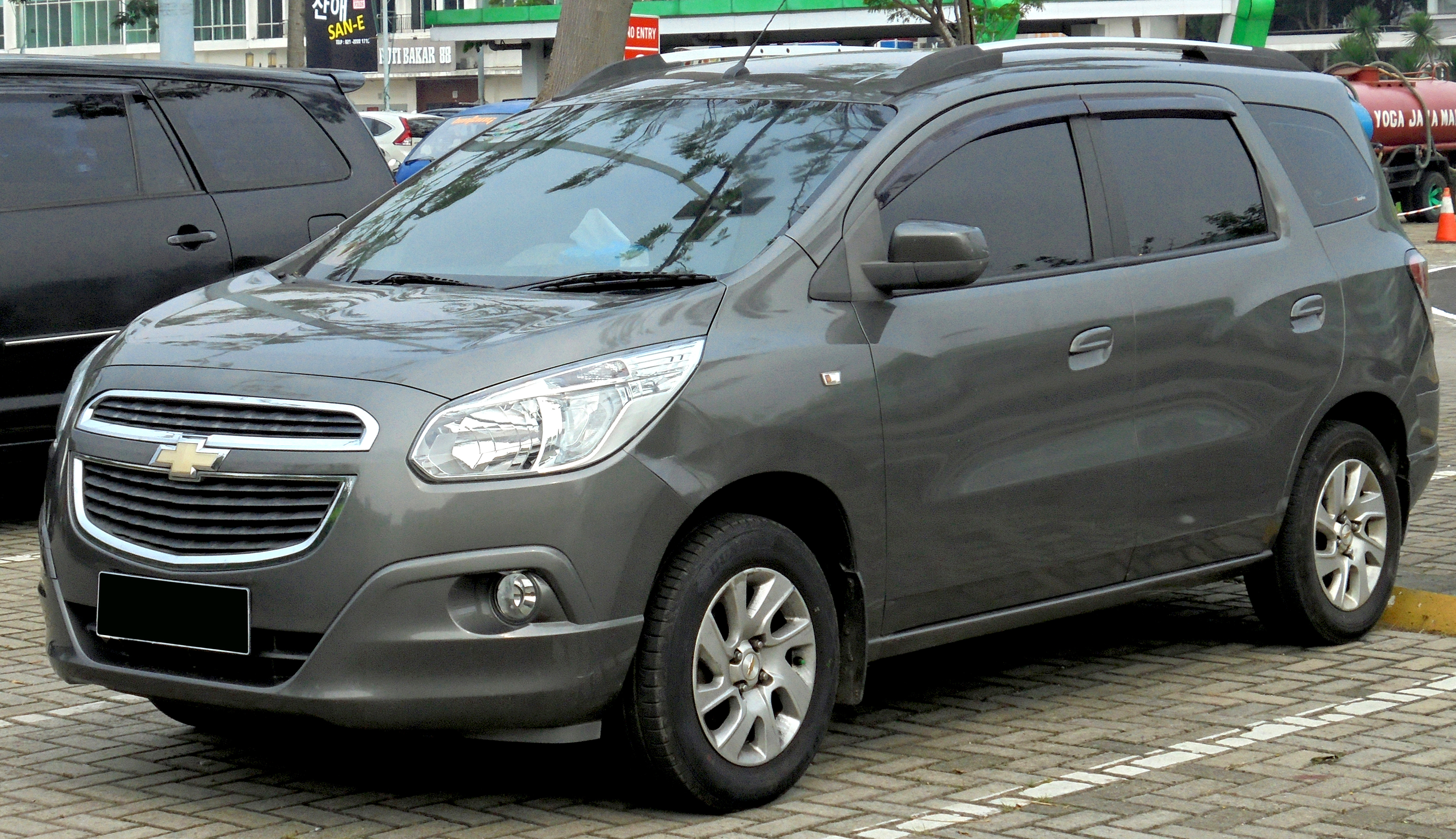
On eBay, behind every car and park is a story waiting to be shared.
I read about this guy who bought a nearly scrapped 2020 Porsche Cayman.
He rebuilt the whole thing, all with parts he found on eBay.
And now, that Cayman is out tearing up the track.
From Toyota to Aston Martin's, eBay has thousands of cars
and the largest online selection of vehicle parts and accessories.
eBay, things, people, love.
Yeah!
The Carl's Jr. lawyers said we couldn't name our new burger
the biggest burger for the smallest price burger.
So we didn't.
And that's called a loophole.
The new Cali XL burger.
A beefed-up, charped-world, double burger with double cheese, only $5.99.
That's more meat, not more expensive.
Get it now for a limited time only at Carl's Jr.
Available for a limited time at participating restaurants, tax not included.
Not valid for use within a combo or in combination with any other offer at discount.
I'm probably the last F1 driver who's got to F1, having never done a car race.
Karun Chando.
I am Karun Chando, former F1 driver, broadcaster, business consultant,
in a lot of different plates in the motorsport world.
Ever since I was a kid, I wanted to be a racing driver.
Chando and Truling.
And when I first pulled out of the pit lane, I followed Michael out of the pit lane.
You know, the red helmet in the red Ferrari is like...
I mean, this is surreal.
We were involved in a crash in a car that was one of the most expensive cars on earth.
Karun's had another moment!
How'd you get away with not really annoying the drivers?
Well, in 2011 was probably my lowest point.
You know, I hated motorsport. I hated Formula One.
I stopped watching Formula One for the first time in my life, since I was a kid.
And could you enjoy the fact that you've done it though?
I think...
Karun!
With so many new people joining and watching Formula One every day,
and it seems to have been that way for the last three years,
no doubt all of the fans would have seen your face
across the various different types of media that you currently present in.
But there is so much to your story than what the fans just see today.
So I really want to get into that today.
But for someone that has done so much in their career,
what I'd love to ask you is, in your own words,
who are you?
What I'd love to ask you is, in your own words,
who are you and what do you do?
I am Karun Chanduk, a former F1 driver.
First and foremost, I guess, racing driver,
who got to compete at the highest level of our sport.
A place like Le Mans, as well as Formula E,
so in all the three major world championships.
But today I am a broadcaster, a business consultant,
and spin a lot of different plates in the motorsport world.
Welcome to my driveway.
I've never done a podcast in a van before, so this is new.
I just want to make clear, I did invite you into the house,
but this is, you know, apparently this is cool.
I love it.
Some of the reactions we get from guests the first time,
they're like, it's in a van and he pulls up on my drive, right?
I did send two emails to clarify.
I was like, I do have space in the house.
They can come into my office, but I like it.
I like the novelty.
And that's the thing, when you speak to somebody,
and especially if it's the first time,
or they're not sure what's going on, you get a reaction.
And I wanted to start today with reaction,
because your show title for Sky currently,
you do pit lane reporting.
We hear you do in the commentary,
but with data analysts was the first thing
that comes up on Google.
And we see you analysing every part of what's
gone on in different races, whether it's at a corner,
whether it's on a straight, whether it's in the pit lane.
So I've got to ask to kick things off.
How do you get away with not like
really annoying the driver sometimes?
I think the drivers have a sense of respect
that for when I come at them with a question
and with some information and some data, as you say,
I think they respect the fact that I've been in the cockpit.
I know what I'm looking for.
And I'm also respectful of their position.
When they've had a bad day,
I know what it feels like to be in that position.
So you don't beat them down on it.
You still ask the tough questions of, listen,
the data is pretty clear.
You're four tenths off your teammate.
How does that happen?
But I'll always back it up with,
I can see you're struggling in corners six, eight,
and 10, for example.
So can you explain to us what's happened there?
So I've given them an out.
And that's where I think having been in the cockpit
and having been through those experiences of
the mental pressure of a qualifying lap,
just going through that experience
allows you to ask questions in a more qualified way, perhaps,
and also understand their psychology a bit more.
That's obviously on the whole, as you say,
like drivers' emotions can change from race to race.
I remember speaking to Will Buxton
about the times that he had some pretty fruity conversations
with Perez when he'd said things
towards the end of Perez's time in the seat.
So it must be quite hard to walk that tightrope sometimes.
I think it is different, though,
for someone who's never driven a Formula One car
or never raced in Formula One.
And I think, you know, we're very lucky at Sky.
We've got a great group of people who have been on that grid,
who have experienced that,
who have experienced the disappointment of a bad qualifying
or the joy of a good qualifying.
So, and I think drivers respond differently
to people who have driven versus people who haven't.
I know I did when I was driving
and on the other side of the fence,
answering the questions.
And it's probably unfair,
and it is unfair to people like Will.
You know, Will's a good friend of mine,
I've known him for many years.
And it has been unfair to them,
but I think there is just a sort of unspoken
layer of respect that exists between a driver
and someone who has also driven in the past.
What do you think a key moment was
from your earliest years to put you there, though?
To not only put you on the grid of Formula One,
which is insane,
but all the other things that you've done as well,
the entrepreneurial side of things,
the stuff you've done for Williams Heritage,
you've been racing cars at Goodwood,
there's so much that makes up you.
But if you could pick one moment in your earliest years
that had the most profound effect on that happening,
what would it be?
I think I would go back to early 2000,
when I was 16 years old and I said to my parents,
I want it to be a racing driver.
And at that point, if they had said,
no, it's not happening, that would have been the end.
I wouldn't have gone down this path at all.
So if you had to pick one point
for my early days of childhood, that is it.
But at that time, I was a big kid.
I was 96 kilos.
I was way too big to be a racing driver.
And I grew up in a family where they were brutally honest
and they had two conditions.
My dad said, that's fine.
You lose 25 kilos and we could talk about it
because I'm not investing into this.
And my mom said, that's fine,
but your grades in school can't drop.
And I was just about to do my A-levels.
And so I took that on as a challenge.
I lost 26 kilos just to prove them wrong.
Not to prove them wrong,
just to prove that I could do it,
actually, the right way.
So I lost 26 kilos in 10 months.
And got four A's in my A-level, so that was it.
But what made the fire so strong to be able to want to do that?
Because to achieve that, that's the thing in itself.
Like I've been through a weight loss journey
and it's flipping hard to go from that to that.
But when you get in the groove
and you really got a goal, it does help.
But what created that goal for you?
You know what's weird is I now recognize
as an adult how unique my position was,
but I don't recall ever wanting to do anything else.
So when you ask the question of where does the fire come from,
ever since I was a kid, I wanted to be a racing driver.
I picked the story when I was 16
because that was when I could get my license to go racing.
At that time, you had to be a minimum of 16.
And let's not forget, in India at the time, there was no karting.
So I've never done a go kart race in my life.
That was going to be my next question.
I'm probably the last F1 driver who's got to F1
having never done a kart race, apart from the old charity thing.
So, yeah, but to go back to your question,
I don't recall wanting to do anything else.
I don't recall wanting to be a fireman
or a doctor or a lawyer or an engineer or anything.
I thought astronaut, I wanted to be a racing driver.
So the fire was burning from a very, very young age.
My father was in the sport.
He used to race and rally.
My grandfather used to compete.
My grandmother used to compete and do some races as well.
So I grew up in that family.
And as you know, the fire was lit very, very young.
Hi, everyone. I'm Karun Chandok.
I've been in the van with Ben and it's been a lot of fun.
So you should subscribe to Road to Success
and see more episodes with lots of fun guests.
Which is quite niche really, because I'd say on the whole,
I wouldn't say that a Formula One fan would necessarily
associate much motorsport with India.
No. Well, there's 1.4 billion people
and there are two Formula One drivers.
It's a pretty exclusive club.
So where do you take the next steps then?
You would just have to go a field.
Because obviously we had the F1 races in India
for a period of time, but there's no longer currently on the grid.
So where was your next major step from that moment at 16
when you really took a stride forward to get to that grid?
So I did a year racing in the Indian National Championship
and I won that and then the next step was to race
in something called Formula Asia at the time,
which is today equivalent to Formula Four.
So the first step internationally
in terms of a single-seater championship.
And I did that when I was 17 and won that championship.
And then it was a case of, okay,
the big leap now is to come to the UK.
Because at the time, if you had to get to F1,
you had to come and do Formula Three in Europe.
And really the British championship was the one to do at the time.
British Formula Three, since I would say,
probably the late 70s until probably 2004 was the championship
you had to do if you wanted to get to F1.
And so that's when I made the move.
And I moved to the UK on the 1st of February 2002,
which was a complete shock to the system
because it's about two very different places.
Yeah, I mean, you've been to India, so you know.
But I left a city of 11 million people near the beach,
35 degrees in the winter.
And Atlanta, as I say, in February,
where it's getting dark at four o'clock in the afternoon,
it's pouring with rain.
I have no idea what I let myself into, frankly.
And I moved to a tiny town called Brackley of 11,000.
So I went from 11 million to 11,000 in the middle of Northamptonshire.
And did you choose Brackley for the motorsport culture that it already had?
So I signed a contract with the team to race in Formula Three in November,
so pre-Christmas previous year.
And that's where the team was based.
It was a team called T-Sport.
And I rocked up and the team owner, Russell Ecott,
who became my second father, really, said to me,
where are you living?
And I said, well, we're staying at a hotel at Terminal 4 at Heathrow.
That's currently where we're living, as my dad was with me.
And he said, well, best we go find you a house then.
And so we went to the estate agents looking for a house.
And I remember we went and saw about three or four houses.
And I said to the estate agent, is this the suburbs of the town?
Where's the sort of center of the city?
And the guy just looked at me completely confused.
And I said, well, you know, I don't understand.
Like, where's the stuff?
Where's the city?
And he said, we've done three laps of the town.
And then suddenly that's when it dawned on me.
Okay, this is a bit different to Madras.
But in the end, I loved it.
I stayed in Brackley for 13 years.
And I lived there because that's where Russell's team, T-Sport, were.
And then I became friends with people in the town.
I started working at Silverstone at the race school.
I was just getting to know people, as you say, in Motorsport Valley.
And it then became a logical place to live.
If you have a car on finance, I'm about to save you thousands of pounds
with a simple refinance through Lillian Stanley.
I have recently done exactly the same with this very van.
See, when I took the agreement out a couple of years ago,
interest rates were high and I went to a main dealer.
I told them what my budget was for the monthly payment.
And because we got within that, I never questioned it.
However, it was at 11% APR.
And some people have paid as high as 13% APR.
What have you just said?
We're paying 13.1% for my girlfriend's golf.
Literally, Toby is editing this video.
And as he's editing it, the place needs to go to the podcast.
You just said that the golf that your girlfriend had just bought is at 13.1% APR.
And you are literally going to call Lillian Stanley.
He actually finished editing it.
That's how you save.
You can read finance a vehicle at any point in his agreement.
It doesn't matter if it's two days in two months in or two years into the agreement.
Now, those base rates have dropped.
If you go private to someone like Lillian Stanley,
they will find you the best possible rate.
So half the time you can make a saving just by picking up the phone
and asking the question if you could refinance and save money.
I've been so amazed at how quickly and easily we did that for this very van.
I'm currently doing it for my McLaren 600 LT and my fleet of vans
within my business at Gertwings too.
So if you're interested in saving money going on holiday with it or doing whatever else,
then click the link in the description below.
I've also left it as the pinned comment too,
to go and save yourself some money.
And you could do this in as little as 48 hours.
Thank me later.
When did you get like really confident that you were really good?
Because if you won two championships in India,
there's a sense of like not cockiness the wrong way,
but confidence starting to build.
Like was that really helpful when you come over?
Did you believe you were like really good?
I think cockiness is the right word actually,
because I think I won championships in India and Asia
and you got cocky and thought this is going to be walking the park.
And then I came here and suddenly there was a real shock to the system.
The first six months of 2002, I got absolutely beasted.
And I was crashing a lot.
I was the results went out there and I was just in shock
because the level of competitiveness in European racing
is so much higher than anything in Asia.
And there were lots of days I just thought this is just not going to happen.
What am I doing?
I should just go back to India.
This is not for me.
I'm not good enough to do this.
And then again, it's like, okay, you knuckle down.
And one thing I'm never ever can be accused of being shy of is hard work.
You know, I would, so I went to the workshop every single day.
I lived in practically, I would go to the gym in the morning,
go to the workshop and I spent every single day
and I would take the laptop home from the engineers.
I'd take the laptop home on the weekends when we weren't racing.
And I would just spend my evenings and the weekends looking at data.
I managed to get some data from some other teams from previous years.
And, you know, just spend a lot of time just trying to understand
why it wasn't happening for me.
What was the technique?
What was the style of driving the cars that I just couldn't get
my head around in those six months.
And then slowly, slowly, you know, the first six months,
I got qualified by my teammate 12-0 in the first part of the season.
And the second half of the year, I beat him 11-6.
So, you know, I think, and then it sort of built from there.
So, you know, we could go a sort of fast track.
You know, I had two or three years in Formula 3 where I struggled for money.
You know, I was always short of cash.
And I think, again, people don't understand that, you know,
how tough that journey is for someone from India or someone from Asia.
Because I had to go out there and raise commercial sponsorship.
You know, I'm 18 years old.
I'm having to go into boardrooms and negotiate with these massive companies
to say, invest in me.
Invest hundreds of thousands of pounds into my journey.
And why should they do that?
Why should they not just sponsor another cricketer's bat?
Because cricket is so dominant in India.
So, how do you prove to them that they should?
And then what else can you say other than, I'm really good.
Look, I've won this and this.
Like, I'm really good.
I promise I'm really good.
Yeah, you've got to say that.
But you've also got to quickly understand that's not good enough.
You've got to understand what they want
and they want to return on their investment.
So, again, you know, think about my peers.
We finished high school.
They're all offered university getting pissed.
They're all, you know, living the undergrad lifestyle as most people do.
Or they've got their first jobs with their families or whatever.
And I'm out there.
I had to teach myself PowerPoint to make presentations
because I couldn't afford to go, you know,
hire an agency to do it.
I taught myself how to write the press releases
and edit the pictures.
So then I would go do cash deals with photographers in the grass banks
and say, look, I'll pay you a tenner per picture.
Sell me a few pictures.
I would then edit it to highlight the logos of the sponsors.
And then I would come back from the races on Sunday evening.
And you're knackered, right?
You've done a, you know, a doubleheader race week.
And there used to be two races per weekend or formal three.
You're mentally fried.
All the other drivers are just going, putting their feet up, having a rest.
I'm coming back and writing the press release, editing the pictures,
firing it all off by midnight UK time.
So they get to the Indian press first thing on Monday.
And then they can start running them in the papers and things like that.
So as I said, you know, I recognize I had to put in that work.
Otherwise, I was not going to get people to invest in my journey.
I had a sponsor called JK Tyres, who were very, very supportive.
They were my main sponsor.
And there was a, their head of marketing was a guy called Sanjay Sharma.
And I learned a lot from him about that.
You know, he taught me how I need to deliver this and how I need,
you know, he would send me in 12 days to eight different cities doing press conferences
and just learning how to communicate with the press and how to talk to the press.
And, you know, hold these, hold the room of 200 journalists asking me all the first,
the first question would always be, yeah, yeah, you're doing F3.
That's great. When are you going to be in Formula One?
When are you going to be in Formula One?
And you'd have to learn how to manage that whole thing.
So does that get to a point where you just go, yeah, but you can't.
You can't, you can't afford to have a meltdown because.
You know, that's the end then, right?
You're there representing these brands and you're trying to get them coverage in the press.
So you're there having to sell the dream, sell the dream, sell the dream.
And it was tricky at that time because, you know,
the knowledge of motorsport was also at a much lower level.
I remember going to press conferences, you know,
there's a city called Amdabad, which comes to mind.
I remember I did this event at a go-kart track and we did this
carting day with the media and the journalists from the Times of India,
which was the biggest newspaper, still is the biggest newspaper in the country, said to me,
so explain to me the difference between this and Formula One.
And, you know, that was a level of knowledge of some of the journalists.
We had some very good, you know, knowledgeable journalists, of course.
But broadly, there was a very low level of knowledge.
And so you're going out there to a, sell the sport, sell yourself,
deliver a return investment.
And guess what?
Develop yourself as a racing driver.
Now, those first three things, I can guarantee most European drivers didn't have to do.
And that's the difference.
But I think it's, that's what made me who I am today.
Did you ever sit in one of those board meetings
and tell someone you were going to make it to Formula One,
but not believe you were going to when times were getting pressured?
Yeah, I think so.
I think so.
You have to keep selling the dream.
But I had doubt, you know, I would call it insomnia season every winter
because I didn't know whether I'd get the money to go racing the next year.
You know, I remember in, you know, 2005, 2004 and five were particularly terrible years for me.
I had no money, you know, we did half a season of F3, ran out of money,
did some races in World Series by Renault,
ran out of money there in the beginning of 2005, did some races of A1 GP.
It was all a bit political, so I walked away from that.
And then I'm stuck.
I had nothing going on.
Went back to Asia for 2006 and at that point it's a Hail Mary
because I had no money to carry on racing in Europe.
Renault started a championship out in Asia
and so I managed to put a deal together to race out there.
And that was a key turning point.
You know, so you asked me earlier what was one point
in my early younger years that set me on this journey.
And I, you know, I was talking about when I was 16.
The next point I would say was the end of 2006, when I won the Asian
Redo Championship, but again, I had no money to carry on.
How old would you have been then?
2006, I would have been 22 that stage.
So then it's done.
Like at that point, there's no racing in my future.
I spoke to a friend of mine who runs a Formula 3 team.
I said, can I get a job as a team manager?
Because I wanted to work in motorsports still.
And he said, yep, we could talk about it.
And we were talking about, you know, how I get the work visa and things like that
to come back to the UK.
And then I got a phone call from, you know, Bernie Eccleston
saying that Red Bull are looking to get some more Asian drivers onto the Young Driver program.
And he set up a meeting with Danny Baha,
who was running the Red Bull sponsorship at that time.
And, you know, I ended up with the last seat on the GP2 grid for 2007.
And at that stage, it was a team called Durango,
who had finished last in the Championship the previous year.
But for me, it was like, it didn't matter.
It didn't matter. I was on the grid.
And that was a key point.
You know, at that stage, it was a fork in the road where I was either going to be done
and get a job as a team manager or carry on driving.
And at that point, you mentioned, like, how profound your dad was for you in, like,
your earliest years and that he was always here,
even when he was staying in a hotel over in the UK.
Where was your, like, dad and family's emotions at that critical three-point for you?
I mean, my dad went on this whole journey with me every single day.
You know, he was my manager.
I never, we couldn't afford to have professional agents and managers and all that.
So he managed me.
I was lucky he was in the business.
You know, he was doing some work with Bernie with the TV rights in India.
So he got to know Bernie a little bit.
And then we were working together with Bernie to bring the Indian Grand Prix to India
or to bring Formula One to India, I should say, has the Indian Grand Prix.
And so we got to know him.
And that's how we made this connection, which opened the door to Red Bull.
It shows how many plates you have to spin in every area
to become successful enough at the plates to then show your success on the track.
Well, you know, there's two or three other things, right?
Like, you know, I had to, so I managed to get some money together to go racing,
but I still had to live.
So I started working, as I say, you know, I bet most of the drivers I was competing against,
the rich Brazilians and the Germans or whatever, you know,
they weren't going to Silverstone Circuit on Monday morning to drive a recovery van
to pick up motorcycles from a track day.
I was for 110 quid a day.
Actually, I started on 95 quid a day and then I went up.
I got a bonus to 110.
Do you talk about those moments, though, or the fact that you had to do that?
Because on the whole, putting yourself on TV, putting yourself in the position
of being a Formula One driver, you're open to so many comments
and obviously so many people comment on the journeys of drivers like,
oh, I'm sure I could make Formula One if I was rich and all the rest of it.
But does that get on top of you after a while?
Because it's like, no, no, no, no, like in my world where I was,
you don't understand what I had to do to get that.
You know what? I don't think it's my job to go out there and fight that battle.
You know, people are going to have whatever perceptions they want in life.
I don't care. I don't care.
You know, if they think, and of course, you have to have a, you know,
I'm not, I'm not saying that we had nothing.
You know, I had a very comfortable life out in India.
But we weren't certainly multimillionaires who could afford to pay to go racing.
There's never enough money for racing.
No, but also, you know, we, I had to get, if I didn't go out there and have the commercial money,
it wouldn't have happened.
It wouldn't have happened. It's very simple.
You know, there's no way my, my family did, took out two mortgages
and that may be paid for four race weekends or Formula Three.
It didn't pay for the other two and a half seasons.
And then it took us a decade to pay those mortgages back.
Right.
The commitment that people make is so incredible,
but it also shows how people can get on board with something,
especially with people that they love, but when they believe they've got so much talent.
Yeah.
So we need to talk about the talent.
We need to talk about the, the first parts of being on track and developing a driving style.
And the reason I wanted to go into this a little bit
is because you did pick up on the fact that you could have been a little bit cocky
as well when you're younger.
You also come from India, which I wouldn't say the roads are the most.
What's the word?
Organize the places is probably the best word.
So the differences between developing a driving style on road and on road over there
would be completely different.
How would you describe your earliest years driving style in Formula Three, Formula Two,
and Formula One?
I think it, you know...
Frutte.
No, I think you go on a journey as well.
You know, I started off without thinking about it, just driving, whatever came naturally.
And I just did it.
And then I think when you, I came to this country and my conference took a massive knock
for the first couple of years of racing here.
I became quite conservative in my way that I drove.
You know, I didn't like an edgy car.
I hated a car that oversteered because I was always scared it was going to shunt.
And it took me a long time.
Probably took me that year of going back to Asia
to just come out of the pressure cooker of European racing, have a year of relaxing,
getting my mind, you know, at a point where I was just free.
I could just drive.
I was winning races.
I was driving and not having to overthink it, not feeling nervous that I was going to shunt.
And actually then I came back into GP2 as a better driver.
But certainly I would say that period between 2002, 3, 4, 5,
I was all over the place in terms of I didn't, I didn't,
you know, there was a way I knew I should be driving,
but I couldn't drive that way because my confidence didn't allow me to do that.
That's where the talent sits then.
Because if you're talking to people and you, you know,
it's things like we were talking in the house about lander and piastre.
And the fact that it's likely for the second half this season,
it's going to be like a pressure cooker.
Like it's going to go bang at some point.
And I probably imagine they'll start to make more mistakes
because they're under that pressure.
Do you think the talent lies in the freedom of the mind?
Like the more relaxed the mind is,
the more you're locked into the zone, the more you unlock your talent.
I think that that is true.
But also I think you have to recognize that racing drivers are human beings
like any other athlete, right?
You think of tennis players.
I always think tennis is the ultimate psychological war one-on-one.
You look at the Wimbledon final, you have two men or two women across the net.
There's nobody can help them.
There's no teams.
There's no, there's nothing there.
And then if they've got to the Wimbledon final,
they're equally talented, then it becomes a psychological war
of how can you play every single shot perfectly to execute the match?
I think motor racing is no different.
You know, it's, especially those teammates,
it's about getting every breaking point right,
every turning point right,
feeling every moment of the car exactly as you should.
You have to be obsessed with perfection.
You have to be at that heightened level of focus.
So, yeah, I think, you know, I went on a journey
of trying to figure out what, what I,
what sort of a driver I wanted to be.
And I think, you know, now if I reflect back,
I probably was a driver who made maybe too many mistakes at key points.
You know, I think there was certain times where
I put too much pressure on myself to execute a result and made mistakes.
You know, but some of it comes from all of these,
I thought too much about the outside factors, you know, about.
Would you drive for sponsors?
Yeah.
And would you drive in a certain way to also keep the sponsors happy?
No, I think it's not that.
It's that you, I felt the pressure of if I wasn't delivering results,
you know, the sponsors won't invest in me.
My parents have sacrificed all of this stuff, you know, from,
from their lifestyle and their livelihood to put me on this journey.
And, you know, you start to feel the pressure of all of that.
And that's not good pressure.
That's, that's pressure that then causes you to make mistakes
and drive in a way that's not, that's not really constructive
or deliver constructively.
So getting the call though or getting the opportunity
to then go into Formula One, that must be a moment that
profoundly tells you that everything you believed about yourself is right.
Like you've made it to this point.
I think before that, winning the, winning the GP2 race at Spa
in 2007 was a massive moment for me where it's like, I belong.
You know, if I come closer, you know, I was leading the race in Turkey.
I got taken out.
I'd had a couple of good results in Monza.
So that, you know, the results were starting to come.
And then when I won at Spa, I took a massive monkey off my back.
You know, the pressure of all of this stuff.
You're not good enough to keep competing in Europe.
You're not good enough to fight with the best emerging young talents
outside of Formula One.
All that went away.
And, you know, then I was able to get more podiums and, you know,
win, win in Hockenheim the following year and all that sort of stuff.
And it just builds a momentum to F1.
And then I think getting to F1, you know, at any racing driver,
there's three, three parts of their life.
There's the journey to F1.
There's your time in F1, which is as long a shot
as it might be.
And then there's your life after F1.
And so getting to F1 was the closing of chapter one
and the opening of chapter two.
It was massive, right?
You know, as we said before, from my country,
I was only the second driver in F1.
It was on, you know, as the main taker on every news channel.
When it got announced, it was, you know,
cover page in all the newspapers.
It was a massive deal.
And, you know, when I remember when I went to Le Mans,
we had 30-year journalists there.
I remember looking at a campsite in the morning warm-up.
It had been a miserably wet year at Le Mans.
You know, just mud everywhere and just people sleeping in the rain.
And this campsite was full of Indian flags.
And I just thought, this is amazing, you know.
These people are here sleeping in the mud to support me.
You know, I was the first Indian to race in the 24-hour race.
And I was like, these people have given up their week
to come sleep in the mud, wave the flag for me.
That was really emotional.
So you suddenly realise again what this all means,
you know, to go on this journey and race at the top.
So it must have been also quite a journey
and something really proud of getting or helping
get Formula One to India as well.
And am I right in saying you didn't get, though,
the chance to compete in that race?
That must have been like one of the hardest parts of the journey, right?
Yeah, awful.
I mean, that period in 2011 was probably my lowest point
in terms of my relationship with motorsport.
You know, I hated motorsport.
I hate a Formula One.
And it was because of politics.
You know, I was with a team Lotus at the time.
And I had a contract and I had certain agreements in place
to do certain races that year.
And they broke the agreement.
You were a reserve driver at the time.
I was a driver, but with a contract,
which was somewhat unusual,
but it was an agreement to do a certain number of races,
including the Indian Grand Prix, which was a key point.
And that's why I signed with them.
You know, at the end of 2010,
Hispania, who I was with,
well, middle of 2010, Hispania came to me and said,
we need money to keep going.
We have a driver, Sakon Yamamoto,
who's going to offer us half a million dollars per race
to carry on, to take your seat.
And I was like, well, you'll be signing him,
then won't you, because I haven't got half a million dollars a race.
So that put me out of there.
But I was speaking with other teams about a reserve driver role,
and there were two other teams,
which was a pure reserve role,
which would have been 12 to 15 practice sessions,
a bunch of testing, whatever, but no races.
Then I signed with Lotus because it included
the Indian Grand Prix, mainly.
And was that friendly at the time you signed with Lotus?
In terms of?
That arrangement to go in.
Did you have any concerns that, well,
if that was in the contract, you weren't able to not do that?
Well, you have to believe that people
are going to do what it says on the contract.
That's why you shake hands.
That's why you do the deal.
But as soon as I got to the first test in Valencia,
I flew in with Tony Fernandez, a team owner.
I suddenly smelled the atmosphere was not good.
There was certainly a lot of internal politics
within that whole team.
And I don't want to get into it,
but it was a very...
It had all the politics of a big team,
but was a small startup team in their second season.
And then obviously I didn't get to do the Indian GP.
And that just annoyed me.
I was just annoyed with Formula One as two seasons in a row where
deals have been broken, politics have gotten the way,
being booted out of a seat.
I wasn't driving particularly well
because I didn't feel welcome at that team.
And you know, that's not everybody, right?
There were great people in that team,
some of who are friends of mine today.
But broadly, I didn't feel welcome at that team.
And so the whole thing was just messy.
And I just thought, I'm done with motorsport.
I hate it.
I absolutely, I stopped watching Formula One
for the first time in my life since I was a kid.
I just didn't want to know anything about it.
And then I discovered sports car racing in 2012.
And it was actually, I went to do that 2011 time.
I hated being in the pits at Lotus.
So Crofty and Anthony Davidson were doing Radio 5 Live
and said to me, why don't you come and do some commentary with us
in the comms box?
So I did.
I started doing a bit of commentary with them
and it was quite good fun.
And just on that though, like,
shut your shoulders as you say that.
I think there are some commentators,
like whether it's from boxing or whether it's from
snooker or whether it's from cricket,
that will always go down as being like,
one of the best voices in their field for just decades.
And to me, Crofty is one of those people.
Like, do you just hop in a commentary box and crack on?
Can you just do that from being a driver
and developing those skills?
Or is that quite a hard thing to do for the first time?
Well, that wasn't my first time.
So I had been commentating, as I was saying before,
I had to earn a living.
So I was commentating since 2004.
I was 20 years old and I did the Chinese Grand Prix
for star sports in Asia.
And so between 2004 and doing this five-life stuff
with them in 2011, I'd done sporadic stints as a commentator.
You'd spun that play as well.
Yeah, exactly.
So I'd done lots of ESPN star sports out in Asia.
I'd done F1 in cinemas.
There was a season or two, I think,
where they showed F1 in the big cinemas in the UK.
I did that commentary with Ben Edwards for a while.
So there was nothing out of the ordinary going in there,
but it was one of the most significant moments for you.
I don't know about that.
I think what was significant was when Anthony said to me,
you should come and do sports car racing.
That's what I meant.
Yeah, in that sense.
Yeah, so not the commentary per se, but Anthony was on...
That particular time.
Yeah, and he was like, look,
I know you're enjoying life in F1
and he'd been on that journey four years earlier.
2007 when Super Duguri went pop or 2008, I can't remember.
Three or four years earlier, he'd been on that same journey
and gone to sports cars and was loving life in sports cars.
And so I did, and I went and raced five years in Le Mans,
the World Championship in sports cars,
and really rediscovered my love of motor racing
and then came back to the F1 paddock having turned the page.
That acceptance is really important to accept.
Right, that dream is now over.
I'm not going to be a Formula One driver anymore.
It's done.
So it took probably till middle of 2013 to accept that.
And then I could walk into the Formula One paddock
as a commentator or broadcaster with a lightness and go,
I'm going to come here and enjoy it for what it is,
which is, guess what?
The best racing series on the planet, the pinnacle of our sport,
and as a fan, I still bloody love coming here.
And could you enjoy the fact that you've done it though?
Even though you will have certain chips on your shoulder,
I guess, and going back to say I could have done this better,
I could have done that better, I could have executed that better.
Was it still a massive thing, obviously, to you
that you had achieved that dream?
I think and every driver would probably say the same
is you don't appreciate at the time just how special it is
because you're just focused on doing the job.
You're focused on trying to do the best job you can.
You're focused on the racing.
You're focused on what the job is at the time.
There were a couple of moments, as I said,
like a Le Mans seeing the campsite.
That was the moment where I sort of positive reflect
and go, wow, this is cool.
I remember my first ever F1 test.
I was a Red Bull test driver, and I was a Barcelona
and Michael Schumacher was one of my heroes as a kid.
And Michael came back to do that test at Ferrari
at the end of 2007.
He'd taken a sabbatical, but he came back to do a test.
And when I first pulled out of the pit lane in Barcelona,
I followed Michael out of the pit lane,
you know, the red helmet in the red Ferrari.
I mean, this is surreal.
So there's certain moments where I still recall, you know,
as being things where I think, wow, it was amazing,
you know, to have that opportunity to be on the grid
with those great drivers, the Alonso's, the Hamilton's,
the Schumacher's, to be on the starting grid.
It was an amazing thing to have done.
But at the time, did I appreciate that?
Probably not.
On reflection now, yeah, of course.
You said at the beginning that you appreciate now
in that reflection, being in your position at Sky,
you're able to reflect back on those times in Formula One.
Do you think it's difficult for some of the guys
that haven't done F1 to kind of keep up
in their kind of roles that you work with,
or does everyone gel together really well?
No, we're very lucky that, you know,
I think everyone understands the role that we play.
You know, I think what Crofty does,
or what Ted does, or what Simon or Natalie do
in terms of presenting it, you know,
they do an excellent job, you know,
Rachel and Grace later, when they go to the pen and ask drivers,
they do a great job.
You know, I think everyone, we're all respectful
of the role that each of us plays.
The roles that they play aren't the same
as what Anthony or myself would play, you know,
and then you've got Bernie Collins
who's come in from a different direction
in terms of being on the pit wall.
So I think we've got a lovely mix of people
who come at it with different backgrounds,
come at it with different angles,
and if the team was populated by just racing drivers,
I don't think that would be very good.
What's the biggest difference between being the interviewee
in a helmet and being the interviewee
or all the analysts from the other side of the microphone?
I mean, everything, right?
Everything, because you're going from being the judge to being judged.
And that's what we do.
But as I said, because I think like Ant and I have been there
and we've experienced this, when we go on the sky pad
and we go, well, so-and-so they missed the apex there
or they made this mistake a little bit wider thing here,
you know, you're not going to just blast them for it.
You understand, you know, why that might have happened.
And you're a bit more sympathetic about that.
What do you think one of the toughest things is
that people wouldn't maybe realise about being in those roles at the sky?
I think that the biggest challenge is just trying to filter
because you've got 10 teams out there whose job it is
to tell their story in the way that they want it told.
So I'll take 2021 as an example, right?
That amazing Lewis versus Max season down to the final round of Abu Dhabi.
We all know how it ended.
But if I think of the previous five months there,
you know, you had Mercedes and Red Bull constantly telling you,
you know, oh, by the way, they're doing this and they're doing this.
And do you know, we've done this in the right way and we're doing this.
You know, there's this constant barrage of stuff
that they want you to put out to the world.
And even today, you know, you go to any race weekend and they go,
so-and-so is cheating.
I'm telling you, they're cheating.
That is not kosher.
That is absolute.
You guys should be highlighting this stuff.
And there are a lot of people out there who just run with it and go,
oh, McLaren are cheating.
Or Red Bull are cheating.
Mercedes are cheating.
And just believe the spin that's being put out there.
And I think the more experienced people who've been around the sport,
been on the paddock will just go,
well, if you think they're cheating, you can protest it then.
Why not your mouthpiece?
So take us into the pit lane.
Do they, when they're giving that information over,
because we obviously only see it when it's put out live,
when it's put out as a piece of content.
But are you literally getting pulled down between the motor homes
sometime to be like, come here?
No, it's not so much that.
No, it's not that.
I think we go out there to seek information as well, right?
You know, that's part of our job is leveraging our relationships
and trust with people.
You can go out there.
You know, I've got friends in every team that I can go and say,
I don't really understand why that happened last week.
Can you explain this to me?
And they often will knowing that I will then filter.
And that's why I come back to when you ask,
what's the most important job?
It's about being the filter.
Knowing that I will filter what I should put in the public domain
versus what I should just keep for my own personal private knowledge.
And similarly, you know, they will often in those conversations
tell you about what other people have done or what other people are doing.
And again, it's about filtering.
You know, I'm not, if somebody at Red Bull has told me about something
happening at Mercedes or Ferrari or vice versa,
I'm not going to go to that person and say,
oh, by the way, Red Bull have said, you're doing this, right?
That's the relationships and the trust that you build.
But ultimately, the most important job is to filter what is the truth.
And what you're comfortable saying as well.
Because I think the other thing is I kind of have a simple rule of
I won't say anything on a broadcast that I'm not prepared to say to somebody's face.
And quite often we will pretty much every weekend will upset somebody
because you will you will criticize a strategy.
You will criticize a driving mistake.
You will criticize a team decision.
You'll criticize something that somebody has done,
which will upset somebody in the panic.
And your phone will light up and there'll be a text or there'll be a call saying,
oh, that's not right.
Why have you said this, blah, blah, blah, you know, et cetera, et cetera.
And you have to be prepared to go have that conversation with someone.
And I think the good teams like McLaren, like Mercedes,
you know, their, you know, their communications teams,
for example, they're really good about that.
You know, they will challenge you and say,
I think it's a bit unfair you saying that,
come and have a coffee and let's talk about it.
And you can go and have this debate and you can agree to disagree.
And there are the teams, who I won't name,
where they will just go, no, no, absolutely not.
We're going to boycott you for, et cetera, et cetera.
Which is what happened to Ted, for example.
No, I don't want to go into it.
I mean, actually, you know, I think, I can't remember.
But it kind of shows, my point with that is it kind of shows
that occasionally it can be really difficult to manage those relationships.
Yeah, but to be honest.
So you say one thing that dips it over the edge.
But to be honest, a Red Bull, so you just mentioned the thing.
So Christian was somebody who, I remember Brazil last year,
he got upset with something that Crofty and I said in the commentary box.
And actually we went to see Christian and Christian came to the Skypad.
It was about the step in not getting the last lap
and getting the timing and strategy wrong.
And he came to Skypad and we actually talked, talked it through.
We went through it all and all the rest of it.
And he was actually really good about it.
So that's what I was saying.
I don't, it's not Red Bull that just to make it clear.
Yeah, no.
So that's what I mean.
I think, but that doesn't happen overnight.
You have to build that relationship with the people within the paddock over time.
And that trust of being a broadcaster and knowing that they can trust you
to give you the bits of information you need to do your job well.
I think that that comes over time.
Part of everyone's story occasionally when they end up on this podcast
is also writing.
Like everyone that loves to talk also loves to write.
And writing's also becoming part of one of your chapters.
And tell us why you decided to write a book.
So I enjoy writing.
I've been a columnist for various people over the years.
I currently write for the intercooler and motorsport magazine.
But last year I was watching the Austrian.
I think it was the Austrian Grand Prix at home with my kids.
And I put a tweet out about tires.
And somebody replied to me saying,
this is why this sport is too difficult for kids to understand.
It's just way too complicated.
I don't normally engage with people, especially negative stuff.
But I actually replied to this guy and said, well, I'm watching with my five year old
and he fully understands the tire strategy is going on here.
But it made me think that my kids have got the benefit of a dad who's involved in the sport
can answer a lot of their questions and can watch the race and explain things to them.
There must be a lot of other kids out there who like Formula One.
But don't necessarily have that benefit.
So I decided to write a kids book.
There's lots of people out there who write that this is my journey.
This is my life type books.
That's not for me.
I decided to do something different.
And I thought, you know what I want to do is inspire the next generation of F1 fans
like my kids.
And so it's designed for kids from sort of six, seven up to early preteen,
maybe 13, 14 year olds.
And it's got everything from how the cars are built,
who the great drivers of today and the past are.
You know, we have an amazing history in the sport.
And I think we should explain that to kids.
And I realize now when you go to a lot of races,
the kids don't know who Michael Schumacher was.
They don't know who Ayrton Senna is or, you know, or Alain Prost.
And I think it's really important to explain that to people.
How race tracks built, how the pit stops happen, you know, all that sort of stuff.
And I really wanted to try and just bring a little bit of knowledge to the kids.
And I also threw in a chapter with some of my favorite stories from the past,
you know, Spygate, the Braun GP story, just some bits that I think the kids will enjoy.
Was it harder to actually write that than you anticipated it to be?
Yeah, the actual writing on the first draft wasn't hard.
I had 72 flights last year and I bashed it out across all the flights.
But then I suddenly realized that a lot of what I've written in the past
and was writing in this book was aimed at adults.
And with kids, it's not about dumbing it down,
but it's about simplifying the language.
So actually I found the rewriting and the sort of second draft
and the third draft quite hard because I had to find a way to simplify
what is probably the most complicated sport on the planet
and try and make it understandable for kids.
But I was able to use my six-year-old, well, he was five now, six-year-old
as a bit of a test bench.
And I go, here, read this chapter.
Do you understand what I'm saying here?
Which was helpful.
He's going to learn quickly then if there's a part in there
about the business side to get commissioned from those books.
Yeah, maybe.
Well, there's a chapter of Bernie Eccleston.
But what is lovely is the book has been well received by kids,
and kids within the sport.
I've had various team bosses and engineers and people from within the sport
who've sent me pictures of their kids reading the book and saying,
well done for writing it because the kids are really learning a lot.
Where can people get that?
It's everywhere.
It's on Amazon.
It's in Waterstones.
It's online.
It's now selling in 10 different countries.
Well, make sure to put some links to that into the description, guys.
It's just a little pause.
If you want to check any of those out and get it ordered before the end of this podcast,
you can do that here.
Now, I've got to ask you this question because you stay so logical
and precise when you're presenting.
And there's all of those races to go to over the course of a season
as well to attend and present and stay on it.
But you still make time to do some racing behind that toe.
Many of those laps have been joyous and successful and brilliant to watch.
But there was one incident that I'd just like to talk to you about
because I can't believe I'm saying the sentence.
You potentially were involved in a crash in a car
that was one of the most expensive cars on earth.
Like, that is an insane thing to say.
Oh, the Revival.
Yeah, the 250 GTO.
Yeah, Revival.
Like, I've got to ask you, what was it like to, like,
in the moment, have an incident in a car that's worth that amount of money?
It was just a surprise.
You know, I was like, I was coming out of, you know,
the double right lavant, the double right hander,
and I was accelerating on second gear, put it in third.
And then I just felt this tightening of the engine.
I thought, oh, that's a bit odd.
It just sort of sort of lose power.
And then it just locked up the rear seized.
And clearly the engine just ceased.
It just completely...
And they dropped the hot oil onto the hot exhaust.
Guess what?
Bang.
It makes a big fire.
Was it your feet that got pretty bad?
Yeah, well, my right foot, it went through the boot.
The heat just coming through.
It melted the sole of my right foot.
I actually still got the shoe in the garage here next door.
But yeah, it was a bit of a shock.
It's like, what on earth happened there?
And they're just like, oh, God.
Is it only like in the moments I'm guessing,
maybe when you're off the circuit?
It meant the pallet, like the following hour,
but it really hits you like, oh my God,
that was a Ferrari 250 GTO.
Because in the moment, as you're saying,
you're just like, rum, rum.
It's just a car.
Yeah, it wasn't.
You're just enjoying the car.
Well, it was just a shock,
because it wasn't like an all-rev on a down change.
It was when I was going, you know,
it wasn't a mischief.
It was sort of accelerating slowly out of a corner,
out of the slow second-year corner.
So it was just a shock.
And then the immediate thought
is the racing driver brain kicks in,
which is I need to get off this track
so other people, you know,
I pretty quickly realized
there must be oil on the track,
drop from the engine.
So it's like, let's get off the track
so other people aren't spinning on the oil
and then get there.
And I looked up at the bank
and there were some spectators
who were waving at me,
saying, get out, get out,
get out of the castle on fire.
So then I jumped out
and then the marshals did a great job
putting the fire out.
Obviously, when people go there,
they're like, okay, I recognize that,
I recognize that driver.
Are drivers that own those cars
or owners of those vehicles saying,
come and get it out on track,
you're the best person
to drive this to its full potential?
I literally think revival
is like one of the best events ever as well.
Yeah, I mean, we're recording it
just a few weeks away from it
and I'm very excited to be going back.
I'm very lucky, you know, I've got,
I've had the opportunity to drive
some great cars
and the owners,
and again, in full credit to the owner
in this particular case,
you know, he was waiting
at the end of the race,
I got in the recovery truck
with the car,
came back into the paddock,
he was waiting there
and I'm going, oh, this is going to be
a very, very awkward,
difficult conversation.
And I got up
and the owners,
the first thing he said to me is,
are you okay?
I don't care about the car,
just tell me you're okay.
And that was the only thing he cared about.
Yeah, and, you know,
massive respect to those people,
right, who are willing
to put their cars out there
and, um,
put it on show
and accept
sometimes things that are worth,
like, 70 million dollars?
I don't know,
I'm not even going to think about it.
Yeah, because I can imagine
that's quite stressful to get into.
You mentioned chapters
throughout this podcast as well,
chapter one,
chapter two.
Chapter three is clearly
the commentary,
the presenting,
everything that you're currently
doing in and around formula one,
but like,
when's the end of chapter three for you
and do you ever think about four?
Because you mentioned you've got a family,
literally putting bikes in the car
as we speak,
like,
is it hard to keep up
with the pace for those things?
And I know you've got other stuff
going on as well
that could definitely support you
from Williams
and all sorts that you're involved in.
So like,
when's time to end that chapter
or do you feel like
it's got many more chapters to go?
I think there'll be a national point
where you feel like
I want to do something differently.
At the moment,
I enjoy going to the Grand Prix.
You know,
as we record this,
I'm about to fly off
to the Dutch Grand Prix.
I'm excited.
I want to see what happens
and I think the day
that I'm not excited
to go to the race,
I'm not intrigued to see
how it's going to unfold.
You know, I can't wait to see
how the Lando versus Oscar battle
is going to play out this season.
I'm as a fan,
I'm excited to go to the track
and see how that unfolds.
So I think
as long as I have that excitement,
I should and will carry on
commentating
as long as Sky will have me.
I,
you know,
at the moment,
I'm enjoying the work I do
with Motorsport UK
and with Silverstone
and the BRDC.
I sit on the board
of both of those organizations
and that's
hoping to develop the sport,
grow the sport,
make the sport better
in this country.
And there's lots of programs
and initiatives around that.
And keep things ticking
over at Heritage at Williams.
Yeah.
And you know,
my most,
shall I say,
the one where I always
come away from a day feeling,
God, I'm a lucky bastard.
Can I swear?
Okay.
We've done enough minutes.
Now it's fine.
Is when I do the Williams Heritage
days, you know,
I've been a test driver
and part of the Williams Heritage
team now since 2016.
So nearly a decade
and I get to test drive
some of the greatest Formula 1 cars
ever built.
And it's been brilliant.
It's been absolutely brilliant.
In the time it takes us to say,
we're using Folger's Instant Coffee
seamlessly blended with water
and ice.
A splash of whatever kind of milk
is your thing.
And gotta get that caramel drizzle.
All to make a toasty,
roasty, caramel iced coffee.
You could be enjoying it.
Every damn sip of it.
Damn right.
It's Folger's Instant.
Did my card go through?
Oh no.
Your small business depends
on its internet.
So switch to Verizon Business
and you could get LTE Business
Internet starting at $39 a
month when paired with Select
Business mobile plans.
That's unlimited data for
unlimited business.
There we go.
Get the internet you need
at the price you want.
Verizon Business.
Starting price for LTE Business
Internet 25 megabits per
second unlimited data plan
with Select Verizon Business
smartphone plan savings.
Terms apply.
When we go back for a minute
to where we currently are
with Formula 1
because as a fan it always
seems like the bar does keep
going up.
But we can't have another season
as exciting as 2020.
And at the minute this battle
between Lando and Oscar is
incredible to see a British
team see McLaren right up there
doing that stuff.
What mindset will those two
drivers be in right now going
into that first race?
Do you think it's the first
race back from the summer
where there's going to be like
bang because they've had so much
time to build up in their
brains about it?
No I don't think so.
I think look they're both
very smart characters
and they recognize the
championships not going to be
decided in Zandvoort.
The championships will be
decided in Abu Dhabi
and they've just got to be
smart about the way that they
play that game between now
and the end of the season.
You know the pressure
now I think will be different.
If you think of the last
time they had a long break
to just sit down
breathe
and think about it was the
start of the season.
The start of the season
Max Verstappen could have been
in play.
Lewis Hamilton in a Ferrari
and Charles Leclerc could have
been in play.
We had no idea who was going
to be in the championship
fight.
Now we do.
Now we know it is a head to
head between these two
McLaren drivers.
So this would have given them
a chance to just refocus
rethink how they're going
to approach because
it's an open book.
You know McLaren do an
excellent job of parity.
You know they give boat drivers
equal opportunities
almost sometimes
to the team's detriment
but they do.
They're trying to be really
fair and equal
and you have to respect them
a lot for that.
You know they give them
the updates at the same time
the upgrades at the same time
they give them
you know in terms of how
they do the strategies
they'll always be one driver
who'll get a better strategy
but they do their best to
try and equalize it
or you know just try and
make it work
and it's producing great
racing.
But now these drivers
will have to focus on
you know the fact that
they've got all the information.
Lando knows everything about
Oscar and vice versa
how he drives
where his strengths are
where his weaknesses are
and now it's
okay how do I use
how do I use this information
to give me the best chance
to win the championship
and I think it's going to be
great either way
we're going to have a new
world champion
and I think it's going to
be fantastic to watch.
Well Corone I'm looking
forward to you
taking us through that journey
taking us through every corner
every straight
every moment
every shock
every surprise
everything
and I wouldn't want to
listen to anyone else
tell me it
so thank you also though
for giving fans an insight
because as I say
so many people joining now
occasionally you can
miss so many parts
of someone's story
and I think so many of the
people that are
showing us these moments
through TV
there's so much more to them
than just talking about
what's currently going on
so thank you for coming
and talking to me today
we could have talked for hours
there's so much more
I wanted to get into fifth gear
I have so much stuff going on
over there
and I'm sure I'll have you in
the van again at some point
but thank you for your time
Switch today at quantumfiber.com
Additional pods may be needed
to achieve Wi-Fi coverage
in some locations
limited availability
service and select locations only
Reggie
I just sold my car online
Let's go grandpa
Wait
You did?
Yep
On Carvana
Just put in the license plate
Answered a few questions
Got an offer in minutes
Easier than setting up
that new digital picture frame
You don't say
Yeah
They're even picking it up
tomorrow
Talk about fast
Wow
Way to go
So
About that picture frame
Ah, forget about it
Until Carvana makes one
I'm not interested
About this episode
Karun Chandhok shares his unique journey from aspiring racer to Formula 1 driver and now broadcaster for Sky Sports. He discusses the challenges he faced, including the pressure of sponsorship and the politics of F1 teams. Chandhok reflects on his experiences, including the thrill of racing alongside legends like Michael Schumacher and the emotional impact of his family's support. He also touches on his current role in F1 commentary, the dynamics between drivers, and his efforts to inspire the next generation of fans through a children's book about motorsport.
Refinance your car here with Lillian Stanley 👉🏻 https://calculator.lillianstanley.co.uk/apply/licence?utm_source=Benfowler | I just saved 4% APR on my van and it cost me nothing! Let them know we sent you!
From weight loss battles at 16, to racing against Hamilton and Schumacher, to politics that nearly broke his love for the sport — Karun Chandhok shares his incredible journey from India to Formula One, and beyond.
In this episode, Karun opens up about the struggles, sacrifices, and triumphs that shaped his career, as well as his new mission to inspire the next generation of fans.
Don’t forget to subscribe to our channel for more exciting content about your favourite shows and celebrities.
Hit the bell icon to stay updated on all our latest episodes👍 Like, Comment, and Share this episode.