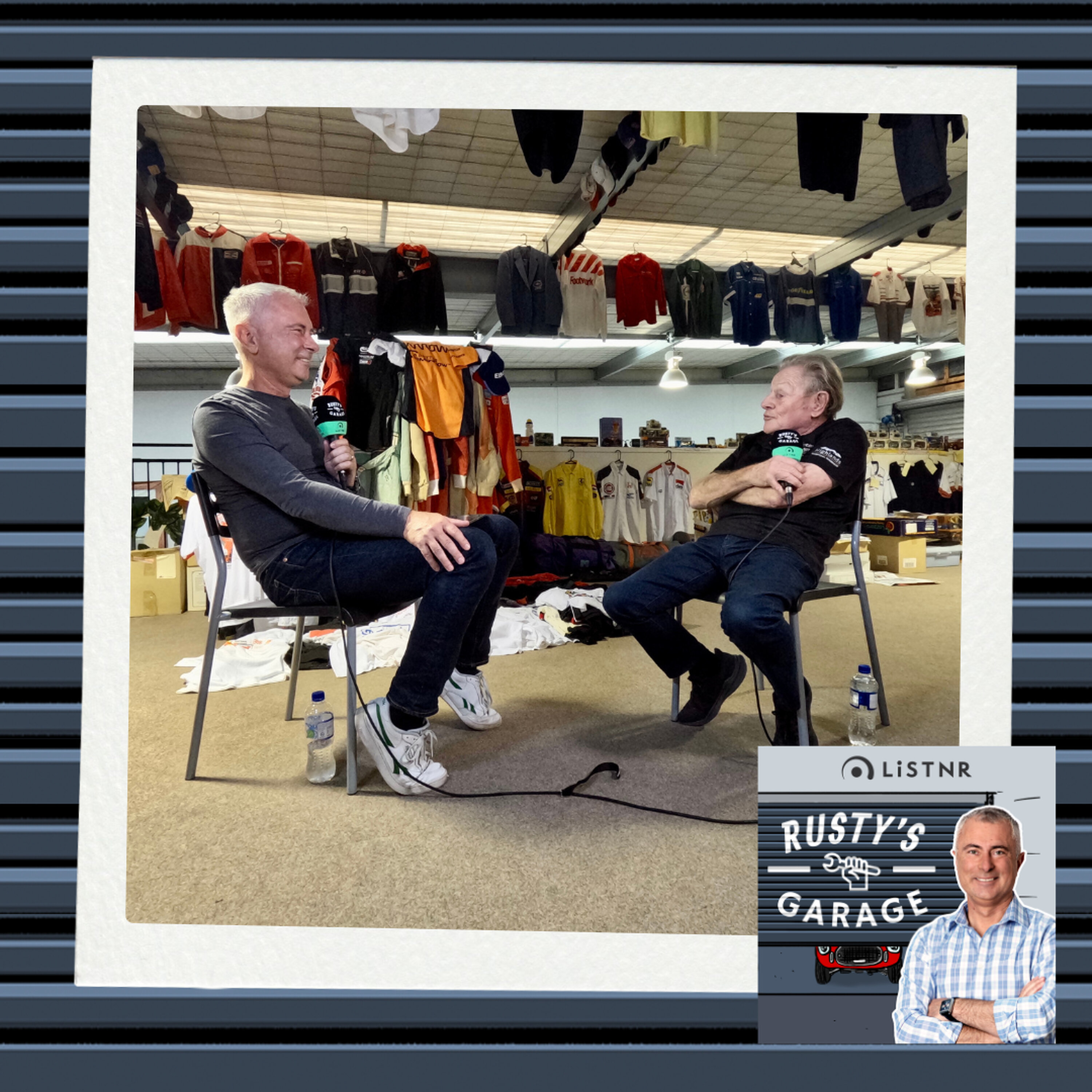
Hampton Downs is a motorsport venue near Auckland in New Zealand. When a podcast references a specific track location like this, it helps listeners place the conversation in a real racing environment.
They’re talking about the 1960s and how Ken Smith raced against famous drivers. It helps you understand he wasn’t competing in obscurity—he was up against the best of the time.
Ken Smith wasn’t just racing—he also helped younger drivers learn. In racing, having an experienced mentor can help someone get better faster by teaching them how to drive, learn from practice, and work with the car.
A “tub” is the main structural part of a race car—the part that everything else mounts to. If it’s saved after a crash, it’s because it shows how the car was built and what happened in that impact.
They mention Ken Smith’s three wins in the New Zealand Grand Prix. That’s a big deal because it means he won a major race multiple times, not just once.
The hosts discuss Kenny Smith’s interest in betting on race horses, which adds context to his broader racing-and-odds mindset. It’s a personal hobby that complements his motorsport background.
Concept
race car better
Improving a race car usually means dialing in performance through setup changes and component choices. In racing, small adjustments can make a big difference in how the car behaves at the limit.
“Driving at the limit” means pushing the car to the edge of grip and control, where tires are working hardest. At that point, technique and setup matter a lot because the car can quickly become unstable if you exceed what the tires and suspension can handle.
Concept
motorsport love
A lot of people get into racing because they grow up around cars and learn how they work. Here, the guest says his dad helped him with cars and he spent time tinkering, which sparked his interest in racing.
Car
Ford 8 Special
This sounds like a custom-built Ford based on the Ford 8, not a factory model you’d just buy off a lot. The important part is that it was modified and used for hill climbs, where cars often need to be light and quick for short bursts.
Hill climbs are races where you drive up a hill as fast as you can, usually timed. Since it’s short and steep, the car’s ability to accelerate and stay stable is a big deal.
This is a New Zealand racing series for hill climbs—timed runs up a hill. It’s a way for drivers to compete and show how well their cars perform on those steep courses.
Starting on a hill can be hard because the car wants to roll backward. People use the parking brake and careful footwork to hold the car still until they can drive away.
Handbraking means using the parking brake to keep the car from rolling. It’s especially helpful when you’re starting on a hill so the car doesn’t creep backward.
Concept
car painters
A car painter is someone who prepares a car’s body and applies paint so it looks right and stays protected. In a garage, that work often goes along with other hands-on car jobs.
Motor racing is competitive driving where people try to go faster than others on a course. It builds skills like controlling the car smoothly and understanding how the car behaves.
Topic
Pukacaui
They’re naming a specific place where racing happened. Different tracks feel different, so drivers adjust how they drive and how the car is set up.
Topic
Ardenmore
Ardenmore is another racing location they’re talking about. Tracks like that can change how you drive and what kind of car setup you need.
A Lotus Cortina is a special, faster version of the Cortina that Lotus helped build. It’s the kind of car people bought because it handled and drove more like a race car than a normal road car.
“Tipped it over” means the car rolled onto its roof. After something like that, people often try to put it back down in a way that avoids making the damage worse.
Concept
custom car conversion (Ferrari drivetrain + Morris Minor body)
This is basically a “mix-and-match” build. They used Ferrari-style mechanical parts but put them into a Morris Minor body, which is common in custom and racing projects.
The speaker frames the car story around stock-car racing days and specific drivers’ names. For listeners, this sets context for why a custom, well-aligned car would matter.
Wheel spin is when the tires start spinning but the car doesn’t really grab the road. It usually means the surface is slippery or the driver gave too much gas too fast.
Single seaters are race cars built for one driver, usually with open wheels. They’re made to be fast and responsive, so driving them feels very different from normal cars.
“Saloon cars” (often called sedans in some markets) are enclosed passenger cars with a roof and typically a more comfort-oriented layout than race cars. The speaker contrasts them with open-wheel racing to highlight differences in driving feel and vehicle purpose.
Dirt racing means the track surface is loose and changes grip as you go. The car can slide more than on pavement, so you have to drive more carefully with throttle and braking.
Topic
Ardenport
Ardenport is mentioned as the place where the 1957 accident happened. It’s part of the historical story the speaker is telling about that Ferrari and that driver. Knowing the location helps you picture the real racing setting.
Topic
Western Springs
Western Springs is named as the venue for a meeting, and the car is taken out there for driving. In the segment, it’s used to connect the historic Ferrari story to local New Zealand club racing culture. It helps listeners understand the real-world setting beyond just the big-name races.
Topic
Cinders
“On the Cinders” sounds like a nickname for the track surface or setup. The speaker is using it to describe how they drove that famous car in those older conditions. It helps you imagine the rougher, more old-school racing environment.
A fuel leak in a race car is a serious safety issue because it can lead to fire risk and immediate loss of reliability. In the transcript, the leak happens shortly before the Grand Prix, which is why the team’s ability to repair the fuel system matters.
A “fuel kit” is the stuff you need to fix a fuel system problem. The key point is that the repair materials have to match the special fuel setup on the car.
Colin Chapman was the founder of Lotus and a highly influential Formula 1 engineer known for innovative design approaches. In this story, he’s directly tied to the early adoption of a fuel-bag system on the Lotus 41.
“Towing” here is almost certainly referring to front-wheel toe (toe-in/toe-out) alignment. Toe settings strongly affect straight-line tracking and how a car pulls when you brake, especially on race setups.
The speaker describes a setup change: reducing front toe (effectively “towing them out”) to improve how the car tracks under braking. This is a classic race-car tuning approach—alignment can change both steering feel and brake pull.
This is an early race version of an Austin A40, turned into a single-seat car for racing. It’s mentioned to show how Chris Amon started out before he became a top driver.
“Lock a break” is describing a braking mistake where the wheels lock up under braking (often called wheel lock-up). In racing, that can lead to flat-spotting the tires and reduced control, so teams treat it as a preventable error.
This segment specifically highlights the Singapore Grand Prix as a recurring event the host enjoys working at. It’s a structural “where we are in the racing world” moment rather than a technical deep dive.
In racing, the paddock is like the team’s backstage area at the track. Cars get worked on there, and drivers and team members hang out between practice and races.
Friday practice is the first time teams drive the car on the track that weekend. They use it to figure out how the car feels and what adjustments to make before qualifying and the race.
The Tasman series was a famous old racing championship in Australia and New Zealand. Drivers would come there in the summer, and it was a big deal for motorsport fans.
The Malaysian Grand Prix is a Formula 1 race in Malaysia. Here, it’s mentioned as the event where the speaker ties Jackie Stewart’s story to a specific win.
Before a session, the team has to prepare the car so it’s safe and fast. That usually means checking everything and making adjustments so it’s ready to drive.
“Two litre” means the engine is about 2.0 liters in size. In racing, engine size often determines what kind of cars you’re allowed to race and how they compare to others.
A “spare motor” means the car purchase included an extra engine. In enthusiast and racing circles, that can be a practical way to minimize downtime if the original engine fails or needs rebuilding. It also signals the car may have been treated as a performance or competition setup rather than a simple commuter.
“Blew a motor” is common slang meaning the engine failed catastrophically soon after purchase. That typically triggers an immediate rebuild or replacement, especially if the car is intended for driving or competition. In this story, it sets up why the host contacts an engine specialist right away.
Jim Hall is mentioned as the person who “did the motors” (engine work) in the States, implying he was an engine builder or specialist. In enthusiast circles, the right engine builder can be the difference between repeated failures and a reliable rebuild. The transcript also shows Jim Hall communicating about the cause of failure and then rebuilding the engine.
“Over revved” means the engine was spun too fast (beyond its safe RPM range), which can cause internal damage. The host pushes back on that explanation, arguing the engine wasn’t over-revved and asking why it still failed. This is a key diagnostic debate in engine troubleshooting: was the failure caused by driver error/overspeed, or by a component issue?
“Rebuilt” here means the engine was taken apart and repaired/renewed to restore it to working condition. Engine rebuilds are common after catastrophic failures or when diagnosing root causes. The transcript implies the rebuild was done by the specialist (Jim Hall) after the host questioned the failure cause.
“Conrods” are the rods inside the engine that connect the pistons to the crankshaft. The host is saying the connecting-rod bolts were bad, which can cause the engine to fail badly. It sounds like there was a warning that certain bolts should be pulled from engines.
Company
Cruller
“Cruller” is the name tied to the bad parts that caused the engine problem. The host is saying the company had a batch of connecting-rod bolts that were defective. The engine shop community was told to remove those bolts.
Saying it’s the 70th time the race has happened is a way of saying it’s been around for a long time. It also makes winning feel even more meaningful because the race has a big history.
They’re saying it was a historic first for New Zealanders living there to win. It’s not only about winning—it’s also about being the first from that group to do it.
Topic
Formula Open
“Formula Open” is a type of open-wheel race series. The rules are less restrictive than some other series, so teams may have different cars and the setup can matter a lot.
That phrase means someone tries to use another car’s airflow to get a speed boost. It’s like riding behind someone on a bike to make it easier to go faster.
This is basically describing smooth driving. Instead of panicking or hesitating, the driver makes small, controlled moves so the tires keep gripping and the car stays stable.
The hosts shift into a career-development question: how a driver’s approach changes from earlier eras into later successes. This is a “driver progression” topic rather than a specific technical term.
Concept
build the engines in those days to 5,000 engines
This sounds like a reference to engine-building practice and output/production targets from that era. In racing contexts, “building engines” usually means assembling and preparing powerplants to meet performance and reliability goals for competition.
An entry list is basically the official roster of who was registered to race in an event. When people look back at old races, entry lists help confirm which drivers and cars were actually in the field. It’s like checking the lineup for a past game.
The pits are where race teams work on the car during the event. It’s the busy area with mechanics and team members. In this story, it’s where the driver could recognize the exact car.
Term
Repcos
They mention “Repcos,” which sounds like a brand of performance parts. The speaker is saying those cars had some Repco-related hardware in them, and they had fun with them.
Term
spotting and guiding
“Spotting and guiding” is when someone helps a driver with advice—like where to look on the track and how to approach turns. It’s coaching that can improve lap times and confidence.
LIVE
A Listener production.
I'm automotive commentator and journalist Greg Rust and this is Rusty's Garage.
For this episode I'm at Hampton Downs about an hour south of Auckland in New Zealand
at the workshop of legendary Kiwi racer Ken Smith who at age 84 is still racing.
Look back over the different eras and you'll find his name in the results pages.
Kenny went up against the greats like Bruce McLaren, Jimmy Clark, Sir Sterling Moss
and many more of that calibre back in the 1960s and he socialised with them afterwards too.
Later on he'd go toe to toe with rising Kiwi stars like Craig Baird and Paul Radisic
who were both in our library and he arguably made them better for it.
Then there's the mentoring.
He's helped and continues to help so many aspiring racers.
Over time that's included Scott Dixon, Greg Murphy, Dan Gaunt, Brendan Hartley,
Shane Wengisburgen and more recently Liam Lawson just to name a few.
Kenny has kept so much awesome memorabilia.
It is a perfect backdrop for our conversation.
From old news clippings to trophies and sashes there are brilliant pictures all around us
that keep kind of catching my eye and sparking another thread in the conversation.
Yes, there were crashes too.
He's even kept the tub from one on the start line at Manfield.
It's hanging up on the wall here in the workshop and it made me wince seeing it all buckled up at the front.
On the floor there are some seriously cool race cars and we'll discuss them in a bit more detail later.
Now the reality is we just won't get to every story, every win
or a recollection of each of the 160 plus race cars that he's competed in.
We'll cover some signature moments of course like his three New Zealand Grand Prix wins
and some of the successes abroad.
As we talk, if he shares a story or two that you think is a bit out of step,
a fraction with what life has become in the 2020s,
just respectfully remember that sometimes that's how it was back then, no one got hurt.
Kenny is genuinely a national treasure.
He's had books written about him and even a documentary movie celebrating his 60 years at the wheel.
I see this pod as an opportunity to capture a nice rounded snapshot of an incredible motor racing life
and some behind-the-scenes things that help paint more of his full picture
from the lovely constant in Pit Lane, his late mum Dorothy, always supporting him.
To funny yarns about betting on race horses, something that he has a keen eye for.
You'll also get a sense as we chat that he's mellowed a bit with age,
but the desire to make the race car better, to keep enjoying that pure thrill of driving at the limit
and to help unearth the next Kiwi star is as strong as ever.
I hope you enjoy getting to know Ken Smith.
Kenny, thank you for having us today.
I mean, typically when I do these things, they're in a studio somewhere.
It's a joy to come to a workshop and man, you have kept some memorabilia from way back to the 1950s, haven't you?
Yeah, it's just stuff, I don't know, people might think it's hoarding rubbish, but it's not.
It's stuff you can never get once it's gone and people do throw stuff away, unfortunately, and it's nice to keep it in it.
There is memories of you racing, there are great photos and race suits and all sorts of those that you have helped
and mentored along the way.
There are memories of some of the legends you've competed against, the different categories of cars that you've raced over time.
Can I begin with early life for you, if that's OK?
I'm told that you grew up, was it on Great North Road in Auckland?
Is that where early life was for you?
No, it wasn't, it was in O'Recky.
O'Recky, tell me about that.
Tell me about that.
Well, I was born in O'Recky and went to O'Recky Primary School
and from then on we progressed a certain tech in Auckland,
which was where Bruce McLaren was there at the same time I was there.
And just stuff like that, and from then on we moved out of there
and ended up going to a place in Metabank and from there to Gleninus, then Howick,
and then Whitford, and now I'm at Bombay, so we've moved along a bit.
What has been the trigger? Where did the motor racing love come from from you?
What's your earliest memory of it?
Well, I was always a car fanatic and my father was good at working on cars,
or working at anything, but he just loved cars
and I was always pulling them apart and tinkering with them.
And we decided I'd get a Ford 8 Special, which we saw for sale in Auckland,
and it was an old Ford 8 with an aluminium body
beating onto the top of a terrible looking whole thing,
and decided that we'd go and do hill climbs and stuff on it.
So my father gave me all the help in the world I needed to get going,
and that's how it started.
If I tried to even give a snapshot of the statistics,
that's going to be really hard,
but I mean one of the early standout things, Kenny, is the New Zealand Hill Climb Championship,
and you did that at age 16, is that right?
No, it was late 17.
Late 17, okay. Tell me a bit about that.
You know, when you go out to those, there was a Puka Kauai on Ostrich Farm Road there.
They had just under a mile hill climb there, and we used to go there regularly,
and there was one in Bombay as well,
and on loose middle and just learned to drive that way.
But I was always a nutter, and I loved driving,
and at 15 years right on the day I was birthday,
I went for my driver's licence at 15.
Did you?
Yeah, and I was not that good at handbraking a car off on a slope,
so my father backed the car into the wall outside the transport office,
so that car wouldn't roll backwards,
so that made it a bit easier for me to get away,
and we flew through and got the licence in here.
Great work.
And from then on I was just mad on cars.
You talked about your dad and, you know, his ability around cars,
his mechanical kind of skill.
Did that come easy to you?
I mean, you've been here today even before we arrived
and working on cars downstairs.
You clearly love that, don't you?
Yeah, I do, but he taught me a hell of a lot,
and, you know, we just, we worked together for years as car painters,
and he did mechanical stuff as well and all that.
But without him, I wouldn't have got going at motor racing.
I had a mother and father that just loved what I was doing at car racing.
Did they?
And, you know, you love them, you don't get it like that, do you?
No, exactly.
So they were, the whole family has been involved, and that was great.
And my father used to share drives with me in hill climbs
and at Pukacaui, places like that.
And even in Ardenmore he drove another little Austin,
especially we had at Ardenmore as well.
Excellent.
Some great tracks you're rattling off there.
What were you like at school? Were you?
Useless.
Useless?
If you could read my reports at school, they'd give me a hard time.
I left when I was 14, I didn't wait until I was 15.
I couldn't take any more.
And the last words the teacher taught me when I left,
he said, you'll be a bum all your life.
That's his words.
That's kind of motivation for you then.
Some respects to prove them wrong, right?
He's probably the bum, not me.
You had a bit of a friendship quite early on with Jimmy Richards too,
is that right?
Yeah, with Jim Richards, yeah.
When did you first meet him?
Well, Jim was only sort of a road driving lunatic in those days
when he started racing.
And I remember he had a, we had a car yard in Papatoe,
my father and I, and he had a Lotus Cortina.
And we ended up buying it because one night he,
I think he was boozed out of his brain and his mates,
and they jacked it backwards at a high speed
and then swung it and tipped it over.
So when it went over, they all got out and it was on its roof,
but it had damaged one side.
So instead of putting it down on the damaged side,
tipped it back on the side that wasn't damaged and damaged a lot.
So we ended up buying that car and it was sold later in Europe.
That Jim was, he was funny.
He was a good bloke, terrific driver,
and had everything going for it.
But like, like as all the kids, you go crazy on the road.
Crazy. Good, good human being.
Tell me a bit more about the car yard in those early days there
because you had some fun there along, along the way.
I'm told there were some late nights
and you might have even slept there on occasion.
Is this true?
Oh, I can't remember sleeping there.
You've been picking up stories.
Did you, did you wake up one morning with silver feet,
silver painted feet or something?
No, that was a little bit, that story is a little bit different.
I worked for a guy Garth Sooners in those earlier days
and you probably remember, he drove a Marari.
That was a Ferrari with a Morris minor body
and he was a stock car driver
and the days were Red Dawson and John Riley.
And when I worked for him one day,
I sold a car to a guy in the morning, took a deposit off him
and we had to go into Newmarket
because he had his Marari being well-aligned.
So he said there's going to be another hour or two
we'll go over the pub.
So we went over the pub
and I hadn't seen the lights of the pub
and so he ended up, we're drinking a bit
and we got thrown out of the pub
because he started abusing somebody.
And I remember that we wouldn't go
so the guy called the police
and the Remira police station was in view of the pub.
You could see it up the road in Remira on the way to Newmarket
and the cops are coming down at 100 mile an hour foot.
So Garth Sooners was such a funny guy.
He got in his Chevron Parlor he towed the car in there with
and he waited until the police got trapped
between two trams going up and down either way
and then he lit rubber up and wheel spin so we got away
but I was as mad as I fell by that time.
When I got back to work, the guy comes to pick his car up
and pay the balance.
But by that time I felt that dogged out drinking sprux
he fed me up.
I was laying out the back with a canvas cover over myself
and he picked the cover up and he painted my feet silver.
Took my shoes off and the guy came in and said to him
can we talk to the sales manager?
I bought this car this one.
I said I'll go and see if he could come out when he's out here.
So he lifted the cover he said oh there he is
no we can't just do him at the moment.
I'm lying there with silver feet.
I mean these are silly things you do.
Along the way you have countless stories like that.
You talked about the Hillclimb Championship before
that's kind of late 1950s.
In the early 60s you get in a single seater for the first time
and we are, there are literally countless photos
of some amazing cars along the way.
Some really special machines.
What is it about single seaters that you gravitated to
and tell me about that first one that you drove?
The first one was a Lola front engine from Virginia.
Beautiful looking car.
It looked like a van with long nose on it.
And we ended up racing that after a guy bought it out from UK
and ran fifth in the Wiggum race
and fifth at the Grand Prix in it, a local guy.
And so that was the car we started as an open wheeler
and I've never looked back on driving anything but single seaters here.
And when I referred to saloon cars I used to get knocked back about by guys.
I talk about them driving taxis.
I see they've got a roof on them.
But at the same time I've driven them 20 or 30 different saloon cars as well.
So very good.
But an open wheeler is something special.
Definitely.
It's not just the bitumen that you've driven on before.
I think you talked a little bit about some of the shingle there before.
There is an amazing photo of a very rare, I think, Ferrari.
And is that on the Speedway somewhere, for example?
And you're all competing on dirt there?
Well, it was the Monza Ferrari that Ken Wharton got killed in 1957 at Ardenport.
It was rebuilt here.
And we ended up, a friend of mine had bought it.
So we decided there was a meeting at Western Springs on the Cinders.
So Northern Sports Car Club had the meeting there.
So he said we'll take it out there.
So I was driving around there.
And that's crazy because that's probably a 12 million US dollar car now.
And here we were going around on the Cinders and something which was worth, I don't know,
we'd lucky to be worth $1,000 in those days.
Crazy.
So you move into single-seaters, it clearly clicks for you straight away.
And I think if the timeline is right, within two years you're on the grid of the New Zealand Grand Prix.
Yeah, we were running on the grid in the New Zealand Grand Prix.
And it was always an honour to run in those races because you had people like Jim Clark,
Graham Hill, Moss and Bradam and Holm and McLaren, all of those.
I mean, we had the biggest, and Australia had the same, we had the biggest lot with the Tasman series,
a Formula One drive which you'll never see again.
And they were ordinary people, not like some of them now.
These guys would help you, talk to you.
And it was, you know, it was an interesting day of going out.
Even though you'd get laps quite frequently, you'd drive a little 1,500 car against their ones.
It didn't matter. It was an honour to be in a race with the guys.
You have just rattled off some absolute legends and we are surrounded by pictures of many of them here.
Can I dive into a few of them?
I mean, firstly, I spotted a picture when I first walked in today of Jimmy Clark.
And people try and draw a modern-day parallel now with, say, an airton centre or something like that.
I mean, he was enormously special.
What was he like as a person?
Oh, look, he was just an ordinary person, a brilliant driver and he'd come and talk to you.
There was never any think that he was better than you, and that's the sort of guys, and they all were like that.
And it was funny, one year when he did come out, I can't remember the year,
but they had a fuel-bagged Lotus that they bought out here.
And about two hours before the Grand Prix, they had a fuel leak.
And they didn't have a fuel kit for it.
That made a mistake and I bought one.
So they'd run around, who would have a fuel kit, repair kit here?
But no one runs fuel bags.
And I'd bought a Lotus 41 and that was the first small car that Chapman had fitted a fuel bag to.
And so they'd come run and say, you wouldn't have a fuel bag kit to repair one.
And I said, I don't know, all the stuff came out from England.
I bought this car over there and they shaffled through,
oh, no, here it is, a little box, had all the glue and stuff.
And it was one of those they could repair within an hour.
And they said, we'll replace this for you, we'll fix it up, thank you.
And it took about nine months, never heard from them,
and all of a sudden a fuel kit came out and you've got to repair the thousand bags.
That's how big it was.
And then Colin Chapman sent me a letter thanking us for it and all that.
And it's just those are the sort of people that help you and you'd help them.
Even come back like Bruce McLaren, when I bought the Lotus 41, it was a pig under brakes,
darting all over the road.
He said, have you got towing on the front wheels?
I said, yes.
He said, good, tow them out.
This is the new track, time out.
And that's when, from that days when people,
everything is towed out in the front, not in anymore.
And as soon as we did that, you could take your hands off the wheel
and you put the brakes on, that's how straight it pulled on.
You've just reminded me that there's a great sort of chapter in your career,
if you will, where you had a real fondness for Lotus machines, didn't you?
Yeah, a lot of guys run Brabham's here, and they're a magic car,
but I had a bit of a kink for Lotus.
So, you know, we went from just about all the model Lotus's and Formula Junior's upwards.
And I enjoyed them, they were good, we got them working good.
And I remember saying to Jack Brabham one day when he was in Asia
and we were racing up there, I said, Jack, which is actually the fastest car,
a little Brabham or a Lotus?
He said, Lotus is faster than the Brabham, only on a billiard table, he said.
I never forget that.
There's a pick here with you and Chris Amon as well, what was he like?
Yeah, Chris was a magic guy.
I knew him from way back in the early days when he was pretty young,
he was driving an Austin A40 single seat, a special late, was made up.
And he was always good to talk to, he'd come and talk to, chat.
Ordinary guy, a brilliant guy, should have won a world championship,
but didn't, just wasn't at the wrong time in the wrong cars.
Graham Hill, you come up against him I think in one of those early Grand Prix
that we talked about, he might have won in 65 if memory serves, for example.
What was Graham Hill like?
You know, Graham was magic because they always used to have booze-ups after the meetings
and he would take the floor and he was hard to get rid of off the floor.
He'd just come up with old jokes and stories all the time.
A real character.
Oh, a fantastic guy, unbelievable.
Just a simple, ordinary guy that would talk to you,
didn't have a big head or anything like that.
Rusty spoke with Ken's friend, the great Jimmy Richards,
back in 2022 for a two-part feature episode,
which included some detail on a Gibson Motorsport policy.
When you join the team, if you lock a break or dent the car,
you owe the boys a slab.
And on the flashing light, in the light was slab, slab, slab.
Jimmy goes on to describe how Scaffy's crash in Adelaide
looked like he owned a small bottle shop.
Now back to Rusty with Kenny Smith.
Most years, Kenny, since it started,
I have the pleasure of working at the Singapore Grand Prix now.
And I thoroughly love that event.
And then in the paddock last year, during Friday practice,
just by chance, I had the most beautiful conversation
with Sir Jackie Stewart and Martin Brundle.
And the conversation wasn't anything to do with how Oscar Piastri was going,
Landon Norris, any of that stuff.
For whatever reason, we started reminiscing about the Tasman series.
Now, in the 70s, I was quite young.
I don't have recollections of that per se.
But Sir Jackie spoke so fondly of that era.
And the Grand Prix would often kind of kickstart the Tasman chapter.
And they loved coming down here over our summer, didn't they?
It was fantastic.
I mean, the amount of those guys that come here,
it just wasn't an odd one.
There was a pile of them coming.
They just love what they've seen here.
And Jackie was another one.
He was a good storyteller and full of humour.
And he started the race and finished it in the Malaysian Grand Prix when I won it.
And he said, oh, I've got to come and talk to you.
And he sat on a tire talking to us while we were getting the car ready
for about two hours because he said the guys that he brought them up to talk to,
he said they're boring.
He said, so I'll come over and talk to you.
And he was chatting about motorcars and that.
And he was great.
He was a hard case.
He could get a laugh and everything, which is good, isn't it?
You've talked about them kind of out of a car there and post-race and so on.
What would they like when you were racing them, when you came up against them
and things like that as competitors?
Because invariably, that social environment is wonderful.
But once the helmet goes on, you're all different.
When they're out racing, like all of us, you're no longer a friend around them.
But in those days, they had more powerful cars than we started with them.
But you never gave them any grief out there.
You made sure with a flag you got out of their way.
But we never had any bitches with them or anything like that.
They were great.
You have to wait a little while.
You start in single-seaters in the early 60s,
but your first win in the New Zealand Grand Prix doesn't come until the mid-1970s.
Tell us about that day, what you remember about it.
76 from memory, if I've done my homework right there.
And of all the ones you've won along the way,
is that the one that you perhaps hold in a special regard?
That was special.
To win that New Zealand Grand Prix in 76, it was something like winning lotto and more.
It was just something special.
Because I remember getting the car, we were running two litre cars,
and they just weren't quite on it with the 5,000s.
They weren't far away, but they weren't there.
And so in 75, I went to the States and bought a 5,000 car up there.
And like it was an arm and leg in them days, we paid 20,000 US for it with a spare motor.
It was the 70s.
It was Brian Redmond's spare car, and they had spare motor.
As that money 20,000 then was 17,600 New Zealand.
I'll never forget that.
And you could buy a house nearly for that price.
So at any rate, we got that here.
And when I first got it, it blew a motor and testing straight away.
And I thought, hell, so I rang up Jim Hall who did the motors in the States,
and I said to him about the motor.
And he was real good to deal with.
Most would say to you, you over revved.
I said, it hasn't been over revved.
But I'm right to ask you, why should it have let go?
And it was rebuilt.
So he said, leave it and I'll come back to you.
He come back to me and he said, within a few days, he said, we owe you a free engine.
And I thought, what's going on here?
He said, Cruller had bad bolts out for the Conrods,
and they notified us all to pull them out of the engine shops.
But there was one set left in the engine builders room.
And he said, and the guy told me that he'd pick those up and put them in your motor.
So he said, we've got to give you a motor.
And they sent a motor out for your charge.
Did they?
You can't ask for better than that, can you?
No, exactly.
But getting the car out here the first year, it was a handful,
because it was 5,000 with 525 horsepower.
And there was a lot of guys saying, oh, I used to be small enough to drive one of those.
But anyway, by the time 76 come, we got it going.
And we just about cleaned up most races and then.
And to win that Grand Prix was just something super special.
And it's something you can never forget, you know?
We're literally recording this within just a couple of months
of the 70th running of that amazing race.
We became first resident New Zealanders to win it, so which was good.
And you've gone on to win it more than once, Kenny?
Three times, you know.
Three times, yeah.
Well, I want to come to that, because it's quite a gap between drinks for them, isn't there?
Yeah, 14 years apart.
Unbelievable.
Three of them, 14 years apart.
But unfortunately, the last 14 years, I've either got too old or we couldn't win it.
I mean, to do it on more than one occasion
means that you hold a special place in the record books.
Tell us about the second one and your recollections of that day.
Yeah, the second one was 1990 in a Formula Atlantic Swift,
which I raced still today in Formula Open.
Beautiful cars.
And it is a magic car.
And we cleaned up from start to finish in that car,
and that was another magic day, you know?
But the one in the 76 always felt better.
Did it?
You know, everything feels good when you're winning.
So, no, that was good.
We had a lot of fun on that.
And then fast forward to 2024.
That's in 2004.
2004.
You do it again.
Yeah, well, that was...
They went back and used the Formula Fords for the Grand Prix in that year.
So we ran a 92 Van Diemen, and it was in the cargo.
And we got to the line.
It was by about a whisker.
There was a guy right on me at the finishing line,
and I knew he was going to try and tow down to the start line.
So I had the car that just...
I knew how to move a car around without balking and making it look obvious.
And we just managed to hold him out
and just leave that gap at the last minute.
There wouldn't have been an inch in the two cars going over the line.
How did you evolve as a driver over time
from the late 50s through to some of those...
the 1976 Grand Prix win that you spoke about and so on?
Was there a trademark to the way you went about your racing?
What would that be?
Well, it's not real.
I mean, everybody probably did the same type of thing to get going.
But, you know, we were dedicated to wanting to go and do what we did.
And like I said before, I had my father and looking after a car.
And that was the sort of thing that helped
when you got so used to build the engines in those days to 5,000 engines and all.
And we just kept progressing.
But every morning, when there was a meeting coming up
and the day before, you couldn't wake up early enough to get to the meeting.
OK.
Yeah, it's just one of those things that we were crazy and mad about getting to a racetrack.
Loved it.
You still today.
I think you got here at some ungodly hour this morning to work on the cars.
I know you still have that.
Yeah, I get down here about eight each morning, so...
Do you?
Yeah.
One thing we didn't talk about before in rattling off, you know,
the kind of roll call of some of those great international races.
I guess as a part of that Tasman series,
there was that strong Aussie versus Kiwi mateship, but also rivalry at times.
What about some of the Aussies that you've come up against over time?
And I mean, I look back at some of the results and entry lists from different events in the 60s.
I mean, there's Lex Davison in there, for example.
Frank Gardner was another...
What were some of the Aussies like that you've come up against?
Yeah, no, they were good.
We had no trouble with any of them.
They were nice people to talk to, you know.
And Gardner was...
He was a hard case, because I was the Lotus 20 tour board out of England.
He came up in the pits and he said to me, this was my car.
And I said, how would you know that?
He says, the only Lotus has got an extra two inch square box section around the cockpit.
He said, that's the car.
And we fitted that.
Is that right?
Yeah, so we've become good friends after that.
Did you?
Yeah.
But they were good.
I was like some Max Stewart, Kevin Bartlett and Johnny Goss and them guys.
But they were all there and you'd have no trouble getting help from them.
If you needed some bits or something like that, they'd be there.
You mentioned about the fondness, if you will, for Lotus cars before.
There are a couple of Aussie linked cars that are up on the wall here.
I mean, I think about the Mattage, for example.
That's one of them, isn't it?
Yeah, a Mattage A50.
Yeah.
That was a good car.
It was one I actually bought to sell because I'd already had a luller at that stage.
But when I got that car, I decided I'd take it out and start running it.
And it was good.
It was a nice car to drive.
And then I got the Elphin, Gary Coopers.
Coopers, yeah.
His own one that he actually used himself.
And that was a good car too.
Okay.
So there was nothing wrong with them.
They had Repcos in the back of them set of shifts.
Okay.
So we had a lot of fun in those.
That's the end of part one of my overdue podcast chat with the legend, Ken Smith.
That's not a good enough word for him because his career is so comprehensive.
There is a lot more ground to cover and that is all set for you to enjoy right now.
Part two is all done and loaded up in our library whenever you have the time.
Jump back to the garage, then hit the go button and let Kenny tell you about spotting and guiding
some modern day stars and how he helped steer Scott Dixon, Greg Murphy, Shane Van Gisburgen
and many more in the right direction.
The iconic cars he's tinkering with here in the workshop.
And a few rare moments swapping his trademark single-seaters for a saloon car.
That's all ahead here on Rusty's Garage.
About this episode
Ken Smith looks back on a racing life that began with hill climbs, a home-built Ford 8 Special and a father who taught him the mechanical basics. He recalls racing against legends like Jim Clark, Graham Hill, Bruce McLaren and Jackie Stewart, plus the friendships and help that came with the Tasman era. The conversation also covers his three New Zealand Grand Prix wins, his love of Lotus cars, and a few colourful off-track stories from his early days.
One of the all time greats of Motorsport from the Tasman region is finally on the pod. Ken Smith has been racing since 1958 and he’s still going! The family’s love for another kind of horsepower and how Kenny would sometimes hold up the motor racing schedule to check how his horse went. Competing against (and socializing after) with some absolute legends of the 60’s and early 70’s….Graham Hill, Bruce McLaren, Jimmy Clark, Jack Brabham and many more. His gravitation to single seater racing and winning the prestigious New Zealand Grand Prix for the first time in 1976. He then had an agonizing 14 year wait to do it again in 1990 and then another 14 year gap to his third in 2004. Even at age 84 Kenny is still razor sharp and the memories that surround us in his workshop where we recorded make for constant conversation starters. How he helped bank roll a good portion of Roberto Moreno’s summer of racing in NZ without dipping into his own pockets. (You can hear more about this in Roberto’s Feature Ep in our library). And a friendship with Jimmy Richards that dates back to their early days. We won’t get to every one of the 160 plus cars he’s raced but the chat gives you an incredible snapshot of a life lived at full throttle. Head to Rusty's Facebook, Twitter or Instagram and give us your feedback and let us know who you want to hear from on Rusty's Garage