Whatever this is supposed to. Be yeah, the casting bench.
The casting bench. Damn that's some fucking shit.
I heard there was a gang bang in Pasadena.
This is Hart Parking. Brought to you by right Honda,
right Toyota out of Scottsdale, AZ.
I'm your host Jay Fitting reporting from my home studio in Gilbert, AZ. Just got back from California,
went to SoCal. So Honda corporate does their
cars and coffee. Well, they call it cars, bikes
and coffee every other month. So this is the second time I
went out there, but went out there with Mike and Nate and a few other people from Arizona, decided to take that opportunity and go over to Lamar Lion's house.
Lamar is a friend. Lamar is in the NSS community
and we've been talking about doing this for a while.
So I'm glad we were able to make the trip.
So that is what's coming up on this episode.
But first, Honda has successfully launched a reusable rocket. But pump your brakes a little
bit. So the purpose of this is to
eventually build a sustainable reusable rocket and officially enter the space race. Kind of excited.
Yes, the same Honda that brings you weed whackers, lawnmowers, dirt bikes, generators, cars that aren't lawnmowers.
Yes, that Honda, the Ossimo robot, that Honda has launched a rocket. The rocket flew for 57 seconds
and it landed within 15 inches of where it took off.
But here's the thing, it's only 21 feet tall.
The SpaceX rocket is 400 feet tall.
So you're playing a boys game, but that is a successful launch.
It reminds me of the Rockets that they used to sell when I was a little kid. There was no Nintendo.
There was barely Atari. Forget social media, forget
iPads, forget any of that stuff. You would go to the hobby store
like Michael's, RadioShack. Some of you, I think you all
know what RadioShack was and you buy these little rocket boosters and you would spend all day making it with your old man and you shoot them in the sky, they would land and break into 12 different pieces and that's money gone.
So this Honda rocket just looks like a big version of that.
But it's exciting to see them do it anyway without further nonsense after this word from Sparkforge, AKA Arcus Foundry, Lamar Lyons, business tech filling wack.
Too many tools, too much chaos, not enough time.
Arcus Foundry is here to fix that.
With Sparkforge you get a unified platform that connects everything you need, your website, social media, phone systems and more. There is no need for an
expensive IT department or dealing with a bunch of separate systems. It truly is the all in one
solution that saves you time and helps your business run smoother. Head over to arcusfoundry.com
and use the code Hard part to get your first month free, upgrade your tech and get back to business.
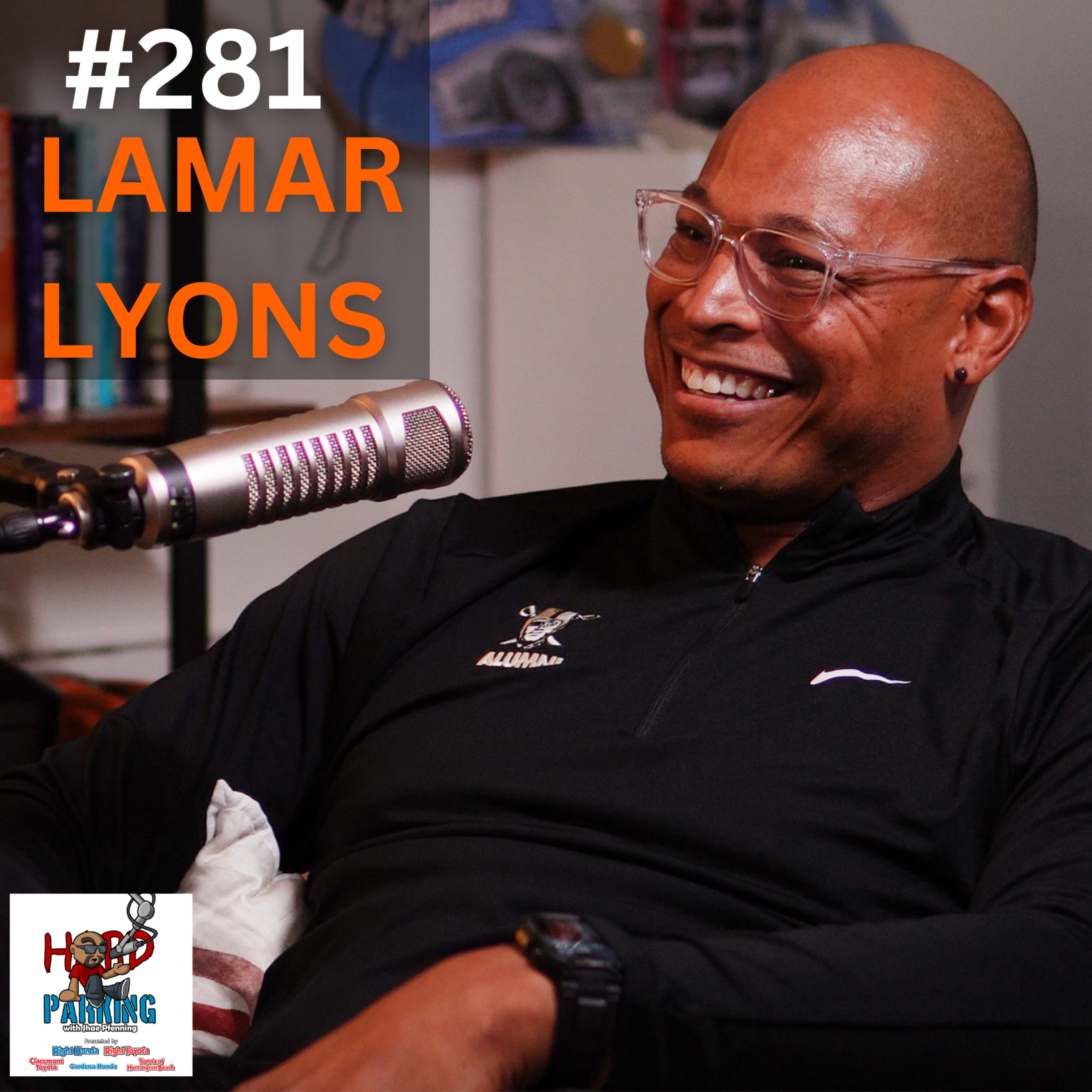
So Speaking of Pasadena, we're out here in Pasadena, CA with Lamar Lyons, good friend of ours.
So we just drove out here, NSX fam.
There's so much more to you than that.
And so that's what I want my listeners to learn about today and then even myself. So I think we should get started
with You're wearing a. Yeah, I got the Raider alumni
shirt on. I played for the Raiders in the
late 90s, ninety 596. And you know, it's one of those
organizations that is like no other because they wrap their arms around you. They really celebrate their
history and the players that made the brand over the years.
And so they take care of us that little Wellness weekend.
They do all kinds of physicals. One of the better organizations,
definitely. And you went out there, I think
when they moved to Vegas. No, I was.
No, not on the team, but I thought I saw you go on a trip or some sort of there was some sort of an alumni.
Thing Yeah, yeah. So every year they have an
alumni weekend and they'll invite all the guys out.
They put us up and it's just a freaking red carpet, you know, roll everything out, type mix. And then you, you know, you see
all your guys that you haven't seen in like 1015 years checking on them. And then it's a good, a good
Little Mix. Yeah.
So you also spent some time with the Ravens, I believe?
Yes, I was at the Baltimore Ravens.
This is during Ted Marshall Brode's last year.
Like Ray Lewis was on the team. Priest Holmes was like fourth
string running back you had. Who else was on that team?
Michael Jackson was the, you know.
As a receiver. Right.
Yeah, receiver on that team during that time, that was noteworthy, but it was really a Ray Lewis type show for sure.
Yeah. Do you dial into football as
much now that you're not in the sport?
Because I know you did. The UW, you guys won a national
championship. There's a picture of you back
there, 25. And then, you know, I have
friends that were, you know, in the sport or in the league.
And the further they get away from it, it's almost like, well, I don't watch that anymore. No, I, I watch the game, but you
know, I watch it more in the playoffs.
I watch regular season, you know, but I'm not running to the TV to go check it out, right? And I'm not following, you know,
who's the upcoming guys out of college.
I don't play fantasy football. You know, that's like
definitely. I didn't even know what
tailgating was when I was playing, right, right.
You know, I'm playing on the field.
So, you know, post football, getting reintroduced to the game and the fanfare was really cool. But for myself, man, you know,
playing football, really the whole purpose was to get school paid for because Pops was like you, you can get 2 tickets either academic or an athletic and we know that you're not a scholar. And so, you know, you can play
the sports thing and be good in school and then there you go.
And so that that's what that was.
And so going to the league was just icing on the cake for me.
You know, I didn't get drafted. I came in as a free agent.
My parents was like, you know, give it a year, son, if you think that you can make it, go for it.
And you know, Washington at that time, I went to University of Washington, the Huskies. We played in three Rose Bowls,
won the national championship, one of the most highly touted college teams of the 90s. And during that time, played
across a bunch of video game platforms from Sega to Sony PlayStation, all the Madden, NC 2, as if you switch on #25 I'm fly, I'm dope, you know, catching interceptions, two kids. It was number. 25 There was no
NIL deal back there. No, no, there was none of that.
You weren't getting that. You know, they they broke us off
a couple dollars later on, but nothing to the extent of what they made off of the game for sure.
But I I'm really happy to see that cats are getting paid finally for their imaging and what they bring to the sport and the school and the brand for sure.
So you said, OK, we can go for the education, which I think is key because there's a lot of kids that don't.
That's yeah, that's a very mature mind 'cause it's, you know, if we could all go back and and talk to ourselves, you know, who knows where we'd be today at that age?
Like where did that come from? You know, the whole academic
thing was really boring of this notion that you got to be better than your parents. And unfortunately, my parents
had both went to college. They had become politicians.
They became public figures. They worked in finance.
They were sheriffs. They became attorneys, you know.
Unfortunately, because of the goal posts, yeah, I was.
So high God damn, like how, you know, I got to be president up in this joint to, you know, to make that, and that was always something that kind of loomed over.
But you know, one of the things that you do is you just continue to play the game, right? And just things develop.
And I, I think as a kid I was kind of like a dumb dude, but not in dumb. But I didn't really focus on
what the outcome was. I just did the activity right.
You know, when I was coming up, my pops told, you know, I asked my dad, you know, hey, how do you make friends?
How do you become popular? I was like elementary school,
'cause I was having a hard time. And he said, man, just go to
school and play ball and everything else will come.
I was like, OK, go to school, play ball, get free, all right, go to school and play ball. He wasn't wrong.
And you just happened to be really good at it.
Yeah, it was just a thing. Like I was a baseball player.
My dad was a baseball guy, so I played baseball.
Was a catcher, third base, center field.
You know, I had 2010 vision. Don't got it now.
I had a hairline. Don't have it now.
I feel you. But my dad, when we were
playing, watching the game, he's always running his mouth.
I'm like, dear Lord, like, man, just shut up.
Can we just watch it? Just enjoy it?
So I started playing football. And the thing about football is
not as the Ness as baseball is. And so with football, it's like
controlled violence. You can light your hair on fire
and cause a wreck. And, you know, my dad flipped my
switch in terms of playing football made me aggressive.
I was just a big funny kid. Yeah.
But you were good enough to make it to that level, which is rare because you know, some kids want it so bad, but they don't have it. I was, I was always a big kid in
my grade and I was a year ahead of myself.
I graduated at 17. I wish I was a year back, right?
But I was just a a big dude. But there was always bigger
guys, right and then I was blessed and six, three, two, 15220 coming out of playing ball.
You know, I had like a 37 inch vertical.
I ran a 443 right. Wow, it was coming down in the
hawk. Yeah, so.
Did you get so did you go to college as an athlete or as a position? I went to school for as a
safety. Yeah, bringing the hammer, extra
man in the box, you know, like quarterback of the defense.
Got to know what everybody else is doing because you got to make sure they get lined up and you get graded.
In football, every game has a grade and you have to average, you know, like 94 to 96%, you know, if you want to keep a job.
Yeah, a lot of people don't know that.
No, I didn't know that either. It's the academic.
I think about I think about Madden ratings or NCAA ratings, yeah, where they. Coach is grading you?
Yeah, you know, he's, he's watching you intently.
So when was the last time you played ball?
I retired after the 99 season. So how did you get here?
Because recently a video came out with being a sex.
You know, we're we're intersex guys, you have multiple cars, but we met through cars like most of my relationships.
How did you get to this point? Here, man.
My uncle, my uncles were car dudes.
My dad bought cars and had cool cars, but my uncles were really car dudes. My step pops was a car.
I was all the dudes in my life were all car guys.
But my uncles were really the ones that I followed 'cause they're only like, what, 15 years older than me.
So, you know, they were teenagers and I was just hanging out. Yeah, yeah.
What were they rolling like? What are some of the cars you
remember the most? TR sixes right?
They used to roll Benzes with the rag tops, hydraulic lifts and everything. Just stock.
The there was a year that they had the hydraulic.
They would have laid out Vega back in the day with the wide body kit. They were in the motorcycles.
My uncle had this teeth. This Kawasaki was turbocharged
and everything and it scared the dog shit out of them.
My uncle had a turbo P car. I got the NSX because of my
uncle. So both of them so So what
happened was this is like 94 really that that's what it was.
It was 94 against a state. My uncle bought 94 NSX.
It wasn't even it wasn't 92. It was 94.
And you know, that whole story at Arizona State doing 150, taking his hands off the steering wheel and, you know, he took me for a ride. It was just super smooth and
super like space age, you know, white with the black Dome top, like whoa. And I always remembered it when
I got back to school, I saw the Berliner Green with the tan interior. This Asian dude whose parents
owned the Domino's Pizza right there on University Ave.
He had one. I was like, man, I was balling,
you know, I was rolling like a six tray Chevy Impala on the DS with the Fleetwood white top. It's.
Very nice. Yeah, yeah, yeah.
So I've always had whips like I was always had two cars, you know, my daily and a whipper and all through college.
A whipper. Yeah, yeah, yeah.
You know, from Volkswagen bugs to 240 ZS laid out when I was playing in the league, I never brought a new car.
It was always old schools. Z That's smart.
A5 yeah. They wasn't giving credit out
back then, you know, it was hard so.
Yeah, and the money don't last. People.
People get in, they get their first check, right?
Yeah. What if?
What are some of the things you saw?
Yeah, So what happens is, you know, if you are part of the draft and everything, you are guaranteed to be in the league around two to three years. Especially back then, Yeah,
everywhere. The rookie bonuses.
And, you know, if you didn't get drafted, you come up as a free agent, you know, you had to make practice squad.
And at that time, I think that league minimum was like 60,000.
My first contract was like 133. My last contract was like 220.
You know, and people don't know, but you got to make the team to get paid. So you're chasing the goal of
playing on a team. And you have to have made a team
so you can have the money to last for the journey.
And so coming up as a free agent, it's harder, right?
And you know, the old dudes that I was playing around, the Eddie Anderson's, Lilo Lang's or Lorenzo Lynch's, these, these Southern casts, they didn't get hurt.
They was like old school, but they were healthy.
They were eating well. So, you know, you had to make
your money playing special teams.
And So what ends up happening, you get cut and you're using the money that you made to support yourself.
Training, working out can't really work because of the commitment level. Sure, Yeah, Yeah.
And that's where the money gets spent.
I think by the time I retired, I had enough money for around another four years out of the league.
And I was blessed that I had met some really good people in Baltimore. And I got my first corporate
sales gig in telecom selling DS threes and voice over IP before it was even a thing. And.
So from what I've known hanging around with you, your personality is usually the biggest one in the group.
Where does that come from? You know man, like.
Do you have any enemies? Are there any?
Are there any Lamar haters out there?
I find that impossible. You know what, I really don't.
I mean, there was only one in my lifetime.
And but other than that, man, I, I pretty much get along with everybody. I mean, you have to be a real
asshole for us not to get along. And I'll call you out on it.
I'll tell you, you know, like you dripping.
I must be doing all right. Yeah, you, you are right, man.
We'll be kicking it. But yeah, a lot of that comes
from playing ball, being a safety, being ADB, being a leader, still being a teammate comes from being the first born.
It comes from having parents that had high academic academia.
And you had to really make a case and be able to create the vision as to why you wanted to go somewhere, why you wanted some money, why you wanted this. And then when you couldn't get
it, you had to be resourceful. And so all of that growing up in
the hood in the 80s, in the 90s, you know, I was a big kid.
I was smiling. So I was always going to get
punched first. So fighting wasn't a big thing.
And and I took a lot of my frustrations out in the football field. So I I think and I always
switched schools, I was always moving around.
So I was always kind of a single child, but not but very comfortable in my own skin, going to different cities, being on my own step out. Then you have siblings.
Yeah, how many? I've got 3 younger brothers and
a sister. My sister is the same age.
My youngest sister is same age as my oldest daughter.
And the difference between my youngest brother and I are the 21 years, which is the difference between myself and my pops. OK, yeah.
And then my mom had another son, Louis, so we are like half brothers but full brothers because we grew up together.
And he's my younger brother, but he's bigger than me.
Yeah. He's like a big baby Huey, like
64270, you know? Yeah.
He played hoop because he didn't want to live in my shadow.
So he made his own way. Like you're you're a pretty boy.
I was like, well, fool. You look like Sergeant
Slaughter. Shout out to Sergeant Slaughter
and the GI Joe reference and old wrestling reference.
You had mentioned becoming a or being a leader, you know, and I'm I'm going to ask you a chicken and an egg style question because of the type of person you are, your personality. Do you think leaders are born or
they made? Not everybody's meant to be a
blacksmith, not everybody's meant to be a Rhodes Scholar.
Not every great coach was a great player and not every great player made a great coach. So I will say that leadership is
about being able to relate as the number one capability and component in order to be able to get people to do more than what they believe. You have to be able to relate to
them. You have to be able to recognize
them. You have to be able to coach
them and develop them, and you have to be able to frame the dialogue the right way in a courageous conversation.
And so, you know, creating that environment, that framework, it takes experience and skill, but on the other side of that, as you're learning it and it becomes you, that's when you get to be able to flex your potential and be able to adapt and move in different ways as the as the environment has caused, which is a big deal. Pre pandemic versus post
pandemic, people were in the office, then they were remote and you want them hybrid. All of those dynamics make it
difficult to lead because the people are different.
And so if you don't have a pulse on that, it is a huge challenge to really be able to inspire a team.
Yeah. Yeah, it's an excellent response
and there's so many places I can go with that and take a deep dive. But what it sounds like the
answer to the question is you're a born leader or you're not, but but you need some honing because I would say there's different types of leadership, but I don't think that's the same thing as being a leader. Would you agree?
Yeah, that that's true. I mean, you either God or you
don't. You either are a kingmaker or
you want to be the king. You know great leaders are king
makers. Not everybody can be an
astronaut. No.
When we're growing up, that's what they say, right?
You can be whatever you want to be.
Well, you you kind of can't. You can aspire to be right.
Right. But not everybody can be a
fighter pilot. Yeah.
Not everyone's born perfect vision.
Yeah. Reflexes.
But then you know, next thing you know, you're an engineer, you're building the stuff. I don't think anyone everyone
could be an engineer either. Like, I'm not the sharpest knife
in the drawer, but I'm not a chicken nugget short of a six pack either, right? Right.
But I went to school and a lot of people think I'm really smart. I'm not smart, but I'm good with
people and and I can't program my way out of a paper sack.
I failed all the programming classes I had to take for my degree, but I still graduated with, I don't know, 3.9 GPA.
Right at college level, but I just.
Some things I just can't do for you.
What are some of the biggest challenges that you had in your professional development get to this point?
We're going to get back to the cars too 'cause we kind of skirted and then we we slid off of that.
I think the biggest challenge is the challenge of being a Black male in corporate America. Also, because most Black
professionals lack access and they lack mentorship and guidance because many times when you get into that corporate space, there aren't many people that look like you.
And if they are, for me, they were in operation.
They weren't on the front lines in sales or in marketing or whatnot at the time that I was coming out.
There might be like one or two others.
Having 2 Black dudes on one team is unheard of.
And that's just real. And I remember I shared that
with a senior leader of mine and he's like, Oh no, Lamar, that's not how it is. And I was like, OK.
And then there was that's. How it is to me, right?
You know, that's my right, right?
That's my reality. And then there's this moment
where she has a real scenario happen and she's like, Oh my God, it is like that. And I said, look, you're from
the East. You're a woman.
What the hell do you know about being black and being a guy in corporate America? And you've been able to rise to
the occasion, be a leader and all that.
And so when I share these things with you, I'm just speaking truth. I'm not going to sugarcoat and
lie to you. I'll tell you when your name
tag's upside down. And so those are some of the
dynamics that don't always promote black leadership, but more in there has to be that relationship.
You have to have caught the interests of a particular leader to bring you along. If that doesn't happen, you just
sitting there driving revenue. Yeah.
I think I've seen that with two different approaches.
You know, you, you, you get into those levels and it's like, hey, that's somebody looks like me. Let me let me teach them the
ways. And then there's also I'm the
HNIC. You're not, you're not going to
take what's mine from a competitive aspect, you know, Have you encountered either or both of those?
You know what, no, I have not. Probably early on I had a, a
female leader that was like a little off a rocker, you know, mixing business and religion, wanting to pray in the meetings and then tell him praying about me.
And I'm like, what the Hell's going on?
I think that was the only time. But other than that, I knew very
early on there's only two ways to advance.
One is by tenure, right? And the other one is by
knowledge. And I came out into the
workplace at 30, so I didn't have the time.
So I just had to get the knowledge.
So I became an academic in terms of what it was that I was doing or how I was selling, and that was how I developed my own self because I didn't leave it up to the next person.
That wasn't my experience. That wasn't how I was raised.
I'm truly Gen. X I'm analog.
You know, I can pick it up. I can figure it out.
I took calculus in high school. I was at honors classes, you
know, I was. Part of the name.
Pre business major, I didn't get a three nine.
No, I had to drop out a business major because I was only busting like a 25 and you need a three two to get into the School of Business. And so I ended up becoming an
English lip major because I enjoyed reading, I enjoyed writing and I discovered that. And, you know, I just kind of
leveraged that as my way of if I can learn a playbook in six weeks and know it and go out on the field and do it without thinking, I can come in and I can learn the job and your products and your service and go out there and deliver it.
Florida State, not a big deal. And I think that's one of the
things that a lot of people don't understand about me early on in my career, especially in sales, because the way I equate sales is kind of like football. Football is football is
football. The only thing that changes
between the teams is the philosophy and the acumen of the playbook. But the game itself is, you
know, very much all the same. And so I look at sales very much
the same way. Every organization has a certain
philosophy and every organization has an acumen around their product that you have to pick up and learn.
That's it. And that has been the kind of
the magic sauce of being able to traverse multiple industries in sales. So you've been doing a lot in
sales. Yeah, I think currently you're
doing sales with the guy behind you who who's clicking the mouse and every single click is probably going to show up in the podcast. You know, How are you helping
him expand his business and reach new levels?
Yeah, that's a great question. And what has happened is that I
separated from a job. It truly takes three months to
off board from a job and get everything together about yourself. And during that time and into
that following three months, I did a lot of deep work on myself because I saw this IG posted. Why do you said you know cats
are like working hard to be great at their job?
Hold on, hold on. So you said something that's
kind of important and I want you to kind of explain for the viewers and the listeners, you know what that means?
Because my initial thought was when you said that three months to off board, I'm like, well, that's if it's a nice departure.
Otherwise you get fired every two weeks.
But you're talking about that transition, right?
And you explain. That process.
So I was laid off and I was the top dude.
So it was very unexpected and there was like probably a half a year where my performance was falling, but we were in really trying times pre election. You know all these things that
happen, but you know, when you don't have consistent leadership year over year, things get lost in translation.
And so I found myself on the chopping block.
Like man, what the hell, They got it wrong and they did no big deal. So what happens is when you
separate from a job, you have to one off board from your computer. So if you've been on a job and
you're using a company's computer and it's been 3-4 years, you always want to make sure that you use your own computer because taking information off that computer.
If you're separating, like get your stuff, pack your box and go. Or you know what, take your
time. You got a couple weeks, you
know, help us transition away. Is is different, right?
I didn't have that. I had like 20 minutes to get my
stuff so apparently they were scared of me.
So by the time you were walking out of the when you were headed to the conference room, somebody else was headed.
To you get this? It's remote, yeah.
So, you know, you get a call, you show up on the Zoom and it's like, gotcha. Oh, so HR is here, you can't log
in or? Nothing.
And that was the thing, you know, they gave me like 20 minutes. And so there's that.
And then there's a notion of your health benefits.
You got to transition that. You have to figure out what
you're doing from unemployment to disability.
How are you going to make this transition and pay your rent?
Then it's about realigning all of.
That you could have sold the NSX.
Yeah, I could have, but no way. But you know, you have to have a
a game plan. You got to have a playbook for
when those things happen. And as a sales guy, those things
happen regularly. So I have a playbook that I go
to and that I run to be able to make that transition and not have to take a job, to be able to find the right role for myself. And it's worked out for me
through and through, yeah. So what are you doing to for
Nathan here? Oh, yeah.
So what, what ended up happening was I, you know, I really just started doing some deep work. I've been working with AI for
probably about three years now. I was a user and as a user I
ended up becoming a creator and then I found myself running circles around my colleagues in terms of how they might be using AI and how I was they were using the free, I was using the paid.
There's a big there's a big difference.
Yeah, they were using chat. TBTI was making my personas.
I was tailoring them. I had a team.
What do you mean by personas? Because AI is the big thing
right now. And I've barely touched on on
the podcast, my social media. I'm always, you know, sharing
stuff that's AI and I think the first thing people think of when they think of AI is the sex robot or Skynet, right?
Yeah, Nate's back there laughing.
I mean, let's write that there's all the fembot fantasies, right?
You know, you and or they're going to come and take everybody's job and it's just going to be like wall-e or some of these things. We just have a bunch of fat
people that have all these things and all these computers and automation forum. You know, that's a very vague,
that's a huge thing I just threw out there.
There's a lot to unpack, but you've been in the space for a while and you know, one of the pods I listen to, they talk about AI often is when it's, you know, relevant, which it's very relevant now. And a year ago they were saying
we weren't technically even up to version .01.
We see the stuff, we see the ChatGPT people trying to cheat on their tests. We see all this, you know, make
this fun picture with, with, with prompts.
But that's nothing compared to what it's at today and where it's going. You know how you know what got
you into playing around with AI? Yeah, I had a buddy of mine and
I was in lending with name was Mark Looney from Florida.
Super savvy dude, like 6/4 Irish dude, blonde hair and blue eyes.
And when I met him, I was in lending.
He stepped into place and it's like, oh, this dude Mark Looney from Georgia, he's a big time guy and there's always one, always one cool ass white dude and he was AG dude, right?
He had the cigar cuff I. Know one, right?
He's back there, laughing and clicking.
But he had the cigar cuff link. Oh, nice.
Yeah, he was done. You know, tailored shirt.
Like I was like, look at his shoes.
I was like, I hadn't seen that print before.
I was like, man, I like those shoes.
He's like, oh, you do. There's Stingray.
I was like Stingray, like, yeah. And I got the belt to match,
like, damn. And the wallet.
And then he, he kept this kind of.
I was like, I just sat back. I was like that motherfucker
bad, the motherfucker. Right, right.
So we became boys, man. We hung out tight and he would
always, we would always stay in touch.
And you know, you, you know, people are real because you're able to stay in touch. I met a lot of cats through my
professional career. And we'll be cool in the
workplace, but you separate from the workplace, they don't want to call you back that part. And so you know how to weed cats
out. But Mark was just a real dude.
You go to lunch with him every day.
Right. Yeah.
Six months after separation, Nothing. 0 But now Mark and I
always talk man. And you know, he, we met in LA,
he moved back to Florida in the, in the boot in the crisis, you know, born and boomed dining, the bust of finance.
And he hit me up one day he's like, man, I've been doing this, this AI thing. I put in my 10,000 hours and I
think I'm really on some shit. I'm like, what the fuck is that?
You know, 'cause you just heard about it with the kids and homework and school. I I really wasn't on it, but he
educated me. He put me on and and I had that
thirst, that understanding. And I was at this point in my
job where I was like, man, yeah, I I need every competitive advantage I can get. You know, a man on top of the
mountain didn't crawl there. And I'm trying to stay there
long as I can. So what's happening?
And he had made this persona or this bot, and he would name them. He would have them name
themselves so that he could keep track and have conversations.
That's wild. These personas were built for
purpose. The first one was like, excuse
me? A language person can tailor
languages to any audience. Write this narrative, write
that. I was like, that's cool.
And he gave me that matter of fact.
Here are the instructions. Here's how I wrote it.
Take a look at it. I'm a language person.
So I started seeing the pattern and how he was developing the, the instructions and the run on sentences.
And I was like, wow. And so I, you know, I started
using Emmy, helping me with my emails.
And he's like, oh, I made this marketing gal try it out.
Oh, OK, so I'm using language, I'm using marketing.
Oh, you know what, I also got this sales profession.
Try this out. And I was like, wow.
And then he started showing me how to think about building the instructions. And I started thinking about, I
was already in learning and development, building behavioral, behavioral science backed learning and development programs, the Fortune 1, Fortune 5, hundreds.
I was already on some neuroscience stuff.
So I really started going like in this hole and really thinking about it. And what ends up coming out is
you begin to understand that AI is a tool.
And just like a hammer and chisel in the hands of a handyman can make a nice tree house.
But then when you put that hammer and chisel in the hands of an architect or a sculptor, things begin to change.
And that's kind of the difference of what you're seeing and how people use and leverage AI.
And so I always tell people, when you get into AI, get into AI around your own expertise and that is how you want to approach it. Don't approach it from the
stance of monetizing, but approach it from empowering you to be better than who you are and understand that it is a collector of data. And the better that you can
construct it, tailor it to give you and grab the data.
But you have to be a subject matter expert to understand how to ask the question, how to drive that second third level understanding and then proof the work.
So it isn't just taking answers when you are actually using it for something that you're an expert in.
It takes on a whole nother dynamic because you know it, but it's also schooling you on things that it would have taken you a couple weeks or months to coalesce and then you had to connect the data points and you had to really become an academic on it. So this immediately puts you
there. So I can take a senior manager
or director and I can make him CEOCFOCMO because he has.
AI tools. Right.
Because you know when you have access to the data and you know how to get it, you know what you want, you know what it's supposed to look like, and you come from pedigree and you've worked for organizations that are highly mature.
You know you've seen it, you've done it, you've felt it.
But what happens is that was holding Black professionals back was access and mentorship. So I've developed my own access
and my own mentorship and that's how I was able to grow myself to help Nathan, to help him drive his go to market strategy, to help him understand how to engage his audience and work on his own inflection, to get compelling tone and frequency.
And these are all little nuances of engaging people.
You know, you either have a high EQ or you don't.
You either want to or you don't. So a lot of this is is time
experience and also just persona, who I am at its core.
And so when I create a IS, it is me.
And it is me giving it cognitive synthesis to read between the lines and to really be able to ask those second and third level questions that pull you along and what you're working.
So give us like an example, because you're talking about these different personas and so people may not really understand what you're talking about, so. It's.
Would you say that in the very fundamental basics of terms, people are probably thinking about Siri?
Yeah, so, so here, here. Here's whatever that other one
is. Here's a great example.
I was at my boy Mark Marcelle's house who does the cosmic delic down right. And you'll if you see my page,
Elmar Mackin, you'll see these different spots where he and I are interviewing and we bring AI into some deep conversation and a friend of his has an AI he worked for the ID was the Israeli defense whatever and because.
I'm thinking like, I'm thinking like Jarvis MCUAI.
Yeah, no, this dude came and brought some higher learning, higher intelligent, you know, historian that was up on current events and was a predictor of futures.
And that was mind blowing. The things that came out when
Mark and I were questioning it were like, and I when I left his session, I was like, I want one. I was like, I want one, Yeah.
And I went in the lab and I made mine.
Her name is Phoenix Cosmos. She's dope.
And I gave her the power of numerology.
Well, hold on. You see, you went in the lab and
majors like, what does that? Mean.
So what that meant was like I went and I thought about.
SDK that you have to configure. I don't even know what SDK is.
Software development kit. No man, it it is about
understanding the person, the role, the function, the directive and its underlying purpose, right?
Once you are able to understand that, then it comes down to competencies and behaviors and being able to articulate that from a language. It's not code, it's language.
Write that shit out. That's why being a subject
matter expert is so much, because it's like, I know what it takes to make that great version of me.
I know where they want to go and what access they need and what information and I know how to break that down and to hold back office pieces. And what are the educational
pieces? What are the finite books that
they read? What are the behaviors and
engagement that they must exemplify?
But there isn't just one AI that can do it all.
Just like there isn't 1 human. You have to have multiple
A-Team. They have to have their specific
directive purpose and function, and then you coalesce.
So is it safe to assume from this conversation that you were pro A a what? What are the concerns you think
people would have like Realist? Because I think a lot of it's
unknown. Yeah.
Yeah, now we're not talking about Skynet taking over the world, but like, realistically, what are some?
So there's the ethical question of how you are creating that directive function on purpose. To what end?
Are you building a lie or a manipulator?
You can build that. Yeah, that's the problem.
What is your aim? What is your goal?
And if you're not coming from a good place of enrichment, of help and bringing the next man on and you're a hell wrecker, well, you're going to be able to wreck, wreck.
Some stuff, yeah. Because the amount of knowledge
that you can amass and pull together to be that entity is available to you. And once you create and once you
put it out there, it's there. You, you just manifested that it
wasn't there before, but it's there now.
And that that's the part where you know, the, the qua, the quantum physics computing, that is what is, we'll take it to the next level. But we have to create
regulation. We have to function ethical
ways. We have to approach it in good
means. Like I tell people all the time,
like if you are using AI, speak to it as a person.
Don't, don't like degrade it, you know, uplift it.
Don't be a hater, be a congratulator, even in your language, even in how you think. And that's how you get the
goodness out of it. That's how you get it to grow in
great ways, to have it lean in and understand you.
And that's a complex dynamic. And that's something that takes
some inner comfortability, right?
You know, to be vulnerable in that moment and and make something that is going to bring someone along.
Like I said, I'm a key maker. How would you define the
difference? Because I think there's a huge
Gray area. It's almost like a Venn diagram
or our MasterCard symbol, right? Two circles kind of following
each other. Because you have what we are
modernly calling AI, the stuff, the personas.
And then you have, I guess, hard code programming, and people who aren't into it are going to think it's the same thing.
But it's not the same thing, right?
Because you can have AI through automation, but automation isn't necessarily AI, right? Are you seeing that?
Are people confusing that? Does that make any sense?
Even the way I. Yeah, yeah.
So what's happening is, is that AI that is being used in a commercial sense is AI that has been put in a box for a very specific directive purpose and function.
And they will limit the functionality of that AI.
So that just like Apple, right, you know, it gives you functionality every year, but it's not going to give it to you all at once. And so that's kind of how
they're spoon feeding you the capabilities.
And so everyone will use AI, but not everyone is going to learn how to leverage AI. And that's the difference.
That's that 8020 dynamic people are creatures of convenience.
And so rather than learning all that and thinking language models and all just get they're right there.
They've got a whole list of them.
I'll just take that one and you can do that and that's fine.
So you're using it, I think in the best case scenario to where you use it as an aid to not only better yourself, but better a business. I think most people out there
don't really understand that aspect of it.
They see it more as if fake videos fake this, fake that, because that's like the consumer level, the the end user consumerism. And so when you have, you know,
first Google wet the bed with Gemini because it came out way too woke and so you asked it to do the founding Fathers and it made George Washington black. Right.
Now they have VO3, and that's taking over everything.
But now when you watch a VO3 video, Sasquatch is Sasquatch.
The Stormtroopers are Stormtroopers.
But the fake newscast and other things, yeah, you don't know what you're looking at. Yeah, you're gonna think that
shit is. Real.
So here's The thing is that, you know, it's going to be more and more important that we as people embrace this notion of being symbiotic with AI because that's the only way that we're going to be able to protect ourselves. It's through AI, right?
So case in point, football. If I was a football player
coach, how would I leverage AI? I would be leveraging AI that
helped me study and plan for the game.
To know that to point out the tendencies of the player that I was going to go up against and to call out the games in which those tendencies showed up the most and told me what to focus on. When it reviewed and looked at
posts around things that would have put on the Internet, things within industry or NFL sites around this player and his tendencies, and it will give me a breakdown in summary of that player. Now as a coach, I'm like, OK, I
got to play this dude. They got these guys.
This one. Here's his stats, here's his,
you know, old breakdown of who he is.
What is the best way that we're going to be able to neutralize that using the Four, Three, XY and Z playbook by John Foxy with a little bit of this, And what kind of plays are we going to want to think about architecting when we go in to the game?
It starts collecting data, and the more data that you have to feed it, the more it will be able to coalesce and the better questions that you can ask, the better your strategy and your engagement will be. Right.
So that's advanced analytics, using AI for advanced analytics.
I think if you think about it, going back to the car thing, think about all the simulations for crash tests without actually having to crash the car, That right, that's AI.
Yeah, yeah, yeah, exactly. And, and I think that's what
people have to understand is that that's why you said a year ago we were here and now we're here because of that acceleration, right? And So what it's going to be
doing, it's going to force us as people in the workplace to do more with less resources at a shorter clip of time because now employees are very hip to using AI.
However, organizations are using AIS within a box because they're too lazy to do the R&D for their special thing.
And so that will change. As you know, the understanding
begins to change and job requisitions will begin to change, right? And so you have to be on.
You're either on that beach watching the waves and watching people ride it, or you're paddling out and you're trying to get through the breakwater, or you're actually out there riding that damn wave. So I'm riding that damn wave
right now, yeah. Last AI question, where do you
want to see AIA year from now? It's hard to because of the
rapid acceleration, but. Man, I in my mind, I want to see
people leveraging AI to be better versions of themselves and to have deep personal therapy so we don't have parents, that people don't have these serious mental health issues that people can leverage AI to put them in the right and calm place. And if you think about it, 150
years from now with AI, you don't think that we will have some kind of symbiotic place with intelligence, right?
Being able to, I'm not on my computer, but I can think about this and I already know the answer because now I'm a sentient being, like connected to some mainframe.
Like it can go into some crazy places.
I mean, I watched this anime called Pantheon on Netflix and man, that took me down a rabbit hole.
Yeah. So it's definitely one to watch
if you want to think about the possibilities.
And it is mind awakening, right? It's almost like you're on a
trip when you're watching it. Like, dude, it's happening right
now and it's so relevant. Yeah, so I don't know where it's
going to be, but it's going to be something freaking crazy bananas. Speaking of trips, how's the
psychedelics coming? Yeah, man.
So it's funny that you would say that.
I got into the mushroom psychedelic business.
I had met a gentleman and he's a mycologist, a creative, and he had this vision and I bought into it.
He wanted to be the Whole Foods Air 1 of psychedelics when it came to mushroom. And he had some very unique
products and he developed his brand called Oh Hi, like oh hi.
And so I got behind it and I invested in it and we drove the brand. We've been very organic in our
marketing, but what we've done is is put the science behind psychedelics and dosages. So we have a clinical side in
terms of micro doses that help with anxiety, PTSD, depression.
Then we also Lego stack our product line.
So whether or not you're a cadet just coming into the Academy or you're trying to fly and get your flight wings or you're a cosmonaut, we have a product that has this stackable dynamic from lifesavers to, you know, pills to drink mixes in a single 1g package to lollipop. And each one of those have
different dosage so that you can walk up the ladder of your experiences. And because we do our own
mycology and grow, we can guarantee that quality and a consistent experience every time.
And I've had colleagues of ours in the card game, you know, dealing with diabetes and wanting to drink alcohol every time they go party or go out, but they can't.
And they're like looking for this alternative.
And it was like, dude, I use your drink mixes.
And when I go out, I have that one drink of water in your mix.
And I don't want to alcohol drink at all.
I'm having a great time. I'm right on the edge of tipsy,
but I'm not drunk. And I'm thinking.
It's a good place to be. Right.
I'm making great decisions and having a great time.
So that that is why I got into it, not breaking down communities, building people up. And it's healing and it's
intentional. It doesn't call your name.
You have to want to do it. Breathe the space for it.
So yeah. Another another connection
started. With cars, Yes, there.
Yes, there. Yeah, yeah.
Speaking of cars, we should probably figure out what we're doing. Tomorrow morning.
Tomorrow morning, Yeah, man. So, you know, Lamar, I want to
thank you so much for spending this time with me and being patient, waiting for us to show up.
So Full disclosure, I I ran your address.
Yeah, Yeah. And, and I end up going to your
mom's house. Right, right, right.
So and then, you know, poor Nathan back there, his car overheated for a little bit, but we got here and we got set up.
It's never a dull moment with Nancy Caravanning, yeah.
Thank you for the beer. Yes, Sir.
And again, thank you. For coming out, Yeah.
Thanks for having me on the show.
Appreciate that. Let's love.
We'll party tomorrow. Yes, Sir.
Hey everyone, if you like what you heard today or like what you saw today on YouTube or Spotify, make sure you hit subscribe.
If you're not already subscribed, go ahead and leave a thumbs up on the video and a comments.
What was your favorite part of the video?
And leave a review if you're watching or listening on a platform that allows you to leave a review.
One thing our show's sponsors right Honda, right Toyota, Toyota, Huntington Beach, Claremont Toyota and Gardenia, Honda, Arcus, Foundry Auto Cannon, officially licensed Honda and Acura gear. Can't forget our Patreon
business supporters. Coyota Moto Auto, Winter Garden,
FL Pell Construction off Connolly, Michigan, Beak House, Mahone Design out of Ashford, Virginia and Traverse City, MI Shade Bros out of Boise, ID Automotive specialty tool out of Owings Mills, MD. Special thanks to Mark Spellman,
Catherine Cox, Eddie Ramos, Richard Gray's, Byron Jones, Bojang, Oscar Mina, Drew Bunkley and Yasuchiba as well as Dre Mullins. Those are our Patreon sponsors.
If you're in a position to help the podcast upgrade, you want to become recognized as a sponsor, you can go to patreon.com Hard
Parking podcast and join today. Get access to full swag, full
Lamar Lyons, a former NFL defensive back, shares his journey from football to the tech world, discussing his experiences with the Raiders and Ravens, and his transition into AI and business. The episode explores his insights on leadership, mentorship, and the evolving role of AI in enhancing personal and professional development. Lamar emphasizes the importance of leveraging AI for growth and understanding its ethical implications. The conversation also touches on his involvement in the psychedelic industry, showcasing how his passion for cars and technology intertwines with his diverse interests.
In this episode, Jhae sits down with Lamar Lyons in Pasadena, California, to discuss Lamar's journey from NFL football to sales and his passion for cars. Lamar shares insights into his time with the Las Vegas Raiders, Baltimore Ravens, and his experiences in the automotive world, including his involvement with NSX cars. The conversation also touches on the impact of AI in business and personal development, highlighting Lamar's expertise in leveraging AI tools. Jhae and Lamar delve into leadership qualities, the importance of education, and the challenges faced in professional development. Tune in for an engaging discussion filled with personal anecdotes and valuable lessons.