arrival
They’re talking about the excitement and pressure around the car’s launch.

Revuelto
The Lamborghini Revuelto is a brand-new Lamborghini supercar. The big idea is that it keeps a powerful V12 engine, but it also uses electric power to make the car respond faster.
naturally aspirated V12
This means the car’s V12 engine makes power without a turbo. Because it’s not forced-induction, it tends to feel more “classic” and dramatic as it revs.
electric torque
Torque is the force that makes the car pull. Electric motors can provide that pulling force right away, so the car feels responsive immediately.
electrified
“Electrified” here means the car isn’t just gas—it also uses electricity to help it move. That usually makes the car respond faster and can improve how power is delivered.
replacing the mythic Aventador
They’re explaining how Lamborghini is moving on from the Aventador to the Revuelto.
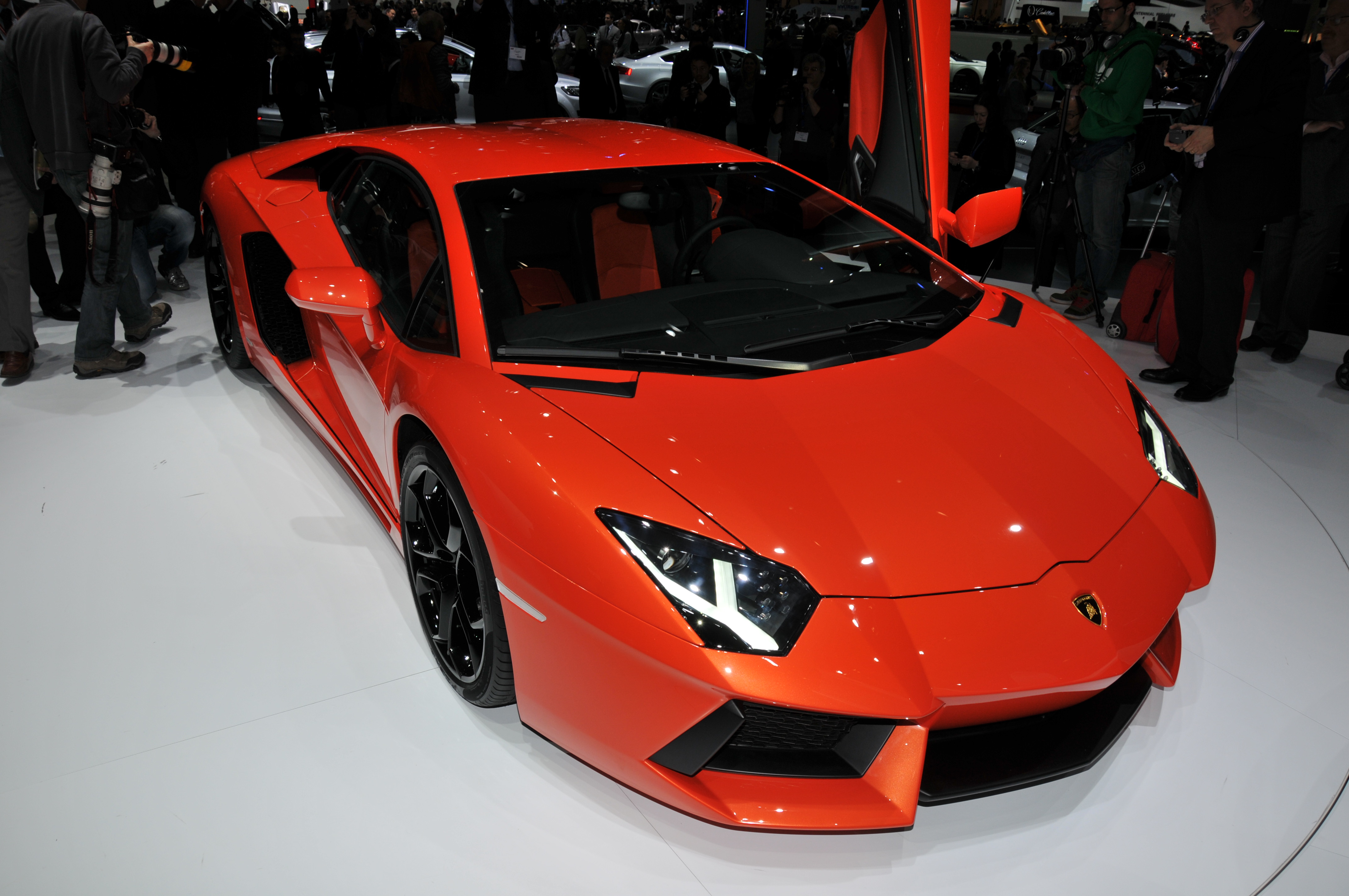
Lamborghini Aventador
The Aventador was Lamborghini’s earlier top supercar. They’re saying the Revuelto is meant to take over from it.
three electric motors
Instead of just one electric motor, this car uses three. That helps the car deliver electric power quickly and precisely, which makes it feel more responsive.
electrification as a weapon
They’re saying the hybrid system isn’t just there to satisfy rules. They claim it’s designed to make the car faster and more aggressive in how it drives.
torque instantly at each wheel
Torque is the force that makes the car accelerate. Electric motors can provide that force almost immediately, and spreading it to each wheel can help the car grip and turn better.
advanced torque vectoring
Torque vectoring means the car can send different amounts of power to different wheels. That helps the car turn more accurately and feel more “on rails” through corners.
2.5 second sprint to 100 kilometers per hour
It’s a measure of how fast the car accelerates from a stop to 100 km/h. They’re saying the car is more than just that one number.
monofucilage carbon chassis
A carbon chassis refers to a vehicle structure built largely from carbon fiber composites to reduce weight while maintaining stiffness. “Monofucilage” appears to describe a specific one-piece/monocoque-style carbon structure concept, aimed at improving rigidity and handling response.
triple screens
The cockpit uses three digital screens instead of mostly physical gauges. It’s meant to show you important info and controls in a clearer, more modern way.
fighter jet ergonomics
They mean the driver area is designed to feel like a cockpit from a fighter jet. The goal is to make the controls and seating feel more focused and responsive.
triple motor
A “triple motor” setup means there are three electric motors helping the car. More motors can help the car deliver electric power in a more controlled, responsive way.
hybrid system
A hybrid system uses both a gas engine and electric power. The idea is that the electric part can help the gas engine, making the car feel more powerful and responsive.
L545
L545 is the name Lamborghini uses for the Revuelto’s V12 engine. It’s a 6.5-liter engine that breathes naturally (no turbo), and it’s built to rev.
redline
Redline is the top safe-ish engine speed range before you hit the limit. When a car “screams to the redline,” it means it revs very high.
engine 180 degrees
They’re talking about turning the engine around inside the car. That helps engineers fit the rest of the drivetrain in a better way.
electric trinity
They’re describing three electric motors working as a team. The idea is that the car can deliver electric power quickly to help it launch and accelerate.
independent torque delivery
Instead of both front wheels getting the same push, the car can vary the power between the left and right wheels. That helps the car grip better and feel more immediate.
8-speed dual clutch transmission
A dual-clutch transmission is a gearbox that can switch gears very fast. Here, it’s also part of how the electric motor power is combined with the V12.
torque fill
Torque fill is how the car covers any “dead time” between when you press the pedal and when the engine really gets going. The electric motors help the car feel instantly responsive.
monofuselage revolution
A monofuselage is basically the car’s main safety structure built as one integrated unit. The hosts are saying the Revuelto uses a new version of that structure to make the car stronger and better packaged.
carbon fiber
Carbon fiber is a strong, lightweight material made from carbon strands mixed with resin. Car makers use it to make parts lighter without losing strength.
forged composite material
This is a way of making carbon-fiber-based material so it ends up stronger and more consistent. The goal is to get complex shapes without adding a lot of weight.
torsional stiffness
Torsional stiffness is how much the car’s body resists twisting. If it’s stiff, the car feels more controlled because the suspension can do its job without the chassis flexing.
lithium-ion battery
A lithium-ion battery stores electrical energy for the hybrid system. Where it’s placed in the car matters because it changes how the car balances and drives.
transmission tunnel
The transmission tunnel is a hump/channel in the floor where parts of the drivetrain sit. In this design, they put the battery there to help the car’s balance.
driveshaft
A driveshaft is a rotating part that sends power from the gearbox to the wheels. If the battery moves into that area, the car has to redesign how the drivetrain fits there.
center of gravity
The center of gravity is the “balance point” of the car. When it’s lower, the car tends to handle more confidently and feels less top-heavy.
weight distribution
Weight distribution is how the car’s weight is split between the front and back wheels. The right balance helps the car feel more predictable when you turn, accelerate, or brake.
LED lighting signatures
A lighting signature is the unique “look” of the car’s lights. It can be part of the design identity, and sometimes it’s also tied into how the car functions.
aerodynamic pathways
It means the car is shaped so air flows in specific routes around it. That helps the car stay planted and stable when you’re going fast.
active wing
An active wing is a spoiler that can change position automatically. When you’re driving faster, it can push down on the car to help it stick to the road.
downforce
Downforce is air pressure that pushes the car down onto the road. More downforce generally means better grip and steadier handling at speed.
Aventador Ultime
They’re comparing the new Lamborghini’s aero to a specific Aventador version called the Ultime. The point is that the Revuelto’s design creates more “push-down” force for stability.
diffuser
A diffuser is a part under the car that helps manage airflow underneath. It’s designed to help the car generate more grip and stability at speed.
scissor doors
Scissor doors are doors that open upward like they’re “scissoring” out of the way. They’re a distinctive Lamborghini style and change how you get in and out.
digital instrument cluster
A digital instrument cluster is the screen behind the steering wheel that shows your driving info. Instead of classic dials, it uses a display for clarity.
vertical touchscreen
This is the main screen in the center of the dashboard. It’s used to control things like navigation and climate, and sometimes other car settings too.
passenger display
A passenger display is a screen for the person riding next to you. It can show driving info so the co-pilot can see what the car is doing.
G-forces
G-forces tell you how strongly the car is accelerating compared to gravity. Higher numbers usually mean harder cornering or braking.
drive mode selection
Drive modes are presets that change how the car feels and responds. For example, they can make the throttle and handling more relaxed or more aggressive.
suspension settings
Suspension settings change how stiff or soft the car feels over bumps and during cornering. It affects ride comfort and how the car stays controlled.
lift system activation
A lift system raises the car a bit to help it clear obstacles. It’s useful when you need extra ground clearance at low speeds.
driving configurations
“Driving configurations” are the car’s different mode settings. They change how the car behaves—like how it responds to the gas and how it delivers power—so it can feel calm or aggressive.

Toyota Urban Cruiser
The Toyota Urban Cruiser is a small SUV made for regular city and daily driving. It’s built to be practical, with a comfortable ride and an easy-to-use layout. Some versions can change how the car responds using different driving modes, so it can feel more relaxed or more energetic.
CETA mode
CETA mode is a setting that makes the car run like an electric vehicle. It uses the front electric motors so you can drive more quietly in the city.
Strata
Strata is a driving mode that tries to balance efficiency and comfort. It blends the hybrid system so the car feels smooth without being overly aggressive.
Sport mode
Sport mode is the car’s more aggressive driving setting. It makes the accelerator feel more responsive and changes how power gets sent to the wheels.
Corsa
Corsa is the car’s most performance-focused mode. It’s designed to unleash the full power for faster, more intense driving.
four-wheel steering
Four-wheel steering means the rear wheels can steer too, not just the front wheels. That helps the car feel easier to aim and more stable when you’re driving hard.
electric motors pull you toward the apex
The electric motors help the car speed up right as you’re turning in. Because they respond quickly, they can make the car feel smoother and more eager when you reach the inside point of the corner.
chassis stiffens
“Chassis stiffens” means the car feels less wobbly and more planted. The suspension and steering behavior are adjusted so the car responds more sharply to your inputs.
anticipating them
This is describing advanced vehicle control systems that adjust power delivery, traction, and stability behavior based on sensor inputs. The idea is that the car can react proactively—before you fully “ask” for it—by predicting what you’re about to do.
high voltage descent
This phrase points to the car’s electric power system. During a downhill or slowing situation, the car can often use the brakes to generate electricity and store it for later.