Return on investment means how much money you get back compared to what you put in. For car dealers, it helps them see if spending money on things like ads or social media is worth it.
Auto brokers are people who help you buy a car by finding good deals and handling the paperwork. They work between you and the car sellers, sometimes in ways that dealers don't like.
Tariffs are extra taxes put on things made in other countries. When cars or parts come from somewhere else, these taxes can make them more expensive to buy.
Section 232 is a law that lets the government add extra taxes on things coming from other countries if they think it helps keep the country safe. This can make cars and parts more expensive.
A franchise dealer is a car dealership that officially sells new cars from a specific brand, like Toyota or Ford. They have permission from the car company to sell and fix those cars in their area.
A broker deal is when a car dealer sells a car cheaper to someone who then sells it to regular buyers. This helps the dealer sell more cars but can sometimes compete with their own sales.
The Audi S3 is a small, fast car that looks nice and is fun to drive. It's like a regular car but made to go faster and handle better. People talk about it because it needs special care and sometimes repairs from the dealer.
A referral business means if someone sends a customer to a car dealer and that customer buys a car, the dealer pays the person who sent the customer a small fee.
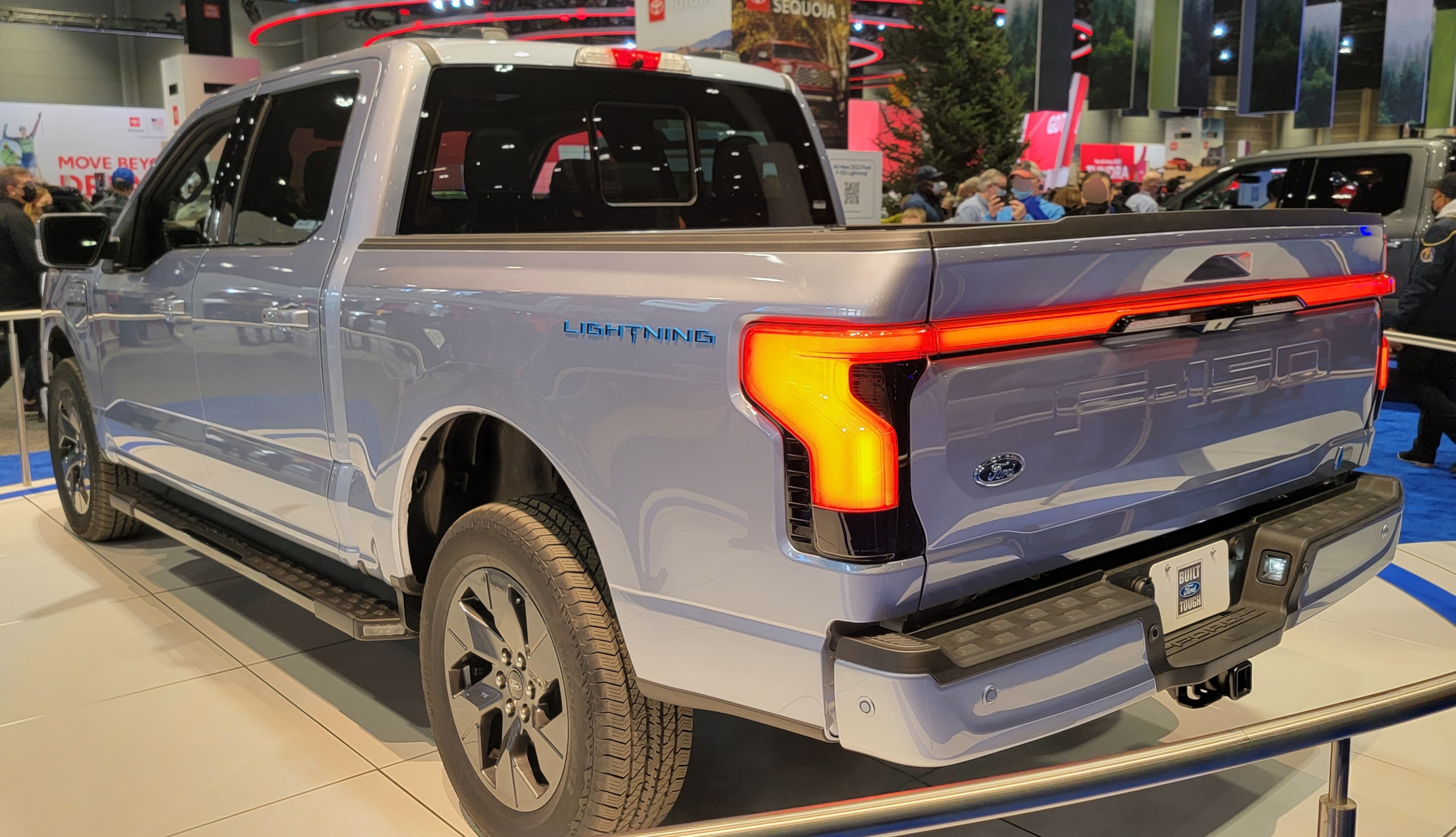
The Ford F-150 is a big truck that many people use for work or daily driving. It's one of the most popular trucks because it can carry heavy loads and drive well.
NADA is a big event where car dealers meet to learn about new car-selling tools and ideas. It's like a big meeting for people who sell cars.
LIVE
We're doing better as a result of social media presence.
It doesn't do those three things, then it's on the chopping block.
It's in return on investment discussion.
Hey everybody, welcome back to another episode of The Daily Dealer Live.
I'm your host, Sam Dark, and thanks for choosing to be here this Monday, the 23rd of February.
And it's snowpocalypse on the East Coast. Few of our guests are impacted by that,
so everybody buckle up, stay safe, and stay warm during this heavy snow period.
Today, speaking of warm, we're lighting a match because in certain states right now,
there's a shadow retail channel operating in plain sight auto brokers. They're selling brand
new cars, collecting deposits, quoting deals some dealers claim can't legally be made,
and nobody seems to be stopping it, not fully the states, OEMs, dealers.
Dealers are calling it incentive manipulation. Some stores are taking $3,000 to $6,000 to losers
while chasing program money, and consumers, well, the consumer is walking in totally confused.
So is this innovation, or is it eroding the franchise system from the inside out?
Well, joining us today, Jake Lee Woods and Paul Sansone, they're here to go straight at it.
And then we'll shift to another uncomfortable truth. Are dealers lighting 20% of their ad
budgets on fire, chasing AI hype? Well, Zach Billings is coming in with data that's going
to make some vendors very uncomfortable. And finally up today, a culture reset
playbook from Land Rover with General Manager Michael Wood. As a reminder to our guests,
we're streaming live across all CDG social media platforms. Post your comments into today's show.
It's going to be a great one. Jump into this debate. We'll bring those comments
live into today's show. And first today, today's auto industry news.
First up today, online marketplace CarGurus has confirmed to CDG news that it is investigating
a cybersecurity incident after reports surfaced that a large batch of personal data may have
been compromised. Security researcher Troy Hunt flagged data attributed to the hacking group
Shiny Hunters. Don't you love these hacking names? Which claims it accessed roughly 1.7 million records.
Those records include names, physical addresses, and more than 12 million email addresses. Uh-oh.
CarGurus said it secured the affected environment and brought in an independent cybersecurity
firm to investigate, telling us, quote, at this time there are no indications that dealer data
feeds, APIs, or core systems used by our dealer partners have been compromised.
We remain fully operational and our services continue without interruption. What's the
bottom line here? Well, platforms that sit at the center of dealer and consumer data flows
are increasingly attractive targets. As threat actors lean harder into social engineering
tactics, dealerships and vendors alike should expect these kinds of incidents to become more
common, not less. Next up today, new vehicle sales are expected to look a little better in February
than January, but they're still softer than they were a year ago, this according to the latest
forecast from JD Power. By the numbers, retail new vehicle sales are expected to reach 931,400 units
in February. Get this, that's a 4.6% decrease from a year ago. EVs are expected to account for
just 6.6% of retail sales. That's down 1.8% against this time last year. Meanwhile, hybrid
electric vehicles are expected to account for 13.5% of new vehicle retail sales. That's up a 10th
of 1% marginally. The primary reason affordability pressures remain significant with the monthly
finance payment reaching $811. Folks, that's up 32 bucks from a year ago. So clearly we're
seeing more consumers are turning to 84 month loan terms, which are expected to account for
12.7% of finance sales this month compared to 7.7 a year ago. And finally up today, let's talk tariffs.
A lot of us saw the news coming into and throughout the weekend, the Supreme Court struck down many
of President Trump's sweeping reciprocal tariffs in a 6-3 decision, ruling that the administration
overstepped its authority under the 1977 International Emergency Economic Powers Act.
The decision potentially puts roughly $130 billion in collected tariffs into question,
with businesses now eyeing possible refunds, but analysts say any repayment process could take
months and will likely face legal complications. However, the administration isn't backing down.
Within days of the ruling, the President signaled plans to replace the voided tariffs
with a broad 10% levy on imports, later suggesting that rate could climb to 15%. So while one
authority was curtailed, the broader trade fight, it is not over. And for automotive,
the impact is indirect. Auto tariffs imposed under section 232, well, they remain untouched. So
there's our answer for all auto. That means the core cost pressure facing automakers and suppliers,
well, they largely stay in place. Yet if household costs ease as broad tariffs unwind,
some shoppers may feel slightly more confident, or they might have a bit more monthly room to
move forward on a vehicle purchase. And that is a wrap on today's auto industry headlines.
Hey, and just a note before we dive into today's content, some of you have asked,
hey, what's up with the latest structuring of Daily Dealer Live? We're testing a single
host format. You'll notice I've been on here solo for the past many episodes. It's a thrill,
it's a privilege to be here and dive deep into some of the most important conversations we have.
At CDG, we value one-on-one conversations with dealers delivering you the highest quality takeaways
we possibly can. And that's why we're committed to this point with the single host format. So
if you have any ideas, thoughts, or feedbacks posted to the links, DM us, we'd love your take
on this. Our goal here at CDG is to provide high value insights to every dealer, every
general manager, and every industry expert watching the show. So thanks again for choosing
to be back with us as part of today's show. Again, a reminder, you can post your comments
across all CDG social media platforms. And let's dive straight into today's show. Coming up first,
we're going to have a conversation about brokering. We've often talked about different
distribution models, including direct-to-consumer, which some OEMs, including Volkswagen, have tried
recently through Scout. Tesla obviously did it initially, although it was a new entrant.
And brokering is another challenging model in today's marketplace. So joining me today,
Jake Liebowitz, partner dealer principle of Raceway Auto Group and Paul Sansone,
owner of Paul Sansone Junior Automotive Group. Welcome to the show, both of you.
Thank you for having us. So let's start out with who you are for our audience that doesn't know.
First up, Jake, then Paul, tell us who you are, where you are, and you're in snow
apocalypse right now, Jake. Yes. Yeah, we've got, I think we've got 25 inches outside,
you ever tell? Unbelievable. I think we have more snow in the last few days than Denver has all
winter from what I've seen. So we have 16 stores group-wide. We're a large Kia dealer,
five Kia stores. We've got Hyundai, Audi, Chevy, Jeep, Volkswagen. We've got a wide
band of brands in the Philadelphia, Lehigh Valley, Pennsylvania, all the way down to New Jersey,
Freehold, New Jersey, and South Jersey. So that's sort of our area. And I'm a fourth generation
car dealer. I'm an owner and dealer principle of my group of stores. And Paul happens to be a
local dealer friend. So I think it's a great episode. By the way, congrats on fourth gen.
That's not an easy task. We've talked about succession plans. And one, you build it, two,
three is a challenge. So props to you for fourth for continuing to endure it. And,
you know, today is proof that we continually run into challenges
in our world. And we've got to continually evolve and adapt through even fourth and fifth
generations. Paul, tell us a little bit about yourself. Paul Stanton Jr. I am second generation,
and I have a third behind me, very active in the business of PS3. Paul Stanton, the third
runs my dealership, one of our stores. I have two Nissan, two Kia, and a Mitsubishi
locations in central Jersey. And actually, Jake and I are direct competitors, but friendly
direct competitors. And the conversation today is not about competition. The conversation today,
because I think competition amongst dealers is customary and good for the consumer. The
conversation today is influences outside of the direct competition of dealer to dealer to earn
customers business. So again, we are local in the area to each other. And we are experiencing the
same direct impact on our business for the influence of broker transactions. Actually,
Jake even a little bit more than myself. Well, so let's let's go there. Let's talk about this,
Jake. First up a question for you. Today, we're tackling that touchy topic. And there are some
dealers that may not know what we're talking about because there are parts of the country where this
activity just doesn't exist because of competitive constraints. First up for us, would you just define
what is a broker? What is a broker transaction? How does that work? Yeah, so in the New Jersey
statute, brokering is defined as arranging negotiating or facilitating the sale or the
sale or lease for a fee. That's broker activity arranging negotiating or facilitating the sale
or lease for a fee. That's brokering defined. And I also would like to a new car dealer definition
is that in the Jersey statute is that only licensed new motor vehicle dealers may sell
new cars. So I think it's important to recognize both definitions. And why is that in law in most
states? The only new car dealers can sell new cars. A dealer signs up, they have a relationship
with an OEM. And what is the thought process behind that, Paul, that makes it that's the
relationship? Who is a dealer first of acquire a market, PMA, a primary market area, you have a
defined number of vehicles that you are expected to sell in your market. And brokering, again, we
raise this to the National Dealer Council, etc. And dealers on the dealer council have no idea
what a broker deal is. So very simply, it's franchise dealers selling cars to independent
brokers who are releasing and reselling those cars to consumers. So very, very simply, franchise
dealers, I want to be clear, our own dealer body are selling the cars at a discount to brokers to
hit certain sales objectives that are leasing and competing directly against the dealer body.
And in fact, we've actually seen examples, as I mentioned in the intro, where dealers will take
a three, five, six, seven thousand dollar loss on a vehicle to sell it through a broker. So answer
me this, why would a franchised auto dealer that's got a franchise, why would they entertain
a broker and allow the sale at a loss to a broker? Why would a dealer do that?
Sometimes the math of the incentives make it financially feasible for a dealer. Very, very
simply, if I was going to sell five cars at a three thousand dollar loss, but I was going to get
a thousand dollars a car on the other 85 cars to hit a certain sales objective,
the math is in your favor. But it's become so prevalent in our market that think about this,
up to 80% of certain dealers cars in their PMA are sold by dealers outside their district.
That means these brokers, the dealers that are engaging in the brokers are influencing
up to 60, 70, 80% of sales in guys districts. So it's gotten so bad that the manufacturer,
Nissan, has tried to tailor back the programs to not encourage that policy, but it's such an
ingrained part of a dealer's business model that they're, again, some dealers, as you said,
are averaging, averaging three thousand dollars loss on all cars sold. And it's decimating
the dealer profitability in, certainly in the northeast, in our region specifically, in our
area. So I get the incentive to the dealer in some cases. If you're a small dealer and you're
trying to earn more units, you're trying to sell more cars, you see that stair step program and
the possibility of hundreds and maybe thousands of dollars per unit retro to vehicle one,
that's an incentive for me to push all these vehicles into my market and into other markets.
But is it, does it benefit the OEM? Why would the OEM allow that? Why would Nissan? Why would Hyundai?
Why would other OEMs allow you to sell into other markets and push these vehicles out at below
cost through a channel that's not licensed, that's not officially invested to sell a vehicle?
So, Nissan and, well, I think Toyota is a great example of a brand that you won't find brokers
selling Toyotas. Not a chance. There's not a chance because, by the way, there's not enough
inventory, right? There's not excess inventory. So you want to sell every year you have.
When Kia or if there any other brand that backs the dealer and dealer profitability,
when they caught wind of what, so I purchased a store in New Jersey and I had some understanding
of how this worked, right? But I think it's hard to fully comprehend. So if Nissan sells,
market share is five or six percent, if you back out the broker business, I would say it would be
three percent, let's say, right? So their incentive is they want to sell more cars,
but it's at the expense of good dealers, right? And if you're buying a market,
if you're buying a dealership in a market, you own the PMA, right? If I buy a store in, you know,
ABCTown, New Jersey, I own the customers in that PMA. So if there are 20 brokers using
dealers outside of that PMA to sell cars, not only do you not own that PMA anymore,
but that PMA is much less harder to control because you have brokers, they're not regulated.
New Jersey law expressly prohibits brokering and it constitutes grounds for enforcement
action by the MVC, motor vehicle. So it's been a gray area that dealers have been willing to play
in for a bit. So Jake, let's talk about that. You said brokers undercut map guidelines,
advertising covenants, and they create a consumer confidence destruction loop.
Todd, walk us through the exact moment that happens. How do brokers create a consumer
confidence problem in the market? So if you're a Nissan dealer or a Kia dealer, Hyundai, Toyota,
you have an ad covenant or you add guidelines, right? You can advertise a car at a certain payment
with a certain amount of money down and less expressly told so by the OEM. The brokers don't
have the same guidelines, right? They're not regulated. Most of them don't have sales licenses
and they have no investment, right? So if you pay X millions to operate a Nissan dealership
in New Jersey, a broker can go and sell the same car with no investment, right? So the consumer
might see no investment, no investment. They can go rent an office, no sales license. And I don't
know if you know, but try becoming a car dealer in New Jersey and forget it. I mean, it is very
difficult. There's a lot of barriers and red tape. And the problem for the consumer is,
let's say you're a consumer and you Google best road lease near me and a broker is advertising
a new 26 road for $195 down or $195 a month with $5,000 down. I'll get brought that deal
by the customer. Hey, I saw this deal. You can make it, right? And we'll look at the deal and it'll
be like a 10G loser, right? So it distorts the consumer's perception of what is actually available
in your market. And in fact, to our producers, they're going to bring up a shot of a sign in front
of one of these broker dealerships advertising just that type of a payment or price on a vehicle
that might be unattainable to a franchise dealer. The cost structure at a franchise dealer has
everything to do with everything you mentioned, the cost of a facility, the cost of the employees,
the cost of the insurance, and all the other things that go into operating that dealership.
What's the customer's recourse if they buy a vehicle through a broker and things go sideways?
There's a problem. What is their... Well, the dealer's jake knows. Brokers have come and gone in
his market, in my market, like I said, I'm right next door to him, for ages. I mean, there's very
few brokers that have actually been in business for five years, eight years. So that means they're
coming and going. They're taking advantage of whatever deals are being offered short-term.
And whatever happens with their consumers, I don't know because then the consumer doesn't have
the recourse because the person that they did business with is no longer there, and maybe
they'll find another broker to do business with. But obviously, us franchise dealers have an
obligation to our consumers for customer satisfaction, for servicing, owner retention,
et cetera. And that's completely decimated with this situation. This map here shows all the
brokers that are sitting around your store in that marketplace. It's interesting. Have both of
you seen the movie Casablanca? Remember the old classic black-and-white thriller? So this casino
in Casablanca is being shut down, and it's the police chief's job to shut it down. And as he's
clearing out the casino saying he's shocked to hear there's gambling going on, the head of the casino
hands him an envelope full of money with his winnings. It almost seems like there is a problem
with everyone's self-interest in this case, right? The OEM gets better market pen through these brokers.
Some dealers benefit with greater stair step. The consumer on both of those accounts loses
because their recourse, if the deal goes bad, ends up being corrupted or corroded.
The OEM, that's a tough position. They get better market pens, so that's a benefit to them.
And yet they have dealers that aren't licensed selling their dealers for them.
Let me talk to the OEM. Think about that, Paul.
This is what bothers me. I'm a very simple guy. I've been a Nissan Award of Excellence dealer
seven out of eight years, so I'm a happy Nissan dealer, proud of the brand. I really am, but that's
where I feel I've lost the support of the manufacturer to protect me, protect my investment,
and it's not only protecting my investment, protecting my consumers and my market for a dealer.
And it's a very simple process that you can clearly identify through pump-in-pump-out reports
that who is doing brokering. It's actually not a secret. It's like the secret that nobody really
wants to talk about. Everybody will talk about it. And in Nissan's regulations, you actually,
if you're going to call a deal into NEMAC, it asks you, is this a broker deal? I am sure not one
application has been called in as a broker application. In the Nissan world, they're
forced to declare it's a broker deal. And some other manufacturers also, again, I'm going to be
speaking about Nissan because that's what I have direct knowledge of, but I've heard other manufacturers
have similar programs and similar protections. But in Nissan specifically, yes, you call an
application in, is this a broker deal? Yes, they're not one application I'm sure has been
called in as a broker. And on the other side of it, Nissan specifically does not pay in any
incentives, retail lease retro incentives on a broker sale. And they actually have a sales code
that says broker and not one deal I'm sure has ever been reported sold to a broker.
So Paul, if that's the case, if that's the case, Nissan should be able to go back and audit these
deals that are sold incorrectly and then charge back the stair step benefit gained for it, right?
Yes, yes. And that's preventing that. Is that happening?
That's what this is really all about. Shining a light on a problem that I feel the manufacturer
can easily rectify just by following their own incentive guidelines and auditing. Now they
could say, oh, we go in and we do an audit and we can't find it. I am very sure dealers that do
hundreds of these deals a month, there's a paper trail that you can go in and you can literally
bankrupt dealers that the penalties could be and would be so high that many Nissan dealers would
probably go out of business if Nissan actually did it. So my my conversation in the manufacturers,
all right, let's just say here's where we sit today. The past is the past. If you really want to
protect the dealers and you really are going to take this as a concern, first off there needs to
be national will. And when you have change at the top, sometimes something like this is not an issue
quite frankly. But I believe we have regional support, but we also need to have national
support to really put an end to this. And that's really what I think it takes that kind of a will
to look the dealers in the eyes and say, hey, look, we know it's going on. It's very easy to
identify. And we're just not going to put up with it anymore. And that's what I'm hoping
we get out of out of these type of conversations is that the manufacturers realize how bad this
is decimating our dealers and dealers like Jake, Jake bought this his business, I don't know, five
years ago, made a huge investment in that area. I'm a legacy dealer. So I don't have this. I did
not pay that blue sky. I mean, there's real financial losses that are being incurred by
dealers by not protecting it. But you're not protecting us against ourselves. Because it's
dealers that are the ones that are complicit in this. So Paul, Jake dropped for just a moment.
I think we're going to get him back. He's in the middle of the snowstorm. And I know he was
losing power in and out. But a few comments from online, a lot of comments, I'm going to get in
trouble if we don't go through some of these. S3 S&M says, in addition to some other dealers,
do it seeing the broker as a referral source. So the broker is not reselling the units,
but instead bringing that that buyer, the book of buyers to your store. I've seen that
brokers have a book of business they can take to the dealer down the street who will.
And those New York City brokers are the worst to work with, says Lauren Klein. Fair.
Well, you know, a referral business is fine. But when you have dealers that actually have given
brokers the ability to call the deals into NEMAC directly, I would not say that that's a referral.
And a referral is you're coming to my dealership and I am handling a sale at whatever fee and
I'm going to pay you a referral fee. And that is something that we all, the car business,
is repeats and referrals. I mean, that's the car business. Take care of your customer.
But when the deals are negotiated outside of your business, contracts being taken outside of your
business, that is not a referral. That is not a referral situation. So so eager K comes in and
says in New York City, New Jersey area, there's plenty of brokers and leasing companies that
currently have Toyotas and Lexus. It's not an issue to get a Toyota through a broker.
I have my theory on why that might be. But what's your take, Paul?
Again, it's hard for me to comment on a Toyota or Lexus. I heard Mercedes had made some policy
changes also about not paying incentives outside of a dealership's PMA. I unfortunately can't
speak to every manufacturer. I can speak to what I know directly and what I feel the negative
effects. Every dealer should be encouraged to have referral business and repeat business. That's
not what this is about. So if it's true that there are brokers selling Toyotas and other brands,
I think it's probably less of a problem because there are fewer dealers that are willing to
offload that inventory to that broker. A, B, there's no stair step in the Toyota world. So the more
units you sell, you don't get bigger incentives. And that's what causes, I think, this push with
excess inventory and stair step to offload to a third party source. Most dealers proud of their
business would not do that in a normal economic condition, right? That's what creates the bad
habits is creating a policy that, hey, you sell 100 cars, you get 1500 a car, you sell 90 cars,
you get nothing. What are you going to do to push from 90 cars? Obviously, that's an exaggerated
example. But there is no doubt supply and demand plays into it very simply. The manufacturer
incentive programs play into it very, very simply. But the fact, I'm sorry.
So play the other side here. We're going to bring Jake back in as well with us.
Hey, Jake, welcome back. I know you're dealing with some storms. So thanks for being patient
with us as we go through this. Another comment from Paul. I got knocked off with this one.
Okay, no worries. Give us some. I was hammering you when you weren't on the line, Jake.
He was not. That's not true. That's true. Paul Salisman says, is there a consumer motivation
to use a broker instead of coming into a dealer? I think that's a great question,
a one that makes sense to talk about. What's the consumer's motivation?
The consumer wants to save money. They want the best deal, right? But I think it's important to
understand anytime you add a middleman, you're adding a cost to some degree or your side-stepping
regulation. It's one or the other or both. So I think the consumer is just ill-advised on exactly
what risk dealing with a broker carries, right? Your local dealer owns the real estate. They have
millions invested in the community, right? They sponsor Little League. The broker rents an office
for 3,000 a month, and they could be in Bermuda next month. So I think also the service retention
is destroyed because the broker is controlling that customer. And as Paul said, if the incentive
policies were policed properly, this wouldn't happen. Fortunately, at the state level, we've
got a great senator. We also have Laura Perotta with N.J. Carr, who's really been working hard on
this. But it's got to be policed at both the OEM level and the state level. So Paul and I have
made a lot of headway, I think. But also, the dealer is taking part in it. If you're letting
a broker log into your dealer track, you're putting your whole organization at risk, right?
Isn't it a privacy issue? Because this is a question from Mark Boruszko. He's asking online.
He says, how are brokers submitting direct to OEMs? How are they getting that access? That's not
right. It doesn't make sense. Are these brokers running the deals through the store? What's your
perception on that? They're doing all the paperwork. Again, every broker may act differently. I think
it's tough to talk in 100% certainties. But we do know that, quite frankly, we see advertising
that you don't even have to deal with the FNI manager at the dealerships that will handle all
the paperwork at our dealer, at our broker. And those are the things that are just, you know,
flat out offensive to a dealership is that they're giving other people the opportunity to
bill out the deals, to structure the deals, etc. But to get back to the consumer, there's no doubt
the concept of, there's no doubt a concept of an easy transaction if they're making it easy.
And I think all of us dealers have adapted to that also. But there is a problem when a broker,
because the dealers allow it to happen, are buying cars three, four thousand below what
I'm buying it for at the manufacturer level. And then they're adding the profit. So they're the
only ones winning in the game. If you want, if the manufacturers want to change their incentives,
that's up to them if they want to pay for broker deals. If New Jersey state regulations want to
change, but currently in the state of New Jersey can't speak for all states. And with Nissan,
broker activity is illegal in the state of New Jersey, dealers can lose their motor vehicle
license where the will of the state has to come in through our DMV on policing that.
So if that's the case, why isn't the state enforcing it? So it seems to me a two-prong
problem. If the OEM's not supporting dealers and regulating it, and then the state's not enforcing
it, why does this continue to be a gray area? Paul. That's, to be honest with you, to me,
it's mind boggling. In the state level, obviously, there's been a governor change,
new division of motor vehicle. So when you deal with the politics of change,
we are waiting to get our local senators and people involved in getting it corrected at the DMV
level to enforce it at that. And sometimes, again, government works a little slowly. On the
manufacturer level, this is one of the avenues that we're going as well as trying to work through
our dealer council to bring light on the problem and the severity of it. And the bottom line is
the franchise dealers that we're talking about, the average losses have been, I mean, and the numbers,
I don't want to quote the exact numbers, but the losses. Paul Park. Paul Park. Well, I'll just,
this way, Nissan nationally basically was flat profit and loss in January. Northeast had a minus
one and a half percent return on sales. And Jake in my district, think about this, the average dealer
was 3%, negative 3%, negative 3% return on sales in basically our area, New York and Long Island,
negative two and a half to 3% return on sales. Where does anybody see a benefit? Where does
creating the problem for other dealers? It's dealers that are agreeing to participate in
this broker activity that are driving it down. In fact, my next question I would ask you was that,
yeah, what's the difference between this and Amazon, right? I mean, there are some other
alternate distribution methods that are very similar to this. The challenge with this is that
the OEM has no relationship with these brokers. The dealers are choosing to broker through them.
A great comment online. Oh, I lost it. It made the comment about maybe the producer can find it.
We've got so many comments all at once. This being a question of religion and ethnic groups,
having a relationship with a broker and then choosing to buy a vehicle because they have
less confidence in dealers. Could we fix it partly by learning to create or it was 3S,
S3SNM. I have seen that motivation also being triggered by religion and demographics. Is that
something you're seeing as being a driving factor in the rush to brokers in some states?
Jake and I have, I mean, originally. That's how it started, right?
And I think that, okay, there's a way to utilize them. If you want to go to a broker and the broker
wants to bring us a bird dog where they want to refer us a customer and the customer comes into
our showroom and we facilitate the transaction because the broker is essentially a de facto sales
agent of another dealer. So if they want to send me customers into my showroom, there's no ethnic
or religious group. We won't, and I know Paula is the same way, we will cater to every group.
And that may be how this started. I'm not sure, but we're talking about black and white. What's
legal, what's not, right? So I don't think that that has really anything to do with why it's being,
you know. It is how it started though. It is how it started. It is how it started. And now it's,
again, for whatever reason, it's grown in popularity and it's all financially motivated. And again,
in my opinion, it's a few dealers trying to take advantage of a situation that are creating issues
for many, many, many other dealers. And as I said in the return on sales numbers, now it's gotten so
bad that even those dealers, I sure are going to have a wake up call that, hey, this isn't even
helping me. So as we wrap up here, yeah, go ahead. Real quick, at some point, why not just,
if this is legit, like if you get away with this, why not just be a broker, right? Yeah.
3,000 monthly, no license, no regulation, right? Just be a broker. I'll give you the answer if there
are enough brokers successfully selling into the marketplace, it would break the franchise model.
And then the consumer wouldn't have the recourse they have. The OEM would not have a distribution
model. So it's interesting, this last comment from S3SNM, I'll bring up here and then I'll
ask you to give us the solution to this problem. This commenter said, I was once told by a factory
rep, I won't name the manufacturer, quote, brokers are the elephants in the room, no one wants to
address, see, talk about. Our own CDG researcher, she said, who's looking to write an article for
tomorrow's distribution, you'll see it across all CDG social media platforms. She said,
the more I dig into this, the more the whole policy becomes absolutely confusing. She's like,
it's less unclear than clear. Well, I'll tell you what, because of today's episode on Cardinalship
Guy Daily Deal Alive, the elephant has been exposed. So to both of you, with this problem
being fully exposed and out there in the public, what would you ask of the OEMs and the state
regulators that have purview over this issue? I was asked to police the, just police the policies
that are on the books. There are Nissan dealers today, think about this, that are getting sales
audits and charged backs associated with sales audits. How can you pick and choose which incentives
and which programs you want to enforce? You can't, even from warranty guidelines to,
there is, you can't pick and choose what programs you want your dealers to comply with.
You have incentive rules, enforce the incentive rules. The same on the manufacturer on the state
level is we have laws on the books. Let's enforce the laws on the books. I know I have to comply
with every law that's on the books. And then, if Nissan or other manufacturers want to say they're
going to pay incentives on broker deals, then change your incentive policies. But they can't,
because it's not legal in many states, so they can't actually do it. So let's just enforce the
policies that are on the books, create programs that don't encourage bad actors,
and so for the health of your organization. So Paul, Jake Paul says enforce the rules
regulations, have the OEMs support anything you would add to it as we hop up here in about 10
seconds. Paul or Jake, sorry. Yeah, if you want to operate in this industry and you want to be a
dealer, buy a franchise, operate with integrity, transparency, and a license, right? And I think
it's also important to touch on it's taking away from the employees working the dealership,
it's taking away from the tax revenue that the dealership pays in real estate taxes, right?
So there are a lot of local issues that this creates, and I think that we're all for competition.
Paul and I are competitors, and we speak all the time, but it's got to be a fair playing field.
Jake Lee Woods, Paul Sansone, Jake to you. We wish you all the best with all the weather.
Thanks for joining us both to share your perspectives on this brokering challenge in
the marketplace currently. Thank you both. Thank you for giving us the opportunity.
Thank you guys. A couple comments from Dan Ariel. Hey, Paul and Jake, nice job. Also says spot on.
Let's talk Impel. Today's episode is brought to you by Impel. Stop wasting your best reps on low
intent leads. Impel AI engages persistently and persistently falls up with every lead, booking
showroom appointments 24-7. So your team talks only to buyers ready to move. Learn more by clicking
the link in the show notes below, or you can click the link here on the live show if you're here,
the QR code, or if you're watching the record, you can go to the notes in here there. Appreciate
Impel for supporting today's content, including this fascinating conversation on brokering in many
states and how it seems to be a race to the bottom. If any OEM out there as a note has a response to
this, we'd love to hear from Nissan. Any of the other OEMs mentioned on today's show, we would
love to have you on to have a conversation about brokering. Is it good for the OEM? Is it bad?
What should OEMs be doing? But anyway, thanks to Impel for supporting today's content.
And then Igor Kay comes in and says, I can get any car from any brand through a broker in New
Jersey in less than 10 minutes. It's that easy in New Jersey. No shortage of cars through brokers
in New York City, New Jersey, metropolitan area. So that's his perspective. Again, if you have a
counter perspective to the franchise dealer, we'd love to hear that as well. Next up today,
Zach Billing, CEO of WikiMotive. Welcome to the show.
Sam, thanks for having me. Hey, Zach. So listen, today's segment will be a little short because
that broker conversation went way along, which was a fascinating conversation and is super
important in today's automotive market space. I wanted to have you on today. You're going to
actually, you and I recorded a couple of weeks ago, a pod that's going to get released this week.
So you'll be able to check it out on the Car Dealership Guide Network. But you said a couple
of things that surprised me. Give us the 30-second truth, Zach. What percent of traffic and leads
are actually coming from LLMs today in your dealer dataset? And what should dealers do with that fact?
Yep. So real quick, high level for everybody. LLMs, large language models, generative AI,
ChatGPT, all one and the same thing. So we're talking about our dealers getting traffic from
ChatGPT, Gemini, et cetera, and everyone's worried about how do I show up. So I'll start with the
non-automotive, non-WikiMotive study and then tell you what we found. So Conductor did a study,
3.3 billion sessions they looked at across 10 different verticals, 10 different industry verticals,
and they looked at what percentage of traffic to those websites was coming from LLMs.
So in the automotive vertical, which they have a section for, they found just under half a percent,
just under half a percent of the traffic coming to the websites in that vertical.
And what we mean by that, LLMs, that's AI, right? So that's ChatGPT, that's any of the AI,
which, by the way, was all the buzz at NADA. Everybody's like, hey, how do we show up in
AI search? How do we make sure we don't get left behind as this develops? You're saying it's only
a fraction of a percent of the search. So not only is it less than half a percent,
which is consistent with the study we did across 150 of our dealers, but in addition to that,
it has come over a top and is in many cases actually on the decline at this point as ChatGPT
has made some updates to the way that it serves information. And ChatGPT is by far the market
share winner at this point in time that may change in the future. But it's 5% of traffic
and declining. And so the reality that dealers need to understand is that people are absolutely
researching which car should I buy and which one fits my needs and trim levels and pricing and all
of that using LLMs. But once they decide they're ready to go find the F-150 or find the Ford dealer,
find the Silverado, find the Chevy dealer, they are transitioning over to more traditional methods
like regular Google searches. Why? Why is that? Why are they not? Because when I think about a
restaurant to go to, in a particular geography, I'll go to ChatGPT for that. Why are customers not
going there to find a dealer yet? It's a handful of different reasons. So first is ingrained
consumer habits. Bottom line, I do an audience exercise when I speak to large groups and I ask
the audience with some kind of an incentive, whether it's holding up a $100 bill or a free
audit or something, find me an F-150 within 25 miles of here, first person to give me a
correct answer gets the thing. And I'll ask a few questions like that and everybody repeatedly
who raises their hand first found it on Google. And I'll ask the audience, how many people tried
it on ChatGPT and you'll get like one hand in the back. And the reality is consumer habits,
people already know how to reliably find a vehicle locally, a business locally. And so they go and
they just use the thing that they're used to in most cases. Now the other piece of that is that
if you go to ChatGPT and you don't try to game it in a way that makes it show up, your dealership,
you're not trying to leverage it to see how do I show up, but you just search like a consumer.
Find me five F-150s below this price within 25 miles of me. It thinks and it thinks and it
thinks and it's not very good at getting to the right answer quickly, which is a frustrating
behavior for the consumer. So they just default back to the thing that they're used to. And that's
at the end of the day, the whole reason for it is it's lagging the technology doing what it needs
to be doing to get out of the way and it's an ingrained consumer habit. It just makes more
sense for people to go to what they're used to at this point. That's interesting. So we'll talk
about this on the pod. So I want to push everybody kind of to that place, but you actually had advice
for dealers to prepare for the long-term game as it relates to open AI. Open AI announced a few
weeks ago that they'll be paid advertising on it. So at some point it's going to come more into the
play. You have a little bit of a theory about Google. You think Google is going to ultimately
end up winning in that space. I hope I'm not borrowing, but you say long-term there's a strategy.
Maybe give us one or two points off of that before you wrap up.
Yeah, a couple quick things. So first of all, if you care about GEO, Generative Engine Optimization
today, you want to show up in LLMs for that half a percent of the opportunity that exists there.
The answer is do better on your reviews. If you ask who's the best insert brand, insert make dealer
here, who's the best for dealer near wherever, put in your version for the dealers watching.
And then you look at how it ranks the answers. Ask it, how did you rank those answers? And it
will tell you, I use the reviews. So you need to get better reviews. You need to work on your
brand visibility that way. And the rest of it is SEO. If you have great SEO, fundamentally anchored
on content and real hard deliverables, that does most of the GEO for you. The rest is reviews.
In terms of the ad model that's coming, so chat, GPD to your point, Open AI announced that they're
launching an ad pilot. Well, as of now, you have to be in talks with Open AI to be part of that
pilot. So Target's going to do it and Ford's going to do it. But a dealer cannot be part of that
pilot at this point. And they think they know what they will look like in the interface,
but there's no self-serve model. There's no VLAs for chat GPT anytime in the near term.
We're probably talking 2027. So what I would tell everybody is you want to do better in AI
search, focus on your SEO, focus on your customer experience and how you get reviews from them.
That is what's going to lead to success in AI or more accurately, not in AI and traditional
search in 2026. And then when the ad model starts to arrive, then you'll need to start focusing on
what can auto dealers actually do to show up there with the ads. But for today to continue to show up
at SEO, both in Google and then also the LLMs, the irony of this is your theory is you need to
actually use handwritten text, not AI generated text. So AI somehow preferences human created
content more than AI generated. Very much so. So the irony of the whole thing is that LLMs,
including Google's own way of ranking content, both the algorithm in traditional search
parlance and also like Gemini, it's all based on being able to query the web and look for
authentic information. And that's what everybody's trying to rise to the top. So when you're doing
research, chat GPT is trying to figure out who's got the right answer. How do they do that? They
have to look at content and they want to prioritize content that demonstrates that you, the dealership,
really had the expertise to say why you should show up for F-150 for sale or for dealer near me.
And so at the end of the day, whether you're thinking through the lens of how do I just show
up better in search period, which is how I recommend everybody be looking at this. How do I get the
most leads from search period in 2026 and not be thinking blinders on about AI? The answer
either way is you need to do the human deliverables. They're expensive, they're time consuming, but
they're not rocket science. You just have to put in the time and the effort and that high quality
content will do better in AI. It will do better for SEO. So last up, and we did not talk this in
the pod, but I was with Devin Daly last week. He's the CEO founder of Impel. He came to a
GM session at Ziggler Auto Group. We all shared our best practices, AI related at Ziggler. I'll
do a post on LinkedIn this week about that. But one of the things he said is he said at
during the Super Bowl, there was a major bar raised or reached in AI. He said open AI advertised,
which is true. I saw that advertisement. Then he said Claude popped on the scene and showed a user
very simply creating a new application. He said on the heels of that, it upended the stock market
for things like Salesforce and some of these other software developers because now folks don't
really know what are the value of some of these companies. Is it going to be easier to develop
software? Any take on that and how auto dealers might win in 2026 when you think about that bar
being lowered when we talk about creating software that will solve problems both today and in the
future. Yeah. So separating from the search issue, right? Because they're two different issues. I'm
a huge AI believer. I'm a huge user of ChatGPT as a force multiplier. I think that all of these
technologies have a time and a place and an application, right? So when you think about
agentic AI, the cornerstone of what Claude is going to be all about is helping people to
create efficiencies that way. That's going to have a huge place and automotive. I will not
claim to be the world's foremost expert on SaaS development and the AI streamlining that can be
done there. But I do think that we're headed towards a place where there are more efficiencies that
can be had and more intelligent ways that we can leverage data to be able to reengage consumers.
And what I would caution everybody to the topic that I'm so passionate about is don't
conflate the two. Don't take it that just because AI is a promising technology and all the rage
right now for some good reasons that it's a one size fits all silver bullet that's going to save
you everywhere, including your marketing, because that's not true in all cases. Many dealers are
wasting dollars right now in that pursuit. A lot of them. And I would point out that there's
a gold rush here, but it might be for Fool's Gold. I think that you have a lot of, in many cases,
because of misinformation, unfortunately, it's just mistaken impressions. You have a lot of
vendors who are chasing this GEO notion and are selling products on the basis of we're going to
get you to show up in AI search. And I think that the desire is authentic in many of those cases.
I think that there's truly a belief that this is a new revolution and we need to show up there.
So I understand the the impetus to do it. But what dealers need to understand is there's a
difference between how to curate your brand. You had George Nenion a few weeks ago, and he was
talking about writing your about page to better represent your business. That's a great thing to
do so that when someone is trying to actually research your dealership or your dealership group,
you show up with more accurate information that captures your community engagement and so on.
That's brand curation through the lens of GEO, and that is different from trying to capture a
discovery opportunity. A person that is going to submit a lead soon and doesn't know which dealer
they're going to submit it with, there's a difference there. Zach Billings, CEO of Wikimotive,
appreciate your perspectives on not necessarily joining the Gold Rush, as many have said, but
being a little more thoughtful about where to put your ad spend and automotive here in February of
2026. We'll catch you on the pod this week. Thanks for being on the show. Thanks, Sam.
Fascinating conversation. I mean, we've talked a lot about AI and its implication in automotive,
and there's a voice that's saying, hey, you know what, not so fast. Be a little more thoughtful
about how we approach it. Next up today, Michael Wood, General Manager of Land Rover Chantilly.
Michael, welcome to the show. Thanks for having me, Sam. It's good to have you back.
For our audience that doesn't know you, Michael, tell us a little bit about yourself. Who are you?
Where are you? What do you do? I'm the General Manager for Land Rover Chantilly up here in
Northern Virginia. We took over the store in November, so it was part of a buy sell,
and it's now part of the Euro Motor Cars Auto Group. Very good. So now you're a General Manager
over a Land Rover store. So let's dive right into it. In the first four weeks, you replaced your
service director, which is a big shift. It's a big change. What was behind that,
and what got exposed when you made that change outside looking in?
Well, you know, the gentleman we had in the seat before was, he was good, but he'd been here for
a really, really long time, and I felt like that created a lot of little complacency amongst all
the staff. There was no urgency. There was no desire to create an empathetic experience for
the customers. And so I genuinely felt that if I wanted to make a big difference, we had to go big.
And so since they've already had a new GM with me coming in in November, the next step would be
getting a new service director. So I leaned in and was able to find somebody that used to work
with me and my old group who wanted to come up here and solve the vision of what we're trying to
do. So I was really excited to bring him on board. So when you inherit a service operation with
opportunity or a struggling one, what are the first three things you look at? People, process,
or metrics? What's your approach on that? So you know, I like to look at the metrics first to try
to determine where the failures or the process are. And during that discovery of the failures of
the process, you'll find out a lot about the people. And then that way you can develop and
understand what processes need to be corrected, what processes need to be implemented, and what
people are going to align with the new processes that are going to help you, you know, take it to
the next level when it comes to the customer experience. And so what did you find when you
audited that? Where was your biggest opportunity in your current store? And what specific actions
have you put in place to win in 2026 as we come into this new year? You know, unfortunately,
I found a really terrible experience that was being provided by the client or by the service
advisors. So we had to make some changes in there. And I'll give an example where I was walking by
to go to the workshop to check on a used car. And I overheard a customer being told that there's no
way we can give a ride home. So I stopped in my tracks. I was completely taken aback. And I said,
I'm sorry, man, do you need a quick ride? And she said, sure. And so on the ride, first of all,
she lived like nine minutes away from the dealership. Anybody could have done this. But I found out
that she also owned four of our products and lived in a very expensive home. I mean, this is the
exact client that we're trying to cater to these experiences to the ones that are time poor and
money rich, so that we can then extract that money out of them by giving them a really good
experience and a phenomenal product. Well, we've got the phenomenal product, we just need the
experience to match with it. And so like that was one of the aha moments for me was like, hey,
things have to change. Yeah, yeah. So you talk a lot about process and empathy, you focus a lot
on empathy, and we'll get into unreasonable hospitality in a moment. How do you operationalize
empathy without turning it into be nice without turning into too nice, right? At the end of the
day, you're running an operation, you've got to be profitable, you've got to execute. How do you
balance empathy and nice, I guess? Well, I mean, empathy doesn't mean free, right? You know, at the
end of the day, it's just fundamentally listening to the client. And I feel like that's one of the
things we do terribly. Like, we're all really, really good consumers. So fundamentally, we know
what a good consumer wants. Well, all we have to do is tap into what we would typically want,
and just take a little bit of extra time to understand who our clients are. It doesn't cost
anything to look a customer up online and see what they like to do. It doesn't cost anything to
make notes within your, you know, your service department CRM or any of the systems you have
to help you remember the client for the next time, whatever it takes, it just takes intentionality,
you know, and I think that a lot of times, people forget the fact that they're in the customer
service industry, not just a service advisor. Yeah, yeah. So a bunch of comments for you online,
eager cases love Euro motors and Bethesda, very competitive Benz store, but we beat the most of
the time ASC Mercedes-Benz of Arlington little competition out there. So how do you feel about
healthy competition among dealers? So you're on. So that's why you're the guy here.
I absolutely love it. I mean, Euro has a great name in the marketplace, you know, specifically
a bit in Maryland. These are their first five stores in Northern Virginia. And I foresee us
continuing to carry on the legacy that Euro motor cars has here in Northern Virginia.
Yeah. So there you go. You've talked unreasonable. You've talked unreasonable
hospitality is a culture tool. What's one behavior, Michael, you're trying to install
in the team there that shows up on CSI and retention.
The idea around legends, you know, the story about the hot dog and the impact that it had on the
customers at EMP, you know, that really speaks to speaks volumes to what we're trying to do here.
One, it doesn't cost a lot of money to have a big impact. It just takes, again,
like I said, intentionality. So it's looking into the customer, it's understanding who they are.
And then if there is a surprise and delight that's required, because maybe there's a
backwater part, or maybe you failed in communicating properly with the customer,
then you can make it more bespoke to that client. And they'll actually feel, you know,
a bigger difference when it comes to it. So really, I think the idea is just how can you
create a legend for that customer's experience every time they come in. And it doesn't have to be
an over the roof type legend. It could just be anything. How can you add value to why they
came in today? Patrick Block, H51 says, always love seeing Michael Wood on DDL, Daily Dealer Live.
So it was great to see you at NADA. I saw you out there across the floor here and there.
What were you looking for at NADA this year? And did you find one or two tools to help you
win in 2026? And if so, what were those? Unfortunately, I actually didn't get to go
to NADA, but we did. I swear I saw you there. Oh, yeah. I saw the Chase CEO summit. That's what
it was. Yeah, that's right. I really wanted to go to NADA this year. No, it's fine. Because
there's a lot of cool stuff I'd like to look at. But honestly, you know, going back to the
some of the stuff you guys were talking about before, you know, with AI, I think that everybody's
looking for that silver bullet when the reality is, you know, the gentleman that works in my store
that has the highest internet closing rate in all of Euro motor cars isn't doing anything crazy.
He's using an LLM for what it is, which is the best predictor that we know. So he's taking customers
input, putting it in there and working back and forth with it to get the best output to give back
to the client. And he's closing at almost 30% internet closing rate. I mean, I've never had
an advisor that's done that before. And that's using a very basic functionality of an LLM.
I think we need to stop looking. He literally is just taking the customer's responses,
putting them into the chat GBT, asking how he should respond, making it sound more human,
and then putting it back in and responding to the customer. And it looks amazing every
single time the customers are more engaged. It takes less time for him to give a well thought
out response, which allows him to focus more time on videos for the customers. And so that's
just a prime example where you don't need an additional add on, you don't need an additional
tech stack, which I myself have found. I've looked for that silver bullet before as well.
Sometimes you just slow down to speed up. Use the technology that's there available to you
at a very low cost, 20 bucks a month. See what you can get out of that while AI continues to
develop itself. And then you can implement it a little bit later on. So what Zach said, CEO of
about, hey, it's a great tool, but it's not impacting search enough yet. You align with
that. What are you doing to prepare for the future in that? Yeah, the thing I'm doing the most to
prepare is to fix our online reputation. When you buy a store, you also buy its online reputation.
Unfortunately, our Google reviews are not where we want them to be. But just within the last 23
days, we've increased our response by 11%. And we're seeing it move the needle. So we're trying
to organically increase our Google reviews, our dealerator.com reviews, so that when a client
does go into an LLM and shop for a vehicle, then we do show up as a trusted dealership. But it's
going to take some time. We've got to dig out the hole that we're in. But I think people should
be focusing on the most right now. What is your online reputation? Because as AI shopping continues
to advance, it's going to be really, really important. That's actually a great point. So as a new
dealer in a store that you acquired with a price of challenging reviews looking at the past,
what are two or three steps a dealer could take in February of 2026 to change the overall
reputation of that store so that it aligns with your group? Of course, you can always incentivize
it, you know, whether it's, we've got a pot of gold spiff, for instance. So for every five star
review that mentions an employee by name that puts $10 into the pot of gold, and the employee with
the most reviews at the end of the month gets the pot of gold. So right now that pot's sitting at
like $630. Yeah, so I mean, it's one way to incentivize it, but it also creates a process
by incentivizing it to where they get used to asking for it. So then it just becomes second nature.
You know, you can also buy the little tap cards where to make it easy. You know, I've always
been told that reduce your customer's effort to transact. And in this instance, my customer is
my employee. So I bought them the little tap cards, very minimal expenses. But all it does,
they walk right up RFID and tap it on the card and it takes them right to our Google reviews. So,
you know, make it easy for them, gamify it, and you make it part of the culture that we are a 4.8
store, and we just got to get there. Yeah, yeah, that's awesome. Zach Billings from earlier said,
came into the comments saying, applying unreasonable hospitality in the dealership is
such a great idea. We use it as a culture tool at WikiMotive. And then Patrick Block says,
how do you balance the need to change perspective on your store reputation versus brand reputation?
So when when store culture exceeds brand culture, how do you deal with that?
I don't think that that would really be a problem. I mean,
you're just going to be attracting everybody. I mean, locally, I'm sitting within an auto
park that has 14 brands represented within 0.35 miles of me. We have the highest average
transaction price. We have the highest door rate. So we have to be the diamond in the rough,
but to make a diamond requires pressure and time. And so that's what my staff's going to need over
the next, you know, six to nine months as we ramp up for our eligibility into the pinnacle
competition come November, because that's our stated goal. You know, we become eligible in
November to start competing in the pinnacle award for Land Rover. And we have every intention
of winning our first year. So we have the timeframe, we have to build the processes,
we have to build the team. And you know, I've told everybody at the end of the day,
we will get there. You're all welcome to join me on this trip, but I will be there at the end of
the trip. Just hope to see you there. I love it. All right. Before we ask you for a final wrap up,
which I'll just ask what you see as the biggest challenges coming into 2026. I want to take
you into some of the current events that we've been talking about today. Brokering,
is brokering something you see in your neck of the woods? Is it something that impacts you at
the JLR store or Ben's before it? It doesn't. You know, we've got robust laws here in the state
of Virginia. You know, Don Hall has done a phenomenal job representing the dealers here
for the over 40 plus years. He's been the CEO of the VADA. And he's made sure that we've been
protected against things like that. It just erodes the entire experience for everybody.
But to those dealerships that do have a large presence of brokers in their backyard,
you know, that's the question, you know, should you be looking at your experience a little bit
deeper? Why does the customer want to go through the broker as opposed to welcome to your front door?
That would be the first thing I'd be looking at. Yeah. Yeah. Strengthening the experience.
Although it is a tough play when they can utilize StairStep to create a $6, $7,000 discount off a
single vehicle that from a from a competitive advantage standpoint, that's challenging. I
think when an OEM requires certain standards of a store, and then StairStep, I think plays into
the problem a little bit, don't you? For sure. For sure. Yeah. Yeah. So cool. Well, what do you
see as you think about the rest of 2026? What do you think are the biggest challenges for you
in this new store? You know, I think it's just going to be getting everybody rowing in the right
direction. You know, it's a lot of the staff or legacy staff at the convenient for a long time.
And I want to keep as many of them as possible by making that charitable assumption that they're
going to change. But for me, I think it's going to be accepting the fact that sometimes you just
have to cut ties in order to move forward. And that's tough for me. I'm admittedly like I think
maybe sometimes I'm a little bit too much of a teddy bear. And maybe I keep somebody on a little
bit longer than I should. But I've got a really good mentor in my new VP and owner, and I'm hoping
that he'll push me along the way to make some good decisions for the store. All right. So we have
a little bit of an insight from LotGPT. We'd love to hear your take on this. One challenge is noted
by LotGPT. This is an insight brought to you by CDG. New vehicles are at an 80-day supply
and used at a 52-day supply. What are you doing at the store to lower your day supply? Or you
comfortable with that? I'm currently comfortable with my day supply. I'm not really sitting at an
80-day supply. And I think that that doesn't tell the full story. You know, Land Rover dealerships
across the nation are kind of sitting with pockets of inventory. There's those dealers that have well
above 80 days. By the way, you want inventory at Land Rover. Land Rover's been a tough OEM to grab
inventory from. So it's almost like if you can get some extra inventory, I guess that would be the
question is, how did you get that? What's your strategy of getting there? What I got here, we
had a bunch of aged and distressed inventories. I had to do away with that. But I try to be a good
partner. I think Land Rover's a good partner. And I work with them. I try to take every piece of
inventory I can. But at the end of the day, we look at our assets and what kind of frozen capital
do we have that's sitting there within our inventory? How much inventory should you have
based on your 90-day rolling sales rate? And just maintain that amount. You can't really control
what the OEM does and doesn't do. But I can tell you from, you know, with my position on the retailer
cabinet with JLR, they're very acutely aware of the fact that, you know, inventory is an issue,
and that, you know, Michael Koda and the team are working hard to find a fair balanced way to make
sure the inventory gets to the right locations and to not overburden the dealers with it either.
They, you know, they understand the impact that it has on our P&Ls. So I think it's a fluid thing.
And I give credit to the team at JLR for working hard on the dealer's behalf.
All right. Very good. Michael Wood. Fantastic to see you again. I do remember Chase. So it was
awesome. We saw Leno and whatnot together. So sorry for the misstatement there. But
appreciate you being on the show and sharing your perspectives today.
Always happy to be here. Great to see you. All right. We'll see you soon.
All right. And to our Daily Dealer Live audience, a fun show. We talked to all things brokering. We
talked LLMs and open AI and AI search and how dealers could be wasting some dollar spend. You
can watch that episode when it releases later on this week. And then finally getting to wrap
out with Michael Wood and his take on creating an elite service operation at his new JLR store.
Igor Kay, thanks for saying that. Good live stream today. And a ton of comments in the chat. So
for all of our listening audience who've chosen to be here today during our live,
thank you for watching Daily Dealer Live where we break down the biggest moves
in the car business as they happen. Don't forget we're here live. You don't have to
watch it live. You can catch it in the podcast library every Monday. We'll be back Wednesday at
1 p.m. Eastern if you want to get back into the chats. And Friday, of course, this week will be
fixed ops Friday 1 p.m. Eastern. So if this is your world, hit like, hit subscribe,
turn on those notifications so you never ever miss a beat. And we'll see you next episode
on Wednesday. Thanks for being here.
About this episode
The discussion dives into the controversial rise of auto brokers in New Jersey, where dealers sell new cars at a loss to brokers who then resell to consumers, raising concerns about incentive manipulation and franchise system erosion. Guests Jake Liebowitz and Paul Sansone share firsthand dealer perspectives on this shadow retail channel. The episode also covers dealer ad spending on AI-driven marketing with Zach Billings, revealing potential inefficiencies, and features Land Rover’s Michael Wood discussing a culture reset to improve store performance. Industry news includes CarGurus’ cybersecurity breach, new vehicle sales forecasts, and recent Supreme Court tariff rulings impacting the auto sector.
Today's show features:
- Jake Lebowitz, Partner/Dealer Principal of Raceway Auto Group
- Paul Sansone, Owner of Sansone Jr Auto Group
- Zach Billings, CEO of Wikimotive
- Michael Wood, General Manager of Land Rover Chantilly
This episode is brought to you by:
Impel – Your sales team should be selling—not answering the same questions after hours or chasing low-intent leads. Impel AI works 24/7, instantly answering complex inventory, trade-in, and financing inquiries while booking appointments automatically. And with Agentic Response capability, Impel AI interprets the context of each lead source in real time and delivers tailored journeys that drive 26% more sales conversions. Your reps can finally focus on engaging with ready-to-buy shoppers at exactly the right moment and closing deals more efficiently. See how we turn your BDC into a sales powerhouse. Learn more at https://carguymedia.com/3MZnxmf.
Check out Car Dealership Guy’s stuff:
CDG Circles ➤ https://cdgcircles.com/
CDG News ➤ https://news.dealershipguy.com/
CDG Jobs ➤ https://jobs.dealershipguy.com/
CDG Recruiting ➤ https://www.cdgrecruiting.com/
My Socials:
X ➤ https://www.twitter.com/GuyDealership
Instagram ➤ https://www.instagram.com/cardealershipguy/
TikTok ➤ https://www.tiktok.com/@guydealership
LinkedIn ➤ https://www.linkedin.com/company/cardealershipguy/
Threads ➤ https://www.threads.net/@cardealershipguy
Facebook ➤ https://www.facebook.com/profile.php?id=100077402857683
Everything else ➤ dealershipguy.com