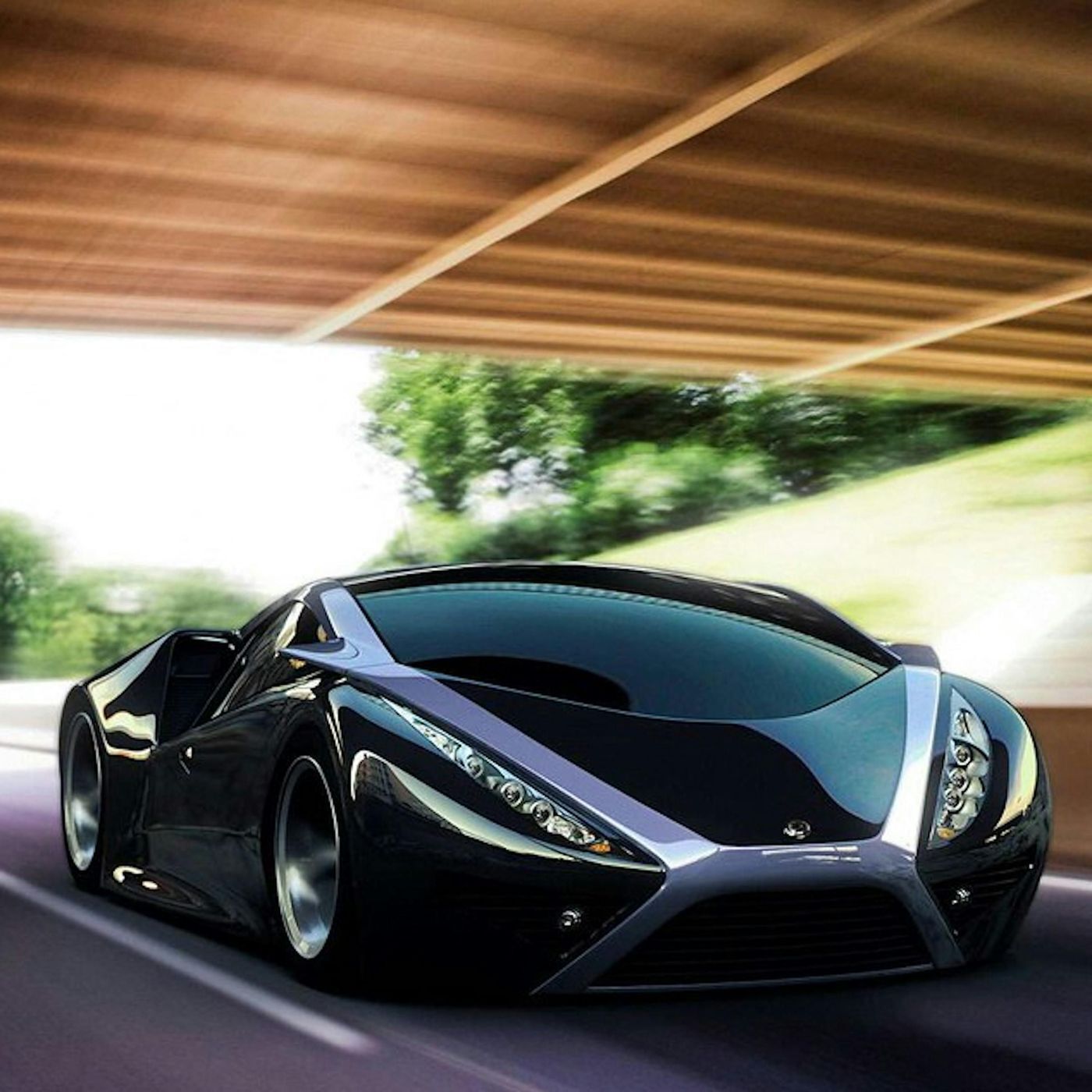
Muscle cars are fast cars that usually have big engines, especially V8s. They became popular in America in the 1960s and 1970s for their speed and power.
The post-war economic boom was a time after World War II when people had more money to spend, leading to more cars being made and sold. This helped car companies create better and faster cars.
The compression ratio is how much the engine squeezes the air-fuel mixture before igniting it. A higher number means more power but usually needs special fuel to avoid problems.
Camshafts are parts of an engine that help open and close the valves. They are important for how well the engine runs and how much power it can produce.
Cooling systems help keep the engine from getting too hot while it runs. They work by moving coolants around to take away the heat that the engine produces.
Radiators are parts of the cooling system that help cool down the engine. They take heat away from the engine to keep it running at the right temperature.
Lubrication technology is about how we keep engine parts moving smoothly without grinding against each other. Newer oils can handle heat better, which helps engines last longer.
Synthetic oils are special types of engine oil that are made in a lab instead of from natural sources. They help engines run better and last longer, especially in tough conditions.
Automatic transmissions are parts of cars that change gears for you, so you don't have to do it manually. They have become better over time, making cars easier to drive and more efficient.
Planetary gear technology is a clever way to arrange gears in a car's transmission. It helps the car use power better and makes the transmission work more smoothly.
An automatic gearbox is a system that shifts gears for you, so you don't have to manually change them while driving. This makes driving easier and smoother.
Manual transmissions are gear systems that you have to change yourself while driving, using a stick and a pedal. They give you more control over how the car drives.
Differentials help the wheels of a car turn at different speeds, which is important when going around corners. They make sure the car has good grip and doesn't slip.
High performance tires are made to help cars grip the road better when driving fast. They help the car handle better and stay stable during sharp turns.
Radial tires are made with layers of material that run across the tire, making them stronger and better at gripping the road. They became popular in the 1960s because they last longer and provide a smoother ride.
The muscle car era was a time when many American cars were made to be very fast and powerful, usually with big engines. They were popular for their cool looks and speed.
Acceleration is how fast a car can speed up. It's important for how quickly you can go from being stopped to driving fast.
LIVE
Hey, y'all, and welcome to the show where information meets inspiration and practical
know-how comes served with a smile.
We're your hosts, Krista, and that's with a K, and Greg, your favorite duo for making
sense of the stuff that matters.
Whether you're planning your next getaway, getting your hands dirty in the garden, tuning
up your ride, or just looking for a smarter way to do life, you've landed in the right
place.
Around here, we believe information doesn't have to be boring.
We pack our episodes with real-world tips, expert insights, and plenty of fun facts,
sprinkled with just the right amount of personality.
No fluff, no filler, just the good stuff.
Our goal?
To help you learn something new, laugh a little along the way, and leave each episode better
equipped than when you hit play.
So whether you are on the road, in the backyard, or by the water, or curled up with your favorite
cup of coffee, thanks for bringing us along.
Let's dive into another episode that's got your back and your brain.
Hey, y'all, and welcome to All Things Cars, the podcast for anyone who loves the sound
of a revving engine that wouldn't be the electric cars for the most part, though, would it?
The thrill of the open road, or just want to make smarter choices when it comes to your
next car.
We'll cover everything, from safety and maintenance to buying tips, trade-in tricks, and which
car might be the perfect fit for your lifestyle.
But we don't stop there.
We dive into the romance of the road, the rich history of iconic cars, and yes, horsepower.
Lots and lots of horsepower.
Whether you're a gearhead, a casual commuter, or just curious about what's under the hood,
we're here to break it all down in a fun, informative, informative way.
So buckle up, because when it comes to driving, owning, and loving your car, this is the place
to be.
This is All Things Cars.
Hey, everybody, and welcome back to Cars.
What man don't want to talk about cars, right?
So that's what we're going to do.
We're going to talk about cars.
We'll talk about cars right now.
As we started talking about cars about a month ago or so, and we started with some basic
stuff about car maintenance.
But now I'm wanting something a little more manly.
We're talking about, I'm beating my chest a little bit.
We're talking about muscle cars.
We talked about the post-war boom to muscle cars, and cars in general.
And today we're going to talk about the technological advancement in engine design and performance.
The post-war economic boom wasn't just about increased consumer demand.
It also spurred unprecedented innovation with the automotive industry.
Manufacturers flushed with cash and eager to capitalize the burgeoning market poured
cash, poured resources into research and development, leading to significant advances
to engine design and performance that directly fueled the muscle car era.
The most dramatic change is centered around the V8 engine, which rapidly evolved from
a relatively modest power plant to the heart of the muscle car beast.
Now, prior to the muscle car era, V8 engines were often found in larger, more luxurious
vehicles.
Their power output, while respectable, wasn't optimized for the kind of raw explosive performance
that would become the hallmark of muscle cars.
The post-war period saw a fundamental shift in engineering priority.
Designers became focused in increasing displacement, refining combustion efficiency, and enhancing
breathing capacity, all to extract significant more horsepower.
That word just fun to say, horsepower, because that's what everything's all about in life,
is just horsepower.
This involved innovation, innovations such as larger bore and stroke dimensions, leading
to increased cylinder volume, and therefore greater potential power.
Higher compression ratios were implemented, squeezing more energy out of each combustion
cycle, although the disnestotated higher octane fuel demand readily met by the expanding petroleum
industry.
The development of muscle-efficient cylinder heads played a critical role.
Improved valve design, larger intakes and exhaust port, and the adoption of dual exhaust
systems significantly enhanced the engine's breathing efficiency.
The flow of air and exhaust gases became the crucial factor in maximizing power output
becoming horsepower.
Furthermore, advancements in metallurgy, and that's working with metal, allow engineers
to create stronger, lighter engine blocks and components.
Further increasing reliability and performance, the widespread adoption of high-performance
camshafts also contributed significantly to the horsepower gain.
These cams controlled the timing of the valve, opening and closing allowing for more precise
control over the combustion process and optimizing power delivery.
Beyond the engine itself, the advancement in related systems were equally crucial to
development of the robust and efficient cooling systems became paramount as higher performance
engines generated significantly more heat.
Improved radiators, electric fans and more efficient water pumps were essential to prevent
overheating and maintain optimal operating temperature.
Similarly, advances in lubrication technology were critical.
High performance engines demanded superior lubricant capable of withstanding higher temperatures
and pressures, ensuring engine longevity and preventing catastrophic failure, don't want
that.
The development of synthetic oils and improved oil filters played a key role in this process.
The transmission system also underwent a dramatic transformation.
During this period, the early automatic transmissions were often cumbersome and inefficient, limiting
the performance or even the most powerful engine.
However, advancements in hydraulics and planetary gear technology resulted in automatic transmissions
were both more efficient and capable of handling the increased torque produced by the high
performance V8s that's horsepower.
The introduction of more sophisticated automatic gearboxes with multiple ratios allowed for
smoother acceleration and improved fuel economy.
Although this aspect wasn't always the highest priority in the muscle car world, manual transmissions
already a popular option, also significant improvement with stronger synchromesh components
and ratios designed to match the high performance engine.
The shift from the three-speed to four-speed manual transmissions further improved acceleration
and vehicle performance.
The interplay between engines and transmission was meticulously designed, matching the characteristics
of the engine power band to the transmission gear ratios allowed for optimal power delivering
throughout the vehicle's operational range.
This was an area where manufacturers constantly competed in each attempting to achieve the
perfect synergy between power train components.
The result was continuous improvement in acceleration and overall vehicle performance,
horsepower.
The constant push for better performance also extended beyond the basic engine and transmission.
The development of sophisticated rear axles and differentials enabled the effective management
of high torque outputs, which was critical to prevent wheel slipping and optimized traction,
especially during acceleration.
The evolution of positive traction, differentials, for instance, significantly improved launch
performance and overall handling in high performance vehicles.
I like the idea of launch on juice.
Furthermore, the rise of muscle cars was linked to the development of high performance tires.
The massive power output of these engines demanded tires capable of transferring the power
effectively to the road surface.
Tire manufacturers responded with increased sophistication and sophisticated designs
that provided superior grip, improved handling, and enhanced traction.
The advent of the radial tires in the 1960s marked a significant milestone in tire technology,
offering improved durability, ride comfort, significantly better grip compared to the
biased ply predecessor.
This advancement was critical to both handling and safety in these incredibly powerful vehicles.
These technological advances, advancement, didn't happen in a vacuum.
The intense competition among the Big 3, Ford, GM, and Chrysler fueled a relentless drive
for innovation.
Each manufacturer just was striving to outdo the other,
leading to an arms race of horsepower and performance.
This competitive environment pushed the engineers to constantly refine their designs
and seek out new ways to increase performance, which directly benefited consumers
who enjoyed ever more powerful and sophisticated vehicles.
Marketing campaigns often focused on these horsepower awards,
further driving consumer interests and creating a cultural obsessed with performance and figures.
I think we need another horsepower award.
Don't you?
I think we can get rid of some of this non-horsepower stuff.
Let's get back to the basics, only very sophisticated basics,
modern basics, how about that horsepower?
Development and sophisticated chassis designs also played a significant role in maximizing
the potential of these powerful engines.
While muscle cars weren't known for the sophisticated handling compared to later sports cars,
the development of more robust suspension systems improved braking systems
and more precise steering mechanisms, significantly improved their overall performance
and controllability.
This included advances in suspension, geometry, shock absorbers and spring designs,
allowing the better handling and stability at high speed.
Similarly, the introduction of disc brakes initially in the front wheels and later all four
improved braking performance significantly.
I mean, look, you got a lot of horsepower, you need some big brakes so you can stop, right?
So the evolution of power steering, reducing driver fatigue, I mean,
the thought of driving something without power steering these days is just exhausting,
I guess.
My arms hurt already, shoulders.
Also played a part in enhancing the driving experience, talking about power steering.
Even if it wasn't strictly a performance enhancement, but it really kind of was.
The technological innovation in engine design and performance during the muscle car era,
it wasn't just simply about horsepower figures, but it was about horsepower.
They represented a holistic approach to engineering where every component from the engine
block to the tires was optimized to work in perfect harmony.
That's because of the horsepower.
This synergy between various systems resulted in vehicles that offered not only breathtaking
acceleration, but also uniquely thrilling driving experience.
Let's face it, they're also really cool to look at.
The muscle car era's legacy extends far beyond its iconic styling.
It's a testament to the ingenuity and competitive spirit that propelled American automotive engineering
the new heights in the post-war period.
The lesson learned and the technologies developed during this time continue to influence automotive
design and performance even today, making the era a pivotal moment in the history of the automobile.
The relentless pursuit of greater horsepower and performance wasn't just a trick,
it fundamentally changed the direction of automotive engineering,
paving the way for many innovations that we still see in modern vehicles.
The enduring appeal of muscle cars is directly related to the impressive technology that powered
them, making them icons of automotive innovation as much as symbols of a unique cultural movement
in American history.
There you go.
So that's what we got.
We're talking about horsepower.
So next time we're going to talk about Ford, Chevrolet, and the birth of I-Con.
That sounds pretty cool, doesn't it?
So I'm looking forward to that.
I hope you are too, and I hope you enjoy it.
We'll catch up where we left off next time.
Y'all have a good morning, good day, good night, or whenever you listen.
About this episode
Exploring the evolution of muscle cars, this episode dives into the technological advancements in engine design and performance that emerged during the post-war boom. Hosts Krista and Greg discuss the transformation of V8 engines, improvements in transmission systems, and the development of high-performance tires and cooling systems. They highlight how competition among major manufacturers fueled innovation, leading to the iconic muscle cars we admire today. The episode celebrates the legacy of horsepower and its impact on automotive engineering, making it a fascinating listen for those interested in car history and performance.