A low friction surface is a slippery road like ice or wet ground where your car's tires don't grip well. This makes it harder to drive safely because the car can slide more easily.
Winter tires are special tires that help cars drive better and safer when it's cold, snowy, or icy outside. They have special designs that stop the car from slipping.
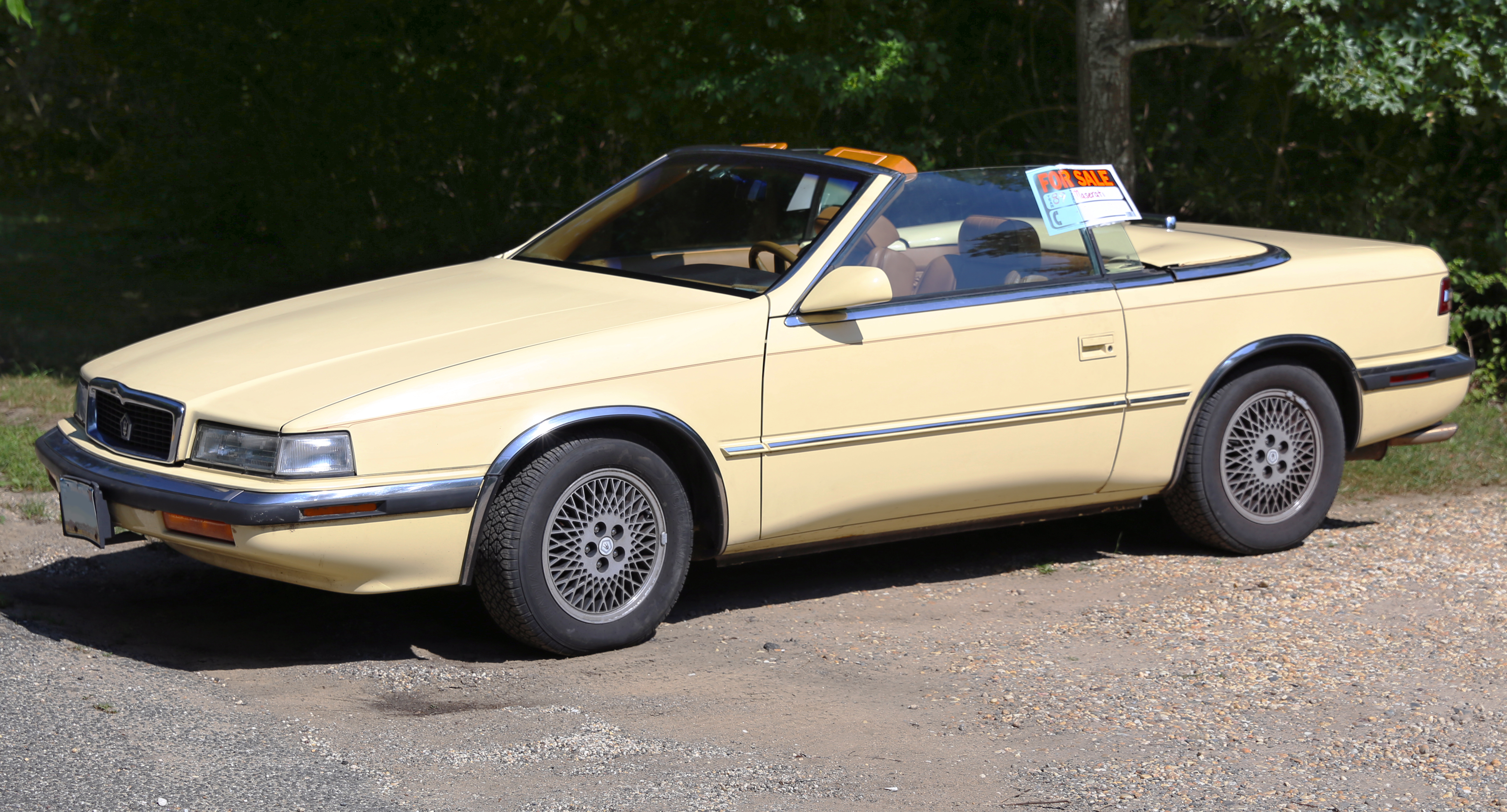
The Chrysler TC by Maserati is a special car made by two companies working together. It's a fancy convertible that looks different from most cars and is a bit strange to collectors.
The Genesis GV80 Coupe is a fancy SUV that looks sportier because of its sloping roof. It's made by Genesis, a luxury car brand, and has lots of nice features inside.
The Ford Mustang Mach-E is an electric car shaped like an SUV. Instead of a regular engine in front, it has extra storage space called a 'frunk' where you can put things.
A 'frunk' is like a trunk, but it's in the front of the car instead of the back. Electric cars often have this extra space because they don't have a normal engine up front.
A heat pump helps keep the car warm or cool by moving heat inside the car instead of using a lot of battery power. This means the car can go farther without using too much energy.
The Hyundai Ioniq 5 is an electric car that uses special technology to keep the inside warm without using too much battery power, so it can drive longer.
The Kia EV6 is an electric car that uses a special system to keep the inside warm without using too much battery power, so it can go farther on a charge.
A plug-in hybrid is a car that can run on both gas and electricity. You can charge its battery by plugging it in, so it can drive some distance using just electricity before using gas.
A software defined vehicle is a car that can get better or change what it does just by updating its computer programs, without needing to change parts. This means your car can get new features or fixes like your phone does.
The Ford F-150 is a big pickup truck that lots of people use for work and daily driving. It has lots of computer systems inside to help it work better.
Whether you drive a car, need a car, or just occasionally bummer ride with friends, you've
come to the right place.
Join Jill and Tom as they break down everything that's going on in the auto world.
New car reviews, shopping tips, driving green, electric cars, classic cars, and plenty of
great guests.
This is the Consumer Guide Car Stuff podcast.
All right, this is the Consumer Guide Car Stuff podcast.
I'm Tom Appel, publisher of Consumer Guide Automotive.
Thank you for joining us today.
You know the drill.
Check us out at consumerguide.com.
2026 Best Buy is my latest review, some fun stuff, stuff that co-host Jill has published
as well.
So that's all there.
Jill, how are you?
I think you and I are both on the tail end of a cold.
Yeah.
Yeah.
You can do it.
I sound worse than I feel.
Yeah.
I'm definitely feeling better, but I just have some congestion.
Oh, because you look like hell.
Oh, well, thanks.
I'm kidding.
You're not a shower today.
I'm kidding.
You look great.
That voice is Jill Simonillo, managing editor.
I'm sorry.
Contributing editor here at Consumer Guide Automotive.
I could manage you.
Prolific freelancer.
I could use management.
And a North American car of the year juror.
So two things happened last week.
I made a mistake and you blew us off.
What do you want to talk about?
I didn't blow you off.
I was actually doing something really cool that there will eventually be a story.
Okay.
Were you here?
I was not here.
You blew us off.
I did not blow you off.
I was driving Volvo's in the snow in Canada.
I did that once.
It's 20 years ago.
It was really cool.
Yeah.
It's fun.
Even if you think you know, like we're all cocky and we know about driving and stuff,
but even if you think so, it's really great to hit the ice in a vehicle and learn how
different the dynamics of driving a vehicle on a low friction surface can be.
Yeah.
And it was really cool.
They had like an ice track.
We were on the Ottawa River.
It was completely frozen over.
It had like three feet of ice and it was like five degrees for a high, I think, while
we were there.
And it was, it was, it was, it was cold, but it was cool too.
So the Volvo default situation on low friction services is, is front wheel drive, right?
Most of the power goes to the front wheels and then it'll move power rearward as you
need it.
Sort of the opposite of BMW.
You know, I think that's true on the gas vehicles, but I'm not sure that that's true.
Oh, interesting.
Electric vehicles.
Had not considered the EVs.
Because I feel like, because we drove the Volvo EX30 and the XC90 PHEV and the EX30,
I want to say is standard as rear wheel drive.
Okay.
Yeah.
I mean, rear drive, more dangerous, more fun.
Yeah.
On a slippery surface.
But we were in the cross country version, which had all wheel drive.
Yeah.
So, it was, it was, it had studded tires and we still were slip sliding everywhere.
So good time.
Yeah.
You're going to be writing about this.
Yes, I am.
And then just take away Volvo's goodness now.
You know what?
Volvo's are incredibly good in the snow and like all they did on the XC90 was put winter
tires on.
So not even snow tires, just winter tires.
And we were driving, we weren't driving on the ice, but we were driving on snowy trails.
And I mean, it was.
You said you were up in Ottawa?
Yeah.
You're there.
I like people around there probably do snow tires.
Well, so here's the thing that I learned last week.
Every season.
In Quebec.
I'm probably saying that wrong because I want to say Quebec, but it's Quebec.
I say Quebec.
Yeah.
I think that's right.
I say it's right.
I think it's Quebec, like without quoi at any rate.
But I've learned that from December 1st until like, I think like March 31st, they have to
put, they, by law, they have to put winter tires on their vehicle.
So just a little, a little complaint about Quebec, I had a client up there many jobs
ago.
I had a client in Quebec.
Okay.
They reached out to us.
They paid us.
Okay.
And yet when they called us or when I called them French, it's like, okay, you reached
out to me.
You didn't ask if I spoke French.
This is a pain in the butt.
How are you?
Yeah.
And I'm like, I don't know.
Yeah.
Just put the person who isn't going to do the French thing to me through.
Yeah.
Okay.
This is, this is irritating.
French is their first language.
Yeah.
It is.
No.
In Quebec, it is their first language.
In a sea of English.
They're surrounded by English speaking people, but yes.
This was an ad agency.
It was irritating.
They were trying to be irritating then.
You're not going to believe this, but I made a mistake last week.
What?
Co-host, guest host, Brendan, Brendan Appella of the Sons of Speed, brought up the Chrysler
TC by Maserati.
Okay.
A totally weird vehicle, not entirely collectible, just kind of a strange thing, a red herring
in the automotive world.
But I had mentioned that it had a bunch of different engines and it was this weird Italian
vehicle that was co-built with an American company and that it had a British engine.
But I was wrong.
It is actually a Maserati head on a Chrysler engine.
Okay.
So I just wanted to correct that.
I had said maybe it was Lotus, but as our good friend Sam Fiorani of Auto Forecast Solution
notes, the Lotus head that I was thinking about appeared on the Spirit RT in the Daytona
Iraq RT between 1991 and 1992.
Those were great engines, by the way, collectible cars.
So there's that.
Thank you, Sam.
That's exactly the sort of thing Sam would bust my knuckles on.
All right.
Later in the show, our good friend Ken Chester of the Tech Mobility podcast is going to talk
to us about software-defined vehicles.
Yes.
I've been wanting to have this conversation with someone who knows more about them than
I do, which is most people.
He says the guy who doesn't use Apple CarPlay.
Exactly.
No one cares, but I just got my next list of test cars.
Okay.
I'm kind of excited.
Awesome.
I haven't even seen one of these in person.
The Genesis GV80 Coupe.
I just got that added to my list, too.
Did you?
I'll have to talk about it.
Yeah.
Okay.
Yeah, I'm looking forward to driving that.
Very much in analog to the BMW X6.
Yes.
Right around that size.
And one of those cars you pay more for for less utility.
Yeah, because it's got the fastback coupé design.
What the heck?
Happy birthday to Brenda Napelle.
His birthday is this week.
He's 68.
Which means he's probably like 58 or 50.
I think he's 51.
Okay.
I think.
Paul Chavari, our first ever producer.
Ah, yeah.
Happy birthday, Paul.
Yes.
He's 83.
We are so sorry that Tom can't count.
We talked last week, and I'm sure you know about this, about the Cybertruck and the 59,990
Cybertruck.
So there's this bargain Cybertruck coming out.
It is, in fact, four-wheel drive, unlike the cheap, the recent bargain truck, which was
69,90, and was just rear-drive.
Anyway, this all might be hubris and BS.
Oh, might be?
People are trying to order this thing, and they can't, or they're not getting delivery
for like a year.
Okay.
So I'd even looked into this too deeply, but there's news here, and we'll get back to
it.
Yeah.
All right.
Here's some.
Well, you know what?
Kind of along those lines, and I don't know if you are going to mention this later.
If so, I apologize that I'm stepping on your toes.
I welcome it.
Because you've got big feet.
I do.
Did you see the news from Ford last week about their frunk on the Mach-E?
Yes, go ahead.
It's so stupid.
No, no, you know what's stupid?
They handled this poorly.
They made a change that needn't have been this stupid.
And there was a reason for the change, but that's not what's being focused on here.
No.
So run with us.
Tell the story, because it is silly.
Well, the idea is they are now going to charge you if you want the front trunk, the frunk.
And I want to say it's like 495, 495 dollars to 500 dollars.
And it was unclear whether or not it was like, okay, they're going to build the frunk, but
if you want access to it to be able to lift the trunk, you have to pay the 500 dollars
or...
That is not the case.
It's not that stupid.
Okay.
I was going to say that would be really stupid.
Yeah.
And then so, but apparently then if you would lift the front hood, you would just see like
wires and stuff.
There would be an unfinished front trunk area, so no front trunk.
So this is why this happened.
Ford last year went to a heat pump to move heat around the cabin.
And it's a really good thing for energy efficiency in the winter when you're heating.
And Hyundai uses it like on the Ioniq 5 and the Kia EV6.
It's a very effective way to heat a vehicle without draining the battery.
And to use an existing heat.
So Ford did that and it took up space under the hood.
So the problem, Ford's problem was that the frunk, the actual part where you would put
stuff, store stuff, was a completely finished and road insulated container, about six cubic
feet, not huge.
But if you look at the pictures...
But enough to fit shrimp, apparently.
Enough to fit shrimp.
I was just going to say that.
Dear God.
Ugh.
I'm stepping all over your toes.
I like to put my perishable seafood under the hood of a Ford.
But the new pan that fits in there is only about two cubic feet.
So it's lost a lot of its utility.
So it makes sense they might just get rid of it.
But that's not what they did.
You can still open the hood.
You can still look at stuff.
But if you want to put something in the two cubic foot container, 495, to get a finished
frunk, and then they claim that they've made it up to everybody by lowering the price of
the car about $150.
Yeah.
That does not make up anything.
And I think that, I mean, that might be a good place to keep road flares, a first aid kit.
I mean, it's...
Tennis shoes?
Yeah.
495 is a little rough.
Let's just leave it there.
Yeah.
As a bonus thing.
Yeah.
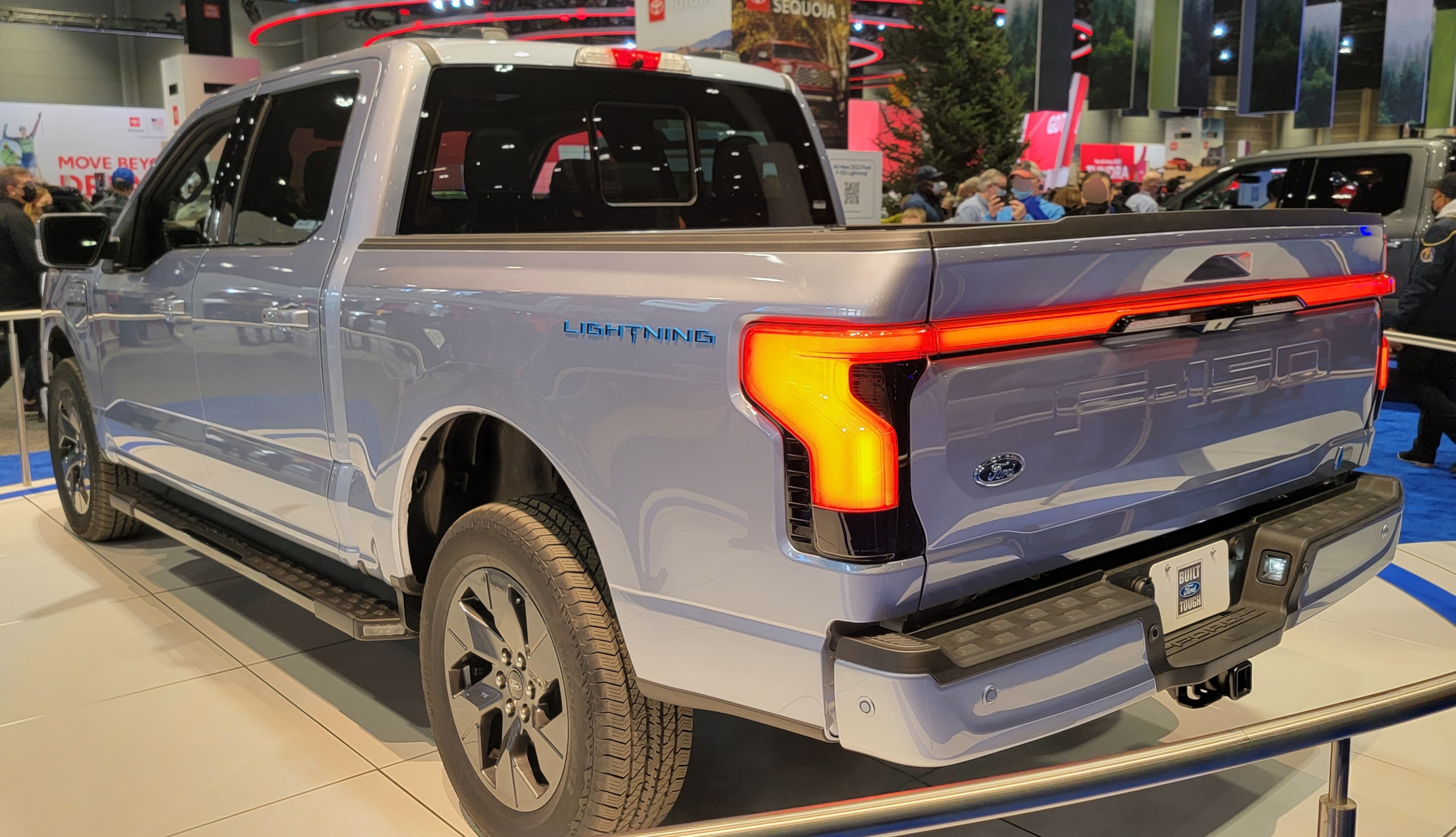
The F-150 Lightning, which is gone, there's plenty on dealer lots.
Just a one.
That had that huge frunk.
Yeah.
Huge frunk.
A huge frunk.
All right.
You can fit five jills in that frunk.
You can.
Lamborghini.
Okay.
Killed something called the Lanzador.
Okay.
And this was based on a concept car from 2023.
It was going to be an all-electric supercar, was going to be their first electric vehicle.
And they claim that there's zero demand, and they use the word zero for an electric Lamborghini.
Yeah.
So they may make another vehicle still called Lanzador.
That'll be a plug-in hybrid, but it doesn't come until 2028 or 2029.
Okay.
There you go.
Yeah.
Jay Leno.
Okay.
You know Jay Leno.
We are BFF.
Have you met him?
No.
Oh, a lot of people in our industry have.
Yes.
I am not that person.
Seems like a cool guy, though.
Car guys love him.
Yeah.
And a company I once worked for worked for him, and everyone loved him, like a great
guy.
He was very generous with his time after his show.
Anyway, there's something now called Jay Leno's Law.
Okay.
And I don't think that this has been passed...
Oh, it is a bill.
I'm sorry.
Senate Bill 712 out in California.
And this is a bill to protect a classic cars from emissions testing and eventually being
shut down and not being street legal.
So Jay Leno is behind this, and the whole plan here, there's a lot of complications to
this.
But essentially, he wants a rolling exemption for vehicles that are 35 years old.
Okay.
So once a vehicle is 35 years old, most people are regular vehicle long before then, it is
no longer required to be emissions tested.
Okay.
All right, so there's that.
Yeah.
All right, we have to get to your review in a little bit, but I got a couple of more
things here.
Are you ready?
I am ready.
I want to complain about something.
Well, of course you do.
I just drove the Palisade.
So did I.
The all-new Palisade.
Twinning.
It's really good.
Yeah, it is.
It's really, really good.
People buy it.
And the new hybrid system, it's really good.
Now, I drove it, do you remember what kind of mileage you got?
Not good.
I feel like it was like 19.
I didn't get good mileage either, and it's a hybrid.
Yeah.
And I just drove the Lexus TX350, which I got slightly, and that's not a hybrid.
I got about 20, and this I got 23.
Now the weather was terrible.
Okay.
So that might be why.
Yeah.
But that's not my complaint here.
My complaint is the color.
Okay.
It was a cool-looking color, kind of dusty, though it wasn't a matte color.
The color was called cast iron brown.
That's like the clunkiest, dullest-sondie name I've ever heard for a car color.
And this is such a modern, good-looking car.
So I just wanted to whine about that.
Okay.
Well, you know, you whining.
Yeah.
Yeah.
Finally.
Finally.
Are you ready?
Always.
I just finished my re...
No, I didn't.
I have to finish that today.
I'm finishing my review of the Mazda CX70.
That is Mazda's new two-row midsize crossover.
I get that this week.
Do you?
Yeah.
Nice car.
And...
Accept.
I don't have an accept about the car.
Okay.
Okay.
I have a fun fact.
Okay.
There's also the Mazda CX90.
Mm-hmm.
Three-row crossover.
Mm-hmm.
Seven or eight people.
Well, which one do you think sells better?
CX70, CX95 passenger.
I think CX90.
By a lot.
Yeah.
By a lot lot.
Yeah.
People want that third row just in case.
Yeah.
Yeah.
And that's exactly true.
And it's not a very expensive thing to get.
So in terms of insurance of moving people around, unless you don't want to be the person
who has to take other people places.
Right.
But the CX70 last year, 13,833 units.
It's kind of quiet.
Mm-hmm.
Meanwhile, the CX90, 55,156.
So four times.
Mm-hmm.
As many vehicles.
I wonder if the CX70 is just going to get rolled into the 90 if they drop it.
I don't know.
I don't know.
They're both great vehicles.
Mm-hmm.
They're both very similar.
If you drive one, you've driven the other.
The experience is very similar.
Yeah.
Except that the CX90 actually starts a little bit cheaper because there's a cheaper trim
level.
Yeah.
We've seen that in a lot of lineups.
Yeah.
But the 70, unlike all the other big crossroads I've been driving lately, this is the most
European in feel.
This feels like driving a BMW X5.
Okay.
And I mean that in the best possible sense.
Mm-hmm.
So if it seems a little expensive, it's kind of refined.
It kind of deserves that.
Yeah.
Yeah.
It's kind of cool.
The only real difference between these vehicles besides the third row, the CX70 gets a more
aggressive looking front end, which by the way, I can't tell the two apart.
That's something, Damon Bell, our old friend Damon, that he's the kind of guy that picks
up on stuff like that.
Okay.
All right.
So you drove, did you test drive this or was this at an event?
It was at an event.
Okay.
The 2026 Toyota Beezie Woodland.
Yes.
What is that?
So you may be familiar with the previous Beezie 4X, which was the original mass produced
or electric vehicle from Toyota that came out a couple of years ago and funny.
Nice vehicle, not great range.
Not great range, funny name, lots of jokes that we had there, terrible.
And so they dropped the 4X for 2026, yay, and then they added a new model to the lineup,
which is the Beezie Woodland.
And the idea is this is a little bit more of an off-road capable vehicle.
And it is built on the same line as the Subaru, I think, Trailseeker.
I wrote this down because I forget this, the Trailseeker, yes.
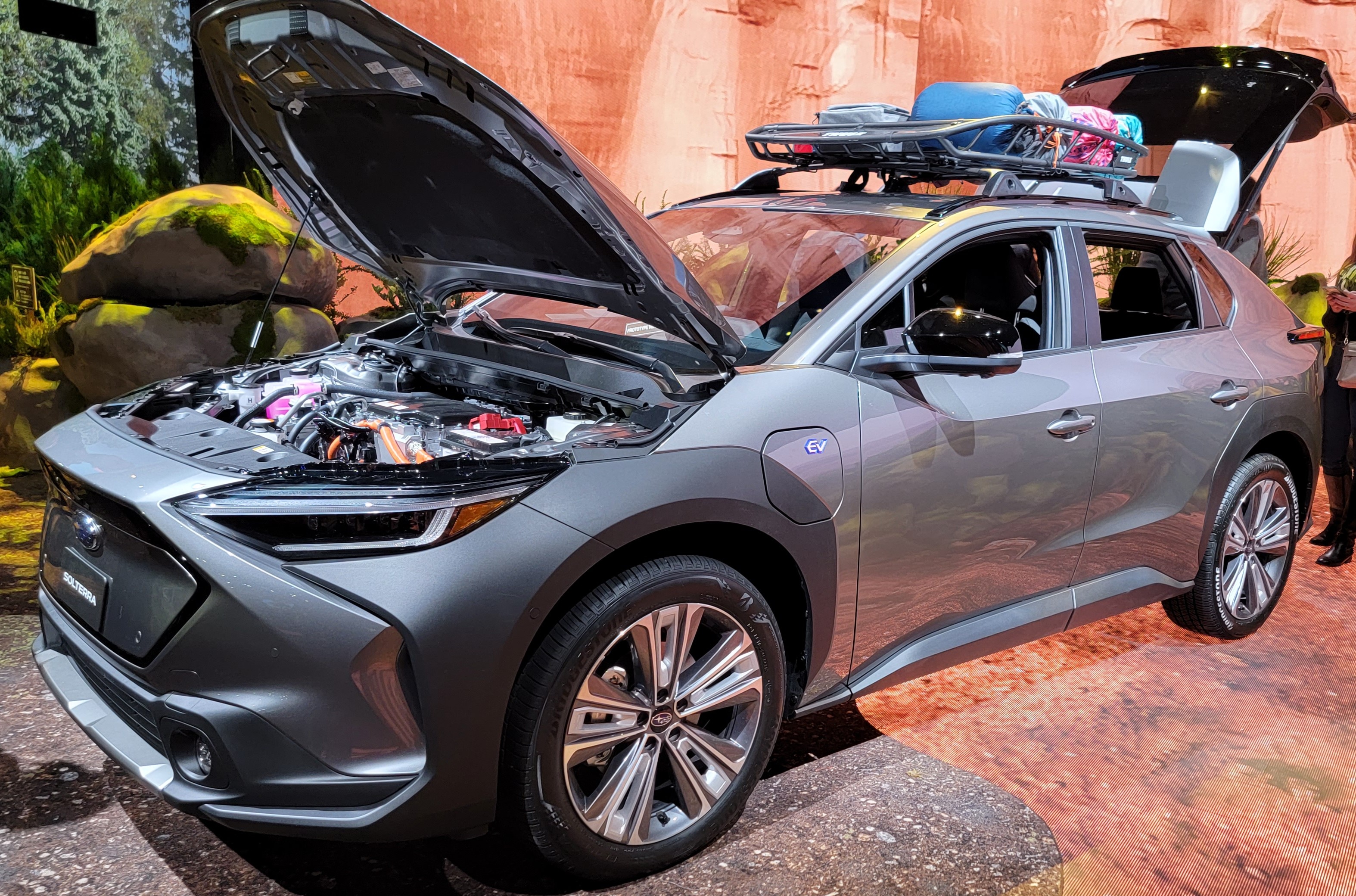
And so very similarly, just like the Beezie and the Solterra relationship, it's the same
similar.
So there's the Solterra and then the Trailseeker.
Yes.
And they're just like the Beezie and the Beezie Woodland.
Yes.
Okay.
And so I had the opportunity to drive the Beezie Woodland and we drove it on-road, we
drove it off-road, and had a fun time tooling around Ohio, California in this vehicle.
And it was quiet, it was smooth, and when we went off-road, so we were the last wave
and apparently there was this massive rainstorm, I mean, pelting down the rain.
And they weren't sure that we would be able to go off-road in this vehicle because, I
mean, it's got 8.4 inches of ground clearance, but that's not like 10 inches of ground clearance.
No, if you're going to sink.
Right.
You don't want to sink an electric vehicle at night or fall off of a mountain because
we were going up the side of a mountain.
Not recommended.
No.
And so they waited a day and so they gave us an extra day because we were there and
had some time.
And so we let things dry out a little bit and we ended up getting pretty far up the
mountain.
We couldn't get all the way to the top.
Apparently, Paul Walker has a ranch at the top of this mountain that we were going to
try to get there and they had some off-road extra from Fast and Furious who is no longer
And he's a car guy.
Yes.
But he had this ranch on top of a mountain and they still call it Paul Walker's Ranch.
And he is like the Toyota had rented that out and set up stuff up there and we could
not get up there.
That was the only place we couldn't get because the rainstorm opened up a ravine in the middle
of the road and we're like, yeah, we're not going to try and go around that.
Here's a thing and I'm going to go a little off topic slightly, but when people do leave
the road, they don't leave the road that much.
And there's this whole level of capable, we can call it Subaru capable.
That's going to get 90% of people where they need to be most of the time and that's kind
of what this is.
Yes.
100%.
That's exactly what this is.
You're not going to be crushing any boulders.
No, you're not going to go with it.
But you're going to get through muddy, ruddy crap.
Yeah.
Yeah.
You're not going to be like, it's not trail rated like a Jeep, but you can, like I think
it could do, you know, mild off-roading, get you to the trailhead, get you to your
campsite, whatever, really well.
And it did have, it does have the option of all-terrain tires.
So it comes with either all-season or all-terrain tires, zero-cost option.
Does that affect range?
It does.
So I want to say the range without the tire, with the all-season tires is like 281 and then
with the tires, it drops down to, I think, like 261.
It drops about.
It's kind of a hit.
Yeah.
It's a little bit of a hit.
Yeah.
And so it does drop a little bit, but I mean, anything over 250, I think, is going to get
most people where they need to be.
300's a number, but 250 seems to be a secondary number.
Yeah.
I mean, for me, I'm always like, am I going to be able to get to my mom's house?
And that's 200 miles away.
And if it's a nice day and it's not snowing, you know, 250 miles is plenty of range and
I don't like go fast.
I do Chicago, Milwaukee, which is like half of what you do, Chicago, Indy, and 250 does
it.
Yeah.
You know, I can get up there, charge some place and get back in that worry at all.
And sometimes I don't have to charge at all and just come home and charge locally.
So this car slots where in the lineup now.
There's a new Toyota 2 that isn't at the bottom of the lineup, but you think it would be and
that's the CHR.
Right.
I'm a little confused by that car's mission.
Did you guys talk about that?
We did a little bit.
So you have, so the Busy Woodland is the second electric vehicle in the lineup.
The CHR is going to be the third vehicle in the lineup and then the new Highlander will
be their fourth electric vehicle in the lineup.
Oh, I forgot.
Yeah.
That means four.
Yeah.
Yeah.
So for a company that was accused of dragging its feet on EVs.
They had plans.
They had plans.
They just weren't there yet.
They kept them secret.
They did.
They're good at that.
They're crafty like that.
But no, the CHR is essentially supposed to be like your get-about car, you know, kind
of sporty.
That's how they're positioning it is, is sporty.
But it's not cheap.
It is not cheap.
It is not.
But you know what?
The interior material is also not cheap.
And whenever I got into...
And standard all-wheel drive.
It is.
And so whenever I got into the old CHR, the gasoline version, I was always reminded that
it was initially supposed to have been a Scion.
And Scions were like monospec, you know, you can have any interior color you want as long
as it's black.
I completely forgot that.
Yeah.
And the CHR was kind of a fun car.
It was fun, but it was very cheap on the inside.
I fit well in it and it was zippy.
Mm-hmm.
I liked it.
And it had my daughter started driving sooner.
That might have been a vehicle I'd have her look at, though it was not available with
all-wheel drive.
Yeah.
And so the standard with all-wheel drive, it has, I want to say, standard heated seats
and heated steering wheel.
And then you can get an option for the...
Like there's two trims.
I want to say it's LE and XLE.
And then you have...
And I haven't written my review on this yet, so it's to come.
But it is, you know, base trim, up-level trim.
And then you get a little...
A few more amenities.
The only thing...
Like there were only a couple things about the CHR that annoyed me.
And the one thing was is there's no...
Like it's a hatchback, but there's no way to release the seats from the trunk.
And that was, to me, kind of annoying because the Beezie Woodland had that.
And the Beezie Woodland is more expensive, but it's not that much more expensive.
So let's just recap this because you made a very interesting point.
CHR, that's the smallest of the Toyota EVs, but not the cheapest.
I think the Beezie's actually slightly cheaper.
And that's their old-school mainstream compact crossover.
And then there's the Beezie Woodland, which is a little bit larger, too.
Yeah.
So you'll have Beezie, CHR, Beezie Woodland, Highlander, that will be how the structure
works.
All right, cool.
Yeah.
And when does the Woodland go on sale?
I think imminently.
Okay.
Yeah.
And then the CHR comes later?
I mean, not much later.
I think it's...
They typically don't give us pricing or let us test the vehicle if it's not going to
be on sale within the next month.
Yeah.
There used to be a thing called a long lead.
Yeah.
This is inside baseball.
Yeah.
And it was really for print publications.
Yeah.
And Consumer Guide was print.
Mm-hmm.
Back in the day.
And I'd go on these long leads and I'd be doing stuff that I wasn't going to write
about for 90 days.
Yeah.
Or didn't have to write about for 90.
Yeah, yeah.
I should have written about it right away.
You should have.
But I was a lazy bastard.
Well, has much changed.
There you go.
Well, welcome back.
We're going to take a break.
And when we come back, we talk to Ken Chester, the host of the Tech Mobility Podcast.
Stick around.
Questions or comments?
Drop us a line at carstuffatconsumerguide.com.
That's carstuffatconsumerguide.com.
Hi, it's Brendan from Sons of Speed.
You've heard me and my colleague Paul on the Car Stuff podcast whenever Jill's out
of town.
But now you can hear us every week on the We Are Motor Driven podcast, along with Jennifer
from Auto Exotica and Harvey from Rides and Drives.
We talk about everything from sports cars to trucks to EVs and our favorite, Speed.
So join us each week by searching We Are Motor Driven, wherever you get your favorite
podcast.
Welcome back to the Car Stuff podcast.
And we're back.
This is the Consumer Guide Car Stuff podcast.
I'm Tom with a scratchy voice.
She is Jill.
Jill, throw me a bone here real quick.
Hey, Tom, are you on social media?
I am.
Thanks for asking.
Yeah, check me out.
I'm just Tom Appell on Facebook.
I'm Car Guy Tom on X, I said X.
X.
X Twitter.
X Twitter.
And Blue Sky.
I'm enjoying the Blue Sky.
Now more than ever.
A lot of car people go in there.
So that's kind of fun.
All right.
You and I have talked on, just touched on, the concept of a software defined vehicle,
S.D.V.
A lot going on there and manufacturers are moving in that direction.
And the question is, is why and how.
And on the phone with us is Ken Chester.
Ken is the host of the Tech Mobility podcast.
Ken, how are you?
I'm doing fine.
How are you?
We are good.
I speak for Jill, but she's a little sick too.
I have a question for weaving it started.
I haven't seen the picture of the donuts this episode.
Oh, what?
So you're going to have to tell me, what are we looking at here?
Yeah, Ken has been critical.
Yeah, I did.
I did post a box on my store or a picture of the box on my stories, but not the open
case.
Well, tell them what we got.
Let's get this out of the way.
We've got something green.
Oh, no.
I don't know if it's molded or it's maybe celebrating St. Patrick's Day.
That's mint chocolate chip, I believe.
Okay.
But you know, all right, I'll play along.
Then there's like some kind of a cinnamon blob, which I'm not, I'm not sad about.
They call it a cinnamon twist, but blob is a good name too.
It does not look twisty.
It is not twisted.
And then chocolate on chocolate donut.
Double chocolate.
Yeah.
That's the listening.
I mean, this is a little bit off topic.
I mean, given Jill's regimen for running and eating healthy and all the things I see she
fixes at home, isn't this kind of a kind of falling off the wagon a little or not even
sure how to describe it?
Jill, I'll let you take that one.
This is my one cheat a week.
So don't you feel privileged, Tom, that when I am cheating, it is here.
Other than that, I eat a lot of kale.
Oh, it is interesting that Ken didn't worry about my physiology at all.
Just sort of assumed I'd be the donut guy.
Well, you are kind of a donut guy.
I'm going to assume that Tom's been picking out the donuts.
Yes.
Yes.
Lodging, lodging a complaint with the office.
Men should probably not pick out donuts or curtains or bedspreads or carpet or wallpaper
or yeah.
Yeah.
Or if you're going to a movie with my wife, the movie.
Yeah, no, you should not do that.
That sounds like a can.
I don't think I want to open Ken.
How are you, sir?
Well, thanks.
So now that we've got the important stuff out there, yes.
You know what?
Do us a favor real quick.
Tell us about your podcast and what else you do.
My God.
Oh, well, I'm kind of like a lot like you guys.
The Tech Mobility podcast is actually a rebroadcast of the radio show.
Okay.
Folks around the country.
I take it a step further though.
I actually have two different podcast streams.
I have the Tech Mobility podcast, which is the whole program.
And then I break it up into the segments.
I have four segments and that's called Tech Mobility Topics because I find sometimes people
are only concerned about that specific eight to 11 minute topic in question.
So you can go there and just hear the topic and not have to listen to the whole show.
Interesting.
Here's our problem.
Producer Randy doesn't work for free.
So we're not doing that.
I can appreciate that.
Yeah.
Producer Randy probably wants to get paid to nervous the people.
I have, I've actually had people suggest that we chunk up the show.
But we have what we have never got around to doing that.
And I don't know.
I'm way too lazy at this point.
So can we've been talking about this and then you agreed to expand on this for us.
But we've been hearing a lot about software defined vehicles.
And I think that a lot of people who talk about this don't fully appreciate what that
is or don't understand exactly what that is.
But we seem to be moving closer and closer to that with every new generation of vehicle.
And tell us what is an S.D.V. and why do manufacturers want us to move in that direction?
Well, I'm going to start by taking a step backwards.
Okay.
I'm going to take you back now 15 years.
Wow.
And I'm going to take you back to 2011.
I weighed less than that.
2011 was the critical point where the National Highway Transportation Safety Administration
had made a deal with the automakers to make certain driver, advanced driver safety features
standard where we got, we got the traction control, we got stability control, we got
a number of features.
They estimated that by 2013, a Ford F-150 was already running a million lines of code.
So, I think what the problem is people think that the S.D.V. is a brand new thing coming
up out of nowhere and then they conflate that with EVs.
And they're not conflated as you both well know.
What's happening is as we have seen the growth in infotainment systems in a variety of comfort
and convenience systems in motor vehicles, that has demanded more and more software,
less and less hardware.
If you want to really go back, I can take you back almost 25 years to a lesson I learned
when we had a problem with my wife's 2002 Dodge Grand Caravan.
We had a problem with it and come to find out that it was not a mechanical system.
It was an electronic software system that had to be replaced relative to acceleration
or I think it was the dashboard.
It was something that I expected to be still electrical mechanical and it was electrical
and by definition a bit the start of the software.
So, this has been happening in an increasing number over the last 25 years where people
are starting to see it now is with the growth of EVs that minus all the mechanical parts,
it is totally software.
But that's not to say that your internal combustion engine and your hybrids are not considerably
more software.
I mean you've got drive by wire, you've got steering by wire, you've got by wire throttle.
My God, you've got electronic thermostat.
A lot of things that were mechanical or even electrical mechanical have been electrical
for some time and usually the consumer's first introduction to that is at the dealer's
service bay when they find out and they get the quote and they find out, oh no, no, no,
that's all electrical and software based now.
We have to reprogram.
Can you back up just a hot minute because you mentioned drive by wire, shift by wire
and to a lot of people that might sound like that is not software driven.
Can you explain what that means?
Basically it replaces the electrical, it replaces the mechanical, well let's take steer by wire.
Until recently it was, you know, rack and pinion steering that controlled it.
And Jeep still have those I believe.
Yes.
There's an increasing number of vehicles where it's totally electronic where it's servos
and stuff.
There's not a rack and pinion anymore that it takes input from the steering wheel that
turns the wheels and it's all electronic.
I did a story on a electrical class 4, class 5 medium duty truck that was totally steer
by wire, break by wire.
In the case of break by wire, all the hydraulic systems that you are aware of don't exist.
It's all electrical.
Interesting.
And that's legal on medium duty trucks because I think we still haven't gotten to the point
where break by wire is legal on light duty vehicles or have we?
Actually they had gotten approved and it was the oh, I can't think of the name of the company
now.
It's been a couple of years since I wrote about it, but they did get approval from the
government to actually propel that and they were able to prove it as safe if not safer
than existing systems.
People think that a software divine vehicle is strictly the ability for over the air updates
and certainly that's part of it.
That's a small part of it.
This has been happening for the last 25 years and it's been increasing as we've moved to
more electronic systems as automakers have moved to simplify the number of computers
and vehicles, the can bus that they use in terms of reducing the number of wiring required
because it was getting crazy to support all this stuff.
It wasn't Tesla especially good at removing wires from the product like miles and miles
of wires.
Indeed, but the automakers are looking at 48 volt systems in order to reduce that.
They're looking at multi-purpose computers.
Most people don't realize you have an engine computer, you have a transmission computer,
you have a computer that monitors what's going on inside the vehicle.
You know, they're trying to get away from these single purpose computers and the wiring
that goes with them in order to simplify everything, but yet still support all the things that
people either want or are being offered in today's vehicles.
So having multiple system specific computers versus one big computer running everything,
is that a good thing or a bad thing for reliability, do you think?
It depends.
It really depends.
If you're Toyota, I'm all in.
If you're a scientist, heck no.
To be very blunt about it, Ford was just bragging now that in their attempt to go eyes-free,
hands-free by 2028, that they chose to do all the sensors and all the programming and
all the computer development in-house and they estimate that that would reduce costs
by 30%.
The overriding thing that happens in the auto industry, you both know it, your audience
probably does too, but to remind you, it's cost.
Automakers fight over a tenth of a cent a unit.
They will get in a room and it will get ugly.
Cost is the overriding reason that drives them, either try to make a profit, make more
money from something or reduce costs.
We've seen this over the last 25 years.
We've seen the battles.
We've seen where Toyota figured it out.
We've seen where Stalantis was at war with everybody, which I knew wasn't sustainable.
As a result, if you're a supplier out there with the best technology, you're going to
Toyota before you go to Stalantis, if you go to Stalantis at all.
One of the interesting things, I've heard manufacturers defend the move towards software
to find vehicles and one of the benefits they claim that consumers will enjoy is that
their vehicle will be able to be updated after the fact.
They will not have a vehicle with software that will eventually become obsolete.
One of the downsides of this, I think, is at some point a manufacturer is going to have
to determine that they're not going to support that vehicle anymore.
They didn't say the quiet part out loud, though.
The quiet part is they heard money.
Stalantis was estimating by the turn of the decade, $25 billion a year in software-related
support revenue.
GM said the same thing.
BMW tried to pull that stunt a few years back, you might recall, with heated seats.
You spent all this money, you spent mid to high-five figures for BMW.
You want everything that it came with.
BMW thought people would pay for seasonal availability of heated seats.
And basically, well, to be polite, customers said no, and I think they use stronger terms
than that.
I think the pushback, too, is paying for hardware that exists on your vehicle that you can't
access.
And I feel like they charged you for Apple CarPlay.
It was there, but if you wanted to use it, you had to pay a fee.
Well, there are a great number of Tesla Model Ss with full self-driving that never was fully
realized, and people paid big money up front.
Oh, you got quite it.
Yeah, here's the thing.
And this kind of rolls in a whole nother conversation that's related, and I just did a segment on
it called Write the Repair.
If you are paying all this money to buy a vehicle, I mean, we all know, we've read this
story, 50,000 is average right now, and you and Jill, I mean, we between the three of
us, we can't count how many vehicles that we have test driven in the last year way above
that in cost.
Yeah, I've driven a lot of $60,000 crossovers.
Yep.
Ridiculous numbers.
So here's the thing.
If you're paying that kind of money, you should have the right to take it wherever you want
to get it fixed.
If you're a Tesla, and I just did this story because it's a big deal right now out here
in Iowa, related with John Deere being sued and the state legislature right in the middle
of Write the Repair, but it's been going on since 2012 in Massachusetts.
So that kind of leads into a two is, okay, fine, you're giving me all of this stuff.
Some of it, fine.
Some of it, do I really want it?
I don't know.
If you come to me and I'm driving an EV and you say you can double my range for $1,200.
Yeah, sign me up.
But I also heard the dark side where automakers are saying, okay, here's the deal.
We're going to allow you to have all of this stuff, but you're going to have to deal with
all the commercials.
And oh, by the way, if you don't want the commercials, pay us 150 a month or 25 a month
or whatever number, we'll make the commercials go away.
And I think you made a really good point where you talked about not being able to take your
car wherever you want to go to get it repaired.
In a software-defined vehicle, it's like taking a Macintosh to a PC dealer.
That's not going to work.
It is going to force independent repair shops to invest more money in stuff.
They're going to have to get access to that software.
And not all of them are going to do that.
Nope.
And that's a shame because independent repair shops are often a really nice alternative
cost-wise to going back to the dealer.
And if you don't like...
So my mom had a Chevrolet for many years and she hated her Chevrolet dealership.
They were not good.
And she ended up taking her car to the Honda dealership to get repaired because they were
actually nice.
And so in a software-defined vehicle, doing something like that is no longer going to
be possible.
Or very difficult.
It really gets down to state legislators and the right to repair because I don't think
that the American consumer...
It would be different.
If these were 15 to $20,000 cars, you might get some pushback, but you go, yeah.
But at 50, 60, 70, $80,000, and I can't take it to my mechanic that I trust or I...
Because maybe I'm a computer whiz and I know and I've spent the money, you know.
Again, we told a story of a $900,000 combine.
Guy changed a sensor that went out.
All he needed was the code to reset it.
John Deere said, no, we're two weeks out and it's going to cost you $230.
The guy's in the middle of harvest.
The guy's got 45 minutes to get the rest of that particular plot of land harvested before
it rains.
If it rains, the crops ruin and his costs go up significantly.
The only saving grace he had, he had a 2004 in the garage.
He was able to get out and finish it.
But his $900,000 combine, still sitting there.
It's a problem.
So that's not going to work.
But to give you a different example, I recently upgraded my computer, oh God, six months ago,
didn't realize why it was running so slow.
Had an independent guy come in here, he showed me in 15 seconds what was wrong.
He was able to update it, fix it.
Best $500 I ever spent and it's a Dell.
I've got a Dell.
I love my Dell.
But if I had to send this back to Dell and I'm on this thing eight to ten hours, six
days a week, I couldn't afford to do that.
That's crazy.
Ken, we're totally out of time, but tell us how we can read your right to repair article.
Well, the best way to find me is techmobility.show that will also tell you where I am on the radio
across the country.
We do the Tech Mobility Minute, Tech Mobility Focus and the Tech Mobility Show.
And we're from Massachusetts to California.
You can find us almost anywhere.
Cool.
We will link to that stuff.
Ken, thank you so much for your time today.
Thank you for having me as always.
We need more time.
Always.
We will have you join us again.
I'm Jill, anytime.
Let me know.
Be glad to be on again.
Thanks, Ken.
That is Ken Chester of the Tech Mobility Podcast.
We're going to take a break.
And when we come back, quiz time.
Quiz time.
Questions or comments?
Drop us a line at carstuffatconsumerguide.com.
That's carstuffatconsumerguide.com.
Welcome back to the Car Stuff Podcast.
And we're back.
This is the Consumer God Car Stuff Podcast.
I'm Tom.
She is Jill.
We just chatted with Ken Chester, one of the only guys I know that still wears a hat.
Yes, a proper hat.
Not a baseball hat, but a nice, he's dapper.
Yes, he is.
The gentleman is dapper.
Yes.
He wears nice hats.
He does.
All right.
Social media.
You got social media?
I do.
I do, in fact, have social media.
Yeah, so you can find me on Instagram, TikTok, Twitter, X, Twitter.
Blue Sky, Threads, Facebook, LinkedIn, all the things at Jill Siminello and YouTube,
which I have started rebanding to Car De Jure.
And that's the hashtag I use, Car De Jure.
It was funny, speaking of Quebec, and I was talking about it, and I mentioned that my
channel was Car De Jure, and he was like, that's brilliant.
And I'm like, you're the only one who gets it, but they speak French, so they get it.
But, yeah, because I drive essentially a different car pretty much every day.
I don't know what happened, but this year, just this huge community of car guys has
moved to Blue Sky.
If you're not there and you want to talk about cars, go there.
And just find, follow me if you can, but go there and just find somebody who's talking
about cars, and you'll find the bigger group.
It's really fun.
You know, like Twitter used to be.
I thoroughly enjoyed Twitter when it was just talking about cars.
I do a thing only on Blue Sky, and I just call it, it's called Cheap Cars Looking Good,
and I just find old ads for really cheap cars, the Dotson B210, a Vega, something like that.
And people seem to love that, and then all these people have, like my grandmother had
one of those, which makes me feel old, because I knew people who had them that were peers.
Yeah, I was going to say they were of your age.
Yeah, but Blue Sky, it seemed to slow down, and now it seems like it's back again.
Okay.
And I'm liking it.
It can get a little political, you can avoid that though.
Yeah, I'll have to, anything can get political, and you can avoid it.
So I will have to log on and pay more attention to Blue Sky.
Yeah, it's fun.
I'm on, occasionally, I'm just not, I'm on TikTok and Instagram every day.
Yeah, and X has died.
Not much going on there anymore.
Also, Steve and Johnny don't want me on X.
But we have some dedicated followers on X.
We do.
Yeah.
Yeah, Pillboy is a great follower.
Yeah.
He sent us, I feel terrible about this, he sent us a gift card for Spunky Dunkers, and
it never showed up.
Oh.
Yeah, I really appreciate that, but he listens.
I don't know his real name, but we have a lot of best conversations in the DMs, good
guy.
Yeah.
All right.
Are you ready?
I, yes.
It's quiz time.
This is the Consumer Guide Karstoff Power Quiz number 316.
It's not really 316.
You often complain.
Oh.
Loudly.
Because I, you know, I'm a complainer.
You are.
Yeah.
That I come up with quizzes that are too hard and too aimed at people my age.
Well, that's, that is true.
As if we are vastly different ages.
We are kind of different.
So I've got one here for you.
Very recent.
Oh, okay.
2020.
Okay.
Topic is 2020 madness.
Covid cars.
I'm going to give you a car model, and all you have to do is tell me if it was on sale
in the US for the 2020 model year.
I see you complain it.
I'm not complaining.
It's just a heavy sigh.
I'm, I'm going to eat my cinnamon blob now.
Heavy sighs are complaints.
Are you ready?
I'm just going to give you a car model.
Okay.
You told me if it was on sale in 2020.
In the United States.
In the United States.
But could it have been on sale someplace else?
These.
One of them.
Okay.
Yeah.
Okay.
The Ford Fusion.
No.
Yes.
Ugh.
It was, that was it.
It was 2006 to 2020.
Okay.
Yeah.
Because I knew Ford did away with all of its cars.
I couldn't remember exactly when.
You have no points.
I have no points.
Your favorite phrase.
The Chevrolet Spark.
Chevy sold two small cars at the same time.
One was the Spark.
Mm-hmm.
Very much an old school economy car.
Mm-hmm.
And the Sonic.
Mm-hmm.
Which was a delight.
You could get it with a small turbo with manual transmission.
It was fun to drive.
It was affordable.
And it was really solid.
It was a nicely built car.
I miss the, I miss the Sonic.
Okay.
I don't miss the Spark.
Was the Sonic post Aveo?
Was that like the evolution of Aveo?
I would, no, that would have been the, oh yes it was.
I think you're right.
I think it was Korean.
It was Daewoo.
Mm-hmm.
Daewoo built, and I think it was an evolution of that.
But you're asking me about the Spark.
The Spark.
Was the Spark on sale in 2020?
I'm going to say no.
It was.
Ah!
Yeah.
Five.
2013 through 2020.
That and a thousand.
Yeah.
You're in the trouble now.
Yeah.
The Dodge Hornet.
No.
It was not.
Yeah.
That came online in 2023.
Yeah.
I'm like, I don't think that was out yet.
You have one point.
I'm just going to write that down here real quick.
Jill.
You put another.
That's a problem.
This is me crunching in my donut.
Uh, one.
Hey, your donut wad.
My donut blob.
My donut blob.
It's a blob.
Yeah.
Good thing you're in pastry marketing.
The Toyota Venza.
I took that as a model name that's had an interesting life.
So fun fact, my mother has a 2014 Toyota Venza.
Uh-huh.
And I feel like that was the last model year before it came back as the hybrid.
But when did it come back as the hybrid?
I want to say that Ed Piotrowski, who has been on the show several times, owned a Venza.
Could be.
Or talked about owning a Venza.
My friend Roman had a Venza and I was like, oh, you're twinning with my mom.
That's adorable.
Um, oh, let me think.
Okay.
So, um.
Yeah.
So Venza was a mid-sized crossover.
It was replaced by a compact crossover.
The second version of that I really liked.
It was very Lexus-like for Toyota money.
It really was.
And I'm trying to, like, so I'm trying to place it in my brain because I drove it at
the Texas Auto Riders Association Spring Roundup.
They gave me a trophy.
I think that was, they did.
They gave both of us a trophy.
I don't care about your trophy.
Hey, I submitted for the trophy.
You should care about my trophy because we won for, I think, second place for a podcast.
Yeah.
Um, okay.
But I think that was 2021.
So I'm going to say no.
Wow, you nailed this.
The first generation Venza, the really gangly looking thing that your mom owns, 2009 through
2015, it returned for 2021 and lasted through 2024.
And that vehicle was, you know what?
That was the first, I believe, all hybrid Toyota.
Okay.
Yeah.
I think it was hybrid only and that was the first Toyota.
Like that.
That Toyota has lots of all hybrid vehicles.
The Sienna, the Camry, the RAV4.
I think this is the Sequoia all hybrid.
Oh.
No.
Oh, the Sequoia might be.
I was thinking of the Tundra.
Yeah.
It might be.
Hmm.
Alrighty.
You have two points.
All right.
Bring it back.
Bring it back.
Two.
All right.
You can pull this off now.
Uh-oh.
Um, we did Venza.
Volkswagen Passat.
Oh, of course you had to do that.
Um, well, because they came out with the Ardian, which I believe replaced the Passat.
Can't help you.
But when did that come out?
The Ardian was a really interesting vehicle.
It was kind of an Audi light, but it was more luxurious and other Volkswagen's, but not
quite Audi-like, but also way cheaper than an Audi.
I liked it.
I wanted to call it a luxury vehicle.
Damon wouldn't let me.
Hey, Damon.
You're suing Damon's listening.
We're trying to have lunch, and he's just busy.
He works at cars.com, though, and they keep him hopping.
He's busy.
I'm giving air quotes.
He just doesn't want to have lunch with you.
Who does?
I actually do owe you lunch.
You do?
I do.
My mom has lunch with me.
Well, your mom has to have lunch with you.
Okay, Ardian.
Did you say she has to?
Yes, she's your mom.
She does.
She has to.
You probably take her out to lunch, so she has no choice.
A Volkswagen Passat.
Let me try to get this back on the rails.
Back on the rails.
Was there a Volkswagen Passat in 2020?
That could be a very good vehicle, depending how it was equipped.
I'm feeling my phone vibrating.
I wonder if that's somebody telling me the answer.
I'm not looking.
I am not looking.
No, your pregnancy test came back.
Good.
Was it positive or negative?
I respect your privacy.
Thank you.
Thank you.
I'm going to say no.
Yes.
After a very long run, it died in 2022.
All right.
You have still two points.
You need the bonus question.
Your favorite topic for bonus questions.
I went again to franchiseopportunities.com.
I have four franchise opportunities right here,
recommended by franchiseopportunities.com.
You have to tell me which one's the fake.
Got it.
All right.
This is me still punching on my cinnamon donut.
All right.
Are you ready?
Yeah.
These are things you can do.
Oh, by the way, for under 30 grand.
Under 30 grand.
Okay.
That's a deal.
If you ever read these things,
it's like the franchise fees 30 grand,
and then you have to have like $6 trillion in savings.
So you can float the business until it dies.
Ready?
Mosquito Squad.
Okay.
Urban Wax with two X's.
Mr. Sparky Electric or Schnitzel Magic Bavarian Bistro.
I'm laughing because producer Randy's laughing.
I know.
I see that out of the corner of my eye.
I'll read them again.
As you enter into a coughing fit,
because you're cracking yourself up.
Hopefully it's pneumonia.
Mosquito Squad.
Urban Wax with two X's.
Mr. Sparky Electric.
That almost sounds like a brothel.
Mr. Sparky.
No.
Schnitzel Magic Bavarian Bistro.
My brain did not go there.
It did not.
Mine did.
Clearly.
Clearly it did.
It's Mr. Sparky Electric.
Okay.
Yeah.
Therefore it doesn't sound like a brothel.
Yeah.
Okay.
So I think it's going to be...
To you.
I think it's going to be one of the last two.
You've spent a lot of attention.
Like I feel like I've seen Mosquito Squad somewhere.
Oh, man.
I feel like I've seen Mosquito Squad somewhere.
Okay.
So I'm going to buy that as being real.
All right.
I don't remember what the second one was.
Urban Wax with two X's.
I could totally see that being real.
All right.
So Mr. Sparky or Schnitzel Magic.
Yeah.
I think it's got to be Schnitzel Magic.
Oh, man.
My apologies to everyone still listening.
Schnitzel Magic Bavarian Bistro is the fake.
Okay.
I got it.
You won.
By the skin of my teeth.
There you go.
I signed this for you.
It is covered with germs.
I think I'm not touching that.
All right.
I'll put that over here.
Thank you.
Thank you.
I think...
Yeah.
You need to throw that away yourself.
You're not even going to make the cleaning service put that in the trash.
No.
You know, we talked about...
Just to get us back on something like a topic.
But we talked a little bit about the Subaru effect, right?
That's enough off-road for most people.
But one of the funny things about that is they added wilderness.
And that's what I drove here in.
Okay.
Forester wilderness.
I thought...
Out of the corner of my eye, I thought maybe it was an outback, but forester.
I was supposing it the outback hybrid.
And I don't know what happened, but I didn't get that.
Okay.
But I still want to dry that.
And we should talk a little bit about that.
Maybe we have.
But Subaru has gone hybrid now in versions of the forester and the Crosstrek.
And that hybrid system comes by way of Toyota.
Now, unlike Mazda, they're actually using their own engines because Subaru engines are unique.
They're flat fours, pancake fours, horizontally opposed fours, whatever you want to call them.
They're weird.
Boxers.
Boxers.
Right.
Actually, the obvious name that I didn't use.
But the interesting thing is you have all four cylinders running horizontally to the ground.
Which is interesting for a bunch of reasons.
It tends to make stop-start systems not good.
Like the 2.2 liter stop-start is obnoxious in the Crosstrek.
But on the other hand, they make this wonderful gravelly noise and they develop torque at a really low speed.
So even though there's not a lot of horsepower there, they feel quick around town.
And it's a good amount of early torque for off-road stuff if you do it.
But yeah, Subaru, what an interesting brand.
And then we've complained.
I have complained that the new Outback doesn't look like a wagon anymore.
Yeah.
That you drove that.
I did.
I liked it.
What are you working on?
You know, I actually, so it's funny.
I had a story that posted in December and I didn't realize it until yesterday that it posted.
Oh.
And I did a story that talked about the Rebel rally and the journey with my dad as he fought Louis Body Dementia.
And kind of wove the two of those together and how...
Oh, you shared this on Facebook.
Yeah, yeah.
And how one situation kind of helped me get through the other.
And so that was something I felt compelled to write.
And a girl's guide to cars posted it.
And I didn't realize they published it in December.
And so I'm a little bit behind in promoting it.
But it was very heartfelt and very...
Well, we will link to that.
Yeah.
So I would say if you're looking for something to read, you can...
It's on Facebook and you can also find it on LinkedIn.
Oh, man.
I'm glad the show is over.
All of a sudden I'm gonna cough.
Now you're just gonna cough and I need to get out of the room with you because you're gonna like get me sick again.
If you're listening live, I joined the John Hansen show and WGN radio today at 6.45 Chicago time.
Got it.
No one else is gonna hear this in time.
Yeah, no.
All right.
All right.
Good show.
Thank you to Ken Chester.
Yes.
Of the Tech Mobility Podcast.
Thank you, producer Randy.
Thank you, Jill.
Let's talk more about cars again.
Next week.
Next week.
Remember to check us out at ConsumerGuide.com.
The Car Stuff Podcast is produced by J-Turn Media.
To advertise on the show, please drop us a line at carstuffatconsumerguide.com.
About this episode
Jill and Tom dive into a range of automotive topics including Toyota's new off-road capable BZ Woodland EV, the quirky history of the Chrysler TC by Maserati, and the controversial Ford Mach-E frunk pricing. They also discuss Jay Leno's law aimed at protecting classic cars from emissions testing. The highlight is an insightful conversation with Ken Chester from the Tech Mobility Podcast about software-defined vehicles, explaining how software increasingly controls modern cars, the implications for repairs, and the industry's shift towards software-centric designs. The episode wraps with a fun quiz on 2020 car models and lively banter.
Jill is back in the co-host seat this week, having spent some time in Canada intentionally driving Volvo vehicles in snow and on ice.
Tom opens the show with a mea culpa. Listen in to see what he got wrong last week.
The hosts discuss a number of news items, including some reported delays in the delivery of Tesla's newly discounted Cybertruck, Lamborghini backing away from electric vehicles, and the proposed Jay Leno Law. Listen in for the whole story.
Still in the first segment, Jill reviews Toyota's new bZ Woodland, an electric vehicle with an off-road vibe.
In the second segment, Jill and Tom are joined by Ken Chester, host of the Tech Mobility Podcast. Ken share his take on the the next stages of automotive computerization, and what, exactly, is meant by "software-defined vehicle." It's a good conversation.
In the last segment Jill is subjected to Tom's "Model Year 2020" quiz. Listen in and try to beat Jill's score.
Hosted by Simplecast, an AdsWizz company. See pcm.adswizz.com for information about our collection and use of personal data for advertising.