Audi is a luxury car company from Germany that makes high-performance cars. They are part of the Volkswagen Group and focus on combining luxury with sporty features.
Chrysler is a car company from the United States that makes different types of vehicles, like cars and SUVs. They have been around for a long time and have changed ownership a few times.
Mazda is a car company from Japan that makes cars known for being fun to drive. One of their popular models is the MX-5 Miata, which is a small sports car.
Toyota is a very big car company from Japan that makes cars known for being reliable and good on gas. They created the Prius, which is a popular hybrid car.
Kia is a car company from South Korea that makes cars that are usually affordable and dependable. They have been getting more popular for their stylish designs.
Volkswagen is a car company from Germany that is famous for making popular cars like the Beetle and the Golf. They are known for their quality engineering.
Hyundai is another car company from South Korea that makes many different types of cars, including small cars and SUVs. They have improved a lot in quality and technology.
Porsche is a famous car company from Germany that is known for making high-performance sports cars like the 911. They are associated with luxury and speed.
Car
Mazda X3
The Mazda X3 is a car that Mazda created in the early 1990s, targeting young people who wanted a sporty coupe. It was part of their strategy to appeal to the youth market.
The Mazda MX-3 is a small car that was made in the early 1990s. It was designed to be sporty and fun, but many people didn't like its looks or colors, which made it hard to sell.
The Chevy Chevette was a small, inexpensive car made by Chevrolet in the late 1970s and early 1980s. It was popular for being cheap, but many people didn't think it was a great car.
Car
Edsel
The Edsel was a car made by Ford that didn't sell well and is often remembered as a failure. It was named after Henry Ford's son, Edsel Ford.
Ford is a car company that makes many different types of vehicles. It was started by Henry Ford a long time ago and is famous for how it built cars on assembly lines.
The Chrysler Newport is a large car that was made a long time ago. It was popular for being comfortable and spacious, and people often remember it fondly.
Car
Chevrolet truck
Chevrolet trucks are strong vehicles made for carrying heavy loads. They are often used for work and are known for being reliable.
The Plymouth GTX is a classic American muscle car that was made in the late 1960s and early 1970s. It was known for being fast and having a cool design, which made it a favorite among car lovers.
Muscle cars are powerful cars that are built for speed and performance, mostly made in America during the 1960s and 1970s. They are known for their strong engines and sporty designs.
The Great Recession was a big economic crisis that happened from 2007 to 2009, causing many businesses, including car companies, to struggle and change a lot.
Market share is how much of the car sales in a market belong to a specific company. For example, if GM sells 60 out of every 100 cars, it has a 60% market share.
The sale price is how much you end up paying for a car after any discounts or deals are applied. It's the final price you agree on when buying the car.
The Dodge Power Wagon is a tough pickup truck that can handle rough roads and heavy loads. It was first made for the military, but now it's popular with people who like to go off-roading or need a strong truck for work.
Ferrari is a famous car brand from Italy that makes fast and expensive sports cars. They're well-known for racing and have a strong reputation for quality.
The Honda Accord is a larger car compared to the Civic, and it's great for families because it has a lot of space inside. It's known for being reliable and comfortable to drive, which is why many people like to use it for their daily commutes or road trips.
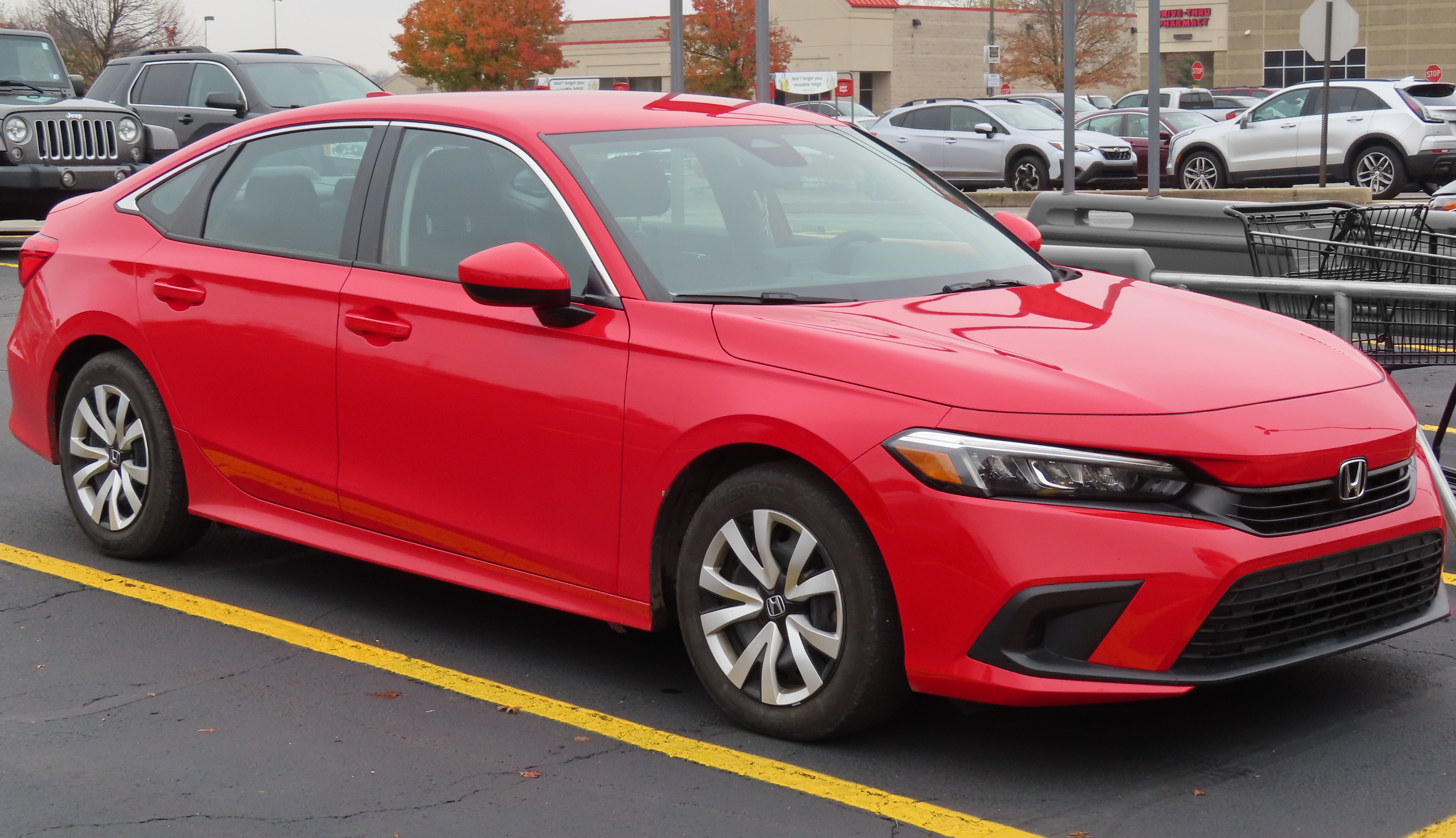
The Honda Civic is a small car that many people love because it's dependable and gets good gas mileage. It's been around for a long time, and lots of people choose it for everyday driving because it's easy to handle and affordable.
The Bugatti Veyron is a very fast and expensive car. It's famous for being one of the quickest cars you can buy, and it has a powerful engine that makes it stand out among luxury vehicles.
LIVE
Welcome to another In-Wheel Time podcast.
Welcome to the In-Wheel Time Car Talk Show, coming up off the Randy Press Grove and his
best seller, This Car Sucks, tales and tips from a life of wheelin' and dealin', oh boy.
In Jeff's car culture, products made by famous car brands, and Mars has the best driver experience
in Texas. Howdy, along with Mike out of this world Mars, and he is over there, over there,
in another part of Texas, that is a big nation. Actually, it's a destination for all to see.
That would be in Meterville, Texas. We also have with us today, as always, Jeff, we always need more Jeff Z.
Chief Engineer David Ainslie sleeping in. No, I thought he was off today.
No, he leaves town tomorrow. No, Sunday, Saturday, Monday, sometimes.
Whatever. I'm Don Armstrong. Glad you could join us today. Now our guest. We've been waiting for this all week long.
His name is Randy Press Grove, and Randy, it's good to see you. I want to know how you came up with this absolutely marvelous title.
This car sucks. Tales and tips from the life of wheelin' and dealin'. I like it. Do we have Randy?
You got me on audio. We got you on audio. Oh, God, we have to look at us while we do this interview. What the hell?
I got a little technical difficulty on the video, but I do have audio loud and clear.
Okay, well, that's good to know. Mr. Mars is going to put up some really good-looking girls on here.
So for the guys that are watching right now, stay tuned. So while Randy previews his book, we're going to look at some hot chicks, okay?
All right. Is that okay with you, Randy?
Absolutely. Absolutely. And we're going to put down at the bottom of the screen. This is the real Randy Press Grove.
Okay. Well, I appreciate you guys having me on, and I'm particularly interested in your program here because I spent a lot of money in Southeast Texas, and particularly Houston.
And enjoy it immensely. You've got a real good affinity for your show and all the references you have there. So thanks for having me on.
Well, it's our pleasure. And I understand that you, sir, have been in the car business. So this is really kind of an insider's view about this car, socks, tails and tips from the life of wheeling and dealing.
And I'm sure that you've heard lots of stories.
I incorporated quite a few of them into the book. And as amazingly enough, I've spent 47 years in the business, most of them in wholesale, even though I started in retail.
But I was with Chrysler the first time they went broke and have done some successive tours, mostly in sales and dealer development with Mazda, Toyota, both here in Saudi Arabia, Kia, Hyundai, Volkswagen, Audi and Porsche.
So I was, I was kind of to a lot of the interesting stories, primarily regarding dealers, but also involving some manufacturers as well. And it made for some pretty good reading.
I got into the book on a dare. My partner and I were driving someplace and I somebody cut me off on the freeway. And I said that's gone in my book.
She reached into the backseat, pulled out her computer and said, start talking, Mr. And 100,000 words. And months later, we had this car sucks.
Well, I love it. And so obviously, you've had lots of cars that sucked for many reasons. And do you have a favorite?
I think with the, if you want to term it this way, one of the suckiest was in the early 1990s when Mazda came out with what they call the quintessential youth market sport coupe called the Mazda X3.
And it was the antithesis of what a young sophisticated buyer would actually want. Mazda complicated the problem by bringing a feature car and a hideously purple car color that was reminiscent of Barney the dinosaur.
Oh, God.
Yeah, that sucks pretty much.
Yeah, none of the dealers nor the factory could could sell these things. Now, while kids might have liked Barney the purple dinosaur, their parents absolutely abhorred the car. So that worse ones.
Well, you know, you got to ask yourself, what were they thinking? Yeah, you know, you would think that these multi billion dollar conglomerates corporations would do actual case studies, they would go to focus groups, they would ask people,
what do you think about this that does the fender look right? Do you like the tires, the wheels? But apparently marketing somehow gets and gets involved in this and it all just kind of gets blown out of the water.
Yeah, marketing goes to design design, they draft it up and there you go. Yeah.
Well, I don't, I'm not really sure in the case of the of the MX three exactly what they were thinking, but obviously it didn't work. But you know, there have been several others over the years, different manufacturers and I think over 47 years I saw quite a few of them.
Well, and you put in in your book, spectacular product failures, Edsel, VW Feighton, the Chevy Chevette, although I did like the commercials back in the day, they all teach better business lessons than they do successes.
They do. And you can learn from some of the failures. I think the example for example was was actually not a bad car. And, you know, 60 years after the fact it still has a loyal following, almost a cult type of following.
The car was actually well designed, just had the unfortunate circumstance of being introduced in the middle of one of the worst post war recessions that ever came about. And it came became synonymous with failure and because the car was actually named after Henry Ford's father.
It was quickly scrapped by the Ford finance staff to colossal $250 million or Hickey. So you learn from these things. Yeah, well, I have to say that the horse collar grill didn't do it any favors. And the son's name was Edsel as well. Yeah, that's correct. Yes, that's correct.
I like this particular one. And I go back to the vacation movie. The one question that will save you thousands. Can I have my keys back?
Ah, Bill Hurd Chevrolet.
Yeah. Yeah.
So, I mean, it's funny, but I wonder how many people actually have gone to the dealership and said, I want my old car back.
Not really sure, but one of the things that will really help somebody when they are looking at going into the dealership for a car deal, I think I got some video now. Can you guys see me? Yeah.
Yes, sir.
Hey, you look taller on the screen.
Well, thank you. But if customers would simply do some homework before they go into a dealership, it would vastly improve their entire buying and ownership experience.
Unfortunately, since this is one of the largest purchasing items that a customer will ever do, aside from his house, they simply spend less time researching the purchase of a car than they would say, for example, a gallon of milk.
It's absolutely ridiculous given how much money they're spending. And the term, can I have my keys back, is probably one of the most powerful statements you can make when you're at a dealership for two reasons.
It implies little resolution. And secondly, it will surprise the dealer or the salesperson because they just don't run into customers with that kind of resolve anymore.
The stock and trade of the dealerships, quite frankly, is they want to control the transaction. And frankly, if you have a little knowledge, a little cash in hand and some financing arranged, you, the customer, can control the transaction.
And one of your other key messages that we're looking at is why the traditional showroom is finally dying and what's replacing it?
Actually, it's kind of an interesting dynamic here. So much of the technology we have today has enabled customers to do a lot of online shopping, and this became particularly interesting during the pandemic when you couldn't get out and couldn't get into a showroom.
Technology enabled people to look at cars, check specifications, prices, and that kind of advocated for a smaller showroom. Now, interestingly enough, the manufacturers still advocate, even with all this technology that doesn't require a lot of showroom display,
the manufacturers still advocate to the dealers very fervently, expensive showrooms, opulent furnishings, larger service departments, which does make sense because the vehicle census in the United States is growing, and you never can have too much service space.
But the concepts are about to collide because in many cases, the manufacturers will dictate larger showrooms, more expensive materials, and very specific tile, wall coverings, faces, glass, and a lot of dealer angst right now is tied up in just how expensive it is not only to purchase real estate for a dealership,
but to actually put one of these things up, and if you're talking about renovating an existing building, it gets even more egregious. 15, 20 years ago, any architect would tell you if you have a building already, you're ahead of the game, not so in today's facility scheme.
I've seen with General Motors dealerships that I've been in, and a lot of them have been remodeled, this is just a plan, but it's across that particular car make, Chevrolet or the Buick, it's all redone and the dealerships get upgraded.
But the one thing you pointed out earlier was the online and technical things that people do to shop for cars, back in the day at the old auto nations, the kiosk was your selling point.
You would walk a person over to the kiosk and all the inventory of that dealership, plus maybe a couple others, were in that kiosk, and you could shop that, and that was sort of the initial internet shopping, but it was at the dealership looking at their product.
And that still plays out in some instances, but in a lot of cases, the old fashioned showroom display, kick the tires on your own, sit in the seat, is still very evident.
It's interesting that 120 years after the onset of the automobile industry, a lot of things really have not changed.
I mean, you still go to a dealership by and large, even though the percentage of customers doing a lot of their research and purchasing and financing arrangements occurs online.
There's still a great proportion of the deals that occur when somebody just walks in off the strength of an ad or a billboard and does business mono on mono with a salesperson and a sales manager.
Are there still lost leaders?
Yes, there are.
You know, at the average price of about 50,000 per car, like Don was talking about several minutes ago when he reviewed the Lexus, it's getting harder and harder and harder to find any kind of vehicle that would be what you would call a lost leader.
They're just too expensive.
In 1979, first new car I sold was actually a 77 Chrysler Newport, and I think I sold it for $5,800.
The average price of a car these days is about 10 times that.
That'll show you the extent to which the industry has pardoned upon grown, if you will.
Don't you wish you had that Chrysler Newport today and be worth some money more than it was when it was new?
It would be worth a ton.
Let me tell you, the allure of programs like yours is to see these cars when you flash them up.
I had a joy, just an absolute joy when you flashed up that Biscayne and that three-quarter ton Chevrolet truck.
Those are the things that really light my candle and that of a lot of other people as well.
To that point, I've been seeing Dynashore see the USA and the Chevrolet.
There's a new make of that commercial.
It's not Dynashore singing it.
It's an upgraded version of See America and your Chevrolet.
I think it's very, very cool.
It stops you and you look at the TV when you hear it.
Of course, that's our generation because we can resonate with that.
I remember those old commercials.
One of the ones I remember simply because I started with Chrysler, but back in the late 60s, I think it was 67.
One of the neatest commercials I remember for a series on the Belvedere, the Plymouth GTX was,
Plymouth is out to win you over this year.
There were pretty cool cars and that was just before the onset of the Plymouth and Dodge muscle cars of the late 60s and early 70s.
But to show you what happens in the industry, Plymouth is no more.
There is no more Plymouth division.
Interestingly enough, five years before Oldsmobile disappeared, Oldsmobile was still selling a million cars a year in the United States.
It just shows you how much the business has changed in the great recession of 2008, for example.
General Motors has shed four or five different name plates that never to come back again.
So this business is for all that stays the same in the business.
There is a lot of change and one of the bigger changes occurred after the 1979-82 recession and everybody was scared out of their wits.
Chrysler almost went away, but that was a sea change for the industry.
Fast forward 45, 50 years.
The size of the cars is much smaller.
GM has gone from a 60% market share to the point where imports dominate the market right now between the Japanese, the Koreans, and to a lesser extent some of the European brands as well.
But it's forever changing and in some cases, like the sales process or the dealership experience, it pretty much remains the same.
Right, you got to have a need and you have to have a benefit, not a feature needs benefits.
That's all comes into it. That's just not anything, not just cars.
One of the things that we don't hear too much about, certainly not advertised, are discounts for certain makes and models.
You will see it on a local dealer commercial every once in a while, but the manufacturers really don't hawk that in their ads.
It's one of those things that comes and goes.
The sale price will give you an extra $5,000 and discount the actual price of the truck, say for instance, by $10,000.
That's a $15,000 savings that the guy that shopped and bought just a month ago didn't get.
I don't think that most people realize that those deals are out there, but you have to actually look for them.
Well, not only do you have to look for them, you have to be aware of them when you walk into the store,
and that's where the technology comes in.
You can drill down and to see what some of the manufacturers' captive and ad sources' leasing deals are.
Those are bound, but you have to be aware of them.
You have to ask for them.
You have to be assertive and you have to have some semblance of control because, let's face it,
salespeople, sales managers, and dealers are not the most philanthropic organizations in the world.
So you have to do some digging, you have to ask for them.
Interestingly enough, we don't have the desperate times right now that we had back in 75 through about 79
when you had Joe Gargiola trumpeting Chrysler's and Dodgers and Plymouth's buy a car, get a check.
There's actually a chapter in the book that talks about these incentives that Don was just talking about.
And the name of the chapter is buy a car, get a...
Oh, let me check on that because the multiplicity of incentives can complicate even the sales staff and the dealer.
Well, you worked for a time when Iacocca was in charge back then when you were around.
Actually, Iacocca and I started the same day.
He stayed there longer and made more money.
But it was in 1978, Chrysler was just entering a very, very difficult period.
Iacocca came in as the president of Chrysler November 2nd in 1978.
And the same time I wobbled into the Memphis's own office at Chrysler after coming off the parts counter at Liberty Chrysler Plymouth in Memphis.
And made a good career of it.
I joined Chrysler at the height of the loan guarantee crisis and was there a little over four years later when they actually paid off the loan guarantee three years ahead of time.
It was a great deal of satisfaction having been with the company through that stint.
And it was absolutely terrifying because you had 21% interest rates.
I think both of you at Mr. Mars as well will remember that as well as 13.4% inflation.
At the same time, Chrysler as well as the other domestic manufacturers had cars that were about 30 feet long and got on average about 13 miles a gallon.
30 feet long, you're right.
Thiscarsucks.com, Randy.
We're going to go there and learn where we can get your book.
And we certainly want to thank you for taking the time to talk to us today about not only this car sucks, tales and tips from the life of wheeling and dealing.
We appreciate you, sir.
Well, thank you so much.
The general release date for the book is February 17th.
That's just coming Tuesday.
Perfect.
And I really, really appreciate the opportunity to be on with you guys.
Good luck with your podcast.
It's been just a joy and particularly to kind of see three Southeast Texas guys based on my experience.
This has been a joy.
I thank you very much.
Thank you, Randy.
We appreciate you as well.
Just ahead, we got Jeff's car culture, muscle car wagons, plus Mars has Mardi Gras driving destinations.
I think you'll want to get there before you start celebrating.
However, all of that more after this break on the Inwheel Time car talk show.
Stay with us.
Grab three loopy breakfast tacos with any donation to Shirley's kids.
Enjoy a coffee or an adult beverage.
Every cruise and vehicle is automatically entered to win one of the beautiful chili pepper trophies for best hot rod, classic and modern classic.
Tell Pipes and Tacos Beaumont happens Saturday morning, March 21st, 8 to 11 a.m.
If you're a car geek like we are, this is the event you'll want to attend.
The Inwheel Time car talk show will be online live and you may be interviewed about your ride.
Tell Pipes and Tacos Beaumont edition Saturday, March 21st, 8 to 11 a.m. at the Loopy Tortilla 2050 I-10 South in Beaumont.
The Katie Tell Pipes and Tacos happens Easter Saturday, April 4th, 8 to 11.
The free Tale Pipes and Tacos cruise in is a production of Loopy Tortilla Tex-Mex Beaumont and Katie.
It's pretty good.
Honest new car reviews.
Oh, that one good.
You own a car you love.
Why not let Gulf Coast do away with that and try that again?
So if that's okay with you, we'll just continue on.
Is that all right with you, Mr. Morris?
Yes, sir.
Okay.
Mr. Morris, he's not the only one that has problems this morning.
So do I, because I wound up telling everybody that we're going to talk about Jeff's power wagons.
No, that's not what we're going to talk about.
In this section, we're going to talk about products made by famous car brands, Jeffrey.
Yes, Mike, if you're ready, let's get going.
Famous car brands, most people know Ferrari, supercars, Honda for reliability,
but car companies don't always stay in their lane over the decades.
Many automotive giants have ventured into surprising territories, some logical, some completely baffling.
The results range from generally useful to questionably bizarre.
So here we go.
Check out that Ford tractor there.
That looks pretty good.
Ford made tractors too.
The next one we have is Porsche kitchen knives.
The precision engineering that goes into a 911 apparently translates into cutlery.
Porsche designs created a line of kitchen knives with the same attention to detail that they apply to their vehicles.
Hey, something for you to give Kathy on this Valentine's Day some Porsche knives.
There you go.
She probably will want the Porsche, not the knives.
These aren't cheap stamped blades.
They feature Damascus steel ergonomic handles and the price tags rival professional chef equipment.
You can slice tomatoes with the same brand you used to carve the Canyon roads.
Oh, I like.
I didn't write it, but that was good.
That was a good one.
The next one we have Michael is Honda aircraft.
Honda spent decades developing the Honda jet, a small business aircraft that entered service in 2015.
The project started in the 80s when most people still associated Honda exclusively with civics and accords.
The jet features engines mounted above the wings in unusual configuration.
Honda claims improves efficiency and cabin space.
They moved from highway commutes to commercial flight with the same methodical approach they apply in everything else.
I see those frequently at the airport.
Yep, those are cool airplanes.
Michael, the next one BMW bicycles.
BMW produces high end bicycles that carry the same badge as their cars.
McLaren also makes bicycles and McLaren bike is $13,000.
Check that out.
The cruise bike line includes models with minimalistic frames, integrated lighting and design cues borrowed from their motorcycle division.
Some versions cost more than used cars.
The brand positioning makes sense with both products.
Promise premium German engineering, professional transportation, just a bit of different things for power sources.
All right.
Next, what we got is a Prusho pepper mill.
Long before Prusho became known for hatchbacks and sedans.
What are those things coming out of that?
Those are peppers.
Those are pepper seeds.
I have to tell you, I had a little trouble figuring out what that was myself.
It looked like some sort of an infection or something.
Well, put some ointment on it.
The company manufactured tool and kitchen equipment.
So there you go.
They've been making pepper mills since 1874 and these grinders still carry the lion logo.
You see it right there in that picture.
The mechanism uses hardened steel that Prusho claims last generations, restaurants worldwide rely on these for seasoning.
The car division came later, the pepper mills were the first.
Toyota sewing machines.
1924, Sachi Toyota with a DA, not TA, invented an automatic loom that revolutionized textile manufacturing.
His son later founded what became a Toyota Motor Corporation, but the family business started in fabric, not engines.
Toyota still manufactures industrial sewing machines through Toyota Industries Corporation.
The connection makes more sense when you remember the company's roots and precision manufacturing just applied to the different materials.
Mercedes-Benz surfboards. Have you heard of them? I've never had.
Mercedes-Benz partnered with Garrett McNamara, a big wave surfer to create limited edition surfboards.
The boards featured carbon fiber construction designs inspired by their AMG performance line.
Only 30 were made, which signed by McNamara.
The collaboration felt like an odd stretch.
What do German luxury cars have to do with Hawaiian waves?
Well, marketing team probably had the answer.
And the last one, Mike, is Bugatti furniture.
Bugatti doesn't just make the world's fastest production cars.
The brand also produces carbon fiber furniture that costs more than some vehicles.
They make a pool table that weighs 1,800 pounds and uses the same materials as the hypercars.
You can buy chairs and a foosball table, all carrying the price tags that match exclusively.
The furniture serves as a garage art for those people that already have a Veyron in their garage.
I'll take the Veyron, thank you.
You bet.
So they make other stuff.
Good.
All right, well, Mr. Morris, if it's okay with you, we're going to take driving destinations
and we're going to move that into our next segment.
So those that are listening on a podcast, they'll just go right on to the next podcast
to hear your driving destinations, if that's okay with you.
It works really well for me.
Does it?
Yes, it does.
Well, because I know that you needed some extra time to get your act together over there.
Yes, I do.
And I'm going to try and do it during this commercial.
All right, well, shall we go ahead and do that now?
Shall we?
Please.
No, please.
Okay, we shall do that.
The In-Wheel Time Car Talk Show continues right after this hopefully quick break.
I promise you'll be impressed.
Better yet, stop by their facility at 11275 South Sam Houston, Tollway, just south of
the Southwest Freeway and get a personal tour.
Gulf Coast Auto Shield is your place to go for all things exterior.
Call them today, 832-930-5655 or gcautoshield.com.
Every Saturday, 10 to noon Central Time.
The In-Wheel Time Car Talk Show has informative automotive guests, new car reviews, along
with popular features including driving destinations, Jeff's car culture, the latest car news,
cruise ins and racing days.
It's all on inwheeltime.com.
Join us.
That's it for this podcast episode of the In-Wheel Time Car Show.
I'm Don Armstrong, inviting you to join us for our live show every Saturday morning on
Facebook, YouTube, Twitch and our inwheeltime.com website.
Podcasts are available on Apple Podcasts, Spotify, Stitcher, iHeart Podcast, Podcast
Addict, Tune In, Pandora and Amazon Music.
Keep listening and we'll see you soon.
About this episode
Randy Press Grove shares insights from his 47-year career in car sales, discussing his book 'This Car Sucks,' which chronicles humorous and cautionary tales from the automotive industry. He highlights notable product failures, including the infamous Mazda MX-3, and emphasizes the importance of customer research before purchasing a vehicle. The conversation also touches on the evolving dealership landscape, the impact of online shopping, and the challenges dealers face with modern showroom requirements. With anecdotes and industry wisdom, Randy provides a unique insider perspective on the automotive sales world.
What if four words could save you thousands at the dealership? We sit down with veteran insider Randy Presgrove to unpack 47 years of wins, wrecks, and the unfiltered truths of car buying and selling. From boardroom bravado to showroom reality, Randy pulls back the curtain on how hits are made, how flops happen, and how regular buyers can tip the deal back in their favor.
We trace the anatomy of failure through icons like the Edsel and head‑scratchers like Mazda’s youth‑aimed MX‑3, showing how timing, design, and marketing alignment matter more than hype. Randy explains why many product misfires teach sharper business lessons than successes, and how dealers experience those lessons in real inventory pain. Then we get practical: the research that actually moves price, captive finance deals that hide in the fine print, and the single sentence that resets a negotiation when the process drags or the fees bloat.
The conversation shifts to the future of retail. Online shopping has shrunk the need for sprawling showrooms, yet manufacturers still push costly facilities while buyers increasingly compare, configure, and pre‑approve from the couch. We explore where those forces collide, what stays the same about human selling, and how service capacity becomes the quiet profit center that keeps customers loyal. Along the way, we revisit Chrysler’s Iacocca era, sky‑high interest rates, brand disappearances after 2008, and why price creep has nearly erased true loss leaders.
We wrap with fast‑hitting, high‑leverage tips: stack incentives the right way, verify every rebate on paper, know your exit, and keep control of your time. If you’ve ever felt overwhelmed under the bright lights, this conversation gives you a roadmap and the confidence to use it.
Enjoyed the show? Follow, share with a friend who’s car shopping, and leave a quick review—what’s the smartest tactic you’ve used to land a better deal?
Disclaimer: This post contains affiliate links. If you make a purchase, I may receive a commission at no extra cost to you.
---- ----- Want more In Wheel Time car talk any time?
In Wheel Time is now available on Audacy!
Just go to Audacy.com/InWheelTime where ever you are. ----- ----- Be sure to subscribe on your favorite podcast provider for the next episode of In Wheel Time Podcast and check out our live multiplatform broadcast every Saturday, 10a - 12nCT simulcasting on Audacy, YouTube, Facebook, Twitter, Twitch and InWheelTime.com.
In Wheel Time Podcast can be heard on you mobile device from providers such as:
Apple Podcasts, Amazon Music Podcast, Spotify, SiriusXM Podcast, iHeartRadio podcast, TuneIn + Alexa, Podcast Addict, Castro, Castbox, YouTube Podcast and more on your mobile device.
Follow InWheelTime.com for the latest updates!
Twitter: https://twitter.com/InWheelTime
Instagram: https://www.instagram.com/inwheeltime/
https://www.youtube.com/inwheeltime
https://www.Facebook.com/InWheelTime
For more information about In Wheel Time Podcast, email us at